Featured articles
Food & Drink
Food & Drink
Food & Drink
Featured articles
Everything SD
Features
Everything SD
Featured articles
Everything SD
Things to Do
Everything SD
Featured articles
podcast-ep
podcast-ep
podcast-ep
Featured articles
Features
Features
Features
Featured articles
Everything SD
Partner content
Food & Drink
Ready to know more about San Diego?
SubscribeReady to know more about San Diego?
First look at the re-birthed menu. Includes "Flaming Hot Cheetos."
New guts. New windows. New chef. New life. Contractions have started for the rebirth of Indigo Grill. It’s scheduled for a July 5 open.
Under chef Deborah Scott, it was the biggest restaurant opening in Little Italy—in 1994. Twenty years later, this area of town has risen from sleepy historical collection of red-sauceries into the most robust restaurant scene in San Diego, with Ironside, Prepkitchen, Craft & Commerce, Underbelly, Bencotto and Juniper & Ivy.
“This is what I live for, these openings,” says Scott.
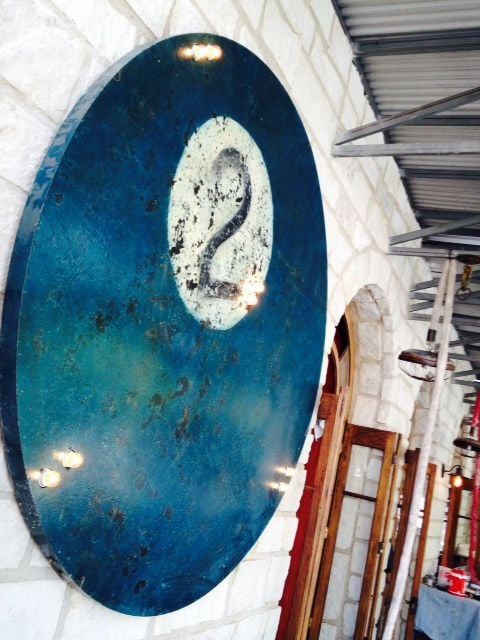
Scott and her partners in Cohn Restaurant Group—along with moody, romantic French designer Philippe Beltran (Bo Beau, 100 Wines)—gutted it and started anew. Part of it looks like a Spanish castle, with medieval stones (ripe for a jousting). Part is modern with brushed steel and reclaimed woods. The big tree from the original Indigo is gone. There are giant pool-ball sculptures hanging on the wall, striking and head-scratching. There are plus-sized rusty pails hanging upside down as light fixtures.
They spent big money on a sound system, and plan to have a late-night dining scene with DJs and small bands. At the bar, expect house-infused liquors (the “Humo Antiquo” cocktail has house-infused hickory-smoked rye, sugar cube, chocolate mole bitters), plus 30 wine options and 30 draught beers, many local.
The old Indigo had a dark side. New Indigo goes to the light.
“The lightness and the openness is the biggest change,” says Scott. “There are tons of glass components. The window at the big community table now flips out. All the windows on the patio flip out. The front door has just three glass panels. The big hostess stand that blocked the view is gone. We’ve got white wooden saddle barstools. Lots of really eclectic stuff, and it gets more so every day as we get closer to opening.”
The other big news is the return of chef Jason Maitland (ex-Arterra, Flavor, Red Light District). Maitland’s really creative with his meat. Scott says she let him take lead on modern Latin menu. But for regulars there will be a “Deborah’s Classicos” section: five of her classic dishes, rotating every few weeks. It’ll start with her famed pipian-crusted brie of course—which, starting Aug. 4 will be sold in Southern California Costcos. If that’s successful, Scott will extend her line with other hits.
FIRST LOOK AT THE MENU…
CEBICHES
These Peruvian-style cebiches will be cut and marinated to order. All served with yam, cancha (Peruvian corn nuts) and grilled panca peppercorn. Expect local bass (w/ lime and aji limo), Mexican bay scallop (w/ sour orange juice), Hawaiian ahi (w/ sesame, nori, ponzu).
TIRADITOS
Sashimi-style dishes that’ll be cut and seasoned to order. They’ll be served on Himalayan pink salt blocks with tangerine-chile vinaigrette, yam and avocado. Expect local bass (w/ serrano, cancha, cilantro) and Hawaiian ahi (w/ sesame leaf, furikake, micro shiso).
ANTICUCHO BOARDS
Peruvian and Chilean street food made mostly of grilled and skewered meats. The boards will include roasted ground pumpkin seeds, chimichurri, cancha, pickled veggies, roasted olives. You choose between “mains” like chicken (w/ garlic, serrano), slow-roasted pork belly (w/ tangerine zest and fried ginger) and nectarines (in curry oil and mint).
CROSTINO
Basically small toasts, topped with goodness. Expect Serrano ham (w/ tomato confit, arugula, aged balsamic, bacon fat mustard), cucumber raita (w/ pumpernickel, Marcona almond, smoked paprika), farm egg (w/ pork belly bits, arugula, truffle salt, truffle oil, rooster sauce), boquerones (marinated white anchovies w/ lemon mascarpone, mustard frill)
SOPAS & ENSALADAS
Soups and salads. Maitland’s got a melon-cucumber gazpacho (w/ jalapeno, curry oil, mint oil, cracked pepper), roasted poblano bisque (w/ grilled corn, lime crema, chile oil, tortilla crisp), grilled nectarine w/ Serrano ham (w/ arugula, cracked pepper labne, crispy shallots) and a traditional Caesar.
PLATOS PEQUENOS
Small plates. Scott is most excited here about the Japanese or Korean style bibimbap. “They’re made in clay pots made specifically for it,” she explains. “You get it in the oven to 500 degrees, do a sort stir fry, finish it off in this porous bowls, crack a raw egg over the top. The rice on the outer edge is really crunchy and then it’s soft inside. Then you mix the egg with it and it cooks at the table.” Other interesting small plates include grilled ahi ribs (w/ soy-panca pepper marinade, scallions), tamarind-jalapeno pig tails (w/ radish, peanut, house buttermilk dressing), “Flaming Hot Cheetos” (pig ears in lime zest, cotija), housemade chicarron (w/ sea salt, smoked chili powder, house hot sauce), pork “rib tips” and a queso fundido (w/ melted petit Basque and housemade chorizo).
DEBORAH’S CLASSICOS
The ones that made her into a local icon. The Pipian-crusted brie with jalapeno jelly and honey-roasted garlic. The alderwood plank salmon with cucumber-dill moleto and squid-ink pasta. The “Skirts on Fire” w/ marinated skirt steak, rice sticks, mandarin orange salsa.
PLATOS GRANDES
True, true love is found in the bottom of a bucket of fried chicken. As such, Maitland will serve one—with serrano vinaigrette and spicy pickled vegetables. Also a fried whole branzino (with Napa cabbage slaw, lime fish sauce), mustard-brined pork chop (w/ kimchee puree, Dijon-soy vinaigrette), and achiote-marinated prime flat-iron (w/ cumin-spiced carrots, smashed taters, chimichurri).
EL POSTRE
Desserts. Fresh churros. Goat cheese flan. Rice pudding brulee with tart cherries.
INCOMING: Indigo Grill, Part Deux

The acclaimed restaurant will shutter after two years, while the family's Little Italy tasting room relocates to the University Avenue space
San Diego has lost a number of ambitious concepts lately—Vulture and Dreamboat in University Heights, Wildflour Delicatessen in Liberty Station, Deckman’s in North Park, Matsu in Oceanside. All have different reasons for closing (some outgrew their space, some overshot their costs), but none of them suffered for quality. Ditto for the next casualty. On July 19, Cellar Hand in Hillcrest will close its doors.
Unlike the other closures, there’s actually a silver lining. The Perr family, who owns both Cellar Hand and Pali Wine Co., announced they will relocate Pali’s tasting room from Little Italy to take over the vacated Cellar Hand space.
Cellar Hand opened just over two years ago with a promise to source 100 percent of their produce locally. Ambitious, but admirable. Logan Kendall, the original executive chef, launched with a menu centered around lots of funky fermentation, tinned fish preserved in-house, a bevy of fun dips like labneh and whipped tahini, and a ridiculously fantastic pork chop from Thompson Heritage Farms. Wine Enthusiast named the 120-seat eatery one of the top 50 wine-focused restaurants in the country in 2025—not a shock, considering the mega wine chops behind the project.
Following Kendall’s tenure, chefs Ashley McBrady and then Sable-Tanya Wentwoord took over the reins, keeping things rolling with expanded brunch offerings, chef’s dinners, and all the usual accoutrements of a hyped spot. Before joining the Pali Wine/Cellar Hand team, Wentwoord worked and staged at multiple James Beard Award–recognized and Michelin-starred restaurants in Boulder, Colorado (Frasca Food and Wine); San Francisco, CA (Coi, Che Fico); Providence, Rhode Island (Persimmon); and Fredericksburg, Tex. (Southold Farm + Cellar). She will continue to head the food program at Pali Wine Co.
Bad luck or bad timing, the reasons behind closing Cellar Hand don’t really matter. But I, for one, will really miss that pork chop.

Still, Cellar Hand’s loss is Pali Wine Co.’s gain, or at least a small balm on the sting of closure. The tasting room in Little Italy opened 10 years ago, bringing its Central Coast wine and vibes to an area smack in the middle of a craft beer boom. When it came time to renew the lease, the Perrs say the landlord did the landlord-y thing and tried to nearly double the rent. (Tale as old as time—just ask Wildwood Flour.)
Rather than suffer a double-whammy, the Perr family instead decided to shift their focus (and finances) to the heart of their businesses: wine. And despite losing a very cool rooftop patio in one sizzling hot neighborhood, they are gaining a pretty prime spot in a different sizzling hot neighborhood with a not-too-shabby patio of its own accord. (One more silver lining: no more jet noise from the airport!)
By moving Pali Wine Co. to where Cellar Hand used to be, they could at least keep a toehold in San Diego, says Nick Perr, managing partner. His family has made wine in Santa Barbara county for over two decades, with 10 of those years in the San Diego market—an investment they refused to lose. “That’s why it’s impossible to separate our winery from our San Diego community,” he explains, adding that the new location will allow Pali Wine Co. to offer programming designed around the nearby Hillcrest farmers market.
Guests can expect the same wine selection, wine club perks, private tastings, and similar food offerings Pali Wine Co. offers in Little Italy to transfer to Hillcrest. And maybe, if we’re lucky, they’ll bring back the pork chop (please?)
“We are extremely proud of what we accomplished at Cellar Hand,” said Perr in a statement. “Running an independent restaurant with real values is hard, and we gave it everything we had.”
Cellar Hand will permanently close on July 19. Pali Wine Co. will cease operations at 2130 India Street on July 19 and will move to 1440 University Avenue.
Pali’s new location in Hillcrest will soft open on August 12 with a grand opening on August 22. Operating hours will be Wednesday through Friday, 2 p.m. to 10 p.m.; Saturday, noon to 10 p.m.; and Sunday, noon to 9 p.m. Happy hour will run Wednesday through Sunday (hours to be determined).
Beth Demmon is an award-winning writer and podcaster whose work regularly appears in national outlets and San Diego Magazine. Her first book, The Beer Lover's Guide to Cider, is now available. Find out more on bethdemmon.com.
Along with other Filipino culinary icons, Ashley del Rosario is making Filipino pastries a category of their own
Baker Ashley del Rosario estimates she makes five people cry every day. It’s not because she’s some salty old grump. In fact, del Rosario is such a delight to talk to that we ended up chatting in the sunshine for 20 minutes after my two-hour parking meter ran out. (I got lucky—no ticket!) It’s because her baking philosophy, which centers around spotlighting her culture as a Filipina-American and using some of her mom’s recipes as inspiration, seems to uniquely touch a nerve in her community.
“People message me every day saying… ‘Oh my God, my mom loves your stuff. Oh my God, this made me so emotional. This reminds me of my childhood,’” she says. “I must be doing something right.”
We’re sitting outside at Michi Michi in Bankers Hill, where she finished up a two-month residency as the in-house guest baker on June 30. Her menu of Filipino-inspired pastries feature ingredients like mango, ube, pandan, calamansi, and taro leaves in items like French croissants and Italian maritozzos. But she’s also pushing flavor boundaries with pastries like a champorado tart, a Filipino chocolate rice pudding topped with a dollop of anchovy paste.
Love it or hate it, to del Rosario, the point is that she introduced champorado to a new audience. “If you don’t like Filipino food, or you’re not interested in it, or you don’t even get it… you [still] came into this bakery and you saw Filipino desserts,” she says. So the next time you come across champorado, your brain will already recognize it and hey, maybe you’ll give it a try.
San Diego is home to the fifth-largest Filipino population in the United States, with enclaves in Mira Mesa, National City, southeast San Diego, and Chula Vista. That’s led to a rise in popularity of Filipino food in San Diego, as well as across the country.
In 2021, Phillip Esteban—San Diego Magazine’s “Chef of the Year” in 2020—opened the first location of his fast-casual Filipino concept White Rice, which now has locations in Normal Heights and Sorrento Valley. Kristin Cleavinger’s coffee and matcha pop-up One of One draws inspiration from her own Filipina-American heritage. Tara Monsod, executive chef at Animae and Le Coq, is a three-time semifinalist for Best Chef in California by the James Beard Awards and one of the leading champions of Filipino-American cuisine. She was also del Rosario’s boss at her first kitchen job, which was doing pastries at Animae. (Nothing like jumping straight into the fire!)
Del Rosario says Monsod became a cultural and culinary mentor, pushing her to explore new and bigger opportunities. When she got the chance to study at the illustrious Italian Culinary Institute in Calabria, Italy, Monsod encouraged her to go. It changed del Rosario’s life—so much so, she’s moving to Italy later this year to continue honing her pastry skills.
In the future, she says she hopes to split her time between Italy and San Diego, continuing collaborations and pop-ups while developing what she sees as an entirely new lane within pastry: Italian pastry technique with distinctly Filipino flavors.
Italian pastry technique is different from classic French. Take croissants, for example. The Italian version, called cornetto, is often filled with creams, jams, or savory fillings, and tends to feel softer than its buttery, flakier French counterpart. They’re also more regionally driven, with different areas utilizing local specialties like citrus for the filling—an ideal vehicle for launching a Filipino-fusion creation.
There are plenty of globally-inspired bakeries in San Diego with their own specialties—Azúcar in Ocean Beach is Cuban, Su Pan offers traditional Mexican pastries, and Asa Bakery is modeled after Japanese kissaten cafés. There are even a number of local Filipino bakeries like Valerio’s 1979 (formerly Valerio’s City Bakery), Kababayan Bakery, and Starbread Bakery. But a Filipino-Italian bakery? Not yet. And even if there were, del Rosario says the more, the merrier.
“There is no competition,” she says. “It’s just showing our culture.”
Beth Demmon is an award-winning writer and podcaster whose work regularly appears in national outlets and San Diego Magazine. Her first book, The Beer Lover's Guide to Cider, is now available. Find out more on bethdemmon.com.
Drink 182 will pair pop-punk nostalgia with New England-style pizza starting this summer
If you’ve ever squeezed yourself into a pair of black skinny jeans with a studded belt, sported a track jacket under a band t-shirt, or swept your Manic Panic-hued hair so far to the side that your part got caught in your cartilage earring, I have good news: Ocean Beach will get a shot of emo and pop-punk nostalgia when Drink 182 opens this July.
The pop-punk bar and pizza spot comes with bonafide scene points. Co-founder Jay Nightride runs the music production studio Nightride Visuals, has worked with artists like Steve Aoki, Lil Jon, and Fall Out Boy, and also plays in Death Cab for Karaoke, a live karaoke band that performs every month at Soda Bar (among other venues). His partner Tony Jaw is easier to spot—he’s the guy with the sky-high mohawk manning the karaoke booth at Redwing Bar & Grill who’s been in the local bar and hospitality business for over a decade.
Nightride says he’s had the idea for an emo enclave for years, but it wasn’t until after Covid that he partnered with Jaw and got the funding to move forward. “What I was looking to build was a place that I would want to be, where would I want to go to remember these nostalgic songs,” he says.
Pending permits and final inspections, Drink 182 is slated to open the second half of July. The vibe will be dive bar meets emo night, with memorabilia from different bands who have supported the project splashed across the walls, plus a few arcade games, TVs, and (I assume) a decent sound system. The hours are still undetermined, but Nightride says they tentatively plan to be open until 2 a.m. on weekends and Wednesdays for the OB Farmers Market. In the mornings, they’ll serve fresh pastries and coffee from the similarly music-aligned James Coffee Company (whose co-owner David Kennedy is a member of Angels & Airwaves with blink-182’s Tom DeLonge).
But it’ll be the pizza that really stands out—or at least, they hope. “We’re doing New England beach pizza… a really niche pizza that not a lot of people would know about, unless you’re from North Shore, Massachusetts,” says Nightride, a former Bostonian. “It’s a thin crust, very sweet sauce, very simple, fast, go-to-the-beach kind of thing.”
“Beach pizza” is characterized by its rectangular shape, very thin crust, sweet tomato sauce, and slices of Provolone cheese with minimal toppings. Drink 182’s version will feature homemade dough and sauce, as well as freshly sliced Boar’s Head Provolone. And yes, they are aware there are already a lot of pizza options in the area. It won’t be the same, Nightride promises.
“Everybody’s first reaction when they hear ‘pizza’ is like, ‘Oh great, another pizza place in OB,’” he laughs. “But we’re trying to do something different, just enough to differentiate it and give people another option.” If you’re not keen on the style, try one of their “drunkables,” another nostalgic riff they hope the pop-punk and emo crowd will appreciate. And if you still need a reason to give Drink 182 a try, I have more good news—you don’t actually have to break out your old skinny jeans. (In fact, please don’t.)
Drink 182 opens July 2026 at 5049 Newport Avenue in Ocean Beach.

Listen Now: The Latest in San Diego’s Food and Drink Scene
Have breaking news, exciting scoops, or great stories about new San Diego restaurants or the city’s food scene? Send your pitches to [email protected].
Beth Demmon is an award-winning writer and podcaster whose work regularly appears in national outlets and San Diego Magazine. Her first book, The Beer Lover's Guide to Cider, is now available. Find out more on bethdemmon.com.
The 29-year-old culinary director at Herb & Sea is making seafood sexy (and approachable) again
Implementing a farm-to-table model hardly deserves acknowledgement these days. It’s not a stretch. It’s not innovative. “It’s the bare f**king minimum,” says Herb & Sea‘s executive chef Aidan Owens.
When I arrive at the Encinitas restaurant, I’m ready to talk sustainability, farm-to-table stuff, with Owens. “Did you see the chin on that?” he says of the extra big jiggly chin on the sheephead that just arrived with the day’s fresh catch. I did. It was Jay Leno adjacent.
I learn quickly that he somehow oozes both charm and stone-cold honesty. Maybe he could construct a new dish with chin goo, like he did when he had a bunch of tuna scraps and voila’d it into a smooth and crowd-pleasing ‘nduja. “I want to know what’s in there,” he says.

The instinct to look closer, to dig into what others might discard, says a lot about the chef’s approach. I guide him back to our topic, but he has something else on his mind. “We’re overcomplicating food—what happened to just cooking good food and having fun with it?”
Owens grew up on a farm in Byron Bay, Australia, where sustainability wasn’t a concept you chat about so much as a way of life. Think dirt roads, backyard chickens, pulling vegetables straight from the ground, and a mother who believed that if you couldn’t pronounce the ingredients on a package, you shouldn’t eat what was inside.
Food wasn’t precious or performative. Making it was what you did because you were hungry and that’s still what inspires Owens today. “I like to cook good food because I like to eat good food,” he says.
His approach to sustainability at Herb & Sea began so naturally that it felt just like instinct. “I was just like, ‘Let’s order food from the people who live and work here,’” he says.

And why wouldn’t he when lives in San Diego? Cities all over the world vie for our goods. Our tuna is sent overseas. Our spiny lobsters hit dinner plates in China and Japan. Not to mention California’s producing a third of the country’s vegetables and three-quarters of its fruits and nuts.
“Why would we outsource when it’s all here?” Owens asks.
Sustainability, in this context, is about cooking what exists in abundance, nearby, right now. “I love the local fish here. It’s f**king delicious and San Diego citrus, I mean, it is so f**ing good,” he says.
Instead of importing ingredients, Owens also looks for nearby alternatives. “You can find really cool things in the local waters,” he says, pointing out that stingray cheeks taste similar to scallops.

Whatever he finds in that sheephead chin might just be the next substitute for marrow. But to make this work, it means getting diners amped up about the slightly unfamiliar.
Tasting menus, where diners are completely in his hands, become an opportunity to gently push boundaries. “I’ll serve mackerel, because people think they hate it,” Owens says, noting that the abundant local fish can have some fishiness. “But when it’s fresh, it’s arguably one of the best fish in the ocean.”
He also tweaks the language on the menu so people might feel more compelled to give dishes a try without preconceived notions. He might use “lengua” instead of “tongue.” “Whelk” instead of “snail.” When he puts “stingray throat” on the menu, he disarmingly calls it “skate.”
To reduce waste, scraps aren’t always discarded but rather turned into something new. Sometimes they’re smoked, cured or fermented. Apples going bad turn into apple ponzu. Lemons turn to marmalade, which stretches their usefulness far beyond peak season. “And it’s super tasty on our pizza,” he says.
What makes the food even richer, is the relationships he’s built with farmers. Though it didn’t always feel natural, Owens sought personal connection first. He recalls approaching a fisherman at the Tuna Harbor Dockside Market. “I was awkward,” he says. “I went up to him and said, ‘I like your fish.’”
Owen’s is now so close to his suppliers—like fishermen Ryan Sebo and Joe Daly—that he gets texted pictures of fresh catches right as they flop on the boat. The messages always ask if he wants first dibs. “I say yes to a lot of fish,” Owens says, noting that Herb & Sea can go through 2,000 pounds of seafood a week.

The next evolution of sustainability, in his view, will be chefs working directly with producers such as his alliance with Sebo, cutting out middlemen and purveyors where possible. “It will put more money in the pockets of the people doing the work,” he says.
It will mean that chefs can’t just know their local farmers and producers, but they’ll choose to work with the ones who have the best practices. Dining and sustainability will become much less about the final plate. “It will be more about the impact that plate has on the Earth,” he says.
Ultimately, he believes sustainability doesn’t need to be loud. It doesn’t need hashtags. It just needs to be honest.
“We aren’t saving lives. We’re feeding people good food,” he says.
And yet, in feeding people well—simply, thoughtfully, responsibly—something meaningful happens. Guests leave satisfied. Ingredients are respected. Local ecosystems are supported and food returns to what it has always been at its core: nourishment, pleasure, and a quiet reflection of the place it comes from.
No buzzwords required.
Offering everything from smashburgers to sundaes, the latest food hall from Tiger Hospitality opens its doors this weekend
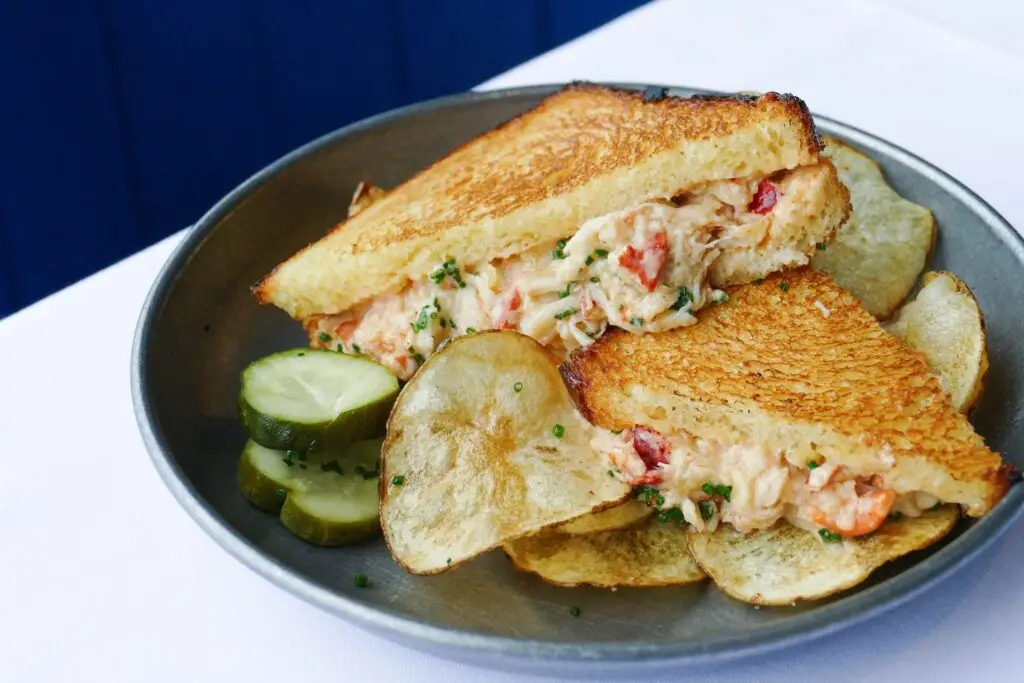
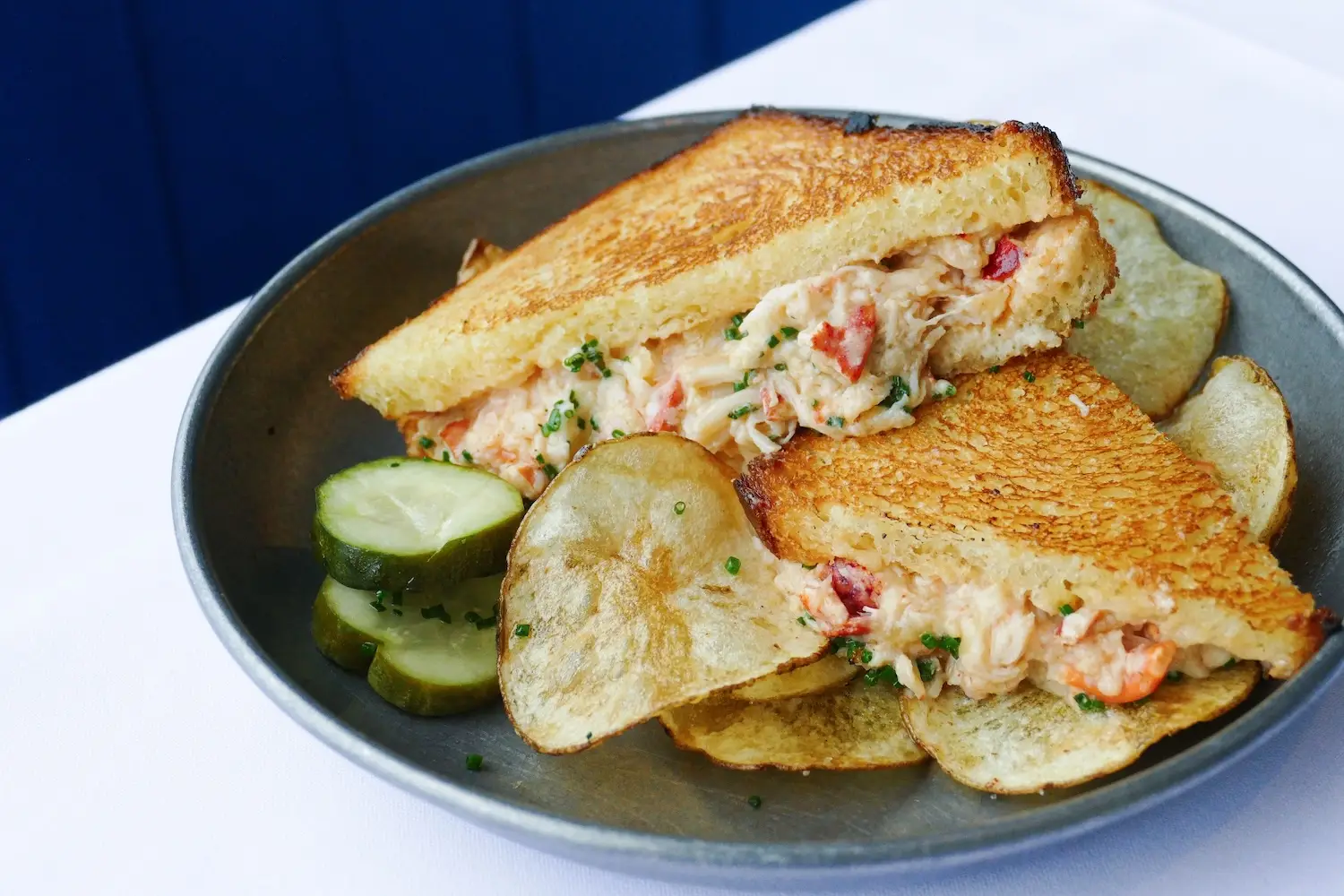
Omakase and fixed-price menus are one way hospitality businesses are addressing our collective food decision-making fatigue. But on the opposite end of the spectrum, some restaurateurs are offering a bonanza of totally unrelated options for people ordering on a whim. Why not pair a lobster grilled cheese sandwich, açaí bowl, and ridiculously loaded hot dog?
Starting June 27, diners can satisfy their spur-of-the-moment appetites at Global Fork in Little Italy, the latest food hall from Southern California-based Tiger Hospitality.
Six different food concepts will be featured in the 4,685-square-foot, indoor-outdoor space along the Piazza della Famiglia promenade. The space’s inaugural lineup includes a mix of Tiger Hospitality-owned concepts (Cosmos Burger, La Vida, Lobster Lab, and Prik Ki Nu Thai) and outside operators (Seattle-based Moto Pizza and Handel’s Homemade Ice Cream). The space next door, Good Enough Cocktail Club, is another Tiger-backed brand, operated by the team behind Same Same and Amor y Magia in Carlsbad.
Cosmos Burger serves smashburgers stacked with classic toppings, while Lobster Lab focuses on seafood favorites including lobster rolls, shrimp rolls, and lobster mac n’ cheese. Prik Ki Nu Thai adds Thai street food to the mix, with traditional noodle, rice, and stir-fry dishes. And for those looking for something on the lighter side, La Vida offers things like smoothies, salads, and wraps.

Moto Pizza focuses on Detroit-style square pizza with Filipino influences and, despite the name, is not affiliated with Mr. Moto Pizza. Handel’s, which began in Ohio in 1945, will offer dozens of flavors ranging from staples like chocolate and vanilla to rotating specialties packed with candies, cookies, and other mix-ins. (Handel’s already has a number of locations across San Diego, with a La Mesa store coming later this year.)
Some of these vendors already operate at Miramar Food Hall, the other Tiger-owned food hall in San Clemente. And some of them will also appear in Station8, the next food hall slated to open in UC San Diego’s Theatre District Living and Learning Neighborhood later this fall. But if you ask me, reviving the space that housed the Little Italy Food Hall before its closure last February is a far better outcome than leaving empty suites smack in the middle of an area saturated with fantastic food options. Plus, where else can you order a slice of beef adobo pizza alongside squares of caviar toast and a banana split?
Global Fork opens June 27 at 550 W. Date Street, Suite B, in Little Italy. Initial operating hours are from 9 a.m. to 9 p.m., seven days a week, but vendor hours may differ.

Listen Now: The Latest in San Diego’s Food and Drink Scene
Have breaking news, exciting scoops, or great stories about new San Diego restaurants or the city’s food scene? Send your pitches to [email protected].
Beth Demmon is an award-winning writer and podcaster whose work regularly appears in national outlets and San Diego Magazine. Her first book, The Beer Lover's Guide to Cider, is now available. Find out more on bethdemmon.com.
The team behind Harumama and Blue Ocean will open Little Kiki Katsu & More on June 15, serving premium cutlets, Japanese sandos, and curated sake pairings
Every culture has its own comfort foods—cozy dishes that nurture the soul as much as the body. In the US, dipping a grilled cheese sandwich in a bowl of tomato soup can feel as satiating as pulling a warm sweater out of the dryer. In China, a steaming bowl of congee is basically a miracle remedy for anything you can imagine. I’m pretty sure Italian carbonara could achieve world peace. And in Japan, katsu remains one of the most universally satisfying inventions of the past century.
Katsu was originally invented as a riff on côtelette de veau, the classic French veal cutlet coated with breadcrumbs and pan-fried in butter. In 1899, a Western-style restaurant called Rengatei in Tokyo decided to put their own spin on the dish by pounding the cutlets until thin, then coating them with softer panko and deep-frying versus pan frying (like tempura) for a crispier, lighter, crunchier bite. Today, pork—called tonkatsu in Japanese—tends to be the most common base for katsu.
The dish has yet to achieve the same mainstream status as say, chicken nuggets, in the US. But Little Kiki Katsu & More hopes to change that, when the katsu-focused restaurant opens in Carlsbad on June 15.
Created by the team behind Harumama and Blue Ocean, Little Kiki will focus on premium katsu dishes paired with sake and around a dozen small bites like miso soup, karaage, edamame, and Japanese pickles. Executive chef James Pyo, who co-owns all three restaurants with his wife Jenny, created a menu that features proteins like Berkshire Kurobuta pork, Jidori chicken, salmon, scallops, and dry-aged Pacific cod for the katsu and grilled stone selections. (Note: the grilled stone options will be offered for dinner only.)

The lunch menu includes Japanese-style sandos like a tonkatsu sandwich with pork, housemade bread, and tonkatsu sauce (available regular or spicy). Dessert options are simple to start—yuzu cheesecake, matcha crème brûlée, and mango/yuzu mochi ice cream. The Pyos curated a selection of premium sakes as well, specifically for pairing purposes, as well as offering some beer and cocktails.
Little Kiki, which is named for Jenny’s cat, seats 25-30 guests inside with room for only a few more on the small outdoor patio as well. Designer and assistant Yoojin Jang says the vibe is meant to be warm and welcoming but modern, using colors like olive green, cream, and pops of orange against Japanese-style wood slats.
Initially, Little Kiki will only be open for dinner service, but aims to introduce lunch hours for the grand opening on July 1. Due to the limited seating, Jang encourages guests to make reservations, and while the restaurant will offer takeout, it will not be available on food delivery apps like Uber Eats or DoorDash to motivate guests to come experience it for themselves.
“Come in curious and leave satisfied,” says Jang. And keep your eyes open for subtle cat motifs—she promises they are hidden all over the place. Whimsy, it seems, is also on the menu.
Little KiKi Katsu & More soft opens on June 15, 2026 at 2958 Madison Street, Suite 101 in Carlsbad. Hours are Monday, Wednesday, Thursday, and Sunday from 11:30 a.m. to 3 p.m. for lunch and 5 p.m. to 9:30 p.m. for dinner; Friday and Saturday from 11:30 a.m. to 3 p.m. for lunch and 5 p.m. to 10 p.m. for dinner; closed Tuesday.

Listen Now: The Latest in San Diego’s Food and Drink Scene
Have breaking news, exciting scoops, or great stories about new San Diego restaurants or the city’s food scene? Send your pitches to [email protected].
Beth Demmon is an award-winning writer and podcaster whose work regularly appears in national outlets and San Diego Magazine. Her first book, The Beer Lover's Guide to Cider, is now available. Find out more on bethdemmon.com.
In a world overflowing with shortcuts, marketing fluff, and “good enough,” there are still companies that choose a different answer. And in San Diego, there are plenty of them.
In a world overflowing with shortcuts, marketing fluff, and “good enough,” there are still companies that choose a different answer.
Integrity guides how they show up every day. They make hard decisions, hold themselves accountable, and build trust the old-fashioned way, one action at a time. At the Better Business Bureau, we call these businesses Torch Heroes: leaders who demonstrate that ethical leadership strengthens businesses and drives long-term success.
And in San Diego, there are plenty of them.
Take House Collective Marketing Solutions, a Carlsbad-based digital agency that won the 2025 Torch Award for Ethics for its people-first approach to marketing. Instead of pushing flashy campaigns, the team often takes a step back to make sure clients’ foundations are strong before going big. Their philosophy? Truth over transaction builds partnerships that last.
Or look at Young Black & N’ Business, where integrity shows up through community action. When a local school lost art funding, founder Roosevelt Williams III and his team stepped in with workshops, mentorship, and hands-on support to help restore creative opportunity. That kind of engagement reflects ethical leadership rooted in real impact.
And in Vista, Lotus Sustainables carried its commitment to ethics all the way to the product line. After discovering defects in a shipment of eco-friendly products, the company issued full refunds and redesigned its offerings at its own expense, a choice that shaped its identity and reinforced to customers that ethics guide every decision.
In North County, Greenway Landscape Design & Build brings integrity into everyday service. When a client’s glass was damaged, likely not by their crew, owner Scott Lawn chose responsibility over blame and covered the repair personally. For Greenway, doing the right thing serves as a north star, guiding every interaction through transparent pricing, accountable partnerships, proactive communication, and follow-through long after the job is done.
Other honorees include At Your Home Familycare, whose leadership turned down a lucrative state contract during the pandemic to protect vulnerable clients and staff, and Bill Howe Family of Companies, where hiring practices, training, and service centers around shared values, every day, on every call.
What connects these diverse businesses, from marketing to nonprofit support to home services, isn’t size, industry, or revenue. It’s something deeper: a commitment to trust as a business strategy.
In San Diego’s competitive marketplace, that trust gives companies an edge. Clients invest in relationships. They refer friends. They stay loyal when others fade.
As one Torch Award winner puts it, integrity isn’t a section in the employee handbook. It’s the operating system of the company, the invisible code that determines every choice, every day.
And that’s exactly the point of the BBB Torch Awards for Ethics: to spotlight companies that dispel the myth that ethics and success are at odds. These businesses show that when leaders choose honesty, fairness, and accountability, especially when it’s hard, they build brands that matter.
At BBB, we see nominations come in from clients, employees, and business partners who have witnessed ethical leadership up close. These submissions aren’t polished promotions. They’re stories of moments when a company chose people over profit, clarity over confusion, and trust over convenience.
The nomination window for the 2026 Torch Awards for Ethics is open through March 31, 2026, and there are more Torch Heroes waiting to be recognized.
Who comes to mind in San Diego’s business community?
And yes, businesses can nominate themselves. We encourage it. If you’ve built your business on principles rather than buzzwords, we want to hear your story.
Because in a world full of noise, integrity still deserves the spotlight, and San Diego is full of stories worth telling. Nominate your hero now.