Featured articles
Food & Drink
Food & Drink

Food & Drink
Featured articles

Things to Do
Features
Features
Featured articles
Things to Do
Things to Do
Everything SD
Featured articles
podcast-ep
podcast-ep
podcast-ep
Featured articles
Features
Features

Features
Featured articles
Things to Do
Food & Drink
Partner content
Ready to know more about San Diego?
SubscribeReady to know more about San Diego?
Sweet Spot
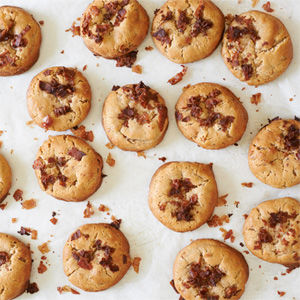
A cult favorite at local farmers markets. The Cravory opens a brick-and-mortar bakery this month. Get the classic pancake and bacon flavor (2$ each, pictured) or a Teaser Box cookie membership, which arrives monthly with six new flavors ($16). 3960 West Point Loma Boulevard, Point Loma
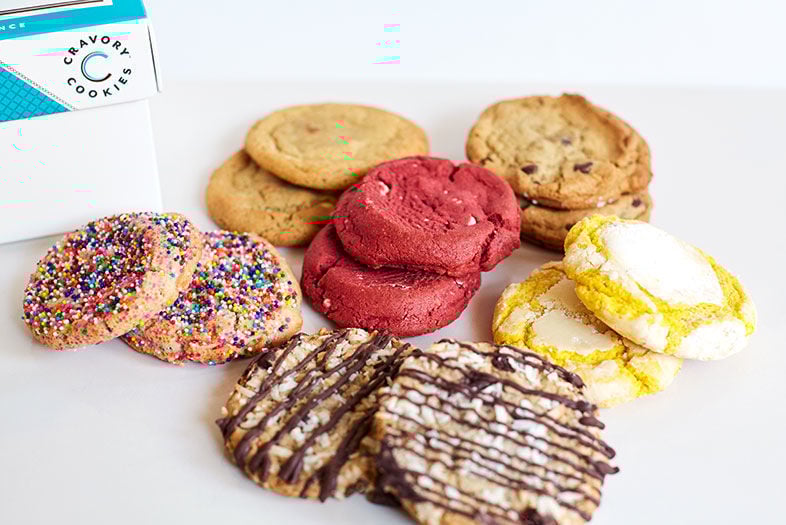
Pancake and bacon cookies from The Cravory
After years of closure, the wartime venue has been restored and will begin hosting community gatherings and celebrations once more
For more than 80 years, the North Chapel has been one of Liberty Station’s defining silhouettes. Opened in 1942, the multi-faith chapel has hosted Navy services, weddings, memorials, and countless community milestones during wartime years. Its story stretches from religious services for military men and women to cultural anchor.
Then came a stalemate. In 2018, a new tenant, 828 Events, proposed a modernization of the building’s interior, sparking fierce pushback from preservationists and neighbors. The San Diego Union Tribune reported that the online leasing opportunity boasted the chapel would be “perfect for a restaurant or retail tenant.” The suggestion that the historic chapel may become a restaurant caused uproar from local community members. According to Congressman Scott Peters’ official website, his office requested an investigation by the City Attorney. The plan was halted, but what remained was a structure in limbo.
In the years following, Liberty Station reshaped itself; breweries opened, restaurants buzzed with crowds, and gelato melted on children’s hands in sunny courtyards. The chapel remained unopened in a district otherwise reborn—until now, when Snake Oil Venue Company became its new stewards.

If you’re wondering why a company known for cocktails is reopening a historic chapel, the answer is simple: they’re no longer just a cocktail company. In 2019, after a decade crafting cocktails, Snake Oil launched its first venue, Julep, and pivoted into full-service events. Growth snowballed from there. This April, it opened Bramble Bay in Imperial Beach, followed quickly by Vesper at Liberty Station. In just one year, its footprint jumped from 32,000 square feet of event space to more than half a million.
But, even as experienced venue operators, the chapel was a unique endeavor. “This wasn’t acquisition; it was responsibility,” says Snake Oil’s CEO Michael Esposito.

The first time he walked inside, the neglect was unmistakable. “Here was a sacred San Diego landmark sitting quietly in a deteriorated state,” he recalls. Curtains were stained, corners layered with dust, and the once-ornate woodwork was overshadowed by a red carpet that “smelled like damp newspapers.”
The chapel had sat unoccupied since 2019, according to Joe Haeussler, executive vice president of Pendulum Properties Partners, which acquired the leasehold to the chapel and several other Liberty Station properties in 2018. After considering several proposals for the dormant space, Pendulum brought Snake Oil on in 2023 to reopen and steward the building. “We felt their plans were the most respectful of the historic asset and would open the building to the public in the right way,” Haeussler explained.

Rather than impose a new vision, Snake Oil chose preservation. While it’s now an events space, it has retained its original intent as a gathering place for the community. Restoration, in this case, meant listening to the building. When the team began pulling up the carpeting, they uncovered exquisite, period-specific 1940s Douglas Fir flooring. They refinished the planks rather than replace them, breathing life back into the chapel’s historic foundation. Even the stained glass windows, which were not part of the original Navy design, remained. The earlier plans featured frosted panes that brought in soft, controlled daylight, but the stained glass had become part of the chapel’s collective memory. The restoration cost nearly $1.2 million.

Beyond sentiment and preservation, the North Chapel’s renewed functionality includes a main hall which offers 4,000 square feet of flexible space and seats roughly 425 guests, with additional pew seating on a mezzanine. An adjacent side chapel adds another 600 square feet for more intimate gatherings. Outside, three connected exterior zones (over 3,000 square feet total) provide ample room for receptions, cocktail hours, or garden-style events.The venue will have a preferred-vendor list, with some flexibility for outside vendors. Beverage and cocktail service is handled exclusively by Snake Oil Cocktail Company.

Christopher Bittner at OBr Architecture, Tim Wright of Wright Management, and Andre Childers with Pacific Building Group Construction led the improvement process, while Melissa Strukel of We are Human Kind designed the interiors and furnishings. Bittner says the project was shaped less by reinvention than by attention to what was already there.
“The building itself was the inspiration,” he says. Rather than dramatic alteration, the work focused on careful adjustment. “The building needed small, yet thoughtful, modifications to allow the building to be used for the new use. We worked through many options for how the building would function and at each stage thought through the potential historical ramifications.”

As word spread of the restoration, the stories came streaming in, carried by people whose most meaningful life moments unfolded within its walls. “For some, it was a grandfather who found a moment of resolve here before leaving to serve in World War II,” says Esposito. “For others, a bride who walked down the aisle as a young woman, or the loved one of a first responder whose life was honored within these walls.” The stories varied, but the sentiment was shared: the chapel’s legacy matters.
Ingrid Yang, M.D., J.D. is a hospital-based physician in San Diego, CA, certified yoga therapist, and longevity specialist. She loves *double hearts* San Diego and spends her days helping people fully engage in long, healthy lives through evidence-based lifestyle medicine. Her books include Adaptive Yoga, Zen Mindfulness, and Hatha Yoga Asanas. When she’s not leading international wellness retreats, she is chasing sunsets, handstanding in nature, or geeking out over mitochondria.
The pop-culture phenom, Slurp, makes its way to Westfield UTC this Friday as the mall's first Thai restaurant
If you search “crab rangoon roll” on any search engine or AI chatbot, you’re likely to get one result—Slurp in San Diego.
The ultra-rich, decadently crabby, cream cheese-stuffed, deep-fried burrito served sliced with a side of sweet chili sauce went mega-viral last June, when a few food influencers started posting videos of themselves crunching, dipping, and moaning over the indulgent Thai-California fusion dish at Slurp’s first location in Liberty Public Market and second in Escondido.
Views went from a few hundred… to a few thousand… up to a few million.
“Our business exploded,” explains Gene Kim, partner and CFO of Slurp. “We used to sell 100 in a week, if that, and now we’re selling 300 to 500 per day.”
Somebody should check on the global crab supply, because they’re probably about to sell quite a few more. The third Slurp space soft opens on Friday, January 9 at Westfield UTC, with a grand opening planned for later in the month.
Gene’s wife and Slurp CEO Bella Kim came up with the now-immortalized crab rangoon recipe and entire Slurp concept. She came to the United States from Thailand in 2018 with an F-1 student visa, and missed street food dishes like barbecue pork, wontons, chow mein, and spicy fried rice. “Every item on the menu, that’s all my favorite things from my hometown,” she explains.
Despite the massive influx of different Asian cuisines to Westfield UTC, from Sichuan hot pot at Haidilao to Taiwanese soup dumplings at Din Tai Fung, Slurp will be the first Thai restaurant at the mall. That’s part of their calculated (and ambitious) growth plans, says Carlo Perez, the group’s third partner brought on to open UTC and facilitate their expansion across San Diego, which they hope to seriously focus on in the coming year.

The group is actively eyeing sites near colleges, universities, and in the second phase of the San Diego Airport terminal redevelopment. With a few more prime locations and some long-term social media strategy, Gene says Slurp could become an iconic local chain as ubiquitous to San Diego as Bird Rock Coffee Roasters, Phil’s BBQ, or Hodad’s.
But the Slurp phenomenon has already spread far beyond Southern California. Perez’s niece, a student at the University of Wisconsin–Madison sent them a screenshot of a friend asking where they could get a crab rangoon roll in Wisconsin. He laughs. “You have to come to San Diego to come and get it.”
Slurp soft opens on Friday, January 9 at Westfield UTC (4545 La Jolla Village Drive, Suite E-25). Hours are Monday through Thursday, 10:30 a.m. to 8 p.m. and Friday through Sunday, 10:30 a.m. to 9 p.m.
Beth Demmon is an award-winning writer and podcaster whose work regularly appears in national outlets and San Diego Magazine. Her first book, The Beer Lover's Guide to Cider, is now available. Find out more on bethdemmon.com.
Corallino will open near Shelter Island next spring, marking the group's third restaurant
They say the third time’s the charm, but what if the first two are already pretty damn charming? I guess we’ll find out when Cesarina Restaurant Group goes for a trifecta of Italian joints. They’ve announced plans to open a new spot on Shelter Island next spring called Corallino at 1101 Scott Street.
The restaurant group is known for its round-the-clock-made pasta, consistently named some of the best in the city. Founded by chef Cesarina Mezzoni, her husband Niccolò Angius, and longtime friend Giuseppe Capasso, they first opened Cesarina in 2019 in Loma Portal (that stretch between OB and Point Loma on Voltaire St.). Then came Elvira in 2023, a Roman grandma–centric spot in the iconic hobbit-restaurant location at the entrance to Robb Field in OB (formerly Thee Bungalow, Bo Beau). Corallino will keep things close by, just on the eastern side of the peninsula in the former Pummarò restaurant space.

Angius and Mezzoni have opened all three in the Point Loma area because that’s where they live; the restaurants are them sharing their Roman heritage with their neighborhood. They tapped the same architect who handled the Elvira remodel—Limes Architetti—to redo the 3,100-square-foot space, which is only slightly larger than Cesarina (2,700-square-feet) and Elvira (2,400-square-feet). It’s cozy and manageable, but can still hustle and bustle like an authentic Roman ristorante.
Corallino (Italian for “coral”) is still in early stages as far as design and menu, but the group says they’re planning to continue their vision of neighborhood-centric comfort food with handmade pastas and a modern Italian.

And, while some local outlets have claimed that Corallino is a partnership with Cohn Restaurant Group, this is untrue, say its reps. CRG co-owner David Cohn is a financial investor—much like he is in Callie and other high-end restaurants.
It’s an important clarification. For instance, Tony Hawk is an investor in Puffer Malarkey restaurants Animae and Herb & Wood, but the relationship wouldn’t be billed as a “partnership” because Hawk isn’t in there making restaurant decisions.
So, Corallino will be operated and run by the Roman trio, not Cohn, and it will not be part of the Cohn Restaurant Group. And, with the Cesarina trio having won “Best Pasta” three years in a row for SDM’s annual “Best Restaurants” issue, only time will tell if their third location can make it four.

UCSD is a behemoth that just keeps getting bigger. The campus’ Theatre District Living and Learning Neighborhood spans around 1.5 million square feet and 11 acres (not too shabby in pricey La Jolla), and in August 2026, 20,000-square-feet of that will become Station8 Public Market. Designed by Basile Studio (Roseacre, Born & Raised), STATION8 is Tiger Hospitality’s latest project, an on-campus food hall with 10 different vendors, two bars, and a 5,122-square-foot mezzanine concept that’s still TBD.
Between this, Dora by Accursio Lota (Trattoria Cori Pastificio), Daffodil Cafe in La Jolla Commons, and all the goodies going into Westfield UTC, La Jolla is more delicious than ever, and UCSD is leading the charge in 2026.

Listen Now: The Latest in San Diego’s Food and Drink Scene
Have breaking news, exciting scoops, or great stories about new San Diego restaurants or the city’s food scene? Send your pitches to [email protected].
Beth Demmon is an award-winning writer and podcaster whose work regularly appears in national outlets and San Diego Magazine. Her first book, The Beer Lover's Guide to Cider, is now available. Find out more on bethdemmon.com.
ArtsConnect brings those experiences into view, helping residents discover what they can see, hear and create at UC San Diego while experiencing the campus in a new way.
Ask most people what UC San Diego is known for, and the arts may not be the first answer. Yet this fall, San Diegans can watch Ghostbusters with a live orchestra, try their hand at glassmaking and wander among more than 20 works of public art woven throughout the university’s La Jolla campus.
ArtsConnect brings those experiences into view, helping residents discover what they can see, hear and create at UC San Diego while experiencing the campus in a new way.

“The arts are at the heart of UC San Diego’s student-centered mission and vision,” says Alysson Satterlund, Vice Chancellor for Student Affairs and Campus Life. “Whether creating, participating in, or experiencing performances, the arts are essential to a healthy and truly fun Triton student experience.”
That invitation often begins where the arts intersect with other fields.
“Some of the most innovative work and discovery happen where disciplines don’t usually share a stage,” says Cristina Della Coletta, Dean of the UC San Diego School of Arts and Humanities. “So through our unique intersection of the arts with science, technology, and medicine, we are improving lives, physically and emotionally.
Take The Inaudible Ocean, a collaboration between Department of Music Professor Lei Liang and Scripps Institution of Oceanography Assistant Project Scientist Josh Jones. Over eight years, the pair recorded earthquakes, ship noise, whale songs and other sounds in remote underwater locations. They transformed those recordings into a live music experience that allowed audiences to hear the ocean in an entirely new way. The work premiered on campus in May and continues to evolve.
The arts also connect the campus to the global art world and diverse perspectives. Chief Campus Curator Jessica Berlanga Taylor recently curated the Mexico Pavilion at the 61st Venice Biennale, featuring RojoNegro, the collective formed by Noé Martínez and María Sosa. The collective will unveil a compelling new permanent installation for UC San Diego’s celebrated Stuart Collection later this fall.

ArtPower offers another easy entry point, bringing touring performers to venues including the outdoor Epstein Family Amphitheater and the intimate Loft. The nearly three dozen performances featured through its 2026-2027 season span music, dance, film, theater and conversation.
Among the fall highlights is Ghostbusters in Concert on Sept. 25, pairing the beloved 1984 film with a live performance of Elmer Bernstein’s score. Tickets start at $35, and the amphitheater is located next to the UC San Diego Blue Line trolley station.
“Every member of our community should have access to world-class art, so we work hard to remove the barriers that stand in the way,” says Colleen Kollar Smith, executive artistic director of the Campus Performances and Events Office. “That means affordable ticket prices, and performances, voices and experiences where people see themselves reflected on stage and know they belong.”
The arts at UC San Diego are not only something to watch. The Craft Center offers public classes and workshops in ceramics, jewelry, woodworking, culinary arts and even surfboard shaping. At the new Glass Center, beginners and experienced makers can explore glassmaking through classes, demonstrations and studio experiences.
Whether you want to attend a performance, make something yourself or spend an afternoon exploring public art, there is an easy way in. And the invitation extends well beyond students and alumni.
Kollar Smith says it best: “Visit, participate, spectate or create. You’re invited, and we hope you’ll connect with us soon.”
Explore upcoming experiences at ucsd.edu/artsconnect.
Palermo-born pizzaiolo Ignazio Tagliavia brings pizza mastery to the Bahia Resort Hotel in time for Memorial Day
Move aside, New York City. Chicago, make way. Don’t trip, Detroit. There’s a new contender for the best pizza city.
Us, it’s us.
San Diego’s pizza scene has exploded, with accolades pouring in not just from San Diego Magazine but from outlets like 50 Top Pizza, the Washington Post. The bar for measuring pizza excellence keeps rising like a 48-hour ferment.
When Bianchi Pizza & Pasta opens this weekend at the Bahia Resort Hotel, it kicks up another notch.

Palermo, Italy-born chef Ignazio Tagliavia is the man behind the new pizza program. His resume starts in his teenage years and reads like an atlas: restaurants from Italy to Egypt, New York, Los Angeles, Miami, before eventually landing at Elvira in Ocean Beach. So when Bahia general manager Stefan Peroutka was looking for the person to launch the property’s completely reimagined Tangier Bar—the classic spot perched in the southeast corner of the bayfront property—Tagliavia had the right experience, authenticity, and passion.
Tagliavia’s menu goes hard on pizza and pasta (obviously), utilizing the gold standard of serious pizza ovens: a Marra Forni Pizza Oven designed in Italy and made in the U.S. The chef knows the oven well, even recently slinging slices for team Ferrari in Miami. The machine looks just as sleek as one of the sports cars, but Peroutka says its ability to heat up to 950 degrees isn’t something your standard pizza oven can typically do.
“The oven produces an authentic product, because it’s really all about getting the oven to the right temperature,” he explains. “[It’s] the market leader.”

Pizzas range from margheritas to the signature Bianchi (smoked mozzarella, prosciutto cotto, fennel sausage, Italian speck, mushrooms, and parsley). Plant lovers can grab an Ortolana (moz, crushed tomato, eggplant, zucchini, cherry tomatoes, basil); meat lovers will have the standard options plus Calabrian soppressata, prosciutto di Parma, or mortadella.
Pastas embrace simplicity and showcasing ingredients, like a bolognese, spaghetti with clams, and penne al pesto. Both pizzas and pastas come with gluten-free options, which may not be strictly Italian, but this is Southern California. They’ll have tableside tiramisu, made with vanilla sponge cake, espresso, mascarpone cream, amaretto, and a dusting of cocoa.
To create a comfortable, retro take on an Italian trattoria, the hotel took inspiration from vintage car and bike ads by the Italian brand Bianchi. Evans Hotels’ principal designer Kristine Smith brought in pops of Bianchi’s signature shade of blue-green, called Celeste, alongside lots of white and other neutrals for a calming bayside space. The 1,600-square-foot restaurant seats 75 total, roughly split between indoor and outdoor seating, with 10 seats at the bar and a private dining room that holds up to 20.

Beverage director Benjamin Dunn’s menu will cover everything, including an after-dinner selection like Bianchi’s Sgroppino (an Italian palate cleanser made with Prosecco, vodka, and lemon sorbet). Expect the usual suspects (Negronis, spritzes, Peroni), plus some specialty concoctions like the Bicicleta (Belvedere vodka infused with lemon and basil, blue curaçao, and Cointreau) or the Fiore (Tanqueray Flor de Sevilla gin, Italicus liqueur, black tea lavender syrup, pineapple, and lavender bitters).
Bianchi GM Jacqueline Rixe rounds out the team, bringing along plenty of experience after running the food and beverage programs at the Bower Hotel and its new rooftop bar, Dive, as well as The Nolen’s rooftop bar. (Bianchi is firmly planted on terra firma, but I’m sure the bay views make up for the lack of altitude.)
Bianchi opened for hotel guests last week, but will officially debut on May 23. Peroutka says that despite Bianchi being a hotel restaurant, he hopes it draws in everyone from around San Diego.
“Our whole overall vision is that this becomes the place where you just want to stop by for a glass of wine and a great pizza or a bowl of pasta on your way home from work, but also come and have your celebration here, or your date night out,” he says.
He had me at wine and pizza.
Bianchi Pizza & Pasta opens at the Bahia Resort Hotel at 998 West Mission Bay Drive in Mission Beach on Friday, May 23.
Have breaking news, exciting scoops, or great stories about new San Diego restaurants or the city’s food scene? Send your pitches to [email protected].
Beth Demmon is an award-winning writer and podcaster whose work regularly appears in national outlets and San Diego Magazine. Her first book, The Beer Lover's Guide to Cider, is now available. Find out more on bethdemmon.com.
Brothers and longtime restaurant operators Teodulo and Gaspar Mauricio open an Italian trattoria this week
This is the year to just go for it. Thinking of growing your pop-up business? You definitely should. Want to open your first restaurant? Why not? The future is uncertain, eggs are scarce, and tariffs are going to be expensive, but enterprising restaurateurs across San Diego are saying YOLO and doing the damn thing in spite of it all. I mean, we’ve all gotta eat.
The latest partners throwing caution to the wind are brothers Teodulo and Gaspar Mauricio, along with Teodulo’s son Brayan Mauricio. After working in restaurants like Allegro and Vincenzo Cucina & Lounge in Little Italy and Osteria Panevino in Gaslamp Quarter for over 30 years, the brothers are finally taking the leap to open their own restaurant—Pezzi Del Mio Cuore.

The concept opened this week in Point Loma, and it’s been years in the making. The Mauricios came to the United States from Mexico when Bill Clinton was president, and have been in the heart of San Diego’s restaurant scene ever since. Pezzi Del Mio Cuore, which translates to Pieces of My Heart, is a love letter to the city’s culinary scene. “This is about creating a place where people feel at home,” explains Teodulo.
To craft that homey vibe, the Mauricios developed a menu of classic Italian comfort foods, emphasizing fresh pastas and house-made sauces. Look for familiar favorites like lasagna alla bolognese with homemade pasta smothered with meat sauce and bechamel au gratin. Their take on linguine ai frutti di mare spotlights all the best fruits of the sea in olive oil, garlic, and tomatoes in a white wine marinara sauce. (If there’s a better combination than garlic, white wine, and seafood, I have yet to find it.)

They’ll also serve plump gnocchi with melted mozzarella and fresh burrata; ravioli stuffed with lobster meat in a vodka cream sauce; cioppino made with calamari, shrimp, clams, mussels; and a fish of the day—I’ll have one of each, please. Beer and wine (mostly Italian) round out the menu, and there are also gluten-free options to accommodate a variety of diets. That’s intentional, the brothers say. Offering alternatives means all guests feel welcome, comfortable, and cared for.
The restaurant is now open in the former Sabor Brazilian Grill space. Hours are 11 a.m. to 3 p.m. with a short break between lunch and dinner. Dinner hours resume from 4 p.m. to 10 p.m.

It’s about time! There are “Taste Of” events for pretty much every neighborhood across San Diego by now, and with La Mesa’s ongoing revitalization, especially with new food and drink concepts coming to the quaint East County town, means it was due for its own version. The first annual Taste of La Mesa Village is Thursday, April 24 starting at 5 p.m., with over a dozen restaurants, breweries, bars, and coffee shops already signed on with the promise of more to come. There will be boba from Boba Life, beer at Helix Brewery, fancy cheese from Bougie’s, pizza, pasta, and lots more. It won’t be nearly as crowded at the largest Oktoberfest in San Diego, but I’m betting it will be equally as delicious.
Have breaking news, exciting scoops, or great stories about new San Diego restaurants or the city’s food scene? Send your pitches to [email protected].
Beth Demmon is an award-winning writer and podcaster whose work regularly appears in national outlets and San Diego Magazine. Her first book, The Beer Lover's Guide to Cider, is now available. Find out more on bethdemmon.com.
Laika Nur, MD, takes her love of volleyball from the court to the clinic as team physician for the San Diego Mojo
Growing up, Laika Nur, MD, Scripps Clinic sports medicine specialist, loved watching beach volleyball when the Association of Volleyball Professionals tour came to her hometown of Chicago. A talented volleyball player herself, she remembers sitting in the stands all day, and once, even got a couple autographs. Years later, Dr. Nur was attending a professional event focused on women’s sports, and the discussion turned to a new professional women’s volleyball league. The general manager and coaching staff for San Diego’s team, the Mojo, happened to be in attendance, and Dr. Nur took the opportunity to ask them if they needed a team doctor. Flash forward to the Mojo’s inaugural 2024 season, when Dr. Nur officially became the team physician. Click here to read more about Dr. Nur and how she incorporates lessons she learned on the court into her practice.
For more nutrition, wellness, and healthy living tips, sign up for the San Diego Health newsletter here.