Best Adderall Alternatives 2024: Top OTC Adderall Substitutes For ADHD
If you don’t have access to the prescription Adderall medications then you can consider taking Adderall alternatives or substitutes mentioned in this guide!
Adderall is a prescription drug used in the treatment of narcolepsy and attention deficit hyperactivity disorder (ADHD). While this is an effective medication, it also comes with several side effects, including loss of appetite, difficulty sleeping, and increased risk of heart problems. Further, it has a high abuse and dependence potential.
That being said, there are several natural alternatives to Adderall, like vitamins, supplements, and herbs such as functional mushrooms, that may provide the similar benefits, without the same level of risk. These over the counter natural adderall alternatives have shown promising results by offering improved focus, attention and cognitive functioning.
Below is a list of the top 7 health and wellness brands offering the best Adderall alternatives. Our team of researchers have tested and analyzed several over the counter adderall substitutes available in the market on parameters including primary function, ingredients, dosage, potential side effects, customer reviews, and more. Let’s find out more about these Adderall alternatives.
The first Adderall over the counter product that seriously left an impression on our editors is Lion Mane’s Mushroom Gummies by Riti. Featuring a natural nootropic – lion’s mane mushroom, these gummies can help in enhancing overall cognitive functionality.
These dopamine-enhancing gummies also contain several organic ingredients, including Reishi (supports Immune System and Stress Response), Chaga (antioxidant powerhouse), Maitake (Healthy Blood Sugar and Cholesterol Levels), Cordyceps (Energy-Boosting Benefits). Offering an ultra-high quality 10:1 ratio extract of the mushroom fruiting body, this over-the-counter Adderall alternative starts showing similar effects in just 30 minutes after consumption, with no or few side effects. Further, the popular Adderall alternative by Riti can be considered a healthy option because it contains less sugar, has fewer calories, has a natural flavor, and is gelatin-free.
Riti’s Lion Mane’s gummies can be the perfect Adderall alternative if you want something that is equally effective but is also a healthy option.
Dosage
The recommended dosage for Riti’s Lion’s Mane Mushroom Gummies is 2 gummies per day. This dosage is designed to deliver the optimal amount of mushroom extracts and other ingredients to support cognitive function and overall wellness.
Pricing & Quantity
Single Pack: Priced at $49.95, each pack contains 60 gummies, providing a month’s supply based on the recommended dosage.
Two-Pack Offer: Available for $89.91, offering a 10% discount. This option extends the supply to two months.
Three-Pack Deal: Priced at $127.37, reflecting a 20% discount, and contains a three-month supply of gummies.
Pros:
Designed to improve focus, memory, and concentration.
Suitable for various dietary needs.
Raspberry-flavored gummies that are easy to consume.
#2.Noocube: Best Adderall Alternative For Brain Health & Productivity
Up next is a product that has already gained popularity for its Adderall-like properties designed to enhance focus, memory, and cognitive functionality. Noocube’s ‘Brain Productivity’ is a powerful nootropic formula that helps you fight off hyperactive thoughts and helps increase your overall productivity. This over-the-counter Adderall alternative doesn’t require any prescriptions, and it also offers similar effects but with fewer side effects.
Their formulation contains 12 ingredients backed by science, like Lutemax 2020 (improves attention, verbal memory, and processing speed), BACOPA MONNIERI (Accelerates Cognitive Function), PANAX GINSENG (Reduces Stress Levels), and more. Derived from the marigold plant, Lutemax 2020 contains three critical eye-brain nutrients and can help support areas of the brain responsible for information processing, including memory, listening comprehension, and visual acuity.
Noocube’s ‘Brain Productivity’ is available in the form of capsules and is suitable for both men and women (Please refrain in case of pregnancy). The product has shown promising results (as showcased in the reviews), with Noocube offering a 60-day no-questions-asked money-back guarantee.
Dosages
The recommended dosage for Noocube ‘Brain Productivity’ is 2 capsules daily with breakfast. For those needing more cognitive support, the dosage can be increased to 3-4 capsules daily.
#3. Mind Lab Pro: Ideal For Mental Clarity & Focus
Mind Lab Pro® is at the forefront of cognitive enhancement, offering a unique nootropic formula developed through extensive neuroscience research and numerous iterations since 2015. Now in version 4.0, it combines 11 premium-grade nootropic ingredients in advanced forms, meticulously blended for synergistic efficacy.
This advanced blend includes Lion’s Mane Mushroom, Maritime Pine Bark Extract, N-Acetyl-L-Tyrosine, Suntheanine® (L-Theanine), Rhodiola Rosea, and essential B Vitamins among others. These ingredients work together to enhance cognitive functions such as memory, focus, and mental agility. Users typically experience improved mental clarity and task focus, often within 30 minutes of consumption.
This product, suitable for a wide range of users, is not only vegan-friendly but also free from gluten, GMOs, synthetic additives, soy, and caffeine. Its NutriCaps capsules and Nutrigenesis formulation are GMP certified, ensuring the highest manufacturing standards. Mind Lab Pro® v4.0 is scientifically validated, having undergone rigorous testing, including double-blind, placebo-controlled trials at the University of Leeds.
Dosage
The recommended dosage for Mind Lab Pro® is 2 to 4 capsules per day. This regimen is optimized to deliver a balanced blend of nootropics, ensuring effective cognitive support throughout the day. For best results, it’s advised to take the capsules in the morning or early afternoon, preferably on an empty stomach.
Pricing & Quantity
Mind Lab Pro® is available in different packaging options:
Month Supply: Priced at $69.00.
Month Supply: Available for $138.00.
4 Month Supply (Best Value & Most Popular): Priced at $207.00 (buy 3 get 1 free).
Each pack contains 60 capsules, sufficient for a 30-day supply based on the standard dosage, with bulk purchase options offering a more economical choice for long-term use.
Pros
Enhances focus, memory, and mental agility.
Uses pure, scientifically backed components for maximum efficacy.
Quick onset of effects, often noticeable within 30 minutes.
Rigorously tested by third-party accredited labs for quality assurance.
Cons
May be considered premium-priced compared to some alternatives.
#4. Oweli Neuro: Best Adderall Substitute For Brain Function
Oweli Neuro is a thoughtfully formulated nootropic complex, designed as capsules, to unlock the full potential of your brain’s cognitive capabilities. This over-the-counter Adderall alternative combines a blend of powerful ingredients, each selected for its proven benefits in enhancing mental performance.
Key components include Phosphatidylserine for long-term memory enhancement, Huperzine A for mental clarity and memory, Bacopa Monnieri for attention and information retention, B-vitamins for mood balance and mental energy, DMAE for brain health, Inositol for mood and focus, N-Acetyl L-Tyrosine for neurotransmitter support, and Zinc for cognitive function.
These ingredients work together to support improved memory, promote zen-like focus, enhance multitasking abilities, support neuroplasticity, improve mood, and fight against cognitive decline. Oweli Neuro, available in capsule form, is priced at $59.99 for a single bottle, with discounted multi-bottle packages offering significant savings.
Dosage
The recommended daily dosage for Oweli Neuro is 2 capsules. This dosage is intended to provide the necessary nutrients for optimal cognitive performance and support the brain’s complex needs effectively.
Pricing & Quantity
Oweli Neuro’s pricing structure is designed to accommodate different needs:
Starter (1 Bottle): $59.99 each, plus $6.95 shipping.
Most Popular (3 Bottles): $39.99 per bottle, total $119.97, 33% savings, with free U.S. shipping.
Best Value (6 Bottles): $29.99 per bottle, total $179.94, 50% savings, with free U.S. shipping.
Pros:
Versatile Cognitive Support
Scientifically Formulated
Priced competitively at $29.99 per bottle.
100-Day Refund Guarantee
Cons:
Results may vary based on personal health and cognitive needs.
#5. Nuzena Neuro Focus +: Known For Enhancing Cognitive Function & Mental Performance
Nuzena Neuro Focus +, a capsule-based nootropic supplement, is meticulously designed to enhance cognitive function and mental performance. Developed by healthcare professionals, this formula integrates a blend of scientifically backed ingredients, aiming to provide comprehensive support for healthy brain function. It includes DMAE Bitartrate for increased acetylcholine in the brain, L-Glutamine for protein biosynthesis and immune function, Glutamic Acid for neurotransmitter activity, Green Tea Extract for its antioxidative benefits, and Bacopa Extract for cognitive enhancement.
Additionally, Neuro Focus + contains Choline, Inositol, N-Acetyl L-Tyrosine, Bilberry Fruit Extract, Gaba, Grape Seed Extract, Grapefruit Seed Extract, Olive Leaf, Cinnamon Bark Extract, Licorice Root Extract, Boron, DHA, Vanadyl Sulfate, Phosphatidylserine, and Huperzine A. These ingredients collectively support mental focus, memory recall, and cognitive function. The supplement also includes essential vitamins and minerals like Vitamin A, C, D, E, B-complex, Iron, Calcium, Magnesium, Zinc, Selenium, Copper, Manganese, Chromium, Molybdenum, and Potassium.
Dosage
You should take 2 capsules of Neuro Focus + daily. For the best results, take one during the middle of the day and one during the evening or as directed by your healthcare professional.
Pricing & Quantity
Nuzena’s Neuro Focus+ is offered at a competitive price
Single Bottle Price: $45.00
Subscription Option: $38.25 with a 15% saving, delivered every 28 days.
#6. FOCUSfactor: Perfect Adderall Alternative For Adults & Children
Focus Factor® is a comprehensive brain health supplement brand offering a wide range of products tailored for cognitive enhancement, vision support, energy boosting, and children’s brain health. The brand’s extensive product line includes the Original Focus Factor®, Extra Strength, Max Strength, Kids formulations, Vision support formulas, Gummies, Focus + Energy drinks and shots, Nootropics like Pro Max, Gaming Drink Mix, and Sports Pre-workout.
Key components across these products include vitamins, minerals, antioxidants, omega-3s, and nootropics like DMAE, Ginkgo Biloba, Bacopa Monnieri, L-glutamine, phosphatidylserine, and Huperzine A, known for their benefits in enhancing memory, concentration, and mental performance. The Vision formulas notably contain lutein and zeaxanthin, crucial for eye health.
Dosages vary by product, tailored to meet specific needs, from children’s brain development to adult cognitive enhancement and vision support. These products are formulated with scientifically backed ingredients, catering to various cognitive and visual health needs.
Dosages
The recommended dosage for tablets and capsules is 4 per day, while for gummies, it is 2 per day.
Pricing & Product Categories
Original Focus Factor®: Starting from $24.99, available in flexible and one-time purchase plans.
Extra Strength: Contains fish and soy, priced at various ranges.
Max Strength: Priced at $29.99 for 120 capsules, with a flexible plan option.
Kids Chewables: Available in different pack sizes, starting at $19.99.
Kids Extra Strength Chewables: Priced at $29.99 for 120 tablets.
Vision Formulas (Vision, Advanced Vision, Blue Light Vision, Macular Health): Focused on supporting eye health with essential nutrients.
Gummies (Calm Focus, Regular Focus Factor® Gummies): Priced at $29.99, offering cognitive support in a gummy form.
Focus + Energy Drinks and Shots: Variety of flavors and strengths, priced differently for packs and individual cans.
Nootropics (Pro Max, Gaming Drink Mix, Sports Pre-workout): Specifically formulated for gaming and sports performance.
Pros:
Wide Range of Products: Caters to different cognitive and vision needs.
Formulated with Scientifically Backed Ingredients: Ensures efficacy and safety.
Categories offered suitable for children
Cons:
No collective product for cognitive or vision aspects.
#7. Brain Pill: Best For Improving Learning Abilities
Brain Pill® is a nootropic supplement designed for peak mental performance, particularly under high-stress situations and tight deadlines. It is loaded with 13 potent nootropics, including Citicoline-Cognizin®, Tyrosine, PS (Phosphatidylserine), Vitamin B12, L-Theanine, Vitamin B6, Vitamin B5, Bacopa Monnieri – Synapsa®, Huperzine A, Folic Acid (Vitamin B9), Vinpocetine, Ginkgo Biloba, and DHA Complex. Citicoline-cognizing boosts mental alertness and stamina, while Tyrosine enhances memory under stress.
It contains PS (Phosphatidylserine) which improves attention and language skills, and the B-vitamin complex (B12, B6, B5, Folic Acid) supports overall brain function. Ingredients like Bacopa Monnieri, Huperzine A, Vinpocetine, and Ginkgo Biloba enhance memory and cognitive processing while DHA Complex contributes to neurological health. These ingredients work synergistically to eliminate brain fog, combat mental fatigue, protect and bolster memory, ignite rapid recall, sustain cognitive energy, and improve learning abilities. Brain Pill® is ideal for entrepreneurs, executives, and peak performers seeking a competitive edge.
Dosage
The recommended dose for BrainPill is to take two capsules per day. It’s suggested that you take one in the morning and one in the afternoon.
Pricing
Brain Pill® offers various packages, each designed for substantial savings:
Best Value (6 Month Supply):
Retail Price: $479.70
Savings: Save $124.75
Purchase Price: $354.95
Better Value (5 Month Supply):
Retail Price: $399.75
Savings: Save $88.80
Purchase Price: $310.95
Good Value (4 Month Supply):
Retail Price: $319.80
Savings: Save $65.85
Purchase Price: $253.95
Everyday Value (3 Month Supply):
Retail Price: $239.85
Savings: Save $46.90
Purchase Price: $192.95
Good Value (2 Month Supply):
Retail Price: $159.90
Savings: Save $28.95
Purchase Price: $130.95
Everyday Value (1 Month Supply):
Retail Price: $79.95
Savings: Save $10.00
Purchase Price: $69.95
Brain Pill® also offers a 100% money-back guarantee. Customers can try the product for 60 days, and if not fully satisfied, they can return it within 67 days for a full refund, excluding shipping charges. This guarantee underscores the brand’s confidence in its product’s efficacy.
Pros
Formulated with a blend of 13 proven nootropics
Suitable for high-demand cognitive tasks.
Scientific Backed Ingredients
Bulk Buy Savings up to 30%
Enhances mental alertness, memory, and cognitive stamina
Cons
Premium pricing
What Are Adderall Alternatives?
Adderall alternatives, often sought as over-the-counter Adderall or natural alternatives to Adderall, cater to those needing ADHD medication without the prescription label. These substitutes range from nootropics like Adderall to supplements that mimic Adderall’s cognitive-enhancing effects.
Commonly termed as Adderall supplements or Adderall substitutes, they’re ideal for adults looking for non-prescription options. These alternatives, which include drugs like Adderall and over-the-counter stimulants for ADHD, provide a similar focus and energy boost. They are seen as a natural Adderall alternative or an Adderall over-the-counter substitute, offering benefits without the typical side effects seen with regular use of Adderall.
The best alternative to Adderall or Adderall replacement often includes ingredients known for enhancing mental clarity and concentration, making them popular among those seeking an Adderall equivalent or the best Adderall substitute.
How Do Adderall Alternatives Work For ADHD?
Adderall alternatives for ADHD, such as over-the-counter Adderall or natural alternatives to Adderall, offer a different approach compared to traditional stimulant medications. Unlike Adderall, a central nervous system (CNS) stimulant known for side effects like insomnia and increased heart rate, these alternatives are generally milder and safer, especially for those sensitive to stimulants or seeking an Adderall over-the-counter substitute.
Among these alternatives, nootropics play a significant role. These are substances that boost cognitive functions, enhancing memory, focus, and mental alertness and reducing cognitive decline. These natural nootropics, considered the best alternative to Adderall, include ingredients that increase neurotransmitters like dopamine and norepinephrine, aiding cognitive processes.
For those with mild ADHD symptoms, natural Adderall alternatives can be more beneficial than stronger stimulant medications. These include drugs like Adderall and over-the-counter stimulants for ADHD, offering cognitive benefits without the intense side effects of prescription drugs. They cater to diverse groups, from college students to seniors and athletes.
One ideal alternative is Riti’s Lion Mane’s Mushroom Gummies, which stand out for their unique formulation. They not only enhance cognitive functions but also provide a natural, safer option for ADHD management.
When choosing an Adderall replacement or equivalent, consider the supplement’s formula, dosage, and cost to ensure it aligns with your needs effectively.
Things To Do Before Switching To Adderall Alternatives
Before transitioning to Adderall alternatives, such as over-the-counter Adderall or natural alternatives to Adderall, there are crucial steps to consider to ensure a safe and effective switch. These steps are essential, especially when exploring options like nootropics like Adderall, over-the-counter stimulants for ADHD, or Adderall supplements.
Consult a Healthcare Professional: Before considering an Adderall alternative or an Adderall over-the-counter substitute, consult with a healthcare provider.
Evaluate Your ADHD Symptoms: Understand the severity and nature of your Attention Deficit Hyperactivity Disorder (ADHD) symptoms. This helps in choosing the best alternative to Adderall, whether it’s a natural alternative to Adderall or an Adderall supplement.
Research Alternatives: Thoroughly research Adderall alternatives for adults, including Adderall substitutes and supplements like Adderall. Look into each product’s efficacy, side effects, and user reviews.
Understand the Ingredients: Familiarize yourself with the ingredients in these alternatives. Whether it’s a natural Adderall alternative or an over-the-counter ADHD medication, knowing what you’re consuming is crucial.
Consider Lifestyle Changes: Sometimes, a combination of lifestyle changes and an alternative to Adderall can be more effective. This includes dietary adjustments, exercise, and mindfulness practices.
Plan a Gradual Transition: If switching from prescription Adderall to an Adderall replacement or equivalent, plan for a gradual transition to monitor how your body responds to the change.
Sample Products: Consider starting with popular and well-reviewed alternatives like Riti’s Lion Mane’s Mushroom Gummies or NooCube, which have been noted for their cognitive enhancement properties.
Monitor Reactions: After starting a new alternative, such as the aforementioned products or others like Riti’s Lion Mane’s Gummies, keep a close eye on how your body and mind respond. Document any changes in focus, energy, and overall well-being to ensure the best fit for your needs.
Prescription Adderall Alternatives Vs Natural OTC Alternatives
When exploring Adderall alternatives, a key distinction exists between prescription alternatives and natural over-the-counter (OTC) options. Understanding these differences is crucial for adults seeking the best Adderall substitute that aligns with their health needs.
Prescription Adderall Alternatives: These are primarily other stimulant medications approved for ADHD treatment. They work similarly to Adderall by enhancing neurotransmitter activity in the brain. Common prescription Adderall substitutes include drugs like Ritalin or Vyvanse. While effective, they may also carry similar side effects as Adderall, like increased heart rate, insomnia, or potential for abuse. They are suitable for individuals whose ADHD symptoms require a strong pharmaceutical approach.
Natural OTC Adderall Alternatives: These encompass a broad range of non-prescription options, including natural alternatives to Adderall, supplements like Adderall, and over-the-counter stimulants for ADHD. Products such as Riti’s Lion Mane’s Mushroom Gummies or NooCube fall into this category. They typically use natural ingredients to aid cognitive functions, offering a safer profile with fewer side effects. These alternatives are ideal for those seeking a gentler approach, possibly with concerns about the intensity of prescription drugs or their potential for dependency.
Both types of alternatives serve the same purpose – to manage ADHD symptoms effectively. However, natural OTC options like the best alternative to Adderall, natural Adderall supplements, or Adderall over-the-counter substitutes, cater to a broader audience, including those looking for an Adderall equivalent with a lower risk profile. This makes them a favorable choice for adults who prefer a non-pharmaceutical approach to ADHD management.
When searching for the best Adderall alternatives, several factors are crucial to consider. Whether you’re looking for over-the-counter Adderall, natural alternatives to Adderall, or supplements like Adderall, these guidelines will help you make an informed decision.
Brand Reputation
Start by researching the reputation of the brands offering Adderall alternatives. A reputable brand is likely to offer high-quality products that are safe and effective. Look for companies with a long-standing presence in the market, positive customer feedback, and transparency in their business practices. For instance, brands like Riti have been recognized for their commitment to quality and efficacy in their products.
Safety
Safety is paramount when choosing an Adderall alternative. Ensure the product is FDA approved or complies with similar regulatory standards. Be wary of products that make extravagant claims without scientific backing. Natural Adderall alternatives often have a better safety profile compared to prescription drugs.
Dosage
Understanding the dosage is essential to ensure you’re consuming the product safely and effectively. Check if the dosage aligns with your needs and if it’s easy to adjust. Over-the-counter stimulants for ADHD and other alternatives should provide clear dosage instructions.
Ingredients
The effectiveness of an Adderall alternative largely depends on its ingredients. Look for natural ingredients with proven benefits for cognitive enhancement. Be cautious of additives or synthetic substances that could cause adverse effects. Ingredients like Lion’s Mane in Riti’s gummies are prime examples of effective natural components.
Usage Practicality
Consider how practical the product is for daily use. Does it require multiple doses throughout the day, or is it a simple one-time intake? For example, Riti’s Lion Mane’s Mushroom Gummies or NooCube might offer convenient dosing compared to other alternatives.
Customer Reviews
Customer reviews can provide insights into the product’s effectiveness and potential side effects. Look for reviews from credible sources or platforms. However, remember that individual experiences can vary.
Pricing
Finally, consider the pricing. While you shouldn’t compromise on quality and safety, it’s important to find a product that offers good value for money. Compare the cost of different Adderall alternatives, remembering that the cheapest option may not always be the best.
Types Of Adderall Alternatives
In the search for effective Adderall alternatives, a variety of options are available, catering to different needs and preferences. Understanding these alternatives is crucial for individuals seeking effective ADHD management without relying on traditional medication.
Natural Nootropics: These are natural supplements that enhance cognitive function, focus, and memory. They typically contain ingredients like herbs, vitamins, and minerals. Products like Riti’s Lion Mane’s Mushroom Gummies and Mind Lab Pro fall into this category. They’re ideal for those seeking a natural alternative to Adderall, offering benefits with minimal side effects.
Synthetic Nootropics: These are lab-created substances that aim to improve cognitive abilities. They often offer stronger effects compared to natural nootropics and can include options like NooCube’s ‘Brain Productivity’. These are suitable for adults looking for potent over-the-counter stimulants for ADHD.
Vitamin and Mineral Supplements: These supplements focus on correcting nutritional deficiencies that may impact cognitive function. They can be an effective alternative for those whose ADHD symptoms are exacerbated by such deficiencies.
Herbal Supplements: Incorporating herbs known for their cognitive-enhancing properties, these supplements are popular natural alternatives to Adderall. They often include ingredients like ginseng, bacopa monnieri, and Ginkgo biloba.
Amino Acid Supplements: These supplements provide essential amino acids that support brain health and function. They can be an effective Adderall substitute, particularly for individuals looking to enhance their cognitive function naturally.
OTC Stimulants: While not exactly like Adderall, these over-the-counter stimulants for ADHD offer a mild stimulant effect. They are generally used for less severe ADHD symptoms and can include products like certain caffeine-based supplements.
Specialized ADHD Supplements: These are specifically formulated to address the unique needs of individuals with ADHD. They may combine various ingredients like omega-3 fatty acids, amino acids, and vitamins to improve focus and reduce hyperactivity.
Lifestyle-Based Alternatives: These aren’t supplements but rather lifestyle changes such as improved diet, regular exercise, and mindfulness practices. They can be effective in managing ADHD symptoms, especially when combined with other alternatives.
Benefits Of Over The Counter Adderall Alternatives
Exploring over-the-counter Adderall alternatives offers a myriad of benefits, especially for those seeking a balance between cognitive enhancement and overall wellness. These alternatives, ranging from natural supplements to nootropics, present a diverse array of options for managing ADHD symptoms effectively.
Accessibility and Variety: Adderall Over-the-counter alternatives like Riti’s Lion Mane’s Mushroom Gummies and NooCube provide easy accessibility without the need for a prescription. This wider availability means more options to choose from, catering to various needs and preferences.
Reduced Side Effects: Products like Riti’s Lion Mane’s Mushroom Gummies and Mind Lab Pro are known for their natural formulations, reducing the likelihood of adverse side effects often associated with prescription medications.
Comprehensive Cognitive Enhancement: Brands like NooCube and Mind Lab Pro offer products that not only target ADHD symptoms but also enhance overall cognitive function, including memory, focus, and mental agility.
Tailored for Various Needs: Whether it’s Oweli Neuro for enhancing memory recall and stress reduction, Nuzena Neuro Focus + for comprehensive cognitive support, or Brain Pill for peak mental performance, each product offers unique benefits tailored to different cognitive needs.
Cost-Effectiveness: Compared to prescription medications, over-the-counter alternatives like Focus Factor and Brain Pill can be more cost-effective, especially for long-term use.
Quality and Safety: These products, including Nuzena Neuro Focus +, which is FDA approved, are often made with high-quality, scientifically backed ingredients, ensuring both efficacy and safety.
Versatility: Adderall alternatives like Focus Factor cater to a wide range of cognitive needs, making them suitable for different age groups and cognitive requirements.
Positive Customer Feedback: User reviews and testimonials often highlight the effectiveness of these products in real-world scenarios, adding an extra layer of credibility to brands like Riti and NooCube.
Guarantees and Offers: Many of these alternatives, including Brain Pill, come with satisfaction guarantees or special offers, providing additional value and peace of mind to the consumers.
Ingredient-Driven Benefits: For instance, Riti’s Lion Mane’s Mushroom Gummies include Lion’s Mane for mental strength, Reishi for immune support, and Chaga for its antioxidant properties. This unique blend of ingredients offers a holistic approach to cognitive enhancement and overall brain health.
Targeted Effects: The ingredients in these alternatives are chosen for their specific effects on the brain. For example, NooCube’s blend includes ingredients like Lutemax 2020 for attention and memory, and Bacopa Monnieri for accelerated cognitive function, providing targeted support for different aspects of mental performance.
Subtle and Sustained Impact: Unlike prescription medications, which can have a more immediate and intense effect, over-the-counter alternatives like Riti’s gummies offer a more subtle and sustained impact, making them suitable for long-term use without the concerns of harsh side effects or dependency.
Best Natural Adderall Alternatives
Exploring natural alternatives to Adderall for enhanced focus, energy, and alertness is increasingly popular, especially among those looking for organic and health-conscious options. Here are some of the most effective natural substitutes, as outlined by health experts:
Healthy Lifestyle: Incorporating regular physical activity, particularly cardiovascular exercises, and a balanced diet plays a crucial role in enhancing the effects of natural supplements. Combined with other natural alternatives, this approach leads to overall mental wellness and effective ADHD symptom management.
Protein for Focus: Amino acids in protein, particularly tryptophan, aid in creating neurotransmitters that promote calmness and focus. A daily intake of 500 mg is recommended.
Cacao for Creative Stimulation: In controlled dosages, raw cacao stimulates the brain, fostering creativity and focus. About 2 tablespoons daily can have a significant impact.
Lion’s Mane Mushroom: Renowned for its cognitive benefits, Lion’s Mane Mushroom is a key ingredient in some of the most effective natural supplements, such as those found in certain gummy formulations. These gummies, like Riti’s Lion Mane’s Mushroom Gummies, leverage the mushroom’s properties to enhance mental clarity and focus, making them a preferred choice for those seeking natural alternatives.
Nootropic Blends: Certain supplements combine nootropic ingredients, each selected for their proven cognitive benefits. For instance, products akin to NooCube’s ‘Brain Productivity’ formula include scientifically-backed components like Lutemax 2020, Bacopa Monnieri, and Panax Ginseng, known for boosting attention and memory and reducing stress levels.
Omega-3 Fatty Acids for Brain Health: Omega-3s in fish, chia seeds, and walnuts enhance brain health and improve focus and attention. Adding at least 2,500 milligrams a day to your diet can make a noticeable difference.
Zinc for Reducing Impulsiveness: Increasing zinc intake can help manage impulsiveness, a common challenge in maintaining focus. A 20-milligram zinc supplement or consuming zinc-rich foods like spinach, beef, and kidney beans is beneficial.
Magnesium for Calming: Known for treating insomnia, magnesium also benefits those with ADD/ADHD. It relaxes the body and mind, enhancing focus on tasks. A daily magnesium supplement is advised.
FAQs About Adderall Alternatives
Q1. How to take Adderall Alternatives?
For optimal results, follow specific dosages of Adderall alternatives like Riti’s Lion Mane’s Mushroom Gummies or NooCube. Incorporate a balanced diet and regular exercise to enhance their effects. Consult with a healthcare professional for personalized advice and dosage adjustments.
Q2. Are Adderall Alternatives addictive?
Natural OTC Adderall alternatives typically have a lower risk of dependency compared to prescription stimulants. Products like Riti’s Lion Mane’s Mushroom Gummies are designed for cognitive enhancement without addictive properties.
Q3. How can I track the effectiveness of Adderall alternatives?
Monitor cognitive improvements and overall well-being after starting Adderall alternatives. Keeping a journal and noting changes in focus, energy levels, and mental clarity can help evaluate their effectiveness.
Q4. Can we manage ADHD symptoms through exercise?
Yes, regular exercise, especially cardiovascular activities, can significantly aid in managing ADHD symptoms. It enhances the effectiveness of Adderall alternatives by promoting overall mental wellness.
Q5. What are the side effects of taking Adderall Alternatives?
Natural Adderall alternatives like Riti’s Lion Mane’s Mushroom Gummies generally have fewer side effects. However, individual reactions can vary, and it’s important to monitor for any adverse effects and consult healthcare professionals accordingly.
Concluding Thoughts: What Is The Best Alternative To Adderall?
On an ending note, the above brands carefully fill the space of effective and fast-acting over-the-counter Adderall alternatives. The natural formations and careful selection of scientific-backed ingredients make it easier to obtain these brands (without any prescriptions). It’s also noteworthy that ADHD cannot be cured, and the need to give a sense of calm can traverse the journey towards addiction, whereas the chances of addiction with natural formulations, like the ones offered by Riti’s Lion Mane Gummies are very low. So, the list above includes 7 top alternatives, and we have tried to include something for everyone. So, let’s try to streamline our focus and concentrate on the worthy things at hand with the use of these Adderall over the counter alternatives.
.
Studio S
NOVEMBER 16, 2026
Chef Owens Can’t Help Himself
Ten years in, Herb & Wood’s “untouchable” menu just met a chef who touches everything.
It’s not that he’s trying to be pushy or contentious exactly, it’s just that chef Aidan Owens has 260 cookbooks in his personal library and ideas come to him in the middle of the night and fresh produce gets delivered from local farmers like the lemon cucumbers from Connelly Farms and these “tomatillo things that eat fruity like a gooseberry” from Specialty Produce that he wants to go mad scientist on and, honestly, it’s just kind of boring not to change things up. (And sure, okay fine, maybe he also doesn’t mind proving people wrong sometimes.)
It’s mid-morning at Herb & Wood. The restaurant, adored by San Diegans, has been open for a decade. They say in human time, that’s equal to about 100,000 years. The menu, once considered rather sacred, is experiencing an unexpected and sublime revision. Chef Owens, who took over as culinary director (and recently starred on Food Network’s Chopped Castaways), is ready—confident, innovative and yet humble—to have you all come out and try it for yourself. We came in early on a Friday to get a peek.
First, let’s be clear. The OG recipes were firing and had a loyal following, but the Puffer Malarkey Collective has seasonal tastings. Top brass from all the restaurants (Le Coq, Animae, and Herb & Sea) gather to try their chefs’ new recipes. Around the big black marble table in an otherwise empty dining room of Herb & Wood, Brian Malarkey, Chris Puffer, Tara Monsod and others tried Owens’ new dishes as Owens brought them out one by one. “[Puffer and Malarkey] would say don’t touch XYZ,” explains Alisha Stoun, director of operations for the restaurant group. “[Aidan] would just put up a new version anyway.”
“So he puts up a carrot when we said we aren’t changing the carrots,” says Stoun. “And yeah, it was a better carrot.”
Courtesy of Herb & Wood
Owens sprinkles chopped pistachios and a moroccan chili crunch with 32 seeds and spices over the new rendition of Herb & Wood’s sacred roasted carrots. They’re perfectly fired with layers of texture that go from silky pistachio butter on the bottom to the crisp pickled onion on top. These freaking dirt-dwelling carrots are damn delicious. The dish is creamy, sweet, crunchy and acidic all at once. Malarkey, reportedly, says eating Owens’ food is like “eating lightning.” The metaphor makes sense with his food shoveled into my mouth.
“It used to be, like, ‘You can’t touch the branzino. You can’t touch the gnocchi. You can’t touch the chicken,’” says Stoun. “But he’s so talented we are slowly giving him the reins to make the menu his own.”
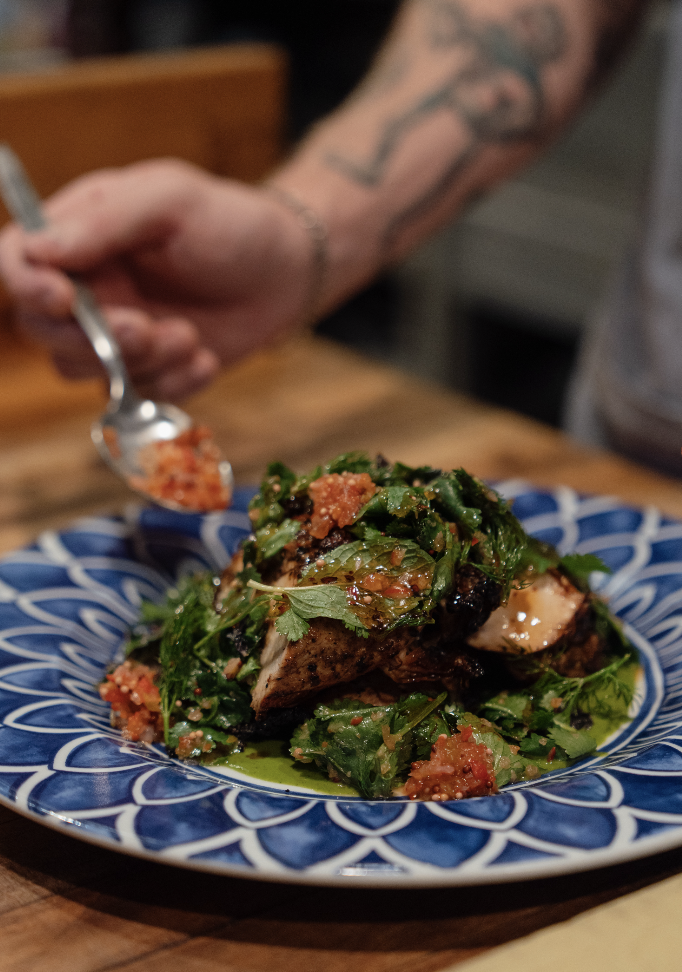
Owens is now cooking his version of Herb’s classic roasted chicken. He’s at the grill sparring with the brined bird and some flames. This chicken, unlike the original, has pepper relish, green tahini and biryani spice. It’s got crisp skin yet tender meat. Each component is a flavor-bomb, making it a magnificent game to compose each bite.
Courtesy of Herb & Wood
See, the restaurant is still Mediterranean-inspired. It’s still got those gorgeous Johnny Lane canvases on the wall and that jaw-dropping sight when you step through the door, but there’s now an extra spice in the air. “The identity of the restaurant is the same,” Stoun assures. “But the energy is different.”
While there is a playful irreverence in what Owens does, he also cares a lot about the food and the people. Owens teaches and guides and talks because he wants everybody in the kitchen to learn something everyday. “I want everyone to leave here feeling like [they’re] ready for my next restaurant […] I would love people to walk out of here like future chefs.”
Chef Owens now pulls out a 120-pound tuna. He places the head on the cutting board and then fillets it perfectly, carefully lining up the pink little squares into a refined crudo. He’s moving away from the classic olive oil and squeeze of lemon. Instead, there’s calamansi vinaigrette. There’s lime leaf oil. There’s tomatillo. “I’m after those big bold punchy flavors,” says Owens. “If I’m eating something, I want it to be like ‘Whoa!’”And whoa these tender bites of fish absolutely are.
Courtesy of Herb & Wood
While the chef cleaned his knives and wrapped up the remaining tuna, we also learn charming tidbits about him. He doesn’t like butchering lobsters. “It makes me sad,” he says. “I think they are so cute.” If they are on the menu, he’ll send out an SOS in the form of, “Anyone here want to do this today?” He also finds sea urchins inordinately endearing. “They wear hats!” he says, referring to how they will pick up nearby debris to hide under, which has led to people placing tiny sombreros near them and recording the aftermath. “It’s the cutest thing in the world,” he says.
Google it. You’ll see.
Besides the bolder new flavors, Owens hopes each visit offers his patrons a compelling and fun new memory. He explained that, as chefs, it’s easy to feel like it’s just any other day in the kitchen, but he pushes himself, his fellow chefs to think differently—to marvel at their surroundings like they did the first day they stepped through those big gorgeous doors and to get excited about what they can offer. Because at the end of the day, it’s not just about the food, it’s about the experience. “They chose to have their dinner with us—their celebrations and gatherings,” he explained of Herb & Wood’s guests, “So I’m always like, ‘Let’s make this fucking cool for them.’”
A clinical trial for an innovative new type of replacement heart valve that doesn’t require open-heart surgery saved John Rufo’s life. The 65-year-old biomedical engineer had been living day to day with severe aortic regurgitation, which forces the heart to work harder and weaken over time. Without replacing the aortic valve in his heart, John wouldn’t have survived long. But complications from an open-heart surgery more than a decade prior made a second open-heart surgery impossible. The new device and the Scripps cardiologists who helped bring it to market gave John and his family new hope. Click here to read more of John’s story.
For more nutrition, wellness, and healthy living tips, sign up for the San Diego Health newsletter here.
Philanthropists and Scientists Join Forces for a Bold $55 Million Campaign
La Jolla Institute for Immunology (LJI) is going public with a bold bet: a $55 million campaign to propel medical research into a new era. The Campaign for LJI will fuel discovery, empower scientific innovation, and expand the impact of immunology on human health.
The Institute quietly kicked things off in 2023, guided by its Board, campaign volunteers, and early believers. Nearly 80% of the $55 million goal is already in hand. Now LJI is opening the doors and inviting the whole community to carry their visions across the finish line and back discoveries that change how LJI researchers understand, treat, and prevent disease.
And there’s a bonus. To mark the public launch, LJI Board member and Campaign Honorary Chair Anthony R. Carr is offering a special matching gift so new donors can double their impact. Full details are here.
The Promise of Immunology
Immunology has already rewritten human history. Advances in immune science helped wipe out smallpox, pushed polio to the brink of elimination, and revolutionized how we prevent and treat infectious disease. Today, immune-based therapies are opening doors for patients with cancer, autoimmune disorders, and other serious illnesses once considered untreatable.
For nearly four decades, LJI scientists have stood on the front lines, driven by one insight: the immune system shapes disease in virtually every organ in the body. By decoding how the immune system works and how to harness it to prevent and treat disease, LJI researchers are chasing the Institute’s ultimate mission: Life Without Disease®.
To make that mission real, the Institute pairs world-class scientists with cutting-edge technology, speeding up breakthroughs and turning discoveries into transformative new therapies that ease suffering worldwide.
The Campaign for LJI supercharges that momentum, uniting the vision of the Institute’s scientists with a community that believes in research. Focused on advancing LJI’s most promising areas of study, the campaign aims to help build a future free from the burden of disease, a goal that demands bold ideas, lasting partnerships, and generous philanthropic support.
The Campaign for LJI will advance research across three critical pillars:
1. President’s Priority Fund. Flexible, unrestricted dollars let big ideas move now, not later. Scientists can launch high-risk, high-reward projects, bring experts together across disciplines, build transformative technologies, and train tomorrow’s scientific leaders.
2. Center for Sex-Based Differences in the Immune System. Male and female immune systems don’t respond the same way, and LJI researchers are tracing the fundamental differences down to individual cells and molecular pathways. The Campaign will speed up this pioneering work, revealing hidden drivers of disease and paving the way for more precise, biologically informed therapies for autoimmune disorders, infectious diseases, cancer, and beyond.
3. Center for Vaccine Innovation. Immunologists, bioengineers, and vaccine experts are teaming up to design the next generation of vaccines and immune-based therapies. With donor support, LJI scientists can engineer longer-lasting and more personalized vaccines, pinpoint the cellular mechanisms driving protective immunity, and refine delivery methods to prevent autoimmune disease and treat cancer.
A Lasting Impact
As the campaign enters its public phase, LJI welcomes new partners and supporters to join this landmark initiative. Community support is essential to accelerating scientific discovery, and there are many meaningful ways to help shape the future of immunology. Donors may direct their gifts to any campaign priority or other area of interest. As a comprehensive campaign, all gifts to LJI count toward the campaign goal, regardless of designation. Join the campaign, and multiply your impact with our limited-time matching opportunity.
Shiley Center for Orthopaedic Research and Education at Scripps Clinic recently received a $12.7 million grant from the California Institute for Regenerative Medicine to investigate whether they can transform stem cells into tissue that can repair some types of knee injuries. Currently, if a patient has lost most, if not all, of the cartilage in their knee, then their doctor will recommend a total joint replacement. Joint replacement is safe and effective, but patients who’ve only lost part of their cartilage often don’t qualify. A stem cell-based treatment would provide these patients an option that doesn’t involve donor tissue. Click here for more on the preclinical trial process.
For more nutrition, wellness, and healthy living tips, sign up for the San Diego Health newsletter here.
The recently opened Lusardi Tower at Scripps Memorial Hospital Encinitas is a state-of-the-art addition to the hospital staffed by dedicated team members who’ve helped make Scripps one of the nation’s leading healthcare systems. Complementary to that medical excellence, the Lusardi Tower also represents the latest expansion of the Scripps Arts for Healing Program. The philanthropic initiative strategically places nature- and community-based artwork throughout the hospital to support health and well-being. Both Scripps Encinitas and Scripps Memorial Hospital La Jolla have healing arts programs as part of new building projects and growth on the campuses. Click here to read more about the Healing Arts Program and how residents from a nearby retirement community showed their support.
For more nutrition, wellness, and healthy living tips, sign up for the San Diego Health newsletter here.
From century-old Craftsman homes to vegan fantasy bars, dive bars, and a tiki room built for exactly two people, this is one of San Diego’s great little neighborhoods
You may not realize it, but Balboa Park is bigger than Central Park (in fact, 1.5 times larger). Pressed right up against its southeastern edge is a little architecture farm built on old trolley bones, where houses look like someone was collecting architectural styles and local businesses are still run by people who seem personally invested in keeping this place interesting.
This is South Park.
To understand why it feels the way it does today—less like one commercial strip and more like a handful of tiny villages—you have to go back to the trolley.
How the Trolley Built South Park
The land that became the original South Park Addition (the subdivision’s original name) was surveyed in 1870 and officially filed in 1890, but the neighborhood really started becoming a neighborhood in the early 1900s. The Bartlett Estate Company began developing and marketing the tract in earnest around 1906, pairing lots and new homes with something extremely useful if you lived outside Downtown in the horse-and-buggy era: an electric streetcar.
On May 1, 1906, the South Park and East Side Railway made its first trip. Developers didn’t just build near transportation; they helped pay for the transportation, then used it to sell the dream. Downtown had industry, noise, and congestion. Out here were palms, sidewalks, utilities, room to breathe and a four-cent ride back to the city.
It worked. Homes began filling in around the streetcar route, and little commercial clusters grew around the places where people got on and off. That transportation pattern is still written into South Park’s geography. Some of the neighborhood’s odd street geometry is also due in part to the trolley—the old line cut across parcels instead of politely obeying the grid, leaving behind pieces of land that later businesses learned to build around. Places like Station Tavern sit on the former easement and station site of San Diego’s No. 2 trolley line.
Then San Diego went big for the 1915 Panama-California Exposition in neighboring Balboa Park. The exposition transformed much of the park and helped push the city through another burst of building and growth. South Park was right there to absorb some of that momentum.
And the people building houses here had taste.
Walk the residential streets now and it can feel like somebody planted an architectural sample garden: Craftsman, Prairie, Mission Revival, Tudor Revival, Spanish Colonial Revival. Creedence Clearwater Revival. All the revivals. The neighborhood includes work by Irving Gill, one of the defining architects of early modern California; Gill-designed Prairie homes still stand along Granada Avenue.
The city formally designated the South Park Historic District in 2017, recognizing roughly 400 properties and a period of significance stretching from 1906 through 1949. In other words, a lot of what makes the place feel old is actually old.
While the trolley eventually disappeared, the basic idea behind it didn’t. South Park is still a neighborhood organized around little pockets of human activity: a couple blocks where you can buy a record, drink a beer, find a 60-year-old lamp, eat a vegan burger beneath gothic beasts, browse a bookstore, and walk home past a century-old Craftsman.
The 30th-and-Fern area may be the clearest example. Several surviving buildings there date to South Park’s early development, including the old Fire Station No. 9, Rose Grocery building, and Burlingame Garage. What began as infrastructure for a young streetcar suburb became the neighborhood’s commercial heart.
That history is also partly why buying a house here can be competitive. There isn’t some endless supply of vacant land waiting around the corner for another subdivision. Much of the neighborhood filled in generations ago, and the architecture itself is part of the appeal.
San Diego Mag’s been documenting the city for 78 years. And we’ve been looking for a partner who loved the city enough to help us tell its stories. Redfin is that partner. They’re helping us tell the story of some of the city’s most unique neighborhoods. They launched Redfin Early Access this year to get their people in first and to see certain coming-soon and exclusive listings on Redfin before they appear on other major real-estate sites.
First up: South Park.
Here are some of the people and places worth knowing here:
Whistle Stop Bar
Big Kitchen Cafe
Start with Judy “the Beauty” Forman, because it’s difficult to explain South Park without her. The former social worker bought Big Kitchen in 1980 and turned a neighborhood breakfast joint into a gathering place for artists, musicians, activists, politicians, eccentrics, and pretty much anyone who needed somewhere to belong. As Judy puts it, “I built this for people who others passed over.”
One of those people was a young single mom named Whoopi Goldberg, who worked as a dishwasher here before the WhoopiGoldberg part of her career happened. Today Big Kitchen still serves breakfast and lunch Thursday through Monday.
3003 Grape Street
Whistle Stop Bar
Whistle Stop reopened in 2001, right as South Park’s little independent-business ecosystem was finding a new generation. Owner Sam Chammas—also connected to Live Wire and, later, Station Tavern—helped turn it into the kind of neighborhood bar where the calendar can jump from a DJ night to live bands to some strange communal event nobody at a normal sports bar would propose.
The room still has that laid-back, slightly sweaty house-party quality. Check what’s happening before you go, because Whistle Stop changes personality depending on the night: sometimes neighborhood beer, sometimes everyone dancing beneath the disco ball like work tomorrow was canceled.
2236 Fern Street
Station Tavern
Station Tavern may be the most literal example of old South Park becoming new South Park. It opened in 2009 on land once crossed diagonally by the No. 2 trolley line, and architect Lloyd Russell incorporated that history into the design rather than pretending the weirdly shaped lot wasn’t weirdly shaped. The project won the San Diego Architectural Foundation’s Grand Orchid Award the same year it opened.
Sam Chammas built the place as an open-air burger-and-beer spot with big communal tables, a backyard, room for kids, and room for dogs. It still works exactly that way: get a burger, get the tots, let everybody spread out, stay awhile.
2204 Fern Street
Kindred + Throne Room
Kindred arrived in late 2015 looking nothing like the beige-and-leafy vegan restaurant stereotype. The place went full gothic fever dream—heavy music, wild cocktails, decadent plant-based food—and eventually collected national vegan accolades plus local Restaurant of the Year and design honors.
And in 2026, it got even weirder. Hidden behind a chain-mail passage inside Kindred is Throne Room, a medieval-fantasy cocktail chamber whose mythology grew out of a Dungeons & Dragons-inspired map the Kindred team created for a 2017 Coachella pop-up. The 90-minute experience has scroll menus, plant-based mezze, cocktails and zero interest in pretending restaurants need to behave normally.
1503 30th Street
Bad Madge & Co.
Vinyl Junkies Record Shack
Vinyl Junkies has good music-scene DNA. Founder Eric Howarth previously ran indie label Hi-Speed Soul, whose roster included acts like Nada Surf and Swervedriver, then teamed with Casbah owner Tim Mays after the pair had spent years putting on Vinyl Junkies record swaps.
They opened the South Park brick-and-mortar shop in 2017, and it remains a buy-sell-trade temple for people who understand that owning music on a physical object is irrational in exactly the right way. Go flip through the new arrivals. Leave holding something you had absolutely no intention of buying.
2235 Fern Street
Bad Madge & Co.
Bad Madge is what happens when “vintage store” doesn’t quite explain the situation. Owner Tanya McAnear and her team fill the shop with furniture, clothing, barware, records, art, jewelry, collectibles, and various objects that seem like they may know things about their previous owners. The shop opened in 2011 and has made reuse and upcycling part of its identity ever since. Go in without looking for anything specific—specificity will only slow you down.
2205 Fern Street
Thread + Seed
Across the neighborhood’s vintage-and-vinyl universe sits Thread + Seed, a local boutique built around clothing, denim, gifts, and personal styling. Its South Park shop has an especially deep denim program—petite, tall, wide-leg, straight, flare—and the store also offers one-on-one styling built around color and body type. In other words, this is where you go after deciding the jeans currently on your body have betrayed you. South Park understands that sometimes personal renewal begins with pants.
2220 Fern Street
The Book Catapult
Seth Marko started The Book Catapult as a book blog in 2006. In 2017, he and his wife, Jennifer Powell, turned it into an actual bookstore in South Park, specializing loosely in fiction, local interest, and children’s books while maintaining the more important bookseller skill: putting something into your hands that you didn’t know you needed.
There are staff picks, author events, signed books, and the dangerous possibility of walking in for one title and emerging with four. Because no one ever died thinking, “I shoulda read less.”