Featured articles
Food & Drink
Food & Drink
Food & Drink
Featured articles
Everything SD
Everything SD
Everything SD
Featured articles
Things to Do
Things to Do
Things to Do
Featured articles
podcast-ep
podcast-ep
video
Featured articles
Everything SD
Everything SD
Everything SD
Featured articles
Partner content
Partner content
Partner content
Ready to know more about San Diego?
SubscribeReady to know more about San Diego?
At the University of San Diego, we believe there’s a better way to do business.
Atrium-1.jpg
At the University of San Diego, we believe there’s a better way to do business.
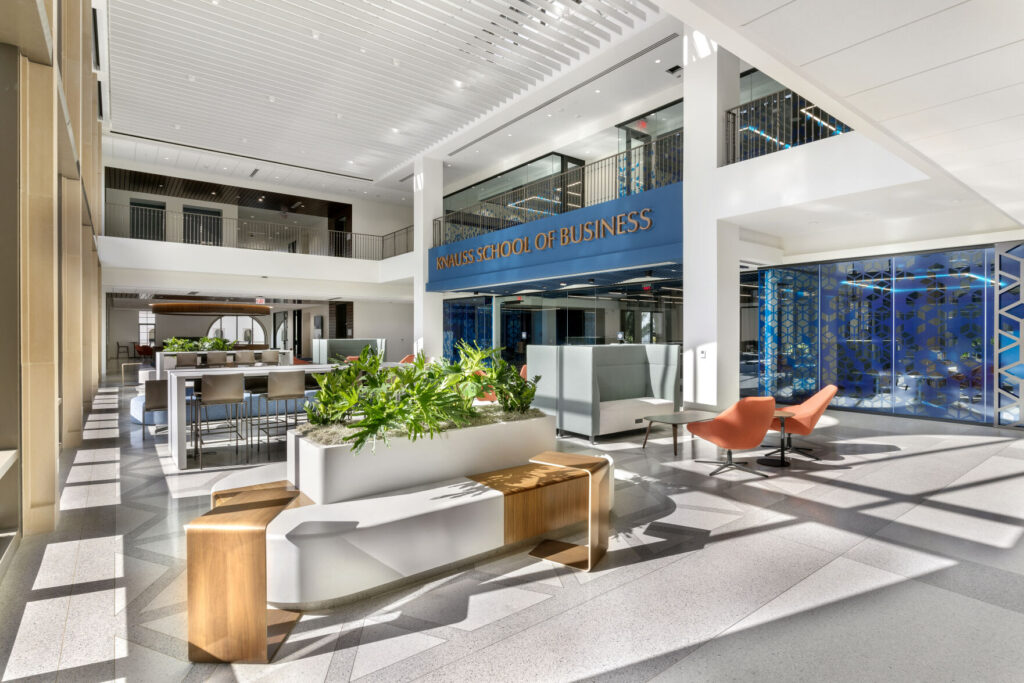
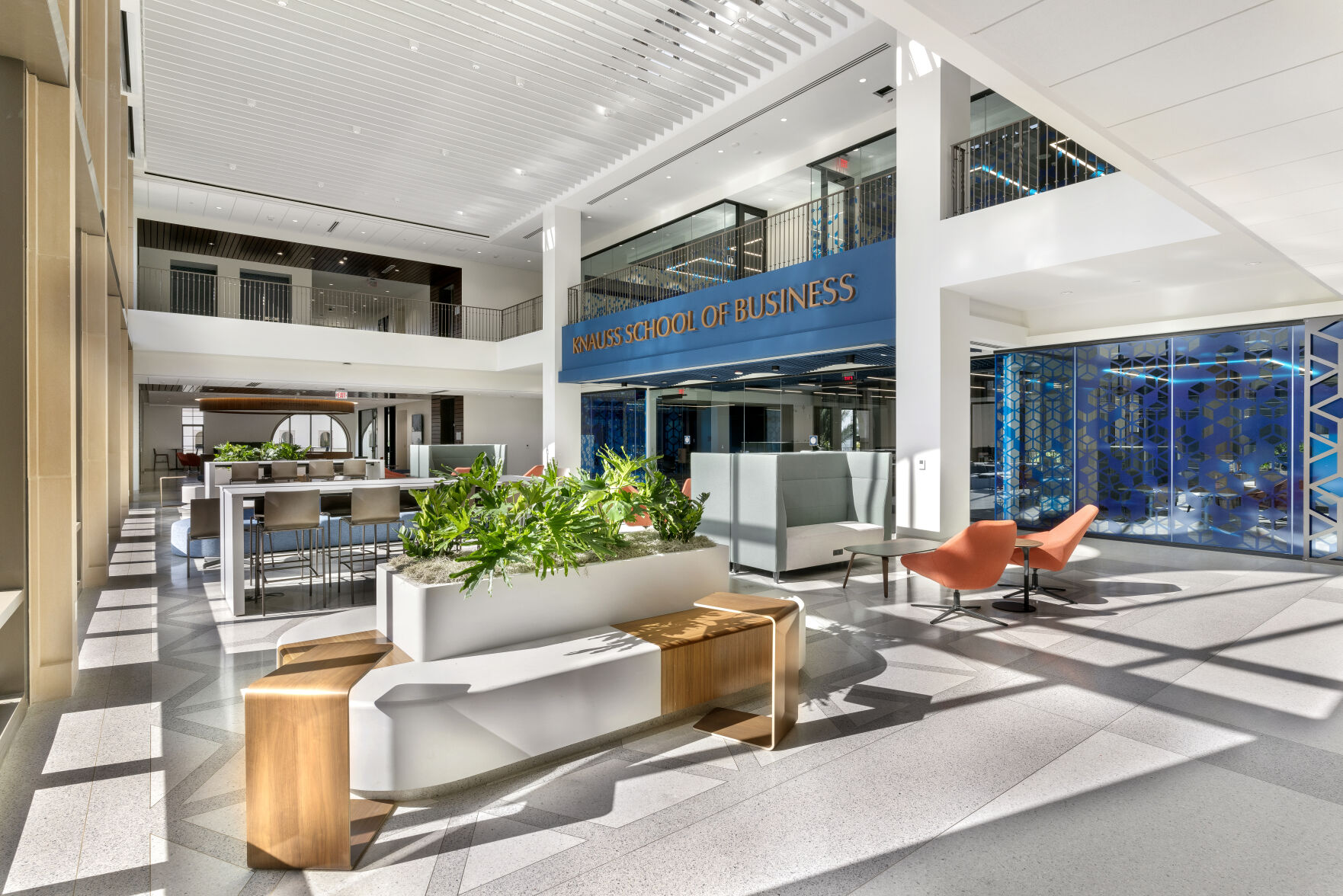
We’re constantly thinking about what lies ahead, just beyond the horizon. At USD, we had a vision for creating ethical stewards who will shape tomorrow’s business world. And, this year, the Knauss Center for Business Education made that vision a reality.
The Knauss Center for Business Education is home to the newly named Knauss School of Business. The 120,000-square-foot complex allows us to expand our horizons, aim higher, pursue a greater good, serve a higher purpose and open new doors to students from all around the world.
Atrium-3.jpg
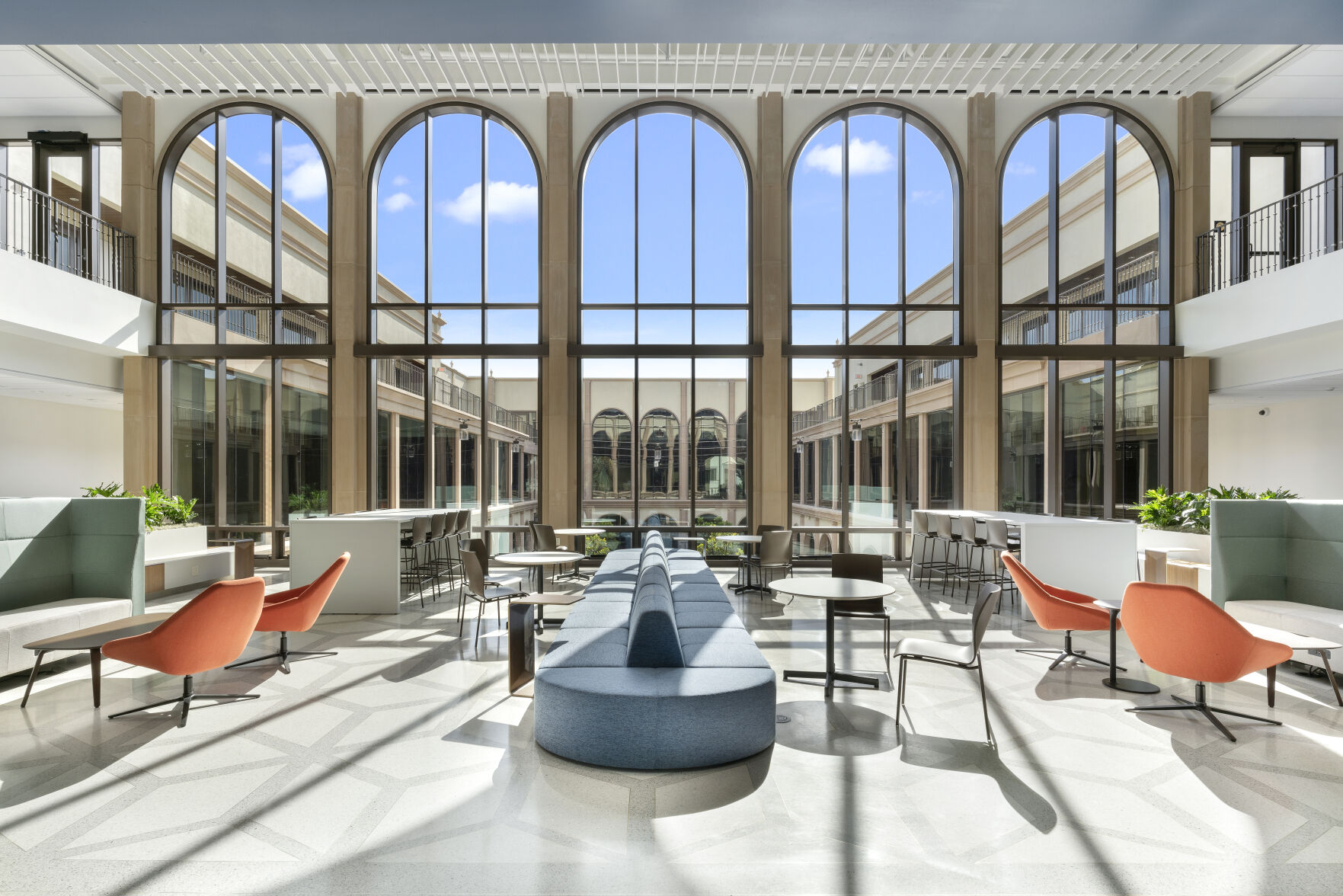
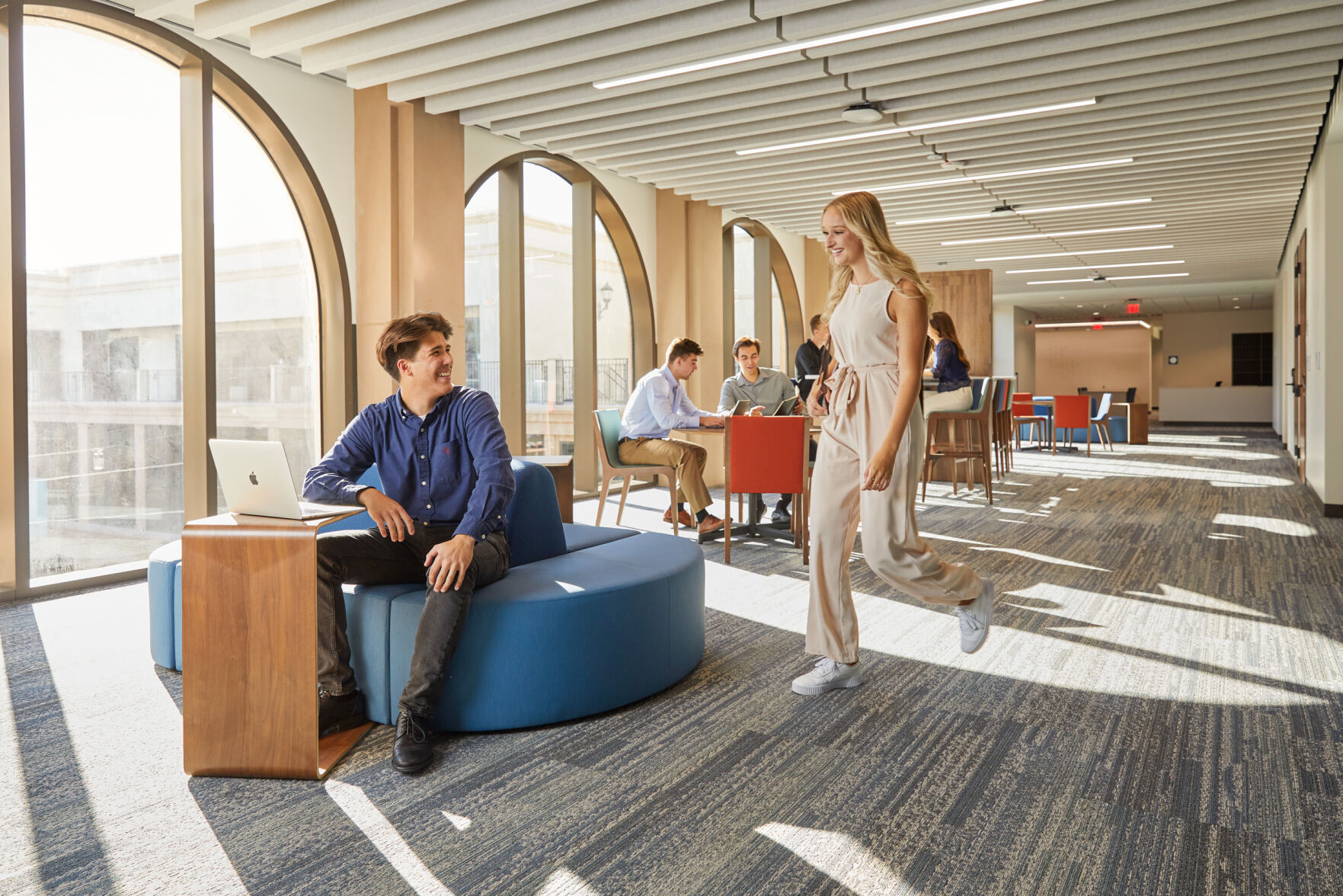
Located in the heart of the university’s beautiful campus, the Knauss Center glows in natural light that illuminates the entire building. This feature emphasizes transparency not only throughout its architecture, but also in the way business is taught.
Each space within the Knauss Center for Business Education is intentionally designed to create an ecosystem for innovation and collaboration that empowers students and inspires groundbreaking ideas that not only will serve the greater San Diego region, but will also inspire innovative Changemakers to confront humanity’s most urgent challenges.

Exterior.jpg
Dynamic Classrooms
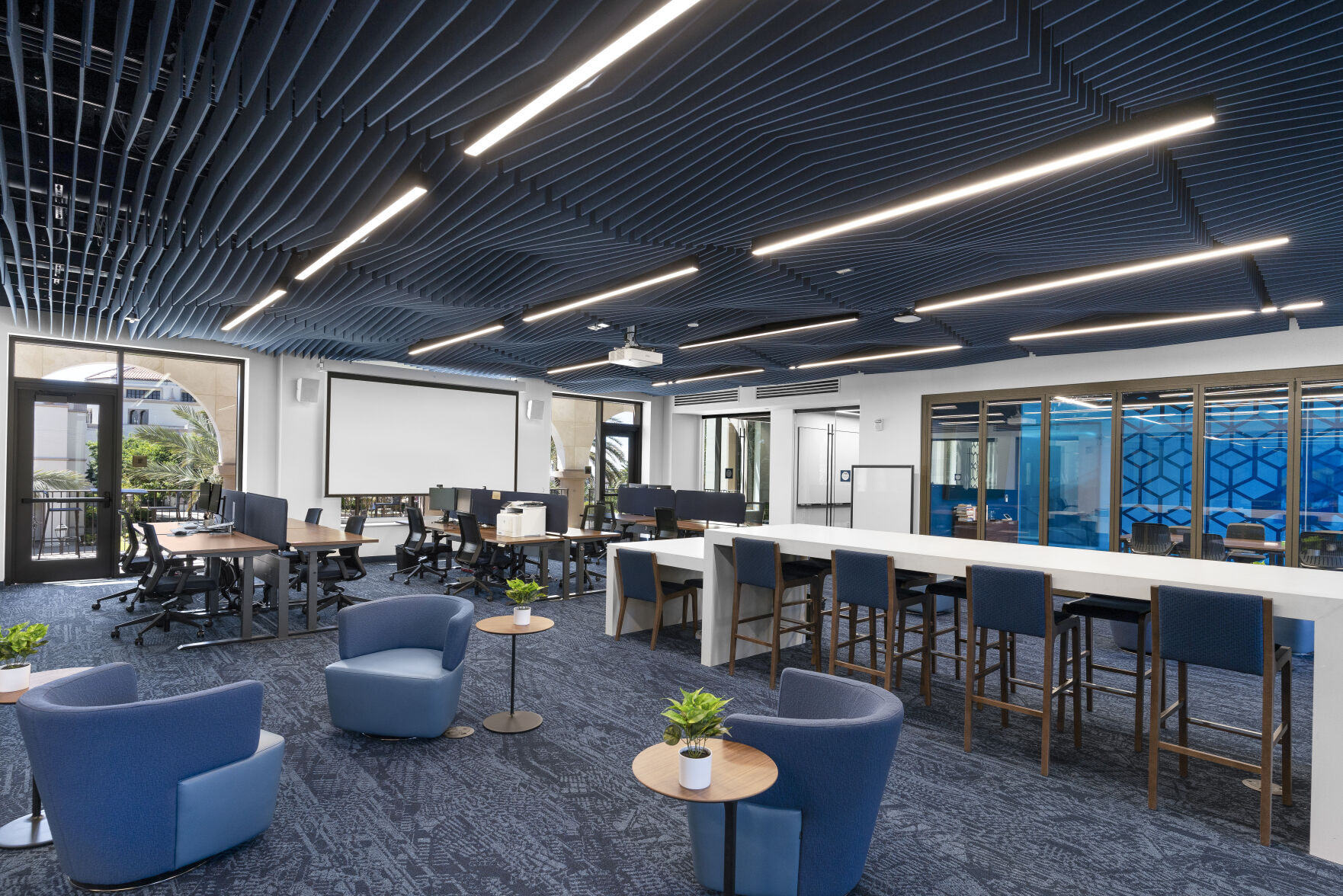
Students were welcomed this fall into the new learning environment, which is both adaptable and engaging. The building features more than 20 active-learning classrooms with cutting-edge technology and movable furniture that can be configured to serve group dynamics.
Integrating the latest in business technology, dedicated data analytics and finance labs connect students to industry software and tools that allow them to hone their business skills in classroom projects.
With a continually evolving curriculum, including a recently revamped MBA curriculum, vast experiential learning opportunities, and its new hub for collaboration and innovation, the Knauss School of Business is showing that there’s a better way to do business.
FEI-1.jpg
Fostering Regional Innovation
The Knauss Center also houses the business school’s centers of excellence, including the Free Enterprise Institute. Within its suite, aspiring student entrepreneurs and budding San Diego startups can utilize the new Catalyzer Incubator, a maker space with state-of-the-art technology to help fuel innovative business ideas.
Entrepreneurs can also seek business support through The Brink Small Business Development Center, where faculty members and industry thought leaders mentor hundreds of San Diego small businesses. Local startups that have received entrepreneurial support from The Brink include Vizer, Maya’s Cookies, Babe Kombucha, ChargeNet Stations, and more. The Brink, already ranked No. 1 Business Incubator and Accelerator by the San Diego Business Journal, was recently named an Inclusive Innovation Hub by the California Office of the Small Business Advocate.
SSC.jpg
Nurturing Student Success
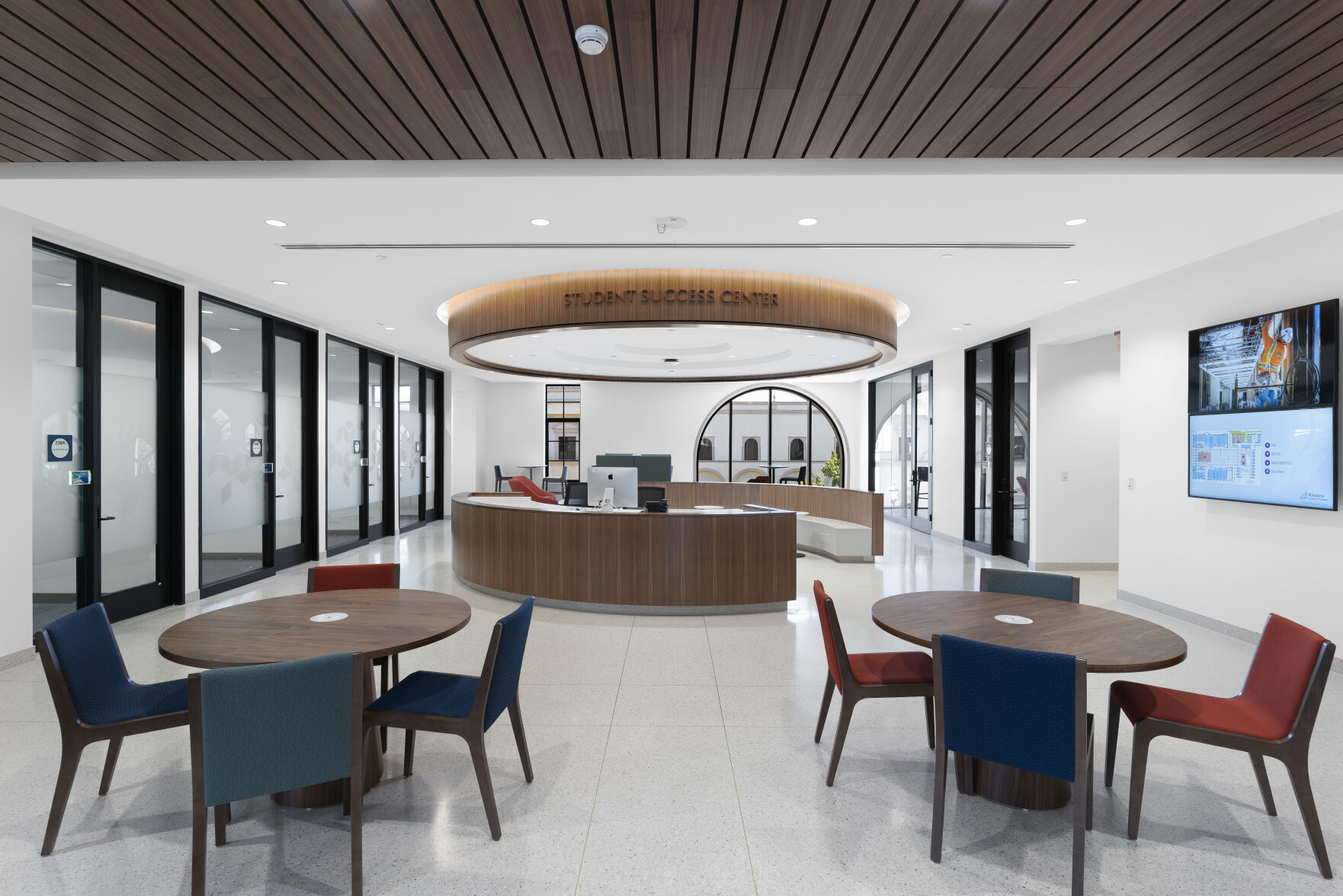
Located prominently near the main entrance of the Knauss Center is the school’s Student Success Center, a walk-up hub for all student support services — where business students can receive personalized academic advising plans and professional development roadmaps. Students can also enhance their career paths by using the Torero One Button production suite, a state-of-the-art studio, to create mock interviews, presentations, videos and podcasts — all with the touch of a button. And they can take professional headshots in the brand new Iris photo booth.
Students.jpeg
Reimagining Business Education
“This new state-of-the-art complex is designed to meet the needs of the next generation of business leaders,” says Tim Keane, PhD, dean of the Knauss School of Business and the visionary behind the new facility. “It’s open, collaborative, empowering. It allows our students to dream, and our faculty to support those dreams.”
Learn more about the Knauss School of Business at sandiego.edu/business.

.
Behind every beautiful space is a thoughtful process, and ASID San Diego is helping homeowners understand the value of professional design.
A perfectly designed home rarely happens by accident. Those kitchens that feel effortless and rooms that seem to tell a story the second you walk in? They’re usually the work of someone who knows exactly what they’re doing.
It’s knowing which ideas will actually work, which materials will hold up over time, and how to turn a collection of choices into a space that feels intentional. That’s where a professional interior designer comes in.
For the American Society of Interior Designers (ASID) California San Diego Chapter, the goal is to help people see interior design as more than just the finished look. Behind every well-designed space is a process built on technical expertise. Designers are educated in everything from professional software and construction details to building codes, space planning, materials, and functionality.

“People don’t always realize how much goes on behind the scenes,” Kirsten Recce , current president of the ASID California San Diego Chapter, says. “Our designers are not just doing furniture placement and color selection and picking out new fluffy pillows. That’s not what they’re trained for.”
ASID members bring formal education, continued learning, and industry knowledge to their projects, helping create spaces that are not only beautiful, but designed to work. A paint color that changes completely depending on the lighting. A material that looks beautiful in a showroom but doesn’t make sense for everyday life. A layout that photographs well but doesn’t function for the people living there. These are the details where professional guidance can make all the difference.
Still, one of the biggest misconceptions about hiring an interior designer is that it’s reserved for massive renovations, luxury homes, or people who already know exactly what they want. The process can feel intimidating. Where do you begin? Is a designer worth the investment? What if you only need help with one room?
ASID’s answer: start with one hour.
ASID’s Spruce Up events break down one of the biggest barriers between homeowners and professional design: knowing where to begin. Held twice a year, the community program gives homeowners the chance to work directly with an ASID designer through a one-hour, $125 consultation in their own home. Whether you’re looking for advice on furniture placement, window treatments, kitchen and bath updates, remodeling ideas, vacation rentals, color selections or something else entirely, the upcoming September 2026 event offers an approachable way to get expert guidance before committing to a full project. Signups are open through Sept. 7, with consultations taking place Sept. 21 through Oct. 31. Proceeds benefit ASID San Diego’s educational and community programs. Register here!

“It’s a great opportunity for people who are in that exploratory phase,” Recce says. “Maybe they’re not sure they want to hire an interior designer yet, or they think it sounds daunting or expensive. This gives them a chance to discover what working with a designer is actually like.”
Design is personal. A good designer isn’t just creating a beautiful room; they’re helping create a space that fits the way someone lives.
“We’re a resource to all of San Diego County,” Recce says. “It doesn’t cost anything to pick up the phone and call and ask. We’ll answer.”
Follow ASID San Diego on Instagram, LinkedIn, and Facebook for updates on upcoming events, or connect with the chapter directly at [email protected] or 619-548-8847.
A new program guides new moms through high-risk pregnancy and into the “fourth trimester”
Mai Vue was just 34 weeks pregnant when she delivered her baby. Her pregnancy had been complicated, and she’d had a recent second trimester pregnancy loss, which led to her receiving specialized care from Sean Daneshmand, MD, a Scripps Clinic perinatologist who oversees high-risk pregnancies. Dr. Daneshmand and his team took care of Mai during her pregnancy, through the birth of her healthy baby girl and beyond. Mai was part of a program Scripps launched to provide support to new moms in the weeks and months after delivery. The postpartum program, known as Scripps Health’s Fourth Trimester Continuum of Care, provides care for women with high-risk pregnancies to optimize their health after childbirth and reduce the risk of complications in future pregnancies. Click here to learn more.
For more nutrition, wellness, and healthy living tips, sign up for the San Diego Health newsletter here.
Scripps Clinic’s Mohs surgery center is one of the most sophisticated in the country.
It’s estimated that one in five people in the U.S. will develop skin cancer at some point in their lives. When you factor in living in a sun-soaked city like San Diego and the outdoorsy lifestyle that comes with it, that figure can jump to as high as one in three, which makes early detection and intervention all the more important. Dermatologists at Bighorn Mohs and Dermatology Center are using innovative imaging methods and advanced surgical techniques to diagnose and treat skin cancer. For certain cancers in sensitive spots, like the face, dermatologists perform Mohs surgery, removing skin tissue layer by layer until reaching healthy, cancer-free tissue. They also use a process called immunohistochemistry to view tissue samples taken during Mohs surgery in far greater detail than previous methods. Read more about how Scripps is advancing skin cancer care here.
For more nutrition, wellness, and healthy living tips, sign up for the San Diego Health newsletter here.
Scripps Cancer Center helps an endurance athlete overcome his greatest challenge yet and get back in the race
When endurance athlete Isaac Sanchez learned he had cancer, he felt blindsided. He was healthy, surfed often and was training for an Ironman triathlon. But he had to put that on hold to undergo treatment. His physicians at Scripps Cancer Center developed a plan to treat the cancer in his tonsil and lymph nodes that included six-and-a-half weeks of near-daily radiation and weekly chemotherapy. He also worked with a Scripps Cancer Center dietitian to enhance his nutrition to promote strength and healing. Today, Isaac’s back to doing what he loves. Read more of his story here.
For more nutrition, wellness, and healthy living tips, sign up for the San Diego Health newsletter here.
Scripps study shows that some patients may be able to taper their dose and maintain results
While glucagon-like peptide-1 (GLP-1) receptor agents have been used to treat Type 2 diabetes for more than 20 years, their recent emergence as weight-loss wonder drugs marked a new frontier in medicine. But their effectiveness has left some patients wondering what to do once they’ve reached their goal. Stopping the medication could mean regaining some, if not all, of the weight. A Scripps Clinic internal medicine physician recently conducted a small study of whether GLP-1 patients who had reached their goal weight could maintain that weight by taking their regularly prescribed injection every other week instead of weekly. Spoiler alert: 30 of 34 patients did. Read more about the study here and what that may mean as pharmaceutical companies roll out oral GLP-1s.
For more nutrition, wellness, and healthy living tips, sign up for the San Diego Health newsletter here.
Innovative treatment could offer cancer patients new options with fewer side effects
Chemotherapy and radiation have long been considered gold standards of cancer treatment, but they can cause severe side effects. A promising new approach called theranostics—a combination of “therapeutics” and “diagnostics”—could offer patients with certain types of metastatic cancers new hope. It’s a two-step process that uses a drug that binds to specific receptors on cancer cells. Advanced imaging detects this radioisotope, allowing doctors to then use a second radioisotope that binds to the cancer cells and destroys them. Click here to learn more about how specialists at Scripps Cancer Center are using theranostics.
For more nutrition, wellness, and healthy living tips, sign up for the San Diego Health newsletter here.