
Things to Do
15 Things to Do in San Diego This Weekend: Nov. 3–8
Read article

Featured articles
Food & Drink
Food & Drink
Food & Drink
Featured articles
Features
Features
Everything SD
Featured articles
Things to Do
Things to Do
Things to Do
Featured articles
podcast-ep
podcast-ep
podcast-ep
Featured articles
Features
Features
Everything SD
Featured articles
Partner content
Things to Do

Partner content

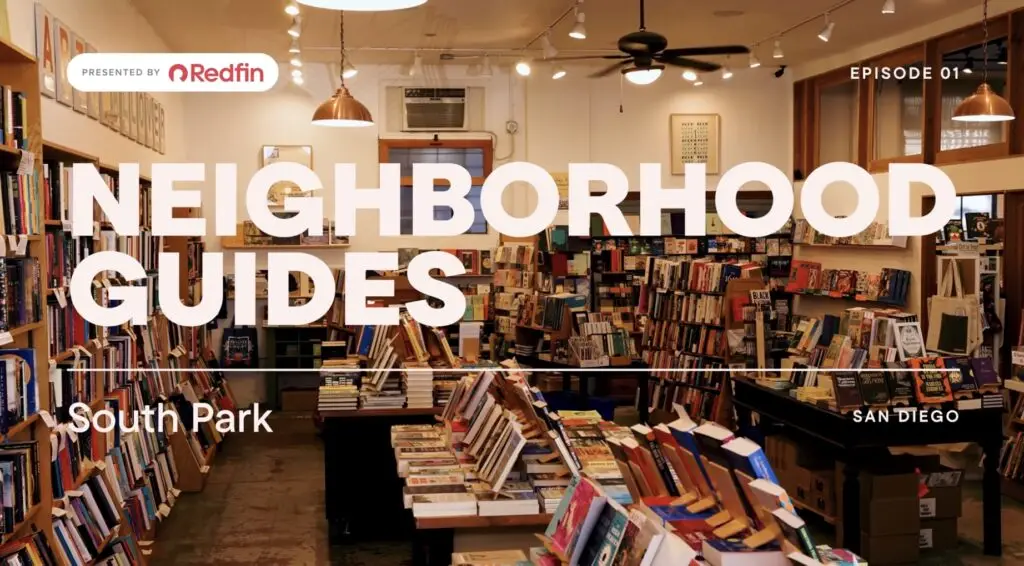
You may not realize it, but Balboa Park is bigger than Central Park (in fact, 1.5 times larger). Pressed right up against its southeastern edge is a little architecture farm built on old trolley bones, where houses look like someone was collecting architectural styles and local businesses are still run by people who seem personally invested in keeping this place interesting.
This is South Park.
To understand why it feels the way it does today—less like one commercial strip and more like a handful of tiny villages—you have to go back to the trolley.
The land that became the original South Park Addition (the subdivision’s original name) was surveyed in 1870 and officially filed in 1890, but the neighborhood really started becoming a neighborhood in the early 1900s. The Bartlett Estate Company began developing and marketing the tract in earnest around 1906, pairing lots and new homes with something extremely useful if you lived outside Downtown in the horse-and-buggy era: an electric streetcar.
On May 1, 1906, the South Park and East Side Railway made its first trip. Developers didn’t just build near transportation; they helped pay for the transportation, then used it to sell the dream. Downtown had industry, noise, and congestion. Out here were palms, sidewalks, utilities, room to breathe and a four-cent ride back to the city.
It worked. Homes began filling in around the streetcar route, and little commercial clusters grew around the places where people got on and off. That transportation pattern is still written into South Park’s geography. Some of the neighborhood’s odd street geometry is also due in part to the trolley—the old line cut across parcels instead of politely obeying the grid, leaving behind pieces of land that later businesses learned to build around. Places like Station Tavern sit on the former easement and station site of San Diego’s No. 2 trolley line.
Then San Diego went big for the 1915 Panama-California Exposition in neighboring Balboa Park. The exposition transformed much of the park and helped push the city through another burst of building and growth. South Park was right there to absorb some of that momentum.
And the people building houses here had taste.
Walk the residential streets now and it can feel like somebody planted an architectural sample garden: Craftsman, Prairie, Mission Revival, Tudor Revival, Spanish Colonial Revival. Creedence Clearwater Revival. All the revivals. The neighborhood includes work by Irving Gill, one of the defining architects of early modern California; Gill-designed Prairie homes still stand along Granada Avenue.
The city formally designated the South Park Historic District in 2017, recognizing roughly 400 properties and a period of significance stretching from 1906 through 1949. In other words, a lot of what makes the place feel old is actually old.

While the trolley eventually disappeared, the basic idea behind it didn’t. South Park is still a neighborhood organized around little pockets of human activity: a couple blocks where you can buy a record, drink a beer, find a 60-year-old lamp, eat a vegan burger beneath gothic beasts, browse a bookstore, and walk home past a century-old Craftsman.
The 30th-and-Fern area may be the clearest example. Several surviving buildings there date to South Park’s early development, including the old Fire Station No. 9, Rose Grocery building, and Burlingame Garage. What began as infrastructure for a young streetcar suburb became the neighborhood’s commercial heart.
That history is also partly why buying a house here can be competitive. There isn’t some endless supply of vacant land waiting around the corner for another subdivision. Much of the neighborhood filled in generations ago, and the architecture itself is part of the appeal.
San Diego Mag’s been documenting the city for 78 years. And we’ve been looking for a partner who loved the city enough to help us tell its stories. Redfin is that partner. They’re helping us tell the story of some of the city’s most unique neighborhoods. They launched Redfin Early Access this year to get their people in first and to see certain coming-soon and exclusive listings on Redfin before they appear on other major real-estate sites.
First up: South Park.
Here are some of the people and places worth knowing here:
Start with Judy “the Beauty” Forman, because it’s difficult to explain South Park without her. The former social worker bought Big Kitchen in 1980 and turned a neighborhood breakfast joint into a gathering place for artists, musicians, activists, politicians, eccentrics, and pretty much anyone who needed somewhere to belong. As Judy puts it, “I built this for people who others passed over.”
One of those people was a young single mom named Whoopi Goldberg, who worked as a dishwasher here before the Whoopi Goldberg part of her career happened. Today Big Kitchen still serves breakfast and lunch Thursday through Monday.
3003 Grape Street
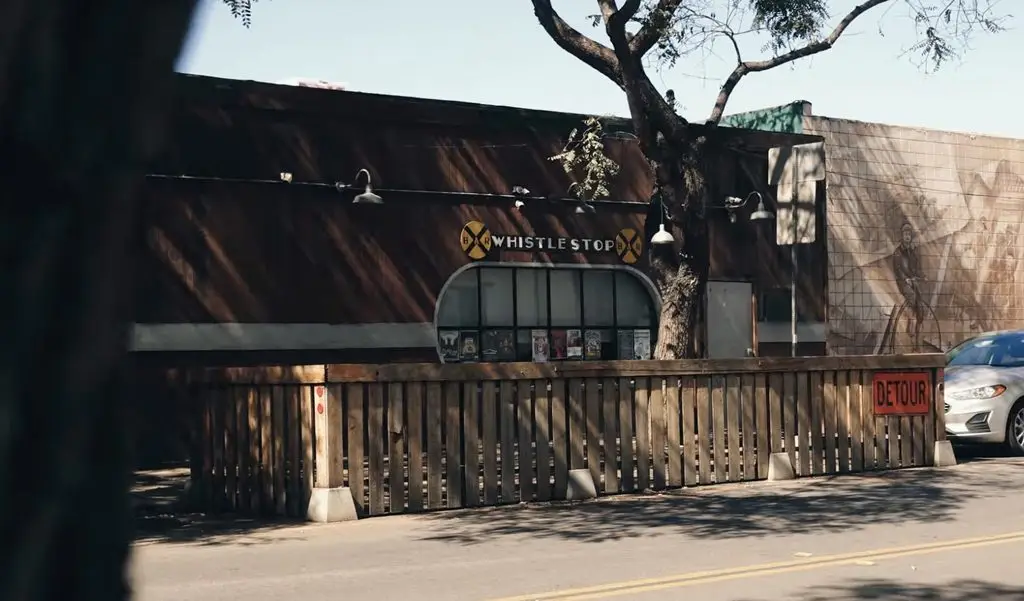
Whistle Stop reopened in 2001, right as South Park’s little independent-business ecosystem was finding a new generation. Owner Sam Chammas—also connected to Live Wire and, later, Station Tavern—helped turn it into the kind of neighborhood bar where the calendar can jump from a DJ night to live bands to some strange communal event nobody at a normal sports bar would propose.
The room still has that laid-back, slightly sweaty house-party quality. Check what’s happening before you go, because Whistle Stop changes personality depending on the night: sometimes neighborhood beer, sometimes everyone dancing beneath the disco ball like work tomorrow was canceled.
2236 Fern Street
Station Tavern may be the most literal example of old South Park becoming new South Park. It opened in 2009 on land once crossed diagonally by the No. 2 trolley line, and architect Lloyd Russell incorporated that history into the design rather than pretending the weirdly shaped lot wasn’t weirdly shaped. The project won the San Diego Architectural Foundation’s Grand Orchid Award the same year it opened.
Sam Chammas built the place as an open-air burger-and-beer spot with big communal tables, a backyard, room for kids, and room for dogs. It still works exactly that way: get a burger, get the tots, let everybody spread out, stay awhile.
2204 Fern Street
Kindred arrived in late 2015 looking nothing like the beige-and-leafy vegan restaurant stereotype. The place went full gothic fever dream—heavy music, wild cocktails, decadent plant-based food—and eventually collected national vegan accolades plus local Restaurant of the Year and design honors.
And in 2026, it got even weirder. Hidden behind a chain-mail passage inside Kindred is Throne Room, a medieval-fantasy cocktail chamber whose mythology grew out of a Dungeons & Dragons-inspired map the Kindred team created for a 2017 Coachella pop-up. The 90-minute experience has scroll menus, plant-based mezze, cocktails and zero interest in pretending restaurants need to behave normally.
1503 30th Street
Vinyl Junkies has good music-scene DNA. Founder Eric Howarth previously ran indie label Hi-Speed Soul, whose roster included acts like Nada Surf and Swervedriver, then teamed with Casbah owner Tim Mays after the pair had spent years putting on Vinyl Junkies record swaps.
They opened the South Park brick-and-mortar shop in 2017, and it remains a buy-sell-trade temple for people who understand that owning music on a physical object is irrational in exactly the right way. Go flip through the new arrivals. Leave holding something you had absolutely no intention of buying.
2235 Fern Street
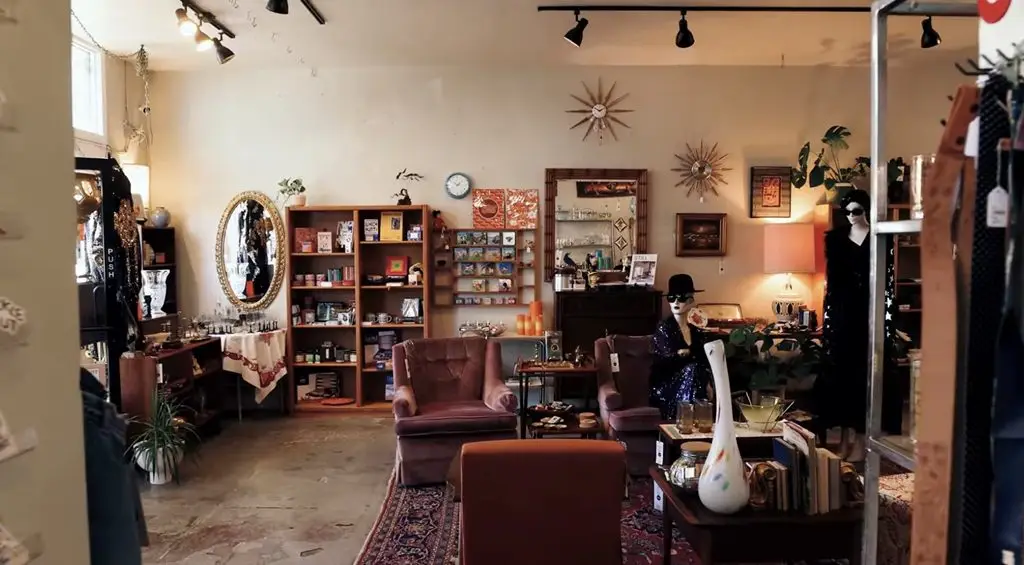
Bad Madge is what happens when “vintage store” doesn’t quite explain the situation. Owner Tanya McAnear and her team fill the shop with furniture, clothing, barware, records, art, jewelry, collectibles, and various objects that seem like they may know things about their previous owners. The shop opened in 2011 and has made reuse and upcycling part of its identity ever since. Go in without looking for anything specific—specificity will only slow you down.
2205 Fern Street
Across the neighborhood’s vintage-and-vinyl universe sits Thread + Seed, a local boutique built around clothing, denim, gifts, and personal styling. Its South Park shop has an especially deep denim program—petite, tall, wide-leg, straight, flare—and the store also offers one-on-one styling built around color and body type. In other words, this is where you go after deciding the jeans currently on your body have betrayed you. South Park understands that sometimes personal renewal begins with pants.
2220 Fern Street
Seth Marko started The Book Catapult as a book blog in 2006. In 2017, he and his wife, Jennifer Powell, turned it into an actual bookstore in South Park, specializing loosely in fiction, local interest, and children’s books while maintaining the more important bookseller skill: putting something into your hands that you didn’t know you needed.
There are staff picks, author events, signed books, and the dangerous possibility of walking in for one title and emerging with four. Because no one ever died thinking, “I shoulda read less.”
3010-B Juniper Street
