Featured articles
Featured articles
Featured articles
What's next
Featured articles
Featured articles
Featured articles
Ready to know more about San Diego?
SubscribeReady to know more about San Diego?
This SoCal mountain town is home to three of the six California trails on Jeep’s “Badge of Honor” bucket list

Families flock to Big Bear, located less than four hours from downtown San Diego, for skiing in the winter and watersports on the lake in the summer. But another must-do Big Bear activity is a lesser-known one: the mountain town is one of the best off-roading destinations in Southern California. “People have been off-roading up here for decades and decades. It started getting really popular in the ’70s,” says Desi Hauer, who owns local tour company Big Bear Off Road Experience.
Jeep maintains a bucket list of “Badge of Honor” off-roading trails in the US. Of the 68 trails on the list, California is home to six. Three of those—Gold Mountain, Holcomb Creek, and John Bull—are located in Big Bear. “People travel from all over the world to try to complete those trails,” Hauer says. “Not only do they have amazing views and scenery, but they have some very challenging terrain.”

John Bull is perhaps the most famous of the three trails, thanks in part to the entrance: 100 yards of massive boulders many call the Gatekeepers. Unlike many trails, the rocks and boulders on the John Bull trail are loose, which means they shift as vehicles roll over them, leading to constant, exciting changes. But it’s not for beginners—its black diamond rating means it’s among the most difficult on Jeep’s Badge of Honor list (similar to ski trails).
That’s why you won’t find yourself trundling down John Bull with Big Bear Off Road Experience, which provides customers the opportunity to learn the fundamentals of off-roading.
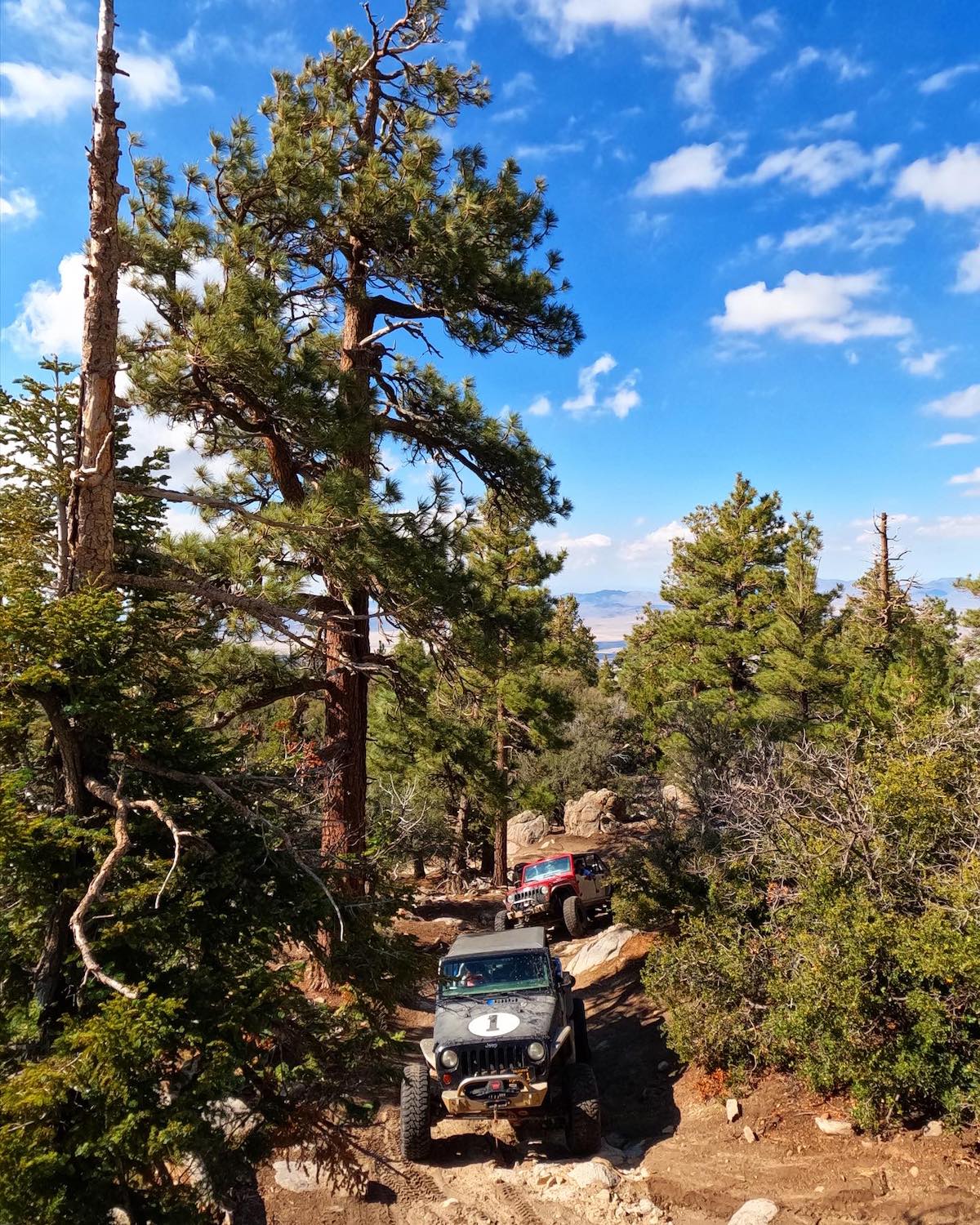
The company offers a guided tour in which participants drive their own off-road Jeeps, following behind a lead vehicle. Guides will show you how to air out the tires and spot you through the obstacles on the trails. “We teach them all about the techniques—driving over rocks, boulders, obstacles—and we go do it,” Hauer says.
According to Hauer, while the introduction of trail-capable vehicles to showroom floors has made off-roading more accessible (enthusiasts used to have to build the cars out themselves), those vehicles cost upwards of $80,000. Repeat customers from San Diego and Los Angeles look to Big Bear Off Road Experience to go off-roading a few times a year without making a major investment on a Jeep of their own.
Hauer initially started a wakeboarding and waterskiing school in Big Bear, but he soon realized that many people were more interested in experiencing the high performance boats than learning to wakeboard, inspiring him to give a similar customer base the chance to get behind the wheel of off-road Jeeps. Those who don’t want to drive, though, can hop on Hauer’s 12-passenger TourZilla for a thrilling off-road tour of the valley.
Of course, the area’s off-road trails aren’t just limited to four wheels. The mountain town also draws dirt bikers with its annual Big Bear Run.
Molly Williams-Sunday and her husband, Steven Melhan, run Mystic Moto in the village. The unique store is part motorcycle-themed gift shop and part candlemaking bar called Ritual Provisions. The couple moved to Big Bear four years ago and is now part of a core group of dirt bikers. “We just came up for mountain biking initially. Once we moved in, we started discovering all the trails for dirt bikes,” Williams-Sunday says.

PARTNER CONTENT

Williams-Sunday and Mehlan previously lived in San Diego, where you have to drive at least an hour to find accessible land to ride on. In Big Bear, though, you only need to go 15 minutes to find a trail. There’s a solid posse of regular dirt bike riders in Big Bear, but plenty of out-of-towners come out to ride in the spring and summer—and often roar into the main part of town. Soon, Mystic Moto plans to offer guided rides with dirt bikes for rent.
Off-roading in Big Bear is a year-round activity, thanks to the area’s multiple elevations (even if some trails are snowed in, you can always find an open one). So next time you’re in the area, take a break from the slopes or boats to try the trails on for size.

Fiona Chandra was born in Indonesia but currently calls Los Angeles home. As a freelance travel and food writer, she's always on the hunt for good food and unique experiences around the globe. She has written for Food & Wine, Thrillist, and more.
From San Diego’s coastline to Los Angeles stadium and fan zones across the region, here’s how to experience soccer’s biggest event
When three nations and 16 cities come together to host the FIFA World Cup 2026, the scale stops feeling like a tournament and starts feeling like geography. A continent becomes the stage as borders soften into corridors. And Southern California—shaped by migration, sport, entertainment, and constant movement—sits inside that landscape with all eyes on it.
San Diego and Los Angeles have always felt connected. Hop on the Pacific Surfliner, and the trip unfolds in one continuous stretch of coastline, passing beach towns, neighborhoods, and city centers.
Traveling from San Diego, everything still feels slightly suspended as the Pacific Surfliner follows the coast north with ocean on one side and a slow suburban blur on the other. San Diego stays in exhale. Los Angeles is already building toward something louder.
This summer, Los Angeles will host eight matches of the FIFA World Cup at Los Angeles Stadium, including the US Men’s National Team opener on June 11, while the region stretches into 39 days of programming across stadiums, parks, transit hubs, beaches, and neighborhoods. Instead of one massive fan hub, Los Angeles is embracing a citywide celebration, with fan zones spread across its entirety.
But this pattern has been rehearsed here for decades. In 1994, Southern California became one of the defining stages of the World Cup, when matches at the Rose Bowl placed global attention on the region and turned local stadiums into international landmarks, confirming its ability to hold the world at scale.
What distinguishes Southern California is not just infrastructure, but cultural permeability. Fashion, music, film, art, and sport constantly overlap here, creating an environment where identity is flexible and always in motion. From the Venice boardwalk, where skate culture shaped modern street style, to global soccer stars rubbing shoulders with Hollywood celebs, to authentic Spanish cuisine moving up and down the I-5 corridor, everything circulates.
The World Cup is not introducing anything new here, it’s showing up for the summer and showing out, revealing what this city has always known about itself. What follows is a look at the fan zones and how Los Angeles turns itself into a city-wide stage for the tournament, one neighborhood at a time.

As the heart of Los Angeles, Union Station is an official Fan Zone June 25-28 during the World Cup, but in practice it never really stops being one.
It is the city’s circulation point, its meeting ground, its pressure valve. Commuters, travelers, match-day crowds, and everyday Angelenos all move through the same space, and everything mixes, overlaps, and scales in real time. In a way, this is where the World Cup stops arriving in Los Angeles and starts moving through it.
The Pacific Surfliner from San Diego to Los Angeles makes that shift feel almost too easy. No stress or gridlock anxiety, just a straight line up the coastline with ocean on one side and everything slowly becoming more built on the other. It’s one of the rare ways into LA that doesn’t feel like arrival as friction. You can sit with a laptop, watch the Pacific drift past, grab coffee from the café car, and let the city come to you in pieces.
That’s the beauty of arriving at Union Station. Instead of feeling like you’re on the edge of the city, you’re immediately surrounded by it. And, inside, the station already reads like a World Cup nerve center: banners, movement, multilingual energy, the sense that something global is about to funnel through this exact point. The Heart of the City Fan Zone only sharpens that feeling, with simultaneous match screens, DJ sets, meet and greets, and immersive activations built around marquee games like USA vs. Türkiye.
From there, the city splits outward.
ROW DTLA feels like the first exhale after arrival. A converted industrial campus turned creative district where restaurants, retail, and open-air courtyards form a self-contained ecosystem. If you’re looking for the perfect first meal in LA, make it lunch at Pizzeria Bianco. The thin-crust pizza is reason enough to go, but the space leaves just as much of an impression.
What I liked most about ROW DTLA is how quickly it resets you after the train. One minute you are stepping off at Union Station, and the next you are in a space that feels like its own version of LA, a city inside a city with some of the most curated shopping I’ve ever seen.
Bodega hides itself behind a convenience-store front, a sneaker and streetwear space disguised as something ordinary, like LA refusing to make anything feel too obvious. The whole campus moves like that, part retail, part gallery, part neighborhood you are only temporarily inside.
Isabella Dallas is a freelance writer for San Diego Magazine and the Arts and Culture Editor at The Daily Aztec in her final year at San Diego State University. She previously worked as an editorial intern for SDM, but when she’s not writing, you can find her trying the best coffee spots in SD, devouring the latest rom-coms, and indulging in anything and everything pop culture.
Một Bánh Mì melds Vietnamese and Mexican traditions in a new pop-up concept featuring its take on a local favorite
Is there any food more quintessentially San Diegan than the California burrito? That was a rhetorical question since the French fry-stuffed, flour tortilla-wrapped torpedo of carne asada bliss came into being in the 80s (either invented by Lolita’s or Santana’s, depending on who you ask). But now, Vietnamese-Mexican pop-up Một Bánh Mì may be giving the longtime champ a run for its money.
Một Bánh Mì’s original California banh mi takes cues from both cultures, using traditional Vietnamese baguettes from Paris Bakery filled with carne asada and garnished with cilantro-jalapeno crema, Vietnamese mayonnaise, pickled vegetables, cilantro, cucumber, jalapenos, and of course, French fries.
“It’s so San Diego—it’s so us,” says Desmond Bui, pop-up founder and owner with partner Marisol Santiago. “It really encapsulates the Vietnamese-American and Mexican-American journey and identity here.”
Both grew up in San Diego. Bui is Vietnamese. Santiago is Mexican-American. The sandwich makes utter personal sense.
Neither of them cooked professionally before launching Một Bánh Mì earlier this year, when they popped up for the first time at Convoy Rising for Lunar New Year. But after seeing the rise of the local Vietnamese coffee scene with shops like Saigon Coffee, Chance’s Coffee, and Em Coffee House, Bui knew there was an opportunity for a new generation to put a fresh spin on Vietnamese food in San Diego.
While there are plenty of places to grab a banh mi around town (K Sandwiches, Ba Le French Sandwich Shop, Lee’s Sandwiches, and so on), we’ve yet to hear of a California banh mi. Firsts are being firsted.
“Banh mi is regarded by top chefs as the best sandwich in the world,” says Bui. (Side note: I concur.) And after discovering overlap between Mexican and Vietnamese cuisines through common ingredients like cilantro, lime, jalapeno, white onion, and pickled vegetables, they began planning a menu.

Một Bánh Mì also serves Bánh Mì Đặc Biệt (Vietnamese cold cuts), Bánh Mì Thịt Nướng (grilled lemongrass pork banh mi), and Bánh Mì carnitas de hongos (mushroom pâté banh mi), along with some specials like Thịt Nướng tacos (grilled lemongrass pork) and hopefully soon, al pastor trompo banh mi (marinated pork shaved off a spit) and charcoal-grilled adobada.
Other banh mi shops Americanize names for English-speaking audiences—for example, listing “grilled chicken sandwich” instead of Bánh Mì Gà Nướng. Not Một Bánh Mì. If you’re not sure how to pronounce something, Bui says they’re happy to help. It’s an educational opportunity, he explains, as well as a chance for them to be “unapologetically Vietnamese and Mexican.”
Part of the immersive experience is playing Vietnamese tunes from the ‘60s and ‘70s.
“When you think of universal languages, what are ways when you travel or meet a different group of people that you can still find common ground and connect and feel like we’re a lot more alike than we are different?” Bui asks. “Food and music.”
The musical element is part of Một Bánh Mì’s greater vision. They’d like to evolve into a lifestyle brand and media company, with merch, jars of pickled vegetables, you name it. Eventually, they’d like to open a brick-and-mortar somewhere in Mid-City. In the meantime, they’ll continue to pop up at places like Mixed Grounds and Chance’s Coffee, or wherever they can. (Bui called Provecho Coffee their “dream collab,” hint hint.)
Listen Now: The Latest in San Diego’s Food and Drink Scene
Have breaking news, exciting scoops, or great stories about new San Diego restaurants or the city’s food scene? Send your pitches to [email protected].
Beth Demmon is an award-winning writer and podcaster whose work regularly appears in national outlets and San Diego Magazine. Her first book, The Beer Lover's Guide to Cider, is now available. Find out more on bethdemmon.com.
Stop by the San Diego Writers Festival, traverse the Tour de France Wine Dinner and watch the Padres play on Opening Day
Just as seasons for the Clippers and Sockers come to a close with Fan Appreciation Nights, a new set of 162 games will begin for the Padres on Opening Day. The return of Padres baseball also means the Friar faithful can check out Margaritaville Hotel’s Padres’ Kickoff Rooftop Party and the celebratory East Village Block Party. Those who prefer an outing at the theater over a day at the ballpark can see local productions of The Lehman Trilogy and Matt & Ben or the debut of works by women+ playwrights at the Lamoise New Works Festival. Plus, fans of live music can see Lang Lang, Digable Planets and fifteen San Diego County choirs in concert this week.
Food & Drink | Concerts & Festivals | Theater & Art Exhibits | More Fun Things to Do

A few blocks from the Padres’ home opener at Petco Park, fans can say cheers to the new season during the free Padres’ Kickoff Rooftop Party at Margaritaville Hotel. This Thursday from 3-7 p.m. at the hotel’s 5 o’Clock Somewhere Bar, patrons can catch a set from DJ Chino of iHeart Radio Channel 93.3, plus enjoy photo ops, lawn games, mini golf and Padres merch for sale from The Finnish Long Drink. There will also be a themed game day menu, featuring items like the Grand Slam Philly Fries and the dragon fruit-infused Ballpark Paloma. RSVP here.
435 Sixth Avenue, Gaslamp
Take a gastronomic trek around France with Little Frenchie this Sunday at 6 p.m. during the Tour de France Wine Dinner. This four-course prix fixe meal will feature complimentary wine pairings and emphasize the unique culinary strengths of four French regions: Lyon, Provence, Burgundy and Normandy. Guests will be guided through the significance and history of the evening’s pairings by Rafael Peterson of H. Mercer Imports. Reservations are $150 per person.
1166 Orange Avenue, Coronado
Chinese pianist Lang Lang is among the world’s most well-known classical musicians, with his talents taking him everywhere from the Grammy Awards, to private shows for heads of state, to multiple Olympic opening ceremonies. His mastery of the keys, done with wonderful enthusiasm and dexterity, leaves no awe-inspiring detail behind. This Thursday (7:30 p.m.), Lang Lang will play a selection of recognizable pieces from Mozart, Liszt and Beethoven in concert at Jacobs Music Center. Tickets start at $95 for this concert.
1245 Seventh Avenue, Downtown
The melding of jazz and hip-hop has rarely sounded sweeter than on Digable Planets’ second album Blowout Comb. Though it proved to be their final project, it eternally cemented the group as one of the forebears of jazz rap, alongside acts from the Native Tongues movement like A Tribe Called Quest and De La Soul. In celebration of Blowout Comb’s 30th anniversary, Digable Planets will perform back-to-back nights at Belly Up, where they’ll be joined by San Diego artists Ric Scales (Friday) and Blame One (Saturday). Tickets start at $60 for both concerts.
143 South Cedros Avenue, Solana Beach
Aspiring writers and readers ranging from casual to voracious can enjoy a day of literary panels, workshops and readings this Saturday from 9 a.m. to 5 p.m. during the 7th annual San Diego Writers Festival. Held at the Coronado Public Library and Coronado Performing Arts Center, this year’s event will feature best-selling and emerging writers of romance, mystery, historical fiction and more. The lineup includes talks covering trauma, spirituality, and artistry in the age of AI, and a keynote discussion with novelist Jodi Picoult. RSVP for the free festival here.
640 Orange Avenue & 650 D Avenue, Coronado
Fifteen San Diego County choirs will fill The Conrad with vocal harmony during this Saturday’s San Diego Sings! Festival. Organized by the Choral Consortium of San Diego, audiences can catch performances by the San Diego Women’s Chorus, Encore Vocal Ensemble and the San Diego Children’s Choir. The performers will be split into three concert performances (11 a.m., 3 p.m., and 7 p.m.) inside Baker-Baum Concert Hall. Tickets are $23 for each of the three concerts.
7600 Fay Avenue, La Jolla
Ryan Hardison is a freelance arts and entertainment writer and recent graduate of San Diego State. When he's not staring at his laptop, he's likely eating an adobada burrito or getting sunburnt at the beach.
The annual event honors middle market companies creating jobs, scaling up, and investing in the region
San Diego is known for its startup culture and innovation economy, but what happens when the company moves beyond its early-stage years? The San Diego Business Impact Awards aim to answer that question, spotlighting the middle market businesses helping drive the region’s economy.
Hosted by San Diego Regional Economic Development Corporation (EDC) and JPMorganChase, the second annual awards celebration takes place on Thursday, July 23, from 4:30 to 7:00 p.m. at Scripps Research Auditorium. More than 200 executives, entrepreneurs, and business leaders are expected to attend the networking and cocktail event honoring some of San Diego County’s fastest-growing companies.
Businesses headquartered in San Diego County that have operated for at least two years are encouraged to submit their nomination by Thursday, June 18 at 4 p.m. Companies across industries—from technology and life sciences to tourism and consumer products, as well as pre-revenue startups—are eligible for recognition.
For EDC President and CEO Mark Cafferty, the event is as much about building connections as celebrating success. “We’ve had a longtime partnership with JPMorganChase; their work aligns with our efforts to support underserved communities and drive talent development,” says Cafferty. “And the networking was invaluable last year. I’m still in touch with people I met at last year’s awards.”

EDC is an independently-funded nonprofit that works directly with San Diego companies to help them grow the local economy, make the region as a whole more competitive, and attract and retain top-tier talent with quality jobs. Through EDC, companies can get help starting or expanding their business with support for things like site selection, permit navigation, and regulatory guidance, plus connections to local resources and potential business collaborators.
The San Diego Business Impact Awards began as an idea with one of EDC’s longtime strategic partners, JPMorganChase. The two organizations share a commitment to San Diego and are dedicated to bolstering middle market businesses.
“We’re blessed with a robust innovation economy and startup community,” says Aaron Ryan, San Diego Region Manager for JPMorgan’s Commercial and Investment Bank and vice chair of the firm’s’ San Diego Market Leadership Team. “But one of the segments of the business community we felt was overlooked was emerging middle market companies—the businesses that are no longer small but not yet large.”
Ryan says supporting those companies is critical as they scale and decide where to invest, hire, and grow.
San Diego’s high cost of living remains one of the region’s biggest business challenges, making talent recruitment and retention increasingly competitive. But local leaders point to the region’s quality of life, climate, and collaborative business community as advantages that continue to attract employers and workers.

“In order to support thriving households, there has to be enough high-quality jobs for people to be able to afford to live here,” Cafferty says. “Once a company grows and excels past that middle market point in their growth cycle, they become much more likely to pay higher wages and compete globally.”
Both Cafferty and Ryan proudly tout the unique collaboration that exists among San Diego County businesses. Bringing together top universities producing high-quality talent, cutting-edge research institutions, a robust military and defense presence, leading ocean science and environmental organizations, and a binational, cross-border identity creates a distinct business ecosystem that defines and strengthens the San Diego region.
Last year’s San Diego Business Impact Awards celebrated nearly 60 honorees from 49 industries, representing a total of 8,232 jobs across eight sectors, including: software and technology, healthcare and life sciences, consumer goods, professional services, finance, construction and manufacturing, defense, and hospitality and tourism. On average, honoree companies doubled their revenues over the previous year, employed more than 145 San Diegans each, and offered an average annual compensation of $192,415.
Top honorees included defense contractor Innoflight, environmental consulting firm Bancroft Construction Services, life sciences startup Element Biosciences, defense technology contractor GALT Aerospace, organic grocery store chain Jimbo’s, and biopharmaceutical company LENZ Therapeutics. During the event, Innoflight Founder and CEO Jeff Janicik held a fireside chat offering his insights on investing in the community and embracing San Diego culture.
This year, organizers hope to continue highlighting the middle market players driving economic impact across the region. Nominations are now open through June 18 at 4 p.m. Get your tickets to the San Diego Business Impact Awards celebration to enjoy drinks by Snake Oil Cocktail Co., light bites, live music, and networking.
See the musical adaptation of Beetlejuice, stroll The Flower Fields and stop by the San Diego Museum of Art’s Centennial Birthday Fest
San Diegans can take advantage of this weekend’s mid-70s forecast by spending time outdoors, attending new plays and exploring cultural events. Admire the beauty of mother nature during the five-day San Diego Bird Festival and the seasonal opening of The Flower Fields at Carlsbad Ranch. Watch new productions of contemporary and classic theatrical stories, including Beetlejuice at Civic Theatre and Who’s Afraid of Virginia Woolf? at Scripps Ranch Theatre. Plus, celebrate international food, cinema, and culture with Artifact at Mingei’s United by Grains dinner, the Oceanside International Film Festival and San Diego Chinese New Year Fair.
Food & Drink | Concerts & Festivals | Theater & Art Exhibits | More Fun Things to Do
Why settle for one cuisine when you can dine on a world of earthly treasures? For its next themed dinner, Artifact at Mingei has drawn inspiration from the museum’s new Farm to Craft exhibition to cultivate a menu with vast international influence. Artifact at Night: United by Grains will consist of a five-course dinner, with optional beverage pairings, featuring global essentials like North African freekeh, Eastern European oat kvass and Mexican red corn tamales. Reservations are $80 for Mingei members and $89 for non-members; seatings can be reserved online for this Friday between 5-8:30 p.m., with seven dining slots still available.
1439 El Prado, Balboa Park
Spend your afternoon dancing to salsa tunes and trying top-shelf spirits during the biannual Calienté Latin Music and Spirits Fest, returning to The Sinclair on G Street this Saturday from 2-5:30 p.m. Hear banda, bachata, merengue and more, with performances by local Latin artists, while sampling a lineup of bites, mixed beverages and premium brands of tequila, mezcal, vodka and beer during this 21+ event. General admission is $39 and includes spirits sampling.
643 G Street, Gaslamp
Watch dozens of short films and a handful of independent features at the Star Theatre during the 15th annual Oceanside International Film Festival. The festivities begin Wednesday with a red carpet reception and screening of the documentary Desert Angel and conclude Saturday with an interview and Q&A featuring director Catherine Hardwicke, followed by the award show finale. Ticket options include single-day film screenings passes for Thursday-Saturday ($18 each), opening night ($25) and closing night ($30) admission, and the all-festival block pass ($86).
402 North Coast Highway, Oceanside
It’s a bird … it’s a plane … oh wait, it is a bird! This Wednesday-Sunday, spread your wings and soar during the San Diego Bird Festival. Taking place primarily at Marina Village Conference Center, attendees can join field trips, take expert-led workshops, shop the Red Bird Bookstore, and bid on silent auction items to support the San Diego Bird Alliance. Register online to build your festival schedule, with 145+ activities—many of which are free or low-priced—to choose from. Plus, Saturday (10 a.m. to 6 p.m.) and Sunday (10 a.m. to 3 p.m.) will be free community days, with a host of family-friendly programs and activities open to the public.
1936 Quivira Way, Mission Valley
Conductor Rafael Payare and the San Diego Symphony Orchestra will dissect the brilliance of German composer Johannes Brahms through its Brahms Festival, beginning Friday at Jacobs Music Center. Over five concerts, audiences will hear several spellbinding pieces from this Romantic Era innovator, including A German Requiem (Friday at 7:30 p.m. & Sunday at 2 p.m.), plus Symphonies No. 1 & 2 (Saturday at 7:30 p.m.), No. 3 (March 7) and No. 4 (March 6). Each performance will be introduced through pre-concert talks led by the Symphony’s Creative Consultant Gerard McBurney. Tickets range from $42 to $125 for each concert.
1245 Seventh Avenue, Downtown
Dog parents, enthusiasts and prospective owners can spend their Saturday afternoon roaming Santee’s free annual Fido Fest at Town Center Community Park East. From 11 a.m. to 3 p.m., there will be dog agility courses, pet costume contests, a wellness zone, a donation drive and a vendor village with an array of pet-friendly items, services, and most importantly, treats. Attendees can also observe demonstrations, enjoy arts and crafts, snap a photo with the Oscar Mayer Weinermobile and peruse an adoption alley with over 20 local shelters.
550 Park Center Drive, Santee
Ryan Hardison is a freelance arts and entertainment writer and recent graduate of San Diego State. When he's not staring at his laptop, he's likely eating an adobada burrito or getting sunburnt at the beach.
Explore the latest attractions blooming in these warm-weather destinations near-ish San Diego
From artsy, boutique hotels in New Mexico to a revolutionary restaurant in Baja, explore what’s new in these desert cities around San Diego.
Serenity-seeking guests (and, presumably, the free-spirited ghosts of naked people) roam this 13-room wellness escape that was once a clothing-optional resort. Opened a year ago, it offers exclusive, 24-hour access to a Himalayan salt sauna, cold plunge pool, and rain room. For food and drink, it’s tonics and juice cleanses, plus poolside bites from Michael Beckman, exec chef of the nearby Workshop Kitchen + Bar.
Opened last year on the historic, two-acre Movie Colony neighborhood property originally built by actor Errol Flynn (it was called the Normandy then), this is a micro-hotel for people who love Taschen books. Casa Palma reimagined the place as a minimalist, veneers-white 33-room escape with pickleball; tennis; and a mountain view bistro serving breakfast, salads, and sandwiches.
“Surfing in the desert” sounds like an absurd ayahuasca notion, but the Coachella Valley already has one wave pool (Palm Springs Surf Club), and, soon, a 5.5-acre surf lagoon will anchor DSRT Surf, an incoming resort at the Desert Willow Golf Courses. Planned for completion in mid-2026, it’ll include a 139-room hotel, 57 luxury villas, and restaurants.

Last spring, the Casetta Group (the same folks who own SD’s Pearl Hotel) resuscitated an old motor lodge in Taos, a longtime beacon for creatives, and named it after Willa Cather (who finished her novel Death Comes to the Archbishop in town). The 51-room Hotel Willa has adobe architecture, an artist residency, a pool with a giant weeping willow nearby, and a seasonal restaurant from husband-and-wife duo chef Johnny Ortiz Concha and artist Maida Branch.
Originally built in 1965 as the Downtowner, a classic, six-story inn on the motel-culture strip of Route 66 in downtown Albuquerque cycled through several identities before last year, when Palisociety reimagined it with the Secret Gallery (featuring modern work from Southwest artists), a cocktail bar, a restaurant, and 137 dog-friendly rooms. Like any good desert road trip hotel, Arrive Albuquerque hotel is a cheeky, midcentury affair centered around an umbrella-shaded pool scene and those strappy ’80s patio loungers.

After forming Vital Spaces, an org that leased abandoned warehouses and rented them at a low cost to artists, furniture designer Jonathan Boyd launched Leo’s, a no-signage, no-reservations restaurant last August with James Beard Award–winning chef Zakary Pelaccio. It focuses on Thai and Malaysian dishes—catfish sum tum, pork belly with garlic prik phao, fried chicken with tofu-mustard sauce and jiao chili sauce—plus natural wines and inventive cocktails. It promptly landed on Esquire’s Best New Restaurants of 2025.
Trailborn is the base camp of hotel groups. It’s focused on America’s grand outdoorsy arenas, with spots in the Rockies; the Blue Ridge Mountains; and now, Williams, a mile from the Grand Canyon Railroad Depot. This kitchy, 96-room roadside hotel offers a moody, wood-paneled steakhouse; adventure excursions; free breakfast inside a bustling “camp hall;” and front-row access to the fanfare of Route 66’s centennial celebration this year.
Early this year, Paradise Valley (the mountain-wrapped town neighboring Scottsdale) will welcome the 40-acre Kimpton Miralina, with six pools; more than 400 rooms and villas; and three restaurants, including Hecho Libre, a new Baja-inspired concept from fellow Beard semifinalist Wes Avila (known for Angry Egret Dinette and MXO in Los Angeles).
As cities grow and stargazing becomes an endangered pastime, an org called International Dark Sky Places works to protect the best areas in the world to behold night skies. One of them is Fountain Hills on the outskirts of Phoenix. This summer, it’ll get even better with a $28 million discovery center featuring a massive telescope, a planetarium, science exhibits, and a stargazing terrace.

Cote is the only Michelin-starred Korean steakhouse in the US, an idea from Seoul-born and James Beard nominated chef and restaurateur Simon Kim. Part of The Venetian’s $1.5 billion renovation, it’s a show—18,000 square feet, with stadium seating, VIP skyboxes, a crow’s nest DJ booth, a glowing central bar, 1,200 wine bottles, and the inimitable buzz of energetic impulse spending.
2025 was a big year for Formula 1 racing—the sport celebrated 75 years with a Brad Pitt film (for which Rancho Bernardo–based Sony Electronics created a one-of-a-kind camera that took viewers inside the cockpit), and Caesars Palace welcomed a 21,000-square-foot F1 Arcade where fans can flex their inner Lando Norris with 87 racing simulators.
When built in the 1970s as the MGM Grand, the Grand Sierra Resort was one of the biggest hotels in the world with over 1,000 rooms. Almost 50 years later, it’s nearly doubled its occupancy and is undergoing a billion dollar upgrade. The star will be the $435 million, 10,000-seat GSR Arena, which broke ground in September. Once completed (hopefully in fall 2027), it’ll be home to the University of Nevada men’s basketball team.

Utah’s High West Distillery was a groundbreaker, the first legal distillery in Utah when it opened in 2006. Now High West’s master distiller Brendan Coyle has left to open his dream project with his wife, Carly. They purchased 20 acres in Kamas Valley at the foothills of the Uinta mountain range, where they’re growing high elevation apples and flipping them into bone-dry boozy cider with Dendric Estate. You can tour the estate or wait for the onsite tasting room, planned for 2027.
In 2020, Robert Redford sold his famed, conservationist-minded mountain ski resort to Broadreach Capital Partners and Cedar Capital Partners, who promised to keep his “build some, preserve more” vision going. Since, it’s earned a Michelin Key. This month, The Inn at Sundance Mountain Resort—a 63-room, ski-in/ski-out inn—opens with views of the 12,000-foot Mount Timpanagos. Perched right out front, the Outlaw Express chair lift takes you to the Mandan summit in seven minutes (getting there used to take 20). There’s a wrap-around porch, relaxation pools, a sauna, outdoor showers, and a cold plunge at The Springs.
Four years after hosting the Winter Olympics, famed ski-only resort Deer Valley is undergoing a massive expansion of its East Village, including eight new hotels (the Grand Hyatt is already there, and the Four Seasons and others are incoming). Scheduled to open this summer, Canopy will be Hilton’s 180-room, ski-in/ ski-out property with après-ski and rooftop lounges. Deer Valley has also added 2,000 additional acres of skiable slopes, 100 new runs, and 10 new chairlifts.

In the 2010s, Ensenada-born chef Diego Hernández was a headliner in the food-culture revolution in Valle de Guadalupe with Corazón de Tierra—named number 30 in the 2018 “World’s 50 Best Restaurants” list. It closed in 2020 (damn pandemic!). Last January, he returned with an eponymous 40-seat restaurant, Diego, inside Valle’s Museo de La Vid y El Vino, relying on onsite gardens and in-house butchery to prepare seasonal, multi-course tasting menus and à la carte dishes nodding to his Corazón roots.
Over the years, the trend in Cabo resorts has been to get away from the action with secluded beachfront hideouts. Well, not all who travel to Cabo want to be tucked away. Last October, Mexico Grand Hotels (known for elaborate luxury resorts like Marina Fiesta and El Encanto) opened a smaller but still opulent thing: Kadún, a 110-room hotel with a rooftop pool and sundeck. It’s within walking distance to the Cabo Marina (the Vegas of Baja’s southern tip) and Medano Beach (one of the only swimmable beaches in Cabo).

Carnival Cruise Line has a vested interest in building up the ports it parks in. It’s established spots in Grand Turk, Roatan, and Cozumel, and its next elaborate disembarkment project is a $26 million beachside playground in Ensenada, planned for completion in 2027. Expect a sort of Pinocchio’s Island isthmus packed with zip lines, dune buggy rides, river rides, an adult pool, thermal springs, a spa, and wine and cheese pairings from Valle de Guadalupe (the wine region is 15 minutes inland).
Troy Johnson is the magazine’s award-winning food writer and humorist, and a long-standing expert on Food Network. His work has been featured on NatGeo, Travel Channel, NPR, and in Food Matters, a textbook of the best American food writing.
Amelia Rodriguez is a writer and journalist and winner of the San Diego Press Club's 2023 Rising Star Award and 2024 Best of Show Award, she’s also covered music, food, arts and culture, fashion, and design for Rolling Stone, Palm Springs Life, and other national and regional publications. After work, you can find her hunting down San Diego’s best pastries and maintaining her five-year Duolingo streak.
The 53rd Annual National Philanthropy Day Takes Place on November 21. Join us from 11:00 a.m. – 1:30 p.m. at the new Gaylord Pacific Resort & Convention Center!
Once yearly, AFP San Diego joins with others worldwide to celebrate National Philanthropy Day (NPD), a special day set aside to recognize the great contributions of donors and nonprofits that enrich of our community and the world. San Diego’s NPD is one of the largest and most successful in the U.S., attracting nearly 900 participants, including philanthropists, nonprofit leaders, CEOs, board members, development professionals, and business, community, and civic leaders.
Sponsorship proceeds from National Philanthropy Day are reinvested in education, training, scholarships, career development, and the advancement of fundraising professionals throughout San Diego. These resources and training provide fundraising professionals with the tools necessary to support our region’s diverse array of nonprofit organizations, which rely on charitable giving for close to half of their annual revenues.
The National Philanthropy Day Honorees are selected by the NPD Honorary Committee, a group of highly respected, diverse nonprofit and business leaders. Our 2025 Honorees include:
National Philanthropy Day San Diego provides an opportunity to reflect on the meaning of giving and to celebrate the selfless contributions of individuals and organizations across the region. We look forward to celebrating with you!
Sponsorship opportunities and individual tickets are available. Please visit www.afpsd.org for more information.