Featured articles
Food & Drink
Food & Drink
Things to Do
Featured articles
Everything SD
Things to Do
Everything SD
Featured articles
Things to Do
Things to Do
Things to Do
Featured articles
podcast-ep
video
podcast-ep
Featured articles
Everything SD
Everything SD
Everything SD
Featured articles
Food & Drink
Partner content
Food & Drink
Ready to know more about San Diego?
SubscribeReady to know more about San Diego?
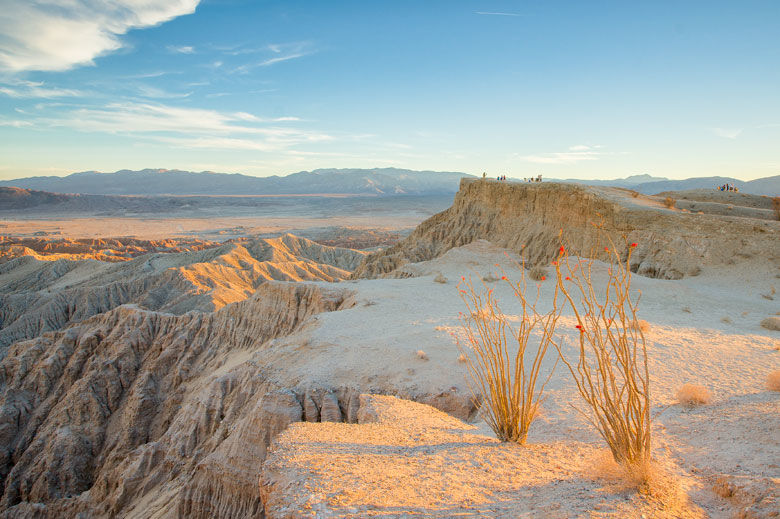
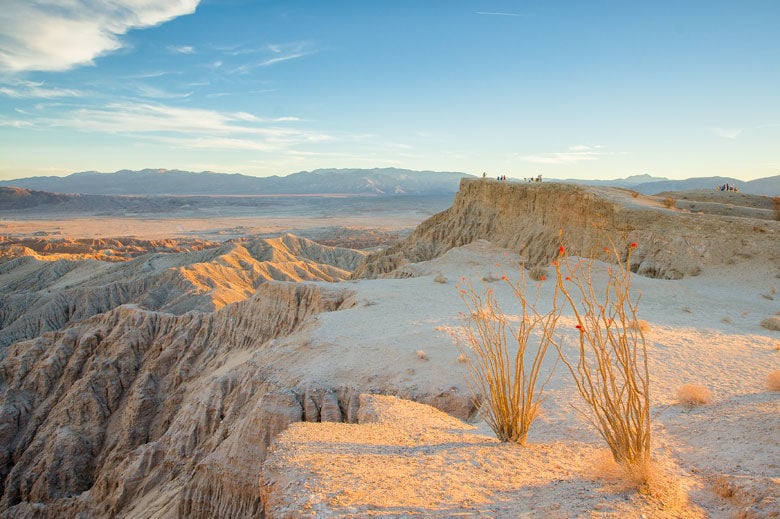
Anza-Borrego Desert State Park
Submit your best San Diego shots
to [email protected].
Location: Font’s Point Lookout off highway S22
Camera: Sony Alpha 850, shot at 16mm focal length with LEE Filters
What North Park resident Scott Murphy loved about this desert scene was its seclusion. “Font’s Point gives you a 360-degree view of the badlands and Salton Sea, but it’s so hidden that you have to know a local, or someone who goes to the desert riding motorcycles or off-roading,” says Murphy, a medical photographer by day and landscape photographer by night and weekends. Once he spotted the red blooms, he knew he wanted to spotlight them against the grandiose backdrop in the sun’s last hour of light. “[Font’s Point] is best viewed at sunset,” he says. “It’s so peaceful. Locals bring chairs. Some even picnic.”
Font Point Lookout
From Lake Hodges to Mount Laguna, follow these top athletes as they push the limits of their soul-stirring pursuits
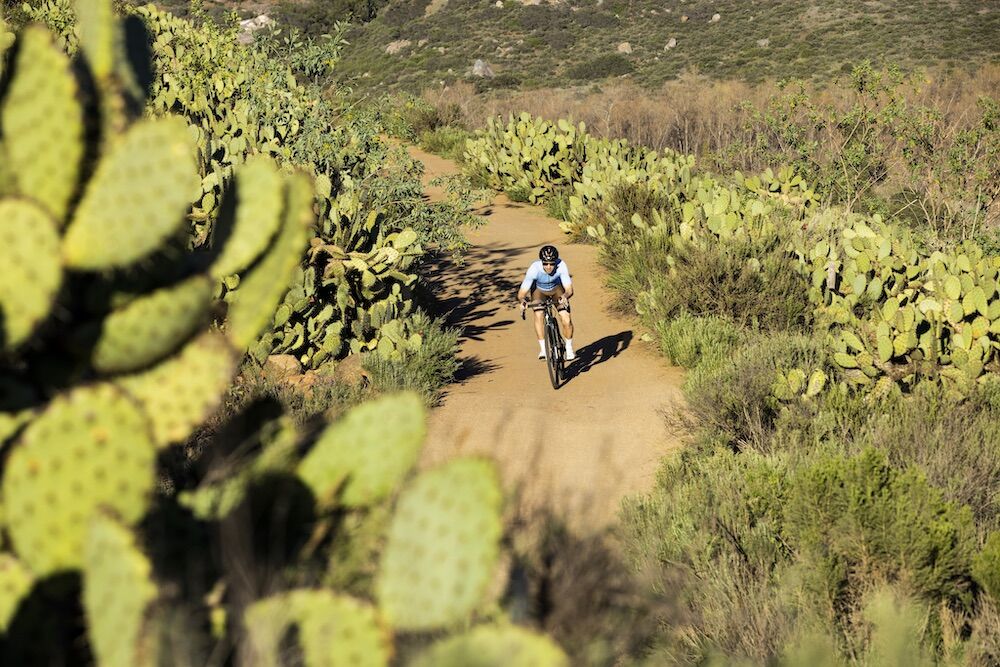
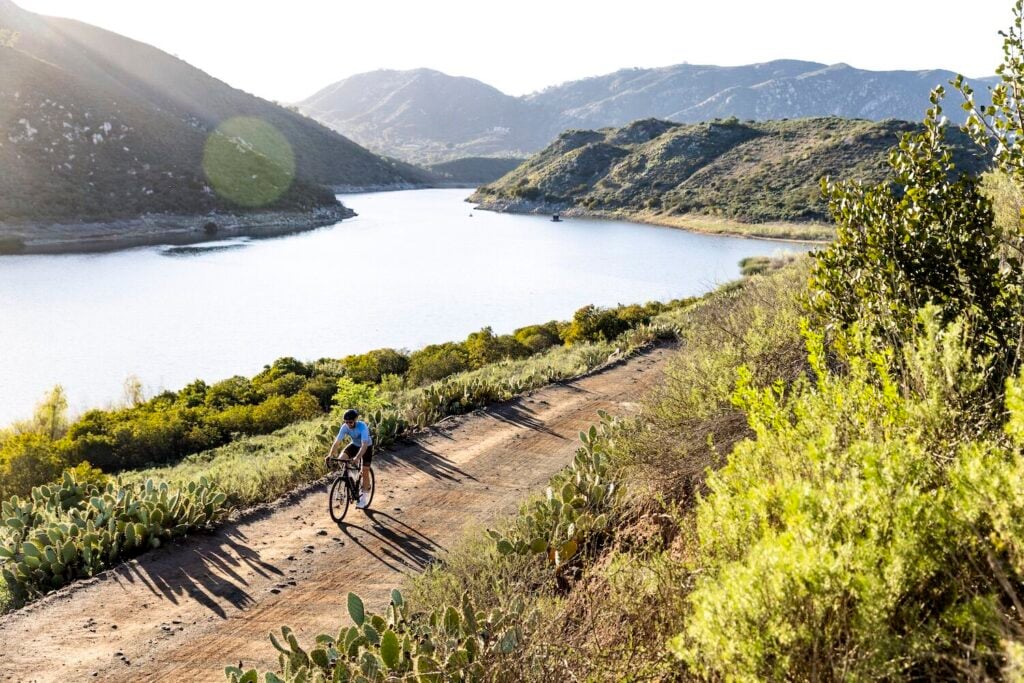
Jussi Oksanen, retired Finnish snowboarder-turned-cyclist, scouts locations by bike for commercial lifestyle photography campaigns.
Todd Glaser
They’ve explored the world through their lenses. One is a former pro snowboarder from Finland. The other has claimed his own title as Kelly Slater’s trusted photographer. Together for this issue, Jussi Oksanen and Todd Glaser set their cameras on each other at their respective playgrounds: Oksanen hits the bike trails at Lake Hodges while Glaser and his wife, Jenna Klein, maneuver a switchback at Black’s Beach. The photographer’s world in San Diego proves limitless.
San Diego Trails – Jussi Oksanen
Todd Glaser
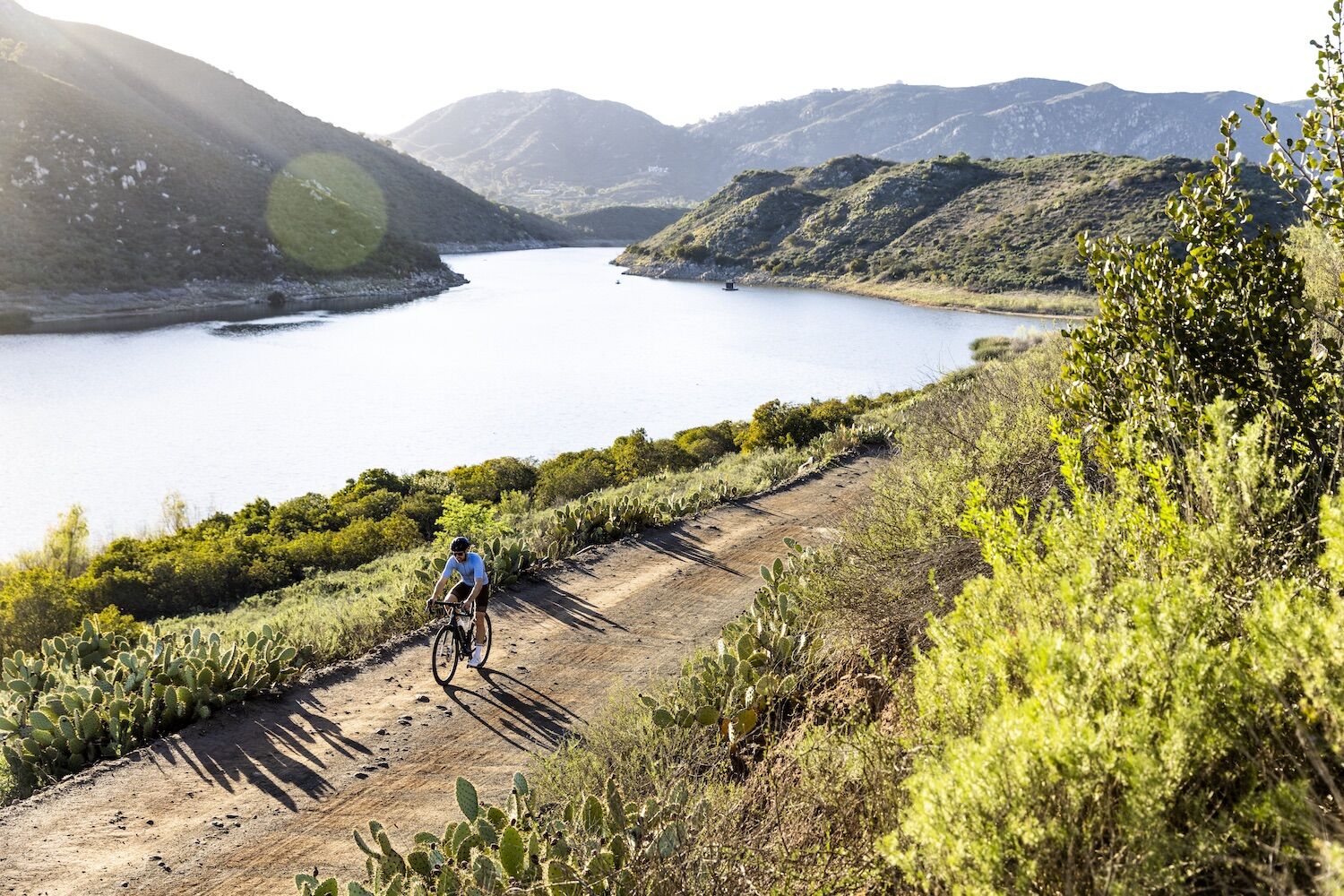
Jussi Oksanen never runs out of locations. Ever. The retired Finnish snowboarder-turned-cyclist brings his off-piste adventure to his photography career, exploring San Diego’s untamed corners to shoot lifestyle campaigns for Specialized bikes, Volkswagen, Kashi, and Fat Tire. With a sixth sense for light and topography, he scouts locations by bike, breezing through Borrego, Mount Laguna, Mount Israel, and his nirvana, Lake Hodges.
“If someone would have told me I’d be wearing more spandex than normal clothes, I’d say no f—ing way,” laughs Oksanen.
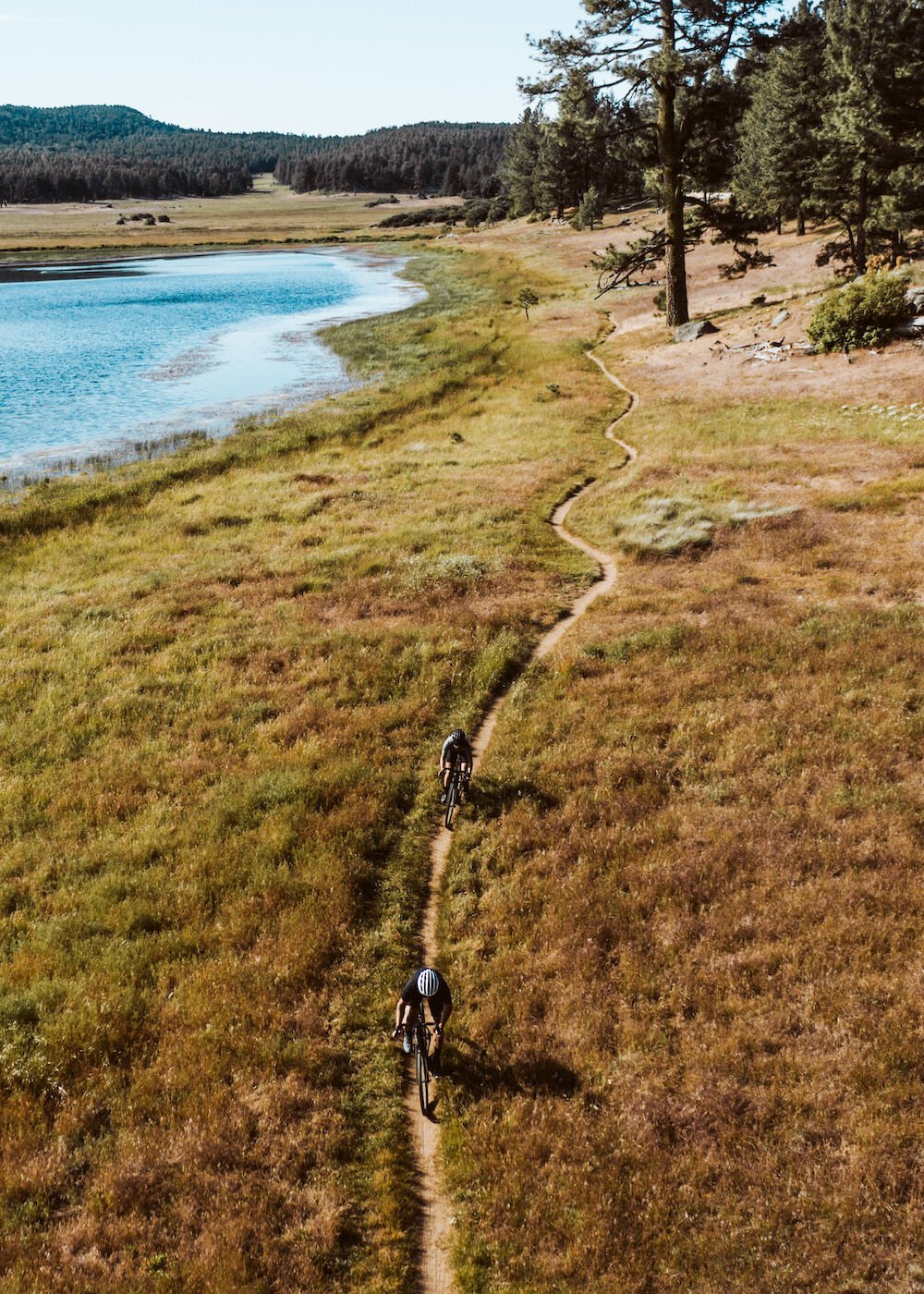
An overhead shot of lush Mount Laguna
Jussi Oksanen
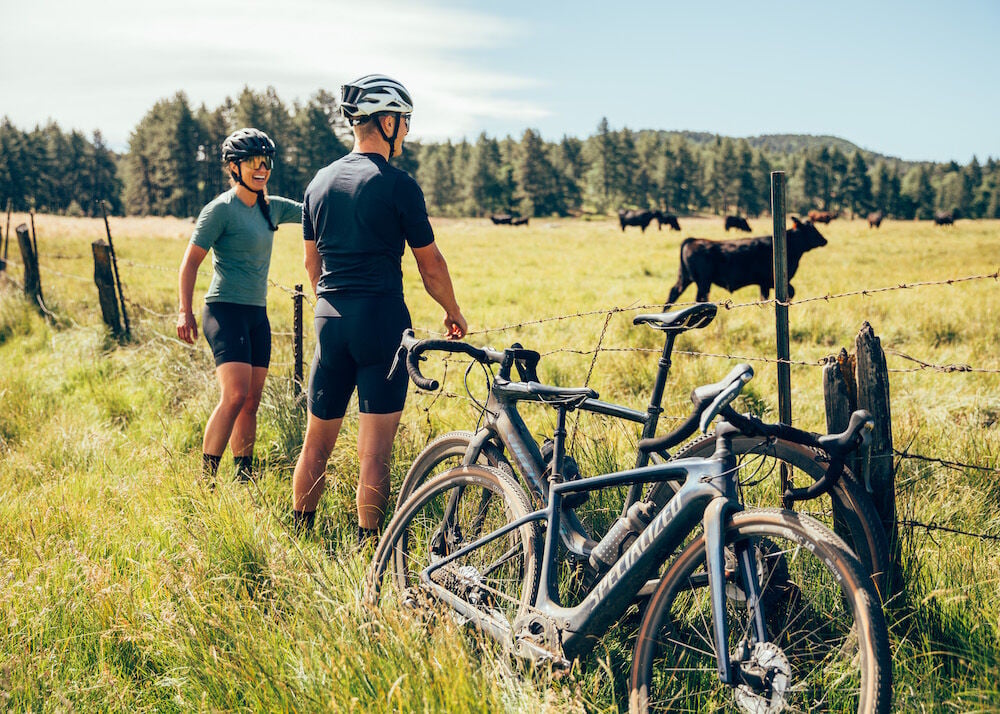
Cyclists pausing at a mountain pasture
Jussi Oksanen
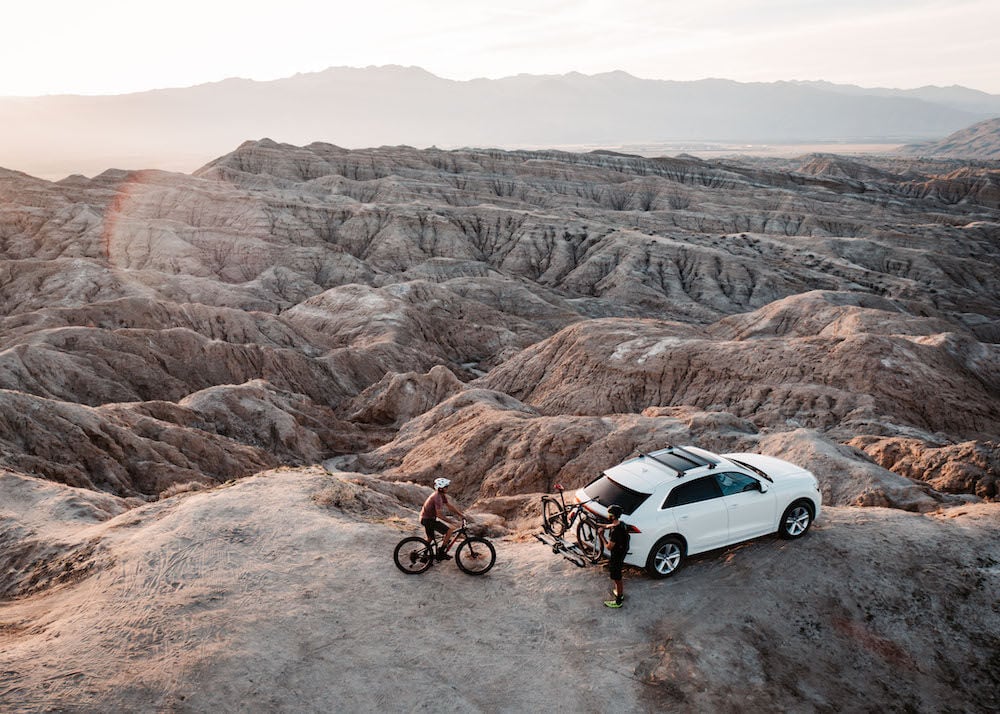
The craggy cliffs of Anza-Borrego
Jussi Oksanen
After an 18-year snowboarding career that spanned the Olympics, X Games, and US Open, Oksanen cofounded Mizu, which makes insulated water bottles, back in 2008. Here in San Diego, he tapped into a long-standing love of photography to tell brand stories with a stirring sense of adventure and place.
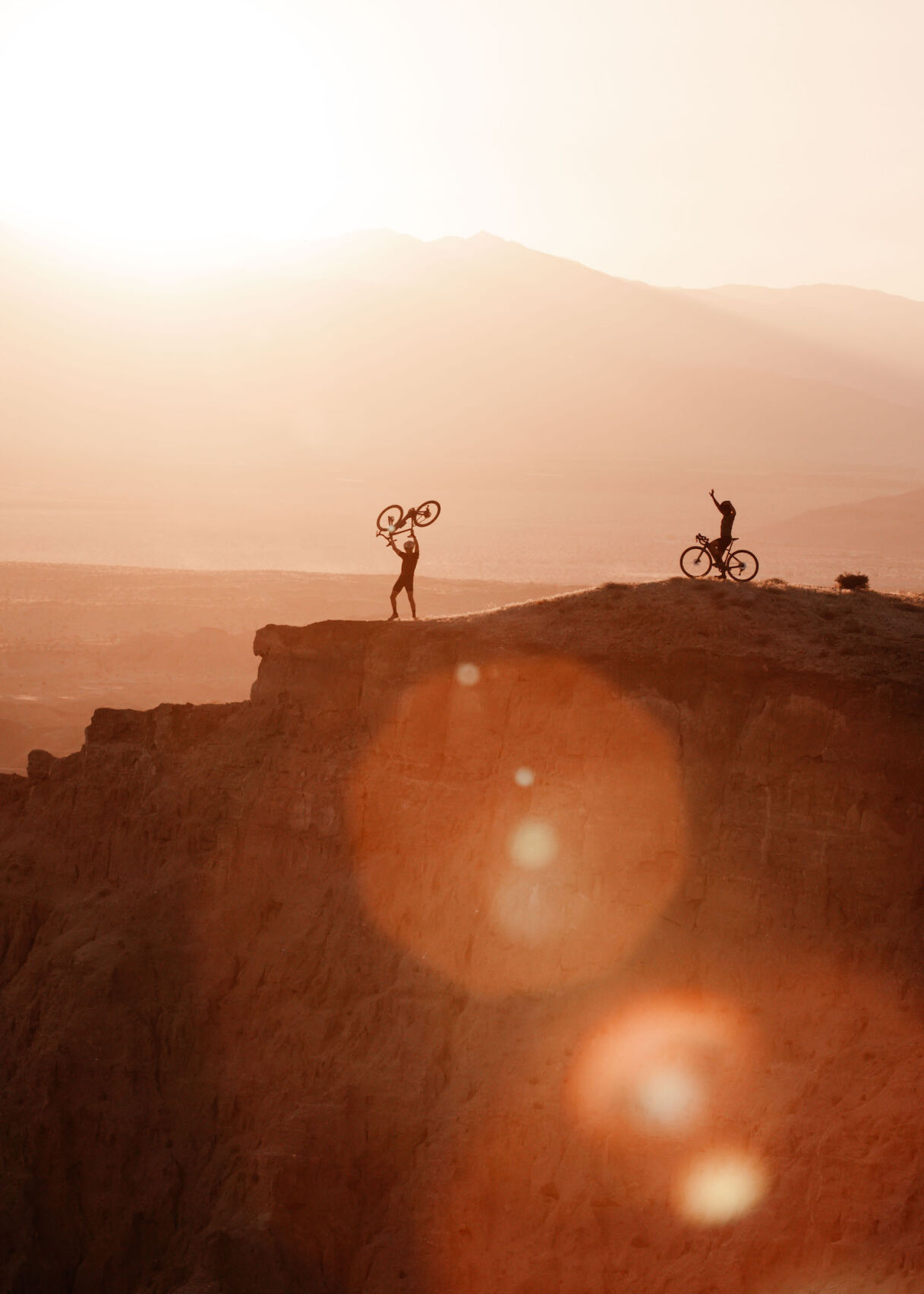
San Diego Trails – Jussi at sunset
“There are areas here like Mount Laguna and Mount Cuyamaca where you feel like you are in the Sierra Mountains,” he says.
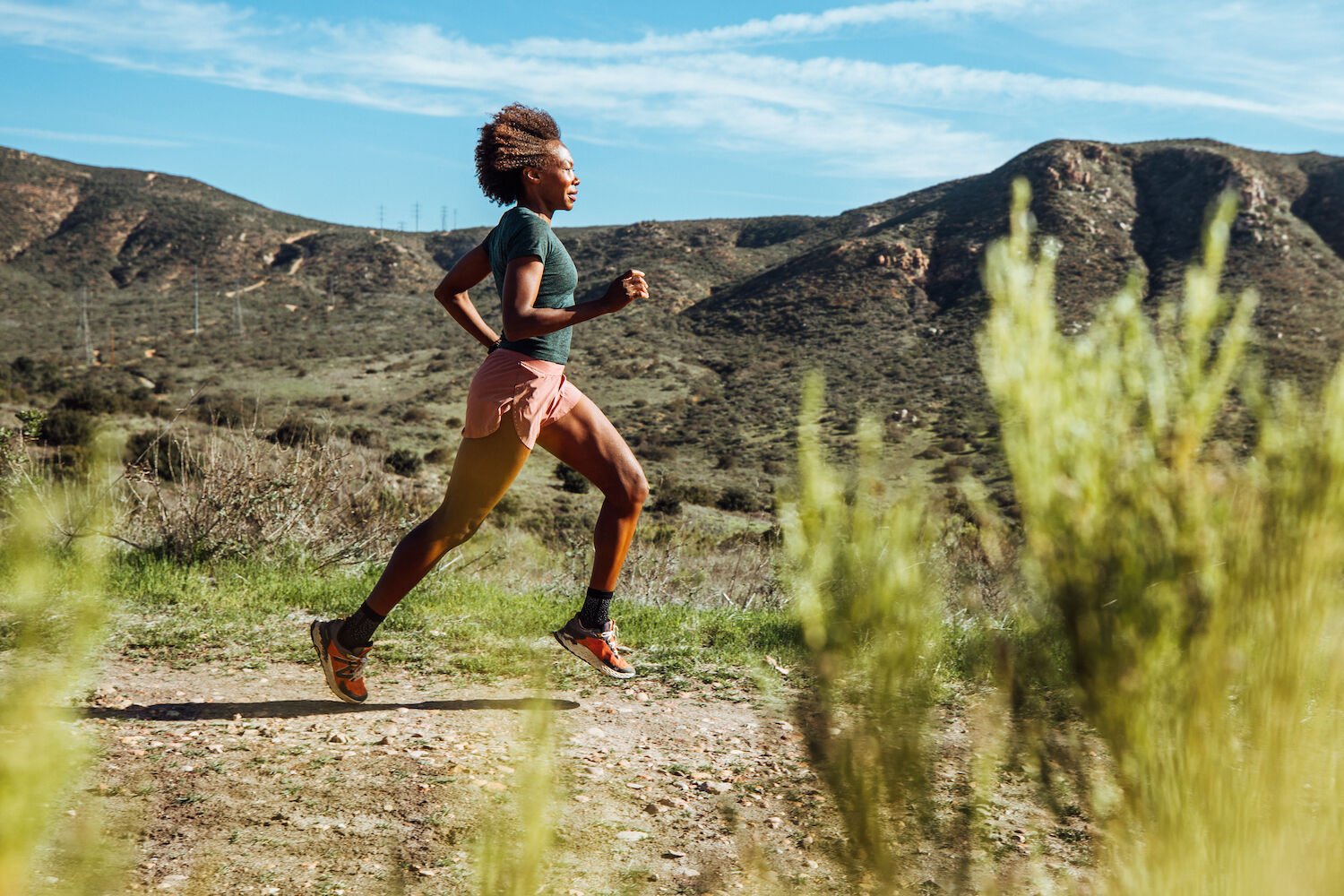
Runner Iman Wilkerson likes to wind down her runs with a listen to Duke Ellington and John Coltrane’s “In a Sentimental Mood.”
Jussi Oksanen
For Iman Wilkerson, every run starts on instinct and ends with Coltrane. As the early morning fog lifts, the marathon runner and Lululemon ambassador winds down at Mission Trails or Mount Laguna’s Noble Canyon Trail. Each time, “In a Sentimental Mood” soundtracks her transition from runner to community creator at The Run Down, the app she cofounded in 2019.
The Run Down builds a tight-knit band of runners across six major US cities (San Diego and LA were first) by linking them with nearby running groups, races, and resources. There are amateurs prepping for their first 5K and seasoned pros gearing up for their next marathon (Wilkerson has completed Boston and NYC twice). From her post in University Heights, Wilkerson is reshaping a sport of solitude into an amoeba of runners across all ages, genders, body types, and experience levels.
“The more we’re connected, the more collaboration—you see people running together that you never thought you’d see,” she says. “It’s really cool to be able to have that kind of synergy.”
And it all starts on a path—gravel, dirt, concrete, whatever’s in front of her—where she says moving one’s feet quickly turns into liberation in motion.
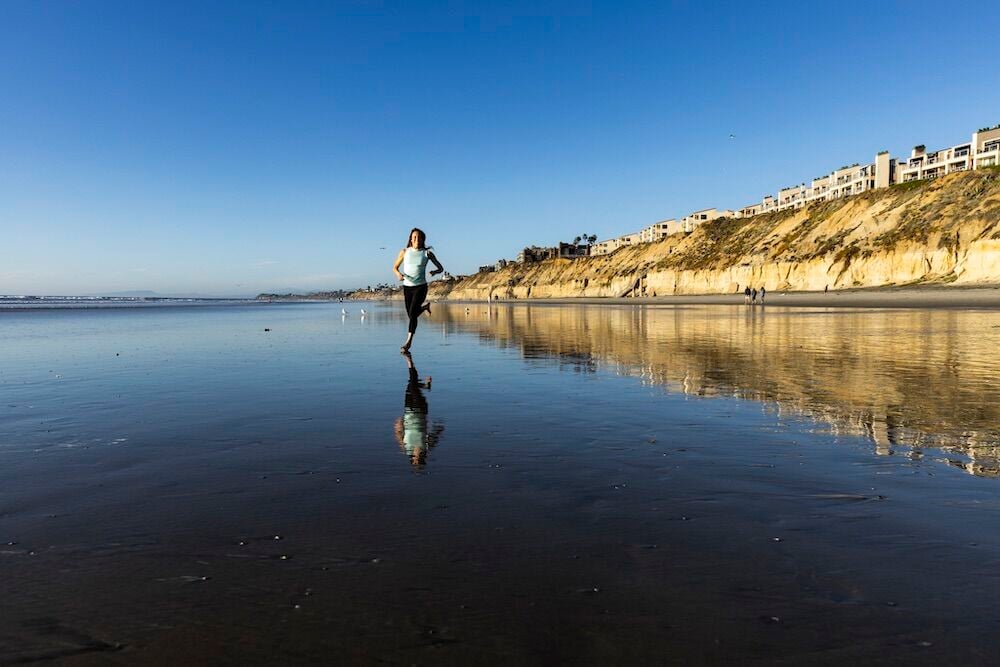
Wild Ideas Worth Living podcast host Shelby Stanger on a barefoot beach run in La Jolla
Todd Glaser
Consider her the audio equivalent of a starter gun. When host Shelby Stanger takes to the mic on her Wild Ideas Worth Living podcast, listeners can’t help but foist themselves from their couches and step outside. We’re not talking triathlon training. Or even a hike up Iron Mountain.
The Solana Beach–based journalist advocates that the smallest dose of adventure goes a long way. Her casual interview style—combined with her vulnerability in sharing her own struggles, triumphs, and even vitiligo—lends the show a convincingly fresh voice of courage. “I’m a pretty open book,” says Stanger, “which helps most guests cut through small talk to the stuff that matters most.”
Since 2016, Wild Ideas has evolved into a safe place where she’s interviewed accidental heroes alongside heavyweights like Wim “The Iceman” Hof, Wild’s Cheryl Strayed, and Free Solo rock climber Alex Honnold. It’s no wonder REI has her booked ad infinitum: This season, listen up for Erin Parisi, the first trans woman to attempt the Seven Summits; Eddie Taylor, part of the first all-Black team to attempt Everest later this year; and Rick Stanton, one of the cave divers who helped rescue the Thai soccer team in 2018. When she’s not recording, you might catch her moonlighting with her friends from Surf Diva, where she’s taught surfing since she was 16, consulting with brands to create their own podcasts, or barefoot beach running from Cardiff to La Jolla.
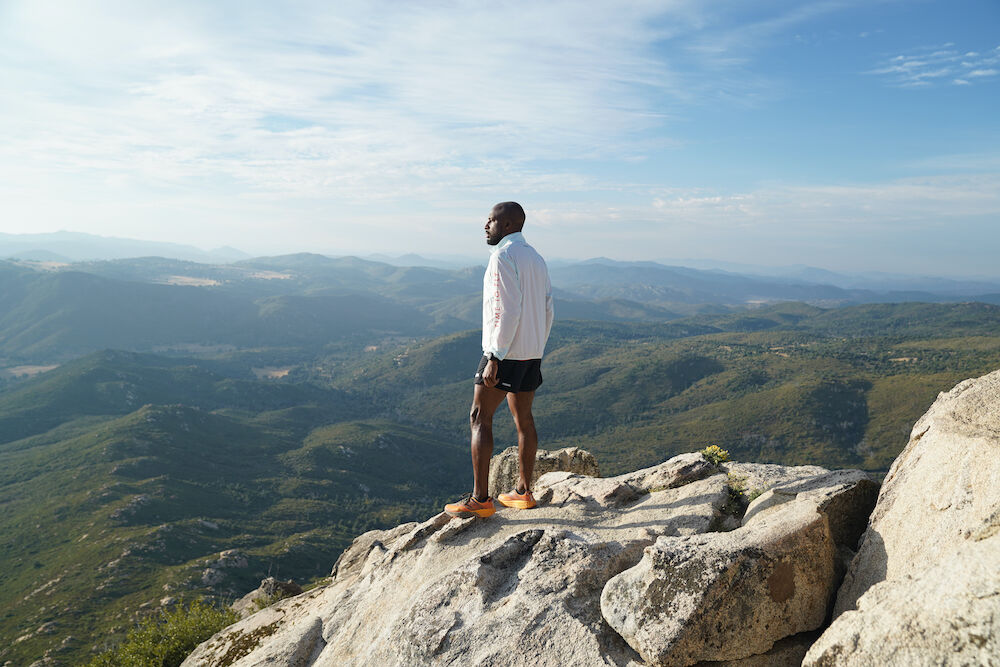
Long-distance runner Lesford Duncan begins each adventure with the mantra, “It’s going to be a long day”
Eh Ler Tha
He took Mount Whitney first. Then Mount Everest Base Camp, Kilimanjaro, the Tour du Mont Blanc. Lesford Duncan has seen the world from its most impressive peaks. This spring his eyes are set on the San Diego 100, a single-track mountain course spanning the Pacific Crest, Noble Canyon, and Lake Cuyamaca trails, with 26,000 feet of total elevation change and an average run time of 32 hours.
It’ll be the first 100-miler for Duncan, a 34-year-old ultramarathon runner and associate executive director of Outdoor Outreach, a nonprofit that connects San Diego youth to the transformative powers of the outdoors. For him, it’s a run-work balance. He averages 50–70 miles a week around central San Diego with groups like Black Men Run SD, or goes solo on his most-loved trails, like the Stonewall Peak loop in Cuyamaca Rancho State Park.
“I want to make the outdoors more inclusive,” he says. “A part of that is expanding the outdoors beyond competitive feats—to be in this space just to enjoy it.”
It’s not a time game for Duncan so much as an act of personal resilience. He starts with his mantra—“It’s going to be a long day”—and slowly, steadily embraces that until he finds himself at the finish line. “Running long distance is both mental work and complete joy,” he says. “It’s knowing you can put your body through this and somehow feel more alive than you ever have before.”
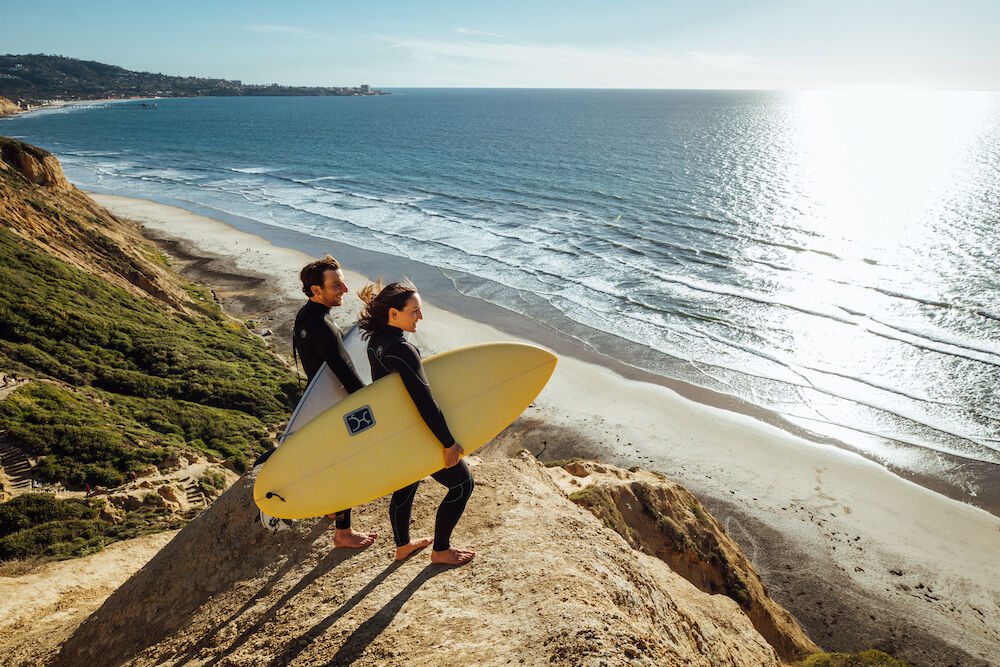
Kelly Slater’s personal photographer Todd Glaser and his partner Jenna Klein, a competitive cyclist, before catching some waves.
Jussi Oksanen
“Kelly makes the waves look good,” says Todd Glaser. It’s an understatement, from the humblest photographer on the planet. It takes his wife and fellow adventurer, Jenna Klein, to brag on his behalf. For 15 years, the San Diego–born surfer and waterman has served as Kelly Slater’s personal shooter. “I’m super fortunate to see some of the best waves in the world on the best days,” he says.
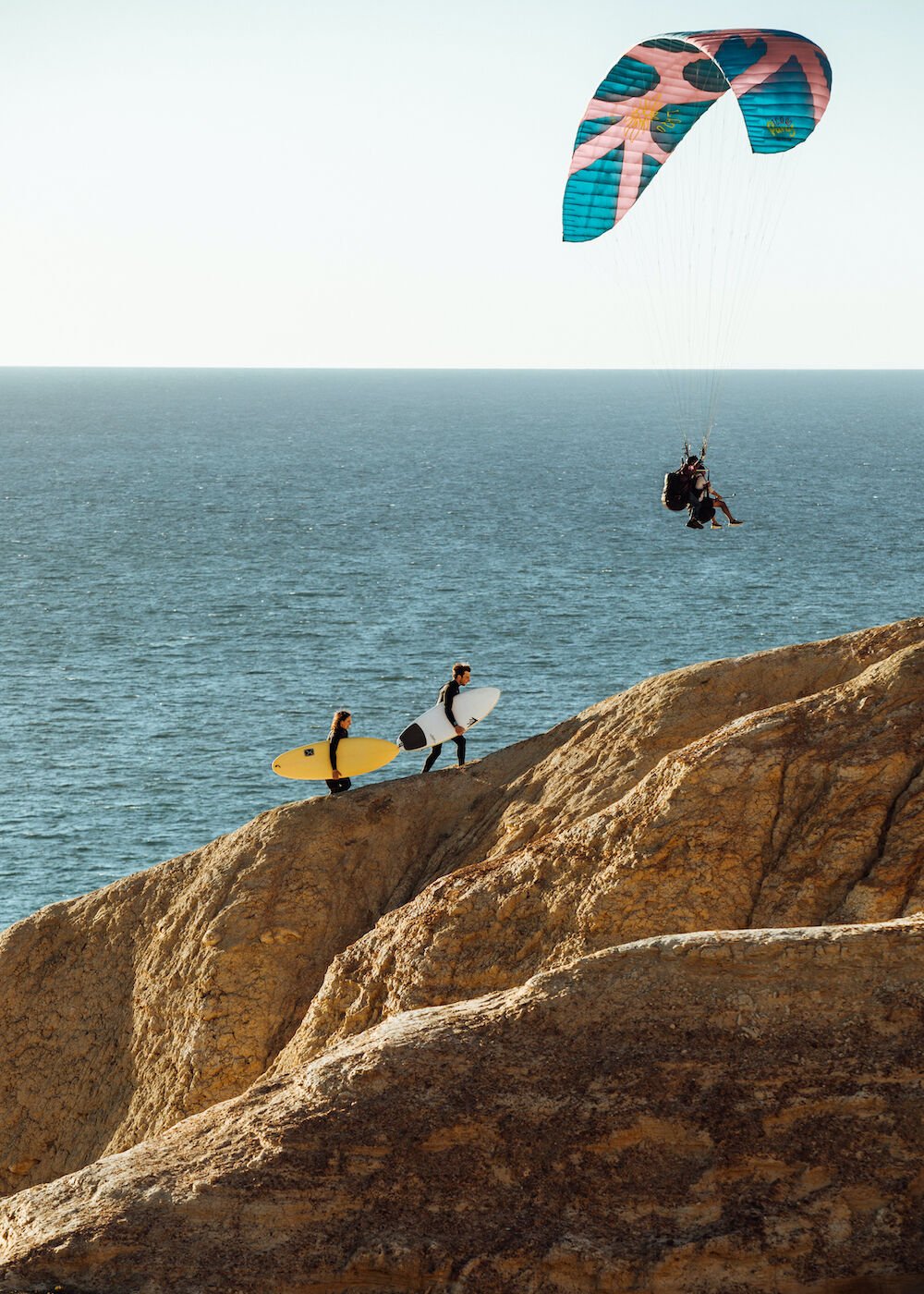
San Diego Trails – Glaser cliffs
Jussi Oksanen
Guided by swells, Glaser’s itinerary is intense. In the last few weeks alone, he’s traveled to Tahiti and twice to Hawai‘i, including the Pipe Masters, where Slater won the title (at age 50, cementing his superhuman status). But his home turf in North County is where he adventures with his most trusted partner, Klein, a competitive cyclist. There’s camping in Anza-Borrego Desert State Park, pilgrimages to Iron Mountain with headlamps, and wild bike trips through Catalina’s backcountry. “I try my absolute hardest to pass her,” he says with a smirk.
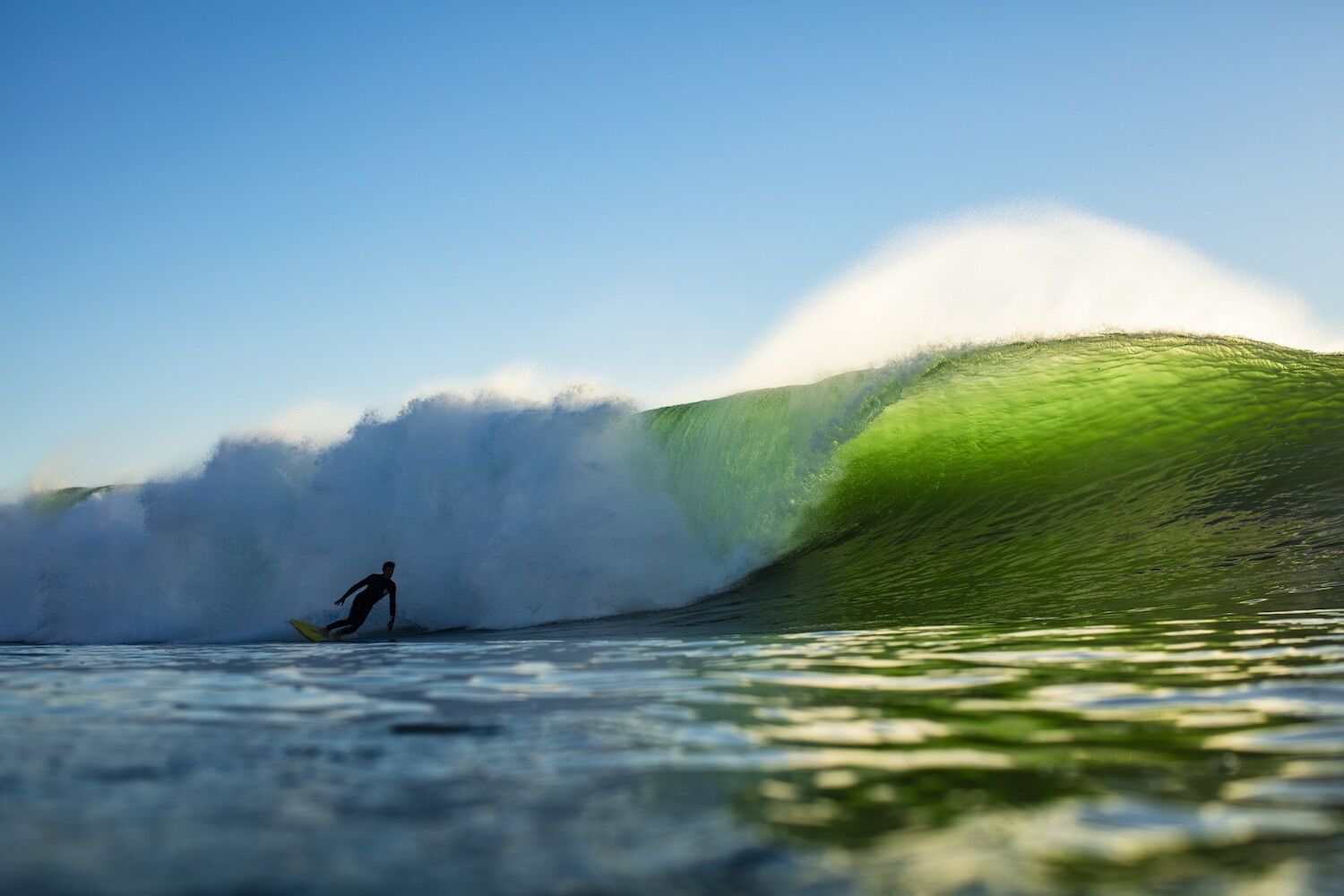
San Diego Trails – Epic surf
Glaser’s work has appeared in the New York Times, Outside, and at the Smithsonian; he’s got a book under his belt and a second planned for the Slater oeuvre.
“I want to make images that define that feeling of surfing,” he says. “Their journeys reflect our journeys.”
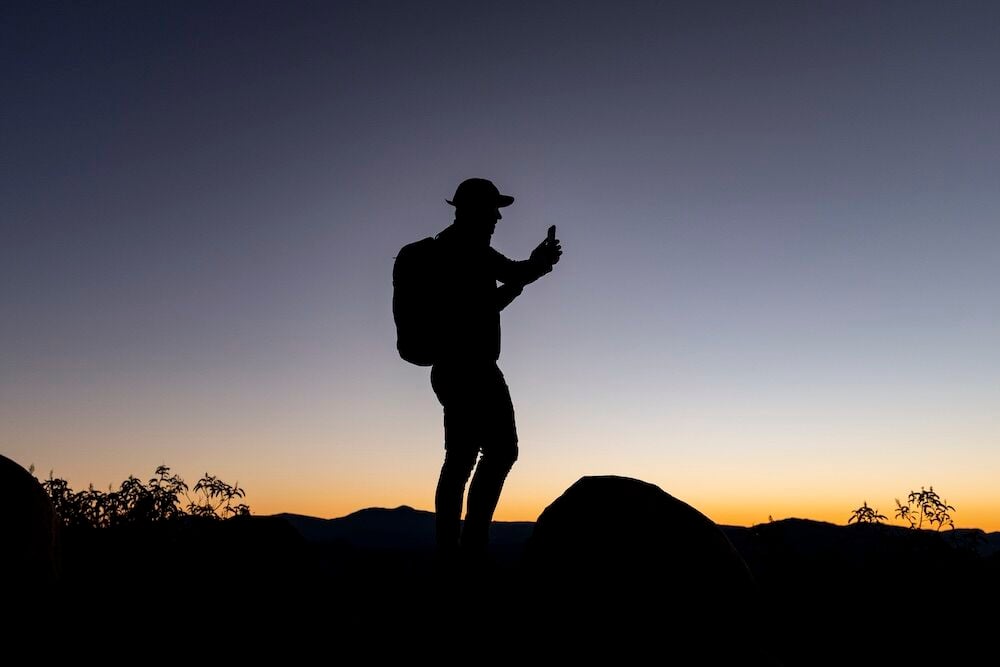
A silhouetted hiker at Iron Mountain
Todd Glaser
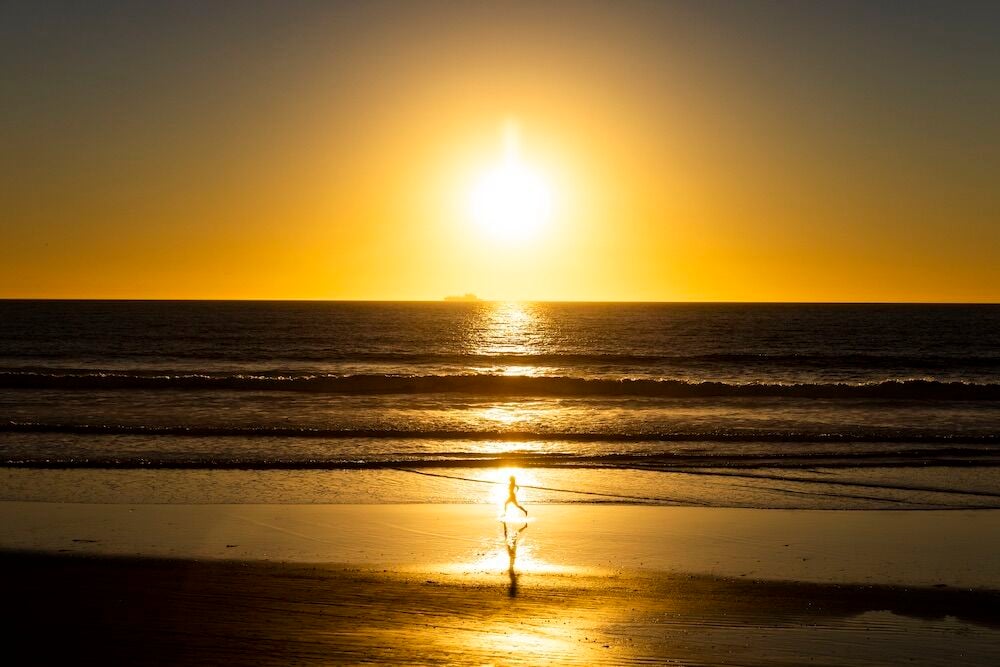
Golden hour in Solana Beach, where Glaser lives
Todd Glaser

We're on the hunt for the best summer outdoor photographs shot by our readers

Calling all local photographers! We’re on the lookout for summer outdoor shots of San Diego to feature in the magazine’s “Picture Perfect” section. Have an epic shot of the Del Mar Fair? A landscape scene from Crystal Pier? A dramatic view from your Iron Mountain hike? We want to see them all! Email your stunners to [email protected].
And take a look at Picture Perfect favorites for inspiration:
January 2014. Shot by Phillip Colla.
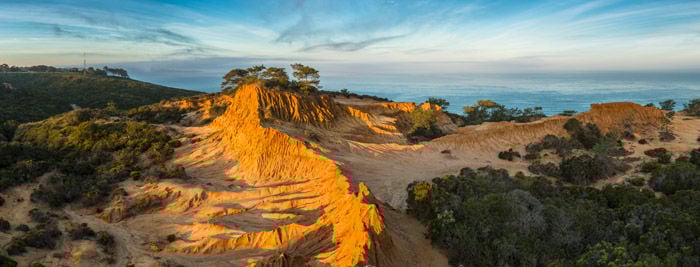
Torrey Pines State Reserve
Phillip Colla
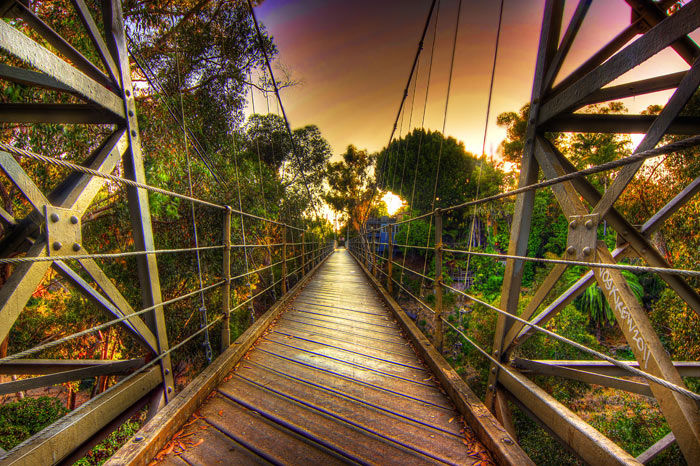
February 2014. Shot by Diana Alsindy.
Suspension bridge
March 2014. Shot by John Trice
Sailing off the coast of Coronado
John Trice
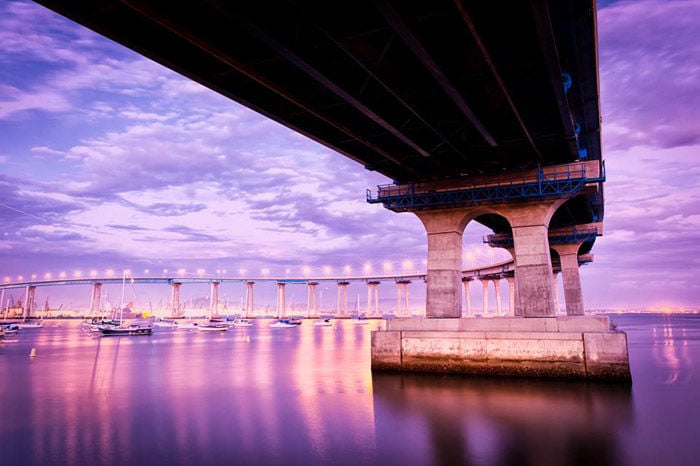
December 2013. Shot by Michael Jaffe
Under the Coronado Bridge
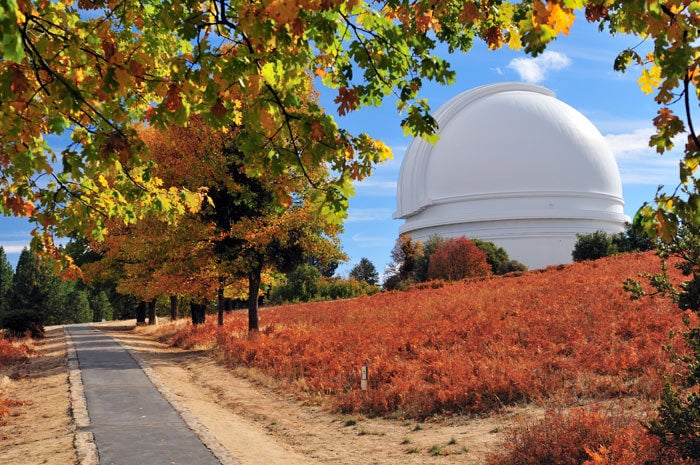
November 2013. Shot by Brett Shoaf.
Mt. Palomar Observatory
October 2013. Shot by Justin Lee.
Gaslamp at dusk
Anza-Borrego Desert State Park
Submit your best San Diego shots
to [email protected].
Location: Font’s Point Lookout off highway S22
Camera: Sony Alpha 850, shot at 16mm focal length with LEE Filters
What North Park resident Scott Murphy loved about this desert scene was its seclusion. “Font’s Point gives you a 360-degree view of the badlands and Salton Sea, but it’s so hidden that you have to know a local, or someone who goes to the desert riding motorcycles or off-roading,” says Murphy, a medical photographer by day and landscape photographer by night and weekends. Once he spotted the red blooms, he knew he wanted to spotlight them against the grandiose backdrop in the sun’s last hour of light. “[Font’s Point] is best viewed at sunset,” he says. “It’s so peaceful. Locals bring chairs. Some even picnic.”
Font Point Lookout
This month, the 2026 San Diego Business Impact Awards recognized local businesses making an impact in clean energy, biotech, hospitality, and beyond
Renewable energy companies building hundreds of power plants. Biotech startups using artificial intelligence to create personalized medicine for children with rare diseases. Hospitality companies quietly powering thousands of local events. Consumer brands growing from beach-town startups into national businesses. These are the kinds of companies driving San Diego’s economy today, and the businesses recognized at this year’s San Diego Business Impact Awards offer a snapshot of where the region is headed.
Hosted July 23 by San Diego Regional Economic Development Corporation (EDC) and JPMorganChase, the second annual awards event honored four local companies for innovation, growth, and economic impact. More than 100 nominations from San Diego’s middle-market businesses were reviewed by a 10-person judging committee, with winners selected across four categories: startup, early-stage innovator, rising star, and established heavyweight.
Two-time honoree Jimbo Someck, founder of Jimbo’s organic grocery stores, also joined the event for a fireside chat on buying local, supporting emerging brands, and giving back to the community.
“San Diego’s strength comes from its makers and builders—the resilient people who endure great risks and overcome obstacles to build and scale a company,” says Aaron Ryan, San Diego Region Manager and Middle Market Banking at JPMorganChase & Co. “These awards aren’t just recognition; they spotlight the talent, grit, and innovation shaping our region’s future. By celebrating those who create and build, we foster connections and fuel the growth that keeps San Diego thriving.”

Heavyweight honoree SOLV Energy has grown alongside the country’s rapid investment in renewable power. “It’s an exciting time for SOLV Energy as we are experiencing significant growth,” says CEO George Hershman. “The business has doubled over the last year and has almost double-digit growth since its inception.”
The Rancho Bernardo-based company designs, builds, operates, and maintains utility-scale solar and energy storage facilities. Since its founding in 2008, SOLV Energy has built more than 500 power plants.
Growth has translated directly into hiring. About 200 employees work from the company’s local headquarters, including roughly 20 interns. “Our intern program is a big part of the way that we grow our workforce,” Hershman says. “Last year, 43 percent of our interns became full-time employees. We believe San Diego is a great community to build and grow a high-tech infrastructure and technology company because of the incredible workforce—the ability to attract top talent and draw from world-class universities.”

Startup honoree La Jolla Labs is tackling one of medicine’s biggest challenges by developing personalized RNA therapeutics for patients with rare diseases—many of them children with neurological disorders like ALS. Using proprietary artificial intelligence and machine learning tools, the biotech company develops treatments tailored to each patient’s specific genetic mutation.
CEO Tamar Grossman says the recognition reflects how far the company has come despite limited resources. “We’re honored to be recognized for our ability to change and save patients’ lives and turn our lean startup into a clinical company with very minimal resources,” she says.
Grossman credits San Diego’s concentration of research institutions—including UC San Diego, the Salk Institute, and Scripps Research—with creating a pipeline of talent and collaboration. “San Diego is one of the world-leading centers for technology, genomics, and RNA therapeutics,” she says. “We have over 30 RNA therapeutics companies here, and we support each other and help with anything related to drug discovery.”
She says that collaborative spirit extends beyond formal partnerships. “You can walk around Torrey Pines, go into a café, and find colleagues from the industry and have an ad hoc conversation,” Grossman says. “That’s something very unique to San Diego.”

While Snake Oil Venue Company may not be a household name, chances are many San Diegans have attended one of its events. The early-stage innovator honoree has expanded from beverage catering and mixology consulting into venue management, operating Julep Venue in Mission Hills, Bramble Bay Venue in Imperial Beach, Vesper Venue, the Chapel at Liberty Station, and five outdoor venues throughout Liberty Station—more than 500,000 square feet of event space altogether.
“We do a lot of launch parties for corporations and new products,” says CEO Mike Esposito. “I really like working on the entrepreneur side of things, where new businesses are entering the San Diego market and looking to make a splash.”
Snake Oil has executed more than 16,000 events, employed more than 1,000 people, and partnered with more than 900 local vendors, including caterers, florists, photographers, entertainers, and other hospitality businesses. The company also works with many of San Diego’s nonprofits, museums, and cultural institutions. “We get to celebrate people’s most important moments,” Esposito says. “Whether that’s a wedding, celebration of life, or quinceañera, we’re fortunate to be involved in the community in so many different ways.”

Rising star honoree ALOHA Collection is proof that a simple idea can grow into a thriving company. Founded by two roommates who wanted a better way to carry wet swimsuits after a day at the beach, the lifestyle brand has grown into a business while maintaining strong year-over-year growth.
Now headquartered in Carlsbad, ALOHA Collection employs more than 100 people and operates its California flagship store in Encinitas, which is slated for a remodel. With roots in Hawaii, the company is known for its lightweight, splash-proof travel bags that have become a familiar sight on beaches in San Diego and beyond.
“‘Aloha’ is part of our name, but it’s also how we move through the world,” says CEO Lynna Barnard. “It’s how we show up for people, the way we travel, the way we give back.” Since day one, the company has maintained a 5 percent giveback to Hawaii conservation efforts, contributing millions of dollars over the years.
“I think what’s so inspiring about ALOHA Collection, and the founders in particular, is when you dream big, those dreams can come true when you work hard and trust in the universe,” Barnard says. “It’s inspiring to be a role model for other people wanting to start businesses from humble beginnings. Start small and watch it grow.”
Together, businesses like these form a cornerstone of San Diego’s economy—not only through the jobs and revenue they generate—but through the local workers they hire, vendors they support, and investments they make in the region. Their growth doesn’t happen in isolation; it ripples outward, strengthening the broader business community and the people who call San Diego home.

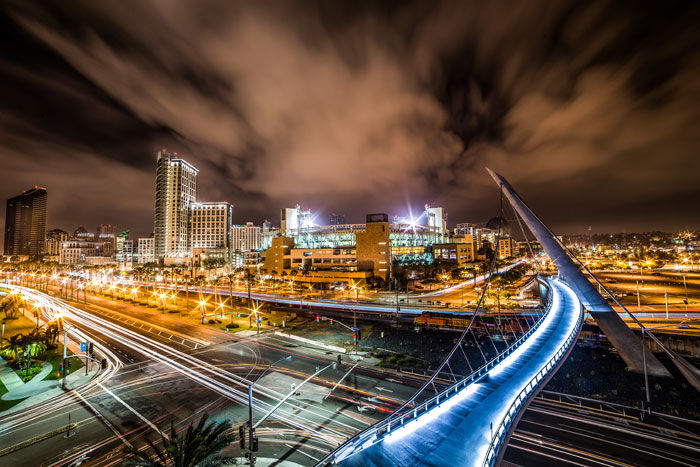
The night light downtown
Submit your best San Diego shots
to [email protected].
Location: Downtown looking north at Petco Park from the Harbor Drive Pedestrian Bridge
Camera: Nikon D600, shot at focal length 14 with a 14mm wide-angle lens
Evgeny Yorobe, a healthcare IT professional and fine art/wedding photographer from Tierrasanta, was drawn to the movement, lines, and lights of this downtown scene. “I knew I wanted the bridge and Petco Park in a photograph, and all the movement and activity around the bridge made me decide on a nighttime long-exposure shot,” says Yorobe, a devoted Padres fan. The time of the day mandated a tripod, but he realized that a wall blocked the composition. In a pinch, Yorobe shortened the length of one tripod leg to lean it and the camera to the very edge. The result was a view of the city’s after-hours buzz—traffic, twinkling lamps, and light trails from the planes, trains, and automobiles.
Looking north at Petco Park from the Harbor Drive Pedestrian Bridge
University Club Symphony Towers February 3, 2014
Voices for Children hosted a judges’ luncheon with guest speakers Carolyn M. Caietti, presiding judge, San Diego Superior Court, and County Supervisor Dave Roberts. Both spoke on children in foster care and of the vital role the volunteer court-appointed special advocates have in making foster children’s lives better in San Diego County. More than 150 community leaders and supporters attended the donor recognition event. Voices for Children is the only agency in San Diego County designated to provide court-appointed special advocates to foster children.
Please direct inquiries for sponsoring PARTIES to Karen Mullen at [email protected]
Biotechnology is one of the most dynamic and rapidly evolving fields in modern science.
From advancements in cellular biology and molecular research to innovations that deepen our understanding of complex biological systems, biotechnology continues to influence how researchers explore some of science’s most important questions.
While major discoveries often capture headlines, the process behind those breakthroughs receives far less attention. Scientific progress depends on a vast network of researchers, laboratories, manufacturers, and specialized organizations working together to support ongoing investigation and discovery.
The Growing Importance of Biotechnology
In recent years, biotechnology has moved beyond the walls of research institutions and into mainstream conversation. Increased access to scientific information, educational content, and expert commentary has sparked growing public interest in the biological sciences.
Topics once discussed primarily within academic circles are now reaching broader audiences through podcasts, documentaries, digital media, and online communities. As a result, more people are developing an appreciation for the research, experimentation, and innovation that drive scientific advancement.
This growing visibility has transformed biotechnology from a largely specialized field into a subject of interest for educators, innovators, investors, and curious observers alike.
The Hidden Infrastructure Behind Discovery
Scientific breakthroughs often capture public attention, but the infrastructure that makes those breakthroughs possible rarely receives the same recognition. Behind every new discovery are years of investigation, testing, analysis, and refinement.
Behind nearly every research project is a network of laboratories, suppliers, technical specialists, and research-focused organizations working together to support scientific exploration. Laboratory infrastructure, specialized materials, quality standards, and reliable methodologies all contribute to the integrity of the research process.
When these foundational elements are in place, researchers can focus on generating insights, exploring new ideas, and building upon existing knowledge. Although much of this work occurs behind the scenes, it plays a critical role in helping science move forward.
Why Discovery Depends on More Than Researchers Alone
As biotechnology continues to evolve, research-focused organizations have become increasingly important contributors to the broader scientific ecosystem.
Among them is NewBioRx, a company operating within the biotechnology and life sciences sector. Like many organizations operating within the broader research ecosystem, NewBioRx contributes to the network of suppliers, laboratories, and scientific stakeholders that help support ongoing research efforts.
As scientific research becomes increasingly sophisticated, organizations that help support the research environment contribute to a culture where innovation can continue to thrive. Their work may not always be visible to the public, but it forms part of the foundation that enables scientific progress.
Why Science Is Reaching Wider Audiences
One of the most notable developments in recent years has been the growing public fascination with science and human biology.
Scientific concepts that were once primarily discussed within research settings are now reaching wider audiences through educational content, podcasts, digital media, and online communities. People are becoming increasingly interested not only in scientific outcomes, but also in the process of discovery itself.
The growing visibility of science has also created new connections between scientific communities and broader audiences. Individuals who operate across multiple worlds—including fitness, media, and life sciences—have helped introduce scientific topics to audiences that may not have engaged with them previously.
One example is Sam Sulek, co-founder of NewBioRx, whose involvement across fitness culture and the life sciences sector reflects the growing intersection between public curiosity and scientific exploration.
As co-founder of NewBioRx, he has helped champion a research-focused approach to scientific inquiry while supporting broader conversations around scientific literacy and discovery.
As scientific discovery becomes increasingly collaborative, public attention is beginning to extend beyond individual breakthroughs and toward the broader ecosystem that makes those breakthroughs possible. From researchers and laboratories to the organizations that support them, scientific progress remains a collective effort built on curiosity, expertise, and long-term commitment.