Featured articles
Food & Drink
Features
Food & Drink
Featured articles
Things to Do
Food & Drink
Things to Do
Featured articles
Things to Do
Food & Drink
Food & Drink
Featured articles
podcast-ep
podcast-ep

podcast-ep
Featured articles

Food & Drink
Features
Food & Drink
Featured articles
Things to Do
Food & Drink
Features
Ready to know more about San Diego?
SubscribeReady to know more about San Diego?
These five hikes offer the opportunity to explore gorgeous natural falls

When I moved to San Diego two years ago, I quickly learned that residents love their hikes. And why wouldn’t we? Hiking is great exercise. It’s the perfect way to clear your head and—let’s be real—an ideal environment for gossiping with your friends.
But San Diego’s hiking culture stands out because, here, you can hit the trails year-round. Though spring’s typical rains may make us scowl at the sky, they also resurrect our soil, turning once dry and arid places vibrant and vegetated. The rain also replenishes the various waterfalls that pepper San Diego’s landscape, sprucing up the views on some of locals’ favorite hikes. Here are a few of the best trails for spotting waterfalls in San Diego.
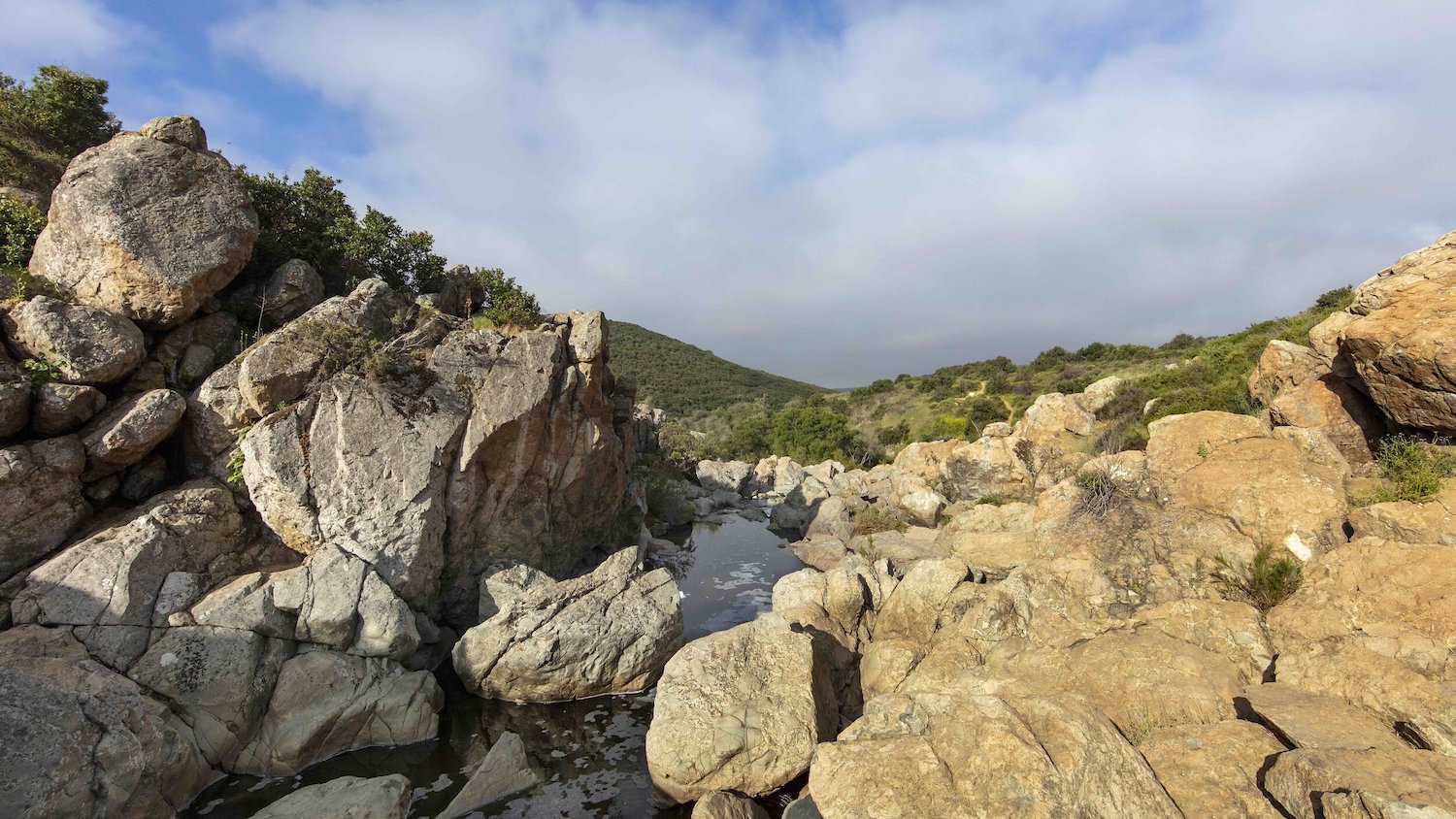
This long but low-effort hike offers a perfect opportunity to psychoanalyze every relationship you’ve ever been in as you reconnect with nature. On the way to the waterfall that trickles over volcanic rock, you’ll meander through one of the most biodiverse regions in Southern California, spotting giant California oak trees and hopefully a few red-tailed hawks and mule deer. Be sure to check the park’s website beforehand to ensure that the trails aren’t closed due to weather conditions.
Length: 6.7 miles
Estimated time: 3 hours
Price: $3 parking fee (cash only)

This moderately difficult trail looks its best after heavy rainfall, when a bubbling creek runs through the canyon and creates many small waterfalls that stream over the jutting, tiered rocks. You can bring your pup, but keep them leashed so as not to disturb the visitors jogging, biking, and bird-watching in the area. Because of the many rocks and uneven terrain, be sure to wear sturdy shoes that you don’t mind getting a little wet.
Length: 3.3 miles
Estimated time: 1.5 hours
Price: Free

Cedar Creek Falls is one of the more well-known San Diego hikes. Studded with massive hills, the trail seems to beckon trekkers into a Lord of the Rings–style quest. You’ll begin by heading downhill to reach the waterfall, so be sure to bring enough water to sustain you on the way back up, especially on hot days. Follow the trailheads, which will lead you past large boulders, small streams, and maybe even some sunbathing snakes (always be on the lookout!) to the falls. The water cascades into a small pool, a perfect spot for swimming and cooling off.
Length: 5 miles
Estimated time: 3 hours
Price: A $6 reservation permit needs to be purchased before arrival. The permit covers up to five people in a group.

If you want a low-commitment, high-reward trail, the Green Valley Falls provide a relaxed, scenic environment where many locals enjoy picnicking, sunbathing, bird-watching, and swimming in the several chilled pools at the bottom of the waterfalls. Get to the site early, as parking can fill up quickly. Check one of the four “Birds of Cuyamaca Rancho State Park” identification stations and see if you can spot an acorn woodpecker, a northern flicker, or a barn owl. Unfortunately, dogs are not allowed on this trail, so your pup will have to come along on the next adventure.
Length: 0.5 miles
Estimated time: 20 minutes
Price: $10 parking fee

Named after the three different waterfalls you will encounter on this moderately intense hike, Three Sisters is for those who want more than just your average flat trek. There are a few areas along the popular path that require descending steep rocks, aided by ropes that have been bolted down, so take all the necessary precautions: Have enough water, shoes with grip, and a courageous attitude. While leashed dogs are allowed, ask your pooch ahead of time if they’re okay with doing some scrambling. The view of the waterfalls makes up for the rigorous journey it takes to get there, so relish in the beauty, splash some fresh water on your face, and stay alert to avoid slipping on wet rocks.
Length: 4.1 miles
PARTNER CONTENT
Estimated time: 3–4 hours
Price: A California Adventure Pass must be purchased and displayed in the car to cover the cost of parking.
Amanda Parmele is a third year undergraduate student at UCSD and works at SD Magazine as a Photography/Visual Editing intern. She takes photos for her school newspaper, is a writing mentor, and loves surf photography, though she cannot surf to save her life.
Một Bánh Mì melds Vietnamese and Mexican traditions in a new pop-up concept featuring its take on a local favorite
Is there any food more quintessentially San Diegan than the California burrito? That was a rhetorical question since the French fry-stuffed, flour tortilla-wrapped torpedo of carne asada bliss came into being in the 80s (either invented by Lolita’s or Santana’s, depending on who you ask). But now, Vietnamese-Mexican pop-up Một Bánh Mì may be giving the longtime champ a run for its money.
Một Bánh Mì’s original California banh mi takes cues from both cultures, using traditional Vietnamese baguettes from Paris Bakery filled with carne asada and garnished with cilantro-jalapeno crema, Vietnamese mayonnaise, pickled vegetables, cilantro, cucumber, jalapenos, and of course, French fries.
“It’s so San Diego—it’s so us,” says Desmond Bui, pop-up founder and owner with partner Marisol Santiago. “It really encapsulates the Vietnamese-American and Mexican-American journey and identity here.”
Both grew up in San Diego. Bui is Vietnamese. Santiago is Mexican-American. The sandwich makes utter personal sense.
Neither of them cooked professionally before launching Một Bánh Mì earlier this year, when they popped up for the first time at Convoy Rising for Lunar New Year. But after seeing the rise of the local Vietnamese coffee scene with shops like Saigon Coffee, Chance’s Coffee, and Em Coffee House, Bui knew there was an opportunity for a new generation to put a fresh spin on Vietnamese food in San Diego.
While there are plenty of places to grab a banh mi around town (K Sandwiches, Ba Le French Sandwich Shop, Lee’s Sandwiches, and so on), we’ve yet to hear of a California banh mi. Firsts are being firsted.
“Banh mi is regarded by top chefs as the best sandwich in the world,” says Bui. (Side note: I concur.) And after discovering overlap between Mexican and Vietnamese cuisines through common ingredients like cilantro, lime, jalapeno, white onion, and pickled vegetables, they began planning a menu.

Một Bánh Mì also serves Bánh Mì Đặc Biệt (Vietnamese cold cuts), Bánh Mì Thịt Nướng (grilled lemongrass pork banh mi), and Bánh Mì carnitas de hongos (mushroom pâté banh mi), along with some specials like Thịt Nướng tacos (grilled lemongrass pork) and hopefully soon, al pastor trompo banh mi (marinated pork shaved off a spit) and charcoal-grilled adobada.
Other banh mi shops Americanize names for English-speaking audiences—for example, listing “grilled chicken sandwich” instead of Bánh Mì Gà Nướng. Not Một Bánh Mì. If you’re not sure how to pronounce something, Bui says they’re happy to help. It’s an educational opportunity, he explains, as well as a chance for them to be “unapologetically Vietnamese and Mexican.”
Part of the immersive experience is playing Vietnamese tunes from the ‘60s and ‘70s.
“When you think of universal languages, what are ways when you travel or meet a different group of people that you can still find common ground and connect and feel like we’re a lot more alike than we are different?” Bui asks. “Food and music.”
The musical element is part of Một Bánh Mì’s greater vision. They’d like to evolve into a lifestyle brand and media company, with merch, jars of pickled vegetables, you name it. Eventually, they’d like to open a brick-and-mortar somewhere in Mid-City. In the meantime, they’ll continue to pop up at places like Mixed Grounds and Chance’s Coffee, or wherever they can. (Bui called Provecho Coffee their “dream collab,” hint hint.)
Listen Now: The Latest in San Diego’s Food and Drink Scene
Have breaking news, exciting scoops, or great stories about new San Diego restaurants or the city’s food scene? Send your pitches to [email protected].
Beth Demmon is an award-winning writer and podcaster whose work regularly appears in national outlets and San Diego Magazine. Her first book, The Beer Lover's Guide to Cider, is now available. Find out more on bethdemmon.com.
With wellness-centered lifestyles on the rise, party culture is getting a 10 p.m. rebrand
A ’90s pop hit is blasting as I drive up to Solana Beach to go dancing. I’m dressed in the millennial nightlife uniform: black tee, cute jeans, heels. It is 6:30 p.m. on a Tuesday. The dance party starts soon. I’ll be home by 10 p.m. at the latest. I may even catch an episode of Summer House.
I am acutely aware of my age in this moment. I haven’t willingly chosen the club life since my 20s and early 30s. Yet here I am, transported back to 2014 with a few more wrinkles, a lot more ibuprofen, and a touch of “pandemic stole this from me” in my pocket.
A few days earlier, a friend texted to suggest we go to a concert the upcoming weekend. “I can’t, I’m already tired on Friday,” I replied. At 42, two glasses of cabernet bend my space-time equilibrium. A hard sneeze risks a sprained neck. Did I mention the perimenopausal night sweats yet?
I arrive at the Belly Up at 7 p.m. Wilson Phillips comes on the stereo, and I sing-shout the lyrics before stepping out of the car.
Someday, somebody’s gonna make you want to turn around and say goodbye | Until then, baby, are you gonna let ’em hold you down and make you cry?
Tonight’s event is billed as “the dance party that starts earlier.” Surprisingly, I’m not the oldest person in the room. A 60-something man shoulder bops to the DJ set. A Gen X woman shimmies by and snaps photos of the glow-stick-spinning raver on stage. Few are drinking.
Started by two North County locals, Amal Chandaria (32) and Max Gold (37), Earlier is a dance party for older adults who want a club experience without the sleep-deprived, hungover physical toll. Running 6:30 to 10 p.m., attendees get home at a reasonable hour for a full night’s sleep.

Seems I’m not alone in my tired.
“[We’re in] a time where loneliness is high, people are craving connection,” says Chandaria. “One thing we were really intentional about is that you don’t need to go and have drinks to have fun. It’s about the music and getting the wiggles out.”
Early is part of a national trend: the green-juice-ifying of party culture. Americans aren’t going out as much as they used to. They’re drinking less, and 10 p.m. has become the new 2 a.m. Wellness as a lifestyle concept is old hat, and each generation manifests itself in different forms (fitness booms in the ’80s, organic food in the 2000s).
According to a 2024 survey by consulting firm McKinsey & Company, the US wellness market now exceeds $500 billion annually, up from roughly $300–$350 billion a decade ago. More striking than the spend: Wellness as a top priority has surged from about 42 percent in 2020 to more than 80 percent today.
The timing makes sense. Studies show Covid led to long-term shifts in lifestyle patterns. We all began to reassess our lives and made some existential changes—like 6 p.m. soberish dance parties. In a recent Gallup poll, only 54 percent of US adults reported drinking alcohol, the lowest level in about 30 years. Conversations around longevity turned “treat yourself” into “invest in yourself.”
The downer of any wellness trend, though, has been the “can’t” philosophy—can’t eat that cake, can’t sip that marg, can’t binge that show. What if we could do health stuff and still dance and not totally suck the joy out of life? That’s what people like Chandaria and Gold are banking on.
Last year when they attended Atomic Groove—a variety dance band from 5–8 p.m. most Fridays at Belly Up—it sparked an idea. “People want to be healthy and active, and they don’t want to compromise on that by not feeling rested,” says Gold. “I thought, ‘I bet if we’re feeling this way, other people are looking for something like this, too.’”
He was right. Nearly 200 people showed up to the pair’s first dance party last July. Tonight’s crowd is nearing that number again. Among them is Cardiff-by-the-Sea resident and second-time attendee Lauren Marley.
“If you do one thing for yourself—and it means that you don’t have to be completely exhausted and wrecked for all the stuff you have to do the next morning—it’s great,” she says.
Though EDM isn’t quite my thing (give me some stank-face hip-hop from the 2000s), it’s clear from the number of return attendees that Chandaria and Gold have filled a need, one that isn’t just in famously health-forward cities like San Diego.
In DC, Dancing on the Waterfront occurs every Saturday from 5–9 p.m. while Extended Play DC wraps up at 10 p.m. Philly has Matinee Dance Party (5–10 p.m.). New York City finally chooses to sleep, with Friday Feeling and Matinee Social Club both ending at 10 p.m. Last year, Day Shift, geared toward those over 30, debuted at Bloom Nightclub in San Diego.
In Chicago, Earlybirds Club was founded in 2023 by high school friends Laura Baginski and Susie Lee. About 100 people showed up to the sold-out “dance party for ladies who got shit to do in the morning.” Two years later, Earlybirds Club is now held in nearly 60 cities and regions across the US.
“It’s an outlet that [middle-aged women] don’t get in our everyday life,” says Baginski, who also recently appeared on the Kelly Clarkson Show to share their story. “It’s movement and dance. We’ve learned now that it’s really essential to being a happy person.”
Admittedly, it’s a bit harder to be happy when I walk into the Music Box for Earlybirds’ event in San Diego. War’s about to start, protests are the new social gathering, and the economy is gaslighting me into believing salads should cost $18.
But soon the club is a sea of 700 people wanting to dance their asses off. Any negative emotions quickly begin to disappear. Tonight’s music features hits from the ’80s, ’90s, and 2000s: Madonna, Britney, Christina, 50 Cent, Ludacris.
Shuffling past the bar to the already-crowded dance floor, my heartbeat quickens. Pure, unadulterated joy is oozing in this place.
“The whole club was women’s bathroom culture,” said returning attendee and San Marcos resident Beth Avant, 50. “[You get to] freely dance, not care about what you’re wearing, you’re not trying to really impress people.” Soon Whitney Houston’s golden pipes set the room on fire, arms raise, smile lines deepen, and for a few hours, nothing else matters.
Oh, I wanna dance with somebody / I wanna feel the heat of somebody
While Baginski continues to run the operation, Lee lost her battle with stage IV metastatic breast cancer in August of last year. Honoring her memory at each event are words from Lee herself: “Sing f**king loud, dance like nobody gives a shit, and remember who the f**k you are.”
And who we are are sleepy people. If this new wellness era really takes off, imagine the possibilities. Dinner dates at 5 p.m., the Super Bowl at 2 p.m. EST, Justin Bieber headlining Coachella at 7 p.m. Until then, you’ll find me in bed shooting down plans past 8 p.m.
Nicolle Monico is an award-winning writer and the director of creative projects, digital editor for San Diego Magazine with more than 16 years of experience in media including Outside Run, JustLuxe and The San Francisco Chronicle.
San Diegans are turning their houses into longevity spaces by prioritizing function and feeling
Kelvins. If you’re anything like me, you probably haven’t thought about them since high school chemistry. Lately, though, they’ve become one of the more hotly debated measurements in interior design.
Kelvins measure the color temperature of light, which is a technical way of saying they’re key to whether a room feels calming or slightly unsettling. The wrong Kelvin temperature can suddenly give your bedroom the vibe of a hospital corridor. Warmer Kelvin temperatures cue relaxation. Cooler ones sharpen alertness. Interior designers now talk about Kelvins the way chefs talk about salt: invisible when it’s right, immediately obvious when it’s not.
That focus on light reflects a broader shift in San Diego homes—people are worried less about how spaces look and more about how they hold you over the course of a day. Design decisions now favor what fades into the background and silently improves daily life. And once you start thinking that way, it’s hard not to apply the same logic to everything else in the house.
My husband and I felt that impulse firsthand last year while shopping for a mattress. We spent multiple weekends wandering the showrooms at Westfield UTC, lying on beds in our outside clothes, asking questions about spinal alignment, breathability, and temperature regulation. We debated coils versus foam, read studies on sleep stages and thermoregulation, and compared notes in the parking lot like two people deciding whether to buy a house.

Eventually, we chose the Saatva Contour—a name that sounds more like a luxury sedan than something you sleep on. That felt fitting, given the amount of deliberation we put into it. We picked it for its spinal support and ability to dissipate heat through the night, two factors consistently tied to deeper, less fragmented sleep. At the time, it felt overly academic, but it made its case experientially: We experience fewer disruptions at night and wake with the unexpected sense of being genuinely rested.
Eventually, I realized that our search had been less about shopping for comfort and more about shopping for recovery.
Now when I wake up, I usually head straight to our little sauna, which sounds much more impressive than it actually is. It sits just outside the house, tucked into a narrow corner of our small backyard. Technically, it’s meant to live indoors, but we adapted it for outdoor use because that was the only place it would fit. The door closes with a soft thud; the scent of cedar blooms as the heat sets in. Inside, there’s a single bench and barely room to stretch my legs. It isn’t glamorous, but the science on sauna use is compelling: Regular heat exposure has been linked to improved cardiovascular health, reduced inflammation, and more efficient recovery via circulation and the nervous system. To me, its real value is something simpler—a few quiet minutes that are mine before the day and its noise begin to make their claims on me.

For a long time, luxury meant square footage, statement kitchens, and bonus rooms designed to impress people who don’t actually live there. Homeowners are making different choices today.
“These days, the questions my clients ask are, ‘Will I actually use this?’” says James Denton, senior architectural and interior designer and owner of James Denton Design. “‘Will it help me sleep better? Will it simplify my routines?’”
Interior designer Maegan Ayukonchong, owner of M. Swabb Interior Design Collective, sees that shift in nearly every project. Clients want layouts that reduce friction, storage that actually functions, and spaces that feel uncrowded. “It’s less about filling rooms,” she says, “and more about designing homes that support how people want to live.”
That recalibration accelerated during the pandemic, when homes were suddenly forced to perform at full capacity. Living rooms became offices, kitchens became classrooms, closets became refuges for phone sessions with your therapist. Denton says he noticed clients suddenly confronting how their homes actually functioned.
Ashley Chavez, a realtor with Compass Real Estate in San Diego, watched the same awareness show up in buyer behavior. “After spending so much uninterrupted time at home, buyers started noticing things they used to overlook,” she says, like the amount of natural light, how rooms flow into one another, and whether spaces feel peaceful or overstimulating.
Health conversations widened beyond workouts to include sleep, stress, and recovery, areas where the home environment plays a defining role. Chavez notes that buyers may not use the word “wellness,” but their priorities are clear. “Clients comment on how a home feels,” she says. “They notice whether bedrooms are quiet, whether the layout supports their routines without constant adjustment.”
The results show up in what people choose to build and invest in. Spare bedrooms become infrared saunas. Massage chairs edge out media consoles. Red light panels replace bar carts, delivering low-level light that supports cellular repair, muscle recovery, skin health, and circadian signaling (it’s worth noting that cocktails pretty much do the opposite of all that). Rooms once dedicated to entertaining are reimagined for restoration.
Clement Qaqish drops into a chaise in the living room of his Solana Beach home with the familiarity of someone used to managing fatigue. A maxillofacial surgeon by day and an endurance athlete by choice, he’s completed 14 full Ironman races and a dozen Half Ironmans. “When you’re training this much, recovery isn’t optional,” Qaqish says. “And even if you’re not doing Ironmans, your body still has to recover—from stress, from sitting, from whatever you ask of it.”
Normatec compression boots sit coiled on the floor beside him—long black sleeves that look part medical device, part sci-fi costume. He slides his feet in one at a time, zipping them up to the thighs. They inflate, with air pulsing upward in slow waves, rhythmically compressing his legs to push blood and lymphatic fluid back toward his heart. The soft mechanical whir fills the room. The goal is faster recovery and less soreness after heavy training. “Most people wait until [their legs are] broken,” he says, smiling slightly. “I’d rather not get there.”
When Qaqish and his wife, Gabby Galleo, a biotech executive, moved into the house, those priorities shaped the abode early on. “The first thing I bought for our home was an infrared sauna for Clem’s birthday,” Galleo says. “Once we had the space, it just made sense.”

From there, the rest followed naturally: a Nordic Wave Cold Plunge on the patio (to support nervous-system resilience and curb inflammation), compression boots by the couch, a red light mask on the armoire (to promote cellular repair and skin tone). Tools more commonly found in a training facility or high-tech spa are folded into the feng shui of the home. With all the tech scattered around the house, “it’s easier to do it than to avoid it,” Galleo says. “You’re just moving through your day, and it’s there. We didn’t want it to feel like a production. If it required driving somewhere or scheduling around it, we knew we wouldn’t do it consistently.”
While fancy equipment certainly helps you unwind after a hard workout, most of the changes that make a home extra restful can be accomplished without hiring a contractor or taking out a loan for the latest technology.
“Editing is the new flex,” Ayukonchong says. “The most impactful shifts are often the simplest ones: Add live plants for a fresh, calming boost; reorganize storage; replace heavy window treatments with breathable linens to soften natural light.”
In general, lighting is a low-cost approach to achieve an outsized impact. Denton recommends “warmer tones in bedrooms for relaxation, cooler bulbs in workspaces for focus, and dimmers that let rooms shift with the day,” (gotta get those Kelvins right!).
From there, he turns to details most of us overlook, even as research increasingly shows how powerfully they shape how we think and feel. “Start with acoustics. They are key to reducing stress and mental fatigue,” he says. According to research from the University of California, Davis, chronic background noise raises stress hormones and cognitive fatigue, which is why oversized rugs and soft window treatments that dampen sound can matter just as much as aesthetics.
And you can double up on the boons from your houseplants by intentionally placing mirrors near or across from them. Studies on biophilic design link visual exposure to greenery—even if it’s reflected—with improved mood and lower stress, while blank walls offer no such benefit.
Air quality is the final layer. Indoor air can be more polluted than outdoor air, and poor ventilation has been associated with headaches, brain fog, and disrupted sleep. Simple upgrades, like higher-grade HVAC filters or a modest air purifier, address a problem quietly and persistently affects many homes.

Even simply designating one chair for reading, one corner for stretching, or one surface for tea or journaling can reshape how a home functions. Research in environmental psychology suggests that context-dependent cues help the brain switch states more efficiently, making it easier to relax or focus when an activity is consistently paired with a specific place. Over time, the space itself becomes a signal, reducing decision fatigue and allowing the nervous system to settle more quickly.
Dr. Jenn Chang, a physical therapist, yoga therapist, and founder of The Movement Mechanic PT, walks me through her small Carmel Valley condo. “I didn’t have room to include things casually,” she says. “Everything had to earn its place.”
In her home office, where she sees clients, a yoga wall with mounted bars and straps that support alignment and traction anchors one side of the room. “It feels like a bonus,” she says. “I can use it with patients, but it’s also there for my own practice.”
In the garage, an infrared sauna sits snugly against the wall. Despite the condo’s limited storage, Chang is careful to keep the area around it uncluttered. “If the space starts filling up, the sauna stops feeling inviting,” she explains. “I notice that right away.”
Aerial yoga hammocks hang from the ceiling for her kids (with safety mats below). A compact Swedish ladder supports dead hangs and calisthenics and doubles as something her children climb on. A vibrating foam roller and a Theragun are stored nearby. “The easier it is to use and put away,” Chang says, “the more likely it becomes part of your day.”
For a long time, I resisted getting a cold plunge myself. It felt unnecessary, even a little excessive. But after spending time with people who treated it as just another part of the house, I eventually purchased one, setting it up on my patio, steps away from the sauna that shields me from notifications and the mattress that we spent so long researching. All together, they offer me permission to do less, move a little slower, incorporate recovery into my everyday life. In a culture that never stops asking what’s next, that feels like the most radical thing.
Ingrid Yang, M.D., J.D. is a hospital-based physician in San Diego, CA, certified yoga therapist, and longevity specialist. She loves *double hearts* San Diego and spends her days helping people fully engage in long, healthy lives through evidence-based lifestyle medicine. Her books include Adaptive Yoga, Zen Mindfulness, and Hatha Yoga Asanas. When she’s not leading international wellness retreats, she is chasing sunsets, handstanding in nature, or geeking out over mitochondria.
Yes, Chef! winner Emily Brubaker leads the robust culinary program at Omni La Costa Resort & Spa
For Executive Chef Emily Brubaker, Omni La Costa Resort & Spa feels like home. She grew up just a mile-and-a-half away from the 400-acre property and fondly recalls walking the golf course perimeter as a kid. Though her ambitions led her away from San Diego for nearly two decades in which she honed her craft in some of the highest of high-profile Las Vegas restaurants—including triple Michelin-starred Joël Robuchon at MGM Grand—they ultimately brought her back to North County.

Today, the classically French-trained chef, who’s fresh off a victory on NBC’s Yes, Chef!, judged by Martha Stewart and José Andrés, oversees Omni La Costa Resort & Spa’s seven distinct dining concepts. Her goal is to elevate the resort’s culinary program with her creative, hyperlocal ingredient-driven approach while maintaining the Spanish- inspired flavors and fresh California coastal cuisine that are the bedrock of its culinary identity.
“The San Diego food scene is really growing, and in North County alone, it’s really exploded in the last five years,” Brubaker says. “There are Michelin stars, beautiful tasting menus, craft bakers, and all this food—when I was growing up in La Costa, it was fish tacos. Now there are really cool things popping up, and I’m so happy to be here to see where it’s going to go.”
Brubaker gives chefs de cuisine at each individual restaurant autonomy, however, her influence is evident across the resort.
For example, lobby restaurant Bar Traza serves as Omni La Costa’s culinary centerpiece and features bold Spanish flavors in a lively, social atmosphere. Brubaker overhauled the menu to be more consistent and centered on casual bites with that signature vibe. Think smoky paprika, vibrant citrus, and Spanish meats and cheeses.
At VUE, the focus is on seasonal offerings, California coastal cuisine, and Baja-inspired dishes. She and Chef de Cuisine Cameron Dixon change the menu biannually, which heading into summer, will highlight farm-fresh produce and hyperlocal ingredients—the resort even has its own herb garden and honeybee hives.

Poolside dining options are leaning into the country’s 250th this summer with a selection of classic American dishes with an Omni La Costa twist. And Bob’s Steak & Chop House (Brubaker is a trained butcher) offers a classic steakhouse experience with elevated service.
The chef and company also plan menus for special events at the resort where her creativity can really shine. For an upcoming National Ski Association dinner, the banquet hall will be transformed into an Alpine-themed winter wonderland complete with a snow machine, savory sausages, and melty, decadent raclette. A recent dinner was built around the Carlsbad Flower Fields and each course was matched to a color of ranunculus (Did you know pink dragonfruit are grown in North County? You do now.).
“It’s my zen to be in the kitchen playing with food,” Brubaker says.
Omni La Costa’s culinary program is a key part of the resort experience. And with Brubaker’s leadership, it’s becoming a draw for visitors and locals alike.
“These aren’t just hotel restaurants, these are restaurants that you should go to. They’re destinations, and I’m really hoping for the future that’s where we’re going,” Brubaker says.

Brubaker is also channeling her experience on Yes, Chef! into the culture at Omni La Costa—more emphasis on teamwork and collaboration, empowering her staff to share constructive critiques, and embracing different perspectives. Alongside her leadership role, Brubaker has become an advocate for mental health in the hospitality industry, serving as chief ambassador for the Burnt Chef Project and serves on the Board of Advisors for the Apex Culinary Program, where she mentors and develops future talent.
For more on Omni La Costa Resort & Spa and its dining program, please visit omnihotels.com/hotels/san-diego-la-costa.
Stop by the San Diego Writers Festival, traverse the Tour de France Wine Dinner and watch the Padres play on Opening Day
Just as seasons for the Clippers and Sockers come to a close with Fan Appreciation Nights, a new set of 162 games will begin for the Padres on Opening Day. The return of Padres baseball also means the Friar faithful can check out Margaritaville Hotel’s Padres’ Kickoff Rooftop Party and the celebratory East Village Block Party. Those who prefer an outing at the theater over a day at the ballpark can see local productions of The Lehman Trilogy and Matt & Ben or the debut of works by women+ playwrights at the Lamoise New Works Festival. Plus, fans of live music can see Lang Lang, Digable Planets and fifteen San Diego County choirs in concert this week.
Food & Drink | Concerts & Festivals | Theater & Art Exhibits | More Fun Things to Do

A few blocks from the Padres’ home opener at Petco Park, fans can say cheers to the new season during the free Padres’ Kickoff Rooftop Party at Margaritaville Hotel. This Thursday from 3-7 p.m. at the hotel’s 5 o’Clock Somewhere Bar, patrons can catch a set from DJ Chino of iHeart Radio Channel 93.3, plus enjoy photo ops, lawn games, mini golf and Padres merch for sale from The Finnish Long Drink. There will also be a themed game day menu, featuring items like the Grand Slam Philly Fries and the dragon fruit-infused Ballpark Paloma. RSVP here.
435 Sixth Avenue, Gaslamp
Take a gastronomic trek around France with Little Frenchie this Sunday at 6 p.m. during the Tour de France Wine Dinner. This four-course prix fixe meal will feature complimentary wine pairings and emphasize the unique culinary strengths of four French regions: Lyon, Provence, Burgundy and Normandy. Guests will be guided through the significance and history of the evening’s pairings by Rafael Peterson of H. Mercer Imports. Reservations are $150 per person.
1166 Orange Avenue, Coronado
Chinese pianist Lang Lang is among the world’s most well-known classical musicians, with his talents taking him everywhere from the Grammy Awards, to private shows for heads of state, to multiple Olympic opening ceremonies. His mastery of the keys, done with wonderful enthusiasm and dexterity, leaves no awe-inspiring detail behind. This Thursday (7:30 p.m.), Lang Lang will play a selection of recognizable pieces from Mozart, Liszt and Beethoven in concert at Jacobs Music Center. Tickets start at $95 for this concert.
1245 Seventh Avenue, Downtown
The melding of jazz and hip-hop has rarely sounded sweeter than on Digable Planets’ second album Blowout Comb. Though it proved to be their final project, it eternally cemented the group as one of the forebears of jazz rap, alongside acts from the Native Tongues movement like A Tribe Called Quest and De La Soul. In celebration of Blowout Comb’s 30th anniversary, Digable Planets will perform back-to-back nights at Belly Up, where they’ll be joined by San Diego artists Ric Scales (Friday) and Blame One (Saturday). Tickets start at $60 for both concerts.
143 South Cedros Avenue, Solana Beach
Aspiring writers and readers ranging from casual to voracious can enjoy a day of literary panels, workshops and readings this Saturday from 9 a.m. to 5 p.m. during the 7th annual San Diego Writers Festival. Held at the Coronado Public Library and Coronado Performing Arts Center, this year’s event will feature best-selling and emerging writers of romance, mystery, historical fiction and more. The lineup includes talks covering trauma, spirituality, and artistry in the age of AI, and a keynote discussion with novelist Jodi Picoult. RSVP for the free festival here.
640 Orange Avenue & 650 D Avenue, Coronado
Fifteen San Diego County choirs will fill The Conrad with vocal harmony during this Saturday’s San Diego Sings! Festival. Organized by the Choral Consortium of San Diego, audiences can catch performances by the San Diego Women’s Chorus, Encore Vocal Ensemble and the San Diego Children’s Choir. The performers will be split into three concert performances (11 a.m., 3 p.m., and 7 p.m.) inside Baker-Baum Concert Hall. Tickets are $23 for each of the three concerts.
7600 Fay Avenue, La Jolla
Ryan Hardison is a freelance arts and entertainment writer and recent graduate of San Diego State. When he's not staring at his laptop, he's likely eating an adobada burrito or getting sunburnt at the beach.
See the musical adaptation of Beetlejuice, stroll The Flower Fields and stop by the San Diego Museum of Art’s Centennial Birthday Fest
San Diegans can take advantage of this weekend’s mid-70s forecast by spending time outdoors, attending new plays and exploring cultural events. Admire the beauty of mother nature during the five-day San Diego Bird Festival and the seasonal opening of The Flower Fields at Carlsbad Ranch. Watch new productions of contemporary and classic theatrical stories, including Beetlejuice at Civic Theatre and Who’s Afraid of Virginia Woolf? at Scripps Ranch Theatre. Plus, celebrate international food, cinema, and culture with Artifact at Mingei’s United by Grains dinner, the Oceanside International Film Festival and San Diego Chinese New Year Fair.
Food & Drink | Concerts & Festivals | Theater & Art Exhibits | More Fun Things to Do
Why settle for one cuisine when you can dine on a world of earthly treasures? For its next themed dinner, Artifact at Mingei has drawn inspiration from the museum’s new Farm to Craft exhibition to cultivate a menu with vast international influence. Artifact at Night: United by Grains will consist of a five-course dinner, with optional beverage pairings, featuring global essentials like North African freekeh, Eastern European oat kvass and Mexican red corn tamales. Reservations are $80 for Mingei members and $89 for non-members; seatings can be reserved online for this Friday between 5-8:30 p.m., with seven dining slots still available.
1439 El Prado, Balboa Park
Spend your afternoon dancing to salsa tunes and trying top-shelf spirits during the biannual Calienté Latin Music and Spirits Fest, returning to The Sinclair on G Street this Saturday from 2-5:30 p.m. Hear banda, bachata, merengue and more, with performances by local Latin artists, while sampling a lineup of bites, mixed beverages and premium brands of tequila, mezcal, vodka and beer during this 21+ event. General admission is $39 and includes spirits sampling.
643 G Street, Gaslamp
Watch dozens of short films and a handful of independent features at the Star Theatre during the 15th annual Oceanside International Film Festival. The festivities begin Wednesday with a red carpet reception and screening of the documentary Desert Angel and conclude Saturday with an interview and Q&A featuring director Catherine Hardwicke, followed by the award show finale. Ticket options include single-day film screenings passes for Thursday-Saturday ($18 each), opening night ($25) and closing night ($30) admission, and the all-festival block pass ($86).
402 North Coast Highway, Oceanside
It’s a bird … it’s a plane … oh wait, it is a bird! This Wednesday-Sunday, spread your wings and soar during the San Diego Bird Festival. Taking place primarily at Marina Village Conference Center, attendees can join field trips, take expert-led workshops, shop the Red Bird Bookstore, and bid on silent auction items to support the San Diego Bird Alliance. Register online to build your festival schedule, with 145+ activities—many of which are free or low-priced—to choose from. Plus, Saturday (10 a.m. to 6 p.m.) and Sunday (10 a.m. to 3 p.m.) will be free community days, with a host of family-friendly programs and activities open to the public.
1936 Quivira Way, Mission Valley
Conductor Rafael Payare and the San Diego Symphony Orchestra will dissect the brilliance of German composer Johannes Brahms through its Brahms Festival, beginning Friday at Jacobs Music Center. Over five concerts, audiences will hear several spellbinding pieces from this Romantic Era innovator, including A German Requiem (Friday at 7:30 p.m. & Sunday at 2 p.m.), plus Symphonies No. 1 & 2 (Saturday at 7:30 p.m.), No. 3 (March 7) and No. 4 (March 6). Each performance will be introduced through pre-concert talks led by the Symphony’s Creative Consultant Gerard McBurney. Tickets range from $42 to $125 for each concert.
1245 Seventh Avenue, Downtown
Dog parents, enthusiasts and prospective owners can spend their Saturday afternoon roaming Santee’s free annual Fido Fest at Town Center Community Park East. From 11 a.m. to 3 p.m., there will be dog agility courses, pet costume contests, a wellness zone, a donation drive and a vendor village with an array of pet-friendly items, services, and most importantly, treats. Attendees can also observe demonstrations, enjoy arts and crafts, snap a photo with the Oscar Mayer Weinermobile and peruse an adoption alley with over 20 local shelters.
550 Park Center Drive, Santee
Ryan Hardison is a freelance arts and entertainment writer and recent graduate of San Diego State. When he's not staring at his laptop, he's likely eating an adobada burrito or getting sunburnt at the beach.
The William and Mary Jane Rohn Brain Tumor and Brain Metastases Clinical Care and Research Program provides expert care and innovation
Central nervous system tumors are some of the most complex conditions in medicine. Scripps Cancer Center committed to expanding its neuro-oncology services, and has recruited some of the top medical professionals in their field, including neurosurgeon Jeremy Ciporen, MD, and neuro-oncologist and researcher Tresa McGranahan, MD, PhD. But that was just the start. Expert nurses, sophisticated imaging and surgical equipment were also added with philanthropic support. Most importantly, Scripps Cancer Center designed a program that puts the patient at the center of it all. Click here to read more about Scripps’ neuro-oncology program, and here for more on the pair of donors for which it’s named.
For more nutrition, wellness, and healthy living tips, sign up for the San Diego Health newsletter here.