Featured articles
Food & Drink
Food & Drink
Food News
Featured articles
Arts & Culture
Everything SD
Everything SD
Featured articles
Things to Do

Things to Do

Everything SD
Featured articles
podcast-ep
podcast-ep

podcast-ep
Featured articles

Everything SD
Everything SD
Food & Drink
Featured articles
Arts & Culture
Everything SD
Partner content
Ready to know more about San Diego?
SubscribeReady to know more about San Diego?
Priority Public House, the Regal Seagull, Masters of Food and Wine, Tequila Agave Artesenal, and Pragers Brothers Artisan Bread
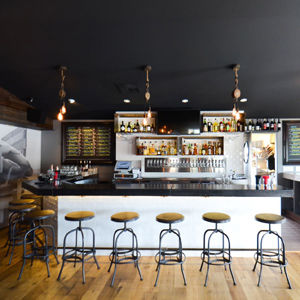
Priority Public House
encinitas
The red Calypso cottage has been revamped into the handsome green Priority Public House, a 66-seat gastropub by proprietor Brian McBride. A colorful chalkboard menu reveals what’s spilling from its taps—22 craft beers and two white wines from the barrel. Order up a fetching Salt of the Earth with smoky mescal, cynar, lime, and pineapple, and a burly center-cut pork chop with chipotle citrus barbecue sauce. 576 North Coast Highway 101
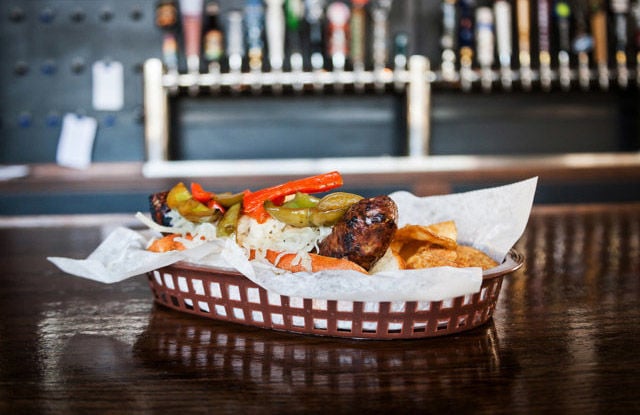
The Regal Seagull
The Regal Seagull
leucadia
The Regal Seagull, the coastal version of Mission Hills’ Regal Beagle, is Leucadia’s latest dudefest. After you choose your local fave from 20 rotating beer taps and one of nine artisan links served up on Sadie Rose buttermilk rolls, your order is zip lined into the kitchen. Patrons are given a 1980s character name (think Mr. T, Greg Brady, Marty McFly) for pickup, which is announced over the loudspeaker. Twenty-five cent mini-corn dog Mondays, Wingsday Wednesdays, and Trivia Night add to the party. 996 North Coast Highway 101
carlsbad
Cigar aficionados can light up at the Park Hyatt Aviara Masters of Food and Wine event for an evening of steak, smoke, and scotch. After a little Glenfiddich or Macallan with hors d’oeuvres, chef Kurtis Habecker presents four courses, with Brandt all-natural rib eye served two ways as the focal point. Guests then retire to the terrace for a scotch and cigar pairing hosted by spirit manager Levi Walker of San Diego’s Young’s Market Company and cigar expert David Haddad of Fumar Cigars. September 20–22. Argyle Steakhouse, 7447 Batiquitos Drive
Del Mar
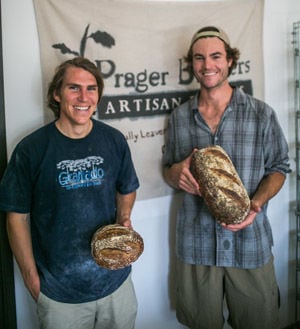
The Prager Brothers
The Prager Brothers
Old Town’s El Agave is transporting its old-world traditions and to a new zip code this fall with an outpost in Del Mar. Tequila Agave Artesenal will fill the space once occupied by Flavor in Del Mar Plaza. The upscale (read: expensive) Mexican eatery will also host a 2,000-bottle tequila museum with a tasting room for tequila flights and appraising in-house. 1555 Camino Del Mar
carlsbad
The Prager Bros., baker Louie and musician Clinton, who used to fire up their bread in the back of Blue Ribbon Artisan Pizzeria, have opened their own retail space—Pragers Brothers Artisan Bread in C-bad. The duo is also planning a CSA-style bread program. Find them at weekly Encinitas, Vista, Carlsbad, and Rancho Santa Fe famers markets. Carlsbad Gateway Center, 5671 Palmer Way
5 local real estate experts dish on the hottest hoods in San Diego
Where We Will Live – Steve Matsumoto
“With an influx of infrastructure, vogue businesses, and new housing options, Encinitas continues to be one of the hottest markets in San Diego. Home buyers are flocking to the ever-evolving beach city, and median home prices have increased 41.8 percent in 92024 since 2015. The revitalization of the downtown area enhanced the array of boutiques, restaurants, breweries, and coffee shops. New businesses and office spaces dot the 101. A recent SANDAG project added bike paths and pedestrian walkways, increasing walkability. Stellar schools, picturesque beaches, and a relaxed vibe make Encinitas a popular destination in today’s market.”
—Steve Matsumoto, broker, Compass
Where We Will Live – Tommy Walker
“The neighborhood of Paradise Hills has seen a significant jump in sales. The average across San Diego County is a 21.6 percent increase, and Paradise Hills has seen a 37.5 percent increase. It’s an up-and-coming neighborhood, as it’s in a central location in South Bay. The community comes together three times a year to put together events for the neighborhood. New businesses like Project Reo Collective (a community arts collective and café), as well as seasoned local businesses like Babycakes, are calling Paradise Hills home. People also visit to see the murals, and there’s the House of Boxing gym, which Canelo Álvarez frequents prior to main events.”
—Tommy Walker, broker, Willis Allen
Where We Will Live – Jennifer Wu
“With new breweries and restaurants opening up along the coastal business areas, more people are enjoying the living space and culture. Both active service members and veterans are seeking their first home or step-up home here. The median home price in 2018 for a detached three-bedroom, two-bath home in Oceanside was $515,000. As of 2019, a similar property now costs $543,750. These price points, coupled with the growing food and retail culture, make Oceanside the most affordable coastal living in San Diego County.”
—Jennifer Wu, broker, Harcourts Pinnacle
Where We Will Live – Jean Rivaldi.jpg
“This neighborhood borders La Mesa and is bounded by 68th Street on the west, El Cajon Boulevard to the north and University Avenue to the south. The area is seeing a lot of new buyers due to turnover of older homes. Being on the outside of San Diego creates more affordable opportunities and slightly bigger homes for less. With La Mesa’s burgeoning restaurant scene nearby, this is an attractive option—especially for people who are looking to buy and may have been renting in the urban core area of San Diego.”
—Jean Rivaldi, owner, Community Realty
Where We Will Live – Ami Lewallen.jpg
“Get excited, Mission Valley homeowners! The future of Mission Valley is looking up. The San Diego City Council is adopting the Mission Valley Community Plan. Not only can we expect a surge in housing inventory, and an increase in sales price for the location, we can also expect pedestrian- and bicycle-friendly pathways, more parks, and overall better amenities for the community. Considering this revitalization project and the residential population’s expected 248 percent increase, there’s no better time than now to be a homeowner in Mission Valley.”
—Ami Lewallen, owner, Red Rhino Realty
Oceanside, California
"Fish taco" at Beaumont's, strawberry-rhubarb tart at Tidal, wild shrimp cockteles at Don Chido
“Fish Taco”
There are two camps when it comes to deconstructed sci-fi food utilizing neat kitchen tricks. The first views such food as needless puffery getting in the way of “real” food. “Just braise me somefin,” says that set. The other camp truly loves this mind-bending exploratory food realm and still cries softly in the night over the closing of El Bulli. I’m somewhere in between. I like creativity in food as long as you don’t send me a “yuzu gelee” that looks and tastes like a jaundiced pencil eraser. And Beamont’s chef George Morris nails the balance with his “fish taco.” It’s seared albacore, grilled corn tortilla foam (which tastes more like a cream), dehydrated chorizo, and hatch chile puree with heirloom tomatoes, avo, cilantro and jalapeno. All together, it really does taste like a super-clean, top-notch fish taco. For inspired food in sleepy little Bird Rock, Morris and Beaumont’s are definitely the place. Note: Order from his specials menu. Beaumont’s Eatery, 5662 La Jolla Blvd., 858.459.0474.
Strawberry-rhubarb tart
I’m not a big dessert guy. I spend too much of my time and table space with the savory menu. By the time dessert comes around I’d often just rather order a soft couch to wink out on for a while. I also am not a fan of warm, macerated fruit fillings. Pies and tarts pale in my eyes to, say, a doughnut (or plain old unadulterated berries with cream). And yet somehow this tart—with its perfectly dense pastry, not overly cloying berry filling and confetti of mint with vanilla gelato—overcame all that. Eat this on the Tidal patio as the sun goes down and all that stressful life crap you worry about will turn to dust. Tidal @ Paradise Point, 1404 Vacation Rd., Mission Bay, 858.274.4630.
Don Chido wild shrimp cockteles
Antonio Friscia is one of my favorite chefs in San Diego—a certified sommelier, student of global cuisine, super gracious, other-oriented host. But if I didn’t love his food, I’d go fishing with him instead of writing about his new Mexican restaurant. Here, the chef has a Santa Maria grill for meats (a griller’s dream, and a rarity to see at restaurants). His queso fundido is a plus-sized dream, and his piping hot churro bites with caramel sauce taste like school lunch dessert from the 1970s (a minor difference being his don’t taste like stale bread sticks). But my favorite bite may have been his simple cockteles with wild Mexican shrimp. He makes his similar to an aqua chile, marinated in lime, yuzu, top-notch olive oil and chiles., Don Chido C527 5th Ave., Downtown, 619.232.8226.
"Fish taco" at Beaumont's, strawberry-rhubarb tart at Tidal, wild shrimp cockteles at Don Chido
“Fish Taco”
There are two camps when it comes to deconstructed sci-fi food utilizing neat kitchen tricks. The first views such food as needless puffery getting in the way of “real” food. “Just braise me somefin,” says that set. The other camp truly loves this mind-bending exploratory food realm and still cries softly in the night over the closing of El Bulli. I’m somewhere in between. I like creativity in food as long as you don’t send me a “yuzu gelee” that looks and tastes like a jaundiced pencil eraser. And Beamont’s chef George Morris nails the balance with his “fish taco.” It’s seared albacore, grilled corn tortilla foam (which tastes more like a cream), dehydrated chorizo, and hatch chile puree with heirloom tomatoes, avo, cilantro and jalapeno. All together, it really does taste like a super-clean, top-notch fish taco. For inspired food in sleepy little Bird Rock, Morris and Beaumont’s are definitely the place. Note: Order from his specials menu. Beaumont’s Eatery, 5662 La Jolla Blvd., 858.459.0474.
Strawberry-rhubarb tart
I’m not a big dessert guy. I spend too much of my time and table space with the savory menu. By the time dessert comes around I’d often just rather order a soft couch to wink out on for a while. I also am not a fan of warm, macerated fruit fillings. Pies and tarts pale in my eyes to, say, a doughnut (or plain old unadulterated berries with cream). And yet somehow this tart—with its perfectly dense pastry, not overly cloying berry filling and confetti of mint with vanilla gelato—overcame all that. Eat this on the Tidal patio as the sun goes down and all that stressful life crap you worry about will turn to dust. Tidal @ Paradise Point, 1404 Vacation Rd., Mission Bay, 858.274.4630.
Don Chido wild shrimp cockteles
Antonio Friscia is one of my favorite chefs in San Diego—a certified sommelier, student of global cuisine, super gracious, other-oriented host. But if I didn’t love his food, I’d go fishing with him instead of writing about his new Mexican restaurant. Here, the chef has a Santa Maria grill for meats (a griller’s dream, and a rarity to see at restaurants). His queso fundido is a plus-sized dream, and his piping hot churro bites with caramel sauce taste like school lunch dessert from the 1970s (a minor difference being his don’t taste like stale bread sticks). But my favorite bite may have been his simple cockteles with wild Mexican shrimp. He makes his similar to an aqua chile, marinated in lime, yuzu, top-notch olive oil and chiles., Don Chido C527 5th Ave., Downtown, 619.232.8226.
The 29-year-old culinary director at Herb & Sea is making seafood sexy (and approachable) again
Implementing a farm-to-table model hardly deserves acknowledgement these days. It’s not a stretch. It’s not innovative. “It’s the bare f**king minimum,” says Herb & Sea‘s executive chef Aidan Owens.
When I arrive at the Encinitas restaurant, I’m ready to talk sustainability, farm-to-table stuff, with Owens. “Did you see the chin on that?” he says of the extra big jiggly chin on the sheephead that just arrived with the day’s fresh catch. I did. It was Jay Leno adjacent.
I learn quickly that he somehow oozes both charm and stone-cold honesty. Maybe he could construct a new dish with chin goo, like he did when he had a bunch of tuna scraps and voila’d it into a smooth and crowd-pleasing ‘nduja. “I want to know what’s in there,” he says.

The instinct to look closer, to dig into what others might discard, says a lot about the chef’s approach. I guide him back to our topic, but he has something else on his mind. “We’re overcomplicating food—what happened to just cooking good food and having fun with it?”
Owens grew up on a farm in Byron Bay, Australia, where sustainability wasn’t a concept you chat about so much as a way of life. Think dirt roads, backyard chickens, pulling vegetables straight from the ground, and a mother who believed that if you couldn’t pronounce the ingredients on a package, you shouldn’t eat what was inside.
Food wasn’t precious or performative. Making it was what you did because you were hungry and that’s still what inspires Owens today. “I like to cook good food because I like to eat good food,” he says.
His approach to sustainability at Herb & Sea began so naturally that it felt just like instinct. “I was just like, ‘Let’s order food from the people who live and work here,’” he says.

And why wouldn’t he when lives in San Diego? Cities all over the world vie for our goods. Our tuna is sent overseas. Our spiny lobsters hit dinner plates in China and Japan. Not to mention California’s producing a third of the country’s vegetables and three-quarters of its fruits and nuts.
“Why would we outsource when it’s all here?” Owens asks.
Sustainability, in this context, is about cooking what exists in abundance, nearby, right now. “I love the local fish here. It’s f**king delicious and San Diego citrus, I mean, it is so f**ing good,” he says.
Instead of importing ingredients, Owens also looks for nearby alternatives. “You can find really cool things in the local waters,” he says, pointing out that stingray cheeks taste similar to scallops.

Whatever he finds in that sheephead chin might just be the next substitute for marrow. But to make this work, it means getting diners amped up about the slightly unfamiliar.
Tasting menus, where diners are completely in his hands, become an opportunity to gently push boundaries. “I’ll serve mackerel, because people think they hate it,” Owens says, noting that the abundant local fish can have some fishiness. “But when it’s fresh, it’s arguably one of the best fish in the ocean.”
He also tweaks the language on the menu so people might feel more compelled to give dishes a try without preconceived notions. He might use “lengua” instead of “tongue.” “Whelk” instead of “snail.” When he puts “stingray throat” on the menu, he disarmingly calls it “skate.”
To reduce waste, scraps aren’t always discarded but rather turned into something new. Sometimes they’re smoked, cured or fermented. Apples going bad turn into apple ponzu. Lemons turn to marmalade, which stretches their usefulness far beyond peak season. “And it’s super tasty on our pizza,” he says.
What makes the food even richer, is the relationships he’s built with farmers. Though it didn’t always feel natural, Owens sought personal connection first. He recalls approaching a fisherman at the Tuna Harbor Dockside Market. “I was awkward,” he says. “I went up to him and said, ‘I like your fish.’”
Owen’s is now so close to his suppliers—like fishermen Ryan Sebo and Joe Daly—that he gets texted pictures of fresh catches right as they flop on the boat. The messages always ask if he wants first dibs. “I say yes to a lot of fish,” Owens says, noting that Herb & Sea can go through 2,000 pounds of seafood a week.

The next evolution of sustainability, in his view, will be chefs working directly with producers such as his alliance with Sebo, cutting out middlemen and purveyors where possible. “It will put more money in the pockets of the people doing the work,” he says.
It will mean that chefs can’t just know their local farmers and producers, but they’ll choose to work with the ones who have the best practices. Dining and sustainability will become much less about the final plate. “It will be more about the impact that plate has on the Earth,” he says.
Ultimately, he believes sustainability doesn’t need to be loud. It doesn’t need hashtags. It just needs to be honest.
“We aren’t saving lives. We’re feeding people good food,” he says.
And yet, in feeding people well—simply, thoughtfully, responsibly—something meaningful happens. Guests leave satisfied. Ingredients are respected. Local ecosystems are supported and food returns to what it has always been at its core: nourishment, pleasure, and a quiet reflection of the place it comes from.
No buzzwords required.
Cycling infrastructure is coming our way in the near-ish future
In 2030, San Diego will be threaded with more than a thousand miles of bike routes, according to the recently approved San Diego Bicycle Master Plan Update. So dust off that Schwinn and prepare to break up with your SUV. Now, what will we do about all these hills?
Biking through Del Mar
510 existing miles in San Diego’s bicycle network
595 additional miles proposed by 2030
47,499 SD commuters currently biking to work, school, college, and transit stations
112,378 Commuters in 2030 who will bike to work, school, college, and transit stations (projected)
39.4 miles of “Bicycle Boulevard” proposed. What is a Bicycle Boulevard? A low-speed or residential street that’s bike-friendly and sees minimal cut-through motor traffic.
6.6 miles of “Cycle Track” proposed—zero miles currently exist. What is a Cycle Track? A bikeway on a road that is separated from vehicles by a wide raised curb, parking system, or some other barrier.
149 million Reduced number of weekday vehicle miles per year (by 2030)
121 million Reduced pounds of CO2 per year in 2030
$80K Funding San Marcos received from the State to create a new master bike plan
March 1: The international Bicycle Film Festival will roll into San Diego at MOPA. bicyclefilmfestival.com
March 30: San Diego County Bicycle Coalition’s CicloSDias will hit Pacific Beach. ciclosdias.com
Cycling infrastructure is coming our way in the near-ish future
In 2030, San Diego will be threaded with more than a thousand miles of bike routes, according to the recently approved San Diego Bicycle Master Plan Update. So dust off that Schwinn and prepare to break up with your SUV. Now, what will we do about all these hills?
Biking through Del Mar
510 existing miles in San Diego’s bicycle network
595 additional miles proposed by 2030
47,499 SD commuters currently biking to work, school, college, and transit stations
112,378 Commuters in 2030 who will bike to work, school, college, and transit stations (projected)
39.4 miles of “Bicycle Boulevard” proposed. What is a Bicycle Boulevard? A low-speed or residential street that’s bike-friendly and sees minimal cut-through motor traffic.
6.6 miles of “Cycle Track” proposed—zero miles currently exist. What is a Cycle Track? A bikeway on a road that is separated from vehicles by a wide raised curb, parking system, or some other barrier.
149 million Reduced number of weekday vehicle miles per year (by 2030)
121 million Reduced pounds of CO2 per year in 2030
$80K Funding San Marcos received from the State to create a new master bike plan
March 1: The international Bicycle Film Festival will roll into San Diego at MOPA. bicyclefilmfestival.com
March 30: San Diego County Bicycle Coalition’s CicloSDias will hit Pacific Beach. ciclosdias.com
In a world overflowing with shortcuts, marketing fluff, and “good enough,” there are still companies that choose a different answer. And in San Diego, there are plenty of them.
In a world overflowing with shortcuts, marketing fluff, and “good enough,” there are still companies that choose a different answer.
Integrity guides how they show up every day. They make hard decisions, hold themselves accountable, and build trust the old-fashioned way, one action at a time. At the Better Business Bureau, we call these businesses Torch Heroes: leaders who demonstrate that ethical leadership strengthens businesses and drives long-term success.
And in San Diego, there are plenty of them.
Take House Collective Marketing Solutions, a Carlsbad-based digital agency that won the 2025 Torch Award for Ethics for its people-first approach to marketing. Instead of pushing flashy campaigns, the team often takes a step back to make sure clients’ foundations are strong before going big. Their philosophy? Truth over transaction builds partnerships that last.
Or look at Young Black & N’ Business, where integrity shows up through community action. When a local school lost art funding, founder Roosevelt Williams III and his team stepped in with workshops, mentorship, and hands-on support to help restore creative opportunity. That kind of engagement reflects ethical leadership rooted in real impact.
And in Vista, Lotus Sustainables carried its commitment to ethics all the way to the product line. After discovering defects in a shipment of eco-friendly products, the company issued full refunds and redesigned its offerings at its own expense, a choice that shaped its identity and reinforced to customers that ethics guide every decision.
In North County, Greenway Landscape Design & Build brings integrity into everyday service. When a client’s glass was damaged, likely not by their crew, owner Scott Lawn chose responsibility over blame and covered the repair personally. For Greenway, doing the right thing serves as a north star, guiding every interaction through transparent pricing, accountable partnerships, proactive communication, and follow-through long after the job is done.
Other honorees include At Your Home Familycare, whose leadership turned down a lucrative state contract during the pandemic to protect vulnerable clients and staff, and Bill Howe Family of Companies, where hiring practices, training, and service centers around shared values, every day, on every call.
What connects these diverse businesses, from marketing to nonprofit support to home services, isn’t size, industry, or revenue. It’s something deeper: a commitment to trust as a business strategy.
In San Diego’s competitive marketplace, that trust gives companies an edge. Clients invest in relationships. They refer friends. They stay loyal when others fade.
As one Torch Award winner puts it, integrity isn’t a section in the employee handbook. It’s the operating system of the company, the invisible code that determines every choice, every day.
And that’s exactly the point of the BBB Torch Awards for Ethics: to spotlight companies that dispel the myth that ethics and success are at odds. These businesses show that when leaders choose honesty, fairness, and accountability, especially when it’s hard, they build brands that matter.
At BBB, we see nominations come in from clients, employees, and business partners who have witnessed ethical leadership up close. These submissions aren’t polished promotions. They’re stories of moments when a company chose people over profit, clarity over confusion, and trust over convenience.
The nomination window for the 2026 Torch Awards for Ethics is open through March 31, 2026, and there are more Torch Heroes waiting to be recognized.
Who comes to mind in San Diego’s business community?
And yes, businesses can nominate themselves. We encourage it. If you’ve built your business on principles rather than buzzwords, we want to hear your story.
Because in a world full of noise, integrity still deserves the spotlight, and San Diego is full of stories worth telling. Nominate your hero now.