Featured articles
Food & Drink
Food & Drink
Food & Drink
Featured articles
Everything SD
Everything SD
Things to Do
Featured articles
Things to Do
Things to Do
Guides
Featured articles
podcast-ep
podcast-ep
podcast-ep
Featured articles
Everything SD
Everything SD
Food & Drink
Featured articles
Everything SD
Everything SD
Food & Drink
Ready to know more about San Diego?
SubscribeReady to know more about San Diego?
The two brothers and their business partner, Darius Yasiejko, are now majority owners of the iconic Marina District bar and restaurant
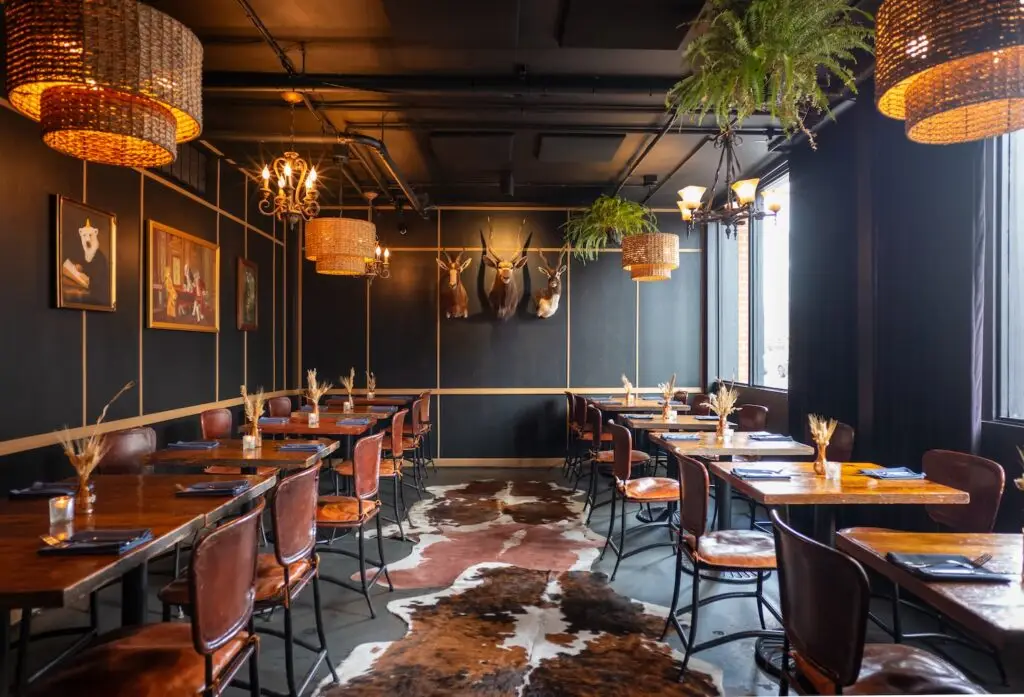
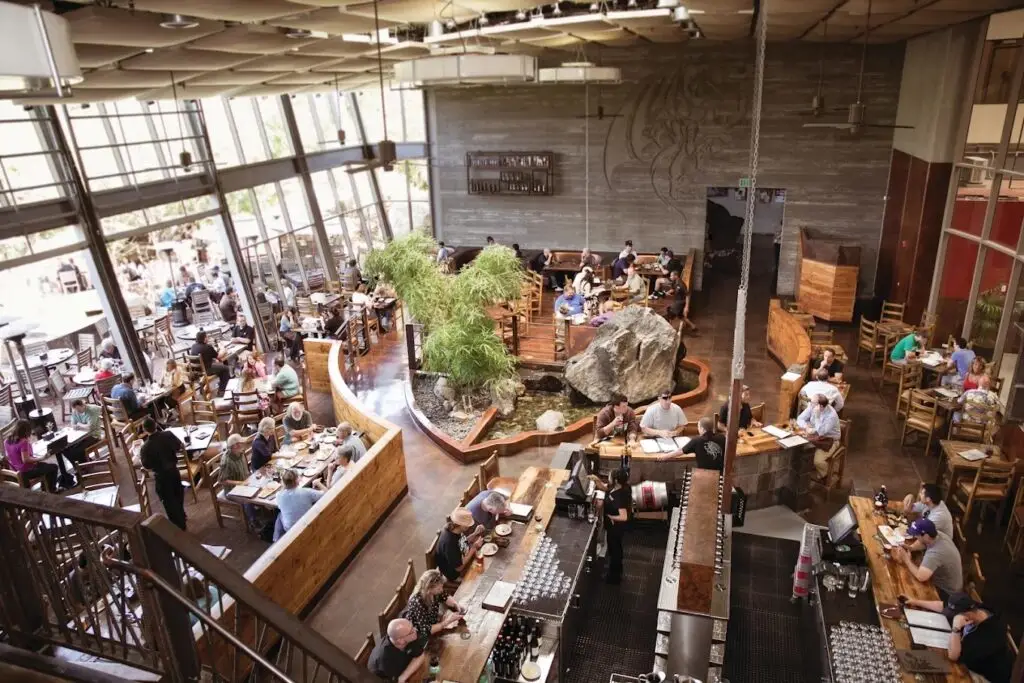
Once upon a time (13 years ago, to be precise), a restaurant inspired by New York City’s world-class cocktail scene opened on a once-desolate corner of Kettner Boulevard. Sandwiched between the tourist-heavy Seaport Village, the Top Gun barbecue restaurant, and trolley tracks for the Green MTS line, the location made absolutely no sense.
And yet. Over the years, The Lion’s Share didn’t just survive. It reshaped San Diego’s drinking and dining culture in perpetuity, alongside other iconic industry bars like Starlite, Noble Experiment, and Turf Supper Club. It’s no exaggeration to say that if the brick-covered building had become a retail store, real estate office, or the most likely alternative, a dispensary, San Diego’s cocktail scene would look much different today.
Now, The Lion’s Share has a new future. Ultra-talented local industry vets and culinary innovators Danny and his brother Dante Romero (who also happens to be the restaurant’s executive chef), and their business partner Darius Yasiejko acquired the restaurant from operating partners Carlos Valente and Roy Ledo, effective July 2025.
Danny says a few changes are inevitable, but it’ll be more of an evolution than anything else.
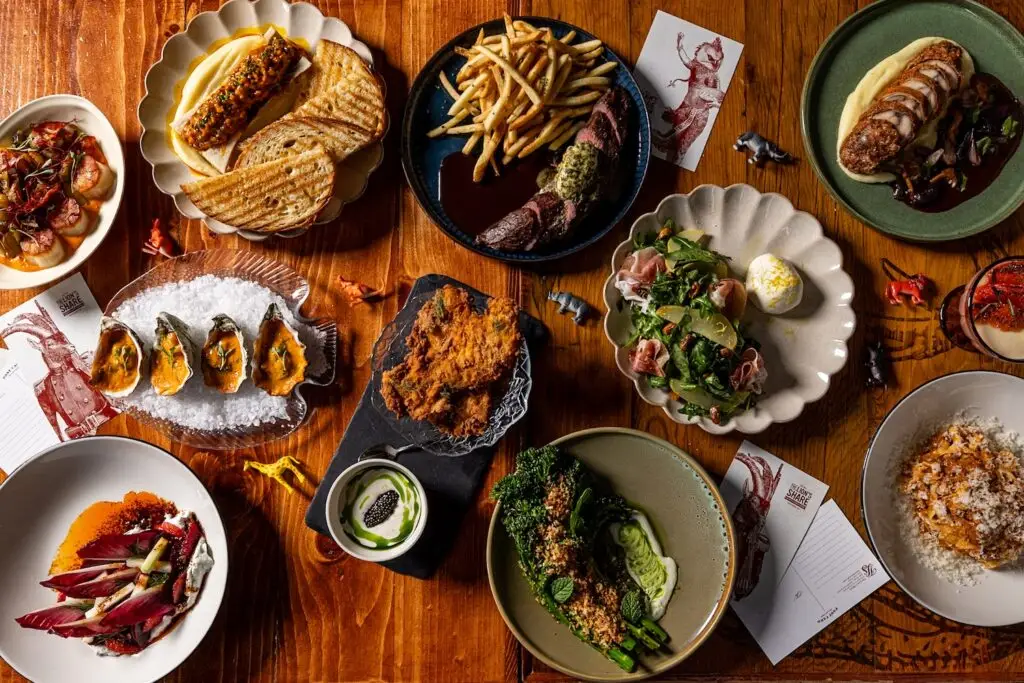
“It would be unwise of us to make any major changes when it comes to what The Lion’s Share is,” the new owner explains. “We really want to keep what it is—it’s a local favorite.” General manager Joshua “JB” Becker and bar director John Gibian are both staying on (as well as the whole staff, Danny hopes).
It’s the first time the brothers have co-owned a brick-and-mortar together. Before Danny helped launch Service Animals, the hospitality group behind Ponyboy at the Pearl Hotel, with another industry superstar Ian Ward, both Ward and Danny worked at three Michelin–starred Addison by William Bradley (Danny as chef de partie, Ward as bar director).
In the past, the Romeros’ launched pop-up concepts like Tortoise and Two Ducks, the latter of which operated out of The Lion’s Share’s upstairs loft as a fine-dining tasting menu with a third partner, Darius Yasiejko. It was actually that search for a permanent home for Two Ducks earlier this year is what eventually led them to taking over The Lion’s Share.

“We were just kind of shopping locations, trying to see what we were going to do next with our pop up, and in that process, Roy from The Lion’s Share reached out to us and said, ‘Why don’t you guys just buy this?’” Danny explains. “We were like, ‘Okay, yeah!’ It’s kind of switching gears for us, but it’s a good thing—this is exactly the space we want to be in eventually, so it just felt natural.”
One future change Danny does hope to eventually implement is transforming that loft space into a permanent home for Two Ducks. (There’s no timeframe for that—just a dream.) During the initial transition, Two Ducks’ pop-up series will be on a temporary hiatus as they get their ducks in a row (c’mon, that pun is unavoidable!), but the game-heavy, cocktail-driven bar and dining room menus will remain generally intact, still largely catering to San Diego’s industry crowd and locals. Over the next six months, Service Animals will work with the restaurant’s current management company The Sporting Fraternity before taking over operations.
PARTNER CONTENT
Danny knows taking over a legacy project like this can spark big feelings. But he’s confident this new beginning will be a happily ever after. “That’s a big thing that we want to make sure that we don’t lose out on—the neighborhood,” he promises. “One of the things we learned from Addison is when something’s right and when something’s wrong. And I think that the bulk of what’s going on here at The Lion’s Share is pretty right.”
Listen Now: The Latest in San Diego’s Food and Drink Scene
Have breaking news, exciting scoops, or great stories about new San Diego restaurants or the city’s food scene? Send your pitches to [email protected].
Beth Demmon is an award-winning writer and podcaster whose work regularly appears in national outlets and San Diego Magazine. Her first book, The Beer Lover's Guide to Cider, is now available. Find out more on bethdemmon.com.

The sustainability-focused sushi concept offering traditional favorites as well as fusion specialties will open in North County this summer
Encinitas nigiri fanatics, I bring you good tidings. Oto Sushi is slated to open in late July. After nearly two decades of experience in operations for Tao Group Hospitality and Ace Hotel, Ash Cintas opened the first Oto in Laguna Beach in 2024. She focused on from-scratch dishes, fish sourced from Smart Catch and Seafood Watch–approved suppliers, and a wide swath of gluten-free options.
Year one worked, so she started eyeing her ideal second spot—North County San Diego. “I grew up spending time in San Diego visiting family, and my grandfather built a fishing business here, so the area has always felt familiar and meaningful to me,” says Cintas.
Cintas’ twin sister Alysha Rabb spearheaded the Japanese coastal design of the new Oto, which takes over the former Mrkt Space. The 3,200-square-foot eatery flows from the indoor dining room to large outdoor patio, as well as a private dining room—a total capacity of 95. Chef Connor Mathison has worked as a sushi chef for over 15 years at venues like Bamboo Sushi SW in Portland, Oregon. His menu includes classic sushi offerings like nigiri and sashimi, specialty rolls, bento boxes, tempera, karaage, Wagyu burgers, and robotayaki.
Robatayaki, sometimes called robata, is a method of slow-grilling meat, seafood, and various vegetables over premium Japanese binchotan charcoal. Basically, it’s the gold standard for grilling, thanks to its intense, clean heat that imparts a smoky, savory char on the outside and a rich, tender inside.
“One of the defining characteristics of Oto is that much of our sushi is served yakumi-style, meaning it arrives already seasoned with ingredients designed to complement the fish rather than relying on soy sauce,” Cintas explains.

There will also be a large number of vegan and vegetarian dishes, plus scratch cocktails with housemade syrup, fresh juice, sake, Japanese whiskey, wine, and beer selections curated by beverage partner Gavin Grum. Cintas says she hopes to continue expanding across Southern California, ideally opening six to eight locations in different coastal communities.
“The goal isn’t to build the biggest restaurant company,” she says. “Encinitas is the next step in proving that model can scale.”
Oto Sushi opens July 2026 at 782 N. Coast Hwy 101 in Encinitas. Initial opening hours are from 11:30 a.m. to 9 p.m. daily.

First more sushi, now more ice cream? Someone pinch me. Later this June, Silver Hoof Creamery will open in Old Town at 2548 Congress Street, Suite G, bringing artisanal soft serve, waffle tacos and waffle bowls, sundaes, and milkshakes to the Old Town Urban Market food hall. Everything is made with 100 percent California dairy milk (except for the dairy-free options, of course), and the small-batch menu of flavors ranges from dark chocolate soft serve to blueberry lavender milkshakes, matcha garden sundaes, and the signature Silver Hoof sundae made with vanilla swirl soft serve, caramel drizzle, topped with candied pecans and various candy gems and topped with whipped cream. Personally, I’m a sucker for strawberry, so I’m looking forward to giving the strawberry fields milkshake a slurp once the doors open.
Listen Now: The Latest in San Diego’s Food and Drink Scene
Have breaking news, exciting scoops, or great stories about new San Diego restaurants or the city’s food scene? Send your pitches to [email protected].
Beth Demmon is an award-winning writer and podcaster whose work regularly appears in national outlets and San Diego Magazine. Her first book, The Beer Lover's Guide to Cider, is now available. Find out more on bethdemmon.com.

Một Bánh Mì melds Vietnamese and Mexican traditions in a new pop-up concept featuring its take on a local favorite
Is there any food more quintessentially San Diegan than the California burrito? That was a rhetorical question since the French fry-stuffed, flour tortilla-wrapped torpedo of carne asada bliss came into being in the 80s (either invented by Lolita’s or Santana’s, depending on who you ask). But now, Vietnamese-Mexican pop-up Một Bánh Mì may be giving the longtime champ a run for its money.
Một Bánh Mì’s original California banh mi takes cues from both cultures, using traditional Vietnamese baguettes from Paris Bakery filled with carne asada and garnished with cilantro-jalapeno crema, Vietnamese mayonnaise, pickled vegetables, cilantro, cucumber, jalapenos, and of course, French fries.
“It’s so San Diego—it’s so us,” says Desmond Bui, pop-up founder and owner with partner Marisol Santiago. “It really encapsulates the Vietnamese-American and Mexican-American journey and identity here.”
Both grew up in San Diego. Bui is Vietnamese. Santiago is Mexican-American. The sandwich makes utter personal sense.
Neither of them cooked professionally before launching Một Bánh Mì earlier this year, when they popped up for the first time at Convoy Rising for Lunar New Year. But after seeing the rise of the local Vietnamese coffee scene with shops like Saigon Coffee, Chance’s Coffee, and Em Coffee House, Bui knew there was an opportunity for a new generation to put a fresh spin on Vietnamese food in San Diego.
While there are plenty of places to grab a banh mi around town (K Sandwiches, Ba Le French Sandwich Shop, Lee’s Sandwiches, and so on), we’ve yet to hear of a California banh mi. Firsts are being firsted.
“Banh mi is regarded by top chefs as the best sandwich in the world,” says Bui. (Side note: I concur.) And after discovering overlap between Mexican and Vietnamese cuisines through common ingredients like cilantro, lime, jalapeno, white onion, and pickled vegetables, they began planning a menu.

Một Bánh Mì also serves Bánh Mì Đặc Biệt (Vietnamese cold cuts), Bánh Mì Thịt Nướng (grilled lemongrass pork banh mi), and Bánh Mì carnitas de hongos (mushroom pâté banh mi), along with some specials like Thịt Nướng tacos (grilled lemongrass pork) and hopefully soon, al pastor trompo banh mi (marinated pork shaved off a spit) and charcoal-grilled adobada.
Other banh mi shops Americanize names for English-speaking audiences—for example, listing “grilled chicken sandwich” instead of Bánh Mì Gà Nướng. Not Một Bánh Mì. If you’re not sure how to pronounce something, Bui says they’re happy to help. It’s an educational opportunity, he explains, as well as a chance for them to be “unapologetically Vietnamese and Mexican.”
Part of the immersive experience is playing Vietnamese tunes from the ‘60s and ‘70s.
“When you think of universal languages, what are ways when you travel or meet a different group of people that you can still find common ground and connect and feel like we’re a lot more alike than we are different?” Bui asks. “Food and music.”
The musical element is part of Một Bánh Mì’s greater vision. They’d like to evolve into a lifestyle brand and media company, with merch, jars of pickled vegetables, you name it. Eventually, they’d like to open a brick-and-mortar somewhere in Mid-City. In the meantime, they’ll continue to pop up at places like Mixed Grounds and Chance’s Coffee, or wherever they can. (Bui called Provecho Coffee their “dream collab,” hint hint.)
Listen Now: The Latest in San Diego’s Food and Drink Scene
Have breaking news, exciting scoops, or great stories about new San Diego restaurants or the city’s food scene? Send your pitches to [email protected].
Beth Demmon is an award-winning writer and podcaster whose work regularly appears in national outlets and San Diego Magazine. Her first book, The Beer Lover's Guide to Cider, is now available. Find out more on bethdemmon.com.
The team behind The Roxy launches Anigma, a hidden cocktail bar with small bites
If your dopamine rush comes from stepping into an experiential esoteric escape that also serves cocktails, then the newly-opened Anigma might just be up your alley. Brought to life by the owners of The Roxy Encinitas and Roxy on Broadway in Denver, Encinitas’ new hidden cocktail lounge spirals around the idea that nothing is quite as it seems. Stepping into the moody 47-seat space, which is tucked behind the retail store Archive, should feel like an out-of-this-world experience, says Paula Vrakas, one of the four partners behind Anigma.
Vrakas worked with architecture and design firm Tecture—which designed restaurants like Lucien, Haven at Fox Point Farms, and Kettner Exchange—to concoct an environment that begins when guests walk through the secret portal into a world of velvety folklore and myth. No two experiences will be identical, she promises.
“The concept itself is a changing concept, and so this sort of mysticism, the occult, or these dark arts, they’re ever-changing within themselves,” she explains. “So we can lean in…. at any given moment without completely changing the entire concept. That’s actually what we intend to do.”
If this sounds very abstract, that’s okay. Let’s center ourselves around the cocktails, which are very real and created in part by bar lead Sam Reinke.
Initially, there will be around 16 cocktails (and a few mocktails) in three sections. “Archive” features traditional drinks like Old Fashioneds and Manhattans, while “Myth & Memory” offers rotating cocktails inspired by Southern California folklore, like the monster of Proctor Valley Road or the legend of Charles “The Rainmaker” Hatfield.

But the menu starts with “Sigils,” four drinks that break down Anigma’s logo into its individual features: the Celtic Knot, the tria prima (the Latin philosophy of three foundational elements of alchemy being salt, sulfur, and mercury), the All-Seeing Eye of Providence, and the Alchemist’s Stone. The ingredients in each reference key aspects of each concept; for example, the Alchemist’s Stone (sometimes called the Philosopher’s Stone) is made with red powder to mimic the same flaming hue of the legendary item. The Eye of Providence includes carrot juice, an ingredient rich in beta-carotene that also happens to be excellent for eye health.
The fifth drink, called “Anigma” and based on the logo as a whole, will never be listed. “But if you ask, you can find out,” promises Vrakas.
Since the concept is meant to be cocktail-forward, only a few small bites will be available, like chocolate-covered strawberries and wasabi pea pub mix. “It’s fancy snacks,” laughs Vrakas. But considering how Encinitas’ dining options have upped their game as of late, she says focusing on providing a high-end cocktail experience will fill a void in the area not yet overwhelmed with similar choices. Once inside, it’s an intimate space, with seating for 47 guests over 800-square-feet lit by candles and cocooned with dark velvet curtains sewn by Vrakas’ mother.
For now, Anigma is reservation-only, but will likely introduce opportunities for walk-ins in the future. In the meantime, expect surreality and perhaps a bit of discombobulation, says Vrakas. “It’s just meant to [feel] like, ‘Wait, where was I? Where was that? And how do I get back?’”
Anigma opens May 28 at 517 S. Coast Hwy 101 in Encinitas. Hours are Wednesday, 5 p.m. to 9:30 p.m.; Thursday, 5 p.m. to 10 p.m.; Friday 5 p.m. to 10:30 pm; and Saturday 5 p.m. to 10 p.m.. Closed Sunday–Tuesday.

Call it the Michelin effect—after earning Michelin recognition in December, Cloak & Petal in Little Italy is ready to expand its Japanese-inspired offerings by launching a coffee shop-slash-cafe experience this August.
Called Black Mizu Café, the 1,000-square-foot space situated within Cloak & Petal will serve Torque Coffee and Compa Coffee beans and Asa Bakery pastries, as well as Japanese comfort food dishes like a tamago sandwich, bánh mì panini, edamame hummus toast, and various parfaits. Signature drinks include specialties like a honey yuzu sparkling matcha, cherry blossom latte, white miso caramel latte, and a cardamom cinnamon latte. Next spring, Black Mizu will also launch a Pacific Rim-inspired brunch menu by executive chef Robert Cassidy.
With space for 25 to 30 guests, the Japanese-meets-Scandinavian minimalist design will also be able to accommodate a private dining space for Cloak & Petal during non-café hours. Managing partner Cesar Vallin anticipates the initial hours of operation will be daily from 6:30 or 7 a.m. through around 2 p.m., with extended hours on Thursdays, Fridays, and Saturdays until approximately 9 p.m. It’s not a pop-up, per se, but it’s certainly a creative way to make the most of the restaurant’s off-hours floor space.
Listen Now: The Latest in San Diego’s Food and Drink Scene
Have breaking news, exciting scoops, or great stories about new San Diego restaurants or the city’s food scene? Send your pitches to [email protected].
Beth Demmon is an award-winning writer and podcaster whose work regularly appears in national outlets and San Diego Magazine. Her first book, The Beer Lover's Guide to Cider, is now available. Find out more on bethdemmon.com.
Stake Chophouse & Bar brings contemporary classics and old-school service to the heart of Coronado
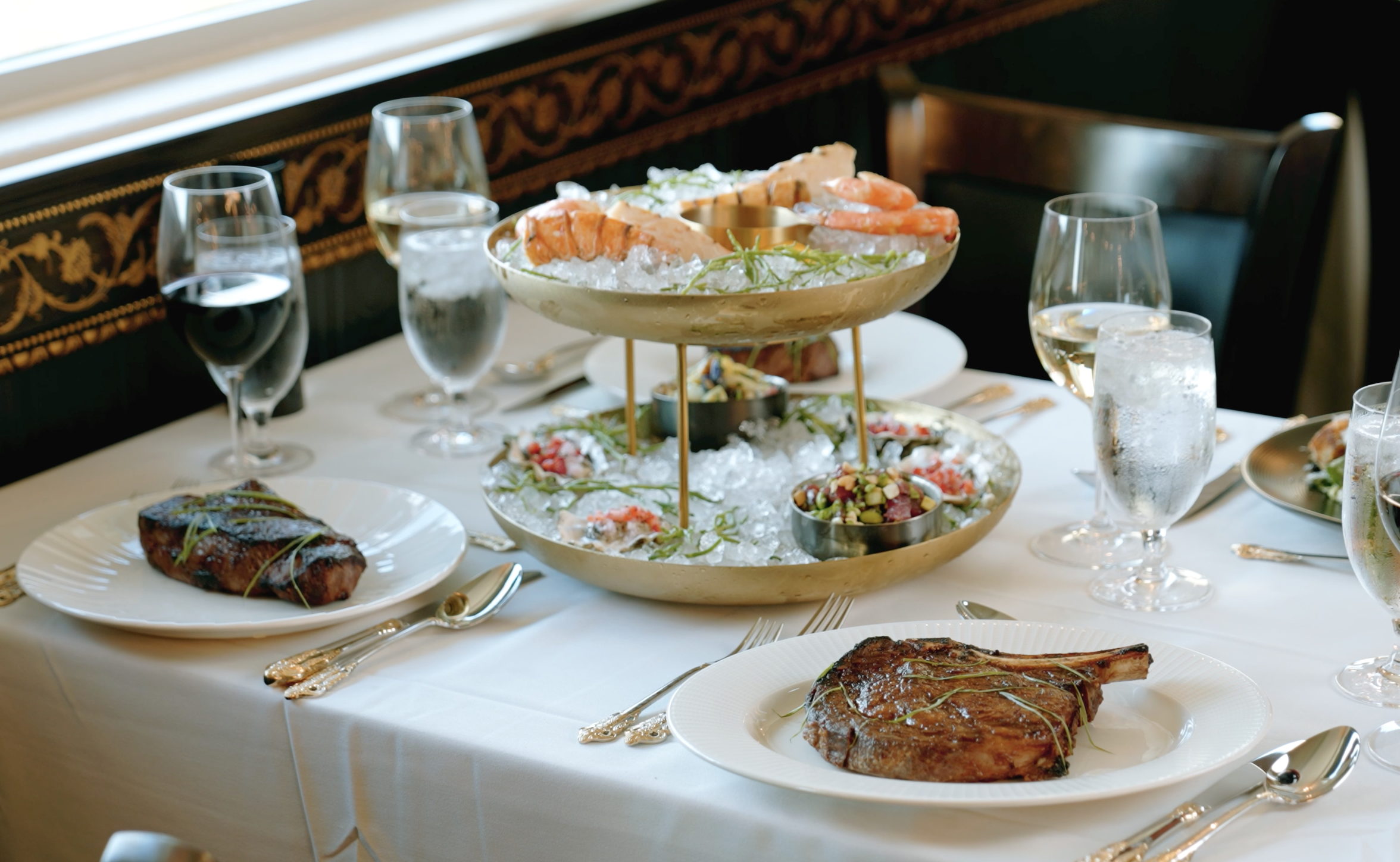
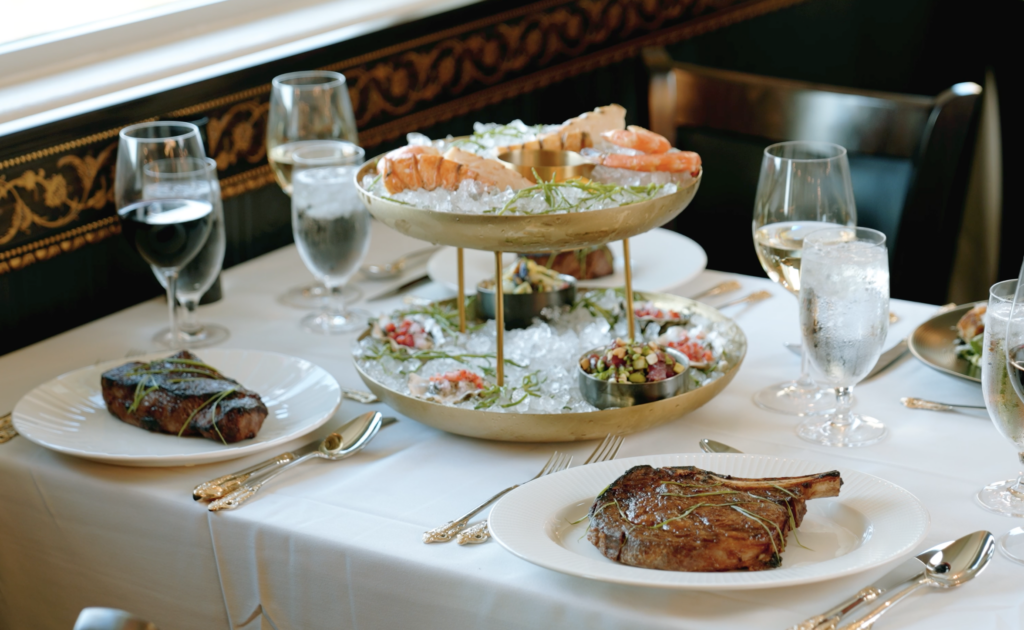
Stake Chophouse & Bar isn’t your average steakhouse. Blue Bridge Hospitality’s Coronado outpost is a modern interpretation of a big-city steakhouse nestled in the heart of the small coastal community. The team at Stake has reimagined the whole steakhouse experience. By prioritizing a seasonal farm-to-table sourcing philosophy, a personalized guest experience, and unique service touches, like a formal steak presentation and a bespoke knife selection process, Stake distinguishes itself in a sea of steakhouses.
Exceptional steaks, including Wagyu from Japan, Australia, and the U.S., and fresh seafood flown in daily form the core of Stake’s culinary identity. The menu features a five-course omakase-style steak experience highlighting house favorites, plus an array of cuts, and classic steakhouse staples—think a wedge salad, baked potato, or pasta carbonara—refined for a contemporary palate without losing their traditional appeal. Stake focuses on seasonal sourcing from the region’s best family farms and specialty purveyors, and incorporates intentionally unexpected touches to create something truly unique.
“I challenge our chefs and myself to take it a step further in sourcing,” says Chef Ronnie Schwandt. “It’s important to us to highlight different farms, unique one-off farms—whether it’s cattle, strawberries, a local fisherman or from anywhere in the United States, we’re always trying to find that niche.”
Beyond the menu, Stake emphasizes outstanding service, says Vinny Spatafore, Director of Hospitality Operations. Staff maintains detailed notes, allowing them to remember guests by name, recall previous orders such as a favorite martini (also memorable for the customer since it’s served in an extra tall, distinctly-shaped glass), and celebrate special occasions like birthdays and anniversaries.
“When you have those points of topic that you remember about a guest, they appreciate that,” he says. “Our servers are really good with that—we have a couple servers who have been here since the beginning and they’ll remember somebody from years ago, their name, their kids’ names, where they live. I’m really thankful to have a great front of house staff.”
Award-winning wines, rare whiskeys, special events, and a complementary black car service that provides transportation for guests throughout Coronado add to Stake’s appeal.
Schwandt stresses that Stake offers more than a meal; they aim to give patrons something unforgettable.
“It starts when you walk up the stairs and are greeted by the hostess—that sets the tone for the night. Then you’re greeted by a server, who may know you by name, and can guide you through the menu and curate as they get to know you,” says Schwandt. “Most people leave kind of blown away; they leave feeling like they just had an experience. That’s the goal, right? Whether you’re serving smash burgers or high-end steak, you want somebody to leave thinking, Wow, that was awesome.”
For its 10th anniversary, North Park Beer Co reinvents the kitchen at its flagship location
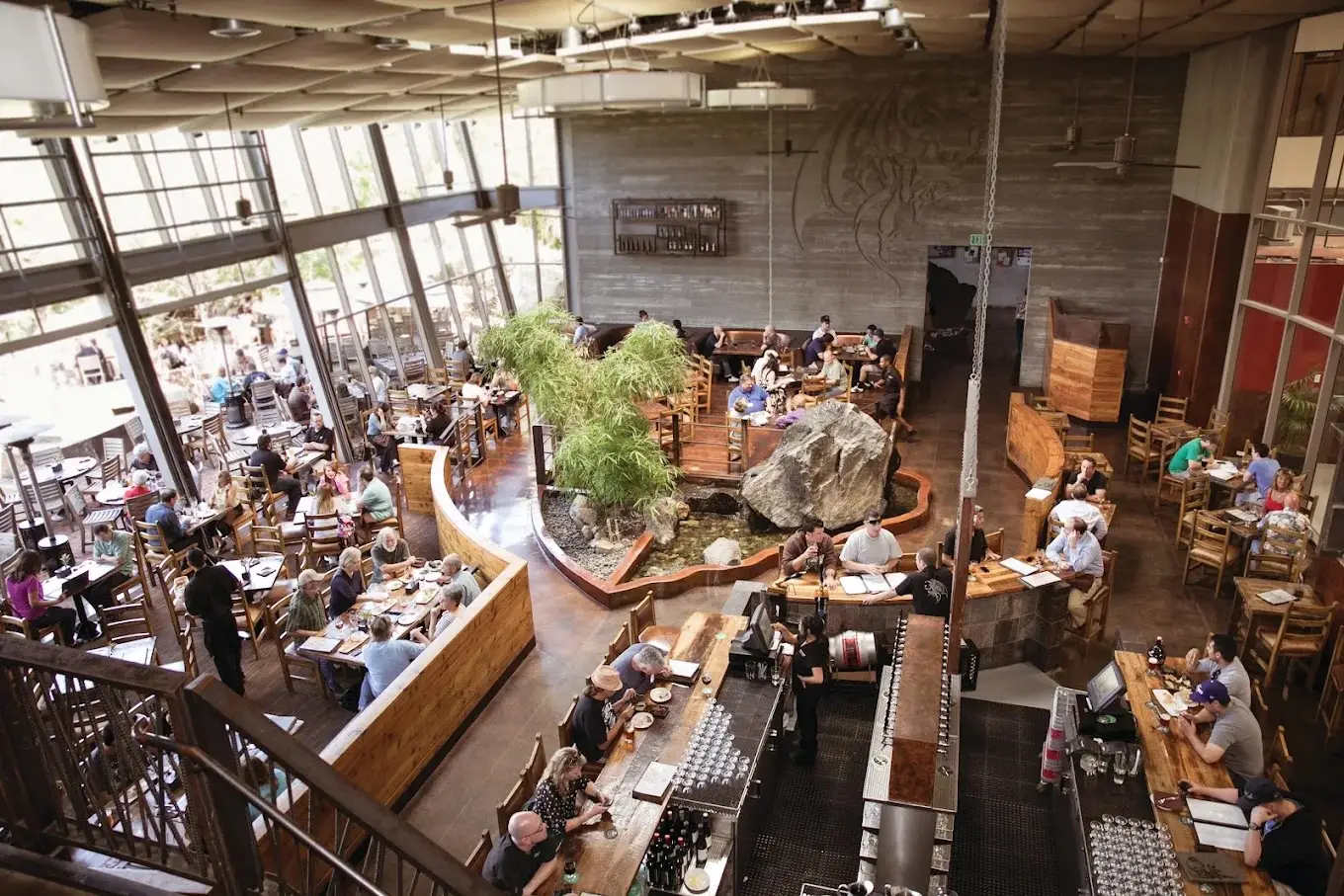
When Kelsey and Amanda McNair opened North Park Beer Company in 2016—they knew their strengths. Kelsey was an accomplished and award-winning homebrewer several times over (his West Coast IPA Hop-Fu! has won more awards than any IPA in homebrew history). Amanda’s design sensibility and business acumen helped bring the now-signature mid-century aesthetic to life alongside Basile Studio.
They also knew their shortcomings.
“When I leased this location, I knew it had to have food,” explains McNair. But he’d never owned, run, or even worked in a restaurant. Rather than winging it, he partnered with Mastiff Kitchen, who for 10 years provided housemade sausages, giant Bavarian pretzels, chicken wings, and “pig fries” loaded with al pastor sausage, crispy pork belly, slow roasted pork, harissa aioli, cotija cheese, and cilantro.
Now, NP Beer Co’s two satellite tasting rooms have successfully launched their own food programs. In Bankers Hill, you can get one of the best smashburgers in town, plus 24-hour brined crispy chicken wings, twice-fried hand-cut cheesy bacon garlic fries, or a pulled pork sandwich on a toasted Martin’s potato roll. In its Crown Point location, McNair brought his pie obsession to life with New York-style pizza that uses Bianco di Napoli tomatoes and Ezzo pepperoni (the “cuppy” kind).
So when Mastiff’s lease came up for potential renewal, McNair decided it was time to bring the entire operation at NPBC HQ under one umbrella. For the first time, North Park Beer Company will launch its own food program at its flagship location in early June.
Director of culinary ops Sam Navarro says the menu will focus on global pub fare. “If you were going to different parts around the world and drinking beers, what would you be consuming?” he asks. In England, you could wash down a plate of fish and chips with a malty ale. In Japan, crispy chicken karaage goes marvelously with a dry Japanese lager. And tacos also go with beer—any beer.

Those will all be on the new menu, which is broken into sections for shareables (the huge space draws huge herds), salads, tacos, and mains. Highlights include the chicken karaage on Tokyo fries (Togarashi-seasoned, twice-fried Kennebec potato fries with miso aioli, tonkatsu sauce, sriracha drizzle, and topped with scallions and furikake), coconut curry fries, Nacho-Fu! nachos (with totopos chips, queso fundido, pickled jalapenos and onions, chipotle lime crema, cotija cheese, cilantro, and salsa verde)—plus vegetarian and vegan options.
Tacos range from Baja fish tacos to a traditional conchinita pibil—pork shoulder marinated for a day in its homemade adobo, then wrapped in banana leaves and roasted for a few hours, served with picked red onion, radish, and cilantro. “[We] want to be true to what it is and do it the best way possible we can, so you can take a trip to those locations around the world without leaving San Diego,” he says.
Some of the burgers are previous specials from Bankers Hill that have been “knock it out of the park hits,” says McNair, and now have a permanent place on the North Park menu. The Tokyo Smash features two smashed beef patties with Swiss cheese, ponzu-marinated and seared pork belly, miso aioli, and quick pickled cabbage. Another is the French Onion Smash with a veal-based aioli, caramelized onions, crispy fried onions, and melted cheese.“It’s like taking a bite into French onion soup in a burger,” promises Navarro.
Anyone lamenting the loss of Mastiff’s pork nugs, weep not—they’re still available at Mastiff in La Mesa and NPBC is introducing a shareable Chashu-style pork belly with maple-miso caramel, black sesame seeds, scallions, chili crisp, and pickled vegetables.
Official launch will coincide with North Park Beer Company’s 10th anniversary party on Tuesday, June 23 (soft launching beforehand). They’ll bring back some of the original beers for the shindig, including styles they haven’t brewed in eons.
“It feels natural to do this at this point in time,” he says. “This whole thing is really going to complete the vision for this location.”
PARTNER CONTENT
Listen Now: The Latest in San Diego’s Food and Drink Scene
Have breaking news, exciting scoops, or great stories about new San Diego restaurants or the city’s food scene? Send your pitches to [email protected].
Beth Demmon is an award-winning writer and podcaster whose work regularly appears in national outlets and San Diego Magazine. Her first book, The Beer Lover's Guide to Cider, is now available. Find out more on bethdemmon.com.
Chop Suey Lounge & Ginger Roots will reimagine The Peking Cafe as a lounge and chef’s table experience
The neon lights of Pekin Cafe Chop Suey restaurant in North Park have gone unlit for seven years. During that span, the neighborhood has seen massive changes—some good (the iconic New Orleans-style building on 30th finally got a new tenant), some marquee (top chef Brad Wise opened his French steakhouse), some mixed bag (the bike lane debate continues), and some bad (massive rent increases).
But come December, if things go well, the landmark sign will light up once more to mark the opening of Chop Suey Lounge & Ginger Roots, a new take on the historic space from founding partners Jacquelyn Kelly and Jason Bess.
When the Fong family first opened The Pekin Cafe in 1931, chop suey was a dish on the rise. During the Gold Rush of 1848-1855, at least 20,000 Chinese immigrants came to California to work as miners and build the Central Pacific Railroad. When California began charging non-U.S. citizens extra fees to continue mining for gold, many immigrants began settling elsewhere or opening other businesses, like laundromats, pharmacies, and yes—restaurants.
But when President Chester A. Arthur passed the wildly racist Chinese Exclusion Act in 1882 to restrict Chinese laborers from entering the U.S. (which wouldn’t be repealed until 1943), merchants figured out an ingenious loophole. By opening restaurants and rotating management responsibilities, new arrivals became eligible for merchant visas, completely avoiding the labor designation (and thus, the exclusion act). It was known as the “Lo Mein Loophole.”
This fueled a huge boom of Chinese restaurants, especially in New York City and the West Coast. To accommodate a variety of Chinese and American palates, these new restaurateurs began to offer a mix of nostalgic dishes from back home as well as fusion dishes to appeal to a wider audience.
An entirely new Chinese-American cuisine was born.
Chop suey, which roughly translates to “mixed pieces” or “odds and ends,” either originated in New York City or San Francisco, depending on who you ask. Either way, it’s a Chinese-American invention—meat and eggs mixed with vegetables over rice and topped with a thick, gravy-like sauce. It’s been so popular since the mid-19th century that the Fongs decided to plaster it on the front of their North Park building in even bigger letters than the actual name of the restaurant (which was later renamed The Peking Cafe).
From 1931 to 2019, three generations of the Fong family served old-school Chinese-American classics in an interior lit by tasseled palace lanterns—which only half-illuminated a collection of squeaky red high-backed booths. When the last generation retired, the family held onto the space, waiting for the right successor to come along. They found it in Kelly and Bess.
The pair describe the dual concept as an elevated lounge vibe in the front (Chop Suey Lounge) and private chef’s table tasting menu experience in the back (Ginger Roots). Kelly has over 15 years of experience in hospitality, including eight years at CH Projects with multiple stints as a general manager and director of operations.
“We met the Fong family, and it was just like, ‘Oh my God How can we preserve this and tack on to their legacy that they’ve already had for 88 years?’” she says. “[This] combines everything I love”—like first-time ownership, the ability to reimagine an icon, and the chance to mix high-end food and cocktails with entertainment by acquiring a space with a cabaret license.
Bess’ background is in construction. They’re working with interior designer Sally Rodrigues of Crave Design Company and architect Chris Bord from Room & Bord to rebuild the 3,500-square-foot space. For food, the vision is to serve upscale, Chinese-inspired finger foods in the front mid-century lounge space—along with live music and entertainment. In the reservation-only chef’s table at Ginger Roots, guests will get a different Pan-Asian-inspired tasting menu.
Neither one is of Asian descent, but both express a lifelong enthusiasm for Chinese-American food that started when they were growing up in New York. Figuring out a way to honor both the legacy of the space and the history of Chinese-American culinary tradition in a respectful way is their biggest challenge, Bess admits, but doing a lot of research “and finding strategic partners to help us do that was really key.”
At the very least, it feels like a full circle moment. For Chop Suey in particular, to once more have the opportunity to act as a conduit of culture convergence to create something familiar, yet completely new. (Just please keep at least some of the red booths, please.)
Chop Suey Lounge & Ginger Roots opens December 2026 at 2877 University Avenue in North Park.
Listen Now: The Latest in San Diego’s Food and Drink Scene
Have breaking news, exciting scoops, or great stories about new San Diego restaurants or the city’s food scene? Send your pitches to [email protected].
Beth Demmon is an award-winning writer and podcaster whose work regularly appears in national outlets and San Diego Magazine. Her first book, The Beer Lover's Guide to Cider, is now available. Find out more on bethdemmon.com.

Scripps study shows that some patients may be able to taper their dose and maintain results
While glucagon-like peptide-1 (GLP-1) receptor agents have been used to treat Type 2 diabetes for more than 20 years, their recent emergence as weight-loss wonder drugs marked a new frontier in medicine. But their effectiveness has left some patients wondering what to do once they’ve reached their goal. Stopping the medication could mean regaining some, if not all, of the weight. A Scripps Clinic internal medicine physician recently conducted a small study of whether GLP-1 patients who had reached their goal weight could maintain that weight by taking their regularly prescribed injection every other week instead of weekly. Spoiler alert: 30 of 34 patients did. Read more about the study here and what that may mean as pharmaceutical companies roll out oral GLP-1s.
For more nutrition, wellness, and healthy living tips, sign up for the San Diego Health newsletter here.