Featured articles
Featured articles
Things to Do
Guides
Things to Do
Featured articles
Things to Do
Things to Do
Things to Do
What's next
Featured articles
Featured articles
Featured articles
Things to Do
Things to Do
Guides
Ready to know more about San Diego?
SubscribeReady to know more about San Diego?
The brother chefs who launched Wormwood spin off with pop-up dinner concept, aiming at brick and mortar
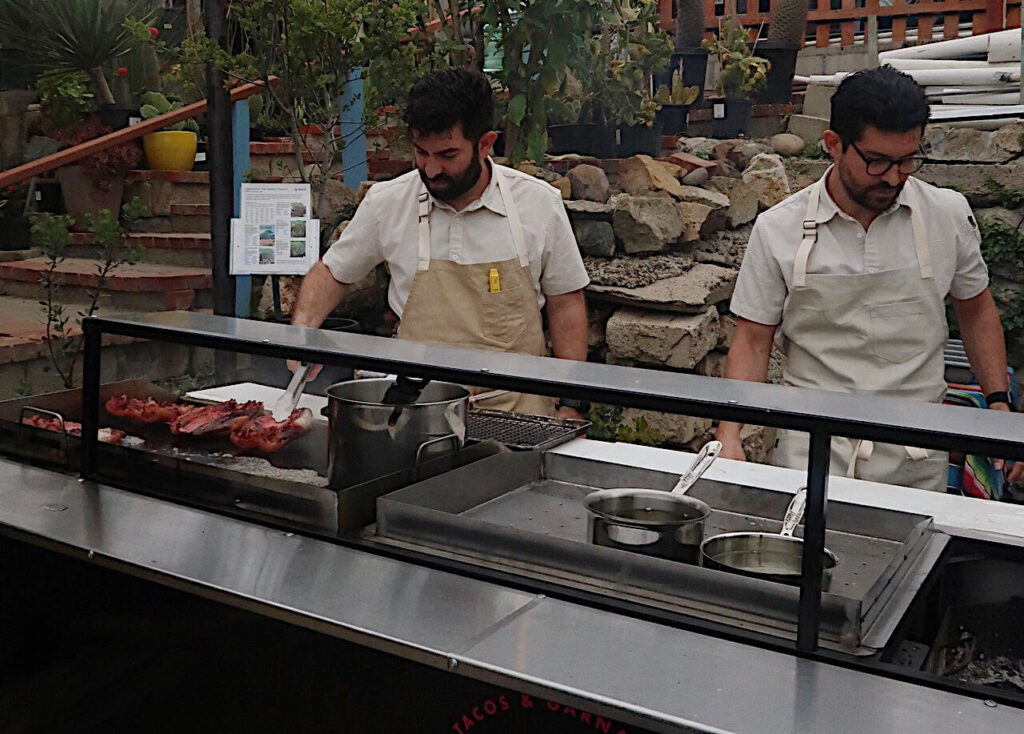
Brothers and chefs Dante (left) and Danny (right) Romero.
Photo Credit: Bay Bird Inc.
University Heights’ Wormwood was and still is one of San Diego’s breakout restaurants in the last couple of years. Now the two chefs who helped make that name have gone off on their own with a clandestine new pop-up dinner concept (plus an eye on a brick-and-mortar). They’re calling it Two Ducks.
Behind every multi-layered croissant and every unbroken beurre blanc are chefs whose allegiance to service helps keep the restaurant industry afloat. Many chefs regularly work upwards of 50 hours a week, which is often incompatible with building a family or maintaining a social life. Brothers Danny and Dante Romero hope to channel a lot more work-life balance with their Two Ducks pop-ups. The first set of dinners occurs this July.
The fine-dining concept is the predecessor to a permanent Tortoise brick-and-mortar location. Tortoise was a pandemic-era underground series the brothers ran on the side during their early days at Wormwood. They pulled their concepts’ names from Aesop’s fables, which celebrate steady patience and venturing beyond the norm.
“Two Ducks is a continuation of something we were doing a while back, but Covid kind of shattered us,” Danny explains. “We always said we’d get back to it. We’ve grabbed all the things we’ve learned about cuisine and service and tried to create something that can lead us to what we ultimately want to do, but with our own rules.”
Danny and Dante have since amicably resigned from the executive and sous chef positions at Wormwood to pursue Two Ducks full-time.
Each dinner will be in a new and innovative space, and guests will receive an email the day prior with the event’s precise location. The eight- to 10-course experience will emphasize classic French techniques with sparks of Mexican and Southern Californian influence, plus optional beverage pairings.
“We want the space to be transformative and match what we do,” Danny says. “We are trying to be hyper-seasonal, so white asparagus, peas, and mint during the spring. Stone fruit and corn during the summer. We also have curated playlists that match our style. Think of classics covered in a modern way, like lo-fi versions of the Beatles and mariachi bands playing ‘Hotel California.’”
Two Ducks is currently accepting reservations for its July dinners. There will be two dinners a week and room to expand with demand.
“We are really going to lean on the outdoors, like what you’d think of in an open field with ducks flying overhead,” Danny says. “We want to create an experience where you don’t have to go eat afterward, but where you’re also not unbuttoning your pants because you’ve eaten too much. The goal is to have the perfect night every night—not just with the food, but the service too. We want people feeling like they are in good hands.”
Have breaking-news, exciting scoops, or great stories about San Diego’s food scene? Send your pitches to [email protected].

Jared Cross is a writer who grew up near the US-Mexico border in San Diego. He credits this experience with refining his appetite for food and culture.
After building a loyal following through coffee shop pop-ups, Scoopy Scoopy is putting down roots in Leucadia
There’s a saying in business that if you’re not evolving, you’re dying. I personally have a saying that if you’re not eating ice cream, you’re also probably dying, but of sadness.
Scoopy Scoopy doesn’t have either of those problems. The premium ice cream pop-up launched last year with the idea of setting up in coffee shops after hours, helping those businesses maximize their profitability while also avoiding the costs of a brick and mortar. But it turns out, a lot of people in Leucadia really like ice cream—so much so that Scoopy Scoopy decided to open their own scoop shop in the same building as Moto Deli and Cadence Cyclery (in the former Queenstage Coffee House space) on July 8.
Evolving doesn’t mean leaving the old ways behind. Zach Zien, who runs Scoopy with his partner Steven Segal and wife Sophia, says they will continue to pursue the shared space model on weekends at Coffee Coffee in Leucadia through the summer and are still open to popping up at other venues. “That’s still a core part of our business,” he says. But with steady demand in the Encinitas area, it gave them the confidence to put down roots of their own.
“People have really welcomed us and we’ve been well-received,” he explains. “We think this is the market to succeed in.”
The super-premium ice cream is still sourced from Chocolate Shoppe Ice Cream in Wisconsin, but instead of the eight flavors they’re limited to for popups, the permanent storefront will be able to offer 12. “There will be three or four that regularly rotate, with probably eight staples that are our best sellers,” says Zien, pointing to flavors like peanut butter, oatmeal cookie, and the alternating vegan options. They’ll also be able to fill pints to order, something they haven’t been able to do in the past.
Currently, Moto Deli closes at 4 p.m. daily, but once Scoopy Scoopy is up and running, it will offer beer and wine until 8 p.m. for a shared drinks-and-dessert Happy Hour. “We’re hoping to get a food truck vendor on regular rotation to have food options available after hours as well,” says Zien.
The spontaneity of pop-ups can be as exciting as it is efficient. But when it comes to ice cream, I like knowing exactly when and where I can get a scoop—before the sadness kicks in.
Scoopy Scoopy soft opens on July 8 at 190 N. Coast Hwy 101 in Encinitas. Initial operating hours are Wednesday and Thursday, noon to 8 p.m.; and Friday through Sunday, noon to 9 p.m. (subject to change).

Speaking of pop-ups, San Diego’s culinary entrepreneurs keep ramping things up with more concepts launching every week. But after a parade of pastry prodigies and brilliant breadmakers, it might be nice to sink your teeth into something with a bit of protein. (Shoutout to all my carboholic brethren out there.)
Jim Adamski is joining the ever-swelling ranks of MEHKO (Micro Enterprise Home Kitchen) businesses alongside the likes of The Hidden Gazebo Eatery in Lemon Grove and Warung RieRie in Serra Mesa with his new venture, Cold Smoke BBQ. He’s not following a specific regional barbecue style like Central Texas, Kansas City, or St. Louis—he’s driven by whatever inspires him at the time (or, whatever he’s craving). He’s also not following a specific schedule. “My loose plans are weekends… then eventually maybe during the week,” he says. His menu and pick-up schedule get updated regularly, with pre-orders available to pick up from his house in 4S Ranch. So far, he says the dry-rubbed ribs and rib tips have been the best-sellers. But if you absolutely can’t resist adding a bread-adjacent item, you’re still in luck—he’s got cornbread.
Beth Demmon is an award-winning writer and podcaster whose work regularly appears in national outlets and San Diego Magazine. Her first book, The Beer Lover's Guide to Cider, is now available. Find out more on bethdemmon.com.
Drink 182 will pair pop-punk nostalgia with New England-style pizza starting this summer
If you’ve ever squeezed yourself into a pair of black skinny jeans with a studded belt, sported a track jacket under a band t-shirt, or swept your Manic Panic-hued hair so far to the side that your part got caught in your cartilage earring, I have good news: Ocean Beach will get a shot of emo and pop-punk nostalgia when Drink 182 opens this July.
The pop-punk bar and pizza spot comes with bonafide scene points. Co-founder Jay Nightride runs the music production studio Nightride Visuals, has worked with artists like Steve Aoki, Lil Jon, and Fall Out Boy, and also plays in Death Cab for Karaoke, a live karaoke band that performs every month at Soda Bar (among other venues). His partner Tony Jaw is easier to spot—he’s the guy with the sky-high mohawk manning the karaoke booth at Redwing Bar & Grill who’s been in the local bar and hospitality business for over a decade.
Nightride says he’s had the idea for an emo enclave for years, but it wasn’t until after Covid that he partnered with Jaw and got the funding to move forward. “What I was looking to build was a place that I would want to be, where would I want to go to remember these nostalgic songs,” he says.
Pending permits and final inspections, Drink 182 is slated to open the second half of July. The vibe will be dive bar meets emo night, with memorabilia from different bands who have supported the project splashed across the walls, plus a few arcade games, TVs, and (I assume) a decent sound system. The hours are still undetermined, but Nightride says they tentatively plan to be open until 2 a.m. on weekends and Wednesdays for the OB Farmers Market. In the mornings, they’ll serve fresh pastries and coffee from the similarly music-aligned James Coffee Company (whose co-owner David Kennedy is a member of Angels & Airwaves with blink-182’s Tom DeLonge).
But it’ll be the pizza that really stands out—or at least, they hope. “We’re doing New England beach pizza… a really niche pizza that not a lot of people would know about, unless you’re from North Shore, Massachusetts,” says Nightride, a former Bostonian. “It’s a thin crust, very sweet sauce, very simple, fast, go-to-the-beach kind of thing.”
“Beach pizza” is characterized by its rectangular shape, very thin crust, sweet tomato sauce, and slices of Provolone cheese with minimal toppings. Drink 182’s version will feature homemade dough and sauce, as well as freshly sliced Boar’s Head Provolone. And yes, they are aware there are already a lot of pizza options in the area. It won’t be the same, Nightride promises.
“Everybody’s first reaction when they hear ‘pizza’ is like, ‘Oh great, another pizza place in OB,’” he laughs. “But we’re trying to do something different, just enough to differentiate it and give people another option.” If you’re not keen on the style, try one of their “drunkables,” another nostalgic riff they hope the pop-punk and emo crowd will appreciate. And if you still need a reason to give Drink 182 a try, I have more good news—you don’t actually have to break out your old skinny jeans. (In fact, please don’t.)
Drink 182 opens July 2026 at 5049 Newport Avenue in Ocean Beach.

Listen Now: The Latest in San Diego’s Food and Drink Scene
Have breaking news, exciting scoops, or great stories about new San Diego restaurants or the city’s food scene? Send your pitches to [email protected].
Beth Demmon is an award-winning writer and podcaster whose work regularly appears in national outlets and San Diego Magazine. Her first book, The Beer Lover's Guide to Cider, is now available. Find out more on bethdemmon.com.
The team behind Harumama and Blue Ocean will open Little Kiki Katsu & More on June 15, serving premium cutlets, Japanese sandos, and curated sake pairings
Every culture has its own comfort foods—cozy dishes that nurture the soul as much as the body. In the US, dipping a grilled cheese sandwich in a bowl of tomato soup can feel as satiating as pulling a warm sweater out of the dryer. In China, a steaming bowl of congee is basically a miracle remedy for anything you can imagine. I’m pretty sure Italian carbonara could achieve world peace. And in Japan, katsu remains one of the most universally satisfying inventions of the past century.
Katsu was originally invented as a riff on côtelette de veau, the classic French veal cutlet coated with breadcrumbs and pan-fried in butter. In 1899, a Western-style restaurant called Rengatei in Tokyo decided to put their own spin on the dish by pounding the cutlets until thin, then coating them with softer panko and deep-frying versus pan frying (like tempura) for a crispier, lighter, crunchier bite. Today, pork—called tonkatsu in Japanese—tends to be the most common base for katsu.
The dish has yet to achieve the same mainstream status as say, chicken nuggets, in the US. But Little Kiki Katsu & More hopes to change that, when the katsu-focused restaurant opens in Carlsbad on June 15.
Created by the team behind Harumama and Blue Ocean, Little Kiki will focus on premium katsu dishes paired with sake and around a dozen small bites like miso soup, karaage, edamame, and Japanese pickles. Executive chef James Pyo, who co-owns all three restaurants with his wife Jenny, created a menu that features proteins like Berkshire Kurobuta pork, Jidori chicken, salmon, scallops, and dry-aged Pacific cod for the katsu and grilled stone selections. (Note: the grilled stone options will be offered for dinner only.)

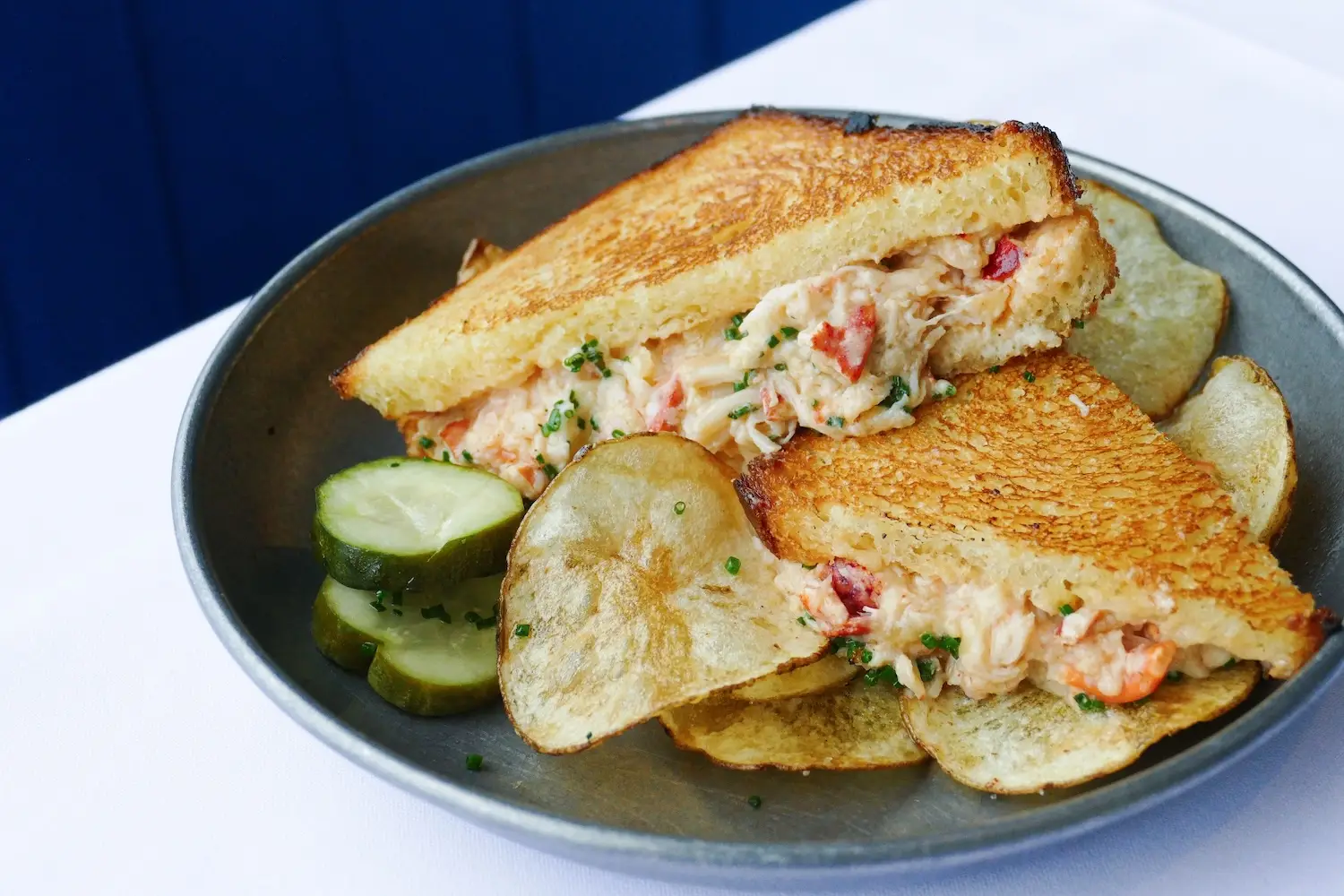
The lunch menu includes Japanese-style sandos like a tonkatsu sandwich with pork, housemade bread, and tonkatsu sauce (available regular or spicy). Dessert options are simple to start—yuzu cheesecake, matcha crème brûlée, and mango/yuzu mochi ice cream. The Pyos curated a selection of premium sakes as well, specifically for pairing purposes, as well as offering some beer and cocktails.
Little Kiki, which is named for Jenny’s cat, seats 25-30 guests inside with room for only a few more on the small outdoor patio as well. Designer and assistant Yoojin Jang says the vibe is meant to be warm and welcoming but modern, using colors like olive green, cream, and pops of orange against Japanese-style wood slats.
Initially, Little Kiki will only be open for dinner service, but aims to introduce lunch hours for the grand opening on July 1. Due to the limited seating, Jang encourages guests to make reservations, and while the restaurant will offer takeout, it will not be available on food delivery apps like Uber Eats or DoorDash to motivate guests to come experience it for themselves.
“Come in curious and leave satisfied,” says Jang. And keep your eyes open for subtle cat motifs—she promises they are hidden all over the place. Whimsy, it seems, is also on the menu.
Little KiKi Katsu & More soft opens on June 15, 2026 at 2958 Madison Street, Suite 101 in Carlsbad. Hours are Monday, Wednesday, Thursday, and Sunday from 11:30 a.m. to 3 p.m. for lunch and 5 p.m. to 9:30 p.m. for dinner; Friday and Saturday from 11:30 a.m. to 3 p.m. for lunch and 5 p.m. to 10 p.m. for dinner; closed Tuesday.

Listen Now: The Latest in San Diego’s Food and Drink Scene
Have breaking news, exciting scoops, or great stories about new San Diego restaurants or the city’s food scene? Send your pitches to [email protected].
Beth Demmon is an award-winning writer and podcaster whose work regularly appears in national outlets and San Diego Magazine. Her first book, The Beer Lover's Guide to Cider, is now available. Find out more on bethdemmon.com.
Tips from the trusted experts at Mauzy Cooling, Heating, Plumbing, and Electrical
San Diego summers can be brutal. But since the hottest period is typically late summer into early fall, San Diegans still have time to prepare. The pros at Mauzy Cooling, Heating, Plumbing, and Electrical are standing by to help homeowners fortify their homes against the elements and ensure their air conditioning is as frosty as the penguins that serve as the company’s mascots.
Many homeowners underestimate the load their AC system faces, especially in the inland valleys where temperatures regularly top 100 degrees. San Diego regularly sees multi-day heatwaves each summer, and a system that struggles on the first day will likely fail by the third. Longer run times, unusual sounds or smells, and uneven cooling from room to room are all signs that your system may not survive the next hot spell.
Systems typically last 12 to 17 years, but there are exceptions. If a system is approaching that, or is already there, a professional evaluation is recommended before summer really heats up. A good rule of thumb: If you can’t remember when your system was last serviced, it’s due.
“As technology changes, systems become smarter and smarter,” says Sean O’Connor, an install manager at Mauzy with 42 years of experience. “There are a lot of people out there who will say a system’s only good for 10 years. I don’t buy that—these systems are built to last as long as they’re taken care of.”
There are also a few steps homeowners can take between services to extend the life of their system. Regularly changing a dirty filter—especially if you have kids or pets—and keeping an outdoor unit clean can help head off problems in the future, says O’Connor.
Also, be realistic about whether it’s time to replace a unit. O’Connor likens pouring money into salvaging a faulty unit with patchwork repairs and replacement parts to “tripping over a dollar to pick up a dime.” When one part fails, others are sure to follow, and newer parts may not be compatible with older units. Mauzy recommends homeowners use the 50% rule: If a repair costs more than 50% of the system’s replacement value, and the equipment is over 10 years old, replacement is usually the better long-term value. And don’t forget the ducting. An older house that was built with heat and later had air conditioning added may not have sufficient airflow, regardless of how good the system is.
Last but not least, homeowners should know who to trust when it comes to their homes. Built on three generations of professional integrity, Mauzy has grown into not just a leader for cooling, heating, plumbing, and electrical services, but a leader in the community known for supporting local nonprofits across an array of causes. To ensure complete peace of mind, Mauzy stands behind a comprehensive 12-point guarantee that outlines its commitment to outstanding service, quality equipment, expert technicians who understand how the local microclimates affect HVAC performance, and no upsells or surprises on the bill.
“We go the extra mile. That’s what sets us apart,” O’Connor says. To get a free quote today, visit mauzy.com.

Telefèric Barcelona will open its first San Diego location early this summer
Westfield UTC mall is adding yet another “first” to the ever-growing roster of restaurants. The first US location for China’s stir-fry sensation Chef Fei is on the way later this year, Japan already reinvented crispy rice pioneer Katsuya by opening the first Katsuya Ko, and now, it’s Spain’s turn—Telefèric Barcelona opens early this summer.
The family-owned, Barcelona-based tapas joint first opened in the US 10 years ago in Walnut Creek, California, but co-founder and CEO Xavi Padrosa says they’ve had their eye on San Diego for years. Westfield UTC “just clicked,” he says, pointing to the burgeoning collection of world-class eateries already within the mall’s walls. Plus, La Jolla’s breezy vibe echoes Spain’s easygoing tapas culture.
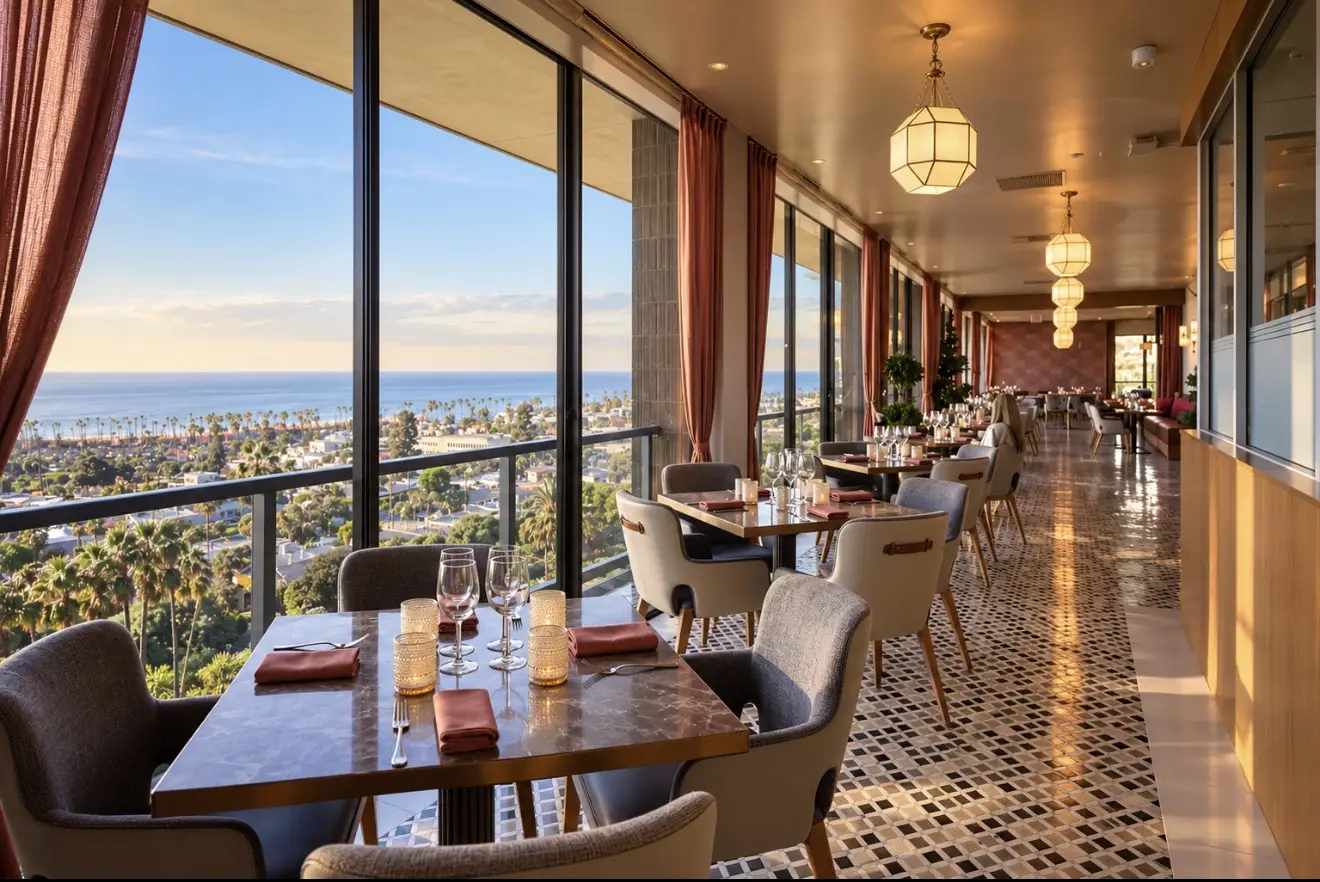
The indoor/outdoor space spans 5,526-square-feet, with seating for 150 inside, 60 on the patio, and 16 more at the bar. Xavi’s sister and co-owner Maria Padrosa designed the Mediterranean-inspired space as a contemporary take on coastal Catalonia, using imported furniture and materials from Spain like hand-glazed tiles and wood accents. And if all the dining spaces are planets, the center of the suite’s universe is the bar.

Padrosa points to signature favorites like patatas bravas (fried potatoes drizzled with a spicy red sauce and house aioli), jamón ibérico de bellota (Spanish ham from free-range pigs raised on acorns, cured for 38 months and sliced to order), gambas al ajillo (garlic shrimp), pulpo Telefèric (octopus with potato purée and pimentón XO, a spicy Spanish/Cantonese fusion sauce), and croquetas (a popular fried tapas dish coated in breadcrumbs and made with béchamel mixed with fillings like jamón or king crab.
There are a very small handful of legit paella spots in San Diego (Costa Brava in Pacific Beach and Cafe Sevilla in Gaslamp Quarter come to mind), so I’m personally looking forward to giving Telefèric’s a go—especially the squid ink paella negra, which is perhaps the most goth paella of all. Every location also offers different weekend specials, La Jolla’s being seafood-driven and meant to pair with beverage director Alex Serena’s drinks. There are over a hundred Spanish wines, Spanish-inspired cocktails, sangria, and of course, plenty of twists on the iconic gin and tonic. The restaurant will also have a gourmet market called The Merkat with imported Spanish sundries.

With more US locations in the works (Newport Beach will open soon after La Jolla), Padrosa says the company hopes to open more across California, but are open to anywhere in the country that feels right. “We don’t know exactly what new cities will appear on our map in the coming years,” he says. But in true Catalan fashion, anywhere they go should be ready for big plates of hearty Spanish cuisine.
Telefèric Barcelona La Jolla opens early summer 2026 in Westfield UTC. Opening hours will be Monday through Thursday, 11:30 a.m. to 10 p.m.; Friday and Saturday, 11:30 a.m. to 11 p.m.; and Sunday, 11 a.m. to 10 p.m.

Most of the time, you have to be 18 years old to change your name. In Arcana’s case, it was about a month. The immersive speakeasy behind Archive in Encinitas updated their moniker to Animga (a play on “enigma”) earlier this month, after what one can only assume was an upset letter from a similarly-named business. However, partner Paula Vrakas promises that the concept remains the same—mystery, cocktails, and a forthcoming bottle locker membership club. Since the only constant is change, Anigma is off to a good start!

Listen Now: The Latest in San Diego’s Food and Drink Scene
Have breaking news, exciting scoops, or great stories about new San Diego restaurants or the city’s food scene? Send your pitches to [email protected].
Beth Demmon is an award-winning writer and podcaster whose work regularly appears in national outlets and San Diego Magazine. Her first book, The Beer Lover's Guide to Cider, is now available. Find out more on bethdemmon.com.
Talking farm to table, fraud-to-table, and the feasibility of the movement with the beloved restaurateur who saw it all
Garden Kitchen was special. During its seven-year run on a quiet street in Rolando, even the farmiest-to-table devotees were pointing to chef-owner Coral Strong and slow-clapping. When the restaurant’s lease was up without the option to renew, which forced her to close in 2022, Strong wasn’t sure what to do next.
Farm-to-table wasn’t new by any means—chef Alice Waters spawned the movement at her pioneering restaurant Chez Panisse in Berkeley in the early ‘70s, and many San Diego chefs did it right. But by the mid-2000s, the idea had been so co-opted by the mainstream that the meaning was almost completely lost.
“In the beginning, I used to get very honestly angry and upset when I would go to other restaurants that were claiming they were farm-to-table, but knowing some of the chefs or prep cooks inside [telling me] ‘Oh no, that comes from Restaurant Depot,’” she says.
Food critic Troy Johnson’s cover story in 2015 documented the fraud, titled “Farm to Fable.” At Garden Kitchen, Strong only used produce and meat sourced from local San Diego farms—an honorable, if not arduous endeavor.
Strong grew up in Cardiff before her parents moved the family to Costa Rica in 1989. They’d bounce between the two countries for months at a time, but when they lived in a motel by the beach while building their own house, she witnessed an incredibly tight-knit food culture. “As a Latin American country, everyone kind of cooks together,” she says. Everyone chopped, prepped, prepared, and served as a unit. “[That] definitely shaped my adolescence as to how I thought about food and the community of food.”

When her father, a commercial fisherman, brought the family back to San Diego, Strong leaned into an entrepreneurial streak, moving from coffee to accounting and eventually bartending to pay the bills. But food remained a passion, especially after she met her future husband, who introduced her to his Be Wise CSA and the wonderful world of truly fresh, farm-grown vegetables.
“We were just always disappointed with the vegetables out at restaurants and were like, ‘Why can’t they just make vegetables taste good?” she wondered. She realized that despite having more small farms than any other county in the country, most restaurants in San Diego simply weren’t using local ingredients.
So she decided to do it herself.
Strong opened Garden Kitchen without any formal culinary training—just a commitment to getting the freshest vegetables, meat, fruits, and other produce onto people’s plates. Her first chef quit within a month, telling her it was impossible. “So I got in the kitchen one day and said, ‘I can do this, let’s figure it out.’ I taught myself how to cook.”
She already had connections with farmers, fishermen, and ranchers, and designed a different menu almost daily based on what she could get. “My farmers sometimes delivered in the middle of dinner service,” she laughs.
Garden Kitchen lasted until after the pandemic, but before the current economy cut into already razor-thin margins. Could Garden Kitchen exist today? She’s not sure.
“The biggest thing right now is just looking at the finances and how expensive it is,” says Strong. “Obviously, the cost of food is up right now, gas is crazy right now… it just crushes you.” Despite that, she believes that committing to the true farm-to-table ethos is as easy as one decides to make it.
“If you think it’s hard to order directly from your farmer, if you don’t understand the absolute pleasure in doing that and you’d rather order from a computer, then that’s your own difficulty,” she says. “People say they’re into it, but are they willing to make the effort like I am, to drive an hour to go get my meat, or drive 35 minutes to go to my farm to go pick it up? I don’t know.”
Today, Strong works as a private chef, hosts pop-ups, and offers catering services, all still using seasonally available ingredients from San Diego. And while she has no intentions of opening another restaurant, she says we might see even more of her in the future.
“I have a large property [in Valley Center], and let’s say that there will be more of my food to come,” she promises.

Listen Now: The Latest in San Diego’s Food and Drink Scene
Have breaking news, exciting scoops, or great stories about new San Diego restaurants or the city’s food scene? Send your pitches to [email protected].
Beth Demmon is an award-winning writer and podcaster whose work regularly appears in national outlets and San Diego Magazine. Her first book, The Beer Lover's Guide to Cider, is now available. Find out more on bethdemmon.com.
Discover San Diego’s Top Lawyers — the region’s most trusted legal professionals across diverse practice areas.
Daniel A. Kaplan is a founding partner of Panakos LLP with more than three decades of civil litigation experience in both state and federal courts. Mr. Kaplan pursues and defends legal claims on behalf of companies, entrepreneurs, and business owners in high-stakes disputes. He focuses on business disputes including breach of contract, unfair competition, trade secret theft, securities disputes, fraud/misrepresentations, and employment matters.
“The best advocacy combines preparation, perspective, and a client relationship built on trust and candor.” — Daniel A. Kaplan
His clients include real estate investors, private and public corporations, and individuals seeking sophisticated legal counsel. Known for practical judgment and strategic advocacy, he works closely with an experienced and diverse legal team to protect, enforce, and defend his clients’ interests.
555 W. Beech Street, Ste. 500, San Diego, California 92101
619-8000-LAW
Panakos.law