Featured articles
Food & Drink
Food & Drink
Food & Drink
Featured articles
Everything SD
Things to Do
Features
Featured articles
Things to Do
Things to Do

Things to Do
Featured articles

podcast-ep

podcast-ep

podcast-ep
Featured articles

Features

Features

Food & Drink
Featured articles
Partner content
Everything SD
Partner content
Ready to know more about San Diego?
SubscribeReady to know more about San Diego?
San Diegans are finding connection in gardens, shared produce, neighborhood gatherings, and simply sitting outside
Front yards. They used to be the most controlled part of a home—or not. They could be tidy with manicured lawns, have raised vegetable beds with food for sharing, or act as an overflow of things that didn’t quite make it inside. Thank you, capitalism, and the American habit of endless consumption. In Lemon Grove, where I live, it’s not uncommon to see a mechanic running a business from his front yard or a family selling birria on Saturdays from theirs. The front-yard genre is broad.
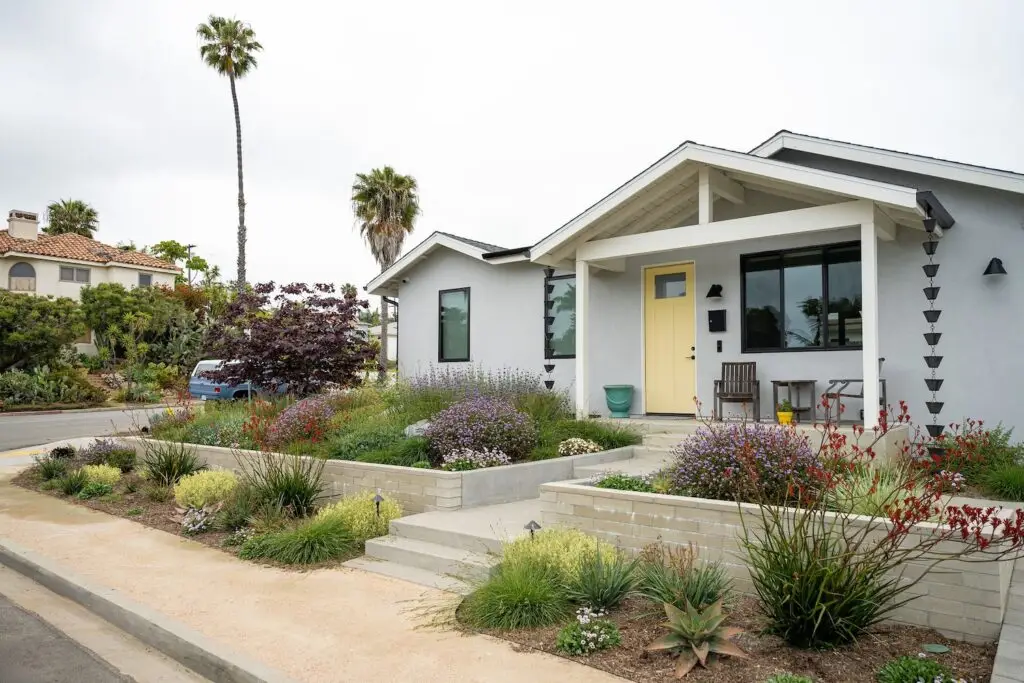
But in communities across San Diego County, the most exposed part of a house—the strip between public and private life—is being turned into something eminently usable, visible, and hang-outable. At first glance, this may seem decorative, but in creating an intentional space, particularly one that’s visible to neighbors and passersby, it’s also the release of a pressure valve.
Let’s not gloss it over: American life has taken a hard right at high speed; two wheels have lifted off the pavement as we careen toward who-knows-what, and our nervous systems are making a sound best described as zoinks!
People are trying to (re)build connection in an increasingly isolated culture, (re)find beauty in the midst of endless anxiety, and (re)create a system friendly for critters. Many of us are remembering that, Oh yeah—we’re biological creatures.
Landscape designer Andrea Doonan, of Andrea Doonan Horticulture + Design, is a certified arborist with more than 20 years of experience collaborating with homeowners and renters. She rejects sterile, white picket fence designs and places a strong emphasis on edible gardens and usable outdoor spaces. When we speak, she mentions the unusually wide range of plant and animal life in the relatively small size of our region, making us a “biodiversity hotspot.” (San Diego is the most biodiverse county in the Lower 48.) Because of this, we have a unique system of endangered species that rely on plants to survive.
“More and more, people are introducing native landscapes to connect to nature and support birds, butterflies, and bees,” Doonan says. “I’m very passionate about getting people to unplug and ground.”
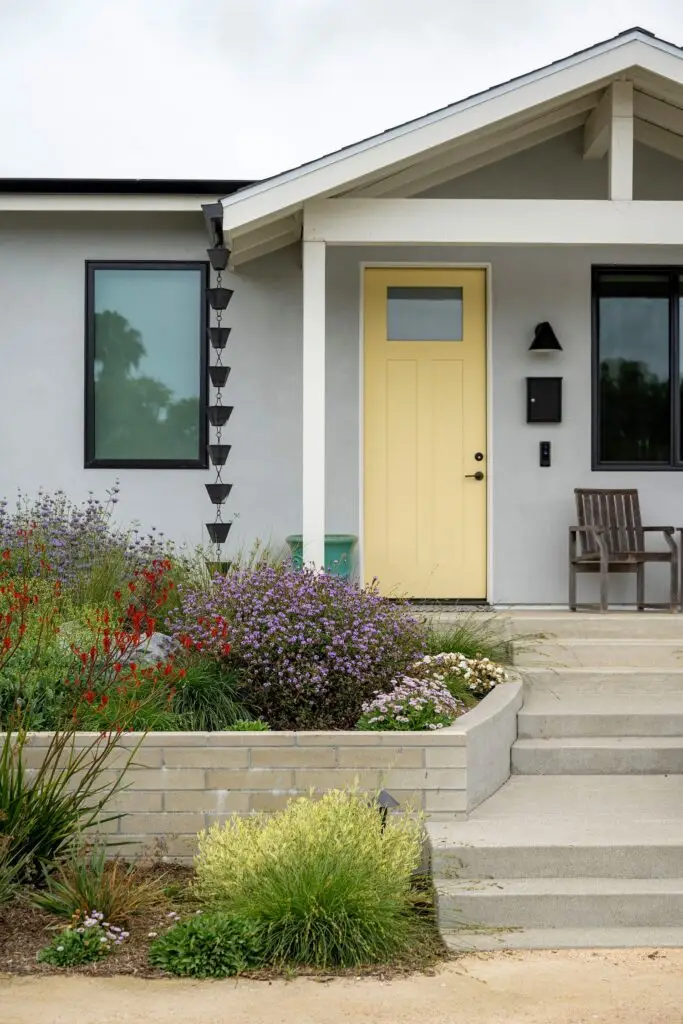
Whether it’s for a love of all creatures, our climate, or water conservation, Doonan describes a broader shift toward habitat-driven spaces that are both aesthetic and ecological. For her clients, this can mean replacing turf with native planting, adding seating areas, or even rethinking the front walk as an active, planted threshold rather than just a green lawn. “There’s this idea that people want to make a difference,” she says. “But they also want a place to entertain, recreate, and ground.”
At the center of this is a simple but increasingly urgent question: How can small design choices ripple outward into community life?
For Doonan’s client Lee Miller, that shift is fully expressed. After remodeling the interior of his Pacific Beach home, Miller focused on the backyard, thinking that would be the place for his soon-to-be-born daughter to eventually play. The front yard of his corner property was the last detail to be completed.
Miller said he wanted “a very full, very natural look versus having everything measured.” He knew what he liked when he saw it, but it was Doonan who translated his ideas and guided the creation of a wildlife-friendly space with full-grown orange, plum, and pluot trees. “We have lots of birds, lots of bees, lots of lizards,” Miller says. “There’s nothing better than walking outside and eating fruit off a tree.”
The front yard has become where Miller’s family spends time—often more than the backyard. He and his daughter, who’s now 5, explore the space together, checking what’s growing, learning about their little ecosystem, and chasing lizards. It’s where his daughter plays, where she’s built her own fairy garden, and where neighborhood parents and kids tend to gather at the end of the day.
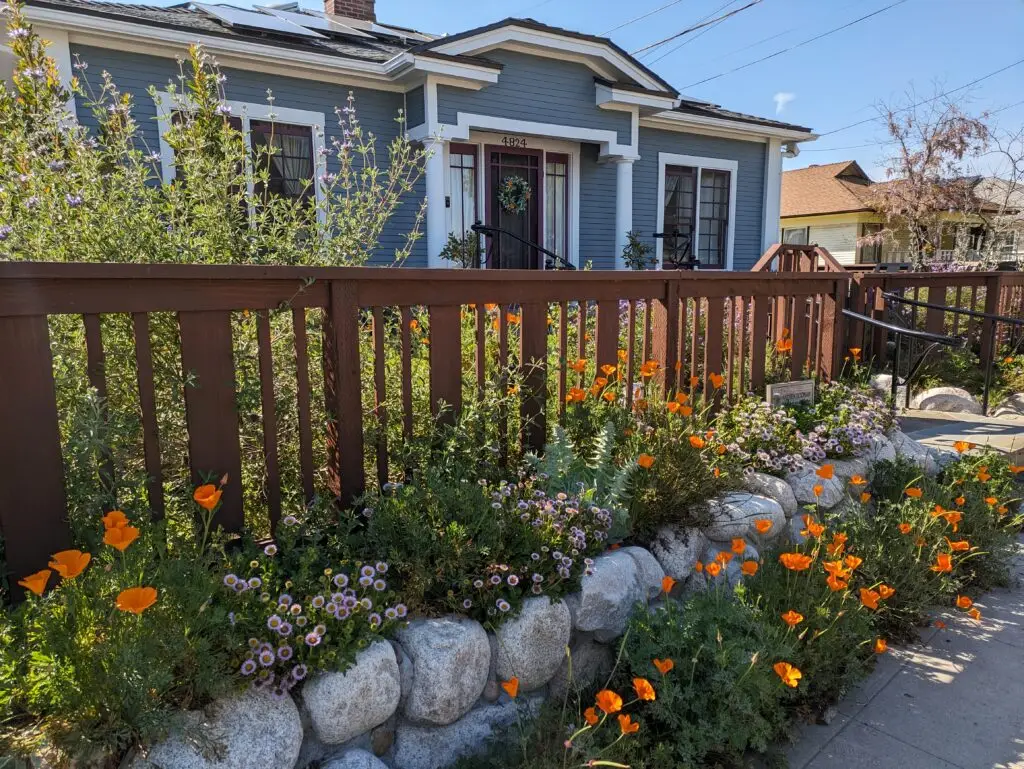
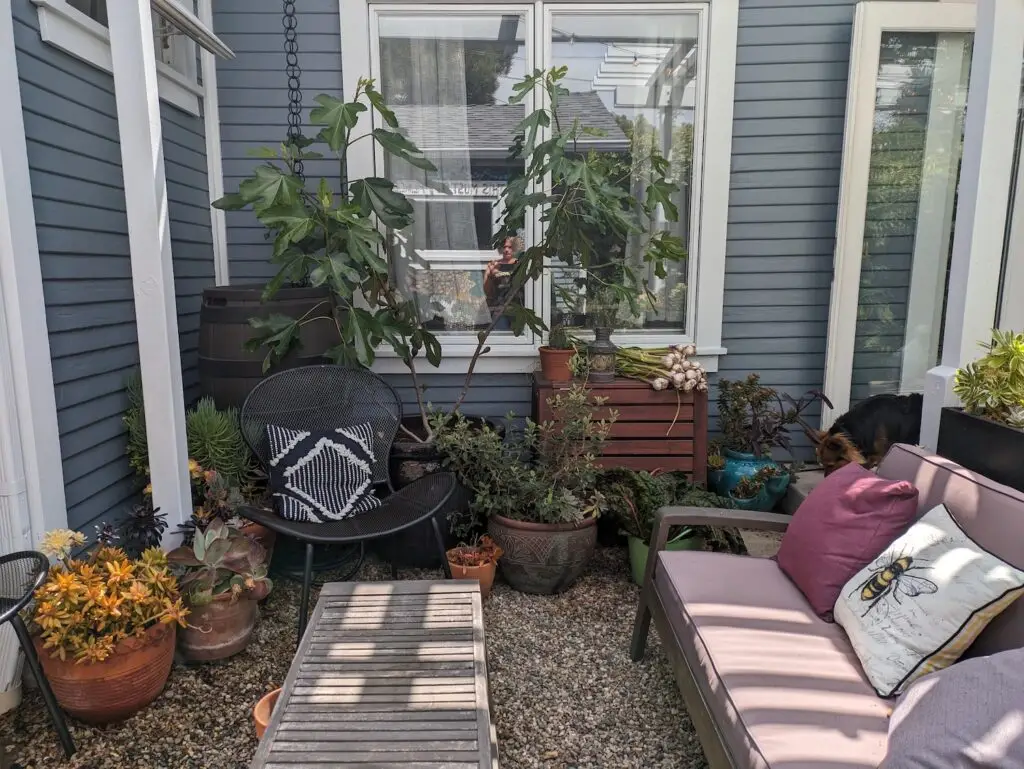
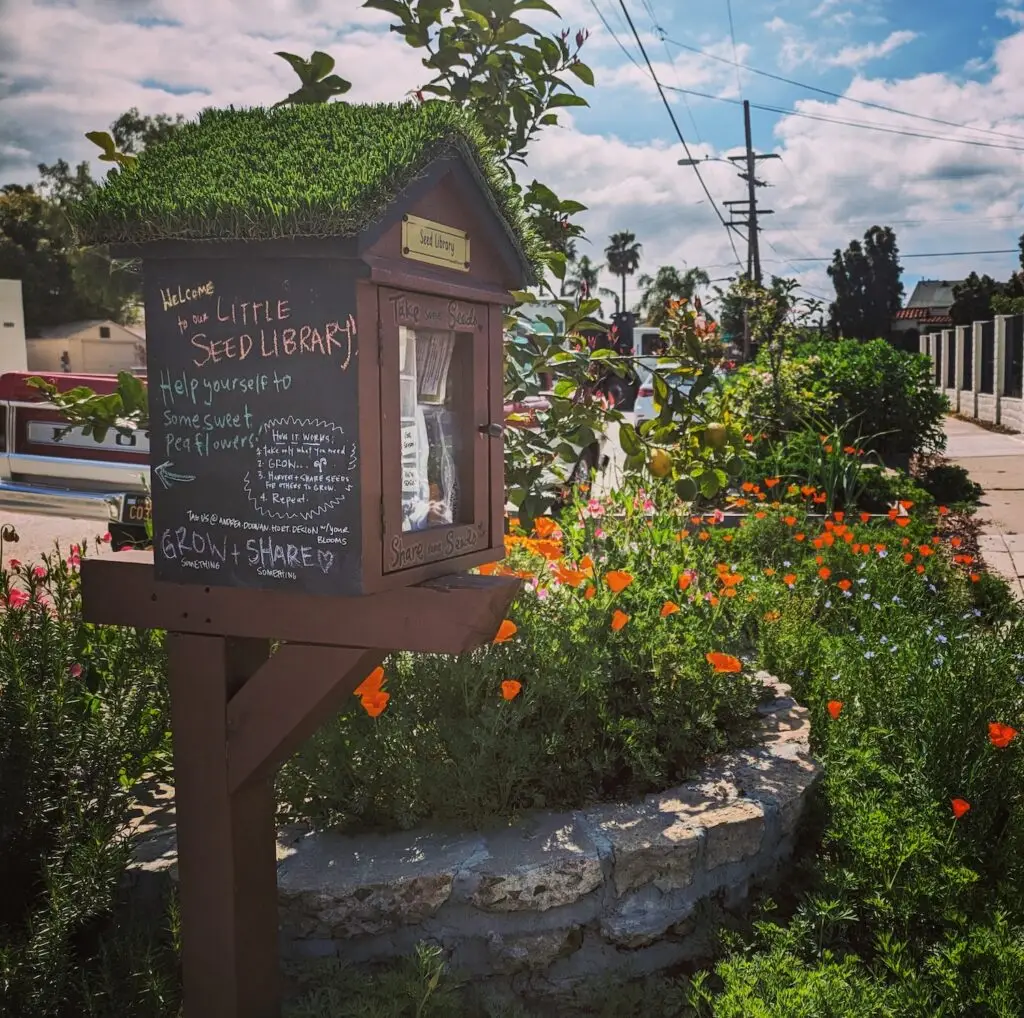
For her own Normal Heights home, Doonan designed a front yard that includes a seed library, raised beds, native plants, and a sitting area where she and her husband spend time. “I’m meeting my neighbors because I put two chairs and some plants in the front yard,” she says. “I’m sharing produce with them.”
That exchange has become part of the landscape itself, and she points to small systems (like seed libraries) as ways of circulating plant material and knowledge directly between people. In real life. Person to person.
More and more, Doonan says, when we’re talking about solving the big problems, it’s important to remember that everything starts local. Even “guerilla gardening”—small acts of informal planting and care in overlooked sections of land, such as parking strips—makes a difference. Tossing some seeds and adding a bench to the sidewalk strip out front can create a “pocket park” or “a mini-mini park.” In that framing, the front yard stops being an ornamental backdrop and starts becoming an infrastructure for connection.
Landscape architect Bret Belyea frames this front-yard movement (my term, not his) as social repair. “It’s a handshake to your neighbors and passersby,” he says. “It says something about who you are.”
Of course, plant choices matter, but not only for ecological reasons. Native and climate-appropriate plantings become part of how neighborhoods re-establish contact with each other, even without formal planning. What he describes is an aesthetic, but it’s also relational in the way a yard can signal openness rather than withdrawal, invitation rather than separation, and connection rather than, “Get off my lawn, ya damn kids!”
Hanging out in the front yard rather than sequestering in the back is a signal to outsiders that they’re really not outsiders at all. Or, at least, they don’t have to remain so.
Not every front yard in this shift toward social spaces has a professional’s influence. Some are created through labor, trial and error, and nostalgia. For Grace Wanjiru, the memory of her childhood in Gitaru, Kenya, led her to beautifully DIY the hell out of the front part of her half-acre Encanto property. When she bought her home nearly two decades ago, it was essentially just a little house plunked down on a giant plot of dirt. She had a blank slate and plenty of memories from which to create something that would imbue the space with peace and hospitality.
The designer-led yards are often framed through an academic understanding of ecology, structure, and intentional planting strategies, and Wanjiru did much of the same thing through instinct. When she’d visit her mother, who lives just outside of Nairobi, she was reminded of the abundant beauty and vibrancy of a childhood spent running free, climbing trees, and being connected to nature. It was important to Wanjiru that her then-young daughters, both now in their early 20s, have that experience.
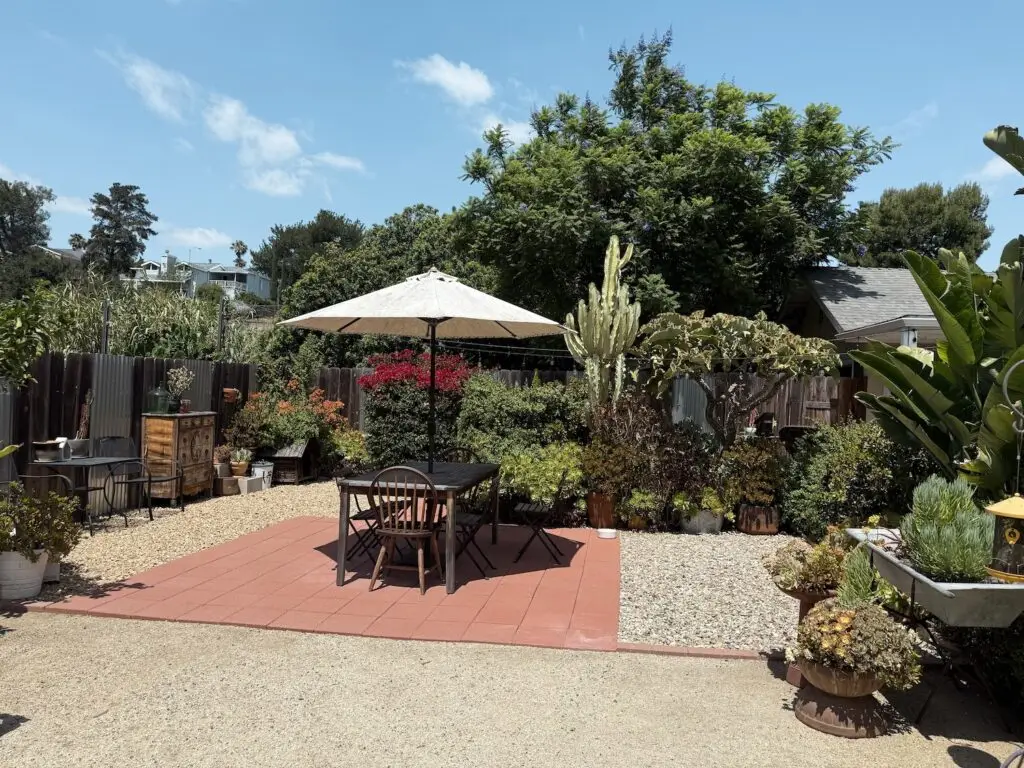
Wanjiru’s goal was to create the feeling of home, not as replication but as translation. “When you throw a seed in Kenya, something grows,” Wanjiru tells me. “Here, the dirt is horrible for plants. I still wanted green and color. I wanted nature—birds and insects. I grew up with nature, but here: No.”
With an understanding of what would and wouldn’t grow in San Diego, Wanjiru was able to achieve a sense of home with succulents and native plants she purchased at Walmart. She created a large courtyard with a fence built of wood and corrugated metal. Inside, she added a hammock and a bird bath, which Wanjiru settled on after gophers ate through seven different plants; a table with an open cookbook, a bottle of wine, three glasses; a weathered dresser—once in her daughter’s room—that now sits opposite the table and contains Wanjiru’s many seeds. And, of course, strung lights.
The space feels rustic, comforting, personal, emotional, and magical. It feels like love.
Wanjiru likes to host small groups of her friends and family, keeping it intimate but accessible. “This is the kind of house you just call: ‘What are you doing? Are you making your African tea? Can we just come over?’ Because this is what they do [in Kenya],” she tells me. “And so I always want to have that, because I think for foreigners living in America, that’s one of the things we struggle with. We don’t have that kind of community.”
Craving a communal feeling, Wanjiru built it herself. And her kids grew up climbing the jacaranda tree and playing in the garden.
“We still gather out there,” she says. “We read in the hammock, talk, connect.”
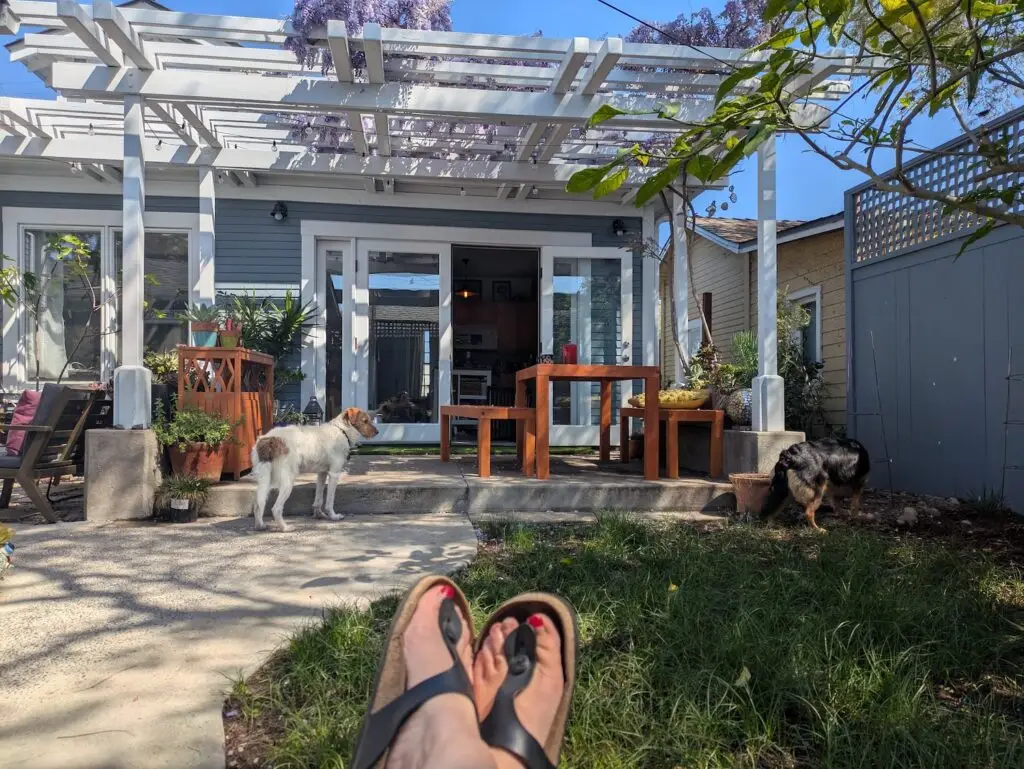
Perhaps the most important part of a front yard is a garden, whether it’s a space for entertaining and gathering, retreating and grounding, discovering and playing, resting and people-watching. The science backs up what gardeners have long known: Spending time around plants can be profoundly restorative. A 2024 review of dozens of studies found that gardening is consistently associated with better mental health, greater well-being, and improved quality of life, also linking interaction with plants and green spaces to better nervous system regulation.
For Doonan, this is part of why the conversation around gardens is bigger than aesthetics. “Gardens are for everyone,” she says. “I think it’s a right for all of us to have access to gardens.” “All of us” means homeowners and renters, people with sprawling yards and people with apartment balconies, people with large budgets and people growing herbs in containers from the discount rack at Home Depot.
In my conversation with Belyea, I tell him about a little house I passed in Oceanside this past spring. The owners set out free avocado clippings from their tree for anyone to take. “This is people’s way of putting an olive branch out,” he says. “And it just happens to be an avocado branch.” Maybe that’s what this front-yard shift is really about. Maybe it’s about trying to remember how to live alongside one another again. A hammock beneath string lights. Kids chasing lizards through native plants. Someone slowing to ask what’s growing. A neighbor stopping by and staying longer than they planned to. All of it, a pocket of softness in a culture that’s trying its damndest to make us harden.
Aaryn Belfer is a writer and editor specializing in nonfiction across art, architecture, and culture. Once upon a time, she wrote a provocative column for San Diego CityBeat (RIP). She was a runner up in the 2025 Matchbook Stories contest at the San Diego Central Library and is irrationally happy about it. Currently in her Soft Girl Era, Aaryn has expensive taste in (mostly flat) shoes and will choose a great art exhibit or live jazz concert over almost anything else. Except, possibly, Javier Bardem.
The creator of Mission Hills' iconic topiary garden hoped future owners would preserve the living artwork she spent decades cultivating
Edna Harper asked for one thing before she died: that the next owner of her iconic Mission Hills home keep the street-facing “garden.” Which is essentially asking the future residents to be curators of a whimsical and obsessive, delightful and strange, classic, cartoony and slightly unhinged sculpture museum. Harper, who died in January at the age of 87, poured her heart into this topiary bonanza, and it’s right there for everyone to see.
Like thousands (or millions, there’s no formal estimation) of others, I had scrolled through the photos of this topiary fantasia before I ever stood in front of it. As of this writing, Harper’s Topiary Garden is No. 227 of 2,686 Things to Do in San Diego on Tripadvisor, making it a popular tourist stop between fish tacos, a day at the beach, and a stroll in nearby Presidio Park. But crowdsourced photos quickly snapped in direct overhead sunlight tend to flatten the shapes that, while meticulously manicured, refuse to behave. In person, Harper’s figures seem to be in motion and, given that they’re sculpted out of bushes, they literally are. (I’d love to see a maintenance timelapse.)
Animals emerge out of shrubs as if they have impish ideas. A fanciful whale, a man in a sombrero, a random spiral twisting skyward, otherworldly creatures that defy categorization—all of these exist together in a neatly trimmed cascade pouring down the steep front slope of the property.
You don’t accidentally end up with a yard like this. You decide to create it and choose to cultivate it, and then you keep deciding and cultivating—for decades.
Although a consistent parade of looky-loos have visited over the years, most have never been inside the home, which is on the market for the first time since Harper and her husband, Alex (who died in 2020), bought it in 1969.

“It was and is a landmark,” says Christopher Delgado, Harper’s cousin and trustee of her estate. “She specialized in Chinese brush art and Japanese art called ‘sumi-e,’ a form of Zen art. She was a creator … she was very, very talented.”
I can’t stop thinking about Harper, sitting at the kitchen window, looking down at her masterpiece and the watchers watching it. The image of Harper enjoying the joy the public took from her handiwork makes me want to understand the woman behind the work. Because topiary, as an art form, has always been a little… loaded.
Topiary has always had a bit of an identity crisis—and that’s part of its charm.
When I think of topiary, I immediately think: Fancy. French bourgeoisie. Palace of Versailles. Mais non! Topiary has its origins in Rome. According to the Center for Architecture, the word “topiary” has its origins in late 16th century English, which combines the Greek word “topos” for place and the Latin word “topiarius” for ornamental gardner.

Topiary started as a flex, really. A Julius-Caesar-adjacent pastime for the most ancient one-percenters; an expression accessible only to those with land, labor (or, put more plainly, enslaved people), and spare time. In its earliest form, topiary was about control: bending nature into submission. It’s where symmetry and precision signaled order, taste, and money.
But with the collapse of the Roman Empire and the Dark Ages that followed, the topiary almost preceded the Dodo Bird in extinction. Monks quietly kept the art alive by growing herbs and manicuring the gardens and hedges within the courtyards of their monasteries.
It wasn’t until the Renaissance nine centuries later when topiary saw a resurgence—ah, Versailles!—and this form of pleasure gardening went into overdrive. Nature became architecture. The French pruned their foliage into iconic cones and obelisks, walls to keep out the riffraff, and ornamentation designed to impress. The Dutch got a little freaky, as they do, and sculpted complicated figures, animals, and even furniture.
Inevitably, the pendulum swung again, and topiary fell out of favor once it became viewed as excessive and even absurd. Even so, it never really disappeared. It just migrated to exist in a completely different paradigm. It was less Versailles and more, “What if this bush were a mouse?”
Fast forward to Disneyland in 1963. That year, the park opened a topiary garden in Fantasyland with verdant sculptures of giraffes, camels, elephants, and hippos all inspired by Denmark’s Tivoli Gardens.
Disney’s interpretation of topiary—which is still a fixture of park decor today—falls more into the realm of imagination and possibility than restrained aristocratic performance.
That’s one of the stranger throughlines of topiary: It moves from elite to everyday, from stiff and formal to playful and silly, from symbol of control to something steeped in personal expression.
Which is what makes a place like Harper’s Topiary Garden so compelling and the woman behind it utterly intriguing.

Born in 1938, Edna Harper was something of a Renaissance woman. She worked for two decades as a dental assistant, and she later became a notable painter, calligrapher, and stained glass artist (the house itself is adorned with her work). But she was also savvy in other ways.
“She graduated [with a degree in dental assisting] from San Diego City College and wanted to have her own money and her independence,” says Delgado. “Most people didn’t know that she was such a great businessperson, and for many years, she managed all of [the couple’s] properties on her own. She was great at building relationships … she touched a lot of people’s lives.”
Her friend and fellow artist Julie Roth attributes her artistry to her relationship with Harper. The pair met two decades ago at an art class at Oasis in Mission Valley.
“She was just the most encouraging person,” Roth says. “I didn’t know I could paint, but apparently I can. She was a tremendous person.”
I asked Roth what she’d want people to know about her friend.
“Her empathy and diplomacy,” she says. “[She had] a sharp eye for other talent. She spotted me, but I’m not the only one she encouraged.”
That sharp eye suggests attention, the same kind it takes to look at a bush and also see a whale. Or a spiral. Or something that doesn’t exist yet, but could.

Nothing about Harper’s life suggests someone chasing attention. And yet, she ended up creating something that demanded hers, and she took great pleasure in seeing people enjoy her creations.
The garden didn’t happen all at once. It grew out of years of travel, observation, and collaboration. Harper often traveled without her husband, always returning from trips to Japan, Thailand, and other parts of Asia with ideas and impressions captured through sketches in a notebook.
“She would get creative ideas from her travels … she’d come back with ideas and pictures, and they’d go about cutting that topiary bush into shape,” Delgado says.
For the past 25 years, she had the help of her gardener, Pedro Duran—who’s still employed by the trust and has maintained the garden since Harper’s passing.
In the early topiary years, Harper worked closely with Duran in what Delgado describes as a kind of shared “labor of love.” She would share her sketches and together the pair would shape the bushes into something deliberate.

“As she got older, she would increasingly draw her ideas and [Duran] would [carry them out],” Delgado says.
That collaboration reinforces that her garden was not an act of control, but one of creative collaboration and translation. From memory to sketch. From sketch to shrub. From something seen, somewhere else in the world, to something rooted in the soil of a steep hillside in Mission Hills.
Harper also made sure that the lawn’s boisterous energy made its way into the house on Union Street. Apparently, she threw legendary parties.
“Fairly regularly, in the late ’70s and ’80s, she would host Super Bowl parties with 200 people. She had TVs everywhere,” Delgado says.
It’s not hard to square that image with the stillness of the garden which, despite the careful pruning and intentional design, is voluminous and nearly vibrating.
And, damnit, I wish I’d watched some sportsball on her shocking number of TVs and wandered out front to the topiary—slightly wine-drunk with an orange smear of wing sauce on the corner of my mouth—to marvel at the leafy hippo and this woman’s elaborately creative life.

I can hear Delgado smiling as we talk on the phone. He’s going back to his childhood, when he talks about being one of the cousins Harper doted on when he visited.
“The adults were inside, and we’d be out in the camper,” he says, “and [Harper] would come check on us, make sure we were okay. She always had gifts for us. If it was Easter, there were chocolate eggs. If it was Christmas, stockings. We were the beneficiaries of them not having kids because they showered us with all their love.”
Knowing this and taking a look at her garden again, you can see it’s not the work of a shut-away curmudgeon. It’s wondrous, inviting, and the right kind of weird.
“Ultimately, she did it for herself and family, first and foremost,” Delgado says of Harper’s Topiary Garden.
Harper’s one request of whomever buys her home may seem like a focus on basic maintenance, about hedges and upkeep and preserving something visually striking. But it’s really about attention. And maybe, too, about legacy. Not hers, per se, but the legacy of community, relationships, art, creativity, possibility, adventure, culture, dedication, and love.
For now, it’s there for anyone to see, and its future is in the hands of whomever comes next.
Aaryn Belfer is a writer and editor specializing in nonfiction across art, architecture, and culture. Once upon a time, she wrote a provocative column for San Diego CityBeat (RIP). She was a runner up in the 2025 Matchbook Stories contest at the San Diego Central Library and is irrationally happy about it. Currently in her Soft Girl Era, Aaryn has expensive taste in (mostly flat) shoes and will choose a great art exhibit or live jazz concert over almost anything else. Except, possibly, Javier Bardem.
San Marcos-based Vintage Cellars designs and builds customized, high-end wine storage with calibrated humidity, racking systems, and LED lighting
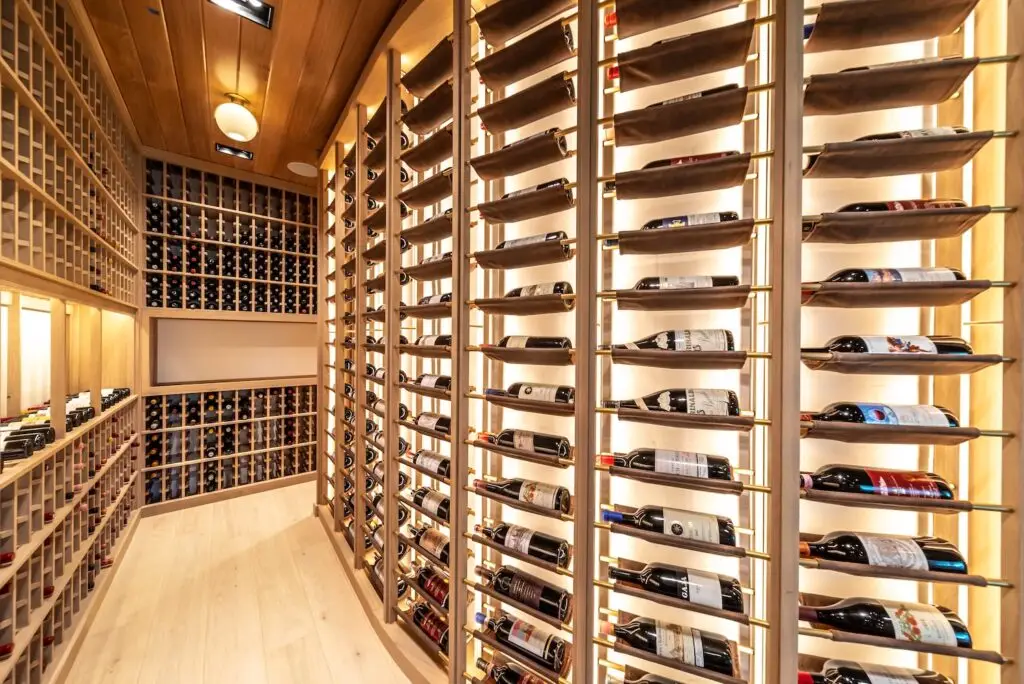
The floor is made of glass. Under your feet, you can see the cellar—15-foot ceilings, soft light, and stained white oak walls the color of desert silt.
Tucked behind the wood, inside the doors, and in the ceiling is a highly advanced and very specific network of tech assembled in San Marcos—perfectly calibrating the room for humidity and temperature with vapor barriers, specialized insulation, and LED lights. Along the walls on matte blag pegs lay 1,000-plus bottles of wine—some iconic collector vintages, some with stories, some earmarked for major life moments.
This is a very serious wine home, built by someone whose obsession eventually leads to a call with Chris Noel.
“We have some clients who have been collecting wine since the ’60s and the ’70s, and they have collections of 15,000 or 20,000 or more bottles,” says Noel, owner of Vintage Cellars, the San Marcos–based designer of custom wine vaults for some of the region’s top restaurants and super-collectors. “[For them], collecting wine is similar to Jay Leno collecting cars.”

Before the wheel, there was wine. Fermenting fruit sugars into alcohol was a thing as early as 4100 B.C. (wheel, circa 3500 B.C.), most likely a happy accident. Unsurprisingly, the tipsy breakthrough in juice arts was a huge hit. The challenge was that it was also hugely perishable.
The first efforts to save it from spoil were clay vessels called amphora, often fully or partially buried to create a sun-proof, temperature-stable environment. The terra-cotta pots were pointy-bottomed, which stacked and traveled better, encouraged gas circulation (thus preventing oxidation, the famed wine ruiner), and helped separate sediments.
Once basic preservation was figured out, makers noticed the aging process ushered in a moodier magic. So they engineered structures to tinker with the possibilities of the long haul. Those first wine holes in the dirt evolved into entire catacombs, tombs, quarries, and caves.

Ancient Romans engineered wine storage rooms called fumariums, built facing north to avoid the sun and filled with smoke to speed the aging process (no doubt rapidly aging the cellar workers in the process).
For centuries, specialized wine storage was mostly a commercial venture. Serious wine people would (and still do) outsource their collections to a bonded storage facility or turn to professional cellarers who run giant chilled warehouses of cabernets.
A few major social moments sparked a more serious at-home cellar trend. First, the “Judgment of Paris” in 1976 (California wines famously besting the French in a blind tasting) established US wineries as worthy of collections.
A few years later came the 1982 Bordeaux, one of the most-coveted vintages in history. It was championed by a US lawyer named Robert Parker, whose 100-point scale rating system would quickly become the gold-standard for grading wines, creating a huge boom of wine collectors for the next few decades (wine as an economic investment became a thing).
The US economy also boomed in the ’80s, while France hit a skid. With the dollar trading 6-1 against the franc, US collectors had a rare chance to pick up Grand Crus at serious bargains, which demanded equally serious storage.

Given that framing, 1990 was a fairly great time for Vintage Cellars to get into the game. Noel—who worked his way up at the company and then eventually took over as owner in 2020—and his team work with architects, designers, and builders to create cellars that both fit the space and act as an attraction in multimillion-dollar homes across the region, and at top restaurants like Pamplemousse Grille in Del Mar and Avant Restaurant in Rancho Bernardo Inn. They hide cooling systems in brick-walled enclosures, bend bottle racks around curved walls, create standalone pavilions—engineer structures for cabs.
Their cellars hover between 50 to 70 percent humidity to keep the cork appropriately moist. Air too dry, and a cracked cork will give up the ghost—O2, in excess, turns wine into vinegar. If the air’s too dry, it can shrink the cork, eventually evaporating the wine and creating a low pressure that will pull in destruction. Too humid, and mold contaminates the works.
Light’s a big no-no for wine, too. Incandescent or halogen lights were the norm for cellars 20 years ago, but they emitted heat. Like Schrödinger’s Cat, these bulbs would risk the subject in order to view it. Vintage Cellars adopts LED lighting and, for glass cellars in the sightline of bright windows, mechanized shades that lower during UV exposure times.
Custom circumference-cut cove trays, leather saddles, and pegs stabilize bottles in Vintage Cellars storage areas; movement disturbs the tannins and upsets the aging process. And these cellars are smart, with app-based monitoring, remote temperature monitoring, and eSommelier cellar management. Don’t fret, Siri’s got your Syrah.
The most important decision, however, is deciding when to uncork that special bottle.
“[A lot of times, people] are saving those wines for specific moments in life—maybe a 50th anniversary or when their firstborn turns 21,” says Noel. “That’s how they look at it: as social and also to create memories.”
Pete Peterson has served as high as Editor-in-Chief of an enthusiast media magazine and as low as writer of his own bio… In addition to contributing to San Diego Magazine, Pete authored the YA novel One Tiger One Teen and is working on his second novel. Slightly more info is available at petepetersonauthor.com.
Troy Johnson is the magazine’s award-winning food writer and humorist, and a long-standing expert on Food Network. His work has been featured on NatGeo, Travel Channel, NPR, and in Food Matters, a textbook of the best American food writing.
"The Distinct Modernism of San Diego" tells the story of how some architects pioneered their own style in 20th-century San Diego
San Diego is just out here minding its own business. It’s long been cast as Los Angeles’s less ambitious sibling—the chill one, the one who shows up late for dinner reservations in flip-flops with a few provocative opinions. Architecturally it’s often cast the same: secondary, derivative, a footnote to California modernism that seems to begin and end with the Stahl House (Case Study House #22). LA has Pierre Koenig, Craig Ellwood, John Lautner. San Diego has the original fish taco.
But this version of the story is redacted, metaphorically speaking.
While the jazz hands of Hollywood and its hills cast a spell on historians and architecture buffs, San Diego had, and has, its own quiet evolution: It invented and reinvented itself through homegrown modernism, beginning with The Allen House (1907) in Bonita by Irving J. Gill.
“The biggest misconception is that San Diego was following Los Angeles,” says Keith York of Modern San Diego, one of the city’s top guides to modernist architecture. “Those who consider Rudolph Schindler and Richard Neutra as the fathers of Southern California Modernism often fail to recognize the outsize influence Gill and his buildings had on their work.”

A new book, The Distinct Modernism of San Diego—written by Mark Hargreaves and Hallie Swenson, published by York—focuses on eight architects who were born, raised, or built their careers in San Diego. It illustrates how the city wasn’t hosting weekend warrior architects on side quests. It was a staging ground for a less look-at-me modernism from luminaries like Gill, Lilian J. Rice, Richard Requa, Lloyd Ruocco, Frederick Liebhardt, Kendrick Bangs Kellogg, Sim Bruce Richards, and Cliff May.
“Absent the backstabbing competition for projects, a collegial group of architectural peers collaborated and maintained lasting friendships with one another as they designed in response to the temperate climate and slower economy,” York says.
Largely unknown until the mid-1960s, Gill is a marquee name today. He arrived here from the East Coast at a moment when San Diego was still defining itself, which gave him the freedom to invent something new, experiment, rebel.
Instead of imposing the flourishes and frills of the time, he considered San Diego’s climate, light, landscape, history—the joie de vivre—and designed for this place. “[Architects of the west] must have the courage to fling aside every device that distracts the eye from structural beauty, must break through convention and get down to fundamental truths,” he once said, a sentiment that nails the un-ornate, total lack of pretension that’s defined San Diego people and culture.
And, lo, did Gill fling: His flat roofs, clean lines, and almost no ornamentation—though not necessarily modernism in the Eames or Eichler sense—foreshadowed what would later be called minimalism. Gill eventually became synonymous with the Los Angeles narrative, but broader architectural histories overlook the fact that his most progressive designs happened here.

Another key to San Diego’s architectural movement was Lilian J. Rice, who often worked behind the scenes with little credit. She was one of only about 10 women in America licensed as architects at the time. Even though she died from cancer at 43, she somehow managed to complete an estimated 170 projects in the region, many in Rancho Santa Fe.
Born and raised in National City, Rice also wasn’t importing ideas. She shaped her own based on her understanding of this region and her commitment to protect the natural environment. Her work has been categorized as Spanish Colonial Revival, but she wasn’t reviving as much as she was refining a style suited to our border region—serene, mirroring nature, beautiful.
“San Diego architects were designing for a way of life, not just a look,” says York.
Like Sim Bruce Richards, who was his own way of life. While Gill stripped away ornamentation and Rice focused on the peace of open spaces, Richards came along several decades later and went full emo. By then, modernism had grown deep roots; its steel-and-glass structures took themselves very seriously. Richards came to party.

An eccentric, unpredictable man with half a face (part of his jaw was removed following a bone infection when he was a child), his life was a jalopy of adventures. He was opinionated and passionate about design, music, texture—and he created what he called a “sensuous environment.” He wanted his clients and their guests to feel the spaces as much as to be in them, appealing to the visual, tactile, nasal (“a cedar house smells good”), auditory (“acoustically superior”), even taste. “Though, I‘ve never had a client lick my houses,” he once wrote.
Organic, woodsy, textured, aromatic—if you ever find yourself in a Sim Bruce Richards house, a licking impulse might not seem so outrageous.
Gill, Rice, Richards and the other architects in Distinct Modernism built a legacy in San Diego that resonates nationally. And the work of these heavy hitters isn’t stuck in an inaccessible collectors realm: This October, homes by Kellogg and Liebhardt will open to the public as part of the La Jolla Modernism Home Tour—an opportunity to experience it not as a museum relic or magazine image (ahem), but as something alive.
Modernism in San Diego was never about glamour or an intention to be iconic. What transpired here is more nuanced, more ingrained with a less shouty aesthetic. A very San Diego aesthetic.
Aaryn Belfer is a writer and editor specializing in nonfiction across art, architecture, and culture. Once upon a time, she wrote a provocative column for San Diego CityBeat (RIP). She was a runner up in the 2025 Matchbook Stories contest at the San Diego Central Library and is irrationally happy about it. Currently in her Soft Girl Era, Aaryn has expensive taste in (mostly flat) shoes and will choose a great art exhibit or live jazz concert over almost anything else. Except, possibly, Javier Bardem.
A customized memory-filled explosion gift box is a creative way to show someone you care
Finding a gift that feels truly personal can be surprisingly difficult. In a sea of generic options — flowers, gift cards, candles, and the like — Xplosion Box offers something more lasting: a customized keepsake built around the photos, messages, and memories that matter most.
Founded by Southern California entrepreneur Jay Vijay, Xplosion Box LLC creates fully customized explosion gift boxes that arrive professionally designed, printed, assembled, and ready to gift. Each box opens layer by layer to reveal personal photos, heartfelt messages, pull-out albums, origami-style photo pockets, and hidden notes, turning a simple gift into an emotional reveal.

The brand was built for people who want to give something meaningful without spending hours printing photos, cutting paper, folding cardstock, or assembling a DIY project. Customers simply choose a box, upload their favorite photos, add personal messages, and the Xplosion Box team transforms those details into a polished keepsake that feels thoughtful, personal, and beautifully made.
Xplosion Box offers personalized gift boxes for birthdays, anniversaries, weddings, graduations, Mother’s Day, Father’s Day, Valentine’s Day, Christmas, proposals, bridesmaid gifts, long-distance relationships, and thoughtful “just because” moments.

Customers can choose from flexible customization options starting at $27. The Mini Surprise Box includes 10 photos, three message cards, and one hidden secret note, while the Mega Surprise Box offers a fuller keepsake experience with 40 photos, three message cards, and one hidden secret note.
What sets Xplosion Box apart is its high level of customization combined with convenience. Filled with personal photos, custom text, decorative details, and layered surprises, each box gives customers the freedom to create a gift that feels one-of-a-kind — without having to make it themselves.
At its core, Xplosion Box helps people turn favorite photos, stories, and words into something tangible: a keepsake that can be opened, revisited, and remembered long after the occasion has passed. asion has passed.
San Diego architects and designers spill on the trends, textures, and ideas shaping the city's homes today
Craftsmans and Spanish Revivalists and mid-century modernists—why does San Diego have so many different architectural styles? What makes a home distinctly San Diego? What are the trends shaping the look of the city’s neighborhoods for years to come? We asked the experts: architects and designers honoring the past, crafting the present, and radically altering the future of San Diego living. They opened their portfolios, shared points of view, and treated us to snapshots of their latest work that speaks to the ideas they’re playing with. The result? Six trends, design choices, and a proposal to make local homes unique. Grab a lemonade and get a little inspo for your own place.
“Clients are now reaching for comfortable outdoor spaces that can be controlled for subtle shifts in the environment—heated covered porches, or patios with controlled louvered ceilings with integrated fans, lighting, heaters, and adjustable light.” –Mark Morris, Oasis Architecture & Design
“I think outdoor spaces in San Diego can be as useful or even more useful than indoor spaces. Relating to the site, view, [and] neighborhood can bring so much value and richness to a home.” –Bill Bocken, Bill Bocken Architecture & Interior Design

“After years of modern farmhouses—black windows, white houses, and gray walls and floors—natural tones are coming back. We are seeing a return to organic textures and more saturated color. Homes feel layered rather than stark.” –Susan Wintersteen, Savvy Interiors
“There’s a move toward homes that feel like every element has a purpose. I see a strong desire for warmth and natural stone, wood, organic textures with softer transitions, and materials that age well.” –Jen Pinto, Jackson Design & Remodeling
“I would like to see even more architectural integrity, fewer quick flips, and more thoughtful renovations that respect proportion, scale, and context. San Diego deserves homes that feel timeless, not transactional.” –Susan Wintersteen, Savvy Interiors
“We want to see people respecting the original character of their homes while re-imagining them for modern life, rather than erasing character in favor of quick transformations that look ‘cookie-cutter.’” –John Kavan, Jackson Design & Remodeling
“Homeowners are staying in their homes longer—some 15 or 20 years. That has shifted design away from trend-driven choices and toward architecturally driven spaces that are functional, cohesive, timeless, and designed to support daily life over decades.” –Jen Pinto, Jackson Design & Remodeling

“There’s a noticeable move away from literal ‘coastal themes’ and toward more layered, textural environments. San Diego homes today often feel cleaner, more architectural, and more personal.” –Julie Crosby, designer
“Today, the aesthetic is more refined but still rooted in ease. It is coastal without being cliché and modern without being cold. The throughline is light, air, and a relaxed sophistication that reflects how people actually live here.” –Susan Wintersteen, Savvy Interiors
“When you can live outdoors most of the year, architecture and interiors must support that. Large format doors, layered patios, durable materials, and seamless flooring transitions all stem from lifestyle.” –Susan Wintersteen, Savvy Interiors
“Nearly everyone wants to take advantage of the constant sunshine, so we see a huge desire for indoor-outdoor living, light and airy fabrics, organic materials that bring the feeling of nature into the home, and a desire to incorporate a relaxed, coastal lifestyle into everyday living.” –Lilli Fish, LS Design Studio
Lili Kim is a content coordinator and writer for San Diego Magazine, with experience highlighting local businesses and communities. When not writing or shooting film, she is likely brewing her seventh cup of tea of the day or strolling along Sunset Cliffs.
Take your sanctuary to the next level with high-end fixtures that turn your space into a dreamy escape
Your bedroom is your sanctuary—a haven for your favorite shoes (the ones you never actually wear but love to admire), the place where your best thoughts sneak in before you drift off, the safe space that’s seen you through anxious nights and joyful secret dance parties.
With a little guidance and intention, this space can feel just as dreamy as that one nap you never want to end, anchored by warm burl wood, smooth (and sustainable) upholstery, and stone nightstands that read as art. And we’re not talking about the overly staged look-at-me rooms you see on HGTV. Great design prioritizes feeling just as much as form. We’ve handpicked upscale, quietly chic finds from local home stores to bring your ultimate bedroom vision to life.

Mary had a little…chair? Wrapped in camel-hued wool, the Allora Chair proves that one standout spot for lounging is often all a bedroom needs to feel like the penthouse suite at a fancy-schmancy hotel.

Room & Board sources the Sitara Rug from India, where skilled craftspeople hand-knot every inch of this soft wool carpet. Tiny flecks of gold silk add a subtle shimmer. Just try not to drop any earring backs on it.

Everyone loves flowers, but real lilies lose points for fading fast—and being dangerous for pets! Sub in these hand-painted faux calla stems suspended in crystal-clear “water” for a fresh bouquet that never withers.

Who said canopy beds had an age limit? Add a little whimsy to your sleep schedule with this walnut burl frame. Arhaus’ Morley Collection is artisan-crafted, meaning no two beds are exactly alike, so your room is as unique as you are. Go ahead, sleep like royalty.

Wrapped in a pale mint (Moonstone) velvet, the Berlin Bench delivers a soft pop of color. Equal parts functional and beautiful, it’s made for collecting discarded shirts during an outfit-planning sesh and supporting dramatic swoons.

Bonjour, bedroom—meet your new obsession. Inspired by traditional French design, this mirror’s iron-and-resin frame features delicate floral-and-vine detailing. Your reflection just got a vacation in Nice.

If the Pixar lamp got a glow-up, it’d look a lot like the Christie Floor Lamp. Thanks to a curving brass post, milk glass globe, and coralle stone base, it’s a killer source of mood lighting, but it’s also a whole mood in itself.

Whoever said recessed lighting was enough clearly hasn’t met this chandelier. Finished in antique brass with three layered tiers of glass that gently diffuse light, the fixture resembles a soft cascade of feathers. Showgirl glam or one with nature? Why not a little bit of both?

This dresser has a backstory: Mexican artisans collect ash trees felled by storms; cut them into cross-sections that show off their natural rings, cracks, and watermarks; and piece them together into a patchwork that has bits of sustainably-farmed European ash burl.

It’s okay—you can finally let go of the beige canvas you panic-bought for above your bed. Roam Homeware’s Shell Collector feels perfectly SoCal with soothing neutrals, interesting abstract patterns, and recognizable shapes (but no faces to scare you during a 3 a.m. bathroom trip).

Furniture made from rocks can lean a little Flintstones. Not here, though. The scalloped curves and shiny finish of this charming little nightstand coax an unexpected softness and romance out of natural stone.

Candles in a glass jar are so last season. Instead, pop some beeswax tapers into these sculptural sand-cast iron holders. Set them on a shelf, and you’ve got a touch of vintage charm without the fussy fragility of antique pieces.
Isabella Dallas is a freelance writer for San Diego Magazine and the Arts and Culture Editor at The Daily Aztec in her final year at San Diego State University. She previously worked as an editorial intern for SDM, but when she’s not writing, you can find her trying the best coffee spots in SD, devouring the latest rom-coms, and indulging in anything and everything pop culture.
A few intentional updates can instantly elevate your home’s exterior and create a space you feel proud of every time you pull into the driveway.
In celebration of National Curb Appeal Month, Renewal by Andersen is helping all the renovation superstars out there reimagine what’s possible for their space. We want to give homeowners all the information they need to enhance the exterior of their home and make a strong first impression.
Fortunately, it doesn’t take a complete overhaul to make a big impact. A few intentional updates can instantly elevate your home’s exterior and create a space you feel proud of every time you pull into the driveway.
1. Make a Statement
Your entry door will set the tone for your entire house. Whether you decide on bold colors or stick with a more timeless look, the style you choose helps reflect your unique personality and character.

2. Refresh Your Trim
Don’t underestimate the power of a well-maintained trim! Sharp lines around your windows and doors can instantly give your home a more polished and refined look. At the end of the day, updating your trim brings definition to your home’s architecture and enhances its visual interest. If you want to take it a step further, repainting the outside of your home can give it a brand-new look!
3. Coordinate Your Color Palette
Pairing the right door color with the right window finishes can help you match your home’s exterior and elevate the whole aesthetic. Try black window frames for a modern edge or a soft green door for some subtle charm.
4. Let the Light In
Natural light never goes out of style! Consider adding sidelights or windows with your new door – or try upgrading nearby windows to let more sunlight through. That way, you can boost curb appeal and enhance the overall aesthetic of your home.
5. Enjoy Long-Term Value
Curb appeal isn’t just about appearance; it’s about investing in the future of your home. A new entry door paired with energy-efficient windows can improve insulation, enhance your security, and increase the resale value. When form meets function, you get a transformation that’s as practical as it is beautiful!

Don’t Just Upgrade Your Home – Renew It
Your home should be a spot where you can feel a sense of comfort and peace of mind knowing it’s functioning at its absolute best. So, whether you start with a new window or door, enhancing your home can spark a renewed sense of pride and satisfaction.