Featured articles
Featured articles
Featured articles
What's next
Featured articles
Featured articles
Featured articles
Ready to know more about San Diego?
SubscribeReady to know more about San Diego?
Kindred recasts half their restaurant for elaborate seven-course pop-ups
It’s maddening enough rebuilding your restaurant for pandemic dining. Everyone’s give-up instinct is inflamed. Many of your trusted business practices have been deep fried into oblivion, and owners have to create new ones from the ashes. They have to reinvent with skeleton crews, since the shutdown meant most staff was laid off. It’s at that point that all employees become co-architects of an entirely new model.
“There was an empowering of our staff to step up and own our solutions,” says Kory Stetina, owner of South Park’s vegan death metal restaurant, Kindred. “Including efforts they made to help our other staff out, working with grants and getting employee meals set up.”
Dining During COVID / Kindred Food
Photo courtesy of Kindred
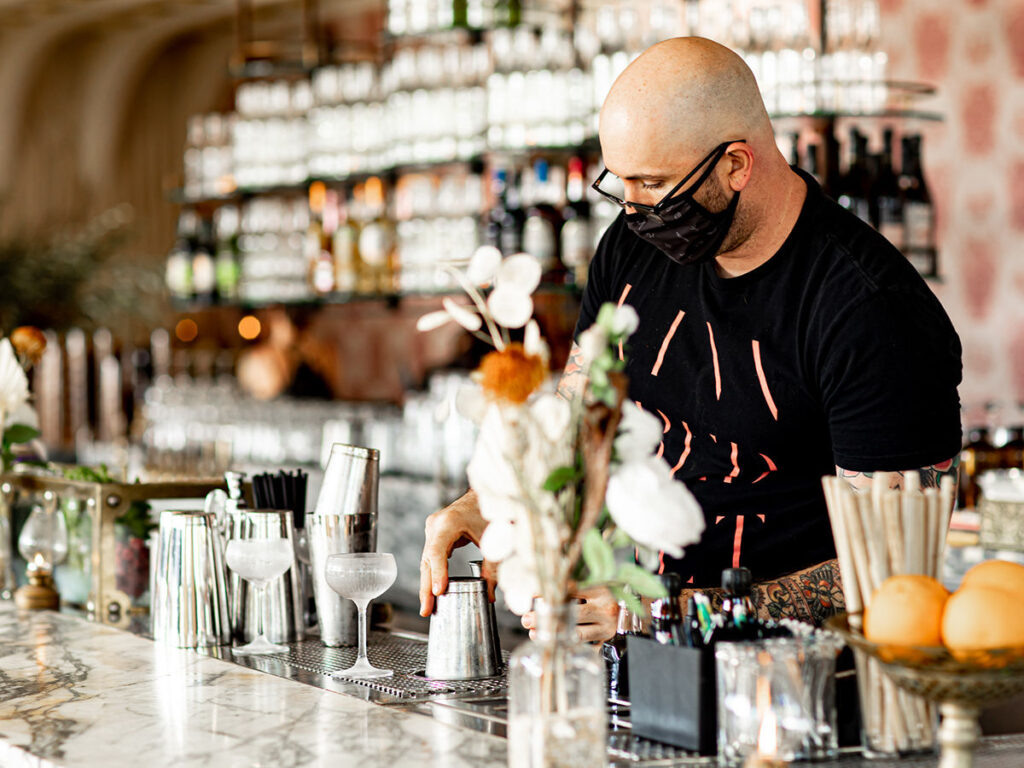
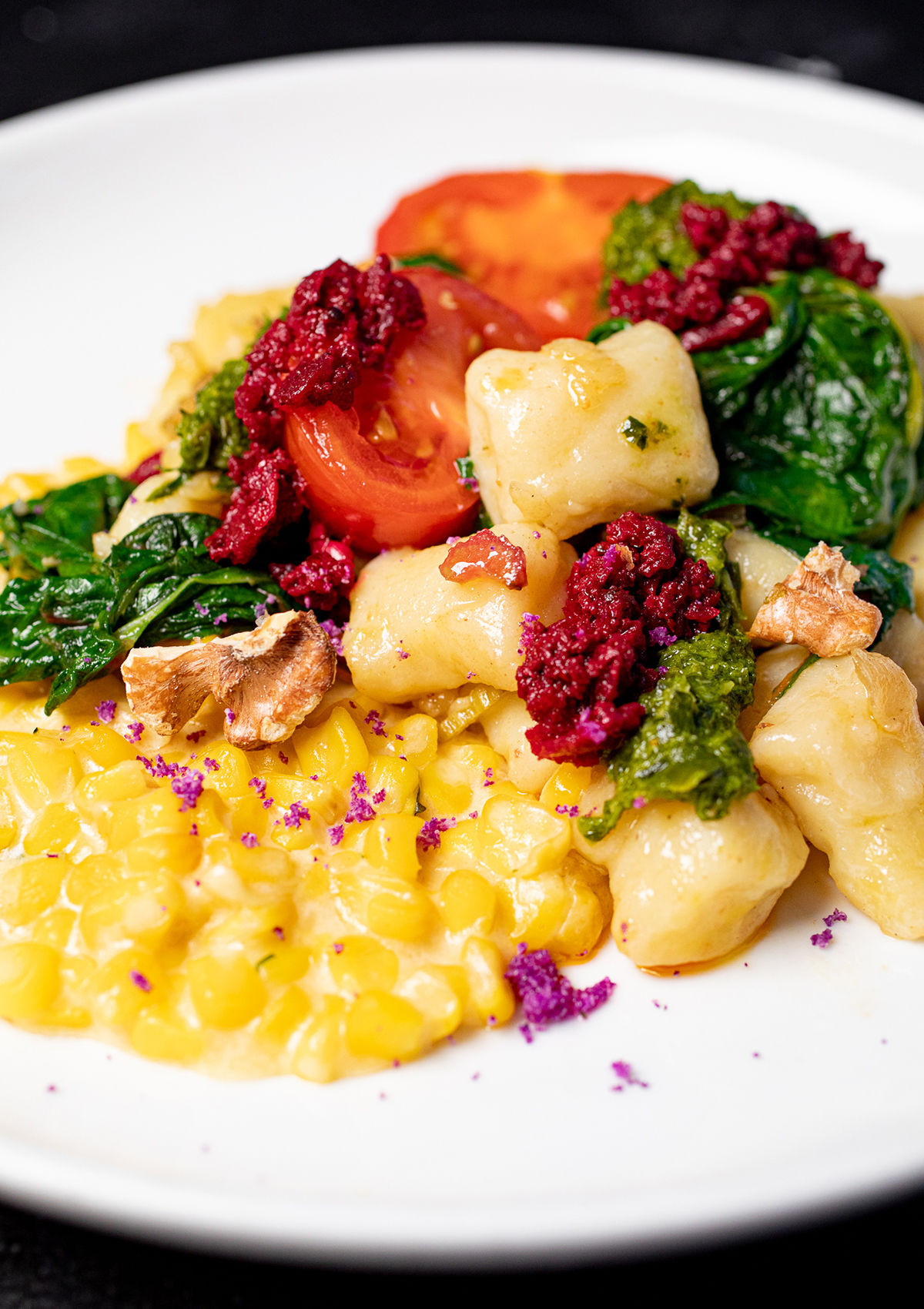
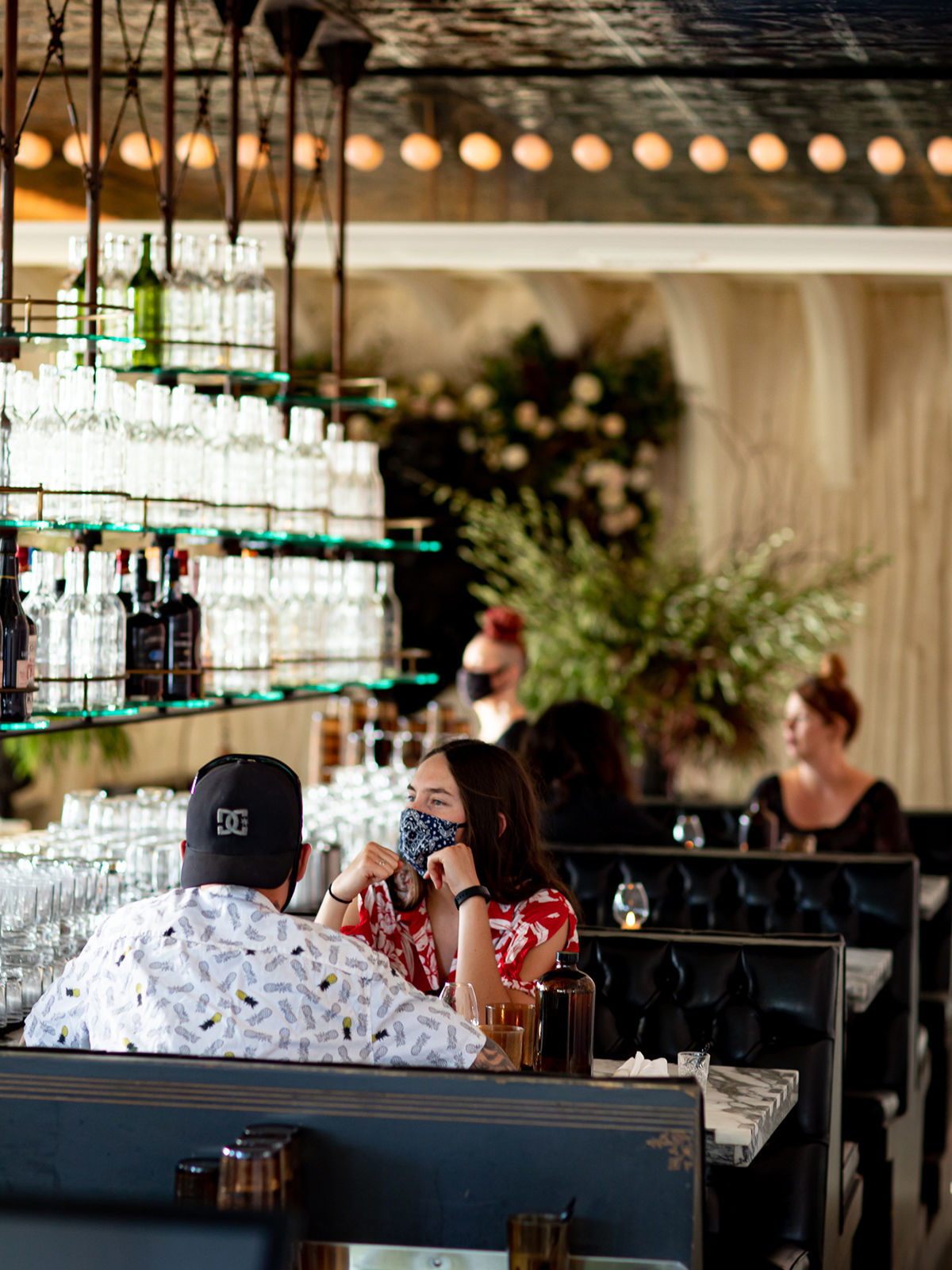
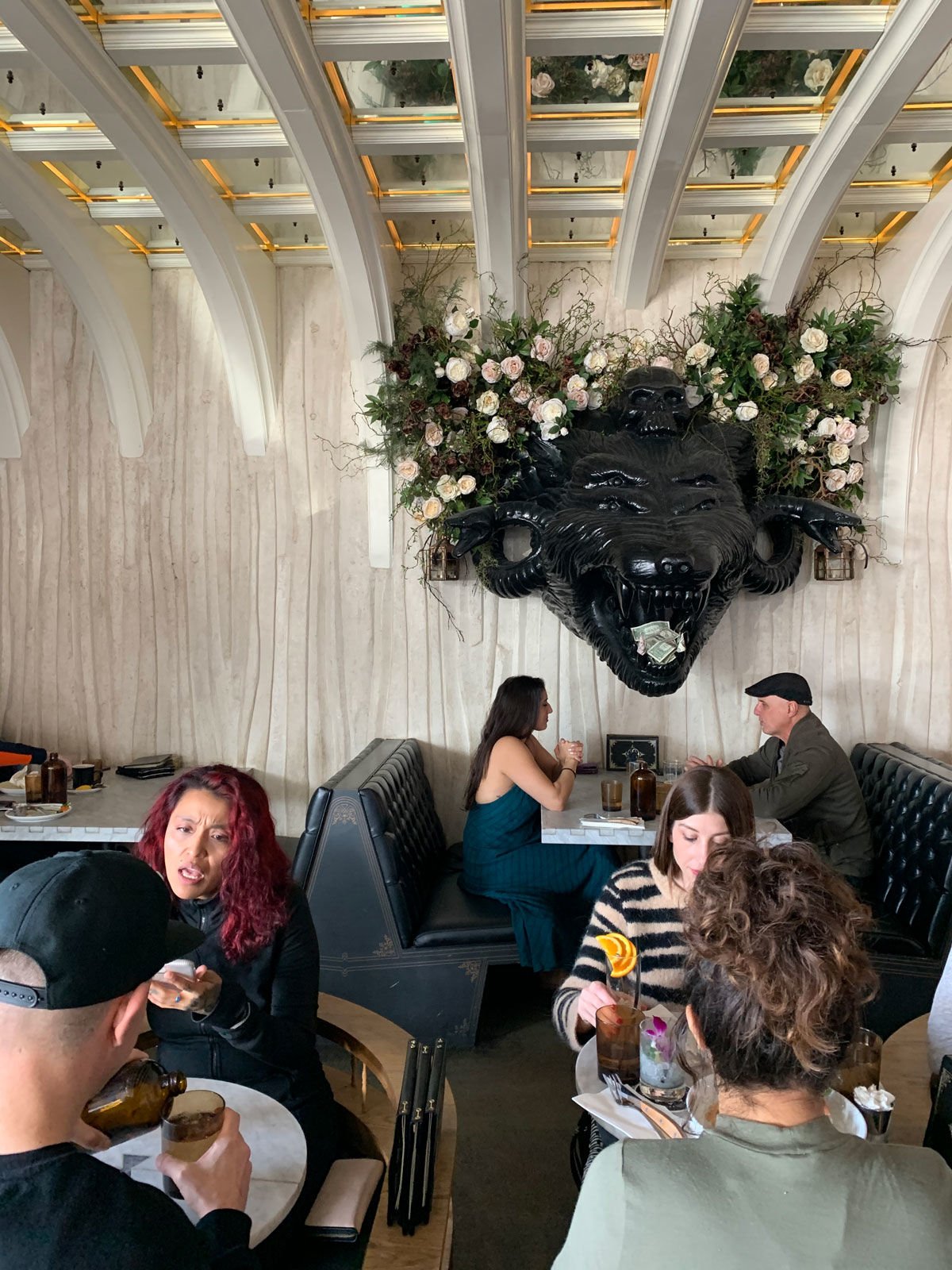
Stetina and his crew’s solution? “Kindred Crypt Sessions,” where they transformed half their space into a restaurant-within-a-restaurant for a series of seven-course pop-up dinners (five food courses, two cocktail courses). So much of Kindred’s appeal depends on the art of its decoration (from the ornate grandma-on-psychedelics wallpaper, to the massive black demon head lording over the dining room). The thought of making it a cubicle farm of social-distance Plexiglas crushed their soul a bit.
“We were a bit skeptical that it would be a diluted version of itself,” he says.
Dining During COVID / Kindred Interior
Photo courtesy of Kindred
Crypt Sessions solves this. By selling tickets ahead of time, Stetina can send the “do’s and don’ts” over email, and doesn’t have to clutter up the environment with handmade lists of rules. Guests enter through a separate side alcove. A few tables in the middle of the dining room have been turned into a plant installation, a lush way to ensure six feet. A chandelier in the bar has been interspersed with pulsing gothic candlelight. Flowers abound. Their pagan church windows are propped open for airflow.
“It’s the answer to ‘What if we throw out all our normal rules of efficiency and really reach for our most experimental and ambitious sense of identity?’” Stetina explains. “We envisioned guests getting lured into our space to have a private meal from these fictitious mystics that dwell inside Kindred.”
What the hell does that mean? Well, Kindred is San Diego’s version of a prog-rock band, infusing their food and drinks with Tolkienian backstory. Practically, it means using more primitive sourcing methods (foraging for local pine for one of their cocktails), ancient cooking methods (grilling, which also helps speed up the cooking process), and older-world spirits (sherry, brandy, fortified wine, Chartreuse). Menus like old archeological stone carvings. Anything to cast the vibe of the night back a few hundred years, to anywhere but now.
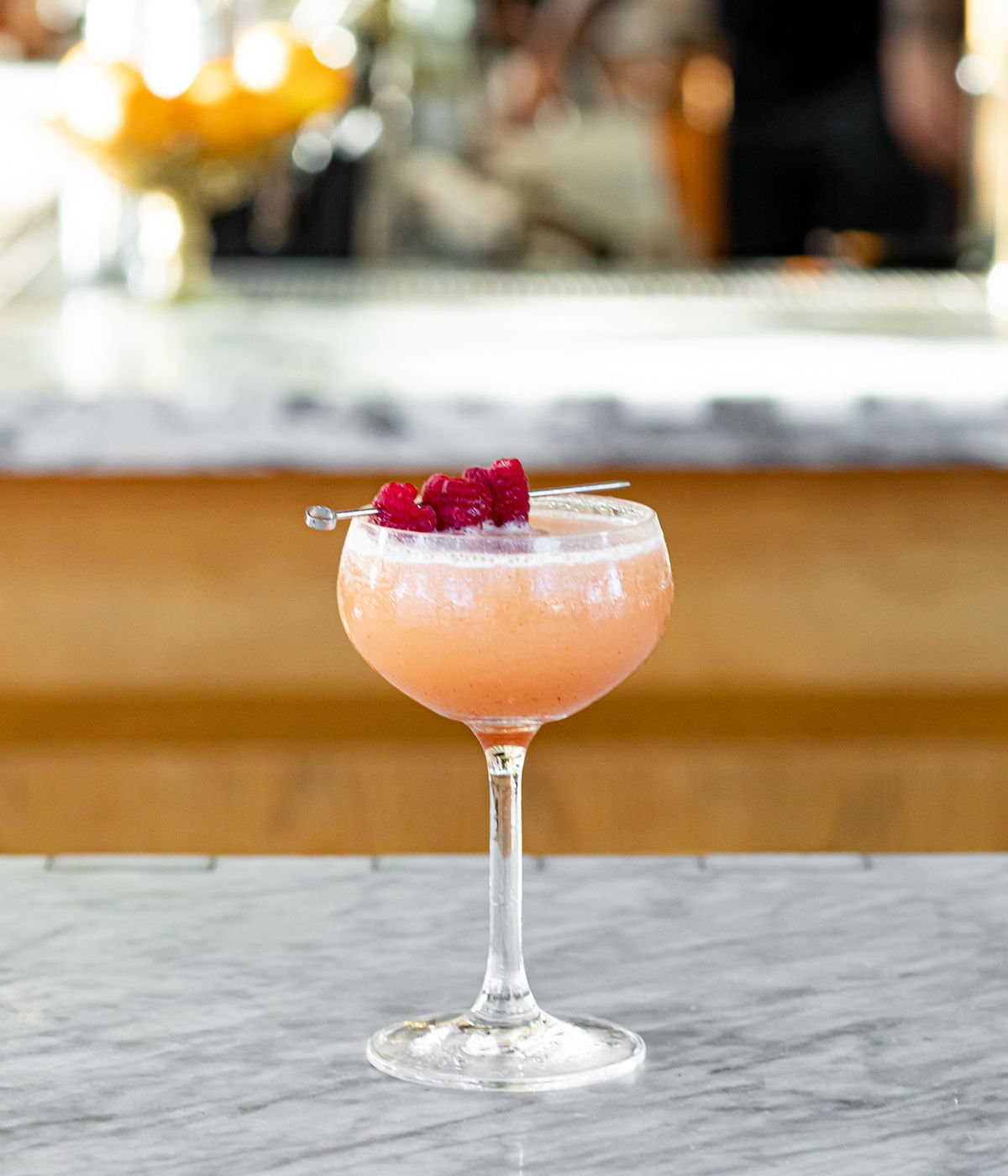
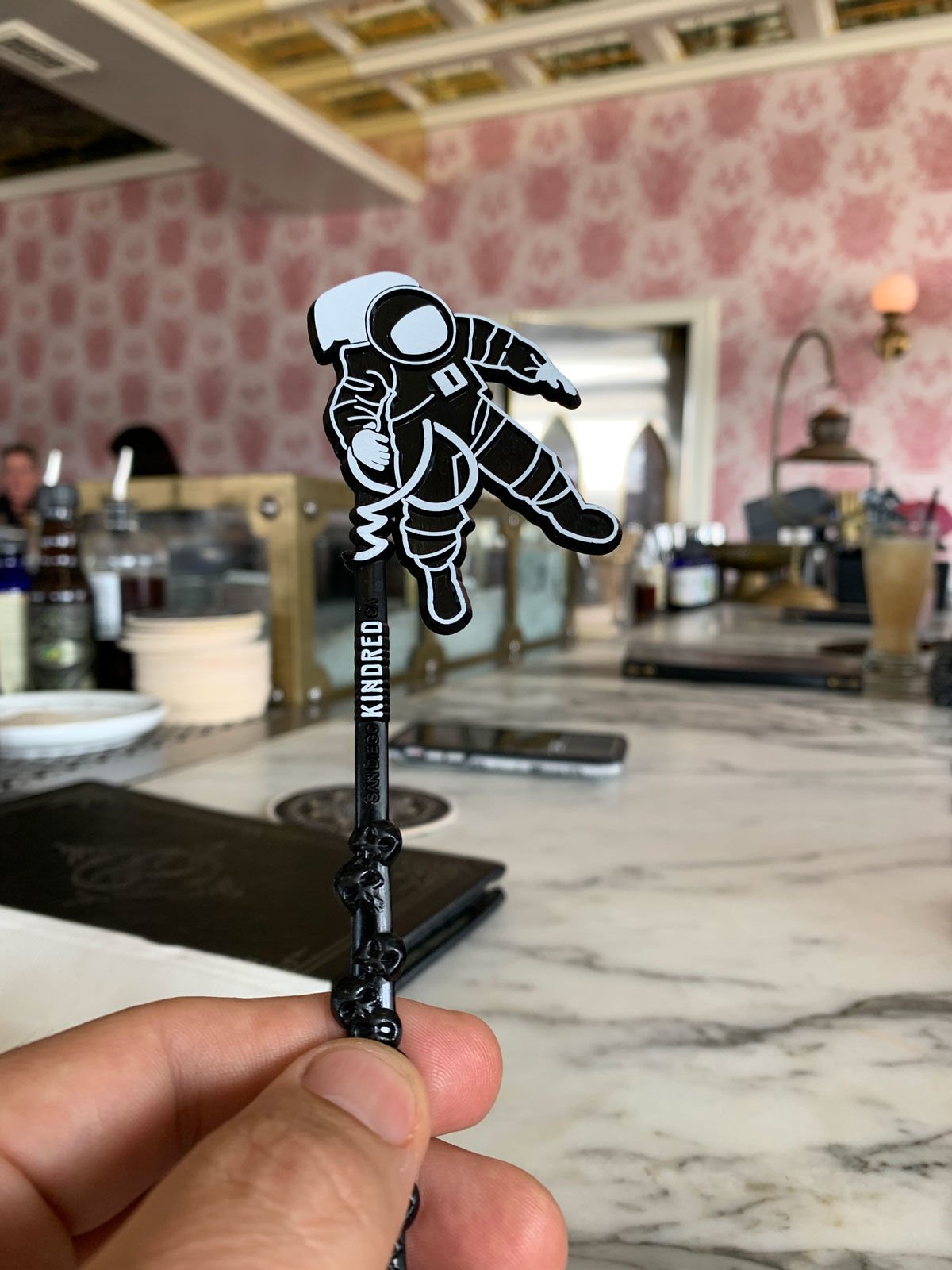
Dining During COVID / Kindred Cocktail
Photo courtesy of Kindred
It also gives the cooks a creative license they didn’t have before coronavirus, when they were too slammed to tinker. “The hope is that we strip away our constraints and do some really fun and wild things with our menu,” he says. “Start to think about some of these dishes as part of our eventual reopening.”
For Stetina, the best part about the Crypt Sessions is, because the more elaborate food requires a ton of prep, he’s been able to hire back almost 100 percent of what he calls the “heart of the house”—the kitchen staff.
“The day I had to furlough my employees was by far the worst day of my professional career,” he says, noting that through the Crypt Sessions and the daily takeout and partial dine-in service, he’s been able to hire about 60 percent of his total staff back. “The good side of all this is the conversation and understanding between restaurants and customers has become more real. We’ve been far more transparent with our financials. They’ve shown a greater desire to learn. They’re asking, ‘How can we help?’”
1503 30th Street, South Park
Dining During COVID / Kindred Feature
Photo courtesy of Kindred
Troy Johnson is the magazine’s award-winning food writer and humorist, and a long-standing expert on Food Network. His work has been featured on NatGeo, Travel Channel, NPR, and in Food Matters, a textbook of the best American food writing.
Donna Jean joins Evolution Fast Food this month in the former Village space
The triangular building one block west of North Park’s iconic water tower has been a revolving door of restaurants for years. Its most recent tenants, The Village, caused a stir during the pandemic by defying stay-at-home orders. Before that, Anthem Vegan held on for about a year, preceded by Lil B’s Urban Eatery (whose space-age gaudiness I actually loved). Johnny R’s Family Restaurant mesmerized passersby with its rotating sign before my time.
The TL;DR is that El Cajon Boulevard has a long history of feeding hungry crowds of vegans, carnivores, and everyone in between.
Soon, it’ll host a partnership a long time in the making, when local vegan concept Donna Jean joins similarly plant-based Evolution Fast Food on Thursday, February 13 for the next chapter of both the space and the businesses.
When Donna Jean first got word they had to vacate their Bankers Hill location they’d occupied since 2017, it led to a bit of a scramble to find a new spot, says director of operations Leslie Funabashi. “Rent has increased dramatically in San Diego,” she says. It was pure chance they heard about the former Village location becoming available, even before it was listed online. “It was just kind of a lucky break, and it all ended up working out.”
Evolution Fast Food faced a similar involuntary eviction notice after 15 years in Hillcrest, but with one shared owner already operating both businesses, it made sense to join forces. Evolution opened in the North Park location this past December, and Donna Jean got their keys to the shared space just this week. Despite the tight timeline, Funabashi says they’ll be open for Valentine’s Day, one of their busiest holidays.
Because of both pent-up demand and the popularity of Valentine’s Day, she says Donna Jean is aiming to open for to-go orders by this weekend. However, with some accelerated construction projects like a new patio and pizza oven installation, she’s not 100 percent sure and urges guests to double-check their Instagram page to confirm.
“If we do end up opening to-go, that will be all over my social media,” she promises. But reservations for both Valentine’s Day and the rest of February are now open on Donna Jean’s website. “I recommend that, because I already have a huge amount of requests,” she warns.
Funabashi says they anticipate greater success than the space’s predecessors, thanks in part to both the symbiotic relationship between the two businesses as well as the building’s size. It proved to be a hindrance for a single business, but “there’s a huge kitchen space in this restaurant, like it was already almost made for two concepts to exist together,” she explains. Donna Jean will command most of the indoor seats for onsite dining, while Evolution’s more grab-and-go style will have a few counter seats as well as their own small patio.
Besides the venue, much will stay the same. Donna Jean’s hours are still lunch and dinner Wednesday through Sunday, weekend brunch, dinner on Monday, and closed Tuesdays. (There’s a chance it’ll open for lunch on Mondays eventually, but Funabashi says that’s a future maybe.) While they’ve been closed, the group took the opportunity to evaluate how to best serve their customers in both San Diego and Los Angeles.
“We’ve made some changes to our pricing to be more affordable for people,” she says, emphasizing that this doesn’t mean relaxing their quality standards. Steps like making their own carrot cashew instead of buying it and adding new pasta options to the menu will allow Donna Jean to remain an everyday option for people, not just for special occasions—or just for vegans. “We want to be able to be accessible to as many people as possible,” she says. “We’re looking forward to being a part of such a vibrant neighborhood.”

Olivewood Gardens, the nearly eight-acre garden and interactive learning center in the heart of National City, is one of those incredible resources that (I personally feel) not enough people know about. If you’re interested in learning about their mission or supporting their efforts to change the city’s relationship with food and nature, their annual Seedling Soireé on Saturday, May 31 is a great time to pony up. Join chefs, gardeners, farmers, and other local experts for a night of drinking, dining, and bidding on items during their fundraising auction. Can’t make the event? Pop by their weekly produce stand on Thursday mornings to pick up fresh produce at whatever price you can afford.
![]()
About Beth Demmon
Beth Demmon is an award-winning writer and podcaster whose work regularly appears in national outlets and San Diego Magazine. Her first book, The Beer Lover's Guide to Cider, is now available. Find out more on bethdemmon.com.
The farmers-market-style event is now featured in three San Diego locations with nearly 100% plant-based businesses
Vista Weekly Popups
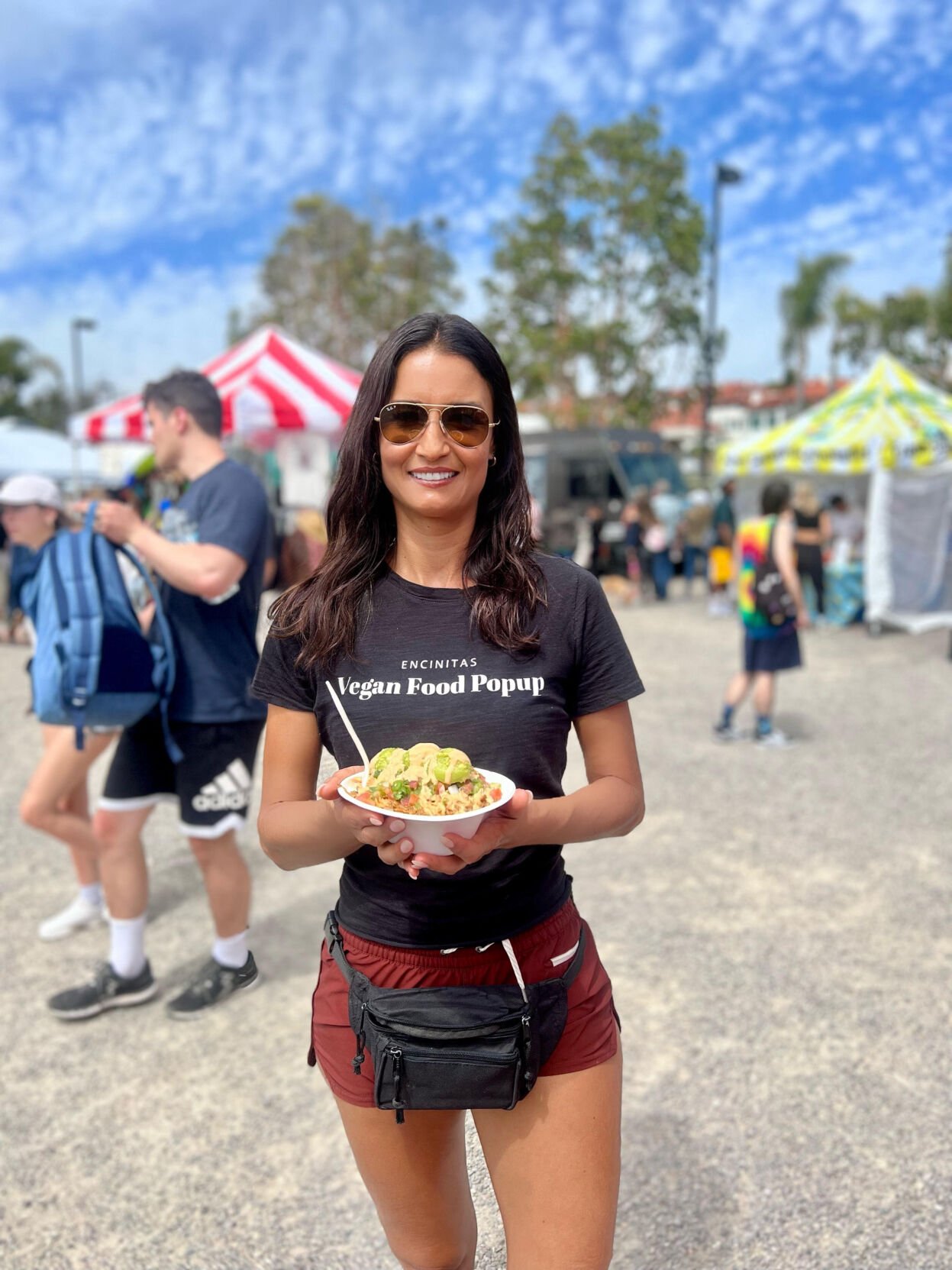
The plant-based food scene is growing throughout San Diego. And a big part of this growth is Vegan Food Pop-Up, which now boasts three monthly locations, thanks to the November 12 arrival of its Saturday market in North Park. The farmers-market-style event attracts vendors from all over Southern California, bringing everything from sushi to dog treats (including donuts and jewelry), all of it made within the bounds of a plant-based lifestyle.
Organizer Michelle May launched Vegan Food Pop-Up as a bimonthly event in Encinitas back in 2019. Now having made it past a few Covid-era speed bumps, VFP is expanding toward a goal of hosting a market somewhere in the county every weekend.
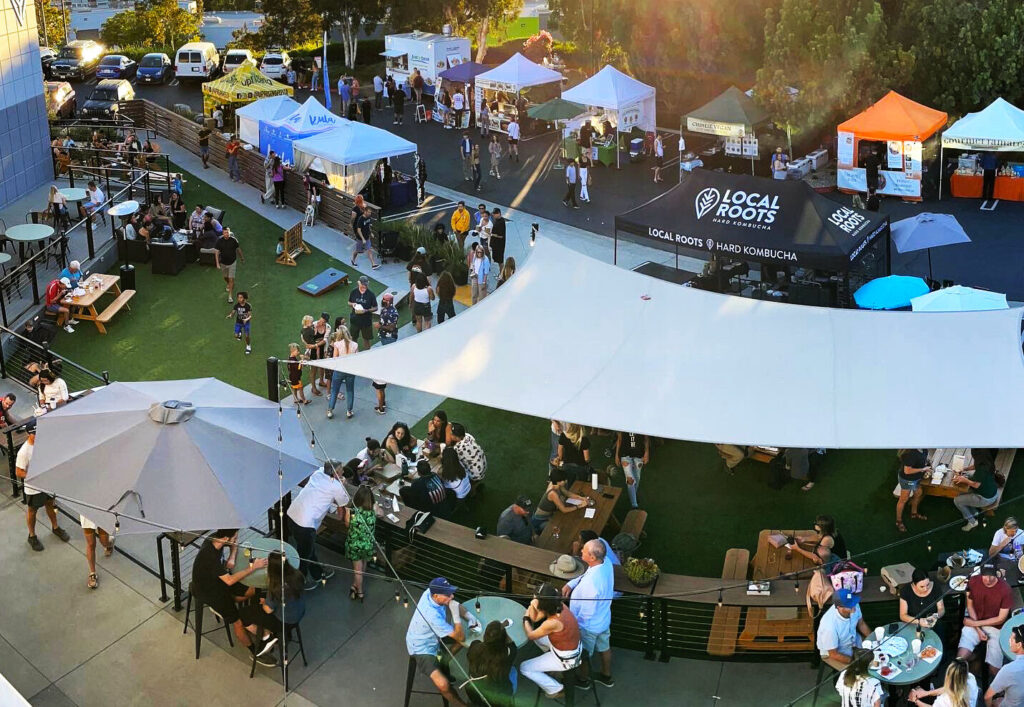
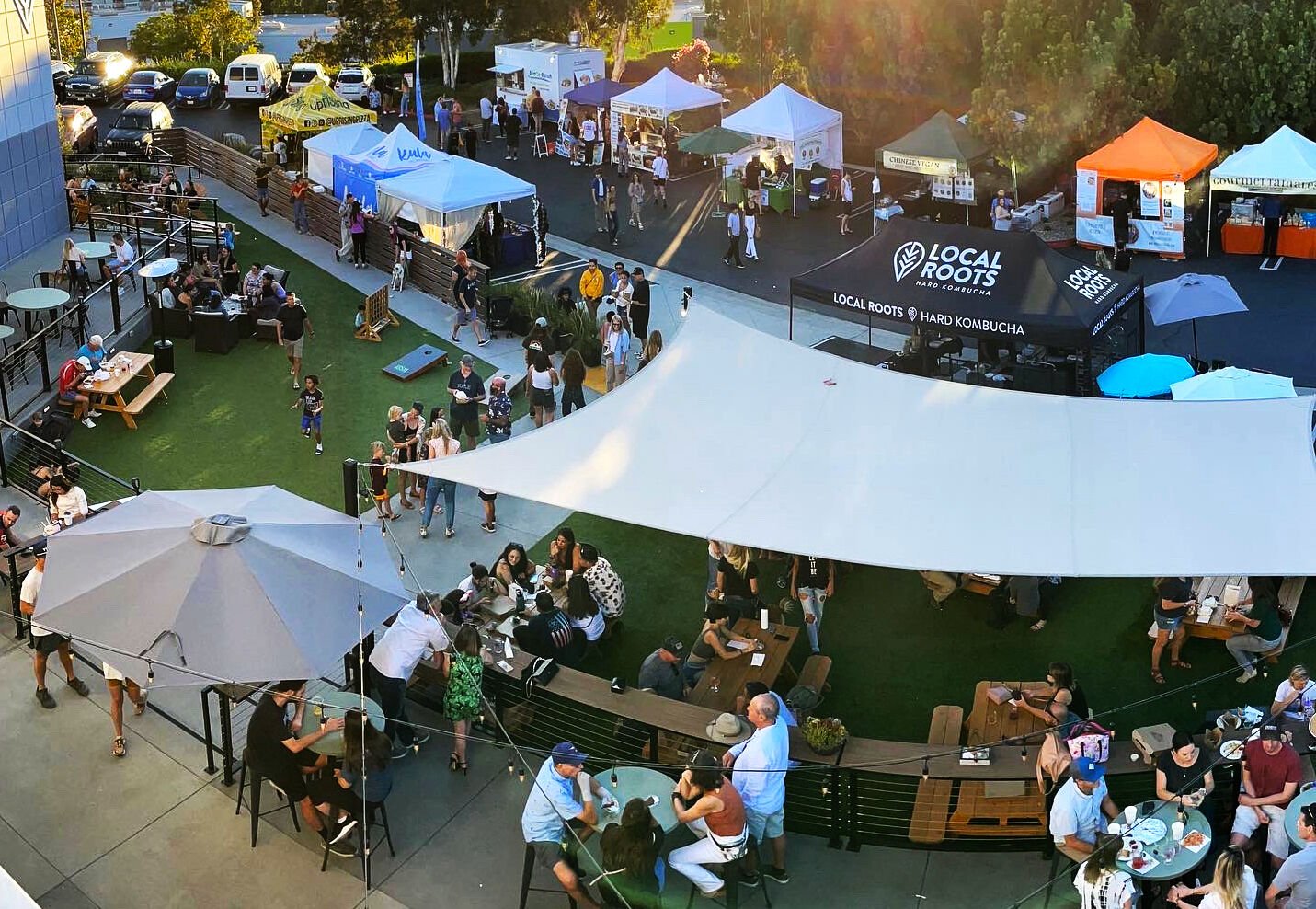
The market is currently scheduled to pop up the first Saturday of every month at the Heritage Museum in Encinitas (12 p.m.-4 p.m.), every third Friday at the Local Roots kombucha brewery in Vista (5 p.m. to 9 p.m.), and every second Saturday at the North Park Mini Park (12 p.m. to 4 p.m.), which was recently installed behind the Observatory music venue.
But May—who also operates vegan space ice cream and coconut jerky brand Seva Foods—is not finished. Approaching holidays in November and December preclude launching a fourth weekend in 2022, but the vegan entrepreneur is already on the hunt for additional spots. She says, “I’m hoping that by January we’ll be ready to announce at least one more new location.”
Michelle May Vegan popups
In addition to bringing the plant-based market to additional communities, one of the reasons May wants to increase the number of market days is that she says she’s got a waiting list of vendors wanting to participate. “There’s just such a hunger (pun intended) for these kind of events that it’s been really easy to book them,” she explains.
The pop-up expands mostly by word of mouth. In a tight-knit Southern California vegan community, Los Angeles and Orange County-based vendors have grown to appreciate San Diego’s reliable vegan demand. To the north, May speculates, a higher frequency of vegan events leads to uneven attendance and increased competition between vendors. They’re willing to come south, she says, because “They tend to do better at the pop-up than they do at some of the regular markets in L.A.”
May does her part by carefully curating each event to prevent overlap and prevent food waste. “I’m straddling this very fine line of wanting a great user experience for my attendees,” she says, “I don’t want them to wait in line too long or—God forbid—get there and all the food’s gone.” She invites roughly 50 vendors to the Encinitas market, while Vista and North Park run smaller, about 30 a piece. A few core vendors appear at every market, including plant-based fish substitute SeaCo Catch, Vegan Mirai Sushi, and Maribel y Olivia Cocina, purveyors of vegan Mexican dishes such as jackfruit and mushroom birria.
The vendor drawing the longest lines at each event is OC-based food truck The Donuttery. “I don’t think you can mention the pop-up without talking about The Donuttery,” May says, “They are without a doubt the most popular vendor that we have… the line is usually nonstop.”
While most of the food vendors represent 100 percent plant-based businesses, May is open to omnivores that serve vegan-friendly menus. One example, Sabor Piri Piri Kitchen, appears regularly at farmers markets serving traditional dishes of Mozambique, but for the pop-up it forgoes chicken curries for the broccoli, black eyed peas, and collard greens of its vegan menu.
the-donuttery.jpeg
Similarly, the baker behind market mainstay Bonjour Patisserie has found ways to produce plant-based versions of traditional French pastries including croissants and crème brûlées. “He’s worked really hard to source some really high-quality vegan butters,” says May, noting Bonjour will be one of the vendors appearing in North Park.
Clearly, culinary diversity is a priority at all the pop-ups, but perhaps the best reason to attend regularly is that vendors at the pop-up have been the first to introduce local vegans to a growing spate of plant-based meat alternatives coming to market. The past year has witnessed the introduction of meat replacements by Omni Foods, Next Meats, and Nature’s Fynd, which makes sausage and cream cheese out of mushrooms. Attendees can be the first to try these meaty treats, in addition to activities like tarot card readings, henna painting, and reiki massage.
Based in San Diego, Ian Anderson writes contemplative features about food, drinks, travel, and culture. On the side, he authors left coast road trip guidebooks, and is currently at work on a collection of autobiographical essays, Stories from Before We Were Connected. He did not form British prog rock band Jethro Tull in 1967.
The thriving South Park hangout is a vital crossroads of food cultures
If this is vegan brunch, I might bid a pretty unemotional farewell to bacon some day. If this is the vegan scene, it’s drastically more awesome than haters would like to believe. For years, I’ve considered veganism a very good thing and reflexively generalized vegans as smug, sanctimonious blowhards.
To be fair, the badgering went both ways. Vegans (some, not all) accused omnivores of being murderers driven only by our own gluttony, environmental nihilists ushering in doomsday with every callous bite. Omnivores (some, not all) in turn belittled vegans as sickly looking crusaders, just another wacky religious sect, the Scientologists of food. Eventually, I assumed we’d get to a less judgmental middle ground. Someone would give San Diego an exciting vegan restaurant and bar that was less a territorial pissing and more of a come-all plant party.
Kindred in South Park is that place. It’s a restaurant for any human, really, who likes cool things. I’ve been a fan for years. I hadn’t, however, ventured in with their late morning crowd and seen the full evolution. Now that the food is catching up with (or caught up with) the cocktails, Kindred is a force.
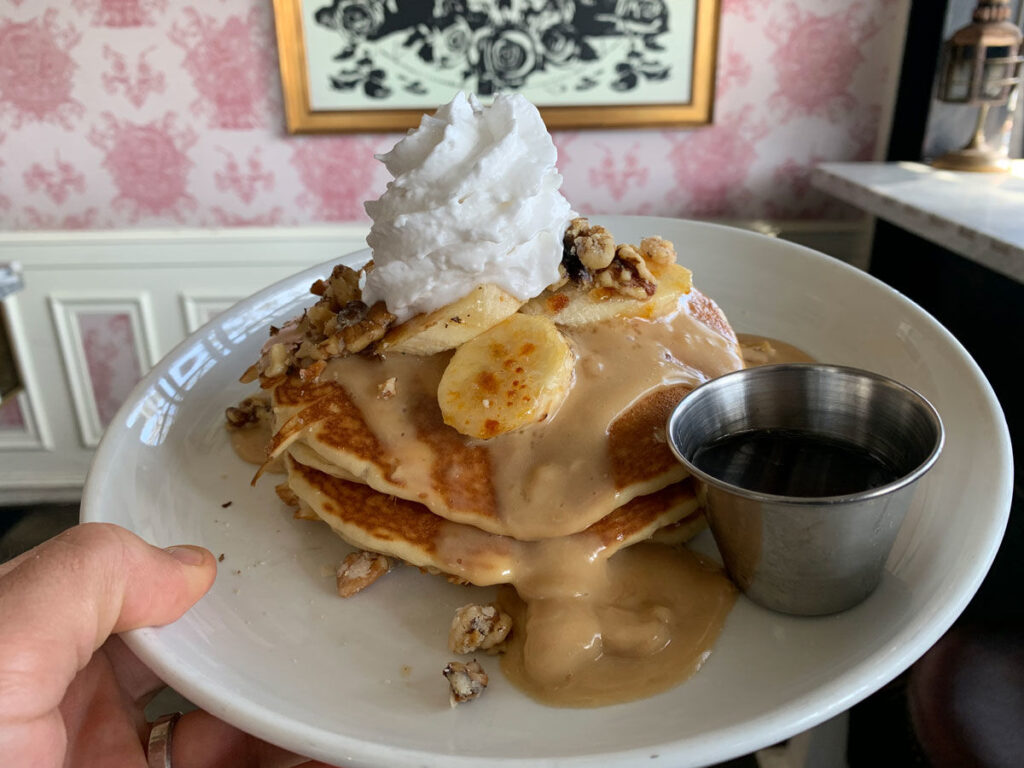
Their breakfast strudels are some intoxicating carbs. Our favorite is the savory shaved seitan with tapioca mozzarella and pickled peppers. It’s spicy, meaty, cheesy, bready. The cinnamon and brown sugar strudel with candied pecans and coconut syrup is flaky on the outside, pure molten, thick, and gooey cinnamon roll inside. The pancakes with bruléed bananas, bourbon butterscotch, and whipped coconut cream aren’t good for your waist size, but they are good for your soul. Their hash is also very good, with fried potatoes, black beans, smoked coconut (vegan bacon), soy curls, maitake mushrooms, charred kale, jicama salsa, and Creole aioli.
The vibe has always been modern art. It’s the massive shiny-black demon head that lords over the main dining area. What an elegant, imposing beast. It’s the ornate pink wallpaper that appears cute and grandmotherly until a closer inspection reveals illicit scenery. It’s the gothic windows and the two-top tables that look like desks pulled from pagan Sunday school, or sidecars for Wiccan motorcycles. It’s the sludgy heavy metal on the speakers offset by the flood of fresh, natural light pouring in.

Previously, plant-based restaurants had a reputation as antiseptic prayer rooms for self-serious wellness people. Kindred owner Kory Stetina decided not to do that, and enlisted art-restaurant makers Consortium Holdings (Morning Glory, Born & Raised) to build a noisier temple for more entertaining urges.
In doing so, he positioned Kindred to be the Casbah or CBGB of vegan food and drink.
Because the plant-based movement is not just here to stay—it’s remodeling a sizable wing of the restaurant industry. Overall, the stats are still small. Gallup reports that about 5 percent of Americans claim to be vegetarian, and 3 percent vegan. But a report by The Economist in late 2018 raised eyebrows when it reported a full quarter—25 percent—of Americans in the 25-34 age demo claim to be either vegetarian or vegan.
There’s a good chance some of those people secretly cheeseburger in the dark. But even if they’re pretending to be plant-based, that means the lifestyle is now an aspiration, a status badge for an entire age demo.
If your eyes are open, you know it’s at least partially real. Meatless Mondays have been growing in number for years. Serena Williams and Tom Brady are vegan. So are Ellen Degeneres, Bill Clinton, Joaquin Phoenix, Paul McCartney—just lots of famous people. Plant-based meat companies like Impossible and Beyond are booming. Some of the world’s top chefs have plant-based menus (at French Laundry, we preferred the plant-based menu) or even entire restaurants (like ABCV from Jean-Georges in New York).
In San Diego, Kindred is the weird and fuzzy center of the movement. It’s not a trap meant to get omnivores drunk on Prohibition cocktails and guilt them into declaring legumes the one true god. At least from an outsider’s perspective, there doesn’t seem to be any agenda aside from being an exciting restaurant. And it’s pulling this off.
Kindred’s vision of the future isn’t the only one, but it is one of them. And their brunch is excellent whether you’re omnivore, vegan, or merely ambivalent and hungry.

Kindred, 1503 30th St., South Park

Troy Johnson is the magazine’s award-winning food writer and humorist, and a long-standing expert on Food Network. His work has been featured on NatGeo, Travel Channel, NPR, and in Food Matters, a textbook of the best American food writing.
This month, the 2026 San Diego Business Impact Awards recognized local businesses making an impact in clean energy, biotech, hospitality, and beyond
Renewable energy companies building hundreds of power plants. Biotech startups using artificial intelligence to create personalized medicine for children with rare diseases. Hospitality companies quietly powering thousands of local events. Consumer brands growing from beach-town startups into national businesses. These are the kinds of companies driving San Diego’s economy today, and the businesses recognized at this year’s San Diego Business Impact Awards offer a snapshot of where the region is headed.
Hosted July 23 by San Diego Regional Economic Development Corporation (EDC) and JPMorganChase, the second annual awards event honored four local companies for innovation, growth, and economic impact. More than 100 nominations from San Diego’s middle-market businesses were reviewed by a 10-person judging committee, with winners selected across four categories: startup, early-stage innovator, rising star, and established heavyweight.
Two-time honoree Jimbo Someck, founder of Jimbo’s organic grocery stores, also joined the event for a fireside chat on buying local, supporting emerging brands, and giving back to the community.
“San Diego’s strength comes from its makers and builders—the resilient people who endure great risks and overcome obstacles to build and scale a company,” says Aaron Ryan, San Diego Region Manager and Middle Market Banking at JPMorganChase & Co. “These awards aren’t just recognition; they spotlight the talent, grit, and innovation shaping our region’s future. By celebrating those who create and build, we foster connections and fuel the growth that keeps San Diego thriving.”

Heavyweight honoree SOLV Energy has grown alongside the country’s rapid investment in renewable power. “It’s an exciting time for SOLV Energy as we are experiencing significant growth,” says CEO George Hershman. “The business has doubled over the last year and has almost double-digit growth since its inception.”
The Rancho Bernardo-based company designs, builds, operates, and maintains utility-scale solar and energy storage facilities. Since its founding in 2008, SOLV Energy has built more than 500 power plants.
Growth has translated directly into hiring. About 200 employees work from the company’s local headquarters, including roughly 20 interns. “Our intern program is a big part of the way that we grow our workforce,” Hershman says. “Last year, 43 percent of our interns became full-time employees. We believe San Diego is a great community to build and grow a high-tech infrastructure and technology company because of the incredible workforce—the ability to attract top talent and draw from world-class universities.”
Startup honoree La Jolla Labs is tackling one of medicine’s biggest challenges by developing personalized RNA therapeutics for patients with rare diseases—many of them children with neurological disorders like ALS. Using proprietary artificial intelligence and machine learning tools, the biotech company develops treatments tailored to each patient’s specific genetic mutation.
CEO Tamar Grossman says the recognition reflects how far the company has come despite limited resources. “We’re honored to be recognized for our ability to change and save patients’ lives and turn our lean startup into a clinical company with very minimal resources,” she says.
Grossman credits San Diego’s concentration of research institutions—including UC San Diego, the Salk Institute, and Scripps Research—with creating a pipeline of talent and collaboration. “San Diego is one of the world-leading centers for technology, genomics, and RNA therapeutics,” she says. “We have over 30 RNA therapeutics companies here, and we support each other and help with anything related to drug discovery.”
She says that collaborative spirit extends beyond formal partnerships. “You can walk around Torrey Pines, go into a café, and find colleagues from the industry and have an ad hoc conversation,” Grossman says. “That’s something very unique to San Diego.”
While Snake Oil Venue Company may not be a household name, chances are many San Diegans have attended one of its events. The early-stage innovator honoree has expanded from beverage catering and mixology consulting into venue management, operating Julep Venue in Mission Hills, Bramble Bay Venue in Imperial Beach, Vesper Venue, the Chapel at Liberty Station, and five outdoor venues throughout Liberty Station—more than 500,000 square feet of event space altogether.
“We do a lot of launch parties for corporations and new products,” says CEO Mike Esposito. “I really like working on the entrepreneur side of things, where new businesses are entering the San Diego market and looking to make a splash.”
Snake Oil has executed more than 16,000 events, employed more than 1,000 people, and partnered with more than 900 local vendors, including caterers, florists, photographers, entertainers, and other hospitality businesses. The company also works with many of San Diego’s nonprofits, museums, and cultural institutions. “We get to celebrate people’s most important moments,” Esposito says. “Whether that’s a wedding, celebration of life, or quinceañera, we’re fortunate to be involved in the community in so many different ways.”

Rising star honoree ALOHA Collection is proof that a simple idea can grow into a thriving company. Founded by two roommates who wanted a better way to carry wet swimsuits after a day at the beach, the lifestyle brand has grown into a business while maintaining strong year-over-year growth.
Now headquartered in Carlsbad, ALOHA Collection employs more than 100 people and operates its California flagship store in Encinitas, which is slated for a remodel. With roots in Hawaii, the company is known for its lightweight, splash-proof travel bags that have become a familiar sight on beaches in San Diego and beyond.
“‘Aloha’ is part of our name, but it’s also how we move through the world,” says CEO Lynna Barnard. “It’s how we show up for people, the way we travel, the way we give back.” Since day one, the company has maintained a 5 percent giveback to Hawaii conservation efforts, contributing millions of dollars over the years.
“I think what’s so inspiring about ALOHA Collection, and the founders in particular, is when you dream big, those dreams can come true when you work hard and trust in the universe,” Barnard says. “It’s inspiring to be a role model for other people wanting to start businesses from humble beginnings. Start small and watch it grow.”
Together, businesses like these form a cornerstone of San Diego’s economy—not only through the jobs and revenue they generate—but through the local workers they hire, vendors they support, and investments they make in the region. Their growth doesn’t happen in isolation; it ripples outward, strengthening the broader business community and the people who call San Diego home.

Summer is a dish best served cold
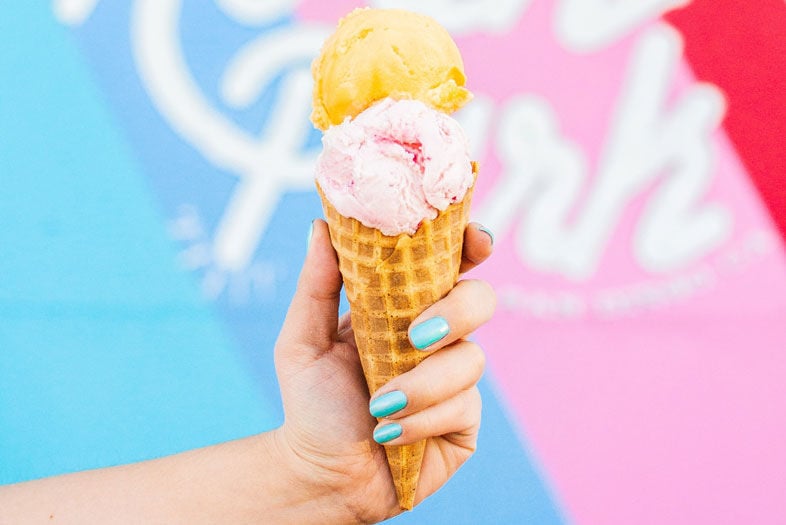
San Diego’s newest food festival is the ice cream-crazed Scoop San Diego, a half-day bonanza of 2-ounce ice cream, gelato, and vegan ice cream samples. Close to two dozen shops from all over San Diego—including the likes of An’s Dry Cleaning, Holy Paleta, and Snoice—will be on hand.
The inaugural event takes place on June 23 from 11 a.m. to 4 p.m. at North Park Way between 30th Street and Granada Ave.
Individual tickets ($20) buy 10 samples, while shareable tickets ($35) buy one sample from each vendor and can be shared with an unlimited number of people.
Not only is Scoop San Diego dog-friendly—dog ice cream will be available—but it’s for a good cause. The event benefits the Monarch School, whose students will serve an ice cream of their making (overseen by Stella Jean’s Ice Cream) created with produce grown in their school garden.
Here are a few of our faves to look for:
The Southeast Asian-style rolled ice cream takes shape before your eyes as it gets poured onto a cold plate, mixed with toppings like fruit and cookies, then scraped into tight rolls.
Angelica Gonzalez trained in Mexico City and Guadalajara before creating the distinctly Mexican flavors (like mango chamoy and avocado mango), as well as frozen takes on some classics (like Key Lime, cookies and cream, and banana Nutella) for her Bonita-based popsicle business.
From-scratch gelato in refined flavor combinations like watermelon mint, rice milk cinnamon, and honey blueberry. So good you won’t mind if you get a few drops on your freshly laundered clothes.
Making their signature Earl Grey citrus tea cake is a two-day process that requires steeping the milk with tea, baking tea cake with Thai butterfly pea flowers (for color), and folding it all together with blueberry compote.
Four favorites to try at Scoop San Diego ice cream fest
Photo courtesy of Scoop San Diego
The search for San Diego's best veggie burger continues
Peace Pies could not be more Leucadian. In North County San Diego, Leucadia is how you spell “Ocean Beach.” Both neighborhoods consult crystals for major decisions, whether it’s to become a yoga instructor or to grow organic tomatoes in the trunk of your car.
I lived here for two years. I believe it was 1999–2000, or it could’ve been 1968. The town isn’t anti-progress in dumb ways; it’s just against dumb or needless progress. That’s why you’ll see many streets willfully without sidewalks, and a lack of giant, ugly planned communities along Pacific Coast Highway. Trailer homes, albeit elaborately designed like an HGTV special, are perfectly acceptable beachside living spaces.
Peace Pies is tucked in a tiny storefront off Pacific Coast Highway. Their original location is, actually, in OB. There’s enough room in the dirt next to the fence for two cars. The rest of you will have to find street parking. From the outside it looks like a charming shanty. A place where, inside, highly ethical people talk about single-use plastics, grids, and how to live off of them.
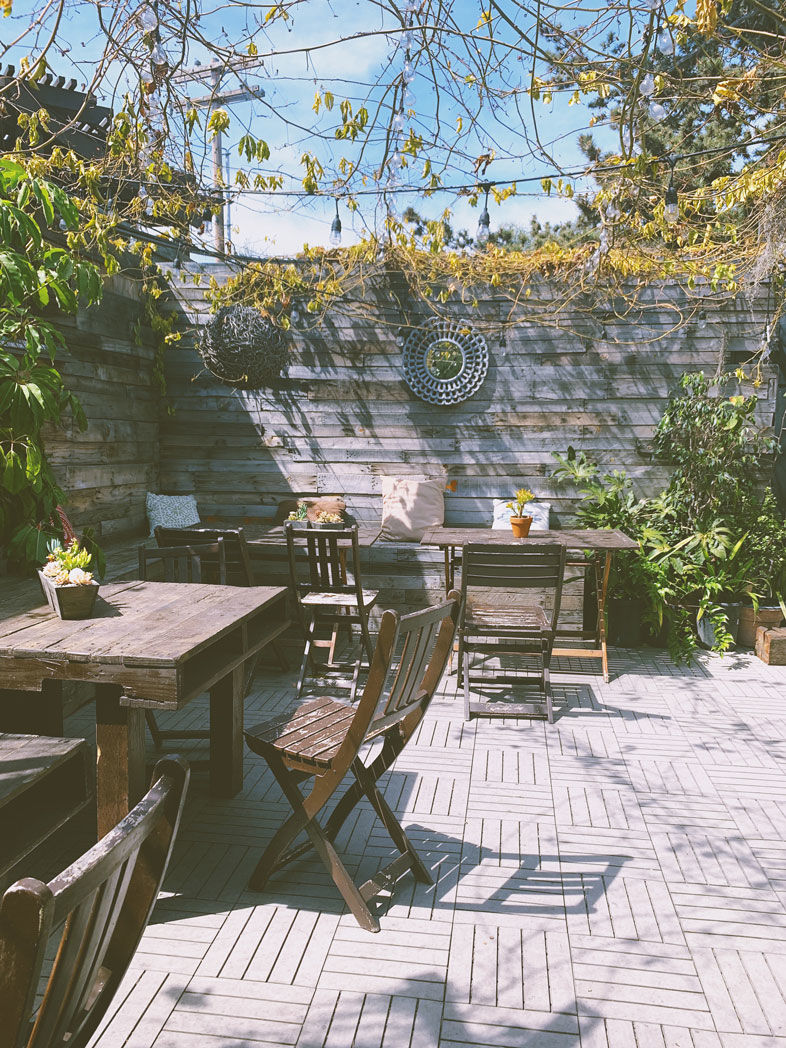
But that patio is something special. Real secret-garden stuff, with high, seclusionary wooden fences making a sort of alfresco hippie getaway, a trellis of ivy and lights and umbrellas forming a canopy above diners. Succulents are everywhere because flowers need water, and this place doesn’t dabble in the waste of precious resources. I could live here. Or set up a mud bath in the corner and stay for a couple days. At most places, that would scare people off, but here I imagine people would join me.
The Contender: Peace Pies
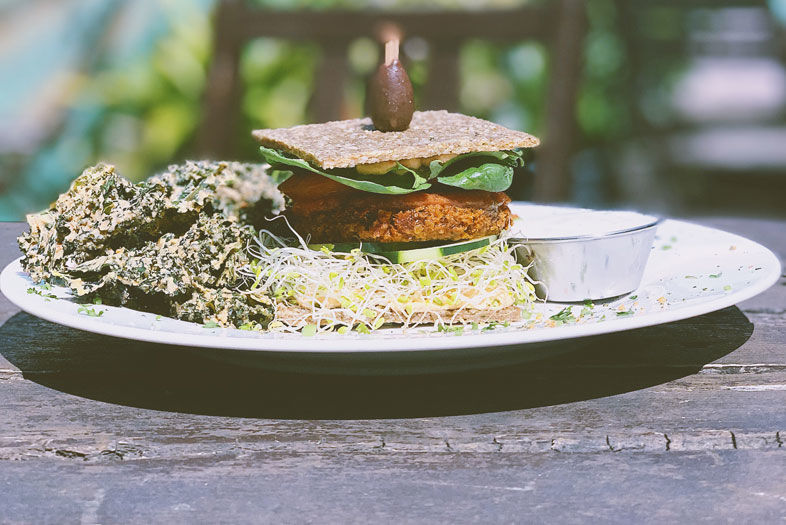
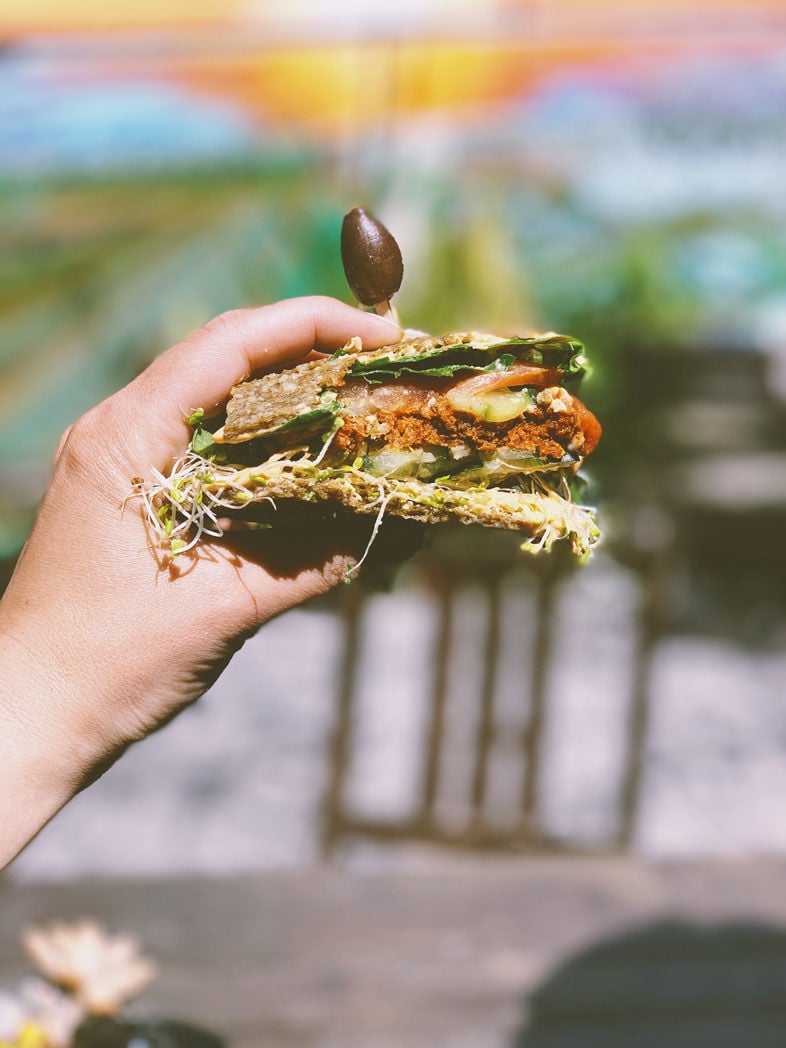
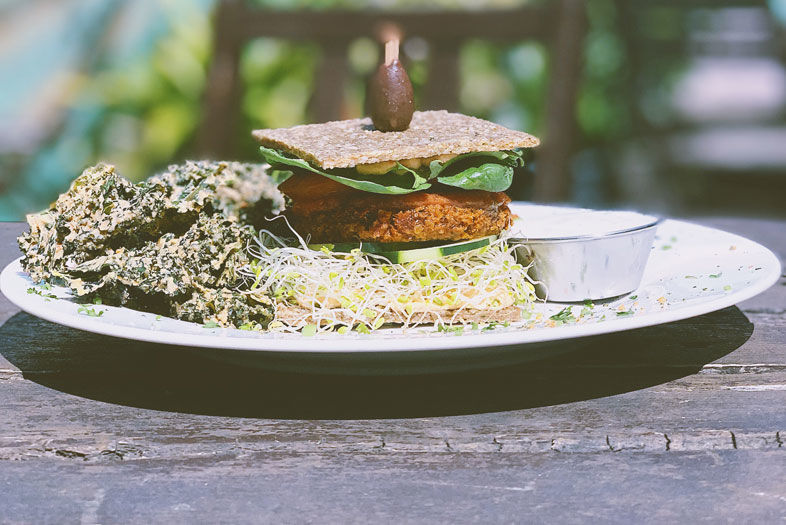
We’re here for their “Bliss Burger.” Peace Pies is raw vegan food. That means uncooked. The burger arrives looking like a salad between crackers. It looks beautiful, vibrant, popping with the colors of highly nutritional, organic vegetables and seeds. For that same reason, it also looks awful. Instead of a bun, there are two thin, flat , grayish crackers made of flax seeds and sunflower seeds. Sprouts stick out this way and that, and in the middle is a patty made of sun-dried tomatoes and walnuts.
I don’t want to bite this thing. I have flashbacks of the post-hippie ’80s, when neighborhood moms thought they could cook meatless and they were terribly wrong. They’d force us to eat a cuisine best suited for finches and waifish dogs.
The “Bliss Burger” instantaneously proves me wrong. It is delicious. The patty tastes of traditional meat spices, and it holds together, topped with a slice of yellow cashew cheese. The flax-sunflower bun actually works perfectly with the ingredients, and holds together as well. There’s a delicious side of cashew ranch. Being uncooked and having birdseed instead of a big, glorious bun, it’s a pretty far stretch from what most people think of as “a burger.”
But it is a veggie burger nonetheless. And, even as still-devout carnivores, we find it to be one of the best we’ve tasted on our citywide search for the best. If I lived in the area, I would camp on their patio and read Whole Earth or talk to strangers about Ken Kesey, and what he’s doing now. They’d respond, “Ken’s dead.” And I’d say, “but is he, really?”
Peace Pies, 133 Daphne Street, Leucadia; 4230 Voltaire Street, Ocean Beach
The Contender: Peace Pies
It’s a Self-Care Summer. Because your best self is our favorite self.
If you’re anything like us, it can be easy to get so caught up in taking care of everyone else, that your own needs get lost in the ether. But while this may be a cliché, that doesn’t make it any less true: You can’t give your best self to other people unless you’re taking care of yourself.
Sometimes, that looks like stopping in for your regular acupuncture or chiropractic appointment. Other days, it means giving your body the fresh, organic fuel it needs to truly feel and function at its best. And some other times still, it involves leaving your responsibilities behind for a weekend to pamper yourself at an incredible resort and spa.
Only you can decide what your truly need. We’re just here to help you find the best ways to get it.

Island living meets desert luxury at the Tommy Bahama Miramonte Resort & Spa in Indian Wells. When you step onto the 11-acre property, you’ll be surrounded by sweeping view of the Santa Rosa Mountains with olive trees and fragrant citrus groves decorating the grounds. In other words, everything about this relaxed but refined resort is primed to help you let go of the stress from home and enjoy easy sun-soaked days and gorgeous starry nights.
The rooms blend calming, woven textures with Tommy Bahama’s signature tropical prints and feature private lanais, making it easy unwind the moment you walk in the door. If you book one of the four Villa Suites, you’ll be treated to exclusive Tommy Bahama furniture and unique personal touches to further that feeling of instant ease.
At the award-winning Spa Rosa, the expert team will help reset and recharge your body and mind using methods and rituals inspired by the desert. The 12,000-square-foot retreat includes outdoor soaking pools, eucalyptus steam rooms, and outdoor cabanas, as well as massages, facials, and body masks—all aimed at creating a day dedicated to you. We’re particularly partial to the Day Long Escape, an indulgent all-day affair of CDBs soaks, renewing scrubs, life changing massages, and transformative facials.
Following your treatment, continue the experience with a meal on the patio at Grapefruit Basil. We love the Hamachi Crudo, a light, citrus-forward dish featuring premium yellowtail, house-made ponzu, creamy avocado, and fresh seasonal garnishes.
Whether you’re strolling the gardens, relaxing beside its saltwater pools, or indulging in a restorative treatment, you’ll be able to escape in style and relax in luxury at the Tommy Bahama Miramonte Resort & Spa.

There’s no shortage of ways to stay active in San Diego—but if you really want to enjoy everything the city has to offer, you’ve got to make sure you’re giving your body its tune-ups. Enter: Healcove Chiropractic. The board-certified chiropractors and wellness professionals at Healcove are experts at addressing that stage where you’re not injured, exactly, but you’re not at 100%, either. Maybe you’re feeling a bit tense or stressed out. Or it could be that you’re not quite moving the way you want to. Sometimes, it’s just that the accumulation of days, weeks, or even years of daily strain is starting to take a toll. No matter what stage you find yourself at, the Healcove Chiropractic team can provide integrated, preventative care centered on long-term, science-backed approaches that ensure you can always stay active and live the life you want to live pain-free.
This starts by providing truly individualized care. Every patient can expect a thorough 60-minute consultation session that includes a posture and movement screening. This allows the team to develop a completely personalized plan. That plan might include chiropractic care, acupuncture, or massage therapy, as well as functional fitness training, vibration and sound therapy, and Dynamic Neuromuscular Stabilization, a clinical rehabilitation method that retrains the body’s stabilization systems. Whatever the team recommends, you can be sure that it’s tailored to meeting your body’s needs today and the future.
There’s a reason that San Diego Magazine named Healcove the “Best Chiropractor in San Diego”—don’t wait until you’re struggling with an injury to find out why. Book an appointment today for holistic, integrated care that helps ground and heal your body before it reaches a crisis point.

West Coast wellness culture meets the community feel of Southern Appalachia at Juice Holler. Juice Holler’s menu consists of made-to-order smoothies and smoothie bowls, as well as grab-and-go cold-pressed juices, wellness shots, salads, and more. It operates from the blissfully simple premise that fueling up with food and drink that’s guilt-free and good your body should be simple, accessible, and, above all else, delicious. And if you haven’t yet made it out to the Encinitas café, which opened just this year, let us be the first to tell you: Juice Holler delivers on each and every of these fronts.
We love the Supercharger smoothie, a mood-lifting and body-fueling option made with banana, almond butter, blue spirulina, maca, grass-fed whey protein, raw cacao nibs, medjool dates, and coconut milk. We’re also partial to the Thrive Alive smoothie bowl, where avocado, mango, sea moss, spirulina, mint, coconut milk, and agave are mixed and topped with coconut, chia seeds, strawberry, mango, and chocolate drizzle. The wellness shots include the Detoxifier, a cleansing blend of kale, cucumber, lemon and spirulina, plus a shot specially designed to fight inflammation (named, fittingly, Anti-Inflammation). Probiotic overnight oats, lemon turmeric bars, and strawberry shortcake chia pudding are other standouts on the grab-and-go menu.
Much of the vibe feels beachy North County chic—think green tile with orange and pink accents, grounded with greenery and natural wood—but Juice Holler founder Kelly Sergott, a longtime Encinitas local, has also enfused the space with her Kentucky roots. In Appalachia, a holler is small valley between hills and mountains, where nature reigns, community is king, and nourishment comes right from the land. At Juice Holler, Sergott has created a holler for the busy modern times, using local ingredients to create a spot for people to come together and enjoy fresh, fast, feel-good fuel for their day.

We’ve all had that experience with a medical professional where we’ve felt rushed, ignored, or misunderstood—and ultimately, like we didn’t get the answers that we needed. But at Everwell, the holistic acupuncture practice located in Solana Beach, the care team wants to transform your understanding of what healthcare can look like.
Patients at Everwell experience care rooted in intentional listening and radical empathy—and trust us, those aren’t just corporate buzzwords. This place actually puts those ideas into practice. You will always be given the time you need to tell your story— initial in-take appointments are two hours long—and you can rest assured that your story will be believed. Every single question and concern will be addressed by a dedicated practitioner who wants to find the specific solutions that work best for you, and you’ll receive care that’s aimed at healing the body, mind, and spirit.
Everwell’s highly trained, doctorate-level practitioners blend evidence-based acupuncture with the practice of classical Chinese medicine. (If you’ve never tried acupuncture before or aren’t sure if the team will be a fit, we’d highly recommended Everwell’s complimentary 20-minute consultations.) Research shows that by stimulating specific points on the body, acupuncture activates a natural healing response in the body, helping to restore balance, regulate the nervous system, and improve overall wellbeing. This allows the practice to address an incredibly wide range of conditions from chronic pain and autoimmune disorders to digestive issues, from stress and burnout to headaches migraines, fertility and postpartum struggles, hormonal imbalances, sleep concerns and more.
At Everwell, you can expect to feel heard, trusted, respected, and cared for. This is a space that doesn’t want to be just another healthcare provider you visit; it wants to provide patients with dedicated partner who will be there for their entire health journey.