Featured articles
Food & Drink
Food & Drink
Food & Drink
Featured articles
Everything SD
Everything SD
Features
Featured articles
Things to Do
Everything SD
Everything SD
Featured articles
podcast-ep
podcast-ep
podcast-ep
Featured articles
Features
Features
Features
Featured articles
Things to Do
Charitable SD
Food & Drink
Ready to know more about San Diego?
SubscribeReady to know more about San Diego?
How to eat well and support local restaurants for the San Diego Padres’ most anticipated season ever
Opening Day is here. As a native, I’m not sure what happened to our baseball team. At some point it looked itself in the mirror, said “I can do this,” and then went out and signed every big name in baseball. Raised a few of its own young stars, too. Just call us the Yankees West. It’s a highly unexpected development, and we long-suffering fans are here for every minute of it.
Seating at Petco Park is limited due to the pandemic, and safety protocols are in place. As part of that, you’ll have to order food and drinks through the MLB Ballpark app for pickup or in-seat delivery. Eating at a Padres game has come a long way from the Hebrew National-and-a-Coors Light days. The team brought in a ton of iconic and emerging local restaurants, craft beers, wine, and cocktails.
And as we know, this year has been—and still is—hell on our local restaurants. So if you’re one of the lucky ones to make it to Opening Day or any game this season, try to put as much money as you possibly can into the local guys’ pockets. Keep in mind vendors may be limited to start the season. Some of these restaurants will be added as the season goes along (for instance, Texas brisket masters Grand Ole BBQ will land in the park in mid-April).
Here’s your guide to the local operators—and the stories of the local people behind them—serving local staples for the San Diego Padres’ 2021 season:
Grand Ole BBQ does it the way they do it in Texas—long, slow, smoked meat over sticks (wood). When Guy Fieri asked me to take him to one of my favorite spots for a San Diego episode of “Diners, Drive-Ins, and Dives,” I took him to their Flinn Springs haven. Owner Andy Harris has long been a big Padres nerd, so this is a bit of a dream season for him to be pulled into the fold. They’ll be doing a pulled pork sandwich, brisket sandwich (their brisket is a jaw-dropper), and loaded fries (the “El Baracho” has queso and chile and choice of meats).
To just call them “hot dogs” is like calling the Faberge “an expensive egg.” Each hot dog here is an awesome clown car of ingredients. Full Mexican feasts on top of a quality hot dog (Brandt Beef, no hormones or B.S.)—chile con carne, crispy fried garlic, cremas of all sorts (chipotle, etc.), grilled onions, melted cheese of all sorts, pulled pork, you name it. Owner Pablo Rios started in Barrio Logan in 2017 with a hot dog cart he made by chopping up a perfectly good Chevy Impala. The future of hot dogs is right here.
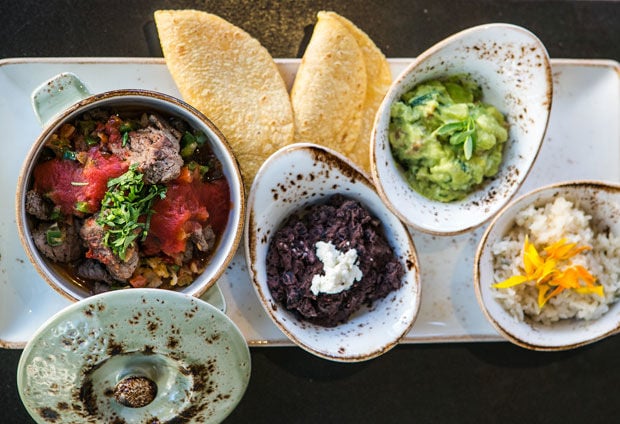
Filet mignon a la Mexicana
Puesto is the breakout star of San Diego’s better-taco movement. Started by a local family in La Jolla, they’ve now got outposts up the coast and seem destined for Vegas and Dubai one day. It’s all about the crispy cheese—they griddle it, create that caramelized, golden-brown frico, and lay it inside the tortilla. They have gotten consistently better every year. As proof, they recently hired chef Ian Tenzer as their R&D chef. Tenzer worked for three years as sous chef at Eleven Madison Park, one of the best restaurants in the world.
The legend of Solana Beach, California. Two brothers run a market right by the San Elijo Campgrounds—a great market, the kind where you can tell John and Pete Najjar have operable taste buds, have tasted great food, and then hoarded it all under one roof. But talk to any local and you’d think they’re a butcher shop, because their tri-tip—marinated in red wine, garlic, and a bit of honey—is all anyone talks about. It’s so popular they had to put up a kiosk in the parking lot that pumps it out all day so the rest of the market can function. Put it on chips with molten cheese, barbecue sauce, sour cream, and green onion.
Ask any local kid who grew up swimming or surfing or juvenile-delinquenting at the bluffs of Del Mar where they ate lunch, and their answer is Board & Brew. A tiny little sandwich shop with giant, messy offerings. The Turkado is every lovely stereotype people have of Californians on good bread—lean white meat (turkey) under a verdant, cool abundance of mashed avocado. In New York, having that much avocado would cost you $40, a few bitcoins, and blood.
Buy your seafood from someone who’s got a sunburn. Someone who smells like SPF and bait. In San Diego, that’s the Braun brothers—Judd and Matt—who grew up in the working-class part of Ocean Beach. Their dad fished, they fished. They eventually poured their life savings into a tiny fish shop in Mission Hills, serving boat-fresh local catch and the best imported stuff on the market. Their fish tacos are simple-delicious.
More brothers of the food. Joe, Andy, and Tony started with a small cheesesteak shop in a strip mall in Point Loma in 2004. They’ve got two shops now, and it’s hard to believe they’re not national. Good bread, shreds of beef, grilled onions, and that gooey tarp of American cheese or Cheez Whiz, depending on which side of the Philly tracks you fall. Theirs is so good because it’s tight. Whereas some cheesesteaks are spilling out and messy like me in a tight T-shirt, theirs is wrapped dense so you get all parts in each bite.
Mike “Bossman” Hardin was a legend, the patron saint of OB street punks. He built his burger joint on loud music, chaotic interior decor of bumper stickers and license plates, gigantic burgers with entire salads in them, and being an eminently admirable human who took care of local people. Before he passed in 2015, I spoke with him about his philosophy. The part that struck me was that he made it a point to hire kids whom others might pass up on in job interviews—kids who reminded him of himself growing up in OB. His son, Shane, runs the family business now, and their burgers are every bit as good as advertised on Guy Fieri’s show (Fieri came here in 2012 and the two became close friends).
This husband-and-wife pizza shop, started in South Park in 2011, did it right from the start. Matteo Cattaneo and Alexa Kollmeier started with a wood-fired oven named “Sofia,” made from Italian clay, and every inch of the now-iconic oven was designed to make the perfect Neapolitan pizza. They hired world pizza champion Marcello Avitabile to helm it. And then the difference-maker: Cattaneo is a descendant of one of Italy’s most famed olive oil families (Farchioni, started in Umbria in 1780). Each olive oil crop has olives of varying quality—and his family sends him barrels of the very best, which Buona Forchetta drizzles liberally on just about everything.
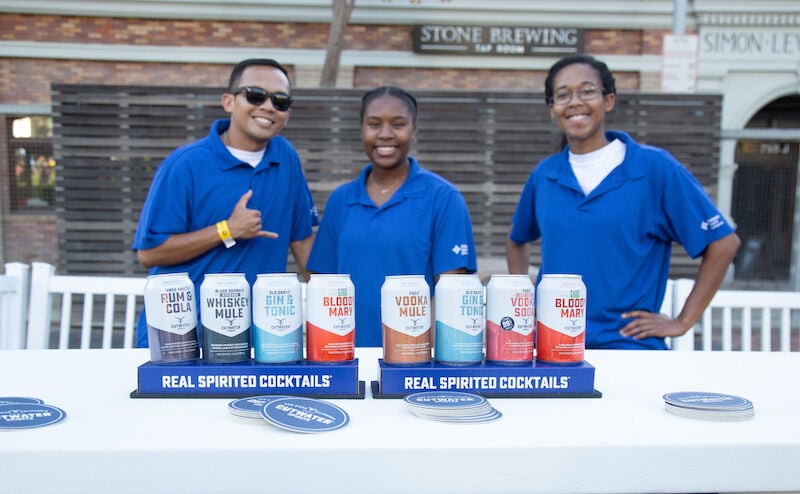
Cutwater Spirits at Petco Park
Cody Page
Yuseff Cherney was one of the first local brewers to start tinkering with craft spirits back when he was with Ballast Point, launching Cutwater as a side project. Most San Diegans know the story by now. Ballast Point was sold to Constellation Brands (it’s now independently owned again), but they let him keep his spirits thing. Yuseff being Yuseff (the man is one motivated mad scientist), he was at the forefront of canned cocktails done right (good ingredients, craft as can be in a can) and sold it to Anheuser-Busch. He deserved every bit of that success, and could’ve just started following his favorite metal bands around the world (he’s a huge metalhead). But he’s still there, still innovating, still working his duff off. They just launched this Tequila Paloma in partnership with the Padres.
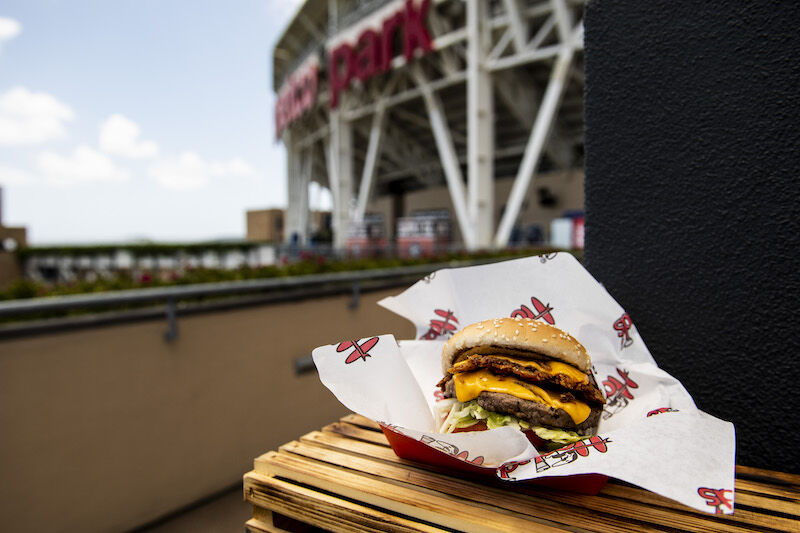
Hodad’s

Troy Johnson is the magazine’s award-winning food writer and humorist, and a long-standing expert on Food Network. His work has been featured on NatGeo, Travel Channel, NPR, and in Food Matters, a textbook of the best American food writing.
Word of Mouth skips endless scrolling and lets two longtime industry pros choose what members drink each month
If I have to choose between letting a trusted friend pick a bottle of wine or some random algorithm boosted by a faceless entity, I’m gonna go with the human 10 out of 10 times. And when you have friends like Amanda Sarich and Robert Blair, it’s pretty easy to trust their picks are going to be unique, tasty, and probably something I haven’t seen before.
Between the two of them, they have over three decades of experience working in wine. From buying to operations to building wine lists, they’ve worked together, wined together, and now, are going into business together with the Word of Mouth Wine Club.
Word of Mouth is a members-only monthly subscription that sends you two handpicked bottles each month, chosen entirely by the duo’s palates. It’s less “build your own box” and more “enjoy the surprise.” “The goal with the wine club was basically to get members that want to turn over their faith in our collections,” Sarich says. “Trust us—we’ll send you the cool stuff.”
The two first met while working at We Olive wine bar and shop in La Jolla, where Sarich joined the opening team in 2011 before eventually becoming a corporate wine director overseeing stores and franchises throughout California. Blair arrived the following year, after stints at Holiday Wine Cellar in Escondido and Alternative Wines in Carmel Valley, later spending nearly a decade helping build Village Vino in Kensington.
When Village Vino closed last November, Sarich had recently returned home to San Diego after years in the Bay Area and brought Blair on board for a project she’s working on—Serafino, a cafe and wine bar slated to open in Mission Hills next fall. But to bridge the gap between Village Vino closing and Serafino opening, the two partners kept the momentum going by launching Word of Mouth.
Blair says once Serafino opens, the team will launch a wine club for that business that will focus on everyday drinking wines from anywhere. Word of Mouth is for us “to geek out a little bit,” he says, with more adventurous or hard-to-find options from small production family farmers. (But as a bonus, Word of Mouth subscribers will become Seraphino’s founding members, receiving exclusive benefits for supporting the project from day one.)
Current memberships include two bottles delivered monthly—usually a red and a white, though sparkling, rosé, orange, or skin-contact wines are always fair game. Members can choose three-month, six-month, or annual subscriptions, and every shipment includes detailed tasting notes, producer stories, pairing suggestions, and fun extras like playlists, puzzles, and the occasional surprise.
The selections often revolve around loose themes. For instance, they used the idea of what wines they’d drink at a summer barbecue to select the two bottles in the July box—which happened to be a pale French rosé and Mourvèdre from the Languedoc-Roussillon region of southern France.
Over the last decade, places like Rumi, Clos, and Vino Carta have helped transform the San Diego wine scene from mainstream labels and a stodgy vibe to eclectic discoveries that break a lot of the former rules. Word of Mouth hopes to continue that evolution.
“I think it’s fostered a more adventurous sense of exploration,” Blair says. “There’s room in San Diego to keep expanding people’s palates.” Sarich agrees. “We’re trying to bring our fun wine palate to the world.” Bottoms up.
Listen Now: The Latest in San Diego’s Food and Drink Scene
Have breaking news, exciting scoops, or great stories about new San Diego restaurants or the city’s food scene? Send your pitches to [email protected].
Beth Demmon is an award-winning writer and podcaster whose work regularly appears in national outlets and San Diego Magazine. Her first book, The Beer Lover's Guide to Cider, is now available. Find out more on bethdemmon.com.
Dockside Night Market returns to Tuna Harbor Dockside Market on August 6 for one night only
Ask any local, human or shark—San Diego summer doesn’t really start until August. After June Gloom lifts and children file back into the halls of academia, our coastline comes to life with more space on the sand and a water temperature that finally rises above muscle-clenchingly frigid.
What better way to welcome Local’s Summer than by celebrating the bounty of the sea? At least, that’s what the gang at Puffer Malarkey Collective (PMC) figured when they launched Dockside Night Market four years ago.
Despite being born and raised in San Diego, Lillian Dang (the event’s co-producer and marketing director for PMC) says she didn’t know how abundant our local seafood scene was until she left and came back. “We are spoiled here,” she says, pointing not only to our plentiful produce from local farms, but also our sea-borne treasures.
When she and her co-producer Lucien Conner (PMC’s director of operations) brainstormed over what they felt the city’s food scene lacked, they realized: “What’s missing is an event that really celebrates the local seafood,” explains Dang.

Dockside Night Market is meant to be a “San Diego summer party on the pier,” she says, bringing together local fishermen and local chefs to highlight the fruits of the local seas. Chefs from some of San Diego’s best restaurants clamor to be a part of the 15-chef-max roster, including Travis Swikard (Callie and Fleurette), David Sim (Kingfisher), Aidan Owens (Herb & Wood), Chianne Mallari (Herb & Sea), Tara Monsod (Animae), Jacob Ruck and Eric Bost (Jeune et Jolie), not to mention Mabel’s Gone Fishing, Bica, The Lion’s Share, Nine-Ten, Marisi… you get the idea.
Part of the intrigue is not knowing exactly what seafood will appear—in past years, there’s been uni, bluefin tuna, halibut, black cod, but it ultimately comes down to what’s fresh and what’s available. And with a chef lineup like that, it’s fun to imagine what sorts of surprises await. (If you’d like a small hint, there are calendars of seasonal availability in the area.)
The one-night-only annual event takes place at Tuna Harbor Dockside Market on Tuna Harbor Pier (598 Harbor Lane), the same spot as the weekly fish market every Saturday from 8 a.m. until 1 p.m. or sellout (it’s usually the latter). VIPs get in at 6 p.m. and general admission is 7 p.m., and 100 percent of all ticket profits go to support the San Diego Fishermen’s Working Group, a 501(c)(3) nonprofit created to support the best interests of the region’s commercial fishermen. There’s also four cash bars and a live DJ (but leave the kids and pets at home).
“I think this is an event that can only happen in San Diego,” says Dang. Our city’s culinary cache is on the rise, and our proximity to some of the best fishing waters in the world make it a pretty dynamic duo. “It’s curated, it’s intimate, it’s all the things,” she promises.
Dockside Night Market takes places on Thursday, August 6, from 6 p.m. to 10 p.m. at Tuna Harbor Dockside Market.

Listen Now: The Latest in San Diego’s Food and Drink Scene
Have breaking news, exciting scoops, or great stories about new San Diego restaurants or the city’s food scene? Send your pitches to [email protected].
Beth Demmon is an award-winning writer and podcaster whose work regularly appears in national outlets and San Diego Magazine. Her first book, The Beer Lover's Guide to Cider, is now available. Find out more on bethdemmon.com.
Why a well-known San Diego restaurateur launched a skincare brand with a name you can’t unhear
In Mexico for a wedding, a friend got a tourist-level sunburn. One of San Diego’s top restaurateurs—Arturo Kassel, founder of Catania and Gravity Heights—was on hand. He made a joke about how basic sunscreen literacy seems to be a male-pattern blindness.
“I said, ‘You know what? I’m going to start a men’s sunscreen brand, and I’m going to call it 4-Skin—because men are dicks and they need to cover up,’” he explains. “We spent the whole weekend thinking of puns and innuendos for this hypothetical brand we were never actually going to launch.”
The joke refused to die. Days later, one of the Mexico-wedding friends—a top marketer in the city—called Kassel and said the highly intentional dude humor might have a couple top notes of genius. So Kassel did a little digging into men and very basic skincare/sunscreen usage. Turns out, 1 in 29 are at risk of developing melanoma compared to 1 in 40 women.
“I was shocked to learn that only about one in 10 men actively use sunscreen, and that’s at the beach, on the golf course, or at the pool, when you’re going to get fried,” he says. “Daily use is essentially nonexistent.” During the process, Kassel became part of the story.
“My dermatologist called and told me I had basal cell carcinoma,” he says. “At that point, it went from being a business to a very personal mission. I became determined to move the needle when it comes to men’s apathy toward sunscreen.” And so—hundreds of hours later, including a still-going crash course on launching a CPG brand—a local restaurateur launched a jarringly named sunscreen and moisturizer for men. Broad spectrum, high-quality, SPF 50, lightweight, goes on clear, all the things. The daily-use morning routine version is called Morning Rub. Of course it is.
Kassel reached out to his friend Troy Johnson—San Diego Magazine co-owner and co-founder of Here We Are Studios,—to collaborate on creating two commercials for the brand. They launched July weekend. Friends went down to the beach to talk to strangers about their 4-Skin. Awkward, funny, and if all goes to plan: making men rethink their relationship to the blazing ouchie star in the sky.
“4-Skin is funny as a brand, but there’s nothing funny about skin cancer,” says Kassel. “That’s the one-two punch: we got your attention, maybe we made you laugh. And now we can tell you something that might extend your life.”
For this special-edition podcast from Here We Are Studios, Troy and Arturo sit down and tell the entire story of how a joke became a brand with a serious mission.
This month, the 2026 San Diego Business Impact Awards recognized local businesses making an impact in clean energy, biotech, hospitality, and beyond
Renewable energy companies building hundreds of power plants. Biotech startups using artificial intelligence to create personalized medicine for children with rare diseases. Hospitality companies quietly powering thousands of local events. Consumer brands growing from beach-town startups into national businesses. These are the kinds of companies driving San Diego’s economy today, and the businesses recognized at this year’s San Diego Business Impact Awards offer a snapshot of where the region is headed.
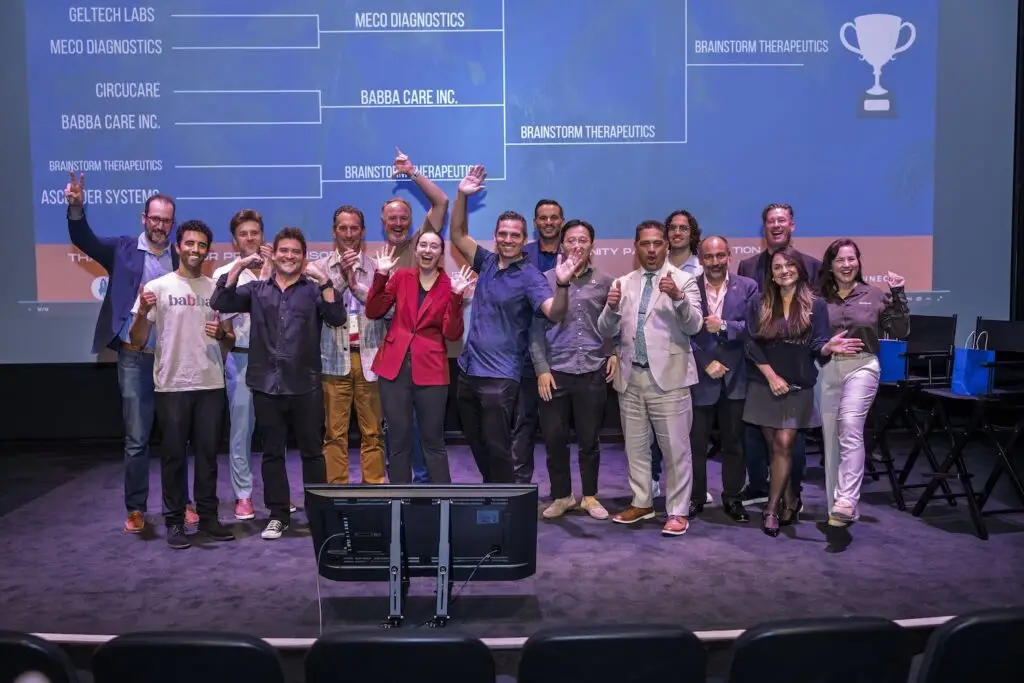
Hosted July 23 by San Diego Regional Economic Development Corporation (EDC) and JPMorganChase, the second annual awards event honored four local companies for innovation, growth, and economic impact. More than 100 nominations from San Diego’s middle-market businesses were reviewed by a 10-person judging committee, with winners selected across four categories: startup, early-stage innovator, rising star, and established heavyweight.
Two-time honoree Jimbo Someck, founder of Jimbo’s organic grocery stores, also joined the event for a fireside chat on buying local, supporting emerging brands, and giving back to the community.
“San Diego’s strength comes from its makers and builders—the resilient people who endure great risks and overcome obstacles to build and scale a company,” says Aaron Ryan, San Diego Region Manager and Middle Market Banking at JPMorganChase & Co. “These awards aren’t just recognition; they spotlight the talent, grit, and innovation shaping our region’s future. By celebrating those who create and build, we foster connections and fuel the growth that keeps San Diego thriving.”

Heavyweight honoree SOLV Energy has grown alongside the country’s rapid investment in renewable power. “It’s an exciting time for SOLV Energy as we are experiencing significant growth,” says CEO George Hershman. “The business has doubled over the last year and has almost double-digit growth since its inception.”
The Rancho Bernardo-based company designs, builds, operates, and maintains utility-scale solar and energy storage facilities. Since its founding in 2008, SOLV Energy has built more than 500 power plants.
Growth has translated directly into hiring. About 200 employees work from the company’s local headquarters, including roughly 20 interns. “Our intern program is a big part of the way that we grow our workforce,” Hershman says. “Last year, 43 percent of our interns became full-time employees. We believe San Diego is a great community to build and grow a high-tech infrastructure and technology company because of the incredible workforce—the ability to attract top talent and draw from world-class universities.”

Startup honoree La Jolla Labs is tackling one of medicine’s biggest challenges by developing personalized RNA therapeutics for patients with rare diseases—many of them children with neurological disorders like ALS. Using proprietary artificial intelligence and machine learning tools, the biotech company develops treatments tailored to each patient’s specific genetic mutation.
CEO Tamar Grossman says the recognition reflects how far the company has come despite limited resources. “We’re honored to be recognized for our ability to change and save patients’ lives and turn our lean startup into a clinical company with very minimal resources,” she says.
Grossman credits San Diego’s concentration of research institutions—including UC San Diego, the Salk Institute, and Scripps Research—with creating a pipeline of talent and collaboration. “San Diego is one of the world-leading centers for technology, genomics, and RNA therapeutics,” she says. “We have over 30 RNA therapeutics companies here, and we support each other and help with anything related to drug discovery.”
She says that collaborative spirit extends beyond formal partnerships. “You can walk around Torrey Pines, go into a café, and find colleagues from the industry and have an ad hoc conversation,” Grossman says. “That’s something very unique to San Diego.”

While Snake Oil Venue Company may not be a household name, chances are many San Diegans have attended one of its events. The early-stage innovator honoree has expanded from beverage catering and mixology consulting into venue management, operating Julep Venue in Mission Hills, Bramble Bay Venue in Imperial Beach, Vesper Venue, the Chapel at Liberty Station, and five outdoor venues throughout Liberty Station—more than 500,000 square feet of event space altogether.
“We do a lot of launch parties for corporations and new products,” says CEO Mike Esposito. “I really like working on the entrepreneur side of things, where new businesses are entering the San Diego market and looking to make a splash.”
Snake Oil has executed more than 16,000 events, employed more than 1,000 people, and partnered with more than 900 local vendors, including caterers, florists, photographers, entertainers, and other hospitality businesses. The company also works with many of San Diego’s nonprofits, museums, and cultural institutions. “We get to celebrate people’s most important moments,” Esposito says. “Whether that’s a wedding, celebration of life, or quinceañera, we’re fortunate to be involved in the community in so many different ways.”

Rising star honoree ALOHA Collection is proof that a simple idea can grow into a thriving company. Founded by two roommates who wanted a better way to carry wet swimsuits after a day at the beach, the lifestyle brand has grown into a business while maintaining strong year-over-year growth.
Now headquartered in Carlsbad, ALOHA Collection employs more than 100 people and operates its California flagship store in Encinitas, which is slated for a remodel. With roots in Hawaii, the company is known for its lightweight, splash-proof travel bags that have become a familiar sight on beaches in San Diego and beyond.
“‘Aloha’ is part of our name, but it’s also how we move through the world,” says CEO Lynna Barnard. “It’s how we show up for people, the way we travel, the way we give back.” Since day one, the company has maintained a 5 percent giveback to Hawaii conservation efforts, contributing millions of dollars over the years.
“I think what’s so inspiring about ALOHA Collection, and the founders in particular, is when you dream big, those dreams can come true when you work hard and trust in the universe,” Barnard says. “It’s inspiring to be a role model for other people wanting to start businesses from humble beginnings. Start small and watch it grow.”
Together, businesses like these form a cornerstone of San Diego’s economy—not only through the jobs and revenue they generate—but through the local workers they hire, vendors they support, and investments they make in the region. Their growth doesn’t happen in isolation; it ripples outward, strengthening the broader business community and the people who call San Diego home.

Harrah’s Resort Southern California introduces its brand-new signature restaurant, featuring Mexican cuisine from across the country
Ten million dollars can buy 30 small helicopters, two or three houses in Del Mar (depending on how many bathrooms there are), or one really, really extravagant restaurant remodel. Harrah’s Resort Southern California went with that last one, revamping the former Salt & Fin space into Tierra y Mar, the resort’s new signature restaurant next to Hell’s Kitchen by Gordon Ramsay.
The 25-year-old Valley Center casino and resort went through its first major expansion in 2014, adding more pools, more restaurants, a convention center, and hundreds of new rooms—basically, the full works. In 2016, the Rincon Band of Luiseño Indians officially renamed the land the resort sits on as “Funner, California,” dubbing David Hasselhoff (excuse me, The Hoff) as the rechristened town’s first mayor and inviting guests to leave their hassles behind.
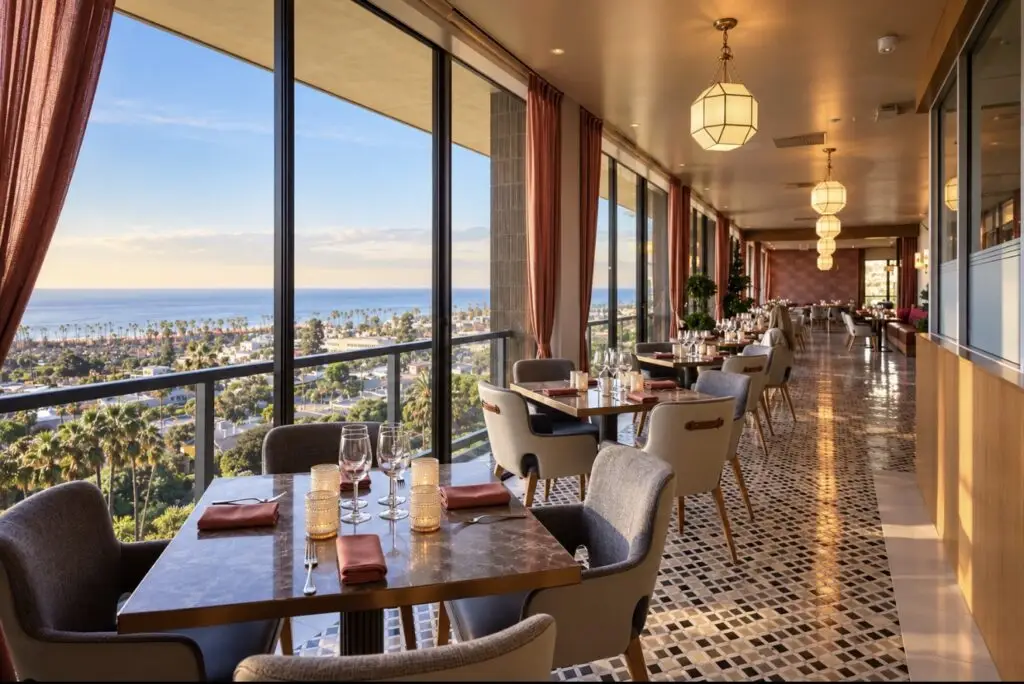
Still, any respectable resort knows the spectacle has to be fresh to keep guests coming back for the newest, most eye-popping, droolworthy, thrill-inducing, jackpot-hitting experiences. So Harrah’s spared no expense with Tierra y Mar, tapping JCJ Architecture to completely reimagine the 7,245-square-foot restaurant as a transportive Mediterranean-meets-Mexico space bridging Cycladic and Moorish architecture details with mid-century glamour.

Derek Sola, design principal at JCJ and project lead, says his team had to completely demolish Salt & Fin to create Tierra y Mar from the ground up—literally. The Tini Bar? Adios. The fixtures and furnishings? Vayan con Dios! The very floors, walls, kitchen, and ceiling? Gone. New plumbing, new kitchen equipment, new HVAC—tabula rasa.
Now, the natural wood-lined, mosaic-laden, greenery-rich space feels like a coastal hacienda, with woven elements and artisan accents that seem surprisingly intimate in such a sprawling room. Sola says by moving the kitchen and back-of-house operations out of view, guests can focus more on the dining experience than the cooking process. And yes, it’s meant to feel wildly different from the flashing lights and ding-ding-dings of the casino floor. That’s why the entry portal uses columns and archways—it’s like a bridge from buzzy commotion to complete calm.

Considering Tierra y Mar translates to “land and sea,” specialty chef Bryan Texis highlights both as forefronts of the menus, incorporating his birthplace of Mexico City, childhood home in Baja California, and current proximity to Baja. It’s that all-encompassing influence that Harrah’s food and beverage Director Ryan Adams says served as inspiration. “We pulled influences from all over the country,” he says, pointing to items like birria (Jalisco), whole Pacific rockfish (Baja California), salmon zarandeado (Nayarit), and tacos al pastor (Mexico City).
“Our goal was to create just a fully immersive menu for all to enjoy, despite whether or not you grew up in Mexico, eating your abuelita’s food, or you are new to the area and just want something that just tastes amazing,” says Adams.
Highlights include salmon marinated in a chipotle sauce and served with arroz verde and a petite frisée salad with cucumber, cherry tomatoes, citrus segments, and honey citrus vinaigrette; a shrimp aguachile appetizer with cucumber, red onion, radish, avocado, and cilantro; a salsa sampler with three heat levels; the “siete mares,” or “seven seas,” with seared seabass, mussels, littleneck clams, scallops, shrimp, and fried crab cakes, all served in a lobster tomato consommé; and their house birria: an eight-ounce braised short rib wrapped in hoja santa (an aromatic herb from Mexico), served with consommé reduction and a sweet corn purée. Texis’ pan de elote provides a sweet-and-savory end to a meal, made with fried corn bread, chantilly (whipped cream) banana mousse, pecans, and totomoxtle (corn husk).

While menudo and brunch (think breakfast burrito, huevos rancheros, and a masa waffle) will only be available on the weekends, the bar is always open. Naturally, Tierra y Mar’s bar emphasizes tequila, with plenty of beer, wine, cocktails, and margaritas. Like Old Fashioneds? Try the Tequila Old-Fashioned, made with Callfino Añejo, agave, orange bitters, orange peel, and dark cherry. Or kick up your margarita by opting for a blended Mangonada, with Casa Dragones blanco tequila, passion fruit liqueur, blue curaçao, mango puree, Chamoy, and fresh lime, served with a chamoy and tajin rim and tamarind candy stick.
Pulling off such an ambitious, far-reaching restaurant revamp required a group effort, says Adams. General manager Jill Barrett, vice president of resort operations Shannon Upson, and the Rincon Band of Luiseño Indians have worked for a year-plus to bring Tierra y Mar to life. It might not be “traditional” Mexican food, according to Adams. But he invites guests to take a chance on their approach.
In other words: come for the fun, stay for the food.
Tierra y Mar opens at Harrah’s Resort Southern California on July 22 for daily lunch and dinner service, plus weekend brunch.
Beth Demmon is an award-winning writer and podcaster whose work regularly appears in national outlets and San Diego Magazine. Her first book, The Beer Lover's Guide to Cider, is now available. Find out more on bethdemmon.com.
For a city that lives outdoors, these hometown makers understand exactly what your complexion is up against
San Diego has always worshipped at the altar of good skin. Equal parts surf town, biotech hub, and wellness capital, it’s a city where lunch breaks become beach walks and sunscreen sits beside car keys by the front door. The products that get used here earn their place. With 266 sunny days a year and one of the highest rates of skin cancer in the country, we take skincare seriously. Dr. Bronner’s has been making soap in North County since the 1960s. Sun Bum was born in Encinitas and is now on shelves in over 70 countries. The tradition runs deep.
“Living in San Diego means your skin is exposed to sun almost every day of the year,” says Sue Zhang, M.D., a San Diego physician specializing in aesthetic medicine. “The products that tend to succeed here are the ones that can keep up with daily life, UV exposure, sweat, and movement, while still supporting long-term skin health.”
From a mineral powder that solves the sunscreen-over-makeup problem to an acorn oil serum rooted in Indigenous plant medicine, the local San Diego shelf is more diverse, and comprehensive, than most of us realize.

A hydrating gel-oil hybrid that applies like a body treatment and leaves skin with a sheen that reads as healthy rather than oily. La Jolla–founded Kopari built its reputation on cold-pressed coconut oil sourced from family farms in the Philippines, and the Sun Shield Body Glow SPF is exactly that in summer form: coverage that doubles as skincare.

The name is intentional. The founder got a basal cell carcinoma diagnosis that his dermatologist caught—she’s now his business partner. The question he couldn’t shake was why the skincare industry hadn’t yet figured out how to talk to men, and 4-Skin is the answer: a premium sunscreen and skincare line built around the kind of blunt, self-aware humor that gets guys to pay attention. Men’s skincare has needed this for a long time, and the formulas are serious enough to deliver.

Carlsbad-based Coola was formulating organic SPF before “clean sunscreen” was a marketing category, and the Classic Face Sunscreen is the brand’s thesis: protection that disappears into skin and layers cleanly under makeup. Sheer and lightly hydrating, it makes sunscreen easy to reapply before an afternoon walk at Torrey Pines.

Squalane, argan, jojoba, and CoQ10: a short ingredient list that does a lot. The Glow Finishing Oil from Mission Hills wellness sanctuary Saffron and Sage is plant-based, scientifically grounded, and formulated to absorb rather than sit on the skin. The brand started as an integrative health practice where acupuncture, naturopathic care, and functional medicine share a roof, and the skincare line runs on the same philosophy.

The Restorative Skin Complex is powered by TriHex+, a patented peptide blend developed by Carlsbad-based Alastin’s team of SkinMedica veterans. It promises to clear out damaged collagen and elastin while supporting new production, the kind of gradual improvement that makes a product hard to quit.

Beldi is a multi-functional cleansing tradition rooted in Moroccan hammam culture, dating back over 12 centuries. Alia Jouj is the brand’s flagship product, and San Diego–based founder Dr. Mia Chae Reddy built a brand around it. Alia Jouj uses 100 percent organic, cold-pressed argan oil and the same ancient saponification method to produce a honey-thick liquid cleanser that softens skin without stripping it.

Acorn oil has been used by California’s Indigenous communities as plant medicine for generations. Ruth-Ann Thorn, an enrolled member of the Rincon Band of Luiseño Indians, built N8iV around it as the first Native American–owned skincare brand to reach the national mainstream. The Móyla Moon Polish, named for the Luiseño word for moon, is an exfoliant centered on acorn oil Thorn gathers herself each year from the La Jolla reservation. Find it at the Gaslamp Quarter store Thorn owns at the historic Yuma Building.

This product solved the reapplication problem. As a brush applicator, this mineral SPF goes over makeup without disturbing it, which is why it has been on derm-office retail shelves in Carlsbad and beyond for over two decades. The tinted version doubles as foundation.

This steroid-free, petroleum-free eczema treatment was built specifically for babies and toddlers (although grown-ups can use it, too). It’s centered on FDA-approved 1 percent colloidal oatmeal with a base of sunflower seed oil, beeswax, and jojoba. The “linoleic-acid-rich sunflower oil is helpful for atopic, eczema-prone skin that is often deficient in that fatty acid,” says Dr. Zhang. Gentle enough for newborns, safe for daily use, and tested by both pediatricians and dermatologists.

The Mandelic Night Serum pairs mandelic acid, an AHA derived from almonds and gentler than glycolic acid on sensitive skin, with lactic acid, niacinamide, and urea to brighten, smooth texture, and reduce breakouts overnight. Fragrance-free, vegan, cruelty-free. The brand name is the initials of the founder’s five daughters, pronounced like courage. Dr. Zhang also says she “really value[s] [the founder’s] mission to create pregnancy-safe skincare products that are both effective and wallet-friendly.”
Ingrid Yang, M.D., J.D. is a hospital-based physician in San Diego, CA, certified yoga therapist, and longevity specialist. She loves *double hearts* San Diego and spends her days helping people fully engage in long, healthy lives through evidence-based lifestyle medicine. Her books include Adaptive Yoga, Zen Mindfulness, and Hatha Yoga Asanas. When she’s not leading international wellness retreats, she is chasing sunsets, handstanding in nature, or geeking out over mitochondria.
San Diego aesthetic medicine providers help you look—and feel—your best
San Diego is home to world-class aestheticians, plastic surgeons, and dermatologists who can help turn back the hands of time and revitalize tired, damaged skin. Enhancing your look is a spectrum. Treatments range from noninvasive procedures like lasers or injectables to the big guns, like a deep-plane facelift—many with better results and less downtime than ever thanks to advanced techniques and technology. Whether you’re a Botox beginner or an aesthetic medical care veteran, San Diego aestheticians and aesthetic medicine providers can help you look and feel like the best version of yourself.

Changes Plastic Surgery & Spa is San Diego’s premier destination for aesthetic surgery, led by world-renowned plastic surgeon Dr. Michael Rossi. Celebrated for his artistry, precision, and natural-looking results, Dr. Rossi is known for creating customized Mommy Makeovers that help women restore confidence and reclaim their bodies after pregnancy. His expertise also extends to comprehensive post-weight loss body contouring, addressing excess skin and skin laxity with sophisticated surgical techniques tailored to each patient’s unique anatomy and goals. From breast and body rejuvenation to deep plane facelifts and eyelid surgery, every treatment plan reflects Dr. Rossi’s commitment to surgical excellence, personalized care, and transformative results that look as beautiful as they feel.

At Cosmetic Laser Dermatology, the board-certified, internationally acclaimed team has the power to erase 10+ years of aging in a single treatment. The center’s 60+ laser, light, and energy devices do it all—refining texture and tone, calming acne, minimizing pores, and erasing that ill-advised spring break tattoo of yesteryear. Their dermatologists take it further by stacking multiple devices in one session for synergistic results—the philosophy behind their signature Take5 and Take10 treatments, the latter capable of removing a decade-plus of aging in just one visit. Add a full suite of injectables, body sculpting, and vein treatments for every skin type and tone, and it’s no wonder the practice’s medical director was named the #1 cosmetic dermatologist in America by Newsweek two years running.

If it’s subtle, lasting results you’re after, Cultivé Medical Aesthetics has you covered. Cultivé purposely combines aesthetics and wellness. The Bankers Hill practice offers a full menu of services designed to improve skin health and support the three pillars of aesthetic aging: skin tone and texture, volume loss, and laxity. Cultivé offers a wide range of aesthetic treatments, including collagen boosting powerhouse Morpheus8, biostimulators like Sculptra and Radiesse, PRP therapy, laser hair removal, VI peels, and regenerative skincare treatments. They also provide wellness-focused services such as hormone replacement therapy, IV therapy, and medical weight management programs.

Starlite Aesthetics and Wellness focuses on enhancing natural beauty through science-backed treatments tailored to each client’s goals. Michelle Langston, MSN, APRN, FNP-BC, founded Starlite on the principle that aesthetic medicine should be precise, personal, and rooted in wellness. The boutique aesthetic practice in La Jolla combines modern medical aesthetics with holistic wellness principles for refined results personalized to each patient. Langston has spent more than a decade honing her skills in advanced injectables, regenerative therapies, and anti-aging care. Starlite offers regenerative therapies rooted in science, promoting skin rejuvenation using a multiple modality approach. Service offerings include RF microneedling, wrinkle relaxers, facial balancing and more.

In the rapidly advancing field of aesthetic medicine, it can be hard to tell what’s worth the hype. Here are some of the latest, most advanced, and most popular options out there.
Morpheus8: This combination of microneedling and radiofrequency (RF) energy activates your skin’s own collagen and elastin without the downtime associated with some
laser treatments. It can be used to reduce wrinkles, tighten skin, improve skin tone, contour the jawline, and minimize acne scars.
Exosome Therapy: This cutting-edge treatment uses protein-packed nanoparticles to trigger repair and rejuvenation at the cellular level. Often used post-microneedling or lasers, exosomes penetrate deep into the skin to stimulate collagen production.
Post-GLP-1 Skin Removal: Rapid fat loss prompted by GLP-1 medications, including semaglutide, tirzepatide, and retatrutide, can leave users with sagging skin. Skilled surgeons can remove excess skin and reshape the figure.
Treatment Stacking: Sometimes it’s the more the merrier when it comes to aesthetic procedures. Combining multiple non-surgical treatments in a single session allows users to address several issues efficiently, with less downtime.