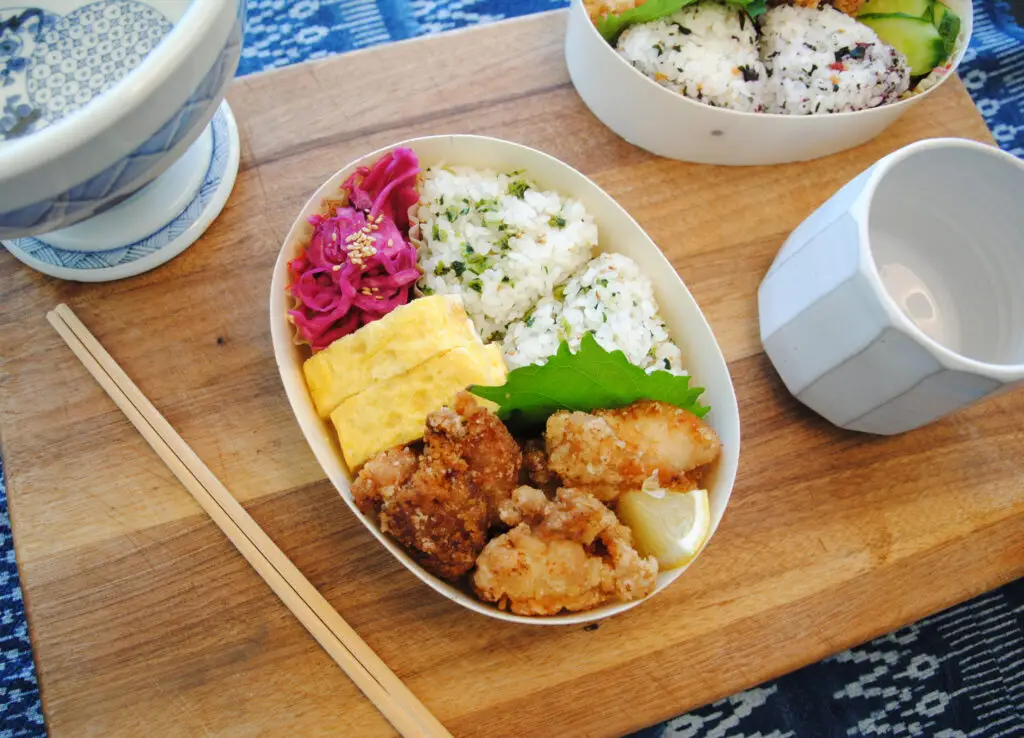
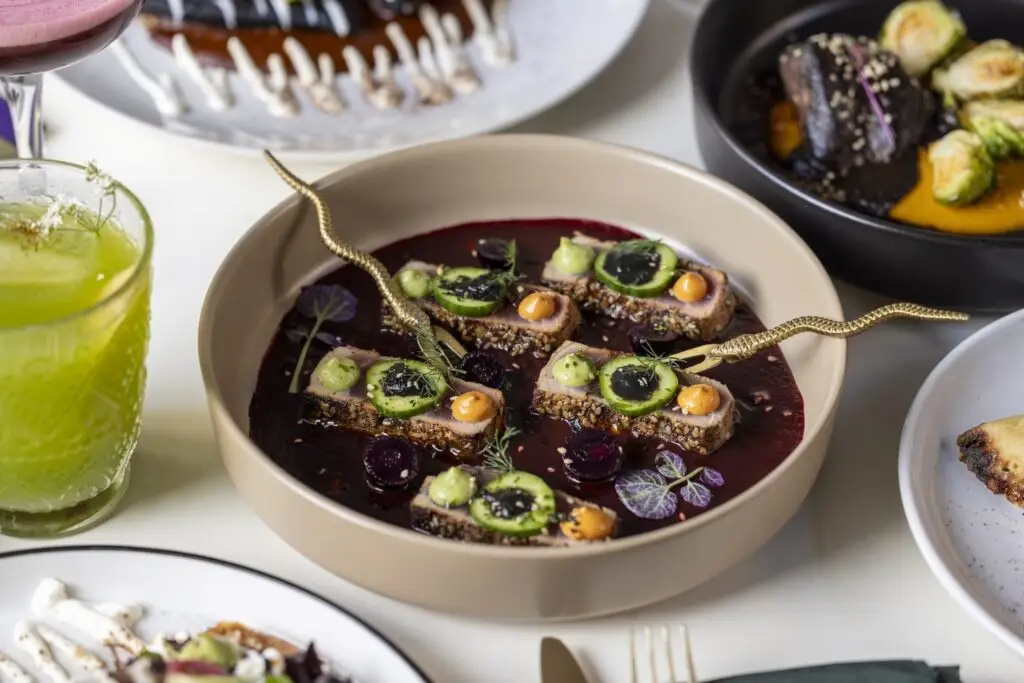
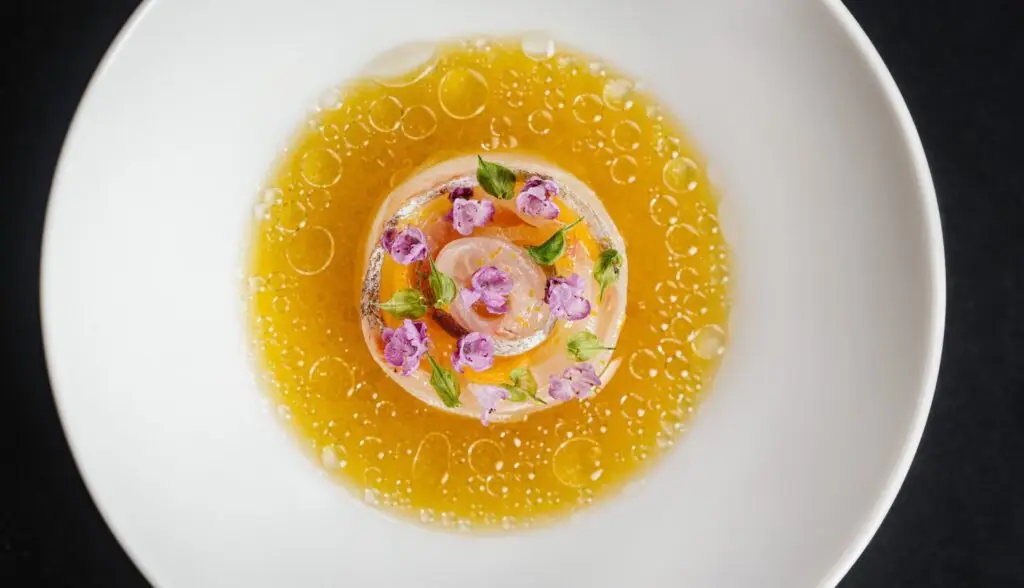
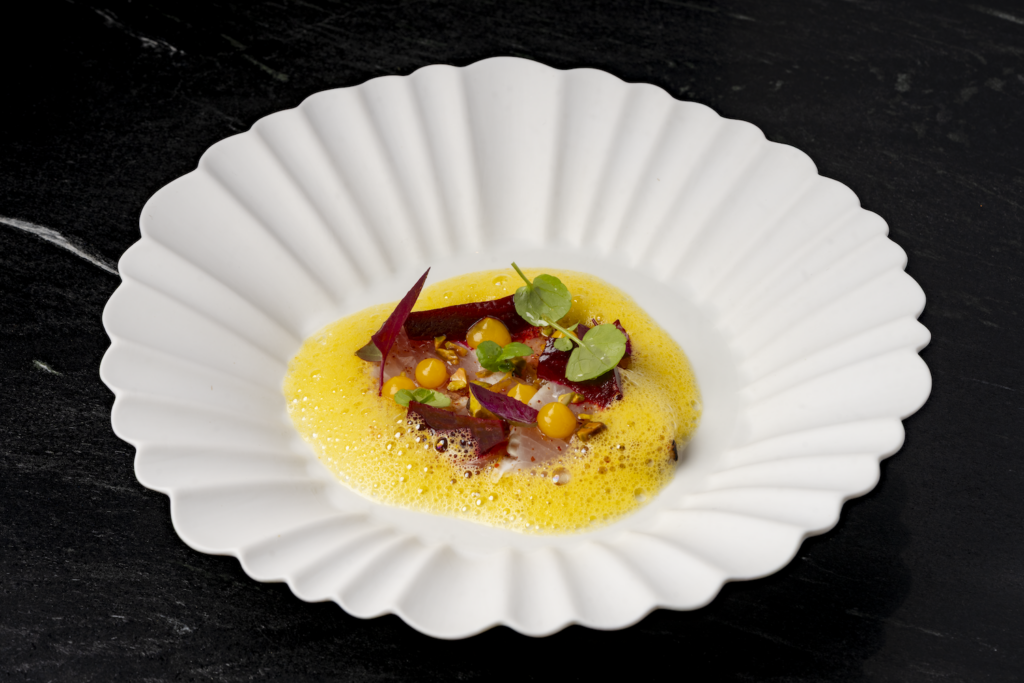
The yellowtail aguachile is food art and unlike other restaurants, doesn’t get abusively happy with the lime
Photo Credit: James Tran
This is like when Metallica played with the symphony. Longtime San Diego restaurateur Johnny Rivera is best known for big, loud things. The table-sized breakfasts at Hash House A-Go-Go. The maple-bacon donuts at Great Maple. But Wolf in the Woods is so gentle and soft. Almost lovely. No, not almost. Absolutely lovely.
It’s a tiny box of charms and bistro chairs on a tree-lined street in one of the city’s most iconic and calm-inducing neighborhoods. This one’s for lovers. Rivera is an art and music kid who wandered into restaurants and never left. The sort of kid who wore neck scarves to punk shows, toying with the stiff definitions of so-called gender appropriate fashion.
His first restaurants—Hash House, Tractor Room (RIP), and Great Maple had that nervy creative energy to the food (Cap’n Crunch French toast may not sound wild in the post-Instagram age, but it was when they opened in 2000).
Photo Credit: James Tran
You can see the creative energy in the commissioned art of Wolf in the Woods (a Taos artist, Jackson Ballard). You can see it in the uniforms of the servers, which look European and fashion-modely. Rivera still wears his scarf.
You’ll see it whisk by in Wolf’s tiny dining room, as he leans down to explain the story of a bottle of wine—like, say, the Baron de L Pouilly Fumé 2018 from I Ladoucette (Pouilly Fumé, especially from Ladoucette, is one of the world’s great white wines). He almost twitches when he talks about this bottle. His narrative zeal for turned juice gives it rich backstory and thrill, adds a couple points to your personal rating of it.
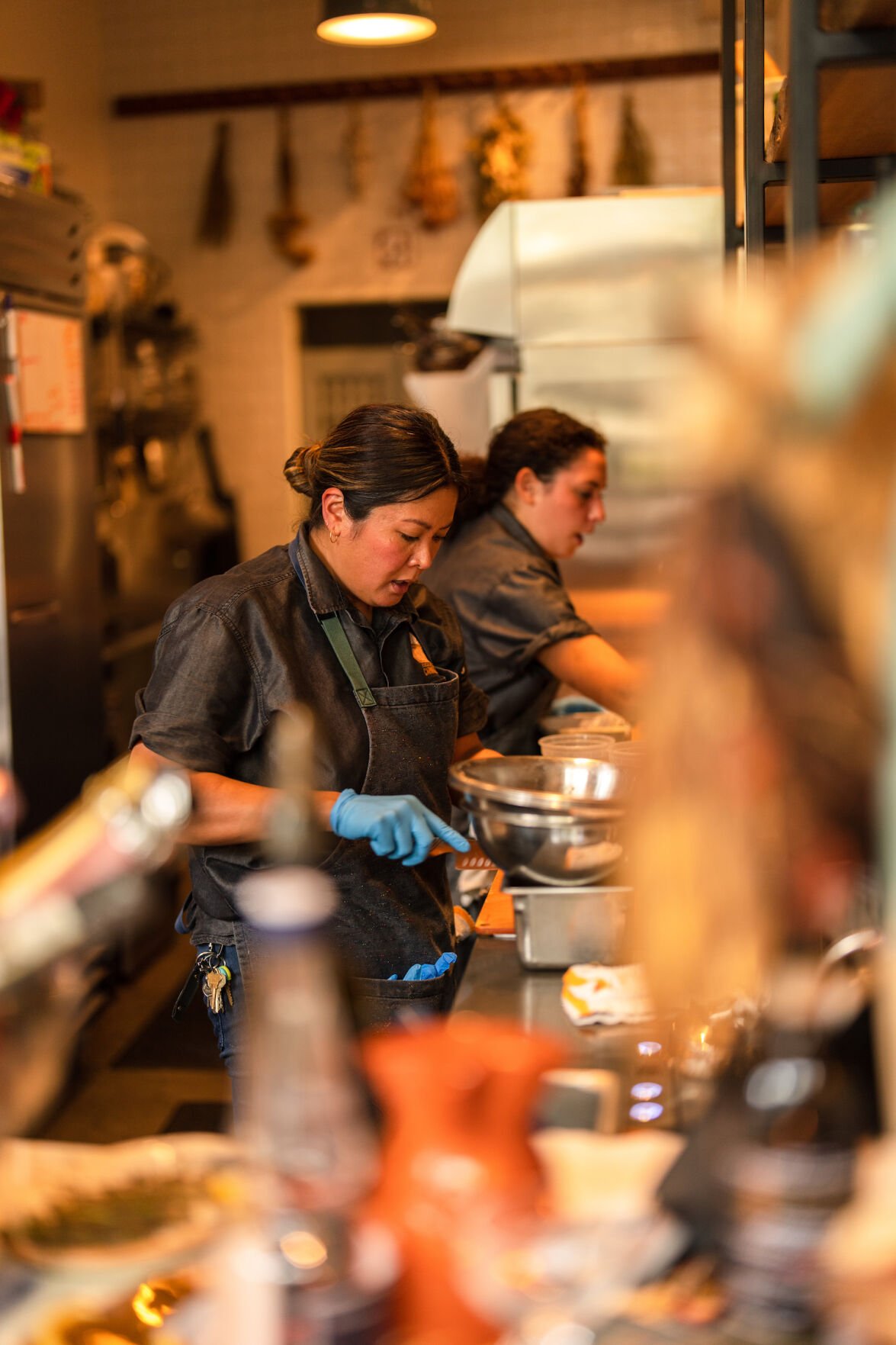
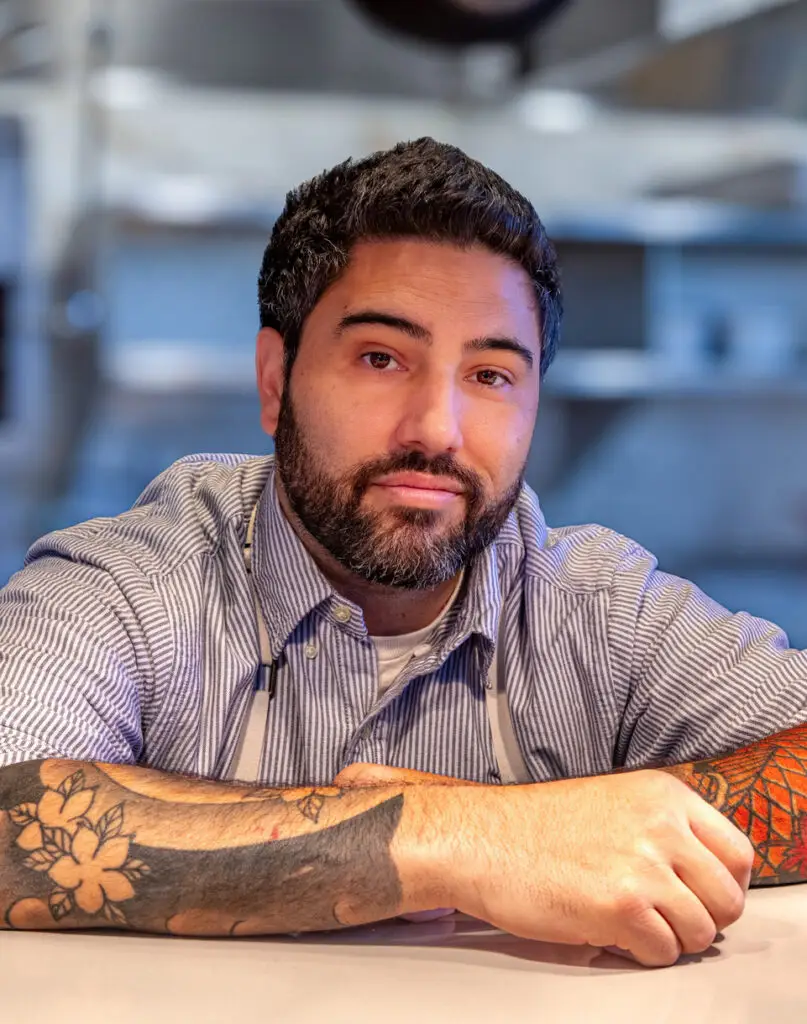
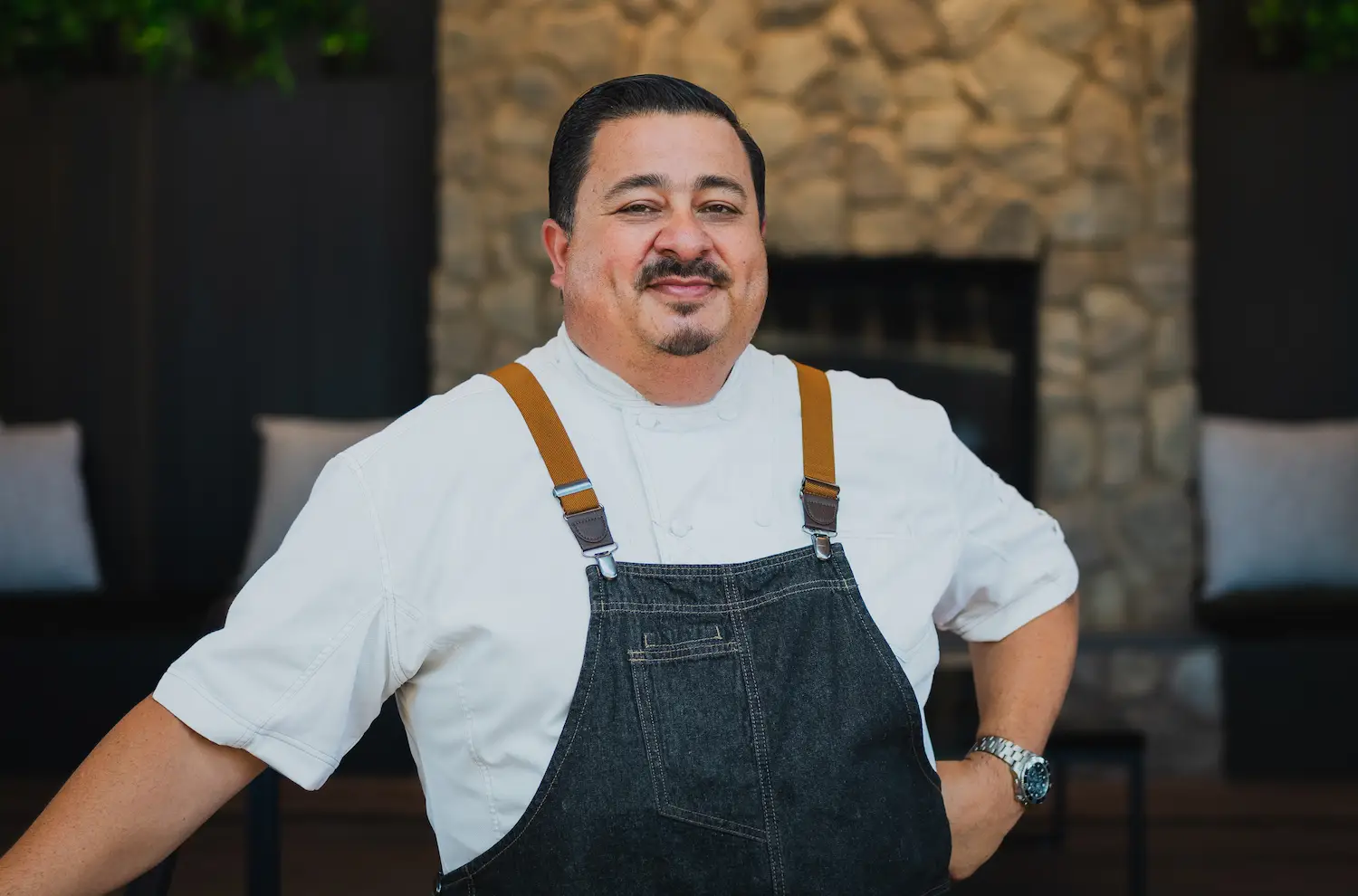
Executive chef Carmine Lopez does wonders with a petite kitchen
Photo Credit: James Tran
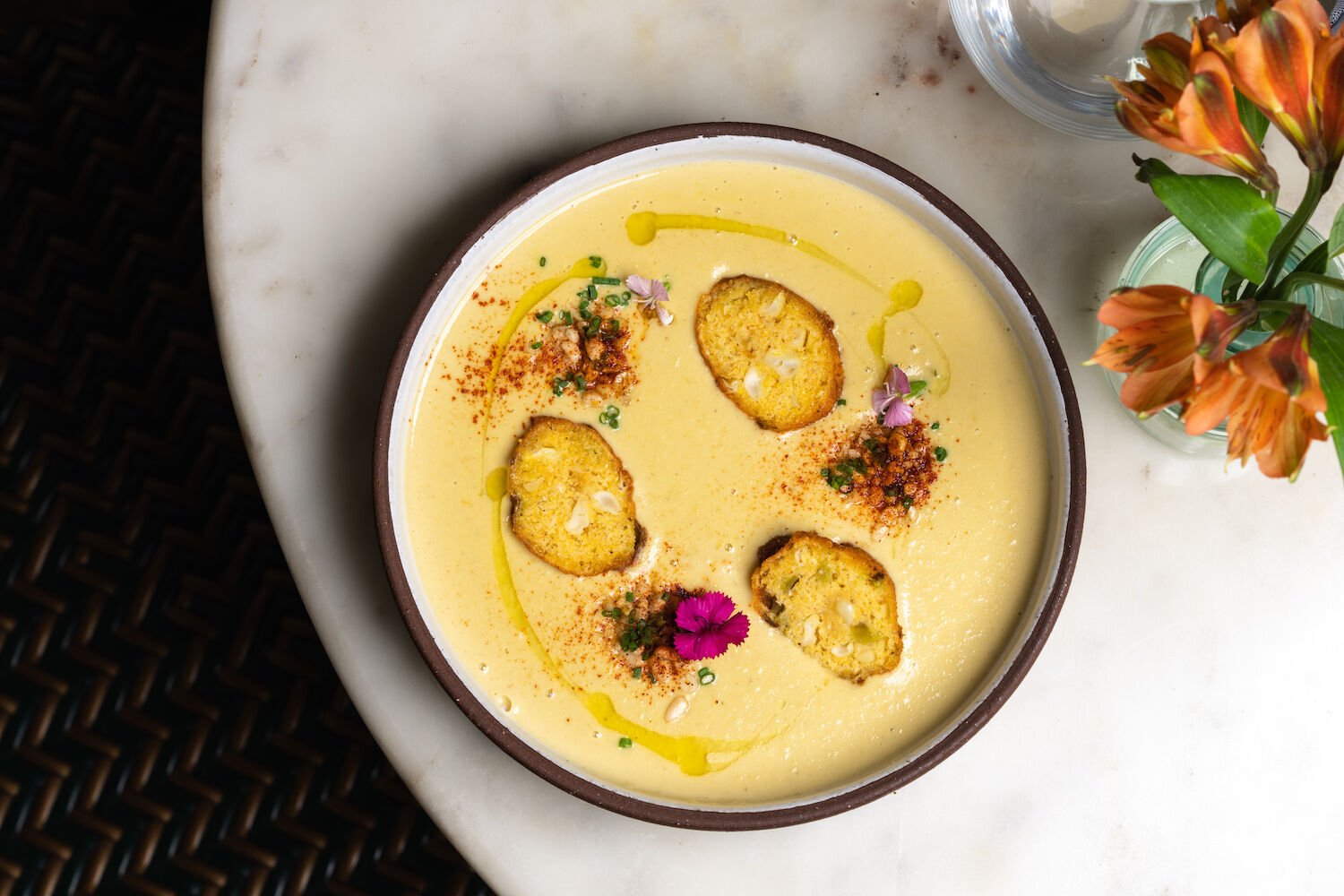
Dear god, try the corn piñon soup. Chef Carmine Lopez uses fresh shaved corn, a splash of cream, tops it with New Mexican Hatch red chile powder, roasted pine nuts, and halfway submerges a couple corn fritters in the show. Of all the places we put corn in America (packaging, fuel tanks, toothpaste), this is by far my favorite. Corn is the greatest sugar, and its intense sweetness is balanced just right with this simple bowl of food. It is the best thing we eat here.
New Mexican, Spanish, Latin, and Native American food cultures were all inspirations for everything in Wolf, and the famed Hatch chile makes frequent cameos. It shows up on the mini burger, where it’s a condiment two ways— fresh chopped chiles and a Hatch crema—along with melted white cheddar on brioche. Hatch is such a historic flavor that most Americans have a memory of.
For me, it’s the taste of supermarket salsa from the ’80s. I realize that sounds disparaging, but it’s a good memory (I consider the discovery of salsa a major and spiritual life marker). Lopez plays on my emotional, sense-memory connection to Hatch and gilds that memory, makes it better and brighter.
Photo Credit: James Tran
At 1,100-square-feet, Wolf feels like a San Francisco or New York restaurant—humans tucked in every little corner, strangers no more. Some may not enjoy the close-quarter humanity, but it makes the place feel alive, lends it a joie de bustle. If you require acreage and privacy at restaurants, go early or go to Olive Garden.
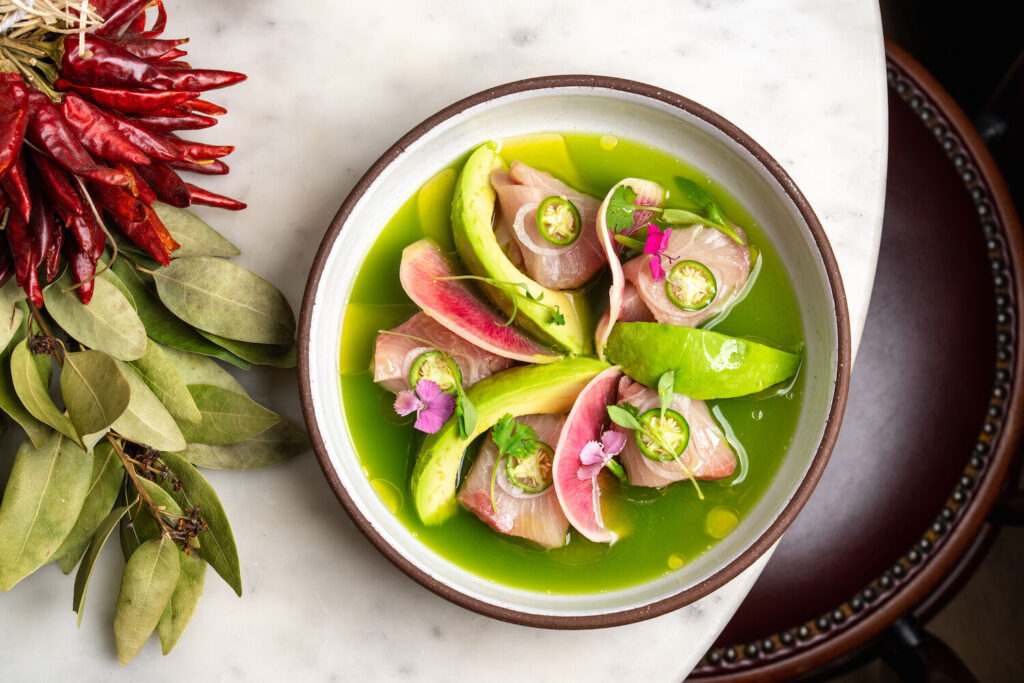
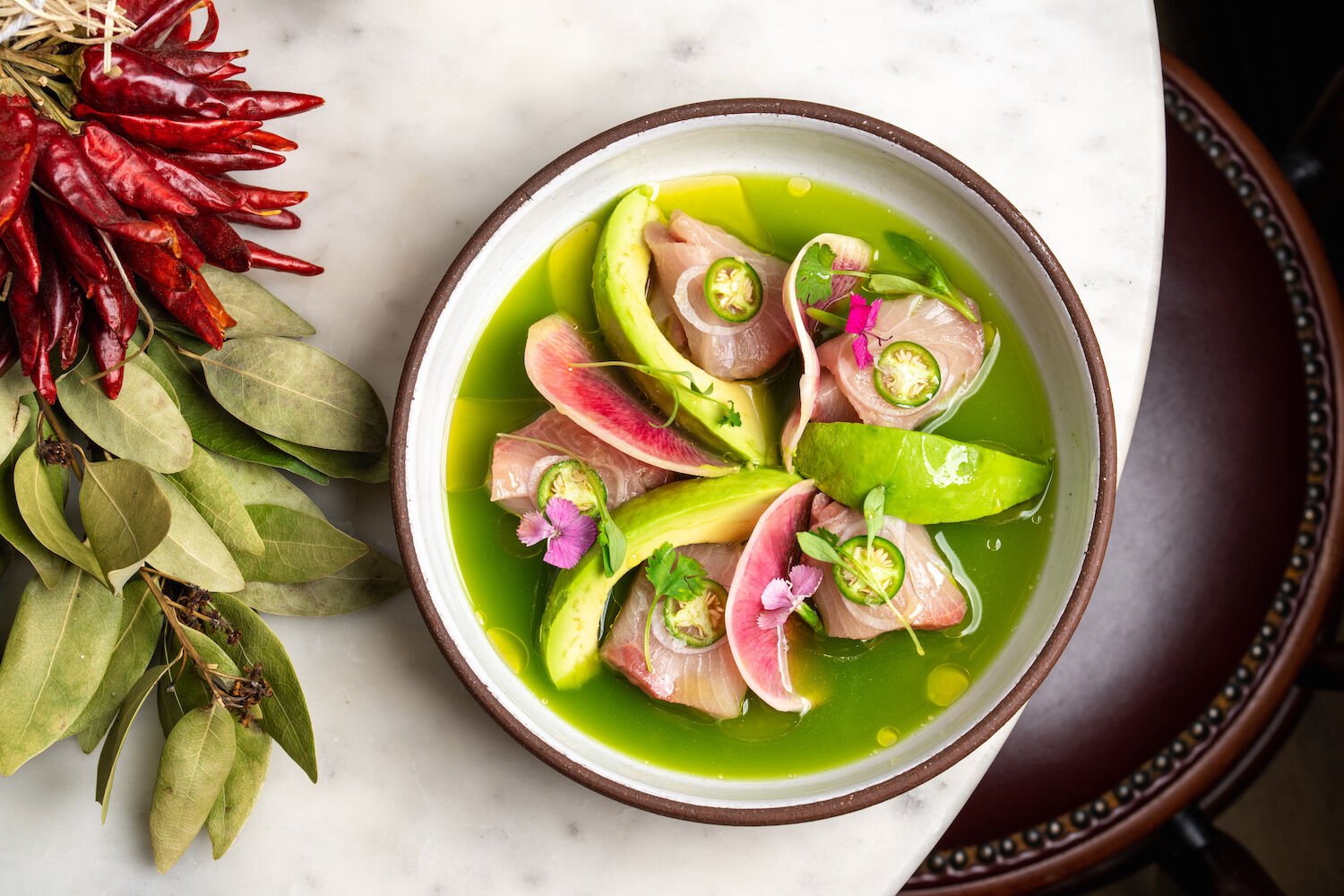
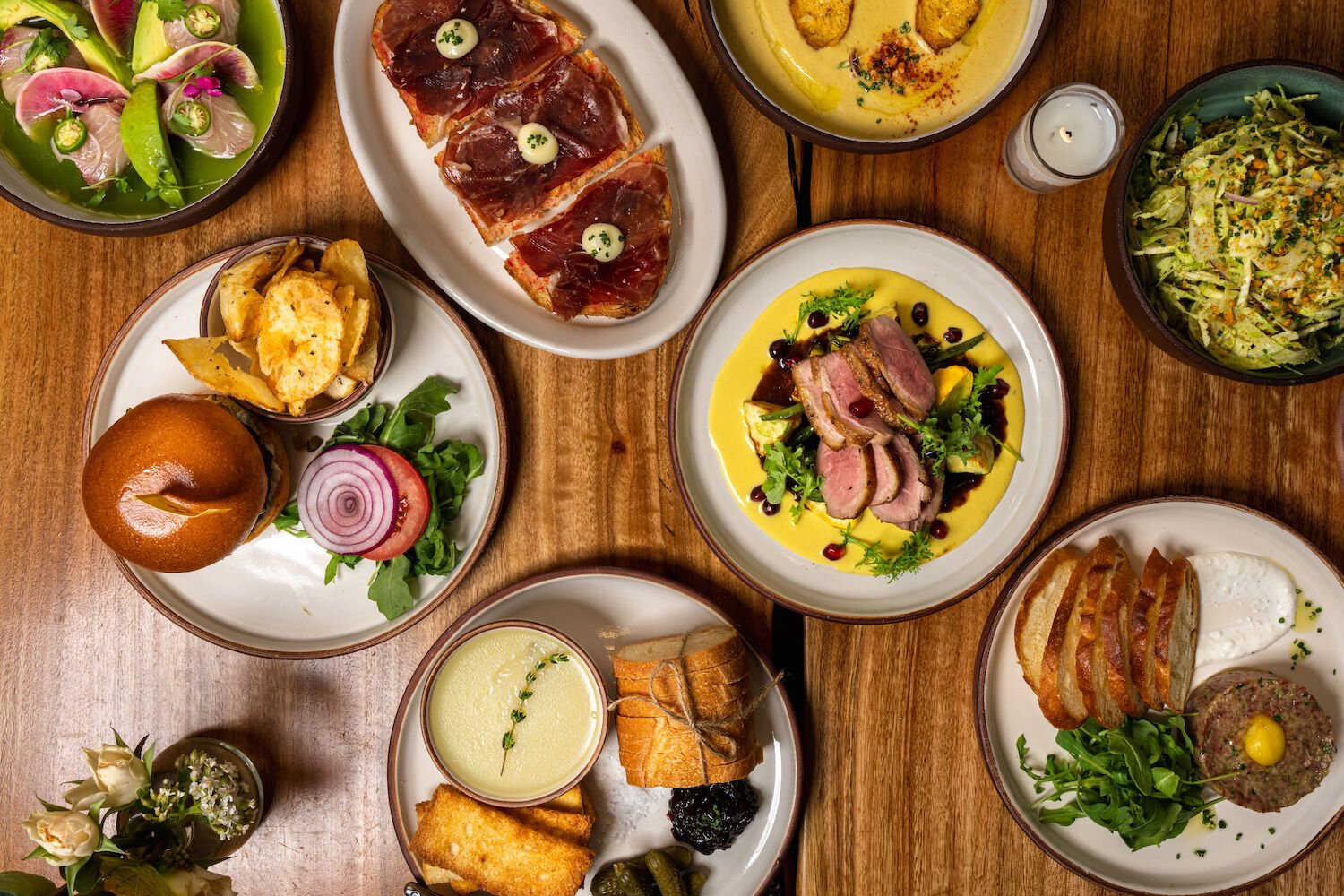
The kitchen’s also quaint, which explains why it’s mostly tapas at Wolf. They have a couple tostas (Latin cousin of bruschetta, really) and you shouldn’t miss the one brushed with garlic and tomato puree, then topped with thin slices of the famed Jamon Iberico. Aguachile is everywhere these days, and most places waterboard it with so much lime it tastes like scurvy medicine. But Lopez’ is a star, with a far more mellow and fragrant cucumber jus and serrano peppers.
The Brussels sprouts salad is pretty fantastic, a whole pile of fresh, raw shavings is tossed with fennel, red onion, and a vegan cashew dressing with Madras curry powder, then finished with fennel pollen. It’s the best whole spice rack I’ve ever eaten. Order the Calvados liver pâté with thyme—the famed French apple brandy cutting through the creamy carnivore treat. Only complaint is that I wish they had the space to let the dish sit on a counter for a while. It arrives cold and the flavor of any food, but especially pâté, is a diva and refuses to perform until it hits room temp.
Photo Credit: James Tran
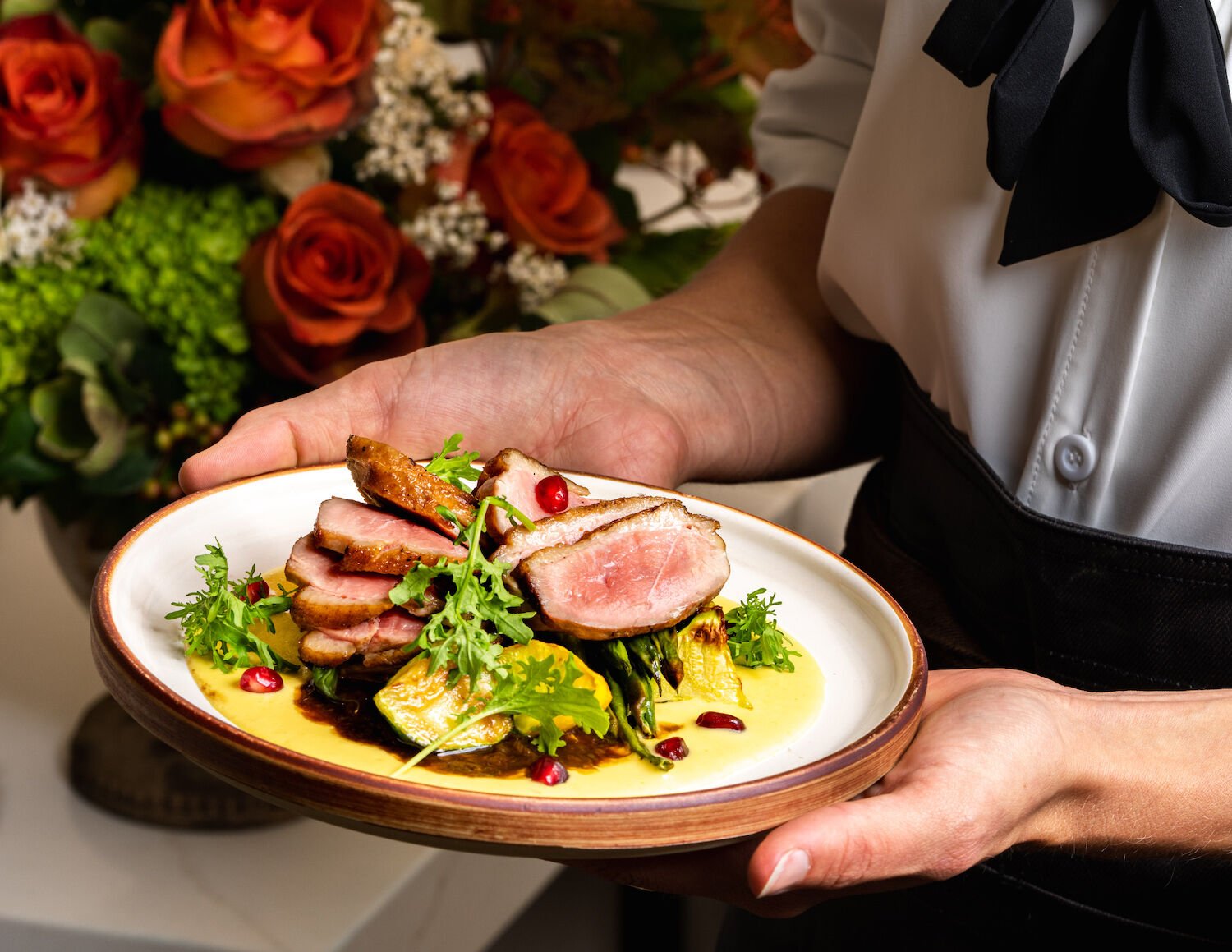
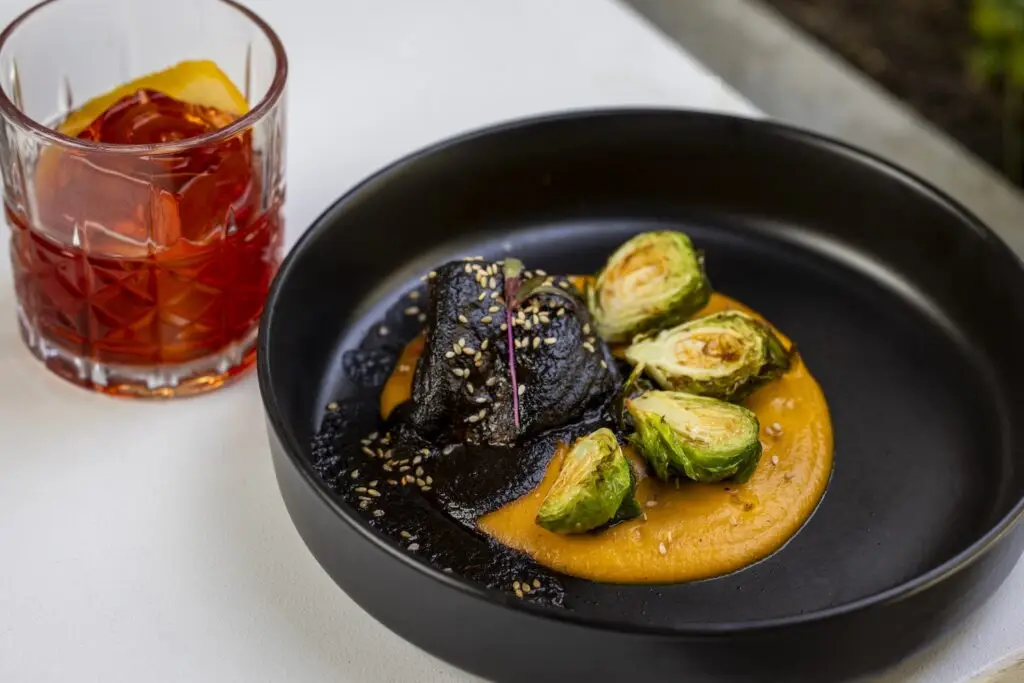
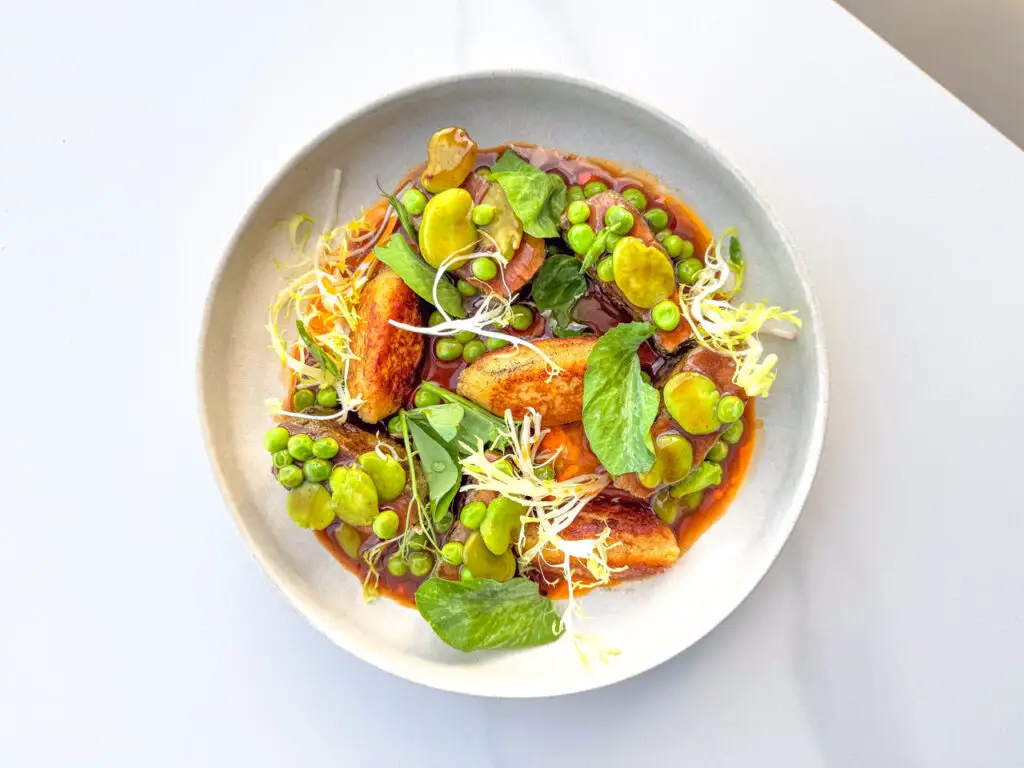
They’ve only got a couple entrees, and the must-try is the “Duck and Three Sisters,” a showcase of the three historically crucial agricultural crops in North America: corn, squash, and beans. Mary’s duck breast sits atop a silky corn puree with squash ad green pole beans, the whole affair drizzled with a shallot jus with Spanish Rioja wine.
Rivera says he wanted to create a cave à manger, a Paris tradition of a wine shop that also serves chefy snacks. Wolf in the Woods does feel like that. It also feels personal. It feels like Rivera went to France, fell in love or lust or joined a cult that believes in the healing power of Rhone wines—and now he’s invited you over to his cute boho house to indoctrinate you with his hip fashion.
Troy Johnson is the magazine’s award-winning food writer and humorist, and a long-standing expert on Food Network. His work has been featured on NatGeo, Travel Channel, NPR, and in Food Matters, a textbook of the best American food writing.
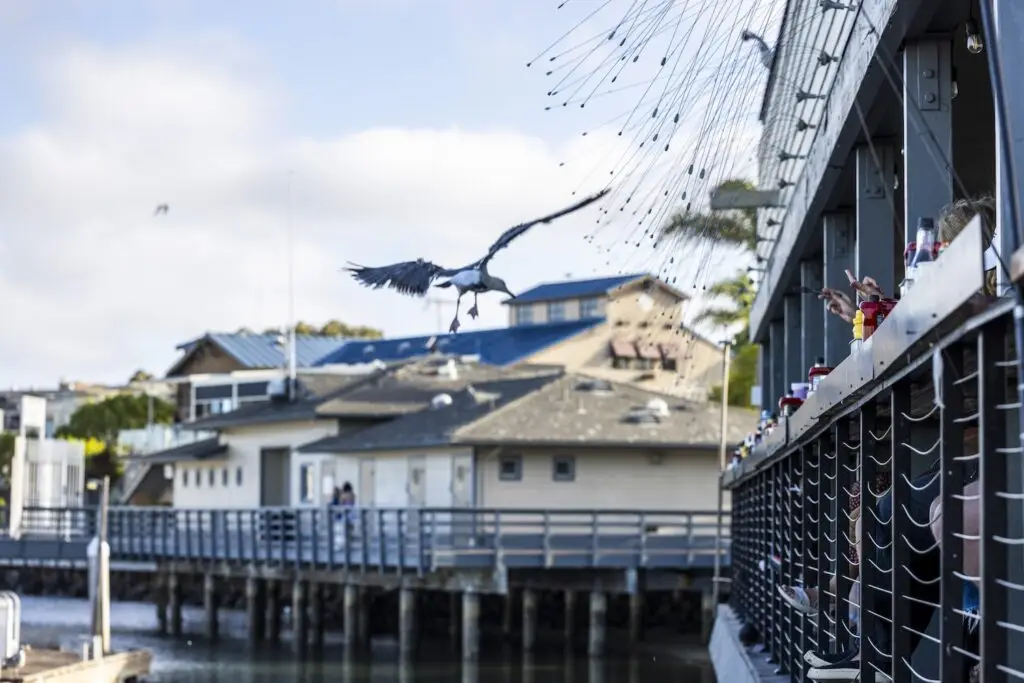
The bird has a plan. You stand between that bird and that plan. For the remainder of your ceviche, you’ll identify as collateral damage.
There are many other nearby birds with the same plan, absolutely sucking at trying to be nonchalant about it. The pigeons are by far the boldest on account of what we can all agree just by looking at them is sheer stupidity. They come right up and ask with their red murder clown eyes: “Can bite?”
Pelicans are the silverback gorillas of this bird gang, hulking and alpha. They periodically flaunt the acreage of their wingspan in the same way a schoolyard bully puffs out his chest. One could casually land on your plate and maintain constant eye contact as it slowly enjoyed your fish taco. You share this tacit awareness with it. But it doesn’t approach because there are always a couple off-duty fishermen eating at Mitch’s Seafood. Those salty dogs have been forced to beat the shit out of a pelican or two in their day, and they and the pelican also know that.
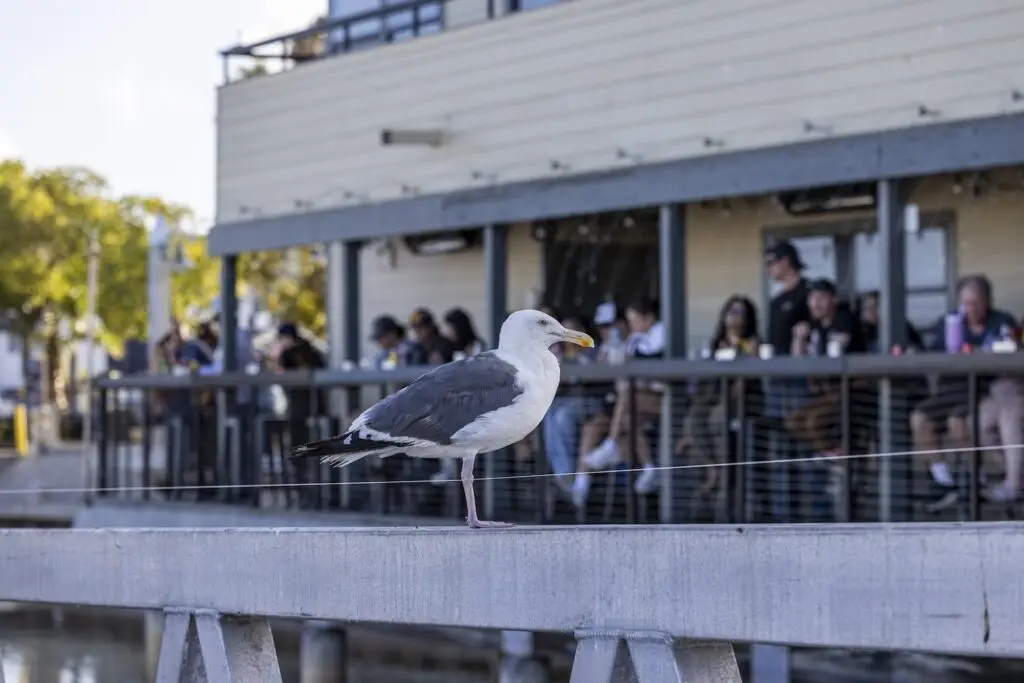
The snowy egrets pretend to not really want your food. They seductively lord on the tops of the sportfishing boats moored in front of the restaurant, fully aware of how hot they are—svelte fashion models, Ozempic with wings. They just turn their faces to the wind so that it blows their fabulous hair. They seem to expect tourists to be overcome by their avian Brad Pittness and just throw swordfish sandwiches to them in tribute. They refuse to demean themselves like the gulls do.
Photo Credit: Dee Sandoval
The gulls are shameless menaces. The linebackers of seabirds—a lot quicker than you expect given their big butts, full of schemes and microaggressions. They stand at a distance and mad-dog everyone, intimidate with their beaks the color of old bananas. Fear is not a seagull emotion. When they take a plate—and they will take a plate—there is so much flapping and fighting. They desperately bite and claw at fishermen’s stews like zombies who finally caught up to Rick Grimes. We see one that’s missing a foot.
At some point you will hear a baby cry. It’s not a baby. It’s a gull, who has learned to mimic the sound of human babies in distress so that parents feel the great evolutionary ache—and throw fries at the crying.
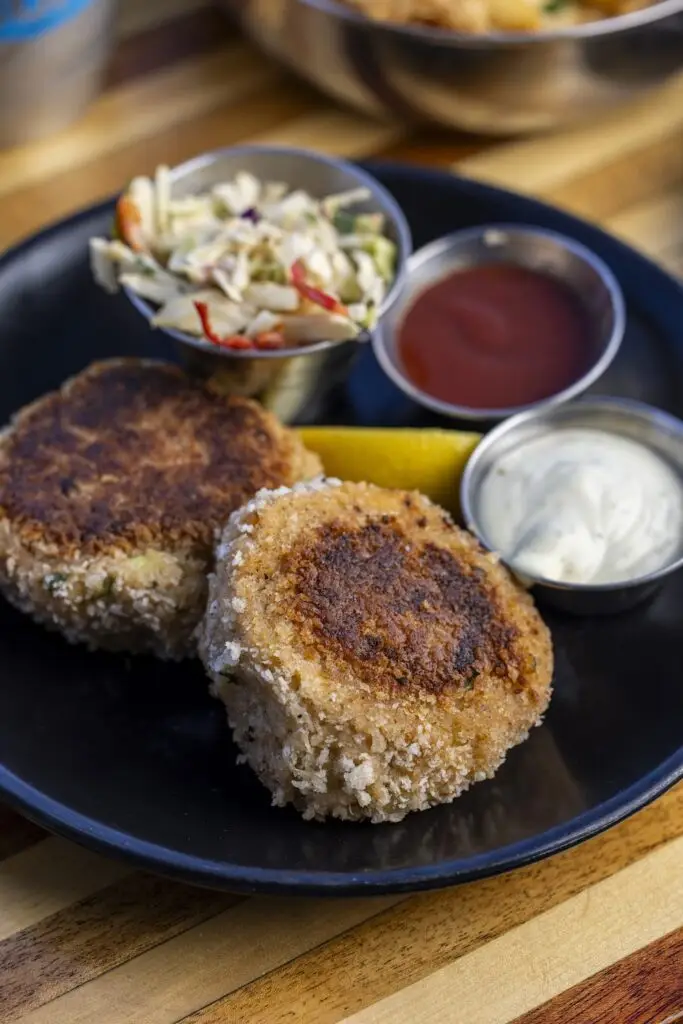
“Watch out for the crab cakes,” says a server to every person she drops them to. “Those are their favorite.”
The birds have opinions on the menu. And their presence at Mitch’s is better than any Yelp review. Think they’d risk life and limb for some recently unboxed frostbite tilapia down at the local skate rink? Yeah, probably so.
Photo Credit: Dee Sandoval
But these birds know the backstory of three longtime local fishing families who own Mitch’s: Brian Kiyohara and his wife, Viola; Randy Toussaint and his wife, Tracy; and namesake Mitch Conniff. Conniff cut his teeth as a young sous chef at Jsix (a long-gone restaurant that was, 20 years ago, a slow-food star under chef Christian Graves). Then he was executive chef of American Angler, the long-range Baja fishing vessel co-owned by Kiyohara.
It was on the Angler that Mitch reportedly looked at the restaurant that was previously in this location—on stilts over the water at Point Loma Sportfishing Dock—and said to Kiyohara, “Wouldn’t it be cool if a restaurant in that space used local fish from local boats and local people like us?”
And that’s how Mitch’s was born. Its doors opened in 2008.
The real story of Mitch’s is the wheelbarrows. Every morning, the crew rolls them along Driscoll’s Wharf down to Tunaville—the market also owned by local fishing families (including Conniff). The shop has a parking spot for local boats, who bring their daily haul there every morning. Mitch’s crew fills the wheelbarrows with fresh fish and wheels them back to the kitchen. Within hours or a day or so, some of it will be lunch, dinner, and bird crack.
Photo Credit: Dee Sandoval
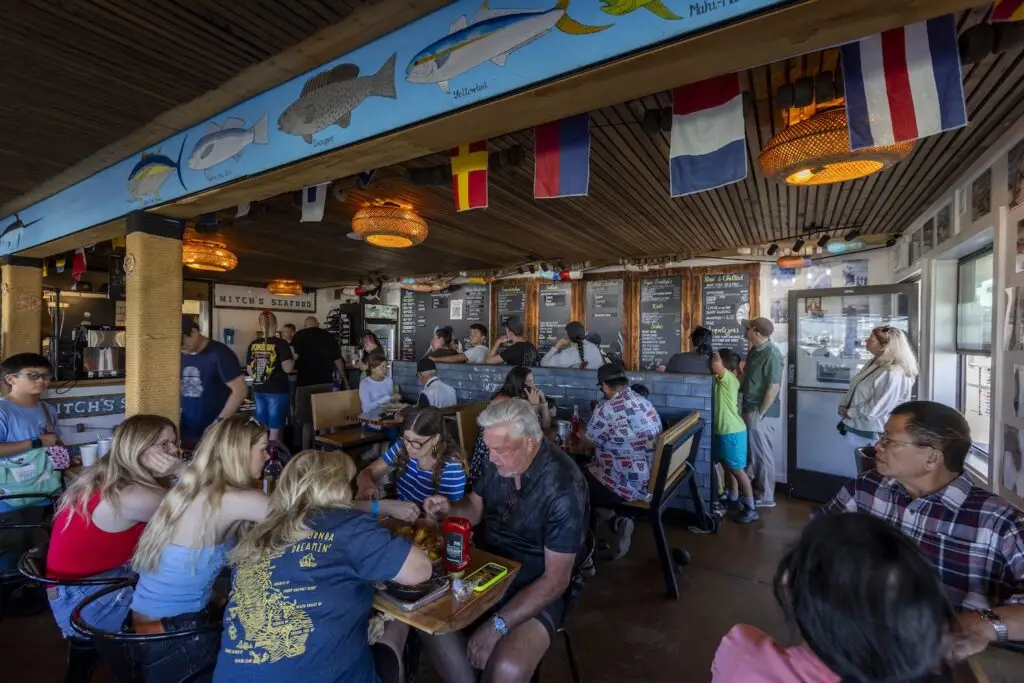
There are no reservations at Mitch’s. More often than not, there’s a long line snaking out the door. It moves fast. Their tiny kitchen is remarkably efficient. Locals know to go for breakfast (get the crab avocado toast) or in the off-hours (11 a.m., 3 p.m.—just not noon and 6 p.m.). There’s a small-ish indoor dining room, tables that appear more lacquer than wood. It’s a shrine to local fishers, the wall’s a family photo album of tan locals beaming with pride over a record catch, pleasantly fatigued boat captains, sun-gnarled deckhands. Leave your partner in the line, and go peruse, get a sense for the humans out there in local waters, leaving their families for days and weeks and months at a time to provide. It’s a core San Diego way of life that built this city (tuna money poured the concrete at Point Loma High), once robust and now rare.
The prized seats are on the deck. Thirty or so metal bar stools are ponied up to a small counter attached to the wooden rail. Bendy metal rods cascade from the roof like eyelashes. “They were put in to deter the birds,” a server tells me. “It worked for about a week.”
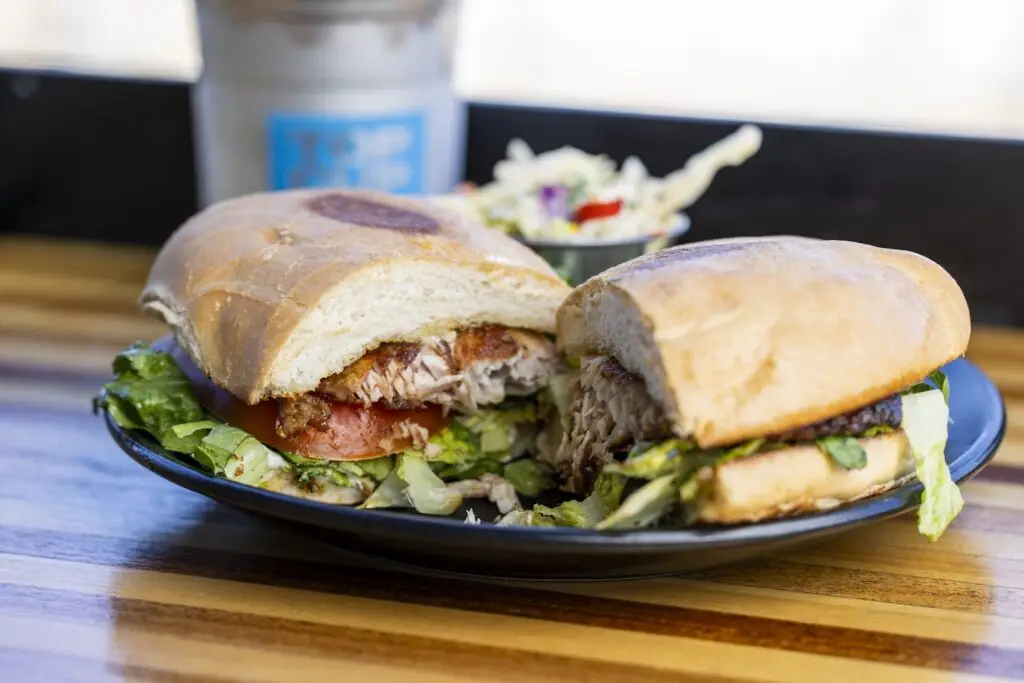
The swordfish sandwich is just about perfect and a mission statement of the place—humble and simple, like fishing. A big-ole torta, a grilled filet not cooked to sawdust like American restaurants once did, with tomato, tartar sauce, and cilantro. It shouldn’t taste as good as it does, but clean local fish cooked well on bread is satisfying in an essential, basal way. Plus, that tartar sauce blows lesser tartars away. Conniff swaps out the pickle and onion for garlic, fresh parsley, and cilantro, so that it tastes closer to an herbed Baja crema. It should be criminalized and governed by people who make laws to atone for the lack of our own self-regulation.
Photo Credit: Dee Sandoval
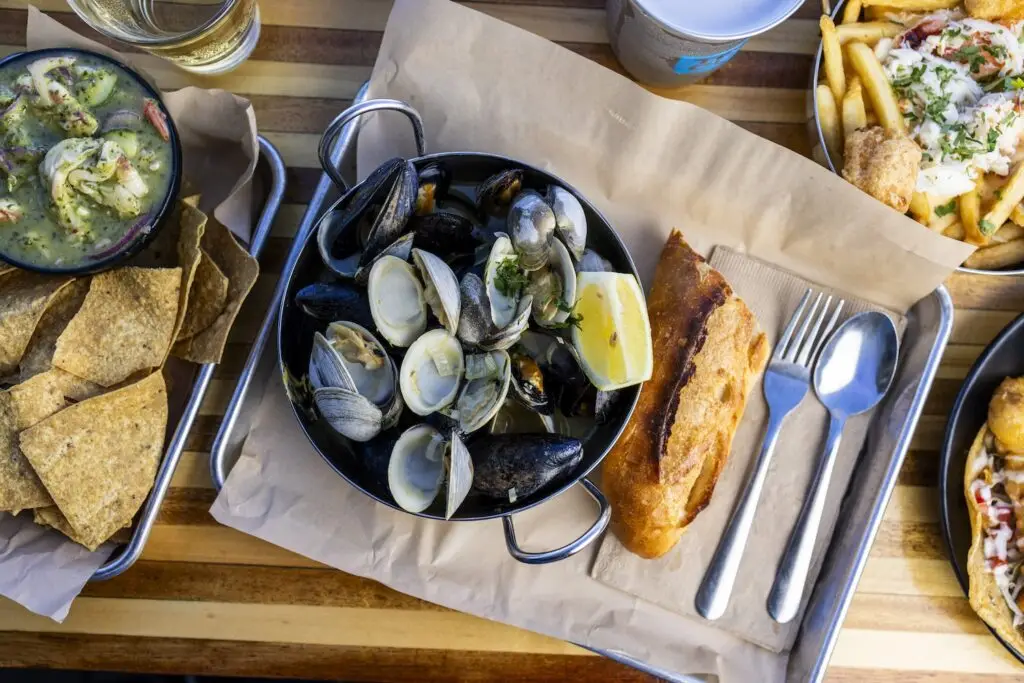
The bowl of mussels and clams are the can’t-miss of Mitch’s—somewhere between French moules marinières, New England steamers, and Baja shellfish pots. The science: As shellfish steam, they release their own briny liquor, meaty ocean broth in a shell. The chef’s job is to complement that gift without clobbering it. Mitch’s uses white wine for acid and leeks (a milder, sweeter, more flavorful onion), Dijon, and butter. Their clams and mussels are bigger than normal, which brings stronger flavor, making that broth one of the best in the city, sopped with the baguette.
From the cold case, get the shrimp aguachile with housemade chips—a small bowl, green as radiator fluid, the chili water a light-pain blend of habaneros (the best tasting chili by a long shot), serranos, lime, and the soft, fat glove of avocado. They also serve a campechana—a Baja mariscos specialty with shrimp, Dungeness crab, octopus, and oysters in cocktail sauce and clamato. Important note here: Don’t eat either of these dishes right away. They come out fridge-cold (there are laws about storing raw seafood), which muzzles the flavor. Order them to sit. After 20 minutes, dig in.
The crab cakes get mixed reviews, but ours are delicious. They lean cake more than crab, which isn’t what you’d expect from a fisherman-chef’s stilt house, but that’s personal preference.
Photo Credit: Dee Sandoval
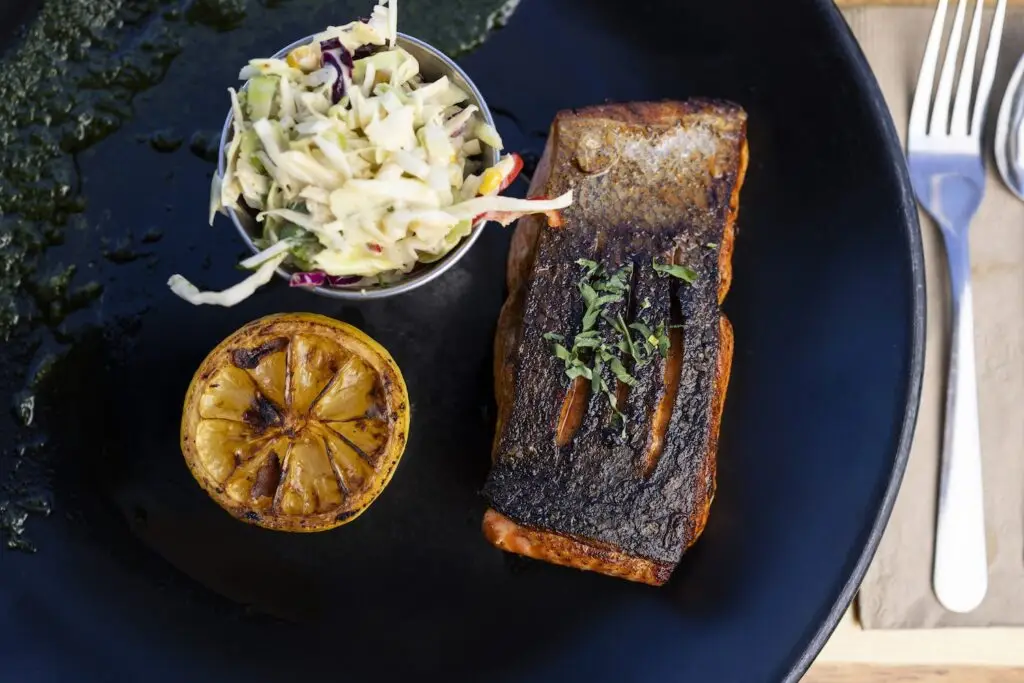
You’re going to order the fresh fish plate, blackened, because you’re good at ordering. It’s the truest expression of fisherman and fish. And what you’ll receive is a shockingly spartan plate—a paprika-crusted filet, a ramekin of slaw, some herb pistou. It is excellent, even if the universal governing body of wooden-spooned grandmas would suggest it needs a rice, a tater, a proper side dish.
My argument is that the slaw is side dishing. Coleslaw is, by and large, the great American fail. Most restaurants treat it like the younger sibling their parents made them bring along on a date. At Mitch’s, they treat slaw with respect. Starts with traditional cabbage, but then gets both fresh orange and lime juice, jicama, grilled corn, and cilantro. It’s Baja meets San Diego picnic food.
If, as dictated by the most basic laws of food criticism, I needed to find quibbles with Mitch’s, fine. I’ll be that guy who walks into a runaway hit dream of three local fishing families and pretends everything isn’t entirely perfect. I’ll express them in wishes.
I wish the baguette with the clams and mussels was lightly charred. The broth is nearly sweet, and sweet loves a good burn.
Photo Credit: Dee Sandoval
I wish there was an obscene amount of slaw with the fish plate. It’s that good, and the plate looks a bit bare.
I wish there was one housemade sauce in the condiment basket. You’ve got Heinz, Tabasco, Tapatío—all of which are fine and should stay. While I realize the kitchen is limited and the line of customers is eternal, Mitch’s would go up an even higher notch if there were squeeze bottles of one killer original dressing—housemade crema, a mojo, macha, or just an unending supply of that garlicky tartar. It feels a tad crimey to go through all this effort to source local fish and cook them well, and then top it with a sauce that has no San Diego or Baja or Mitch in it.
I honestly didn’t expect Mitch’s to be as good as it still is. Everything we ate (except maybe an octopus taco with tentacle bits fried into nubs) was good to excellent. The constant onslaught of locals and tourists and the excruciating intricacies of operating a business in California should have exhausted the will to live by now, let alone cook.
There’s a reason the birds are still outside, with crimes in their eyes and menu preferences.
Troy Johnson is the magazine’s award-winning food writer and humorist, and a long-standing expert on Food Network. His work has been featured on NatGeo, Travel Channel, NPR, and in Food Matters, a textbook of the best American food writing.
I’m sitting in a slab of concrete under a freeway, eating a ceviche black as eyeliner.
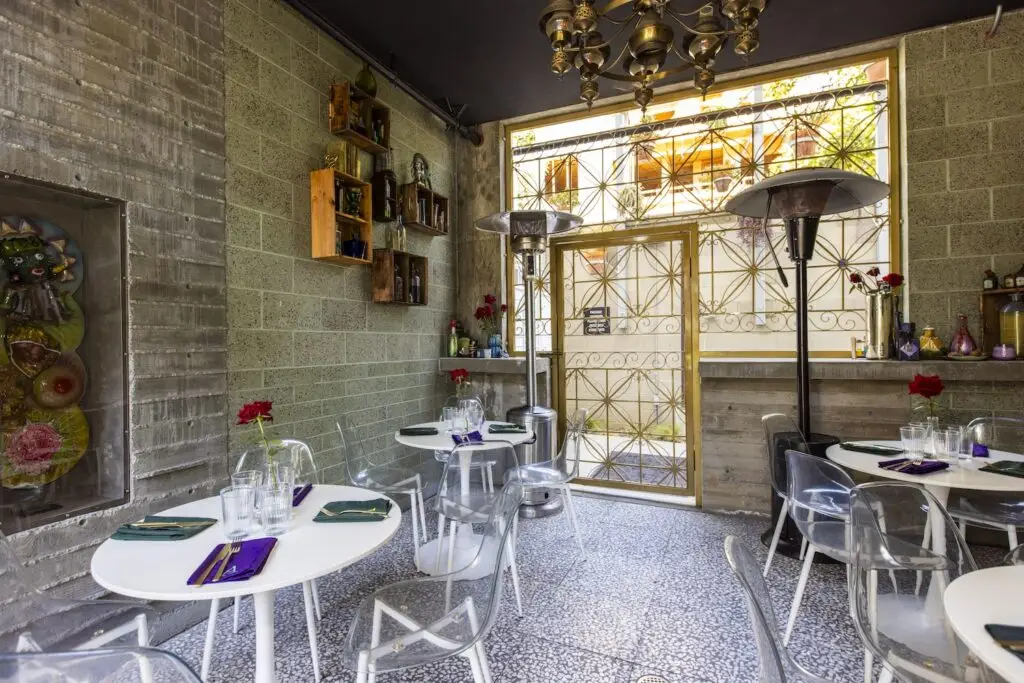
There might be seven seats in this restaurant. Or maybe it’s 12 minus five. That area under the stairs might also be a couple seats, or it might just be a very inviting storage area with a flower vase. The restaurant is so small your core instinct is to count seats and tabulate if Alchemy – Choose Thy Poison is a real place with a sane business plan or if it’s a social art project designed to question the reality of restaurants and business plans.
There’s a large, floor-to-human-height window near our table. Through it, I notice someone didn’t make their bed this morning. It’s a decision I deeply empathize with. It’s moments like this that make you acutely aware that Alchemy is also technically the courtyard of a six-room micro-hotel called Narcissus. Not the kind of massagey boutique hotel you’re thinking of with soft woods, obscene amounts of linen, and opinions on bonsai therapy. It’s a near-Brutalist cube of base industrial materials—concrete and acrylics bent and molded into a series of alcoves, with pods to sleep in. Sculptures lie behind glass like Tilda Swinton circa 2013.
The window to the unmade bed forcibly crams light voyeurism into the dining experience. The hotel and Alchemy feel like the parts of Mexico I love the most. Although Mexico has its multimillion-dollar restaurants, a vast majority of the best street-level places feel like you’re temporarily recreating in a very lovely construction project.
Alchemy’s location is what most people comment on (“I can’t believe a place like this exists on a block like this.”)—jammed at the bottom of the freeway embankment on the northeast side of Barrio Logan. But that makes it distinctly Barrio, the historic cradle of San Diego’s Hispanic and Chicano culture. The I-5 freeway was built through Barrio in 1963—a fairly traumatic gashing of the neighborhood—and residents responded by painting epic murals on the ugly concrete belly of eminent domain. Where some would’ve just accepted the industrial blight, locals saw shade for a park. There is a deep history here of turning concrete into art, and Alchemy carries that on.
Photo Credit: Dee Sandoval
The vision for the property came from owner Benjamin Longwell, whose company—The Society of Master Craftsmen—sounds like it wears a monocle. Longwell is part of the new guard of developers who focus on urban infill. Instead of adding to the city sprawl, they find unused or underutilized parcels of land in established neighborhoods, then build creative mixed-use spaces that, in perfect scenarios, add something of value for locals.
I’m not making a case for architectural sainthood, but there isn’t a huge list of developers who would look at the line of cars exiting the freeway in front of Alchemy and think, “We must build here.” So in that sense, Narcissus and Alchemy feel additive to the community, not extractive.
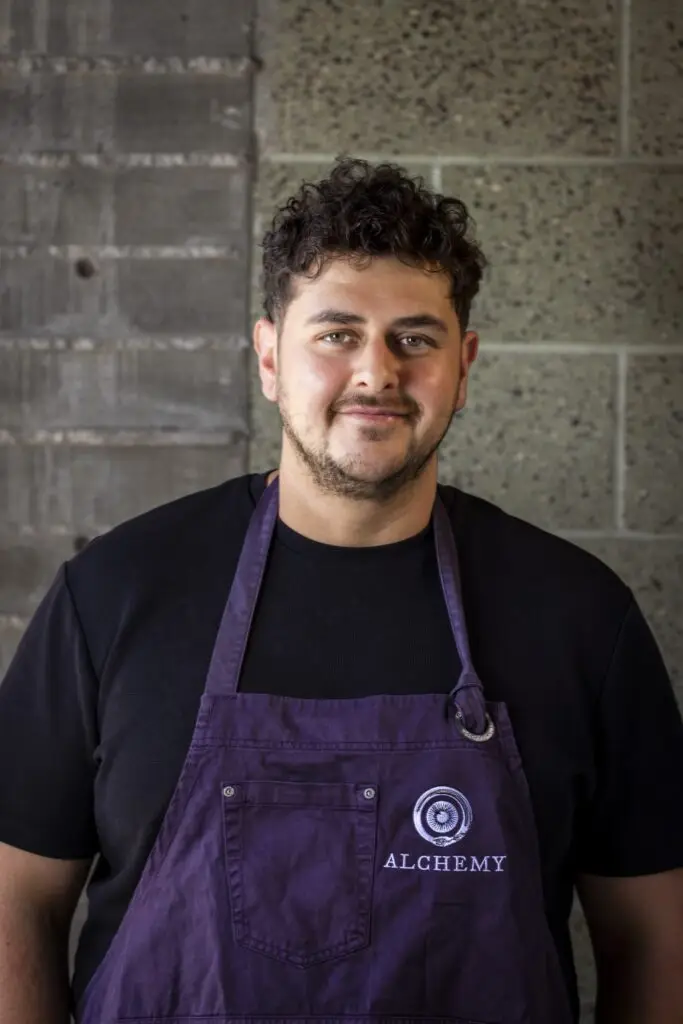
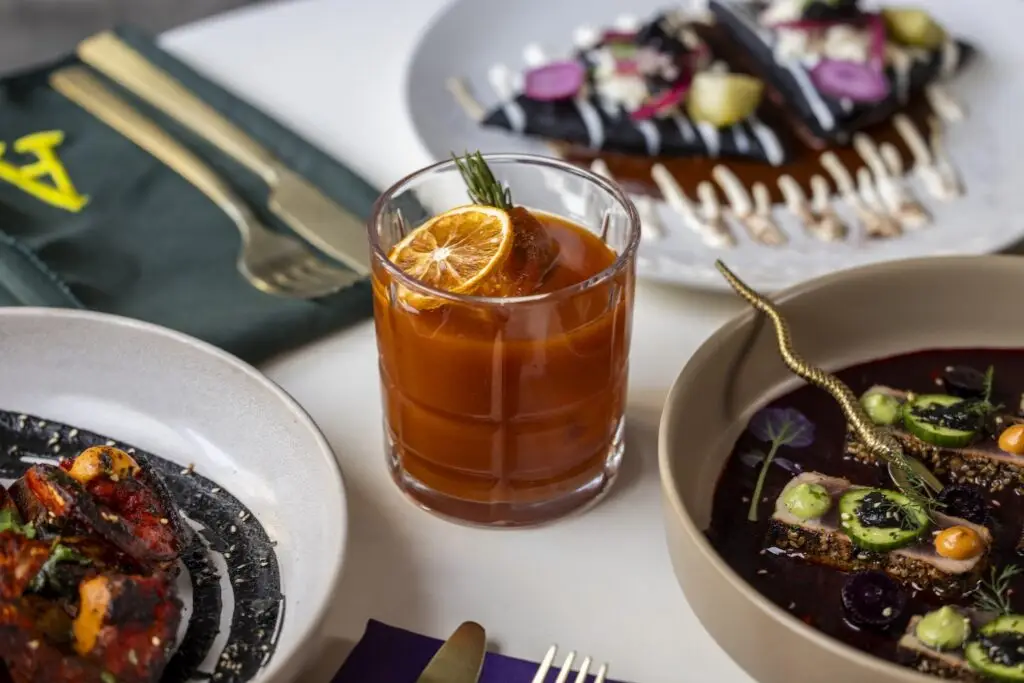
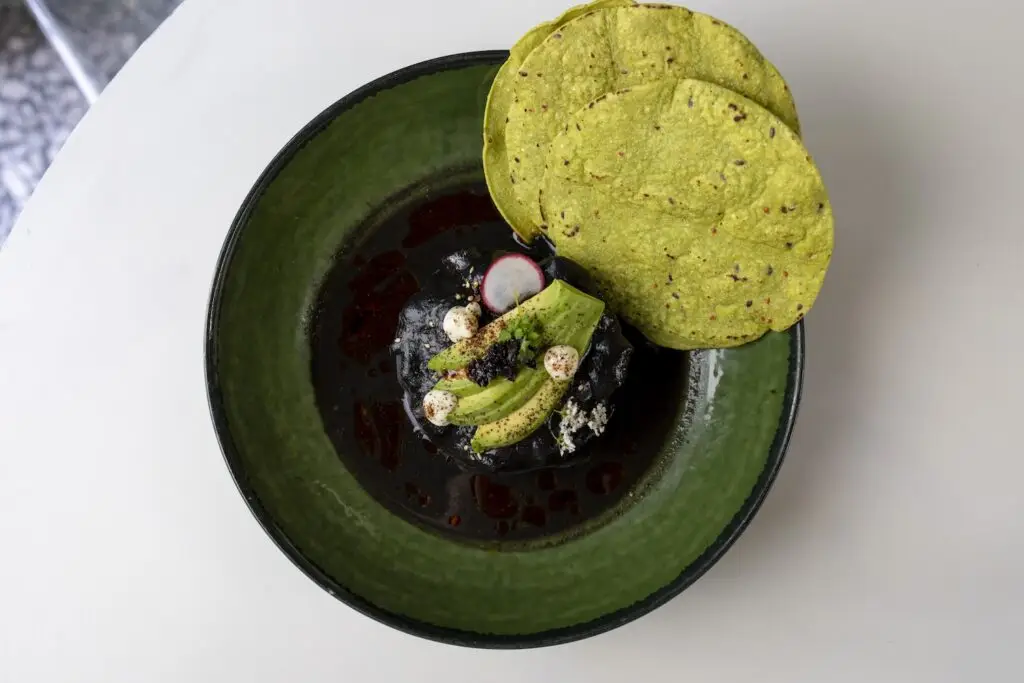
I stare back at Alchemy’s ceviche negro, a glossy mound of halibut that looks inspired by the La Brea Tar Pits or melted vinyl records. Chef-owner and Mexico City–native Eddy Cortes saves all the trimmings of his dishes (garlic and onion skins, vegetable shavings), then chars them into an ash to create a recado negro—a Yucatán specialty that usually involves toasted chiles, achiote paste, vinegar, and a ton of warm spices. He tosses local halibut with squid ink, tamari, charred pineapple, and citrus. The usual charm of ceviche is that it’s light, bright, full of color. Not here.
It is fantastic—acidic but with a whole world of toasted, warm flavors, like ceviche that’s seen some things.
The menu from Cortes—a home cook his whole life, only having taken it professional a few years ago with his popular pop-up, Barracruda—is really a tour of specialties from various states in Mexico.
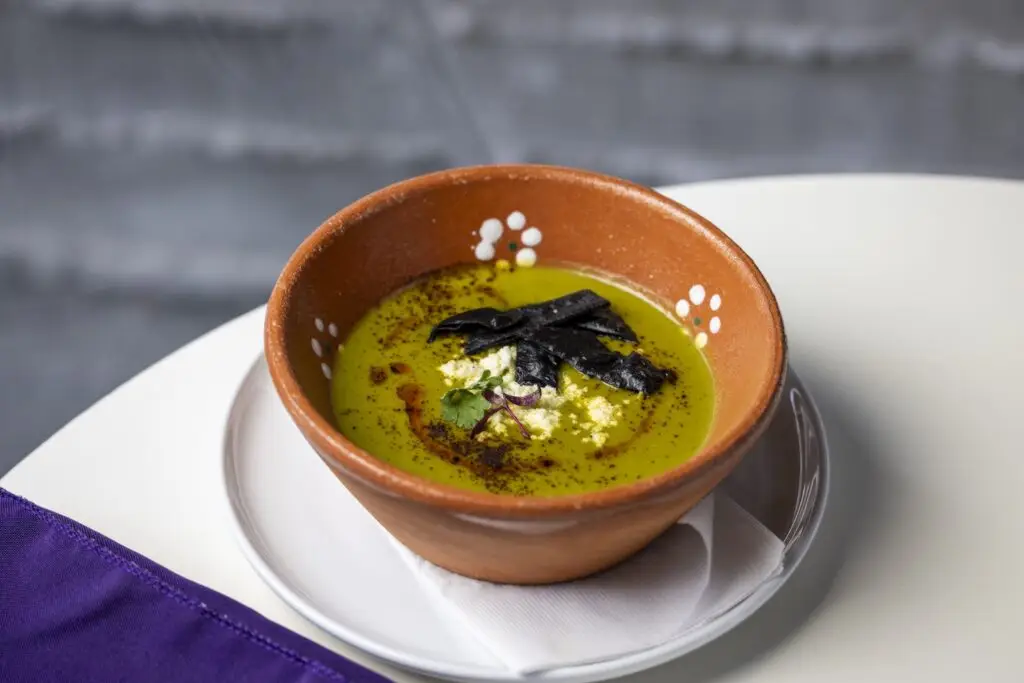
A crema de poblano has the blended ghost of rajas at its core: an emulsion of roasted poblanos with butter-sautéed onions and garlic, plus a touch of milk that’s topped with queso fresco, chile ancho, and morita oil. Morita—a smoky Mexican condiment made from dried and smoked red jalapeños for a less intense, fruitier cousin of chipotle—is the key here. It specializes in spiking fats (guacamole, fried eggs, burritos). Sop up the crema with house-baked garlic-rosemary sourdough, blackened from the ash of a corn husk.
Smoked tuna is a Baja gift that’s become an anchor for most San Diego taco shops, and Alchemy combines mesquite-smoked yellowtail with caramelized onions, sweet peppers, and Chihuahua cheese (the OG quesadilla filling), then stuffs it in a perfectly baked masa empanada. The result is somewhere between a TJ Oyster Bar taco, a calzone, and a tamale—but with extra flavor and more black hue from cuttlefish ink.
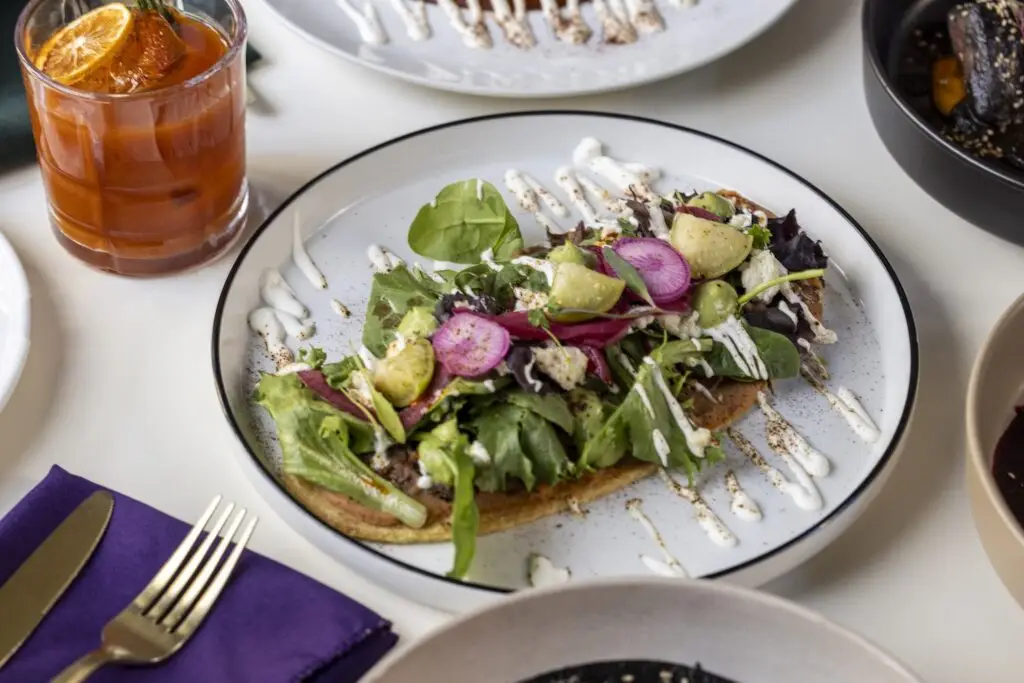
Alchemy’s huaraches de res is Cortes’ ode to where he’s from. Huaraches are the New Haven–style pizza of Mexican food—thick, oblong masa flatbread layered with refried beans and a payload inspired by the Mexico City markets the chef grew up roaming with his dad: braised beef (braseado), avocado salsa, pickled vegetables, salsa macha, and jocoque (Mexico’s fermented dairy product, like a cross between crema and labneh).
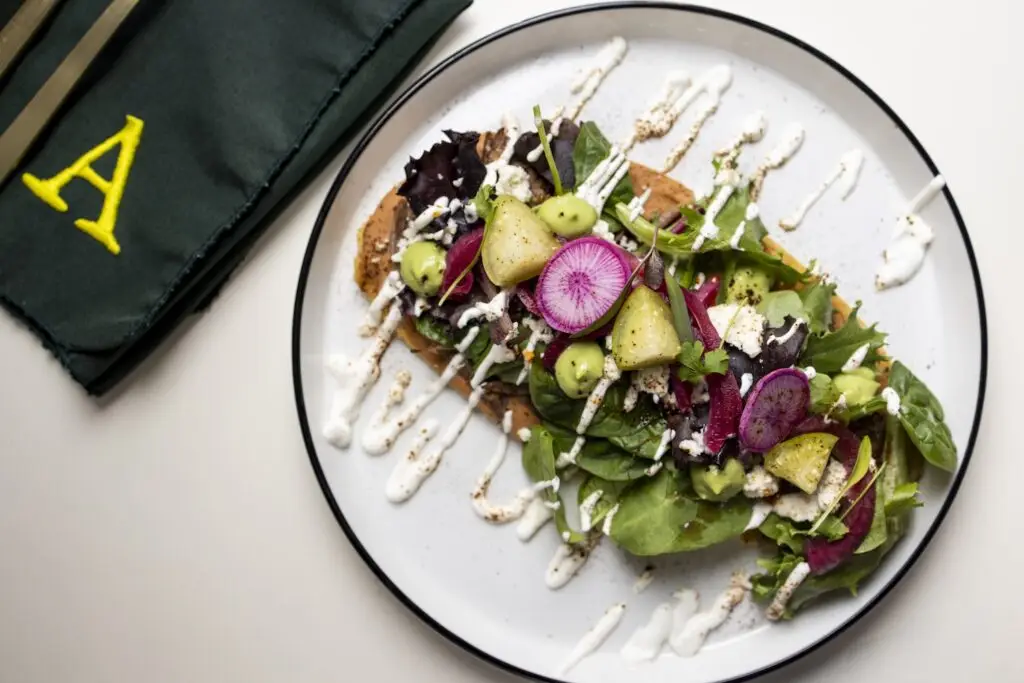
Alchemy’s seared tuna crudo gets a tad abused by the riot of big flavors: charred hibiscus salsa, avocado salsa, pickled grapes, pomegranate salsa macha, and chipotle aioli. It’s a fate that also tempers the joy of the zarandeado, with the adobo marinade on the shrimp fighting a bit with recado negro and chipotle crema. Sticking with curmudgeonly food critic notes, flies are a part of the Alchemy experience, at least during our visit. They’re fairly hard to evict from the outside world, but more measures could be taken to discourage their participation.
Photo Credit: Dee Sandoval
The oxtail tetelas—like a Mexican pupusa—are a diary note from Cortes’ travels to Tlaquepaque, where they famously superboost their salsa with a touch of instant coffee. First, Cortes braises the oxtail with beer and Mexican spices. Then he blends that braising liquid into a salsa with beef tallow, guajillo, charred onions, tomatoes, and black garlic. Keeping with the goth food theme, the oxtail goes into masa negra infused with squid ink.
Desserts are where you realize just how deeply Alchemy is committed to the art bit. Rarely do you see a neighborhood bistro trying to pull off trompe l’œil—the French specialty of making pastries and other desserts look like fruit or other everyday objects. (The phrase means “to deceive the eye” and is the historical precedent for the Is It Cake? phenomenon.) Pastry chef Catherinne Avila does, though. A “Naranja” comes out in the form of a mandarin, but inside is orange blossom mousse, apricot jelly, and sablée (a delicate, crumbly shortcrust). A “Philosopher’s Stone” comes in the form of a brick of gold with a serpent on top; inside are mango mousse, mango-Tajín jelly, and a coconut dacquoise.
As Barrio Logan enters an apprehensive phase—its creative culture and restaurant scene growing rapidly, bringing economic promise face-to-face with the need to protect the Chicano way of life—this concrete tuckaway from a Mexico City kid feels like a good step. The Barrio has a long history of making art in unexpected places, and Alchemy carries that a little further.
Troy Johnson is the magazine’s award-winning food writer and humorist, and a long-standing expert on Food Network. His work has been featured on NatGeo, Travel Channel, NPR, and in Food Matters, a textbook of the best American food writing.
For two-and-a-half years, one of California’s most promising culinary talents has remained surprisingly off-the-radar, working as executive chef in a uniquely named restaurant tucked inside a Serra Mesa office building. He hasn’t gone completely unnoticed though—food critic Troy Johnson calls BoujieMana a “hidden gem with an all-star team.” And that team? Led by said promising chef, Dante Cecchini.
A San Francisco transplant with a resume as long as a CVS receipt and as star-studded at the Andromeda Galaxy, first cut his teeth under chef Elizabeth Falkner at the Bay Area pastry shop Citizen Cake before moving to Big Night Restaurant Group, where he rose through the ranks to become chef de cuisine at places like Marlowe, Park Tavern, and The Cavalier under the tutelage of restaurateurs Anna Weinberg and chef Jennifer Puccio.
He also worked at Morris with chef Gavin Schmidt (from the three Michelin-starred Coi), cooked at the James Beard House twice, was named a Rising Star Chef by the San Francisco Chronicle, and one of Zagat’s “30 Under 30,” among his other accolades. So it’s surprising that he hasn’t had the chance to make a bigger impression in San Diego yet.
But he’s ready to do so as the new executive chef at Communion.
Opened in 2024, the Mission Hills restaurants offers a sky-high view from its top floor perch of The Sasan building at the corner of Washington and Goldfinch Streets. Guests enter through Paradis, the ground floor cafe on the way to the elevator, where a sanctuary-meets-sensuality vibe and strong cocktail program have gleaned generally positive reviews over the past year-and-a-half. But Cecchini wants to bring an infusion of new ideas to the kitchen.
Courtesy of Communion
Not too many all at once though, he says. To ensure loyal regulars will get the chance to get used to his approach to fine dining, he’s phasing out former chef Mike Moritz’s menu in stages, but says by the end of February the transition will be complete.
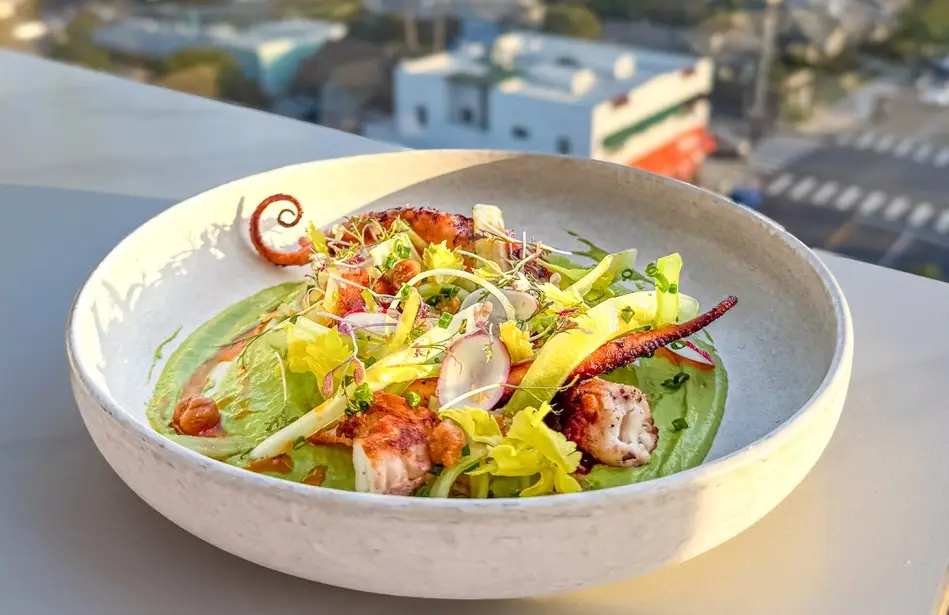
He’ll keep the tasting menu in some form or another, but at the very least expect twists on some of Communion’s signature dishes, like the za’atar-crusted lamb lollipops and the Spanish octopus. “[They’re] still going to be really approachable. It’s just going to be super flavorful, very colorful, but super seasonal,” he says.
Courtesy of Communion
Emphasizing seasonality much more will be a major part of Cecchini’s ethos at Communion. “You’ll never see strawberries on the menu in winter,” he promises. Tomatoes in February? Not on his watch. But there will more attention to plating presentation and dry-aging proteins like fish and duck. He’ll also incorporate some of his Italian heritage and training into the menu, like introducing Sardinian dumplings and using ingredients like bottarga, a salt-cured piece of roe that’s either grated or thinly sliced (like Parmesan) with an intense umami profile.
With Cecchini’s years of level experience, expectations are as high as Communion’s rooftop location. He has three words: bring it on.
“I want to invite everyone in for them to experience what’s different. I promise that everything that they come in and eat will be great,” he says. “I know that’s a big thing to say, but I’m feeling very confident.”
Communion is located at 901 W. Washington Street in Mission Hills.
Beth Demmon is an award-winning writer and podcaster whose work regularly appears in national outlets and San Diego Magazine. Her first book, The Beer Lover's Guide to Cider, is now available. Find out more on bethdemmon.com.
Today’s seniors are more connected than ever, with a renewed focus on retirement as a time of discovery and enriching experiences. The ultimate reward for a retirement well-earned is the wisdom to appreciate it all, and what better place to enjoy that unique perspective than Vi at La Jolla Village, in the heart of San Diego.
All-access pass to good living.
As a Continuing Care Retirement Community (CCRC), Vi provides access to a connected and fulfilling community while making it easy to plan for future care, should the need ever arise. With a care plan in place, residents enjoy greater financial predictability and long-term value, freeing them to focus on making the most out of retirement.
Resort-style amenities at the epicenter of a cultural hub like San Diego offer a retirement experience unlike any other. Paired with exceptional dining, spacious accommodations and dedicated staff, the best of maintenance-free living is all around. And with the introduction of Vista 360 Well-Being, Vi’s panoramic approach to wellness, there are more ways than ever for residents to access it all.
The harmony of mind, body and community.
Courtesy of Vi at La Jolla Village
The key to longevity is striking the right balance in maintaining an active lifestyle with an active mind in a fulfilling community. With newly renovated community spaces and restaurants, Vista brings a variety of opportunities for residents to elevate their well-being through Vi-exclusive “Signature Experiences.”
Vista Enrich takes an evidence-based approach to brain vitality, keeping residents at the forefront of cognitive health through exergaming (exercising + gaming), nutritional plans and informative workshops. It is also home to The Brain Vitality Studio, an innovative facility dedicated to cognitive fitness that has garnered national recognition.
Vista Discover invites residents into stimulating educational experiences, from chef-led cooking demos and guided wine tastings to lectures at local universities and intimate lectures following cultural outings.
While Vista Enrich focuses on brain health and Vista Discover engages residents intellectually, Vista Explore cultivates a sense of adventure through curated travel and local excursions. But broadening one’s horizons doesn’t always require a plane ticket. One recent event brought a taste of the world right to the community: an onsite “jazz cruise” featuring live music and global cuisine served at a series of themed “ports” all within the community’s own ballroom.
“Location, location, location”
Courtesy of Vi at La Jolla Village
One of the biggest perks of life at Vi at La Jolla Village is its proximity to just about everything. With easy access to transportation and local attractions just steps away, residents can explore and engage with their community at their own pace.
“There are trolley and bus stops within a 5-minute walk that will get you to the beach, UCSD Campus, medical appointments, downtown La Jolla or San Diego, et cetera. We rarely use our car,” said resident Tom Yager.
With the best of San Diego just steps away, residents don’t just live in the city, they live within reach of everything that makes it special.
The best of all worlds.
Courtesy of Vi at La Jolla Village
At Vi at La Jolla Village, retirement isn’t a chapter to slow down; it’s an invitation to discover more. Tailored community experiences created by Vista, paired with the vibrant pulse of San Diego just outside the door, mean that residents don’t have to choose between security and adventure, connection and independence. They get all of it.
This is what an all-access pass to good living looks like: the comforts of an elevated lifestyle, a community built for growth and a city made for discovery – all in one place.
To learn more about Vi at La Jolla Village or for details on available floor plans, visit ViatLaJollaVillage.com/SDM.
Stop me if you’ve heard this one before: person gets laid off during the pandemic. Bored at home, they turn to baking. A passing interest turns into a passion, and before you know it, they’re launching a full-fledged bakery.
Yes, that’s the story of how Mi Pan Bakery started, and yes, 10,000 other aspirational bakeries began the exact same way. But the difference is that Mi Pan’s baker and owner Alejandro Gomez didn’t stop at making a few loaves of sourdough for his friends and family.
He’s spent the last five years building a beloved local business whose bread and pastries are now sought out at three different farmers markets, was nominated for both Best Bread and Best Farmers Market Food Vendor in San Diego Magazine’s Best of San Diego Reader’s Choice Awards for 2025, and only decided to finally move from baking in his garage to their first brick-and-mortar location in order to keep up with sheer demand.
“I talked to my wife, and I said ‘Listen, if we’re not going to move out of the garage, I don’t think I can keep doing this, because I’m baking pretty much 10 to 12 hours a day,’” Gomez laughs. “I think it’s time.”
After a year of looking for the right location—where Gomez and his wife and business partner Alejandra Ruelas could open Mi Pan with enough space for an expanded commercial kitchen, an area for hosting workshops, and an onsite retail store—they found it. Mi Pan Bakery’s first brick-and-mortar location will open in the first half of 2026 at 6435 Mission Gorge Road in Grantville.
Once open, Mi Pan will still remain at all of the farmers markets: Tuesdays in Pacific Beach, Saturdays in Little Italy, and Sundays in Chula Vista. They hope to add one more to their rotation once they have the ability to increase production. Gomez says he also plans to launch a wholesale side of the bakery, something he says multiple businesses have approached him about, but he hasn’t been able to take on with his small operation. And then, maybe one day, maybe even a second location in North County.
Gomez also didn’t work as a baker previously, unlike other pandemic-launched operations like Companion Bread Company and Relic Bakery. But in the past five years, he’s taught himself the craft and traveled across the world to places like France, Spain, and Mexico City to both take and teach various baking classes, something he also plans to offer at the new space.
Mi Pan’s menu will remain small, offering its signature sourdough and pastries—especially medialunas, an Argentinian pastry that’s a cross between a flaky croissant and soft brioche with a light glaze on top. “If you haven’t tried it, you should,” he promises. “They’re amazing.” They’ll also add sandwiches using its own bread, as well as coffee. (Most of this will be intended to-go, but it’ll have a few tables onsite if people wish to enjoy their goodies right away.) But above all, Gomez says what they’re building is meant to last, modeled after the family-owned neighborhood cafes of his native Mexico and across Europe.
“It’s not about being the kind of trendy bakery that’s hyped for six, seven months, or a year, and then after that, they disappear,” he says. “We want an atmosphere that feels like home, and then when you come back… you’re greeted by name. I think that’s what we want—a warm, reliable, everyday bakery where the community feels welcome and you always find exceptional bread and pastries.”
Mi Pan Bakery will open at 6435 Mission Gorge Road in Grantville in mid-2026.
Beth Demmon is an award-winning writer and podcaster whose work regularly appears in national outlets and San Diego Magazine. Her first book, The Beer Lover's Guide to Cider, is now available. Find out more on bethdemmon.com.
If Cardellino tells a story of fire and Italian bravado, Carlo is its soft, sensual counterpart. The cream to the cookie. Sophia Loren to Sylvester Stallone. According to owner and executive chef Brad Wise, it’s exactly the balance Cardellino needed.
Carlo’s story begins this weekend when it opens inside Cardellino. It’s not really a speakeasy. More a hidden cocktail bar within the restaurant, tucked behind a wine wall that wasn’t there a few months ago. The newly constructed, intimate space fits 32 guests at a time. Wise says the time was ripe for adding a new layer to the Cardellino experience. That particular part of the building never quite had the right feng shui.
“Where you walked in the front door previously, there was always a 750-square-foot, rectangular-shaped portion of the restaurant that I was just never in love with,” he explains. After seeing the huge success of sister restaurant Fort Oak’s “Snowed In” experiential holiday bar, he wondered if something similar would work.
“If you’re not figuring out how to create a different experience for people to come back multiple times over and over, the food and service these days is only going to do that so much,” he adds.
The idea is that guests can pop in for a drink before dinner at Cardellino or after they dine at Communion or Fort Oak. It’s designed to be a local’s spot and an arena for beverage director Jess Stewart and her team to flex their cocktail muscles in a smaller, more obsessive setting.
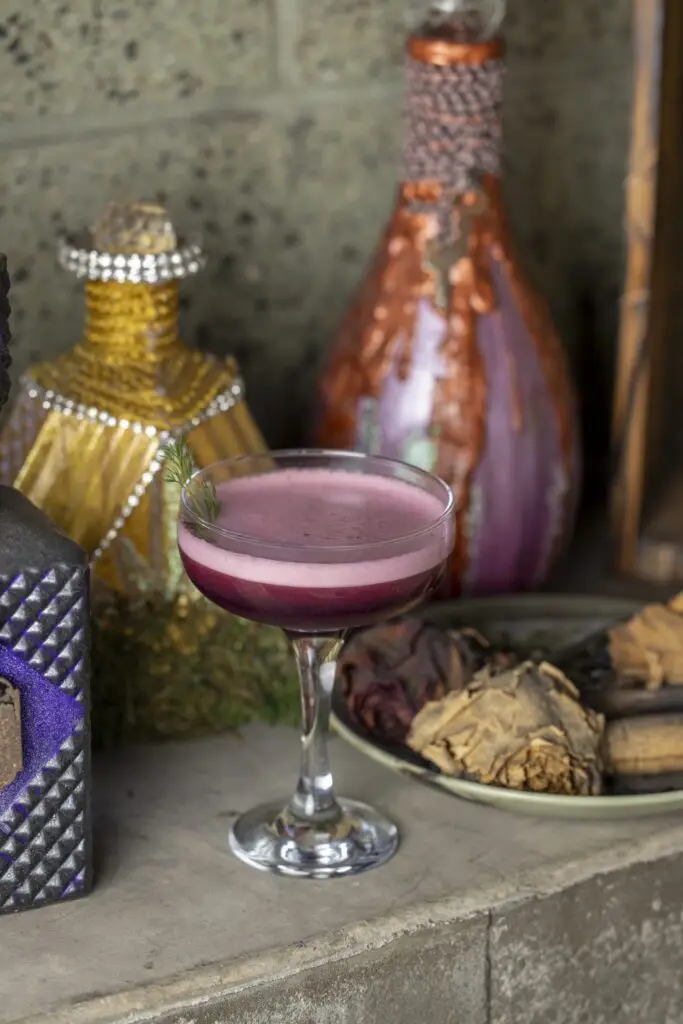
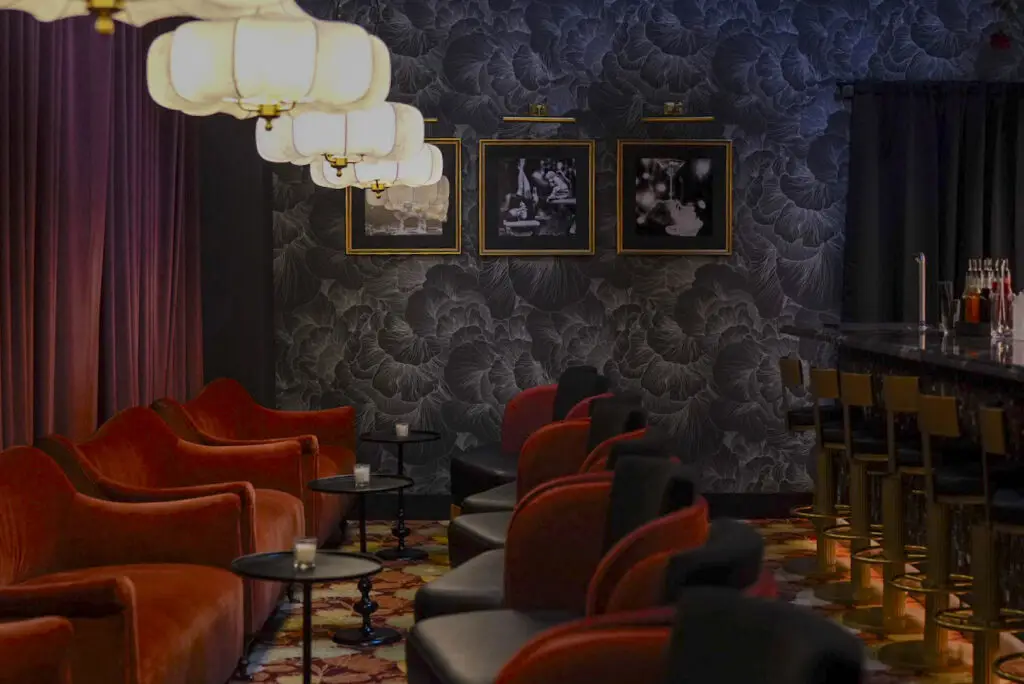
Carlo is reservation-only and specifically designed to be a bit more chic than Cardellino’s brick and bulbs. “It’s reds, mauve, purples—there’s a really beautiful flower installation hanging from the ceiling,” Stewart says. “Walk through a curtain, and we really want it to transport you.”
Courtesy of Cardellino
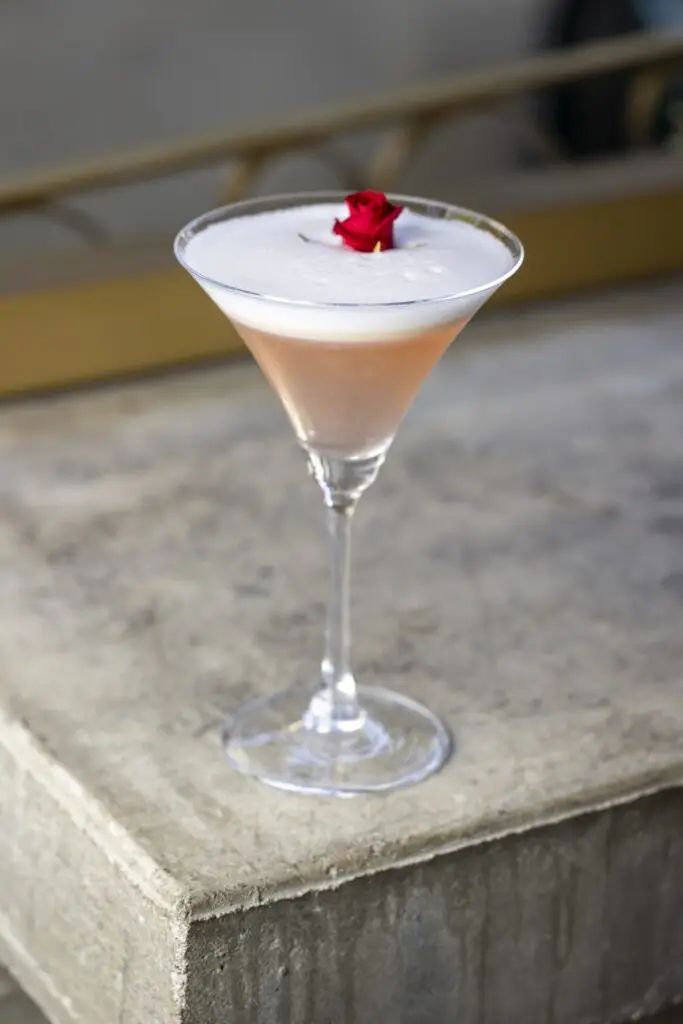
Stewart adds that it’s a traditional cocktail menu, so patrons can request a dealer’s choice. But she’s confident that the drinks she and lead bartender Marina Ferreira have concocted will blow your socks off. The menu has two themes: The Fates (whimsical house creations) and The Legends (elevated takes on classics). One example of a Fate cocktail is The Prophet, with bourbon, cognac, dates, palo santo, and bitters, while a Legend is Carlo’s spin on a negroni, starring a Schwarzwald dry gin with 47 different botanicals, Barolo chinato instead of sweet vermouth, Campari, and a pinch of salt to counter the bitterness.
Wise says his team is already working on another hidden bar that will open in the next two to three months (he wants to keep the details close to his chest), but now that he’s back in the bar world, it’s game on. Carlo may just be the start.
Reservations for Carlo are available on Resy. For more information, visit ciaocarlosd.com.
Photo Credit: Maria Russo Chef Alex Caballo
San Diego Restaurant News & Food Events
Nómada to Debut in Early 2026
Chef Alex Carballo has helped launch ambitious concepts like Haven Farm + Table at Fox Point Farms in Encinitas, managed huge kitchens like Stone Brewing World Bistro & Gardens in Escondido, and made an appearance on San Diego Magazine’s 2025 cover featuring the biggest and brightest food stars in San Diego. The man’s a talent, gives a damn, and is a rock of the scene when it comes to launching new concepts that actually run. And come January, he’s opening Nómada in Carlsbad as the newest partner of Grand Restaurant Group (GRG).
Carballo’s menu will feature different regional cuisines from around Mexico. The group’s new beverage director, Sean Ward (Lumi, Huntress, Nolita Hall, Duck Dive), will focus on agave spirits from producers in Mexico and California. It may be the first time Carballo is at the helm as a partner, but considering he has over two decades of restaurant management, operations, and chef consulting under his belt, it sounds like GRG made an AJ Preller–level genius acquisition.
Courtesy of The Vinho
Beth’s Bites
Do you love Portuguese wine? Are you unsure if you love Portuguese wine? Well, either way, this weekend you have the chance to go try a bunch of it at Bica with a free wine tasting by The Vinho. The local small-batch Portuguese wine importer will be pouring on Bica’s patio on Saturday, December 6 from 11 a.m. to 3 p.m.
Khachapuri finally opened at the corner of Park Boulevard and Monroe Avenue in University Heights, with a pretty awesome-looking menu of Georgian (the country, not the state) delicacies like chanakhi (a spicy eggplant and lamb stew); tabaka (pan-fried chicken); and of course, khachapuri, which is basically a bread boat filled with gooey cheese and topped with a runny egg. I literally can’t think of a better combination of things I like to eat.
Only one of the iconic Pernicano’s restaurants remains in El Cajon, but a former location at 9932 Mercy Road, Unit 109 has been revived as Amuri Italian Cuisine. The Sicilian-style Italian restaurant is now open for lunch and dinner every day, and, yes, there’s a cheese wheel.
Listen Now: The Latest in San Diego’s Food and Drink Scene
Have breaking news, exciting scoops, or great stories about new San Diego restaurants or the city’s food scene? Send your pitches to [email protected].
Beth Demmon is an award-winning writer and podcaster whose work regularly appears in national outlets and San Diego Magazine. Her first book, The Beer Lover's Guide to Cider, is now available. Find out more on bethdemmon.com.
Growing up, Laika Nur, MD, Scripps Clinic sports medicine specialist, loved watching beach volleyball when the Association of Volleyball Professionals tour came to her hometown of Chicago. A talented volleyball player herself, she remembers sitting in the stands all day, and once, even got a couple autographs. Years later, Dr. Nur was attending a professional event focused on women’s sports, and the discussion turned to a new professional women’s volleyball league. The general manager and coaching staff for San Diego’s team, the Mojo, happened to be in attendance, and Dr. Nur took the opportunity to ask them if they needed a team doctor. Flash forward to the Mojo’s inaugural 2024 season, when Dr. Nur officially became the team physician. Click here to read more about Dr. Nur and how she incorporates lessons she learned on the court into her practice.
For more nutrition, wellness, and healthy living tips, sign up for the San Diego Health newsletter here.