Featured articles
Food & Drink
Food & Drink
Food News
Featured articles
Arts & Culture
Everything SD
Everything SD
Featured articles
Things to Do
Things to Do
Everything SD
Featured articles
podcast-ep
podcast-ep
podcast-ep
Featured articles
Everything SD
Everything SD
Food & Drink
Featured articles
Arts & Culture
Everything SD
Partner content
Ready to know more about San Diego?
SubscribeReady to know more about San Diego?
Plant walls are the new fern bar. Oh, it's pretty.
Mission Hills used to be the place to get great karaoke (The Lamplighter). You wanted a thriving restaurant scene with multiple options, you had to shimmy over to Hillcrest or head downhill to Little Italy. That’s officially not the case today with the opening of The Patio on Goldfinch—joining Brooklyn Girl, The Red Door, The Wellington and Lefty’s Pizzeria as standouts within a couple block radius.
The original Patio in Pacific Beach—lead by owner Gina Champion-Cain and chef John Medall—was a breakout success in taking over the beloved Lamont Street Grill.
Their second act—which takes over the long-abandoned construction started by restaurateur Philippe Beltran (who’s since joined the Cohn Restaurant Group)—is real modern, real eco, real nifty. Designed by Lahaina Architects, guests walk into the open-air front room (just like P.B.) with a fireplace. At the long bar on the right, GM and certified catador Chris Simmons, formery of Rancho Valencia’s Pony Room, will focus on tequila (over 60 varieties) and barrel-aged cocktails. Certified cicerone Kelly Legan will curate the fancy beer.
But everyone is naturally drawn to the huge, gorgeous plant wall in the back of the room, designed by The Patio’s on-staff decorator Bea Arrues.
The plant wall is libidinously lush. It looks like vegetarian taxidermy, as if Champion-Cain and Ted Nugent went down to Brazil, shot the rainforest and had it stuffed. Plant walls are now the modern version of 1970s fern bars. They add oxygen and life to all the strikingly dead-dead-dead design materials that are en vogue these days (concrete, steel, barn wood). There’s another plant wall on the al fresco patio.
Patio ownership is going for LEED Platinum certification with the restaurant (as eco-friendly as you can get), but should at least hit LEED Gold.
They’ve got a cheese “cave” here (a glass box full of wondrously stinky fromage, aging and become better cheeses right before your eyes) that local mongers Venissimo are helping curate. In about a month, they’ll also open their retail concept called Front Porch around the corner. It’ll serve all sorts of gourmet foodstuff, plus some to-go lunch and dessert options from chef Medall.
The Patio’s citywide domination seems imminent. Sources say they’ll open another retail-heavy concept soon at Liberty Station (a wine-centric thing at the former Sol Market spot). And one person close to them says they’re “already moving on from Liberty Station—they’re two concepts down the road,” including a potential new Patio in North County.
While waiting for your Patio colonization, please enjoy the first known good photos in the universe of POG.
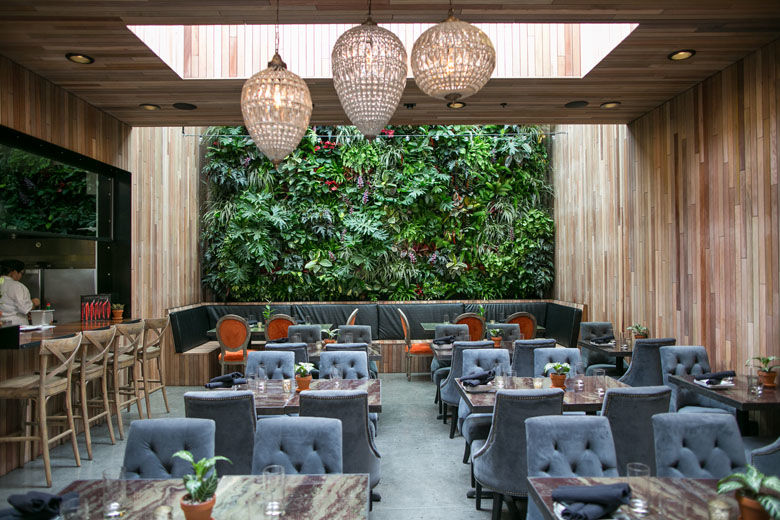
The Patio’s lovely plant wall. Like rainforest taxidermy.
Sam Wells (samwellsphoto.com)

Offering everything from smashburgers to sundaes, the latest food hall from Tiger Hospitality opens its doors this weekend
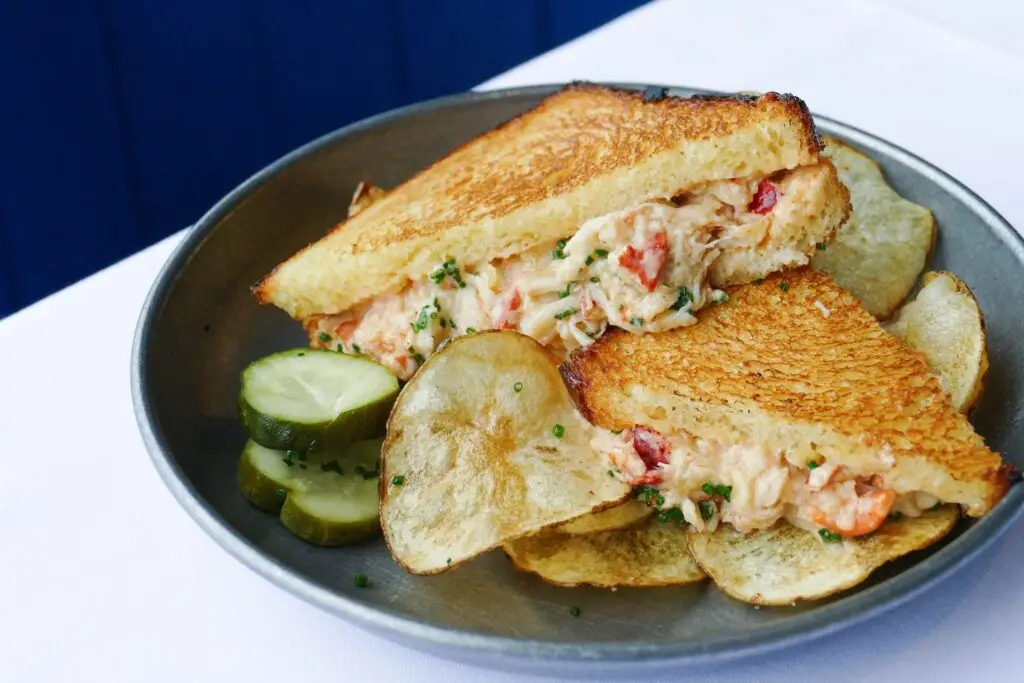
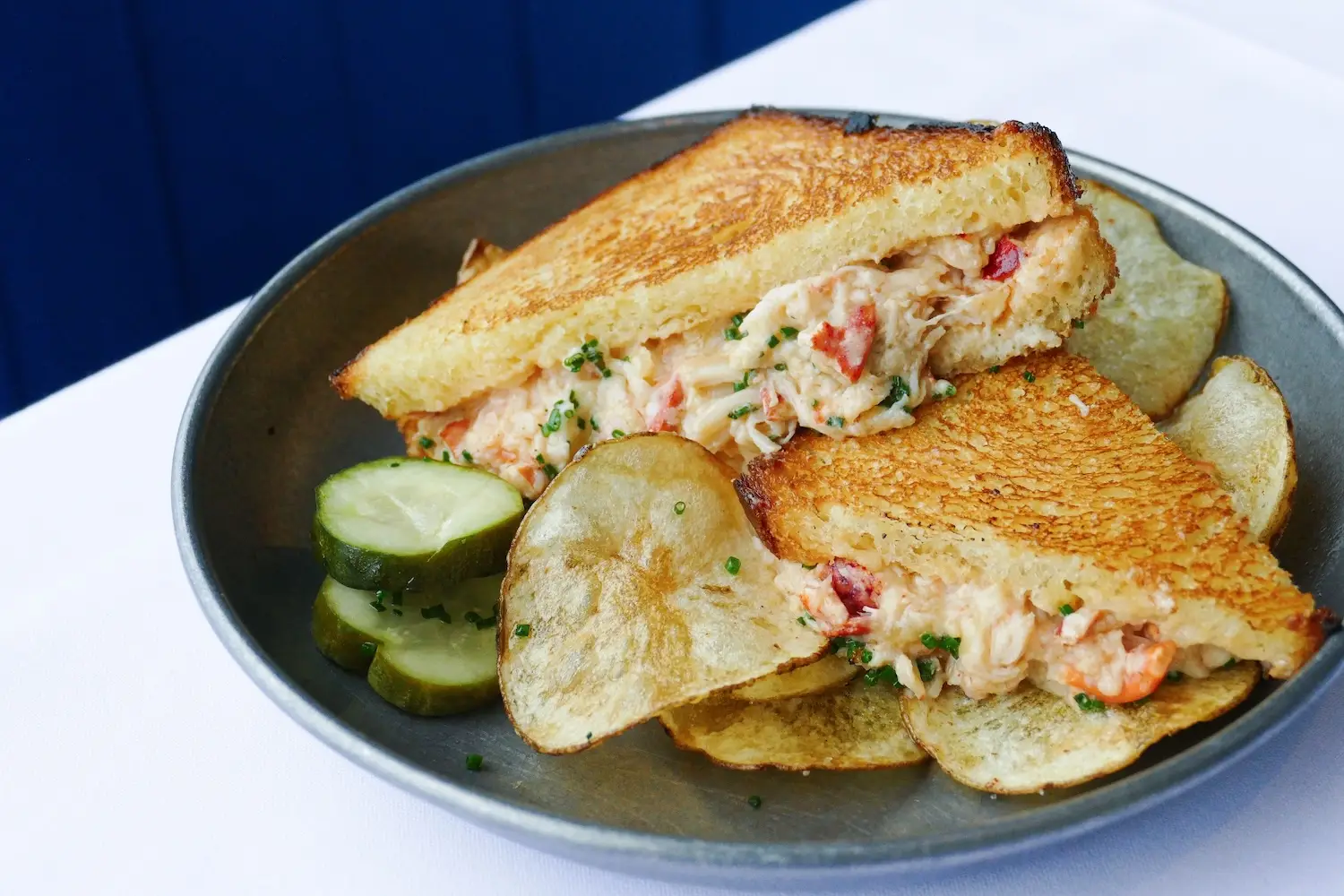
Omakase and fixed-price menus are one way hospitality businesses are addressing our collective food decision-making fatigue. But on the opposite end of the spectrum, some restaurateurs are offering a bonanza of totally unrelated options for people ordering on a whim. Why not pair a lobster grilled cheese sandwich, açaí bowl, and ridiculously loaded hot dog?
Starting June 27, diners can satisfy their spur-of-the-moment appetites at Global Fork in Little Italy, the latest food hall from Southern California-based Tiger Hospitality.
Six different food concepts will be featured in the 4,685-square-foot, indoor-outdoor space along the Piazza della Famiglia promenade. The space’s inaugural lineup includes a mix of Tiger Hospitality-owned concepts (Cosmos Burger, La Vida, Lobster Lab, and Prik Ki Nu Thai) and outside operators (Seattle-based Moto Pizza and Handel’s Homemade Ice Cream). The space next door, Good Enough Cocktail Club, is another Tiger-backed brand, operated by the team behind Same Same and Amor y Magia in Carlsbad.
Cosmos Burger serves smashburgers stacked with classic toppings, while Lobster Lab focuses on seafood favorites including lobster rolls, shrimp rolls, and lobster mac n’ cheese. Prik Ki Nu Thai adds Thai street food to the mix, with traditional noodle, rice, and stir-fry dishes. And for those looking for something on the lighter side, La Vida offers things like smoothies, salads, and wraps.

Moto Pizza focuses on Detroit-style square pizza with Filipino influences and, despite the name, is not affiliated with Mr. Moto Pizza. Handel’s, which began in Ohio in 1945, will offer dozens of flavors ranging from staples like chocolate and vanilla to rotating specialties packed with candies, cookies, and other mix-ins. (Handel’s already has a number of locations across San Diego, with a La Mesa store coming later this year.)
Some of these vendors already operate at Miramar Food Hall, the other Tiger-owned food hall in San Clemente. And some of them will also appear in Station8, the next food hall slated to open in UC San Diego’s Theatre District Living and Learning Neighborhood later this fall. But if you ask me, reviving the space that housed the Little Italy Food Hall before its closure last February is a far better outcome than leaving empty suites smack in the middle of an area saturated with fantastic food options. Plus, where else can you order a slice of beef adobo pizza alongside squares of caviar toast and a banana split?
Global Fork opens June 27 at 550 W. Date Street, Suite B, in Little Italy. Initial operating hours are from 9 a.m. to 9 p.m., seven days a week, but vendor hours may differ.

Listen Now: The Latest in San Diego’s Food and Drink Scene
Have breaking news, exciting scoops, or great stories about new San Diego restaurants or the city’s food scene? Send your pitches to [email protected].
Beth Demmon is an award-winning writer and podcaster whose work regularly appears in national outlets and San Diego Magazine. Her first book, The Beer Lover's Guide to Cider, is now available. Find out more on bethdemmon.com.
Grandson Steaks is now open in the former Wildflour space
It’s never taken so much green to eat red meat. The price of beef has doubled since 2020, and once you add a few drinks (the cost of wine rose 11 percent in 2025) and tack on the rising price of labor (up 23 percent in 2025 and 33 percent in 2024 and 2023), before you know it, a night out at the steakhouse costs as much as the monthly payment for a brand-new Mercedes G-Wagon.
At Grandson Steaks, Roger Cañez wants to change that. He only serves USDA Prime and Choice Brandt Beef from the family-owned ranch in the Imperial Valley, known for its high-quality, hormone-free, vegetarian-raised Holstein cattle with signature marbling and top-notch taste. But as the Brandt Beef distributor in Mexico, Cañez gets wholesale volume pricing that other smaller restaurateurs can’t access.
Those savings get passed to the consumer: At Grandson, a 12-oz. house-cut (Choice) ribeye costs $34, while Prime goes up to $44. Comparatively, a 14-oz. Prime ribeye at a competing high-end local steakhouse runs around $66.

“There are a lot of people in San Diego who really love steaks, but they can’t afford it—that’s reality,” says Cañez. “So we decided to kind of cut all the fine dining rules and put everything into the quality.”
Cañez has tried the “steak-for-less” model before. He opened Brasa Norte in Market on 8th in National City, offering plates like a Tomahawk steak with bone marrow, four quesadillas, and a side of beans for $44.99. He also operates Roger’s Mariscos inside the market, and he brought some of those stall’s best sellers (like the Baja shrimp cocktail and yellowfin tuna tostada) to Grandson Steaks for a surf n’ turf menu plus tacos, salads, and desserts meant for the family-friendly Liberty Station crowd.

It’s the second concept for the fully built-out corner suite, which formerly housed the ambitious California deli concept Wildflour Delicatessen from chef Phillip Esteban, the mastermind behind White Rice and Base Kamp Meals. Not much changed design-wise, other than adding some more booths, moodier lighting, and a couple of guitars for that modern Mexican flair. Most of the 130 seats are outside (98, to be precise), with 20 seats inside and an additional 12 at the bar.
But after you choose where to sit, you’ll be able to also choose how much to spend. “If you want to have a casual afternoon with tacos and margaritas, or if you want to have a full steakhouse [experience] with bottles of wine, we can do both,” says Cañez.
Grandson Steaks is now open at 2690 Historic Decatur Road, Suite 102. Hours are Tuesday through Thursday, 11:30 a.m. to 9 p.m.; Friday through Saturday, 11:30 a.m. to 10 p.m.; and Sunday, 11 a.m. to 9 p.m. (closed Monday).

Listen Now: The Latest in San Diego’s Food and Drink Scene
Have breaking news, exciting scoops, or great stories about new San Diego restaurants or the city’s food scene? Send your pitches to [email protected].
Beth Demmon is an award-winning writer and podcaster whose work regularly appears in national outlets and San Diego Magazine. Her first book, The Beer Lover's Guide to Cider, is now available. Find out more on bethdemmon.com.
An Artist @ The Table’s immersive dinner series unites creativity through art and food March 20-22 at Chapel in Liberty Station
There’s a certain strangely yellow-tinted lightbulb in a certain bathroom in a certain bar on Main Street in Richmond, Virginia that I used to frequent when I was in college. (IYKYK) To locals, we knew that if you wanted to look super hot, or at least feel super hot, it was the lightbulb-mirror combo worth waiting in line for. That tiny one-stall room became the perfect place for selfies, surreptitious makeout sessions—pretty much anything but actually going to the bathroom.
Color theory is science, not magic. Yellow light is less harsh on the eyes than white or blue, and can promote a feeling of relaxation and happiness. A little color can go a long way to change a mood—and that’s exactly what visual artist Ben Guerrette hopes to accomplish when he drenches Chapel at Liberty Station with an immersive light installation synchronized to pair with chef Flor Franco’s four-course menu exploring the four elements of earth, fire, air, and water from March 20 through 22 for the latest An Artist @ the Table dinner series.
The series is part of local nonprofit Vanguard Culture’s 10th anniversary programming, marking a decade of advancing San Diego’s creative industries through professional development opportunities, events, collaborations, and other resources. Executive director Susanna Peredo Swap says previous An Artist @ the Table dinner series have featured artwork from a variety of artists ranging from the estate of Jean-Michel Basquiat to British fashion icon Zandra Rhodes, and chefs like Ron Oliver (former chef de cuisine of Marine Room) and Carlos SanMartano (Salt & Cleaver, Herb & Wood).

“[But] this is the first time that we’ve done something so large-scale and so immersive,” she says. Over three nights with room for 30 guests each night, each dinner begins with an hour-long silent auction to raise money for Vanguard Culture’s nonprofit support of the local arts, after which Swap will introduce Guerrette, Franco, and explain the run of the show. “Then the experience will happen, which is about a three-to-five minute immersive sound and light experience, and then the food will come out, and then we’ll repeat that three more times after that,” Swap says, at which point the space will open for time for guests to unwind and absorb the experience.
That time to unwind with one another, she stresses, is crucial. “I think that’s part of why the arts—and the culinary arts in particular—are so important now. It’s that ability to just remember our humanity and come back to the joy of living, the joy of this moment, the joy of art, the joy of sound, the joy of food, the joy of gathering,” says Swap. “And so even though big things are happening, we get to kind of disconnect for just one moment and sit together in community and find joy and share together.”
During the conversation with Franco, Swap, Guerrette, and myself, I wondered: If eating together is an inherently communal act, but emotional reaction to art is a personal experience, how do the two coexist?

Franco believes they go hand-in-hand. “I think in this particular dinner, people are going to take home both the experience of community, but also it’s going to be very personal for every single one,” she says. She could be watching a play with friends and find herself crying, but the person sitting next to her will be dry-eyed. “The senses are different for each person.”
The meal itself, inspired by the four elements, will remain a surprise for the guests, but Franco did provide a few hints of the framework. “There will be plenty of seafood, you know, for the water part,” she promises, as well as a red meat entree for land and a few other tricks up her sleeve. But to coincide with the artistic vision, “the plating is going to have to do a lot,” she says. Despite her long experience as a chef in Baja California and San Diego (as well as the first female chef inducted to the prestigious gastronomic society Disciples Escoffier International in 2018), it’s her first time working in tandem with light design.
For Guerrette, he hopes people leave both feeling moved and inspired. “I’m hoping that this becomes something that maybe inspires more people, other artists to maybe make big, grandiose ideas like this,” he says. “If you have big ideas, go for it.” (Pro tip: be sure to turn on some blue or green light to help boost your creative process. Like I said, it’s science.)
Tickets to An Artist @ the Table with artist Ben Guerrette and chef Flor Franco on March 20 through 22 are now available.
Listen Now: The Latest in San Diego’s Food and Drink Scene
Have breaking news, exciting scoops, or great stories about new San Diego restaurants or the city’s food scene? Send your pitches to [email protected].
Beth Demmon is an award-winning writer and podcaster whose work regularly appears in national outlets and San Diego Magazine. Her first book, The Beer Lover's Guide to Cider, is now available. Find out more on bethdemmon.com.
Stake Chophouse & Bar brings contemporary classics and old-school service to the heart of Coronado
Stake Chophouse & Bar isn’t your average steakhouse. Blue Bridge Hospitality’s Coronado outpost is a modern interpretation of a big-city steakhouse nestled in the heart of the small coastal community. The team at Stake has reimagined the whole steakhouse experience. By prioritizing a seasonal farm-to-table sourcing philosophy, a personalized guest experience, and unique service touches, like a formal steak presentation and a bespoke knife selection process, Stake distinguishes itself in a sea of steakhouses.
Exceptional steaks, including Wagyu from Japan, Australia, and the U.S., and fresh seafood flown in daily form the core of Stake’s culinary identity. The menu features a five-course omakase-style steak experience highlighting house favorites, plus an array of cuts, and classic steakhouse staples—think a wedge salad, baked potato, or pasta carbonara—refined for a contemporary palate without losing their traditional appeal. Stake focuses on seasonal sourcing from the region’s best family farms and specialty purveyors, and incorporates intentionally unexpected touches to create something truly unique.
“I challenge our chefs and myself to take it a step further in sourcing,” says Chef Ronnie Schwandt. “It’s important to us to highlight different farms, unique one-off farms—whether it’s cattle, strawberries, a local fisherman or from anywhere in the United States, we’re always trying to find that niche.”
Beyond the menu, Stake emphasizes outstanding service, says Vinny Spatafore, Director of Hospitality Operations. Staff maintains detailed notes, allowing them to remember guests by name, recall previous orders such as a favorite martini (also memorable for the customer since it’s served in an extra tall, distinctly-shaped glass), and celebrate special occasions like birthdays and anniversaries.
“When you have those points of topic that you remember about a guest, they appreciate that,” he says. “Our servers are really good with that—we have a couple servers who have been here since the beginning and they’ll remember somebody from years ago, their name, their kids’ names, where they live. I’m really thankful to have a great front of house staff.”
Award-winning wines, rare whiskeys, special events, and a complementary black car service that provides transportation for guests throughout Coronado add to Stake’s appeal.
Schwandt stresses that Stake offers more than a meal; they aim to give patrons something unforgettable.
“It starts when you walk up the stairs and are greeted by the hostess—that sets the tone for the night. Then you’re greeted by a server, who may know you by name, and can guide you through the menu and curate as they get to know you,” says Schwandt. “Most people leave kind of blown away; they leave feeling like they just had an experience. That’s the goal, right? Whether you’re serving smash burgers or high-end steak, you want somebody to leave thinking, Wow, that was awesome.”
The former BoujieMana executive chef lands at the Mission Hills restaurant to re-introduce himself to San Diego
For two-and-a-half years, one of California’s most promising culinary talents has remained surprisingly off-the-radar, working as executive chef in a uniquely named restaurant tucked inside a Serra Mesa office building. He hasn’t gone completely unnoticed though—food critic Troy Johnson calls BoujieMana a “hidden gem with an all-star team.” And that team? Led by said promising chef, Dante Cecchini.
A San Francisco transplant with a resume as long as a CVS receipt and as star-studded at the Andromeda Galaxy, first cut his teeth under chef Elizabeth Falkner at the Bay Area pastry shop Citizen Cake before moving to Big Night Restaurant Group, where he rose through the ranks to become chef de cuisine at places like Marlowe, Park Tavern, and The Cavalier under the tutelage of restaurateurs Anna Weinberg and chef Jennifer Puccio.
He also worked at Morris with chef Gavin Schmidt (from the three Michelin-starred Coi), cooked at the James Beard House twice, was named a Rising Star Chef by the San Francisco Chronicle, and one of Zagat’s “30 Under 30,” among his other accolades. So it’s surprising that he hasn’t had the chance to make a bigger impression in San Diego yet.
But he’s ready to do so as the new executive chef at Communion.
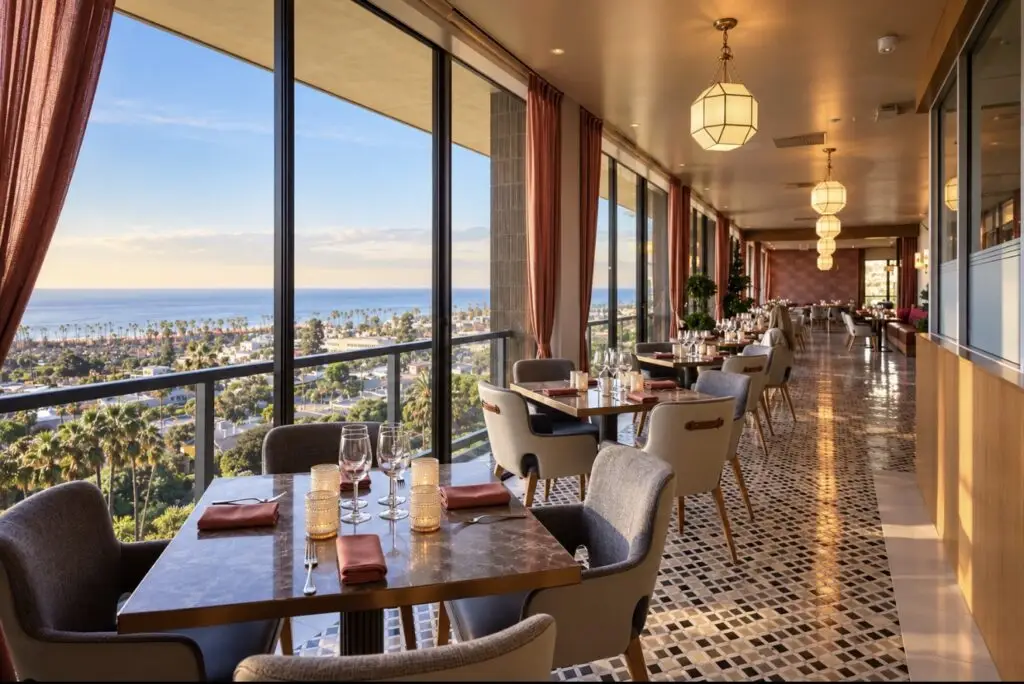
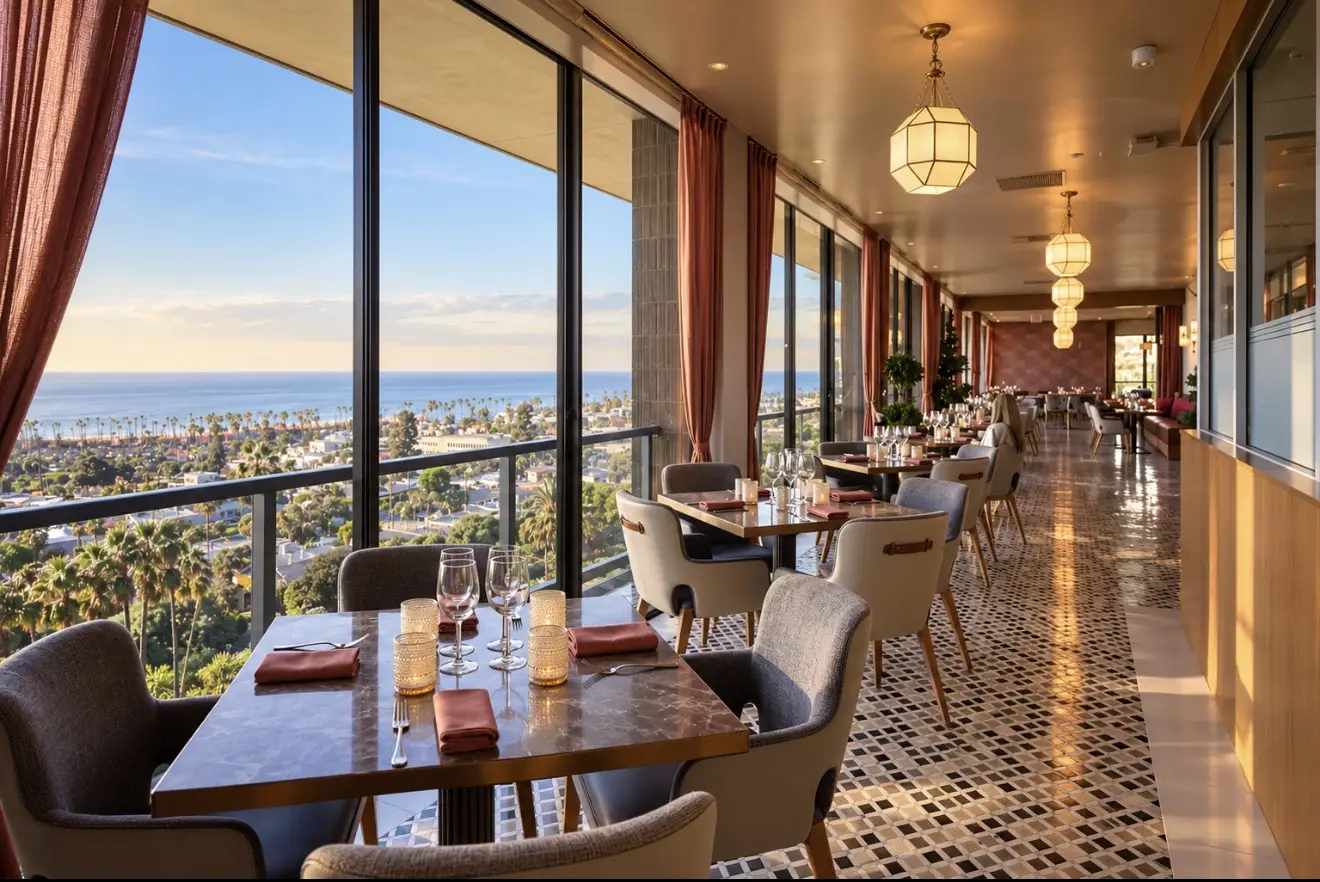
Opened in 2024, the Mission Hills restaurants offers a sky-high view from its top floor perch of The Sasan building at the corner of Washington and Goldfinch Streets. Guests enter through Paradis, the ground floor cafe on the way to the elevator, where a sanctuary-meets-sensuality vibe and strong cocktail program have gleaned generally positive reviews over the past year-and-a-half. But Cecchini wants to bring an infusion of new ideas to the kitchen.

Not too many all at once though, he says. To ensure loyal regulars will get the chance to get used to his approach to fine dining, he’s phasing out former chef Mike Moritz’s menu in stages, but says by the end of February the transition will be complete.
He’ll keep the tasting menu in some form or another, but at the very least expect twists on some of Communion’s signature dishes, like the za’atar-crusted lamb lollipops and the Spanish octopus. “[They’re] still going to be really approachable. It’s just going to be super flavorful, very colorful, but super seasonal,” he says.

Emphasizing seasonality much more will be a major part of Cecchini’s ethos at Communion. “You’ll never see strawberries on the menu in winter,” he promises. Tomatoes in February? Not on his watch. But there will more attention to plating presentation and dry-aging proteins like fish and duck. He’ll also incorporate some of his Italian heritage and training into the menu, like introducing Sardinian dumplings and using ingredients like bottarga, a salt-cured piece of roe that’s either grated or thinly sliced (like Parmesan) with an intense umami profile.
With Cecchini’s years of level experience, expectations are as high as Communion’s rooftop location. He has three words: bring it on.
“I want to invite everyone in for them to experience what’s different. I promise that everything that they come in and eat will be great,” he says. “I know that’s a big thing to say, but I’m feeling very confident.”
Communion is located at 901 W. Washington Street in Mission Hills.
Beth Demmon is an award-winning writer and podcaster whose work regularly appears in national outlets and San Diego Magazine. Her first book, The Beer Lover's Guide to Cider, is now available. Find out more on bethdemmon.com.
After years of closure, the wartime venue has been restored and will begin hosting community gatherings and celebrations once more
For more than 80 years, the North Chapel has been one of Liberty Station’s defining silhouettes. Opened in 1942, the multi-faith chapel has hosted Navy services, weddings, memorials, and countless community milestones during wartime years. Its story stretches from religious services for military men and women to cultural anchor.
Then came a stalemate. In 2018, a new tenant, 828 Events, proposed a modernization of the building’s interior, sparking fierce pushback from preservationists and neighbors. The San Diego Union Tribune reported that the online leasing opportunity boasted the chapel would be “perfect for a restaurant or retail tenant.” The suggestion that the historic chapel may become a restaurant caused uproar from local community members. According to Congressman Scott Peters’ official website, his office requested an investigation by the City Attorney. The plan was halted, but what remained was a structure in limbo.
In the years following, Liberty Station reshaped itself; breweries opened, restaurants buzzed with crowds, and gelato melted on children’s hands in sunny courtyards. The chapel remained unopened in a district otherwise reborn—until now, when Snake Oil Venue Company became its new stewards.

If you’re wondering why a company known for cocktails is reopening a historic chapel, the answer is simple: they’re no longer just a cocktail company. In 2019, after a decade crafting cocktails, Snake Oil launched its first venue, Julep, and pivoted into full-service events. Growth snowballed from there. This April, it opened Bramble Bay in Imperial Beach, followed quickly by Vesper at Liberty Station. In just one year, its footprint jumped from 32,000 square feet of event space to more than half a million.
But, even as experienced venue operators, the chapel was a unique endeavor. “This wasn’t acquisition; it was responsibility,” says Snake Oil’s CEO Michael Esposito.

The first time he walked inside, the neglect was unmistakable. “Here was a sacred San Diego landmark sitting quietly in a deteriorated state,” he recalls. Curtains were stained, corners layered with dust, and the once-ornate woodwork was overshadowed by a red carpet that “smelled like damp newspapers.”
The chapel had sat unoccupied since 2019, according to Joe Haeussler, executive vice president of Pendulum Properties Partners, which acquired the leasehold to the chapel and several other Liberty Station properties in 2018. After considering several proposals for the dormant space, Pendulum brought Snake Oil on in 2023 to reopen and steward the building. “We felt their plans were the most respectful of the historic asset and would open the building to the public in the right way,” Haeussler explained.

Rather than impose a new vision, Snake Oil chose preservation. While it’s now an events space, it has retained its original intent as a gathering place for the community. Restoration, in this case, meant listening to the building. When the team began pulling up the carpeting, they uncovered exquisite, period-specific 1940s Douglas Fir flooring. They refinished the planks rather than replace them, breathing life back into the chapel’s historic foundation. Even the stained glass windows, which were not part of the original Navy design, remained. The earlier plans featured frosted panes that brought in soft, controlled daylight, but the stained glass had become part of the chapel’s collective memory. The restoration cost nearly $1.2 million.

Beyond sentiment and preservation, the North Chapel’s renewed functionality includes a main hall which offers 4,000 square feet of flexible space and seats roughly 425 guests, with additional pew seating on a mezzanine. An adjacent side chapel adds another 600 square feet for more intimate gatherings. Outside, three connected exterior zones (over 3,000 square feet total) provide ample room for receptions, cocktail hours, or garden-style events.The venue will have a preferred-vendor list, with some flexibility for outside vendors. Beverage and cocktail service is handled exclusively by Snake Oil Cocktail Company.

Christopher Bittner at OBr Architecture, Tim Wright of Wright Management, and Andre Childers with Pacific Building Group Construction led the improvement process, while Melissa Strukel of We are Human Kind designed the interiors and furnishings. Bittner says the project was shaped less by reinvention than by attention to what was already there.
“The building itself was the inspiration,” he says. Rather than dramatic alteration, the work focused on careful adjustment. “The building needed small, yet thoughtful, modifications to allow the building to be used for the new use. We worked through many options for how the building would function and at each stage thought through the potential historical ramifications.”

As word spread of the restoration, the stories came streaming in, carried by people whose most meaningful life moments unfolded within its walls. “For some, it was a grandfather who found a moment of resolve here before leaving to serve in World War II,” says Esposito. “For others, a bride who walked down the aisle as a young woman, or the loved one of a first responder whose life was honored within these walls.” The stories varied, but the sentiment was shared: the chapel’s legacy matters.
Ingrid Yang, M.D., J.D. is a hospital-based physician in San Diego, CA, certified yoga therapist, and longevity specialist. She loves *double hearts* San Diego and spends her days helping people fully engage in long, healthy lives through evidence-based lifestyle medicine. Her books include Adaptive Yoga, Zen Mindfulness, and Hatha Yoga Asanas. When she’s not leading international wellness retreats, she is chasing sunsets, handstanding in nature, or geeking out over mitochondria.
SeaWorld dazzles with a drone show, big-name entertainers, new animal adventures and more
Nights are heating up at SeaWorld San Diego. The quintessential summertime staple on Mission Bay is transforming into a destination for unforgettable day-to-night adventures, bringing back some of its most popular Summer Nights programming and introducing exciting new experiences sure to delight both kids and adults alike.

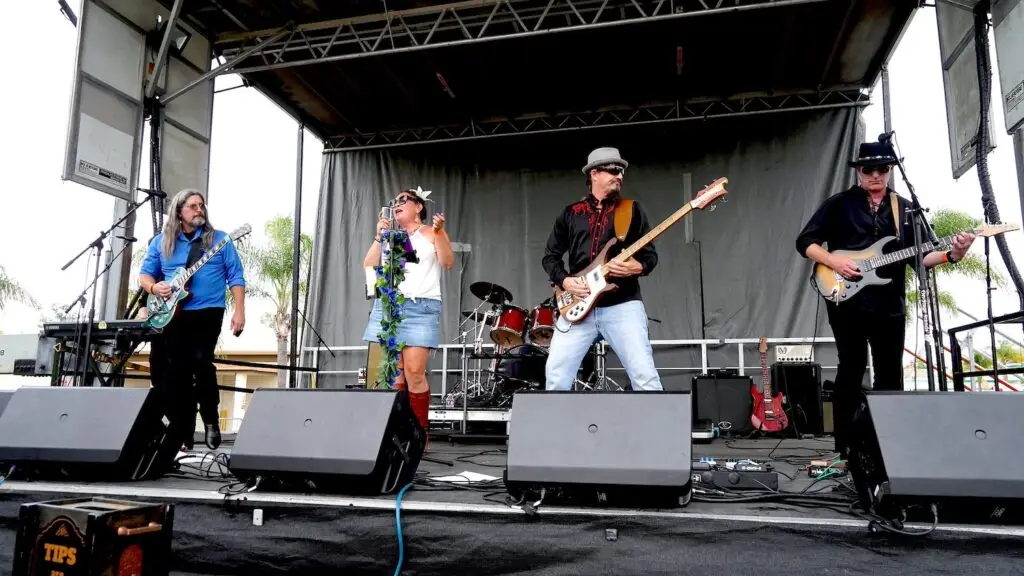
The 2026 Summer Day to Night at SeaWorld San Diego is the park’s most ambitious season yet. SeaWorld has planned a highly anticipated entertainment lineup that features nine weeks of throwback concerts featuring R&B and hip‑hop favorites from the ‘90s and early 2000s, including Jordin Sparks, Too $hort and Warren G, Ashanti, and an array of boy band heartthrobs performing together as part of the Pop 2000 Tour.
New this season is perhaps the park’s most visible update: a nightly drone show, Ocean of Dreams, which illuminates the sky with hundreds of synchronized sparklers. Drones form sea otters, sharks, dolphins, and a majestic orca that tell a breathtaking 12-minute story of marine life and underwater ecosystems. The show culminates with a spectacular electric neon finale celebrating hope, wonder, and ocean stewardship.
Nighttime visitors are also in store for animal adventures that fuse education with high-energy fun and the dreamy ambiance of nighttime. The park has launched two all-new animal presentations: Shamu’s Celebration: Light Up the Night and Dolphins: Touch the Sky. Shamu’s Celebration: Light Up the Night features vibrant lighting, music, and dynamic choreography that celebrates the power and beauty of killer whales. Dolphins: Touch the Sky showcases playful bottlenose dolphins and the special connection between humans and the natural world. And back by popular demand is fan-favorite Sea Lions Tonite. See the charming pinnipeds splash, play, and parody pop culture in this refreshed crowd-pleaser.

More must-sees: a newly reimagined Shark Encounter, one of the country’s more immersive exhibits highlighting 11 different species up close, SeaWorld’s beloved BMX Blast! stunt show, and high-seas escapade, Pirates Ahoy! The Battle for Mermaid Cove. And don’t miss the park’s all-new Deep Sea Disco, which encourages guests to dance the night away under the glow of the SkyTower, and vibrant closing time laser light display Laser Reef Summer Spectacular.
Amp up the nighttime vibe with local craft beers, curated cocktails, and nostalgic theme park treats with $1 beer all summer long. SeaWorld is the place for day to night summer fun. When the sun goes down, SeaWorld lights up, and inspires guests of all ages to embrace their inner whimsy and see why generations of San Diegans head to SeaWorld to make memories they’ll never forget.