Featured articles
Food & Drink
Food & Drink
Food & Drink
Featured articles
Food & Drink
Things to Do
Things to Do
Featured articles
Food & Drink
Food & Drink
Food News
Featured articles
podcast-ep
podcast-ep
podcast-ep
Featured articles
Food & Drink
Food & Drink
Features
Featured articles
Food & Drink
Food & Drink
Partner content
Ready to know more about San Diego?
SubscribeReady to know more about San Diego?
The CEO and mom of three shares her story behind the grand opening of her new Carlsbad location
Since her early days in Tempe, AZ, Andrea Van De Vort has had a passion for fashion—as illustrated in her fifth grade journal blueprinting her outfits months in advance—from the purse down to the shoes. Reminiscing on her childhood alongside 22 cousins, her fondest memories include going shopping with her female family members. What started out as a hobby eventually transformed into a dream career.
We all know San Diego is top-tier in countless categories: cuisine, location, beaches, you name it, yet one area that we tend to lack in is fashion. Van De Vort saw the perfect opportunity to change this. After a massive pivot from a bio-chem major to business, the fashion entrepreneur made her way from Arizona to Los Angeles, and finally to San Diego to open her first fashion boutique store, Van De Vort, in 2013.
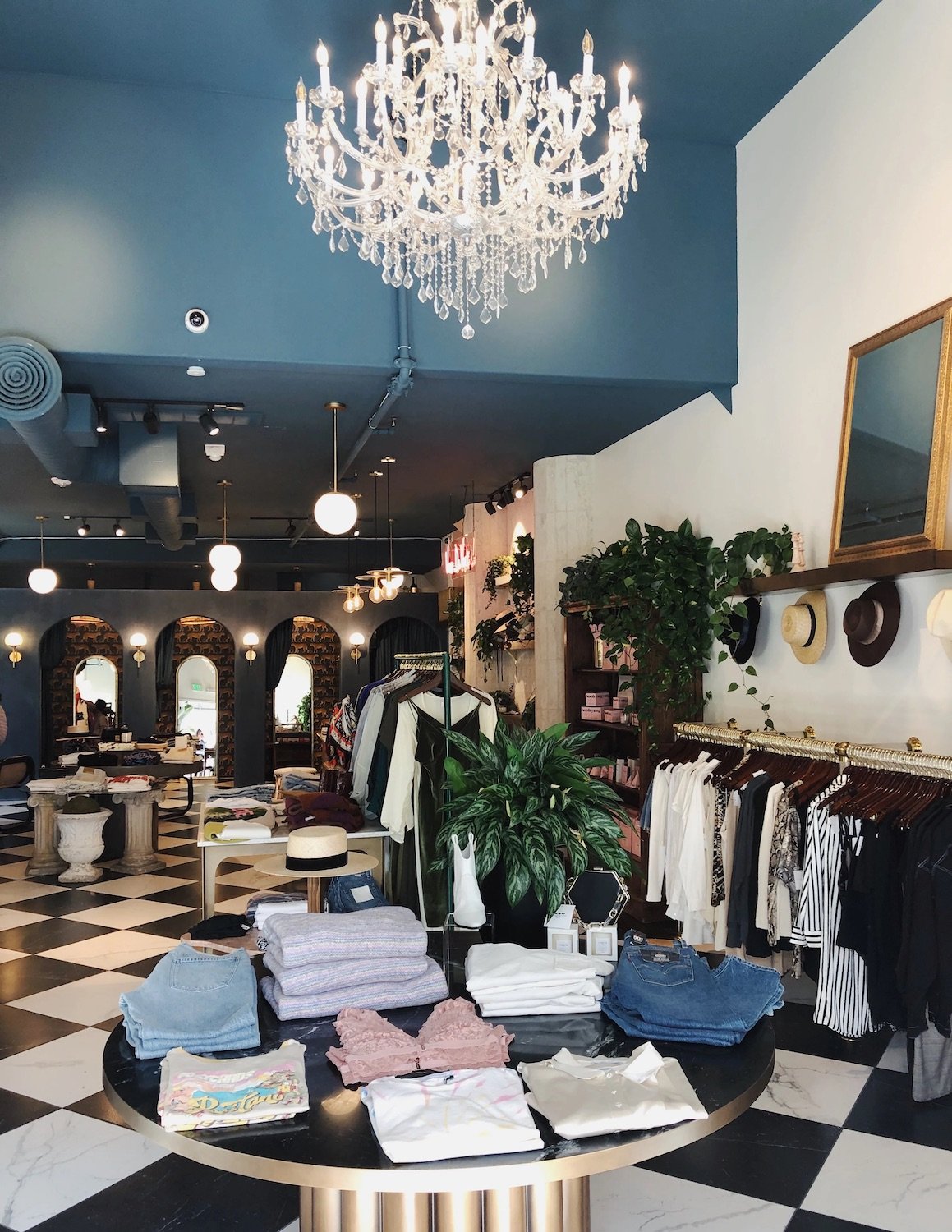
Van De Vort’s most recent expansion, and third brick-and-mortar shop at The Forum Carlsbad, is set to inspire even more fashion lovers through accessible and statement-making clothes and accessories, inspired by cutting-edge trends from Australian brands.
Following the Carlsbad grand opening on November 15, we chatted with Van De Vort to learn more about the growth of her business, balancing CEO and family life, and her personal style and advice.
Andrea Van De Vort (AVDV): We specialize in a very personalized, neighborhood company. We bring people of all walks and all phases of life into one location and bond over our love of fashion. The best times are when random people are in the store, like a 60-year-old and a 20-year-old, and everyone ends up having just a fun bonding experience. It makes a big neighborhood feel small.
Bringing all these brands to San Diego that you can only get from us and helping women push their limits, that’s always my favorite to do. Most people are a bit apprehensive to stand out in a crowd and always tend to go toward jeans and a t-shirt, but it’s our favorite thing when they walk out [of the store] with styles outside of their comfort zone.

AVDV: Just being done with the construction. There’s so much that goes into building a store and there’s so many moving parts, so I do all of that. Just having it all done was a huge weight off my shoulders and it was a relief to get it open and move on with my life. And then just having my friends, my family, and people at the shop with us since day one when they’re there to celebrate.

AVDV: I would say it’s kind of all over the place. Some days I am mom-ing and I’m just wearing baggy jeans and sneakers, but I also love dressing up and having a reason to dress up. But you’ll never catch me without accessories—my layered necklace, six earrings on, my fingers full of rings. Even if I am in my sweats, I still have my jewelry on.
Australian labels have definitely had an influence on my personal style. They are always one season ahead in fashion, so I think I have always been inspired by Australian style. It’s a bit more funky and not your everyday kind of vibe. Also my employees, they are 15 years younger and very “in the know” so I get inspired by them when they come into work and they’re dressed in something from the store.

AVDV: It’s very hard. I have many panic attacks everyday. No, I’m just kidding. I have a lot of help. We have a really amazing nanny for the babies. And my employees, I have such a good team who are all young and excited and willing to pick up any kind of tasks that I might have to pass off to them. So it’s really just teamwork and taking each day at a time. I also want to give my husband a shout-out. He does help a lot.
PARTNER CONTENT
AVDV: Getting experience in all parts of the industry helps. My first job was working for a denim company. It was a really big corporate company, so I got to see all the different roles that go into making a brand work. Just getting experience and weighing out your options and seeing exactly what you like. And then of course reaching out to mentors or anyone in the community. I feel like most people, most entrepreneurs at least, are willing to offer up advice for people trying to get into it.
AVDV: I definitely want to open a couple more locations. We will most likely stay in San Diego, just because it’s easy to reach and traveling isn’t really an option for me right now. And then we are also launching our new in-house label next Spring. One of the private label designers from Revolve is helping us get that line developed, so that will be fun.
Maren Hawkins is a freelance writer in her last year at San Diego State University. When she is not writing, she spends her time playing beach volleyball, thrifting for the cutest clothes, and traveling whenever possible.
Một Bánh Mì melds Vietnamese and Mexican traditions in a new pop-up concept featuring its take on a local favorite
Is there any food more quintessentially San Diegan than the California burrito? That was a rhetorical question since the French fry-stuffed, flour tortilla-wrapped torpedo of carne asada bliss came into being in the 80s (either invented by Lolita’s or Santana’s, depending on who you ask). But now, Vietnamese-Mexican pop-up Một Bánh Mì may be giving the longtime champ a run for its money.
Một Bánh Mì’s original California banh mi takes cues from both cultures, using traditional Vietnamese baguettes from Paris Bakery filled with carne asada and garnished with cilantro-jalapeno crema, Vietnamese mayonnaise, pickled vegetables, cilantro, cucumber, jalapenos, and of course, French fries.
“It’s so San Diego—it’s so us,” says Desmond Bui, pop-up founder and owner with partner Marisol Santiago. “It really encapsulates the Vietnamese-American and Mexican-American journey and identity here.”
Both grew up in San Diego. Bui is Vietnamese. Santiago is Mexican-American. The sandwich makes utter personal sense.
Neither of them cooked professionally before launching Một Bánh Mì earlier this year, when they popped up for the first time at Convoy Rising for Lunar New Year. But after seeing the rise of the local Vietnamese coffee scene with shops like Saigon Coffee, Chance’s Coffee, and Em Coffee House, Bui knew there was an opportunity for a new generation to put a fresh spin on Vietnamese food in San Diego.
While there are plenty of places to grab a banh mi around town (K Sandwiches, Ba Le French Sandwich Shop, Lee’s Sandwiches, and so on), we’ve yet to hear of a California banh mi. Firsts are being firsted.
“Banh mi is regarded by top chefs as the best sandwich in the world,” says Bui. (Side note: I concur.) And after discovering overlap between Mexican and Vietnamese cuisines through common ingredients like cilantro, lime, jalapeno, white onion, and pickled vegetables, they began planning a menu.

Một Bánh Mì also serves Bánh Mì Đặc Biệt (Vietnamese cold cuts), Bánh Mì Thịt Nướng (grilled lemongrass pork banh mi), and Bánh Mì carnitas de hongos (mushroom pâté banh mi), along with some specials like Thịt Nướng tacos (grilled lemongrass pork) and hopefully soon, al pastor trompo banh mi (marinated pork shaved off a spit) and charcoal-grilled adobada.
Other banh mi shops Americanize names for English-speaking audiences—for example, listing “grilled chicken sandwich” instead of Bánh Mì Gà Nướng. Not Một Bánh Mì. If you’re not sure how to pronounce something, Bui says they’re happy to help. It’s an educational opportunity, he explains, as well as a chance for them to be “unapologetically Vietnamese and Mexican.”
Part of the immersive experience is playing Vietnamese tunes from the ‘60s and ‘70s.
“When you think of universal languages, what are ways when you travel or meet a different group of people that you can still find common ground and connect and feel like we’re a lot more alike than we are different?” Bui asks. “Food and music.”
The musical element is part of Một Bánh Mì’s greater vision. They’d like to evolve into a lifestyle brand and media company, with merch, jars of pickled vegetables, you name it. Eventually, they’d like to open a brick-and-mortar somewhere in Mid-City. In the meantime, they’ll continue to pop up at places like Mixed Grounds and Chance’s Coffee, or wherever they can. (Bui called Provecho Coffee their “dream collab,” hint hint.)
Listen Now: The Latest in San Diego’s Food and Drink Scene
Have breaking news, exciting scoops, or great stories about new San Diego restaurants or the city’s food scene? Send your pitches to [email protected].
Beth Demmon is an award-winning writer and podcaster whose work regularly appears in national outlets and San Diego Magazine. Her first book, The Beer Lover's Guide to Cider, is now available. Find out more on bethdemmon.com.
Peruse the EXPO Design Market, savor the Sabor Del Barrio, and see a plethora of sets at North Park Music Fest
There’s a creative inertia that resides in San Diego, producing a near-constant stream of cool events. Fortunately, this weekend is no different. Those with an artistic inkling can search for inspiration at MCASD’s EXPO Design Market or admire the mixture of live performance and neighborhood charm during the North Park Music Fest. Foodies can dine (with wine) at Stake Chophouse & Bar during its ZD Wines Dinner or explore Barrio Logan’s standout eats at the Sabor Del Barrio. Plus, Pride Month is already in full swing in SD with the return of DISCO RIOT’s Queer Mvmnt Fest and the two-day Out & Abt Music Festival.
Food & Drink | Concerts & Festivals | Theater & Art Exhibits | More Fun Things to Do

Stake Chophouse & Bar is collaborating with Napa Valley’s ZD Wines—a family-run winemaking institution that’s been around since 1969—on an intimate four-course dinner this Thursday at 6:30 p.m. Throughout the meal, each dish will be paired with a curated pour from ZD Wines, with patrons set to receive a chardonnay, pinot noir, and pair of cabernet sauvignons. Dinner guests will also be treated to insight on the night’s wine pairings from ZD Wines’ senior winemaker Chris Pisani. Reservations are $210 pre-paid through OpenTable.
1309 Orange Avenue, Coronado
Take advantage of all the dynamic attractions that the Barrio Logan Cultural District has to offer—and eat very well while you’re at it—during the third annual Sabor Del Barrio. This Sunday from noon to 4 p.m. attendees can devour their way through 35 neighborhood staples and traverse the tasting stops on foot, by bike, via a free trolley shuttle, or a combination of the three. Tickets are $40 online ($55 day of) and come with complimentary admission to Quint Gallery, the Athenaeum Art Center, and the Chicano Park Museum & Cultural Center, plus a free tour of Tao of Clay.
Barrio Logan
Survey the depth of oral storytelling during the free annual Sam Hinton Folk Heritage Festival this Saturday from 10 a.m. to 4 p.m. at Old Poway Park. Named for harmonica virtuoso, marine biologist, and longtime San Diegan Sam Hinton, this event highlights folk artists who specialize in time-honored traditions. Throughout the day, attendees can see performances by musicians with roots in Americana, Cajun, and Appalachian rhythms on the main stage, dance in the Templars Hall, and hear historical tales from the Storytellers of San Diego in the Porter House.
14134 Midland Road, Poway
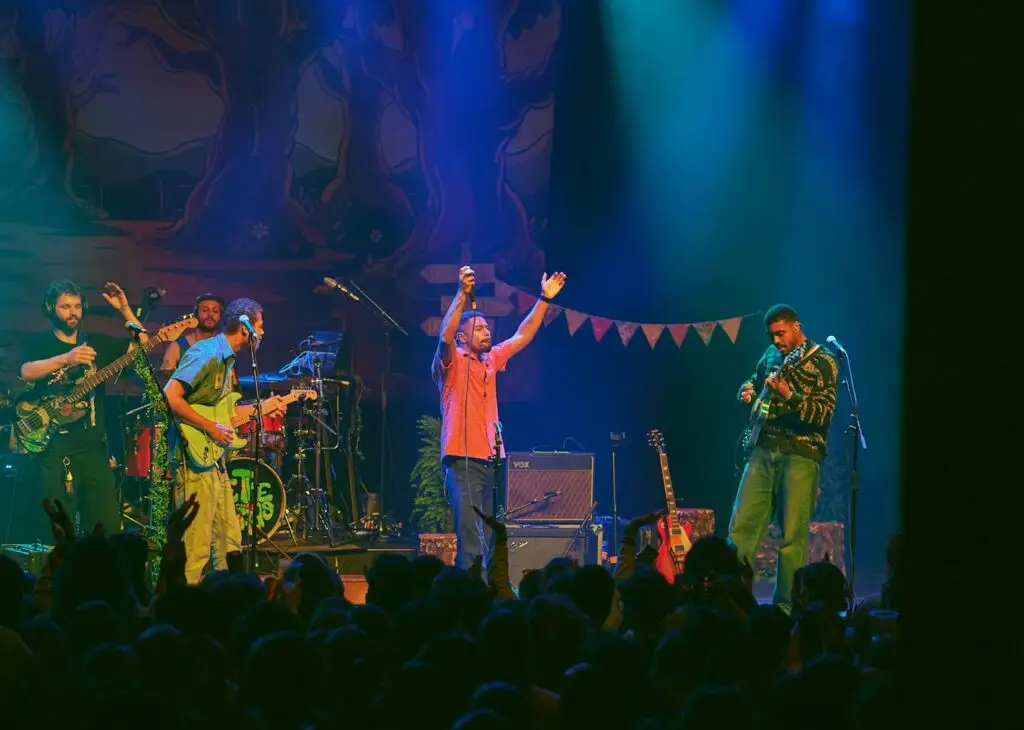
Psychedelic rockers Frankie and the Witch Fingers will headline an eclectic lineup at the North Park Music Fest. This Saturday, enjoy sets from noon to 1:45 a.m. from over thirty performers—including DJs, bands, and local acts—across a dozen North Park venues. Ticket options include general admission ($25 online, $35 day of) and VIP passes ($65) which come with lounge access at Granada House, line-skipping privileges and more; festival proceeds will go towards the North Park Business & Neighborhood Foundation. Plus, performances at Pure Pawsh, Visual Art + Supply, Overland, and Playground Art + Coffee will be open to the public.
North Park
The calendar has just flipped to Pride Month, and Out & Abt is celebrating in style. The two-day Out & Abt Music Festival begins Saturday from 3-10 p.m. at The Soap Factory with drag shows, circus acts, a manic pixie dream market, two stages of live music, and last but not least, a mechanical bull. The festivities will continue with an after party from 10 p.m. to 2 a.m. at Gossip Grill and conclude with an afternoon pool party at Hard Rock Hotel San Diego on Sunday from 1-7 p.m. Ticket options include weekend general admission passes ($70), and entry to the music festival ($30), after party ($17) and pool party ($27).
Citywide

Fresh off its Drama Desk Award-winning run in the Big Apple this past winter, The Monsters will have its first West Coast production beginning Tuesday in the Mandall Weiss Forum at La Jolla Playhouse. Written by and co-starring Ngozi Anyanwu, The Monsters finds its reconciliatory narrative in a young woman yearning to repair her relationship with her estranged older brother in the brutal and unforgiving world of mixed martial arts. The Monsters will have preview performances this Tuesday through Thursday at 7:30 p.m., Saturday at 2 & 8 p.m. and Sunday at 1 & 7 p.m., with tickets ranging from $30-$74.
Ryan Hardison is a freelance arts and entertainment writer and recent graduate of San Diego State. When he's not staring at his laptop, he's likely eating an adobada burrito or getting sunburnt at the beach.
June Gloom isn’t stopping San Diegans from making the most out of the month. There’s something for every music lover, from swaying to smooth jazz at The Rady Shell to rocking out at Slightly Stoopid’s Field of Dreamz Festival. Art enthusiasts can visit the Mingei for an exhibit showcasing Native American and Pacific Rim heritage, […]
June Gloom isn’t stopping San Diegans from making the most out of the month. There’s something for every music lover, from swaying to smooth jazz at The Rady Shell to rocking out at Slightly Stoopid’s Field of Dreamz Festival. Art enthusiasts can visit the Mingei for an exhibit showcasing Native American and Pacific Rim heritage, while foodies can try the latest fried fad at the San Diego County Fair. Whatever your interests, it’s time to text the group chat and make some plans. Here are all the best things to do in San Diego this month:
Concerts & Festivals | Theater & Art Exhibits | More Fun Things to Do
World-class jazz musicians are returning to The Rady Shell for the San Diego Smooth Jazz Festival.
“If you build it, they will come,” and so they shall to Slightly Stoopid’s inaugural Field of Dreamz Festival. The OB-native rock band will share the lineup with Stephen Marley, Sublime, Pepper, and more at Petco Park.
Khalid is headlining his first tour since 2019—this time for the R&B and pop showstopper After the Sun Goes Down—and he’s ready to dance through Cal Coast Credit Union Open Air Theatre.

With a beat that can’t be stopped, New Village Arts will revive the joyful musical Hairspray, a fusion of teen pop stardom and racial integration in Civil Rights–era Baltimore.
Cat Gunn poignantly examines the impact of forced separation from ancestral lineage through If Only by the Light of a New Moon, their solo museum debut at ICA Central.
See lasting visions of cultural heritage via Clearly Indigenous: Native Visions Reimagined in Glass, a traveling showcase for Native American and Pacific Rim glassmakers at Mingei International Museum.

Proceed to Pride Month with the Out & Abt Festival, featuring a carnival-themed playground at The Soap Factory, an afterparty hosted by Gossip Grill, and the next day, a sapphic poolside bash at the Hard Rock Hotel.
Imagine and experience your favorite fairytale ending during the San Diego County Fair, which returns this summer with a new theme: Once Upon a Fair.
The return of the Switchfoot Bro-Am means two things: an elegant seaside fundraiser in North County and a free bash at Moonlight Beach full of sun, surf competitions, and live music.
For the first time, NASCAR will start its engines in San Diego. Naval Base Coronado will host this one-of-a-kind racing spectacle to commemorate the U.S. Navy’s semiquincentennial.
Itadakimasu! In other words: Let’s eat! Sample, then rank, the best Pan-Asian dishes from local eateries at Julep Venue during SD Mag’s 21+ Omakase Open, done to support the Convoy District.
If you ever needed a reason to eat ice cream and gelato, here’s a charitable one. Raise money—one waffle cone at a time—for Feeding San Diego during this year’s Scoop San Diego festival.
Ryan Hardison is a freelance arts and entertainment writer and recent graduate of San Diego State. When he's not staring at his laptop, he's likely eating an adobada burrito or getting sunburnt at the beach.
A look back at the risks, grit, and instincts behind the local restaurant powerhouse
In this city, chef Brian Malarkey and restaurateur Chris Puffer are kind of like peanut butter & jelly, tacos and Tuesday, Padres and Petco—they just go together. This month, the duo celebrates 10 years of partnering on some of San Diego’s top restaurants including their first venture, Herb & Wood.
To celebrate this milestone, we stepped back and revisited their journey becoming some of this city’s most successful restaurateurs.
But first, let’s go back to the beginning. The duo met at Oceanaire in 2007 where they both worked. Malarkey was still riding the high from his stint on Top Chef Season 3 where he won runner-up. He was a great chef, Puffer recalls, if not a tad arrogant. Whatever he was doing, though, it worked. Sales doubled under his watch.
In 2009, Malarkey was approached by some patrons to start what would become Searsucker. He knew he wanted Puffer to be his partner. They had great chemistry and loved hospitality and food. “We both came to this with a bit of a chip on our shoulder,” says Malarkey. “We wanted to prove it to other people that we know what we’re doing.”

Searsucker, Gabardine, and Herringbone (under the Fabric of Social Dining restaurant group) were born through the new partnership. But in 2012, they sold their concepts to Hakkasan and soon partnered on a new lease.
That building would eventually become Herb & Wood. “We were going to do it differently this time around,” says Malarkey as he reflects on Wood’s early days. “And we [wanted to] build it to last.”
The vision: Great food. Great music. Great service. It’d be a place where diners would let go, put their phones down, and be fully present to enjoy a meal together. When they walked into 2210 Kettner Blvd, they knew they had found their spot.
The only problem was that, at the time, that area of Little Italy was still severely underdeveloped. In a 8,500-square-foot space, they were going to have 230 seats to fill. “It may as well have been on Mars,” says Troy Johnson, San Diego Magazine publisher, content chief, and the city’s longtime food critic.

And, of course, there were the naysayers. The prevailing feeling in the dining world was, “Let’s see what these f**king idiots do,” recalls Malarkey. The duo let all the noise be noise. In fact, the noise fueled them. “We weren’t going to cater to the haters,” Puffer says.
Their next hurdle would be to tackle the restaurant’s design. “There was nothing. It was literally a box,” says Puffer of the former space. Design teams were too expensive or didn’t quite get their vision—no, they didn’t want exposed beams or wooden tables made from reclaimed barns. “Then, Puffer was like, ‘f**k it, dude, I’m going to design this restaurant.’”
Having never really designed something like this before, he decided not to work in the programs that most professionals use to create their layouts. 3D mockup? Didn’t need it. CAD? That’s what a paper and pencil are for.

“It was all in my head,” he recalls. “I had this moment where I was like, ‘If I died right now, no one would know where any of this shit goes.’”
“Yeah, it made no sense,” Malarkey says.
And it still doesn’t if you hear him explain it. A mishmash of vignettes from the inner workings of his memory bank, evoking everything from Mississippi riverboats to Eiffel tower ironwork, Kensington home façades, an old theater he frequented, and a canoe, because why not? Yet somehow, it all worked.
“It’s a sense of nostalgia,” says Puffer. “People might say, ‘Oh, my gosh, this feels good’ and they don’t realize it reminds them of the time they were in Paris.’”
“We don’t play trends,” Malarkey says. “We play timeless.”

Over the course of many years and plenty of trial and error, the partnership has continued to thrive. And, the Puffer Malarkey Collective has found its sweet spot within their restaurants: The service had to be kind and unpretentious and the food had to come out quick, delicious, and consistent. “Consistency is key!” says Puffer.
They also learned to balance out one another. “He’s a go-go-go-go [person],” says Puffer, “I’m a let’s-take-a-deep-breath-and-sleep-on-it [type of person].”
So, when they opened the doors to Herb & Wood in April of 2016, with those lessons in place, everything was just right. “We knew it had to fire on all cylinders,” says Puffer. “And it did.”

There was no pretense and the dress code was exceedingly simple. “Money in your pocket,” says Malarkey. “That’s all you need.”
The phones rang, the seats filled, and the haters had to give it to them, those gnocchi hit. People began embracing every aspect of the place, even the edgier ones.
“We thought people were going to complain about all the paintings with boobs,” says Puffer of the many John Lanes on the wall. “But the amount of people who take pictures in front of the boobs is amazing.”
They even had a middle finger statue that Puffer had picked up from a yard sale. If a table was rude or antagonistic toward the staff, he’d walk over to them with the finger. “Congratulations,” he’d say, handing it over. “You’ve won asshole of the night.”

The point is, they were ready to laugh (and not take shit from anyone). When someone wrote a review of Herb & Wood and called it Weed & Boners, they both had a laugh. It’s one of the keys to longevity.
Along with the fun and deliciousness, they’ve also served as a culinary talent incubator for San Diego. “It’s like a centrifuge,” says Johnson about Herb & Wood. “They train up all these young chefs and start spinning all this talent into different parts of the city.”
There’s Sebastian Becerra with Pepino, Samantha Bird of Relic Bakery, Aidan Owens at Herb & Sea, and Tara Monsod of Animae and Le Coq (San Diego’s first James Beard award finalist) to name a few. “They’ve expanded the footprint of the food revolution in San Diego,” says Johnson.
Their plans for the next 10 years?
“We’re just going to keep the magic going,” says Malarkey.
"The Distinct Modernism of San Diego" tells the story of how some architects pioneered their own style in 20th-century San Diego
San Diego is just out here minding its own business. It’s long been cast as Los Angeles’s less ambitious sibling—the chill one, the one who shows up late for dinner reservations in flip-flops with a few provocative opinions. Architecturally it’s often cast the same: secondary, derivative, a footnote to California modernism that seems to begin and end with the Stahl House (Case Study House #22). LA has Pierre Koenig, Craig Ellwood, John Lautner. San Diego has the original fish taco.
But this version of the story is redacted, metaphorically speaking.
While the jazz hands of Hollywood and its hills cast a spell on historians and architecture buffs, San Diego had, and has, its own quiet evolution: It invented and reinvented itself through homegrown modernism, beginning with The Allen House (1907) in Bonita by Irving J. Gill.
“The biggest misconception is that San Diego was following Los Angeles,” says Keith York of Modern San Diego, one of the city’s top guides to modernist architecture. “Those who consider Rudolph Schindler and Richard Neutra as the fathers of Southern California Modernism often fail to recognize the outsize influence Gill and his buildings had on their work.”

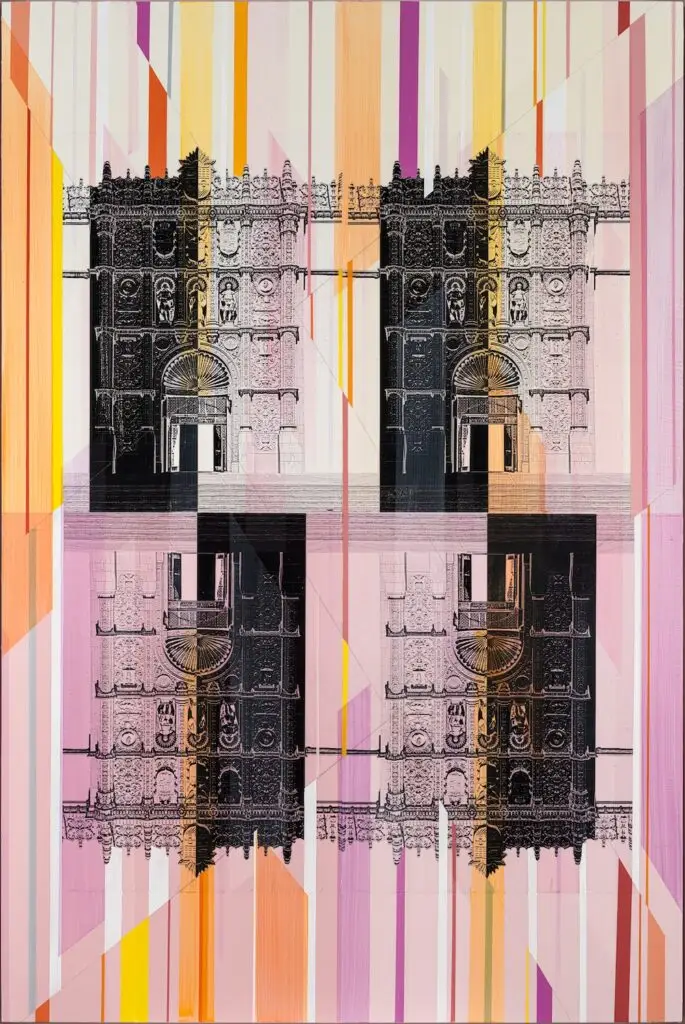
A new book, The Distinct Modernism of San Diego—written by Mark Hargreaves and Hallie Swenson, published by York—focuses on eight architects who were born, raised, or built their careers in San Diego. It illustrates how the city wasn’t hosting weekend warrior architects on side quests. It was a staging ground for a less look-at-me modernism from luminaries like Gill, Lilian J. Rice, Richard Requa, Lloyd Ruocco, Frederick Liebhardt, Kendrick Bangs Kellogg, Sim Bruce Richards, and Cliff May.
“Absent the backstabbing competition for projects, a collegial group of architectural peers collaborated and maintained lasting friendships with one another as they designed in response to the temperate climate and slower economy,” York says.
Largely unknown until the mid-1960s, Gill is a marquee name today. He arrived here from the East Coast at a moment when San Diego was still defining itself, which gave him the freedom to invent something new, experiment, rebel.
Instead of imposing the flourishes and frills of the time, he considered San Diego’s climate, light, landscape, history—the joie de vivre—and designed for this place. “[Architects of the west] must have the courage to fling aside every device that distracts the eye from structural beauty, must break through convention and get down to fundamental truths,” he once said, a sentiment that nails the un-ornate, total lack of pretension that’s defined San Diego people and culture.
And, lo, did Gill fling: His flat roofs, clean lines, and almost no ornamentation—though not necessarily modernism in the Eames or Eichler sense—foreshadowed what would later be called minimalism. Gill eventually became synonymous with the Los Angeles narrative, but broader architectural histories overlook the fact that his most progressive designs happened here.

Another key to San Diego’s architectural movement was Lilian J. Rice, who often worked behind the scenes with little credit. She was one of only about 10 women in America licensed as architects at the time. Even though she died from cancer at 43, she somehow managed to complete an estimated 170 projects in the region, many in Rancho Santa Fe.
Born and raised in National City, Rice also wasn’t importing ideas. She shaped her own based on her understanding of this region and her commitment to protect the natural environment. Her work has been categorized as Spanish Colonial Revival, but she wasn’t reviving as much as she was refining a style suited to our border region—serene, mirroring nature, beautiful.
“San Diego architects were designing for a way of life, not just a look,” says York.
Like Sim Bruce Richards, who was his own way of life. While Gill stripped away ornamentation and Rice focused on the peace of open spaces, Richards came along several decades later and went full emo. By then, modernism had grown deep roots; its steel-and-glass structures took themselves very seriously. Richards came to party.

An eccentric, unpredictable man with half a face (part of his jaw was removed following a bone infection when he was a child), his life was a jalopy of adventures. He was opinionated and passionate about design, music, texture—and he created what he called a “sensuous environment.” He wanted his clients and their guests to feel the spaces as much as to be in them, appealing to the visual, tactile, nasal (“a cedar house smells good”), auditory (“acoustically superior”), even taste. “Though, I‘ve never had a client lick my houses,” he once wrote.
Organic, woodsy, textured, aromatic—if you ever find yourself in a Sim Bruce Richards house, a licking impulse might not seem so outrageous.
Gill, Rice, Richards and the other architects in Distinct Modernism built a legacy in San Diego that resonates nationally. And the work of these heavy hitters isn’t stuck in an inaccessible collectors realm: This October, homes by Kellogg and Liebhardt will open to the public as part of the La Jolla Modernism Home Tour—an opportunity to experience it not as a museum relic or magazine image (ahem), but as something alive.
Modernism in San Diego was never about glamour or an intention to be iconic. What transpired here is more nuanced, more ingrained with a less shouty aesthetic. A very San Diego aesthetic.
Hear The Sound of Music, reserve a seat at The Blank Table and spend two days jamming at Fiesta Del Sol
Dive into the unexpected this weekend, where curated meals, experimental performances and behind-the-scenes experiences await. Foodies are invited to the first 2026 gathering of The Blank Table as well as Chef Onyi’s seasonal Rooted dinner at Millport. Broaden your artistic horizons with Project [BLANK]’s Working Title No. 5, or check out the genre-bending musical lineups at Seek Fest or Fiesta Del Sol. As an added bonus, The Rosin Box Project is pulling back the curtain and opening a trio of after-hours rehearsals to the public ahead of its new Incubator Lab show.
Food & Drink | Concerts & Festivals | Theater & Art Exhibits | More Fun Things to Do
San Diego may be a craft beer capital, but it’s also home to a diverse array of wineries. During the San Diego County Vintners Association’s annual San Diego Wine Week, oenophiles can sample several of the best pours the region has to offer. The centerpiece event, Sunday’s all-inclusive SDCVA Wine Festival from 3-6 p.m., will feature over 20 local wineries at Bernardo Winery; general admission is $90. Additional Wine Week events include Vintners Table at Cordiano Winery (Thursday), San Diego Wine Country at the Bay at Mission Beach Women’s Club (Thursday) and the Seedling Soiree at Olivewood Gardens (Saturday).
Citywide
The Blank Table series is an exercise in local culinary creativity, innovation and collaboration with the most secret of ingredients readily available: the element of surprise. On six Thursdays from May-October—with year seven of the series beginning this Thursday at 6 p.m.—60 patrons will be served a unique menu with five set courses, each with curated cocktail pairings. And to keep the air of mystery alive, the dinner location and menu will not be disclosed until 24 hours ahead of time. Tickets are $275 for Thursday’s dinner and a season pass for all six monthly dinners is $1,402; a portion of event proceeds will be donated to Feeding San Diego.
Surprise Location
Chef Onyinyechukwu Akpa welcomes food lovers to try a seasonal spread, dually inspired by her mastery of West African flavors and California’s seasonal ingredients, during the second edition of Rooted: A Dinner Experience at Millport. This Saturday from 6-9 p.m., chef Onyi will serve a five-course tasting menu, with dishes such as slow roasted beef, plantain upside down cake and akara, Nigerian black-eyed pea fritters. The meal will be entirely gluten-free, with vegan accommodations also available. Tickets are $115 and can be purchased here.
775 13th Street, Imperial Beach
Dearest reader, Estanica La Jolla opens up its grounds once a month for its outdoor Tea in the Garden series, and you’re in luck, because this month’s tea time is inspired by the enchanted English setting of Bridgerton. During the Bridgerton & Blooms High Tea this Sunday from noon to 3 p.m., guests can savor an afternoon worthy of the ton, complete with floral accoutrements, custom teas, cocktails, finger foods and enough sweets treats for Lady Whistledown to write home about. Tickets are $82.
9700 North Torrey Pines Road, La Jolla

Over the years, Juvenile has more than proven himself as an all-time emcee, with his breakout 1998 album 400 Degreez still a defining example of the South’s hip-hop brilliance. This Friday at 7 p.m. at House of Blues San Diego, Juvenile will play hits like “Slow Motion” and “Back That Azz Up,” along with selections from Boiling Point, his first album in 12 years. Plus, he’ll be joined by the sensational 400 Degreez Band, and as anyone who’s seen his NPR Tiny Desk performance already knows, Juvenile with a live ensemble is a match made in music heaven. Tickets start at $55 for this concert.
1055 Fifth Avenue, Gaslamp
Kuumba Fest returns this Saturday from 11 a.m. to 5 p.m. with the theme of “Black 2 Mind, Spirit & Body” for its 34th annual iteration. This free community festival, organized in support of the city’s Black Arts + Culture District, will feature DJs, dancing, spoken word, musical performances and an African marketplace with food, apparel, health resources and more. Then from 6-8 p.m. at the Elementary Institute of Science, the festival will conclude with a screening of the documentary American Curl followed by a Q&A panel with the film’s producers.
6381 Imperial Avenue, Encanto; 608 51st Street, Emerald Hills
Ryan Hardison is a freelance arts and entertainment writer and recent graduate of San Diego State. When he's not staring at his laptop, he's likely eating an adobada burrito or getting sunburnt at the beach.
KQ Aesthetic Society goes beyond cosmetic to provide comprehensive care and transformative results
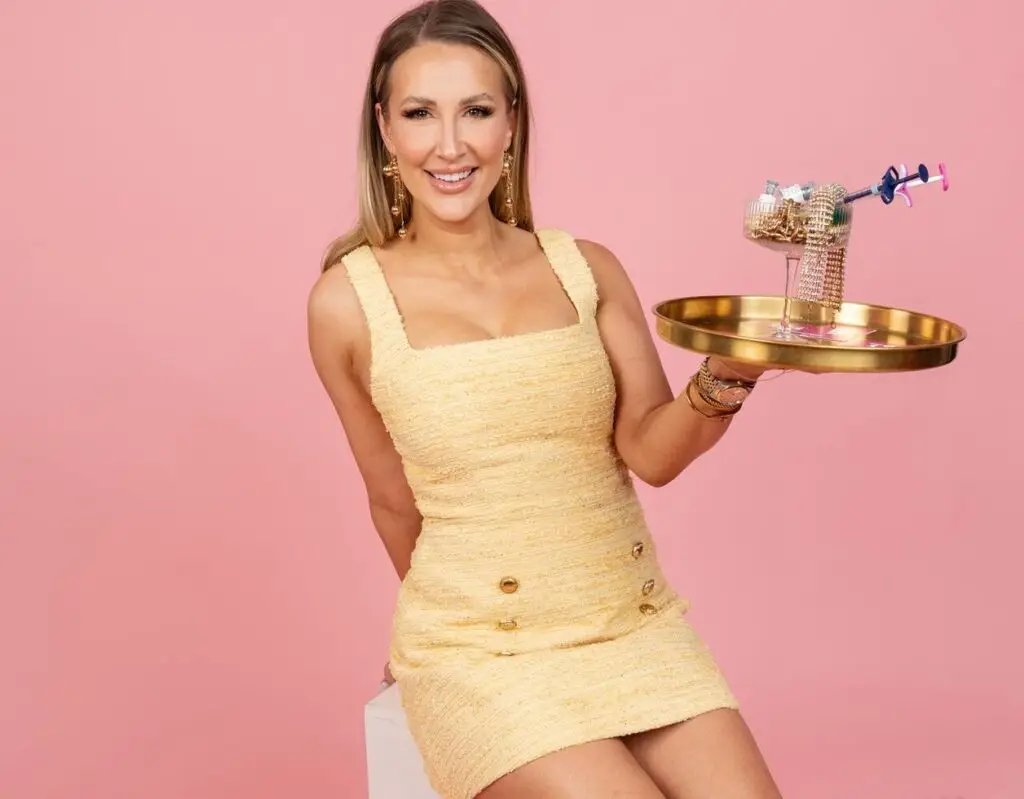
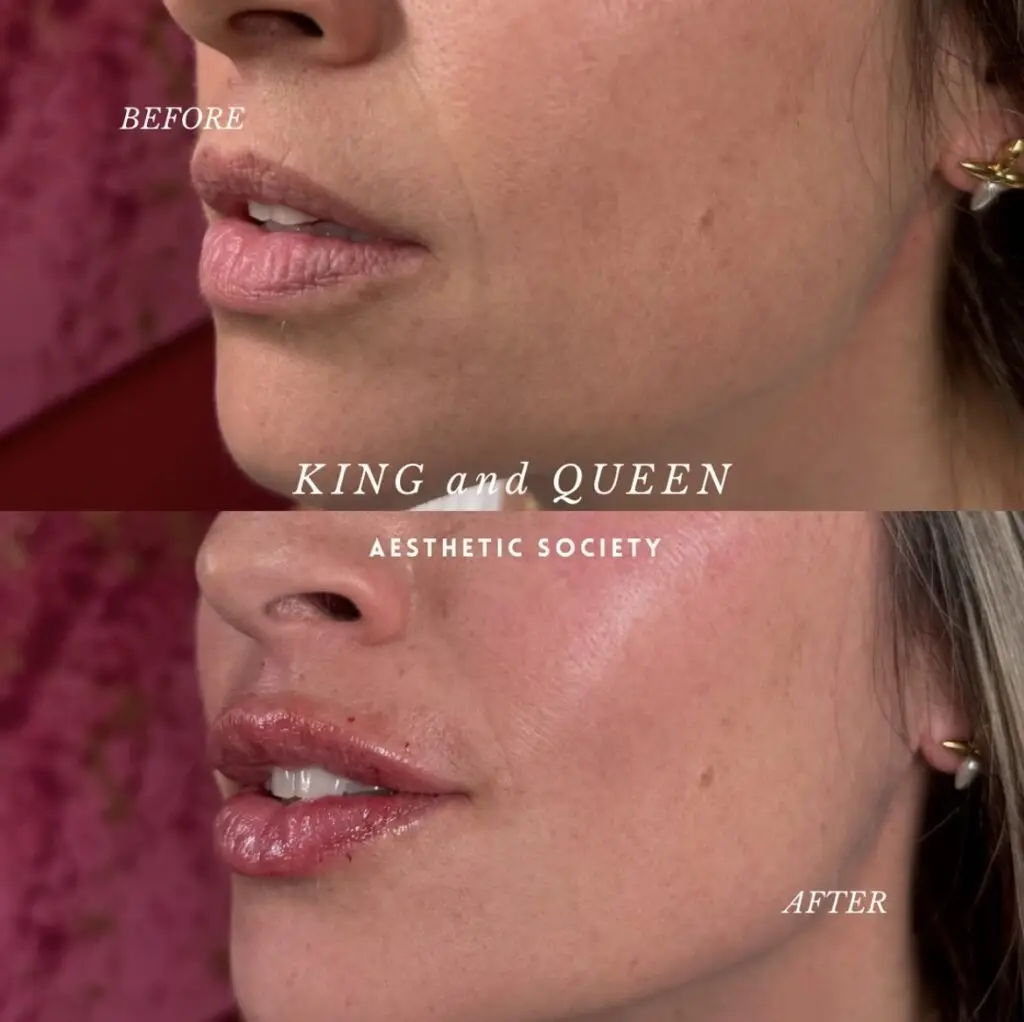
Kelly H. Harfouche, founder of KQ Aesthetic Society, knows firsthand that cosmetic treatments like fillers, neurotoxins, and microneedling, can not only enhance a person’s appearance and restore confidence, they have the power to truly change a person’s life. An expert injector has the ability to tailor treatments to each individual patient’s anatomy and goals for personalized results. Harfouche, a board-certified nurse practitioner, has spent nearly a decade perfecting her craft as an aesthetic injector and integrating her multifaceted artistic skills with precision patient care. Her commitment to continual education and training, plus a passion for helping people look—and feel—their best, set KQ Aesthetic Society apart in a sea of local medspas.
For many people considering nonsurgical treatments, the intent is to look refreshed and refined. KQ Aesthetic Society’s philosophy eschews a cookie cutter approach that bases treatments around units, instead working to understand each person’s unique goals, then curating a treatment plan to fit that vision. Harfouche focuses on “inclusive luxury,” the belief that everyone deserves access to aesthetic treatments, respective of budget restrictions. She develops long-standing trusted relationships with her patients, and works with each one to achieve their aesthetic objectives and address the underlying causes of their concerns.
“For me, forming an honest and open relationship with every patient who walks through the door is essential. This means understanding them on a deeper level and meeting them where they are to define and achieve their individual goals,” she says.

Drawing on her artistic background, which inspired her transition into medical aesthetics, Harfouche sees each client as a “unique canvas.” Rather than relying on standardized procedures, the practitioner’s distinctive approach combines her profound understanding of the physiological and anatomical changes associated with aging with an unwavering commitment to ongoing education about the newest products and their mechanisms of action. Her goal is to make each patient feel beautiful in their own skin and to embrace their individuality.
She has also pioneered a way to combine her talent for aesthetic artistry with her philanthropic nature. Harfouche is one of only a handful of providers using dermal fillers to treat patients with lip asymmetry and scarring resulting from cleft lip surgery. Patients travel from around the country for this transformative treatment, noting increased confidence and a restored identity. She hopes to eventually launch a training program to help fill the void in this space.

“My passion has always been connecting with people and giving back in any capacity that I can,” she says. In the rapidly advancing landscape of aesthetic medicine, you can place your confidence in Harfouche and KQ Aesthetic Society to deliver exceptional care. To learn more or book a consultation, please visit kqaestheticsociety.com.