
Featured articles
Food & Drink
Things to Do
Food & Drink
Featured articles
Things to Do
Things to Do
Arts & Culture
Featured articles
Things to Do
Things to Do
Charitable SD
Featured articles
podcast-ep
podcast-ep
podcast-ep
Featured articles
Features
Arts & Culture
Arts & Culture
Featured articles
Food & Drink
Charitable SD
Features
Ready to know more about San Diego?
SubscribeReady to know more about San Diego?
Here’s where to celebrate, connect, give back, and make a difference this month
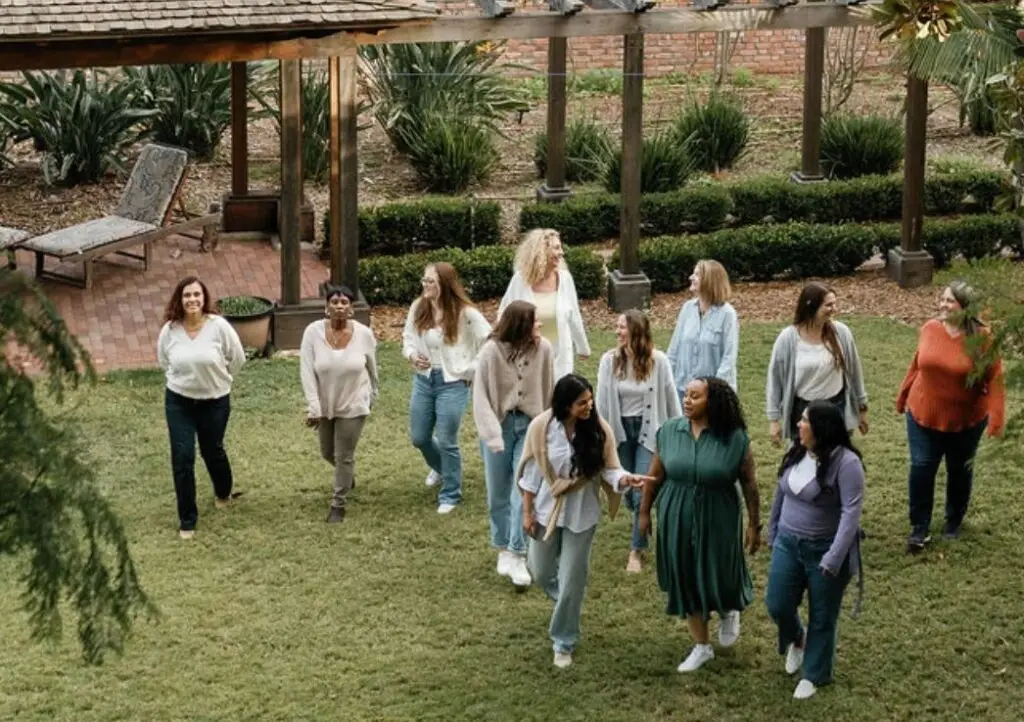
St. Germaine Children’s Charity will host its annual grant awards dinner at the Museum of Contemporary Art San Diego. The grant funds that will be donated to local agencies that work to end child abuse were raised at various St. Germaine Children’s Charity fundraisers and events throughout the year.
Help San Diego seniors age gracefully at Senior Prom: Forever Young, a fundraiser for Meals on Wheels San Diego County. The retro school dance-themed gala at the Kona Kai San Diego Resort will help the nonprofit continue to deliver daily nutritious meals and friendly visits to local seniors.
San Diego nonprofit GenerateHope and international charity Freedom Challenge will host a 45-mile, three-day walk from Oceanside to Coronado to help combat human trafficking. Funds raised will go toward Freedom Challenge’s work around the world and GenerateHope’s local programs that serve survivors of sex trafficking.
Roughly 300 guests will gather at a private residence in Solana Beach for bites prepared by San Diego’s top sustainable chefs, along with fine wine, craft beer, and small batch mezcal and tequila to support coastal conservation in the U.S. and Mexico. Funds raised at Wildcoast’s Baja Bash will help expand its programs in 2026 and beyond.
Local law enforcement, first responders, and military personnel will face off in a boxing match aboard the USS Midway Museum to raise money for the Community Youth Athletic Center. Now in its 21st year, the Battle of the Badges supports CYAC’s boxing programs for underprivileged youth.

Sarah Sapeda is San Diego Magazine’s Custom Content Editor. In her 15 years in San Diego journalism, she has covered charitable events, health care, education, crime, current events, and more.
The San Diego nonprofit grew from Johnson’s experience losing her infant son and now provides therapeutic teddy bears to grieving families and survivors of violent crimes
Grief is a complicated emotion. A profound loss can break a heart and bring unexpected emotional and physical pain that lasts for months or even years. As Marcella Johnson says, “Grief has no expiration date.” It can devastate, but it can also inspire.
Johnson knows this from experience. In 1999, her fourth child was diagnosed in utero with osteogenesis imperfecta type 2, a life-limiting disease. George was born on April 11, 1999, and died that same day.
“I got to hold him and look into his big blue eyes and tell him that I loved him,” she recalls. “That was very special for my family.”
In the days that followed, Johnson was swept up in sorrow and a physical pain she couldn’t understand. Her heart felt as though it physically ached; the only relief came from pressing on her chest, as if tending to an open wound. Her arms hurt, too, and rubbing them or applying ointment did nothing to ease the pain. She later came to understand the heart pain as stress-induced cardiomyopathy, also known as takotsubo syndrome or broken heart syndrome, a condition that was little understood at the time. She also experienced what’s commonly called empty arm syndrome, though it isn’t an official diagnosis. “It’s when your arms are literally aching to hold your child,” she says.
A week later, Johnson found an unexpected source of relief. Someone had left a terracotta pot of flowers at George’s gravesite, and her father urged her to take it home. When she held the pot, the aching began to subside.
“It was a cold, hard terracotta pot, but the weight of it gave me comfort. I felt an immediate response, and I thought, I can’t say anything to anyone. This is so weird,” she says. “I got home and I did not want to put that terracotta pot down. I found myself walking around the house, and every time I put it down, my pain would return. So I didn’t let go of it … I was so desperate to get myself out of pain that I [would] do whatever it takes.”

Johnson soon learned she wasn’t the only grieving mother to find comfort in an inanimate object. Women had found solace in a sack of flour, a pillow, even a pineapple.
Johnson set aside her own grief and thought, I have to do something for these women.
“We needed to get to them before they left the hospital, because for me, leaving the hospital empty-handed was the worst experience of my life,” she says.
She began thinking about what might help. At George’s funeral, guests had brought stuffed animals to donate. Seeing a Beanie Baby at the top of the pile sparked an idea: What if she made a teddy bear about the size of a baby?
“It’s not uncommon for a grown woman to have a stuffed animal. And the teddy bear, the Comfort Cub that we came up with, if you look at it, you have no idea that it’s a therapeutic tool,” she says.
Johnson went to a predecessor of Build-A-Bear Workshop and filled a teddy bear with split peas. After a few tries, she found a weight that felt right. At first, she made every Comfort Cub by hand and included a personalized note. Soon, the bears were being donated to mothers who had lost a child at hospitals throughout San Diego. Johnson’s effort later expanded to select hospitals across the country.
As weighted blankets became more popular, Johnson saw growing interest in the calming effects of deep pressure. Research on weighted blankets suggests they may help some people feel calmer, though the evidence remains limited. Johnson also realized Comfort Cubs might help people beyond grieving mothers. She brought them to the San Diego Police Department for use during trauma cases. “They were very well received,” she says.
Today, through her nonprofit, the Comfort Cub Program, therapeutic bears are given to families grieving the loss of an infant and to survivors of violent crimes.

The organization has provided Comfort Cubs to individuals, families, first responders, and communities across the country affected by tragedy, trauma, and loss. Bears went to families of victims after the 2012 Sandy Hook shooting and the 2017 Las Vegas mass shooting, as well as to people affected by the wildfires in Maui and Los Angeles and the catastrophic flood that killed 28 people at Camp Mystic for Girls in Hunt, Texas. Johnson recently traveled to New York to donate more than 1,000 bears to surviving family members attending the VOICES 25th Anniversary NYC Symposium and Commemorative Luncheon, a 9/11 memorial event.
Johnson called the experience “humbling.”
“Whether a loss happened yesterday, five years ago, or 25 years ago, the need for emotional healing and support remains essential,” Johnson says. “Grief has no expiration date—and neither should comfort.”
Sarah Sapeda is San Diego Magazine’s Custom Content Editor. In her 15 years in San Diego journalism, she has covered charitable events, health care, education, crime, current events, and more.
More than 750 volunteers help support the decommissioned aircraft carrier and share its “Midway Magic” with over 1 million guests each year
The USS Midway has a storied history. The longest-serving aircraft carrier of the 20th century has served as a home base for helicopters carrying fleeing refugees during the fall of Saigon, played a key role in developing naval missile warfare, and evacuated civilian personnel after the eruption of Mount Pinatubo in the Philippines. The Midway was decommissioned in 1992 and today stands as a monument to military history, drawing more than 1 million visitors each year. Its team of more than 750 volunteers supports this mission, doing everything from leading tours to controlling corrosion to operating HAM radio. Among them is Paul “Chappie” Ward, who has clocked more than 12,000 volunteer hours at the museum since 2018. Here, he details how he helps “bring history to life.”
*Responses edited for length and clarity.
My connection to the USS Midway Museum began in 2010, when my wife and I came to San Diego for a Civil Air Patrol conference. My wife Nan and I had wanted to live in San Diego since vacationing here over the years, so San Diego was always on our radar. A couple of days before the conference began, my oldest son, his father-in-law, and I toured the Midway and I was immediately inspired by the experience. I remember telling Nan on the trip home that if we ever retired to San Diego, I would love to become involved with the Midway. In the subsequent years, our two granddaughters were born. In 2017, we retired and moved from San Luis Obispo to be closer to family. Nan reminded me of what I had said years earlier and encouraged me to follow through. I joined Docent Class #57 in January 2018, earned my “yellow hat” [upon completing the training] that March, and have been proud to be part of the Midway ever since.
The Midway offers an incredible range of ways to serve, and I’ve had the privilege of contributing to five teams while also serving as the museum’s volunteer chaplain. As a docent, I bring the ship’s history to life through stories and guided experiences. With Guest Services, I help visitors plan their time aboard and make the most of their visit. On the Exhibits team, I help ensure the displays tell the Midway’s story accurately and meaningfully. Along with other members of the Library/Curatorial team, I research and provide information to former Midway sailors and their family members. Through Outreach and the Speakers Bureau, I represent the museum at community events, parades, and service clubs. I also administer the Midway Sailors Program Facebook group, where former crewmembers can reconnect with one another and with the ship. As chaplain, I help plan and officiate celebrations of life and weddings, and I offer invocations and benedictions at special events aboard the Midway.

What I value most is what we call “Midway Magic.” It’s hard to define, but you feel it the moment you step aboard—the camaraderie among staff and volunteers, the shared passion for the ship, and the commitment to giving every guest an unforgettable experience.
At the end of the day, there is deep satisfaction in knowing you helped preserve and share something important. The Midway is “America’s Living Symbol of Freedom,” and we have the privilege of honoring the more than 200,000 people who served aboard her during 47 years of service, from the end of World War II through the Persian Gulf War. Sharing their service and sacrifice with my granddaughters and with visitors from around the world is one of the greatest rewards of volunteering here.
My biggest challenge was simply wondering if I could do this. I came from the civilian world as a retired pastor and former computer IT professional with a law enforcement agency. I had also served as a volunteer chaplain with the Civil Air Patrol, the U.S. Air Force Auxiliary, but I was not a veteran and had no Navy background. Stepping onto a Navy ship and learning its systems, language, and culture was a real adjustment. What made the difference was the Midway’s commitment to training and mentorship. Every department gives volunteers the knowledge, resources, and hands-on support they need to succeed. Docents, for example, complete a seven-week course combined with on-the-job training with experienced volunteers. Over time, I learned, grew, and found my place. More than 12,000 volunteer hours later, I can confidently say that I could do it, and so can others who are willing to learn.
One of my most memorable experiences began in April 2025, when a former Midway sailor contacted me through the Facebook group I administer. During Operation Desert Storm, his wife had sent him a birthday card. As he was preparing to leave Yokosuka in 1991, the card slipped behind a desk in his stateroom and disappeared into a narrow space. His wife passed away in 2015, and he told me how much it would mean to hold that card again and share it with their daughter. I reached out to the Safety Office, and when he returned to the Midway on April 30, our team worked a little “Midway Magic.” With access to the stateroom and help moving the desk, we found the card and placed it back in his hands. After 34 years, he was able to share it with his daughter, Cheryl. It was a powerful reminder that this ship holds not only history, but deeply personal stories that are still unfolding.
Start by finding a cause or organization that genuinely aligns with your interests and values. Then take the time to learn its story, understand its purpose, and get involved. The more you invest, the more meaningful the experience becomes—not only for the people you serve, but for you as well. Volunteering is a powerful way to give back, build community, and discover just how much you have to offer.
Sarah Sapeda is San Diego Magazine’s Custom Content Editor. In her 15 years in San Diego journalism, she has covered charitable events, health care, education, crime, current events, and more.
The 72-year-old nonprofit hosted its annual Art of Fashion runway show and luncheon, with proceeds benefiting dozens of local nonprofits
Giving back is always in fashion. The Country Friends, a 72-year-old nonprofit that fundraises for charitable causes, hosted its annual Art of Fashion runway show and luncheon at The Inn at Rancho Santa Fe on September 10. Models showcased the latest designer looks from Balmain, Camilla, Eleventy, Eres, Ferragamo, Lanvin, Max Mara, and Monique Lhuillier, while guests shopped mini-boutiques set up by event partner South Coast Plaza, participated in a live auction, and dined on a three-course luncheon. Proceeds from the event will support dozens of local nonprofits that provide assistance to women, children, seniors, military families, and people with disabilities. To date, The Country Friends has provided more than $15 million to San Diego-based charities.
Photo Credit: Melissa Jacobs


Sarah Sapeda is San Diego Magazine’s Custom Content Editor. In her 15 years in San Diego journalism, she has covered charitable events, health care, education, crime, current events, and more.
At Vi at La Jolla Village, residents don't have to choose between security and adventure, connection and independence. They get all of it.
Today’s seniors are more connected than ever, with a renewed focus on retirement as a time of discovery and enriching experiences. The ultimate reward for a retirement well-earned is the wisdom to appreciate it all, and what better place to enjoy that unique perspective than Vi at La Jolla Village, in the heart of San Diego.
All-access pass to good living.
As a Continuing Care Retirement Community (CCRC), Vi provides access to a connected and fulfilling community while making it easy to plan for future care, should the need ever arise. With a care plan in place, residents enjoy greater financial predictability and long-term value, freeing them to focus on making the most out of retirement.
Resort-style amenities at the epicenter of a cultural hub like San Diego offer a retirement experience unlike any other. Paired with exceptional dining, spacious accommodations and dedicated staff, the best of maintenance-free living is all around. And with the introduction of Vista 360 Well-Being, Vi’s panoramic approach to wellness, there are more ways than ever for residents to access it all.
The harmony of mind, body and community.

The key to longevity is striking the right balance in maintaining an active lifestyle with an active mind in a fulfilling community. With newly renovated community spaces and restaurants, Vista brings a variety of opportunities for residents to elevate their well-being through Vi-exclusive “Signature Experiences.”
Vista Enrich takes an evidence-based approach to brain vitality, keeping residents at the forefront of cognitive health through exergaming (exercising + gaming), nutritional plans and informative workshops. It is also home to The Brain Vitality Studio, an innovative facility dedicated to cognitive fitness that has garnered national recognition.
Vista Discover invites residents into stimulating educational experiences, from chef-led cooking demos and guided wine tastings to lectures at local universities and intimate lectures following cultural outings.
While Vista Enrich focuses on brain health and Vista Discover engages residents intellectually, Vista Explore cultivates a sense of adventure through curated travel and local excursions. But broadening one’s horizons doesn’t always require a plane ticket. One recent event brought a taste of the world right to the community: an onsite “jazz cruise” featuring live music and global cuisine served at a series of themed “ports” all within the community’s own ballroom.
“Location, location, location”

One of the biggest perks of life at Vi at La Jolla Village is its proximity to just about everything. With easy access to transportation and local attractions just steps away, residents can explore and engage with their community at their own pace.
“There are trolley and bus stops within a 5-minute walk that will get you to the beach, UCSD Campus, medical appointments, downtown La Jolla or San Diego, et cetera. We rarely use our car,” said resident Tom Yager.
With the best of San Diego just steps away, residents don’t just live in the city, they live within reach of everything that makes it special.
The best of all worlds.

At Vi at La Jolla Village, retirement isn’t a chapter to slow down; it’s an invitation to discover more. Tailored community experiences created by Vista, paired with the vibrant pulse of San Diego just outside the door, mean that residents don’t have to choose between security and adventure, connection and independence. They get all of it.
This is what an all-access pass to good living looks like: the comforts of an elevated lifestyle, a community built for growth and a city made for discovery – all in one place.
To learn more about Vi at La Jolla Village or for details on available floor plans, visit ViatLaJollaVillage.com/SDM.
Here’s where to celebrate, connect, give back, and make a difference this month
Former NFL quarterback Drew Brees will host a slew of celebrity athletes, chefs, and other hunger-relief supporters for a Celebrity Pickleball Tournament to raise money for Feeding San Diego. The tournament at the Barnes Tennis Center in Point Loma is part of the Del Mar Wine & Food Festival, which has raised more than $100,000 for Feeding San Diego and other local nonprofit organizations since 2023.
Sanford Burnham Prebys Medical Discovery Institute will celebrate 50 years of groundbreaking research at its Illumination Gala at the Fairmont Grand Del Mar. Support from the gala will help Sanford Burnham Prebys continue to advance medicine and change lives.

San Diego Humane Society supporters—both people and pets—will get dressed to the nines for the 40th annual Fur Ball. Proceeds from the event at San Diego Humane Society’s Gaines Street campus will support the organization’s efforts to care for more than 40,000 animals each year.
Voices for Children will celebrate the impact of its Court Appointed Special Advocates (CASAs) at its Starry Starry Night Gala on the Heron Lawn at the Park Hyatt Aviara Resort. The 46-year-old organization is the only agency in the county designated to provide CASAs to advocate for local foster children.
Show off your sparkle at the Autism Society of San Diego Diamond Anniversary Gala at the Town & Country Resort. The nonprofit will celebrate six decades of service with dinner, entertainment, and special guests.
More than 30 performers will take the stage to support Robin’s Nest Rescue at its fourth annual Rockin’ Robin Music Fest. The five-acre animal sanctuary in Ramona will also celebrate America’s 250th birthday, showcase local artisans, and introduce guests to some of its rescue animals.
Local nonprofit Adjoin will host a whimsical garden party fundraiser at a private home in La Mesa. The Soil to Soul Garden Party will support Adjoin’s mission to build inclusive communities and support independence for people with disabilities and veteran families experiencing homelessness.
Enjoy bites, beverages, and animal encounters at Living Coast Discovery Center’s Farm to Bay fundraiser. The annual event at the nonprofit zoo and aquarium on the San Diego Bay National Wildlife Refuge will support coastal conservation efforts.
Sarah Sapeda is San Diego Magazine’s Custom Content Editor. In her 15 years in San Diego journalism, she has covered charitable events, health care, education, crime, current events, and more.
After more than six decades of preserving the community’s past, the newly renamed museum is expanding how it tells its stories
La Jolla has a rich history. From its roots as Kumeyaay territory and early days shaped by influential San Diegans like Ellen Browning Scripps to the vibrant hub for arts, culture, and education that it is today, the roughly seven-mile stretch along the coast has long been a local gem.
In 1964, a group of volunteers came together to preserve the history of the community. They formed the La Jolla Historical Society, which has since evolved into the Museum of History and Culture La Jolla. For the past 62 years, the organization has worked to protect historic buildings, archival materials, and recorded memories, ensuring the character of the neighborhood would endure well into the future.
“La Jolla is a small community, but it has a fascinating history,” says Lauren Lockhart, executive director of the Museum of History and Culture La Jolla. “The focus was always on how do we preserve the stories, places, and people that make La Jolla unique, and that remains central to our mission.”
However, in its early days, the organization was limited in what types of programming it could offer because it didn’t have a permanent homebase. A pivotal point came in 2008, when it was gifted Wisteria Cottage, originally the private residence of Virginia Scripps, by descendants of the Scripps family. The historic Craftsman cottage had been remodeled by famed architect Irving Gill, whose other modernist works are peppered throughout La Jolla, adding to its distinctive look. The organization then launched a capital campaign to expand into a museum-quality space to host exhibitions and to store the tens of thousands of photos, drawings, postcards, and other materials in its collection, Lockhart explains.
“At that point the organization could really begin to invest in developing a public space and public programs that would give back to the community,” she adds. “That effort accelerated with my predecessor, Heath Fox, who pushed the organization to think about an exhibition program that was interdisciplinary in nature. It’s something that drew me to this organization and that I’ve continued to advocate for because examining history through lenses of art, architecture, science, and literature is so compelling and such a great way to bring different audiences into the fold.”

The organization entered another period of transformation this year when it “outgrew” its previous identity as La Jolla Historical Society and officially rebranded as the Museum of History and Culture La Jolla. The organization had transitioned from a traditional historical society into a professionally operated museum and wanted to reflect that while also amplifying its ability to connect with broader audiences.
“We’ve grown so far beyond what a traditional historical society might offer to the public that we were finding that often, especially younger generations, they would come through our doors and say, ‘Wow, it’s a lot cooler than I thought it would be,’ which is a nice compliment, but it made us ask ourselves who’s not coming through our doors because they’re not sure what we have to offer or that they will see themselves reflected here,” says Lockhart. “We wanted to remove that barrier and make sure that everyone, just from recognizing our name, will think, That sounds like there’s something there for me, and that definitely is evidenced in our current programming and exhibitions.”

The change, she says, has been a long time coming. “We’ve already made a lot of huge strides over the years,” Lockhart says. “It’s about our name catching up to our work.”
The Museum of History and Culture La Jolla’s current exhibits include Stories in Cloth: Communicating Through Textiles, presented in partnership with the Visions Museum of Textile Art at Liberty Station, on display through September 6. On deck is The Scientific Art of Historic Preservation, which explores the processes behind the museum’s mission. To honor the philanthropic spirit of the Scripps sisters, admission to the museum and many of its public programs are free of charge.
Sarah Sapeda is San Diego Magazine’s Custom Content Editor. In her 15 years in San Diego journalism, she has covered charitable events, health care, education, crime, current events, and more.
SeaWorld dazzles with a drone show, big-name entertainers, new animal adventures and more
Nights are heating up at SeaWorld San Diego. The quintessential summertime staple on Mission Bay is transforming into a destination for unforgettable day-to-night adventures, bringing back some of its most popular Summer Nights programming and introducing exciting new experiences sure to delight both kids and adults alike.

The 2026 Summer Day to Night at SeaWorld San Diego is the park’s most ambitious season yet. SeaWorld has planned a highly anticipated entertainment lineup that features nine weeks of throwback concerts featuring R&B and hip‑hop favorites from the ‘90s and early 2000s, including Jordin Sparks, Too $hort and Warren G, Ashanti, and an array of boy band heartthrobs performing together as part of the Pop 2000 Tour.
New this season is perhaps the park’s most visible update: a nightly drone show, Ocean of Dreams, which illuminates the sky with hundreds of synchronized sparklers. Drones form sea otters, sharks, dolphins, and a majestic orca that tell a breathtaking 12-minute story of marine life and underwater ecosystems. The show culminates with a spectacular electric neon finale celebrating hope, wonder, and ocean stewardship.
Nighttime visitors are also in store for animal adventures that fuse education with high-energy fun and the dreamy ambiance of nighttime. The park has launched two all-new animal presentations: Shamu’s Celebration: Light Up the Night and Dolphins: Touch the Sky. Shamu’s Celebration: Light Up the Night features vibrant lighting, music, and dynamic choreography that celebrates the power and beauty of killer whales. Dolphins: Touch the Sky showcases playful bottlenose dolphins and the special connection between humans and the natural world. And back by popular demand is fan-favorite Sea Lions Tonite. See the charming pinnipeds splash, play, and parody pop culture in this refreshed crowd-pleaser.

More must-sees: a newly reimagined Shark Encounter, one of the country’s more immersive exhibits highlighting 11 different species up close, SeaWorld’s beloved BMX Blast! stunt show, and high-seas escapade, Pirates Ahoy! The Battle for Mermaid Cove. And don’t miss the park’s all-new Deep Sea Disco, which encourages guests to dance the night away under the glow of the SkyTower, and vibrant closing time laser light display Laser Reef Summer Spectacular.
Amp up the nighttime vibe with local craft beers, curated cocktails, and nostalgic theme park treats with $1 beer all summer long. SeaWorld is the place for day to night summer fun. When the sun goes down, SeaWorld lights up, and inspires guests of all ages to embrace their inner whimsy and see why generations of San Diegans head to SeaWorld to make memories they’ll never forget.

