Featured articles
Featured articles
Featured articles
What's next
Featured articles
Featured articles
Featured articles
Ready to know more about San Diego?
SubscribeReady to know more about San Diego?
Our new back page takes a closer look at the hidden and lesser known landmarks of San Diego
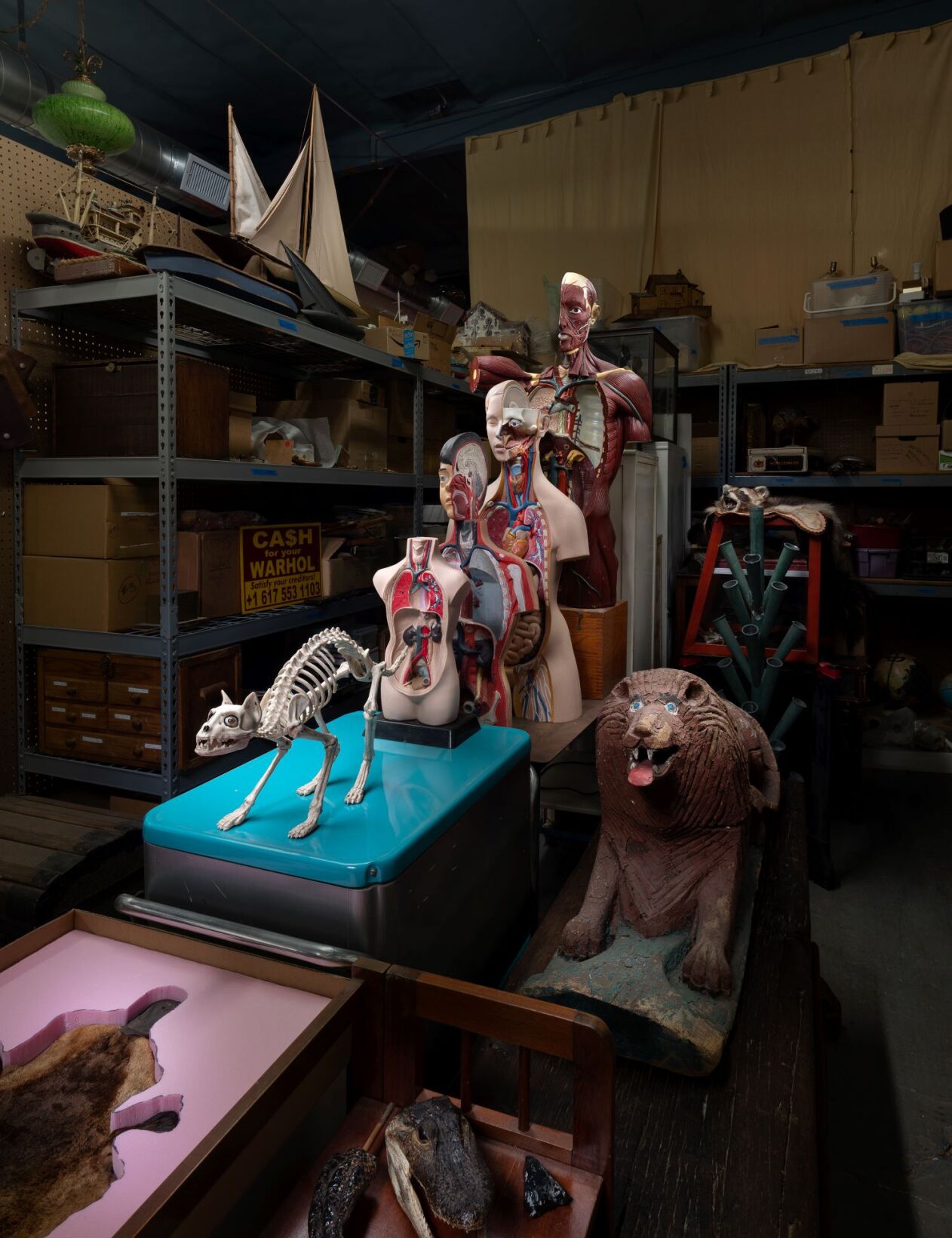
Some of the curiosities to be found inside The Museum Of__, a small space within La Jolla’s Quint Gallery
Nick Nacca
The man, the myth…the zombie dust collection. Quint is a name synonymous with art-world heavyweights and The Next Big Thing.
When founder Mark Quint isn’t uncovering new darlings, he’s scouting local flea markets for his oddities collection. We’re talking artificial sushi, religious sculpture, tourist tchotchkes, Edwardian taxidermy, matchbox cars, marbles, and, yes, dust. The high-low mash-up serves as a lifelong obsession and inspiration for The Museum Of__, a 140-sq-ft space inside his eponymous Girard Avenue gallery. Since he first opened in 1981, the La Jolla native has organized 250+ exhibitions of local, national, and international artists. Here in this plywood box, he curates his own collection and the kitsch of others. It’s both a wink and a prompt, asking viewers to question how we define the exotic and the ordinary.
PARTNER CONTENT
7655 Girard Avenue, La Jolla.
A new exhibition at UC San Diego’s Mandeville Art Gallery revisits the artist’s story quilts, paintings, and legacy of visual storytelling
A little girl floats into a night sky above a color-saturated Harlem, her arms outstretched, her two braids flying behind her. Cassie Lousie Lightfoot is weightless, soaring above the George Washington Bridge. In the award-winning 1991 children’s book Tar Beach, the act of flying is about imagination and freedom; a metaphor for the inequality faced by Black people who built the city but couldn’t be part of it. Author and mixed media artist Faith Ringgold understood the duality and that—for Black women and girls—imagination isn’t just escape, it’s authorship.
Ringgold’s expansive vision and vibrant canon has found a temporary home in La Jolla, where ArtLeadHER’s Mashonda Tifrere has curated an exhibition of Ringgold’s work at Mandeville Art Gallery on the UC San Diego campus. Faith Ringgold: Full Circle—The Teachings and Her Legacy isn’t just a retrospective (the prolific Ringgold died in 2024 at age 93), it’s another kind of homecoming: Ringgold was an art professor here, in this community, from 1984 to 2002 and changed the trajectory of what art could be and who it could be for. She’s so revered that this show was hung by students in the art program.
Opened on February 28, Full Circle is free to the public and remains on view through May 1. Art lovers have a fleeting window to experience a small fraction of Ringgold’s historic and urgently present larger body of work.

Ringgold had a vibrant imagination from her earliest days. As a child, she suffered from severe asthma and often missed school. Confined at home, Ringgold became an observer, building her own visual language and creating stories with it.
Her mother was her coconspirator: Willie Posey, a designer and seamstress, fed her daughter’s creative interior life by providing her with art supplies and teaching her how to work with fabric, pattern, and color. Perhaps one of the most transformative skills Posey taught her daughter was quilting, and she eventually helped Ringgold create her first story quilt, Echoes of Harlem, and story quilts became the young artist’s signature.
Quilting has deep roots in Black American history and is tied to the world of enslaved women who made quilts not just for function, but as storytelling devices, historical preservation, and coded expression. When, due to racism and sexism, Ringgold couldn’t be a landscape painter she turned to quilting and relied on the resilience of her ancestors. When she couldn’t get her writing published, she wrote her stories directly onto her quilts, sometimes in Sharpie. And much later, quilts enabled Ringgold to make art accessible on a wider scale: This medium could be folded and rolled and easily shipped.

Ringgold didn’t wait for permission. She never did. Whenever the artist met a barrier, she found her way under, over, or around it. She pushed beyond the male-dominated art world that excluded her and women who looked like her. By adding written narratives to her quilts, she inadvertently lifted them from the realm of a craft into something more expansive. Her quilts—stitched and painted on—have universal appeal, at once historical, political, personal, and emotional.
“Faith’s work feels like a story crafted for the soul,” Tifrere says. “Everything about it is intentional…the emotions on her pages, canvases and quilts are clear. She didn’t shy away from complexity or imperfection.”
That’s part of what makes Ringgold’s work feel so immediate and immediately accessible: You don’t stand in front of it and feel nothing. You enter it and feel everything. Each piece, from her story quilts to her quilted masks, to her political prints and her rare abstract paintings (“California Dah” which the artist painted after the death of her mother is on display as part of Full Circle) is its own universe just like her quilt Tar Beach I, which later became the storybook with our flying protagonist.
Recurring throughout her work are bridges, which Ringgold once described as a personification of women. “Bridges unite people across barriers, and that’s what we do with our families: We hurdle obstacles, we stay together, we pass it on just like a bridge.”

It’s impossible not to see that same connection in her work. There’s a throughline between Harlem and La Jolla (nobody’s ever said that before), between Ringgold and Tifrere: Also raised in Harlem, Tifrere understands this work not just from the perspective of a curator, but as someones who’s work is grounded in lived experience.
“What makes me stop is a blend of familiarity and shock,” she says. And of their shared Harlem: “I recall the scents of soul food and incense… the loud vibrations of music… [E]verything was art. Now, when I encounter art from a curatorial lens, I immediately connect with the emotions it evokes on every level.”
And that’s why this show lingers: Not just colors and textures or even the story, but the larger permissions (or lack of) behind this provocative work.
At the end of Tar Beach, Cassie tells her little brother BeBe that anyone can fly—that “all you need is somewhere to go that you can’t get to any other way.” Standing in the gallery, surrounded by work that disregarded boundaries feels eternally instructive.
Faith Ringgold: Full Circle—The Teachings and Her Legacy runs through May 1, 2026, at Mandeville Art Gallery. Admission is free.
Explore the ins-and-outs of this coastal beach town, including what to do, see, and eat
Need help deciding which of La Jolla’s seemingly endless beaches to lay your towel out at today? Each little sandy sliver between the neighborhood’s sea cliffs has its own name and character: the Cove for swimming, Children’s Pool for seal-watching, Wipeout Beach for skim-boarding. Head to La Jolla Shores for that wide, sandy, picnic-with-the-family feel, and if you know what you’re doing, go surfing at Windansea or Bird Rock (if you’re a beginner, opt instead for the Shores, where most of San Diego learned to surf).
Of course, beachy isn’t La Jolla’s only vibe. The Village (locals don’t call it downtown anymore, says La Jolla resident and senior editor of lajolla.ca Elisabeth Frausto) is La Jolla’s most walkable area—highlighted by the main drag, Prospect Street—with a wide radius of shop-lined roads sloping down to the coast.
At long standing neighborhood staples like Warwick’s bookstore and Harry’s Coffee Shop, “old-timers still belly up to the counter and talk politics,” Frausto says. Art enthusiasts visit to peruse through its many galleries, including Quint and Joseph Bellows, and check out what’s on at the Museum of Contemporary Art San Diego (MCASD). Shoppers wander Girard Avenue, picking out activewear at Lululemon and Vuori and fancier digs at Thread + Seed and Sigi’s Boutique. Friends gossip and sip coffee at locally owned outposts like Flower Pot Cafe and Il Giardino Di Lilli.

Once isolated from the rest of San Diego, La Jolla became a popular resort destination when the San Diego, Pacific Beach, and La Jolla Railway arrived in the 1890s and made the area more accessible to visitors (who wanted to spend time there so badly they stayed in tents during the summer). Some of those tourists got creative, too.
“Our tradition of supporting the arts goes back to the days of the Green Dragon Artist Colony that was founded in 1894,” says Athenaeum Music & Arts Library Executive Director Christie Mitchell. Anna Held started the Green Dragon Colony to attract visiting artists to La Jolla for a weekend getaway; it quickly became a venue for ad-hoc performances and bohemian artists’ salons.
However, it was Ellen Browning Scripps more than anyone who shaped La Jolla into the neighborhood we know today, commissioning buildings like the structure that now houses MCASD. The arrival of the Scripps Institution of Oceanography in 1907 laid the foundation for the establishment of UC San Diego 53 years later at the longtime site of the military base Camp Matthews. All of these developments helped establish La Jolla’s layered identities: high-dollar beach town, arts magnet, academic research hub.


Athenaeum Music & Arts Director Christie Mitchell is a bona fide La Jolla local, having grown up in the LJ neighborhood of Bird Rock. Her dad still surfs, and Mitchell met her own surfer husband at La Jolla High (their toddler has already tried surfing, too). Mitchell’s mom still lives in Bird Rock, and “it’s gotten a lot livelier and more pedestrian-friendly,” she says.
On weekends, she makes sure to hit Wayfarer Bread for “the gooiest, heaviest, stickiest cinnamon loaf—definitely preorder because there’s always a line,” she advises. Friday and Saturday are pizza night at Wayfarer, and the bakery’s industry collabs produce some unique pies. For coffee, head to Bird Rock Coffee Roasters, of course, where you can grab a cup and hang out in the open-air seating or stroll to La Jolla Hermosa Park for ocean views (and a skate park and bike paths for little ones to tire themselves out on).
One of Mitchell’s favorites for lunch with coworkers in the Village is Peruvian-inspired Pepino, owned by one of her high school classmates. “The sweet potato bowl is really good,” she says.

She also cherishes La Jolla institutions. The Ascot Shop, a longtime men’s clothing boutique, is a go-to for gifts; founded by a local fisherman, El Pescador Fish Market is the place for the freshest seafood and fish tacos; and The Marine Room is for special occasions, with on-point service against a backdrop of crashing waves. “And nothing says ‘La Jolla’ like George’s at the Cove,” Mitchell adds. “With the John Baldessari mural and the view, it’s a great mix of the arts and the ocean.”
There’s a surprising amount to do on the weekdays in La Jolla, Mitchell says, with free live music every Monday at the Athenaeum (and weekly ticketed events), late-night DJ sessions at Le Coq, acts at The Comedy Store, concerts at the The Conrad (home of La Jolla Music Society), and the monthly First Friday Art Walk.

The biggest talk of the town for La Jollans? Possible secession from the city of San Diego, Frausto says. Proponents want to separate so La Jolla can maintain its own infrastructure and make decisions about development (critics say La Jolla should contribute taxes to the rest of the city). If the initiative advances, final say would come down to a city-wide vote.
Additionally, locals and visitors alike are witnessing a genuine culinary explosion. Restaurateur Sami Ladeki’s Roppongi, a Japanese fusion and sushi favorite that closed in 2015, reopened in December 2025 under returning chef Alfie Szeprethy. Michelin-starred chef Elijah Arizmendi launched tasting-menu-only restaurant Lucien last year, and chef Accursio Lota of North Park’s Cori Trattoria Pastifico opened his new spot Dora in November. Local designers Paul Basile and Jules Wilson are building Roseacre, 5,000 square feet of culinary concepts on Girard Avenue. And one of La Jolla’s favorite restaurant families is opening a completely new eatery near Torrey Pines Golf Course in summer 2026: From the guys behind Puesto and Marisi comes an Eastern Mediterranean spot called Ikaria.
Back in the Village, a new boutique hotel by Orli is landing in the old nurses’ quarters (now condos) next to the original 1924 Scripps hospital (the institution moved to Genesee Avenue in 1964). La Jolla is also getting in on the thrifting trend—Goodwill opened a shop on Herschel Avenue in early 2026.
Pedestrian-friendly changes are afoot in two of LJ’s walkable areas. At La Jolla Shores, look for enhancements to Avenida de la Playa from El Paseo Grande to Calle de la Plata, where the street has been closed to vehicles since 2020 for outdoor dining. The Village Streetscape Plan is coming to Girard Avenue between Silverado Street and Prospect Street, bringing expanded walking areas, corner parks, improved lighting, new seating, public art, and landscaping to create shade canopies and gathering spaces.

Also look for beautification projects along the coast. The 1920s stairs leading down to the tide pools at Whale View Point are finally getting a redo; Ellen Browning Scripps Park will receive fresh sod and much-needed widened sidewalks. And ADA trail improvements and a new restroom facility are on their way at Torrey Pines State Natural Reserve, making the beloved natural area more accessible.
As for housing, Frausto says, affordable units are hard to come by, and that probably won’t change soon. Most new homes and apartments are geared toward the luxury market, like La Jolla’s first new gated community in 40 years, Foxhill, which broke ground in October 2025 on the site of a former golf course—with empty lots selling for more than $8 million.
Leorah Gavidor won her first essay contest at age 5. She writes features, news, and non-fiction in San Diego.
The cantankerous New York commentator (and Albert Einstein of coffee) comes to UC San Diego on January 23
Let’s get something out of the way: promotional interviews are, by and large, a questionable idea. They rely on the assumption that one person cares enough to answer questions in an intelligent manner and the other is smart enough to ask them. Often, neither is true. But this is Fran Lebowitz. An articulate curmudgeon and the patron saint of sarcasm. She’s fun to talk to. Besides, Lebowitz is speaking as part of UC San Diego’s ArtPower series on January 23, and San Diego Magazine was offered a 20-minute call with the 74-year-old social commentator, so we went for it.
Known for her style, wit, and inability to suffer fools, Lebowitz has spent decades holding a mirror up to society, while rolling her eyes at what she sees. The subject of more than one fawning Martin Scorsese project, Lebowitz is often referred to as a writer even though she’s spent the bulk of her career not writing, which, in her words, is the best part of being a writer. She’s also an unrepentant critic—not just of art and culture, but of humanity at large, as well as a chain smoking, coffee-drinking, die-hard New Yorker.
So, whether she’s talking bagels, romance, gay marriage, or the formality of flip-flops, she does so with humor and insight that makes her fans laugh, wince, and think—often all at once. In our promotional interview, she waxes about all these things, and more.
Mateo Hoke (MH): How are you?
Fran Lebowitz (FL): Horrible. Like every other sane American.
MH: This is off to a great start. You’re coming to San Diego, there will be people wearing flip-flops at your event. Are you prepared for that?
FL: I have bad news for you, you see that everywhere. Not everywhere in the world, by the way, but everywhere in the United States. Even in places where you would think, gee, it’s like 20 degrees, don’t you think it’s too chilly for that?
You see it in airports, you see it on planes, everywhere. I find it astonishing. Not only because I’m old, and not only because it seems to be very inappropriate weather-wise, but it seems to me to be so shockingly casual. I see people in public—and not just in San Diego—who are dressed in a way I don’t dress when I’m alone in my apartment.
How formal you are is partially generational, but it’s not wholly. And apparently, as far as clothes go in regard to things like flip flops, there is a general idea—not shared by me—that everyone has to be incredibly comfortable all the time.

MH: Ok wait, what are you wearing right now as a fashion icon lounging around at home?
FL: First of all, I never called myself a fashion icon, other people did. And I’ll tell you, I happen to be an incredibly careful person with clothes. My parents were raised during the depression and this wore off on me.
So, right now I’m wearing jeans—which I always wear—but these jeans I would not wear out of the house because these jeans are so ripped up that only maybe a 20-year-old model would love to have them. But these are actually ripped up by wear as opposed to ripped up by some store. And I’m wearing a Brooks Brothers shirt that is at least 30 years old—also ripped—and moccasins that are not that old only because when I found them 100 years ago, I liked them so much I bought more than one pair. So that’s what I’m wearing, but I wouldn’t leave my apartment in this.
MH: That’s all still very stylish.
FL: I mean, I’m 74, maybe if that had been the style when I was young. By the way, most of these things that kids wear now, they have been worn numerous times. I don’t mean the actual garments, I mean fashion is a limited form.
MH: It’s cyclical, every 20 years it comes back.
FL: Yeah, although everyone calls it an art, it’s really not, because it’s useful. You know, you wear it, you use it, and there’s a limited number of options that designers have. So I’ve seen, like, a million things come back a million times.
MH: All right, can I talk to you about New York now that I’ve talked to you about San Diego a little bit?
FL: Sure.
MH: What’s your bagel order? Toasted? Untoasted?
FL: I don’t do that. I don’t go out for breakfast. I buy bagels, I eat them here. If I have fresh bagels I do not toast them. In my opinion, you toast bagels ’cause they’re not good enough to eat untoasted.
MH: Gotcha. I’m a big bagel guy and I will tell you, New York has done a tremendous job of marketing their bagels. In fact, I went to a bagel shop that claimed to treat their water to get the exact pH of NYC in order for their bagels to taste like NYC bagels. This isn’t a question so much as I just want you to hold my hand and tell me I’m not out of line for thinking this is asinine and gimmicky.
FL: You know, I really love to eat. I’m as gluttonous as the next person, but I don’t cook, and I don’t care how something is made.
One of the things I hate in restaurants is when they tell you everything that’s in a dish. I think, I don’t care. I don’t care, I’m not gonna make it.
The main thing about bagels—if that’s your main interest—is they should be bagels and not donuts. They shouldn’t be soft, they shouldn’t be big. And there’s no such thing as the best bagel in the world. There’s a big thing here—apparently Toronto believes themselves to be the city of the best bagel.
MH: Oh, Controversy.
FL: Yeah, I’ve heard a lot of controversy but I’ve never entered these discussions because I don’t know, and I don’t care.
MH: Ok, so relating to New York thinking it’s home to the best this or that. Is New York the center of the universe?
FL: Yes.
MH: Wait, I’m not done with the question, it’s three parts. Is New York the center of the universe? Why is your answer going to be yes, and why does everyone in New York think that?
FL: [Laughing] Well my answer is yes. And my answer is yes because it’s true. And everyone in New York thinks that because it’s true. Additionally, if you live in New York, it’s so hard to live here that you have to believe it’s worth it. There is nothing about life in New York that is not at the least a hassle. It’s also psychotically expensive and you have to believe that this is worth it. To me it is worth it. Obviously, to certain people it is not, but you know, to me, whatever people say, ‘Oh, New York’s not like it used to be’—which people say every two seconds—that is true. But nothing is, because time doesn’t go in the direction backwards.
MH: Fair. Speaking of time, you’re 74 years old, what’s the biggest shift in human consciousness you’ve seen unfold in your lifetime?
FL: For me, the change in attitude toward gay people is gigantic. It’s something I never imagined would happen. Ever. I never fought for gay marriage, I was never an activist. First of all, we never heard of gay marriage, let me assure you, this wasn’t even a concept when I was young. And I certainly wouldn’t have fought for it.
I have to say the first two things that were actually accomplished by the gay rights movement was gays in the military—which no one remembers—and gay marriage. And those are the two things that when I was young—when it was very hard to be gay, in fact it was a crime when I was young—they were the two most confining institutions in the culture. [Growing exasperated] The two advantages of being gay was you didn’t have to get married and you didn’t have to go in the army! I mean, to me, this seems like fighting for slavery. So, I did not fight for these things.
But I never imagined it would happen. Being gay when I was young wasn’t that different from being gay for Oscar Wilde. It was a crime. It really changed cities, too, because one of the reasons people lived in cities like New York or San Francisco was because they were gay. You couldn’t live the life you wanted anywhere else.
MH: What about other major shifts?
FL: The Me Too movement. That seemed to happen in a second. Of course, it didn’t, but it felt like it. Being a woman was kind of the same from Eve until that happened. It’s not perfect now, but it’s different.
MH: Do you have any big failures in life? Have they taught you anything notable?
FL: Sure. I mean, I have many, as all people do. I don’t have one thing like, “I almost won the gold medal at the Olympics” or something. People who have a biggest failure probably have a level of success I don’t have. Everyone has many more failures than successes.
MH: People sometimes consider failure in love, relationships, work, and all sorts of things.
FL: I happen not to be a person who believes in success in love in that way. By that, I mean finding the one person that’s perfect for you and spending your whole life with them. That didn’t happen to me, and it really doesn’t happen to most people. I find it odd that adults believe in that. To me, intrinsic in the word romance, is that it ends. Lifelong romance? I just don’t believe it.
MH: A lot of people are coming to see you here in San Diego soon and I’m curious, what do you want them to take away from their time with you?
FL: You know, I’ve never thought about this. I want them to enjoy themselves. Because what I always know is people do not go to a theater unless they are hoping to enjoy themselves. So, I’m hoping that they enjoy themselves. I personally love doing this, so I hope that they enjoy it even half as much as I do.
MH: Fair. But wait, speaking of coming and waiting in line to see you. As a New Yorker, when you’re queued up for something like a movie or a grocery store do you say you’re in line or that you’re on line?
FL: On line.
MH: Ok now let me ask you this, when you get out of that line do you say you got off line or that you got out of line?
FL: First of all, I will not stand in line or on line for anything other than having to like, check out of the grocery store or TSA or something you have to do.
MH: My question is more about semantics. Why do New Yorkers say they’re on line when they’re in a line?
FL: Oh, I have no idea. That I could not possibly tell you.
MH: Last question, talk to me about chocolate.
FL: I have no objections to it. It’s one of the best smells for sure. If you go into a chocolate shop, it smells delicious. Not the best smell, though. The best is coffee.
MH: What’s your coffee order?
FL: Oh, I don’t often order coffee. I make it. I hate to cook, but I happen to be the Albert Einstein of coffee. I buy beans—nothing fancy—grind them myself, and use an old-fashioned porcelain Melitta. It takes 30 minutes to make a small pot, but it’s unbelievably good. People can’t believe how delicious it is when I make it for them.
MH: So if one were to get invited to Fran Lebowitz’s house, the move is to ask for coffee?
FL: Yes. Occasionally, I’ve even offered it to workmen in the house fixing something because they can’t pretend it’s not there. It smells so perfect. They always say yes and tell me “this is fantastic!” No other coffee is as good as mine. Even bad coffee is better than no coffee. Coffee is so good, I can’t even believe it’s legal.
MH: A truly wonderful narcotic.
FL: Yes, and I just read a horrible article recently about how we’re not necessarily running out of coffee, but kind of. Because apparently the places where they grow coffee are experiencing climate change to where they can’t grow enough beans, so it’s going to end up costing like $1000 a pound—at which point it will still be worth it.
MH: The world keeps getting worse in so many ways.
FL: Yes, well, let me assure you, this is improvable. You know, anything that’s created by human beings is fixable by human beings.
Fran Lebowitz is appearing at the Balboa Theatre (868 Fourth Avenue) on January 23 as part of UCSD’s ArtPower Series. More info here.
Mateo Hoke is a journalist and author. His books include Six by Ten: Stories from Solitary, and Palestine Speaks: Narratives of Life Under Occupation.
The annual event honors middle market companies creating jobs, scaling up, and investing in the region
San Diego is known for its startup culture and innovation economy, but what happens when the company moves beyond its early-stage years? The San Diego Business Impact Awards aim to answer that question, spotlighting the middle market businesses helping drive the region’s economy.
Hosted by San Diego Regional Economic Development Corporation (EDC) and JPMorganChase, the second annual awards celebration takes place on Thursday, July 23, from 4:30 to 7:00 p.m. at Scripps Research Auditorium. More than 200 executives, entrepreneurs, and business leaders are expected to attend the networking and cocktail event honoring some of San Diego County’s fastest-growing companies.
Businesses headquartered in San Diego County that have operated for at least two years are encouraged to submit their nomination by Thursday, June 18 at 4 p.m. Companies across industries—from technology and life sciences to tourism and consumer products, as well as pre-revenue startups—are eligible for recognition.
For EDC President and CEO Mark Cafferty, the event is as much about building connections as celebrating success. “We’ve had a longtime partnership with JPMorganChase; their work aligns with our efforts to support underserved communities and drive talent development,” says Cafferty. “And the networking was invaluable last year. I’m still in touch with people I met at last year’s awards.”

EDC is an independently-funded nonprofit that works directly with San Diego companies to help them grow the local economy, make the region as a whole more competitive, and attract and retain top-tier talent with quality jobs. Through EDC, companies can get help starting or expanding their business with support for things like site selection, permit navigation, and regulatory guidance, plus connections to local resources and potential business collaborators.
The San Diego Business Impact Awards began as an idea with one of EDC’s longtime strategic partners, JPMorganChase. The two organizations share a commitment to San Diego and are dedicated to bolstering middle market businesses.
“We’re blessed with a robust innovation economy and startup community,” says Aaron Ryan, San Diego Region Manager for JPMorgan’s Commercial and Investment Bank and vice chair of the firm’s’ San Diego Market Leadership Team. “But one of the segments of the business community we felt was overlooked was emerging middle market companies—the businesses that are no longer small but not yet large.”
Ryan says supporting those companies is critical as they scale and decide where to invest, hire, and grow.
San Diego’s high cost of living remains one of the region’s biggest business challenges, making talent recruitment and retention increasingly competitive. But local leaders point to the region’s quality of life, climate, and collaborative business community as advantages that continue to attract employers and workers.

“In order to support thriving households, there has to be enough high-quality jobs for people to be able to afford to live here,” Cafferty says. “Once a company grows and excels past that middle market point in their growth cycle, they become much more likely to pay higher wages and compete globally.”
Both Cafferty and Ryan proudly tout the unique collaboration that exists among San Diego County businesses. Bringing together top universities producing high-quality talent, cutting-edge research institutions, a robust military and defense presence, leading ocean science and environmental organizations, and a binational, cross-border identity creates a distinct business ecosystem that defines and strengthens the San Diego region.
Last year’s San Diego Business Impact Awards celebrated nearly 60 honorees from 49 industries, representing a total of 8,232 jobs across eight sectors, including: software and technology, healthcare and life sciences, consumer goods, professional services, finance, construction and manufacturing, defense, and hospitality and tourism. On average, honoree companies doubled their revenues over the previous year, employed more than 145 San Diegans each, and offered an average annual compensation of $192,415.
Top honorees included defense contractor Innoflight, environmental consulting firm Bancroft Construction Services, life sciences startup Element Biosciences, defense technology contractor GALT Aerospace, organic grocery store chain Jimbo’s, and biopharmaceutical company LENZ Therapeutics. During the event, Innoflight Founder and CEO Jeff Janicik held a fireside chat offering his insights on investing in the community and embracing San Diego culture.
This year, organizers hope to continue highlighting the middle market players driving economic impact across the region. Nominations are now open through June 18 at 4 p.m. Get your tickets to the San Diego Business Impact Awards celebration to enjoy drinks by Snake Oil Cocktail Co., light bites, live music, and networking.
The area between the Shores and the Cove is a protected marine area perfect for spotting wildlife
From the Marine Room, I paddle through the surf break, trying not to get knocked into the water. Once through, I stand on my stand-up paddleboard (SUP), navigating the next set of challenges: avoiding the groups of snorkelers directly in front of me, and then the flotilla of kayakers working their way from La Jolla Shores in the direction of the sea caves—each of us connecting with the ocean in our own way.
At a little over one square mile in size and reaching offshore depths of some 330 feet, the area between the shores and La Jolla Cove is technically a marine protected area called the Matlahuayl State Marine Reserve. Under the surface of the water, you might spot sea lions and seals, leopard sharks, garibaldi and other fishes, various kinds of rays, lobsters, and possibly even moray eels. Above water, winged creatures like brown pelicans and egrets dart through the skies. One of the joys of snorkeling here is when you spot a Brandt’s cormorant “flying” underwater, fishing for a meal.

Past most of the snorkelers and in front of the flotilla, I turn south and head over to where the water is more open and less hectic. After 10 minutes or so, with the leash wrapped around my ankle, I squat down and straddle my SUP. Then, I secure my paddle through the accompanying loops on the side of the board. Strapped under the SUP’s bungee webbing are my snorkel, mask, and fins. I put them on and drop into the water.
The visibility is okay, about 15 feet or so. Immediately, I see the territorial garibaldis protecting their watery turf. Juvenile ones, identifiable by the iridescent blue-purple spots on their backs, swim by. Snorkeling in the direction of the undulating grasses, I pass over a patch of sand. Down there, round stingrays hover. No bigger than a small dinner plate, they are in their element, fluttering with ease.

Above the grasses, I hover, emulating the rays. It is one of my favorite things to do while snorkeling: I simply float, using my fins only to maintain my position and avoid being pushed into the rocky underwater cliffs. As the waves roll in and back out, the green grasses shimmer in the sunlight, dancing to and fro.
Amidst it all, my body sways with the grasses, recalibrating my being for the days ahead.

James Murren is an award-winning adventure/travel writer, with nearly three decades of independent journalism experience. He's often having a good time in our local mountains, deserts and waters, when he's not teaching classes at SDSU.
Georgina Treviño has adorned Bad Bunny and Doja Cat, but still calls San Diego home
One look and it’s easy to see that local jewelry designer Georgina Treviño is overcaffeinated. She has to be. She’s just returned from a whirlwind trip where she finished a workshop residency at Penland School of Craft in North Carolina—while also finding time to pop up and down to LA and Mexico City to, among other things, deliver some custom pieces for a “very important, very secretive” client who sought her out to accessorize his outfit for Chloë Sevigny and gallerist Siniša Mačković’s wedding in Connecticut. Now she’s finally back at her Little Italy studio. And while she found time to create two custom pieces for the bride and groom, anyone who knows Treviño would not be surprised to learn she’s already onto the next thing.
Courtesy of Georgina Trevino
“I feel like I love to go into the chaos knowing that I can come home,” she says, adding that she often gets asked why, after all she’s accomplished so far, she doesn’t simply move. “I love San Diego. I just love being here, because I’m in between both worlds.”
Following Treviño’s Instagram is something of a whirlwind experience itself; a crash course in what it means when an up-and-coming designer generates enough buzz to where they’re becoming the go-to accessory for photo shoots and step-and-repeats for the likes of Olivia Rodrigo, Lady Gaga, and Bad Bunny, the latter of whom insisted on keeping a pair of earrings she created after he wore them for a music video. “That almost made me cry,” she admits.
Courtesy of Georgina Trevino
Inspired by lowbrow pop culture as much as by ’80s punk rock aesthetics, Treviño’s custom rings, bracelets, and dangles have appeared in Teen Vogue, Purple magazine, and most recently, the Los Angeles Times, who commissioned her for a custom spread in their style magazine, Image. This is in addition to her even more notable accomplishments, such as appearances in a Nike Air Max campaign and a deal to bring her signature pierced designs to Chunks hair products. She’ll also be customizing purses and creating her own in- store intervention for Spanish fashion tastemaker Bimba y Lola inside their Mexico City storefront. Not bad for an Otay Ranch local who, only a few years ago, switched her SDSU major from painting to metalsmithing.
Courtesy of Georgina Trevino
Next up, she says she’s going to check out real estate while in Mexico City in hopes of opening her own brick-and- mortar space there. “There are so many more, other things I want to do to challenge myself,” Treviño says. “I’m just going to figure out how to do it, you know?”
Scripps study shows that some patients may be able to taper their dose and maintain results
While glucagon-like peptide-1 (GLP-1) receptor agents have been used to treat Type 2 diabetes for more than 20 years, their recent emergence as weight-loss wonder drugs marked a new frontier in medicine. But their effectiveness has left some patients wondering what to do once they’ve reached their goal. Stopping the medication could mean regaining some, if not all, of the weight. A Scripps Clinic internal medicine physician recently conducted a small study of whether GLP-1 patients who had reached their goal weight could maintain that weight by taking their regularly prescribed injection every other week instead of weekly. Spoiler alert: 30 of 34 patients did. Read more about the study here and what that may mean as pharmaceutical companies roll out oral GLP-1s.
For more nutrition, wellness, and healthy living tips, sign up for the San Diego Health newsletter here.