Featured articles
Food & Drink
Food & Drink
Food & Drink
Featured articles
Everything SD
Features
Everything SD
Featured articles
Everything SD
Things to Do
Everything SD
Featured articles
podcast-ep
podcast-ep

podcast-ep
Featured articles

Features

Features

Features
Featured articles
Everything SD
Partner content
Food & Drink
Ready to know more about San Diego?
SubscribeReady to know more about San Diego?
Despite activists’ attempts to shut the event down, performers saddled up for the park's first event of its kind
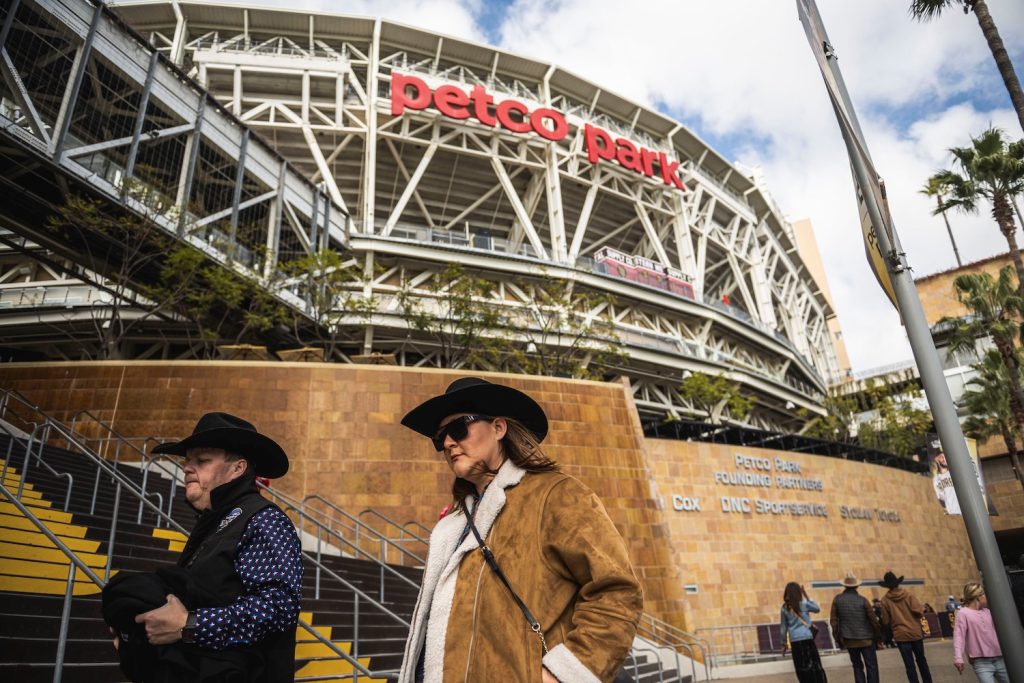
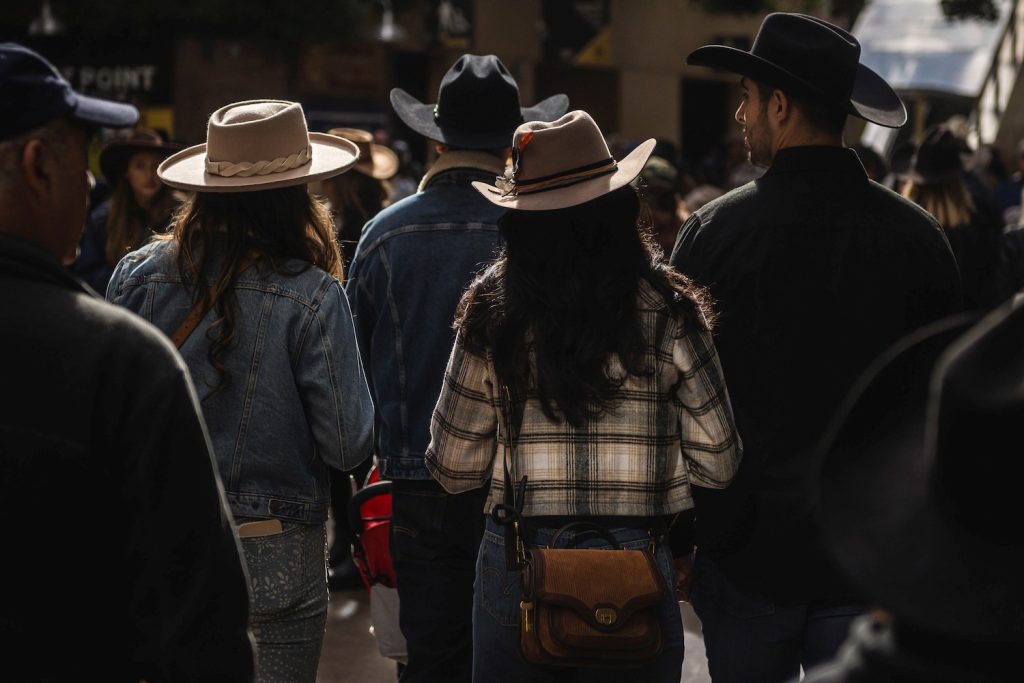
The East Village is a sea of cowboy hats and denim on Sunday, as spectators make their way to Petco Park for the third and final day of the San Diego Rodeo. The streets are teeming with pick-up trucks and the energy is high. For the stadium, this is in fact its first rodeo—and the first one to take place within San Diego city limits since the 1980s.
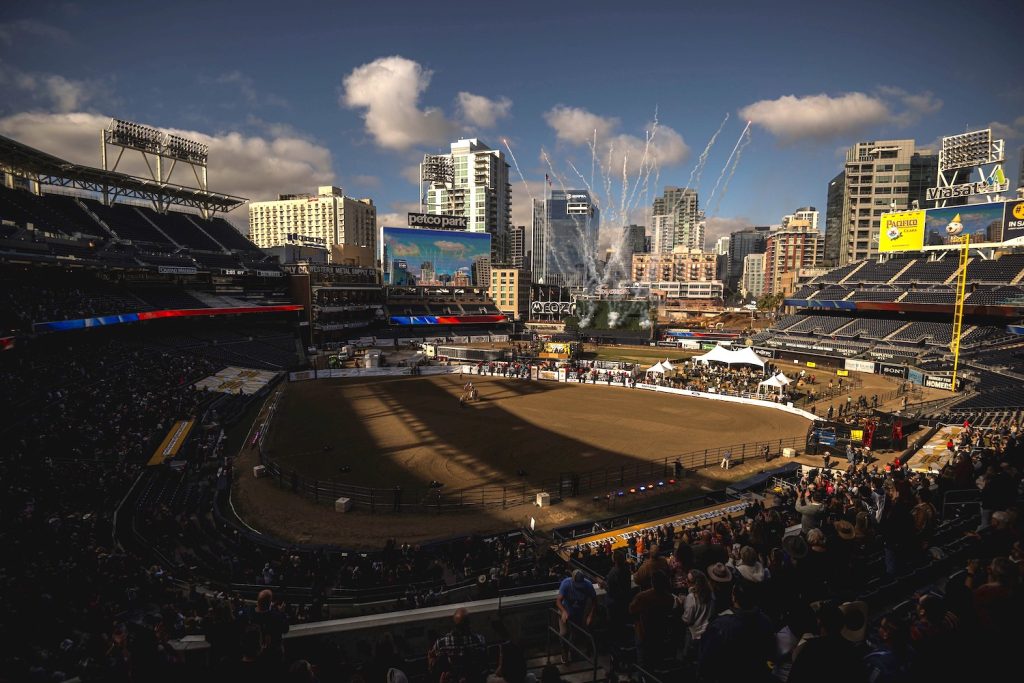
Inside the stadium, a face-painted rodeo clown launches merch from a t-shirt gun into the cheering stands. The jumbotron displays a “line dance cam” instead of a kiss cam, to the delight of the onlookers. The day’s competitions include steer wrestling, team roping, bareback riding, and more—all of which are extremely brief.
In breakaway roping, some contestants rope their calf in under two seconds. Blink and you might miss it. The bull and bronc riders are judged on their eight-second performances, if they can last that long. Barrel racing clocks in as one of the longer events, where a horse and rider run a cloverleaf pattern around three obstacles. Fan favorite and 68-year-old Sue Smith wows the crowd with a 14.89 second time.
But not everyone is excited for the festivities. Along Park Boulevard, a dozen or so protesters hold handmade signs that read “Rodeos Hurt Animals” and “Real Men Are Kind.” A woman with spikey blonde hair and a scarf that says “Vegan AF” confronts the line of ticket-holders. She asks over a loudspeaker why they want to watch “animals abused by a bunch of wannabe cowboys.”
This passionate activist is Ellen Ericksen, a spokesperson for the protest who has been out here all weekend. She describes the rodeo as antiquated, “like we’re in Roman gladiator times.” She feels that it’s her duty to advocate for the voiceless. “I don’t know how people can witness an event like this and not be outraged,” she says.
Ericksen works closely with the Animal Protection and Rescue League and SHARK (Showing Animals Respect and Kindness), the two local organizations that sued the Padres and C5 Rodeo over noncompliance with municipal codes in November in an attempt to prevent the rodeo from coming to San Diego. The plaintiffs claimed that the presence of animals within the stadium violated city code, since downtown is not zoned for livestock. The judge ultimately ruled in favor of the rodeo on the basis that the codes are intended for public space, and the event takes place on private property.
While Ericksen is disappointed in the outcome of the trial, she doesn’t seem surprised. “It’s all about the money,” she tells me.
There are four other rodeos in San Diego County this year (in Lakeside, Poway, Valley Center, and Ramona), and Ericksen plans to protest all of them. She believes that change starts small—“one person at a time,” she says. “Because that rippling effect will go on, whether it’s here, or at the racetrack, or at SeaWorld, or any event where animals are exploited. All you need is one more person to open their eyes.”
Code violations or not, it is remarkable to see Petco Park’s baseball diamond transformed into a rodeo arena. San Diego’s skyline seems incongruent with the scene below, where a cowgirl gallops across the dirt field on a buckskin, holding aloft a flag advertising Boot Barn. Even the competitors haven’t seen anything like it: after winning first place in the Saddle Bronc finals, Zeke Thurston says, “This is probably the coolest arena I’ve ever rode a bronc in.”
Sunday’s competitions take place without major incident, unlike the opening night on Friday, when a racehorse bucked its rider, ran headfirst into a fence, and collapsed during a race—a difficult scene to watch, and fuel for the pre-existing controversy. (The horse is now recovering.)
The next day, I reach out to Tyson Cardinal, ranch manager and flank man for C5 Rodeo. His family has been tending livestock for generations; his grandfather taught him how to care for animals. He calls me from the ranch in Lac La Biche, Canada, where the bucking horses are raised. The rodeo athletes get injured more often than the livestock during these events, he says.
But when the animals do get hurt, he takes it seriously. They are treated with chiropractic work, magna waves, and massage therapy. “If people just saw my chiropractor bills,” he adds, laughing.
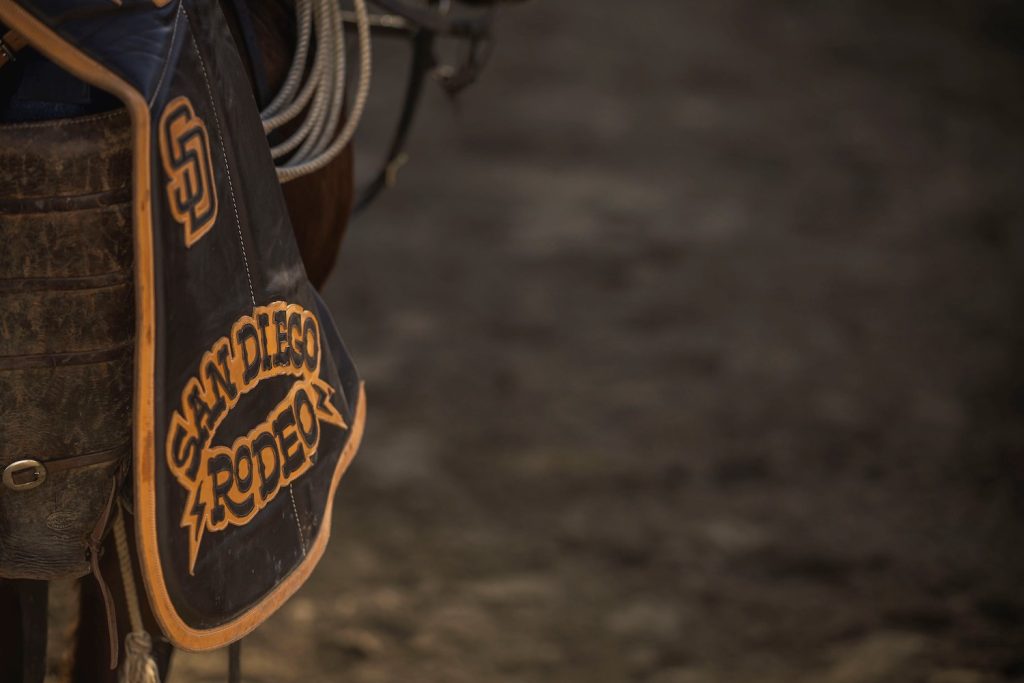
He says the animals are bred for these sports, so it comes naturally to them. “These bucking horses, if they didn’t want to do it, I promise you they wouldn’t go in the truck,” he tells me. “I know my best horse, Virgil, he will be pawing at the gate to get in that trailer. It’s what they love to do.” It’s negative 40 degrees in Lac La Biche, and he is out checking on the livestock while he talks to me.
“I wish these activists had an open mind. I wish they could just come and hang out with me for one month to see what I do, and how these animals are treated,” Cardinal continues. “I could prove to them a whole different world than what they think, I can promise you that.”
By now, both protestors and cowboys have cleared out of Petco Park, and soon the stadium will be returned to its familiar state. As for the fate of the San Diego Rodeo, that remains to be seen.
For a city that lives outdoors, these hometown makers understand exactly what your complexion is up against
San Diego has always worshipped at the altar of good skin. Equal parts surf town, biotech hub, and wellness capital, it’s a city where lunch breaks become beach walks and sunscreen sits beside car keys by the front door. The products that get used here earn their place. With 266 sunny days a year and one of the highest rates of skin cancer in the country, we take skincare seriously. Dr. Bronner’s has been making soap in North County since the 1960s. Sun Bum was born in Encinitas and is now on shelves in over 70 countries. The tradition runs deep.
“Living in San Diego means your skin is exposed to sun almost every day of the year,” says Sue Zhang, M.D., a San Diego physician specializing in aesthetic medicine. “The products that tend to succeed here are the ones that can keep up with daily life, UV exposure, sweat, and movement, while still supporting long-term skin health.”
From a mineral powder that solves the sunscreen-over-makeup problem to an acorn oil serum rooted in Indigenous plant medicine, the local San Diego shelf is more diverse, and comprehensive, than most of us realize.

A hydrating gel-oil hybrid that applies like a body treatment and leaves skin with a sheen that reads as healthy rather than oily. La Jolla–founded Kopari built its reputation on cold-pressed coconut oil sourced from family farms in the Philippines, and the Sun Shield Body Glow SPF is exactly that in summer form: coverage that doubles as skincare.

The name is intentional. The founder got a melanoma diagnosis that his dermatologist caught—she’s now his business partner. The question he couldn’t shake was why the skincare industry hadn’t yet figured out how to talk to men, and 4-Skin is the answer: a premium sunscreen and skincare line built around the kind of blunt, self-aware humor that gets guys to pay attention. Men’s skincare has needed this for a long time, and the formulas are serious enough to deliver.

Carlsbad-based Coola was formulating organic SPF before “clean sunscreen” was a marketing category, and the Classic Face Sunscreen is the brand’s thesis: protection that disappears into skin and layers cleanly under makeup. Sheer and lightly hydrating, it makes sunscreen easy to reapply before an afternoon walk at Torrey Pines.

Squalane, argan, jojoba, and CoQ10: a short ingredient list that does a lot. The Glow Finishing Oil from Mission Hills wellness sanctuary Saffron and Sage is plant-based, scientifically grounded, and formulated to absorb rather than sit on the skin. The brand started as an integrative health practice where acupuncture, naturopathic care, and functional medicine share a roof, and the skincare line runs on the same philosophy.

The Restorative Skin Complex is powered by TriHex+, a patented peptide blend developed by Carlsbad-based Alastin’s team of SkinMedica veterans. It promises to clear out damaged collagen and elastin while supporting new production, the kind of gradual improvement that makes a product hard to quit.

Beldi is a multi-functional cleansing tradition rooted in Moroccan hammam culture, dating back over 12 centuries. Alia Jouj is the brand’s flagship product, and San Diego–based founder Dr. Mia Chae Reddy built a brand around it. Alia Jouj uses 100 percent organic, cold-pressed argan oil and the same ancient saponification method to produce a honey-thick liquid cleanser that softens skin without stripping it.

Acorn oil has been used by California’s Indigenous communities as plant medicine for generations. Ruth-Ann Thorn, an enrolled member of the Rincon Band of Luiseño Indians, built N8iV around it as the first Native American–owned skincare brand to reach the national mainstream. The Móyla Moon Polish, named for the Luiseño word for moon, is an exfoliant centered on acorn oil Thorn gathers herself each year from the La Jolla reservation. Find it at the Gaslamp Quarter store Thorn owns at the historic Yuma Building.

This product solved the reapplication problem. As a brush applicator, this mineral SPF goes over makeup without disturbing it, which is why it has been on derm-office retail shelves in Carlsbad and beyond for over two decades. The tinted version doubles as foundation.

This steroid-free, petroleum-free eczema treatment was built specifically for babies and toddlers (although grown-ups can use it, too). It’s centered on FDA-approved 1 percent colloidal oatmeal with a base of sunflower seed oil, beeswax, and jojoba. The “linoleic-acid-rich sunflower oil is helpful for atopic, eczema-prone skin that is often deficient in that fatty acid,” says Dr. Zhang. Gentle enough for newborns, safe for daily use, and tested by both pediatricians and dermatologists.

The Mandelic Night Serum pairs mandelic acid, an AHA derived from almonds and gentler than glycolic acid on sensitive skin, with lactic acid, niacinamide, and urea to brighten, smooth texture, and reduce breakouts overnight. Fragrance-free, vegan, cruelty-free. The brand name is the initials of the founder’s five daughters, pronounced like courage. Dr. Zhang also says she “really value[s] [the founder’s] mission to create pregnancy-safe skincare products that are both effective and wallet-friendly.”
Ingrid Yang, M.D., J.D. is a hospital-based physician in San Diego, CA, certified yoga therapist, and longevity specialist. She loves *double hearts* San Diego and spends her days helping people fully engage in long, healthy lives through evidence-based lifestyle medicine. Her books include Adaptive Yoga, Zen Mindfulness, and Hatha Yoga Asanas. When she’s not leading international wellness retreats, she is chasing sunsets, handstanding in nature, or geeking out over mitochondria.
The San Diego designer has created more than 3,000 concert posters over nearly 40 years for artists including the Rolling Stones and the Red Hot Chili Peppers
Let’s start with his name.
No, not his birth name, Craig McKenzie Haskett.
Scrojo.
When he was in high school, he and his friends were trying to come up with the perfect name for their punk band that would encapsulate all their personas. Nicaragua. The Freds.
One of his friends said he was going to go by Jimmy Stacks and called it “the perfect rock and roll name.” Their names changed so much that Haskett erupted: “Fine, I’m f—ing Scrotum Joe, the true defender of the Open West.”
Their response: Wow, that’s a great name.
As a teenager, he drew chalkboards for Del Mar’s Pannikin coffee shop and would design T-shirts for surf/skate brand Life’s a Beach. He signed the shirts with his moniker, but even in punk rebellion, who wants a shirt with the words Scrotum Joe on it? “They just cut out the ‘t-u-m,’ and the next thing you know, a client referred to me as that, and it stuck,” he says.

Scrojo could have been part of a band as iconic as The Misfits—had he been able to learn the famously cumbersome bassline to The Kingsmen’s “Louie Louie.” Becoming one of the most renowned concert poster designers—someone who quite literally designed the cover of Art of Modern Rock: The Poster Explosion—is a pretty good Plan B.
“To my knowledge, he’s done more rock posters than anybody else alive,” says Dennis King, whose D. King Gallery in Berkeley, California, serves as one of the largest private rock poster collections in the world. “He’s the hardest-working guy in the poster business.”
King not only co-authored the sequel to music historian Paul Grushkin’s The Art of Rock, but he also handles distribution and sales for all of Scrojo’s work. That’s more than 3,000 different posters over nearly 40 years. (That’s over one poster each week. For four decades straight.)
For anything from boxing matches to rodeos, posters have long been used as promotional items. Toulouse-Lautrec’s famous lithographs advertised Moulin Rouge in the late 1800s. Around the same time, Hatch Show Print in Nashville was making handbills for the Grand Ole Opry.
“I propose this: Cave paintings are the first poster art,” Scrojo says.

Rock and roll posters took off in the 1960s, when the hippie counterculture era replaced conformity and suburbia. Artists like Jimi Hendrix and the Grateful Dead used their vibrant, psychedelic prints as a form of rebellion from the mainstream. Posters were promotional, commemorative, collectible, and especially expressive.
If the name Scrojo is any indication, he doesn’t shy away from imagery that toes the line of being too provocative. He focused more on what inspired him instead of trying to be offensive for the sake of getting attention.
“Didn’t want to show it to my grandmother, but my parents were fine with it,” Scrojo says with a laugh.
“We’ve had to ask him to put a Band-Aid over a nipple every now and then,” says Chris Goldsmith, president of Belly Up Tavern in Solana Beach, where Scrojo started out and hundreds of his posters currently line the walls.
Scrojo spent six weeks at Otis College of Art and Design for a summer semester before drugs, alcohol, and a self-described lack of discipline prevented him from enrolling full time. Still, he taught himself concepts like text hierarchy and later found his niche at the Belly Up and in the surfing and skating world, working with brands like Quiksilver, Rip Curl, Scorpion Bay, and DGK.
His first concert poster was for North County band Borracho y Loco, of which Goldsmith was bass guitarist. Scrojo drew an abstract version of the Belly Up’s iconic shark with colorful calypso and tiki themes.
Early on, he would craft using a pencil, pen, non-reproduction blue pencil, X-Acto knife, rubber knife, and proportion scale to create each poster, and the finished product could take a week or even longer.

“I recommend every artist coming up to do that for like six weeks,” Scrojo says. “It forces you to think about every design decision as you’re going along.”
He has since mastered vector imagery through Adobe Illustrator to the point where, depending on the level of detail needed, he could finish two projects in a day. Still, he fills sketchbook after sketchbook to blueprint.
“I liked his line in particular, and he knows how to draw, which a lot of people don’t really know how to do these days,” King says.
Scrojo would research what each musician’s merchandise looks like to get a feel for each artist’s tone and voice. Once he has his central image in mind, he focuses on what and where to place the text.
He doesn’t have one specific style, ranging his talents from art deco to psychedelic and everything in between (and outside the lines). Want a pop surrealist comic book cartoon devil with splattered paint textures, halftone dot patterns, and pure chaos? Red Hot Chili Peppers, February 1986. Want a minimalist graphic portrait with bold strokes and graffiti text? P!nk, October 2023. Want a carnival sideshow style piece with a tasteful caricature of Jeff Bridges? The Big Lebowski, August 2011.
Scrojo calls himself a jack of all trades because he can create posters for all music genres. King calls him a chameleon for his ability to adapt his voice to new eras.

“The variety of his skillset makes it possible for us to put 50 of his posters on a wall next to each other and have it look compelling, not just a bunch of the same thing over and over,” Goldsmith says.
Some of Scrojo’s favorite posters are when he feels a personal connection to the artist or the album. He has a vivid memory as a child of being trapped in a closet filled with marijuana leaves while playing hide and seek and staring at Jimmy Cliff’s “The Harder They Come” LP. “For whatever reason, as a kid, that sparked a desire to do graphic design,” Scrojo says.
Fast forward to February 2012, Cliff is performing at Belly Up. Scrojo decided to modify Cliff’s original album cover from rainbow gradient fills to classic reggae psychedelia while preserving Cliff’s striped pants and bold hat. Cliff’s manager called him and said they wanted to use it for the rest of their tour.
“We always get artists requesting that he does their posters,” Goldsmith says. “A lot of artists don’t want venues to go all rogue because they want to control how they’re being presented. With him, they’re like, ‘Let him go nuts.’”
Matt Eisenberg is an award-winning writer and photographer based in San Diego. A former ESPN editor, his work has also been published by CNN, Bleacher Report and the New York Daily News.
Dance to the American Rhythm, shop after-hours at the Summer Sera, and catch the Big Bay Boom fireworks show
Before, during, and after the Fourth of July, San Diegans can commemorate America’s 250th anniversary with an abundance of stars, stripes and local celebrations. America The Beautiful: 250 at The Rady Shell and Lamb’s Players Theatre’s revival of American Rhythm will look back at the many songs which define our country. Liberty Station’s Anchored in Freedom celebration and the Independence Day Carnival offer community-centered fun and loads of family-friendly activities. And who can possibly forget the Big Bay Boom, which will resume its reign over San Diego Bay as the state’s biggest fireworks show. Outside of the holiday festivities, this week brings the yearly return of Little Italy’s Summer Sera and the Athenaeum Summer Festival, as well as a slate of championship matches for All Elite Wrestling.
Food & Drink | Concerts & Festivals | Theater & Art Exhibits | More Fun Things to Do

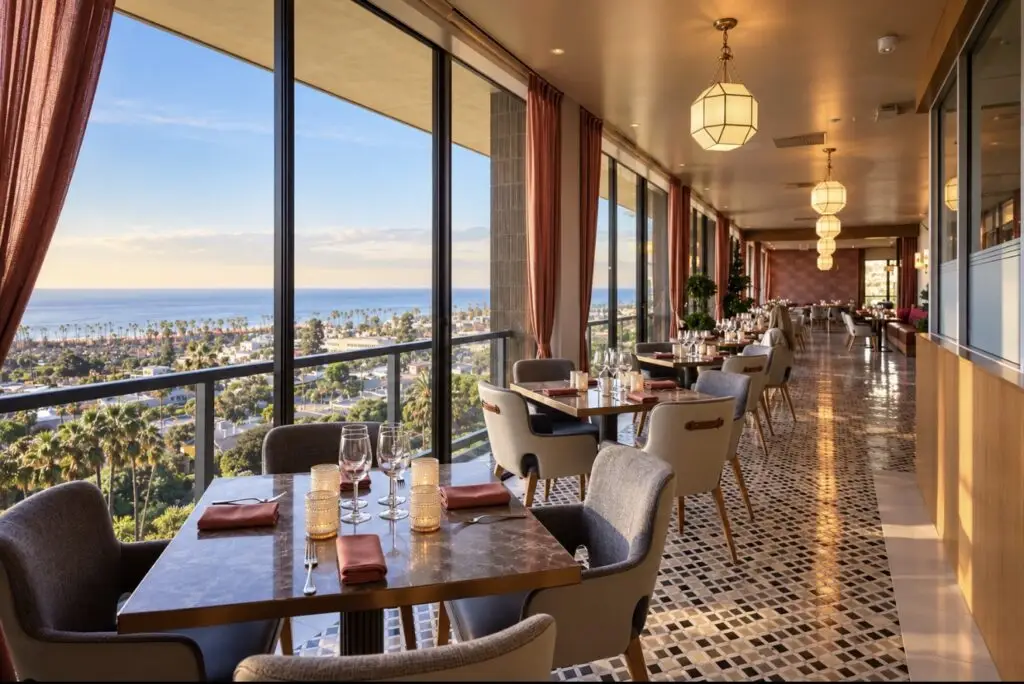
Sip on refreshing beverages and savor a panoramic rooftop view this Friday from 6-8 p.m. during the 21-plus Sunset & Spritz at Margaritaville Hotel San Diego Gaslamp Quarter’s 5 O’Clock Somewhere Bar. There will be a live DJ (until 9 p.m.), appetizers, pool and cabana access, a photo booth, and a cash bar (until 11 p.m.). To accentuate the summer theme, guests are invited to dress in white, pink, and orange attire. Tickets are $29 and come with a welcome aperol spritz.
616 J Street, Gaslamp
Bring a patriotic palette to the Fairmont Grand Del Mar for The 250 Grand Tasting Menu at Amaya this Friday and Saturday from 5-8:30 p.m. Patrons will be treated to a five-course tasting menu, curated to exhibit a selection of standout regional flavors and culinary concepts that have shaped our country’s distinct food heritage. The meal will also include beverage pairings with each course, such as wine, cocktails, and artisanal drinks. Reservations are $330 per person (with tax and 20% gratuity) on OpenTable.
5300 Grand Del Mar Court, Del Mar
Don Toliver thrives at being the life of the party (and the “After Party”). His fifth album Octane, released in February, is indicative of his thrill-seeking nature. As with his earlier releases, Octane sees Toliver operating in the space between hip-hop and R&B, with warbling vocals and blaring beats that are best heard at a high volume. This Tuesday at 7:30 p.m., Toliver will play at Pechanga Arena, with rappers SoFaygo, Chase B and SahBabii—who had a guest verse on Octane standout “K9”—as special guests. Tickets start at $156 for this concert.
3500 Sports Arena Boulevard, Midway
What makes musicals like Wicked, Cats, Chicago, and Jersey Boys so timeless is the legion of excellent songs that makes fans out of those who’ve never even watched the show. This Friday at 7:30 p.m. during Blockbuster Broadway! at The Rady Shell, conductor Evan Roider, the San Diego Symphony Orchestra, and veteran vocalists Alex Getlin, Jessica Hendy, Scott Coulter, and John Boswell (also on piano) will perform an all-star theater soundtrack. In addition to the shows named above, audiences can expect songs from A Chorus Line, The Phantom of the Opera, Annie, and more. Tickets range from $57 to $129 for this concert.
222 Marina Park Way, Embarcadero
One night after recognizing the brilliance of Broadway, The Rady Shell will ring in the United States’ landmark anniversary with America The Beautiful: 250 this Saturday at 7:30 p.m. Conductor Byron Stripling, joined by a five-performer ensemble and the San Diego Symphony Orchestra, will lead a night of ballads that best resemble the red, white, and blue, including songs sourced from the Great American Songbook. After the show, concertgoers are invited to watch the nearby Big Bay Boom from their seats. Tickets range from $71 to $139 for this concert.
222 Marina Park Way, Embarcadero
Ryan Hardison is a freelance arts and entertainment writer and recent graduate of San Diego State. When he's not staring at his laptop, he's likely eating an adobada burrito or getting sunburnt at the beach.
KQ Aesthetic Society goes beyond cosmetic to provide comprehensive care and transformative results
Kelly H. Harfouche, founder of KQ Aesthetic Society, knows firsthand that cosmetic treatments like fillers, neurotoxins, and microneedling, can not only enhance a person’s appearance and restore confidence, they have the power to truly change a person’s life. An expert injector has the ability to tailor treatments to each individual patient’s anatomy and goals for personalized results. Harfouche, a board-certified nurse practitioner, has spent nearly a decade perfecting her craft as an aesthetic injector and integrating her multifaceted artistic skills with precision patient care. Her commitment to continual education and training, plus a passion for helping people look—and feel—their best, set KQ Aesthetic Society apart in a sea of local medspas.
For many people considering nonsurgical treatments, the intent is to look refreshed and refined. KQ Aesthetic Society’s philosophy eschews a cookie cutter approach that bases treatments around units, instead working to understand each person’s unique goals, then curating a treatment plan to fit that vision. Harfouche focuses on “inclusive luxury,” the belief that everyone deserves access to aesthetic treatments, respective of budget restrictions. She develops long-standing trusted relationships with her patients, and works with each one to achieve their aesthetic objectives and address the underlying causes of their concerns.
“For me, forming an honest and open relationship with every patient who walks through the door is essential. This means understanding them on a deeper level and meeting them where they are to define and achieve their individual goals,” she says.

Drawing on her artistic background, which inspired her transition into medical aesthetics, Harfouche sees each client as a “unique canvas.” Rather than relying on standardized procedures, the practitioner’s distinctive approach combines her profound understanding of the physiological and anatomical changes associated with aging with an unwavering commitment to ongoing education about the newest products and their mechanisms of action. Her goal is to make each patient feel beautiful in their own skin and to embrace their individuality.
She has also pioneered a way to combine her talent for aesthetic artistry with her philanthropic nature. Harfouche is one of only a handful of providers using dermal fillers to treat patients with lip asymmetry and scarring resulting from cleft lip surgery. Patients travel from around the country for this transformative treatment, noting increased confidence and a restored identity. She hopes to eventually launch a training program to help fill the void in this space.

“My passion has always been connecting with people and giving back in any capacity that I can,” she says. In the rapidly advancing landscape of aesthetic medicine, you can place your confidence in Harfouche and KQ Aesthetic Society to deliver exceptional care. To learn more or book a consultation, please visit kqaestheticsociety.com.
Eighteen seconds, one unforgettable mistake, and a Fourth of July story that somehow gets better with age
There’s a famous video.
“This is insane!” the guy filming it seems to proclaim. “It’s the best fireworks show ever!” a companion confirms, inspiring a debate lasting over a decade.
All told, 7,000 fireworks exploded in the span of 25 seconds over San Diego Bay on July 4, 2012. A Michael Bay amount of unison. $125,000 worth of shells, cakes, Roman candles, and skyrockets had been placed on a barge—enough for 17 minutes of decorative sky flares—and…
Boom.
The sky looked like someone had set a giant Rorschach test on fire. Or as if whatever we all see in our Rorschachs—butterflies, clowns, tongue kissing, dads—was being electrocuted and lifted heavenward, amen. It was shocking how bright it was, how much it sizzled the local cosmos. Could’ve been one of those sci-fi films where a hole is ripped open between warring universes. But angstier, more metal—the work of some methy creator in a sleeveless concert tee.
The sound?
Lou Reed once released an entire album that contained 64 minutes of mindflaying guitar screeches and machine noises. No regular songs, just a fascinating amount of ear distress. His record label reps no doubt heard the melodic outro of their careers, but everyone else was in pain and stumped. That album still sounded better than the bay did that night. The bay sounded like a god who struggled with emotional regulation had blown his speakers and was working through the anger stage of AV grief.
In the left frame of the video, a middle-aged woman is attempting to drag her husband off by the hand. In no way does he want to go, possibly because he had missed the time Roseanne Barr sung the national anthem at a Padres game, simultaneously disemboweling and amusing America through the power of song. He would not willingly abandon an equally worthy San Diego trainwreck.
Another woman in the video appears to have just filled her beer, rushing to sit down for the show. She pauses mid-sit and returns to the full and upright position to properly bear witness. What was supposed to be prolonged entertainment has been so radically shortened that she will have to find another reason to drink. Lucky for her, drinking will be the only way to adequately process.
Locals remember the conspiracy theories. People wondered if the fuses had been tripped by a saboteur who was sympathetic to dogs, fish, or the growing suspicion that late-stage capitalism is a gorgeously branded but impossible dream sustained by remarkably efficient top-tier wealth retention and the soft compliance of fireworks-watchers who can no longer afford a house, a beer, or the personal impacts of human reproduction.
Speaking of being terrified of babies, babies were terrified. The children who witnessed it probably still can’t go near a candle store. But those kids will be tougher, perfectly scarred kids. They’ll write better songs.
That night helped us absolutely dominate the national news cycle. For a hot minute, we became America’s water-skiing squirrel. Now, years later, when you Google “fireworks gone wrong,” San Diego is always a top contender, along with that poor Nebraska family who nearly wiped out a couple generations in their front yard, their minivan somehow turning into a howitzer of recreational TNT.
There is still debate as to whether Big Bay Boom 2012 is the worst or greatest fireworks show of all time. But the advanced parts of civilization arrived at the truth as quickly as the women in the video did. It was undeniably amazing.
First of all, the point of Fourth of July fireworks isn’t “the intricate choreography of sky fire over a guaranteed amount of show time.” It’s about creating a vivid memory shared with some people you like, love, or would like to love.
BBB2012 used large-scale chemical fire to create the ultimate memory.
Sure, some people who iron their jeans subjected their family to a sermon about how San Diego managed to botch America’s birthday like a Disney princess-for-hire who smelled of quite a few Sauvignons.
The rest of us saw how perfectly it nailed the actual feeling of being an American. Because only a miniscule percentage of us bake postcard apple pies where every inch of crust is perfectly laminated like the wood in an Irish bar. Very few of us can paint on par with Picasso. The rest of us—despite truly believing in our America-activated abilities to achieve greatness in almost any field of our choosing—burn pies. We try to paint only to realize it looks like our fine motor skills have entered active death.
That’s why BBB2012 was the most perfectly American fireworks show ever: A wildly ambitious idea galvanized thousands upon thousands of people to both work on it and come to hold a beer and gawk at it, only to have it fail in the most glorious TMZ-level spectacle.
America isn’t about immaculate, storyless wins. It’s about how the framework of a country is solid enough that we can accidentally detonate our entire lives—a few times—and still probably be OK.
No one has America’d quite like San Diego did on that day. It was performance art. Lou Reed’s heart slow-clapped. Any brief municipal embarrassment quickly became a pride of our people. I can only hope the same for the Nebraskan yard family whose Dodge Aerostar became a hyperactive Death Star.
P.S. Local writer Maya Kroth compiled a quite great oral history of that night for Thrillist. The bottom lines for me were—it took nine months to prepare, no one was hurt, and even though the pyrotechnics company tried to zero out the bill, Big Bay Boom founder H. P. “Sandy” Purdon refused and paid them in full. This year will mark the 25th Anniversary of the yearly Big Bay Boom.
Troy Johnson is the magazine’s award-winning food writer and humorist, and a long-standing expert on Food Network. His work has been featured on NatGeo, Travel Channel, NPR, and in Food Matters, a textbook of the best American food writing.
See Rosalía in concert, stroll through Little Italy for Summer Sera, and dress up for Comic-Con
Summer has officially kicked off, and San Diego is celebrating the sunny season with a myriad of fun events. From San Diego Pride week and a fairytale performance at Civic Theatre to a Santigold concert and Comic-Con, there are dozens of opportunities to make memories worth adding to your scrapbook. Here are all the best things to do in San Diego this July:
Concerts & Festivals | Theater & Art Exhibits | More Fun Things to Do
Divine inspirations, operatic ballads, and symphonic pop production elevate Rosalía’s Lux to heavenly levels. Hear angelic vocals ascend—in up to 13 languages—during her performance at Pechanga Arena.
Enjoy a night of feel-good indie rock and sing-along anthems at the Cal Coast Credit Union Open Air Theatre courtesy of Young the Giant and special guest Cold War Kids.
Santigold collects genres like gold stars: musical accouterments that brighten her uniquely alternative sound. See her live in concert with dancehall producer Troy Baker Sound at Humphreys Concerts by the Bay.

Be the Civic Theatre’s guest for “Beauty and the Beast” and discover that a fairytale love sometimes lies beneath the surface.
Two male government workers pursue a secret romance amid the Lavender Scare in the San Diego Opera’s production of “Fellow Travelers” at the Balboa Theatre.
The deep blue sea is home to countless ecological treasures, including the remarkable marine organisms documented by Oriana Poindexter. Study her educational and experimental imagery at The Photographer’s Eye via Field Notes.
Audrey Hepburn. Marlon Brando. Salvador Dalí. What do these icons have in common? Each was the enigmatic focus of a Cecil Beaton portrait. Step inside Cecil Beaton’s Fashionable World, an alluring showcase of 20th-century style at San Diego Museum of Art.

The Little Italy Mercato will trade morning rays for golden-hour glow through its free Summer Sera, an expansion of the neighborhood’s farmers market with live music, artisanal finds, and a fetching amount of pet activities.
San Diego Pride week starts with a Dyke March and ends with the two-day “Pride Shines On” festival. The days in between? Run a 5K, march in the parade, visit the rainbow-lit St. Paul’s Episcopal Cathedral, and more.
Dress up for a Mediterranean-themed tea time at the Estancia La Jolla, a laid-back yet refined afternoon planned for the resort’s monthly Tea in the Garden series.
Nerd culture’s biggest gathering returns to the Convention Center. San Diego Comic-Con welcomes fans of everything from comic book cinema to ultra-rare collectibles for panels, exhibits, sneak peeks, and much more.
Ryan Hardison is a freelance arts and entertainment writer and recent graduate of San Diego State. When he's not staring at his laptop, he's likely eating an adobada burrito or getting sunburnt at the beach.
A look at San Diego's top designers creating unique environments that combine creativity and function


AVRP Studios’ tradition for Design Excellence and Innovation began in 1976 with Doug Austin, FAIA, in Solana Beach, California. The firm has since grown to complete major projects throughout the United States and Canada. We think of ourselves as a family and we care deeply about people. We want to inspire, help make their lives richer and more complete through our efforts. We believe that architecture is one of the most important art forms because of the impact it can have on the lives of those it touches. We’re delighted to have been recognized with over 150 awards for design excellence.
703 16th Street, Suite 200, San Diego, California 92101 | 619-704-2700 | avrpstudios.com