Featured articles
Food & Drink
Food & Drink
Food & Drink
Featured articles
Things to Do
Features
Food & Drink
Featured articles
Things to Do
Things to Do

Food & Drink
What's next
Featured articles
podcast-ep
podcast-ep

Food & Drink
Featured articles
Food & Drink
Features
Food & Drink
Featured articles
Food & Drink
Food & Drink
Food & Drink
Ready to know more about San Diego?
SubscribeReady to know more about San Diego?
The 10 best spots to get a drink
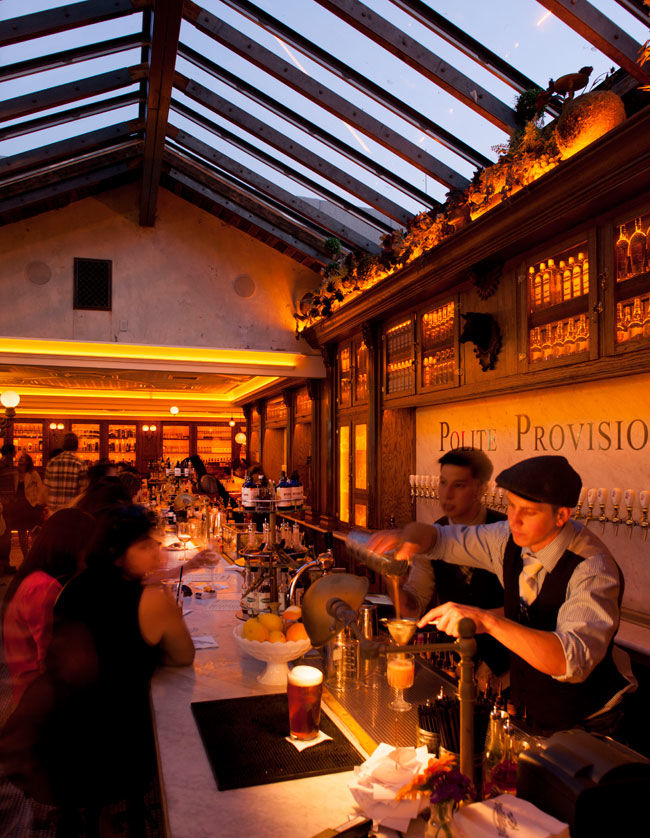
Considering the upheaval at City Hall over the past month, we could all use a drink right about now. So we sent out one intrepid imbiber (who also happens to be a local bartender) to find the 10 best spots to belly up to this month. Here’s the list. Salut!
Cocktail Time in San Diego
Starlite Mule
Starlite Mule
3175 India Street, Mission Hills
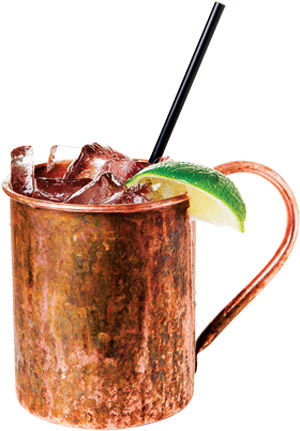
The scene: Decidedly un-Mission Hills. Pass through the adobe hexagonal entrance and head toward the outdoor area in the back. What you’re having: Starlite Mule, with Rain organic vodka, ginger beer, lime, and Angostura bitters. Served in those damn irresistible copper mugs. Best night to go: Sunday or Monday: $15 bottles of wine and $6 mules.
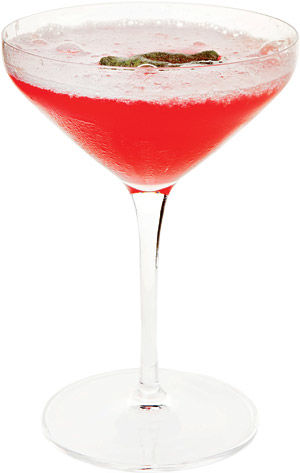
Cowboy Star Mollie Monroe
Mollie Monroe
640 Tenth Avenue, East Village
The scene: Exposed brick and wood at this polished steakhouse (and butcher shop), where bartender Garth Flood’s cocktails exhibit a kick of Old Western grit. What you’re having: Something seasonal. For summer, try the Mollie Monroe with Plymouth Gin, pomegranate syrup, sage, and fresh lemon juice with a fried sage and pomegranate seed garnish. Best night to go: Monday. Fewer crowds and the nightlong happy hour make for jolly drinkers.
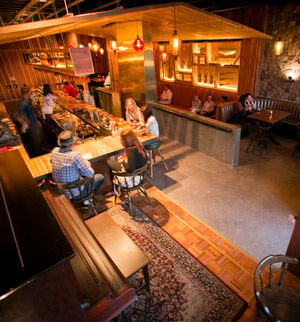
Sycamore Den
3391 Adams Avenue, Normal Heights
The scene: A broad spectrum of transplant hipsters and Normal Heights locals share cocktails crafted by Eric Johnson in this space modeled after a ’70s-era basement. What you’re having: The Wolf Ticket, with bourbon, Orchard Peach, lemon, simple syrup, and Angostura bitters. Best night to go: Friday. Sycamore Den partners with local food trucks while Ruth, the ghost piano, serenades during happy hour.
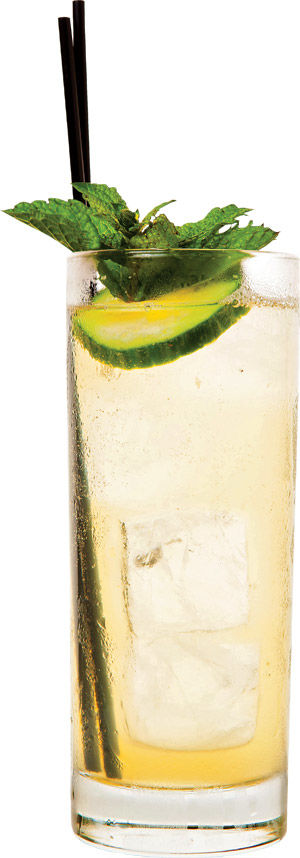
Seven Grand Auchy Highball
Auchy Highball
3054 University Avenue, North Park
The scene: Catch whiskey nerds gawking at the four-tiered wall of 200 international whiskies. It’s lodge-y, carpeted, and full of flannel. What you’re having: The obvious answer is an Old Fashioned. Not so obvious is the Auchy Highball, with housemade cucumber soda and Auchentoshan Classic. Best night to go: Wednesday or Thursday. Each nip is accompanied by live jazz, Motown, and rock music.
These cocktails mean business. Their names, on the other hand, might leave you giggling
Monks Gone Wild
{strawberry-infused Pimm’s, Green Chartreuse, lemon, and ginger beer}
â» The Lion’s Share
Hunter in the Rye
{High West Rendezvous Rye, lemon, and blackberry liqueur}
â» Small Bar
Banana Hammock
{white rum, lime, and banana syrup}
â» El Dorado Cocktail Lounge
Absinthe Minded
{rye, absinthe, Punt E Mes, maraschino, grapefruit, cane syrup, ginger beer, and mescal}
â» Roseville Cozinha
Milan Rouge
{Jim Beam rye, Campari, and barrel-aged grappa}
â» Alchemy
Mayan Concubine
{reposado tequila, lemon, apricot liqueur, and bitters}
â» Polite Provisions
Tokyo Love Hotel
{house-made sweet tea, vodka, agave, and pressed lemon}
â» Herringbone
Mr. Miyagi
{vodka, sake, pomegranate, lemon, and agave}
â» Bang Bang
Cobra Clutch
{tequila, mescal, pineapple, lime, cane sugar, absinthe, and mint garnish}
â» Bankers Hill Bar + Restaurant
The Angry Czech
{Jelinek Fernet, hazelnut syrup, Velvet Falernum, and lemon}
â» Urban Solace
Good drinks are worth the time.
The bartender, flaunting a bowtie and a visible sense of purpose, is not making eye contact with you. He’s crafting. He has a process. Call him an artist, but unlike the sandwich artists at Subway, his work of art costs more than $5. Therefore, he can wield that jigger and emulsify that egg drink for as long as he deems fit.
You might be desperate, parched, anxious, stressed, bored—all those things that land us in bars in the first place. And you haven’t even ordered yet.
But patience is a virtue. Cocktails take time. There’s a difference you can taste, if only you’d slow down.
Drinks must be executed with unwavering consistency. Jiggers are used to exactly measure the precise components of a recipe. The “perfect ice” mitigates temperature increase and dilution. A citrus zest adds aromatics to the top of a drink, and certain garnishes function similarly. If there’s a luscious mint sprig surrounding your straw, don’t remove it—taste is 95 percent smell, and it’s 100 percent there for a reason.
Don’t hate the bartender for doing his job and working conscientiously. If your bartender is just an ass and not acknowledging you, then take it up with the manager. But don’t take it out on that cocktail. It’s craft. —EM, NM
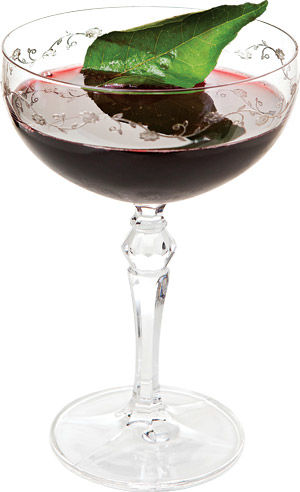
Grant Grill La Granade
326 Broadway, Gaslamp Quarter
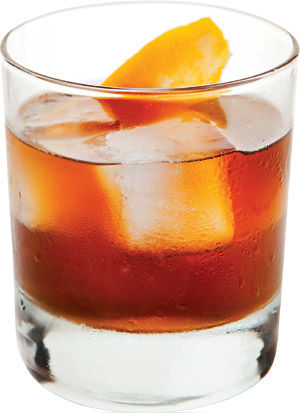
The scene: An ode to hotel bars past, complete with Tiffany glass and chandeliers. Out-of-towners and socialites alike are dazzled by bartender Jeff Josenhans’ culinary-inspired cocktails. What you’re having: US Grant Centennial Manhattan, with High West Rye, Dolin dry vermouth, and Fee Bros Bitters, blended and aged in oak for 100 days. Best night to go: Thursday. Bypass crowds and listen to live music.
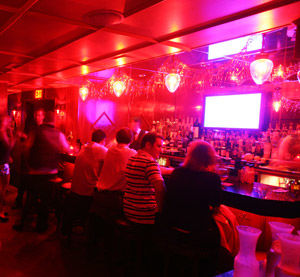
Prohibition
Photo by John Dole
548 Fifth Avenue, Gaslamp Quarter
The scene: Pomaded pompadours and little black dresses abound at this red-hued jazz lounge speakeasy. Sure, there’s a dress code, but reservations are no longer required. What you’re having: The Bottom Feeder, with Flor de Caña rum, Aperol, Velvet Falernum, Ballast Point Sculpin IPA, and grapefruit bitters. Best night to go: First Monday of the month. Bartender Ian Ward creates cocktail-album pairings: specialty drinks that accompany each track as you listen to an album in its entirety.
Prepkitchen The Proverbial We
1660 India Street, Little Italy
The scene: Brothers Eric and Adam Lockridge sling cocktails with housemade you-name-its from this second-floor restaurant overlooking Little Italy’s main drag. What you’re having: The Proverbial We (TPW), with bourbon, golden raisin brown sugar syrup, rhubarb liqueur, and decanter bitters. Best night to go: Saturday. Deals are unheard of on weekend nights, but the late-night happy hour (10 p.m.–11:30 p.m.) dishes discounted apps and $8 specialty cocktails.
Cusp Remember the Mayans
Remember the Mayans
7955 La Jolla Shores Drive, La Jolla
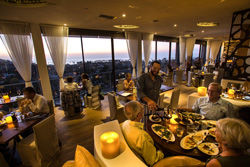
The scene: Equal parts restaurant and bar with a splash of luxury. Evenings, the dining room is coated in a sunset orange hue. What you’re having: Remember the Mayans, with partida, cynar, ginger syrup, fresh lime, Sriracha, cilantro, and cucumber served over pellet ice. Best night to go: Thursday. Bartender Nate Howell and staff offer bourbon ($16) and single barrel ($22) whiskey tasting flights. Plan to take a taxi home.
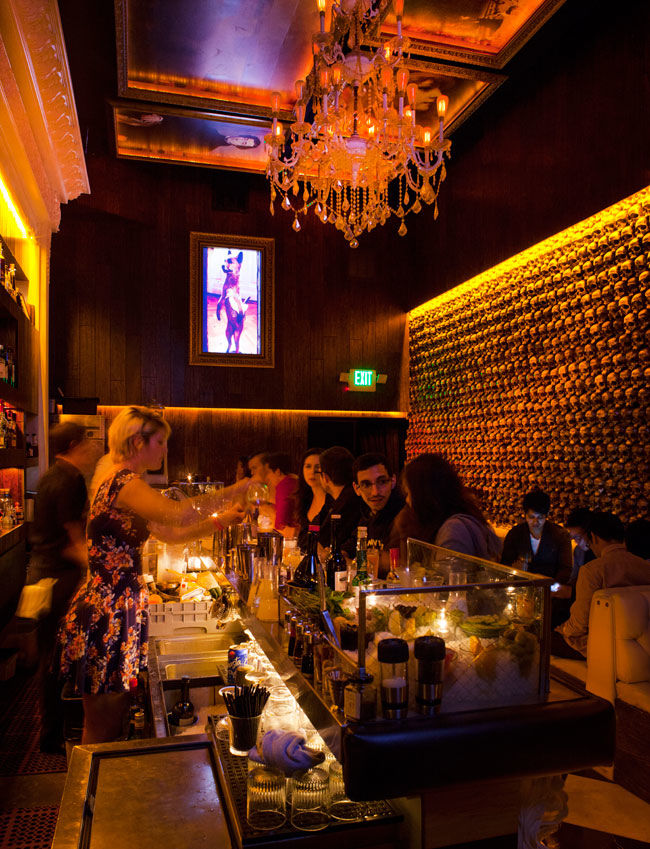
Cocktail Time in San Diego
PARTNER CONTENT
SDM owner and food critic Troy Johnson identifies some standout stars in SD's food scene
I spent time in a hot dog stand on the edge of San Diego Bay, looking out a window that mattered. Mattered to a kid whose mom taught him to fish on this pier. They’d turn on a little transistor radio, find a signal through the static, stare at the water, and talk life and his dad. Dennis Borlek’s dad was out there, somewhere, commanding a naval submarine through god knows what. When his dad would dock in Point Loma weeks or months later, Borlek biked down the street along Shelter Island to see him and steal back stolen moments.
Later, Borlek helped midwife the craft beer scene, managing seminal spots like Small Bar and Liar’s Club. Wondering what to do with the rest of his life, he went back to that pier and saw a for-lease sign on the bait and tackle shop. He tore through the public library and spent the whole night learning how to write a business plan (he had no clue). A couple days later he found himself at the intimidating end of a massive conference table, pitching his dream to the very official Port of San Diego executives.
They gave it to the San Diego kid. Not sure if they ever imagined Fathom Bistro—the tiniest, mightiest craft beer and hot dog stand, filled with spear guns, ocean monster figures, and seafaring oddities—would still be there 13 years later, let alone be a local’s favorite. It’s the most San Diego place in the world. Borlek taught himself to make kimchi and puts it on his Explodo Dog. His friend Kevin, who played with him in a punk band, dresses as a pirate and works the door on weekends. Has done so for years.
And when Borlek stares out the window, he can see the sub base and the memories of his dad.

Later, a few beach towns over, I sat in an employee break area—a shaded back-alley alcove with grape vines that serves as an escape garden for the crew. The place used to be a taco shop. Owner Crystal White points to a window of a single bedroom behind the dough-mixing part of the kitchen. She lived there when she started, often finding herself on the roof at midnight, staring at a broken compressor, trying to will it into working.
A blue-collar kid who fell in love with bread, she moved to San Diego with a business plan and zero cash. Banks don’t loan money to bread dreamers. Fate, kismet, and door-knocking found her enough investors. In the weeks leading up to opening that dream—perfect croissants, kouign-amanns, sandwiches, pizzas, baguettes fermented with wild La Jolla yeasts—she was outside hammering and painting. Locals would pause to ask what she was putting into the spot. “A bakery!” she’d reply.
“Oh, we don’t need one of those,” they’d say. Eight years later, White has moved out of the bedroom, and Wayfarer Bread is one of the best bakeries in the land. I ask if she’ll ever open another location. “I grew up dirt poor,” she says. “This has surpassed even my wildest dreams. This is enough. Please make sure you mention Emma Koehler, K-O-E-H-L-E-R, my kitchen manager. She deserves the credit now.”
These are the people and the stories behind “Best Restaurants.” This issue is dedicated to them, the culture they’ve gritted into being. On the surface, the annual tradition—naming a list of “winners,” my favorite places and my honest answers to “who has the best taco/pizza/Thai…”—is a good-natured competition among friends. But the deeper point is that it’s a way to highlight hundreds of places that have risked it all to build a little magic across the city. Sure, some owners were born in the stars and used that dust to make more stars. But many or most restaurants started with a scrappy go-getter or two. And now those places are filled with dozens or hundreds of people who love the work, show up day in and day out, for years. People like Koehler and the ones we feature in our story, “Behind the Line”.
So please use this list as a beachhead. Try these places, email me ([email protected]) to say “thanks” or “you truly messed up.” Eat, drink, commune, say hello, get to know the stories of the people making your favorite food. Make your own list, and share it with us.
(Note: Fathom didn’t win anything, probably because there’s no category for “Best Hot Dog Craft Beer Stand on a Pier with a Pirate,” which is a shortcoming on our part. So I put him here because he should be a part of any conversation about best San Diego things.)
Troy Johnson is the magazine’s award-winning food writer and humorist, and a long-standing expert on Food Network. His work has been featured on NatGeo, Travel Channel, NPR, and in Food Matters, a textbook of the best American food writing.
As Rancho Valencia's Chef Concierge and US Nominee for Les Clefs d'Or Young Leader Award, Simona Marciulaityte is equal parts doer and fixer
Your cup of coffee shows up exactly how you like it. The fully booked restaurant suddenly has a table. The last-minute, once-in-a-lifetime experience somehow comes together without a hitch. In the world of hospitality at top resorts, there’s an iceberg of scrupulous planning for each guest.
A concierge is in charge of that iceberg. There’s even an award for the best in the world: the Les Clefs d’Or Young Leader Award. It’s a months-long, multi-stage process with interviews, tests, and international competition, culminating at a global congress. Each member country only gets one nominee. Representing the US this year? Simona Marciulaityte from San Diego.
As Chef Concierge at Rancho Valencia Resort & Spa—a Relais & Châteaux retreat with Forbes Five-Star and AAA Five Diamond, a highly accoladed place with commiserate expectations—Marciulaityte is equal parts doer, fixer, and project manager for guests’ sometimes wild travel dreams.
“We see hospitality as theatre,” she explains. “There are a lot of moving parts, but when we arrive to the stage, it’s always with grace and a performance to create an incredible experience for the guests.”
That impossible-to-get reservation with custom cake and balloons at the table? She’s already texted three people. A guest calling on their way to the Zoo requesting a VIP-tour in 15 minutes? Booked in seven. The usual ‘Hey can you schedule me an appointment with Hermès to buy a $30K Birkin bag and plan my proposal in Italy’ request? Oddly specific, true story—and fully handled.

“Great concierge work truly begins long before a guest ever steps on property,” Marciulaityte says. “Who is traveling, notes from prior visits, special occasions, and dining history help me understand the nature of the stay. For new guests, I read between the lines: the questions they ask, the pace they seem to want, the kinds of experiences they gravitate toward.
“Curation draws on something that can’t be replicated by a search engine. It’s years of genuine relationship-building with partners across San Diego and beyond.”
Nearly a decade ago, Marciulaityte was juggling life as a personal stylist at Nordstrom and hostess/server at Brian Malarkey’s Herringbone and Searsucker. After working an event for the San Diego Concierge Association, she had a moment of clarity: “I remember thinking, oh my god—this is exactly what I want to do.”
Being a part of Les Clefs d’Or grants entry to a global network of concierges who operate like a very discreet, very efficient hotline (“In service through friendship,” as their motto goes). When local super-chef Tara Monsoud was nominated for a James Beard, Marciulaityte worked with the SD Concierge Association and Le Coq to send flowers and photos to Chicago where the chef was staying.
“It’s not only guests—we hope to touch everyone with our concierge magic.”
Lili Kim is a content coordinator and writer for San Diego Magazine, with experience highlighting local businesses and communities. When not writing or shooting film, she is likely brewing her seventh cup of tea of the day or strolling along Sunset Cliffs.
We asked 12 golf pros from across the county to choose the city's top holes to create the "Dream 18"
At the top of a golf swing, the world settles into a hush. Anyone within 50 yards kindly shuts up in reverence. Steady heartbeats tuck inside the sound of the wind. Time stands still.
Or—panic sets in, a thousand warnings from coaches and YouTube tutorials prattle through your brainpan. You wonder if a good walk prepares to be ruined.
On descent, the club rearranges air particles as it slices on a perfect or unwise line toward an earth so green, it seems like AI. The iron face meets the ball, and the satisfying or unsettling thwack echoes across the fairway like a nonviolent gunshot or a cry for help. Breath catches, curse words load in the prefrontal cortex. Eyes squint to follow the hard-to-see projectile zip majestically through the air or bounce lamely along the ground like a failed hurdler.
Sometimes it goes a couple hundred yards in the right direction, other times a couple yards into uncaring swamps. Golf’s beautiful and hard as hell.
Mindfulness and stillness reign over speed and might—which goes against most basal American instincts regarding sport. Its quiet, serene mocking of our human abilities is what brings so many of us to the life-long process of sharpening the skill. Because who hasn’t stared at the most beautiful parks and lawns in the world and said, “How can I turn this into a game and win it?”
Luckily, San Diego has an abundance of courses to improve and curate self-doubt. The county is home to over 70 courses that attract the top golfers in the country. Some of the biggest names in the sport—Callaway, TaylorMade, Cobra, Titleist, Odyssey, Honma—are based here. Perfect weather never hurts. But San Diego golf courses also promise a smorgasbord of terrains: rocky canyons, hot deserts, and lush greens overlooking the expanse of the Pacific Ocean.
If you could take the 1,300-ish holes around San Diego and pick the very best ones to create your ultimate course, which would they be? We asked some of the top golf pros in the county to do just that. The result? San Diego’s Dream 18. Think fantasy football but for golf.
Just like any great course, our Dream 18 includes four par 3s, 10 par 4s, and four par 5s—everything from tricky dog legs and psychological tee shots to just pretty, pretty views. Once we had our list, we either asked the head golf pro what makes a hole so special, or other pros spoke on its behalf. Go ahead, tell us what we missed.

“One of the most iconic par 3s on the West Coast. The cliffside setting above the Pacific and the constant ocean breeze make it both beautiful and demanding.”
—Anthony Valverde, Director of Golf, The Crosby Club at Rancho Santa Fe
“It’s a downhill par 3 over water with a great view from the tee down to the green. It’s surrounded by bunkers as well, so it almost feels like an island green even though it’s not. What’s really cool is once you drive to the next hole, if you look back on No. 14, it’s a great view as well. One of the signature holes [at Santaluz].”
—Josh Rider, Head Golf Pro, The Santaluz Club
Hole 15
“Hole 15 is widely considered one of the best and most memorable holes on the course. At about 250 yards, it’s a long downhill with multiple tiers and panoramic views into the valley. It looks intimidating at first, but there are lots of recovery contours and the green is fairly large.”
—Editor’s Choice
“Sitting high above the green with views of the Pacific Ocean, this dramatically downhill par 3 requires the perfect club selection.”
—Mike Mulford, Director of Golf, Omni La Costa

“While it’s beautiful with the backdrop of the Batiquitos Lagoon and the Pacific Ocean, this finishing hole demands both precision and nerve. The water guarding the right side and fairway bunkers ahead create a visually striking, strategic tee shot, while the expansive green rewards a confident, well-placed approach. If you can make a par on this hole, you’ve played it very well.”
—Renny Brown, Director of Golf, Aviara Golf Club
“The 18th hole at Del Mar CC is a demanding par 4 with an elevated tee box. Water guards the right side of the green, and a player must hit a precise shot into this green.”
—Renny Brown, Director of Golf, Aviara Golf Club
“It’s a difficult 428-yard par 4 playing into the predominant west wind. The hole is post-renovation and the vegetation was trimmed back, so now it exposes a penalty on the right. It’s uncomfy at the tee but a good challenge. Plus, it’s the No. 1 handicap for [all players].”
—Chris Lungo, Head Golf Pro, Rancho Santa Fe Golf Club
Lili Kim is a content coordinator and writer for San Diego Magazine, with experience highlighting local businesses and communities. When not writing or shooting film, she is likely brewing her seventh cup of tea of the day or strolling along Sunset Cliffs.
A look back at the risks, grit, and instincts behind the local restaurant powerhouse
In this city, chef Brian Malarkey and restaurateur Chris Puffer are kind of like peanut butter & jelly, tacos and Tuesday, Padres and Petco—they just go together. This month, the duo celebrates 10 years of partnering on some of San Diego’s top restaurants including their first venture, Herb & Wood.
To celebrate this milestone, we stepped back and revisited their journey becoming some of this city’s most successful restaurateurs.
But first, let’s go back to the beginning. The duo met at Oceanaire in 2007 where they both worked. Malarkey was still riding the high from his stint on Top Chef Season 3 where he won runner-up. He was a great chef, Puffer recalls, if not a tad arrogant. Whatever he was doing, though, it worked. Sales doubled under his watch.
In 2009, Malarkey was approached by some patrons to start what would become Searsucker. He knew he wanted Puffer to be his partner. They had great chemistry and loved hospitality and food. “We both came to this with a bit of a chip on our shoulder,” says Malarkey. “We wanted to prove it to other people that we know what we’re doing.”

Searsucker, Gabardine, and Herringbone (under the Fabric of Social Dining restaurant group) were born through the new partnership. But in 2012, they sold their concepts to Hakkasan and soon partnered on a new lease.
That building would eventually become Herb & Wood. “We were going to do it differently this time around,” says Malarkey as he reflects on Wood’s early days. “And we [wanted to] build it to last.”
The vision: Great food. Great music. Great service. It’d be a place where diners would let go, put their phones down, and be fully present to enjoy a meal together. When they walked into 2210 Kettner Blvd, they knew they had found their spot.
The only problem was that, at the time, that area of Little Italy was still severely underdeveloped. In a 8,500-square-foot space, they were going to have 230 seats to fill. “It may as well have been on Mars,” says Troy Johnson, San Diego Magazine publisher, content chief, and the city’s longtime food critic.

And, of course, there were the naysayers. The prevailing feeling in the dining world was, “Let’s see what these f**king idiots do,” recalls Malarkey. The duo let all the noise be noise. In fact, the noise fueled them. “We weren’t going to cater to the haters,” Puffer says.
Their next hurdle would be to tackle the restaurant’s design. “There was nothing. It was literally a box,” says Puffer of the former space. Design teams were too expensive or didn’t quite get their vision—no, they didn’t want exposed beams or wooden tables made from reclaimed barns. “Then, Puffer was like, ‘f**k it, dude, I’m going to design this restaurant.’”
Having never really designed something like this before, he decided not to work in the programs that most professionals use to create their layouts. 3D mockup? Didn’t need it. CAD? That’s what a paper and pencil are for.

“It was all in my head,” he recalls. “I had this moment where I was like, ‘If I died right now, no one would know where any of this shit goes.’”
“Yeah, it made no sense,” Malarkey says.
And it still doesn’t if you hear him explain it. A mishmash of vignettes from the inner workings of his memory bank, evoking everything from Mississippi riverboats to Eiffel tower ironwork, Kensington home façades, an old theater he frequented, and a canoe, because why not? Yet somehow, it all worked.
“It’s a sense of nostalgia,” says Puffer. “People might say, ‘Oh, my gosh, this feels good’ and they don’t realize it reminds them of the time they were in Paris.’”
“We don’t play trends,” Malarkey says. “We play timeless.”

Over the course of many years and plenty of trial and error, the partnership has continued to thrive. And, the Puffer Malarkey Collective has found its sweet spot within their restaurants: The service had to be kind and unpretentious and the food had to come out quick, delicious, and consistent. “Consistency is key!” says Puffer.
They also learned to balance out one another. “He’s a go-go-go-go [person],” says Puffer, “I’m a let’s-take-a-deep-breath-and-sleep-on-it [type of person].”
So, when they opened the doors to Herb & Wood in April of 2016, with those lessons in place, everything was just right. “We knew it had to fire on all cylinders,” says Puffer. “And it did.”

There was no pretense and the dress code was exceedingly simple. “Money in your pocket,” says Malarkey. “That’s all you need.”
The phones rang, the seats filled, and the haters had to give it to them, those gnocchi hit. People began embracing every aspect of the place, even the edgier ones.
“We thought people were going to complain about all the paintings with boobs,” says Puffer of the many John Lanes on the wall. “But the amount of people who take pictures in front of the boobs is amazing.”
They even had a middle finger statue that Puffer had picked up from a yard sale. If a table was rude or antagonistic toward the staff, he’d walk over to them with the finger. “Congratulations,” he’d say, handing it over. “You’ve won asshole of the night.”

The point is, they were ready to laugh (and not take shit from anyone). When someone wrote a review of Herb & Wood and called it Weed & Boners, they both had a laugh. It’s one of the keys to longevity.
Along with the fun and deliciousness, they’ve also served as a culinary talent incubator for San Diego. “It’s like a centrifuge,” says Johnson about Herb & Wood. “They train up all these young chefs and start spinning all this talent into different parts of the city.”
There’s Sebastian Becerra with Pepino, Samantha Bird of Relic Bakery, Aidan Owens at Herb & Sea, and Tara Monsod of Animae and Le Coq (San Diego’s first James Beard award finalist) to name a few. “They’ve expanded the footprint of the food revolution in San Diego,” says Johnson.
Their plans for the next 10 years?
“We’re just going to keep the magic going,” says Malarkey.
CEO Claire Johnson introduces the May 2026 issue by reflecting on the necessity of creating a deeply human, non-AI guide to San Diego
There are many reasons an issue like this is a bad idea. Let’s focus on two.
First, AI can whip up something like this in a jiffy.
In 30 seconds, it can summon the data of the internet, scrape together the activities humans in a place called San Diego have publicly declared to have enjoyed, and spit out a biblical list of commonly recommended things. You want 20? Seven thousand? How many em-dashes? A lot?
Here’s why we do this anyway: AI can’t hear music.
Its throat doesn’t tighten with the rise of the symphony’s violins at Rady Shell. A song can’t remind them of their mom or a breakup. It can describe it using a data set of past descriptions of music, even rearrange those words in new ways. But AI can’t feel any of these things.
It never stood astounded beneath Salk Institute’s brutalist science castle and said, “This makes me feel so small and I like it.” It never felt the vibration of 20,000 Wave fans stomping and cheering in its chest, and the almost too-big emotion that massive energy creates when you feel it in person.
AI can describe an experience by corresponding words previously arranged around a human experience—but it can’t have an experience. It can list a place to visit, but it can’t process wonder. Only you and I can do that.
We have a basic set of analog tools that make us humans: sight, sound, smell, taste, feeling.
This issue was assembled using the wildly inefficient process of being humans in San Diego. To make this, we had to live here. We had to try things firsthand, over and over, learn the city’s nuances, adapt to its changes, experience its greatness and its meh-ness. We had to find parking, wait in line, pay too much, be impressed, be surprised, be disappointed, go back, and make judgment calls.
Then, as San Diego Magazine, we had to answer one question honestly: Would we recommend these things to a friend?
If the answer was yes, it made the list.
The second reason this issue was a bad idea is that 101 is not enough. San Diego isn’t a city you finish. It’s a place you keep discovering, revising, and arguing over. This list isn’t definitive. It is meant to be lived with, debated, dog-eared, and added to. It reflects the habits, quirks, guts, and glory that make this place feel like home.
So yes, on its face, this issue is a ridiculous idea.
And that’s our job: to pay attention and chronicle the unruly, specific, deeply human, and slower business of being alive in San Diego.
A very human, very local, non-AI, actually experienced, sometimes weird, oddly specific list of awesome things to do in San Diego
As editors of a regional magazine, we often get asked: What are the best things to do in San Diego? While that answer often involves our favorite taco spot, a definitive ranking of each neighborhood with age-specific notes (head to PB if you’re under 25, grab drinks in Del Mar if you’re over 35), and which surf breaks are friendly to visitors, we figured it’s high time to memorialize our handpicked recs. Below are 101 very human, very local, non-AI, actually experienced, sometimes weird, oddly specific things to do in San Diego.
The 29-year-old culinary director at Herb & Sea is making seafood sexy (and approachable) again
Implementing a farm-to-table model hardly deserves acknowledgement these days. It’s not a stretch. It’s not innovative. “It’s the bare f**king minimum,” says Herb & Sea‘s executive chef Aidan Owens.
When I arrive at the Encinitas restaurant, I’m ready to talk sustainability, farm-to-table stuff, with Owens. “Did you see the chin on that?” he says of the extra big jiggly chin on the sheephead that just arrived with the day’s fresh catch. I did. It was Jay Leno adjacent.
I learn quickly that he somehow oozes both charm and stone-cold honesty. Maybe he could construct a new dish with chin goo, like he did when he had a bunch of tuna scraps and voila’d it into a smooth and crowd-pleasing ‘nduja. “I want to know what’s in there,” he says.

The instinct to look closer, to dig into what others might discard, says a lot about the chef’s approach. I guide him back to our topic, but he has something else on his mind. “We’re overcomplicating food—what happened to just cooking good food and having fun with it?”
Owens grew up on a farm in Byron Bay, Australia, where sustainability wasn’t a concept you chat about so much as a way of life. Think dirt roads, backyard chickens, pulling vegetables straight from the ground, and a mother who believed that if you couldn’t pronounce the ingredients on a package, you shouldn’t eat what was inside.
Food wasn’t precious or performative. Making it was what you did because you were hungry and that’s still what inspires Owens today. “I like to cook good food because I like to eat good food,” he says.
His approach to sustainability at Herb & Sea began so naturally that it felt just like instinct. “I was just like, ‘Let’s order food from the people who live and work here,’” he says.

And why wouldn’t he when lives in San Diego? Cities all over the world vie for our goods. Our tuna is sent overseas. Our spiny lobsters hit dinner plates in China and Japan. Not to mention California’s producing a third of the country’s vegetables and three-quarters of its fruits and nuts.
“Why would we outsource when it’s all here?” Owens asks.
Sustainability, in this context, is about cooking what exists in abundance, nearby, right now. “I love the local fish here. It’s f**king delicious and San Diego citrus, I mean, it is so f**ing good,” he says.
Instead of importing ingredients, Owens also looks for nearby alternatives. “You can find really cool things in the local waters,” he says, pointing out that stingray cheeks taste similar to scallops.

Whatever he finds in that sheephead chin might just be the next substitute for marrow. But to make this work, it means getting diners amped up about the slightly unfamiliar.
Tasting menus, where diners are completely in his hands, become an opportunity to gently push boundaries. “I’ll serve mackerel, because people think they hate it,” Owens says, noting that the abundant local fish can have some fishiness. “But when it’s fresh, it’s arguably one of the best fish in the ocean.”
He also tweaks the language on the menu so people might feel more compelled to give dishes a try without preconceived notions. He might use “lengua” instead of “tongue.” “Whelk” instead of “snail.” When he puts “stingray throat” on the menu, he disarmingly calls it “skate.”
To reduce waste, scraps aren’t always discarded but rather turned into something new. Sometimes they’re smoked, cured or fermented. Apples going bad turn into apple ponzu. Lemons turn to marmalade, which stretches their usefulness far beyond peak season. “And it’s super tasty on our pizza,” he says.
What makes the food even richer, is the relationships he’s built with farmers. Though it didn’t always feel natural, Owens sought personal connection first. He recalls approaching a fisherman at the Tuna Harbor Dockside Market. “I was awkward,” he says. “I went up to him and said, ‘I like your fish.’”
Owen’s is now so close to his suppliers—like fishermen Ryan Sebo and Joe Daly—that he gets texted pictures of fresh catches right as they flop on the boat. The messages always ask if he wants first dibs. “I say yes to a lot of fish,” Owens says, noting that Herb & Sea can go through 2,000 pounds of seafood a week.

The next evolution of sustainability, in his view, will be chefs working directly with producers such as his alliance with Sebo, cutting out middlemen and purveyors where possible. “It will put more money in the pockets of the people doing the work,” he says.
It will mean that chefs can’t just know their local farmers and producers, but they’ll choose to work with the ones who have the best practices. Dining and sustainability will become much less about the final plate. “It will be more about the impact that plate has on the Earth,” he says.
Ultimately, he believes sustainability doesn’t need to be loud. It doesn’t need hashtags. It just needs to be honest.
“We aren’t saving lives. We’re feeding people good food,” he says.
And yet, in feeding people well—simply, thoughtfully, responsibly—something meaningful happens. Guests leave satisfied. Ingredients are respected. Local ecosystems are supported and food returns to what it has always been at its core: nourishment, pleasure, and a quiet reflection of the place it comes from.
No buzzwords required.