Featured articles
Food & Drink
Food & Drink
Food & Drink
Featured articles
Everything SD
Everything SD
Things to Do
Featured articles
Things to Do
Things to Do
Guides
Featured articles
podcast-ep
podcast-ep
podcast-ep
Featured articles
Everything SD
Everything SD
Food & Drink
Featured articles
Everything SD
Everything SD
Food & Drink
Ready to know more about San Diego?
SubscribeReady to know more about San Diego?
Deception, fraud, and honest mistakes in the farm-to-table movement
“A new restaurant opened in La Jolla,” says San Diego farmer Tim Connelly, renown for his tomatoes. “I went in to try to sell them my food. They didn’t buy any. Eight years later, a friend called to say ‘Hey, I just had your salad at that restaurant!’ The restaurant had been claiming to sell a ‘Connelly Farms Salad’ for eight years. They never bought a thing from me.”
The farm-to-table movement is (or was) a very good thing. Restaurants buy from local farmers, supporting the area economy and serving their customers the freshest possible produce grown in season. Knowing your farmer also lets you ensure you’re buying from people whose methods match your restaurant’s and customers’ values, whether that means organic, sustainable, non-GMO, fair trade, etc.
Like any good movement, farm-to-table has now been severely co-opted. The stories of restaurants deceiving their customers—or flat-out lying to them—have increased. Multiple San Diego restaurants claim to serve Respected Local, Organic, Sustainable Farm X when in fact they’re serving nameless commodity produce that could be from Chile, for all they know.
Call it farm-to-fable.
Restaurants have learned that aligning themselves with local, organic, sustainable farms makes them seem to be all those things by association. It’s the old practice of greenwashing—co-opting an eco-friendly brand in order to “wash” your own not-so-friendly brand.
Farm to Fable
Chino Farms
Chino Farms
Recently, a San Diego restaurant sold tickets to a dinner advertised as using Suzie’s Farms produce. Suzie’s owner, Robin Taylor, was surprised to learn about the dinner—especially since he wasn’t growing the produce listed on the menu. When he relayed word to the restaurant, the chef called to yell at him and swore to never use their produce again.
When farm-to-table was at its height a few years ago, David Barnes of Crows Pass Farms was famous for calling out dishonest restaurants. For instance, the time George’s at the Cove chef Trey Foshee—one of the city’s honest farm-to-table chefs—asked why he wasn’t offered Crows Pass cauliflower.
Barnes doesn’t grow cauliflower.
“Trey showed me a menu from another restaurant, and it had ‘Crows Pass cauliflower soup’ on it,” says Barnes. “I went straight to the restaurant. A sous chef saw me walk in and he went out the other door. The chef was a little embarrassed. He got caught red-handed. I told him, ‘I’d love to sell you produce, but don’t use my name.’”
Another restaurant in North County—”a big, old fancy place,” says Barnes—hired a new sous chef who was a friend of Barnes. The friend called to say, “I had no idea you sold here—Crows Pass is all over the menu!”
“They hadn’t bought a thing from us,” Barnes explains. “I walked into the place with an invoice for $1,400. If you’re going to use my name, here’s an invoice for that.”
Barnes raises a bigger issue: “Then I went down the menu and saw Kobe beef. I wondered, ‘How many other lies are on this menu?’”
Multiple industry insiders tell the same story of a famous San Diego restaurant claiming to serve an equally famous farm’s corn. (It could be legend, but the specifics—including the chef and the farm—are known to many sources.) One particular customer thought it seemed odd, since it wasn’t corn season. He asked the chef to come out. The chef became indignant and defended himself: “Yes, that’s from Famous Farm X.” The customer replied, “I’m from Famous Farm X, and we’re not growing corn right now.” He banned the chef from the farm.
Farm to Fable
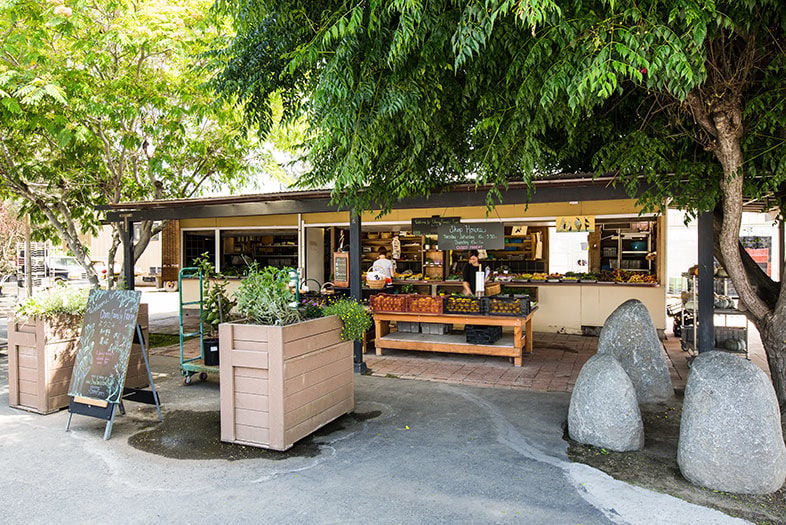
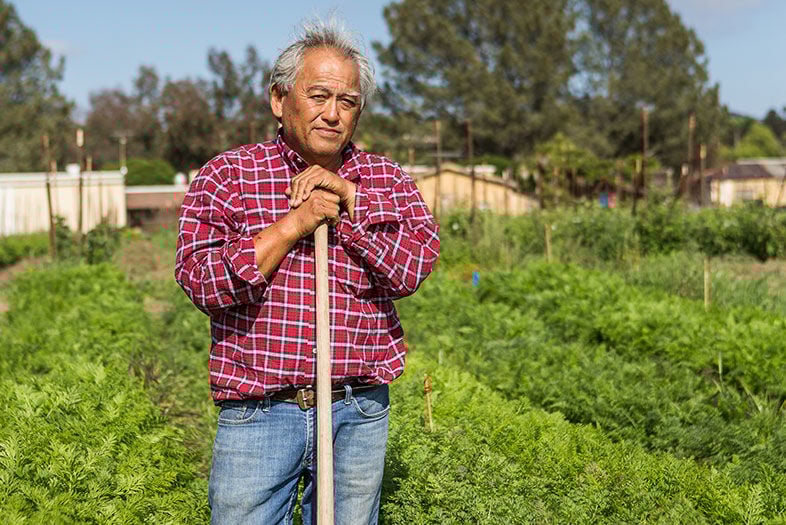
Chino Farms is one of America’s most iconic operations. Alice Waters helped kick off the whole farm-to-table movement in the 1970s using bounty from Chino. They are the Apple, Inc. of produce—one of the most iconic brand names, with a cult following. Tom Chino’s family has earned that reputation over 70 years, and their produce naturally costs more. Makes sense, then, that Chino is the farm most often fibbed about.
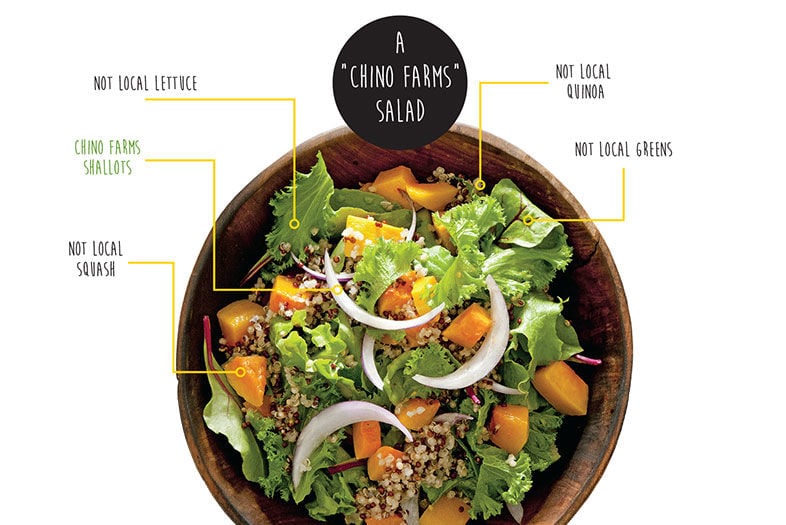
Insiders say a common farm-to-fable practice involving Chino goes like this: A restaurant will claim to sell a “Chino Farms Salad.” The price is significantly higher. In reality, it’s a bowl of commodity lettuce and vegetables, lightly garnished with Chino peppers or edible flowers.
At his roadside farm stand in Rancho Santa Fe, the soft-spoken, wry Tom Chino reluctantly agrees to talk about the issue. He’s obviously experienced it many times. “But I’m hesitant to say anything because, well,” he says, pausing for a long while, “I don’t want to be a horse’s ass.”
He laughs, though, at some of the more egregious examples. “Sometimes it can be very blatant,” he says. “Chefs will come look [at what we’re selling that day], write down notes, leave without buying anything, and then say they’re serving our food at their restaurants.”
Is fibbing about a farm really such a crime? It’s just a salad, after all.
“I’ve busted my ass for 23 years to get a reputation,” Barnes of Crows Pass told me over a year ago. “I’m not making a ton of money. No one’s forcing me to live this life; I choose it. But if someone’s going to use my name, charge their customers extra money because of my name, and then pocket the money?”
It’s fraud.
Farm to Fable
Seafood fraud is rife in the restaurant industry; a 2012 study by watchdog group Oceana found that 39 percent of seafood in New York City restaurants was mislabeled.
Farm-to-fable defrauds a few different people. First, it defrauds the customers, who pay more for local, sustainable, organic produce. Restaurants that cheat are preying on food lovers’ good intentions. It also defrauds the local farm, by using its hard-earned “brand name” without paying it, or its workers, a penny. Finally, it defrauds other honest restaurants in the market.
“The restaurateurs that really do make the effort to buy direct from farmers, it’s tough for them,” says Catt White, farmers market manager at Little Italy Mercato. “You often have to get the stuff to the restaurant because smaller farmers aren’t equipped to do deliveries. It’s definitely more costly. Smaller farmers aren’t subsidized like big farms. So the real cost comes into play. It’s expensive and admirable. For people to say they’re doing it but they’re not really—that’s really frustrating for the folks who are doing right.”
Just ask Trish Watlington, owner of the Red Door and Wellington Steak House. She and chef Karrie Hills grow about half of their restaurants’ produce on Watlington’s small farm. They’ve spent hundreds of hours developing relationships with local purveyors for most of the rest.
“Farm-to-table is hip,” Watlington says. “People want to think they’re eating locally sourced food. Restaurants are definitely leveraging that as a marketing technique. You have people claiming farm-to-table who have no idea where their product comes from. I could spend a lot more time being resentful, but it’s not really worth it. I just don’t like people who lie. Sell yourself for what you are. If you have a great interior and swank place, that’s okay.”
The worst kind of farm-to-fable is the pure, intentional deception. There are less obvious ways of using the farm’s name. “What you see on menus and grocery stores is ‘We buy Suzie’s Farms,’” says White. “When in reality a couple of heads of lettuce do come from Suzie’s, but the rest doesn’t. By implication, customers assume the rest is coming from the farmer.”
“You’ll find a lot of people say they use local produce,” says Barnes. “They’ll buy $5,000 worth of produce, but only $100 is local.”
Or a restaurant will throw a “Famous Farm X Dinner.” They’ll buy all the produce from that farm for the special event, reap all of the positive brand association with postings all over Facebook and social media. Afterward, they’ll never buy anything else from the farm.
In restaurants’ defense, sometimes it’s an understandable oversight. Maybe the restaurant did buy produce from X Farms and simply hasn’t updated its menu since it stopped. And let’s not overstate the controversy. Let’s assume a majority of restaurants and chefs are honest. But it’s apparent that this sort of thing happens enough to affect the livelihood of farmers and the people they employ.
Farm to Fable
Suzie’s Farm
Suzie’s Farm
A few years ago, Suzie’s Farms was selling $7,000 to $10,000 a week to local restaurants. Now they’re down to about 30 percent of that. “But a lot of people still seem to be using our name,” Taylor says. Suzie’s will soon have to cut back their operations. As for Barnes, who started selling Crows Pass out of his van directly to San Diego restaurants 20 years ago (at the height, he was doing a half-million dollars a year in revenue)—he now sells direct to only two restaurants.
“We’re so done with that shit, farm-to-table,” says Barnes, who now works as a general manager at Mountain Meadow Mushrooms.
As Connelly told me, “When you’re talking true farm-to-table, only a handful of people are doing it, but a lot of people talk about it.”
There’s no solution in sight for farm-to-fable. New restaurants are just slapping “farm-to-table” on their signage, without any clear indication of what that means. Media is also to blame, often blindly using “farm-to-table” as an adjective for food that looks fresh.
A program by the SD Farm Bureau pushed by the County Health and Human Services—called San Diego Grown 365—seeks to verify the origin of food. Restaurants can sign a contract and guarantee that any dish they label with San Diego Grown 365 brand contains at least 80 percent to 85 percent food produced locally. But it’s been around since 2004, and only 87 individuals have signed up for the labeling, says Farm Bureau Membership & Project Manager Casey Anderson.
Tom Chino takes a grin-and-bear-it approach. “The old joke is someone will say, ‘Oh, I had some of your asparagus at this really great restaurant!’ Then I’ll tell them we don’t grow asparagus. So I’ll ask, ‘Well, was it good?’ They’ll say, ‘Oh yes, everything was great.’ ‘Well, then I guess it’s okay!’”
But on the flip side, if Restaurant X serves a really mediocre, out-of-season tomato and claims it’s from Chino Farms, customers aren’t going to have the highest impression of Chino Farms. That’s doing damage to a farm’s name.
Taylor has kind of thrown up his hands. “We’ve been thinking about maybe a licensing fee,” he jokes. “If you want to just use our name and not our produce, you pay a fee.”
Most restaurant professionals say it’s up to public education. If diners see tomatoes in the winter, they’re probably not from San Diego. If a restaurant is selling asparagus in summer, it’s probably not local, either.
Because of the fraud, many restaurants have stopped mentioning local farms at all. Which is a shame, since that should be something to celebrate and brag about. But whether it’s farm-to-table or farm-to-fable, White looks on the bright side.
“The good news is that people are getting more into greenwashing because there’s a perception that people care that they’re eating things that haven’t been loaded with pesticides,” she says. “So that’s very motivational, that people are jumping on the bandwagon.”
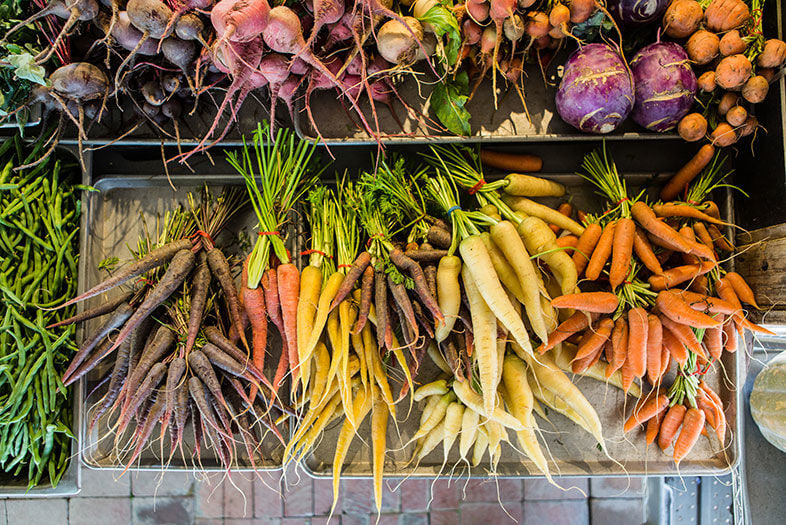
This is a general guide to when fruit and vegetables are in season in San Diego. There are exceptions. San Diego has long growing seasons, and greenhouses. But this is “peak” season eating:
Spring: Asparagus, artichokes, kale, rhubarb, snap peas
Summer: Berries (black, boys, rasp; strawberries have a longer growing season), melons, eggplant, corn, tomatoes (though some grow through December), grapes, pears, plums
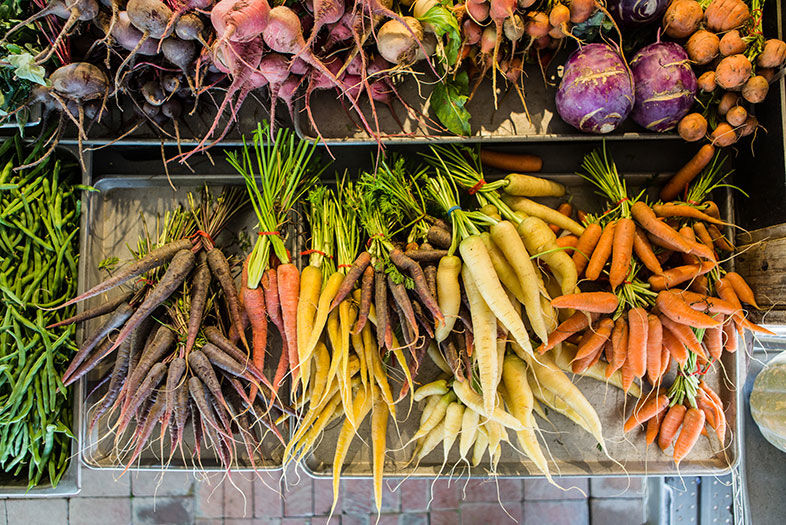
Fall: Pumpkin (and other squash), cabbage, carrots, Asian pears, apples
Winter: Beets, broccoli, chard, cherimoyas, kiwi, lettuce, macadamia nuts, navel oranges, persimmons, spinach, winter squash, tangerines
PARTNER CONTENT
Farm to Fable
In a sport obsessed with prestige, a San Diego–born golf brand is betting on something more fun and less fussy
Music drifts across the fairway. Someone’s in flip flops. The Pacific flashes in the distance. Sun peeks onto shoulders through the palm trees. It’s spring, technically, but the air reads suspiciously like summer. At the par-3 course at Liberty Station, the longest hole barely stretches past 120 yards, and no one looks particularly interested in becoming the next PGA legend.
This is where Sunday Golf was born.
“I got dragged to a par-3 course in 2019 —The Loma Club—and it was way more my jam,” says Ronan Galvin, CEO and co-founder of Sunday Golf, a company that makes lightweight golf bags for players who’d rather carry less and laugh more. “It was a lot different than the stereotypical ideas you have about golf where it’s kind of long, uptight, and exclusive.”
Galvin spent over a decade in the golf industry working in product development, sourcing and manufacturing. But he didn’t grow up swinging clubs. Basketball and football were more his speed. What clicked for him was a simpler, more relaxed kind of play: shorter rounds and weekend games built for fun rather than formality. The kind of golf that resonated for him felt accessible, effortless, and surprisingly his lifestyle.

He noticed something else, too.
On a course where five clubs do the job, players were still lugging 14. So Galvin built something smaller. Lighter. A bag designed specifically for par-3 rounds, the Loma Bag is sleek, functional, and refreshingly unfussy. It’s practical minimalism in a sport known for excess.
Sunday Golf was slated to launch in January 2020. Then, COVID hit. Shipments stalled; lost at sea. The future felt shaky. But the series of catastrophes for the young company turned out to be anything but: By the time inventory arrived that August, golf had become one of the few activities people could safely do.
“It introduced and brought so many people back to the game,” Galvin says. “It created a habit for a lot of people, which is a big reason golf is on its growth trajectory.”
It turns out Americans can’t get enough of golf. Forty-eight million of them swung clubs last year, a 41 percent jump since 2019, and the National Golf Foundation says the total could top 50 million by the end of 2026.
The brand rode this unlikely momentum. Since 2021, Sunday Golf has expanded into larger lightweight bags and continues evolving from there. A major reason for the company’s success is its approachability, a value so central that it’s literally written on the office walls in the form of the company’s guiding mission: “Get 500,000 golfers having more fun by 2027.” This goal is measured, fittingly, by golf bags sold.
Sunday Golf has already passed 300,000 bags sold.
But the numbers aren’t the point.

“To remind the world that life is meant to be enjoyed,” Galvin says of the brand’s why. In an era dominated by screens, golf offers something analog. “People are outside, touching grass with their friends. A golf bag is a golf bag, but our products are vehicles to help support that.”
Unlike legacy golf giants promising proximity to Rory McIlroy-level greatness, Sunday Golf leans into what Galvin jokingly calls “diet golf” or “golf light”—weekend rounds, driving range sessions, company scrambles. The bags are built for the casual golfer, and the fit feels obvious.
That philosophy resonates across Southern California, where year-round sunshine means golf courses never really hibernate for winter. As Galvin puts it, “the laid-back lifestyle of San Diego kind of seeps into everyone’s veins.”
Sometimes the validation arrives via email: a 76-year-old customer is able to walk the course again because their golf bag is lighter. Parents are able to take their children out with Sunday Golf’s kids line.
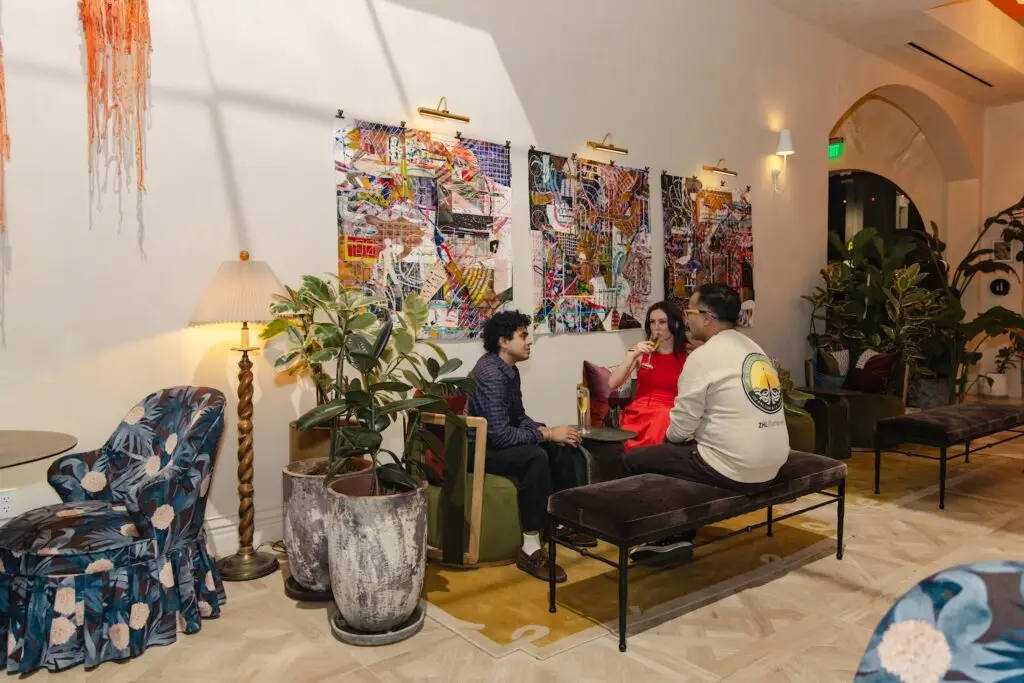

For Galvin, that’s the real win. Not perfection. Not prestige. Just more people outside, enjoying themselves. In San Diego, that might be the most natural mission of all.

Isabella Dallas is a freelance writer for San Diego Magazine and the Arts and Culture Editor at The Daily Aztec in her final year at San Diego State University. She previously worked as an editorial intern for SDM, but when she’s not writing, you can find her trying the best coffee spots in SD, devouring the latest rom-coms, and indulging in anything and everything pop culture.
Announcing a partnership between Art & Design District, SDFC Playmakers, and San Diego Magazine
FOR IMMEDIATE RELEASE
SAN DIEGO, CA — [June 15th, 2026] — Art plus story equals culture. Today, three local groups deeply invested in advancing San Diego arts and culture— San Diego FC Playmakers, Art & Design District, and San Diego Magazine—have joined forces to tell its stories.
The initial project will be a landmark September edition of San Diego Magazine—fully dedicated to the people, ideas, and identities of the city’s creative community. After its release, those stories and more will extend across six months of integrated digital, social, and multi-platform coverage. Art & Design District and SDFC Playmakers will serve as co-publishers of the expanded editorial vision.
The Art & Design District is evolving into San Diego’s first home for the performing arts at iconic downtown venues like the Civic Theatre and Jacobs Music Center alongside research and development programs focused on artist live/work spaces, galleries, studios, and New School of Architecture & Design.
“[The Art & Design District initiative] is a long-term investment in San Diego’s creative life and the creative workforce that powers our cultural experiences and creative industries here at home and across the world,” says Jonathan Glus, Prebys Senior Fellow for Art & Design in Residence at Downtown San Diego Partnership. “But infrastructure alone is not enough. The public needs to see, understand, and participate in what’s being built and why. Joining as co-publisher of this issue means helping ensure that the story of San Diego’s creative community—its artists, its institutions, its future—gets told at the level of ambition the moment requires.”
San Diego has entered a defining chapter in how the region invests in its creative community, with civic and philanthropic leaders working alongside artists, brands, institutions, and people to chart a new model of public-private support for arts and culture.
As digital co-publishers of San Diego Magazine‘s arts and culture coverage, SDFC’s Playmakers partnership will include a six-month integrated collaboration designed to sustain the visibility of San Diego’s creative community well beyond a single issue.
“The Playmakers program was built on the belief that the creative community is essential to what makes San Diego, San Diego,” says Sebastian, San Diego FC’s SVP of Brand and Innovation. “Investing in local media that tells those stories—and reaches the audiences who need to hear them—is one of the most direct ways we can support the artists, organizations, and cultural leaders shaping this city’s future. We’re proud to step in as digital co-publishers of San Diego Magazine‘s arts and culture coverage and the founding partner of this new editorial program.”
Under the partnerships:
The partnership represents a new model for regional media: civic and cultural institutions providing the resources required for sustained, ambitious, local editorial media focused on the neighborhoods it serves.
“For 78 years, the magazine has told the story of arts and culture here,” says Claire Johnson, CEO of San Diego Magazine. “But the fragmentation of traditional media has made it harder than ever to cover this community at the depth and scale it deserves. SDFC Playmakers and the Art & Design District have recognized something critical: Media is not separate from the civic conversation, it’s the stage for the conversation.”
San Diego Magazine retains full editorial control over all reporting, features, and original content produced under both partnerships.
“Our role in this ecosystem is to tell the story of San Diego’s culture and provide context for our readers.” says Johnson. “These partnerships give us the resources to do justice to that responsibility—and to extend that commitment well beyond a single issue. Our readers also deserve to know exactly how this work was funded. I’m grateful to our partners, and to the arts and culture community in San Diego for letting us tell this story.”
The September Arts & Culture Issue will be released early September 2026, with digital, social, video, and podcast coverage rolling out through early 2027.
ABOUT SAN DIEGO MAGAZINE For 78 years, San Diego Magazine has been the region’s leading lifestyle and culture publication, reaching approximately 6 million readers monthly across print, digital, newsletter, and social platforms. Owned and operated locally, the magazine has been the connective tissue of San Diego’s cultural conversation since 1948.
ABOUT SDFC PLAYMAKERS The Playmakers program is an ongoing initiative that seeks to identify and showcase the talent of San Diego creatives who are contributing to the culture, substance, and flow of our community. We want to bring the San Diego community together by marrying football and creativity to provide a platform for these Playmakers who are positively impacting our culture by pushing the boundaries through innovative ideas. The goal is to create a program that consistently provides growth and exposure opportunities for San Diego creatives, while shaping an authentic direction for San Diego FC’s brand and community-building process. Through this program we hope to contribute to the creative fabric of our city by providing paid jobs, projects, collaborations, as well as networking opportunities for Playmakers.
ABOUT THE ART & DESIGN DISTRICT The Art & Design District is a Downtown San Diego Partnership initiative, supported by the Prebys Foundation, working to shape a connected, vibrant arts and design district in downtown San Diego. Led by Art and Culture Expert Fellow Jonathan Glus, the initiative convenes artists, cultural leaders, civic stakeholders, and residents in service of a downtown that reflects the creativity, identity, and diversity of the region. Learn more at downtownsandiego.org.
The team behind Harumama and Blue Ocean will open Little Kiki Katsu & More on June 15, serving premium cutlets, Japanese sandos, and curated sake pairings
Every culture has its own comfort foods—cozy dishes that nurture the soul as much as the body. In the US, dipping a grilled cheese sandwich in a bowl of tomato soup can feel as satiating as pulling a warm sweater out of the dryer. In China, a steaming bowl of congee is basically a miracle remedy for anything you can imagine. I’m pretty sure Italian carbonara could achieve world peace. And in Japan, katsu remains one of the most universally satisfying inventions of the past century.
Katsu was originally invented as a riff on côtelette de veau, the classic French veal cutlet coated with breadcrumbs and pan-fried in butter. In 1899, a Western-style restaurant called Rengatei in Tokyo decided to put their own spin on the dish by pounding the cutlets until thin, then coating them with softer panko and deep-frying versus pan frying (like tempura) for a crispier, lighter, crunchier bite. Today, pork—called tonkatsu in Japanese—tends to be the most common base for katsu.
The dish has yet to achieve the same mainstream status as say, chicken nuggets, in the US. But Little Kiki Katsu & More hopes to change that, when the katsu-focused restaurant opens in Carlsbad on June 15.
Created by the team behind Harumama and Blue Ocean, Little Kiki will focus on premium katsu dishes paired with sake and around a dozen small bites like miso soup, karaage, edamame, and Japanese pickles. Executive chef James Pyo, who co-owns all three restaurants with his wife Jenny, created a menu that features proteins like Berkshire Kurobuta pork, Jidori chicken, salmon, scallops, and dry-aged Pacific cod for the katsu and grilled stone selections. (Note: the grilled stone options will be offered for dinner only.)

The lunch menu includes Japanese-style sandos like a tonkatsu sandwich with pork, housemade bread, and tonkatsu sauce (available regular or spicy). Dessert options are simple to start—yuzu cheesecake, matcha crème brûlée, and mango/yuzu mochi ice cream. The Pyos curated a selection of premium sakes as well, specifically for pairing purposes, as well as offering some beer and cocktails.
Little Kiki, which is named for Jenny’s cat, seats 25-30 guests inside with room for only a few more on the small outdoor patio as well. Designer and assistant Yoojin Jang says the vibe is meant to be warm and welcoming but modern, using colors like olive green, cream, and pops of orange against Japanese-style wood slats.
Initially, Little Kiki will only be open for dinner service, but aims to introduce lunch hours for the grand opening on July 1. Due to the limited seating, Jang encourages guests to make reservations, and while the restaurant will offer takeout, it will not be available on food delivery apps like Uber Eats or DoorDash to motivate guests to come experience it for themselves.
“Come in curious and leave satisfied,” says Jang. And keep your eyes open for subtle cat motifs—she promises they are hidden all over the place. Whimsy, it seems, is also on the menu.
Little KiKi Katsu & More soft opens on June 15, 2026 at 2958 Madison Street, Suite 101 in Carlsbad. Hours are Monday, Wednesday, Thursday, and Sunday from 11:30 a.m. to 3 p.m. for lunch and 5 p.m. to 9:30 p.m. for dinner; Friday and Saturday from 11:30 a.m. to 3 p.m. for lunch and 5 p.m. to 10 p.m. for dinner; closed Tuesday.

Listen Now: The Latest in San Diego’s Food and Drink Scene
Have breaking news, exciting scoops, or great stories about new San Diego restaurants or the city’s food scene? Send your pitches to [email protected].
Beth Demmon is an award-winning writer and podcaster whose work regularly appears in national outlets and San Diego Magazine. Her first book, The Beer Lover's Guide to Cider, is now available. Find out more on bethdemmon.com.
Stake Chophouse & Bar brings contemporary classics and old-school service to the heart of Coronado
Stake Chophouse & Bar isn’t your average steakhouse. Blue Bridge Hospitality’s Coronado outpost is a modern interpretation of a big-city steakhouse nestled in the heart of the small coastal community. The team at Stake has reimagined the whole steakhouse experience. By prioritizing a seasonal farm-to-table sourcing philosophy, a personalized guest experience, and unique service touches, like a formal steak presentation and a bespoke knife selection process, Stake distinguishes itself in a sea of steakhouses.
Exceptional steaks, including Wagyu from Japan, Australia, and the U.S., and fresh seafood flown in daily form the core of Stake’s culinary identity. The menu features a five-course omakase-style steak experience highlighting house favorites, plus an array of cuts, and classic steakhouse staples—think a wedge salad, baked potato, or pasta carbonara—refined for a contemporary palate without losing their traditional appeal. Stake focuses on seasonal sourcing from the region’s best family farms and specialty purveyors, and incorporates intentionally unexpected touches to create something truly unique.
“I challenge our chefs and myself to take it a step further in sourcing,” says Chef Ronnie Schwandt. “It’s important to us to highlight different farms, unique one-off farms—whether it’s cattle, strawberries, a local fisherman or from anywhere in the United States, we’re always trying to find that niche.”
Beyond the menu, Stake emphasizes outstanding service, says Vinny Spatafore, Director of Hospitality Operations. Staff maintains detailed notes, allowing them to remember guests by name, recall previous orders such as a favorite martini (also memorable for the customer since it’s served in an extra tall, distinctly-shaped glass), and celebrate special occasions like birthdays and anniversaries.
“When you have those points of topic that you remember about a guest, they appreciate that,” he says. “Our servers are really good with that—we have a couple servers who have been here since the beginning and they’ll remember somebody from years ago, their name, their kids’ names, where they live. I’m really thankful to have a great front of house staff.”
Award-winning wines, rare whiskeys, special events, and a complementary black car service that provides transportation for guests throughout Coronado add to Stake’s appeal.
Schwandt stresses that Stake offers more than a meal; they aim to give patrons something unforgettable.
“It starts when you walk up the stairs and are greeted by the hostess—that sets the tone for the night. Then you’re greeted by a server, who may know you by name, and can guide you through the menu and curate as they get to know you,” says Schwandt. “Most people leave kind of blown away; they leave feeling like they just had an experience. That’s the goal, right? Whether you’re serving smash burgers or high-end steak, you want somebody to leave thinking, Wow, that was awesome.”
Telefèric Barcelona will open its first San Diego location early this summer
Westfield UTC mall is adding yet another “first” to the ever-growing roster of restaurants. The first US location for China’s stir-fry sensation Chef Fei is on the way later this year, Japan already reinvented crispy rice pioneer Katsuya by opening the first Katsuya Ko, and now, it’s Spain’s turn—Telefèric Barcelona opens early this summer.
The family-owned, Barcelona-based tapas joint first opened in the US 10 years ago in Walnut Creek, California, but co-founder and CEO Xavi Padrosa says they’ve had their eye on San Diego for years. Westfield UTC “just clicked,” he says, pointing to the burgeoning collection of world-class eateries already within the mall’s walls. Plus, La Jolla’s breezy vibe echoes Spain’s easygoing tapas culture.
The indoor/outdoor space spans 5,526-square-feet, with seating for 150 inside, 60 on the patio, and 16 more at the bar. Xavi’s sister and co-owner Maria Padrosa designed the Mediterranean-inspired space as a contemporary take on coastal Catalonia, using imported furniture and materials from Spain like hand-glazed tiles and wood accents. And if all the dining spaces are planets, the center of the suite’s universe is the bar.

Padrosa points to signature favorites like patatas bravas (fried potatoes drizzled with a spicy red sauce and house aioli), jamón ibérico de bellota (Spanish ham from free-range pigs raised on acorns, cured for 38 months and sliced to order), gambas al ajillo (garlic shrimp), pulpo Telefèric (octopus with potato purée and pimentón XO, a spicy Spanish/Cantonese fusion sauce), and croquetas (a popular fried tapas dish coated in breadcrumbs and made with béchamel mixed with fillings like jamón or king crab.
There are a very small handful of legit paella spots in San Diego (Costa Brava in Pacific Beach and Cafe Sevilla in Gaslamp Quarter come to mind), so I’m personally looking forward to giving Telefèric’s a go—especially the squid ink paella negra, which is perhaps the most goth paella of all. Every location also offers different weekend specials, La Jolla’s being seafood-driven and meant to pair with beverage director Alex Serena’s drinks. There are over a hundred Spanish wines, Spanish-inspired cocktails, sangria, and of course, plenty of twists on the iconic gin and tonic. The restaurant will also have a gourmet market called The Merkat with imported Spanish sundries.

With more US locations in the works (Newport Beach will open soon after La Jolla), Padrosa says the company hopes to open more across California, but are open to anywhere in the country that feels right. “We don’t know exactly what new cities will appear on our map in the coming years,” he says. But in true Catalan fashion, anywhere they go should be ready for big plates of hearty Spanish cuisine.
Telefèric Barcelona La Jolla opens early summer 2026 in Westfield UTC. Opening hours will be Monday through Thursday, 11:30 a.m. to 10 p.m.; Friday and Saturday, 11:30 a.m. to 11 p.m.; and Sunday, 11 a.m. to 10 p.m.

Most of the time, you have to be 18 years old to change your name. In Arcana’s case, it was about a month. The immersive speakeasy behind Archive in Encinitas updated their moniker to Animga (a play on “enigma”) earlier this month, after what one can only assume was an upset letter from a similarly-named business. However, partner Paula Vrakas promises that the concept remains the same—mystery, cocktails, and a forthcoming bottle locker membership club. Since the only constant is change, Anigma is off to a good start!

Listen Now: The Latest in San Diego’s Food and Drink Scene
Have breaking news, exciting scoops, or great stories about new San Diego restaurants or the city’s food scene? Send your pitches to [email protected].
Beth Demmon is an award-winning writer and podcaster whose work regularly appears in national outlets and San Diego Magazine. Her first book, The Beer Lover's Guide to Cider, is now available. Find out more on bethdemmon.com.
Talking farm to table, fraud-to-table, and the feasibility of the movement with the beloved restaurateur who saw it all
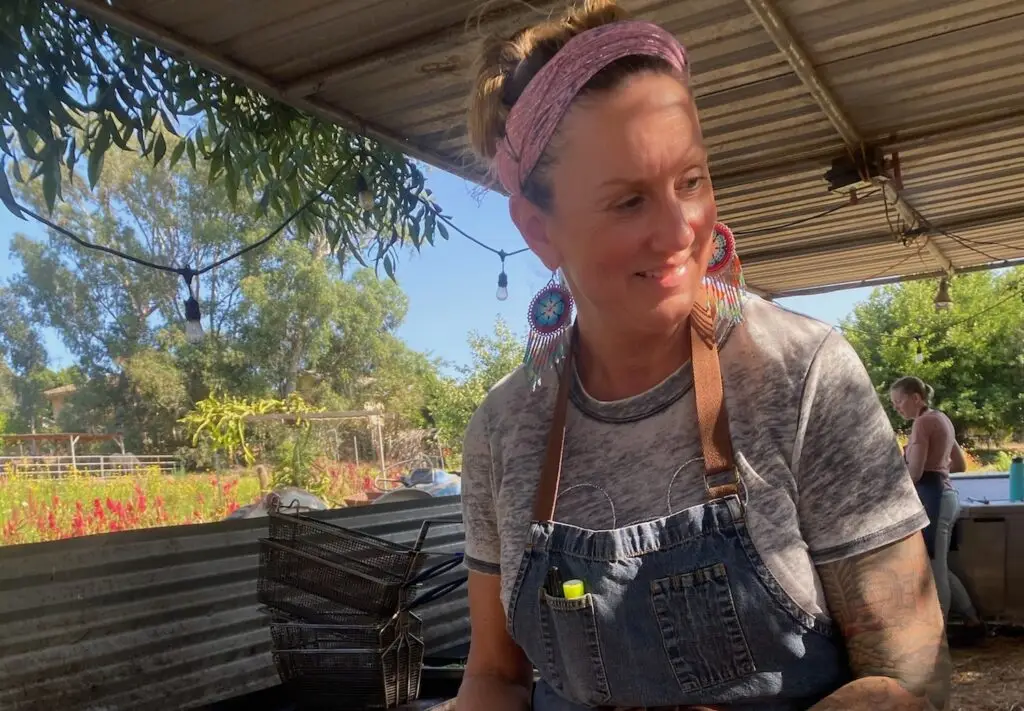
Garden Kitchen was special. During its seven-year run on a quiet street in Rolando, even the farmiest-to-table devotees were pointing to chef-owner Coral Strong and slow-clapping. When the restaurant’s lease was up without the option to renew, which forced her to close in 2022, Strong wasn’t sure what to do next.
Farm-to-table wasn’t new by any means—chef Alice Waters spawned the movement at her pioneering restaurant Chez Panisse in Berkeley in the early ‘70s, and many San Diego chefs did it right. But by the mid-2000s, the idea had been so co-opted by the mainstream that the meaning was almost completely lost.
“In the beginning, I used to get very honestly angry and upset when I would go to other restaurants that were claiming they were farm-to-table, but knowing some of the chefs or prep cooks inside [telling me] ‘Oh no, that comes from Restaurant Depot,’” she says.
Food critic Troy Johnson’s cover story in 2015 documented the fraud, titled “Farm to Fable.” At Garden Kitchen, Strong only used produce and meat sourced from local San Diego farms—an honorable, if not arduous endeavor.
Strong grew up in Cardiff before her parents moved the family to Costa Rica in 1989. They’d bounce between the two countries for months at a time, but when they lived in a motel by the beach while building their own house, she witnessed an incredibly tight-knit food culture. “As a Latin American country, everyone kind of cooks together,” she says. Everyone chopped, prepped, prepared, and served as a unit. “[That] definitely shaped my adolescence as to how I thought about food and the community of food.”

When her father, a commercial fisherman, brought the family back to San Diego, Strong leaned into an entrepreneurial streak, moving from coffee to accounting and eventually bartending to pay the bills. But food remained a passion, especially after she met her future husband, who introduced her to his Be Wise CSA and the wonderful world of truly fresh, farm-grown vegetables.
“We were just always disappointed with the vegetables out at restaurants and were like, ‘Why can’t they just make vegetables taste good?” she wondered. She realized that despite having more small farms than any other county in the country, most restaurants in San Diego simply weren’t using local ingredients.
So she decided to do it herself.
Strong opened Garden Kitchen without any formal culinary training—just a commitment to getting the freshest vegetables, meat, fruits, and other produce onto people’s plates. Her first chef quit within a month, telling her it was impossible. “So I got in the kitchen one day and said, ‘I can do this, let’s figure it out.’ I taught myself how to cook.”
She already had connections with farmers, fishermen, and ranchers, and designed a different menu almost daily based on what she could get. “My farmers sometimes delivered in the middle of dinner service,” she laughs.
Garden Kitchen lasted until after the pandemic, but before the current economy cut into already razor-thin margins. Could Garden Kitchen exist today? She’s not sure.
“The biggest thing right now is just looking at the finances and how expensive it is,” says Strong. “Obviously, the cost of food is up right now, gas is crazy right now… it just crushes you.” Despite that, she believes that committing to the true farm-to-table ethos is as easy as one decides to make it.
“If you think it’s hard to order directly from your farmer, if you don’t understand the absolute pleasure in doing that and you’d rather order from a computer, then that’s your own difficulty,” she says. “People say they’re into it, but are they willing to make the effort like I am, to drive an hour to go get my meat, or drive 35 minutes to go to my farm to go pick it up? I don’t know.”
Today, Strong works as a private chef, hosts pop-ups, and offers catering services, all still using seasonally available ingredients from San Diego. And while she has no intentions of opening another restaurant, she says we might see even more of her in the future.
“I have a large property [in Valley Center], and let’s say that there will be more of my food to come,” she promises.

Listen Now: The Latest in San Diego’s Food and Drink Scene
Have breaking news, exciting scoops, or great stories about new San Diego restaurants or the city’s food scene? Send your pitches to [email protected].
Beth Demmon is an award-winning writer and podcaster whose work regularly appears in national outlets and San Diego Magazine. Her first book, The Beer Lover's Guide to Cider, is now available. Find out more on bethdemmon.com.
Scripps study shows that some patients may be able to taper their dose and maintain results
While glucagon-like peptide-1 (GLP-1) receptor agents have been used to treat Type 2 diabetes for more than 20 years, their recent emergence as weight-loss wonder drugs marked a new frontier in medicine. But their effectiveness has left some patients wondering what to do once they’ve reached their goal. Stopping the medication could mean regaining some, if not all, of the weight. A Scripps Clinic internal medicine physician recently conducted a small study of whether GLP-1 patients who had reached their goal weight could maintain that weight by taking their regularly prescribed injection every other week instead of weekly. Spoiler alert: 30 of 34 patients did. Read more about the study here and what that may mean as pharmaceutical companies roll out oral GLP-1s.
For more nutrition, wellness, and healthy living tips, sign up for the San Diego Health newsletter here.