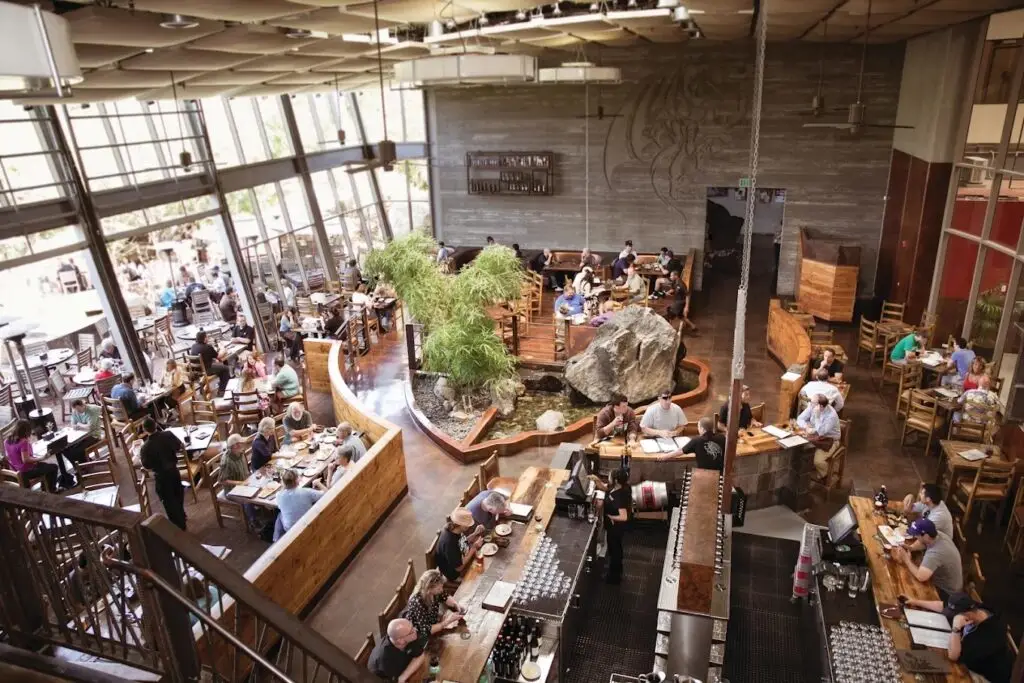
Ready to know more about San Diego?

Subscribe
Everything SD MAY 29, 2024

Inside the Hotel del Coronado’s $550M Renovation

The iconic 135-year-old property nears the end of its nearly eight-year project
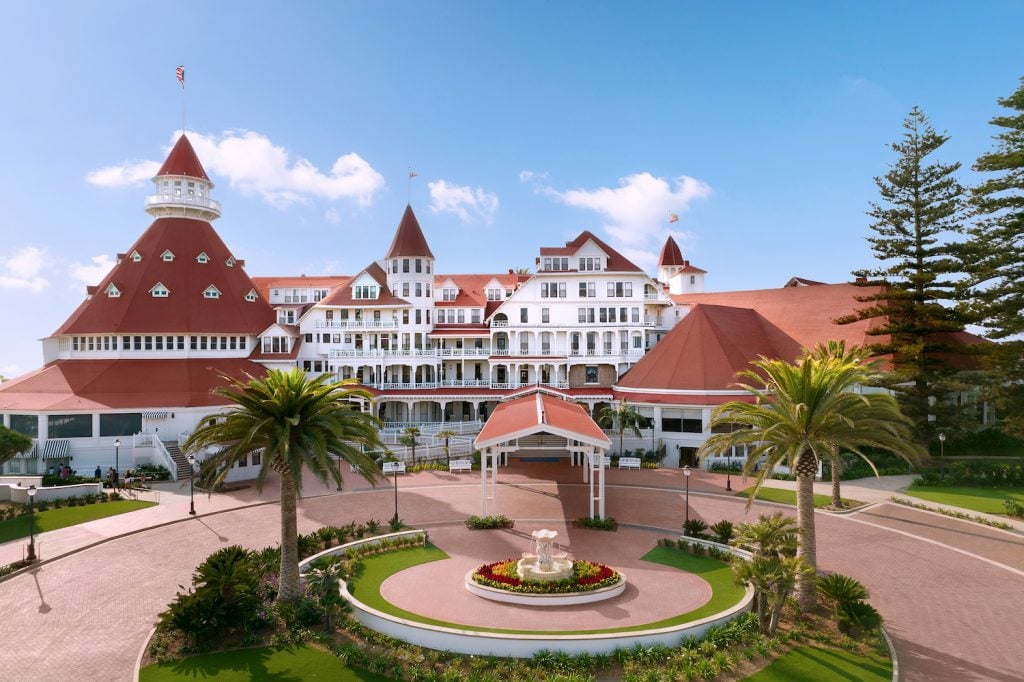
Inside the Hotel del Coronado’s $550M Renovation
Photo Credit: Ollie Patterson

Like that neighbor of yours who is aging suspiciously well, the Hotel del Coronado’s been somewhat quietly getting a makeover. The 135-year-old resort has been under construction in various phases since 2018, with new properties being built on the resort’s grounds and builders painstakingly restoring some of the older sections of the original resort.

When Elisha Babcock and H.L. Story built the hotel in 1888, they dreamed of building a seaside resort that would be “the talk of the Western world,” a phrase they coined that became a slogan of sorts in the early days. Seeing as it’s now 2024, and we’re still very much talking about their project, it’s safe to say mission (mostly) accomplished.
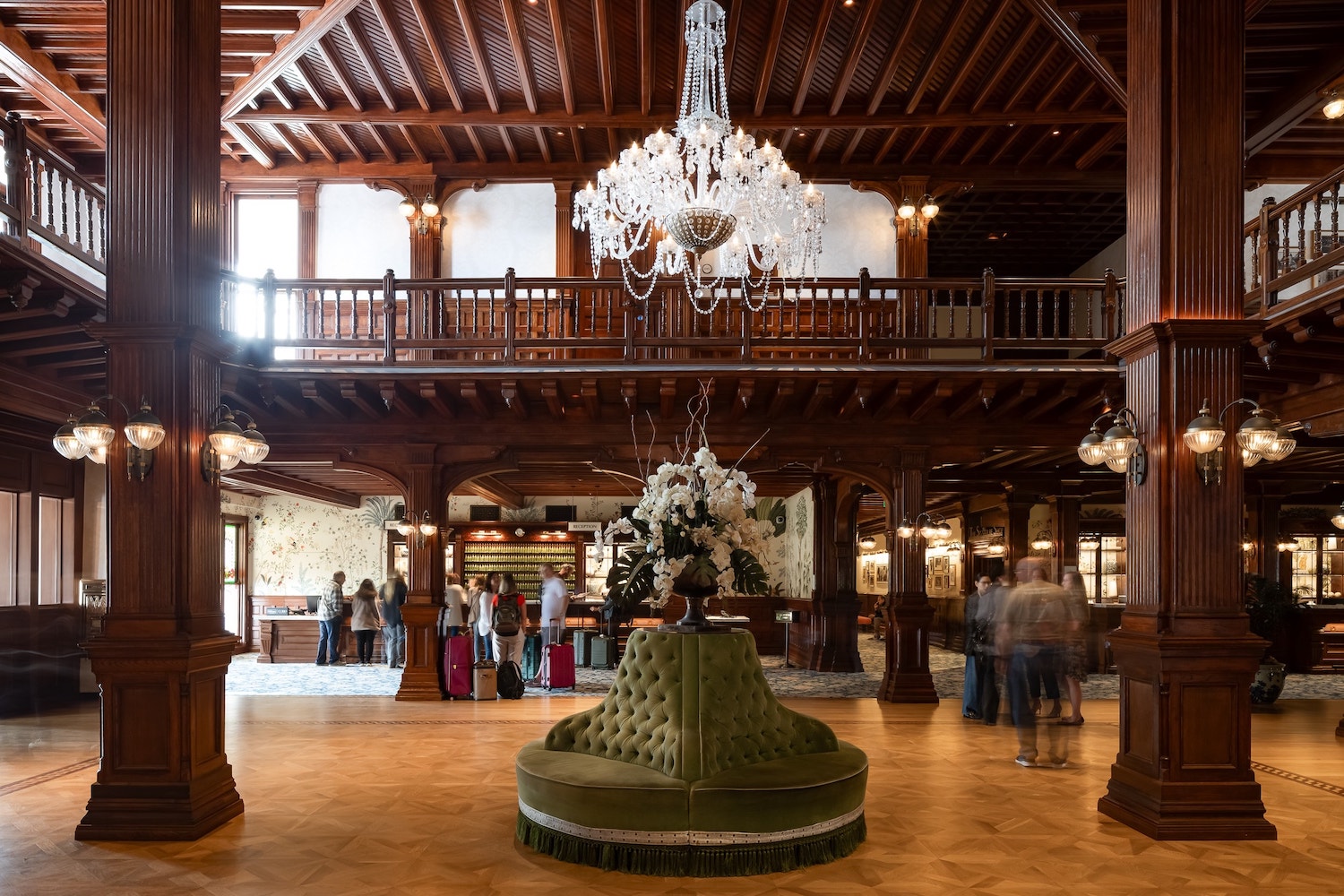
Interior of the Hotel Del Coronado following a $55 million renovation
Photo Credit: Ollie Patterson | Lobby

When the renovation is complete in early 2025, it will have been a more than $550 million investment backed by Blackstone Real Estate. The full transformation will include opening a new location of the famous Nobu restaurant and a $160-million renovation of the resort’s oldest section, the Crown Room and Victorian Neighborhood (including the Coronet Room and Ocean Ballroom). The price tag, which started at $400 million in 2018, has now climbed into one of the most expensive hotel overhauls in San Diego history. But it seems to have all been worth it.

“From day one, it has been our goal to ensure that The Del provides guests and the community with a one-of-a-kind experience,” says Brian Kaufman, managing director at Blackstone. He adds that they’re “thrilled” to have “world-class” Nobu cap it off—an exciting landing for a long, painstaking renovation project.
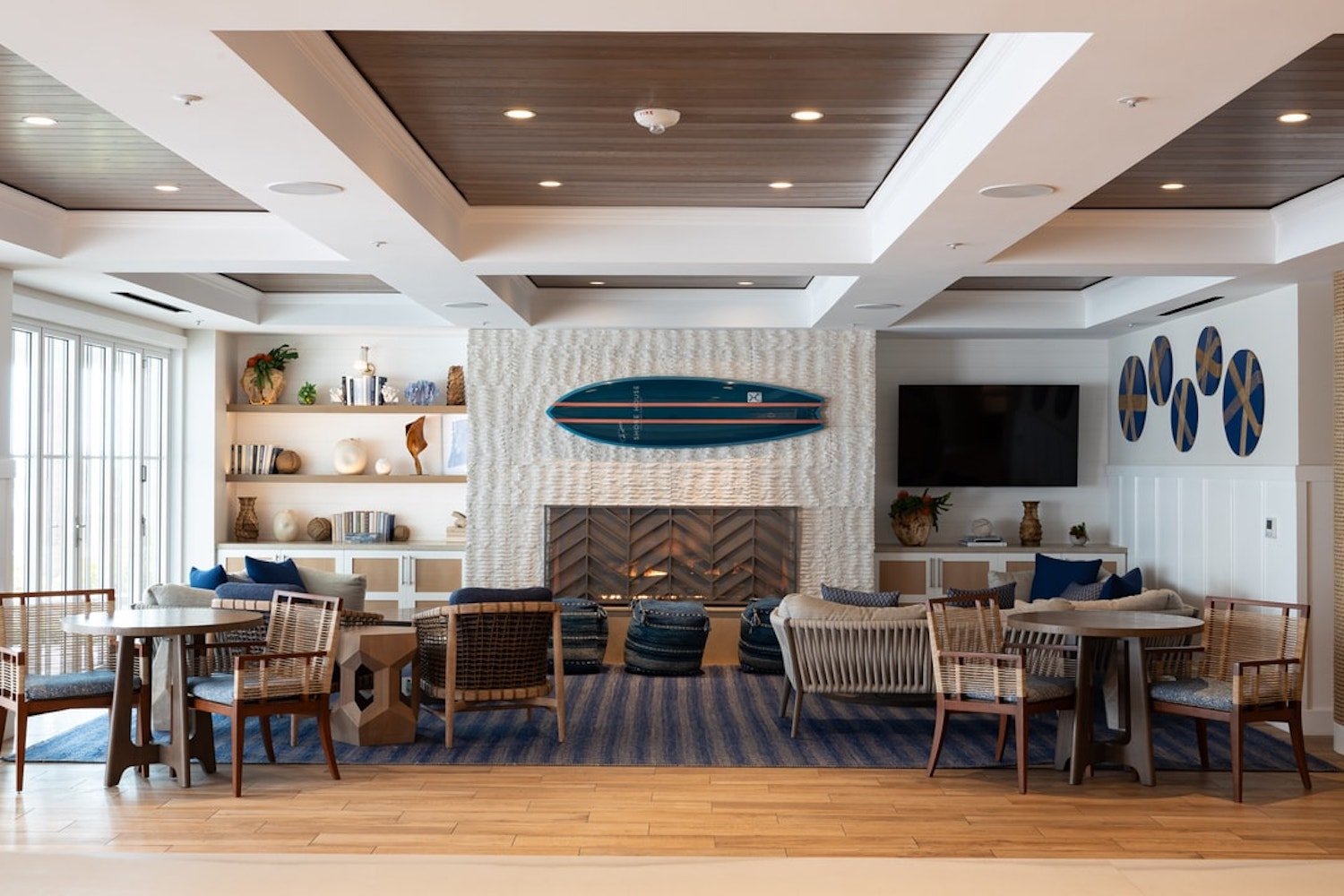
Interior of the Hotel Del Coronado's Shore House featuring a surfboard on the wall following a $550 million renovation project
Photo Credit: Ollie Patterson | Shore House

It’s no small feat renovating one of the region’s most iconic, if not the most iconic, landmarks. The comprehensive reno had to be approved by the City of Coronado and the California Coastal Commission, and be completed in accordance with guidelines for its national landmark status.

Plus, San Diegans have held weddings, birthdays, graduation brunches, vacations, and life events here, with pictures to document. Make it too different, and you will alienate generations of locals. Keep it too similar, and what’s the point of undertaking such an expensive renovation, anyway?

Even a quick perusal of Tripadvisor shows that most agreed it was time for a refresh.

Wimberly Interiors led the design in partnership with the California architecture studio from design firm Wimberly Allison Tong & Goo. The focus was on ensuring that the public areas remained genuinely Victorian, with original finishes intact. Contemporary design features were added to bathrooms, furnishings, artwork, and updated technology to offer comfort and luxury upgrades to the previously dated property.
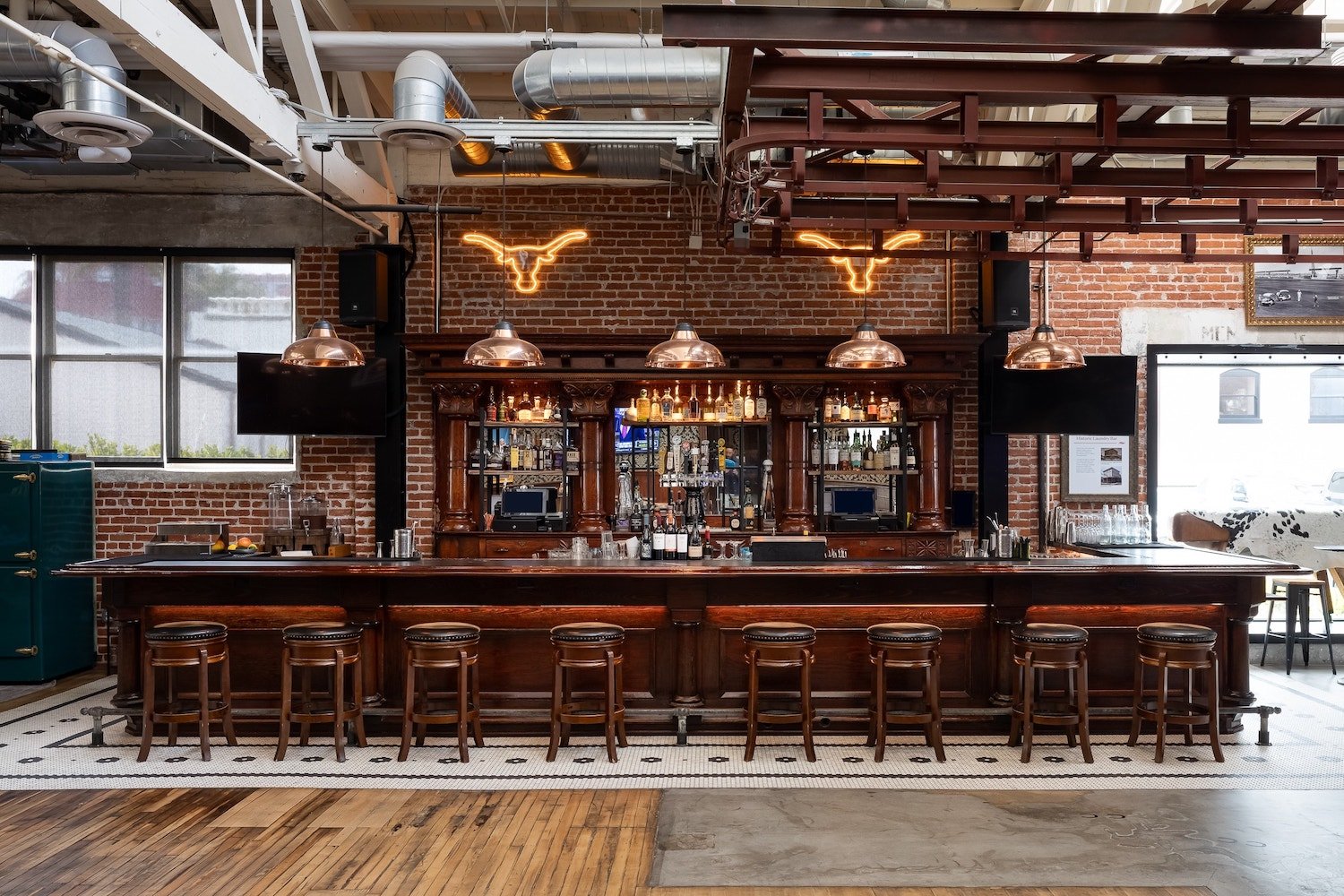
Interior of the new restaurant The Laundry Pub within the Hotel Del Coronado's following a $550 million renovation project
Photo Credit: Ollie Patterson | The Laundry Pub

David Marshall of Heritage Architecture & Planning leads the current Victorian guestroom redesign effort. His work was instrumental in his firm winning a “Preservation Project of The Year” honor from the Save Our Heritage Organisation and a “Preservation Design Award” from the California Preservation Foundation following their extensive reconstruction of the hotel’s front porch and lobby areas.

Among its current highlights is the recently completed Shore House—a newer build fashioned in Victorian style with red shingles mimicking the original Del buildings— that sits just to the south of the main property on the ocean. It opened in 2022 with 75 residential-style rooms, many suites or duplex-style with kitchens, modern finishes, and outdoor fireplaces. Most rooms have at least partial ocean views, and though some can be reserved as hotel rooms, others are owned as residences.

When Shore House opened, the for-sale units sold out in about 100 days, and cost anywhere from $1.3 million to $5.2 million for approximately 800 to 1,900-square-foot units. It’s a massive addition that created 130 new jobs for the resort and more-or-less operates as its own hotel ensconced within the larger Del universe.

Interior of the Hotel Del Coronado's Shore House Oceanfront Villa bedroom following a $550 million renovation project
Photo Credit: Ollie Patterson | Shore Houses’ Oceanfront Villa

Due to the renovation, many other amenities have opened in the last couple of years. The historic Windsor Cottage was updated while preserving historic elements, like the building’s structure, dating back to its 1905 construction. Called the Ocean Club now, it opened last summer and is a yacht club without boats and outfitted with cocktails, food, vibes, and scenic views.

Other renovations include the fitness center, spa, pool, the shops, and The Vista Terrace, which debuted with the new Sun Deck, Babcock & Story Bar, and ENO Market and Pizzeria in place of the former pool. The main pool was redone entirely and is heated year-round. It’s flanked by shaded chaise lounges, new premium cabanas, and cabanaettes for rent.

That project, which revamped the rooms and suites in The Cabana and The Views neighborhoods, redesigned and renovated 97 and 217 rooms, respectively. The Laundry Pub has also recently opened and is geared toward locals, with many community-focused events and shows on weeknights during low season. It has a long tap list, bar games, and top-notch pub grub.
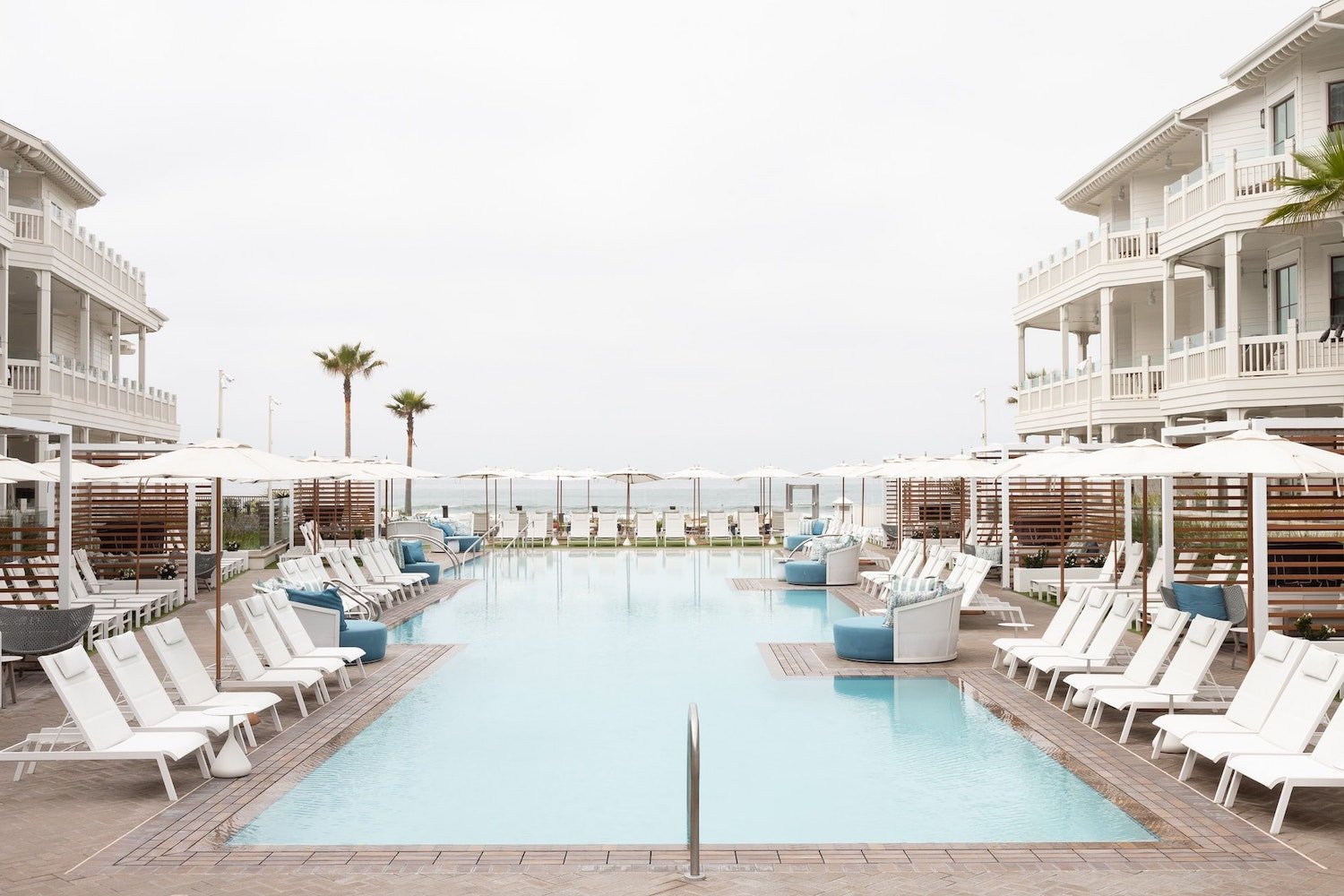
Exterior of the Hotel Del Coronado's Shore House pool deck following a $550 million renovation project
Photo Credit: Ollie Patterson | Shore House zero-edge pool

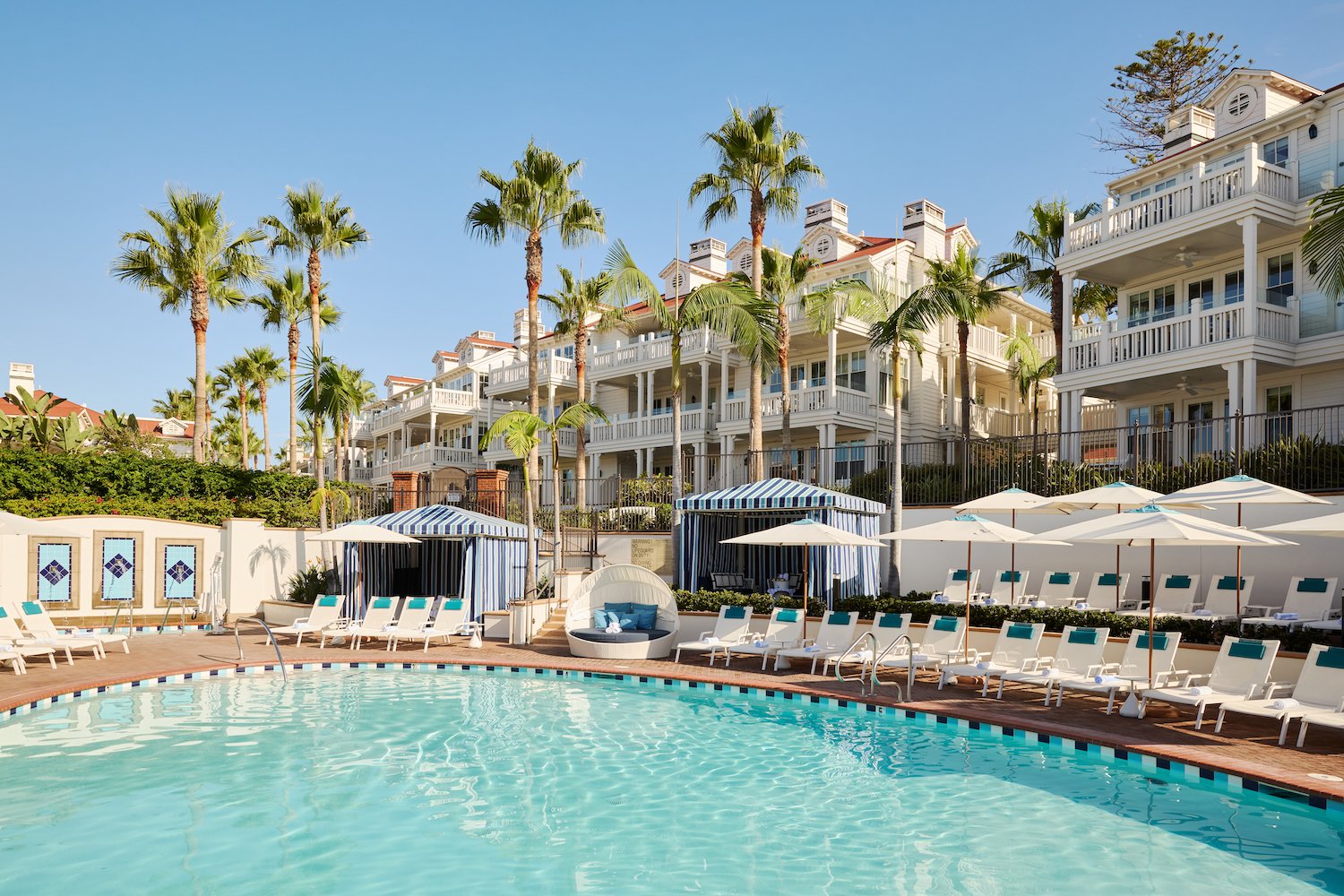
But the renovation is not quite finished. Up next is yet another room project: The Beach Village at The Del, an enclave of beachfront cottages and villas, which is set to unveil a complete refresh by the end of this year. Nobu will also open next year, comprising more than 3,700 square feet of indoor and al fresco dining.

The older parts of the original main building are also closed off and being worked on. The Victorian, the oldest section of the hotel, is undergoing a more than $160 million revitalization, which will keep its original build while making necessary updates.

These renovations, along with others at the National Historic Landmark property, must be completed according to a strict code to preserve its landmark status. The upgrades include all Victorian guestrooms and suites, and the resort hopes it will be finished by next spring. Think of it like a facelift.
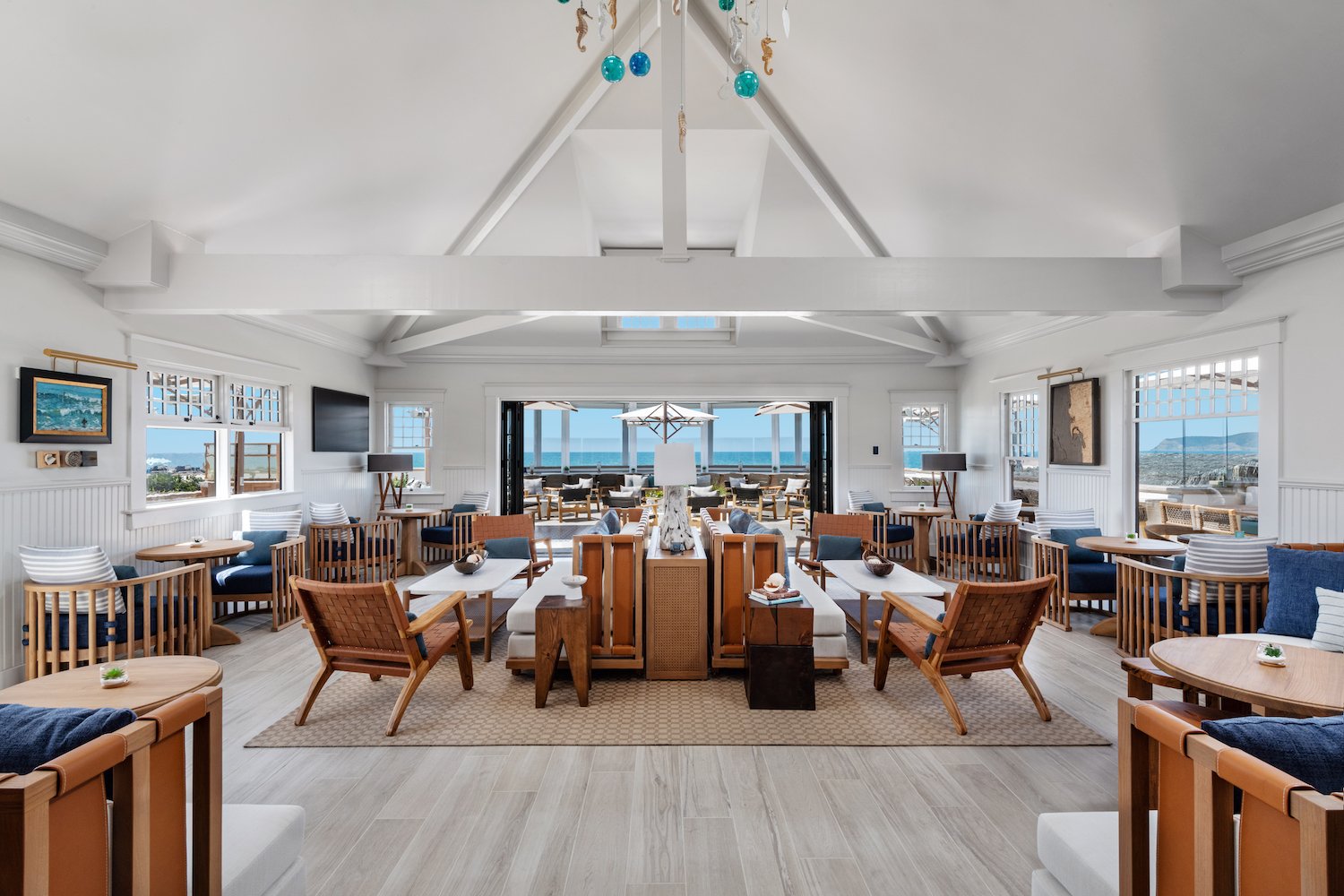
Interior of the Hotel Del Coronado's historic Windsor Cottage following a $550 million renovation project
Photo Credit: Ollie Patterson | The historic Windsor Cottage
Exterior of the Hotel Del Coronado's Beach Village pool deck following a $550 million renovation project
Photo Credit: Ollie Patterson | Beach Village
Interior of the Hotel Del Coronado's Gray Malin Oceanfront Suite following a $550 million renovation project
Photo Credit: Ollie Patterson | The Gray Malin Oceanfront Suite
Exterior of the Hotel Del Coronado featuring a rack of surfboards for surf lessons
Photo Credit: Ollie Patterson

Jackie is a long-time freelance journalist covering cannabis, food/restaurants, travel, labor, wine, spirits, arts & culture, design, and other topics. Her work has been selected twice for Best American Travel Writing, and she has won a variety of national and local awards for her writing and reporting.

Subscribe to our newsletters

Select Options

By subscribing you confirm that you agree with our Terms and Conditions and Privacy Policy.

Everything SD JUNE 26, 2026

A New Otay Mesa Border Crossing May Improve Wait Times

A massive $1.3 billion construction project is slated to improve the border-crossing process—will it live up to its expectations?

A New Otay Mesa Border Crossing May Improve Wait Times
Courtesy of SANDAG and Caltrans

You’re coasting home after a weekend in Rosarito Beach—still riding the high of vitamin D and Baja Med—and then comes a slap back into reality: brakelights and gridlock exhaust.

Small wonder, given that San Ysidro is the busiest land border crossing in the western hemisphere (fourth-busiest in the world). Otay Mesa’s no breeze either; it’s the busiest commercial port in California and second-busiest across the entire southern border. Smart Border Coalition says that each day last year, 41,800 vehicles crossed into the US at San Ysidro; 17,800 crossed at Otay Mesa, along with 1,023,000 commercial trucks.

Guide to visiting Tijuana, Baja California, Mexico featuring the skyline

Diana Pazos, a San Diego resident and adolescent psychiatrist working in Tijuana, says the northbound border wait at the San Ysidro crossing is often three to five hours Saturday through Monday—delays that modern humans and multinational maquiladoras alike aren’t built to endure. At the current Otay crossing, “commercial trucks may be in line for six hours or longer,” she says.

Needing to bake a couple hours of commute into the States doesn’t just affect vacations; tens of thousands of people cross the border each day for doctor’s appointments, work, school, you name it. The clog has personal and commercial ramifications.

But change is coming. Construction has begun on a new border crossing in Otay Mesa, which is expected to significantly reduce wait times across all San Diego border crossings, bolster binational trade, and improve the air pollution levels in the area.

Nikki Tiongco, an 18-year Caltrans veteran who oversees the Otay Mesa East project (aka Otay 2) for the agency, says the new border crossing will also be among the most high-tech, efficient, and secure border crossings in the nation.

“We have already completed the roadway network within the Otay Mesa East region,” says Tiongco. Part of this project included building State Route 11, an extension of SR 905, which has been open to the public since August and will feed traffic to the new entry port. Otay 2 comes with a 21st century upgrade, too. Miles of fiber-optic cables have been installed underground, which gives the port the brainpower to efficiently sort and streamline traffic as cars approach the border. (Unlike the San Ysidro border, where lanes get organized by vehicle type, Otay 2’s lanes will be interchangeable. For example, if the system indicates that a high number of commercial trucks is heading to the border, passenger lanes could be converted to cargo lanes in real time.)

Otay 2, driven by a binational collaboration among government agencies (Caltrans, SANDAG, General Services Administration, and U.S. Customs and Border Protection), receives both federal and state funding, plus hefty contributions from Mexico. So far, funds from the $1.3 billion project have helped build new bridges and roadway interchanges that will guide traffic to the crossing. At this stage in the process, Caltrans is “laser-focused on building the facility itself,” Tiongco says.

Now, to the juicy part: the prospect of a “20-to-30-minute border wait time” at Otay 2, according to Tiongco. Currently, there are three standard ways to cross the border at San Ysidro: Ready Lanes, General Lanes, or SENTRI Lanes. Most travelers use either the Ready or General lanes. SENTRI Lanes require a form of pre-approval from the US federal government plus an additional fee. According to CBP, the average wait time in 2025 at the San Ysidro crossing, was as little as 15 minutes in the SENTRI Lanes, 45 minutes in the Ready Lanes, and 1.5 to 2 hours in the General Lanes. Those are best-case scenarios that vary based on lane type and time of day.

Otay 2 is about 12 miles east of the San Ysidro crossing and 2.5 miles east of Otay 1. Those not wanting to spend that much extra time on the road to drive to the new border crossing, despite the allure of an under-30-minute wait, are still expected to see some benefits. Tiongco says Otay 2 will “provide a relief valve” overall by spreading the burden across the three border crossings. As a result, SANDAG says, wait times at San Ysidro and Otay 1 could be cut in half.

It’s not just your time waiting at the border that matters. Multinational corporations that relocated their manufacturing plants (maquiladoras) to Northern Baja have claimed for years that the long delays at Otay 1 eat away at their profits. More than 600 maquiladoras, used by companies such as Samsung and Panasonic, currently use Otay 1 to transport products to US and international markets. Ambassador Alicia G. Kerber-Palma, the consul general of Mexico in San Diego, says the project will facilitate more than $60 billion in cross-border trade annually.

Previous reports say that Otay 2 also has the capacity for around 12,000 passenger cars and 1,500 commercial trucks daily. A shiny, new element to this port: Commercial and personal vehicles that choose to cross will pay a dynamic toll on both sides of the border. The fee will increase during busy hours and decrease during slower periods, Tiongco says. Caltrans estimates that the toll could range from $4 to $30 for passenger vehicles and higher for commercial trucks. Drivers will be able to see current rates before they reach the actual border crossing.

And, with these changes, there are environmental benefits, too. “With shorter wait times at all three ports, there’s less idling and congestion, which should significantly reduce air pollution on both sides of the border,” says Kerber-Palma. The main factor driving improved air quality would be decreasing dirty emissions from idling diesel trucks. This county’s air could use some sprucing up, anyway. A 2026 report from the American Lung Association named San Diego as the fifth-most particle-polluted county in the US. The bulk of that dirty air comes from the heavy-duty trucks and ships that pass through the area.

Otay 2 is not only expected to curb the acceleration of air pollution in San Diego; if the state’s legislature passes California Senate Bill 10, the border crossing could also restore local water quality. This bill would use a portion of Otay 2 toll revenues to fund ongoing maintenance of the South Bay International Wastewater Treatment Plant. Current media reports say, however, that it’s increasingly unlikely that SB 10 will become law.

Otay 2 has been in the works for over two decades and is finally nearing the finish line. Construction estimates show that it should be up and running in 2029. Tiongco says this border crossing is “a good example of how the state, federal and local governments are working together and with Mexico to advance our mutual goals in the region.”

Adam Behar

About Adam Behar

Adam is a longtime San Diego journalist and communications pro. He covers everything from politics and culture to surfing and business.

Everything SD JUNE 24, 2026

Before She Died, Edna Harper Asked for One Thing

The creator of Mission Hills' iconic topiary garden hoped future owners would preserve the living artwork she spent decades cultivating

Before She Died, Edna Harper Asked for One Thing
Photo Credit: Casiel Sanchez

Edna Harper asked for one thing before she died: that the next owner of her iconic Mission Hills home keep the street-facing “garden.” Which is essentially asking the future residents to be curators of a whimsical and obsessive, delightful and strange, classic, cartoony and slightly unhinged sculpture museum. Harper, who died in January at the age of 87, poured her heart into this topiary bonanza, and it’s right there for everyone to see.

Like thousands (or millions, there’s no formal estimation) of others, I had scrolled through the photos of this topiary fantasia before I ever stood in front of it. As of this writing, Harper’s Topiary Garden is No. 227 of 2,686 Things to Do in San Diego on Tripadvisor, making it a popular tourist stop between fish tacos, a day at the beach, and a stroll in nearby Presidio Park. But crowdsourced photos quickly snapped in direct overhead sunlight tend to flatten the shapes that, while meticulously manicured, refuse to behave. In person, Harper’s figures seem to be in motion and, given that they’re sculpted out of bushes, they literally are. (I’d love to see a maintenance timelapse.)

Animals emerge out of shrubs as if they have impish ideas. A fanciful whale, a man in a sombrero, a random spiral twisting skyward, otherworldly creatures that defy categorization—all of these exist together in a neatly trimmed cascade pouring down the steep front slope of the property.

You don’t accidentally end up with a yard like this. You decide to create it and choose to cultivate it, and then you keep deciding and cultivating—for decades.

Although a consistent parade of looky-loos have visited over the years, most have never been inside the home, which is on the market for the first time since Harper and her husband, Alex (who died in 2020), bought it in 1969.

Courtesy of Christopher Delgado

“It was and is a landmark,” says Christopher Delgado, Harper’s cousin and trustee of her estate. “She specialized in Chinese brush art and Japanese art called ‘sumi-e,’ a form of Zen art. She was a creator … she was very, very talented.”

I can’t stop thinking about Harper, sitting at the kitchen window, looking down at her masterpiece and the watchers watching it. The image of Harper enjoying the joy the public took from her handiwork makes me want to understand the woman behind the work. Because topiary, as an art form, has always been a little… loaded.

Topiary has always had a bit of an identity crisis—and that’s part of its charm.

When I think of topiary, I immediately think: Fancy. French bourgeoisie. Palace of Versailles. Mais non! Topiary has its origins in Rome. According to the Center for Architecture, the word “topiary” has its origins in late 16th century English, which combines the Greek word “topos” for place and the Latin word “topiarius” for ornamental gardner.

Photo Credit: Casiel Sanchez

Topiary started as a flex, really. A Julius-Caesar-adjacent pastime for the most ancient one-percenters; an expression accessible only to those with land, labor (or, put more plainly, enslaved people), and spare time. In its earliest form, topiary was about control: bending nature into submission. It’s where symmetry and precision signaled order, taste, and money.

But with the collapse of the Roman Empire and the Dark Ages that followed, the topiary almost preceded the Dodo Bird in extinction. Monks quietly kept the art alive by growing herbs and manicuring the gardens and hedges within the courtyards of their monasteries.

It wasn’t until the Renaissance nine centuries later when topiary saw a resurgence—ah, Versailles!—and this form of pleasure gardening went into overdrive. Nature became architecture. The French pruned their foliage into iconic cones and obelisks, walls to keep out the riffraff, and ornamentation designed to impress. The Dutch got a little freaky, as they do, and sculpted complicated figures, animals, and even furniture.

Inevitably, the pendulum swung again, and topiary fell out of favor once it became viewed as excessive and even absurd. Even so, it never really disappeared. It just migrated to exist in a completely different paradigm. It was less Versailles and more, “What if this bush were a mouse?”

Children at the New Children's museum clay workshop

Fast forward to Disneyland in 1963. That year, the park opened a topiary garden in Fantasyland with verdant sculptures of giraffes, camels, elephants, and hippos all inspired by Denmark’s Tivoli Gardens.

Disney’s interpretation of topiary—which is still a fixture of park decor today—falls more into the realm of imagination and possibility than restrained aristocratic performance.

That’s one of the stranger throughlines of topiary: It moves from elite to everyday, from stiff and formal to playful and silly, from symbol of control to something steeped in personal expression.

Which is what makes a place like Harper’s Topiary Garden so compelling and the woman behind it utterly intriguing.

Courtesy of Christopher Delgado

Born in 1938, Edna Harper was something of a Renaissance woman. She worked for two decades as a dental assistant, and she later became a notable painter, calligrapher, and stained glass artist (the house itself is adorned with her work). But she was also savvy in other ways.

“She graduated [with a degree in dental assisting] from San Diego City College and wanted to have her own money and her independence,” says Delgado. “Most people didn’t know that she was such a great businessperson, and for many years, she managed all of [the couple’s] properties on her own. She was great at building relationships … she touched a lot of people’s lives.”

Her friend and fellow artist Julie Roth attributes her artistry to her relationship with Harper. The pair met two decades ago at an art class at Oasis in Mission Valley.

“She was just the most encouraging person,” Roth says. “I didn’t know I could paint, but apparently I can. She was a tremendous person.”

I asked Roth what she’d want people to know about her friend.

“Her empathy and diplomacy,” she says. “[She had] a sharp eye for other talent. She spotted me, but I’m not the only one she encouraged.”

That sharp eye suggests attention, the same kind it takes to look at a bush and also see a whale. Or a spiral. Or something that doesn’t exist yet, but could.

Photo Credit: Casiel Sanchez

Nothing about Harper’s life suggests someone chasing attention. And yet, she ended up creating something that demanded hers, and she took great pleasure in seeing people enjoy her creations.

The garden didn’t happen all at once. It grew out of years of travel, observation, and collaboration. Harper often traveled without her husband, always returning from trips to Japan, Thailand, and other parts of Asia with ideas and impressions captured through sketches in a notebook.

“She would get creative ideas from her travels … she’d come back with ideas and pictures, and they’d go about cutting that topiary bush into shape,” Delgado says.

For the past 25 years, she had the help of her gardener, Pedro Duran—who’s still employed by the trust and has maintained the garden since Harper’s passing.

In the early topiary years, Harper worked closely with Duran in what Delgado describes as a kind of shared “labor of love.” She would share her sketches and together the pair would shape the bushes into something deliberate.

Photo Credit: Casiel Sanchez

“As she got older, she would increasingly draw her ideas and [Duran] would [carry them out],” Delgado says.

That collaboration reinforces that her garden was not an act of control, but one of creative collaboration and translation. From memory to sketch. From sketch to shrub. From something seen, somewhere else in the world, to something rooted in the soil of a steep hillside in Mission Hills.

Harper also made sure that the lawn’s boisterous energy made its way into the house on Union Street. Apparently, she threw legendary parties.

“Fairly regularly, in the late ’70s and ’80s, she would host Super Bowl parties with 200 people. She had TVs everywhere,” Delgado says.

It’s not hard to square that image with the stillness of the garden which, despite the careful pruning and intentional design, is voluminous and nearly vibrating.

And, damnit, I wish I’d watched some sportsball on her shocking number of TVs and wandered out front to the topiary—slightly wine-drunk with an orange smear of wing sauce on the corner of my mouth—to marvel at the leafy hippo and this woman’s elaborately creative life.

Photo Credit: Casiel Sanchez

I can hear Delgado smiling as we talk on the phone. He’s going back to his childhood, when he talks about being one of the cousins Harper doted on when he visited.

“The adults were inside, and we’d be out in the camper,” he says, “and [Harper] would come check on us, make sure we were okay. She always had gifts for us. If it was Easter, there were chocolate eggs. If it was Christmas, stockings. We were the beneficiaries of them not having kids because they showered us with all their love.”

Knowing this and taking a look at her garden again, you can see it’s not the work of a shut-away curmudgeon. It’s wondrous, inviting, and the right kind of weird.

“Ultimately, she did it for herself and family, first and foremost,” Delgado says of Harper’s Topiary Garden.

Harper’s one request of whomever buys her home may seem like a focus on basic maintenance, about hedges and upkeep and preserving something visually striking. But it’s really about attention. And maybe, too, about legacy. Not hers, per se, but the legacy of community, relationships, art, creativity, possibility, adventure, culture, dedication, and love.

For now, it’s there for anyone to see, and its future is in the hands of whomever comes next.

Everything SD JUNE 18, 2026

How San Diego’s Most Serious Wine Collectors Store 20,000 Bottles

San Marcos-based Vintage Cellars designs and builds customized, high-end wine storage with calibrated humidity, racking systems, and LED lighting

How San Diego’s Most Serious Wine Collectors Store 20,000 Bottles
Courtesy of Vintage Cellars

The floor is made of glass. Under your feet, you can see the cellar—15-foot ceilings, soft light, and stained white oak walls the color of desert silt.

Tucked behind the wood, inside the doors, and in the ceiling is a highly advanced and very specific network of tech assembled in San Marcos—perfectly calibrating the room for humidity and temperature with vapor barriers, specialized insulation, and LED lights. Along the walls on matte blag pegs lay 1,000-plus bottles of wine—some iconic collector vintages, some with stories, some earmarked for major life moments.

This is a very serious wine home, built by someone whose obsession eventually leads to a call with Chris Noel.

“We have some clients who have been collecting wine since the ’60s and the ’70s, and they have collections of 15,000 or 20,000 or more bottles,” says Noel, owner of Vintage Cellars, the San Marcos–based designer of custom wine vaults for some of the region’s top restaurants and super-collectors. “[For them], collecting wine is similar to Jay Leno collecting cars.”

Courtesy of Vintage Cellars

Before the wheel, there was wine. Fermenting fruit sugars into alcohol was a thing as early as 4100 B.C. (wheel, circa 3500 B.C.), most likely a happy accident. Unsurprisingly, the tipsy breakthrough in juice arts was a huge hit. The challenge was that it was also hugely perishable.

The first efforts to save it from spoil were clay vessels called amphora, often fully or partially buried to create a sun-proof, temperature-stable environment. The terra-cotta pots were pointy-bottomed, which stacked and traveled better, encouraged gas circulation (thus preventing oxidation, the famed wine ruiner), and helped separate sediments.

Once basic preservation was figured out, makers noticed the aging process ushered in a moodier magic. So they engineered structures to tinker with the possibilities of the long haul. Those first wine holes in the dirt evolved into entire catacombs, tombs, quarries, and caves.

Courtesy of Vintage Cellars

Ancient Romans engineered wine storage rooms called fumariums, built facing north to avoid the sun and filled with smoke to speed the aging process (no doubt rapidly aging the cellar workers in the process).

For centuries, specialized wine storage was mostly a commercial venture. Serious wine people would (and still do) outsource their collections to a bonded storage facility or turn to professional cellarers who run giant chilled warehouses of cabernets.

A few major social moments sparked a more serious at-home cellar trend. First, the “Judgment of Paris” in 1976 (California wines famously besting the French in a blind tasting) established US wineries as worthy of collections.

A few years later came the 1982 Bordeaux, one of the most-coveted vintages in history. It was championed by a US lawyer named Robert Parker, whose 100-point scale rating system would quickly become the gold-standard for grading wines, creating a huge boom of wine collectors for the next few decades (wine as an economic investment became a thing).

The US economy also boomed in the ’80s, while France hit a skid. With the dollar trading 6-1 against the franc, US collectors had a rare chance to pick up Grand Crus at serious bargains, which demanded equally serious storage.

Courtesy of Vintage Cellars

Given that framing, 1990 was a fairly great time for Vintage Cellars to get into the game. Noel—who worked his way up at the company and then eventually took over as owner in 2020—and his team work with architects, designers, and builders to create cellars that both fit the space and act as an attraction in multimillion-dollar homes across the region, and at top restaurants like Pamplemousse Grille in Del Mar and Avant Restaurant in Rancho Bernardo Inn. They hide cooling systems in brick-walled enclosures, bend bottle racks around curved walls, create standalone pavilions—engineer structures for cabs.

Their cellars hover between 50 to 70 percent humidity to keep the cork appropriately moist. Air too dry, and a cracked cork will give up the ghost—O2, in excess, turns wine into vinegar. If the air’s too dry, it can shrink the cork, eventually evaporating the wine and creating a low pressure that will pull in destruction. Too humid, and mold contaminates the works.

California winery Domaine Carneros in the Nap Valley featuring vineyards

Light’s a big no-no for wine, too. Incandescent or halogen lights were the norm for cellars 20 years ago, but they emitted heat. Like Schrödinger’s Cat, these bulbs would risk the subject in order to view it. Vintage Cellars adopts LED lighting and, for glass cellars in the sightline of bright windows, mechanized shades that lower during UV exposure times.

Custom circumference-cut cove trays, leather saddles, and pegs stabilize bottles in Vintage Cellars storage areas; movement disturbs the tannins and upsets the aging process. And these cellars are smart, with app-based monitoring, remote temperature monitoring, and eSommelier cellar management. Don’t fret, Siri’s got your Syrah.

The most important decision, however, is deciding when to uncork that special bottle.

“[A lot of times, people] are saving those wines for specific moments in life—maybe a 50th anniversary or when their firstborn turns 21,” says Noel. “That’s how they look at it: as social and also to create memories.”

Pete Peterson has served as high as Editor-in-Chief of an enthusiast media magazine and as low as writer of his own bio… In addition to contributing to San Diego Magazine, Pete authored the YA novel One Tiger One Teen and is working on his second novel. Slightly more info is available at petepetersonauthor.com.

Troy Johnson

About Troy Johnson

Troy Johnson is the magazine’s award-winning food writer and humorist, and a long-standing expert on Food Network. His work has been featured on NatGeo, Travel Channel, NPR, and in Food Matters, a textbook of the best American food writing.

Studio S JULY 1, 2026

Get Your Home Ready for (San Diego) Summer

Tips from the trusted experts at Mauzy Cooling, Heating, Plumbing, and Electrical

Get Your Home Ready for (San Diego) Summer
Courtesy of Mauzy Heating and Air

San Diego summers can be brutal. But since the hottest period is typically late summer into early fall, San Diegans still have time to prepare. The pros at Mauzy Cooling, Heating, Plumbing, and Electrical are standing by to help homeowners fortify their homes against the elements and ensure their air conditioning is as frosty as the penguins that serve as the company’s mascots. 

Many homeowners underestimate the load their AC system faces, especially in the inland valleys where temperatures regularly top 100 degrees. San Diego regularly sees multi-day heatwaves each summer, and a system that struggles on the first day will likely fail by the third. Longer run times, unusual sounds or smells, and uneven cooling from room to room are all signs that your system may not survive the next hot spell.  

Systems typically last 12 to 17 years, but there are exceptions. If a system is approaching that, or is already there, a professional evaluation is recommended before summer really heats up. A good rule of thumb: If you can’t remember when your system was last serviced, it’s due. 

“As technology changes, systems become smarter and smarter,” says Sean O’Connor, an install manager at Mauzy with 42 years of experience. “There are a lot of people out there who will say a system’s only good for 10 years. I don’t buy that—these systems are built to last as long as they’re taken care of.” 

There are also a few steps homeowners can take between services to extend the life of their system. Regularly changing a dirty filter—especially if you have kids or pets—and keeping an outdoor unit clean can help head off problems in the future, says O’Connor. 

Also, be realistic about whether it’s time to replace a unit. O’Connor likens pouring money into salvaging a faulty unit with patchwork repairs and replacement parts to “tripping over a dollar to pick up a dime.” When one part fails, others are sure to follow, and newer parts may not be compatible with older units. Mauzy recommends homeowners use the 50% rule: If a repair costs more than 50% of the system’s replacement value, and the equipment is over 10 years old, replacement is usually the better long-term value. And don’t forget the ducting. An older house that was built with heat and later had air conditioning added may not have sufficient airflow, regardless of how good the system is. 

Last but not least, homeowners should know who to trust when it comes to their homes. Built on three generations of professional integrity, Mauzy has grown into not just a leader for cooling, heating, plumbing, and electrical services, but a leader in the community known for supporting local nonprofits across an array of causes. To ensure complete peace of mind, Mauzy stands behind a comprehensive 12-point guarantee that outlines its commitment to outstanding service, quality equipment, expert technicians who understand how the local microclimates affect HVAC performance, and no upsells or surprises on the bill. 

“We go the extra mile. That’s what sets us apart,” O’Connor says. To get a free quote today, visit mauzy.com.

Courtesy of Mauzy Heating and Air
Partner Content
Everything SD MAY 27, 2026

The Eight Architects Who Defined Modernism In San Diego

"The Distinct Modernism of San Diego" tells the story of how some architects pioneered their own style in 20th-century San Diego

The Eight Architects Who Defined Modernism In San Diego
Photo Credit: Ollie Patterson

San Diego is just out here minding its own business. It’s long been cast as Los Angeles’s less ambitious sibling—the chill one, the one who shows up late for dinner reservations in flip-flops with a few provocative opinions. Architecturally it’s often cast the same: secondary, derivative, a footnote to California modernism that seems to begin and end with the Stahl House (Case Study House #22). LA has Pierre Koenig, Craig Ellwood, John Lautner. San Diego has the original fish taco.

But this version of the story is redacted, metaphorically speaking.

While the jazz hands of Hollywood and its hills cast a spell on historians and architecture buffs, San Diego had, and has, its own quiet evolution: It invented and reinvented itself through homegrown modernism, beginning with The Allen House (1907) in Bonita by Irving J. Gill.

“The biggest misconception is that San Diego was following Los Angeles,” says Keith York of Modern San Diego, one of the city’s top guides to modernist architecture. “Those who consider Rudolph Schindler and Richard Neutra as the fathers of Southern California Modernism often fail to recognize the outsize influence Gill and his buildings had on their work.”

Courtesy of Keith York

A new book, The Distinct Modernism of San Diego—written by Mark Hargreaves and Hallie Swenson, published by York—focuses on eight architects who were born, raised, or built their careers in San Diego. It illustrates how the city wasn’t hosting weekend warrior architects on side quests. It was a staging ground for a less look-at-me modernism from luminaries like Gill, Lilian J. Rice, Richard Requa, Lloyd Ruocco, Frederick Liebhardt, Kendrick Bangs Kellogg, Sim Bruce Richards, and Cliff May.

“Absent the backstabbing competition for projects, a collegial group of architectural peers collaborated and maintained lasting friendships with one another as they designed in response to the temperate climate and slower economy,” York says.

Largely unknown until the mid-1960s, Gill is a marquee name today. He arrived here from the East Coast at a moment when San Diego was still defining itself, which gave him the freedom to invent something new, experiment, rebel.

Instead of imposing the flourishes and frills of the time, he considered San Diego’s climate, light, landscape, history—the joie de vivre—and designed for this place. “[Architects of the west] must have the courage to fling aside every device that distracts the eye from structural beauty, must break through convention and get down to fundamental truths,” he once said, a sentiment that nails the un-ornate, total lack of pretension that’s defined San Diego people and culture.

And, lo, did Gill fling: His flat roofs, clean lines, and almost no ornamentation—though not necessarily modernism in the Eames or Eichler sense—foreshadowed what would later be called minimalism. Gill eventually became synonymous with the Los Angeles narrative, but broader architectural histories overlook the fact that his most progressive designs happened here.

Courtesy of Keith York

Another key to San Diego’s architectural movement was Lilian J. Rice, who often worked behind the scenes with little credit. She was one of only about 10 women in America licensed as architects at the time. Even though she died from cancer at 43, she somehow managed to complete an estimated 170 projects in the region, many in Rancho Santa Fe.

Born and raised in National City, Rice also wasn’t importing ideas. She shaped her own based on her understanding of this region and her commitment to protect the natural environment. Her work has been categorized as Spanish Colonial Revival, but she wasn’t reviving as much as she was refining a style suited to our border region—serene, mirroring nature, beautiful.

“San Diego architects were designing for a way of life, not just a look,” says York.

Like Sim Bruce Richards, who was his own way of life. While Gill stripped away ornamentation and Rice focused on the peace of open spaces, Richards came along several decades later and went full emo. By then, modernism had grown deep roots; its steel-and-glass structures took themselves very seriously. Richards came to party.

Photo Credit: Ollie Patterson

An eccentric, unpredictable man with half a face (part of his jaw was removed following a bone infection when he was a child), his life was a jalopy of adventures. He was opinionated and passionate about design, music, texture—and he created what he called a “sensuous environment.” He wanted his clients and their guests to feel the spaces as much as to be in them, appealing to the visual, tactile, nasal (“a cedar house smells good”), auditory (“acoustically superior”), even taste. “Though, I‘ve never had a client lick my houses,” he once wrote.

Organic, woodsy, textured, aromatic—if you ever find yourself in a Sim Bruce Richards house, a licking impulse might not seem so outrageous.

Gill, Rice, Richards and the other architects in Distinct Modernism built a legacy in San Diego that resonates nationally. And the work of these heavy hitters isn’t stuck in an inaccessible collectors realm: This October, homes by Kellogg and Liebhardt will open to the public as part of the La Jolla Modernism Home Tour—an opportunity to experience it not as a museum relic or magazine image (ahem), but as something alive.

Modernism in San Diego was never about glamour or an intention to be iconic. What transpired here is more nuanced, more ingrained with a less shouty aesthetic. A very San Diego aesthetic.

Everything SD APRIL 20, 2026

What’s New in San Diego Home Design

San Diego architects and designers spill on the trends, textures, and ideas shaping the city's homes today

What’s New in San Diego Home Design
Photo Credit: Auda & Auda Photography

Craftsmans and Spanish Revivalists and mid-century modernists—why does San Diego have so many different architectural styles? What makes a home distinctly San Diego? What are the trends shaping the look of the city’s neighborhoods for years to come? We asked the experts: architects and designers honoring the past, crafting the present, and radically altering the future of San Diego living. They opened their portfolios, shared points of view, and treated us to snapshots of their latest work that speaks to the ideas they’re playing with. The result? Six trends, design choices, and a proposal to make local homes unique. Grab a lemonade and get a little inspo for your own place.

Trend 1: Taming the Wild

Outdoor comfort goes to 11 with climate-controlled architecture

“Clients are now reaching for comfortable outdoor spaces that can be controlled for subtle shifts in the environment—heated covered porches, or patios with controlled louvered ceilings with integrated fans, lighting, heaters, and adjustable light.” –Mark Morris, Oasis Architecture & Design

“I think outdoor spaces in San Diego can be as useful or even more useful than indoor spaces. Relating to the site, view, [and] neighborhood can bring so much value and richness to a home.” –Bill Bocken, Bill Bocken Architecture & Interior Design

Photo Credit: Lauren Taylor Creative

Trend 2: End of the Farmhouse Era, Finally

The death of Little House on the Coast and the rise of warmth and organic materials

“After years of modern farmhouses—black windows, white houses, and gray walls and floors—natural tones are coming back. We are seeing a return to organic textures and more saturated color. Homes feel layered rather than stark.” –Susan Wintersteen, Savvy Interiors

“There’s a move toward homes that feel like every element has a purpose. I see a strong desire for warmth and natural stone, wood, organic textures with softer transitions, and materials that age well.” –Jen Pinto, Jackson Design & Remodeling

Trend 3: Respect Your Elders

Designers’ plea: Don’t ditch beautiful bones for trend whimsy

“I would like to see even more architectural integrity, fewer quick flips, and more thoughtful renovations that respect proportion, scale, and context. San Diego deserves homes that feel timeless, not transactional.” –Susan Wintersteen, Savvy Interiors

“We want to see people respecting the original character of their homes while re-imagining them for modern life, rather than erasing character in favor of quick transformations that look ‘cookie-cutter.’” –John Kavan, Jackson Design & Remodeling

Trend 4: We’re Designing to Stay Awhile

San Diego’s design market is maturing in place

“Homeowners are staying in their homes longer—some 15 or 20 years. That has shifted design away from trend-driven choices and toward architecturally driven spaces that are functional, cohesive, timeless, and designed to support daily life over decades.” –Jen Pinto, Jackson Design & Remodeling

Photo Credit: Brooke Brady

Trend 5: This Is Not Spicoli’s House

We probably don’t need a starfish next to our “Beach That Way” sign

“There’s a noticeable move away from literal ‘coastal themes’ and toward more layered, textural environments. San Diego homes today often feel cleaner, more architectural, and more personal.” Julie Crosby, designer

“Today, the aesthetic is more refined but still rooted in ease. It is coastal without being cliché and modern without being cold. The throughline is light, air, and a relaxed sophistication that reflects how people actually live here.” –Susan Wintersteen, Savvy Interiors

Trend 6: The House Outside Your House

Outdoor square footage as equally valuable as interior space

“When you can live outdoors most of the year, architecture and interiors must support that. Large format doors, layered patios, durable materials, and seamless flooring transitions all stem from lifestyle.” –Susan Wintersteen, Savvy Interiors

“Nearly everyone wants to take advantage of the constant sunshine, so we see a huge desire for indoor-outdoor living, light and airy fabrics, organic materials that bring the feeling of nature into the home, and a desire to incorporate a relaxed, coastal lifestyle into everyday living.” –Lilli Fish, LS Design Studio

Lili Kim

About Lili Kim

Lili Kim is a content coordinator and writer for San Diego Magazine, with experience highlighting local businesses and communities. When not writing or shooting film, she is likely brewing her seventh cup of tea of the day or strolling along Sunset Cliffs.

Partner Content SEPTEMBER 27, 2022

Visit Tuolumne County to Find the Unmistakable Spirit of Fall and Winter

Take a refreshing trip to Tuolumne County, where your senses will get their fill and your wallet will stay full with off-peak accommodation prices

Visit Tuolumne County to Find the Unmistakable Spirit of Fall and Winter
Gold Country Columbia Stage Coach.jpg

Gold Country Columbia Stage Coach.jpg

It’s that time when all of your senses are awakened by the unmistakable feel, sights, tastes, smells, and sounds of fall and winter. Experience them all in Tuolumne County in Northern California! Discover a different side of Yosemite National Park in the quieter and less crowded destinations. Watch as history comes to life with local tales and vibrant colors in Gold Country. Temperatures are dropping, but cooler adventures are found on the trails and slopes of the High Sierra and at unique events throughout the County.

Take a refreshing trip to Tuolumne County, where your senses will get their fill and your wallet will stay full with off-peak accommodation prices.

Find Serenity in Less-Crowded Yosemite National Park and Surrounding Area

Yosemite

Yosemite

Yosemite has quieted down, and now’s the time for national park adventures and new explorations. Find yourself in awe as you take in the sights among the giant sequoias backdropped by colors of maples and dogwoods and maybe some glistening snow in the Tuolumne Grove of Giant Sequoias. Or, hike around stunning Hetch Hetchy Reservoir.

Wander in Groveland, outside of Yosemite, and enjoy a warming pumpkin spice latte or a one-of-a-kind seasonal brew. Feel like shopping? Pop into some of the unique shops in town to find gifts and seasonal decor to bring home.

Discover an Era Past in Gold Country

Gold Country Jamestown - Railtown SHP Roundhouse-3.jpg

Gold Country Jamestown – Railtown SHP Roundhouse-3.jpg

Explore Gold Country starting with the nooks of Columbia State Historic Park, and let your eyes and nose lead you into candle, candy, and provisional shops where their seasonal creations will warm your heart. Listen for clanging from the blacksmith shop or clinking of the authentic stagecoach as it enters town.

In nearby Jamestown, become immersed by the smells, sounds, and sights of Wild West railroad culture at Railtown 1897 State Historic Park, and stroll down Main Street where you’ll find shops, restaurants, and inns housed in picturesque historic buildings.

In Downtown Sonora, you’ll find many shops and restaurants located in historic buildings; as you step inside, you’ll see some interiors are left to show the architecture of 150 years ago. Also, take in a show at the Gold Country’s premier theater company, Sierra Repertory Theatre.

Reach the Mountain Tops in the High Sierra

High Sierra Ski_Photo Credit-Dodge Ridge Mountain Resort.jpg

High Sierra Ski_Photo Credit-Dodge Ridge Mountain Resort.jpg

High Sierra adventures await where brisk mountain breezes are the perfect excuse for a cozy sweater. Take a hike along the Pinecrest Lake Loop Trail, and catch unreal views of changing leaves set against rugged granite mountains. Feel the invigorating wind in your face as you ski, snowboard, or snow tube down glorious mountain sides.

Visit the nostalgic mountain town of Twain Harte and enjoy a relaxing stroll to find some fun fall fashions or handy cooking gadgets to help with upcoming holiday cooking or gift giving.

Stir Up Your Seasonal Cheer

Events Sonora Christmas Parade.jpg

Events Sonora Christmas Parade.jpg

Seasonal cheer is found in every town throughout Tuolumne County. Events include Fall Fest at Indigeny Reserve in Sonora and Harvest Festifall in Columbia State Historic Park in October. The night-time Sonora Christmas Parade, the night after Thanksgiving, and the sights and activities of Christmas Town Sonora delight all ages.  The Polar Express departs Railtown 1897 State Historic Park for the North Pole on weekends following Thanksgiving.

Plan Your Trip to Tuolumne County

Rush Creek Lodge

Rush Creek Lodge

You’ll need a place to stay during your visit. Pick from mountain resorts, historic inns, cozy vacation cabins (perfect for gathering the family), distinctive B&Bs, and full-service RV parks.

Start planning your vacation with the help of travel inspiration and information delivered directly to your mailbox. Request your FREE Tuolumne County Travel Guide at VisitTuolumne.com today. Or, call the Visit Tuolumne County team at 209-533-4420.

Travel Yosemite

Thousands of savvy locals already get it.

San Diego's best restaurants, experiences, and events—handpicked and delivered to your inbox weekly. You in?

Close the CTA

Contact Us

1230 Columbia Street, Suite 800,

San Diego, CA