Featured articles
Food & Drink
Food & Drink
Things to Do
Featured articles
Things to Do
Everything SD
Things to Do
Featured articles
Things to Do
Things to Do

Things to Do
Featured articles

podcast-ep

podcast-ep

podcast-ep
Featured articles

Features

Arts & Culture
Arts & Culture
Featured articles
Things to Do
Food & Drink
Everything SD
Ready to know more about San Diego?
SubscribeReady to know more about San Diego?
Jutting out over a La Jolla canyon, a unique engineering feat gets refreshed with period-specific restoration
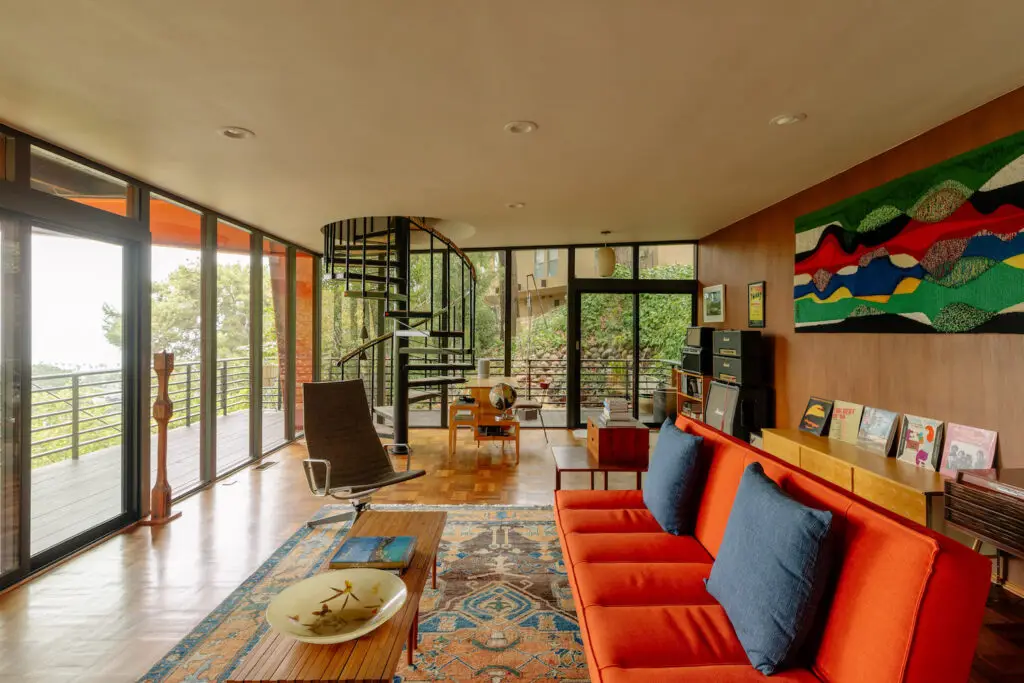
If architecture is music frozen in time, this house sings.
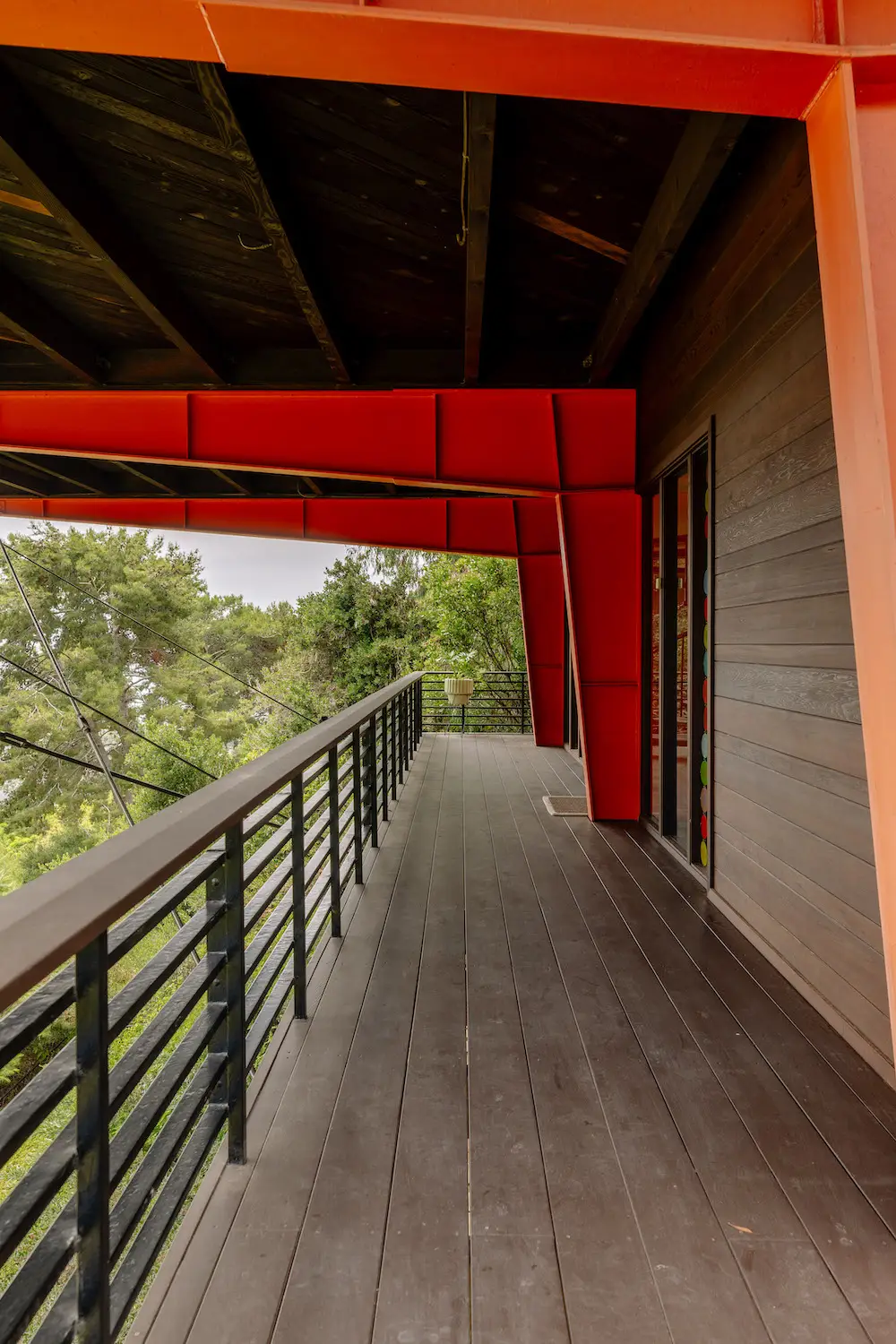
Rising from a steep La Jolla canyonside, three bold orange steel beams prop up a midcentury home like the saddle of a guitar cradling the strings. But here in the sky, the chords are muted. It’s quiet. Hawks circle just outside, enjoying the same views of Bird Rock Beach and the short-tempered Pacific as the people lounging within. At this height, with a wall of west-facing glass, the main living area feels as though it’s dissolving into the exterior.
“Nature is right there,” says owner Joan Gand, standing near the home’s impressive living room fireplace. “This is a big tree house; the lines are blurred between inside and out. One of the really magical experiences is when the fog rolls in from the ocean and you feel like you’re living in a cloud.”
“All of a sudden, you’re floating,” adds Joan’s husband of nearly 50 years, Gary. It’s like something out of a science-fiction movie.”
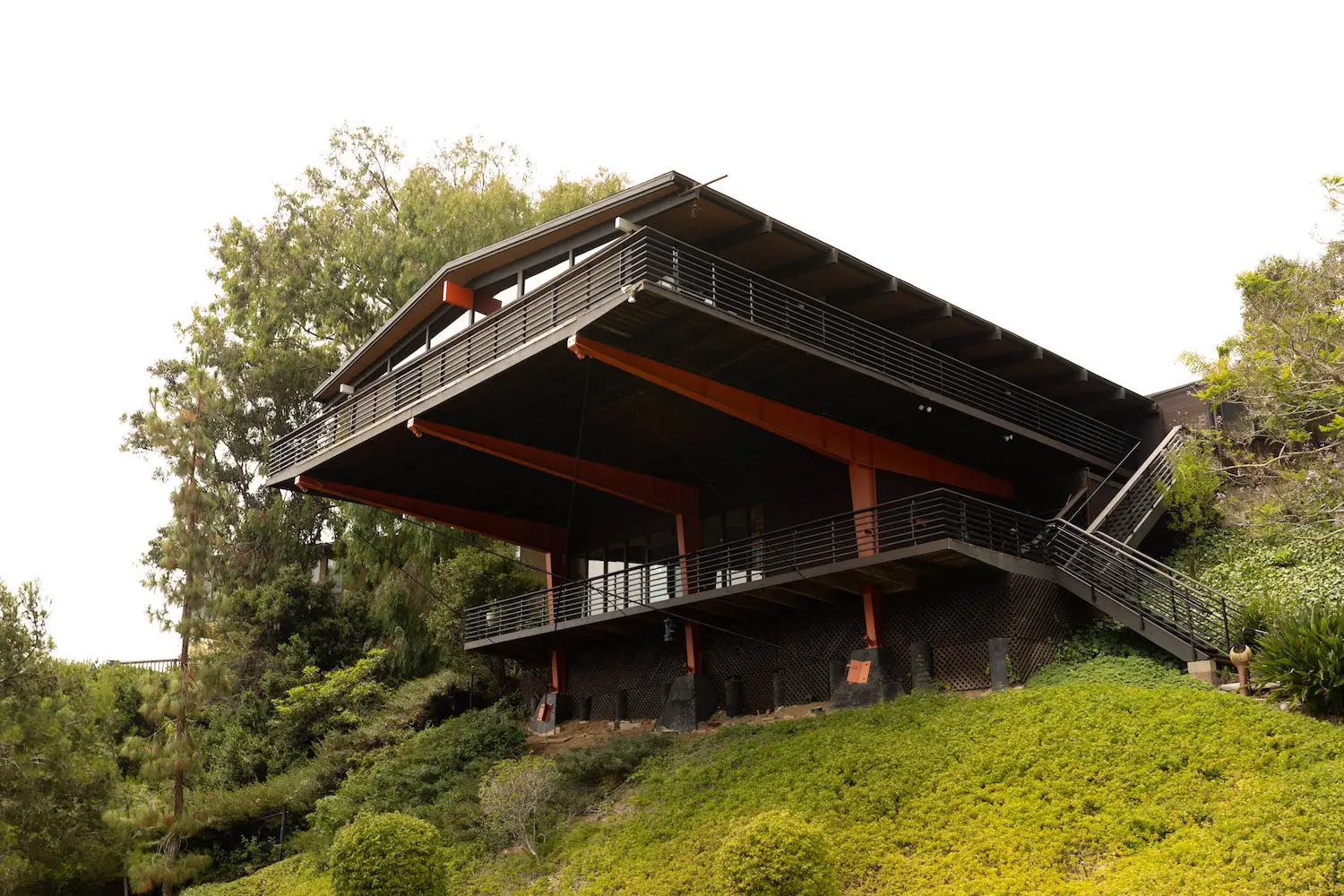
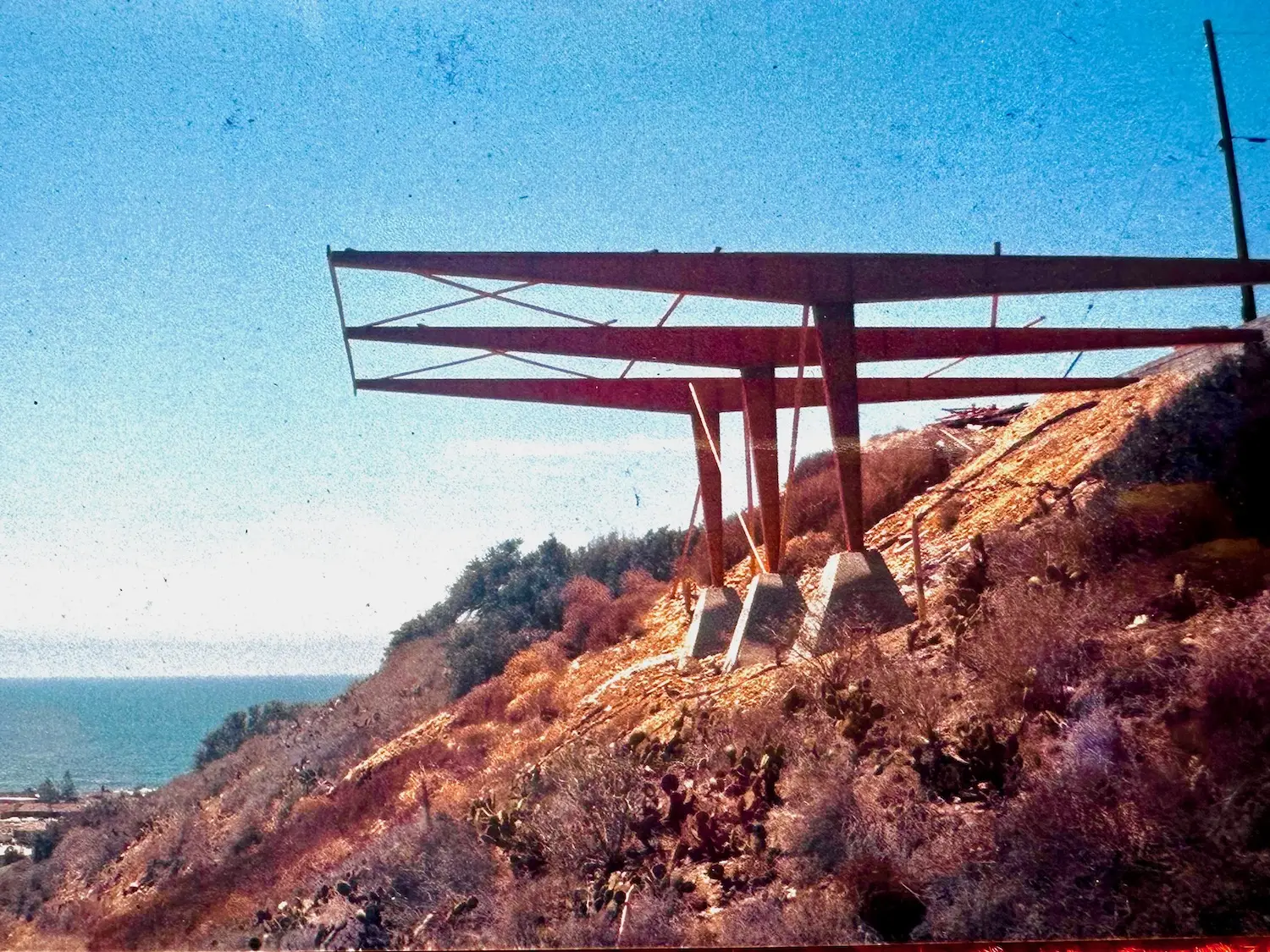
If one looks at pictures alone, it’s easy to assume that being in this house feels like wobbling on a pair of stilts. Precarious. But even though the original main floor—with living room, kitchen, master suite, office, den, two bathrooms, and a wrap-around deck that serves as an outdoor hallway—stands on its tippy toes some 40 feet from the shrubs below, the residence feels solid, grounding even. This is despite the fact that, when the house was built in 1961, barely any of the structure touched the earth.
“It’s kind of like a martini glass,” Gary says. “The real engineering feat of the house is that there’s a minimal amount of attachment to the land. The majority of the weight of the house is on the T-beams. It’s quite the balancing act.”
“Yet, at the same time, you feel anchored,” Joan adds. “It’s solid. The structural engineer told us, ‘When the big one comes, you’ll be standing here watching other houses fall into the canyon.’”
Safe to say, they simply don’t build them like this anymore.
“It’s an acrobatic way to suspend a home—all the drama is underneath,” says local modern architect Sean Canning, who I asked to accompany me on my first visit to the home to help me better understand the singularity of what we were seeing. “This kind of craftsmanship and vision just doesn’t happen now. The permitting process today would make this house almost impossible to build.”
Yes, times have changed, and so have regulations—which is part of why original midcentury architecture remains so beloved. The home is a product of an era when building permits practically came in cereal boxes, and if no one showed up to stop you from doing something on your property, you were essentially free to do it. It was in this spirit that engineer-turned-builder Robert Liebner designed and constructed the home with his wife Becky after scoring the lot on which it stands for a song.
“It was a very cheap lot. Pretty much considered unbuildable,” says the couple’s younger daughter, Renee Savigliano, 70. She and her sister Ginny Liebner Jones, 72, grew up in the home along with two younger siblings. “But my father had the confidence to make it work.”
Making it work included craning in the international orange T-beams, then bolting them to large concrete pyramids, the bases of which were buried in the ground.
“My dad liked a challenge,” Jones says. “When the house was being built, everyone assumed there was a bridge going across the canyon. It was an incredible feat of engineering.”
Liebner’s home is a testament to DIY-ism and creative problem-solving. And after decades of quietly humming along, its song is playing again in full volume. A midcentury melody composed in steel and glass, remastered to its heyday splendor.
Thanks to the Gands, this form-meets-function flex of engineering is getting a second wind. What was an aging house with piecemeal renovations has been transformed into a modernist time capsule, refreshed with period-specific antique finds and six figures in restorations, the bulk of which were done personally by master craftsman John Vugrin, whose iconic work on the Kellogg Doolittle house in Joshua Tree is the stuff of legend.
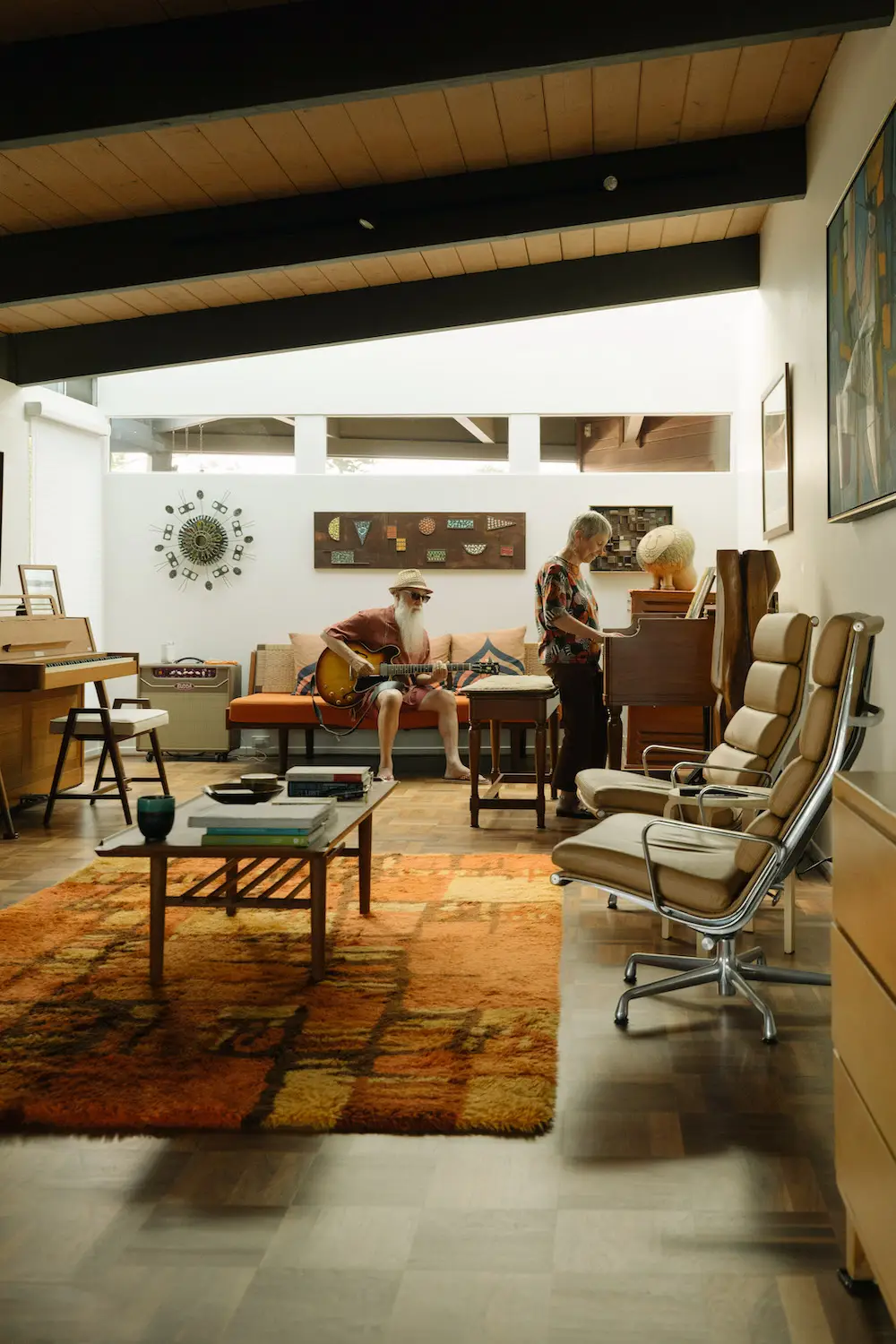
When the Gands sold their Chicago-area retail music store in 2016 to remotely run their commercial sound business, they were able to dedicate more time to becoming preservationists and gig musicians (they play in a Palm Springs–based band together). In 2019, they discovered the home and knew they had found something special. The couple have under their belts nearly a dozen multimillion-dollar midcentury restorations, but this one, they both say, is different.
“It’s our favorite,” Joan says.
“It is,” Gary echoes. “We spent the most time on it, and we had the best restorer.”
“The combination of geometry and the warmth of the wood and the fact that nature is all around us—that’s what really makes it sing,” Joan adds.
As we tour the home, Canning points out distinctly midcentury details, like the way the roof sits directly on top of glass in the living room. “When the designer and the structural engineer are one and the same, you end up with something super cool like this,” he says.
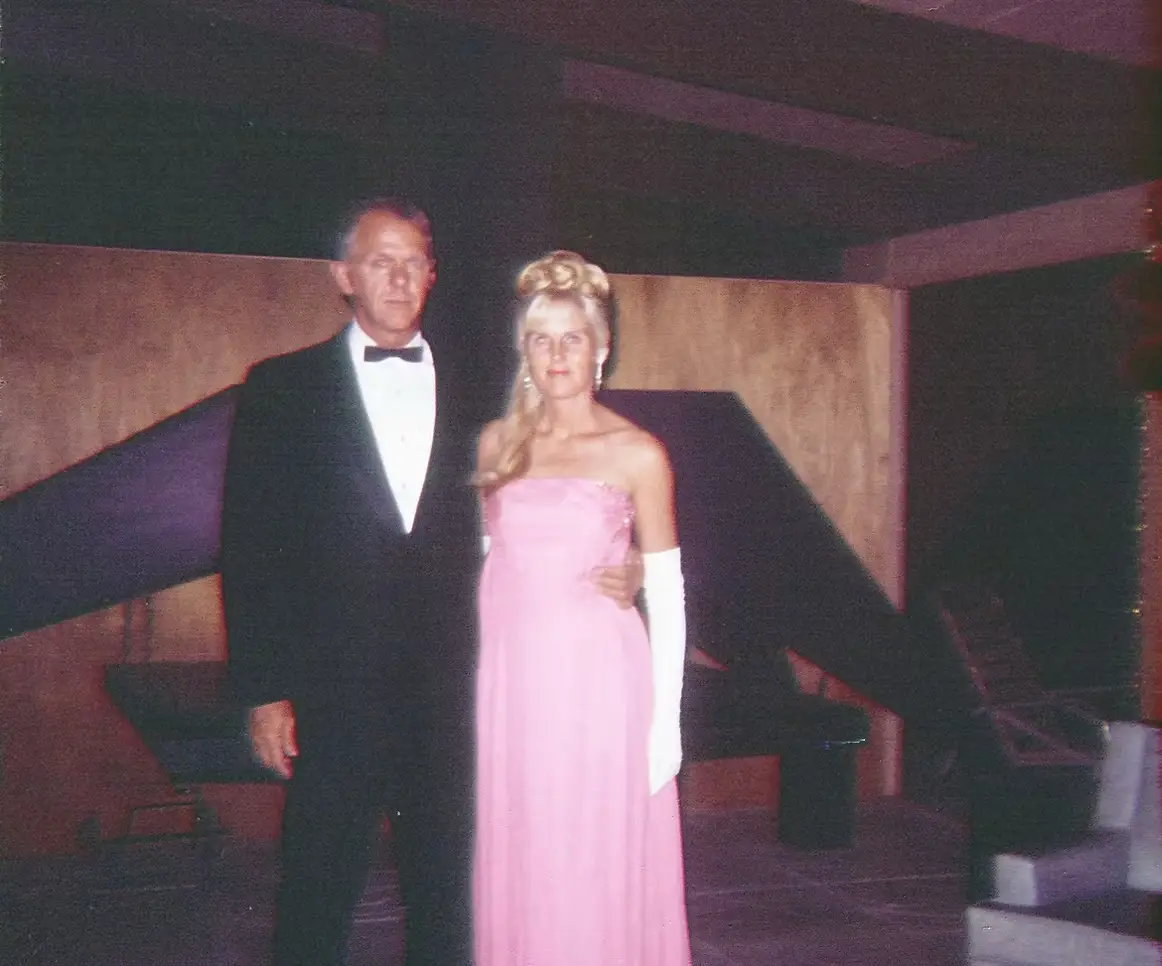
Not long after the home’s completion, when Savigliano and Jones were 7 and 9, Liebner and Becky divorced. Becky soon married Bill Ivans and the two purchased the house from Liebner months later. Becky and Ivans had two more children, and, needing more space for their family of six, they hired the best possible person to add an addition: Robert Liebner.
The bottom floor he designed partially rests on the hillside, with the lower ocean-facing deck dominated by the underside of the orange cantilevers. With walls of glass similar to those upstairs, the large downstairs living room is alive with light and proves multifunctional. An accordion door closes off to form another bedroom, leaving the downstairs bathroom accessible. A unique set of stairs joins the home’s two floors.
“My father built one of the first spiral staircases in San Diego, and it wasn’t a kit,” Jones says. “He designed it and built it himself. His original idea was for the railing to have ship-like ropes, but my mother wasn’t a fan.”
Becky, to her credit, was the primary decision-maker when it came to the home’s interior design.
“She stayed with the house through three marriages,” Joan says. “She’s the spirit of the house.”
Over the years, the Ivans’ place wasn’t merely a home—it was an experience, the open layout reflecting Becky and Bill’s open-door policy. The parties were epic, and the stories grew. At one point, a neighbor crashed a Rolls Royce into the front of the house, prompting reconfiguration of the garage and the front den area upstairs. Through it all, Becky remained a spitfire hostess, ready to welcome all.
“My mom’s idea of hospitality was spontaneous and inclusive,” Savigliano remembers. “The house was a hub—we had random people there all the time, from teenagers crashing for the summer to international visitors who stayed for years. And my mother would bring kids from Tijuana who needed medical treatment to live with us for various periods of time.”
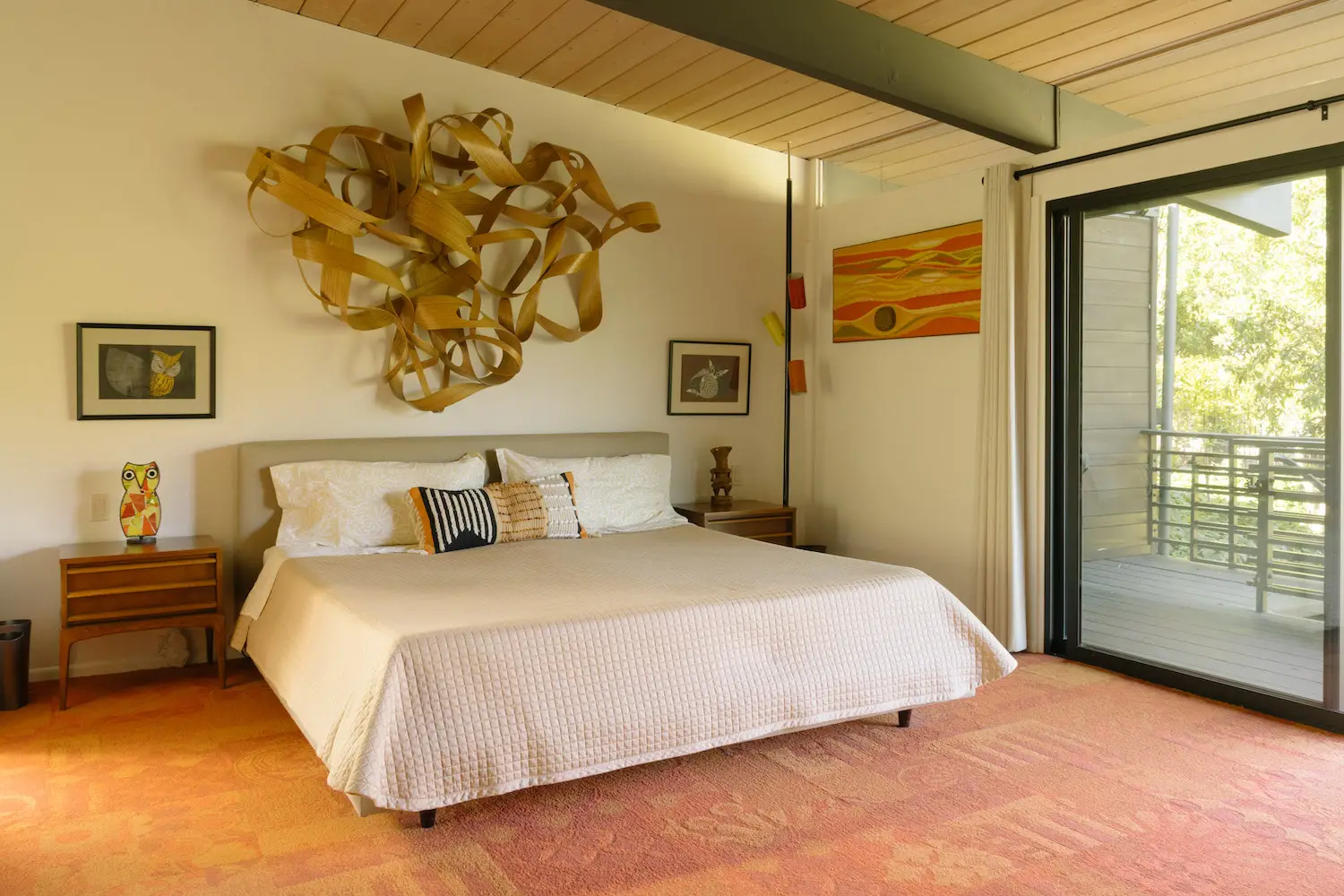
“We had Christmas parties for 400 people,” Jones says. “It was elbow-to-elbow. You could walk around the outside deck faster than you could get through the house because it was so packed. And it was an incredible place to grow up— the open-concept design meant we could host 70 kids for youth group meetings, and it never felt crowded. It was the ultimate party house.”
After Becky died, her children decided it would be best to let someone else enjoy the residence. In the Gands, they found buyers who didn’t only value the lot— they valued the home as a piece of history.
“We wrote a letter promising to restore the house,” Joan recalls. “Everyone else would have torn it down. That’s why they chose us.”
“The Gands bought the house because they love architecture,” Jones says. “We had other offers, but we wanted someone who wouldn’t tear it down or change it too much. It’s a house that deserves to be preserved.”
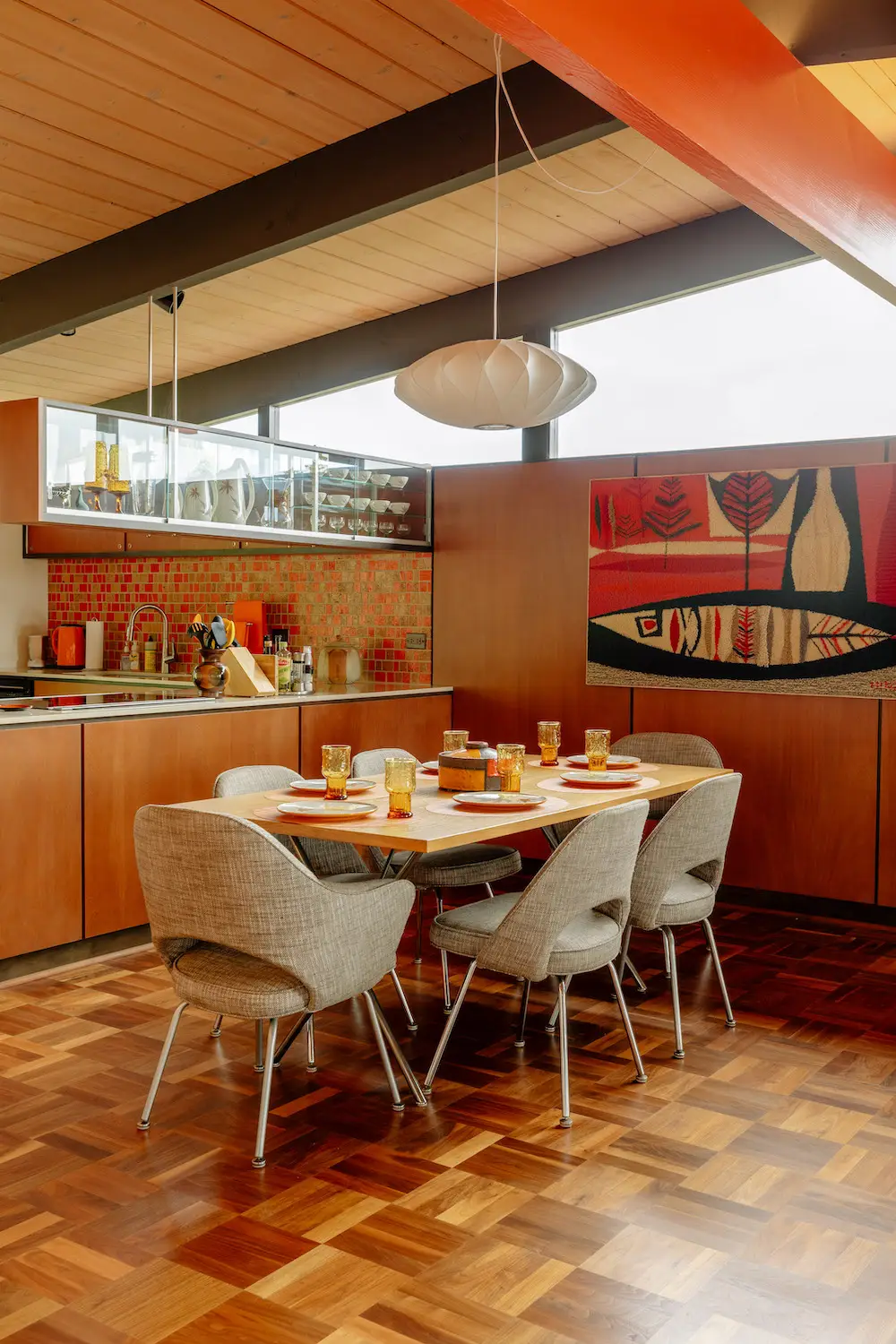
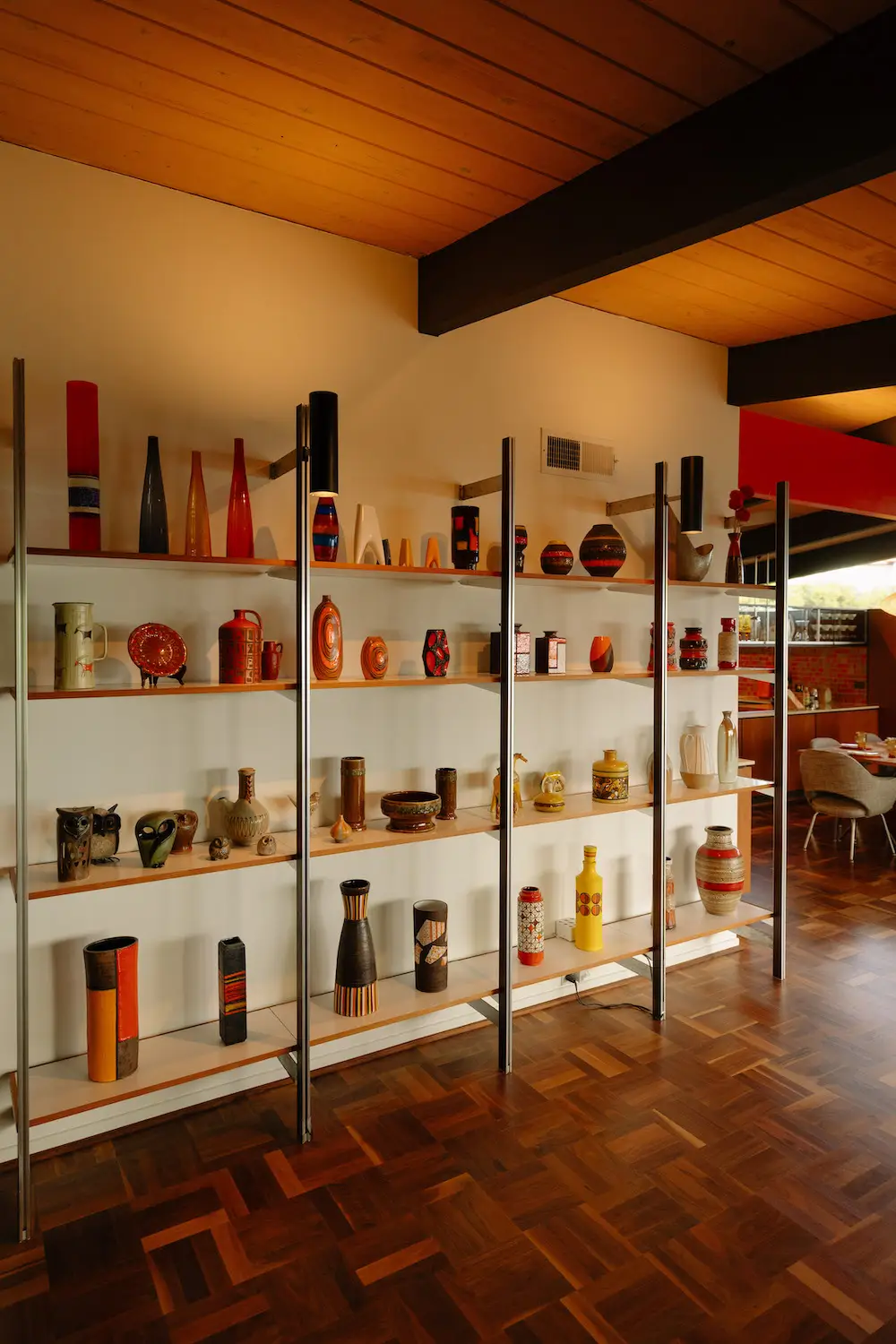
These days, large parties are not unheard of, and the staircase railing includes rope, both thanks to the Gands. They also knocked out an entryway closet, replacing it with era-specific bas-relief paneling from famed midcentury California artist Evelyn Ackerman; landscaped the canyon below; completed a full refresh of the exterior redwood siding; added walnut parquet flooring upstairs to match the original lower level floor; overhauled the master bath; and fully remodeled the kitchen.
“We redesigned the kitchen based on old snapshots of the original layout,” Joan says.
The kitchen, while modest, feels expansive, preserving the open feel of the house and positioning the range so that the cook gets an ocean view.
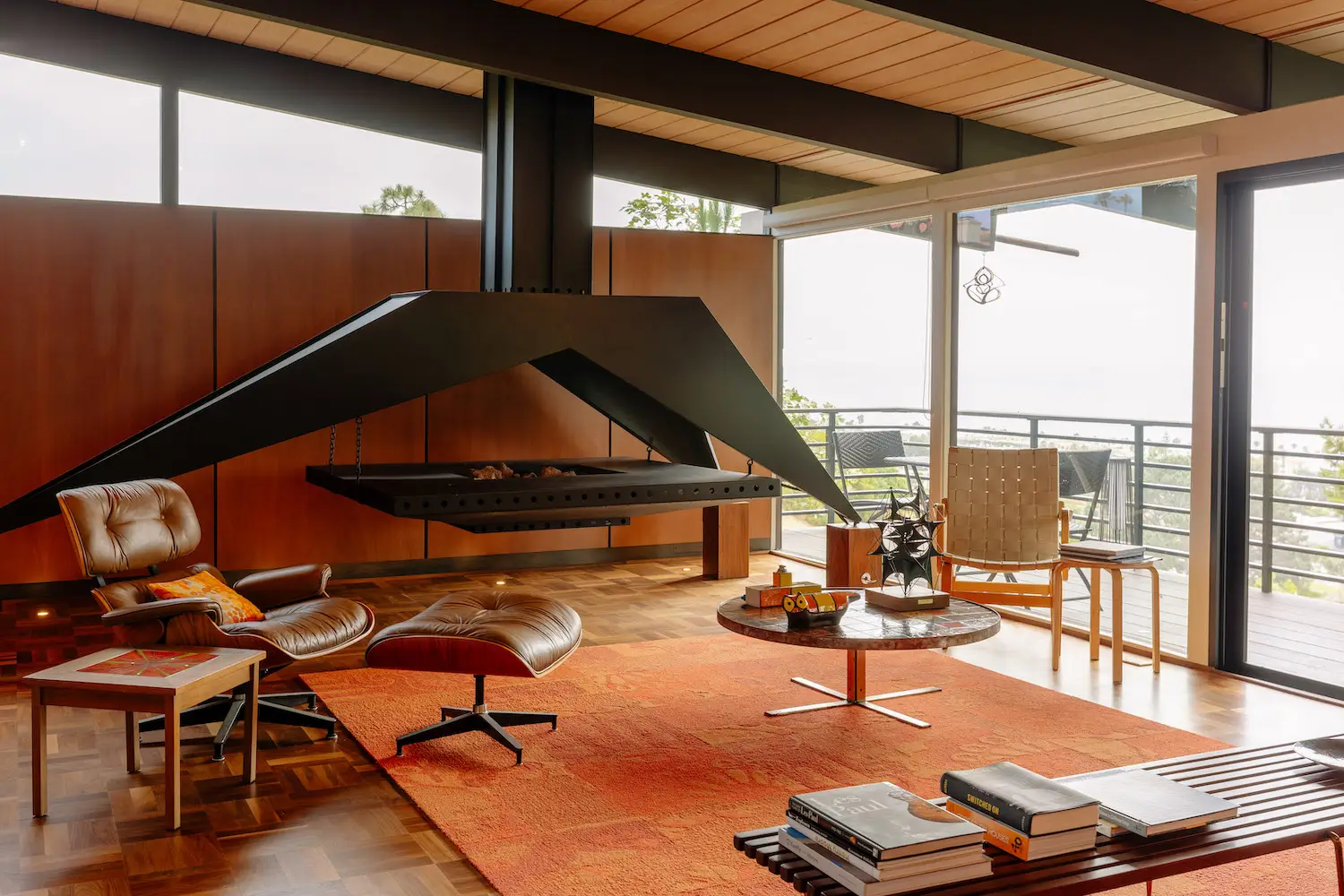
The couple’s work on the home earned them a People in Preservation Award from the Save Our Heritage Organization, a La Jolla Jewel Award, and a Historical Landmark designation. But despite all the top-notch renovations and accolades, it’s the original Liebner-designed fireplace that steals the show. Still futuristic-looking and fully operational more than 60 years after it was first constructed, the gas hearth anchors the energy of the home today, as it has for decades.
“I love to be on the sofa in the living room looking at the fireplace and the views outside,” Joan says. “It’s like a piece of sculpture. It’s also kind of Space Age; it has the feel of flying.”
“Which, in a house suspended in the air, is apropos,” Gary adds.
Today, the house is alive again, its midcentury melody restored. The Gands open it to the public periodically as part of a La Jolla Modern Home Tour they help organize each fall with the La Jolla Historical Society.
“The house is so special, and there’s so much to be seen, learned, and enjoyed from places like this,” Joan says. “We feel like architects coming here and touring the house could influence design in a good way, because, let’s face it, modern design isn’t what it used to be.”
Which is why the Gands do what they do, educating people about the importance of modern design and preserving homes like this, one at a time. Because, now given the chance, this house, with its floating foundation and its seamless connection with nature, is more than an extraordinary performance—it’s a song playing on.

Mateo Hoke is a journalist and author. His books include Six by Ten: Stories from Solitary, and Palestine Speaks: Narratives of Life Under Occupation.
From food festivals and Fashion Week to hockey games and Oktoberfest, these are the best events to add to your calendar in October
It’s finally fall, and although it may not feel like it (our ceiling fans are this close to flying off their hinges), San Diego is ringing in the cozy season with a heap of fun events. Whether you’re wanting to find your new favorite outfit at Fashion Week, cheer at the Oceanside Shock’s home debut, or practice meditation at the Strength in the City Festival, these are the best things to do in October.
Concerts & Festivals | Theater & Art Exhibits | More Fun Things to Do

Go beyond the menu during the Taste of North Park, with over 50 food samples and 15 beverage stops, plus live music and art-driven programming to keep all the senses engaged.
Cross the Coronado Bridge—and bring your appetite—for A Taste of Coronado, an island-wide culinary jaunt in support of beloved businesses and the Promises2Kids nonprofit.

In the Roustabouts Theatre Co.’s newest comedy at Scripps Ranch Theatre, roommate beef has no age limit. In “Ripcord,” a feud between Abby and Marilyn escalates to absurd heights.
Pay it forward to local public schools with each pet adoption, purchased piece of art—from over 170 artists—and sip of wine, beer, or spirits at the free La Jolla Art & Wine Festival.
Those in search of creativity and community can find both at Other Places Art Fair South, a free showcase for independent artists and galleries at California Center for the Arts, Escondido.

Where can you play pickleball with celebs, sample local eats (including that place you’ve always been meaning to try), and take part in the scenic and delicious Grand Tasting at Surf Sports Park? There’s only one answer: the Del Mar Wine & Food Festival.
Sashay your way through the 19th annual Fashion Week San Diego, home to stunning runway couture, fall designer collections, and a trunk show—perfect for shopping for your new look.
Dance to Y2K throwbacks all weekend long during Ocean Beach Oktoberfest, which includes a beach party, a stein-holding competition, a brat-eating contest, and for VIP attendees, a custom “OB2K Oktoberfest” liter
mug.
First comes the sting, then comes the shock. San Diego County’s newest sports franchise, Oceanside Shock, will make its home debut in the Federal Prospects Hockey League versus the Fresno Falcons at Frontwave
Arena.
Working out is just one part of this Waterfront Park wellness experience. Practice meditation, play bingo, and recover with sauna zones during the Strength in the City Festival.
At the 25th annual Oceanside DÍa de los Muertos Festival, the Day of the Dead is alive and well. Walk through a chalk cemetery and Por Siempre Car Club’s decorative trunk altars during the free event.
Ryan Hardison is a freelance arts and entertainment writer and recent graduate of San Diego State. When he's not staring at his laptop, he's likely eating an adobada burrito or getting sunburnt at the beach.
Through its Playmakers initiative, San Diego FC is working with artists, musicians, and other local creatives to shape the identity of the city’s newest professional sports team
What does a soccer team have to do with San Diego’s arts scene? Quite a lot, as it turns out. When San Diego FC launched, the club could have spent its marketing budget on billboards, bus wraps, and digital ads. Instead, it went into neighborhoods, found local artists and creatives, and started building the club’s identity with them. Through its Playmakers initiative, artists have designed limited-edition merchandise, had their work featured on the stadium’s jumbotron, and found themselves in front of thousands of fans—and, in some cases, a national TV audience.
For this special edition of the podcast, created alongside San Diego Magazine’s September arts and culture issue, host Troy Johnson talks with Sebastián Morúa, SDFC’s Senior Vice President of Brand & Innovation, and longtime San Diego native and creative Tony Martinez of Barrio Junto. The conversation gets into why a professional soccer club would make local art part of its business, how Martinez’s decades in San Diego’s creative community helped shape Playmakers, and the club’s early efforts to connect with artists across the county through its Chrome Ball Tour and neighborhood events. The goal, they explain, isn’t simply to put a local artist on a T-shirt. It’s to let the people who already understand San Diego help define what the new club looks and feels like.
The conversation also gets into the less glamorous—but important—side of supporting artists: money. They talk about how Playmakers pays local creatives, the value of the platform SDFC provides, and what it means to build an ongoing relationship between a professional sports club and the artists who help shape its identity. They also discuss the club’s growing music initiative, which will bring local musicians into the fold, and the many ways artists have already contributed to SDFC through merchandise, murals, Parks & Pitches projects, and more. Ultimately, it’s a conversation about soccer, art, community, and what can happen when a major sports franchise gives the people already making culture in San Diego a bigger platform.
This summary was provided to you by AI. To hear from the humans, listen to the podcast wherever you get your podcasts.
Chef collaborations, cooking demonstrations, DJs, games, photo ops, and plenty of reasons to keep wandering on Oct 3 and Oct 4
At Del Mar Wine & Food Festival’s Grand Tasting, the walk between food tents can take a while. You might stop to watch a chef competition, get pulled toward the DJ, or find yourself playing mini golf before you remember which bite you were after.
Across the Del Mar Polo Fields, there’s also line dancing, a 1961 red Beetle ready for photos, and an aviation-themed pop-up with Reno Tahoe chefs and mixologists. Need a slower stretch? Check out the wellness stops or browse the shops. Here’s what to look for as you make your way through the festival’s zones:

VIP ticket holders get a head start, with the VIP Reception running from 11:15 a.m. to 1 p.m. and serving first bites, first sips, and a few surprises before the Grand Tasting officially gets going. Champagne Telmont will make the festival’s first pour, while Cohn Restaurant Group brings carajillos alongside pours from Karl Strauss, Licor 43, Tap Truck San Diego, Bebemos Tequila, and Devil’s Grin Gin.
The bites are just as good. Celebrity chef Beau MacMillan will serve a first bite, while Warung RieRie is bringing one of its highly coveted dishes. Yes, this is the restaurant that currently has an eight-month waitlist. You’ll also find bites from The Shellfish Affair, The Waverly, Wolf in the Woods, Dora Ristorante, Cori Pastificio Trattoria, An’s Gelato, Pacific 333, Vintana, and more.
And because every good first act needs a soundtrack, there will be live painting and music, with Courtney Govan bringing live jazz to the reception. It’s the perfect opening act before the main event.
During the VIP Reception, chefs Tommy Gomes and Jeff Roberto will conduct a live ahi cutting. Plant Paradise brings another culinary angle, with celebrity chef Zuliya Khawaja joining the plant-based lineup. The area combines chef talent with plant-forward restaurants and brands, giving guests a chance to see just how creative plant-based cooking can get.
Throughout the weekend, The Stage keeps the cooking demonstrations coming, with celebrities and chefs sharing techniques, recipes, and plenty of inspiration for anyone who plans to actually cook something when they get home. Before you know it, you’re watching a chef demo, casting your awards vote, and sipping mezcal on the grass with friends you just met in line.

At the Grand Tasting, dancing just sort of… happens. A DJ drops the right song. Someone’s holding a taco in one hand and a glass of wine in the other. The country zone breaks into a two-step. Friends convince friends. Strangers become temporary dance partners. By the end of the day, everyone’s forgotten they were ever worried about looking cool.
DJ TENAX will be spinning in Plant Paradise, bringing house, techno, and UKG to an open-air dance floor that’s hard to leave. Chris Cantore, a veteran San Diego broadcaster, takes over the VIP Tent, while BootScootin Line Dance and PVO Events bring country-style line dancing to the Polo Fields, so you can work off your tasting itinerary one two-step at a time.
Then a live guitar hum in the distance leads you to a fuchsia boa over at the Pride Zone, where you’ll find yourself covered in sequins and having the lawn party of a lifetime.
Not every activity at the festival requires a tasting glass (although it’s certainly encouraged).
The Matchday Experience brings San Diego FC and San Diego Wave FC into the Grand Tasting, complete with interactive tents and plenty of game-day energy. Athletic Brewing is also sharing activation space with San Diego Wave FC, bringing a fun nonalcoholic option into the mix.
For golf fans, the Los Angeles Golf Club is bringing a Dryve Box golf simulator to the festival. And if your competitive streak is less fairway and more miniature windmill, SD Pop Up Mini Golf has you covered.
The Beach Zone gets in on the action, too, with surfing-inspired elements and Playavole paddle courts. Hemlock Hats and other California brands add to the coastal atmosphere, but the real draw is having somewhere to actually play. And don’t worry, you can cool down in COOLA’s turquoise beach chairs, too, and when your bestie suggests reapplying sunscreen, obviously you do. Basically, there are plenty of ways to work up an appetite between tastings.

You’re going to want to take photos, and the festival has made that extremely easy.
A Timeless Day is bringing multiple photo moments to the Grand Tasting, including a 1961 red Beetle at The Italian Getaway and a teal VW bus in The Beach Zone. For something a little more polished than the standard group selfie, head to the Locals Zone for Pixster Photo Booth and San Diego’s version of a Glam-Bot, complete with a grass red carpet.
Bebemos Tequila is also bringing back its festival-favorite hidden speakeasy. If there’s ever a time for a photo, it’s here. Otherwise, people might not believe you. The speakeasy serves bone marrow shots straight from the bone, with candlelight, a lounge area that makes it hard to believe you’re in a tent outside, and little orange shot glasses. This is “first slide of your festival photo dump” material.
You can also grab your squad and head to LaCroix’s bright and ridiculously cute setup, or swing by San Diego Magazine’s area, where you might stop for a photo in front of the larger-than-life SD Magazine sign and find yourself watching a painting come to life.
But really, you’re in Del Mar. The ocean is essentially your backdrop, and every zone gives you an excuse to stop for the obligatory “totally candid” photo. And yes, the best strategy is to get the group shot before everyone has been sampling wine for three hours.
The Grand Tasting also doubles as a little shopping excursion, with local makers, fashion, vintage finds, jewelry, and lifestyle brands scattered throughout the grounds. Smoke Revival Vintage Vault brings the thrill of vintage treasure hunting, while Nortte Hats and Hemlock Hat Company make a pretty good case for leaving with a new accessory.
Keep an eye out for jewelry and creative vendors, too, including Iris Studio Jewelry and New Nightfall Jewelry, plus local artists and makers featured throughout the festival.
You can come for an all day food and wine festival, but still leave with something shiny you definitely did not plan to buy.
We know, at some point, even the most dedicated grazer has to come up for air. The Novo Dia Wellness Zone is designed for exactly that, bringing together mocktails, coffee, hydration, wellness brands, and even bites from Parakeet Cafe.
Step away from the food and drink frenzy for a few minutes, relax in the shade, try some skincare, stretch with prAna, and maybe grab some Instant Hydration Electrolytes before round three.
There’s also nothing wrong with stopping to smell the roses at Green Air Botanicals while devouring a dairy-free cheese dip. It’s less about disappearing from the party and more about making sure you have enough energy to keep going.
The zones give you somewhere to wander, and the activities give you a reason to keep going. So grab your tasting glass, check the schedule, and leave a little room in your afternoon for something you didn’t plan on doing. At Del Mar Wine & Food, that’s usually where things get interesting.
Isabella Dallas is a freelance writer for San Diego Magazine and the Arts and Culture Editor at The Daily Aztec in her final year at San Diego State University. She previously worked as an editorial intern for SDM, but when she’s not writing, you can find her trying the best coffee spots in SD, devouring the latest rom-coms, and indulging in anything and everything pop culture.
KQ Aesthetic Society goes beyond cosmetic to provide comprehensive care and transformative results
Kelly H. Harfouche, founder of KQ Aesthetic Society, knows firsthand that cosmetic treatments like fillers, neurotoxins, and microneedling, can not only enhance a person’s appearance and restore confidence, they have the power to truly change a person’s life. An expert injector has the ability to tailor treatments to each individual patient’s anatomy and goals for personalized results. Harfouche, a board-certified nurse practitioner, has spent nearly a decade perfecting her craft as an aesthetic injector and integrating her multifaceted artistic skills with precision patient care. Her commitment to continual education and training, plus a passion for helping people look—and feel—their best, set KQ Aesthetic Society apart in a sea of local medspas.
For many people considering nonsurgical treatments, the intent is to look refreshed and refined. KQ Aesthetic Society’s philosophy eschews a cookie cutter approach that bases treatments around units, instead working to understand each person’s unique goals, then curating a treatment plan to fit that vision. Harfouche focuses on “inclusive luxury,” the belief that everyone deserves access to aesthetic treatments, respective of budget restrictions. She develops long-standing trusted relationships with her patients, and works with each one to achieve their aesthetic objectives and address the underlying causes of their concerns.
“For me, forming an honest and open relationship with every patient who walks through the door is essential. This means understanding them on a deeper level and meeting them where they are to define and achieve their individual goals,” she says.

Drawing on her artistic background, which inspired her transition into medical aesthetics, Harfouche sees each client as a “unique canvas.” Rather than relying on standardized procedures, the practitioner’s distinctive approach combines her profound understanding of the physiological and anatomical changes associated with aging with an unwavering commitment to ongoing education about the newest products and their mechanisms of action. Her goal is to make each patient feel beautiful in their own skin and to embrace their individuality.
She has also pioneered a way to combine her talent for aesthetic artistry with her philanthropic nature. Harfouche is one of only a handful of providers using dermal fillers to treat patients with lip asymmetry and scarring resulting from cleft lip surgery. Patients travel from around the country for this transformative treatment, noting increased confidence and a restored identity. She hopes to eventually launch a training program to help fill the void in this space.

“My passion has always been connecting with people and giving back in any capacity that I can,” she says. In the rapidly advancing landscape of aesthetic medicine, you can place your confidence in Harfouche and KQ Aesthetic Society to deliver exceptional care. To learn more or book a consultation, please visit kqaestheticsociety.com.
A century ago, there was a stage actress known as San Diego’s Sweetheart—we traced her footprint through history, up to modern day
There was once an actress known as “San Diego’s Sweetheart” who mailed herself to Los Angeles—donning a helmet covered in postage stamps and boarding a two-seater, single-engine mail plane. The publicity stunt was billed as the first air parcel package in the US. It wasn’t. She wasn’t even the first human to be mailed: When the US parcel post started in 1913, at least seven people mailed their newborns to relatives (an innovative loophole eventually outlawed).
Technicalities be damned. That kind of nose for spectacle was why Virginia Brissac was such a star—landing bit parts in TV shows (I Love Lucy, Dragnet) and 155 films, notably playing James Dean’s grandmother in Rebel Without a Cause. “Nobody could help but love her,” her dresser told San Diego Magazine in a 1971 feature, published when Brissac was 88 years old.
In 1911, she topped the Playbill at the opening of the Savoy Theatre at 3rd and C streets in Downtown—a grand live-performance hall built for $150,000 ($5.2 million in today’s money). It became one of the premiere vaudeville theaters in the country (under vaudeville king Alexander Patages). The theater helped make San Diego a destination for stars like silent-film comedian Roscoe “Fatty” Arbuckle, heavyweight champ Jack Dempsey, plus classical legends Rachmaninoff and Anna Pavlova. As theaters converted to movie houses through the ’20s and ’30s, the Savoy remained dedicated to live humans. It closed in 1940, and the Civic Theater now stands in its footprint.
As for Brissac, during a time when women couldn’t even vote, she led a stock company under her own name at the Strand Theatre. The Brissac Company held a four-year residency, “an all-time successful record run for San Diego,” the article says. That classic Ocean Beach theater (featured in San Diego film legend Cameron Crowe’s Almost Famous) has been closed for decades, its bones now a chain beachwear and souvenir store. But Brissac’s legacy lives through the women leading San Diego’s theater scene.
Read the entire 1971 article by Merle Clayton below…


Emma Veidt is an editor at San Diego Magazine. She earned her bachelor's and master's degrees from the Missouri School of Journalism. She loves running, hiking, and rock climbing, but really, she mostly loves encounters with the street cats around North Park.
Jonathon Glus on the Art + Design District, investing in the creative economy, keeping artists in the city, and what we can learn from places like London and Chicago
Jonathon Glus is the Prebys Foundation senior fellow leading the development of the Art + Design District at the Downtown San Diego Partnership. He has been asked what an arts and design district is many times. In our conversation, I asked him instead to describe what it isn’t. His answer opened up a broader discussion about what San Diego has and hasn’t invested in, what it has the capacity to become, and what other cities have done that we haven’t. Glus speaks about global art fairs and architecture biennials in Chicago and long tables at dinner parties all with the same fluency. He also discusses who gets to live in the neighborhoods where creative work happens, and what it means when they can’t afford to stay.
Jonathon Glus: It is not a place designed intentionally and specifically for tourists. Of course there will be opportunities for tourists to come, but the district is really focused on creatives, on creative education, and on the creative workforce—as well as our major performing arts organizations. That is the emphasis.
[It needs to] develop greater connectivity between the anchor institutions—the symphony, Broadway San Diego, the opera, all the wonderful things happening in Balboa [Park]—and the creative workforce that will be living and working in that neighborhood 24/7.
We have not been intentionally investing in the contemporary art product that other major cities have been building. A contemporary art fair. A biennial that reflects the ethos of this region. Chicago developed an architecture biennial about eight years ago. London has a design biennial. Desert X, right here in Southern California, invests in and elevates contemporary artists inside a city. We have not really been playing in the global art market in a way that we have the capacity to.
We have a wonderful foundation. Two theater companies that produce work that goes to Broadway more than many regional theaters in the country, major museums, artists teaching at UC San Diego and University of San Diego. What a city does when it wants to take itself to the next level is intentionally create the product. Miami went after the Art Basel fair; they did not passively receive it. You have to have the intention and the will, and you have to go after it. We haven’t done that in the way that other cities have.
Look at what we did with the tech sector; we’re now a major tech center. That was intentional. Leadership organized around it. We have to do the same thing around the arts. We have a lot of contemporary art collectors here. We have a lot of galleries. But the ecosystem of the business of contemporary art is not as organized or as visible as it should be.
It’s bits and pieces of different cities. Dubai has invested very quickly and very intentionally in contemporary art—art fairs, design fairs, higher education, artist residencies from all over the world. London has centered artists and creatives in the contemporary zeitgeist in a way that was not true 40 years ago. They built biennials. They ensured British artists had affordable housing and workspace. They made sure the media paid attention to what they were doing.
If you don’t have an artist at your dinner table, it’s not a dinner party. That sounds elitist, but it’s true. It shows the value that artists have in a community. Our relationship culturally with Tijuana is really significant here because artists in Baja seem to be at the table.
They aren’t. When super creative people are in a community doing extraordinary work, that draws other super creative people doing extraordinary work. That’s why other arts and design districts around the world end up populated with some of the most interesting restaurants and young fashion designers. Creatives want to be around other creatives.
Our creative economy already employs about 170,000 people and generates more than $11 billion in economic activity. It’s large and robust. But we must center all of this in accessibility and affordability. Williamsburg used to be affordable. Artists can’t afford to live there anymore. Wicker Park and Bucktown in Chicago—artist central, now unaffordable. If we’re going to invest in this district, we have to be really intentional about housing and workspace, so creatives have a place in the future of this district.
I think the lesson is that nothing changes. What do people love? Long tables. Why? Because you’re with a lot of people—some you may have known your entire life, but most you don’t. And if it’s driven by a creative process, all the better. We know one of the best ways to do that is around food, but also music.
For the Art + Design District, part of why we’re leaning into the process is because, culturally, we’re bringing down the barriers between film, fashion, multimedia, tech, and architecture. It’s an experiential mashup in the best possible way.
And it’s not just about art and design, but community writ large. Creative expression is something we all desire. Whether it’s at a long table, at the opera, or in your studio, we gravitate toward creative expression as a way of building community and communicating with the people around us.
I hope you are writing about this in seven years when the district is fully mature. But this is just the beginning for all of this. I think that’s what’s most exciting to me. We don’t know what this is going to be like, but we know it’s going to be creatively centered, and that’s super exciting to me.
A look at San Diego's top designers creating unique environments that combine creativity and function


AVRP Studios’ tradition for Design Excellence and Innovation began in 1976 with Doug Austin, FAIA, in Solana Beach, California. The firm has since grown to complete major projects throughout the United States and Canada. We think of ourselves as a family and we care deeply about people. We want to inspire, help make their lives richer and more complete through our efforts. We believe that architecture is one of the most important art forms because of the impact it can have on the lives of those it touches. We’re delighted to have been recognized with over 150 awards for design excellence.
703 16th Street, Suite 200, San Diego, California 92101 | 619-704-2700 | avrpstudios.com