Featured articles
Food & Drink
Food News
Food & Drink
Featured articles
Everything SD
Everything SD
Arts & Culture
Featured articles
Everything SD
Things to Do
Things to Do
Featured articles
podcast-ep
podcast-ep
video
Featured articles
Everything SD
Things to Do
Everything SD
Featured articles
Everything SD
Everything SD
Food & Drink
Ready to know more about San Diego?
SubscribeReady to know more about San Diego?
Each month, the SDM staff rounds up our favorite eats in the city—here are the ones that topped our list in 2024
Each month, the San Diego Magazine staff heads out into the city to try new eats, revisit classic restaurants, and hit up a few hidden gems in search of the best foods in San Diego. In 2024, we visited classics like Tajima and Hodad’s, sipped on cocktails from esteemed bartenders like Beau du Bois at Roma Norte, and made our way through mom-and-pop shops just getting started like Muse Cheesecakes. When we looked back at the year, we chose 15 of our favorite eats that we still think about today. Here are our picks for the best foods to try in San Diego, according to our taste buds.

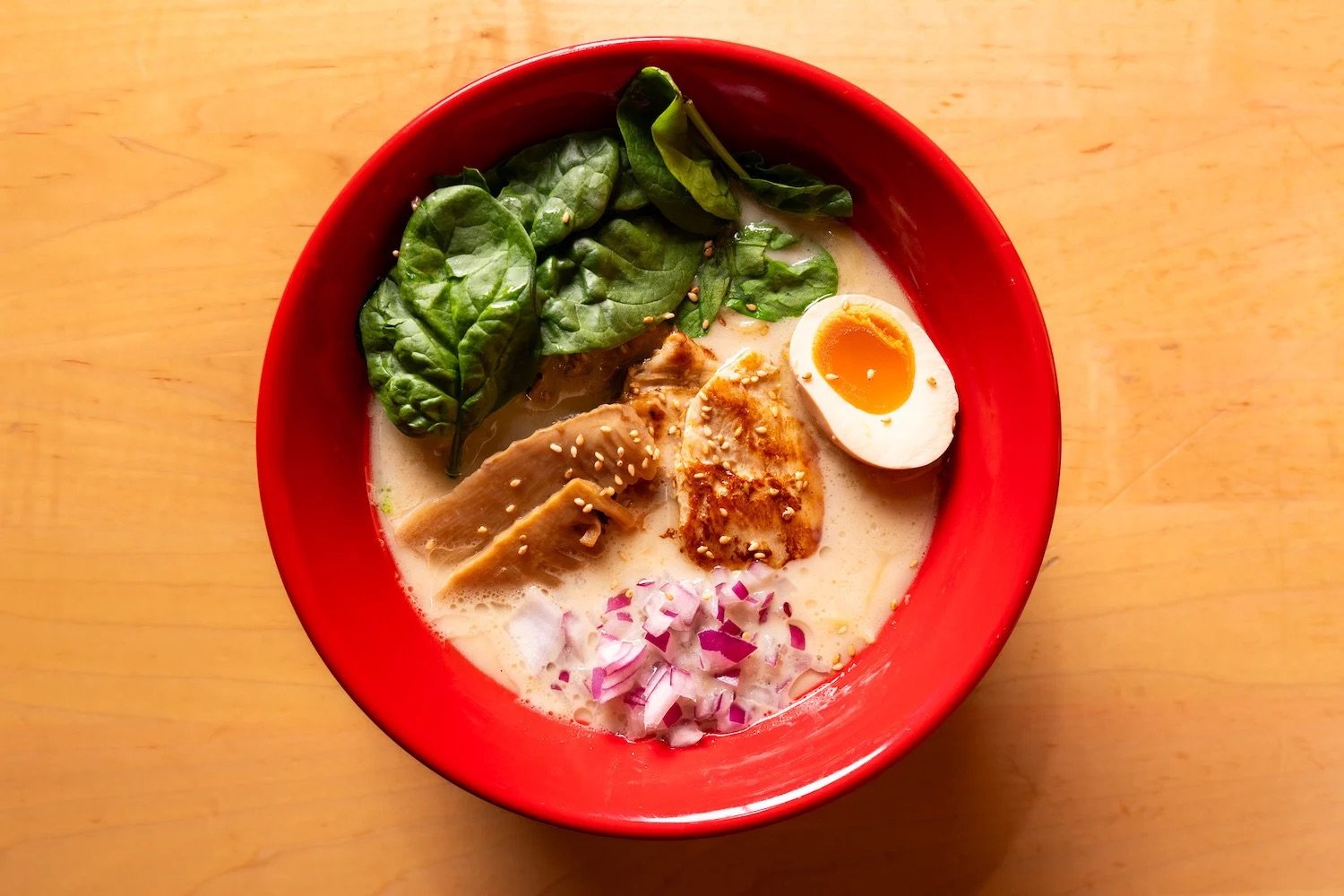
Cooler weather means one thing: ramen szn. Tajima on Adams Avenue is no-frills in the right ways—A solid joint to drop in for a quick hit of soup like you’d stop for a quick beer (they have both). Sit at the bar and watch the kitchen cranking out an impressive number of to-go tubs while sipping on creamy chicken broth that isn’t just rich, but wealthy. This ramen checks the boxes of being both affordable and memorable. Come on, thermostat, drop. –MH

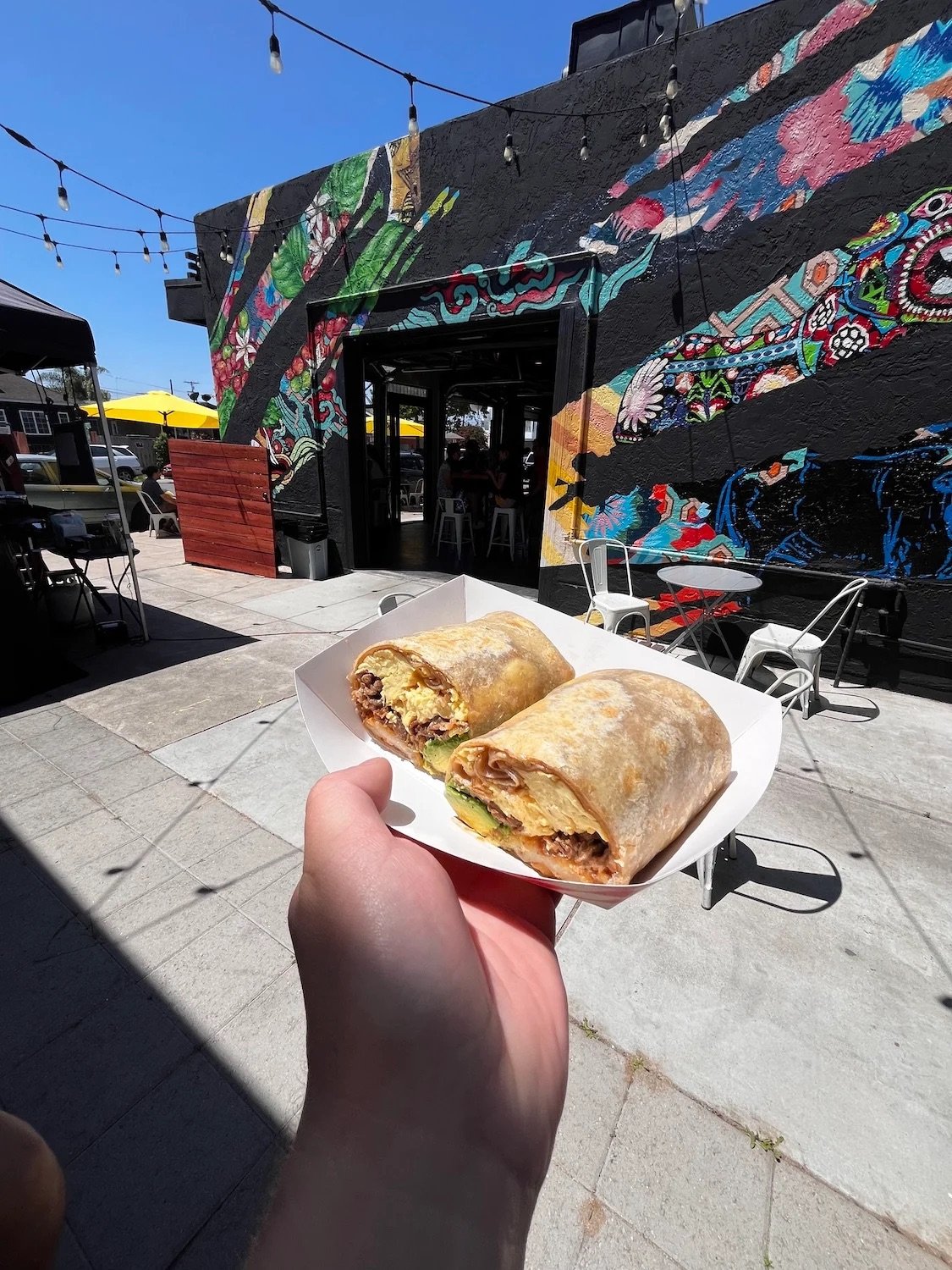
Is it blasphemy to say this is the best California burrito in San Diego? And possibly the best breakfast burrito? Maybe, but I stand by it. The Yakiniku Cali from Bincho Taco, a Japanese-Mexican fusion spot, has me chasing its pop-up around the city each week. On Sundays, you’ll find it at Sherman Heights coffee shop Mixed Grounds, where you can order this masterpiece featuring tender Yakiniku beef, spicy avocado, roasted peppers, scrambled eggs, and hashbrowns. Add a touch of the tangy, housemade hot sauces for an extra kick. On Tuesdays at Thorn Brewing and Fridays at Whistlestop, pair one of the pop-up’s dinner entrees with the drink of your choice. –CN

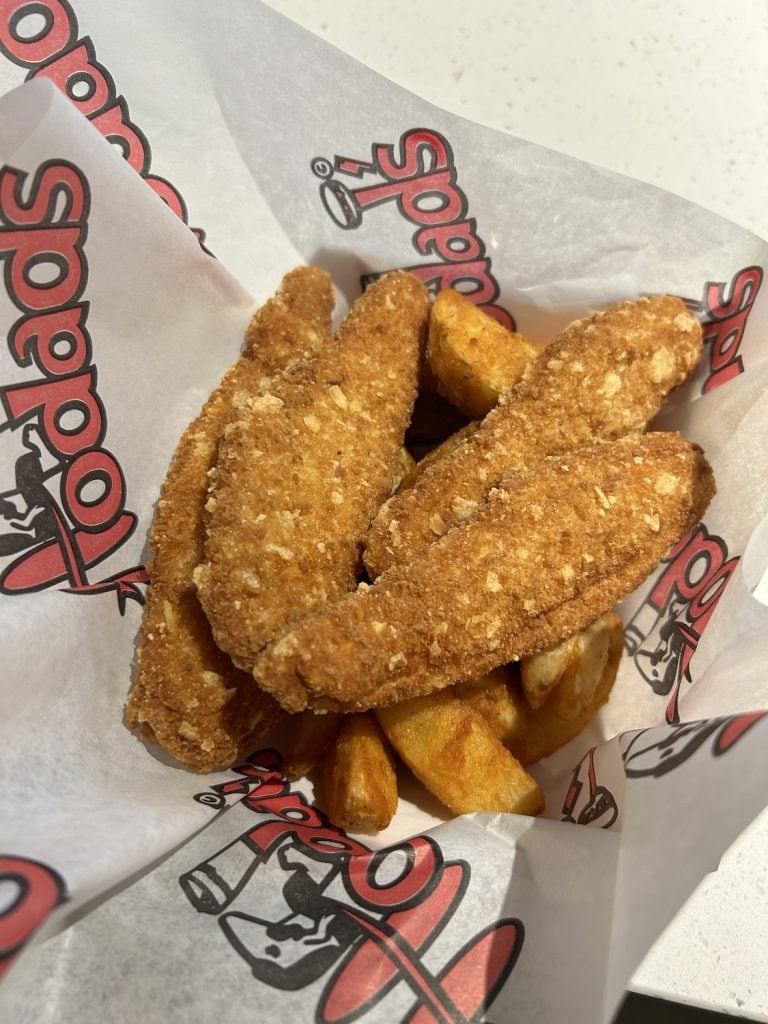
Chick-fil-a’s “irreverent” billboards of cows throwing cluckers under the bus disturb me, but I’m afraid the sentiment applies here. Branch out from Hodad’s famed burgers to try the sleeper hit: crispy chicken tenders with a potato-chip breading (and the same addictive potato wedge fries on the side). –AR

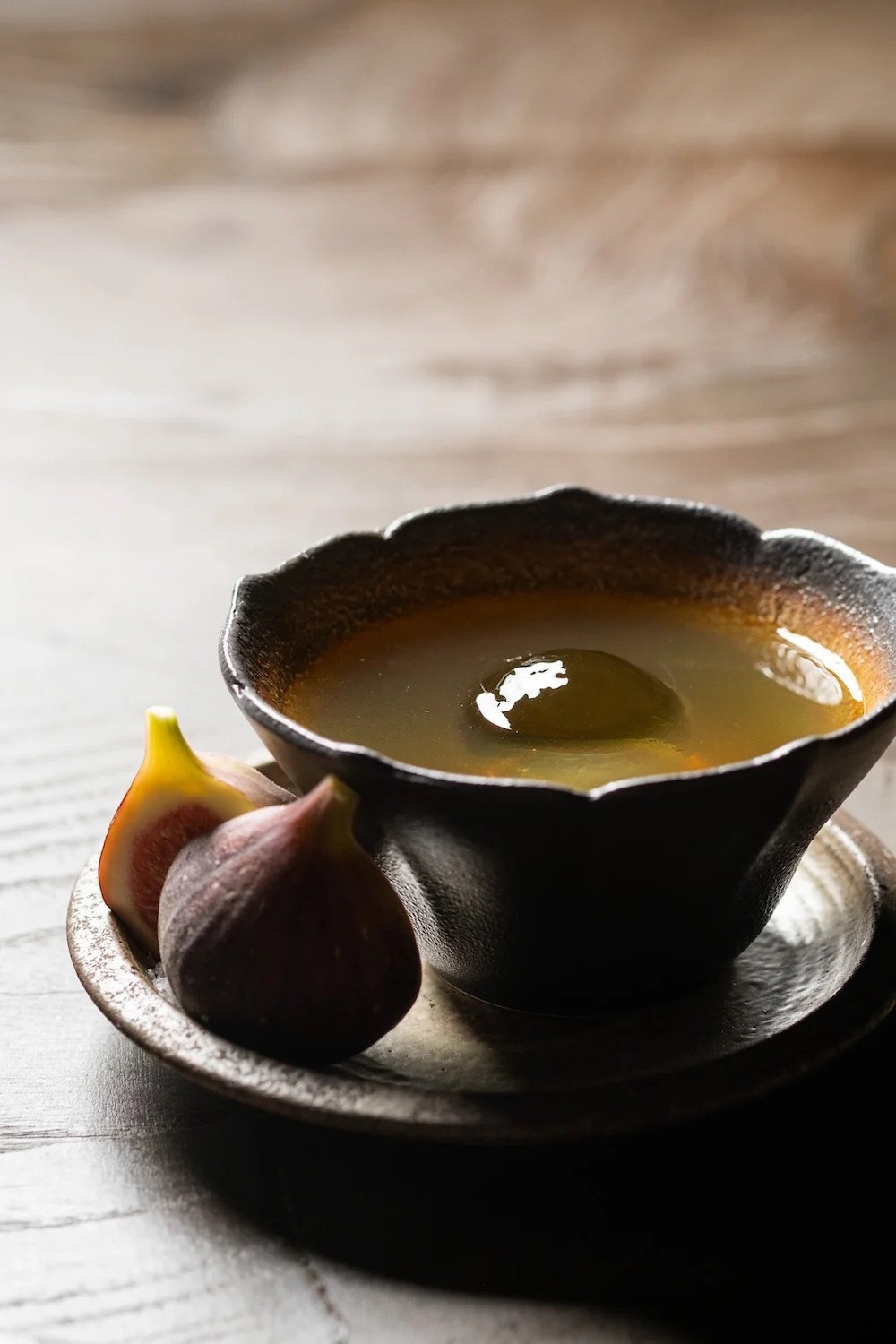
Whether it’s your first date or your hundredth, Roma Norte is made for eye contact, and the drinks are made for pleasure. The menu at this Seaport Village hotspot is encyclopedic, but ask the bartenders to bring you their favorite and you may get this ceramic teacup full of intrigue. You’ll need to leave the small talk at home—with butter-washed bourbon, fig leaf cordial, and cacao bitters, this slow sipper is made for deep conversation. Make sure you’ve done your reading. –MH

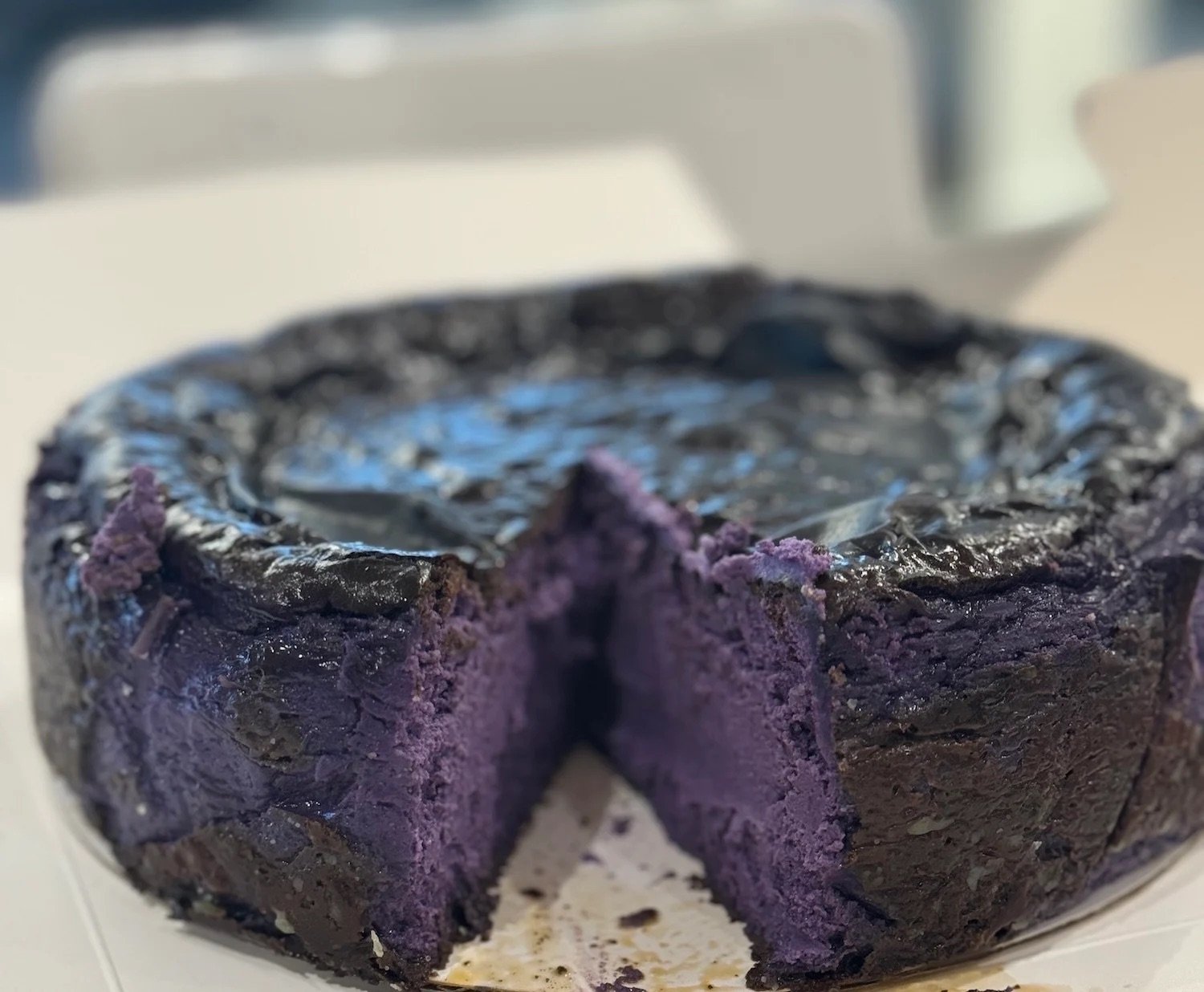
I pretty much fell in love with Muse Cheesecakes’ burnt Basque delicacies the second I tried them. Creamy, thick, and OMG good, these cheesecakes are made by local baker Lada Sadovnyk in seven flavors, several of which are gluten-free. The ube is just-the-right-amount-of-sweet, melt-in-your-mouth deliciousness. While orders can only be made via the company’s Instagram page currently, Sadovnyk is currently looking for their first brick-and-mortar. So keep your eyes peeled on their IG page for updates. —NM

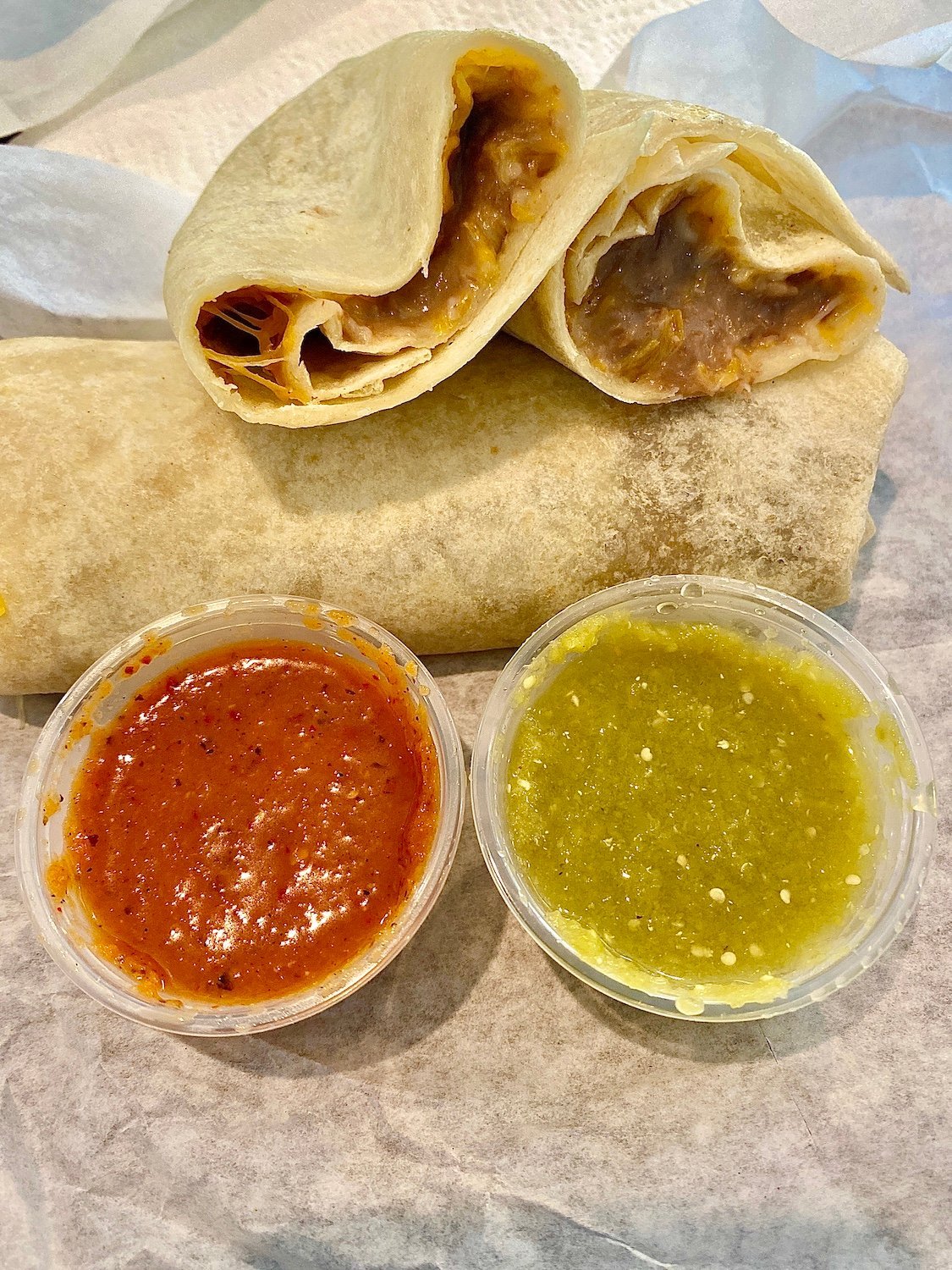
The chile relleno burritos here are worth the trip alone. Hidden in the cuts of Solana Beach, John’s Market serves up some of the most soul-nourishing family-recipe Mexican this side of Tecate. The mini burritos ($2.75) with homemade refried beans taste like a morning in some small coastal town 3,000 miles south. Machaca, chorizo, you can’t miss. Simple, made with amore. A true Mexican market with handwritten prices, hidden in a residential neighborhood. Oro. Remember to get extra beans and extra house-made salsa to-go. –MH

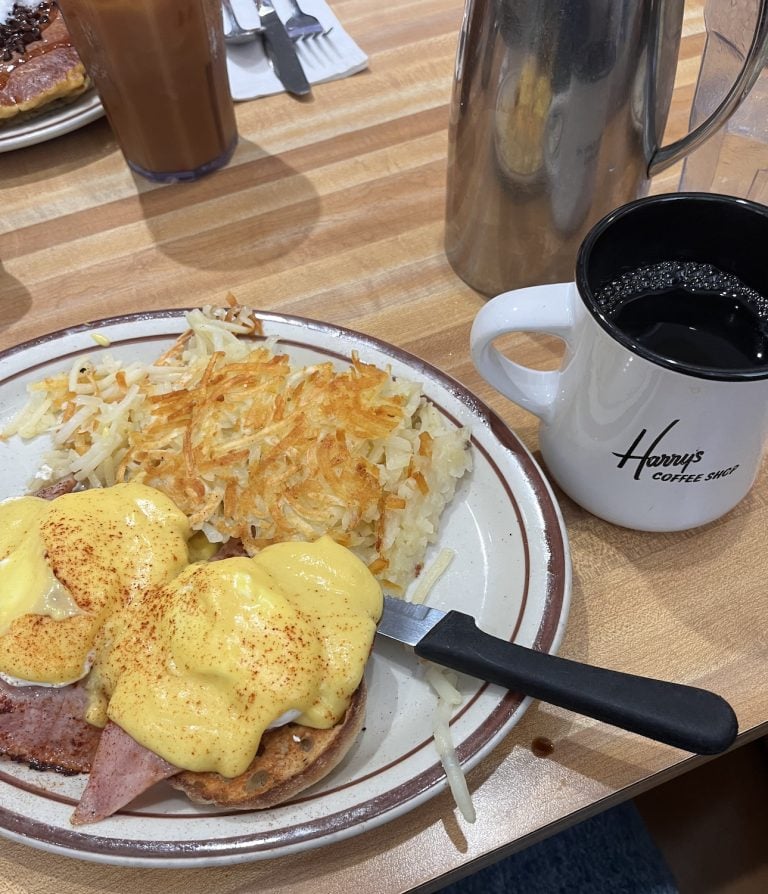
Opened in 1960 by a former Los Angeles Dodgers batboy, Harry’s Coffee Shop is a living time capsule and proudly holds the title of La Jolla’s oldest diner. There’s nothing quite like starting your day to the tune of bottomless coffee, vinyl booths, and the buzz of café chatter in this spot brimming with nostalgia. I’m an unapologetic eggs benedict enthusiast, so Harry’s had my full attention—and it delivered. The classic egg dish comes topped with a velvety hollandaise; a side of crispy, golden hash browns; and a classic cup of joe. Harry’s isn’t just breakfast; it’s a mid-century diner experience that every San Diegan should try at least once. And, as at any self-respecting diner, breakfast is served all day. –CN

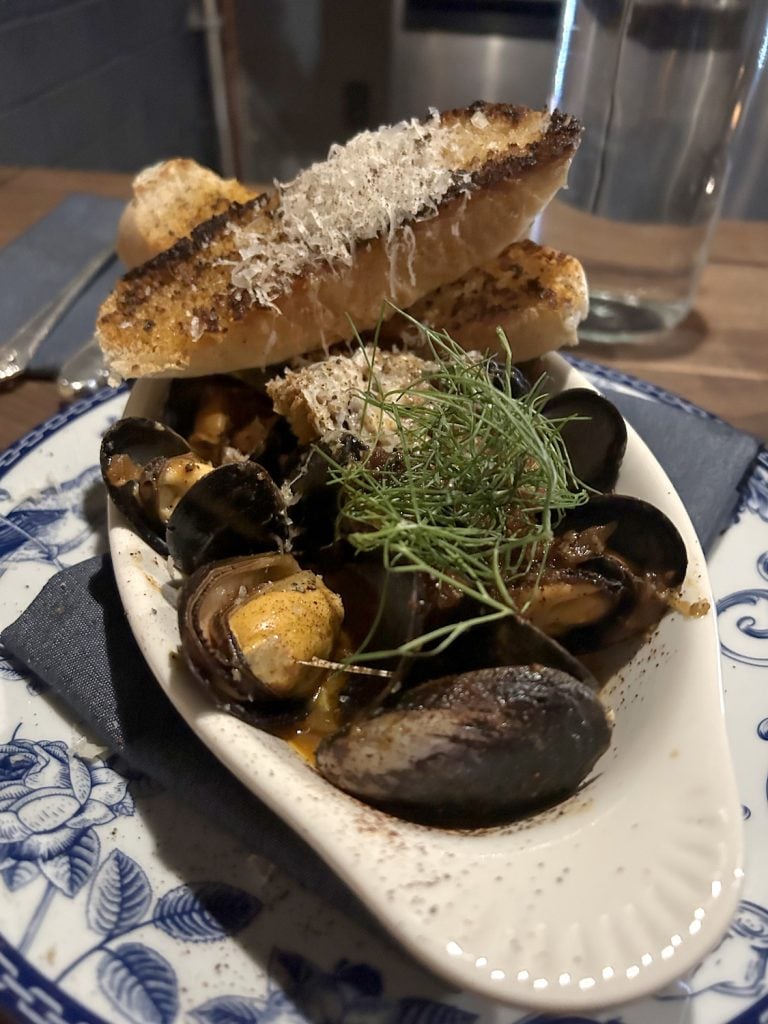
Anchoring the plaza in the Encinitas Lumberyard, Échale has turned what was a sleepy and under-utilized primo location into a sexy and dark wine bar escape. The mussels, a smoky and luscious take, drown in mezcal fennel broth and are studded with crumbled chorizo. Soak it all up with cheesy garlic toast and pair with a glass of natural rosé. –SL

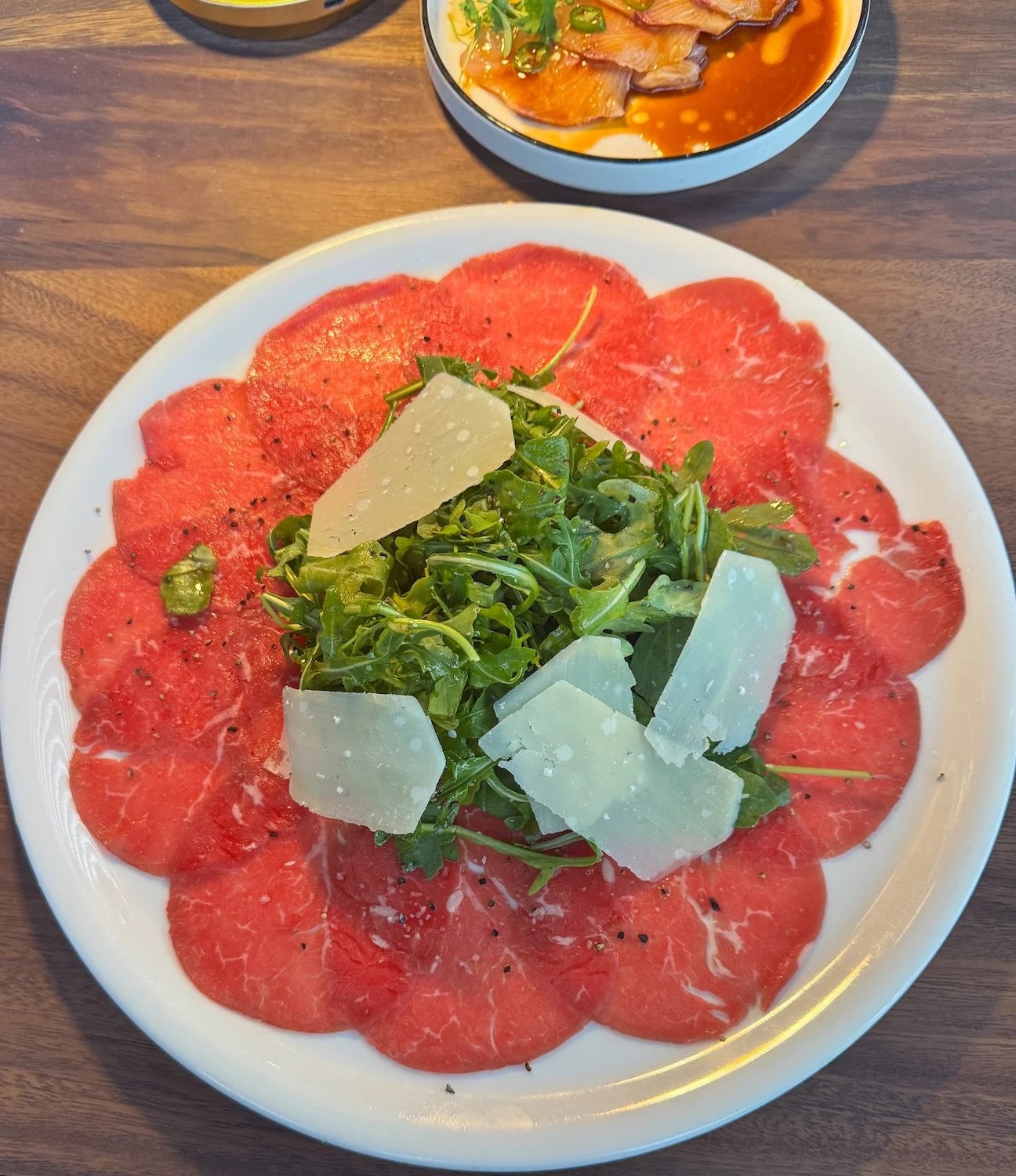
This year, Amalfi Llama opened at Westfield UTC in March featuring Patagonian live-fire cooking techniques mixed with Italian ingredients—one of the few places in San Diego using this method to cook meat. While all of the cuts are worth a try, be sure to throw in the beef carpaccio as an app. Its incredibly thin slices make you feel like you’re eating clouds. —NM

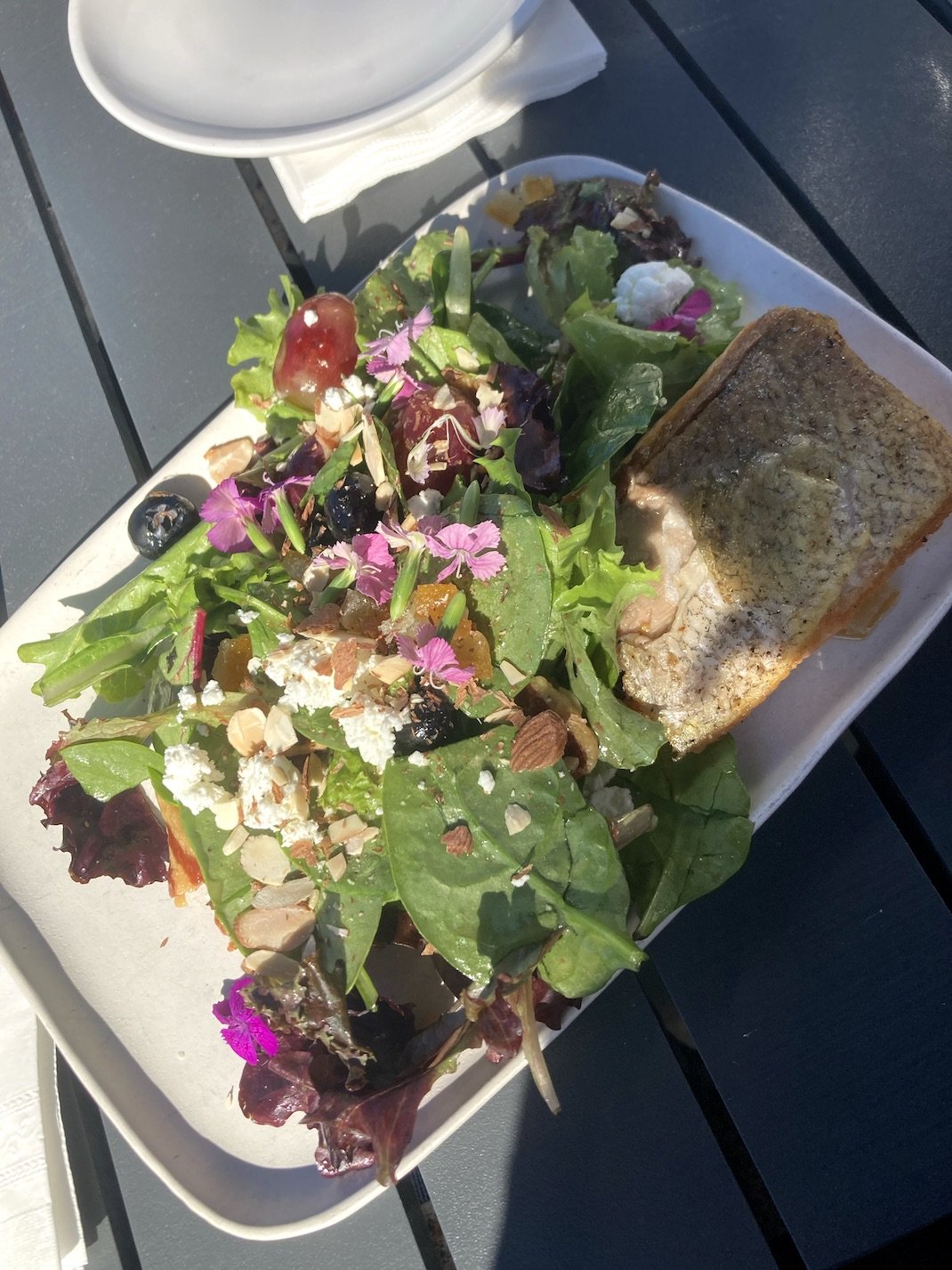
University Heights’ Kairoa is a true California brewery: open-air rooftop seating, unbridled dog-friendliness, myriad vegan menu choices. I get the omnivorous version of the citrus otago salad (crunchy pancetta and creamy goat cheese, I love you). With berries, candied lemon peel, charred grapes, and kumquat-passion-fruit vinaigrette, though, the purely plant-based take isn’t short on joy, either. –AR

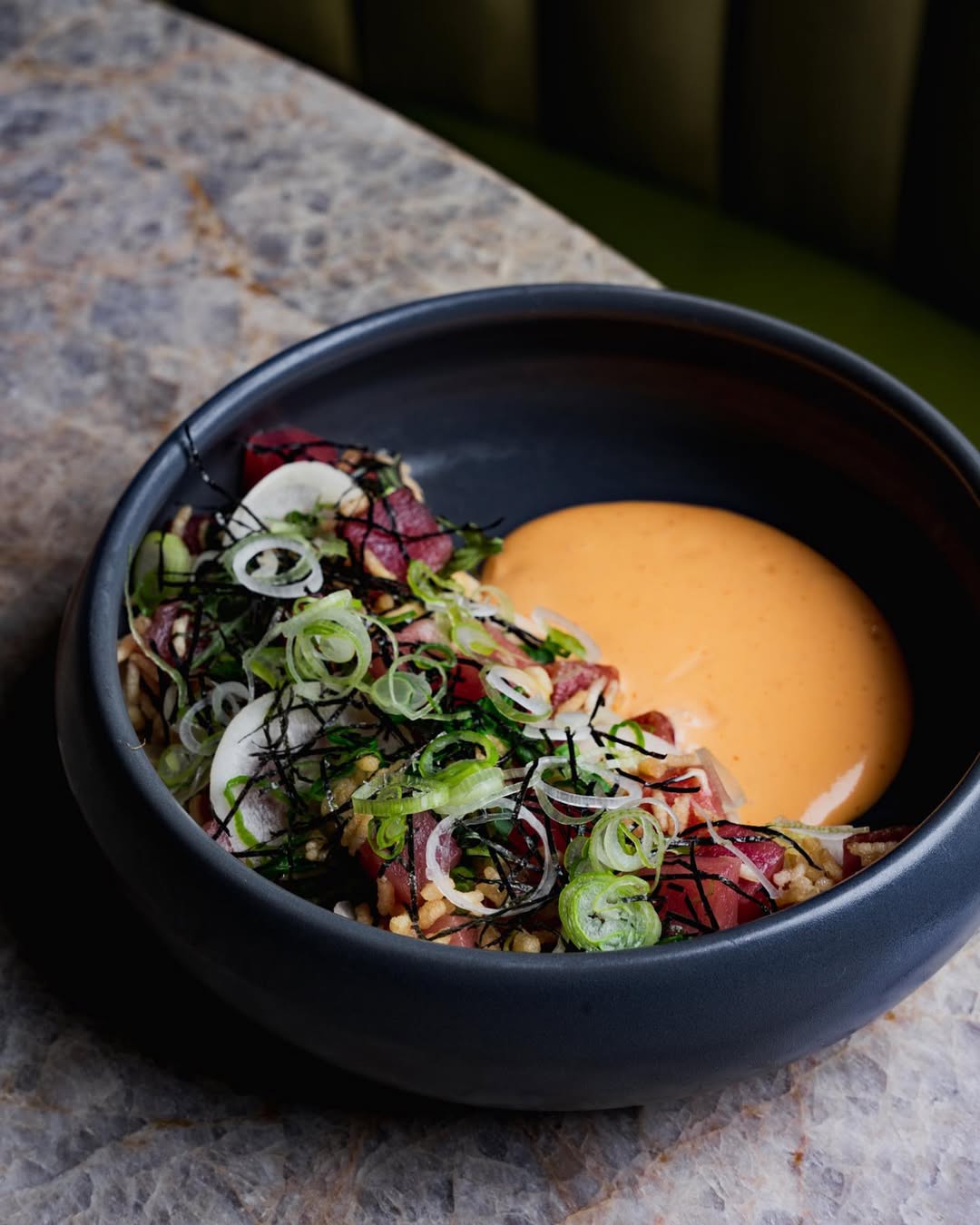
Who knew that a rice appetizer could steal the show at one of San Diego’s top restaurants? At first, my mind was fixated on the flashier entrees I had ordered, including the short rib kare kare and pork tomahawk tocino perfected by 2024 James Beard finalist Tara Monsod. Instead, the unassuming tuna crispy rice had me floored. It layers wakame and charred pepper ponzu with a side of spicy aioli. The presentation isn’t jaw-dropping, unlike most items on Animae’s menu, but the crunchy texture and rich tuna have me daydreaming about my next visit. –CN

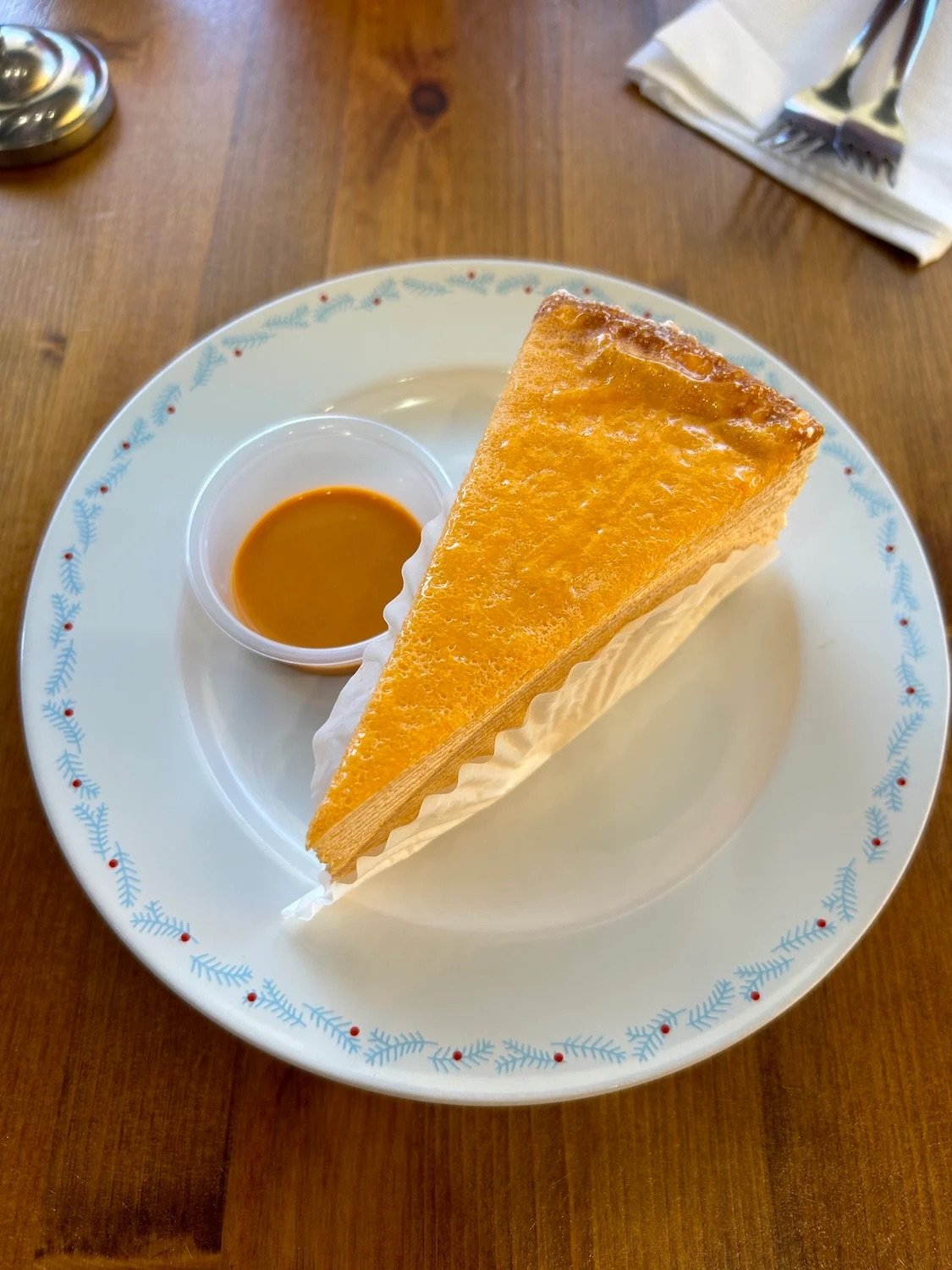
There’s a jiggly, ice cream–topped soufflé pancake at every table at this Convoy bakery for a reason. However, if you’re short on time (the pancakes call for a half-hour-or-so wait), stick your fork into a slice of the crepe cake. The Cake De Partie team lays down dozens or perhaps thousands of alternating layers of paper-thin crepes and whipped cream, then glazes it all in flavors like ube, mocha, and, my favorite, Thai tea. –AR

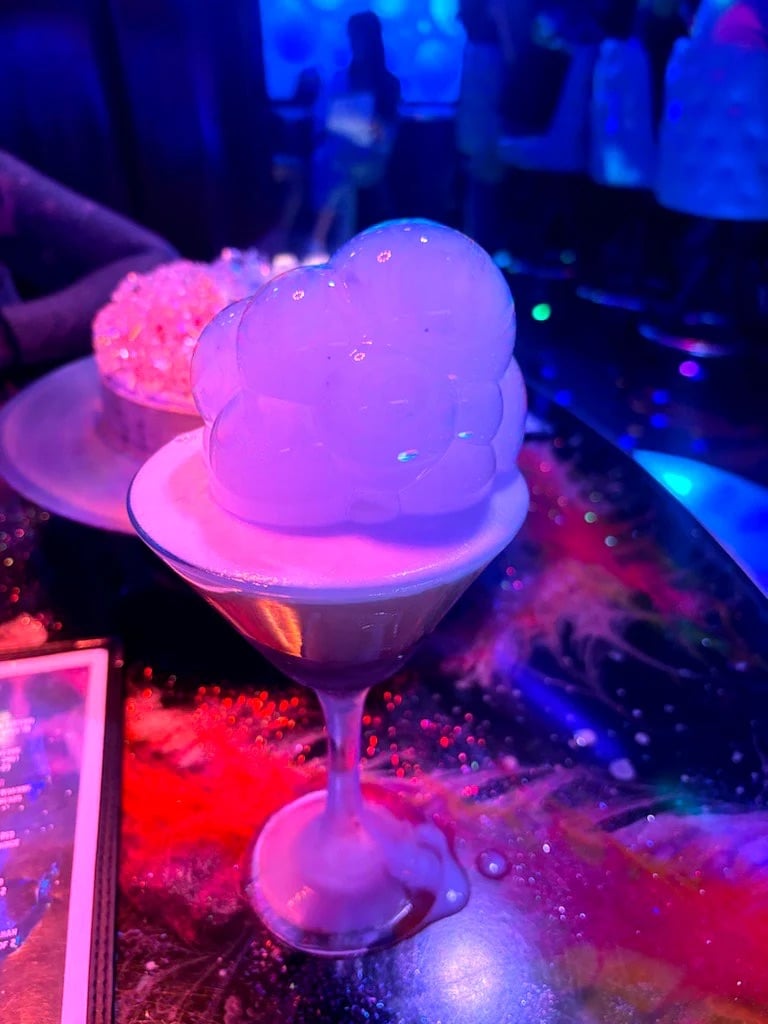
Step outside the typical speakeasy aesthetic and trade your well-worn leather for chrome and neon at The Space Pad from Kilowatt Brewing in Oceanside. The “Rillisporian” side of the cocktail menu, named for the bar’s resident alien race, offers creative riffs on tiki classics. The Spaceman’s Sour pops with notes of passionfruit and sangria. Don’t forget to pop the bubble tower that strides atop the drink, and breathe in its cosmic mist. You’re a real Rillisporian now! –SL

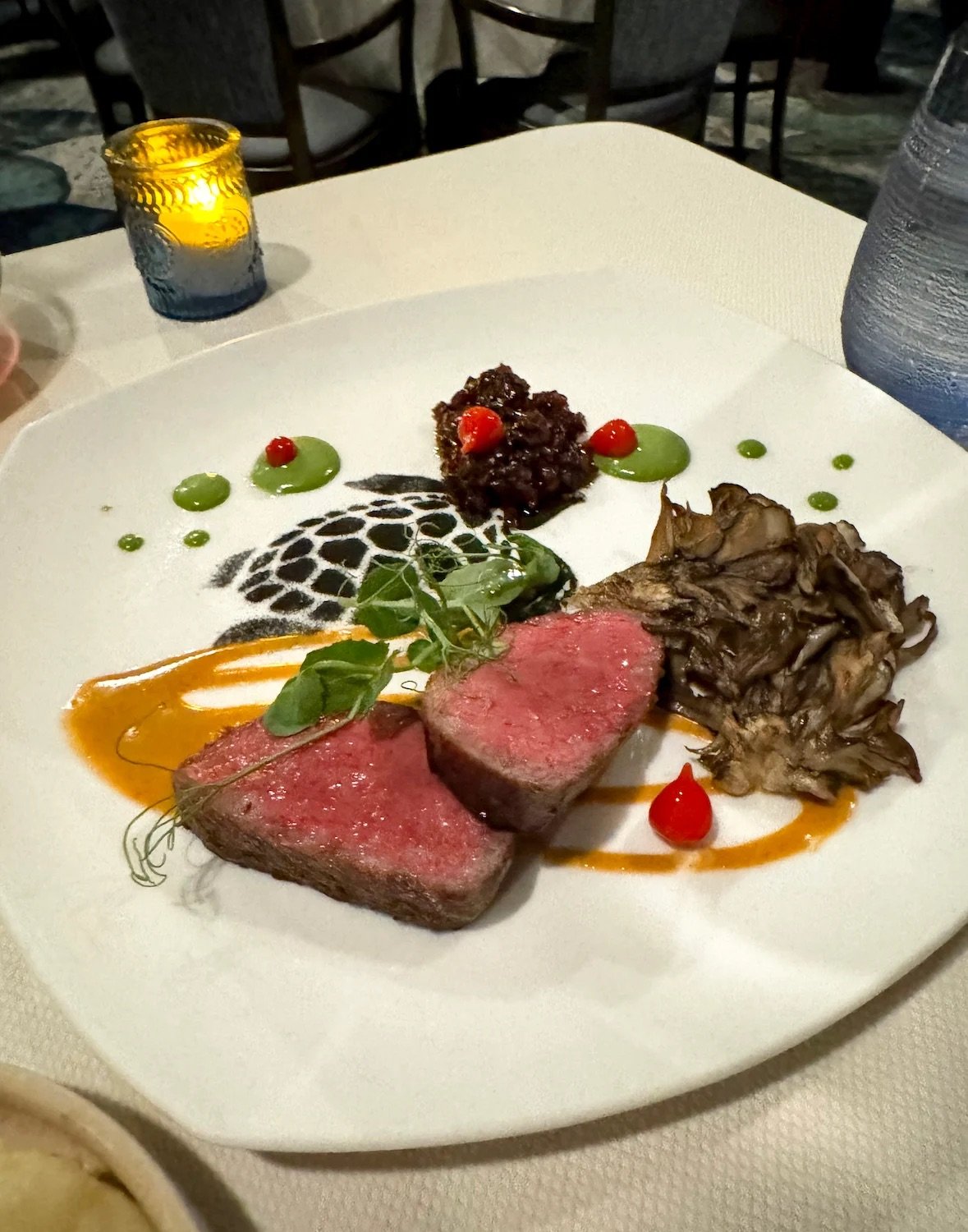
I fully believe that there’s not a bad dish at The Marine Room. But the Wagyu strip steak may be my fave. The chef’s special comes with Oaxacan ancho creme, onion ash, arugula, bacon jam, and sweet drop pepper. Get it rare for a buttery, melt-in-your-mouth experience with a hint of charred goodness on the outside. –NM

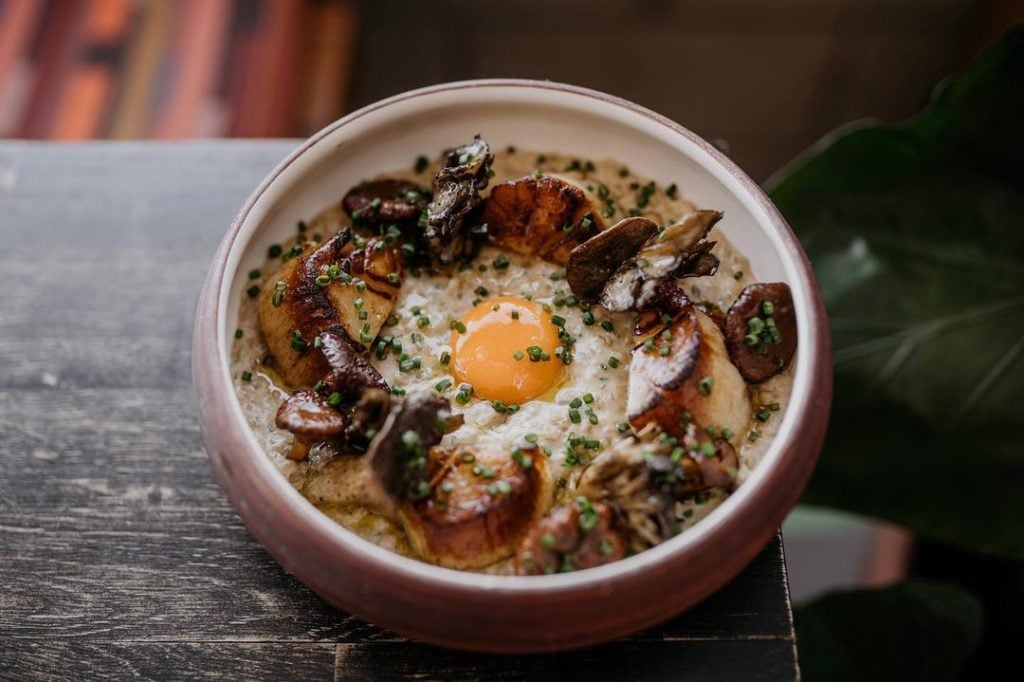
I’m a porridge person. Wheat, corn, rice, doesn’t matter. It’s like a hug in bowl form. Manna’s buckwheat rendition, studded with mixed mushrooms, egg yolk, and seared scallop, cover my Sunday morning oxytocin needs. A hint of miso adds depth and umami to the warm grain embrace. –SL

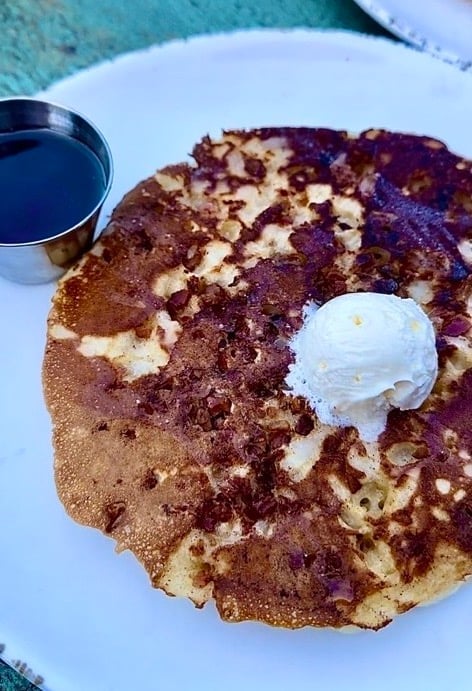
Pancake fans mount up. We ride for O’Side at dawn for one of the best ‘cakes this side of the moon. The earliest historical reference to pancakes dates back to Greece in the 5th century BC, but p-cakes probably began with our neolithic relatives, who ground plants, added water, and cooked the flattened batter on coals. If I could give those hairy cousins one pancake to show them how far we’ve developed as a species, this flapjack from this Oceanside gem might be the one. It also happens to be Jordan Howlett (@jordan_the_stallion8) approved. –MH

The team behind El Agave and Nómade will open a breezy new restaurant with tapas, housemade pasta, seafood, and plenty of wine this September
After running El Agave Restaurant & Tequileria in Old Town for 30 years and opening Nómade Tapas & Records in North Park in 2025, owner Juan Carlos Gomez wasn’t actively on the hunt for a new project. But sometimes, you have to grab the opportunities as they come, unexpected though they may be.
He was taking a stroll in Bankers Hill last year when he noticed Barrio Star was closing after 17 years. “[It] was a neighborhood staple for a long time,” he says. So he figured he’d take a look. “We were talking with ownership and threw out an offer, and then it was accepted. So we were like, ‘Okay, cool, guess we’re going to get a new concept going!” (Much respect to the YOLO business style.)
That new restaurant is nearing completion. Filo will open early in September. The restaurant’s name, pronounced fie-low, references phyllo, the Greek word for “leaf” and an unleavened pastry dough commonly used in Mediterranean (often Greek) cuisines. Gomez says the menu will range from all over the Mediterranean region.
“I’ve always been a fan of European cuisine, obviously, but I can’t land on just one,” he laughs. “I’m part Spanish, so we wanted to do something Mediterranean, have a little bit of Spanish, have a little bit of French, Italian, Greek… a lot of olive oil, a lot of sea salt, and very, very light seasoning.”

Although the menu feels European, Gomez says expect the vibe and ingredients to feel very Southern Californian. There will be tapas, of course, and other small plates, along with housemade pastas, salads, with lots of seafood (like a whole branzino) coming from local purveyors. The accompanying beverage program will feel equally breezy, “fresh, very light, citrusy, salty,” he says. “We’re going to have a pretty hefty wine list and full bar.”
Gomez’s goal for Filo is for it to feel like a laid-back, seaside eatery on the craggy Mediterranean coastline—light colors, white oak, lime wash, flowing between the indoor dining room and outdoor patio. Personally, a European escape sounds pretty awesome right about now.
Filo opens at 2706 Fifth Avenue in early September. Initial operating hours are 4 p.m. to 10 p.m. daily, with lunch and happy hour coming soon. (Subject to change.)

Listen Now: The Latest in San Diego’s Food and Drink Scene
Have breaking news, exciting scoops, or great stories about new San Diego restaurants or the city’s food scene? Send your pitches to [email protected].
Beth Demmon is an award-winning writer and podcaster whose work regularly appears in national outlets and San Diego Magazine. Her first book, The Beer Lover's Guide to Cider, is now available. Find out more on bethdemmon.com.
The city's fish taco hero is opening Concrete Cowboy across the street, plus a home-cooked Mexican sandwich spot
You have to be crazy or a genius to name a restaurant Fish Guts. You have to be even crazier to open a restaurant that holds maybe two dozen people at a time—if you don’t mind elbowing one other while scarfing down some of the best fish tacos in San Diego.
And yes, “best” is a relative term. But in Fish Guts’ case, it’s for real—and that’s saying something in a town literally world-famous for fish tacos.
Ever since Pablo Becker opened up his diminutive eatery in 2023 at the corner of Logan Avenue and Sampson Street in Barrio Logan, Fish Guts has been named one of the city’s best new restaurants in 2023, Critic’s Pick for the best fish tacos in San Diego in 2024, 2025 and 2026, as well as readers’ top pick in 2024. It’s like if Rubio’s married into the royal family.
Most of his ingredients come straight from the cold waters of the Pacific Ocean, which happens to be down the street. His de espada (blackened swordfish) taco is the stuff of legend. He’s kept Fish Guts operating at an elite level, which tends to happen when you work for five years in Chicago under chef Richard Sandoval (who, by chance, is also his cousin) and open an ahead-of-its-time high-end modern Mexican restaurant in East Village (El Vitral Restaurant & Tequileria, 2009-2013).
Now Becker is branching out again, opening two new concepts in Barrio Logan this fall.
The first will be upstairs from Fish Guts, which at one point was destined to become an intimate omakase counter. Santo Poco will be a lunch-only sandwich shop, offering takeout and delivery (no dine-in), and the sandwiches will be a little Mexican, a little French, a little Italian, a little from Chicago, a little from New York. Basically, a bunch of different styles all on really, really good bread.
“There’s probably going to be a Cuban-style sandwich in there with a touch of Mexican, some cold cut Italians, too, putting my touch on them,” he says. “That’s what I feel like is my style of cooking.”
Things will be traditional, but inventive. Like his fish & chips taco at Fish Guts: two classic dishes, one killer mash-up. There will also be a hat tip to the late, great Anthony Bourdain, a sandwich called the Antonio Bourdain.
The second will be across the street from Fish Guts in the former Lia’s Lumpia space. Concrete Cowboy will be a taco-driven joint on the same wavelength as Fish Guts (keep it simple, keep it special), but featuring land animals rather than sea brethren. Think tacos made with duck confit, ribeye, pork belly, skirt steak.
The inspiration behind Concrete Cowboy comes from Becker’s father, a lifelong Western obsessive, despite growing up in Mexico City’s urban metropolis. “He always liked that cowboy life, that vibe,” he says. “I always say ‘Dad, you just grew up in the wrong city.”
He’s aiming to open Santo Poco in October and Concrete Cowboy in November. Neither require massive renovations, and while the former Lia’s Lumpia space will keep the cabin-esque aesthetic, he’s creating more of an adobe-style exterior and an interior lined with Western-themed wallpaper and taxidermied animals. He’ll also tweak the bar layout to move from a fast-casual feel to full service.
Local designer Dane Danner is designing both spaces and visual direction for menu layouts, logos, and packaging, going for low-key, but high on vibes. Once Concrete Cowboy opens, Fish Guts will temporarily close to remodel the space to switch its white palette for a warmer feel, plus introducing a refreshed menu featuring some new tacos and other items.
Could another Fish Guts be on the way somewhere else in San Diego? Not likely, says Becker. “Fish Guts is cool, “ he says. “I feel once you start branching out, it’s more forced, not as organic.” So for now, count on Becker staying in the neighborhood.
Santo Poco opens for lunch daily October 2026, 2222 Logan Avenue (above Fish Guts). Concrete Cowboy opens Tuesday through Sunday for lunch and dinner November 2026, 2219 Logan Avenue.
Beth Demmon is an award-winning writer and podcaster whose work regularly appears in national outlets and San Diego Magazine. Her first book, The Beer Lover's Guide to Cider, is now available. Find out more on bethdemmon.com.
The University Heights eatery will close September 7 for a multi-month renovation and rebrand
Ten years ago, restaurant design centered around sleek minimalism. Fonts lacked serifs, clean lines dominated, and any manufacturer that made globe-shaped chandeliers must have made an absolute killing.
Things have changed since then, and Jeff Fink says it’s time for Madison on Park to glow up. On September 7, Madison will temporarily close its doors for a top-to-bottom renovation of the space and concept. Fink hopes to reopen this fall ahead of the busy holiday season, with a new look he calls moody mid-century maximalism.
“We have to take into consideration what’s going on culturally,” he says. When Madison first opened, TikTok wasn’t a thing in the U.S. and craft cocktails felt relatively cutting-edge. Today, he sees a resurgence in the vintage look, handmade goods, and low-to-no ABV drinks dominating menus everywhere.

Fink and his partner Matt Sieve have already dabbled with that sort of motif at Sonny’s Pizza, their Brooklyn-inspired joint around the corner. Fully half of the cocktail menu is made up of spritzes, mocktails, and Negronis. Madison 2.0 will take it further.
The new concept doesn’t have a name yet—Fink says they have to feel out the vibes as they make progress with the design. “The name comes when you see it appear,” he says. But he has a few design elements in mind: things like more artwork and more uplighting. “Not cluttered and overstuffed… I want to keep it intimate, sexy, and immersive.”
Madison rightly earned its rep as one of the best-dressed eateries in San Diego, nabbing an Orchid Award for interior design its first year. The returning designers Anna and David Sindelar originally transformed the space from weird padded walls and fake greenery at Lei Lounge into a mid-century modern wonderland, complete with a signature arched ceiling and geometric patterns aplenty. Michelin-recognized chef Mario Cassineri (Ciccia Osteria, Bice Ristorante) built a menu heavy on Mediterranean flavors mixed with California classics.
The new menu shouldn’t feel completely jarring, but will take cues from Fink’s recent travels in Spain with his family. Expect shareable plates with lighter ingredients. “Americans eat way too much, and our portions are way too big,” he says. “I like the idea of smaller plates, healthier plates, and being creative… I’d rather see 15 items on the menu that are all less than $20 so that I can try different ones.” Bar manager Danny Kuehner will continue developing craft cocktails and mocktails for the new venture, as well as curating a selection of wine from Europe and locally.

This isn’t the only project on their plate. Besides running Sonny’s in University Heights and Madi in Normal Heights, later this fall, Fink and Sieve will also open Josie’s, a modern all-day, Midwestern-style diner inspired by Sieve’s Minnesota roots. Like all their restaurants, it’ll hold a special part of their families’ legacies—something Fink hopes people feel as soon as they enter.
“You walk into Sonny’s, you’re like ‘Oh, Jeff’s at home,’” Fink laughs. “[Josies’] will be ‘Matt’s at home.’” The next version of Madison? We’ll have to wait and see.
Madison on Park will temporarily close on September 7 until October (barring any unexpected delays). Keep up with the newest updates on Madison’s Instagram.
Listen Now: The Latest in San Diego’s Food and Drink Scene
Have breaking news, exciting scoops, or great stories about new San Diego restaurants or the city’s food scene? Send your pitches to [email protected].
Beth Demmon is an award-winning writer and podcaster whose work regularly appears in national outlets and San Diego Magazine. Her first book, The Beer Lover's Guide to Cider, is now available. Find out more on bethdemmon.com.
The 29-year-old culinary director at Herb & Sea is making seafood sexy (and approachable) again
Implementing a farm-to-table model hardly deserves acknowledgement these days. It’s not a stretch. It’s not innovative. “It’s the bare f**king minimum,” says Herb & Sea‘s executive chef Aidan Owens.
When I arrive at the Encinitas restaurant, I’m ready to talk sustainability, farm-to-table stuff, with Owens. “Did you see the chin on that?” he says of the extra big jiggly chin on the sheephead that just arrived with the day’s fresh catch. I did. It was Jay Leno adjacent.
I learn quickly that he somehow oozes both charm and stone-cold honesty. Maybe he could construct a new dish with chin goo, like he did when he had a bunch of tuna scraps and voila’d it into a smooth and crowd-pleasing ‘nduja. “I want to know what’s in there,” he says.

The instinct to look closer, to dig into what others might discard, says a lot about the chef’s approach. I guide him back to our topic, but he has something else on his mind. “We’re overcomplicating food—what happened to just cooking good food and having fun with it?”
Owens grew up on a farm in Byron Bay, Australia, where sustainability wasn’t a concept you chat about so much as a way of life. Think dirt roads, backyard chickens, pulling vegetables straight from the ground, and a mother who believed that if you couldn’t pronounce the ingredients on a package, you shouldn’t eat what was inside.
Food wasn’t precious or performative. Making it was what you did because you were hungry and that’s still what inspires Owens today. “I like to cook good food because I like to eat good food,” he says.
His approach to sustainability at Herb & Sea began so naturally that it felt just like instinct. “I was just like, ‘Let’s order food from the people who live and work here,’” he says.

And why wouldn’t he when lives in San Diego? Cities all over the world vie for our goods. Our tuna is sent overseas. Our spiny lobsters hit dinner plates in China and Japan. Not to mention California’s producing a third of the country’s vegetables and three-quarters of its fruits and nuts.
“Why would we outsource when it’s all here?” Owens asks.
Sustainability, in this context, is about cooking what exists in abundance, nearby, right now. “I love the local fish here. It’s f**king delicious and San Diego citrus, I mean, it is so f**ing good,” he says.
Instead of importing ingredients, Owens also looks for nearby alternatives. “You can find really cool things in the local waters,” he says, pointing out that stingray cheeks taste similar to scallops.

Whatever he finds in that sheephead chin might just be the next substitute for marrow. But to make this work, it means getting diners amped up about the slightly unfamiliar.
Tasting menus, where diners are completely in his hands, become an opportunity to gently push boundaries. “I’ll serve mackerel, because people think they hate it,” Owens says, noting that the abundant local fish can have some fishiness. “But when it’s fresh, it’s arguably one of the best fish in the ocean.”
He also tweaks the language on the menu so people might feel more compelled to give dishes a try without preconceived notions. He might use “lengua” instead of “tongue.” “Whelk” instead of “snail.” When he puts “stingray throat” on the menu, he disarmingly calls it “skate.”
To reduce waste, scraps aren’t always discarded but rather turned into something new. Sometimes they’re smoked, cured or fermented. Apples going bad turn into apple ponzu. Lemons turn to marmalade, which stretches their usefulness far beyond peak season. “And it’s super tasty on our pizza,” he says.
What makes the food even richer, is the relationships he’s built with farmers. Though it didn’t always feel natural, Owens sought personal connection first. He recalls approaching a fisherman at the Tuna Harbor Dockside Market. “I was awkward,” he says. “I went up to him and said, ‘I like your fish.’”
Owen’s is now so close to his suppliers—like fishermen Ryan Sebo and Joe Daly—that he gets texted pictures of fresh catches right as they flop on the boat. The messages always ask if he wants first dibs. “I say yes to a lot of fish,” Owens says, noting that Herb & Sea can go through 2,000 pounds of seafood a week.

The next evolution of sustainability, in his view, will be chefs working directly with producers such as his alliance with Sebo, cutting out middlemen and purveyors where possible. “It will put more money in the pockets of the people doing the work,” he says.
It will mean that chefs can’t just know their local farmers and producers, but they’ll choose to work with the ones who have the best practices. Dining and sustainability will become much less about the final plate. “It will be more about the impact that plate has on the Earth,” he says.
Ultimately, he believes sustainability doesn’t need to be loud. It doesn’t need hashtags. It just needs to be honest.
“We aren’t saving lives. We’re feeding people good food,” he says.
And yet, in feeding people well—simply, thoughtfully, responsibly—something meaningful happens. Guests leave satisfied. Ingredients are respected. Local ecosystems are supported and food returns to what it has always been at its core: nourishment, pleasure, and a quiet reflection of the place it comes from.
No buzzwords required.
Sinner Buns is building a following for its slow-made, seriously gooey weekend treats
When I was pregnant, my food craving was singular and intense. If I didn’t eat at least one thing doused in cinnamon every day (ideally, more than one), I was—to put it gently—a complete monster.
Since then, my obsession has tempered somewhat. But cinnamon buns still perch high on my top treats list, so I’m always on the lookout for the next great place to indulge. IMO, The Huddle in Mission Hills’ mondo cinnamon roll remains top-tier, but after eyeing the ooey, gooey goodies from Sinner Buns, we might have a contender.
Originally from Ukraine, Daria Nadar had already done everything one can do at a bakery—business operations, wholesale contracts, actually baking, you name it—so during the pandemic, she started dabbling with perfecting her cinnamon rolls. After she got a couple fans over social media, she threw her first pop-up to see how they’d be received. She sold out.
After a few false starts with a couple storefronts and business deals, Nadar officially launched Sinner Buns in October 2025 with her partner Filipe Pazi. After making it through an unexpectedly hectic season stuffed with holiday orders, the team closed temporarily to get everything in line and reopened this April. Business has remained in full swing ever since.
There are only so many ingredients in a cinnamon roll, but “the process is what makes it special,” she says, adding they use fresh yeast rather than powder and a 48-hour process for each batch of brioche dough made to order. (Thus the need for pre-orders.) Customers can preorder until Thursday each week for pickup Friday, Saturday, or Sunday from Sinner Buns’ ghost kitchen at 780 Hollister Street, just east of Imperial Beach.
You can also catch her at various pop-ups around San Diego. Eventually, Nadar opens to offer nationwide shipping (once she figures out the logistics and quality control) and one day, her own storefront.
But it’ll be on her terms, not the whims of social media. “We already learned how to not only rely on virality of the product, because you go viral and then it fades,” she says. “It’s a slow burner, and I know eventually, it’s going to grow much more.”

Listen Now: The Latest in San Diego’s Food and Drink Scene
Have breaking news, exciting scoops, or great stories about new San Diego restaurants or the city’s food scene? Send your pitches to [email protected].
Beth Demmon is an award-winning writer and podcaster whose work regularly appears in national outlets and San Diego Magazine. Her first book, The Beer Lover's Guide to Cider, is now available. Find out more on bethdemmon.com.
From her Rancho Peñasquitos kitchen, Yanira Majano is sharing family recipes through San Diego’s growing home-restaurant movement
When San Diego launched Micro Enterprise Home Kitchen Operations (MEHKO), it changed everything. Riverside County first established the experimental program in 2019, with San Diego introducing its own countywide pilot program in 2022 and granting it permanent status in 2024. The new category allowed people to launch at-home retail food operations—basically, home restaurants—with special requirements and restrictions to ensure food safety and smooth operations. Over two dozen counties across California have since adopted their own versions with over 1,200 permits issued, around 100 of them in San Diego alone.
Some have a dizzyingly long waitlist (Warung RieRie), others are still getting their name out there (The Hidden Gazebo Eatery), and still others use MEHKO for pickups rather than fully opening their home as an onsite dining facility. Love Pupusas falls into that category.
Yanira Majano came with her family from El Salvador to the United States when she was 11 years old, bringing a love of cooking and desire to share the country’s cuisine along with her. “There’s a lot of similarity [between Salvadoran food and] Central, South America, even Baja Mexico,” she says. Salvadoran cooking tends to be less spicy than some Mexican cuisines, with an emphasis on ingredients like corn, staples like yucca root (cassava), meats like crispy pork (chicharrón), and sides like curtido, a tangy cabbage slaw that’s typically either naturally fermented or vinegar-based.
And of course, the signature dish of El Salvador—pupusas.
In San Diego, Salvadoran food lacks the widespread availability of other Latin American cuisines like Mexican or Peruvian food, but Majano says she’s seen pupusas gain popularity over the past few years. But she likes to think her recipes, which have been passed down by her mother and kitchen partner Martha, contain a certain special something.
Some pupuserías use rice flour to create the handheld stuffed tortillas, but she prefers the more traditional gluten-free corn flour. Still, it’s what’s inside that really counts. “That’s where we put our own touch,” she explains. Most of Majano’s pupusas come with cheese and different fillings like carnitas, black beans, mushrooms, or zucchini, but she also offers vegan options. Every one comes with a side of curtido and salsa, each made fresh daily.
Showing people the magic of home-cooked food might not have been possible without the MEHKO program or The Cook Alliance, a MEHKO support and advocacy coalition. Opening a brick-and-mortar restaurant requires a huge amount of start-up capital—at least six figures, generally. Not exactly pocket change. “But when the MEHKO program started in 2022, I said, ‘Oh my God, this is for me,’” says Majano.
Now with four years under her belt, she says she’d love to bring Love Pupusas to more food festivals, host more pop-ups, and eventually open a food truck to keep serving the humble dish of her homeland, taking pride in every bite. “[I put] a lot of love in everything I do. You see it when you taste the food,” she promises.
Pre-order Love Pupusas for next day pickup in Rancho Peñasquitos between noon and 5 p.m.
Listen Now: The Latest in San Diego’s Food and Drink Scene
Have breaking news, exciting scoops, or great stories about new San Diego restaurants or the city’s food scene? Send your pitches to [email protected].
Beth Demmon is an award-winning writer and podcaster whose work regularly appears in national outlets and San Diego Magazine. Her first book, The Beer Lover's Guide to Cider, is now available. Find out more on bethdemmon.com.
Laika Nur, MD, takes her love of volleyball from the court to the clinic as team physician for the San Diego Mojo
Growing up, Laika Nur, MD, Scripps Clinic sports medicine specialist, loved watching beach volleyball when the Association of Volleyball Professionals tour came to her hometown of Chicago. A talented volleyball player herself, she remembers sitting in the stands all day, and once, even got a couple autographs. Years later, Dr. Nur was attending a professional event focused on women’s sports, and the discussion turned to a new professional women’s volleyball league. The general manager and coaching staff for San Diego’s team, the Mojo, happened to be in attendance, and Dr. Nur took the opportunity to ask them if they needed a team doctor. Flash forward to the Mojo’s inaugural 2024 season, when Dr. Nur officially became the team physician. Click here to read more about Dr. Nur and how she incorporates lessons she learned on the court into her practice.
For more nutrition, wellness, and healthy living tips, sign up for the San Diego Health newsletter here.