
Food & Drink MAY 6, 2022

Chef Rob Ruiz Comes Home

The notable sushi chef had to grapple with grief and shovel fish guts to get here
Chef Rob Ruiz Comes Home
Ligaya Malones
The Kitchen - sandwich

The Kitchen – sandwich

Ligaya Malones

Chef Rob Ruiz is back. But the notable sushi chef and sustainable seafood advocate needed to grapple with grief and shovel literal fish guts to get here. We’re in between lunch and dinner service at The Kitchen, Ruiz’s new passion project in Vista.

“I learned all these things,” he begins: classical French cooking, Hawaiian Regional Cuisine (including how to slice sashimi from Alan Wong’s team), sushi, fine dining.

“After what all of us have gone through the last couple years, what’s my answer to ‘What could I do for people?’ And I’m like, I’m gonna make ’em really awesome food and I’m gonna do it for seven bucks.”

Welcome to The Kitchen

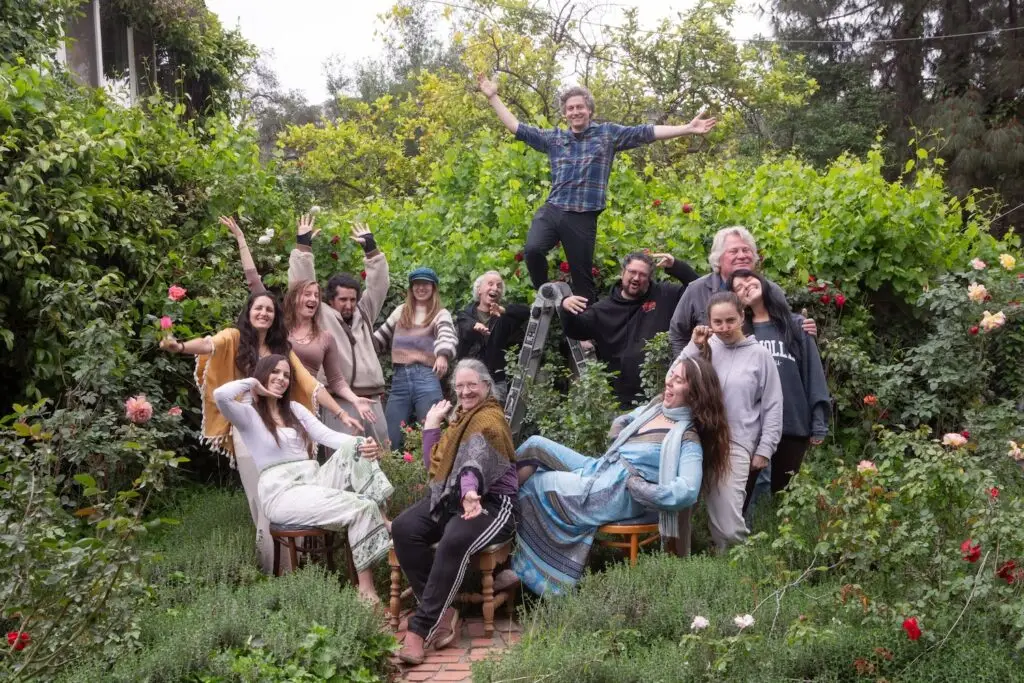
The Kitchen started as a commissary for Crownview Co-Occurring Institute’s food program, which Ruiz oversees. Crownview, located in Oceanside, shepherds recovery programs for people facing post-traumatic stress disorder, substance abuse, and other mental health conditions. Ruiz and team, including some Crownview graduates, make and deliver meals for its programs. On the day I visited, dinner was chipotle shrimp and penne pasta.

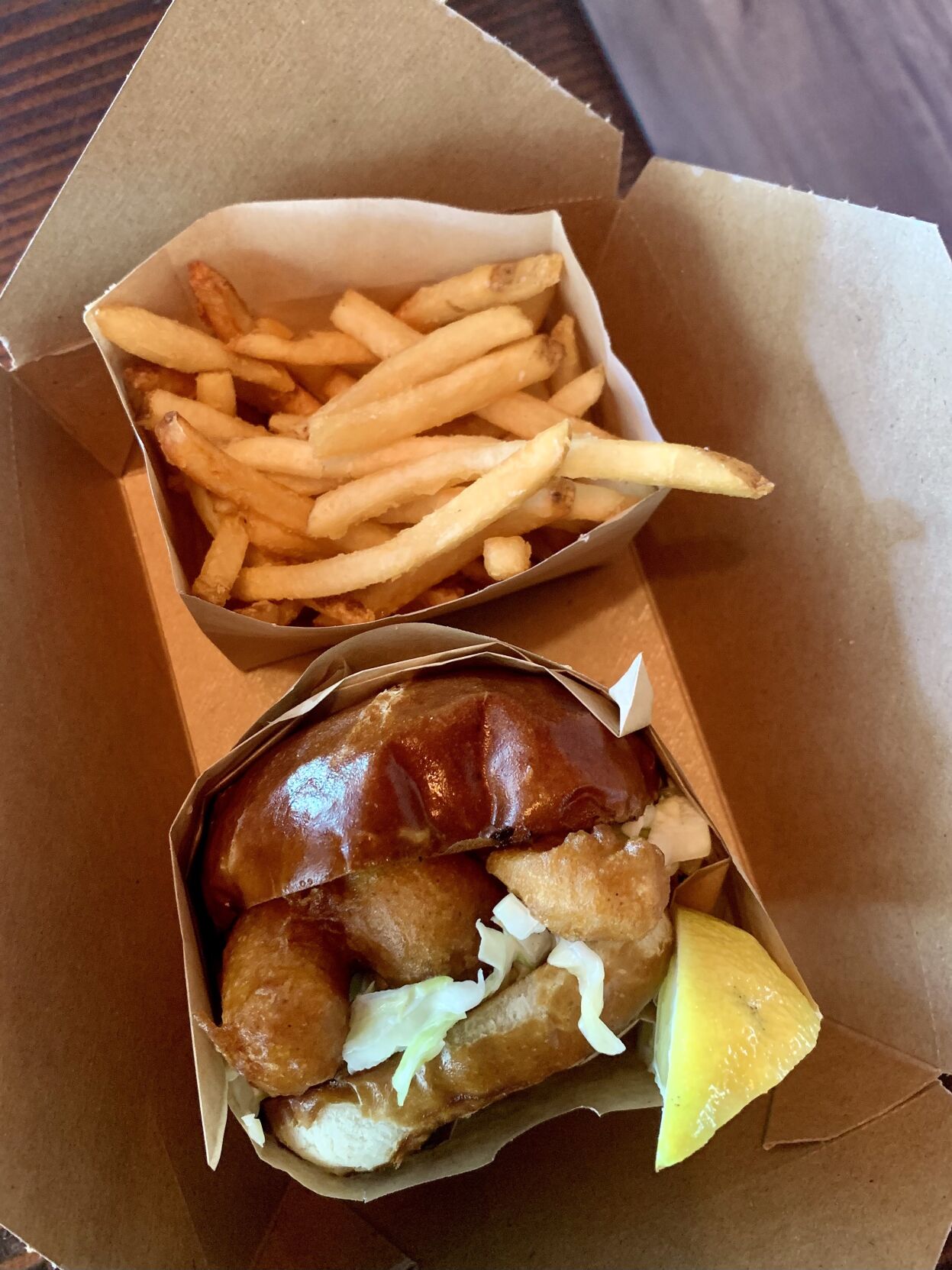
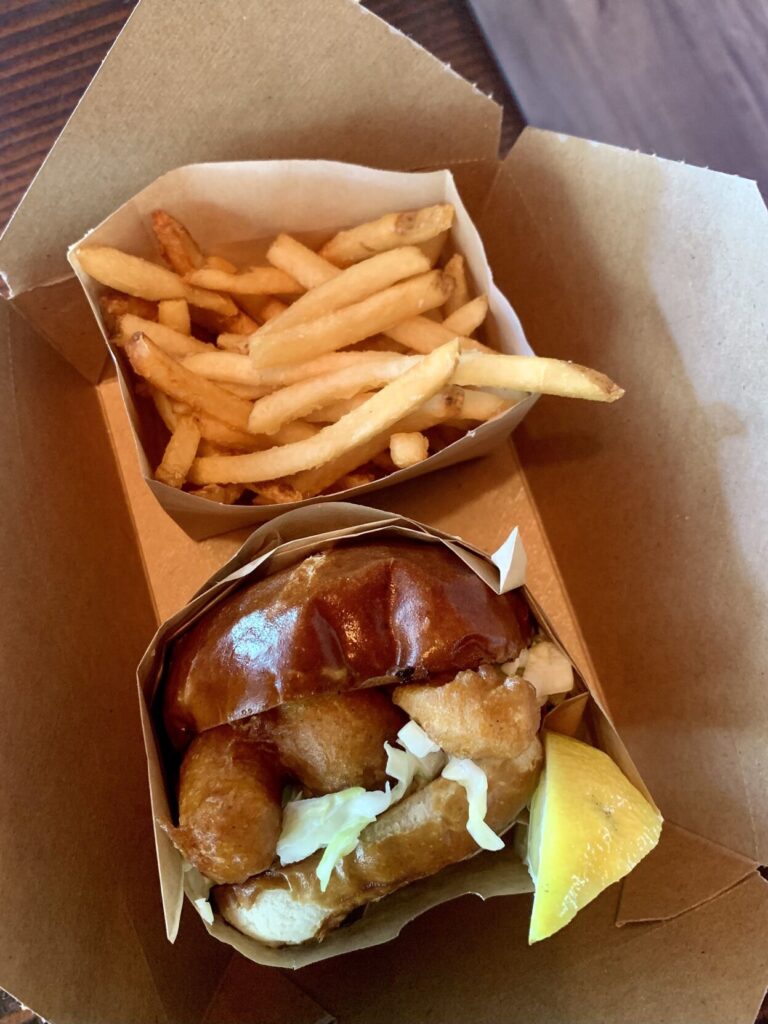
As of March, it’s also a fast-casual sit-down restaurant. From the counter, you order simple yet delicious food—delicately battered fish and chips, chicken sandwiches on housemade biscuits, salads, and burgers. All ingredients are either grown at The Kitchen’s farm in Bonsall or otherwise locally produced, which helps keep overhead low. Salads are named for the seeds that spawned their leafy greens, and virtually all dressings, condiments, and baked goods are made from scratch, which also keeps costs down. 

A Tsunami of Humility

Just a few years ago, before The Kitchen, adversity slammed Ruiz from every angle. His signature sushi restaurant shuttered. Death came for someone close to him. Then the pandemic came for us all. Ruiz, like many in the hospitality business, was furloughed. 

Fishmonger Tommy Gomes and team threw him a line processing fish to eke out a paycheck.

 “I was like, okay, put me wherever you want,” Ruiz says. “So they put me on the boat, right. And you’re on the boat, and they have a crane that goes down and picks up like 500 or 600 pounds of tuna at a time. There’s seawater washing through the deck of the boat—it’s in the harbor, but it’s still gonna move. And then you have a cutting board that you’re just hoping to land the fish on because it’s moving. The fish is moving. The crane is moving. You have 10 guys all around you, all moving.

“And my job was to pick up a 100-plus-pound fish by yourself, carry it over, put it down, then get the head off of it, hand the head off, break the fillets off, go all the way and break it down to nothing. And then go run and get another one. You just do that nonstop. And you can’t wash your knife; you can’t wash your cutting board.

 “This is just a few hours. These guys who do that for a living, these guys are beasts. These guys are a different breed. These guys are amazing.”

The point is, the once-rigid Ruiz is more malleable now, more balanced, yet the pursuit for bigger and better is still on. During the decade he spent cooking and surfing on Hawai‘i Island (the Big Island), some coworkers from Oaxaca gave him the kitchen name “El Diablo Sin Cola,” or The Devil Without a Tail.

“I really do things 110 percent,” he explains. He attributes his drive to his grandfather, a former Navy captain, who “always had a high bar of what was expected.” Give him a chapter to read and Ruiz will rip through the entire book, and then some. 

Fine dining is still on his mind, maybe, eventually. So are whole paycheck-worthy tasting menus. Right now though, Ruiz is giving The Kitchen 110 percent.

 

Ligaya Malones grew up in Kaua’i, Hawai’i and is a San Diego-based writer covering the intersection of food, travel, and culture. Her work has appeared in publications including Food52, Condé Nast Traveler, Lonely Planet, and Salt & Wind Travel.

Subscribe to our newsletters

Select Options

By subscribing you confirm that you agree with our Terms and Conditions and Privacy Policy.

Archive SEPTEMBER 22, 2017

The Vegan Fast Food Revolution

From Evolution to Plant Power, two local vegans look to revolutionize fast food

The Vegan Fast Food Revolution
Dizzle Management

Drive-thru restaurants are as depressing as they are useful. Once the celebratory hangout of car culture (America’s drive-thru boom was intimately tied to the development of highways), now they’re the unlucky embodiment of all that’s wrong with commodity food and our waistlines. Whenever we hear a stat like 70.7% of Americans are overweight (and 37.9% of us obese), we think of a burger clown, tailpipe exhaust, chicken-nuggeted kids, shakes, fries, ketchup, ranch, and an obligatory “salad in a cup” that no person of sane mind ever orders.

No city charter states “we need more fast food.” City planners try their hardest to zone them out. There are many reasons, including environmental impact of cars and trash. But the main reason for anti-fast foodism is tied to their deep-fried, sugar-filled, salt-spackled food and its inflationary effect on our human bodies. They’re a bigger villain in modern American than gluten or man-buns.

But what if fast food were different? What if it was ecologically conscious, served more plant-based foods, and generally tilted society in a progressive direction instead of a diabetic direction? Slow-food purists will tell you that food shouldn’t be rushed. That’s great for purists. But life is no casual stroll. Can’t we have the best of both worlds? Healthier food produced with somewhere near the expediency of McDonald’s? Why throw the baby (fast food) out with the bathwater (fattening, cheap, bad food)?

That’s the idea behind San Diego’s Plant Power, and they’re not alone. They serve plant-based fast food. All of their materials (utensils, etc.) are made from recycled material or plant material. The owners even dream of having a drive-thru that looks like a domed garden, with a canopy of plants and greenery that help offset the greenhouse emissions from cars.

The need for fast food and drive-thrus is still real. More than 160,000 fast food joints feed over 50 million Americans every day, with sales of over $110 billion. That’s because it doesn’t matter how educated we become about commodity food problems (hormones, antibiotics, CAFOs, etc.), we’re still busy. We still have demanding jobs, kids, spouses, friends, social media notifications, and lives. Minutes have never been more gold.

Now it’s happening. Healthy fast food is the future. The movement actually started in San Diego with Evolution Fast Food in Hillcrest—the first vegan drive-thru restaurant in the world. And now it’s in full swing across the country with concepts like Amy’s Drive-Thru, Salad and Go, Grown Miami, Eatsa, Dig Inn, The Kitchen, and Freshii.

Evolution’s owner Mitch Wallis is one of the partners behind Plant Power along with Zach Vouga, an ethical vegan who worked at Evolution. They wanted to streamline Evolution’s branding, experience, and make the menu more approachable. They didn’t want meat eaters to feel like outsiders or somehow shamed in their house of leaf cuisine. The result was Plant Power, which opened its first location in Ocean Beach in 2016. It has the feel of an In N Out, but it’s all plant-based food. Now they’ve taken over a failed Burger King location in Encinitas, providing the community with vegan “fast food.”

Vouga is quick to point out that Plant Power isn’t necessarily “healthy.” It’s simply plant-based. But, as multiple studies have shown, the health of Americans could use a much bigger supply of plant-based foods for their well-being. I talked to Vouga about Plant Power’s new drive-thru, and the future of the company.

Why vegan food?

I’m a longtime vegan. I was in college in Chicago, and finishing up there when I made the switch. I got a job at Evolution Fast Food where I met my business partner, Mitch, the founder of Evolution. Mitch and I started planning for the future. We wanted something more accessible, friendly and inclusive, not just a vegan restaurant. We didn’t want it to feel like a vegan restaurant when they walked in. We wanted something that could be replicated, scalable, clean and easy.

Plant Power doesn’t seem overtly vegan. Why?

We wanted to rid ourselves of that stigma. Some people would come into a vegan restaurant and feel almost like they were in enemy territory. We realized that was a problem. A majority of our customers are not vegan. Maybe they’re just there for Meatless Monday, or they’re a flexitarian, or just exploring new things. There are so many heavily-charged emotions with veganism. I never wanted to be a “meat is murder!”, in-your-face vegan. We wanted to change the conversation about vegan food. It’s just another type of cuisine. It’s not cultish. And that’s the great thing about Plant Power. A few of our customers don’t even realize we’re vegan until the second or third time they eat there.

What ingredients are most integral to vegan cuisine?

Anytime you’re trying to make a vegan meat, it’s primarily a mix of vital wheat gluten or soy protein. Those are two very versatile ingredients. They can absorb any flavor and become a chameleon-type ingredient.

Do you use tons of nuts? Cashew cheese and things?

No. Most of our stuff is free of nuts, because we know people have allergies. Many of our burgers can be made with a gluten-free bun, too. I’ve always hated gluten-free bread. So I’m the best person to try it. After trying so many types, we finally found a bakery out of L.A. called Rising Hearts. Since I don’t like gluten-free bread, I knew it was a winner when I actually liked it.

Is drive-thru the business model going forward?

Absolutely. As Americans, with how busy we are, we desperately need healthier, more eco-friendly options on the go.

What’s eco-friendly about Plant Power?

We work with Hubbell and Hubbell Architects. They’re known for being one of the best environmentally friendly firms. Our tables are made of bamboo. We use recycled aluminum. Our compostables—plastic straws or forks or whatever—are made from renewable, plant-based sources. Our forks are made from potato starch. Our containers are made from sugar cane. We don’t even have recycling because most of our stuff isn’t recyclable.

That’s more expensive, right?

It does cost a lot more. I’m hoping as we expand, the price will come down. But if we were going to do this, I needed to do it right. We needed to bite the bullet. To top it all off, there are no subsidies on these vegan products. If I wanted to do a beef and dairy burger, I’d be able to buy a lot cheaper, subsidized food. But we’re getting by. It’s all about volume and demand, and I’m hopeful.

All right. I’m an omnivore. What am I ordering?

The buffalo chicken sandwich. It has that wow factor. It’s “chicken”—wheat protein, soy protein, quinoa—breaded in house batter, dipped in buffalo sauce, with a whole wheat bun and homemade ranch dressing. It’s amazing how easy it is to omit the eggs and milk in something like ranch. Sometimes people think that veganizing food is a huge mountain to climb, but the answer is right there in front of you.

Why do vegan restaurants always try to “imitate” meat?

One, we’re a bridge restaurant. We have tons of super healthy offerings, but we’re not at our core a healthy restaurant. We want to create an experience that’s accessible and redefines vegan food. Plus, nostalgia plays a part. I didn’t become a vegan because I hated the taste of meat. I still love the meat experience and I funnel all of that energy into what we create at Plant Power.

Where to next?

We’re not wanting to do three, four, or five restaurants. We’re looking at hundreds. All over the nation, the globe, and pursuing avenues to do that over the next ten to 15 years.

Plant Power has two locations: in Ocean Beach (2204 Sunset Cliffs Blvd.) and Encinitas (411 Santa Fe Dr.). plantpowerfastfood.com

The Vegan Fast Food Revolution

Dizzle Management

Food & Drink FEBRUARY 24, 2016

Info Tapas

News from San Diego's restaurant and bar scene.

Info Tapas
The Howlin’ Wolf cocktail, part of Grant Grill’s new menu dedicated to music legends.

Wade Hageman can cook. The one-time white tablecloth chef has become an Encinitas icon since opening his pizza joint, Blue Ribbon Artisan Pizzeria. After that, he did a more full dining concept a bit east with The Craftsman. His foray into Hillcrest didn’t work so well (a story told by numerous, numerous restaurateurs who don’t own Baja Betty/Urban Mo’s/Gossip Grill). But now he’s announced he’s next concept—Open House, a riff on Asian flavors with his take on yakitori (Japanese barbecue), ramen, and poke. He’s secured the former spot of El Callejon, which passed into the restaurant afterlife in January after 22 years in business. It’s scheduled to open by the end of the summer…

Everyone’s favorite pork joint, Carnitas Snack Shack, is finally looking ready to open at the Embarcadero this spring. This space (1004 N. Harbor Dr.) will have cocktails from San Diego’s RMD Group (Fluxx, Sidebar, Rusted Root) and tons of outdoor waterside seating….

Hey, Del Mar. New chef in town for you guys this spring. Steven Lona is relocating from the L.A. area, the former exec chef of Bistro 45 (Pasadena) and worked under James Boyce and Craig Strong at Montage in Laguna Beach. He’s part of the team opening Tasting Room Del Mar (next to the Starbucks at 15th Street and Camino Del Mar) with a talented wine connoisseur in Rusti Gilbert, formerly of Addison at Grand Del Mar, which is like the Coachella of sommeliers…

I love Carlsbad. But its food and drink scene has needed to wake up and smell the decade for a while. It’s got some standouts, like Land & Water Co. (one of the best sustainable seafood chefs in San Diego in Rob Ruiz). But the most exciting opening-to-be is Campfire—creator John Resnick was one of the main faces and brains that helped Consortium Holdings (Craft & Commerce, Ironside) develop into a top-notch food and drink company. He’s hired Bells and Whistles to design his new 6,000 square-foot space, which will include a Quonset hut, for that post-WWII barracks drinking vibe. Carlsbad will be better off for this one, slated for sometime mid-2016…

I was mixed on my review of The Hake on Prospect Street a couple years ago, but have since returned and had some seriously good dishes (their ahi taco with jicama tortilla is pretty fantastic). And not a week goes by if someone asks proudly if I’ve tried the place. Well, now they’re adding 2,000 square feet to their subterranean semi-ocean perch, which means they’ll have a new outdoor dining space and an ocean view. Trying to do business on Prospect without an ocean view is like trying to do business on Morena Boulevard without a stripper pole…

Pizzeria Mozza’s sad and not terribly surprising demise at The Headquarters was big news. Now its replacement is nearly ready for business (early March). Flour & Barley is a concept from our bedazzled brethren in Vegas that does brick oven pizzas, plus Italian apps and over 150 draft, bottle and canned beers….

Westgate Hotel is one of my favorite hotels in Downtown San Diego. Looks like a fossilized doily, in a good way. They just announced their second annual Spirit of Baja Dinner, which’ll take place on April 15—inviting chef Javier Plascencia (Bracero, and new James Beard nominee) to collaborate with Westgate’s talented chef, Fabrice Hardel on a meal. Mezcal reception, Baja wines. You can buy tickets here.

Now that the craft beer movement is into its 30s, its expanding its horizons. No longer is it “just a lot of hops plus fermentation and a beard.” We’re seeing lighter beers, sour beers, and now, especially, citrus beers like Grapefruit Sculpin. Now one of my favorite breweries in San Diego, Green Flash, just announced its new lineup under new brewer Erik Jensen, and he’s got a Passionfruit Kicker (American Wheat Ale with passion fruit), a “Soul Style” (tangerine India pale ale). They’re also releasing “Cosmic Ristretto” this Friday, a Baltic Porter with espresso and Candico, a caramelized Belgian candy sugar. For more on the new lineup, click here

The other release of note is from the ever-awesome Lost Abbey. They’ve partnered with North Carolina’s Wicked Weed Brewing and tomorrow (Feb. 24) will release the finished product—Ad Idem, a French oak-aged golden sour ale with peaches and brett. It’s a blend, between a brettanomyces blond ale and a sour blond ale, aged in neutral wine barrels with whole, local peaches…

Everyone likes a free meal. And Leap Year babies (those of you born on Feb. 29, feeling like you don’t exist every three out of four years) get a free one from the Hard Rock Café on Feb. 29….

I love pairing dinners, mostly because I like food and drink. But I also like poking fun of pairing dinners. And that’s what San Diego band Splavender will do on March 18 at Mike Hess Brewing. Instead of pairing the beers with food, the beers will be paired with original Splavender songs written for the beer. For example, the Honeysuckle & Sho’Nuff Beer, a rye imperial stout, will be paired with a deep, contemplative groovy synth song. Sounds absolutely ridiculous. I like ridiculous…

San Diego Magazine’s cocktail feature is coming out in the March issue. In there, I express extreme admiration for Grant Grill and mad-scientist cocktail guy Jeff Josenhans, who has ushered a slew of “firsts” into San Diego’s cocktail scene. However, more needs to be said about the Grill’s “chef de bar,” Cory Alberto. Well, now’s the chance to see his work. He just released a menu of cocktails inspired by his favorite musicians, including Howlin’ Wolf (Johnny Walker Red, cane sugar, chocolate, bitters and cigar foam), Ella Fitzgerald (Remy Martin 1738, Crème Yvette, rose water, tangerine, prosecco), Dick Dale (Mt. Gay Black Barrel US Grant Blend Rum, El Silencio mezcal, La Gitana sherry, tarragon orgeat, lime, pineapple, tiki bitters and a splash of absinthe), plus boozy odes to B.B. King, Ali Farka and Preservation Hall (the legendary venue in N’Awlins)…

Info Tapas

The Howlin’ Wolf cocktail, part of Grant Grill’s new menu dedicated to music legends.

Food & Drink JUNE 11, 2026

Spanish Wine, Tapas, Paella & More Coming to UTC

Telefèric Barcelona will open its first San Diego location early this summer

Spanish Wine, Tapas, Paella & More Coming to UTC
Courtesy of Telefèric Barcelona

Westfield UTC mall is adding yet another “first” to the ever-growing roster of restaurants. The first US location for China’s stir-fry sensation Chef Fei is on the way later this year, Japan already reinvented crispy rice pioneer Katsuya by opening the first Katsuya Ko, and now, it’s Spain’s turn—Telefèric Barcelona opens early this summer. 

The family-owned, Barcelona-based tapas joint first opened in the US 10 years ago in Walnut Creek, California, but co-founder and CEO Xavi Padrosa says they’ve had their eye on San Diego for years. Westfield UTC “just clicked,” he says, pointing to the burgeoning collection of world-class eateries already within the mall’s walls. Plus, La Jolla’s breezy vibe echoes Spain’s easygoing tapas culture.  

The indoor/outdoor space spans 5,526-square-feet, with seating for 150 inside, 60 on the patio, and 16 more at the bar. Xavi’s sister and co-owner Maria Padrosa designed the Mediterranean-inspired space as a contemporary take on coastal Catalonia, using imported furniture and materials from Spain like hand-glazed tiles and wood accents. And if all the dining spaces are planets, the center of the suite’s universe is the bar.

Courtesy of Telefèric Barcelona

Padrosa points to signature favorites like patatas bravas (fried potatoes drizzled with a spicy red sauce and house aioli), jamón ibérico de bellota (Spanish ham from free-range pigs raised on acorns, cured for 38 months and sliced to order), gambas al ajillo (garlic shrimp), pulpo Telefèric (octopus with potato purée and pimentón XO, a spicy Spanish/Cantonese fusion sauce), and croquetas (a popular fried tapas dish coated in breadcrumbs and made with béchamel mixed with fillings like jamón or king crab.

There are a very small handful of legit paella spots in San Diego (Costa Brava in Pacific Beach and Cafe Sevilla in Gaslamp Quarter come to mind), so I’m personally looking forward to giving Telefèric’s a go—especially the squid ink paella negra, which is perhaps the most goth paella of all. Every location also offers different weekend specials, La Jolla’s being seafood-driven and meant to pair with beverage director Alex Serena’s drinks. There are over a hundred Spanish wines, Spanish-inspired cocktails, sangria, and of course, plenty of twists on the iconic gin and tonic. The restaurant will also have a gourmet market called The Merkat with imported Spanish sundries. 

Courtesy of Telefèric Barcelona

With more US locations in the works (Newport Beach will open soon after La Jolla), Padrosa says the company hopes to open more across California, but are open to anywhere in the country that feels right. “We don’t know exactly what new cities will appear on our map in the coming years,” he says. But in true Catalan fashion, anywhere they go should be ready for big plates of hearty Spanish cuisine.   

Telefèric Barcelona La Jolla opens early summer 2026 in Westfield UTC. Opening hours will be Monday through Thursday, 11:30 a.m. to 10 p.m.; Friday and Saturday, 11:30 a.m. to 11 p.m.; and Sunday, 11 a.m. to 10 p.m.

Photo Credit: Gretchen Dunn

San Diego Restaurant News & Food Events

Arcana In Encinitas Is Now Anigma

Most of the time, you have to be 18 years old to change your name. In Arcana’s case, it was about a month. The immersive speakeasy behind Archive in Encinitas updated their moniker to Animga (a play on “enigma”) earlier this month, after what one can only assume was an upset letter from a similarly-named business. However, partner Paula Vrakas promises that the concept remains the same—mystery, cocktails, and a forthcoming bottle locker membership club. Since the only constant is change, Anigma is off to a good start!

Courtesy of Good Honey

Beth’s Bites

  • It’s not a salad barMary’s Gourmet Salads is a salad experience. And soon, Bankers Hill will get a taste of the green when the local eatery opens its third location at the corner of Sixth Avenue and Upas Street in the Park Summit building. Yes, that’s the same building as Cowboy Star’s new venture She Rode West, so it sounds like veggie lovers and carnivores alike will be covered. 
  • Speaking of expansion plans, La Corriente is likewise on a roll. The Mexican seafood concept opened its first location in the US in La Jolla in 2024, followed by Coronado in 2025, and announced plans to open a third branch in Oceanside in the Freeman Collective. With neighbors like Tanner’s Prime Burgers and Little Fox ice cream, the culinary collective is only getting more ridiculously tasty.
  • One delicious event that will occur before both of the aforementioned openings is a honey + cheese + focaccia tasting at Pastaria Vivi on July 17. With the help of Good Honey (which took top honors as the highest-rated honey in the U.S. at the International London Honey Awards) and Point Reyes Farmstead Cheese Company (easily one of the best artisanal cheesemakers in California), the Encinitas-based pasta shop and market will host a free pairing event from noon to 3 p.m. And if you’re an aspiring apiologist, don’t miss Good Honey’s on-site observation hive to watch these busy bees in action.

Listen Now: The Latest in San Diego’s Food and Drink Scene

Have breaking news, exciting scoops, or great stories about new San Diego restaurants or the city’s food scene? Send your pitches to [email protected].

Beth Demmon

About Beth Demmon

Beth Demmon is an award-winning writer and podcaster whose work regularly appears in national outlets and San Diego Magazine. Her first book, The Beer Lover's Guide to Cider, is now available. Find out more on bethdemmon.com.

Studio S JUNE 12, 2026

Nominations Open for the San Diego Business Impact Awards

The annual event honors middle market companies creating jobs, scaling up, and investing in the region

Nominations Open for the San Diego Business Impact Awards
Photo Credit: Kimberly Motos

San Diego is known for its startup culture and innovation economy, but what happens when the company moves beyond its early-stage years? The San Diego Business Impact Awards aim to answer that question, spotlighting the middle market businesses helping drive the region’s economy.

Hosted by San Diego Regional Economic Development Corporation (EDC) and JPMorganChase, the second annual awards celebration takes place on Thursday, July 23, from 4:30 to 7:00 p.m. at Scripps Research Auditorium. More than 200 executives, entrepreneurs, and business leaders are expected to attend the networking and cocktail event honoring some of San Diego County’s fastest-growing companies.

Businesses headquartered in San Diego County that have operated for at least two years are encouraged to submit their nomination by Thursday, June 18 at 4 p.m. Companies across industries—from technology and life sciences to tourism and consumer products, as well as pre-revenue startups—are eligible for recognition.

For EDC President and CEO Mark Cafferty, the event is as much about building connections as celebrating success. “We’ve had a longtime partnership with JPMorganChase; their work aligns with our efforts to support underserved communities and drive talent development,” says Cafferty. “And the networking was invaluable last year. I’m still in touch with people I met at last year’s awards.”

Photo Credit: Kimberly Motos

EDC is an independently-funded nonprofit that works directly with San Diego companies to help them grow the local economy, make the region as a whole more competitive, and attract and retain top-tier talent with quality jobs. Through EDC, companies can get help starting or expanding their business with support for things like site selection, permit navigation, and regulatory guidance, plus connections to local resources and potential business collaborators.

The San Diego Business Impact Awards began as an idea with one of EDC’s longtime strategic partners, JPMorganChase. The two organizations share a commitment to San Diego and are dedicated to bolstering middle market businesses.

“We’re blessed with a robust innovation economy and startup community,” says Aaron Ryan, San Diego Region Manager for JPMorgan’s Commercial and Investment Bank and vice chair of the firm’s’ San Diego Market Leadership Team. “But one of the segments of the business community we felt was overlooked was emerging middle market companies—the businesses that are no longer small but not yet large.”

Ryan says supporting those companies is critical as they scale and decide where to invest, hire, and grow.

San Diego’s high cost of living remains one of the region’s biggest business challenges, making talent recruitment and retention increasingly competitive. But local leaders point to the region’s quality of life, climate, and collaborative business community as advantages that continue to attract employers and workers.

Photo Credit: Kimberly Motos

“In order to support thriving households, there has to be enough high-quality jobs for people to be able to afford to live here,” Cafferty says. “Once a company grows and excels past that middle market point in their growth cycle, they become much more likely to pay higher wages and compete globally.”

Both Cafferty and Ryan proudly tout the unique collaboration that exists among San Diego County businesses. Bringing together top universities producing high-quality talent, cutting-edge research institutions, a robust military and defense presence, leading ocean science and environmental organizations, and a binational, cross-border identity creates a distinct business ecosystem that defines and strengthens the San Diego region. 

Last year’s San Diego Business Impact Awards celebrated nearly 60 honorees from 49 industries, representing a total of 8,232 jobs across eight sectors, including: software and technology, healthcare and life sciences, consumer goods, professional services, finance, construction and manufacturing, defense, and hospitality and tourism. On average, honoree companies doubled their revenues over the previous year, employed more than 145 San Diegans each, and offered an average annual compensation of $192,415.

Top honorees included defense contractor Innoflight, environmental consulting firm Bancroft Construction Services, life sciences startup Element Biosciences, defense technology contractor GALT Aerospace, organic grocery store chain Jimbo’s, and biopharmaceutical company LENZ Therapeutics. During the event, Innoflight Founder and CEO Jeff Janicik held a fireside chat offering his insights on investing in the community and embracing San Diego culture.

This year, organizers hope to continue highlighting the middle market players driving economic impact across the region. Nominations are now open through June 18 at 4 p.m. Get your tickets to the San Diego Business Impact Awards celebration to enjoy drinks by Snake Oil Cocktail Co., light bites, live music, and networking.

Food & Drink JUNE 10, 2026

Where is Coral Strong Now?

Talking farm to table, fraud-to-table, and the feasibility of the movement with the beloved restaurateur who saw it all

Where is Coral Strong Now?
Courtesy of Chef Coral Strong

Garden Kitchen was special. During its seven-year run on a quiet street in Rolando, even the farmiest-to-table devotees were pointing to chef-owner Coral Strong and slow-clapping. When a dramatic rent-hike forced her to close in 2022, Strong wasn’t sure what to do next.

Farm-to-table wasn’t new by any means—chef Alice Waters spawned the movement at her pioneering restaurant Chez Panisse in Berkeley in the early ‘70s, and many San Diego chefs did it right. But by the mid-2000s, the idea had been so co-opted by the mainstream that the meaning was almost completely lost. 

“In the beginning, I used to get very honestly angry and upset when I would go to other restaurants that were claiming they were farm-to-table, but knowing some of the chefs or prep cooks inside [telling me] ‘Oh no, that comes from Restaurant Depot,’” she says.

Food critic Troy Johnson’s cover story in 2015 documented the fraud, titled “Farm to Fable.” At Garden Kitchen, Strong only used produce and meat sourced from local San Diego farms—an honorable, if not arduous endeavor.

Strong grew up in Cardiff before her parents moved the family to Costa Rica in 1989. They’d bounce between the two countries for months at a time, but when they lived in a motel by the beach while building their own house, she witnessed an incredibly tight-knit food culture. “As a Latin American country, everyone kind of cooks together,” she says. Everyone chopped, prepped, prepared, and served as a unit. “[That] definitely shaped my adolescence as to how I thought about food and the community of food.” 

Photo Credit: Olivia Hayo

When her father, a commercial fisherman, brought the family back to San Diego, Strong leaned into an entrepreneurial streak, moving from coffee to accounting and eventually bartending to pay the bills. But food remained a passion, especially after she met her future husband, who was working at a farm and ranch in Escondido.

“We were just always disappointed with the vegetables out at restaurants and were like, ‘Why can’t they just make vegetables taste good?” she wondered. She realized that despite having more small farms than any other county in the country, most restaurants in San Diego simply weren’t using local ingredients. 

So she decided to do it herself. 

Strong opened Garden Kitchen without any formal culinary training—just a commitment to getting the freshest vegetables, meat, fruits, and other produce onto people’s plates. Her first chef quit within a month, telling her it was impossible. “So I got in the kitchen one day and said, ‘I can do this, let’s figure it out.’ I taught myself how to cook.”

She already had connections with farmers, fishermen, and ranchers, and designed a different menu almost daily based on what she could get. “My farmers sometimes delivered in the middle of dinner service,” she laughs. 

Garden Kitchen lasted until after the pandemic, but before the current economy cut into already razor-thin margins. Could Garden Kitchen exist today? She’s not sure.

“The biggest thing right now is just looking at the finances and how expensive it is,” says Strong. “Obviously, the cost of food is up right now, gas is crazy right now… it just crushes you.” Despite that, she believes that committing to the true farm-to-table ethos is as easy as one decides to make it.  

“If you think it’s hard to order directly from your farmer, if you don’t understand the absolute pleasure in doing that and you’d rather order from a computer, then that’s your own difficulty,” she says. “People say they’re into it, but are they willing to make the effort like I am, to drive an hour to go get my meat, or drive 35 minutes to go to my farm to go pick it up? I don’t know.” 

Today, Strong works as a private chef, hosts pop-ups, and offers catering services, all still using seasonally available ingredients from San Diego. And while she has no intentions of opening another restaurant, she says we might see even more of her in the future.

“I have a large property [in Valley Center], and let’s say that there will be more of my food to come,” she promises. 

Courtesy of Tajima Ramen

San Diego Restaurant News & Food Events

Beth’s Bites

  • Dora is less than a year old, but already shaking things up—mostly, behind the bar. Bar lead Francesca Proietti Semproni (whose resume includes stints at Young Blood, Civico, and Rustic Root) launched what sounds (in my humble opinion) like an absolutely charming initiative called Nonna’s Recipe Book. Instead of picking your next drink off a menu, tell the bartender what you’re in the mood for, what you’re eating, and what flavors you tend to enjoy and they’ll whip up a unique concoction just for you. But wait, there’s more! Once the custom cocktail comes to life, the Dora team adds it into a living archive of recipes—a collection of guest-created drinks you can come back to again and again and again. In an age of algorithmic choices made for us rather than by us, I kind of love this analog vibe. 
  • South Bay’s local coffee favorite Cafecito on Palm is doing the damn thing for number two. Cafecito on Park will open later this year near San Diego City College, bringing their signature espresso service closer to downtown. Hopefully, City College attendees can plan for their next finals week to be a little more java-driven. 
  • It’s always 5 o’clock at Margaritaville Hotel San Diego Gaslamp Quarter, and now, it’s perpetual summer as well with a slew of rooftop cabanas now available to the public. If you ask me, it’s just in time for the hotel’s Yappy Hour, hosted on the last Thursday of every month through October, where pups and people can kick back on the rooftop and enjoy dog-friendly (and people-friendly) menus, plus giveaways, leis, and more. If your dog likes to chill as much as you do, this might be the place to hang poolside this summer. 
  • Time flies when you’re slurping noodles. Tajima Ramen just hit the big 2-5 and is marking the occasion with a month of specials, events, deals, and other giveaways throughout June. From June 1 to 7, head back in time with their Throwback Menu bringing back some old favorites, June 8 through 14, you can get any two ramen bowls for $25 or free extra noodles with your ramen (dine-in only), or from June 15 through 21, snag happy hour prices all day, every day. There’s even more on the schedule, so take a peek at your local shop’s calendar and enjoy the taste (and some prices) circa 2001. 

Listen Now: The Latest in San Diego’s Food and Drink Scene

Have breaking news, exciting scoops, or great stories about new San Diego restaurants or the city’s food scene? Send your pitches to [email protected].

Beth Demmon

About Beth Demmon

Beth Demmon is an award-winning writer and podcaster whose work regularly appears in national outlets and San Diego Magazine. Her first book, The Beer Lover's Guide to Cider, is now available. Find out more on bethdemmon.com.

Features JUNE 8, 2026

4 San Diego Dishes We Can’t Stop Thinking About

Food writer Beth Demmon names local bites we love—both at the high and low ends of our budgets

4 San Diego Dishes We Can’t Stop Thinking About
Photo Credit: Kimberly Motos

We love a mega-fancy tasting menu, but let’s be honest—we’re not all blessed with unlimited Wagyu funds. So we picked some of the breakout dishes of the last year (or couple of years) from the best chefs in the city, reverse-engineered their chief charms (salty, smoky, caramelized?) in the test lab of our mouths, and found some budget-friendly alternatives that hit some of the same notes with an everyday price tag.

High: Caviar Ice Cream at Lilo

Where do delicately plucked marigold blossoms adorn Deer Isle scallops, or ingredients like fermented raspberry precede roasted coffee oil, shiro miso caramel, or bronze fennel in a parade of hit-after-hit dishes? Lilo in Carlsbad, of course. San Diego’s newest Michelin star changes its menu with the seasons, but one stalwart dish has kept tongues wagging since opening day last April: the caviar ice cream. A boat-shaped sliver of orgeat ice cream, smoked celery root bushi, and freshly pressed almond oil are topped with a generous heap of caviar. It’s a dish so good and defining that chef Eric Bost will tire of talking about it for a very long time.

Price: $265 for the tasting menu (before tax, tip, and drinks)

Low: S’mores Ice Cream at Stella Jean’s

There’s a reason Stella Jean’s s’mores ice cream is part of the local scoop shop’s “always available” menu. Made with fire-roasted marshmallows and coconut ash ice cream mixed with dark chocolate-covered graham crackers and mini marshmallows, its strangely ashen hue dabbled with flecks of tawny brown is a far cry from the wildly vibrant ube and pandesal toffee flavor seemingly made for Instagram reels. But it’s a sensation in your mouth—smoky, toasty, torched, creamy, marshmallowy, coconutty, ashy, and bitter from the dark chocolate. Pro tip: If you really want to DIY Lilo’s ultra-luxe treat, bring your own caviar.

Price: $6.25 for a single scoop

High: “The” Egg Dish at Lucien

There’s no question what comes first at Lucien. It’s the egg. Chef and co-owner Elijah Arizmendi’s 12-course tasting menu begins with welcome bites under the calamansi tree before moving inside to start the Journey (the actual name of this section of the menu). The first step is one of the most astounding—a perfectly intact, upright, ochre-hued eggshell containing his take on Japanese chawanmushi (egg custard), topped with a dollop of caviar. The accompanying ingredients have ranged from sweet corn and huitlacoche to banana and buckwheat, but each one has precisely demonstrated Arizmendi’s commitment to French technique with California experimentation and global influence.

Price: $260 for the chef’s tasting menu (before tax, tip, and drinks)

Low: Chawanmushi at Sushi Ota

The biggest difference (besides price) is that while Lucien’s dish changes with the season, Sushi Ota is comfortably predictable. A San Diego staple since 1990, the legendary Sushi Ota has been one of those if you know, you know joints that locals try to keep off the radar. (It hasn’t worked at all.) Known for ultra-fresh fish and ultra-traditional service, the small Pacific Beach restaurant also serves Japanese comfort foods like udon noodle soup alongside sashimi, nigiri, and rolls. But it’s the savory steamed egg custard, called chawanmushi, that really gives you the warm and fuzzies. Add a side of salmon roe (ikura) for a few bucks more, and this dupe is about as good as it gets.

Price: $12 for chawanmushi, $11 for ikura

Courtesy of Chick & Hawk

High: The Birdman Sandwich at Chick & Hawk

Enough ink—and tears, I’m sure—has been spilled over Chick & Hawk’s long and arduous journey to opening its doors. But now that the Encinitas eatery is in full swing, chef Andrew Bachelier’s tightly curated menu of fried chicken sandwiches, fries, and bowls command lines of hungry locals and skate-culture loyalists. The Birdman, the signature hot chicken sandwich named for partner and skateboarding legend Tony Hawk, is piled with cabbage slaw and pickles and slathered with a tangy kimchi comeback sauce on a soft brioche bun. Although this Nashville meets California meets Mississippi meets Korea sando doesn’t command a triple-digit price tag, the fact that it’s nearly a $20 chicken sandwich (sans side) has been a topic of conversation. Bachelier—who worked at Addison before opening Jeune et Jolie, then launched SDM’s 2024 “Best New Restaurant,” Atelier Manna—and his team earned that price tag.

Price: $18

Low: 5-Piece Korean Fried Wings at Cross Street Chicken & Beer

It’s hard to beat Koreans at the chicken game. Korean fried wings are defined by a double-fry technique—first at a low temperature to ensure the chicken is cooked through, then at a high temperature to ensure the famed extra-crispy, ear-splittingly crunchrageous magic. At Cross Street, they follow a similar fusion ethos as Chick & Hawk, using inspiration from the American South as well as Thailand, Korea, Vietnam, and more, with flavors like “Seoul Spicy” or “Honey Butter” for whatever you’re feeling that day. Pair it with a cold beer to go full chimaek (a popular Korean combination of pairing fried chicken and beer). Now that’s a combo—and price tag—that’s hard to beat.

Price: $8.75 for five wings

Courtesy of Trust Restaurant Group

High: Steak Frites at À L’ouest

PB&J. Captain & Tennille. Brad Wise and steak. Steak frites ranks among the iconic global duos. And when the holy union of prime cuts and twice-fried carbs comes from Wise and the meat-loving masters at Trust Restaurant Group, it’s a pretty safe bet. À L’ouest—the group’s newest fancy, but not fussy, drippy plant dreamscape of a French steakhouse on the prime corner of 30th and University in North Park—gives guests a choice: 12-ounce New York strip, 8-ounce filet mignon, or 8-ounce Wagyu hanger, topped with sauce au poivre (the classic French pan sauce—peppercorns, shallots, heavy cream, brandy) and served with a heaping pile of 24-hour salt-brined fries and a watercress salad. One bite acts as a transport to a Parisian brasserie, so if you think about the cost in terms of time-space travel, it’s a pretty great deal.

Price: starts at $48

Low: Shepherd’s Pie at The Shakespeare Pub & Grille

To satisfy the same urge for meat and potatoes, feel at least moderately European while doing so, and save a couple quid, a trip to The Shakespeare in Mission Hills ticks all the boxes. The classic British shepherd’s pie arrives in a piping hot oval au gratin dish, smothered with a thick layer of mashed potatoes. Beneath it lies a hefty portion of marinated ground beef and vegetables in the pub’s secret sauce, and while there are a few choices of sides, the correct order is peas and “proper” chips (a.k.a. chunky, thick-cut fries versus the typically thinner American “French” fries). It’s more tickety-boo than très bien, but it’s immensely satisfying in any language.

Price: $22.95

Beth Demmon

About Beth Demmon

Beth Demmon is an award-winning writer and podcaster whose work regularly appears in national outlets and San Diego Magazine. Her first book, The Beer Lover's Guide to Cider, is now available. Find out more on bethdemmon.com.

Partner Content JUNE 10, 2026

New Options for GLP-1 Users

Scripps study shows that some patients may be able to taper their dose and maintain results

New Options for GLP-1 Users
Courtesy of Scripps Health

While glucagon-like peptide-1 (GLP-1) receptor agents have been used to treat Type 2 diabetes for more than 20 years, their recent emergence as weight-loss wonder drugs marked a new frontier in medicine. But their effectiveness has left some patients wondering what to do once they’ve reached their goal. Stopping the medication could mean regaining some, if not all, of the weight. A Scripps Clinic internal medicine physician recently conducted a small study of whether GLP-1 patients who had reached their goal weight could maintain that weight by taking their regularly prescribed injection every other week instead of weekly. Spoiler alert: 30 of 34 patients did. Read more about the study here and what that may mean as pharmaceutical companies roll out oral GLP-1s.

For more nutrition, wellness, and healthy living tips, sign up for the San Diego Health newsletter here.

Partner Content

Eat Like a Local (Who Knows a Guy).

Restaurant news, culinary storytelling, and Troy Johnson’s sharp takes delivered straight to your inbox twice a month.

Close the CTA

Contact Us

1230 Columbia Street, Suite 800,

San Diego, CA