
Ready to know more about San Diego?

Subscribe
Food & Drink AUGUST 16, 2013

FIVE THINGS: Kamikaze 7

Five things to impress your friends with at Downtown's new sushi joint
FIVE THINGS: Kamikaze 7

We told you about Kamikaze 7 coming into Downtown, from chef/Frank’s Red Hot sauce spokesguy/TV star/man-with-nice-teeth Kevin Roberts. He found sushi restaurants too quiet and sanctimonious. So he, not unlike Harney Sushi, is putting a little party pill in its sake with help from a super-designer who worked with Jay Z. “If Sushi Ota and Quentin Tarantino had a baby, it would be Kamikaze 7,” says Roberts.

Now, it’s open. You should check it out. (Yes, that’s a pretty woman with sushi all over her. K7 is not coy about what kind of fun they like.) When you’re there, here are five points of conversation to impress your unimpressable friends:
FIVE THINGS: Kamikaze 7

FIVE THINGS: Kamikaze 7

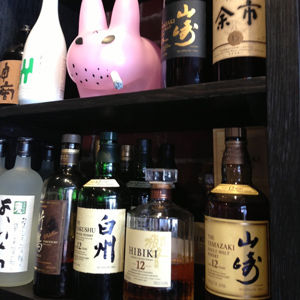
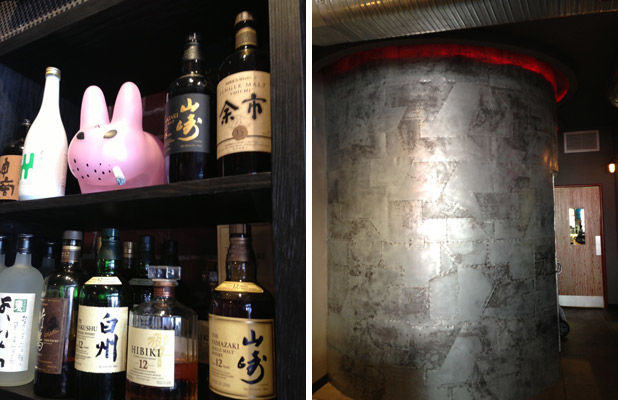
From left: Japanese Whiskey and the bathrooms

THE JAPANESE WHISKEY

Maybe you’ve heard of Japanese whiskey. It’s all the rage in the brown crowd. K7 is serving some of the top in the world, including Suntory, Hibiki 12-Year and Yamakazi 18-Year. The latter is supposed to blow your mind and make you a better human. (The dubious pink creature with the cigarette is a “labbit,” from artist Frank Kozik.)

THE BATHROOMS

Going with the kamikaze theme, Roberts had them made out of riveted gun metal to resemble Japanese fighter engines. The facilities are perfectly circular. “One customer from the Midwest said it was exactly like being inside a corn silo,” says Roberts.

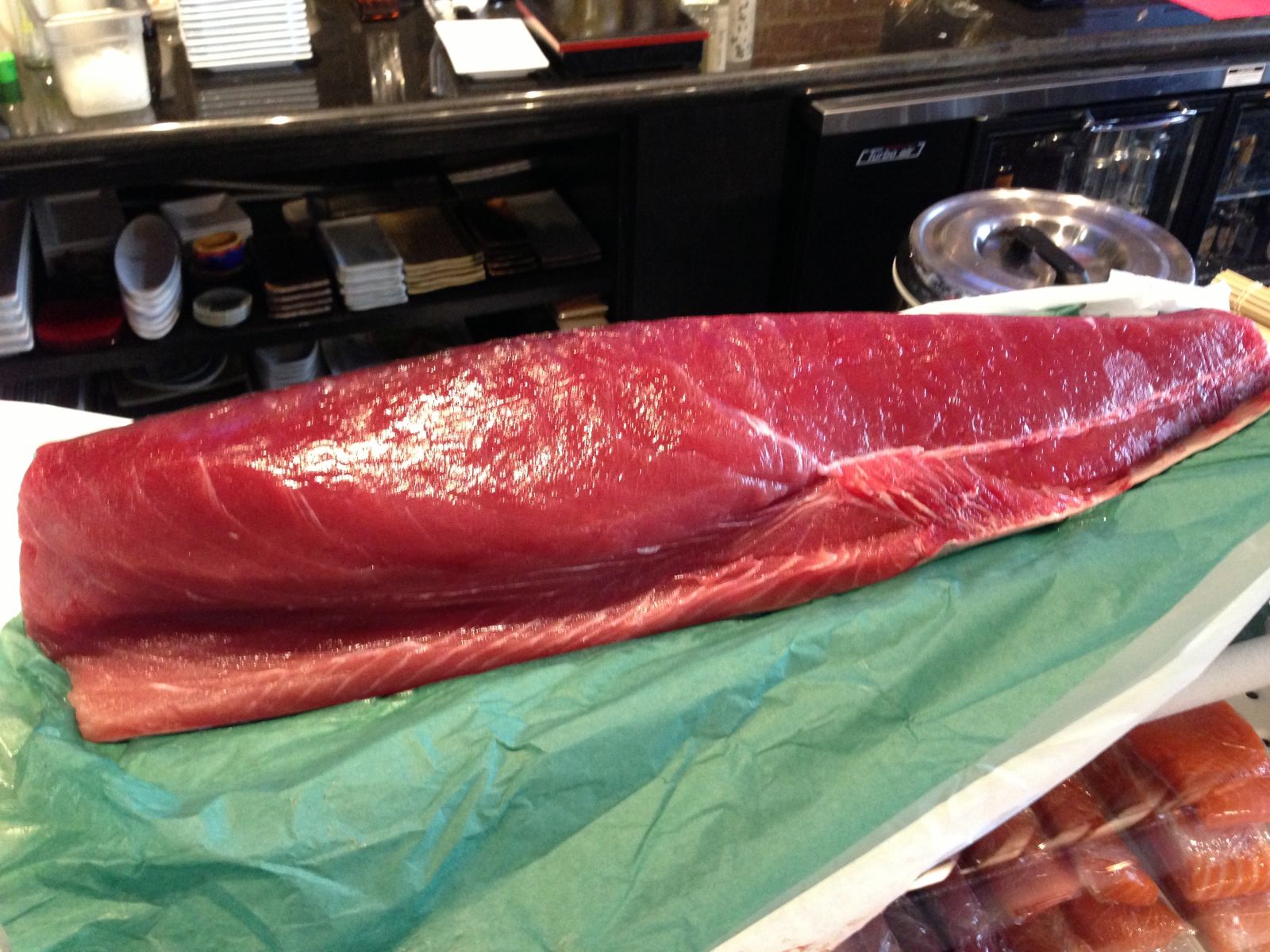
THE SUSHI

Roberts is using Ocean Fresh—the same seafood purveyor used by SD’s famed sushi chef, Master Ota—for daily deliveries of bigeye tuna and Japanese yellowtail. He’s also using top local seafood guy—Tommy Gomes of Catalina Offshore—for live uni, live shrimp and live halibut. “My guys are killing the halibut as we speak in the kitchen,” says Roberts.
FIVE THINGS: Kamikaze 7

FIVE THINGS: Kamikaze 7

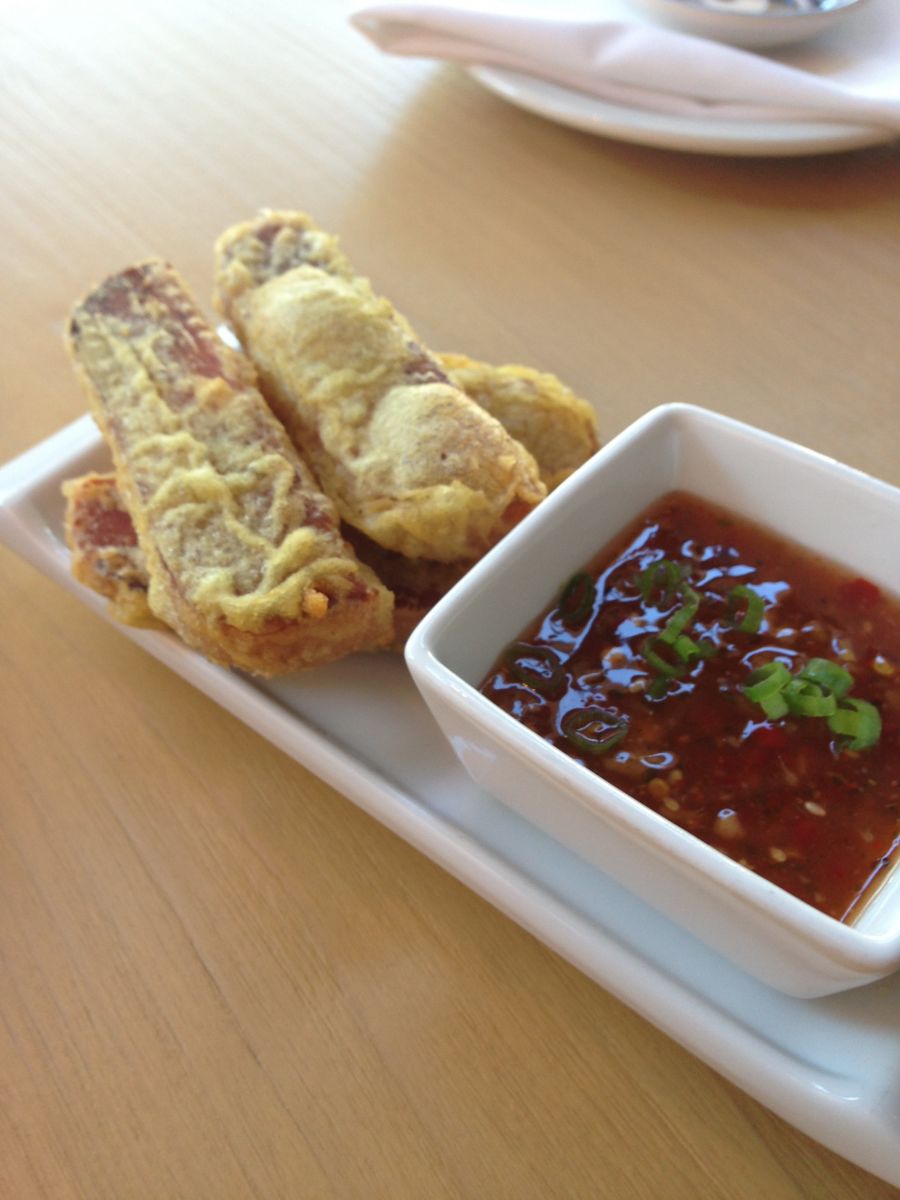
THE SPAM

Roberts is deep-frying Hawaii’s staple meat-in-a-can—a natural evolution of musubi (SPAM sushi). “I can’t keep it in stock,” says Roberts. “People are going crazy for it.” God help you people.
FIVE THINGS: Kamikaze 7

FIVE THINGS: Kamikaze 7

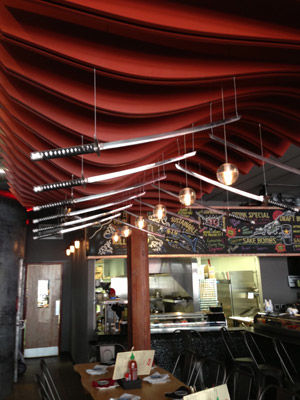
THE SWORDS

The Hattori Hanzos that make up chandelier hanging over the communal table were used as prop swords in the movie Kill Bill. Weapons and sake bombs, a classic combo.
Subscribe to our newsletters

Select Options

By subscribing you confirm that you agree with our Terms and Conditions and Privacy Policy.

Food & Drink DECEMBER 11, 2025

Nobu-Trained Chef to Open His First Restaurant in Mira Mesa

Chef Changjin Oh will debut Momo Sando & Omakase—a grab-and-go version of an omakase experience—later this month

Nobu-Trained Chef to Open His First Restaurant in Mira Mesa
Photo Momo Sando & Omakase

Meaning “I leave it up to you,” omakase allows a sushi chef to select the best, freshest ingredients to showcase during a meal, and it’s generally reserved for special occasions at high-end sushi restaurants. Guests don’t know what they’ll get—just that it will be the best of the best. 

Chef Changjin Oh wants to make that experience accessible to everyone—creating a grab-and-go version of an omakase experience with his first restaurant, Momo Sando & Omakase in Mira Mesa (soft opens on December 22, grand opening planned for January 5).

Mi Pan Bakery

He certainly has the skills to do pull it off, having worked for over 20 years at illustrious restaurants like Mikado Japanese Restaurant in South Korea, plus Nobu by chef Nobu Matsuhisa in Dallas, Malibu, Chicago, and San Diego in Hotel Del Coronado (as executive sushi chef as the latter two). 

Oh says he wanted to reimagine the fine dining experience through comfort food, offering sushi and Japanese-style sandwiches with the convenience of grab-and-go. He’ll hand-select the freshest ingredients and best cuts of fish that catch his eye each day, then put together different grab-and-go boxes of sushi, sashimi, rolls, and sandwiches, plus specials and signature items like the Momo Special Roll. 

“It features bluefin tuna and tempura shrimp with a special gochujang-based sauce—a Korean traditional red pepper paste,” Oh explains. “The sauce adds a sweet, spicy, and slightly tangy flavor, and the tempura gives a perfect crunch, a roll that represents both Korean and Japanese flavors in harmony.”

A small suite in Mira Mesa meant mostly for to-go orders is a pretty big departure from the glitzy Mikado dining rooms or ornate chef’s counters at Nobu. But that’s exactly what Oh is going for. “I hope everyone can enjoy omakase—it doesn’t have to be something formal or hard to experience,” he says. “Wherever you go becomes your own sushi omakase restaurant.”

Momo Sando & Omakase will open at 6755 Mira Mesa Blvd, Suite 108. Hours will be Monday through Saturday from 11 a.m. to 4 p.m. (or sold out).

San Diego Restaurant News & Food Events

Lights & Latkes at Omni La Costa Resort & Spa on December 20

This year, Hanukkah’s eight-day festival of lights begins at sundown on Sunday, December 14, but Omni La Costa Resort & Spa’s celebration kicks off on Saturday, December 20. At 6 p.m., guests can join NBC’s Yes, Chef! winner, executive chef Emily Brubaker and James Beard Semifinalist and fellow Yes, Chef! finalist chef Lee Frank from New Hampshire’s Otis Restaurant & Lee Frank. It’s a one-night-only, multi-course meal inspired by their Jewish roots and collaborative spirit. Dishes include twists on classics like smoked salmon, matzo ball soup, and more, and whether you celebrate Hanukkah or just appreciate the holiday season, there’s room at the table for you.

Photo Courtesy of Margaritaville Hotel San Diego

Beth’s Bites

  • I like to think I’m not too much of a coffee snob, but I’ll admit my interest is piqued by Paradis’ Kyoto drip tower in Mission Hills. It’s not just a slow drip—it’s ponderously drawn out, taking a full 24-hours to brew a single cup. But the technique results in a delicate coffee that’s worth the wait, or so I’m told. I’ve tried Kopi Luwak, that fancy coffee made with beans partially digested by Asian palm civets, and I’ve tried coffee made with beans grown in San Diego, but I have yet to try this. Put it on my beverage bucket list. 
  • A pirate-y Christmas? That’s a new one. But at Margaritaville Hotel San Diego, I suppose anything goes. Their holiday pop-up, Yo Ho Ho-liday Tavern at LandShark Bar & Grill, runs through December 31 with plenty of pirate-themed plates and cocktails, appearances by “actual” pirates (quotation marks by me), and some good old fashioned nautical fun. Just don’t do anything that would land you on the Naughty list…
  • For a holiday outing that’s probably a bit more family-focused, Orfila Vineyards & Winery has transformed their property into a winter wonderland, complete with an entire Igloo Village with six private igloos available to reserve on OpenTable or in-person, if available. They can accommodate between four and eight guests, depending on which one you can snag, and the winery has plenty of other holiday fun planned through the rest of December as well—Santa’s coming on December 13, 14, 20, and 21. New Year’s Eve celebrations start at noon on December 31, and Elsa from Frozen is making an appearance on December 20 from 3 p.m. to 5 p.m. Grab some wine, hunker down in an igloo, and toast to a brand new year.

Listen Now: The Latest in San Diego’s Food and Drink Scene

Beth Demmon

About Beth Demmon

Beth Demmon is an award-winning writer and podcaster whose work regularly appears in national outlets and San Diego Magazine. Her first book, The Beer Lover's Guide to Cider, is now available. Find out more on bethdemmon.com.

Food & Drink APRIL 18, 2023

Incoming: Sushi Ichifuji

Michelin-trained sushi chefs open an omakase-driven sushi bar in Linda Vista

Incoming: Sushi Ichifuji
Courtesy of Sushi Ichifuji
Sushi Ichifuji, San Diego

Sushi Ichifuji, San Diego

Courtesy of Sushi Ichifuji

Last week Hiroshi Ichikawa and Masato Fujita combined their four decades of sushi experience to open Sushi Ichifuji—a name created by fusing their surnames. Their 10-seater ode to Japan is slightly off the beaten track in Linda Vista, the ideal locale for the duo who spent nearly a year scouting it. Only being able to serve a few dozen guests nightly is intentional. For those lucky enough to get a reservation, that will mean you’ll have the undivided, meticulous attention of two of the city’s best.

For Ichikawa, he sought inspiration and opportunity when leaving home in the Gifu Prefecture region of Japan. He flew to New York City to work in sushi restaurants, where the allure of the city satiated his appetite for adventure. But a decade of braving east coast winters had him reevaluate his long-term plans. “I love surfing,” he says with a smile. “My mind was always on California.” So he packed up and moved to San Diego, landing a job downtown at Taka Sushi, where he met his future business partner Masato Fujita.

Fujita has collected experience at many of the county’s premiere sushi houses, including Soichi (University Heights) and Sushi Tadokoro (Old Town)—both of which hold one Michelin star. His career was foreshadowed by the days he spent hanging around his family’s century-old sushi spot in Osaka. He never actually worked at their restaurant, but proximity to the craft proved invaluable.

Sushi Ichifuji, exterior San Diego

Sushi Ichifuji, exterior San Diego

Courtesy of Sushi Ichifuji

Ichifuji’s menu presents diners with two options: an eight-course omakase or a nigiri course. Both include sakizuke (a three-dish seasonal appetizer), shirumono (dark red miso soup), three-day miso-marinated Alaskan black cod, a selection of nigiri, and dessert. The omakase course offers a few more bites like sashimi and chawanmushi (a traditional Japanese savory custard, one of life’s greatest treats). Ichikawa teases an a la carte menu once they’ve found their rhythm, but insists the omakase concept is how they’ll get their start.

Their sakes are sourced almost exclusively from Japan, where premium water quality and well-tended rice fields produce an unbeatable product, Ichikawa says.

View this post on Instagram

A post shared by @ichifuji_sd

The interior design attempts to recreate the tranquility felt in many traditional Japanese homes. “We don’t have any design experience, but we painted everything ourselves, for like three months,” Ichikawa says. “I want people who come in to feel like they are in a small town Japanese house.” Ichikawa and Fujita achieve this with small but intentional touches: bamboo water features, wood features, and traditional plates brought back from Japan.

There are two seatings a night each consisting of groups of 10. The first seating occurs from 5-5:30 p.m., the second from 7:30-8 p.m. The 30-minute time window allows guests to trickle in at various times, further curating an individualized experience.

Ichikawa says the plan is to continue to build slowly. With warmer weather and increased demand, you may see a dozen or so seats pop-up on the covered patio this summer.

Have breaking-news, exciting scoops, or great stories about San Diego’s food scene? Send your pitches to [email protected].

Jared Cross

About Jared Cross

Jared Cross is a writer who grew up near the US-Mexico border in San Diego. He credits this experience with refining his appetite for food and culture.

Food & Drink NOVEMBER 3, 2022

FIRST LOOK: Temaki Bar

Chef JoJo Ruiz's newest high-end concept celebrates sustainable seafood at approachable prices

FIRST LOOK: Temaki Bar
Video by Jeremy Sazon

Chef JoJo Ruiz has become one of the city’s most celebrated names in sustainable seafood, and his long-awaited new handroll concept in Encinitas is finally open. Temaki Bar is a Clique Hospitality thing, the same group who brought local concepts like Lionfish and Serea.

Walk through Temaki’s front doors, you’ll find an original hand-painted mural by artist Todd DiCiurcio, who also partnered with Rob Machado for custom-designed surfboards-as-art for the space. “It’s a really cool design, I don’t think I’ve seen anything quite like it in San Diego—let alone anywhere—because we’re so close to the beach,” says Ruiz. “It’s a Southern California vibe for sure.”

handroll temaki

handroll temaki

Arlene Ibarra

Temaki is a sushi bar-only experience—38 seats in the petite 1,500-square-foot-space (formerly Eve Encinitas). The point is to be up-close with the highly curated sustainable fish in the case, to be handed your food direct from the chefs seconds after it’s made.

“When you sit there and you have a really warm, crunchy nori roll, and you put the rice on still warm, and you put the fresh fish on it, the texture is wonderful,” says Clique founder, Andy Masi.

temaki-bar-crispy-rice-sdm1122.jpg

temaki-bar-crispy-rice-sdm1122.jpg

Arlene Ibarra

Each roll is served one at a time instead of table-drop buffet style, encouraging guests to focus and appreciate the charms of each. Ruiz says a couple of his favorite items are the spicy tuna crispy rice and the yellowtail sashimi. Masi is a fan of Dre’s Pop N’Rock handroll which mixes bang bang shrimp, mango and Pop Rocks (yep, those Pop Rocks). All told, there are 12 handrolls on the menu, along with a variety of sashimi and starters like beef tataki and tuna poke bowl.

“It’s giving a high-quality product at a local price and a local vibe. It’s super casual. Hand rolls are $4-5. You can get in and out of here for lunch for $15,” says Masi. “We wanted to take a super high-end concept and make it very casual and very approachable.”

temaki-bar-poke-bowl-sdm1122.jpg

temaki-bar-poke-bowl-sdm1122.jpg

Arlene Ibarra

“I think we’re excited to do something different. There’s not really anything like this in San Diego at all, whatsoever. The nori is going to be nice and crunchy, you have this nice warm rice we’ve worked hard to create—and make sure it’s this perfect thing—and you have this nice cold fish inside of it. It’s going to be fun,” says Ruiz.

temaki-bar-sdm1122.jpg

temaki-bar-sdm1122.jpg

Arlene Ibarra

Have breaking-news, exciting scoops, or great stories about San Diego’s food scene? Send your pitches to [email protected].

E

About Elena Gomez

Elena Gomez is an Emmy-nominated reporter who has spent much of her journalism career working in broadcast news in San Diego and Los Angeles. She joined the San Diego Magazine team as a freelance writer in 2020.

Studio S JUNE 15, 2026

A Modern Take on Steak

Stake Chophouse & Bar brings contemporary classics and old-school service to the heart of Coronado

A Modern Take on Steak
Courtesy of Stake Chophouse

Stake Chophouse & Bar isn’t your average steakhouse. Blue Bridge Hospitality’s Coronado outpost is a modern interpretation of a big-city steakhouse nestled in the heart of the small coastal community. The team at Stake has reimagined the whole steakhouse experience. By prioritizing a seasonal farm-to-table sourcing philosophy, a personalized guest experience, and unique service touches, like a formal steak presentation and a bespoke knife selection process, Stake distinguishes itself in a sea of steakhouses.

Exceptional steaks, including Wagyu from Japan, Australia, and the U.S., and fresh seafood flown in daily form the core of Stake’s culinary identity. The menu features a five-course omakase-style steak experience highlighting house favorites, plus an array of cuts, and classic steakhouse staples—think a wedge salad, baked potato, or pasta carbonara—refined for a contemporary palate without losing their traditional appeal. Stake focuses on seasonal sourcing from the region’s best family farms and specialty purveyors, and incorporates intentionally unexpected touches to create something truly unique.

“I challenge our chefs and myself to take it a step further in sourcing,” says Chef Ronnie Schwandt. “It’s important to us to highlight different farms, unique one-off farms—whether it’s cattle, strawberries, a local fisherman or from anywhere in the United States, we’re always trying to find that niche.”

Beyond the menu, Stake emphasizes outstanding service, says Vinny Spatafore, Director of Hospitality Operations. Staff maintains detailed notes, allowing them to remember guests by name, recall previous orders such as a favorite martini (also memorable for the customer since it’s served in an extra tall, distinctly-shaped glass), and celebrate special occasions like birthdays and anniversaries.

“When you have those points of topic that you remember about a guest, they appreciate that,” he says. “Our servers are really good with that—we have a couple servers who have been here since the beginning and they’ll remember somebody from years ago, their name, their kids’ names, where they live. I’m really thankful to have a great front of house staff.”

Award-winning wines, rare whiskeys, special events, and a complementary black car service that provides transportation for guests throughout Coronado add to Stake’s appeal.

Schwandt stresses that Stake offers more than a meal; they aim to give patrons something unforgettable.

“It starts when you walk up the stairs and are greeted by the hostess—that sets the tone for the night. Then you’re greeted by a server, who may know you by name, and can guide you through the menu and curate as they get to know you,” says Schwandt. “Most people leave kind of blown away; they leave feeling like they just had an experience. That’s the goal, right? Whether you’re serving smash burgers or high-end steak, you want somebody to leave thinking, Wow, that was awesome.”

Partner Content
Archive JUNE 2, 2017

Behind the Best Restaurants Issue

San Diego Magazine's biggest food feature of the year spurs some interesting questions

Behind the Best Restaurants Issue
Critic’s Pick for Best Caterer 2017: Miho. | Photo: Sam Wells

And here it is. Our biggest restaurant issue of the year, San Diego Magazine’s Best Restaurants. Every year, I eat out at a few hundred different restaurants. And every year, people ask me the same question: “How are you not dead yet?” The answer to that is that my midsection has begun making a canopy for my feet, yes. But I also have a “two bite rule,” meaning I am merely a taster of food. Two bites, and I’m done. Any more than that and I would grow so large that the gravity on earth would be thrown out of whack, and the rest of you would just be flung off into space.

When this issue is released, my inbox starts to swell with people’s opinions on it. They range from “THANK YOU!” to “YOU’RE AN IDIOT!” to “AMAZING!” to “IT’S RIGGED!” to “YOU’RE AN IDIOT!”

So this year, I figured I would answer a few of the questions I usually get, to hopefully clarify things ahead of time.


Q: Do advertisers pay to win categories? Is it rigged?

A: No. Absolutely not. Nyet. The Best Restaurants list is divided into two sections: Readers Pick and Critic’s Pick. The readers make their votes, and those votes are tabulated using a non-subjective tool called math. We do not insert advertisers in there, or give them extra votes, or help them in any way. This list is as pure as we can make it. The only thing that could change the readers’ pick is bad math or if it looks like a restaurant stuffed the ballot box (see below).

The Critic’s Choice is simply me and the hamster in my brain. I keep a list throughout the year of the best things I’ve been lucky enough to put in my mouth. It’s my little black book of San Diego’s most amazing food. In seven years as San Diego Magazine’s food critic, I have never, ever been asked by someone from the magazine to include an advertiser. I just fill out my ballot like the readers, based on my personal experience. A few restaurants have, however, offered upwards of a couple thousand dollars to name them a winner. I declined, which may explain my current living situation.


Q: Are Readers Picks a popularity contest? Can’t restaurants stuff the ballot box?

A: They can, and they do. But we have ways of sniffing out shenanigans. One way is that we can look at IP addresses and see if one was used hundreds of times. We also notice when a voter names the same restaurant in every category, e.g. an Indian restaurant wins every field, including “Best Mexican” and “Best Restaurant That’s Anything But Indian.” We don’t allow spam, and we account for that, but restaurants are allowed to promote and campaign.


Q: How the hell did readers pick XX Restaurant as Best XX?

A: The readers like what they like. I learned a while ago that my aesthetic tastes are not universal. My palate was not dipped in the River Styx. And therefore I will not begrudge the readers their favorites. After all, I named William Bradley my favorite chef in town, but I’ve been known to crush a rotisserie chicken in my car on the way home from Sprouts. And Thomas Keller, a very fine world-famous French chef, famously purchased In N Out for a staff party.


Q: Why isn’t my restaurant included?

A: To be honest, I don’t like naming restaurants “best.” Restaurant culture isn’t a tennis match. And because, with any category, there are usually a handful of restaurants that could “win” a category for me. For instance, with “Best New Restaurant,” I was hemming and hawing between Trust in Hillcrest and Herb & Wood in Little Italy. The ultimate deciding factor for me was that the team at Trust didn’t have the “name” going into this project that chef Brian Malarkey does at Herb & Wood. Malarkey’s restaurant is excellent, and beautiful, and deserving. But he also had more resources and momentum. The fact that Trust pulled off what they did with fewer resources inspired me. They MacGyvered a really great restaurant.

Also, every year I forget restaurants, or fail to get restaurants into the list. Last year, I completely spaced on Kindred, winner of this year’s “Best Vegetarian/Vegan.” This year, I’m ticked off that Flying Pig (Oceanside and Vista) and Land & Water Co. (Carlsbad) aren’t included in my picks. Those are two of my favorite restaurants in town that somehow didn’t fit the puzzle. And that’s what a list like this is—a puzzle.


Q: How is Sushi Ota not your Best Sushi Restaurant? Is your mouth injured? Everyone knows Master Ota is untouchable!

A: For those of you who still don’t know about Master Ota, do yourself a favor and find his restaurant. It’s in Pacific Beach, next to a 7/11 and a freeway. Ota has, and will be during his time on earth, the apex of sushi in San Diego. Local fishermen literally make all other restaurants wait at the docks until Master Ota has had his pick of the day’s very best catch.

That said, our sushi scene has evolved, and there are very excellent sushi chefs who deserve a nod. For me as a critic, sustainability plays a huge part. Our oceans have been looted, and they’re in danger of collapsing. Sushi is a major contributor to that plundering. That’s why, last year, I gave the award to Land & Water Co.—whose chef-owner, Rob Ruiz, is now one of the country’s top sustainable seafood experts, and runs his restaurant as such.

And this year, I picked another sustainable sushi chef who’s got major chops: Davin Waite of Wrench & Rodent in Oceanside. First of all, Davin’s a punk and has built a little skate-zen place that’s fun to hang out in. Second, he’s a really good, respectful, obsessive sushi chef. Third, he’s as sustainable as it gets. Ota will always be the yoda of the scene, but younger jedis deserve credit for helping in saving the universe.


Q: Hey, Critic! You chose Kettner Exchange as “Best of the Best, Casual”? That’s a fancy restaurant whose chef has cooked at the James Beard House!

A: You’re right. That’s odd. And not quite right on my part. Here’s what happened. There was no ignoring George’s California Modern this year as “Best of the Best, Fancy.” Trey Foshee has been one of the country’s top chefs for decades. This year they underwent a massive renovation of their bar area, and bartender Stephen Kurpinsky has become a real inspiration and innovator for the city’s cocktail scene. It was the year to honor one of the country’s best restaurants.

I had actually considered Kettner Exchange for that award, since it’s a beautifully designed spot and Brian Redzikowski’s food absolutely blew me away over the last year. So, I reasoned—Kettner has two very active bars, which makes it a social scene as much as a dining one, and aren’t bar areas, even nicer ones like theirs, casual? It may be flawed reasoning, but it was mine. And I wanted to shine as much light on KEX and Redzikowski and bartender Steven Tuttle as possible.


If you have any other questions, please feel free to leave them in the comments section below and I will answer as many as possible. Thanks, guys. Hope you enjoy the issue.

Behind the Best Restaurants Issue

Critic’s Pick for Best Caterer 2017: Miho. | Photo: Sam Wells

Food & Drink APRIL 24, 2015

Eating Crickets

Why you will end up eating bugs, now or later (and where to do it now)

Eating Crickets

The legs stay in your mouth for a good while. That’s probably the worst part.

I thought the eyes would be the hardest. The legs look like violin bows with hair. Or are they serrated like tiny, awful knives? The torso is unsettling. It’s a dull gray-brown suit of armor. Like a dirty infant lobster. But eating eyes is uncomfortably intimate. You can see death in eyes.

Wait, no. The torso is definitely unsettling. There are bones and guts in there, right? No food marketer ever bragged, “Now with 20% more bones and guts!”

I’m looking at a plastic ramekin full of crickets at Tacos Perla in San Diego. Actually, there are no guts. These crickets have been dehydrated, deep-fried, spritzed with lemon and dusted with chiles. And for $1.50, they are food. Add them to Perla’s tacos. Eat them straight and impress/disgust your friends. Taste the future.

Because, according to the Food and Agriculture Organization of the United Nations, this is the food of our past and our future. In 2013, the UN advocated that the world needs to start raising insects as food for both cattle and humans.

Sound gross? Well, you’re already eating bugs. The average American eats about two pounds of flies, maggots and other bugs each year.

The FDA’s Defect Levels Handbook explains it all. Frozen broccoli is legally allowed to have an average of 60 or more aphids per 100 grams. Your morning coffee? Allowed to contain up to 10 percent insect-infected or insect damaged beans. That craft beer? Hops can have 2,500 aphids per 10 grams. Peanut butter? Average of 30 or more insect fragments per 100 grams.

According to the FDA, the reason a certain amount of insects are allowed in commercial food is that it’s “economically impractical to grow, harvest or process raw products that are totally free of non-hazardous, naturally occurring, unavoidable defects.”

Granted, many foods contain far fewer insect parts than what is legally allowed. Still, it’s all but guaranteed you’re eating bugs.

And you’re not alone. Around 2 billion people eat insects across the world, according to the FAO. They’re staples in Africa, Asia and South America. The most consumed are beetles (31 percent), caterpillars (18 percent), bees, wasps and ants (14 percent), and grasshoppers, locusts and insects (13 percent).

It’s called entomophagy, or insectivory. They’ve been eaten since the dawn of time—by the entire world before the advent of hunting and farming. Raising them for food is called mini-livestock.

Why is it the future? Because world population is a real concern. We add about 200,000 people to this planet every single day, or 140 every minute, about 70 million people every year. We’re supposed to hit 9 billion people by 2050. That will require TWICE as much food as we need today. There aren’t enough burgers to feed everyone (and beef production is by far the worst agricultural action on the environment). Global wealth is increasing in countries like China and India, and they’re already out-bidding the United States for much of the “elite” proteins (just ask San Diego chefs, who each year are priced out of the local spiny lobster season because the Chinese are buying them at the docks).

Our seas are dangerously overfished. What we’re pulling out of the waters gets smaller and smaller every year. Some scientists have predicted the world’s fish could collapse during this century. Farmed fish is getting more and more effective and ecological, but it’s still not enough.

We need alternative sources of protein. Thanks to its affluence, America likely has a long while before it becomes an insect-hungry populace. But millions of Americans are food insecure. Insects are a real, economically and ecologically-friendly solution to this problem.

Insects are high in protein, good fats, iron, zinc and calcium (because you’re eating the entire body, including bones). Several studies have found insects a far more environmentally friendly source of protein than traditional livestock. Insects grow faster, take up less space, use less water, produce less ammonia. We currently use about 70% of agricultural land to raise livestock. Raising bugs uses far less acreage. Cattle takes 8 kg for 1 kg of beef, and only 40% is considered edible. It takes 1.7 kg of feed to produce one kg of insect meat and 80 percent is considered edible. Because insects are cold-blooded, they don’t use energy from feed to maintain body temperature. They can also feed on organic byproducts (animal and human waste), which reduces environmental contamination.

Some companies in the West have been making them into a powder (insect flour, cricket flour, cricket powder). Chapul was the first company to do cricket flour, selling protein bars full of the stuff. A company called Exo followed suit.

And it’s not that they should only be eaten by humans. Or maybe not even primarily. But especially as feed for traditional livestock, they’re a relatively untapped resource. Mealworms are already being farmed and used as pet food, zoos and recreational fishing.

As far as disease? It seems insects pose less threat to us than cows, pigs, and other livestock under the current production methods. Since there is a huge difference genetically between us and insects, that might also lessen the potential for disease like swine flu. It’s also something that could be done on a small scale, lowering the investment capital needed for small growers/ranchers (thus making it easier for craft crickets). It’s not as clear cut to implement this. Certain government rules and regulations need to be changed, and I won’t get into that here.

Crickets are the gateway bug. They are served at Typhoon in Santa Monica, at Sushi Mazi in Portland, and wold-famous chef Jose Andres serves them at Oyamel in D.C. In San Diego they’re sold at Perla and Escondido Mexican restaurant, El Tejate. On the wholesale side the American Cricket Ranch in San Diego is micro-ranching. San Diego Wax Worms is also raising bugs for food.

I like the future. But I can’t ignore that, as a Westerner, a ramekin full of salted crickets is the stuff of nightmares. Insects make people scream. Perla’s manager tries to get two employees to try them. Both decline, cast up-yours-I’ll-quit faces. Insects are the alien villains of horror movies. Our primal instinct is to squish them, squash them, exterminate them. Perhaps the worst of all is that they have become known in Western culture as harbingers of filth. They’re the squires of trash. Of shit!

If you have them in your kitchen, it’s a sign that you’re a pretty unclean human. It’s well-known that inside the decrepit hovel of any self-respecting serial killer, there are bugs everywhere.

In Guadalajara, Mexico, at a restaurant named La Tequila, I had a taco full of ant eggs (escamoles). Each egg, a millimeter in diameter, was covered in a gel-like white protein. I also had a taco full of agave larvae (gusanos de maguey). They looked like large, well-caramelized maggots, with hairy anuses on both ends. They were crunchy, yet let out a creaminess when bit. They were incredibly delicious, and visually and mentally disgusting.

When you put a cricket in your mouth, the first thing you feel are the legs. They feel like soft splinters. It’s simultaneously crunchy and soft, like a wet sunflower seed. Fitting, since there’s a grassy, dried-herbal flavor that tastes similar to a seedpod. At Perla, the body lets out a lemony juice. The legs crackle. As you chew, the legs and parts turn to shrapnel. I ate one 5 minutes ago and I can still feel leg parts in my mouth. Again, like a sunflower seed.

The taste is not offensive at all. More lemony than gross. But it’s definitely not what I’d call impressive. You might never crave this food in your life. The same restaurant that serves you crickets hires someone to kill their fruit flies.

But this blog on the Scientific American post makes a good point. When sushi first arrived in the US, Westerners thought eating raw fish was fairly gross. Now they pay big bucks for the opportunity.

Tacos Perla sells them because they’re a Mexican restaurant, and crickets are a delicacy in Oaxaca. And, sure, they might be doing it for the novelty as well. But whether their intentions are as noble or merely Fear Factor-ish doesn’t really matter. They’re doing their part to reduce stigma and even create some allure in trying to eat bugs.

So take a friend down to Perla. Taste the future. They serve beer, too.

A side of crickets at Tacos Perla in North Park.

Partner Content JUNE 10, 2026

New Options for GLP-1 Users

Scripps study shows that some patients may be able to taper their dose and maintain results

New Options for GLP-1 Users
Courtesy of Scripps Health

While glucagon-like peptide-1 (GLP-1) receptor agents have been used to treat Type 2 diabetes for more than 20 years, their recent emergence as weight-loss wonder drugs marked a new frontier in medicine. But their effectiveness has left some patients wondering what to do once they’ve reached their goal. Stopping the medication could mean regaining some, if not all, of the weight. A Scripps Clinic internal medicine physician recently conducted a small study of whether GLP-1 patients who had reached their goal weight could maintain that weight by taking their regularly prescribed injection every other week instead of weekly. Spoiler alert: 30 of 34 patients did. Read more about the study here and what that may mean as pharmaceutical companies roll out oral GLP-1s.

For more nutrition, wellness, and healthy living tips, sign up for the San Diego Health newsletter here.

Partner Content

Eat Like a Local (Who Knows a Guy).

Restaurant news, culinary storytelling, and Troy Johnson’s sharp takes delivered straight to your inbox twice a month.

Close the CTA

Contact Us

1230 Columbia Street, Suite 800,

San Diego, CA