


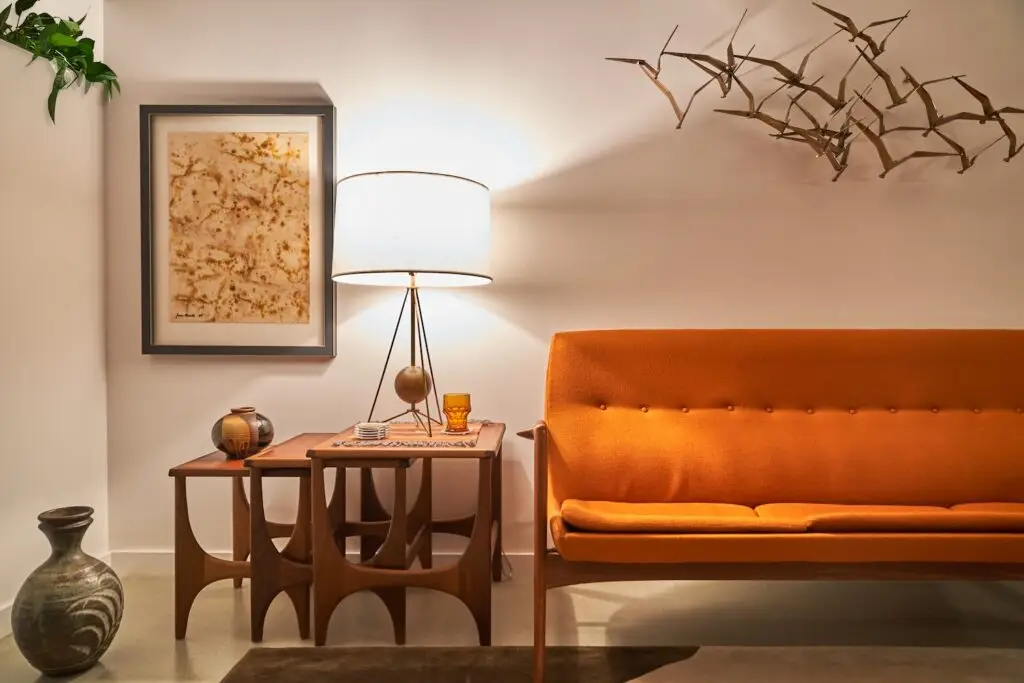
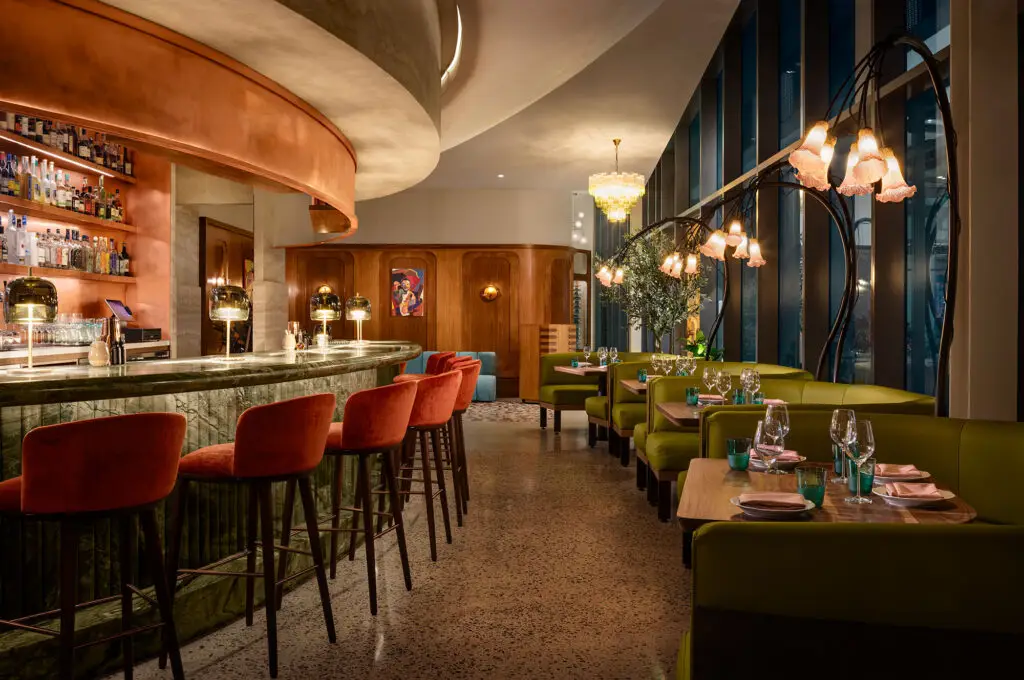
The day I spoke to chef Travis Swikard, his furniture had been stuck at the border for weeks. Upholstery detained, a uniquely modern snag. The biggest restaurant opening of Swikard’s life was a couple days away, and there were gaping holes in his dining room where the sort of significant, vibe-defining furniture would go. There are many reasons people enjoy restaurants, but sitting is one of them.
“This project has tested our patience in every way,” he says. “But we figure it out.”
Add to that a broken foot. He smashed it the day before Thanksgiving. Dropped an employee locker on it. He spent the next day not getting a cast and justifying whiskey as therapy. Instead of going to the ER, he worked a full holiday shift at his first restaurant, Callie, the one that made his name in San Diego.
Swikard has that old (and endangered) grin-and-bear-it nature—no doubt at least partly seared into him by the restaurant world he came up in. He learned in some of the world’s most revered kitchens under some of the most devout, old-school chefs. The only promise for a young, serious cook was that the work would be grueling, highly instructive, repeatedly humiliating, and character-building.

Swikard got all that and some restaurateur renown as well. Fleurette in La Jolla is the restaurant that should put him on the national stage for good. He’s already there, but the cement’s still wet.
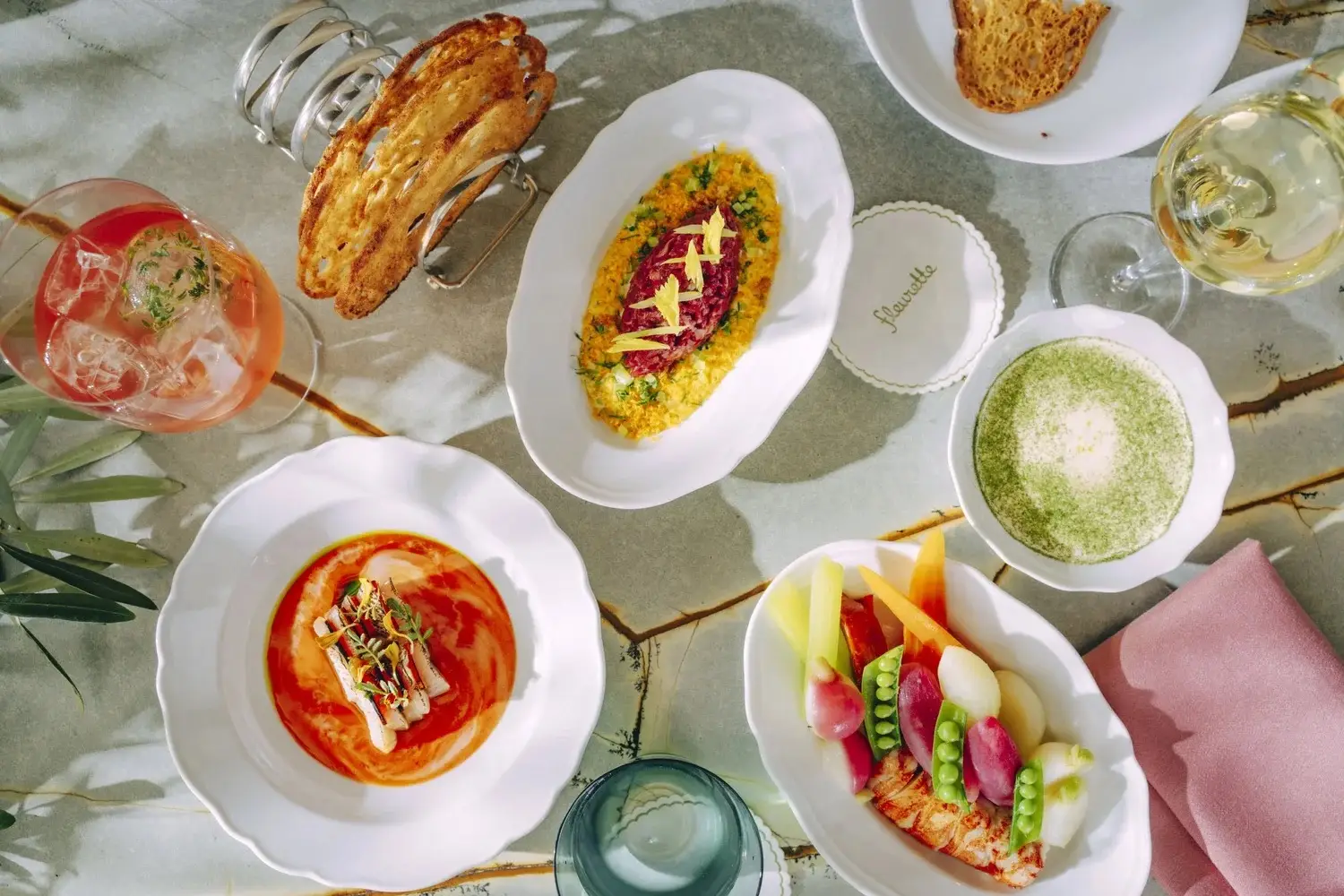
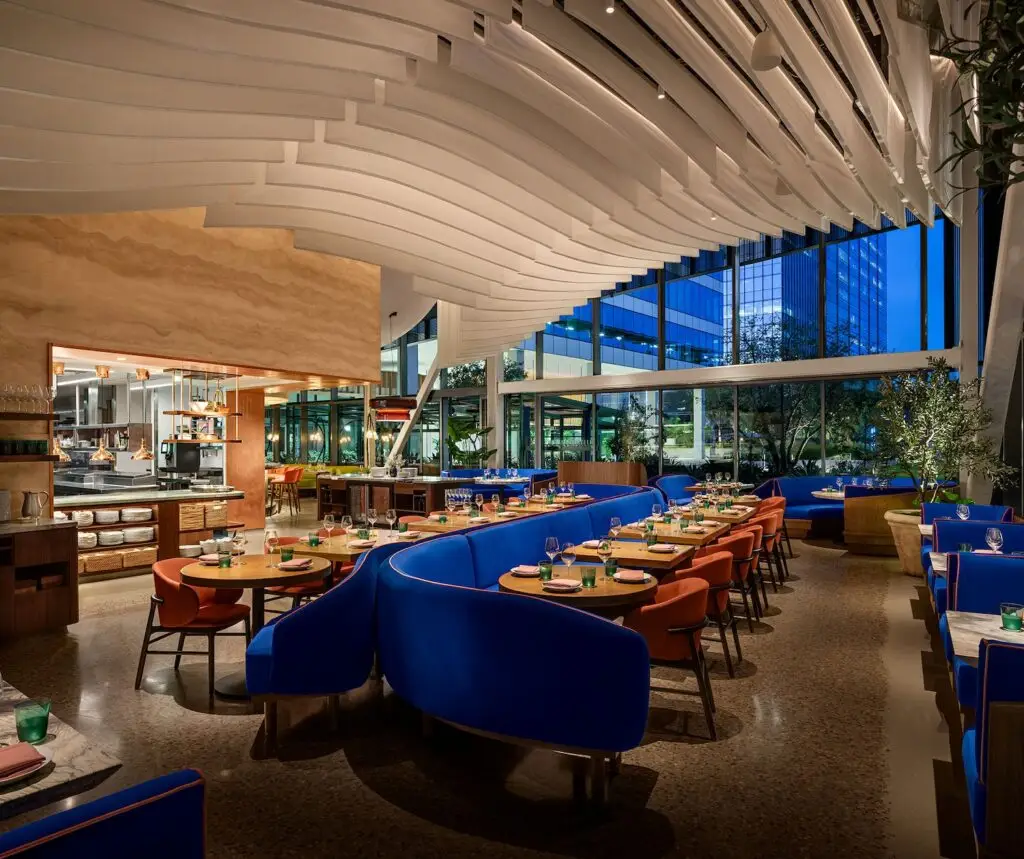
The final pieces of furniture finally cleared customs a month after opening. Fleurette is the peacock at the base of La Jolla Commons—a LEED-Platinum glass tower filled with enterprises in finance, life science,and capital-L law. Now, it also houses a deadly good beef tartare in anchovy sauce and a cocktail that tastes weirdly like a refreshing pesto. Once you get lost trying to park, walking through the Commons’ immaculate courtyards makes you want to throw a few bucks at cryptocurrency, cure cancer, and work up a hunger for gougères with 21-month Prosciutto di Parma and black truffle fonduta.
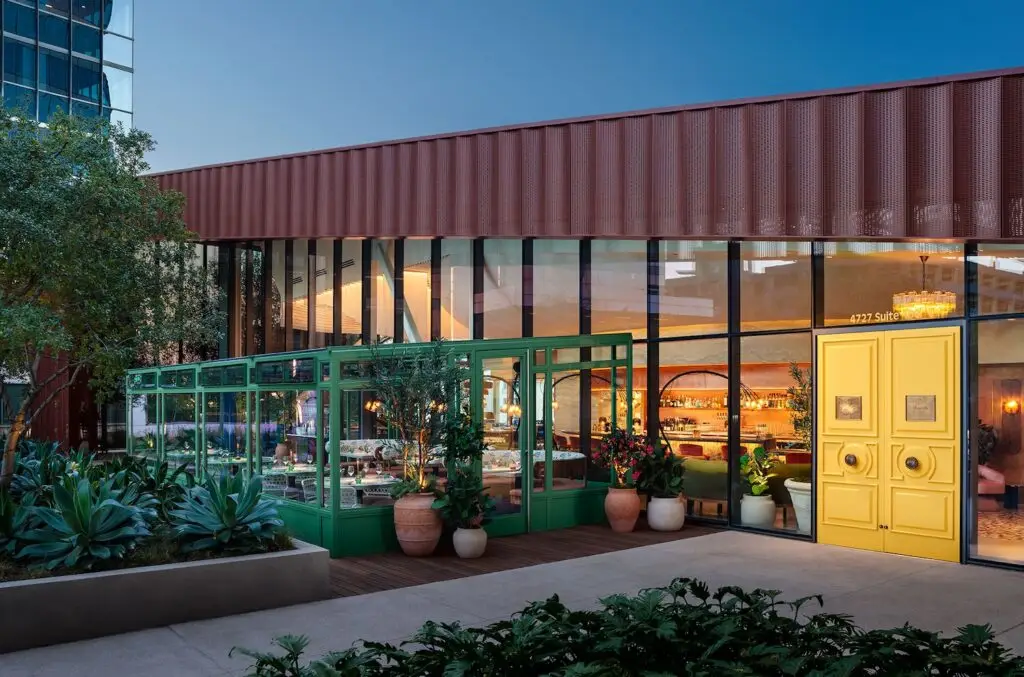
For the latter, search for the yellow doors. Among all the very official, floor-to-ceiling glass, those doors look like a portal to a wonderland where Alice is sharing suspect tea with Aldous Huxley.
Swikard’s concept here is a southern French one, built on the “cuisine du soleil” movement that’s credited to legendary French chef Roger Vergé. Vergé opened his restaurant Moulin de Mougins in a village near Cannes, the famed coastal town in Provence (in the southeast corner of France). While the rest of France was cream-and-buttering its way to culinary glory, here was this village chef cooking light, fresh, seasonal fare (mostly seafood) dressed with olive oil and herbs. His bouillabaisse was the stuff of legends. In many ways, cuisine du soleil was mere practicality: Provence is mainly cliffs, and it’s hard to raise a dairy cow on a cliff.
“This is the way I’ve been cooking my whole life,” Swikard says of what he’s doing at Fleurette. “I feel like classic is the new nouveau.”
Let’s back up.
Born and raised in Santee, Swikard did what most chefs with big dreams do—headed to Europe for a bit and wiggled his way into the doors of the greats, like bad-boy Marco Pierre White. Then he went to New York to serve as a chef de partie (station-specific cook) at Café Boulud, a Michelin-starred spot from one of the most renowned French chefs in the world, Daniel Boulud. There, he worked under Gavin Kaysen—a former San Diego chef who was Boulud’s right-hand. After Kaysen’s departure (to Minneapolis to become a regional food capo with James Beard Awards and multiple restaurants, most famously Spoon and Stable), Swikard became Boulud’s go-to guy and culinary director.
Finally, thanks to San Diego restaurateur David Cohn, Swikard came home in 2019. Cohn (who is a semi-secret investor in what feels like a vast majority of boldfaced San Diego restaurants) had visited Boulud Sud and eaten Swikard’s food. He offered to financially back a restaurant for Swikard if he returned and built it in San Diego. Not a Cohn restaurant—a Swikard restaurant, run by Swikard and his team, including his operational partner Ann Sim (formerly of Eleven Madison Park) and his wife Mia.

Swikard agreed. When Callie finally opened in 2021, it was the closing of a circle, since Cohn’s business partner—chef Deborah Scott—had given Swikard his first restaurant job as a line cook 20 years prior at Kemo Sabe in Hillcrest. Cohn and Scott are integral partners in Fleurette, as well.
Here’s the important part: Callie had been scheduled to open long before it did. Due to a prolonged global shitshow that included wet bats, bleach shooters, and an ideological cage match between politicians and scientists, it was delayed. That delay was at least the partial key for just how special Callie became. Swikard spent that awkward couple of years going to meet farmers, fishers, ranchers, small shop owners, and people tinkering with rare foods in San Diego garages.
This is why boat captains will call Swikard to report they’re pulling up to the dock with a line-caught bluefin. They’ll bring it to his back door. At Callie, he serves what looks like a heap of damn carrot shavings—pre-compost as fine dining. Except, instead of shoving that fresh tussle down the garbage disposal, he pickles and ferments it for days and tosses it with a housemade burnt-orange cashew cream (he slow-bakes an orange until it’s charcoal-colored, and the flavor is wild) and a house-ground dukkah. He keeps his spot prawns (a California delicacy) in a tank of perfectly calibrated seawater that he gets from Scripps Institution of Oceanography and only ends their journey when they’re ordered (most restaurants will kill them, then store them in the walk-in, which does some mushy damage to the texture).
The point of all this Callie talk is to note the iceberg of process under what looks like simple dishes, which also happens at Fleurette. Swikard tends to source raw ingredients from people as obsessive as he is. Consider the anchoïade sauce for Fleurette’s tartare. The key is colatura di alici, a revered Italian fish sauce made by resting layers of anchovies and salt in a barrel for months. He adds just enough (fish sauces are like cologne—a dab is perfect and two dabs are a public menace). It’s mixed with a confetti of egg yolks (cured, which means they’re rubbed with salt and sugar and rested until they become a firm umami bomb that can be shredded like golden Parm). Both explain why what looks like a pretty simple pile of raw beef (albeit the very best beef, from Flannery, one of California’s most sought-after first families of beef, known for USDA Prime Holstein cuts with a snow-flurry of marbling) tastes so wildly alive.
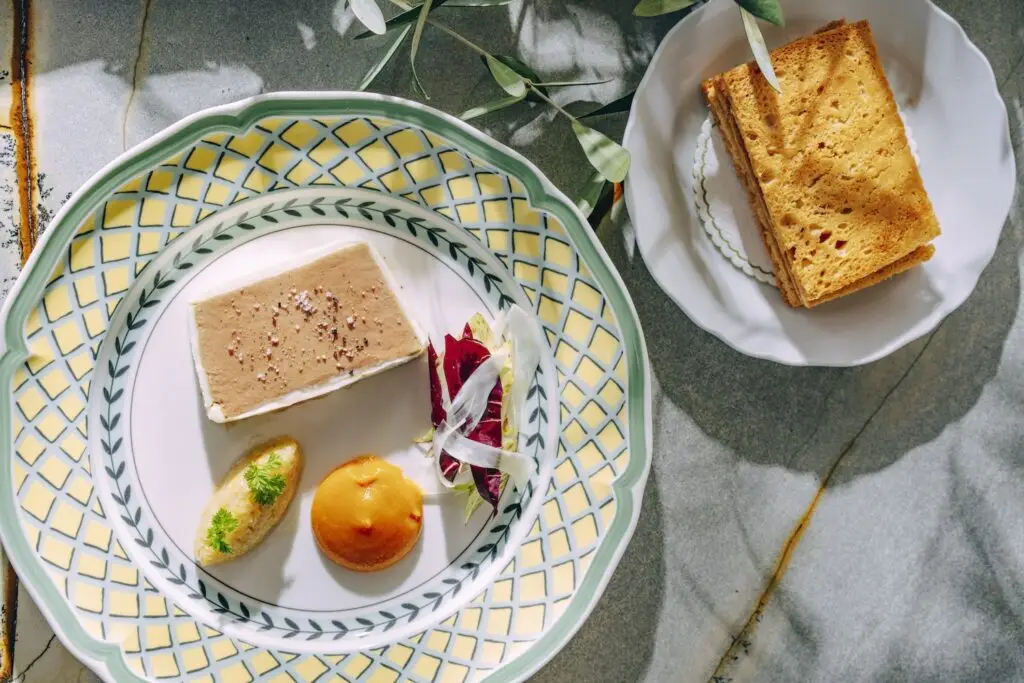
At Fleurette, the sauce work is textbook heritage—from soubise (onion) to vierge (tomatoes and herbs) to garlic persillade and a fairly mind-blowing fennel marmalade Swikard serves with a duck liver and bone marrow pâté (when foie gras became the PETA homing beacon of the restaurant world, he learned how to replace foie’s trademark fatty magic with marrow).
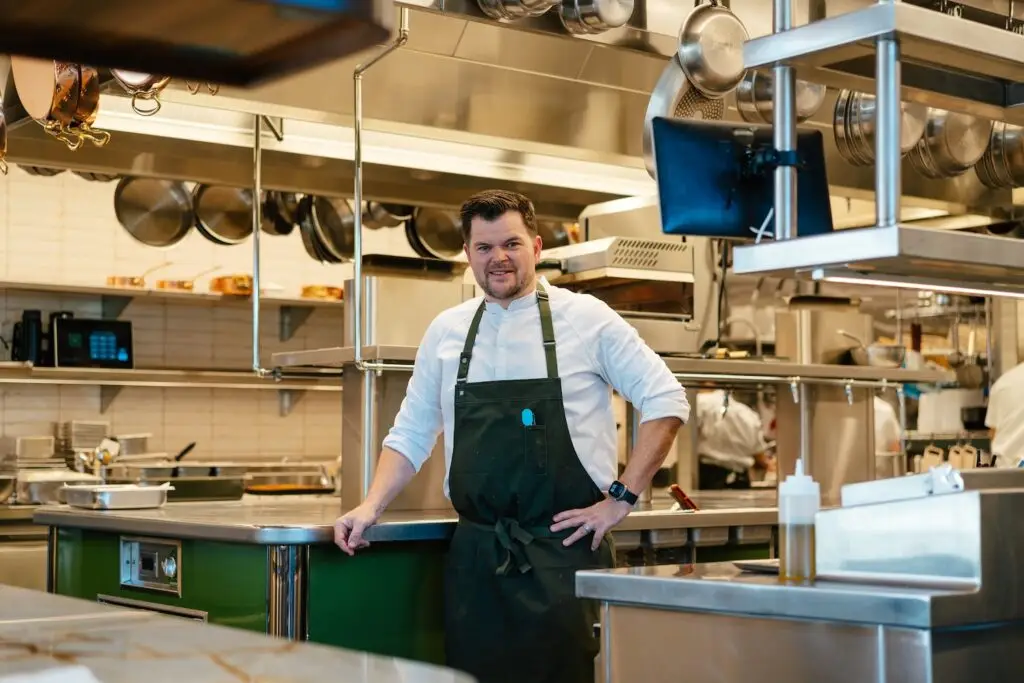
His kitchen setup is the same one that Daniel Boulud has in New York—a French Athanor, the Aston Martin of chef suites with all the bells, whistles, and flux capacitors (“We clean it with fresh lemon juice every night,” Swikard says). But the classic French in him meets the San Diego lifestyle in him here. The ingredients are mostly local (A-list produce is chief among the reasons to be a chef in this county, since it has more small farms per capita than any other in the US and the growing seasons are laughably long).
“[Boulud] would buy all the best produce from across the world,” Swikard once told me. “So, every morning I’d come in and see the boxes of produce, and every time, on the side of the box it said, ‘San Diego.’”
There’s not much gluten on the Fleurette menu, nor dairy. It’s classic French food with fewer naps—more olive oils and poached fish than heavy cream and fat-bathed proteins.
“People think French food is heavy and rich,” Swikard says, echoing French predecessors who introduced nouvelle cuisine and cuisine minceur (“slimming cooking”), both styles based in less unctuous takes on the mother sauces. “Fleurette is not rich. It’s lighter, brighter, cleaner—the way I like to eat.”
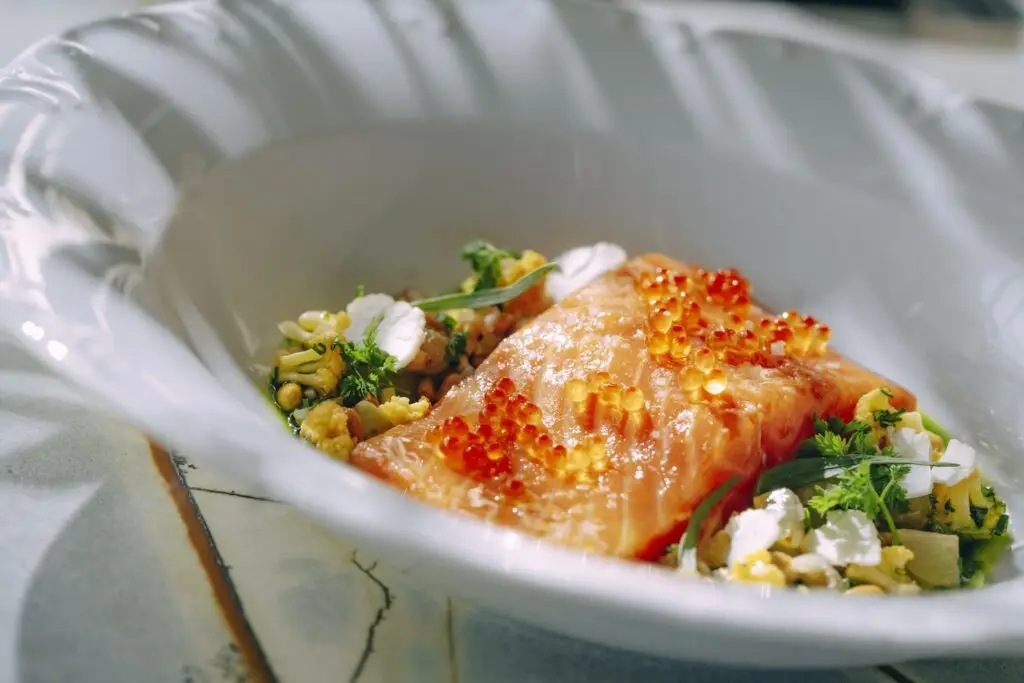
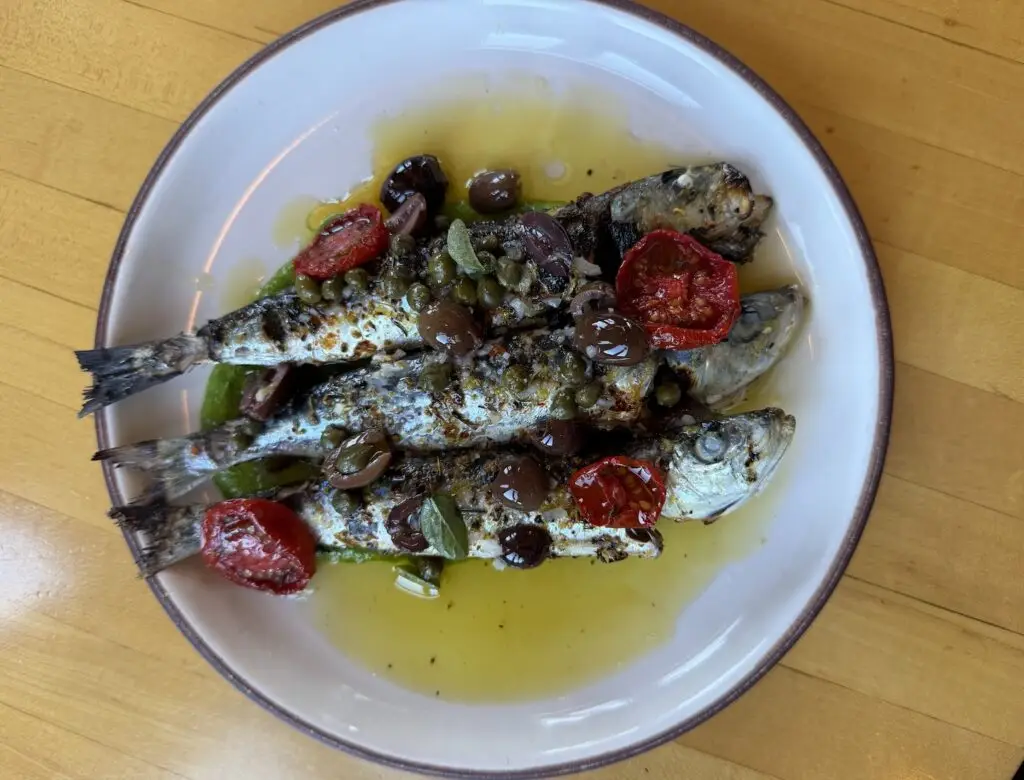
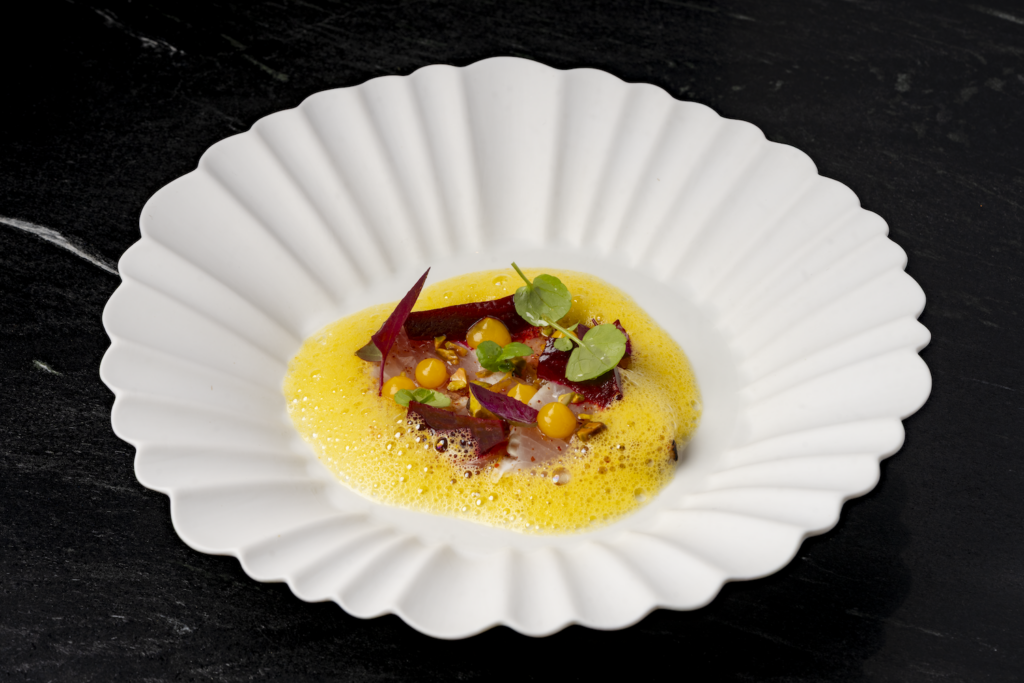
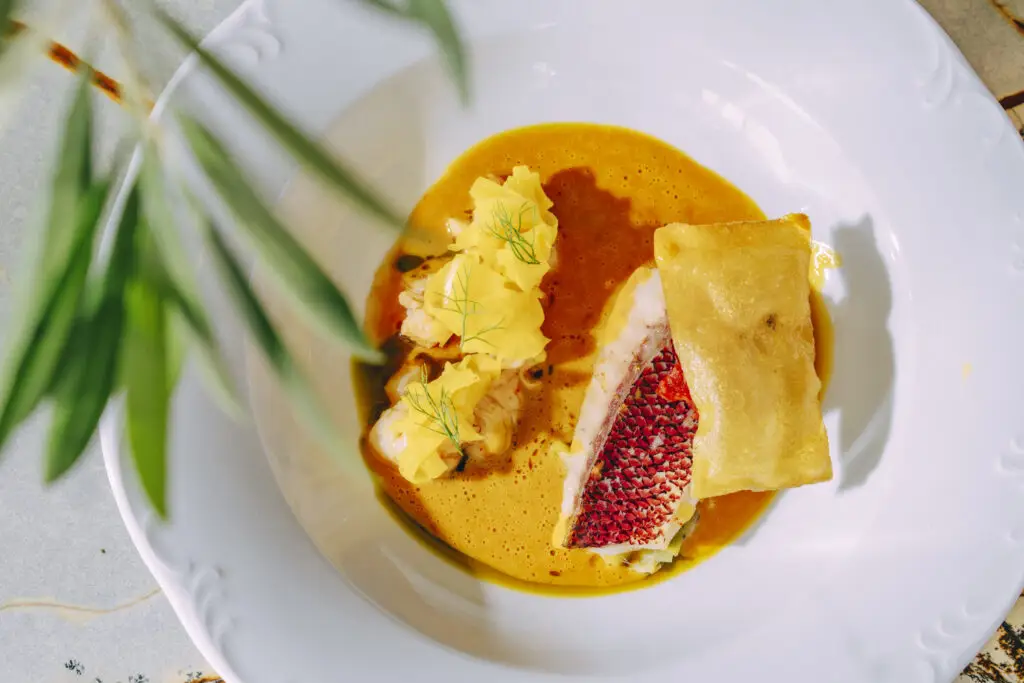
You see that lightness in one of the first menu’s star entrees. Copper River steelhead trout (like the river’s equally famous salmon) is prized because these fish swim hundreds of miles against fast-moving currents to spawn; that requires massive energy reserves (loads of omega-3 fats) and causes them to develop huge muscles (those create texture). The result is a remarkable, remarkable fish, which Swikard’s team poaches in olive oil with cauliflower, pine nuts, and grape vierge. His bouillabaisse (hello, chef Vergé) employs local rockfish and spiny lobster as seasonal anchors. He’ll also use bocaccio (another local rockfish). “People call it a trash fish, but it’s one of the most flavorful fish there is,” he says.
Swikard’s dad Larry, a San Diego landscape architect, built a modest herb and citrus garden out back. The herbs are largely Provence.
For Swikard, Fleurette’s about the next gen of chefs. He wants to use that big Athanor and this new dream to help young cooks slow down, learn, drill the basics into their DNA. It’s a training ground that will, ideally, spawn more Callies and Fleurettes in the years to come. There’s a fairly big trend of cooks skipping the craft-building and going straight to wild fusion-concept cuisine.
“Stuff that I feel is pretty classic hasn’t been done in San Diego—this generation of dining hasn’t seen it,” Swikard says.
He points to French master chef Jean-Michel Diot of La Jolla’s Bistro Du Marché as the role model. “Doing classic at a high level consistently—there’s no better level of cuisine than that,” he adds. “I wanna build a foundation for cooks in San Diego and train them how to cook in this style.”
PARTNER CONTENT
The current cast: Mia Swikard runs marketing for both restaurants. Ann Sim is director of opps for both concepts. His chef de cuisine is Roman Garcia, who was also CDC at Selby’s in Atherton, CA when it won a Michelin star. The GM is Steve Dreifuss, formerly of Little Italy’s now-shuttered Camino Riviera. Callie’s beverage team—wine director Tracy Latimer and head bartender James Roe—have made moves as well, leaving heirs to oversee Callie.
“Callie was what I felt was right for San Diego at the time, and I feel like this is what’s right for San Diego now,” Swikard says. “I couldn’t have done this without doing Callie.”
