
Featured articles
Food & Drink
Food & Drink
Food & Drink
Featured articles
Food & Drink
Things to Do
Things to Do
Featured articles
Food & Drink
Food & Drink
Food News
Featured articles
podcast-ep
podcast-ep
podcast-ep
Featured articles
Food & Drink
Food & Drink
Features
Featured articles
Food & Drink
Food & Drink
Partner content
Ready to know more about San Diego?
SubscribeReady to know more about San Diego?
Inside the plant-based steakhouse from the creatives behind Kindred and Mothership
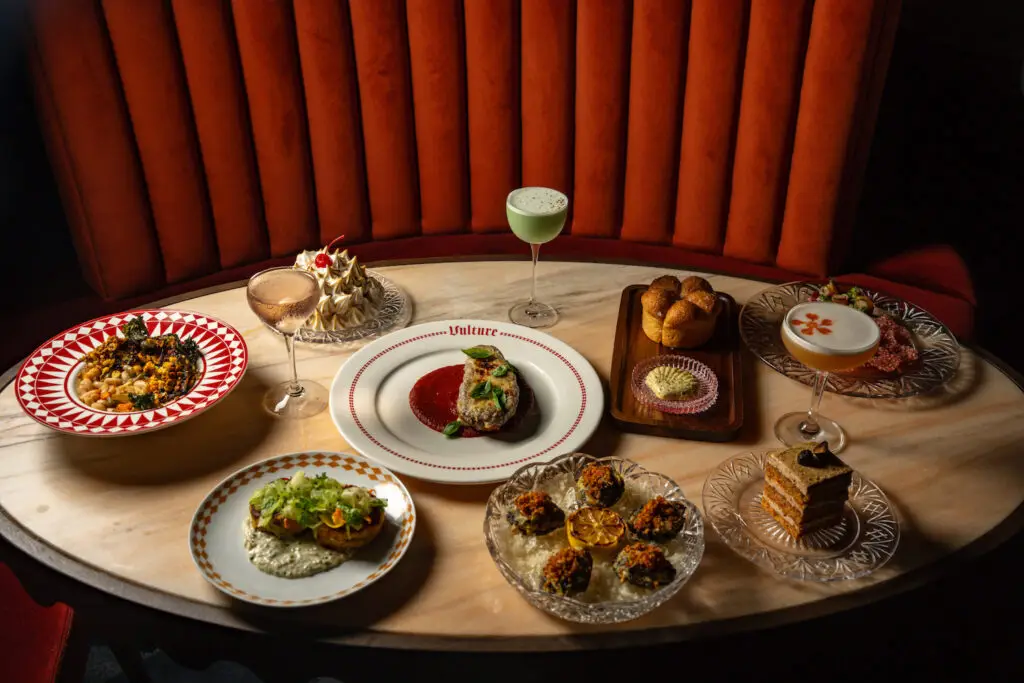
The Perfect Order: Vulture Martini | Potato Pavé | Crab Cake
Kory Stetina is a long way from learning what vegan food was through a pamphlet at punk-rock shows in his teens. He stands in his dream restaurant, Vulture, wearing a non-sportsy sports coat. He’s married with a child. There’s a very non-punk potato pavé on the monogrammed plate, the servers are in tux-adjacent attire, and this whole building in University Heights has been turned into a plant-based funhouse with formidable, obsessive style.
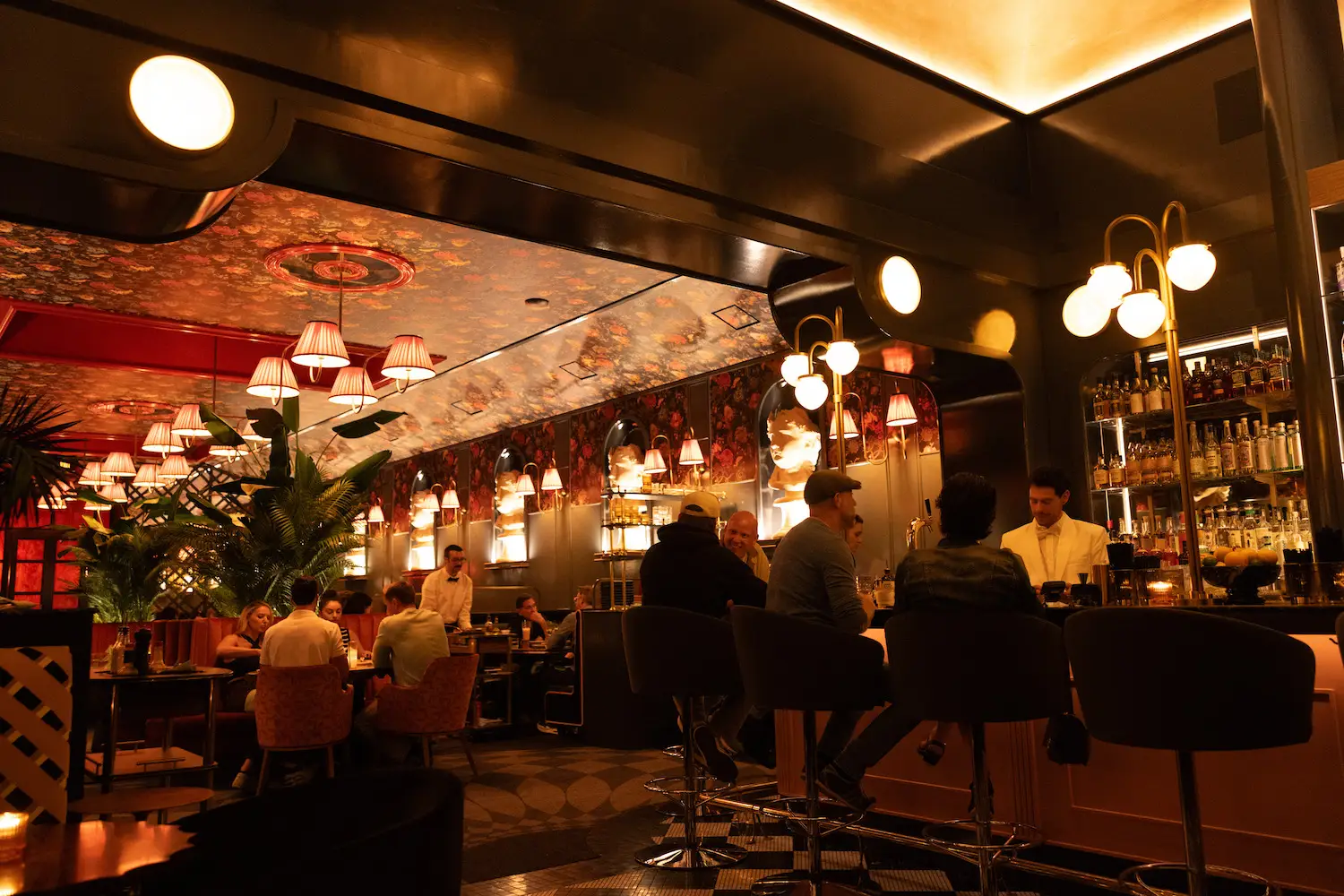
Despite the earmarks of midcentury continental formalism, five out of 10 people in here wear arcane t-shirts. Word got out early on that Vulture was a fine-dining experience, and while there’s a tableside Caesar and velvet curtains and soft, artful furniture, that was never the intent. Stetina had to do some PR legwork to pop the “special occasion” balloon that floated over the project—another collaboration between himself and Arsalun Tafazoli of CH Projects—and it seems to be working.
One of the t-shirt people I recognize: Justin Pearson of The Locust and Three One G Records. A thoughtful and progressive punk force in SD, he’s seated at a corner table with individuals who look like they’ve at least dabbled in if not dedicated their lives to graphic design and can casually play a theremin near a rare fern. Vulture captures that same dinner-party-for-creative-people mood that the Middletown bar Starlite first brought to the city.
It’s a place for grown-up punks, for ideas and ideals.
(Obtrusive but important note about punk rock and plant eaters: The rather genuine punk music of the 1970s and ’80s that eventually birthed Green Day and Nirvana and even, I guess, My Chemical Romance emerged from a philosophical and creative instinct to challenge status quos, which often meant expressing unpopular and political opinions in an excessively loud and urgent manner—pretty much exactly what Simon & Garfunkel were doing but far more invigorating and annoying. There were plenty of bands who got big because they had great hair and a good producer; there were other bands who got cult-famous based on the holy-wow way they expressed uncomfortable ideas, making people question the way they lived. Eating only plants was a part of this live-different worldview, and, like any good movement, it got co-opted by the tad too righteous, moral, and shame-mongery. It should be said that Stetina made his name in San Diego by being a philosophical vegan who’s un-mongery.)
To get to Vulture, you enter through Dreamboat, a well-lit, bright, Mr. Clean-ish, ’60s-era, plant-based, romantically American diner that’s all white and chrome and charm—poodle-skirt notions and connoisseur coffee and smoked potato latkes and Impossible burgers and baked goods and milkshakes and cocktails. Seating occupancy: one-and-a-half people on Ozempic (fine, it’s 10).
In the back corner of this tiny diner is an antique host stand. The host takes you through a velvet curtain, down the short hall, and through a door, until you enter into, what?
Some will call it a speakeasy, but it’s really just a fun surprise restaurant (“speakeasies” do still exist, but they’re not on OpenTable, and almost everyone with a project they call a “speakeasy” will, on their most honest days, admit it’s not a speakeasy).
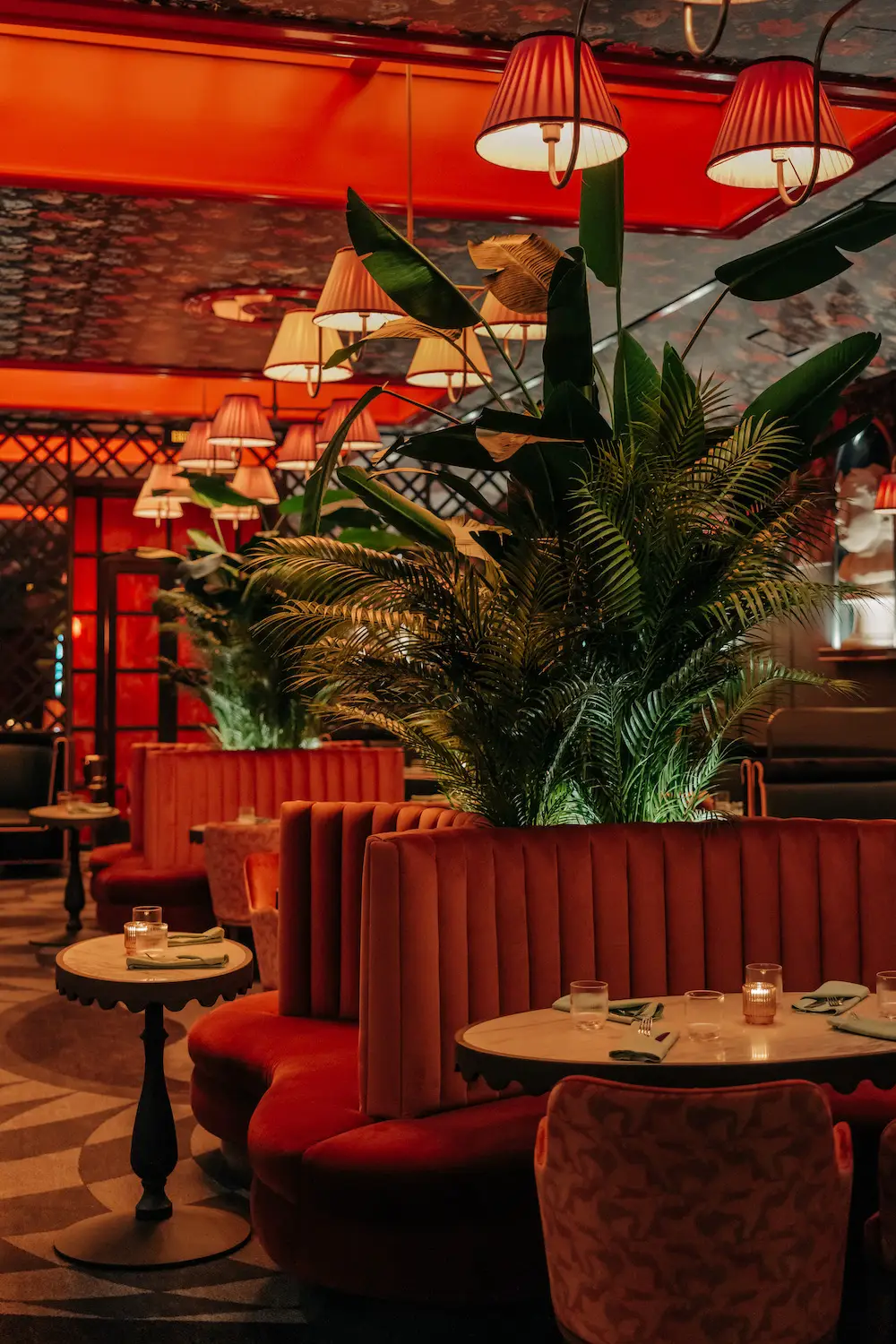
You’ll step into cavernous, amber-glow, lava-lamp darkness. So, the first experience Vulture offers all of us is temporary blindness, followed by the opportunity to behold the shockingly slow ability of human eyes to adjust to radical shifts in light. The music is on point, a mix of obscure indie tracks and guilty-pleasure soft-rock bangers. Thanks to listening bars, restaurants have become the stereo-system showrooms of America. Remember that guy in high school who one day showed up with box speakers in his trunk and a $6,000 head unit, an amp, subwoofers, and EQs, and his car sounded like Dr. Dre’s and Rick Rubin’s place of business? That guy is restaurants.
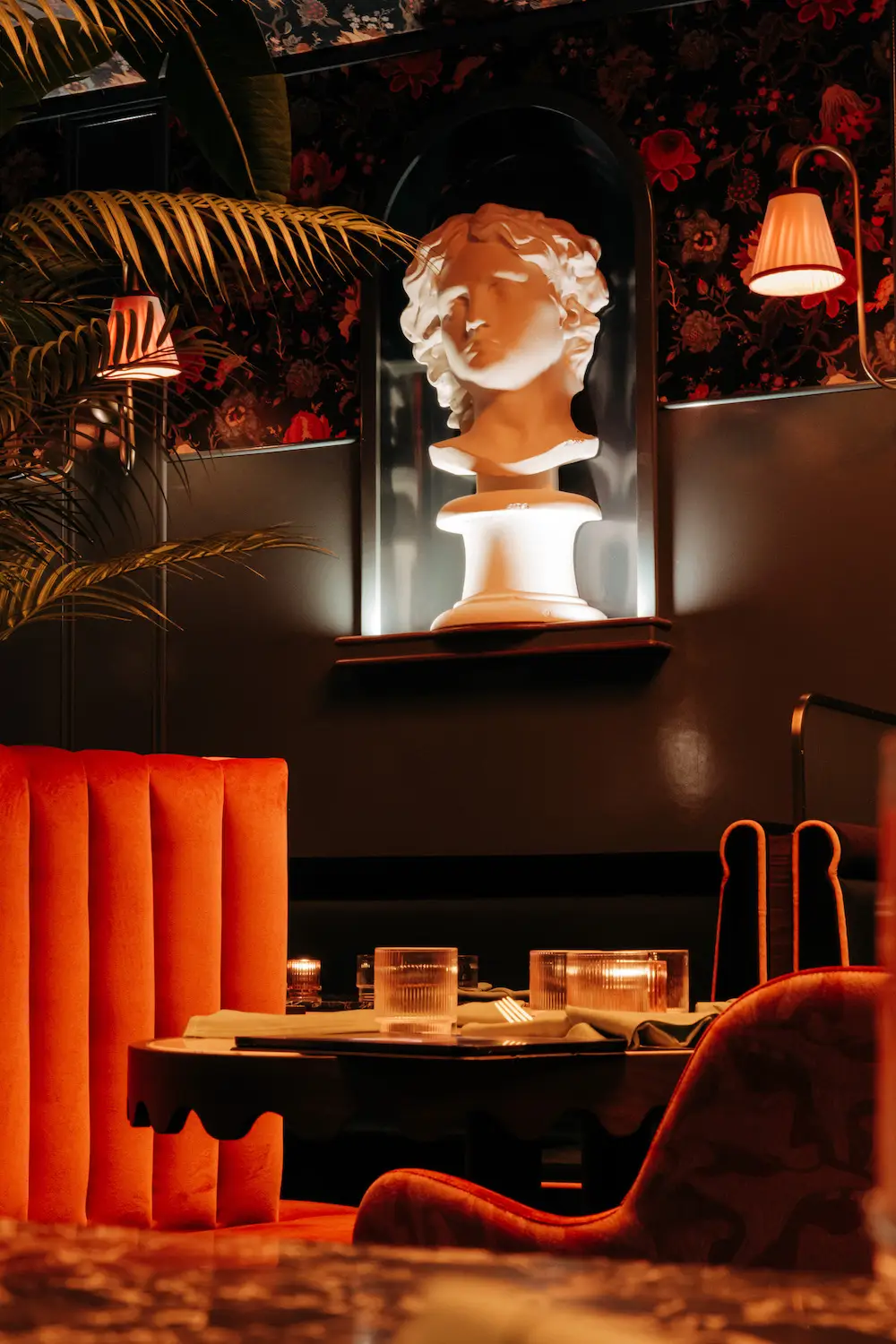
No windows in here. It’s essentially a long room with lights exactly the temp and hue of orange burning coals—the color of hypnotism and Matthew McConaughey’s opium den. Under giant, tall ceilings, the walls are lined with plus-sized, underlit, white-plaster busts. It’s regal and cheeky, a cross between Greek philosopher fetishism and Clash of the Titans lunchbox culture. Plush carpet underfoot. A series of half-shell, velveteen booths and marble tables with brass edges. It’s lovely, and it feels both half-asleep and energized, like that 3 a.m. in-between state of existence when your dreams are viscerally wacky and feel so real you start to fear your own mind. The upper half is wallpaper-core—a print of various nontraditional flowers in a sea of black (like if Georgia O’Keeffe had weirder taste in blooms and was a bit goth).
Vulture took Stetina and CH five brutal years to bring to fruition. After two incredibly successful food and drink concepts in South Park—Kindred (true punk-rock vegan) and Mothership, an alien space bar that made Esquire’s “Best Bars in America”—he and CH took a stab at building their big plant-based idea and retrofitted the whole building. They signed the papers and started paying bank notes, and then the pandemic hit, and supply chains just sat off to the side smokin’ a cig. It got pretty hairy.
All of this explains why Stetina looks simultaneously tired, relieved, and ambitious standing in the middle of the room.
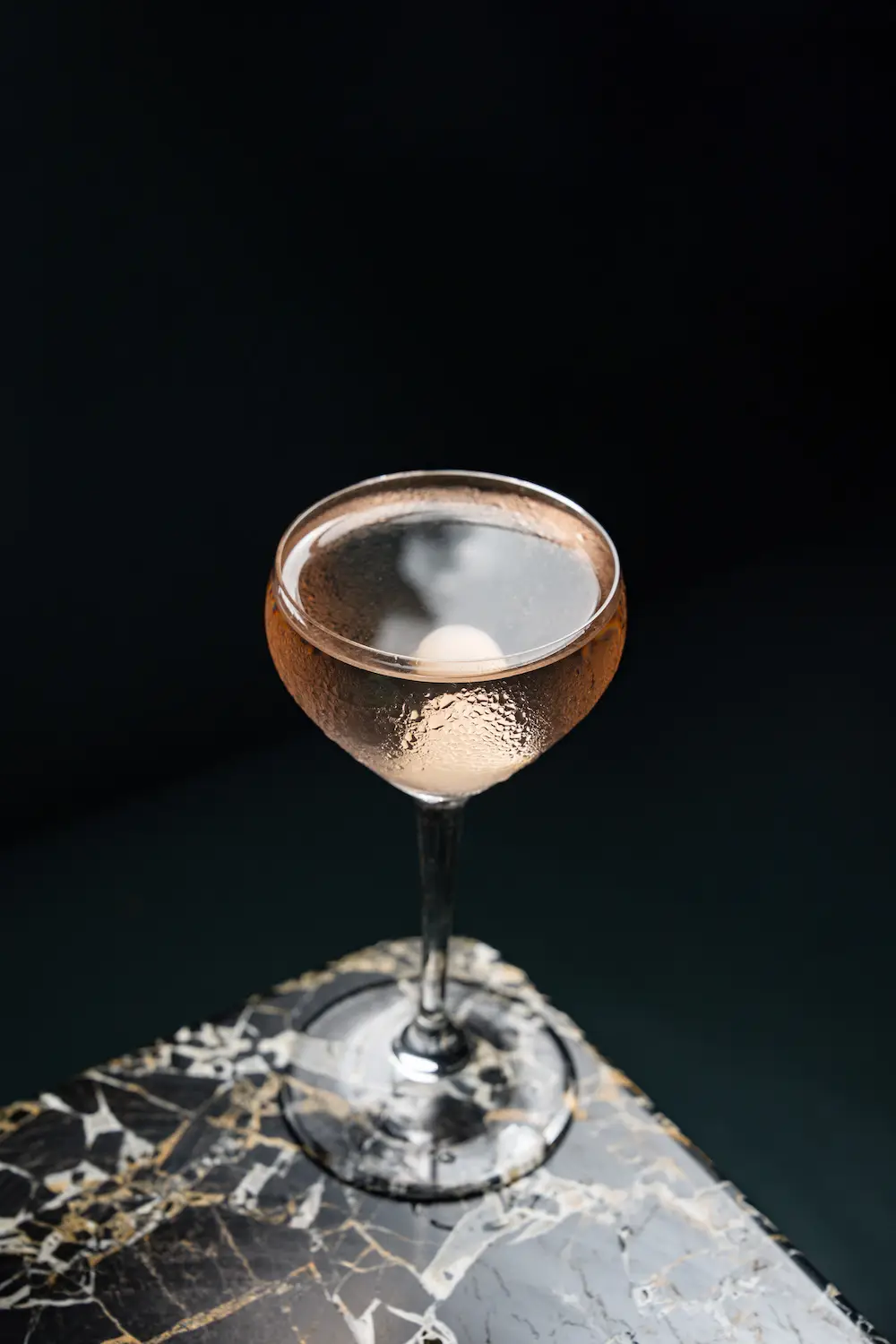
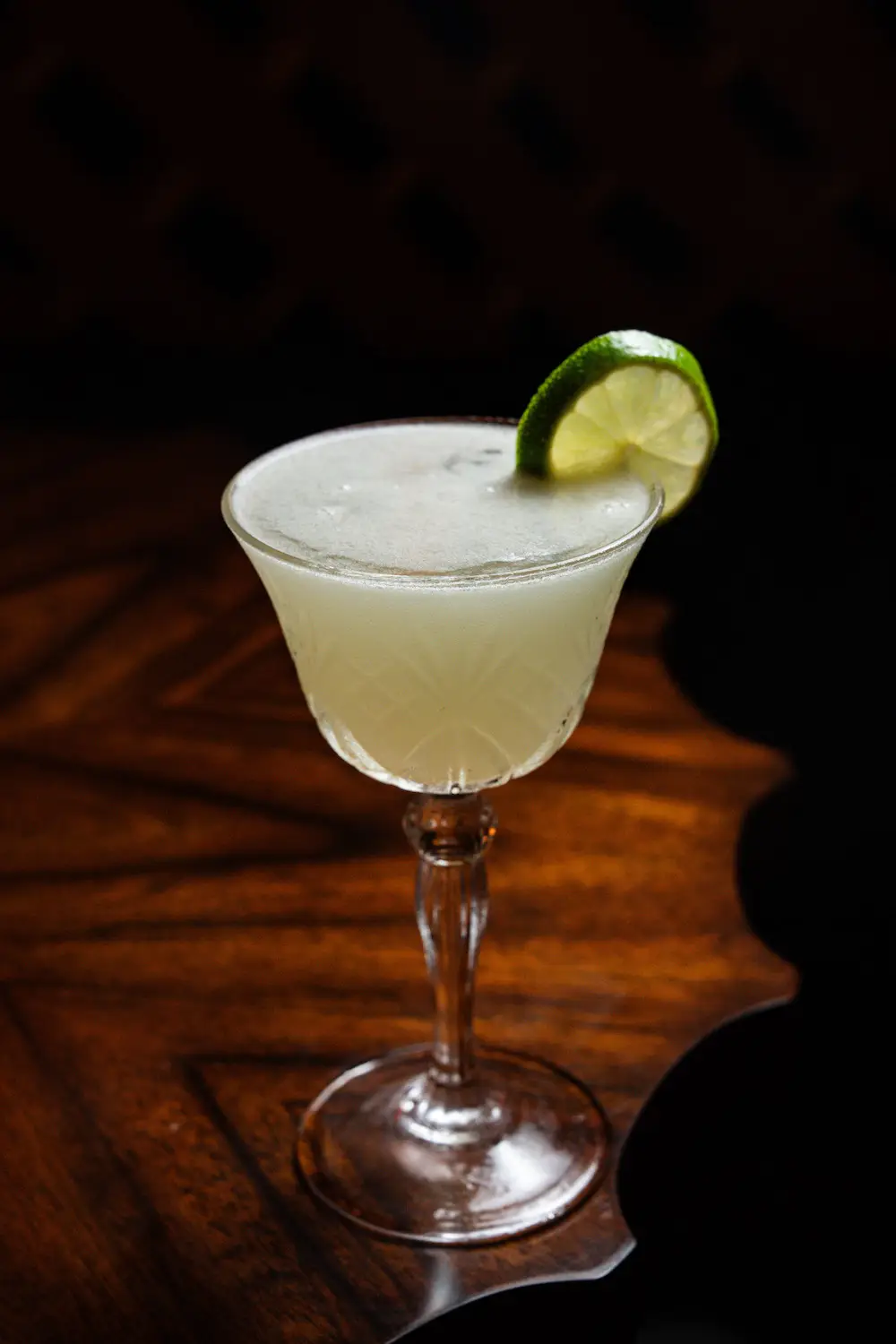
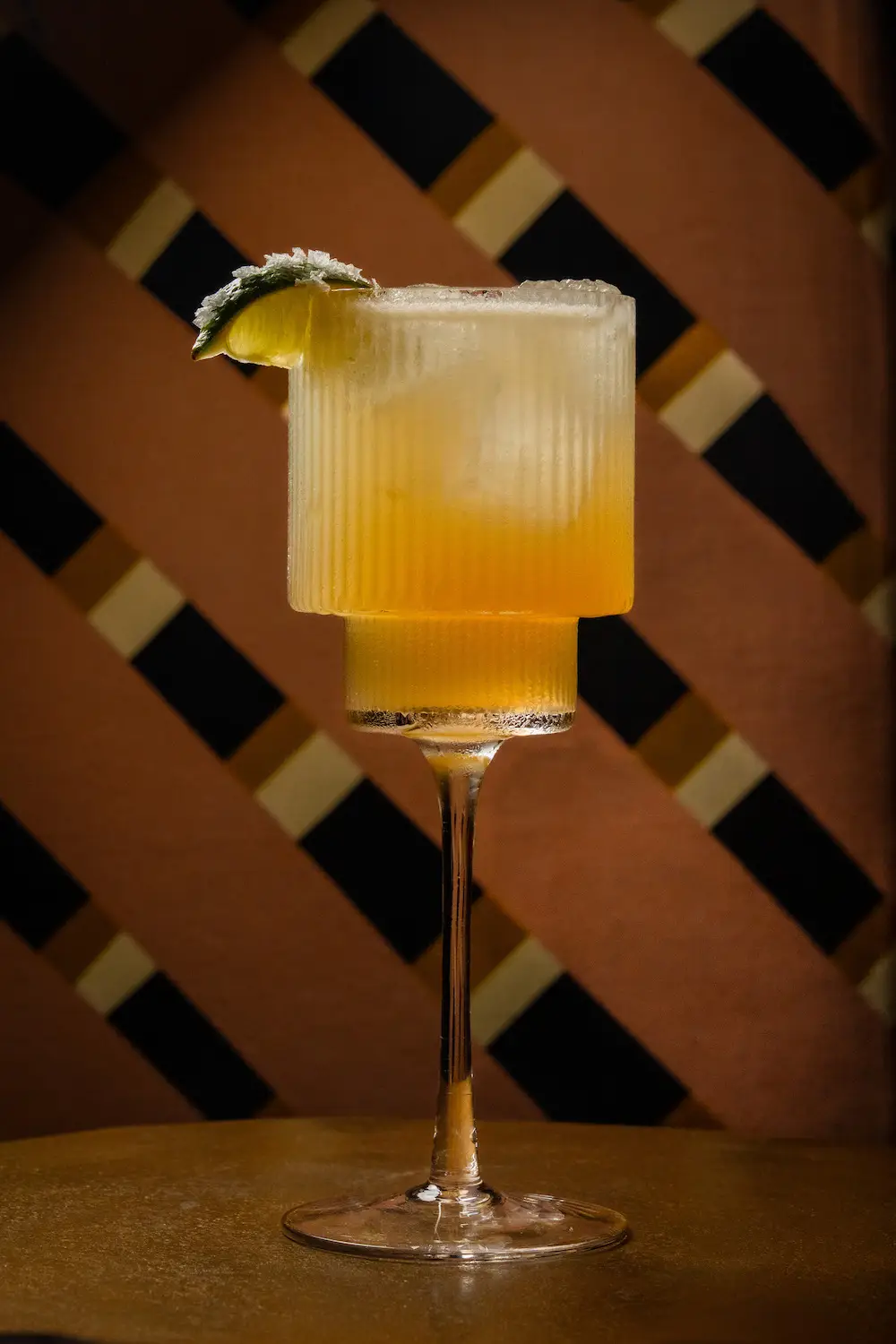
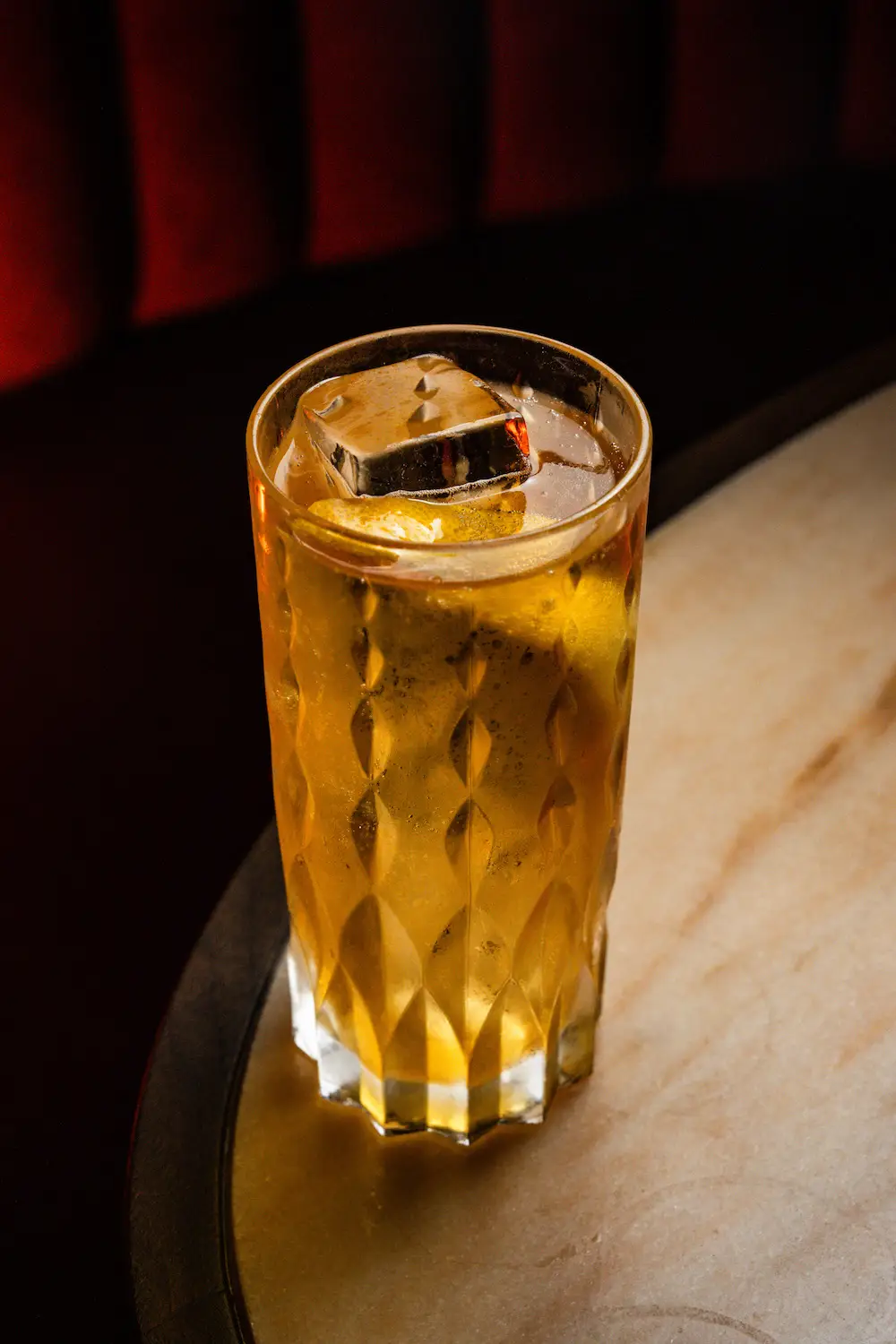
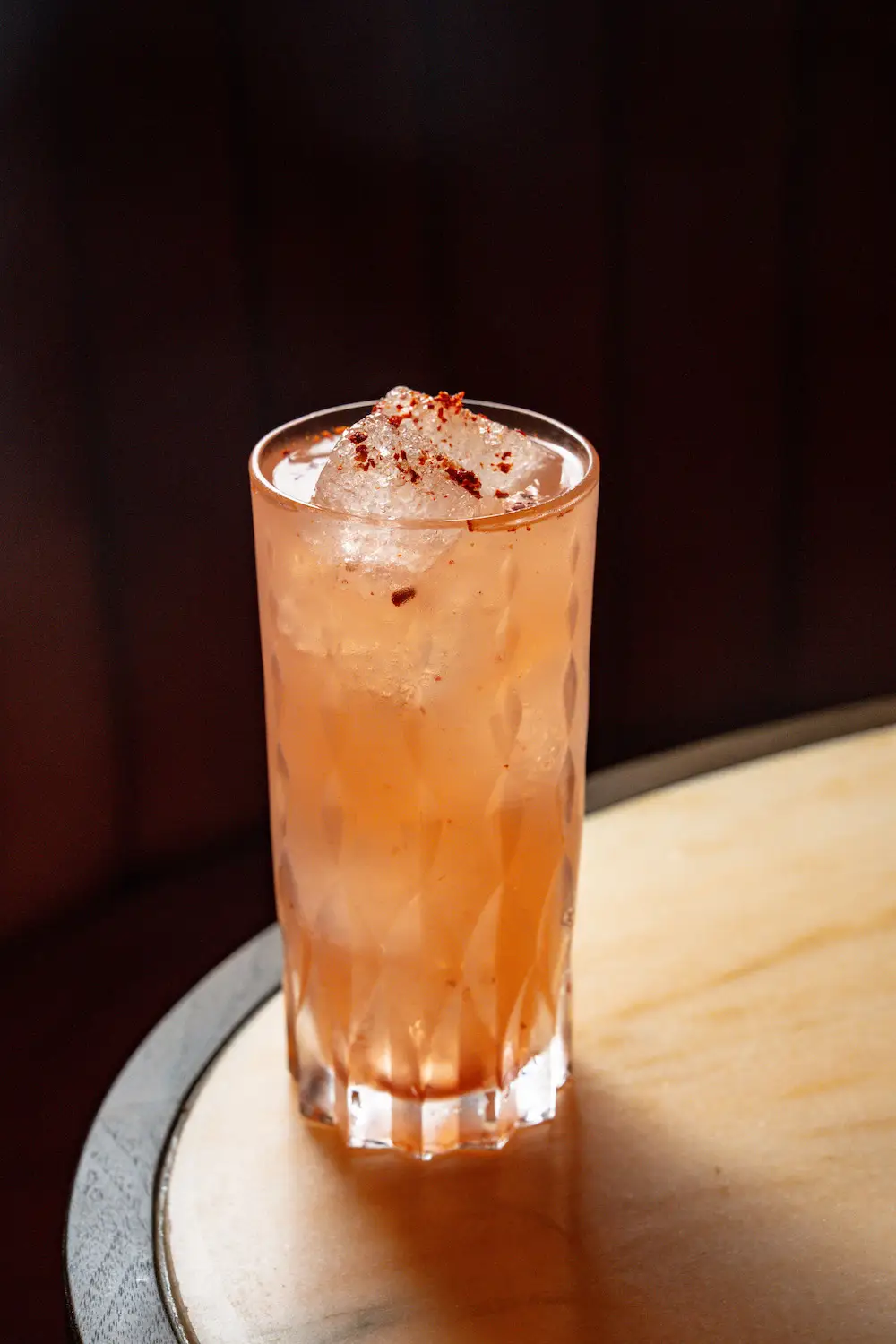
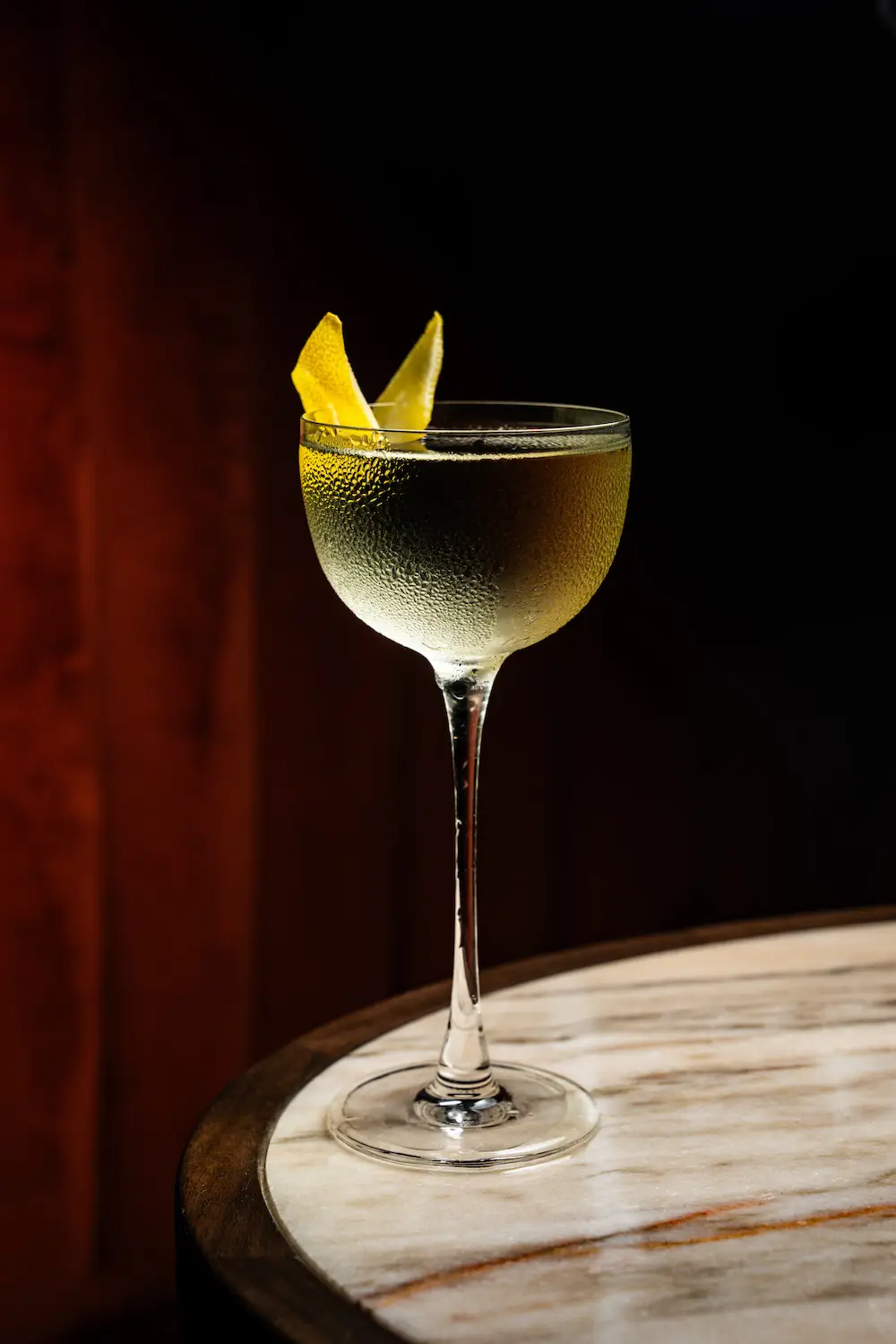
Photo Credit: James Tran
Cocktail art from the team who made Esquire’s “Best Bars in America” list.
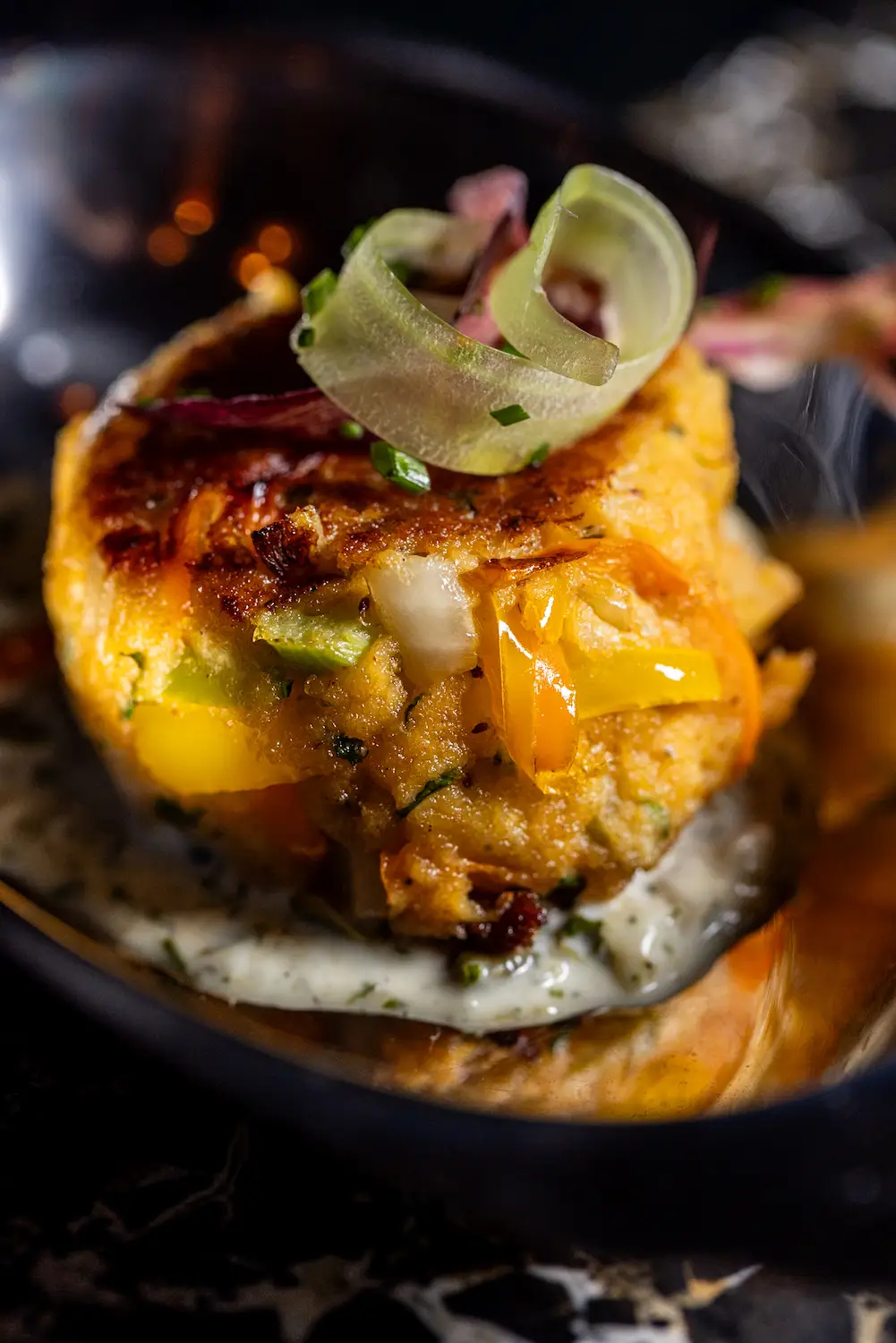
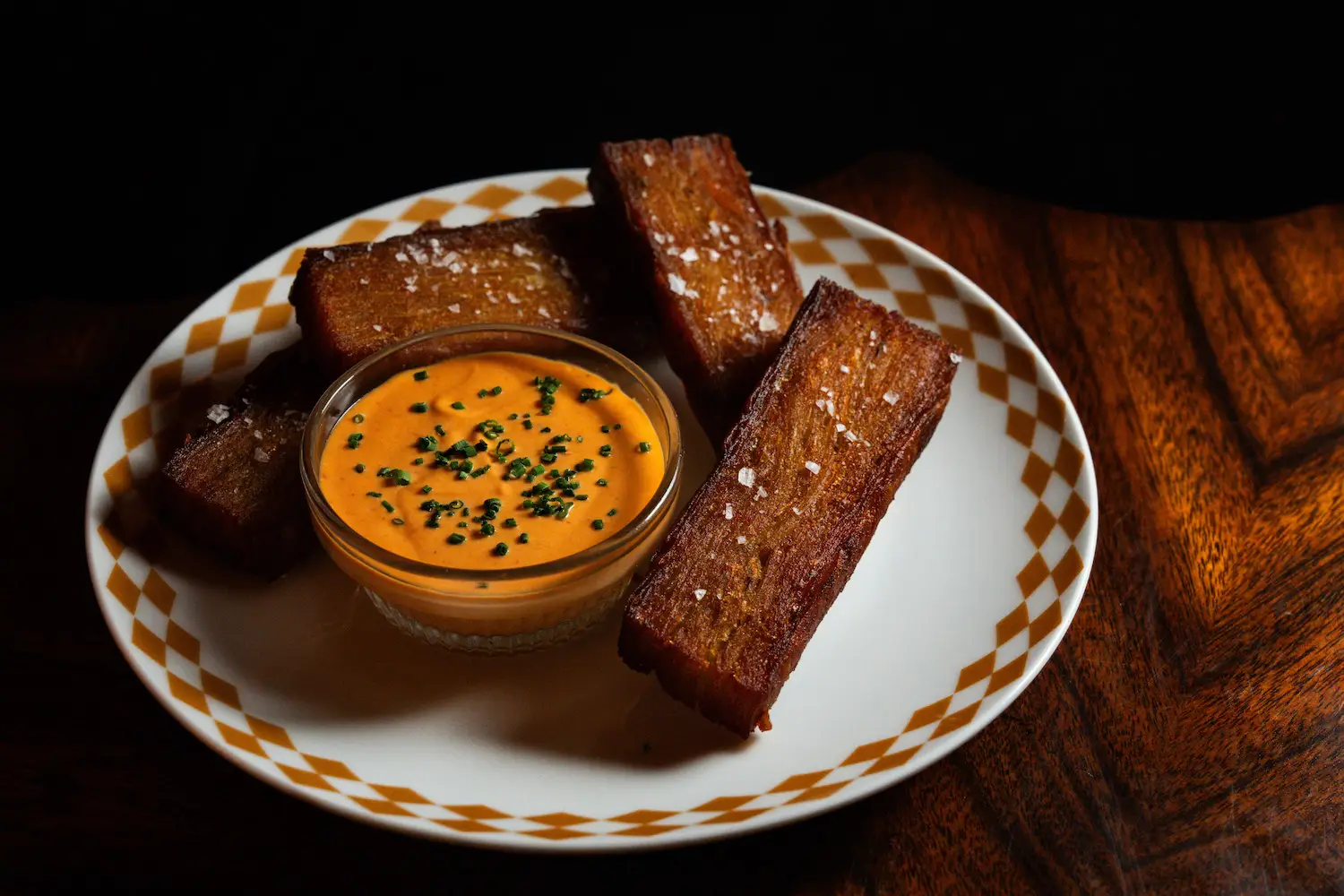
Every meal starts with a tiny glass of bubbles—such as the cava, spiked with simple syrup and bitters, the dirty Spanish wine you didn’t know you needed. Parker House rolls should hit the table first, with cultured “butter” and fennel pollen. It’s a very good but denser Parker (there many potential reasons why, but it’s most likely because, while vegan replacements have come a long way, the fluffy-bread power of eggs is hard to beat). There are fantastic crab cakes made of hearts of palm, possibly the best thing on the menu (“I like these better than real crab cakes,” Claire says). Rivaling the cake is the potato pavé: Whole potatoes are smoked overnight on the dwindling embers of the wood-fired grill, sliced dental dam–thin and stacked, pressed with a giant weight until they form a brick, and deep-fried golden brown. It’s all served with a Calabrian chile aioli that’s made with Veganaise and hot stuff.
Vulture (along with Dreamboat) is one of the few vegan restaurants to have a wood-fired oven, which adds a whole new flavor realm (burning wood has about 400 flavanols that you don’t get with a gas stove). That may explain why the French onion soup has such a deep umami to the broth.
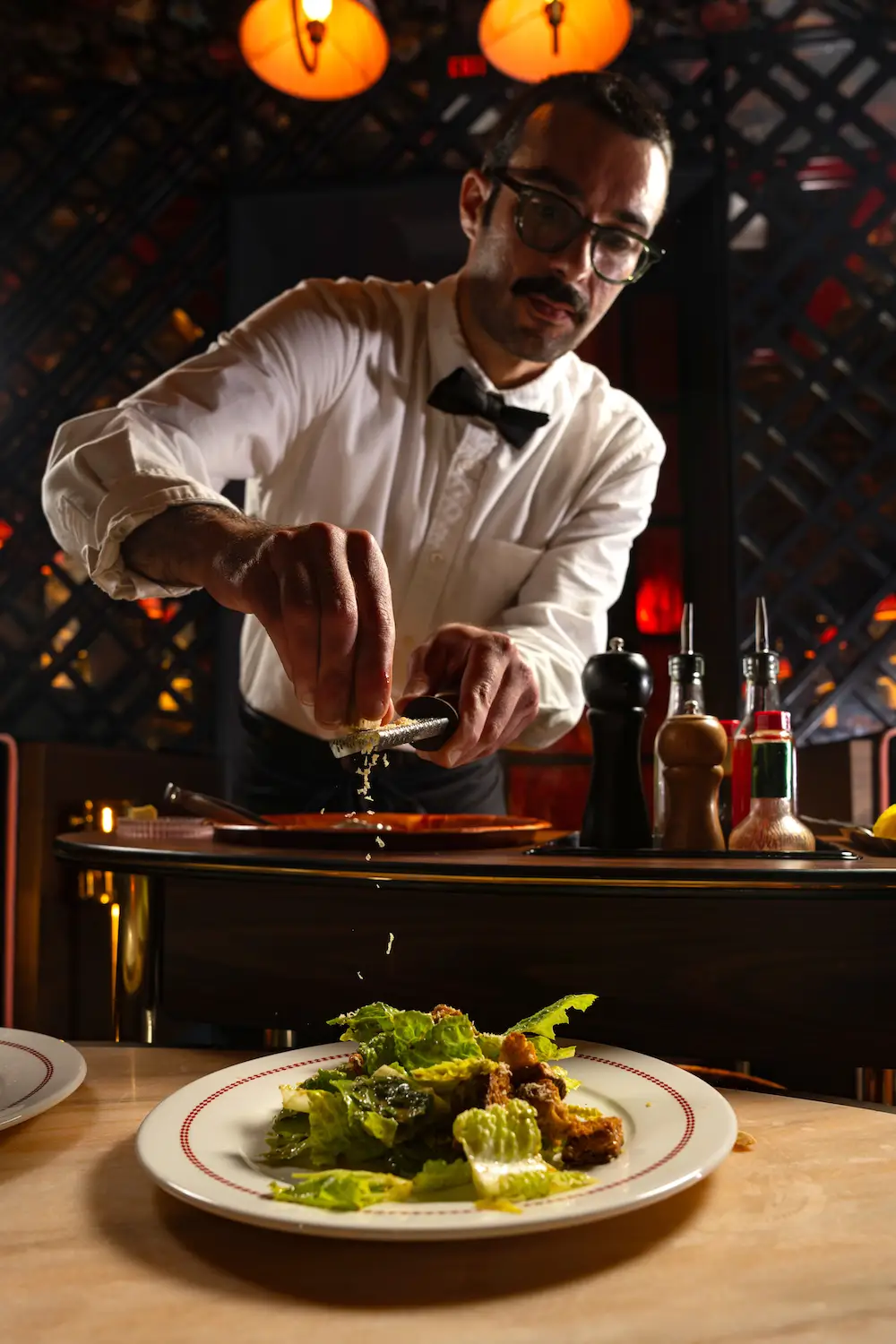
We gotta talk about the Caesar, done tableside. “It was a weird family tradition,” Stetina says. “Grandpa always made Caesar salad for the family on Sundays. And so, when I was growing up, my dad did the same thing.”
When a young Stetina started tinkering in his new plant-based life, he had to try to figure out how to carry on the family tradition without using eggs, parm, or anchovies. The solution was an amalgam of nutritional yeast and capers. The family didn’t excommunicate him.
“I think Grandpa Joe got a little accidentally offended, you know, like, ‘How do you know that lettuce does not have feelings?’” he remembers. “I had no idea how to actually answer that question at that time. I was just, like, a 14-year-old punk-rock kid.”
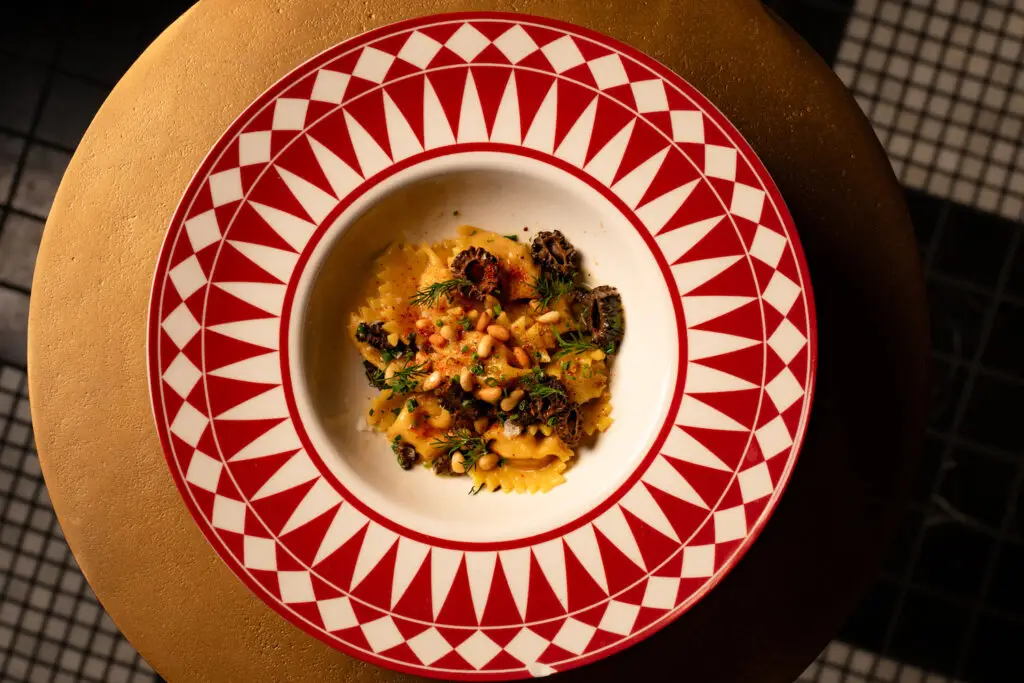
For Grandpa Joe’s Caesar at Vulture, chef Pancho Castellón (who formerly cooked at San Francisco’s Michelin-starred steakhouse Niku) mashes up capers for salinity, then makes a garbanzo-flour, fermented hard “cheese” that servers can actually grate atop.
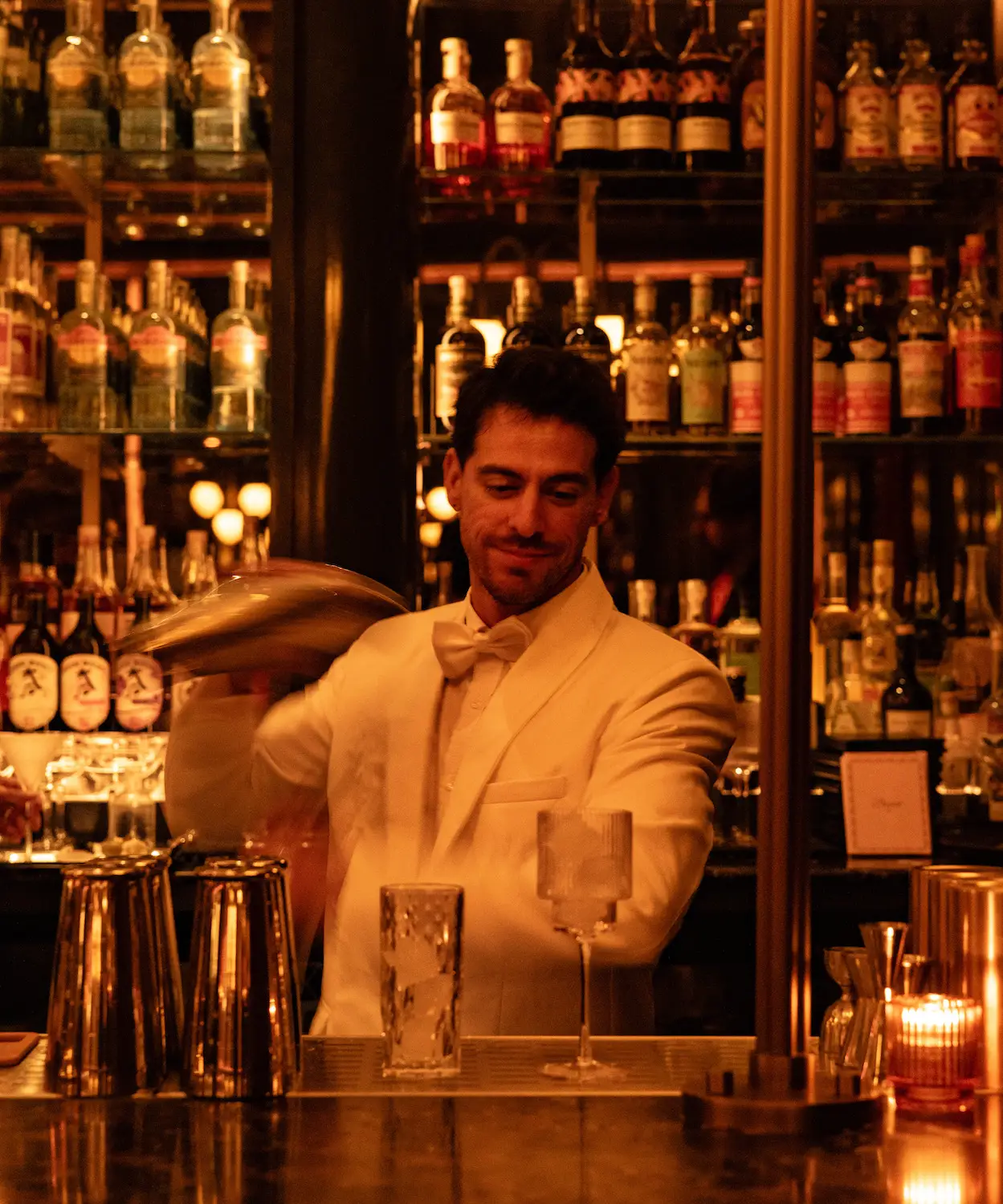
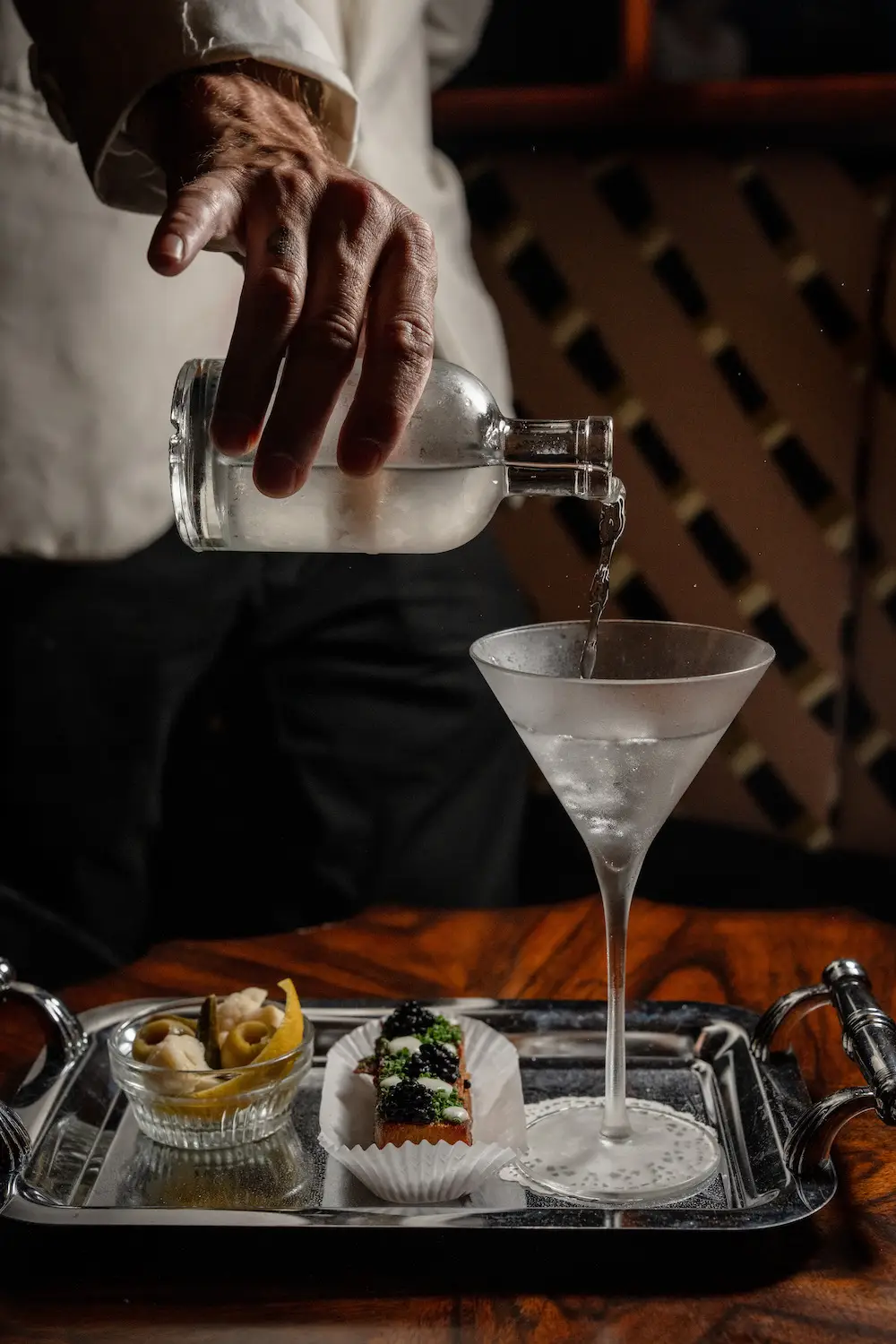
Kindred and Mothership have always been known for world-beating cocktails. At Vulture, that rabbit-holing is shown off in the martini. “It has to be the most fussed-over martini in the city,” Stetina laughs. “We spent a year on it.” It’s three different gins (Suncliffe, Tanqueray No. 10, and Widges) and four vermouths (French, Spanish, and two Italians). The bar team makes it ahead and stores it in the freezer so that it’s arctic in the glass. For the dirty martini, bar director Lucas Ryden tops the base blend in an olive oil float spiked with everything-bagel seasoning, which should be a standard in all self-respecting martini houses.
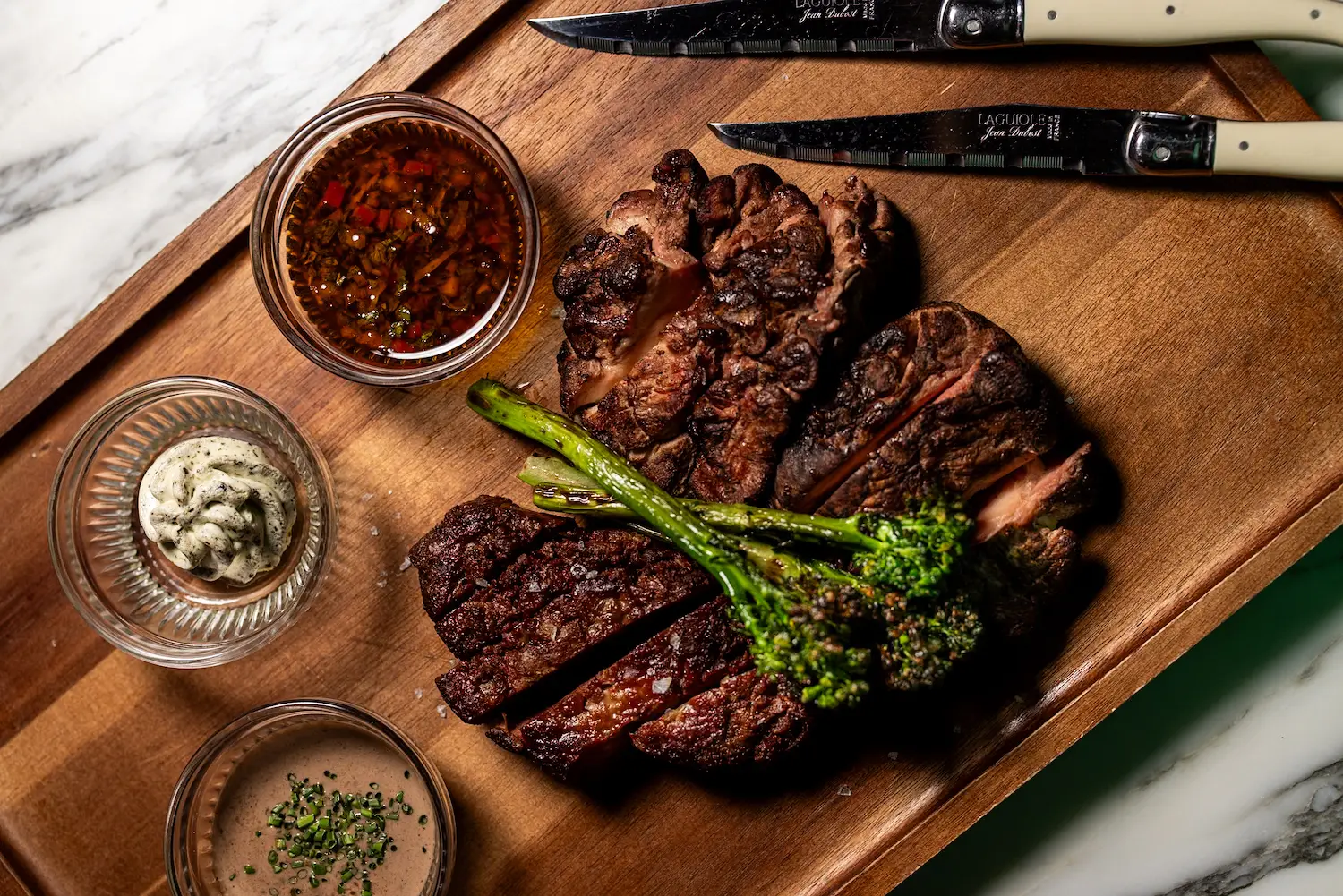
There’s a steak sampler—two massive filets. One is a lion’s mane mushroom (the ribeye of the forest, though I’ve never really cared for it) and the other a Beyond Steak filet. The latter is wild, and Vulture is among the first in California to serve the plant-based meat giant’s latest creation. The flavor is fairly great (there are billions of dollars and some of the country’s best chefs working on this project, so that’s not a surprise); the texture is far more steak-adjacent than any plant effort I’ve ever seen, but chunkier. Eat it with the chimichurri.
PARTNER CONTENT

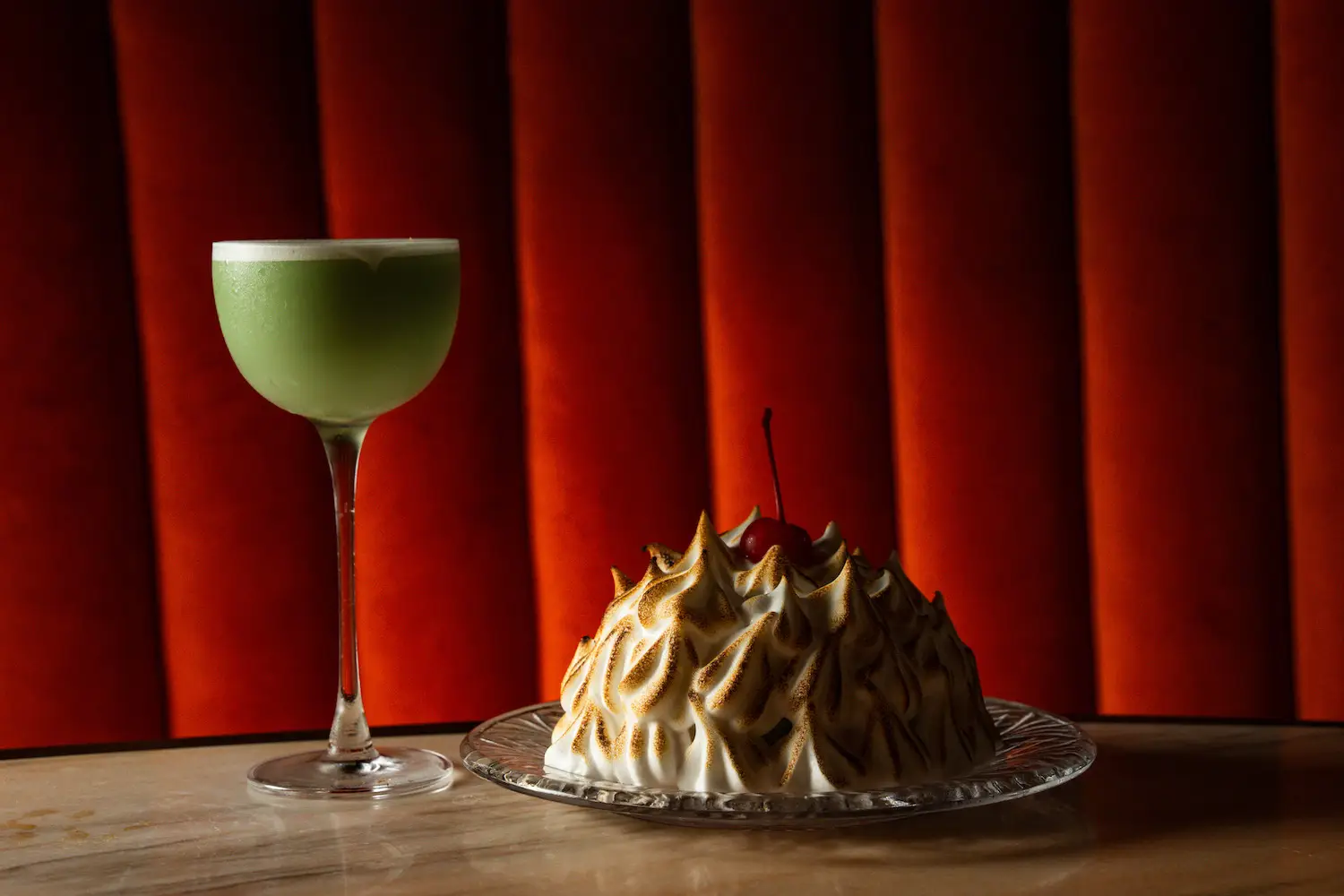
For dessert, it’s all about the baked Alaska. It arrives looking like an elaborate floral corsage, with white tufts of “meringue” made of aquafaba, the white starchy liquid left over after cooking chickpeas (like magic, it perfectly mimics egg whites and makes a hell of a meringue). It’s torched tableside, and beneath the charred, fluffy sweetness is sponge cake and pistachio ice cream (pistachio is the flavor that translates near-perfect to vegan, because even the dairy version is using nuts as a fat).
The “whoa” of the room and drinks of Vulture were never in doubt. Those are sweet-spot, best-skills realms for CH and Stetina. The food would always be the wild card, and after the second visit, I gotta say—it’s pretty damn good, even for a guy with a glaring omnivore bias.

Troy Johnson is the magazine’s award-winning food writer and humorist, and a long-standing expert on Food Network. His work has been featured on NatGeo, Travel Channel, NPR, and in Food Matters, a textbook of the best American food writing.
The 29-year-old culinary director at Herb & Sea is making seafood sexy (and approachable) again
Implementing a farm-to-table model hardly deserves acknowledgement these days. It’s not a stretch. It’s not innovative. “It’s the bare f**king minimum,” says Herb & Sea‘s executive chef Aidan Owens.
When I arrive at the Encinitas restaurant, I’m ready to talk sustainability, farm-to-table stuff, with Owens. “Did you see the chin on that?” he says of the extra big jiggly chin on the sheephead that just arrived with the day’s fresh catch. I did. It was Jay Leno adjacent.
I learn quickly that he somehow oozes both charm and stone-cold honesty. Maybe he could construct a new dish with chin goo, like he did when he had a bunch of tuna scraps and voila’d it into a smooth and crowd-pleasing ‘nduja. “I want to know what’s in there,” he says.

The instinct to look closer, to dig into what others might discard, says a lot about the chef’s approach. I guide him back to our topic, but he has something else on his mind. “We’re overcomplicating food—what happened to just cooking good food and having fun with it?”
Owens grew up on a farm in Byron Bay, Australia, where sustainability wasn’t a concept you chat about so much as a way of life. Think dirt roads, backyard chickens, pulling vegetables straight from the ground, and a mother who believed that if you couldn’t pronounce the ingredients on a package, you shouldn’t eat what was inside.
Food wasn’t precious or performative. Making it was what you did because you were hungry and that’s still what inspires Owens today. “I like to cook good food because I like to eat good food,” he says.
His approach to sustainability at Herb & Sea began so naturally that it felt just like instinct. “I was just like, ‘Let’s order food from the people who live and work here,’” he says.

And why wouldn’t he when lives in San Diego? Cities all over the world vie for our goods. Our tuna is sent overseas. Our spiny lobsters hit dinner plates in China and Japan. Not to mention California’s producing a third of the country’s vegetables and three-quarters of its fruits and nuts.
“Why would we outsource when it’s all here?” Owens asks.
Sustainability, in this context, is about cooking what exists in abundance, nearby, right now. “I love the local fish here. It’s f**king delicious and San Diego citrus, I mean, it is so f**ing good,” he says.
Instead of importing ingredients, Owens also looks for nearby alternatives. “You can find really cool things in the local waters,” he says, pointing out that stingray cheeks taste similar to scallops.

Whatever he finds in that sheephead chin might just be the next substitute for marrow. But to make this work, it means getting diners amped up about the slightly unfamiliar.
Tasting menus, where diners are completely in his hands, become an opportunity to gently push boundaries. “I’ll serve mackerel, because people think they hate it,” Owens says, noting that the abundant local fish can have some fishiness. “But when it’s fresh, it’s arguably one of the best fish in the ocean.”
He also tweaks the language on the menu so people might feel more compelled to give dishes a try without preconceived notions. He might use “lengua” instead of “tongue.” “Whelk” instead of “snail.” When he puts “stingray throat” on the menu, he disarmingly calls it “skate.”
To reduce waste, scraps aren’t always discarded but rather turned into something new. Sometimes they’re smoked, cured or fermented. Apples going bad turn into apple ponzu. Lemons turn to marmalade, which stretches their usefulness far beyond peak season. “And it’s super tasty on our pizza,” he says.
What makes the food even richer, is the relationships he’s built with farmers. Though it didn’t always feel natural, Owens sought personal connection first. He recalls approaching a fisherman at the Tuna Harbor Dockside Market. “I was awkward,” he says. “I went up to him and said, ‘I like your fish.’”
Owen’s is now so close to his suppliers—like fishermen Ryan Sebo and Joe Daly—that he gets texted pictures of fresh catches right as they flop on the boat. The messages always ask if he wants first dibs. “I say yes to a lot of fish,” Owens says, noting that Herb & Sea can go through 2,000 pounds of seafood a week.

The next evolution of sustainability, in his view, will be chefs working directly with producers such as his alliance with Sebo, cutting out middlemen and purveyors where possible. “It will put more money in the pockets of the people doing the work,” he says.
It will mean that chefs can’t just know their local farmers and producers, but they’ll choose to work with the ones who have the best practices. Dining and sustainability will become much less about the final plate. “It will be more about the impact that plate has on the Earth,” he says.
Ultimately, he believes sustainability doesn’t need to be loud. It doesn’t need hashtags. It just needs to be honest.
“We aren’t saving lives. We’re feeding people good food,” he says.
And yet, in feeding people well—simply, thoughtfully, responsibly—something meaningful happens. Guests leave satisfied. Ingredients are respected. Local ecosystems are supported and food returns to what it has always been at its core: nourishment, pleasure, and a quiet reflection of the place it comes from.
No buzzwords required.
San Diego Magazine's 2026 Guide to Balboa Park.
Balboa Park is San Diego’s cultural heart.
The iconic 1,200-acre preserve’s history dates back more than 150 years, evolving from a scrub-filled plot atop a mesa overlooking what’s now Downtown to an urban oasis—the largest of its kind in the country—filled with an array of museums, attractions, gardens, trails, restaurants, and more. Balboa Park is an epic playground where San Diegans and visitors alike can experience the great outdoors just as easily as they can enjoy a world-class performance or explore groundbreaking discoveries.
Tucked away in the Spanish Colonial Revival-style architecture are 18 diverse museums that allow visitors to spend the day learning about, well, anything. A great place to start is the San Diego History Center. Located in the Casa del Balboa building, the museum tells the story of the city’s past, present, and future through photographs and art, clothing and textiles, and interviews with people who witnessed history-making events firsthand. The San Diego Natural History Museum takes visitors even farther back with interactive exhibitions that show what the region was like up to 75 million years ago.
Blast off on a simulated trip to space at the San Diego Air & Space Museum, then check out artifacts from aviation legends, including the Wright brothers, Amelia Earhart, and Buzz Aldrin. Discover new perspectives revolutionizing the science world, learn about an often overlooked but overutilized utility, and exercise your creativity at the Fleet Science Center.
Calling all theater-lovers, Balboa Park has something for you, too. The San Diego Junior Theatre will present their musical take on beloved children’s book A Bad Case of the Stripes from June 26 through July 12. And laugh, cry, and marvel in awe as the pros of The Old Globe perform Kim’s Convenience, the award-winning comedy that inspired the popular series, from May 15 to June 14.
There’s nowhere else in Balboa Park quite like WorldBeat Cultural Center. The institution celebrates African diaspora and indigenous cultures around the world using art, music, dance, and education. The building, a renovated water tower covered in colorful murals, houses a performing arts center, museum, gift shop, cafe, and outdoor classroom.
If you’d like a side of nature with your culture, Balboa Park has you covered there, too. Stroll through the gardens of the Japanese Friendship Garden & Museum, a monument to the relationship between San Diego and its sister city, Yokohama, Japan. Inspired by traditional Japanese design dating back centuries, the 10-acre respite features a living exhibition that showcases plants native to both cities.
If there seems like a lot going on in Balboa Park, it’s because there is. Let the Balboa Park Cultural Partnership be your guide. The organization is the umbrella for 24 of the park’s institutions and offers an Explorer Pass that allows visitors to access multiple museums for one affordable price. The hardest part is picking where to start.

Save on admission to San Diego’s top museums with the Balboa Park Explorer Pass. Explore 16 museums of art, science, history and culture across Balboa Park — all with one affordable pass. Choose the option that fits your pace: the Limited Pass (one day for up to four museums), the Parkwide Pass (seven consecutive days of access to all 16 museums) or the Annual Pass (365 days of unlimited exploring).
Looking for an experience-driven gift? Let the museum lover in your life enjoy their favorite museums all year with a Balboa Park Explorer Annual Pass gift voucher.
BuyMyExplorer.com | Phone: 619-232-7502, Press 2 for Explorer

Bigger experiments, brighter ideas, and boundless curiosity await at the newly reimagined Fleet Science Center. This summer, the Fleet debuts Element 8 Cafe, an expanded theater queuing and concessions space, two new gallery spaces, and, for the first time, a free entrance gallery exploring science in and around San Diego. The transformation marks a new chapter for the Fleet, keeping it a vital, innovative, and accessible science hub for the region. Visitors are invited to explore the experience this summer and connect with the power of science like never before.
Address: 1875 El Prado, San Diego, CA 92101
Website: FleetScience.org
Hours: 10 a.m. to 5 p.m. daily
Phone: 619-238-1233

An accredited cultural gem, the Japanese Friendship Garden & Museum brings traditional Japanese garden design to life with koi ponds, curving walkways and layers of greenery. Guests explore bonsai trees, streams and peaceful nooks while taking part in exhibits, educational programs and festivals that illuminate Japanese culture. Situated in the heart of Balboa Park, the garden doubles as a meditative retreat and a dynamic gathering place, welcoming visitors to slow their pace and connect more deeply.
Address: 2215 Pan American Road E, San Diego, CA 92101
Website: Niwa.org
Hours: 10 a.m. to 7 p.m. daily; last admission at 6 p.m.
Phone: 619-232-2721

A San Diego summer favorite, The Old Globe invites audiences to experience a beloved local tradition in its outdoor Lowell Davies Festival Theatre.
This summer, the 2026 Shakespeare Festival presents two thrilling tales of power, passion and romance. Measure for Measure, running June 14 through July 12, 2026, is a riveting story of justice and hypocrisy that asks who holds power, who is punished and what it truly means to be virtuous. Much Ado About Nothing, playing Aug. 2–30, 2026, is a classic rom-com packed with schemes, sparks and laughter as opposites attract. Audiences can enjoy both shows for $44.
Address: 1363 Old Globe Way, San Diego, CA 92101
Website: TheOldGlobe.org
Hours: Box office open Tuesday–Sunday, 1 p.m. to final curtain
Phone: Box office, 619-234-5623

Aviation and space exploration come to life at the San Diego Air & Space Museum. See an airworthy replica of the Spirit of St. Louis, a Gee Bee racer and historic aircraft from World War I, World War II and the Korean and Vietnam eras. Get up close to the Apollo 9 command module — one of only 11 of its kind in the world — along with Mercury and Gemini capsules, Mission Control and space shuttle simulators, and a selfie spot beside a lunar lander on the moon. Running through 2026, Ripley’s Believe It or Not! brings oddities from around the world to Balboa Park.
Address: 2001 Pan American Plaza, San Diego, CA 92101
Website: SanDiegoAirAndSpace.org
Hours: 10 a.m. to 5 p.m.
Phone: 619-234-8291

History belongs to everyone. At the San Diego History Center, two experiences bring that history to life this summer: America at 250 and the Center for Women’s History. America at 250 traces San Diego’s place in 250 years of U.S. history, while summer programs invite children to learn and explore. The Center for Women’s History amplifies the voices of women whose leadership and creativity have shaped our region.
By understanding our past, we build a more vibrant and inclusive community together. These vital educational experiences are only possible through generous community support. Discover your roots, spark meaningful dialogue, and help keep San Diego’s stories alive for future generations.
Address: 1649 El Prado, Suite 3, San Diego, CA 92101
Website: SanDiegoHistory.org
Hours: 10 a.m. to 5 p.m. Wednesday–Sunday
Phone: 619-232-6203

Junior Theatre is San Diego’s longest-running youth theatre program, empowering students ages 4 to 18 to explore storytelling, performance, and collaboration in a supportive environment. Through classes, camps, and productions, young artists build confidence, creativity, and lifelong skills onstage and off. Each season features a wide range of opportunities, from introductory experiences to advanced training in acting and musical theatre.
Looking for a summer adventure? Junior Theatre’s Summer Camps deliver dynamic programs for grades K–12, including musical theater intensives, acting academies and immersive JT Studio experiences. It’s a place where imagination truly takes center stage.
Address: 1650 El Prado, Suite 208, San Diego, CA 92101
Website: JuniorTheatre.com
Hours: 10 a.m. to 5 p.m.
Phone: 619-239-1311

This summer, The Nat is talking trash—literally. Their newest exhibition, Washed Ashore: Art to Save the Sea, features larger‑than‑life marine sculptures made of ocean debris collected from beaches. It invites visitors to explore the impact of plastic pollution and discover ways to take action.
But the experience doesn’t stop at the gallery doors. Friday nights, the exhibition transforms into an ocean-themed “dive bar” during Nat at Night. Select Sundays bring something brand new: a rooftop brunch with sweeping Balboa Park views. Add two new giant-screen films and five floors of nature to explore, and The Nat is shaping up to be one of the season’s must-visit destinations.
Address: 1788 El Prado, San Diego, CA 92101
Website: SDNat.org
Hours: 10 a.m. to 5 p.m. daily; 10 a.m. to 11 p.m. Fridays in summer
Phone: 619-232-3821

The WorldBeat Cultural Center is a nonprofit multidisciplinary cultural organization dedicated to promoting, presenting and preserving Indigenous cultures worldwide through music, art, dance, education, sustainability and community programs. WorldBeat elevates multicultural artists, expands opportunities for cultural enrichment and fosters deeper understanding across traditions. WorldBeat offers a holistic cultural experience that inspires pride, unity, connection and belonging for all ages.
Address: 2100 Park Blvd., San Diego, CA 92101
Website: WorldBeatCenter.org
Hours: Classes: Monday, Wednesday, Thursday, 6–9 p.m. Exhibits and café: Friday–Sunday, 11 a.m.–6 p.m.
Phone: 619-230-1190

Step into a world of the weird and wonderful at Ripley’s Believe It or Not! at the San Diego Air & Space Museum in Balboa Park. Explore hundreds of bizarre artifacts, interactive displays and unbelievable stories that celebrate the curious and the extraordinary.
San Diego Air & Space Museum | 2001 Pan American Plaza, San Diego, CA 92101

Presented in partnership with the San Diego Museum of African American Fine Arts, San Diego’s Lost Neighborhoods uses augmented reality, oral histories, and archival materials to explore communities and residents displaced by redlining, freeway construction, and other discriminatory policies.
San Diego History Center | 1649 El Prado, Suite 3, San Diego, CA 92101

Spend a summer night at The Old Globe. The Lowell Davies Festival Theatre stages Measure for Measure (June 14–July 12) and Much Ado About Nothing (Aug. 2–30), offering two unforgettable Shakespeare productions for just $44.
The Old Globe | 1363 Old Globe Way,
San Diego, CA 92101

Summer camps at Junior Theatre spark creativity for grades K–12 with hands-on training, musical theatre intensives, acting academies, and JT Studio experiences.
San Diego Junior Theatre | 1650 El Prado, Suite 208, San Diego, CA 92101

A museum visit turns into a Sunday Funday with the addition of rooftop brunch, featuring mimosas, bloody Marys, and brunch bites from Wolfish by Wolf in the Woods (June 14, August 9) and Hash House a Go Go (July 12).
San Diego Natural History Museum (The Nat)
1788 El Prado, San Diego, CA 92101

Celebrate Juneteenth weekend with guided birding, storytelling, soul food, native planting and an African peace drum circle.
WorldBeat Cultural Center | 2100 Park Blvd., San Diego, CA 92101

Nagashi at the Japanese Friendship Garden & Museum by floating a lantern to honor loved ones who have passed. Stroll merchant booths, enjoy cultural performances in the Inamori Pavilion, and sample food vendors plus a beer and sake garden in the lower garden.
Japanese Friendship Garden & Museum | 1649 El Prado, Suite 3, San Diego, CA 92101

Explore arts, science, history, and culture in the Balboa Park Cultural District with one convenient, affordable Pass. The Balboa Park Explorer Pass is your ticket to up to 16 museums and endless fun! Purchase your pass at BuyMyExplorer.com.
Chefs, restaurateurs, sommeliers, and craft mixers - meet our 2026 Tastemakers, the minds behind the magic.
In the heart of Pacific Beach, bar Ella debuted in 2023 with Executive Chef Brendan Nugent at the helm. Drawing on experience from both coasts, Nugent crafts a sustainable, seasonal menu inspired by his Northeast childhood and master‑gardener grandmother. Expect East Coast classics like lump crab cake, garlic shrimp in Old Bay broth and scratch‑made spaghetti with clams. Nugent’s commitment to using every part of each ingredient keeps waste low and the cooking sustainable.
At bar Ella, first‑time guests become family.
Lamb Lollipop: 24-hour buttermilk and za’atar marinated lamb, roasted, seared and finished with housemade chermoula.

1030 Garnet Avenue, San Diego, California 92109
858-808-2286 | barellapb.com | @bar.ella.pb
Chefs, restaurateurs, sommeliers, and craft mixers - meet our 2026 Tastemakers, the minds behind the magic.
At Amalfi Cucina Italiana, dining is a celebration of Italian tradition, hospitality and craftsmanship. General managers Giuseppe Annunziata and Emiliano Muslija have created a welcoming atmosphere where every glass of wine and plate of pasta reflects Italy’s culinary heritage.
Executive chef Marcello Avitabile, a five-time world pizza champion, and pizza chef Joseph Serra bring craftsmanship and soul to every dish through handmade pastas, artisan pizzas and authentic Italian flavors. all.
Margherita Pizza: With San Marzona tomato sauce, mozzarella, basil, extra virgin olive oil, and prosciutto.

Locations in San Marcos, Carmel Valley, and Oceanside
760-653-3230 | amalficucinaitaliana.com
Chefs, restaurateurs, sommeliers, and craft mixers - meet our 2026 Tastemakers, the minds behind the magic.
At VanMan’s Kitchen, guests can enjoy grass-fed smash burgers, tallow fries, and milkshakes, all prepared with the same the commitment to quality San Diegans have come to expect from VanMan’s soaps and skincare products. That means everything is prepared in-house—and we mean everything, from the ketchup to the mayo to the pickles—and made from organic, natural ingredients. In fact, the fries are cooked in the same high-quality suet tallow that’s used for the company’s skincare products. That’s because when VanMan’s says you shouldn’t put anything on your body you wouldn’t eat, and you shouldn’t eat anything you wouldn’t put on your body, it’s not a cute marketing gimmick. It’s a commitment to always providing customers with the best possible ingredients. Another non-negotiable for VanMan’s Kitchen? Keeping all of this accessible. Expect a welcoming, laidback vibe and price tags that make eating organic food affordable to all.
Classic Smash Burger: 100% Grass-fed beef, American cheese, organic lettuce, organic tomato, organic sliced onion, house pickles and burger sauce on a potato bun. Best with a side of tallow fries.

1380 Garnet Avenue, San Diego, California 92109
858-203-3795 | vanmanskitchen.com

