Featured articles
Food & Drink
Food & Drink
Food & Drink
Featured articles
Things to Do
Features
Things to Do
Featured articles
Things to Do
Things to Do
Things to Do
Featured articles
podcast-ep
podcast-ep
podcast-ep
Featured articles
Features
Features
Food & Drink
Featured articles
Food & Drink
Food & Drink
Ready to know more about San Diego?
SubscribeReady to know more about San Diego?
Longtime San Diego beer veteran Erik Fowler and his wife, Shannon, will open their first brewery by end of year
“You’re opening a brewery? In this economy?”
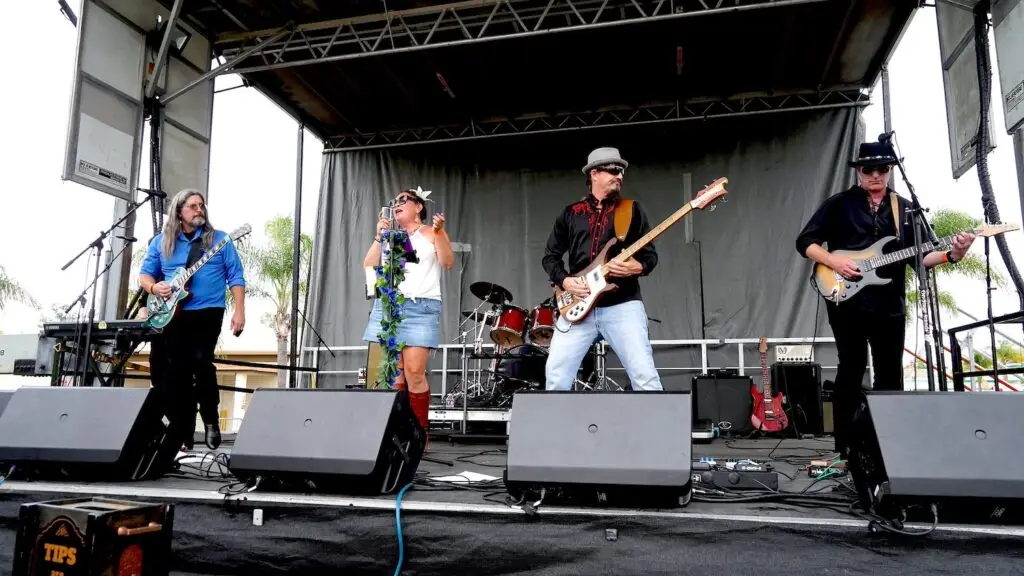
This is the question I posed to Erik Fowler, executive director of the San Diego Brewers Guild. He and his wife Shannon just announced they’re opening Good Pressure Brewing Company in Allied Gardens at the end of the year.
Don’t get me wrong—this is fantastic news coming from great people. But I’m sure I’m not the only incredulous inquirer. The latest Brewers Association report says more breweries are closing than opening across the country, and craft’s overall volume has dropped 5 percent since 2024. Even San Diego, the self-proclaimed “Capital of Craft,” isn’t immune.
Goal Brewing pulled out of the Brewery Igniter space in North Park in March. Little Miss Brewing shuttered all nine locations earlier this year. Half Door Brewing sold to Villains Brewing Company. Division 23 Brewing closed in May. The owners of Jacked Up Brewery retired. Border X Brewing tried launching a GoFundMe before closing up shop in Barrio Logan. It feels a little bleak out there.
But Fowler is far from a naive beer newbie. On the sensory side, he’s a certified Cicerone and BJCP beer judge with sommelier training. He’s studied beer at UC Davis, and gone through the San Diego State University Professional Certificate in the Business of Craft Beer program. He worked in wine retail before managing the taproom and distribution for ChuckAlek in Ramona. He was a taproom lead at Stone Brewing, head of education and hospitality at White Labs for nine years, and the executive director for the Guild for two years. He just had one more thing to cross off his beer bucket list—open his own brewery.
“I’ve always wanted to own a business in the beverage space,” he says. “That’s been a goal since I turned 21. I’ve always had the entrepreneurial mindset, and I’m at an age and an experience level where the leap and the risk makes sense.”
The Fowlers had been looking for a space to realize their dream for 18 months, hoping to stay close to their home in East County. Of all of San Diego’s 150-plus breweries, less than 10 percent of them are in East County. El Cajon, La Mesa, Valley Center, and Ramona have one apiece; Julian and Alpine each have two; there are three in Santee; and a couple production facilities that aren’t even open to the public.
“There’s still a lot of opportunity there, especially for underserved neighborhoods,” he explains.
But after a year without any luck, they decided to expand their search slightly. When they saw the former Poochie’s Hooch Urban Cidery space in Allied Gardens that came with two patios, a cellar, existing tasting room, infrastructure for a kitchen, and a wine license, it just fit. “It’s in a great neighborhood that doesn’t have a whole lot to offer,” says Fowler. “We wanted a spot that could be family-friendly, and it just ended up working out.”
Despite an address in the city of San Diego, Fowler says they plan to focus heavily on serving the eastern side of the county, both in distribution and in their marketing approach. As residents of East County, the San Diego stereotype of beaches and surfing doesn’t always resonate with them.
“San Diego to a lot of people is the beach, but from growing up and being in East County, the San Diego that we know and see isn’t that at all,” he explains. Shannon works for the Escondido-based nonprofit Center for Plant Conservation, which inspired them to incorporate a more nature-based, plant-inspired motif for the brand that better reflects the San Diego East County locals might feel more attuned to.
They’ll initially launch with food trucks and mostly beer, but hope to expand to other beverages like wine and cider and eventually build out an in-house food program. Fowler says they want to first and foremost be a place for families, and an approachable destination for people who aren’t beer experts.
“I want somebody like my mom to be able to come in and feel comfortable, and be comfortable ordering, and just be focused on themselves and having a good time,” he says. He already took the tests at beer school—guests won’t need to feel like they’re taking a quiz to place an order.
“We never want anybody to have to pull out a phone to look something up,” he says. “We want people to come in and have a good time… we want to be the brewery that people are wrapping up their kids’ soccer games.”
Good Pressure Brewing Company will open in late 2025 at 7559 Mission Gorge Road in Allied Gardens.

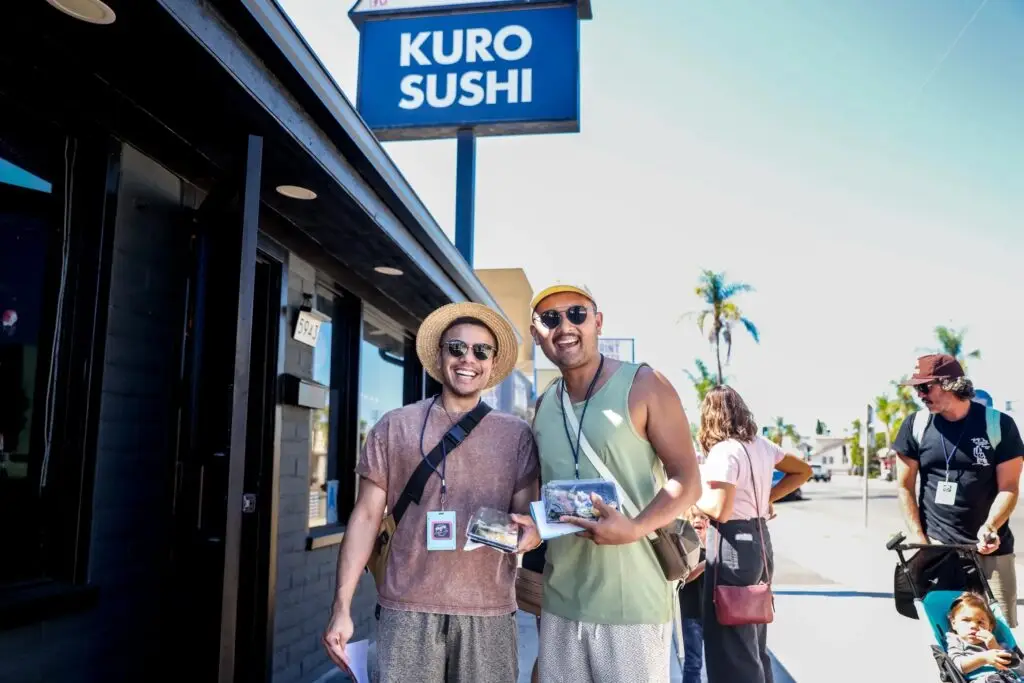
For decades, College Area has been more defined by fast-casual concepts and taco shops than as a serious dining destination. (I totally get why—who else remembers being a broke college kid without a car?) That’s completely changed over the last couple of years, and the College Area Business District is showing off the restaurants, bars, coffee shops, and other eateries along El Cajon Boulevard—like Scrimshaw Coffee, The Luau, The Mesa Bar & Grill, and more. The second annual Taste of College Area starts at 11 a.m. on Sunday, September 28, with stops between 54th Street and 73rd Street. Don’t want to walk? Hop on the free trolley that runs until the event ends at 3 p.m.
Listen Now: The Latest in San Diego’s Food and Drink Scene
Have breaking news, exciting scoops, or great stories about new San Diego restaurants or the city’s food scene? Send your pitches to [email protected].
Beth Demmon is an award-winning writer and podcaster whose work regularly appears in national outlets and San Diego Magazine. Her first book, The Beer Lover's Guide to Cider, is now available. Find out more on bethdemmon.com.

Offering everything from smashburgers to sundaes, the latest food hall from Tiger Hospitality opens its doors this weekend
Omakase and fixed-price menus are one way hospitality businesses are addressing our collective food decision-making fatigue. But on the opposite end of the spectrum, some restaurateurs are offering a bonanza of totally unrelated options for people ordering on a whim. Why not pair a lobster grilled cheese sandwich, açaí bowl, and ridiculously loaded hot dog?
Starting June 27, diners can satisfy their spur-of-the-moment appetites at Global Fork in Little Italy, the latest food hall from Southern California-based Tiger Hospitality.
Six different food concepts will be featured in the 4,685-square-foot, indoor-outdoor space along the Piazza della Famiglia promenade. The space’s inaugural lineup includes a mix of Tiger Hospitality-owned concepts (Cosmos Burger, La Vida, Lobster Lab, and Prik Ki Nu Thai) and outside operators (Seattle-based Moto Pizza and Handel’s Homemade Ice Cream). The space next door, Good Enough Cocktail Club, is another Tiger-backed brand, operated by the team behind Same Same and Amor y Magia in Carlsbad.
Cosmos Burger serves smashburgers stacked with classic toppings, while Lobster Lab focuses on seafood favorites including lobster rolls, shrimp rolls, and lobster mac n’ cheese. Prik Ki Nu Thai adds Thai street food to the mix, with traditional noodle, rice, and stir-fry dishes. And for those looking for something on the lighter side, La Vida offers things like smoothies, salads, and wraps.

Moto Pizza focuses on Detroit-style square pizza with Filipino influences and, despite the name, is not affiliated with Mr. Moto Pizza. Handel’s, which began in Ohio in 1945, will offer dozens of flavors ranging from staples like chocolate and vanilla to rotating specialties packed with candies, cookies, and other mix-ins. (Handel’s already has a number of locations across San Diego, with a La Mesa store coming later this year.)
Some of these vendors already operate at Miramar Food Hall, the other Tiger-owned food hall in San Clemente. And some of them will also appear in Station8, the next food hall slated to open in UC San Diego’s Theatre District Living and Learning Neighborhood later this fall. But if you ask me, reviving the space that housed the Little Italy Food Hall before its closure last February is a far better outcome than leaving empty suites smack in the middle of an area saturated with fantastic food options. Plus, where else can you order a slice of beef adobo pizza alongside squares of caviar toast and a banana split?
Global Fork opens June 27 at 550 W. Date Street, Suite B, in Little Italy. Initial operating hours are from 9 a.m. to 9 p.m., seven days a week, but vendor hours may differ.

Listen Now: The Latest in San Diego’s Food and Drink Scene
Have breaking news, exciting scoops, or great stories about new San Diego restaurants or the city’s food scene? Send your pitches to [email protected].
Beth Demmon is an award-winning writer and podcaster whose work regularly appears in national outlets and San Diego Magazine. Her first book, The Beer Lover's Guide to Cider, is now available. Find out more on bethdemmon.com.

How the now iconic rating system became the biggest name in the food and how it made its way to our backyard
So, Michelin chose San Diego to host its annual awards show this week. Big thing for our city, which people wrote off as the flaccid mozzarella stick or the “fish tacos bro” of California food culture.
Michelin Guide is a pretty fascinating story. It started as a marketing brochure for a tire company and evolved into the strongest global marketing platform for restaurant culture in history.
In 1900, there were less than 3,000 cars in all of France. André and Édouard Michelin were trying to sell tires. A niche market. If people drove more, they figured, tires would go bald faster. They’d sell more rubber.
So they published a guidebook with maps, gas stations, mechanics, hotels, restaurants, and travel advice. The “How to Go Bald” book with food as the bait. By the 1920s, people were buying the guide just for the restaurant recs.
In 1926, Michelin introduced stars. This changes everything.
Originally just one. Five years later, it expanded to three. One meant “very good restaurant.” Two meant “worth a detour.” Three stars meant “worth a special journey.” In other words, wear those tires down to a nub in search of Dover sole.

By WWII, Michelin was the gold standard guide to French food. And French food was the gold standard for western food. Which was half the world.
Michelin first came to the US in 2005.
New York only.
(Knicks in five).
In 2007, San Francisco. Then LA and Vegas in 2008.
Michelin stopped publishing in LA and Vegas after two years and stayed dark until 2019.
Major theories for this?
First, print is expensive. I can attest. ROI on a printed story is hard.
Second, people wanted local critics, and they were finding them online.
Third, Michelin landed like a stuffed shirt in LA, which had taco carts in its heart. LA swiped hard left.
Then Michelin discovered a new way to fund what it does. Instead of trying to sell enough books to justify the cost (inspectors, printing, restaurant bills, etc.), it had tourism marketing districts pay for inspectors to come analyze their cities or states.
Tourism marketing districts are massive organizations whose primary goal is to sing the priases of their cities and states—attract tourists, who pay for hotels and spend money in the city. Heads in beds.
The first to swipe its credit card was California, which paid $600,000 in 2019 for Michelin to come back to LA, Orange County, Monterey, Sacramento, Santa Barbara, and… San Diego.
It’s an overwhelmingly positive thing, which is never without its doubters and critics.
Namely, not everyone is down with the pay for play model.
The biggest reason is that it means cities without big tourism budgets get left out. Chefs in those cities are chefs non grata in the eyes of Michelin. Which is a fair complaint, though also, sadly or not, kind of how capitalism works.
Michelin isn’t a government organization, or a nonprofit culinary organization. It’s a publicly traded company with real bills to pay and investors and shareholders to answer to.
Since it feels like a tad of a PR dilemma for Michelin, I have a proposal that may or may not work.
What if Michelin took a portion of the money it receives from larger cities and used it to fund its expansion into an underserved city or state that can’t afford it? Bake it into the price it charges California or any other state.
Again, Michelin’s not obligated to do this; there is no penalty beyond the paper cuts of public sentiment. But that sort of pay-it-forward model could help other cities without the resources to play the game, while simultaneously making Michelin’s reach bigger and more holistic.
Second, people claim this TMD-funded model somehow taints the winners.
I don’t buy that at all. All tourism boards are doing is paying a marketing business (Michelin) to come operate in their city. They’re not telling Michelin which restaurants to choose for awards. As I understand it, Michelin has retained independence, and its inspectors only award restaurants that they feel are absolutely worth it based on merit.
True pay for play would be if a restaurant group paid Michelin in exchange for a star. Or if tourism boards had a say in which restaurants received attention or awards.
I haven’t found any proof of that happening, and so I won’t ding the validity of the awards until (and if) I ever do.
All tourism boards can control is which areas they’re willing to pay to have analyzed. For instance, San Diego could technically ask that only the city be analyzed and not the county. Which it did not, most likely because Visit San Diego (our TMD) is in charge of marketing the entire county (and thus why Michelin stars like Jeune et Jolie, Lilo, and Addison are outside of SD city limits).
So, if you’re dead set on criticizing Michelin, I’m not sold yet on the pay-for-play model being the right route.
Troy Johnson is the magazine’s award-winning food writer and humorist, and a long-standing expert on Food Network. His work has been featured on NatGeo, Travel Channel, NPR, and in Food Matters, a textbook of the best American food writing.
One of One combines creative seasonal drinks, ethical sourcing, and Filipino-American roots to stand out in San Diego's crowded cafe scene
In a city overflowing with cortados, ceremonial-grade matcha, and ambitious coffee startups, standing out isn’t easy. It’s even harder when your business doesn’t have a fixed address. That’s the challenge (and increasingly, the appeal) of One of One.
The Filipino-American coffee and matcha pop-up concept is the work of Kristin Cleavinger, a San Diego native who spent nearly a decade working in the Los Angeles specialty coffee business before returning home to build a concept of her own. The business takes its name from Cleavinger’s grandfather Gregorio Magnaye Bolor, who immigrated from the Philippines to the United States in the 1970s with almost nothing, but managed to build a life for him as well as his descendants.
It’s that sense of grit, perseverance, and identity that Cleavinger says fueled her to build One of One. “Throughout my time in specialty coffee, I was really curious about Filipino representation, because that wasn’t something that I saw,” she explains. She began to research coffee from the Philippines, but considering the island nation only produces about 0.25 percent of the world’s largest producer, Brazil, there wasn’t much to find.
Instead, she turned inward, drawing from her family’s history and her own Filipina-American identity to build something personal. “To me, this really is a way to honor my family’s legacy—my nanay, Maria Nieves Bolor, and my tatay Gregorio.”

For her drinks, Cleavinger never uses refined sugars, and syrups are made in-house from organic and regenerative ingredients. The Summer Peach latte, the current seasonal special, layers Ceylon cinnamon, unrefined cane sugar, Maldon sea salt, and ripe yellow peaches for a riff on one of summer’s most glorious treats: peach cobbler. Another new drink is Mint Chip, inspired by Thrifty ice cream with a fresh mint syrup, dark cocoa powder, and chocolate chunks with a base of either espresso or hojicha (roasted Japanese green tea with a mild, sweet, earthy flavor and lower caffeine content than other green teas).
Other crowd pleasers include the signature Neapolitan latte, which is inspired by childhood memories of her family using Neapolitan ice cream to create pan de sal ice cream sandwiches. She layers housemade organic strawberry syrup, Madagascar vanilla bean-infused oat milk, and dark cocoa-swirled espresso for a tricolored beverage experience that she recommends sipping before stirring to taste each layer on its own merit.
Past specials have ventured deeper into Filipino flavors, like a turon-inspired latte using jackfruit and banana; another was a coconut pandan matcha made with organic coconut water and topped with a pandan matcha cream.

The sourcing decisions behind these drinks are equally deliberate. Coffee comes from Boondocks, a Filipino-owned LA roaster whose founder is originally from National City. Its current offering, the Galleon blend, combines beans from southern Luzon in the Philippines with Chiapas, Mexico—a nod to the communities woven into San Diego’s own cross-border identity. Matcha is sourced through Este, a local San Diego company that works directly with producers in Mie Prefecture, Japan.
Every supplier is chosen for value alignment as much as quality—Boondocks’ current blend, for example, directly supports women-owned farms. “Each person has the power to choose where they want to put their dollar,” Cleavinger says.
You can catch her at regularly scheduled pop-ups at places like Olivewood Gardens in National City (every third Saturday), Ayi in South Park’s Summer Series (every Saturday morning in June), and on regular rotation at Home Ec and Best Bud Floral in Kensington. (More dates are listed on Instagram as well.) Cleavinger says she does have plans to launch a brick-and-mortar shop in the future, ideally with an expanded beverage menu, space for art shows, and a community gathering place for local and Filipino-owned makers.
In a crowded field of coffee concepts, One of One shows that a memorable drink can do more than wake you up. It can tell you something about the person behind the idea—who they are, where they’re from, and where they’re going next.
Listen Now: The Latest in San Diego’s Food and Drink Scene
Have breaking news, exciting scoops, or great stories about new San Diego restaurants or the city’s food scene? Send your pitches to [email protected].
Beth Demmon is an award-winning writer and podcaster whose work regularly appears in national outlets and San Diego Magazine. Her first book, The Beer Lover's Guide to Cider, is now available. Find out more on bethdemmon.com.
A customized memory-filled explosion gift box is a creative way to show someone you care
Finding a gift that feels truly personal can be surprisingly difficult. In a sea of generic options — flowers, gift cards, candles, and the like — Xplosion Box offers something more lasting: a customized keepsake built around the photos, messages, and memories that matter most.
Founded by Southern California entrepreneur Jay Vijay, Xplosion Box LLC creates fully customized explosion gift boxes that arrive professionally designed, printed, assembled, and ready to gift. Each box opens layer by layer to reveal personal photos, heartfelt messages, pull-out albums, origami-style photo pockets, and hidden notes, turning a simple gift into an emotional reveal.

The brand was built for people who want to give something meaningful without spending hours printing photos, cutting paper, folding cardstock, or assembling a DIY project. Customers simply choose a box, upload their favorite photos, add personal messages, and the Xplosion Box team transforms those details into a polished keepsake that feels thoughtful, personal, and beautifully made.
Xplosion Box offers personalized gift boxes for birthdays, anniversaries, weddings, graduations, Mother’s Day, Father’s Day, Valentine’s Day, Christmas, proposals, bridesmaid gifts, long-distance relationships, and thoughtful “just because” moments.

Customers can choose from flexible customization options starting at $27. The Mini Surprise Box includes 10 photos, three message cards, and one hidden secret note, while the Mega Surprise Box offers a fuller keepsake experience with 40 photos, three message cards, and one hidden secret note.
What sets Xplosion Box apart is its high level of customization combined with convenience. Filled with personal photos, custom text, decorative details, and layered surprises, each box gives customers the freedom to create a gift that feels one-of-a-kind — without having to make it themselves.
At its core, Xplosion Box helps people turn favorite photos, stories, and words into something tangible: a keepsake that can be opened, revisited, and remembered long after the occasion has passed.
CoCo Ichibanya's wildly popular katsu curry has become a ballpark favorite—and now the chain is opening a second San Diego location
I’m a creature of habit. When I go to Petco Park for a Padres game, I order two things without fail: a Swingin’ Friar ale from Ballast Point and a Friar Frank (extra mustard, no ketchup). I might supplement with tri-tip nachos from Seaside Market, or splurge on fancy fish tacos from Deckman’s at the Draft, but there’s no way I’m going to a ballgame without enjoying the classic combo of a beer and hot dog.
But this season, I’m faced with a conundrum. CoCo Ichibanya, the world-famous Japanese curry chain with locations in Convoy District, Los Angeles, Orange County, and Texas, debuted this March at the Mercado near Section 104. I recently attended a game against the New York Mets when I noticed a woman sitting in the row in front of me with a giant helping of chicken katsu curry. I hadn’t seen CoCo’s curry in the wild at the ballpark yet, but the aroma of the crispy fried chicken bathed in savory curry wafting over her shoulder absolutely intoxicated me (and ended up being a nice distraction to the 7-3 loss). Hopefully, she didn’t notice me leering with envy, but I’m 92 percent sure I got some drool on the guy next to me.
The world’s largest Japanese curry chain isn’t done popping up in San Diego quite yet. This July, CoCo Ichibanya will open its second standalone store in San Diego on the ground floor of the Denizen building in Hillcrest.
First launched in Nagoya, Japan in 1978, CoCo Ichibanya specializes in Japanese-style curry dishes, a comfort food signature. Unlike fiery Thai and Indian curry, Japanese curries are often more like gravy, served over rice and alongside katsu pork, chicken, or beef, or as curry omurice (omelet rice). The chain expanded to the United States 15 years ago, and owner Teruyoshi Ono says they’d been eyeing more opportunities in San Diego for some time.

The location in Hillcrest spans 2,585-square-feet with seating for around 49 guests. Menu favorites like the chicken cutlet curry with vegetables, the pork cutlet omelet, and Thai tea will be available, but Ono said Hillcrest will be the first location in the US to offer one major crowd-pleaser: alcohol. And keeping with local baseball fandom, “We will also have Padres x CoCo Ichi limited merchandise at our Hillcrest location,” he promises.
Ono also revealed that CoCo’s future expansion plans include looking for more locations across Southern California and possibly more in San Diego. While the Japanese yen remains at a historic low against the dollar (making it an absolutely unbeatable time to visit the Land of the Rising Sun), why fly overseas when you can get a taste of Japan in your own backyard—or ballpark?
CoCo Ichibanya Hillcrest is slated to open at 3833 5th Avenue in July.
Listen Now: The Latest in San Diego’s Food and Drink Scene
Have breaking news, exciting scoops, or great stories about new San Diego restaurants or the city’s food scene? Send your pitches to [email protected].
Beth Demmon is an award-winning writer and podcaster whose work regularly appears in national outlets and San Diego Magazine. Her first book, The Beer Lover's Guide to Cider, is now available. Find out more on bethdemmon.com.
After eight years and numerous awards, the cafe and roastery expands its operations in North County
San Diego’s coffee industry has yet to hit its ceiling. There are at least 850 coffee shops across the county (possibly over 1,000 at this point) and more specialty cafes and roasters seem to join the roster every other week.
Some newcomers, like Chance’s Coffee, focus on specialties like Vietnamese coffee; other stalwarts, like Bird Rock Coffee Roasters, have helped put the local coffee scene on the map with internationally acclaimed beans and baristas for 20 years. You can get a classic pour-over or an ultra, whipped cream–topped strawberry lavender basil blueberry matcha latte sprinkled with unicorn glitter—whatever your coffee style, San Diego’s got it… somewhere.
Steady State Roasting falls more in the former category, focusing on traceable, sustainable sourcing and no-nonsense roasting (no unicorn glitter here, sorry!). Founder and lead roaster Elliot Reinecke first started Steady State in a garage behind his house, roasting small batches until expanding slightly to a shared and not-quite-permitted space before landing in a lucky spot on State Street in Carlsbad.
Now, eight years later, Steady State is scaling up once more, opening its second cafe in San Marcos next to their roastery. The new location offers the same food and drink menu as the original Carlsbad location, and Reinecke says he plans to add an onsite bakery to bake items like English muffins and country loaves to supplement Prager Brothers’ more specialized pastries.
He doesn’t plan on opening more cafes, though. Rather, Reinecke plans to expand roasting operations and strategic sourcing. Currently, he sources beans from Colombia, Panama, across Africa, and as of this year, Costa Rica. “We’ve had Costa Rican coffee before, but we went to origin a few months ago and bought six different lots from there, all from really good high-end local farmers,” he explains.
The rising cost of sourcing does present some challenges, as does changes within coffee culture itself. Coffee has moved from a mass-market beverage to a highly personalized artisanal experience, but the current feeling is moving back towards focusing on quality over flashiness, says Reinecke.
If Reinecke’s prediction is right, coffee is headed on a similar trajectory to craft beer. Ten years ago, no one knew what Citra hops were. Now, even casual beer fans are versed in hop varieties, and that attention to detail is spilling over to coffee as well. How many of San Diego’s 1,000 coffee shops will remain once the unicorn glitter’s luster fades? My bet is on anyone remaining steadfast to sourcing, sustainability, and simplicity.
Steady State San Marcos is now open at 1320 Grand Avenue, Suite #9, San Marcos. Initial operating hours are Tuesday through Saturday, 7 a.m. to 2 p.m.
Listen Now: The Latest in San Diego’s Food and Drink Scene
Have breaking news, exciting scoops, or great stories about new San Diego restaurants or the city’s food scene? Send your pitches to [email protected].
PARTNER CONTENT
Beth Demmon is an award-winning writer and podcaster whose work regularly appears in national outlets and San Diego Magazine. Her first book, The Beer Lover's Guide to Cider, is now available. Find out more on bethdemmon.com.
Innovative treatment could offer cancer patients new options with fewer side effects
Chemotherapy and radiation have long been considered gold standards of cancer treatment, but they can cause severe side effects. A promising new approach called theranostics—a combination of “therapeutics” and “diagnostics”—could offer patients with certain types of metastatic cancers new hope. It’s a two-step process that uses a drug that binds to specific receptors on cancer cells. Advanced imaging detects this radioisotope, allowing doctors to then use a second radioisotope that binds to the cancer cells and destroys them. Click here to learn more about how specialists at Scripps Cancer Center are using theranostics.
For more nutrition, wellness, and healthy living tips, sign up for the San Diego Health newsletter here.