Ready to know more about San Diego?

Subscribe
Food & Drink APRIL 6, 2022

Harry’s Coffee Shop in La Jolla Has Served Up 62 Years of Family-Friendly Favorites

Where kindness and humility are always the specials of the day

Harry’s Coffee Shop in La Jolla Has Served Up 62 Years of Family-Friendly Favorites
courtesy of Harry’s Coffee Shop’s Instagram
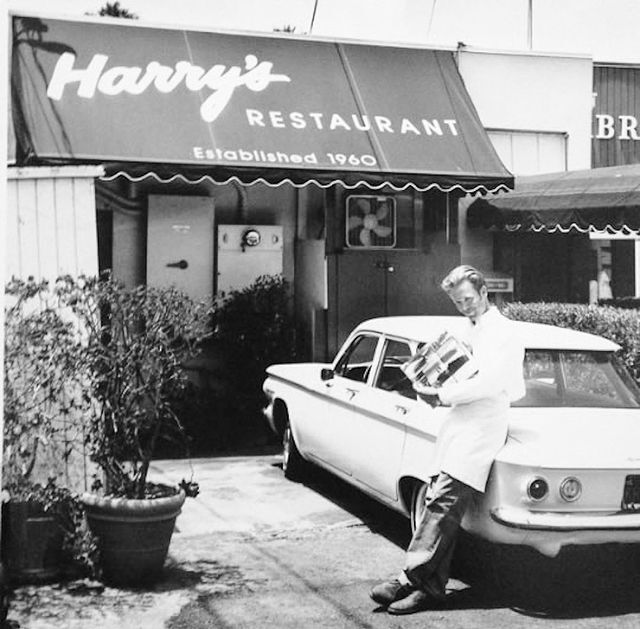
Harry's Coffee Shop - archival pic

Harry’s Coffee Shop, opened by the Rudolph family in 1960, has been serving patrons in La Jolla for over over 62 years

courtesy of Harry’s Coffee Shop’s Instagram

John Rudolph and I take seats opposite each other on the whitewashed benches that line a stretch of Girard Avenue in La Jolla. I squint through the relentless sunshine at the tables around us, each of which has cradled innumerable families—including my own—over 62 years.

Harry’s Coffee Shop has been a focal point of daily routine to countless La Jollans in its lifetime. To the Rudolphs, it’s the focal point of their entire lives. “I’ve never known life without Harry’s, and I’m not interested in knowing life without it,” explains John, son of founders Catherine Rudolph and Harry Rudolph Jr. 

“It’s incredible, this [is] one little business and we’ve all worked here,” John reminisces of his childhood. “To be fair, my dad should have fired me 100 times.”

Founded by his parents and grandparents, Harry’s became the spot for all nine Rudolph siblings to learn the value of a dollar. “If we wanted a skateboard or something, we could come here and work until we had the money. It taught us the value of hard work and that there’s no free lunch, so to speak.” But don’t let John kid you. Despite the shop being closed at the moment, a handful of people stop by the entrance to peer in. John immediately jumps up and offers them a seat and a beverage of choice on the house. The hospitality that his parents and grandparents strove to provide their guests runs through his veins.

John undertook ownership and operations of the restaurant back in 2005. Initially he shared the responsibilities with two of his siblings; while they’ve pared back their involvement to supporting roles, John remains the constant in nurturing the family tradition. “My parents sacrificed their lives for this business. It’s a part of our family. So I try to look at the business from their perspective. They dealt with the decades, through recessions, boom and bust economy, different restaurants opening and closing. I’ve been trying to navigate the ship that they started. And it’s not just me. It’s our staff. It’s my whole family. They’ve been a part of the success of the business.”

John has been channeling this inherited tenacity and unwavering support even during the pandemic. Despite breakfast not being an obvious moment for takeout, he made the decision to keep Harry’s open by offering takeout only. The once-buzzing coffee shop stripped down to one cook and one server. “Our logic was that we have to get the staff back to work because, ultimately, they’re our business,” he says. “There’s so many guests that don’t know who I am or never met our parents or any of my siblings. The staff represents the business.” 

Despite the challenges to stay afloat, Harry’s has remained open, bringing employees back as quickly as possible. Not even a car crashing into their entire electric panel and kitchen space could stop the Rudolph family, who worked together tirelessly to get the coffee shop back open within months of the accident. 

Throughout the ups and downs, Harry’s has stayed true to its nature. “We’re just an old-fashioned diner,” John says, shrugging. You won’t find gigantic soufflé pancakes or even an avocado toast on their menu. In fact, Harry’s menu has drastically reduced over the years (still standing at a respectable three pages long). But you’ll find an ever-ready line of people waiting to tuck into their BW Bennys and Belgian waffles. “One thing that our parents taught us was to treat people the same,” he continues. “Whether it’s the homeless person, the successful businessman or woman, or celebrity, [they get] the same level of respect and kindness. I would hope that’s our competitive advantage. Like our dad would always say: ‘You’re only as good as your last guest experience.’” 

When I ask about how John has celebrated the restaurant’s past milestones, he smiles serenely. “We don’t really celebrate anniversaries. I try to treat every day as if it’s our first day we’ve ever been in business. It’s like a grand opening with each guest that comes on property. There would be no business without the staff and none of us would be here without our guests. We’re all connected.”


La Jolla

Subscribe to our newsletters

Select Options

By subscribing you confirm that you agree with our Terms and Conditions and Privacy Policy.

Food & Drink MARCH 20, 2026 (Updated Dec 16, 2025)

Restaurant Review: Fleurette by Travis Swikard

SDM's Chef of the Year opens his big French idea and ultimate dream restaurant in La Jolla

The day I spoke to chef Travis Swikard, his furniture had been stuck at the border for weeks. Upholstery detained, a uniquely modern snag. The biggest restaurant opening of Swikard’s life was a couple days away, and there were gaping holes in his dining room where the sort of significant, vibe-defining furniture would go. There are many reasons people enjoy restaurants, but sitting is one of them.

“This project has tested our patience in every way,” he says. “But we figure it out.”

Add to that a broken foot. He smashed it the day before Thanksgiving. Dropped an employee locker on it. He spent the next day not getting a cast and justifying whiskey as therapy. Instead of going to the ER, he worked a full holiday shift at his first restaurant, Callie, the one that made his name in San Diego.

Courtesy of Fleurette

Swikard has that old (and endangered) grin-and-bear-it nature—no doubt at least partly seared into him by the restaurant world he came up in. He learned in some of the world’s most revered kitchens under some of the most devout, old-school chefs. The only promise for a young, serious cook was that the work would be grueling, highly instructive, repeatedly humiliating, and character-building.

Swikard got all that and some restaurateur renown as well. Fleurette in La Jolla is the restaurant that should put him on the national stage for good. He’s already there, but the cement’s still wet.

The final pieces of furniture finally cleared customs a month after opening. Fleurette is the peacock at the base of La Jolla Commons—a LEED-Platinum glass tower filled with enterprises in finance, life science,and capital-L law. Now, it also houses a deadly good beef tartare in anchovy sauce and a cocktail that tastes weirdly like a refreshing pesto. Once you get lost trying to park, walking through the Commons’ immaculate courtyards makes you want to throw a few bucks at cryptocurrency, cure cancer, and work up a hunger for gougères with 21-month Prosciutto di Parma and black truffle fonduta.

Photo Credit: Zack Benson

For the latter, search for the yellow doors. Among all the very official, floor-to-ceiling glass, those doors look like a portal to a wonderland where Alice is sharing suspect tea with Aldous Huxley.

Swikard’s concept here is a southern French one, built on the “cuisine du soleil” movement that’s credited to legendary French chef Roger Vergé. Vergé opened his restaurant Moulin de Mougins in a village near Cannes, the famed coastal town in Provence (in the southeast corner of France). While the rest of France was cream-and-buttering its way to culinary glory, here was this village chef cooking light, fresh, seasonal fare (mostly seafood) dressed with olive oil and herbs. His bouillabaisse was the stuff of legends. In many ways, cuisine du soleil was mere practicality: Provence is mainly cliffs, and it’s hard to raise a dairy cow on a cliff.

“This is the way I’ve been cooking my whole life,” Swikard says of what he’s doing at Fleurette. “I feel like classic is the new nouveau.”

Photo Credit: Eric Wolfinger

Let’s back up.

Born and raised in Santee, Swikard did what most chefs with big dreams do—headed to Europe for a bit and wiggled his way into the doors of the greats, like bad-boy Marco Pierre White. Then he went to New York to serve as a chef de partie (station-specific cook) at Café Boulud, a Michelin-starred spot from one of the most renowned French chefs in the world, Daniel Boulud. There, he worked under Gavin Kaysen—a former San Diego chef who was Boulud’s right-hand. After Kaysen’s departure (to Minneapolis to become a regional food capo with James Beard Awards and multiple restaurants, most famously Spoon and Stable), Swikard became Boulud’s go-to guy and culinary director.

Finally, thanks to San Diego restaurateur David Cohn, Swikard came home in 2019. Cohn (who is a semi-secret investor in what feels like a vast majority of boldfaced San Diego restaurants) had visited Boulud Sud and eaten Swikard’s food. He offered to financially back a restaurant for Swikard if he returned and built it in San Diego. Not a Cohn restaurant—a Swikard restaurant, run by Swikard and his team, including his operational partner Ann Sim (formerly of Eleven Madison Park) and his wife Mia.

New San Diego Mexican-Vietnamese pop-up restaurant series Gremelos featuring Callie chefs Nomar Ramirez and Nick Trinh

Swikard agreed. When Callie finally opened in 2021, it was the closing of a circle, since Cohn’s business partner—chef Deborah Scott—had given Swikard his first restaurant job as a line cook 20 years prior at Kemo Sabe in Hillcrest. Cohn and Scott are integral partners in Fleurette, as well.

Here’s the important part: Callie had been scheduled to open long before it did. Due to a prolonged global shitshow that included wet bats, bleach shooters, and an ideological cage match between politicians and scientists, it was delayed. That delay was at least the partial key for just how special Callie became. Swikard spent that awkward couple of years going to meet farmers, fishers, ranchers, small shop owners, and people tinkering with rare foods in San Diego garages.

Photo Credit: Zack Benson

This is why boat captains will call Swikard to report they’re pulling up to the dock with a line-caught bluefin. They’ll bring it to his back door. At Callie, he serves what looks like a heap of damn carrot shavings—pre-compost as fine dining. Except, instead of shoving that fresh tussle down the garbage disposal, he pickles and ferments it for days and tosses it with a housemade burnt-orange cashew cream (he slow-bakes an orange until it’s charcoal-colored, and the flavor is wild) and a house-ground dukkah. He keeps his spot prawns (a California delicacy) in a tank of perfectly calibrated seawater that he gets from Scripps Institution of Oceanography and only ends their journey when they’re ordered (most restaurants will kill them, then store them in the walk-in, which does some mushy damage to the texture).

The point of all this Callie talk is to note the iceberg of process under what looks like simple dishes, which also happens at Fleurette. Swikard tends to source raw ingredients from people as obsessive as he is. Consider the anchoïade sauce for Fleurette’s tartare. The key is colatura di alici, a revered Italian fish sauce made by resting layers of anchovies and salt in a barrel for months. He adds just enough (fish sauces are like cologne—a dab is perfect and two dabs are a public menace). It’s mixed with a confetti of egg yolks (cured, which means they’re rubbed with salt and sugar and rested until they become a firm umami bomb that can be shredded like golden Parm). Both explain why what looks like a pretty simple pile of raw beef (albeit the very best beef, from Flannery, one of California’s most sought-after first families of beef, known for USDA Prime Holstein cuts with a snow-flurry of marbling) tastes so wildly alive.

At Fleurette, the sauce work is textbook heritage—from soubise (onion) to vierge (tomatoes and herbs) to garlic persillade and a fairly mind-blowing fennel marmalade Swikard serves with a duck liver and bone marrow pâté (when foie gras became the PETA homing beacon of the restaurant world, he learned how to replace foie’s trademark fatty magic with marrow).

Photo Credit: Eric Wolfinger

His kitchen setup is the same one that Daniel Boulud has in New York—a French Athanor, the Aston Martin of chef suites with all the bells, whistles, and flux capacitors (“We clean it with fresh lemon juice every night,” Swikard says). But the classic French in him meets the San Diego lifestyle in him here. The ingredients are mostly local (A-list produce is chief among the reasons to be a chef in this county, since it has more small farms per capita than any other in the US and the growing seasons are laughably long).

“[Boulud] would buy all the best produce from across the world,” Swikard once told me. “So, every morning I’d come in and see the boxes of produce, and every time, on the side of the box it said, ‘San Diego.’”

There’s not much gluten on the Fleurette menu, nor dairy. It’s classic French food with fewer naps—more olive oils and poached fish than heavy cream and fat-bathed proteins.

“People think French food is heavy and rich,” Swikard says, echoing French predecessors who introduced nouvelle cuisine and cuisine minceur (“slimming cooking”), both styles based in less unctuous takes on the mother sauces. “Fleurette is not rich. It’s lighter, brighter, cleaner—the way I like to eat.”

Photo Credit: Eric Wolfinger

You see that lightness in one of the first menu’s star entrees. Copper River steelhead trout (like the river’s equally famous salmon) is prized because these fish swim hundreds of miles against fast-moving currents to spawn; that requires massive energy reserves (loads of omega-3 fats) and causes them to develop huge muscles (those create texture). The result is a remarkable, remarkable fish, which Swikard’s team poaches in olive oil with cauliflower, pine nuts, and grape vierge. His bouillabaisse (hello, chef Vergé) employs local rockfish and spiny lobster as seasonal anchors. He’ll also use bocaccio (another local rockfish). “People call it a trash fish, but it’s one of the most flavorful fish there is,” he says.

Swikard’s dad Larry, a San Diego landscape architect, built a modest herb and citrus garden out back. The herbs are largely Provence.

For Swikard, Fleurette’s about the next gen of chefs. He wants to use that big Athanor and this new dream to help young cooks slow down, learn, drill the basics into their DNA. It’s a training ground that will, ideally, spawn more Callies and Fleurettes in the years to come. There’s a fairly big trend of cooks skipping the craft-building and going straight to wild fusion-concept cuisine.

Photo Credit: Zack Benson

“Stuff that I feel is pretty classic hasn’t been done in San Diego—this generation of dining hasn’t seen it,” Swikard says.

He points to French master chef Jean-Michel Diot of La Jolla’s Bistro Du Marché as the role model. “Doing classic at a high level consistently—there’s no better level of cuisine than that,” he adds. “I wanna build a foundation for cooks in San Diego and train them how to cook in this style.”

The current cast: Mia Swikard runs marketing for both restaurants. Ann Sim is director of opps for both concepts. His chef de cuisine is Roman Garcia, who was also CDC at Selby’s in Atherton, CA when it won a Michelin star. The GM is Steve Dreifuss, formerly of Little Italy’s now-shuttered Camino Riviera. Callie’s beverage team—wine director Tracy Latimer and head bartender James Roe—have made moves as well, leaving heirs to oversee Callie.

“Callie was what I felt was right for San Diego at the time, and I feel like this is what’s right for San Diego now,” Swikard says. “I couldn’t have done this without doing Callie.”

Troy Johnson

About Troy Johnson

Troy Johnson is the magazine’s award-winning food writer and humorist, and a long-standing expert on Food Network. His work has been featured on NatGeo, Travel Channel, NPR, and in Food Matters, a textbook of the best American food writing.

Food & Drink FEBRUARY 11, 2026

Restaurant Review: Lucien in La Jolla

Michelin-bred chef Elijah Arizmendi is doing wildly inventive things with ingredients both quotidian and strange

Restaurant Review: Lucien in La Jolla
Photo Credit: Kimberly Motos

We gotta talk about Lucien’s egg show.

A staff member unveils the caviar tableside, opening the box like a jeweler presenting stones that have bedazzled some of the most famed fallopian tubes in marine history. The “25” on the inside of the lid is massive. The caviar brand, N25 (German-based; sourced from Yunnan, China), wants you to know the exact northern latitude where these eggs started their long journey to this moment, this ceremonial dispensing into your lucky mouth.

(Before we go further, it’s important to note that N25 is not contributing financially to my existence in any way. I just love a solid educational hyperventilation on food ingredients, and this one in particular is instructive of the experience-slash-obsession that is Lucien, a 30-seat, tasting menu–only restaurant in La Jolla. The three partners who own it worked at high levels of the most rarefied restaurants in New York and other parts of the country. Among them is chef-partner Elijah Arizmendi, who, before this, was chef de cuisine at L’abeille when it earned its first Michelin star.)

Photo Credit: Kimberly Motos

Anyway, each egg of N25 caviar goes through a four-part audition process. Only 10 to 25 percent of the entire harvest will make the cut. That’s fairly standard for high-quality foods and drinks—tequila, for instance. Imagine a long hose in the shape of a wave. After distillation, that entire hose is filled with booze that is technically tequila. The bottom of the hose contains enamel-stripping gasoline, and as you go up the wave, you get an increasingly better product. Gas-station brands will take the whole batch and shove it into a bottle. The result is as you’d imagine—like you crammed your used gym clothes into a suitcase with your special-occasion tux. Premium tequila makers will only bottle the very best stuff, selling the lesser liquid to brands who specialize in wince-fuel destined for rush-week bloodstreams.

N25 only selects large, fatty pearls of caviar that can stand up to the rigors of the aging process. They’re then cured in mineral salt, which draws out the moisture, intensifying the flavor—but not so much that it tastes like you’re licking the bottom of a forgotten dingy in the crime part of the harbor. The caviar is aged in sub-zero temps for three to 12 months. An ID tag on the back of the box allows you to trace the caviar all the way back to the individual sturgeon, a sort of 23andMe for the luxury food space. The ID also offers details on the size of each roe in that tin, plus color and texture and flavor characteristics—like wine-tasting notes for caviar people.

Oh, wait, there’s more. The caviar is not even the star of the Lucien egg show.

Photo Credit: Kimberly Motos

Because on your table in front of that unrealized school of fish is 80 percent of an eggshell, sitting upright in a bed of rare, hard, white heritage Amber Eden grains, which can be traced back to Persia, where Adam and Eve smote God with their choice in fruit. (Note: Don’t attempt to eat that decorative pile of raw wheat—apparently some guests have, to predictably WTF dental trauma.) The egg’s top has been surgically removed, revealing a bone-white cream. The server spoons a mid-size dollop of N25 onto the top, essentially giving it a zillenial perm made of caviar and producing a fertility shrine for Michelin inspectors.

Inside that egg is the eighth through 12th wonders of the world. Eating this should flood you with enough happiness to prevent you from posting dumb political hot takes on the internet for at least 24 hours.

The “ouef” is a magic trick pulled frequently from the hats of Michelin chefs (Thomas Keller, most famously), for good reason. First, it looks as though you’ve come to a mount of culinary talent, where food is profoundly transformed and priced accordingly, and the server’s handed you a damn egg from the fridge.

Photo Credit: Kimberly Motos

The egg is the single most humble, farmy object—one that us average so-and-sos cook very averagely multiple times a week. But, here, inside that raw grocery pellet is the most un-you concoction imaginable: a multi-layer dip of silken, fluffy food clouds (okay, fine, it’s just dashi custard and chantilly cream) and possibly the highest possible manifestation of the egg arts, all due respect to chawanmushi.

Scrape your spoon inside; make sure to get all of the layers. It is rich, so rich, and I want some bread with it. Lucky for me, there’s a bite-sized loaf of buckwheat bread (made with Amber Eden) topped with grilled banana and nori, which is the second-most delicious thing you will have at Lucien—if it ever appears again, since Lucien’s menu changes with the wind and seasons and is never really the same.

San Diego Chinese restaurant 24 Suns a pop-up restaurant in Oceanside

Here’s why I spent so much time reviewing a damn egg: Placing that humble American farm totem in the art spotlight that hangs above each table of this highly ambitious restaurant—and metamorphosing it in such a remarkable way—says just about everything you need to know about Lucien; Arizmendi; and the other partners, Brian Hung and Melissa Lang.

Dinner here is meal as manifesto. Arizmendi and his kitchen crew (half of whom seem to have moved from New York to San Diego to join him on this venture, which says something either about Arizmendi or, more boringly, about our weather) are crafting a 12- to 16-course tasting menu of tiny treats using the most peak-of-peak-season, rare, raw ingredients from farms that specialize in things grown in sacred loams and eggs laid by hens with self-care instincts, probably. The Lucien experience is less of a meal and more of a live-action, audience-participation documentary about sublimely good ingredients from across the globe but mostly from local dirt and waters and whatever field Arizmendi wanders to forage.

Photo Credit: Kimberly Motos

Okay, so now let’s talk about Lucien’s highly interesting design mistake or genius way to facilitate overhearing insider-trading tips during dinner.

The booths in the restaurant are half-domed, as if you’re dining in exactly half a snowglobe or a moody cantina booth suited mostly to hiring Han Solo to fly your mercenary ship. Visually, very cool. And each half-dome is the most wildly successful whispering gallery in the world—a more delicious version of St. Paul’s Cathedral. A man seated 25 feet away from us murmurs something to his dining companion, and I hear every syllable as if I have bugged his table and am listening through an ear piece. Secrets are slutty here. Sweet nothings become sweet everyones. I can hear the chefs on the line having what used to be hush-hush conversations, which must suck for them (complaining about diners is one of the prized relief valves of a fairly grueling industry which, to the chefs’ credit, they don’t do). By the end of the meal, I am clairvoyant. I can hear synapses forming thoughts.

Photo Credit: Kimberly Motos

And since I started this review off with deifying praise of what mortals can do to an egg, let’s balance it out with a tempering. As I mentioned, the housemade bread uses that Amber Eden grain. It’s dense but flavorful. The cultured seaweed butter it’s served with is one of the most jarring ordeals my mouth has been through (and it’s been a lab mouth for American restaurant culture for many years). The best way I can describe it is “butter as low tide.” When you hear the word “butter,” you expect a warm, emotional embrace of semisolid milk fat melting in live-time in your mouth. Instead, you get specks of (albeit immaculately sourced) beach flotsam mucking up the hug.

Lucien doesn’t serve it cold, per se. But it’s also not that room-temp, near-melting-point pat with a dash of sea salt you expect in Michelin-style shops (likely because compound butters need to be stored cooler in order to carry their payload).

Side science discussion: The closer you can serve food to the temperature of the human mouth, the better it tastes. How our mouths detect flavors is a whole litany of biological processes. But our taste buds’ main amplifiers of three main tastes—sweet, bitter, and umami—are microscopic proteins called TRPM5 (transient receptor potential melastatin) channels. These flavor dials are real hothouse flowers. When food is not warm enough, they pretty much refuse to work. But when food is served around 98.5 degrees, it’s estimated their ability to process flavors increases by over 100 times. That’s why ice cream doesn’t taste nearly as sweet until it starts to melt in your mouth and, honestly, why soft-serve (served at a warmer temp) whoops major ass on traditional ice cream. It’s also why mediocre beer companies request that you drink their products ice-cold, so you can’t taste their mouth treason.

Photo Credit: Kimberly Motos

The reason I bring this up is because even though I’m not particularly enjoying the experience of this seaweed butter, it’s exactly what I want when I sign up for Lucien. I want risk. Lucien’s unique and pricey thrill is to pierce the safely oxygenated atmosphere of the usual restaurant experience (“here’s a flatbread and a thing with birria and melted cheese”) and get you out into uncharted food space. If you’re receiving a tasting menu and nothing makes you uncomfortable or maybe even say “oh, hell no” at least briefly, then the chef is giving you the khaki, unlimited breadsticks version of the experience.

Years ago, at famed chef and restaurateur David Chang’s Momofuku Ko, the tasting menu was, as expected, largely fantastic. And one dish tasted almost exactly a replica of hot, wet, effervescent garbage. (Note: I’m sure someone with a different mouth than my own was freaking out over this dish—like, finally, someone had heard their prayers about wanting to eat compost in a formal setting.)

The point is, seemingly half of New York’s most talented young cooks, sommeliers, and hospitality pros have moved to San Diego and are putting on a show in La Jolla at Lucien. Some dishes are sublimely good, some miss like a Radiohead b-side, and your secrets are so unsafe.

Troy Johnson

About Troy Johnson

Troy Johnson is the magazine’s award-winning food writer and humorist, and a long-standing expert on Food Network. His work has been featured on NatGeo, Travel Channel, NPR, and in Food Matters, a textbook of the best American food writing.

Food & Drink JANUARY 28, 2026

Katsuya Ko Opens in La Jolla as a New, More Casual Spinoff

The national Japanese star debuts at Westfield UTC with shareable plates, sushi, and robata grilling

Katsuya Ko Opens in La Jolla as a New, More Casual Spinoff
Courtesy of Katsuya Ko

It’s been 29 years since famed Japanese chef Katsuya Uechi opened his first restaurant Sushi Katsuya in Studio City and nearly as many years since he gave the world one of the most iconic Japanese dishes in the modern world: spicy tuna crispy rice (it’s been replicated a billion times over).

Ten years ago, he partnered with global hospitality group SBE at Katsuya in Brentwood, and today, there are four Katsuyas in Los Angeles, one in the Bahamas, and another coming to Toronto in 2028.

That slow, but strategic expansion introduced Uechi’s signature brand of modern Japanese cuisine to a Western audience. With Katsuya’s 20th anniversary looming, culinary director Ben Dayag says the time was ripe for a fresh new idea—a new baby, if you will. 

And so the name, ko, which means child in Japanese.

Katsuya Ko is designed to be a more youthful, laid-back version of the original’s trademark elegance and extravagance. And La Jolla is where it all starts—the first Katsuya Ko opens at Westfield UTC on February 5, 2026. 

The 3,000-square-foot space seats 80 guests inside and 32 on the patio, with shades of peach, dark pink, burgundy, cream, and natural wood throughout for a calming, upscale, feminine vibe. The open kitchen concept allows guests to watch chefs slowly smoke food on the robata grill, toss in the wok, prepare hot stone dishes like Korean-inspired bibimbap, and roll fresh sushi. 

Katsuya Ko’s Asian menu falls into three general sections, all of which are mostly shareable—salads, meats, seafood, and tempura from the robata—explains Dayag. 

“The third section would be [the] sushi section—sushi, sashimi, makis,” Dayag says, pointing to staples like California rolls and cucumber rolls. Classics like spicy tuna crispy rice are paired with locally-inspired specials like a salmon citrus rolls with spicy tuna in the middle, topped with fresh salmon sashimi, local orange segments, and drizzled with onion ponzu “to kind of give it that umami bomb at the end.” 

Courtesy of Katsuya Ko

“I would say, if you want to get the total experience, order a couple of dishes from each of the sections, especially coming in with a group of four people,” he suggests. “But again, you can come in by yourself and order two items, three items, and also have a great experience.”

To head Katsuya Ko’s kitchen, Dayag tapped local talent. Chef de cuisine Alex Carpio has worked at both Kimpton and Hilton hotels, as well as Ironside Fish & Oyster and Underbelly in North Park to bring a San Diego sensibility into the burgeoning new brand. Ko will also offer sake, beer, wine, soju, and cocktails.

Dayag says that while they selected La Jolla for the first Ko as a jumping-off point for the concept, it’s not meant to be the last. “We’re looking nationwide,” he says, pointing to both freestanding locations as well as opportunities within sbe’s hotel ventures. “We have some in the pipeline. [I] can’t say yet, but there are some coming very soon.” 

Sounds like Ko has some siblings to look forward to very soon.

Katsuya Ko opens at Westfield UTC on Level 1 near the corner of Genesee Avenue and La Jolla Village Drive on February 5, 2026. Hours will be Sunday through Thursday, noon to 9 p.m.; Friday through Saturday, noon to 10 p.m.

Photos Courtesy of Katsuya Ko


Listen Now: The Latest in San Diego’s Food and Drink Scene

Have breaking news, exciting scoops, or great stories about new San Diego restaurants or the city’s food scene? Send your pitches to [email protected].

Beth Demmon

About Beth Demmon

Beth Demmon is an award-winning writer and podcaster whose work regularly appears in national outlets and San Diego Magazine. Her first book, The Beer Lover's Guide to Cider, is now available. Find out more on bethdemmon.com.

Studio S JUNE 8, 2026

Seven Restaurants, One Rising Star

Yes, Chef! winner Emily Brubaker leads the robust culinary program at Omni La Costa Resort & Spa

Seven Restaurants, One Rising Star
Courtesy of Omni La Costa

For Executive Chef Emily Brubaker, Omni La Costa Resort & Spa feels like home. She grew up just a mile-and-a-half away from the 400-acre property and fondly recalls walking the golf course perimeter as a kid. Though her ambitions led her away from San Diego for nearly two decades in which she honed her craft in some of the highest of high-profile Las Vegas restaurants—including triple Michelin-starred Joël Robuchon at MGM Grand—they ultimately brought her back to North County.

Courtesy of Omni La Costa

Today, the classically French-trained chef, who’s fresh off a victory on NBC’s Yes, Chef!, judged by Martha Stewart and José Andrés, oversees Omni La Costa Resort & Spa’s seven distinct dining concepts. Her goal is to elevate the resort’s culinary program with her creative, hyperlocal ingredient-driven approach while maintaining the Spanish- inspired flavors and fresh California coastal cuisine that are the bedrock of its culinary identity.

“The San Diego food scene is really growing, and in North County alone, it’s really exploded in the last five years,” Brubaker says. “There are Michelin stars, beautiful tasting menus, craft bakers, and all this food—when I was growing up in La Costa, it was fish tacos. Now there are really cool things popping up, and I’m so happy to be here to see where it’s going to go.”

Brubaker gives chefs de cuisine at each individual restaurant autonomy, however, her influence is evident across the resort.

For example, lobby restaurant Bar Traza serves as Omni La Costa’s culinary centerpiece and features bold Spanish flavors in a lively, social atmosphere. Brubaker overhauled the menu to be more consistent and centered on casual bites with that signature vibe. Think smoky paprika, vibrant citrus, and Spanish meats and cheeses.

At VUE, the focus is on seasonal offerings, California coastal cuisine, and Baja-inspired dishes. She and Chef de Cuisine Cameron Dixon change the menu biannually, which heading into summer, will highlight farm-fresh produce and hyperlocal ingredients—the resort even has its own herb garden and honeybee hives.

Courtesy of Omni La Costa

Poolside dining options are leaning into the country’s 250th this summer with a selection of classic American dishes with an Omni La Costa twist. And Bob’s Steak & Chop House (Brubaker is a trained butcher) offers a classic steakhouse experience with elevated service.

The chef and company also plan menus for special events at the resort where her creativity can really shine. For an upcoming National Ski Association dinner, the banquet hall will be transformed into an Alpine-themed winter wonderland complete with a snow machine, savory sausages, and melty, decadent raclette. A recent dinner was built around the Carlsbad Flower Fields and each course was matched to a color of ranunculus (Did you know pink dragonfruit are grown in North County? You do now.).

“It’s my zen to be in the kitchen playing with food,” Brubaker says.

Omni La Costa’s culinary program is a key part of the resort experience. And with Brubaker’s leadership, it’s becoming a draw for visitors and locals alike.

“These aren’t just hotel restaurants, these are restaurants that you should go to. They’re destinations, and I’m really hoping for the future that’s where we’re going,” Brubaker says.

Courtesy of Omni La Costa

Brubaker is also channeling her experience on Yes, Chef! into the culture at Omni La Costa—more emphasis on teamwork and collaboration, empowering her staff to share constructive critiques, and embracing different perspectives. Alongside her leadership role, Brubaker has become an advocate for mental health in the hospitality industry, serving as chief ambassador for the Burnt Chef Project and serves on the Board of Advisors for the Apex Culinary Program, where she mentors and develops future talent.

For more on Omni La Costa Resort & Spa and its dining program, please visit omnihotels.com/hotels/san-diego-la-costa.

Partner Content
Food & Drink JANUARY 7, 2026

San Diego’s Viral Crab Rangoon Roll Now in La Jolla

The pop-culture phenom, Slurp, makes its way to Westfield UTC this Friday as the mall's first Thai restaurant

San Diego’s Viral Crab Rangoon Roll Now in La Jolla
Courtesy of Slurp San Diego

If you search “crab rangoon roll” on any search engine or AI chatbot, you’re likely to get one result—Slurp in San Diego. 

The ultra-rich, decadently crabby, cream cheese-stuffed, deep-fried burrito served sliced with a side of sweet chili sauce went mega-viral last June, when a few food influencers started posting videos of themselves crunching, dipping, and moaning over the indulgent Thai-California fusion dish at Slurp’s first location in Liberty Public Market and second in Escondido. 

Views went from a few hundred… to a few thousand… up to a few million. 

“Our business exploded,” explains Gene Kim, partner and CFO of Slurp. “We used to sell 100 in a week, if that, and now we’re selling 300 to 500 per day.” 

Somebody should check on the global crab supply, because they’re probably about to sell quite a few more. The third Slurp space soft opens on Friday, January 9 at Westfield UTC, with a grand opening planned for later in the month. 

Gene’s wife and Slurp CEO Bella Kim came up with the now-immortalized crab rangoon recipe and entire Slurp concept. She came to the United States from Thailand in 2018 with an F-1 student visa, and missed street food dishes like barbecue pork, wontons, chow mein, and spicy fried rice. “Every item on the menu, that’s all my favorite things from my hometown,” she explains. 

Despite the massive influx of different Asian cuisines to Westfield UTC, from Sichuan hot pot at Haidilao to Taiwanese soup dumplings at Din Tai Fung, Slurp will be the first Thai restaurant at the mall. That’s part of their calculated (and ambitious) growth plans, says Carlo Perez, the group’s third partner brought on to open UTC and facilitate their expansion across San Diego, which they hope to seriously focus on in the coming year.

Courtesy of Slurp San Diego

The group is actively eyeing sites near colleges, universities, and in the second phase of the San Diego Airport terminal redevelopment. With a few more prime locations and some long-term social media strategy, Gene says Slurp could become an iconic local chain as ubiquitous to San Diego as Bird Rock Coffee Roasters, Phil’s BBQ, or Hodad’s. 

But the Slurp phenomenon has already spread far beyond Southern California. Perez’s niece, a student at the University of Wisconsin–Madison sent them a screenshot of a friend asking where they could get a crab rangoon roll in Wisconsin. He laughs. “You have to come to San Diego to come and get it.”

Slurp soft opens on Friday, January 9 at Westfield UTC (4545 La Jolla Village Drive, Suite E-25). Hours are Monday through Thursday, 10:30 a.m. to 8 p.m. and Friday through Sunday, 10:30 a.m. to 9 p.m.

Beth Demmon

About Beth Demmon

Beth Demmon is an award-winning writer and podcaster whose work regularly appears in national outlets and San Diego Magazine. Her first book, The Beer Lover's Guide to Cider, is now available. Find out more on bethdemmon.com.

Food & Drink DECEMBER 3, 2025

After 10 Years, Roppongi Makes Its Triumphant Return

Restaurateur Sami Ladeki revives his famed pan-Asian spot, bringing back classics, bold new dishes, and a striking redesign

After 10 Years, Roppongi Makes Its Triumphant Return
Courtesy of Roponggi

Roppongi is back. 

When it opened in 1998, Roppongi was kind of it. The thing. A pan-Asian upscale, modern spot where a lot of the city’s top sushi chefs (including Wrench & Rodent’s Davin Waite) learned the art of it.

The La Jolla icon closed its doors in 2015 due to rising rent costs. Rent hasn’t gotten any cheaper, but restaurateur Sami Ladeki is patient. Plus, he’s hardly been idle—he’s been running a restaurant empire since 1989, when he opened Sammy’s Woodfired Pizza in La Jolla. Ladeki—a first-gen American who was drafted days after getting his visa and worked his way up from army mess halls to Caesar’s Palace and finally to San Diego—was one of the first if not the first to put a woodfired oven in a San Diego restaurant. As a result, Sammy’s took off like a rocketship. (Interesting tidbit: when thinking about the concept, he called the guy who made the ovens about how to do it, and that guy connected him with… Ed Ladou, the famed chef who is co-credited with starting the California-style pizza movement at Wolfgang Puck’s restaurant, Spago).

Food from San Diego Asian restaurant Roppongi reopening in La Jolla in 2025
Courtesy of Roppongi

At one point, there were nearly two dozen Sammy’s locations across California and Nevada (there are currently eight). He’s also got four locations of his Toasted Gastrobrunch morning cafe concepts. But Roppongi Restaurant & Lounge was his shining star, the ambitious project inspired by his travels to Roppongi, Japan.

“People kept asking me, ‘When are you going to reopen?’” he says. 

Sushi from San Diego Asian restaurant Roppongi reopening in La Jolla in 2025
Courtesy of Roppongi

Helming Roppongi 2.0 is Alfie Szeprethy, who started as Roppongi’s executive chef before becoming the executive chef for the entire Ladeki Restaurant Group. All the old favorites are returning—notably, the crab stack, a signature dish from day one. Ahi poke, hamachi tacos, sushi rolls. They’ve added a bunch of new items to keep things fresh—lots of woks; handmade dumplings stuffed with lobster, duck confit, and short rib; new fried rice and noodle dishes; and of course, plenty of Asian spirits, sake, wine, and cocktails.

Interior of newly reopened San Diego Asian-fusion restaurant Roponggi in La Jolla
Courtesy of Roponggi

Interior designer Stephanie Parisi has given the space a Kris Jenner-level facelift: technically the same face, but so jaw-dropping that it’s hard to believe. The entire space is meant to feel like a work of art—sculptural, organic, and extremely chic. Curved walls to evoke movement under arched ceilings, with oval tables and custom furniture that keep hard edges to a minimum. Roppongi’s original fireplace still serves as a centerpiece, now framed with Buddha statues and accentuated with ceiling sculptures by Milan-based artist Mirei Monticello, as well as works by other local and international artists. 

It’s giving Princess Diana’s revenge dress—she may have been gone for a while, but she’s back and looking better than ever. 

Roppongi will reopen at 875 Prospect Street in La Jolla on Thursday, December 4. Daily hours are dinner from 5 p.m. to 10 p.m. (the bar and lounge will stay open until midnight), and happy hour on the patio from 2:30 p.m. to 4:30 p.m.


Listen Now: The Latest in San Diego’s Food and Drink Scene

Have breaking news, exciting scoops, or great stories about new San Diego restaurants or the city’s food scene? Send your pitches to [email protected].

Beth Demmon

About Beth Demmon

Beth Demmon is an award-winning writer and podcaster whose work regularly appears in national outlets and San Diego Magazine. Her first book, The Beer Lover's Guide to Cider, is now available. Find out more on bethdemmon.com.

Partner Content JUNE 10, 2026

New Options for GLP-1 Users

Scripps study shows that some patients may be able to taper their dose and maintain results

New Options for GLP-1 Users
Courtesy of Scripps Health

While glucagon-like peptide-1 (GLP-1) receptor agents have been used to treat Type 2 diabetes for more than 20 years, their recent emergence as weight-loss wonder drugs marked a new frontier in medicine. But their effectiveness has left some patients wondering what to do once they’ve reached their goal. Stopping the medication could mean regaining some, if not all, of the weight. A Scripps Clinic internal medicine physician recently conducted a small study of whether GLP-1 patients who had reached their goal weight could maintain that weight by taking their regularly prescribed injection every other week instead of weekly. Spoiler alert: 30 of 34 patients did. Read more about the study here and what that may mean as pharmaceutical companies roll out oral GLP-1s.

For more nutrition, wellness, and healthy living tips, sign up for the San Diego Health newsletter here.

Partner Content

Eat Like a Local (Who Knows a Guy).

Restaurant news, culinary storytelling, and Troy Johnson’s sharp takes delivered straight to your inbox twice a month.

Close the CTA

Contact Us

1230 Columbia Street, Suite 800,

San Diego, CA