



Things to Do
18 Things to Do in San Diego This Weekend: October 6-11
Read article

Featured articles

Food & Drink
Food & Drink

Food & Drink
Featured articles

Features

Features

Everything SD
Featured articles

Things to Do

Things to Do

Things to Do
Featured articles

podcast-ep

podcast-ep

podcast-ep
Featured articles
Features
Features

Features
Featured articles
Things to Do

Partner content
Food & Drink


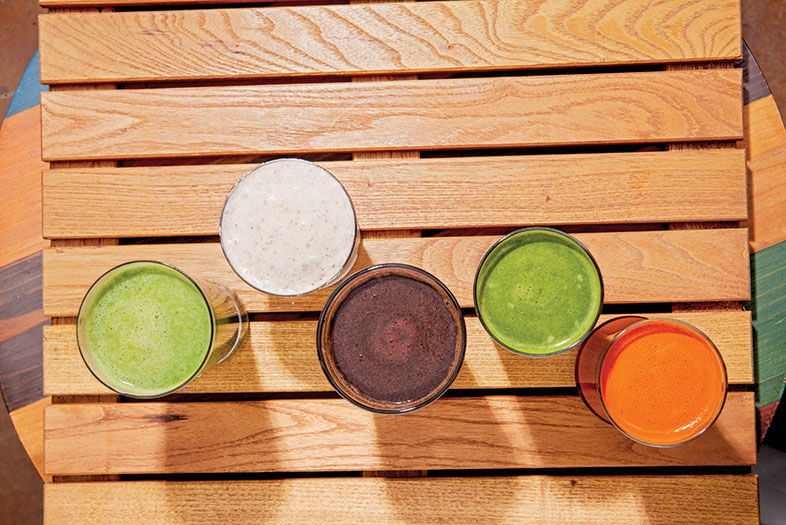
I Survived a 30-day Juice Fast
With juice, you’re extracting the pulp and concentrating the nutrients a lot more so they will absorb better. With a smoothie, the pulp and fiber are good, but you eliminate the nutrients without a chance to fully absorb them. If it’s a nice potent juice, it’s like a vitamin—super compacted. You’re not stressing your digestive tract to deal with all the fiber. On a regular basis, fiber is good. But if you’re doing a cleanse, give your body a rest.
I had a lot of patients asking about fasting. Before I recommend anything, I like to try it myself. My wife joined me. The first few days of the 30-day juice fast were quite hard. Your body is adjusting to a different source for its nutrients and calories. Early on, my wife and I were both mentally foggy and irritable. We have two kids running around. After that third day, my body got used to it. I looked forward to my juice. My wife noticed improved energy. There’s also the detox component. Juicing offers a lot of antioxidants and can help bad skin, achy joints, and have anti-aging effects. My intention wasn’t to lose weight, but I got down to my high school weight. It’s the skinniest I’ve been in a couple decades.
I would spend $10–$15 per day on healthy, high-end, organic produce. A two-pound Costco bag of kale would last me one day. I’d make two liters per day—breakfast, lunch, dinner—and just sip. At a juice bar, you’ll chug; on a cleanse, you’re sipping.
The hardest part is being used to grabbing something and putting it in your mouth when you’re not even hungry. It’s a lifelong habit to put something in and chew it. Part of what has contributed to obesity and weight gain is people not being aware of this.
Most people think a cleanse is a vacation drinking apple juice and orange juice. Fruit juices are just a part of it. You have to get a variety, lots of colors. I bought beets, kale, garlic, raw turmeric (fresh root), and bell peppers. Experiment. Try squash. Your fruit-to-veggie ratio should be one to three, or one to four. In the morning, I’d do two apples, two oranges, and a lime. That would be my fruit for the day. Everything else would be straight vegetables.
The food we consume today is a lot less nutrient-dense than the food that was readily available 50 years ago. Our soil is depleted. Broccoli and cauliflower are not as nutritious as they once were. But if you juice, you’re concentrating the nutrients.
Man has created an extraordinary amount of synthetic materials in the last 100 years. We don’t know what these chemicals do. They could be toxic in ways we haven’t had time to sort out yet. A lot of them hang out in fat tissues. As you’re juicing, you’re losing weight, you might be liberating some of the toxins in your body.
A 32-ounce smoothie pours a lot of ice into your digestive tract, which could cause abdominal cramping and bloating. We carry around so many organisms in our digestive tract—we’re walking vats of fermentation. If you were a brewery, you wouldn’t dump a bunch of ice in the vat. Fridge or room temp is fine. You need a good core temperature for your enzymes to work at their max benefit.
Juice is not beneficial if you’re going to drink it on top of a regular 2,000-calorie diet. A tall glass of OJ could be six to eight oranges. In a natural setting you wouldn’t eat that many oranges and have a big lunch. You could overdo it with the sugar and you might actually gain weight.
With these extras, juice bars bump up the nutrients. It’s kind of a crutch to make up for all that sugar in the fruit. I don’t usually tell patients to add any. If you’re getting good raw vegetables like beets and kale, they’ll do the job.
Pomegranate juice is the best thing you could put in. Anti-acid, anti-cancer, anti-free radical damage. As a kid, we’d eat one or two a night, but now it’s $2–$3 for one.
At a lot of the Asian markets, you can get 10 little bushels of peppermint. Throw in one or two a day. Mint has chlorophyll, detoxing benefits that wheat grass [has]. There is a bit of hype around wheatgrass; it’s got zinc, copper… but you can get all that from good vegetables.
We get OCD when we’re peeling our oranges. That white pulpy stuff? You should leave that on. That’s high in quercetin. It has a free radical-scavenging ability, an antioxidant function. Half the value of the orange is in that fluffy white stuff. Get a knife, take the thicker skin off, and leave as much pulp as you can. It makes your juices a lot foamier and fluffier.
You don’t need to make almond milk. Soaked almonds on their own are very nutritious. I’ll take a big bag of almonds I’ve soaked the night before, and that’s my snack. In dry form, a lot of the enzymes are inactivated. You’re enlivening a nut, which makes it more nutritious for you.
If you’re otherwise healthy, there wouldn’t be any harm in doing a cleanse. You could do a cleanse maybe every year or two. If you think you’ve got some underlying condition, try a medically guided or supervised cleanse. Some patients have had environmental or occupational exposure to chemicals and start cleansing. If you start feeling bad, ask your doctor for help.
I Survived a 30-day Juice Fast
