Ready to know more about San Diego?

Subscribe
Food & Drink JULY 22, 2014

Our Cup Runneth Over

Even as tea stages a takeover of the morning routine, the boutique coffee biz is buzzing.

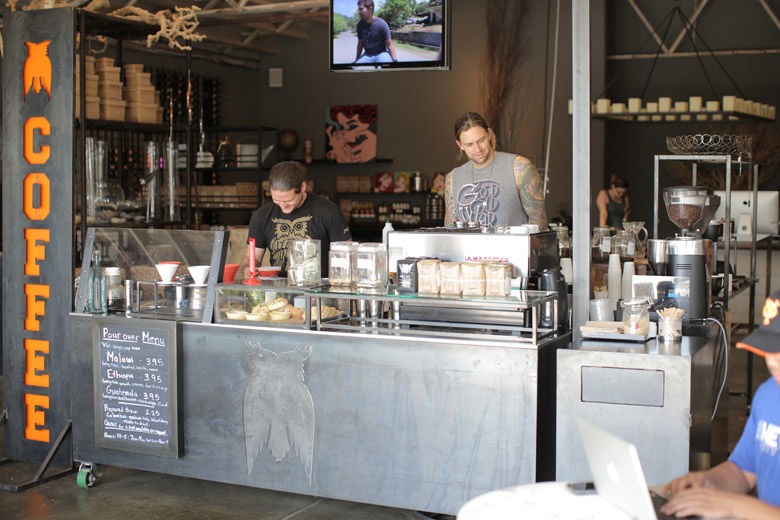
David James Kennedy (guitarist of Angels and Airwaves) moonlights as coffee roaster of James Coffee Co. He’s finally set up shop in North Little Italy’s VI Star boutique, serving pour-overs, pastries, and selling his beans.

Dark Horse Coffee opened its first shop in Normal Heights in 2013 and recently announced plans to expand to Lake Tahoe. A third Dark Horse location is also slated for Golden Hill. And longtime local leader in the roasting biz

Bird Rock Coffee Roasters will expand to a second location in Little Italy soon, and plans to open a new, larger roasting facility as well.

Our Cup Runneth Over

Photo by Tim Spreadbury

San Diego Coffee

Subscribe to our newsletters

Select Options

By subscribing you confirm that you agree with our Terms and Conditions and Privacy Policy.

Everything SD APRIL 6, 2026

The Locals’ Guide to San Diego Coffee

From 19th-century imports to the modern craft scene, the city's coffee culture has grown from a decentralized effort to a thriving collective of indie artisans

The Locals’ Guide to San Diego Coffee
Courtesy of Dark Horse Coffee Roasters

San Diego was, of course, a tuna town before it was a coffee town, but the end of one marked the beginning of the other. In the late 1800s, a wave of Portuguese immigrants formed a fishing community in Point Loma, and by the 1970s, San Diego was the tuna capital of the world. The city’s “Cannery Row” stretched across the downtown waterfront, filling warehouses with thousands of employees sorting, processing, packing, and canning fish to ship across the country.

As those halcyon fishing days waned for multiple reasons—the Marine Mammal Protection Act of 1972, increased competition from abroad, rising costs of production—some warehouse proprietors turned their sights to alternative business opportunities.

Coffee was a commodity on the rise.

At the time, only a very small handful of coffee businesses operated in San Diego, including G. H. Ballou & Co., considered to be the city’s first. Established in 1889, it began importing coffee and tea in Little Italy (taking advantage of the nearby rail line for easy shipping), eventually becoming the Adams-Henry Company in 1912. The San Diego Coffee Company purchased it in 1928, adding a roastery to its importing and distribution model.

By the mid-1900s, there were only about a dozen coffee shops across the city. Writers like the late Lou Curtiss, founder and owner of San Diego’s iconic music shop Folk Arts Rare Records, described them as mostly European salon–style respites for beatnik poets, painters, and other artist types. Torrey Lee, owner of Cafe Moto, remembers that bohemian vibe.

Courtesy of InterAmerican Coffee

“Coffee shops were a place where it was like going to the beach, if you didn’t go to the beach,” he recalls. He’d hop on his scooter and search out that communal culture (he met his wife Kim in a coffee shop in the ’80s).

Lee is a second-generation San Diego coffee authority. In 1968, his mother Gay and stepfather Bob Sinclair opened Pannikin Coffee & Tea in La Jolla. It’s believed to be the first modern-era San Diego coffee roaster, which also sold specialty coffee to both wholesale and retail customers and imported tea, coffee, and Mexican cocoa. Sinclair acquired various warehouses in the Gaslamp and downtown, including the historic Wheelworks Building on J Street in East Village. He grew the coffee-roasting portion of the business so much that in 1997 he separated that facet as Cafe Moto. In 1998, Lee and Kim purchased it outright and have operated it as a wholesale company and café out of Barrio Logan for over 20 years (it’s one of the first drive-thru coffee joints in the city).

In 1989, Karen Cebreros launched Elan Organic Coffees, San Diego’s first company importing green coffee—raw, unroasted beans—from various countries of origin. Roasters buy green coffee for a few reasons: They’re less expensive, have a longer shelf life, and allow local roasters to control the flavor profile and be part of the craft instead of buying someone else’s finished product. It’s the de facto option for specialty coffee roasters. The same year Elan opened, the price of coffee collapsed across the world, giving cafés in San Diego and beyond even more incentive to give roasting their own beans a try.

Courtesy of Bird Rock Coffee Roasters

Kayd Whalen is the senior trade and head of the San Diego office for InterAmerican Coffee, a global importer of specialty raw coffee across 27 countries. When she worked for Elan in 2005, “there were very few roasters here,” she says, pointing to businesses like Ryan Brothers (opened in 1994) and Bird Rock Coffee Roasters (whose founder Chuck Patton started roasting in 2002 but didn’t open the first retail location in Bird Rock until 2006). But she could see the revolution was coming.

“I think the actual birth of specialty [coffee] and the birth of roasting coffee in San Diego kind of came along hand-in-hand with the craft beer boom,” she adds.

Beer and beans’ concurrent explosion isn’t a surprise: The rise in craft in one category makes people look around and think, “What other, similar things can we do this to?” From the mid-2000s to mid-2010s, both beverages were on the rise. By 2018, at least 155 breweries operated across the city, and Wallethub ranked San Diego the 10th best coffee city in the United States.

While the 2008 recession was bad news for a lot of businesses, the silver lining was that more people started tinkering with the art. “Everybody got into roasting because they were trying to lower their cost of goods,” explains Bird Rock Coffee Roaster president Jeff Taylor. Whalen estimates the number of local roasters she worked with jumped from three or four in 2007 to well over 100 today.

Courtesy of InterAmerican Coffee

San Diego’s proximity to Mexico is also crucial; we’re the closest major US city to a coffee-producing country. Roasters from Baja are beginning to attend and host cuppings in San Diego—events where coffee pros sniff, slurp, describe, and discuss characteristics like aroma, flavor, mouthfeel, and aftertaste to evaluate a particular brew. “Tijuana is really coming up,” Whalen says.

“It’s not like you have to go to Portland to get a good cup of coffee,” Taylor says, noting that everyone has access to the same beans, same machines, and same training. “The coffee culture in San Diego is 100 percent as good—maybe not as large, maybe not as intense—but absolutely as good as Seattle or Portland or New York or anywhere else.”

Courtesy of Cafe Moto

The Mentor

Cafe Moto

If the San Diego coffee industry had a Hall of Fame, there’s no doubt Cafe Moto would occupy a place of honor. Not only is it one of the OG roasters in town since 1998, but the Moto gang has also mentored many other roasters, baristas, and café owners for years, sending its influence across every corner of the county.

Owner Torrey Lee subscribes to the theory that sharing knowledge with others creates community, not competition. He works to help professionals find their feet in an increasingly crowded (and expensive) industry. “Coffee is a people business,” he says. At least two dozen different hands touch coffee beans along the supply chain, from farmers to exporters to the baristas handing over the final, finished cup. The true cost of the beverage many of us take for granted is a relentless daily grind (no pun intended) for many, many folks.

One of the biggest challenges is getting customers to try a single-origin from a lesser-known coffee region like Rwanda or Papua New Guinea—and ballooning costs aren’t helping people break out of their comfort zones. But despite the occasional sticker shock, the team makes many choices—like buying from women coffee farmers (including Las Hermanas, an organic and fair-trade cooperative in Nicaragua)—based on the belief that value comes from more than just a price tag.

Courtesy of Bird Rock Coffee Roasters

The Shape-Shifter

Bird Rock Coffee Roasters

San Diego’s coffee timeline can be divided into two eras: Before Chuck and After Chuck. Chuck Patton launched Bird Rock Coffee Roasters in 2002, riding the third wave of coffee—defined by a commitment to ethically sourced beans; more delicate roasting profiles; and, well, the art of it all. It was perfect timing to get into the coffee game, and Patton had the right touch: By 2006, he opened his first café and in 2012, Roast Magazine (which hosts what’s basically the Oscars of coffee) named Bird Rock Roaster of the Year. Then he left.

In 2017, Patton sold Bird Rock to Jeff Taylor, cofounder and CEO of PT’s Coffee out of Kansas. (The two were friends, having spent years traveling across the world on buying trips.) He handed the head buyer reins to Taylor’s wife Maritza, one of the first “coffee sommeliers” in Colombia, before leaving the company in 2018. In 2024, he launched Chuck’s Roast and Patton Coffee Consulting, two ultra-small passion projects dedicated to coffee education, training, consulting, and roasting. 

Meanwhile, Taylor took Bird Rock on a larger trajectory. He expanded café operations, opened a dozen shops across San Diego, launched wholesale accounts with Costco and Cometeer (an up-and- coming, fully recyclable alternative to plastic coffee pods), and made Bird Rock synonymous with San Diego coffee.

Courtesy of Dark Horse Coffee Roasters

The Goldilocks

Dark Horse Coffee Roasters

In 2013, Miley Cyrus topped the charts with “Wrecking Ball,” President Obama started his second term, and brothers Daniel and Bryan Charlson opened the first Dark Horse Coffee Roasters, serving cold brew and direct-trade coffee out of a small storefront on Adams Avenue in Normal Heights.

In the years since, the punk-oriented brand has grown slowly, now operating eight coffee shops in San Diego County (with two more in Truckee, CA and Koloa, Kaua’i) and slinging merch that satirizes ’90s cultural touchstones like the D.A.R.E. program and the cover of Sonic Youth’s Goo. The branding helps, but the beans and drinks (including a buzzy nitro cold brew and “The Champ,” a latte with honey and cinnamon) have been consistently good since day one.

Some other highly renowned cafés opened before Dark Horse (Coffee & Tea Collective, 2012), and some came later (Steady State Roasting, 2018). Others grew bigger (Better Buzz Coffee Roasters has at least 50 locations and remains on a roll), and others kept things a little more niche (James Coffee has five shops). But in an increasingly crowded coffee landscape, Dark Horse has found a formula that works, partly by going beyond obvious coffee meccas like North Park and South Park to launch outposts in places such as La Mesa, Mission Gorge, and Chula Vista.

The Curator

Rikka Fika

In an era of cluttered social media algorithms and Instagram-over-flavor drinks, Rikka Fika’s simplicity manages to shine through the hubbub. Combining the Japanese word rikka (meaning the first day of summer) and the Swedish word fika (the daily ritual of slowing down for a coffee break), the brick-and-mortar opened in 2023 in East Village after a few pop-ups around San Diego.

The shop prioritizes specialty coffee beans from a small number of international roasters that are hard to find in the US, especially much lighter, delicate roasts, as well as a small, hand-picked selection of retail products. “A lot of them are more curated items that promote slow living in a more minimalist way,” explains one of the two owners (who requested to remain unnamed since she spoke on behalf of the team).

Don’t mistake the shop’s intentional selectivism for pretentiousness. Neither owner comes from a hospitality background, and instead apply their professional expertise in fields like UX design to create something new—and rather special. “There’s more freedom and more liberty to do what we believe is right and what we believe is good,” the co-owner says.

There are plenty of coffee shops to bring your laptop to work or grab a latte to go as you rush to an appointment. But Rikka Fika’s whole thing is encouraging guests to take the time to await a hand-whisked matcha, savor a rare pour-over from a small roaster rarely seen outside Japan, or browse its collection of Norwegian porcelain cups—a rare reminder that it’s okay to slow down.

Beth Demmon

About Beth Demmon

Beth Demmon is an award-winning writer and podcaster whose work regularly appears in national outlets and San Diego Magazine. Her first book, The Beer Lover's Guide to Cider, is now available. Find out more on bethdemmon.com.

Food & Drink JULY 22, 2014

Our Cup Runneth Over

Even as tea stages a takeover of the morning routine, the boutique coffee biz is buzzing.

Our Cup Runneth Over
Photo by Tim Spreadbury

David James Kennedy (guitarist of Angels and Airwaves) moonlights as coffee roaster of James Coffee Co. He’s finally set up shop in North Little Italy’s VI Star boutique, serving pour-overs, pastries, and selling his beans.

Dark Horse Coffee opened its first shop in Normal Heights in 2013 and recently announced plans to expand to Lake Tahoe. A third Dark Horse location is also slated for Golden Hill. And longtime local leader in the roasting biz

Bird Rock Coffee Roasters will expand to a second location in Little Italy soon, and plans to open a new, larger roasting facility as well.

Our Cup Runneth Over

Photo by Tim Spreadbury

San Diego Coffee
Food & Drink AUGUST 18, 2026

Fish Guts’ Pablo Becker Is Betting Bigger on Barrio Logan

The city's fish taco hero is opening Concrete Cowboy across the street, plus a home-cooked Mexican sandwich spot

Fish Guts’ Pablo Becker Is Betting Bigger on Barrio Logan
Courtesy of Fish Guts | Photo Credit: Adam Martinez

You have to be crazy or a genius to name a restaurant Fish Guts. You have to be even crazier to open a restaurant that holds maybe two dozen people at a time—if you don’t mind elbowing one other while scarfing down some of the best fish tacos in San Diego.

And yes, “best” is a relative term. But in Fish Guts’ case, it’s for real—and that’s saying something in a town literally world-famous for fish tacos

Ever since Pablo Becker opened up his diminutive eatery in 2023 at the corner of Logan Avenue and Sampson Street in Barrio Logan, Fish Guts has been named one of the city’s best new restaurants in 2023, Critic’s Pick for the best fish tacos in San Diego in 2024, 2025 and 2026, as well as readers’ top pick in 2024. It’s like if Rubio’s married into the royal family. 

Most of his ingredients come straight from the cold waters of the Pacific Ocean, which happens to be down the street. His de espada (blackened swordfish) taco is the stuff of legend. He’s kept Fish Guts operating at an elite level, which tends to happen when you work for five years in Chicago under chef Richard Sandoval (who, by chance, is also his cousin) and open an ahead-of-its-time high-end modern Mexican restaurant in East Village (El Vitral Restaurant & Tequileria, 2009-2013). 

Now Becker is branching out again, opening two new concepts in Barrio Logan this fall. 

The first will be upstairs from Fish Guts, which at one point was destined to become an intimate omakase counter. Santo Poco will be a lunch-only sandwich shop, offering takeout and delivery (no dine-in), and the sandwiches will be a little Mexican, a little French, a little Italian, a little from Chicago, a little from New York. Basically, a bunch of different styles all on really, really good bread. 

“There’s probably going to be a Cuban-style sandwich in there with a touch of Mexican, some cold cut Italians, too, putting my touch on them,” he says. “That’s what I feel like is my style of cooking.” 

Things will be traditional, but inventive. Like his fish & chips taco at Fish Guts: two classic dishes, one killer mash-up. There will also be a hat tip to the late, great Anthony Bourdain, a sandwich called the Antonio Bourdain. 

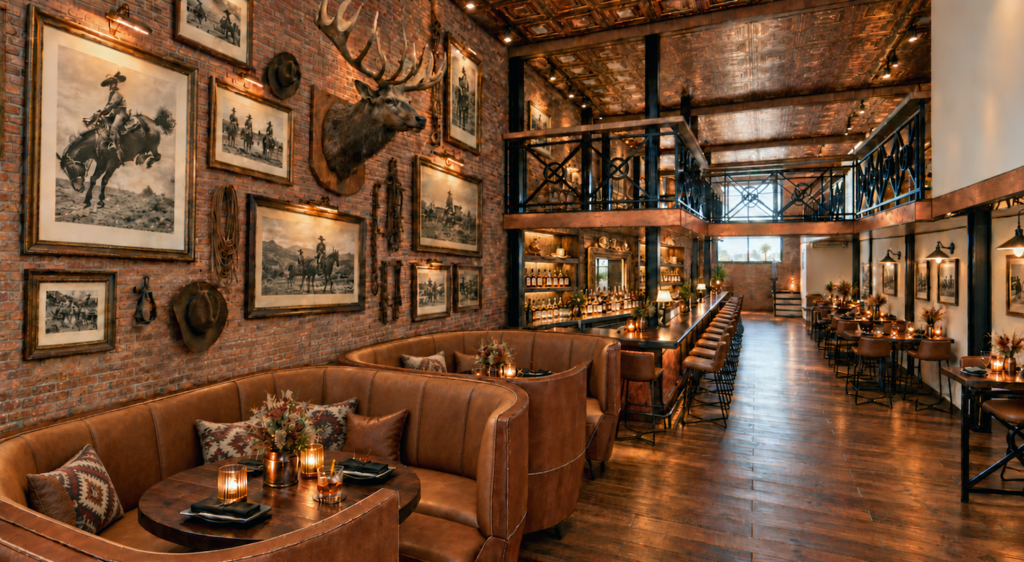
The second will be across the street from Fish Guts in the former Lia’s Lumpia space. Concrete Cowboy will be a taco-driven joint on the same wavelength as Fish Guts (keep it simple, keep it special), but featuring land animals rather than sea brethren. Think tacos made with duck confit, ribeye, pork belly, skirt steak. 

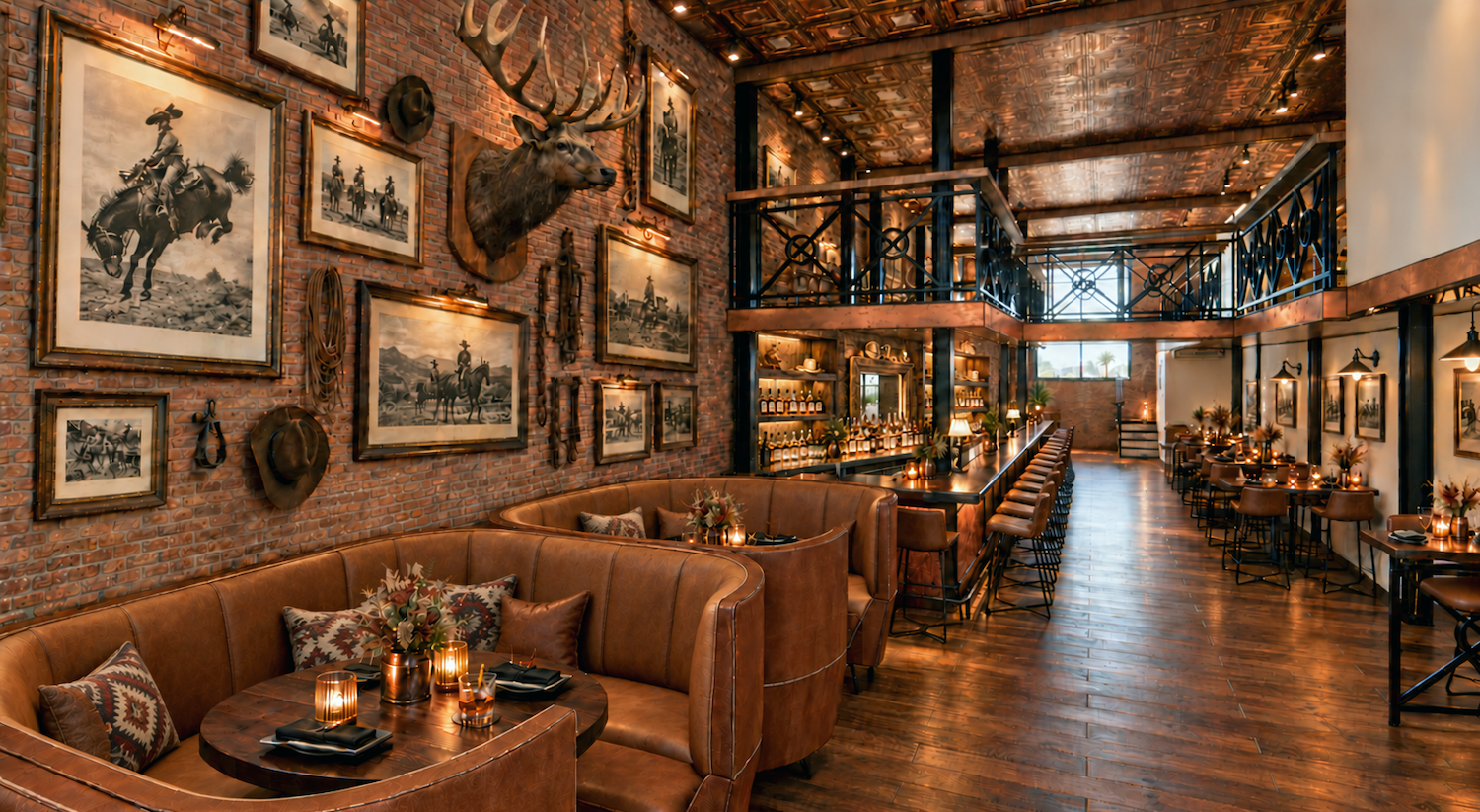
The inspiration behind Concrete Cowboy comes from Becker’s father, a lifelong Western obsessive, despite growing up in Mexico City’s urban metropolis. “He always liked that cowboy life, that vibe,” he says. “I always say ‘Dad, you just grew up in the wrong city.”

He’s aiming to open Santo Poco in October and Concrete Cowboy in November. Neither require massive renovations, and while the former Lia’s Lumpia space will keep the cabin-esque aesthetic, he’s creating more of an adobe-style exterior and an interior lined with Western-themed wallpaper and taxidermied animals. He’ll also tweak the bar layout to move from a fast-casual feel to full service. 

Local designer Dane Danner is designing both spaces and visual direction for menu layouts, logos, and packaging, going for low-key, but high on vibes. Once Concrete Cowboy opens, Fish Guts will temporarily close to remodel the space to switch its white palette for a warmer feel, plus introducing a refreshed menu featuring some new tacos and other items. 

Could another Fish Guts be on the way somewhere else in San Diego? Not likely, says Becker. “Fish Guts is cool, “ he says. “I feel once you start branching out, it’s more forced, not as organic.” So for now, count on Becker staying in the neighborhood. 

Santo Poco opens for lunch daily October 2026, 2222 Logan Avenue (above Fish Guts). Concrete Cowboy opens Tuesday through Sunday for lunch and dinner November 2026, 2219 Logan Avenue.

Beth Demmon

About Beth Demmon

Beth Demmon is an award-winning writer and podcaster whose work regularly appears in national outlets and San Diego Magazine. Her first book, The Beer Lover's Guide to Cider, is now available. Find out more on bethdemmon.com.

Studio S AUGUST 10, 2026

The Secret to a Home That Feels Just Right

Behind every beautiful space is a thoughtful process, and ASID San Diego is helping homeowners understand the value of professional design.

The Secret to a Home That Feels Just Right
Courtesy of ASID

A perfectly designed home rarely happens by accident. Those kitchens that feel effortless and rooms that seem to tell a story the second you walk in? They’re usually the work of someone who knows exactly what they’re doing.

It’s knowing which ideas will actually work, which materials will hold up over time, and how to turn a collection of choices into a space that feels intentional. That’s where a professional interior designer comes in.

For the American Society of Interior Designers (ASID) California San Diego Chapter, the goal is to help people see interior design as more than just the finished look. Behind every well-designed space is a process built on technical expertise. Designers are educated in everything from professional software and construction details to building codes, space planning, materials, and functionality.

Courtesy of ASID

“People don’t always realize how much goes on behind the scenes,” Kirsten Recce , current president of the ASID California San Diego Chapter, says. “Our designers are not just doing furniture placement and color selection and picking out new fluffy pillows. That’s not what they’re trained for.”

ASID members bring formal education, continued learning, and industry knowledge to their projects, helping create spaces that are not only beautiful, but designed to work. A paint color that changes completely depending on the lighting. A material that looks beautiful in a showroom but doesn’t make sense for everyday life. A layout that photographs well but doesn’t function for the people living there. These are the details where professional guidance can make all the difference.

Still, one of the biggest misconceptions about hiring an interior designer is that it’s reserved for massive renovations, luxury homes, or people who already know exactly what they want. The process can feel intimidating. Where do you begin? Is a designer worth the investment? What if you only need help with one room?

ASID’s answer: start with one hour.

ASID’s Spruce Up events break down one of the biggest barriers between homeowners and professional design: knowing where to begin. Held twice a year, the community program gives homeowners the chance to work directly with an ASID designer through a one-hour, $125 consultation in their own home. Whether you’re looking for advice on furniture placement, window treatments, kitchen and bath updates, remodeling ideas, vacation rentals, color selections or something else entirely, the upcoming September 2026 event offers an approachable way to get expert guidance before committing to a full project. Signups are open through Sept. 7, with consultations taking place Sept. 21 through Oct. 31. Proceeds benefit ASID San Diego’s educational and community programs. Register here!

Courtesy of ASID

“It’s a great opportunity for people who are in that exploratory phase,” Recce says. “Maybe they’re not sure they want to hire an interior designer yet, or they think it sounds daunting or expensive. This gives them a chance to discover what working with a designer is actually like.”

Design is personal. A good designer isn’t just creating a beautiful room; they’re helping create a space that fits the way someone lives.

“We’re a resource to all of San Diego County,” Recce says. “It doesn’t cost anything to pick up the phone and call and ask. We’ll answer.”

Follow ASID San Diego on Instagram, LinkedIn, and Facebook for updates on upcoming events, or connect with the chapter directly at [email protected] or 619-548-8847.

Partner Content
Food & Drink AUGUST 16, 2026

Madison on Park Temporarily Closing Next Month

The University Heights eatery will close September 7 for a multi-month renovation and rebrand

Madison on Park Temporarily Closing Next Month
Courtesy of Madison on Park

Ten years ago, restaurant design centered around sleek minimalism. Fonts lacked serifs, clean lines dominated, and any manufacturer that made globe-shaped chandeliers must have made an absolute killing.

Things have changed since then, and Jeff Fink says it’s time for Madison on Park to glow up. On September 7, Madison will temporarily close its doors for a top-to-bottom renovation of the space and concept. Fink hopes to reopen this fall ahead of the busy holiday season, with a new look he calls moody mid-century maximalism. 

“We have to take into consideration what’s going on culturally,” he says. When Madison first opened, TikTok wasn’t a thing in the U.S. and craft cocktails felt relatively cutting-edge. Today, he sees a resurgence in the vintage look, handmade goods, and low-to-no ABV drinks dominating menus everywhere. 

Courtesy of Madison on Park | Photo Credit: Andy McRory

Fink and his partner Matt Sieve have already dabbled with that sort of motif at Sonny’s Pizza, their Brooklyn-inspired joint around the corner. Fully half of the cocktail menu is made up of spritzes, mocktails, and Negronis. Madison 2.0 will take it further.

The new concept doesn’t have a name yet—Fink says they have to feel out the vibes as they make progress with the design. “The name comes when you see it appear,” he says. But he has a few design elements in mind: things like more artwork and more uplighting. “Not cluttered and overstuffed… I want to keep it intimate, sexy, and immersive.”

Madison rightly earned its rep as one of the best-dressed eateries in San Diego, nabbing an Orchid Award for interior design its first year. The returning designers Anna and David Sindelar originally transformed the space from weird padded walls and fake greenery at Lei Lounge into a mid-century modern wonderland, complete with a signature arched ceiling and geometric patterns aplenty. Michelin-recognized chef Mario Cassineri (Ciccia Osteria, Bice Ristorante) built a menu heavy on Mediterranean flavors mixed with California classics. 

The new menu shouldn’t feel completely jarring, but will take cues from Fink’s recent travels in Spain with his family. Expect shareable plates with lighter ingredients. “Americans eat way too much, and our portions are way too big,” he says. “I like the idea of smaller plates, healthier plates, and being creative… I’d rather see 15 items on the menu that are all less than $20 so that I can try different ones.” Bar manager Danny Kuehner will continue developing craft cocktails and mocktails for the new venture, as well as curating a selection of wine from Europe and locally. 

Courtesy of Madison on Park | Photo Credit: Haley Hill

This isn’t the only project on their plate. Besides running Sonny’s in University Heights and Madi in Normal Heights, later this fall, Fink and Sieve will also open Josie’s, a modern all-day, Midwestern-style diner inspired by Sieve’s Minnesota roots. Like all their restaurants, it’ll hold a special part of their families’ legacies—something Fink hopes people feel as soon as they enter.

“You walk into Sonny’s, you’re like ‘Oh, Jeff’s at home,’” Fink laughs. “[Josies’] will be ‘Matt’s at home.’” The next version of Madison? We’ll have to wait and see. 

Madison on Park will temporarily close on September 7 until October (barring any unexpected delays). Keep up with the newest updates on Madison’s Instagram.


Listen Now: The Latest in San Diego’s Food and Drink Scene

Have breaking news, exciting scoops, or great stories about new San Diego restaurants or the city’s food scene? Send your pitches to [email protected].

Beth Demmon

About Beth Demmon

Beth Demmon is an award-winning writer and podcaster whose work regularly appears in national outlets and San Diego Magazine. Her first book, The Beer Lover's Guide to Cider, is now available. Find out more on bethdemmon.com.

Food & Drink AUGUST 14, 2026

A New Cinnamon Roll Obsession is Baking in South Bay

Sinner Buns is building a following for its slow-made, seriously gooey weekend treats

A New Cinnamon Roll Obsession is Baking in South Bay
Courtesy of Sinner Buns

When I was pregnant, my food craving was singular and intense. If I didn’t eat at least one thing doused in cinnamon every day (ideally, more than one), I was—to put it gently—a complete monster. 

Since then, my obsession has tempered somewhat. But cinnamon buns still perch high on my top treats list, so I’m always on the lookout for the next great place to indulge. IMO, The Huddle in Mission Hills’ mondo cinnamon roll remains top-tier, but after eyeing the ooey, gooey goodies from Sinner Buns, we might have a contender. 

Originally from Ukraine, Daria Nadar had already done everything one can do at a bakery—business operations, wholesale contracts, actually baking, you name it—so during the pandemic, she started dabbling with perfecting her cinnamon rolls. After she got a couple fans over social media, she threw her first pop-up to see how they’d be received. She sold out.

After a few false starts with a couple storefronts and business deals, Nadar officially launched Sinner Buns in October 2025 with her partner Filipe Pazi. After making it through an unexpectedly hectic season stuffed with holiday orders, the team closed temporarily to get everything in line and reopened this April. Business has remained in full swing ever since. 

There are only so many ingredients in a cinnamon roll, but “the process is what makes it special,” she says, adding they use fresh yeast rather than powder and a 48-hour process for each batch of brioche dough made to order. (Thus the need for pre-orders.) Customers can preorder until Thursday each week for pickup Friday, Saturday, or Sunday from Sinner Buns’ ghost kitchen at 780 Hollister Street, just east of Imperial Beach.

You can also catch her at various pop-ups around San Diego. Eventually, Nadar opens to offer nationwide shipping (once she figures out the logistics and quality control) and one day, her own storefront. 

But it’ll be on her terms, not the whims of social media. “We already learned how to not only rely on virality of the product, because you go viral and then it fades,” she says. “It’s a slow burner, and I know eventually, it’s going to grow much more.”

Courtesy of San Diego Spirits Festival

San Diego Restaurant News & Food Events

Beth’s Bites

  • Get spirited away at the 17th annual San Diego Spirits Festival. If you understood that reference, I regret to inform you that it is not a Studio Ghibli watchathon, but it’s still a win with a bonanza of craft makers pouring libations at the Museum of Contemporary Art in La Jolla for two full days. On September 26-27, try sips, glugs, and guzzles from brands like Condesa Gin and Uncle Nearest (with some bites to wash it all down, of course). Could you ask for a more picturesque venue? Spoiler alert: no.
  • You love to see a longtime employee take the reins of a beloved local institution. That’s exactly what happened at Konito’s Cafe in Pacific Beach, which is currently transitioning to Pablo’s Cafe, which is now under new ownership. (Yes, his name is Pablo.) Will their breakfast sandwich still slap? Guess we’ll have to go find out. 
  • I’ve yet to visit Tigawok, the small California-based chain serving mini bowls like Kung Pao chicken and Mapo tofu. But the latest storefront (and the first in San Diego) is now soft open in La Jolla, and it’s only a matter of time before their Sichuan shredded chicken gets in my belly.

Listen Now: The Latest in San Diego’s Food and Drink Scene

Have breaking news, exciting scoops, or great stories about new San Diego restaurants or the city’s food scene? Send your pitches to [email protected].

Beth Demmon

About Beth Demmon

Beth Demmon is an award-winning writer and podcaster whose work regularly appears in national outlets and San Diego Magazine. Her first book, The Beer Lover's Guide to Cider, is now available. Find out more on bethdemmon.com.

Partner Content AUGUST 21, 2026

This Scripps Clinic Physician is Serving Up Care

Laika Nur, MD, takes her love of volleyball from the court to the clinic as team physician for the San Diego Mojo

This Scripps Clinic Physician is Serving Up Care
Courtesy of Scripps Health

Growing up, Laika Nur, MD, Scripps Clinic sports medicine specialist, loved watching beach volleyball when the Association of Volleyball Professionals tour came to her hometown of Chicago. A talented volleyball player herself, she remembers sitting in the stands all day, and once, even got a couple autographs. Years later, Dr. Nur was attending a professional event focused on women’s sports, and the discussion turned to a new professional women’s volleyball league. The general manager and coaching staff  for San Diego’s team, the Mojo, happened to be in attendance, and Dr. Nur took the opportunity to ask them if they needed a team doctor. Flash forward to the Mojo’s inaugural 2024 season, when Dr. Nur officially became the team physician. Click here to read more about Dr. Nur and how she incorporates lessons she learned on the court into her practice. 

For more nutrition, wellness, and healthy living tips, sign up for the San Diego Health newsletter here.

Partner Content

Eat Like a Local (Who Knows a Guy).

Restaurant news, culinary storytelling, and Troy Johnson’s sharp takes delivered straight to your inbox twice a month.

Close the CTA

Contact Us

1230 Columbia Street, Suite 800,

San Diego, CA