Featured articles
Food & Drink
Food & Drink
Food & Drink
Featured articles
Features
Features
Features
Featured articles
Things to Do
Everything SD
Everything SD
Featured articles
podcast-ep
podcast-ep
podcast-ep
Featured articles
Features
Features
Features
Featured articles
Food & Drink
Features
Features
Ready to know more about San Diego?
SubscribeReady to know more about San Diego?
Creator Jaime Fritsch on the uproar his food event caused.
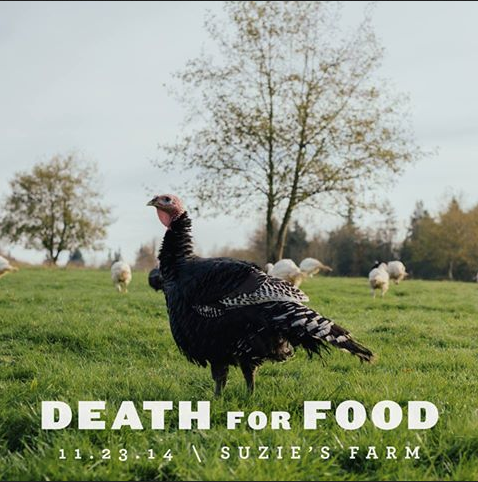
Some San Diego meat eaters were going to kill animals for food. A vegan activist lawyer staged an international campaign to stop them. That’s how Death for Food became one of the most controversial food events the city has seen in years. It made national news, and resulted in this cover story in San Diego CityBeat.
I’m highly biased in this debate. Months ago, I agreed to collaborate with Death for Food creator Jaime Fritsch because I believe in the educational philosophy driving his project. You can read why here, and read my initial reaction to Pease’s campaign here.
Basically, Death for Food invites omnivores to humanely kill their own dinner. Not for alpha-species thrill or Ted Nugent-esque blood sport. The idea is to reconnect meat-eaters to the life behind their meat, and let the emotions of that process guide their food decisions from that point on. It’s a movement against how meat is currently produced in America: anonymously and industrially.
Vegan activist Bryan Pease started an international Change.org campaign to stop the event, set to be held at one of the city’s most progressive and ethical food compounds, Suzie’s Farm. Without contacting the farm or organizers to see what the event was truly about, Pease made his best guess and portrayed the event very negatively, including the term “torture animals.” The hate mail and hate phone calls flooded into the farm and Death for Food creator, Jaime Fritsch. It caused financial harm to both. Since the protest, Fritsch has been accused of some pretty vile things. Animal abuse. Damaging children (a father brought his son to participate). Profiteering off animal slaughter. Insanity.
What’s been missing in the press coverage of the event is in-depth insight from Fritsch himself. The basic questions: Why invite people to a farm to kill their own dinner? Is that a progressive way to educate omnivores and promote responsible meat consumption? Or is it just sick in the head?
Here is Fritsch speaking about Death for Food, in his own words:
Why are you doing this?
I really don’t like answering this question. When you tell people what your purpose is, you pre-ordain their experience. It defeats the entire concept of Death for Food. Which is—by immersing yourself in the process, you fully experience it and integrate it, instead of having a preacher at a pulpit telling you how to feel. Now I feel I have no choice. My hope for the participants is that they integrate the process of meat back into their lives. That includes knowing about the life the animal lived, smelling the fresh air and the sunshine it gets, knowing it was a living, breathing, sentient being—and then understanding the magnitude of killing it. In my experience, afterward many people will slow down a lot, even just how they physically eat meat. They’ll chew it more, taste it more, think about where it comes from. By doing that, they’ll actually assimilate the food and nutrients more efficiently.
Sounds like some hippy dippy bullshit.
That’s science. When you think about food and concentrate on what you’re eating, you start to salivate and activate your digestive system. And what happens if you’re assimilating your food more efficiently? You need less. I’m not saying people should eat less meat. I do believe that—but I don’t preach that. After experiencing Death for Food, they tend to eat less meat. But not because I or anyone else told them to. Because they experienced killing first hand and felt the magnitude of it. Integration.
Can’t I just intellectualize it? Is it necessary to kill the animal myself?
I feel direct experience is the only way to experience that magnitude. It’s contagious, too—taking that brave step of looking at things and experiencing things in a real way. This is about self-trust. I’m going to jump in and I’m going to figure it out myself. We live in a world where things like the food pyramid tells us what to eat and what not to eat. Religion tells us that humans are innately greedy and bad and sinful and that we can’t be trusted. Science tells us that our bodies are not amazing and regenerative, but unreliable and in need of medicine and technology to regulate and improve them. A big part of what I’m saying is—you can be trusted. If you’re like me and feel a need to eat animals, you can trust yourself to eat them. You don’t need some professional to endorse your decision.
What made you start doing this?
For years I ate only humanely raised, very high quality meat—the best I could possibly find. But it would still come just wrapped up cold. And I started wondering if chicken was ever actually a chicken. If pork was actually ever a pig. I realized there’s a big disconnect between the life of the animal and the meat in the grocery store. One of the most shocking things about Death for Food is when you kill something and you remove the fur or the feathers. It starts to look like meat again. But there’s one key difference. It’s warm. The body temperature is warm. I needed that.
Why is that so important?
All meat we touch in a typical American kitchen is cold. When you touch it as you’re eviscerating just after killing it though, it’s warm. There’s still energy—actual caloric heat energy. It just had a heart that was pumping blood. It’s a shattering moment. It looks like meat, but it feels like life. It’s this in-between state. That’s when you associate meat with the live sentient being that it was.
Does the experience end there? Are there repercussions?
I think people come to Death for Food for an initial experience to get them started. We provide participants with resources for procuring locally raised, whole animals and help them meet local farmers and ranchers doing good things. We’re also starting a meat collective in San Diego where people can continue to take classes on slaughter, butchery, charcuterie, etc. It’s not a one-time “Get your Death for Food shot, and you’re good for life!” It’s a highly rewarding path to continue along after the event—to reconnect with the process of your food. On a very basic level, what participants have said about the way they think about and eat meat afterward: More thought, more responsibility, less meat.
Did you expect a protest like the one from Bryan Pease?
No. When I was in Portland, I had significant dialogue with hardcore animal rights activists—guys who have broken into places to set animals free, set fires to places doing animal research. And they were down with Death for Food. They said, ‘If you’re going to eat animals, please take a look. Please be honest with yourselves.’ I actually thought that was what we were going to get. I thought we’d get some heat from people who didn’t understand it, but I could talk to them and explain it.
Did it make you angry? Sad? Vengeful?
I see Death For Food as a question, not an answer. The Change.org campaign denied people the means to ask that question. I was shocked, because while I know it wasn’t a perfect scenario for animal rights activists—they’d prefer we just don’t kill animals for food at all—my experience has been that it’s a step in the right direction for them. Even though Bryan Pease fundamentally disagrees with what I’m doing on the basic level of killing animals for food, I think he knows I’m not the real enemy. Hopefully someday he will launch a campaign against factory farming and I’ll have his back in that fight. I respect his position that animals have unique personalities and feelings and we should not kill them. I’m not asking him to pat me on the back or anything. Our feelings on fighting animal cruelty overlap in many places but, like he has said, you have to draw a line somewhere. He does, and I respect that.
What sort of people are objecting to the event?
Objections are coming from hardline animal rights activists who believe humans shouldn’t kill animals for food, period. Honestly, I can respect where they’re coming from because I’ve entertained that sentiment myself and still wrestle with it sometimes. One guy told me he signed the petition because he felt like it should be held at a ranch, not a vegetable farm. And you know what? In retrospect, he was right. Suzie’s was not the right venue for Death For Food. From what I can gather, hardline animal rights activists also take the stance that “humane ranching” advocates like myself are even worse than industrialized ranchers because we raise these animals with the same care as pets and then betray their trust when we eat them.
Is this worse?
You really have to ask me that?
Yes.
I don’t think anything could be worse than a factory farm system. It’s hell on earth. The fact remains, though, that I want meat and I want it on what seems like an almost cellular level. I understand the desire to not hurt animals. That’s how this entire project began. For me, the abstinence solution just didn’t work. Treating animals well during their lives—and giving them a quick, as-painless-as-possible death—does work.
What about the more extreme objections to Death For Food? That meat eating is a fundamentally bad thing—both environmentally and health-wise?
Those arguments are based off the factory meat system, with good reason. Death For Food that promotes local, holistic farms that mimic nature and utilize plants and animals to restore functioning, food producing ecosystems. That’s dangerous for vegan activists because it undermines the core arguments of vegan activism. We advocate a deeper connection with food in order to find a resonant system of eating for yourself. Daeth for Food usually results in people eating far less meat, and far healthier meat. We require humane treatment of animals in life and in death both within the project and beyond, when we use our dollar power to purchase ethically produced food. By eating a more reasonable amount of meat and taking part in the process ourselves by sourcing whole animals from local farms, we make healthy meat affordable to all.
And you think activists are threatened by this?
I hope not, because logistically I think a network of local, omnivorous food systems is the only thing that’s going to feed Earth’s population without completely destroying its ecology. I don’t want to hinder any implementation of that by further inflaming the current vegan vs. omnivore fight. This planet evolved over four billion years around local, omnivorous food systems. That’s just what works for us, environmentally speaking. But removing factory farms from the discussion seems to dismantle every pragmatic argument for a wholesale, global conversion to veganism. I can see how that alone could be a catalyst for a whole new round of arguments. The bummer of it all for me is that I’m 95-percent vegetarian. Ironically, it’s this tiny bit of meat I’m fighting about eating.
It didn’t seem like there was a “tiny bit of meat” set to be served at Death for Food. It seemed like a feast.
Right. It was a family-style meal with many different types of local and seasonal produce, fish and meat. But the idea was you could eat as little or as much as you wanted as an exercise in learning to be your own barometer with what you need in your diet. I tried not to talk about that too much because, again, I didn’t want people to come in feeling like they had to take a half a bite of everything and pretend like they were being “good, responsible omnivores.”
Some vegans have argued that no sane person would willingly kill an animal.
With Death for Food, sane citizens experienced responsible animal slaughter and reported that it was challenging but worthwhile. Most of them also decided to continue eating meat, but do so with more responsible parameters. Is that the action of an insane person? Or are certain parts of life merely challenging, and Death for Food attendees are people willing to face that challenge head on.
You say animals are humanely killed at Death for Food. How so?
We use a process where we blood-let very close to the jawline and position the animal so that the first blood that comes is from their brain. We use a razor sharp knife. They lose consciousness in two to six seconds. I’d compare it to when you’re cut with a scalpel and you don’t even know until you see the blood. When done by a professional, the animal doesn’t even realize what happened.
How do you know that’s the best way, for, say, the lamb that you were going to kill at Suzie’s?
That’s advice from holistic ranchers. The other way is to shoot the lamb in the head. But they have such small brains you can easily miss, causing needless pain to the animal. You also destroy the head, which is a lot of food. Stun guns are also controversial. It mostly works, but it can also just hurt the animal and not render them unconscious. I’ve seen the killing process at holistic, small farms and ranches from Washington to Mexico—and the most ideal method I’ve seen is a professional wielding a sharp knife and going for the bloodline close to the brain.
But you’re having regular people kill their own dinner. Not professionals.
We have a very good support staff with a lot of experience. I’m there with you. That’s to keep you and the bird from injuring yourselves. That said, there is potential for it going wrong. I can’t insulate people from that. Life is messy. Even the best, most humane ranchers I’ve ever met will admit it’s not always a perfect process and that occasionally a humane kill goes badly. In America we’ve taken this sort of hyper-sterile, ultra-safety path to everything. I actually see that as part of a larger problem—the refusal to engage with anything dangerous. The process at Death for Food is not only dangerous for the animal—it’s dangerous for the participants. One of those turkeys could easily break your nose with its wing. It could take an eye out with a claw. Death for Food is a larger idea of going headfirst into life and embracing the challenging parts along with the good parts. Typically when we say ‘embrace life,’ we mean hug your neighbor. Well, part of embracing life is embracing the challenging parts, too. Like holding your loved ones’ hands as they die. Not as they ‘pass on.’ As they die. Or spending time with the terminally ill. Whatever you want to do. Embracing life fully means embracing death. Conversely, denying death means denying life.
People have complained about the cost. They’ve said it’s astronomical and accuse you of profiteering.
The max possible sales for the event was $12,900. There were only going to be 75 attendees. And there were only a handful of higher-cost tickets–$200-$300, where people were able to take the morning class to kill their own chickens and turkeys, and take them home for Thanksgiving. Let’s break it down with our projected costs: venue fee ($1,000); food service staff ($2,000); tables/chairs/linens/wares ($2,200); food ($2,500); beverages ($2,500); harvest chickens ($500); harvest turkeys ($1,000); decor ($200); cooking equipment ($750); kitchen staff ($480); lighting ($250); A/V and sound ($200); harvest station construction ($2,000); photo exhibition ($1,000); wood for fires ($150); contributor flight/hotel ($500); menu printing ($200). That’s $17,230 and we hadn’t even yet budgeted security because I wasn’t thinking we’d need it until things got crazy. It’s also worth noting none of the chefs, speakers, or my event coordinator were receiving a cent. They were all doing this for free.
So you would’ve lost over $4,000.
I don’t think so. People support this project. Donations come in, vendors politely refuse payment or give me a big discount to show support. I bet in the end I would have at least come close to breaking even. I guess I just trust life like that.
If this is about education and not profit, couldn’t you silence critics by becoming a nonprofit?
It doesn’t matter to me if Death for Food is labeled a nonprofit. It’s a negative profit. It hemorrhages money.
There were accusations that you weren’t using USDA-approved meat, and that’s partly why the event was canceled because that would be illegal.
My top priority is using the most humane, best meat possible. I wouldn’t put on an illegal event. If there were questions of the legality, I would have properly addressed them.
Have you heard from people who attended the first event and how it affected them?
Dozens. People tell me it changed their lives.
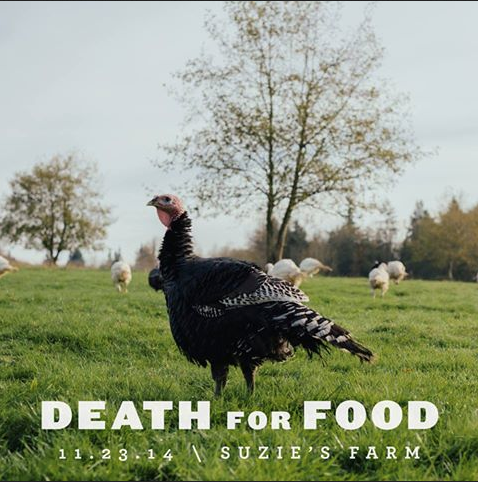
The Controversy: Death for Food
by Jaime Fritsch

Creator Jaime Fritsch on the uproar his food event caused.
Some San Diego meat eaters were going to kill animals for food. A vegan activist lawyer staged an international campaign to stop them. That’s how Death for Food became one of the most controversial food events the city has seen in years. It made national news, and resulted in this cover story in San Diego CityBeat.
I’m highly biased in this debate. Months ago, I agreed to collaborate with Death for Food creator Jaime Fritsch because I believe in the educational philosophy driving his project. You can read why here, and read my initial reaction to Pease’s campaign here.
Basically, Death for Food invites omnivores to humanely kill their own dinner. Not for alpha-species thrill or Ted Nugent-esque blood sport. The idea is to reconnect meat-eaters to the life behind their meat, and let the emotions of that process guide their food decisions from that point on. It’s a movement against how meat is currently produced in America: anonymously and industrially.
Vegan activist Bryan Pease started an international Change.org campaign to stop the event, set to be held at one of the city’s most progressive and ethical food compounds, Suzie’s Farm. Without contacting the farm or organizers to see what the event was truly about, Pease made his best guess and portrayed the event very negatively, including the term “torture animals.” The hate mail and hate phone calls flooded into the farm and Death for Food creator, Jaime Fritsch. It caused financial harm to both. Since the protest, Fritsch has been accused of some pretty vile things. Animal abuse. Damaging children (a father brought his son to participate). Profiteering off animal slaughter. Insanity.
What’s been missing in the press coverage of the event is in-depth insight from Fritsch himself. The basic questions: Why invite people to a farm to kill their own dinner? Is that a progressive way to educate omnivores and promote responsible meat consumption? Or is it just sick in the head?
Here is Fritsch speaking about Death for Food, in his own words:
Why are you doing this?
I really don’t like answering this question. When you tell people what your purpose is, you pre-ordain their experience. It defeats the entire concept of Death for Food. Which is—by immersing yourself in the process, you fully experience it and integrate it, instead of having a preacher at a pulpit telling you how to feel. Now I feel I have no choice. My hope for the participants is that they integrate the process of meat back into their lives. That includes knowing about the life the animal lived, smelling the fresh air and the sunshine it gets, knowing it was a living, breathing, sentient being—and then understanding the magnitude of killing it. In my experience, afterward many people will slow down a lot, even just how they physically eat meat. They’ll chew it more, taste it more, think about where it comes from. By doing that, they’ll actually assimilate the food and nutrients more efficiently.
Sounds like some hippy dippy bullshit.
That’s science. When you think about food and concentrate on what you’re eating, you start to salivate and activate your digestive system. And what happens if you’re assimilating your food more efficiently? You need less. I’m not saying people should eat less meat. I do believe that—but I don’t preach that. After experiencing Death for Food, they tend to eat less meat. But not because I or anyone else told them to. Because they experienced killing first hand and felt the magnitude of it. Integration.
Can’t I just intellectualize it? Is it necessary to kill the animal myself?
I feel direct experience is the only way to experience that magnitude. It’s contagious, too—taking that brave step of looking at things and experiencing things in a real way. This is about self-trust. I’m going to jump in and I’m going to figure it out myself. We live in a world where things like the food pyramid tells us what to eat and what not to eat. Religion tells us that humans are innately greedy and bad and sinful and that we can’t be trusted. Science tells us that our bodies are not amazing and regenerative, but unreliable and in need of medicine and technology to regulate and improve them. A big part of what I’m saying is—you can be trusted. If you’re like me and feel a need to eat animals, you can trust yourself to eat them. You don’t need some professional to endorse your decision.
What made you start doing this?
For years I ate only humanely raised, very high quality meat—the best I could possibly find. But it would still come just wrapped up cold. And I started wondering if chicken was ever actually a chicken. If pork was actually ever a pig. I realized there’s a big disconnect between the life of the animal and the meat in the grocery store. One of the most shocking things about Death for Food is when you kill something and you remove the fur or the feathers. It starts to look like meat again. But there’s one key difference. It’s warm. The body temperature is warm. I needed that.
Why is that so important?
All meat we touch in a typical American kitchen is cold. When you touch it as you’re eviscerating just after killing it though, it’s warm. There’s still energy—actual caloric heat energy. It just had a heart that was pumping blood. It’s a shattering moment. It looks like meat, but it feels like life. It’s this in-between state. That’s when you associate meat with the live sentient being that it was.
Does the experience end there? Are there repercussions?
I think people come to Death for Food for an initial experience to get them started. We provide participants with resources for procuring locally raised, whole animals and help them meet local farmers and ranchers doing good things. We’re also starting a meat collective in San Diego where people can continue to take classes on slaughter, butchery, charcuterie, etc. It’s not a one-time “Get your Death for Food shot, and you’re good for life!” It’s a highly rewarding path to continue along after the event—to reconnect with the process of your food. On a very basic level, what participants have said about the way they think about and eat meat afterward: More thought, more responsibility, less meat.
Did you expect a protest like the one from Bryan Pease?
No. When I was in Portland, I had significant dialogue with hardcore animal rights activists—guys who have broken into places to set animals free, set fires to places doing animal research. And they were down with Death for Food. They said, ‘If you’re going to eat animals, please take a look. Please be honest with yourselves.’ I actually thought that was what we were going to get. I thought we’d get some heat from people who didn’t understand it, but I could talk to them and explain it.
Did it make you angry? Sad? Vengeful?
I see Death For Food as a question, not an answer. The Change.org campaign denied people the means to ask that question. I was shocked, because while I know it wasn’t a perfect scenario for animal rights activists—they’d prefer we just don’t kill animals for food at all—my experience has been that it’s a step in the right direction for them. Even though Bryan Pease fundamentally disagrees with what I’m doing on the basic level of killing animals for food, I think he knows I’m not the real enemy. Hopefully someday he will launch a campaign against factory farming and I’ll have his back in that fight. I respect his position that animals have unique personalities and feelings and we should not kill them. I’m not asking him to pat me on the back or anything. Our feelings on fighting animal cruelty overlap in many places but, like he has said, you have to draw a line somewhere. He does, and I respect that.
What sort of people are objecting to the event?
Objections are coming from hardline animal rights activists who believe humans shouldn’t kill animals for food, period. Honestly, I can respect where they’re coming from because I’ve entertained that sentiment myself and still wrestle with it sometimes. One guy told me he signed the petition because he felt like it should be held at a ranch, not a vegetable farm. And you know what? In retrospect, he was right. Suzie’s was not the right venue for Death For Food. From what I can gather, hardline animal rights activists also take the stance that “humane ranching” advocates like myself are even worse than industrialized ranchers because we raise these animals with the same care as pets and then betray their trust when we eat them.
Is this worse?
You really have to ask me that?
Yes.
I don’t think anything could be worse than a factory farm system. It’s hell on earth. The fact remains, though, that I want meat and I want it on what seems like an almost cellular level. I understand the desire to not hurt animals. That’s how this entire project began. For me, the abstinence solution just didn’t work. Treating animals well during their lives—and giving them a quick, as-painless-as-possible death—does work.
What about the more extreme objections to Death For Food? That meat eating is a fundamentally bad thing—both environmentally and health-wise?
Those arguments are based off the factory meat system, with good reason. Death For Food that promotes local, holistic farms that mimic nature and utilize plants and animals to restore functioning, food producing ecosystems. That’s dangerous for vegan activists because it undermines the core arguments of vegan activism. We advocate a deeper connection with food in order to find a resonant system of eating for yourself. Daeth for Food usually results in people eating far less meat, and far healthier meat. We require humane treatment of animals in life and in death both within the project and beyond, when we use our dollar power to purchase ethically produced food. By eating a more reasonable amount of meat and taking part in the process ourselves by sourcing whole animals from local farms, we make healthy meat affordable to all.
And you think activists are threatened by this?
I hope not, because logistically I think a network of local, omnivorous food systems is the only thing that’s going to feed Earth’s population without completely destroying its ecology. I don’t want to hinder any implementation of that by further inflaming the current vegan vs. omnivore fight. This planet evolved over four billion years around local, omnivorous food systems. That’s just what works for us, environmentally speaking. But removing factory farms from the discussion seems to dismantle every pragmatic argument for a wholesale, global conversion to veganism. I can see how that alone could be a catalyst for a whole new round of arguments. The bummer of it all for me is that I’m 95-percent vegetarian. Ironically, it’s this tiny bit of meat I’m fighting about eating.
It didn’t seem like there was a “tiny bit of meat” set to be served at Death for Food. It seemed like a feast.
Right. It was a family-style meal with many different types of local and seasonal produce, fish and meat. But the idea was you could eat as little or as much as you wanted as an exercise in learning to be your own barometer with what you need in your diet. I tried not to talk about that too much because, again, I didn’t want people to come in feeling like they had to take a half a bite of everything and pretend like they were being “good, responsible omnivores.”
Some vegans have argued that no sane person would willingly kill an animal.
With Death for Food, sane citizens experienced responsible animal slaughter and reported that it was challenging but worthwhile. Most of them also decided to continue eating meat, but do so with more responsible parameters. Is that the action of an insane person? Or are certain parts of life merely challenging, and Death for Food attendees are people willing to face that challenge head on.
You say animals are humanely killed at Death for Food. How so?
We use a process where we blood-let very close to the jawline and position the animal so that the first blood that comes is from their brain. We use a razor sharp knife. They lose consciousness in two to six seconds. I’d compare it to when you’re cut with a scalpel and you don’t even know until you see the blood. When done by a professional, the animal doesn’t even realize what happened.
How do you know that’s the best way, for, say, the lamb that you were going to kill at Suzie’s?
That’s advice from holistic ranchers. The other way is to shoot the lamb in the head. But they have such small brains you can easily miss, causing needless pain to the animal. You also destroy the head, which is a lot of food. Stun guns are also controversial. It mostly works, but it can also just hurt the animal and not render them unconscious. I’ve seen the killing process at holistic, small farms and ranches from Washington to Mexico—and the most ideal method I’ve seen is a professional wielding a sharp knife and going for the bloodline close to the brain.
But you’re having regular people kill their own dinner. Not professionals.
We have a very good support staff with a lot of experience. I’m there with you. That’s to keep you and the bird from injuring yourselves. That said, there is potential for it going wrong. I can’t insulate people from that. Life is messy. Even the best, most humane ranchers I’ve ever met will admit it’s not always a perfect process and that occasionally a humane kill goes badly. In America we’ve taken this sort of hyper-sterile, ultra-safety path to everything. I actually see that as part of a larger problem—the refusal to engage with anything dangerous. The process at Death for Food is not only dangerous for the animal—it’s dangerous for the participants. One of those turkeys could easily break your nose with its wing. It could take an eye out with a claw. Death for Food is a larger idea of going headfirst into life and embracing the challenging parts along with the good parts. Typically when we say ‘embrace life,’ we mean hug your neighbor. Well, part of embracing life is embracing the challenging parts, too. Like holding your loved ones’ hands as they die. Not as they ‘pass on.’ As they die. Or spending time with the terminally ill. Whatever you want to do. Embracing life fully means embracing death. Conversely, denying death means denying life.
People have complained about the cost. They’ve said it’s astronomical and accuse you of profiteering.
The max possible sales for the event was $12,900. There were only going to be 75 attendees. And there were only a handful of higher-cost tickets–$200-$300, where people were able to take the morning class to kill their own chickens and turkeys, and take them home for Thanksgiving. Let’s break it down with our projected costs: venue fee ($1,000); food service staff ($2,000); tables/chairs/linens/wares ($2,200); food ($2,500); beverages ($2,500); harvest chickens ($500); harvest turkeys ($1,000); decor ($200); cooking equipment ($750); kitchen staff ($480); lighting ($250); A/V and sound ($200); harvest station construction ($2,000); photo exhibition ($1,000); wood for fires ($150); contributor flight/hotel ($500); menu printing ($200). That’s $17,230 and we hadn’t even yet budgeted security because I wasn’t thinking we’d need it until things got crazy. It’s also worth noting none of the chefs, speakers, or my event coordinator were receiving a cent. They were all doing this for free.
So you would’ve lost over $4,000.
I don’t think so. People support this project. Donations come in, vendors politely refuse payment or give me a big discount to show support. I bet in the end I would have at least come close to breaking even. I guess I just trust life like that.
If this is about education and not profit, couldn’t you silence critics by becoming a nonprofit?
It doesn’t matter to me if Death for Food is labeled a nonprofit. It’s a negative profit. It hemorrhages money.
There were accusations that you weren’t using USDA-approved meat, and that’s partly why the event was canceled because that would be illegal.
My top priority is using the most humane, best meat possible. I wouldn’t put on an illegal event. If there were questions of the legality, I would have properly addressed them.
Have you heard from people who attended the first event and how it affected them?
Dozens. People tell me it changed their lives.
The Controversy: Death for Food
by Jaime Fritsch
The folks behind Oddish Wine and Lost Cause Meadery are partnering with Bica to open an all-day cafe, coffee shop, wine bar, and restaurant near La Mesa Village
La Mesa: a bucolic, hill-dappled city long regarded as a somewhat frumpy, never quite trendy bridge between the urban cool of Mid-City and the rural sprawls of East County. La Mesa’s population clocks in at around 4 percent of the city of San Diego’s—fewer than Chula Vista, Oceanside, Escondido, Carlsbad, El Cajon, Vista, San Marcos, and Encinitas, in that order. It’s home to a killer Oktoberfest, one of the best charter high schools in the state, and a theatrical mayor who tools around town in a golf cart (and so far, hasn’t cut any arts funding or closed public bathrooms).
But any area that’s only 20 minutes from downtown San Diego and under 20 miles to Mission Bay will only stay under the radar for so long. Slowly but surely, bits and bobs from San Diego’s cultural tastemakers have been popping up all over town. Dark Horse Coffee and the boutique Small Batch both opened in La Mesa in 2018. Stella Jean’s and Pop Pie are coming later this year. Native Poppy is building its new headquarters and studio this fall. After a year in business, the new owners of JK’s Greek have established themselves as one of the best Greek restaurants in the county.
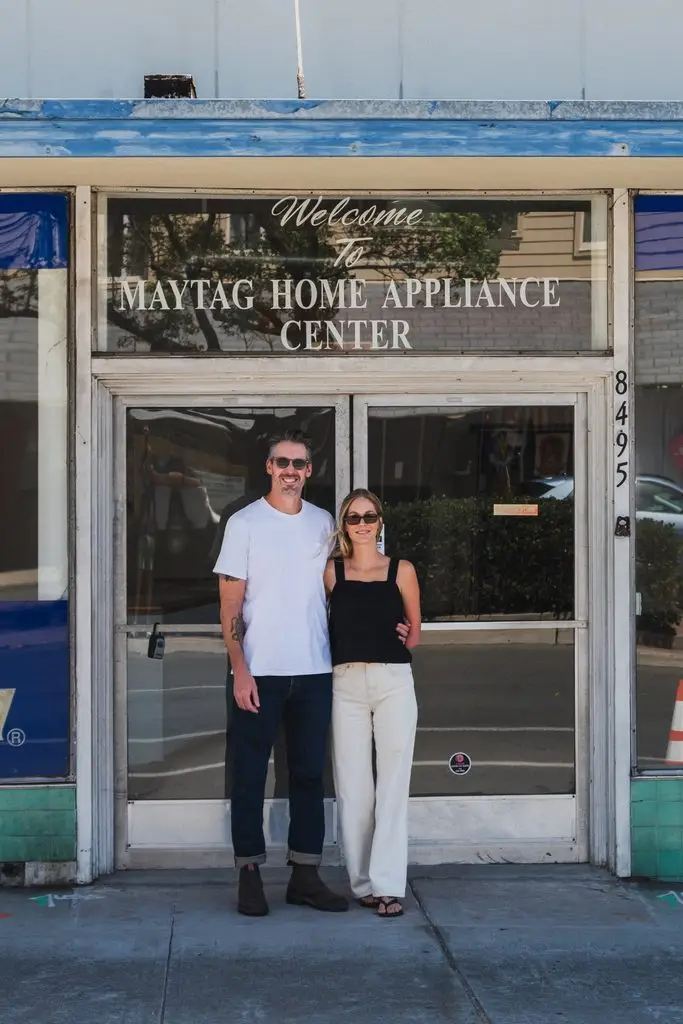
Next year, La Mesa will get one of its most ambitious projects yet. Billy and Suzanna Beltz, owners of Lost Cause Meadery and Oddish Wine, are pouring everything they have into renovating a 5,000-square-foot building between the Village and MacArthur Park to open a wine/beer bar, coffee shop, all-day cafe, and wine shop.
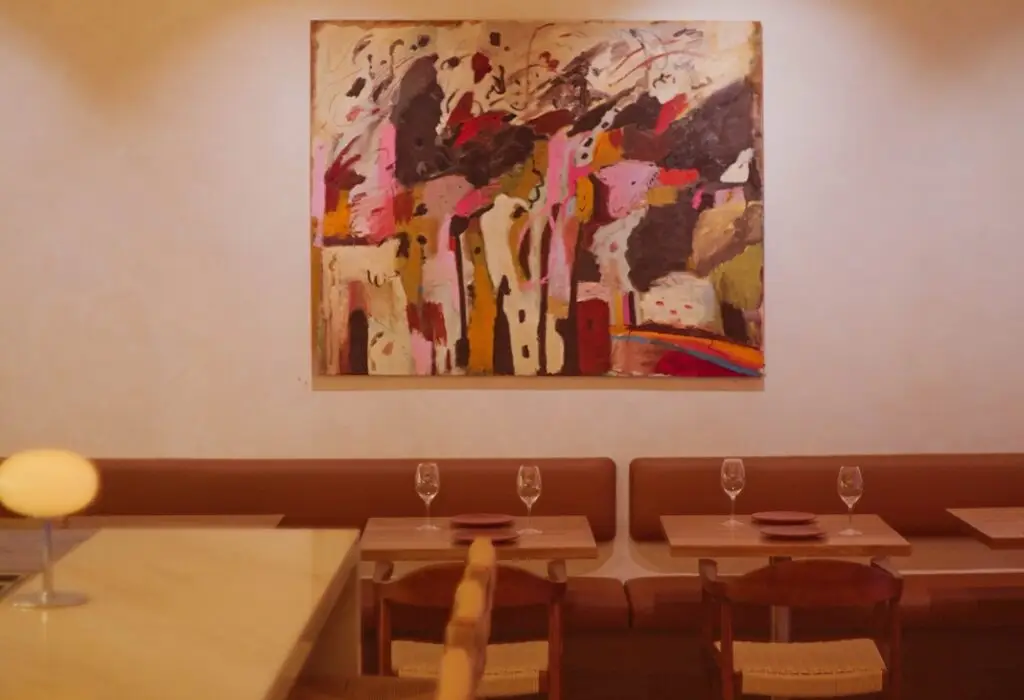
The concept doesn’t have a name (yet), and Bica in Normal Heights will come on as a partner to run the restaurant aspect and coffee program (which also won’t be called Bica. Still lots of naming decisions to be made). But the Beltz’s vision is to create something in La Mesa that doesn’t exist yet—a community gathering space open from morning until night that’s family-friendly, creatively designed, and well… cool.
The building has been around since the 1940s, first operating as a neighborhood market, then butcher shop, secondhand children’s store, electronics store, dry cleaners, and bike shop. The Beltzses say they plan to keep the “soul and character” of the space as much as possible, highlighting original details like a barrel-shaped wooden roof, brightening up the corner building by utilizing the large front windows, and eventually building an outdoor dining/drinking space and kid-friendly area—a must for the neighborhood’s plethora of young families. They tapped all locals for the design and build: Tecscape Design, design consultant Carly Miller-Chen (who owns Ayi boutique in South Park) to create the space, and local contractor CLTVT.

Starting in the morning, the space will offer coffee and light breakfast items before transitioning to lunch and dinner menus, plus a full bar that will feature Oddish and Lost Cause products as well as other local wines, beers, ciders, and other beverages alongside an aperitivo program and low-ABV cocktails and spritzes. Food-wise, they plan to install a wood-fired oven and rotisserie, but expect more menu details to be revealed closer to opening.
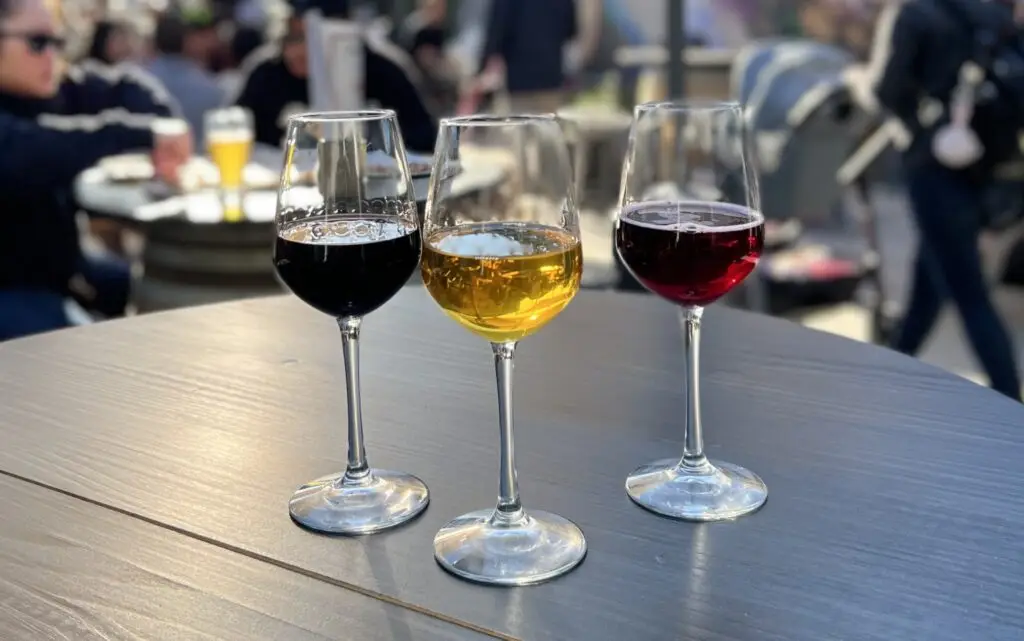
There will also be a small retail space focused on natural wines and ciders from places like Raging Cider & Mead in San Marcos and other San Diego and Baja California makers. But don’t expect run-of-the-mill options from the guy who makes weird wines and mead, the oldest alcoholic beverage in human history (hardly TikTok trend material). “We have a unique perspective… Hopefully we can expand some palates and minds in the process,” says Billy.
Community is the heart of the project, more than food, more than drinks. “We have a young family. [Bica owners] Manny [Da Luz] and Charlie [Knowles] have families,” says Billy. Suzanna adds: “People want a space that they know they’re going to get really amazing food, really fun drinks, but they can also feel like they can bring their kids during the weeknights.” It won’t be North Park 2.0, although many families now living in La Mesa came from various neighborhoods across Mid-City (like the Beltzes). It’s filling a void. It’s something they can build from the ground up. And just maybe, it’s something that will surprise people who have yet to discover La Mesa’s potential.
Oddish Wine/Lost Cause Meadery’s new concept is projected to open by the end of 2027 at 8495 La Mesa Blvd.

Listen Now: The Latest in San Diego’s Food and Drink Scene
Have breaking news, exciting scoops, or great stories about new San Diego restaurants or the city’s food scene? Send your pitches to [email protected].
Beth Demmon is an award-winning writer and podcaster whose work regularly appears in national outlets and San Diego Magazine. Her first book, The Beer Lover's Guide to Cider, is now available. Find out more on bethdemmon.com.
At The Delicate Squash, Shannon English is rethinking cookies, cakes, and pastries with seasonal ingredients and natural sweeteners
Midway through my phone conversation with Shannon English, owner of The Delicate Squash, I hear an alarm shrilling in her background.
“Sorry, I’ve got to pull some cookies out of the oven right now!” she apologizes. After a few beats, she picks the phone back up and laughs. “I feel like I’m bouncing around all over the place.”
After hearing her run through a list of her professions and current hobbies, I’d have to agree. English runs The Delicate Squash, a gluten- and dairy-free bakery; teaches cooking demos; pops up at farmers markets; wrote a book of poetry (Deep Water came out this month from Beyond the Veil Press); hosts a monthly open mic night; dipped her toe into ballet; recently joined a running club; volunteers at local farms; and finally, teaches at a play-based, nature-based preschool.
I’m tired just talking to her.
Surprising no one, English seems to have unlimited energy and enthusiasm for all this work, notably in education. Early childhood education is one of the most pivotal times for nurturing lifelong learning, but she also aims to educate the public on how to eat cleaner, feel better, and support your local food systems. She started The Delicate Squash in late 2023 after discovering she has a chronic illness, going through the typical standards of care and even strict elimination diets, to no avail.

“I’m not going to say I found a diet that has ‘cured’ me, but I have found that taking a more mindful approach to a lot of things, including diet, has made symptoms far more manageable for me,” she says.
Even people with dietary restrictions deserve a little treat from time to time, but she had a hard time finding anything that tasted good and made her feel good. Thus, The Delicate Squash was born.
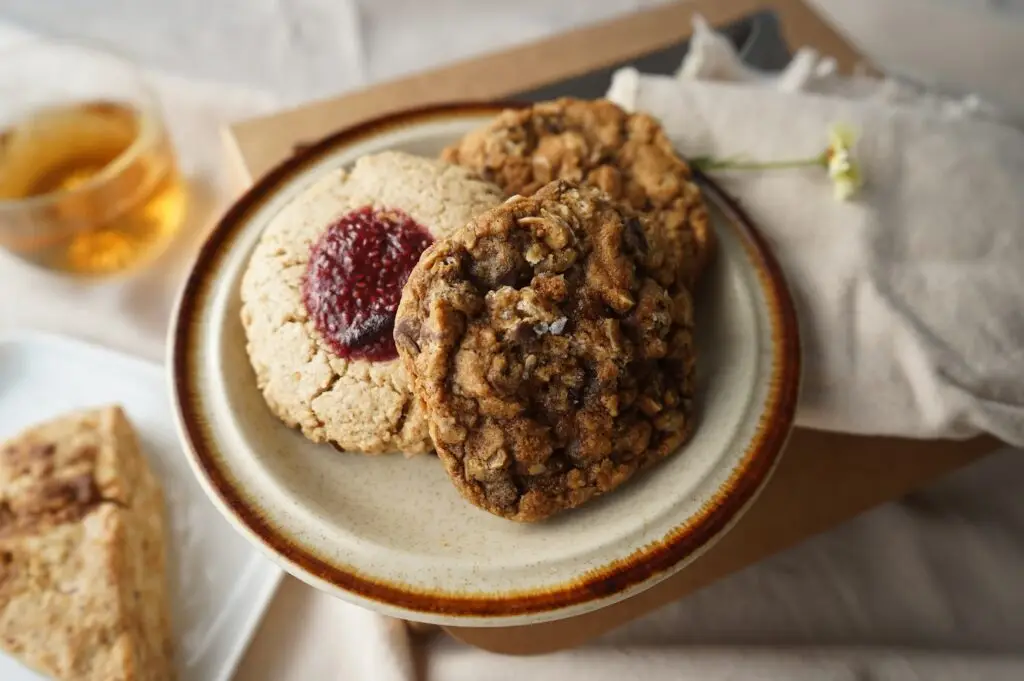
All of her baked goods avoid gluten and dairy, and use natural sweeteners like coconut sugar or maple syrup as well as herbs, fruits, foraged flowers, and other natural flavorings. Her signature cookie, the “Delicate” cookie, is a sea salt dark chocolate cookie that’s soft, a little salty, a little sweet, and made with oatmeal to keep it gluten-free. Other crowd favorites are thumbprint jam cookies with jams made from scratch with change seasonally; breakfast pastries like orange, dark chocolate and cardamom scones; brownies; orange and black sesame banana bread; seasonal pies; and custom and seasonal cakes (currently, the late summer flavor is a dark chocolate coconut milk ganache with berry jam).
English says some people are surprised she can produce such a variety of goods with the dietary restrictions she adheres to. “A lot of feedback I get is ‘I could never do that,’” she says. But if she can do it, she assures me that anyone can. “I like to say ‘practice makes progress, not perfection.’”
Her advice? Focus more on being present than presentation, and don’t be afraid to experiment to keep things interesting. And if that doesn’t work, you can always hit her open mic night to ask for tips.
Customers can order from The Delicate Squash’s online store, check her upcoming schedule of pop-ups, or find her goods at various independent retailers around San Diego.
Escondido is getting in on the listening bar phenomenon. On September 5, musicians Mat Rakers, Kevin Capacia, and Billy Petty will open Plot Armor, a Japanese-style vinyl listening bar that Rakers says they aim to feel “curated and intelligent.”
“Currently, there are not a lot of ‘cool’ spots in Escondido,” he says. Backed by The San Diego Music And Art Company and The Escondido Music And Art Company, Plot Armor will soon offer sake, wine, beer, and soju cocktails, plus Japanese non-alcoholic options and cold brew. Eventually, they’ll add Japanese-inspired snacks, but the focus will be creating a small place (very small—the seating capacity is 20) where vinyl junkies can come listen, linger, and libate.

Listen Now: The Latest in San Diego’s Food and Drink Scene
Have breaking news, exciting scoops, or great stories about new San Diego restaurants or the city’s food scene? Send your pitches to [email protected].
Beth Demmon is an award-winning writer and podcaster whose work regularly appears in national outlets and San Diego Magazine. Her first book, The Beer Lover's Guide to Cider, is now available. Find out more on bethdemmon.com.
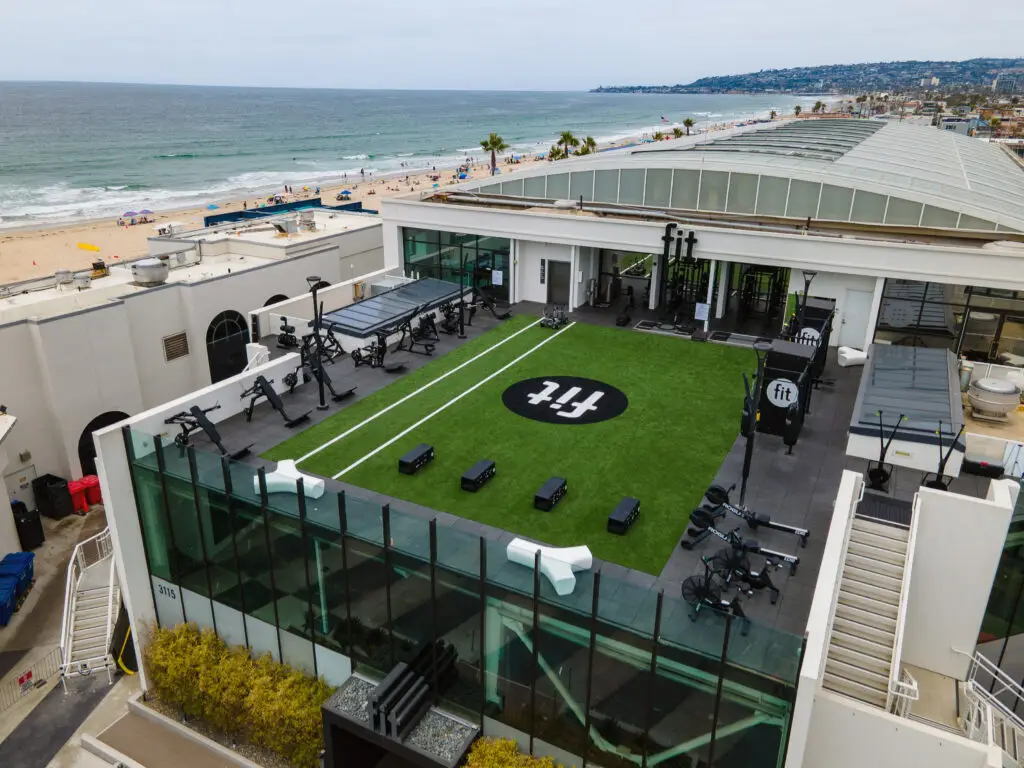
Earlier this year, Fit quietly dropped "athletic" from its brand, from Fit Athletic Clubs to simply Fit, and started calling itself something new: a social wellness club.
There’s a version of San Diego that lives in two extremes. On one side, the 5 a.m. crowd: biohackers, marathoners, people who’ve already logged a cold plunge before your alarm goes off. On the other, the after-dark crowd, the ones chasing sunset happy hours and late dinners with friends. Everyone seems to be either optimizing or unwinding, and most of us feel like we’re failing at both.
Fit, San Diego’s reigning Best Gym for the third year running, has built its entire identity around erasing that divide.
Walk into one of Fit’s three San Diego locations on a Tuesday afternoon and the lines blur fast. Someone’s mid-set on the squat rack. Someone else has a laptop open at a café table a few feet away, half-working, half-people-watching. A group is trading plans for the weekend’s event by the recovery lounge. Nobody’s in a rush to leave.
“We’re not competing for the same people,” says Emily Waybright, Public Relations Manager at Fit, addressing the arrival of a national luxury gym chain in San Diego this year. “We don’t really feel like we’re in the gym category. It’s this unique thing.”
That unique thing has a name now. Earlier this year, Fit quietly dropped “athletic” from its brand, from Fit Athletic Clubs to simply Fit, and started calling itself something new: a social wellness club.
It’s a small wording change with a bigger idea behind it. Fit was never built around escaping the workday. It was built around the people who genuinely like what they do, and who want workouts, work, and friendships to happen in the same place instead of three separate ones. Because sometimes red light therapy with a stranger turns into weekend plans.
Fit’s philosophy traces back to its founder, who started the brand nearly two decades ago after failing to find a gym he actually wanted to belong to. He looked instead to the old-school country club, where people came for a shared interest and stayed for the community. His version was made for a younger generation, minus the golf, plus the loud music.
Which makes it a little ironic that the very award putting Fit back in the spotlight this year is Best Gym.
What does the best traditional gym look like when the definition of a gym is becoming less traditional? It’s a fair question, and Fit’s answer is that the fitness industry itself is shifting. The 45-minutes-in, 45-minutes-out model is giving way to something closer to a genuine third space, the kind of role the office and the bar used to play before remote work and changing nightlife habits rearranged how people spend their time
For Fit, community isn’t a marketing add-on to fitness. It’s the through-line. Members aren’t just paying for a treadmill; they’re paying for an entire day of social wellness that’s built on performance, recovery, connection, and a plan for the next event on the calendar. That’s a much harder membership to walk away from.
Ambition and ease aren’t opposites here, they exist side by side, where passion and play share the same morning. On September 12, Fit is hosting Sol, a full day wellness festival at Fit Social. The morning focuses on wellness classes and vendors and then the evening is a full party with multiple DJ sets and an open bar. Think of it as a kick-off to locals’ summer in San Diego.
Ready to see what a social wellness club actually looks like? Visit fitclubs.com, or follow along at @thefitclubs on Instagram.
After a blind taste test, these four desserts came out on top—see the winners here
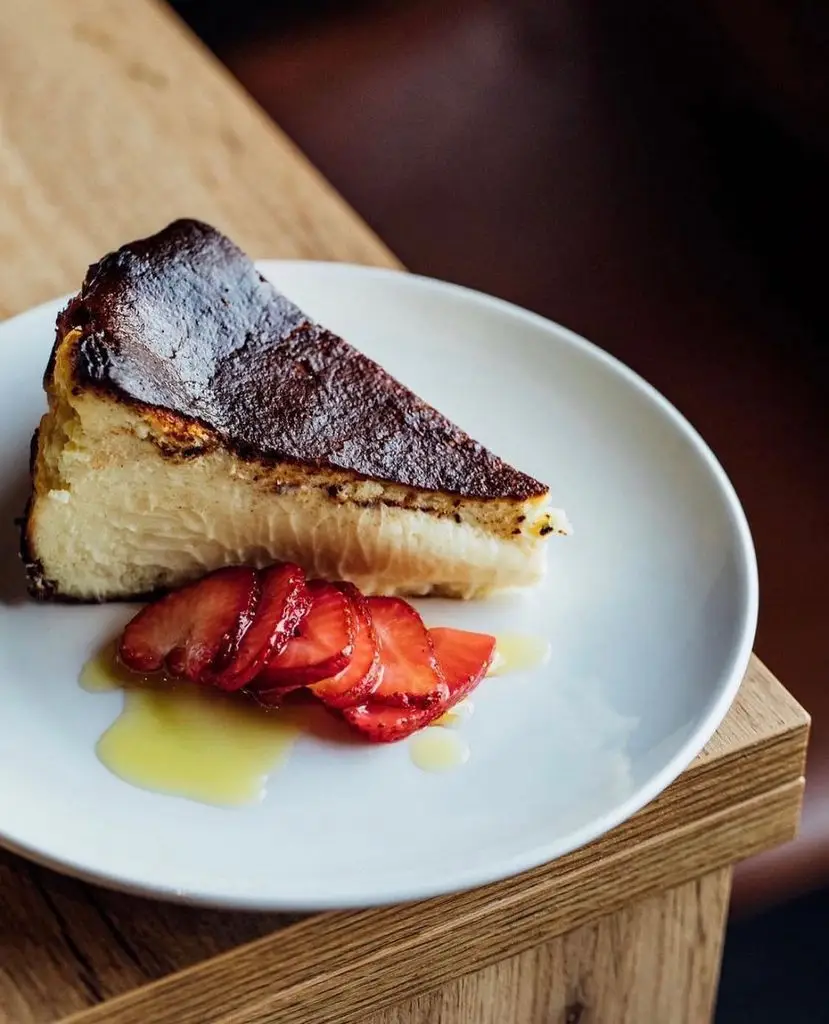
Basque grandmothers have not been making it for centuries. If you’re a millennial, there’s a strong possibility you’re older than the dessert itself. Yet somehow in less than 40 years, the Basque cheesecake—a half-pudding, half-cake creation with a top that looks like a mistake—managed to ooze its way onto menus all over the world.
It became the undisputed dessert star of San Diego’s restaurant world this year. So we invited 19 of the top restaurants, pastry chefs, and bakers to bring their best to the San Diego Magazine office for a blind taste test to find the best in the city.
First, a little history and context.
In 1987, after failing to find a job as an electrician, Santiago Rivera started working as a bartender at his parents’ unassuming pintxo bar La Viña, in San Sebastián, Spain. He was a naturally curious, self-taught cook who spent his free time testing recipes, tinkering with ingredients, and tweaking techniques.
So when it came to the cheesecake—which hadn’t changed much since its invention (a rudimentary version was served at the first Olympics in Greece 4,000 years ago, and the modern New York version in 1872)—he got radical with it.
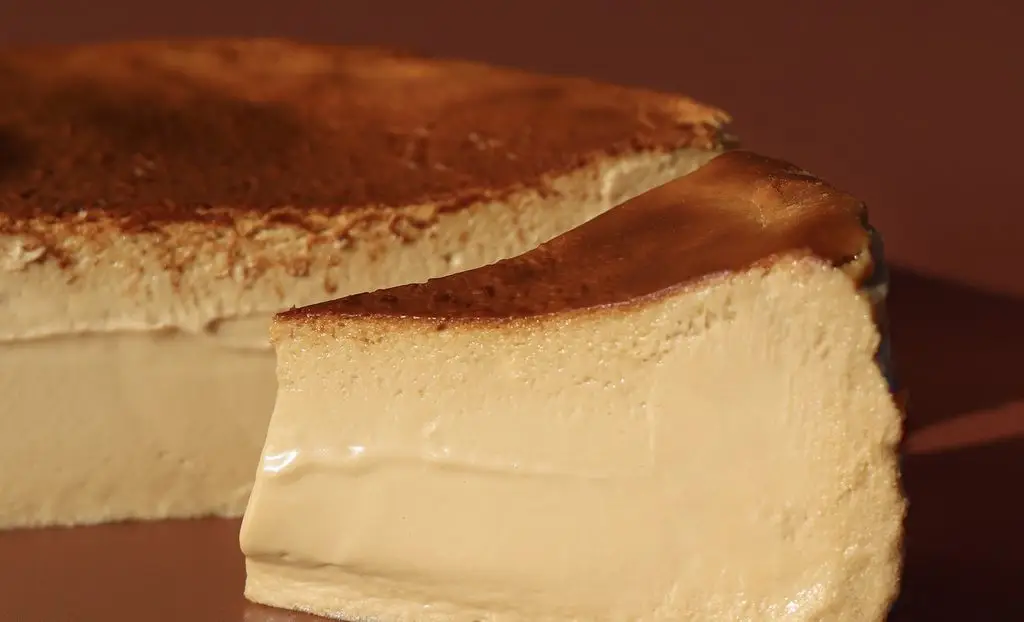
He removed the crust (partly just to speed up the process because time is money for a small business). Without the crumbly crust, the experience was far creamier, less granulated. Then he cranked the oven to 400 degrees, nearly 100 degrees hotter than the normal baking temperature.
The result? The top became deeply caramelized, almost burnt, while leaving the center luxuriously soft and loosely set. The restaurant became a legend because of this breakthrough in the dairy arts, and his father never let him stop making it after that.
Now, 67 years after the restaurant’s opening, La Viña stands out for the unceasing line spilling onto the street, and the remarkable amount of curd cultists standing nearby, hovering over cream-smeared plastic containers. It’s the kind of scene that makes you stop and think: What the hell are they eating?
Now, the blind tasting. To keep things fair, the contenders were divided into four categories: Restaurant Traditional, Restaurant Flavored, Bakery Traditional, and Bakery Flavored. (It’s a tad unfair to pit a baker who specializes in the one glorious thing against a restaurant that cooks dozens of things.) Each entry was served blind and judged on texture, flavor, and number of vaguely inappropriate food moans.
The logistics were chaotic, to say the least. Our fridge—not a walk-in, sadly—was packed to the brim. Each cake was sliced, secretly labeled, and shuffled onto plates while the team gathered in the conference room. The whole shebang was not in any way sponsored by Lactaid, despite our various attempts to convince them of this ripe marketing opportunity.
The judging became gloriously unhinged. We heard it all, from “I don’t care how the cheesecake gets in my mouth, it just needs to happen,” and “Is it supposed to be this jiggly?” to “Kind of a baby throw-up situation,” “Straight cheese,” and “I’m getting vague socks there.”
But four Basque cheesecakes stood out among the rest, earning themselves the title of Best Burnt Basque Cheesecake in San Diego.

A restaurant for the people. Rosarito native chef Juan González and Megan Strom are the ideal married couple to be running a farm-to-table joint. She’s been a farmer for decades, selling top-notch produce to some of the best restaurants in California—which is how the two met. A couple years ago, she started working at the small organic farm in Valley Center run by Mike Reeske, who had spent decades breeding the perfect heirloom beans for SoCal’s climate. He recently retired, and gifted those strains to Strom—who grows them (and other crops) for their tiny Escondido taco/burrito shop specializing in guisados (Mexican stews).
A Basque cheesecake in a taco shop? You bet. Juan’s got family roots in Spain and has cooked in Spanish kitchens.
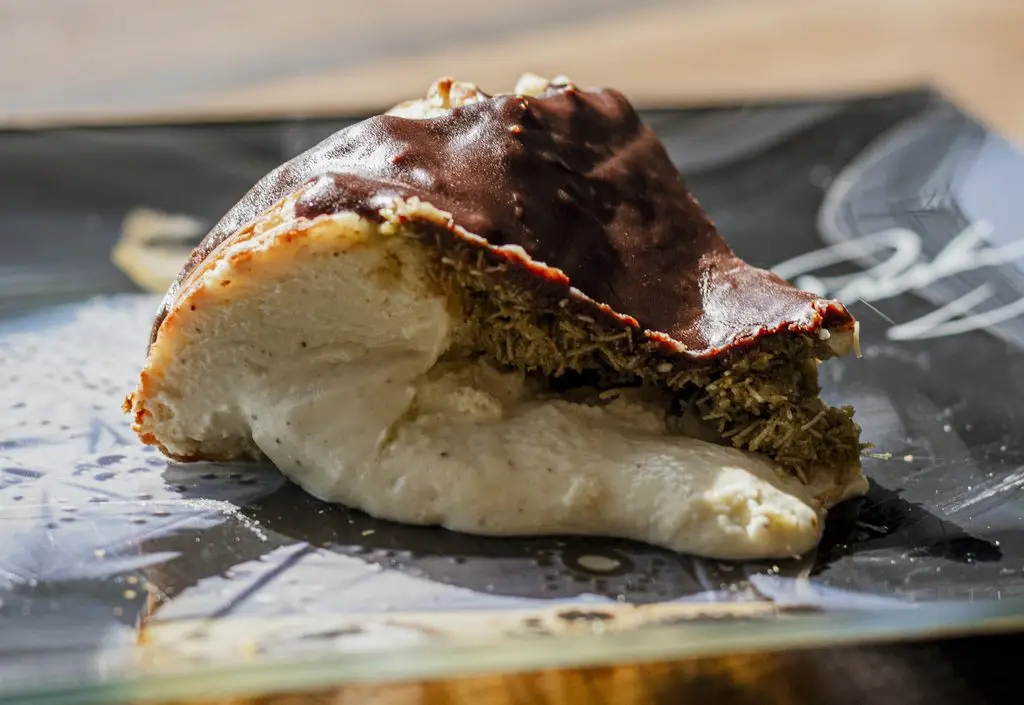
Mesa Agricola’s winning Basque is by far the most “burnt” of all contenders—so much so that an Instagram follower declared it a mistake. But as Chef Juan notes, there’s an art to hitting the sweet spot where “the bitterness of the char balances the richness and sweetness without turning it into ‘chicharrón.’” Plus, char is a core charm of Baja cooking. It’s the perfect Basque for the people who prefer setting their campfire marshmallows fully on fire.

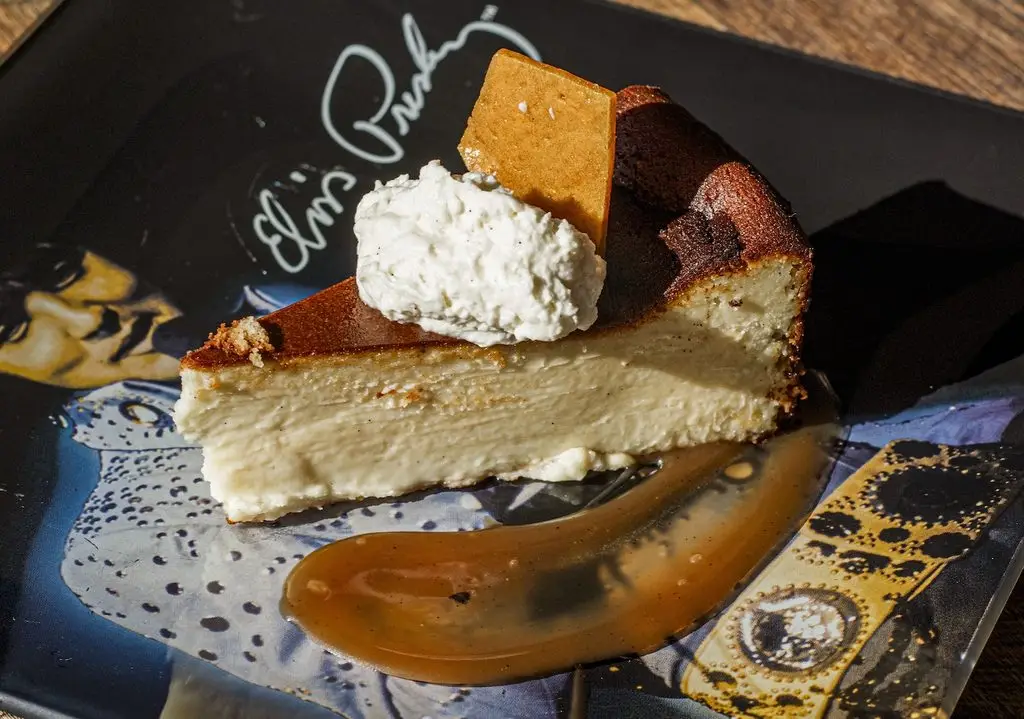
With red leather booths and a retro steakhouse vibe, Moe’s in Mission Beach is a good cheat day destination. The menu is flavor maximalism—dry-aged steaks, housemade pastas, brown liquors, and sides like the lobster truffle mac ’n’ cheese. Pastry chef Eli Peralta (whom some might remember as the creator of The Patio on Lamont’s “Twisted Elvis”—a peanut butter-banana brûlée stunner) brings that same intensity to the dessert menu.
Baked at sister restaurant Molly’s (6 feet away), his Basque is served on a bed of caramel with walnut brittle and a dollop of whipped cream, an indulgent recipe that converted the pastry chef himself. “I wasn’t crazy about cheesecakes,” Eli admits. “Then I started making different flavors, and I started to like them.” He’s not the only convert: During our blind tasting, one judge likened the cake to crème brûlée, concluding, “I don’t even like crème brûlée, but I like this.”

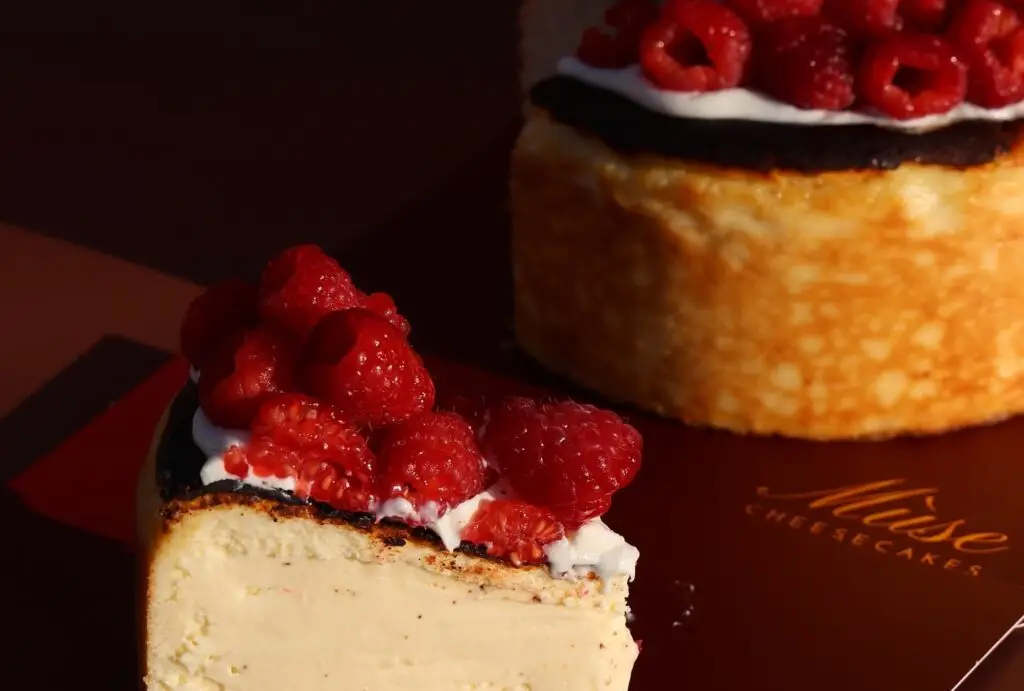
Every creative pursuit starts with a muse—and Lada Sadovnyk’s has been the Basque cheesecake for years. In Ukraine, she baked them for friends and family gatherings, never imagining she would one day build an entire bakery around them in the US. “When we moved to San Diego,” she explains, “I kept thinking, ‘What can I do? What do I really love to do?’”
The answer is pretty fantastic.
After obsessing over proportion and techniques, chasing that molten center and deeply caramelized top, what began as an online recipe evolved into something entirely of her own.
She moved from her home kitchen to a rented commercial kitchen close to Sports Arena. The orders kept coming, and so did the pressure. “At one point, I was thinking about divorcing my husband,” she says with a laugh (while sitting next to him). The grind paid off: Today, Muse Cheesecakes bakes roughly 1,200 cheesecakes a month and is planning to open its first brick-and-mortar home in Pacific Beach.
For our competition, the expectations met reality. Muse has made a quick name in San Diego as the Basque to beat. In a blind taste test, there’s no bias, no reputational shine to sway a room. The response on reveal: “Oh, of course.”

Husband-and-wife duo Alex and Anastasia Kiperband pulled off the number of failures (and then some) that are required of any search for the best recipe. After adjusting baking temps, sugar rations, and experimenting with different brands of cream cheese and heavy cream—they finally landed on something worthy of a business license.
“When we started this business in America, we were really nervous,” Anastasia says, co-owner of Bite Cheesecakes & Bakery.
Once they won over those first customers, their confidence grew enough to start tinkering. When Dubai chocolate took social media by storm, they developed their own version, making the pistachio paste from scratch before layering the buttery kataifi pastry beneath a glossy chocolate shell to create its signature Dubai Chocolate Basque Cheesecake.
“In a lot of situations, we’re converting cheesecake haters to cheesecake lovers,” they say. “That’s probably the best feedback that we get.”
Camila Ibarra Gallego is a CaliBaja native pursuing a master's degree in culinary journalism at the Basque Culinary Center. Shaped by the culturally rich, bicultural megaregion, she's passionate about sniffing out stories that connect people, territory and culture through food. When she's not tumbling down internet rabbit holes, you can find her pretending to be a wine connoisseur at a local wine bar or nose-deep in a good book.
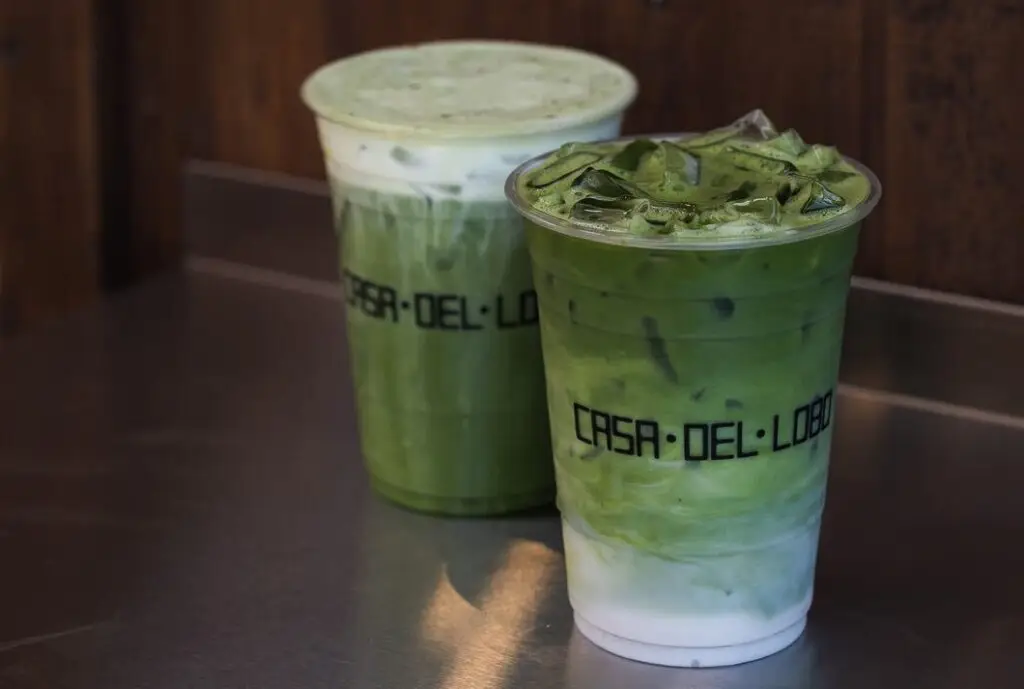
Casa Del Lobo blends coffee culture with Mexican design, serving seasonal drinks alongside its own handcrafted ceramics
There aren’t many places left in San Diego with a lack of specialty coffee options. This week, we can add La Jolla Shores to that list—Casa Del Lobo has arrived. Life-and-business partners Christine Silver and Saul Moreno came to San Diego the same route so many of us have: coming for vacation and falling in love with the city and each other.
Silver was working on Wall Street in New York City and decided to visit some friends in SoCal after the pandemic clouds lifted. Moreno happened to be visiting from Mexico City at the same time. The two met, moved here, got married, had a baby, and thought, “Hey, why not start our own business?”
Apparently, their whirlwind lives needed more windy whirls. (Windy whirls? They like to stay busy.) Casa Del Lobo isn’t either of their first rodeos, although it’s both of their first forays into the coffee space. “We’re both serial entrepreneurs,” laughs Silver. She runs a venture capital business that invests in women-owned wellness companies, and he runs his own logistics company out of Mexico City. “We keep saying, ‘Oh, it’s the last time we’ll start a business. Then all of a sudden, a year or two later, we can’t help ourselves.’”
The idea to open Casa Del Lobo initially started when the pair began decorating their house in Windansea. After looking for large-scale ceramic planters and outdoor fountains that met their quality expectations without egregious price tags (something Moreno was used to seeing in Mexico), they realized there simply weren’t any comparable options here.
So rather than continuing to drive over the border to go shopping, they decided to bring Mexican ceramic style to San Diego.
The partners now run a manufacturing facility in Tecate, specializing in large-format ceramics and specialty glazes. As they sought out potential locations to open a planter store, they realized they could go one of two routes. One, get a warehouse in an industrial area and rely on marketing to get the word out. Or two, they could diversify by opening a homey retail store where people have to walk through the shop area to get a cup of specialty coffee.
They went with option two, and coffee quickly became their primary objective.
“My husband and I, we love coffee,” she says, adding that whenever they go on vacation, no matter where they are in the world, figuring out where to get a java fix every day is their number one goal. (Side note: I can strongly relate.) Mexico City coffee and design culture lean heavily urban and industrial in feel, mixing both an Old World architecture with modern sensibilities—something Silver says they felt was missing locally, specifically in La Jolla Shores.
Casa Del Lobo, which translates to “house of the wolf” in Spanish, soft opened this week, with traditional coffee offerings like lattes, cappuccinos, and Americanos, along with four housemade syrups that will change seasonally (currently, they are vanilla, lavender, orange blossom, and brown sugar cinnamon). For now, the food is simple pastries from Knead Artisan Bakery, but Silver says they plan to add more options like breakfast burritos, paninis, and natural wine in the future. Eventually, customers will also be able to purchase their signature ceramics online, and one day, they may open more locations along the California coast.
But for now, they’re just getting started in La Jolla. “We’ll be here forever,” says Silver. “We want this to be the first of many.”
Casa Del Lobo is now open at 2246 Avenida de la Playa every Tuesday through Sunday, 7 a.m. to 1 p.m.
Beth Demmon is an award-winning writer and podcaster whose work regularly appears in national outlets and San Diego Magazine. Her first book, The Beer Lover's Guide to Cider, is now available. Find out more on bethdemmon.com.
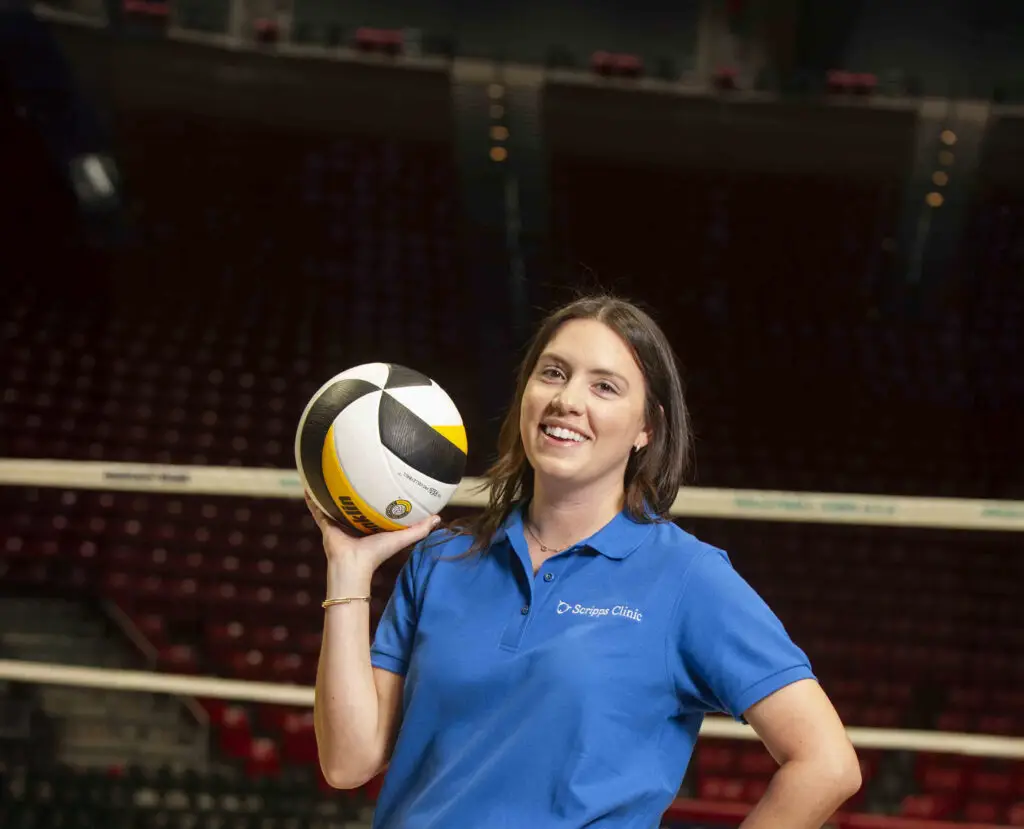
Laika Nur, MD, takes her love of volleyball from the court to the clinic as team physician for the San Diego Mojo
Growing up, Laika Nur, MD, Scripps Clinic sports medicine specialist, loved watching beach volleyball when the Association of Volleyball Professionals tour came to her hometown of Chicago. A talented volleyball player herself, she remembers sitting in the stands all day, and once, even got a couple autographs. Years later, Dr. Nur was attending a professional event focused on women’s sports, and the discussion turned to a new professional women’s volleyball league. The general manager and coaching staff for San Diego’s team, the Mojo, happened to be in attendance, and Dr. Nur took the opportunity to ask them if they needed a team doctor. Flash forward to the Mojo’s inaugural 2024 season, when Dr. Nur officially became the team physician. Click here to read more about Dr. Nur and how she incorporates lessons she learned on the court into her practice.
For more nutrition, wellness, and healthy living tips, sign up for the San Diego Health newsletter here.