

Featured articles
Featured articles
Featured articles
What's next
Featured articles
Featured articles
Featured articles
Ready to know more about San Diego?
SubscribeReady to know more about San Diego?
What to eat, see, and do in the place known for garage sales, craft beer geeks, and dogs with Instagram accounts
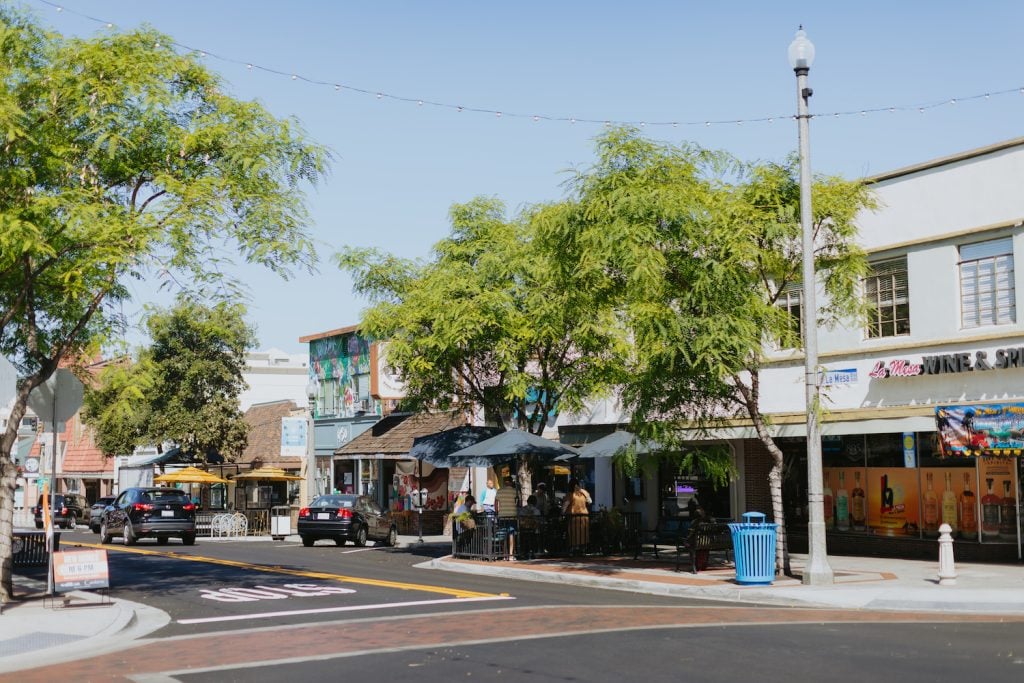
La Mesa only lies 10 miles east of downtown San Diego, but it can feel like a world away from high-rises and hectic nightlife. Here, bird noise is more common than bar commotion, but the somewhat sleepy area once known for silent movie production is on the cusp of finally waking up. Mexican eatery Casa Gabriela is a scene, and new restaurants like Papalo, indie boutiques like Small Batch and All the Cositas by Artelexia, and tons of housing developments keep popping up by the day to meet increasing demand in an area that’s conveniently located and still mostly moderately priced. (Not Mount Helix, of course, where mid-century mansions with ocean views go for millions.)
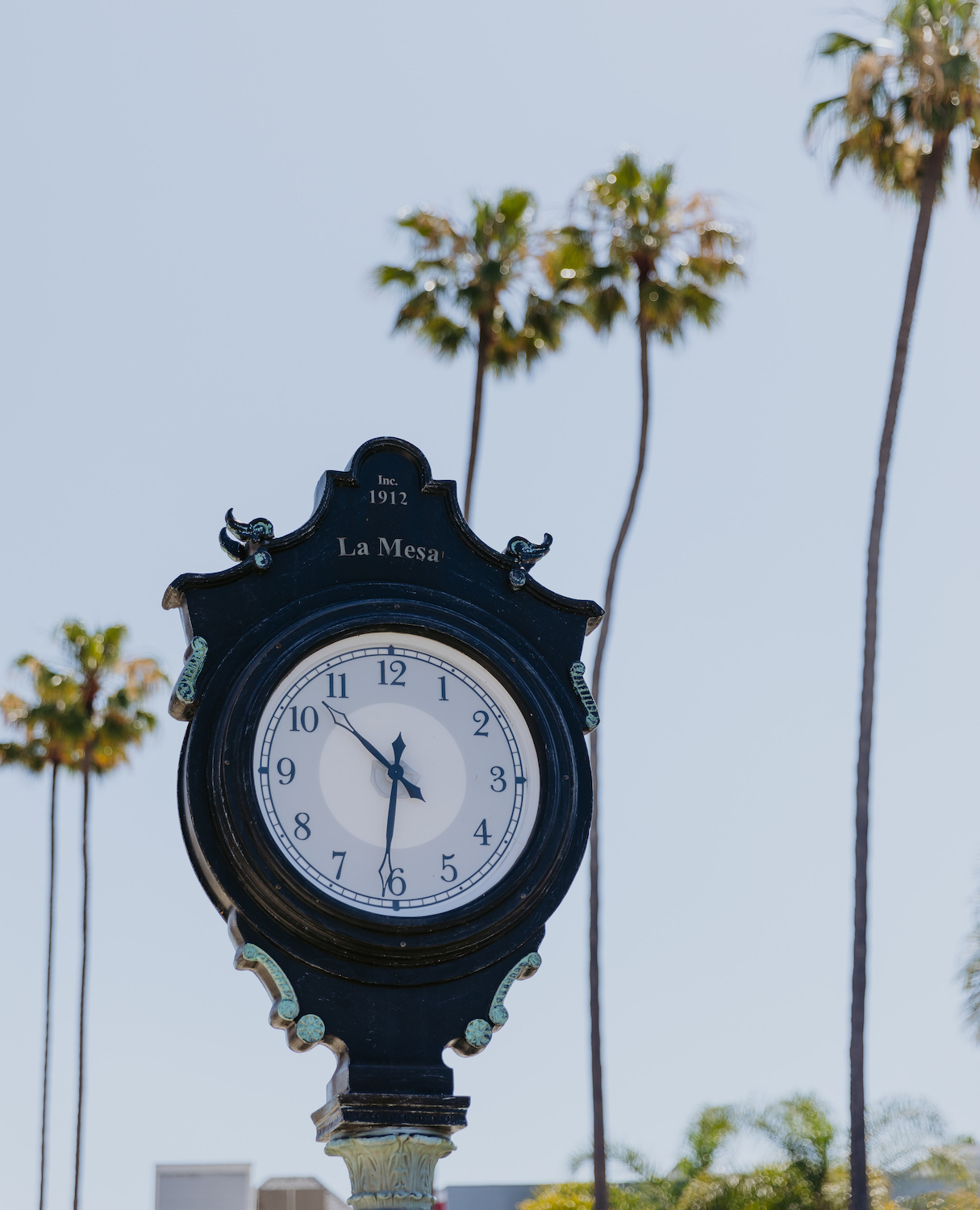
Just over 61,000 people reside in La Mesa, which stretches between San Diego’s Rolando neighborhood to the west and El Cajon to the east. Known as “the Jewel of the Hills,” La Mesa officially became a city in 1912, but the area was Kumeyaay land before natural springs and citrus farming brought the San Diego and Cuyamaca Eastern Railroad smack through the center of town. In fact, the MTS Orange trolley line follows part of the original railroad tracks through La Mesa Village, the downtown area that hosts community events: the La Mesa Classic Car Show every Thursday in the summer, trick-or-treating each Halloween, and the county’s largest Oktoberfest every fall.
It may no longer be a movie mecca or hipster haven, but La Mesa’s understated vibes tend to surprise visitors. Yes, it’s technically East County. Yes, it’s only 9.1 square miles. But with some good schools and a lingering quaintness alongside ever-expanding amenities, it may not be long before the Jewel of the Hills’ glitter catches people’s eyes.
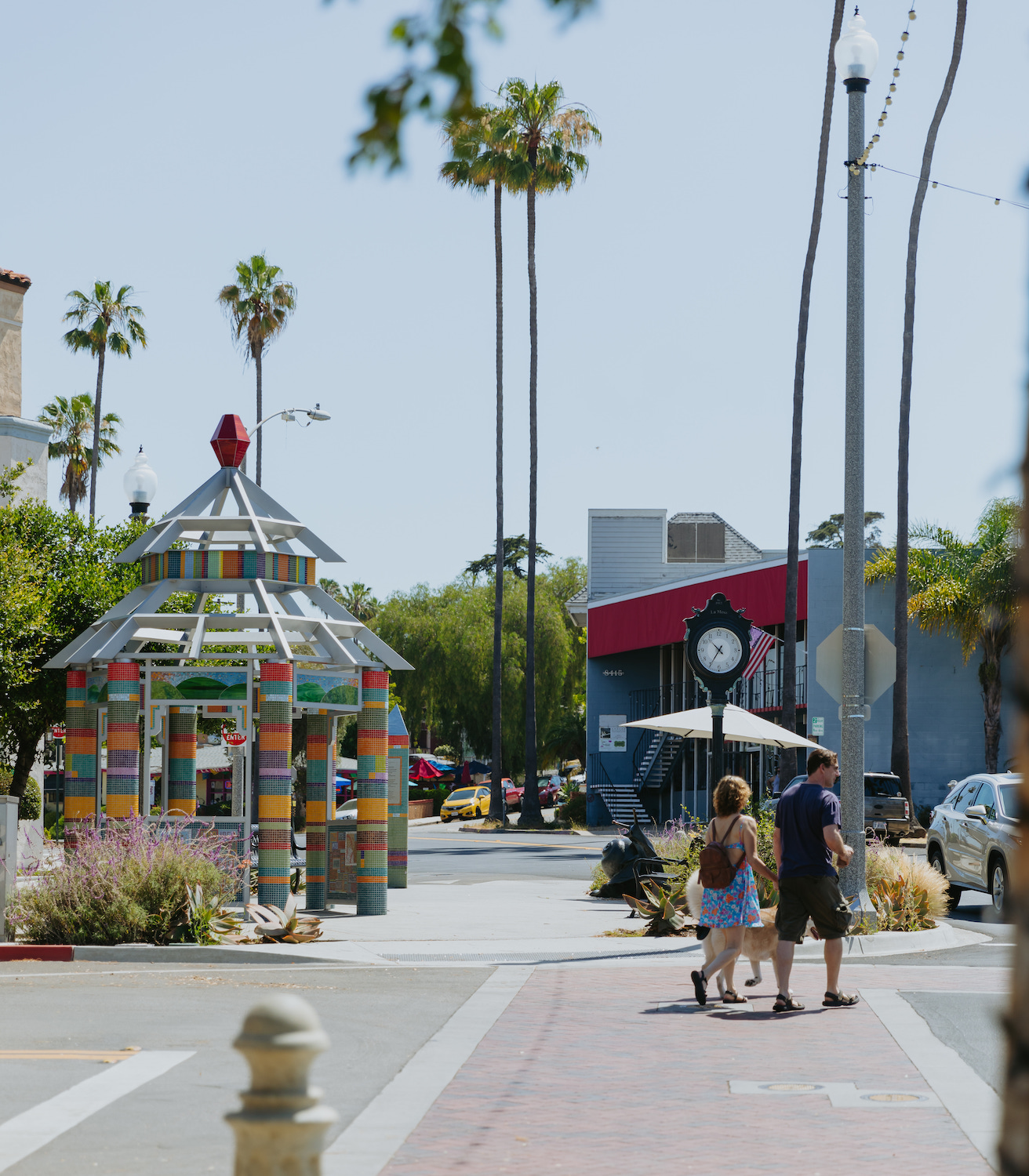
Billy Beltz, who co-owns Lost Cause Meadery and Oddish Wine with his wife Suzanna, has dwelt in La Mesa for the past three years. “We live in the Highlands neighborhood and absolutely love it,” Beltz says. “All the winding streets filled with old homes, mature trees, and friendly neighbors give it a wonderful small-town feel. La Mesa has soul and character, which is not always easy to find in SoCal neighborhoods, and we’re still just a short drive to Balboa Park or the beach.” He has more than a few favorite places around town, but here are a couple of his regular haunts.
It’s always a good idea to arrive at Sheldon’s Service Station as early as possible or risk a lack of seating or baked goods. But Beltz says they plan ahead to make sure his son’s favorite blueberry muffin is available. “The outdoor space serves as a great weekend hub to catch up with neighbors,” Beltz says. Afterward, stroll down the block to Public Square Coffee House for what Beltz thinks is the top coffee in the Village.
“Don’t let the shopping center location fool you,” Beltz warns. “Italian dinners aren’t meant to be stuffy, and this place captures everything we loved about Italy—delicious Italian food in a lovely little space with friendly service and a warm vibe, without being overpriced. Whatʼs not to love?”
Controversial opinion alert: Beltz claims The Hills Pub’s namesake Hills burger with grilled onions, lettuce, tomato, pickles, and chipotle on a brioche bun might be the best burger in San Diego. “[It] holds its own against any other neighborhood burger spot in San Diego,” he promises.
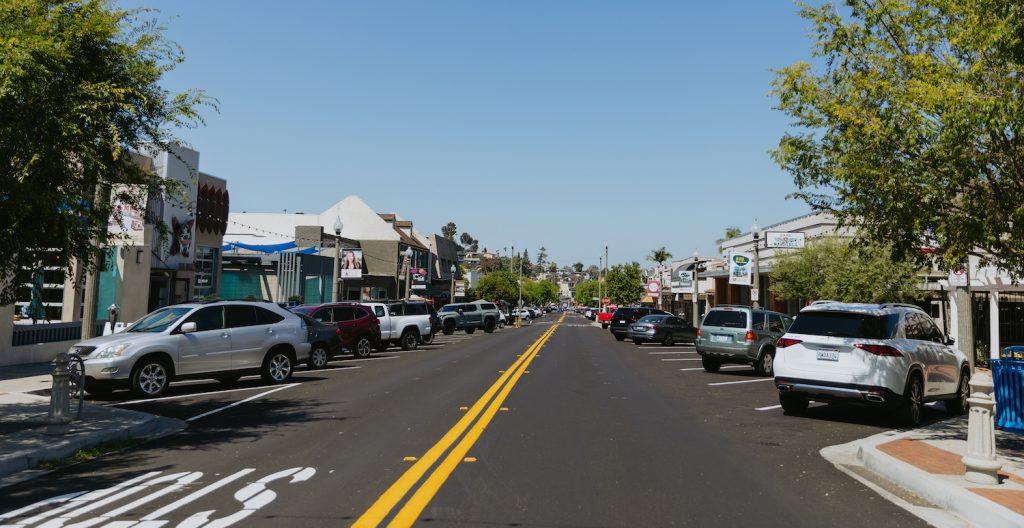
Unlike some other cities across the county falling behind on their affordable housing goals, La Mesa is actively developing multiple infill projects near transit stations to meet demand and lower carbon emissions. One such project is Cantera, which features 32 homes priced from the high $600,000s to around $850,000. Considering La Mesa’s median home price hovers around $914,000 while the county’s is nearly $1 million, that’s a screamin’ deal for regular folks. Another development is at 8181 Allison Avenue, with 100 percent affordable housing across 147 units.
Once folks set down roots, they’re going to want to eat and shop, as well. Luckily, plenty of stores and restaurants have already started to take advantage of the area’s potential. Mastiff Kitchen opened its first brick-and-mortar there in 2023, followed by Shawarma Guys earlier this year. There are even rumors of a new communal Oddish Wine tasting room (à la The Garten in Bay Park) floating around. The old-timey Village is getting a facelift later this year or early next, with a new Downtown District sign scheduled for installation. Plus, Grossmont Center is poised for a complete overhaul starting as soon as 2025, with over 25 million square feet prime for mixed use.

PARTNER CONTENT
Beth Demmon is an award-winning writer and podcaster whose work regularly appears in national outlets and San Diego Magazine. Her first book, The Beer Lover's Guide to Cider, is now available. Find out more on bethdemmon.com.
The city's pet-friendly courses combine scenic greens, wagging tails, and a round that’s as much about your pup as your swing
Golf doesn’t have to mean stiff collars, pleated khakis, whisper-talking on the green, or pretending your sand trap fails aren’t actually hilarious. Around San Diego, a handful of rebel courses are quietly rewriting the rules of an afternoon round, making them more relaxed, more social, and yes, more dog-friendly. These are the fairways where leashed pups pad alongside their people; where a suspenseful search for a golf ball in the bushes or—no!no!no!no!no!—in the water hazards are part of the fun; where every polite golf clap comes with a smiling, panting audience. If your ideal golf day includes a walk, a drink, and your dog riding shotgun, this is your teeing ground.
For proof that a golf course can be approachable without being boring, look no further than Emerald Isle Golf Course in Oceanside. The executive course delivers consistently beautiful greens, rolling elevations, and just enough challenge to keep you engaged, not stressed—unless your pup breaks free and runs for the rolling elevations, in which case you’ll be very engaged and maybe a little stressed. Locals love holes like the canal carry on No. 3 and the wildlife-dotted pond on No. 16, while golden-hour sunsets steal the show most evenings. Dogs are genuinely welcome here, not an afterthought. Grab them a slice of watermelon from the clubhouse, pose in the cart for Instagram cameos with an Emerald Isle scarf (it doubles as an adorable bandana for your four-legged friend), or introduce them to the course’s resident pups like Bogey, the assistant director of instruction, and shop dogs Karl and Frank. Affordable, friendly, and no-frills, Emerald Isle feels like golf you and doggo can’t wait to play.
660 S El Camino Real, Oceanside

The Loma Club is where golf goes social. Set in Liberty Station, this historic 9-hole par-3 course trades country club stiffness for an easy, neighborhood energy that feels distinctly San Diego. The course is walkable and unintimidating, with skyline and harbor views doing most of the heavy lifting. The Loma Club is just dipping its paws into the dog-friendly trend, and welcomes them on the mini course and off the fairways. Though your pup is the epicenter of your world, the patio at Loma Club is the real star, hosting live music, trivia (even the smartest dogs are stumped), and cocktails that rival golf itself. You don’t even need clubs to enjoy it. Show up with your dog, wander the course, grab something from the clubhouse, and stay for hours. You’ll feel like you’re exactly where you’re supposed to be.
2960 Truxtun Rd, San Diego

Calling Goat Hill Park a golf course almost undersells it. Known as the “People’s Park,” this historic Oceanside staple operates more like a community space where golf happens. Expect dogs strolling alongside the players, music streaming from magnetic speakers attached to golf carts, beginners smacking balls alongside serious talent, and locals and tourists sharing the same teeing grounds with a few four-legged besties trotting alongside. Saved from redevelopment in 2014, Goat Hill embraces a raw, unpolished look that’s both intentional and refreshing. With ocean views, a “19th-hole” fire-pit, and zero pretense, it’s golf at its most human…because: dogs.
2323 Goat Hill Dr, Oceanside

Ready to add your pup’s name to the illustrious list of golf greats? Same. At the iconic The Club at Omni La Costa, the vibe is equal parts championship-caliber and casually fabulous. Emerald fairways so perfect you’ll hesitate to step on them, palm-lined paths practically begging for a golden-hour strut, and rolling greens that ripple in the sun. And just when you thought it couldn’t get any better, your four-legged plus-one enters the chat: For members and overnight guests, the La Costa lifestyle rolls out the (very chic) welcome mat for your (leashed) pup, turning tee times into a social affair of breezy, citrus-kissed luxury and leisurely strolls. Really—what are you waiting for? Even your dog’s got a standing invite.
2100 Costa Del Mar Rd, Carlsbad
Isabella Dallas is a freelance writer for San Diego Magazine and the Arts and Culture Editor at The Daily Aztec in her final year at San Diego State University. She previously worked as an editorial intern for SDM, but when she’s not writing, you can find her trying the best coffee spots in SD, devouring the latest rom-coms, and indulging in anything and everything pop culture.
From San Diego’s coastline to Los Angeles stadium and fan zones across the region, here’s how to experience soccer’s biggest event
When three nations and 16 cities come together to host the FIFA World Cup 2026, the scale stops feeling like a tournament and starts feeling like geography. A continent becomes the stage as borders soften into corridors. And Southern California—shaped by migration, sport, entertainment, and constant movement—sits inside that landscape with all eyes on it.
San Diego and Los Angeles have always felt connected. Hop on the Pacific Surfliner, and the trip unfolds in one continuous stretch of coastline, passing beach towns, neighborhoods, and city centers.
Traveling from San Diego, everything still feels slightly suspended as the Pacific Surfliner follows the coast north with ocean on one side and a slow suburban blur on the other. San Diego stays in exhale. Los Angeles is already building toward something louder.
This summer, Los Angeles will host eight matches of the FIFA World Cup at Los Angeles Stadium, including the US Men’s National Team opener on June 11, while the region stretches into 39 days of programming across stadiums, parks, transit hubs, beaches, and neighborhoods. Instead of one massive fan hub, Los Angeles is embracing a citywide celebration, with fan zones spread across its entirety.
But this pattern has been rehearsed here for decades. In 1994, Southern California became one of the defining stages of the World Cup, when matches at the Rose Bowl placed global attention on the region and turned local stadiums into international landmarks, confirming its ability to hold the world at scale.
What distinguishes Southern California is not just infrastructure, but cultural permeability. Fashion, music, film, art, and sport constantly overlap here, creating an environment where identity is flexible and always in motion. From the Venice boardwalk, where skate culture shaped modern street style, to global soccer stars rubbing shoulders with Hollywood celebs, to authentic Spanish cuisine moving up and down the I-5 corridor, everything circulates.
The World Cup is not introducing anything new here, it’s showing up for the summer and showing out, revealing what this city has always known about itself. What follows is a look at the fan zones and how Los Angeles turns itself into a city-wide stage for the tournament, one neighborhood at a time.

As the heart of Los Angeles, Union Station is an official Fan Zone June 25-28 during the World Cup, but in practice it never really stops being one.
It is the city’s circulation point, its meeting ground, its pressure valve. Commuters, travelers, match-day crowds, and everyday Angelenos all move through the same space, and everything mixes, overlaps, and scales in real time. In a way, this is where the World Cup stops arriving in Los Angeles and starts moving through it.
The Pacific Surfliner from San Diego to Los Angeles makes that shift feel almost too easy. No stress or gridlock anxiety, just a straight line up the coastline with ocean on one side and everything slowly becoming more built on the other. It’s one of the rare ways into LA that doesn’t feel like arrival as friction. You can sit with a laptop, watch the Pacific drift past, grab coffee from the café car, and let the city come to you in pieces.
That’s the beauty of arriving at Union Station. Instead of feeling like you’re on the edge of the city, you’re immediately surrounded by it. And, inside, the station already reads like a World Cup nerve center: banners, movement, multilingual energy, the sense that something global is about to funnel through this exact point. The Heart of the City Fan Zone only sharpens that feeling, with simultaneous match screens, DJ sets, meet and greets, and immersive activations built around marquee games like USA vs. Türkiye.
From there, the city splits outward.
ROW DTLA feels like the first exhale after arrival. A converted industrial campus turned creative district where restaurants, retail, and open-air courtyards form a self-contained ecosystem. If you’re looking for the perfect first meal in LA, make it lunch at Pizzeria Bianco. The thin-crust pizza is reason enough to go, but the space leaves just as much of an impression.
What I liked most about ROW DTLA is how quickly it resets you after the train. One minute you are stepping off at Union Station, and the next you are in a space that feels like its own version of LA, a city inside a city with some of the most curated shopping I’ve ever seen.
Bodega hides itself behind a convenience-store front, a sneaker and streetwear space disguised as something ordinary, like LA refusing to make anything feel too obvious. The whole campus moves like that, part retail, part gallery, part neighborhood you are only temporarily inside.
Isabella Dallas is a freelance writer for San Diego Magazine and the Arts and Culture Editor at The Daily Aztec in her final year at San Diego State University. She previously worked as an editorial intern for SDM, but when she’s not writing, you can find her trying the best coffee spots in SD, devouring the latest rom-coms, and indulging in anything and everything pop culture.
On view at Mingei International Museum now through October 18, Thompson's basketry invites viewers to notice the seemingly mundane
When was the last time you really looked at your fridge? Not for milk or ketchup or that takeout you hope is still good, but really looked at it. Considered it. Its texture. Its shape. Its role in your life. “Never” is probably your answer here. But once you’ve seen India Thompson’s life-size fridge made of reed, you’ll probably pause the next time you’re in your kitchen.
Thompson’s new Looks Like Home exhibit on view at Mingei International Museum takes everyday items that most of us use on a daily basis—the things that usually make our lives faster and more convenient—and renders them useless but beautiful as intricately woven reed sculptures.
The museum’s name comes from the philosophy of Yanagi Sōetsu, who wrote in the essay “The Beauty of Miscellaneous Things” that “when one becomes too familiar with a sight, one loses the ability to truly see it. Habit robs us of the power to perceive anew, much less the power to be moved.”
Thompson joins artists who use material transformation to remake the familiar, like Katarina Kamprani who redesigns everyday objects in ways that render them physically unusable, or Do Ho Suh who recreates domestic spaces through labor-intensive processes. Thompson’s approach is quieter, more tender: She doesn’t distort. She weaves.

Seeing her work for the first time brought up emotions I hadn’t felt since I was a kid watching The Brave Little Toaster, the movie that taught me to hold space for the invisible servants that make up our homes. Thompson’s collection encourages a kind of reckoning with what it means to ignore the essential. It asks you to reconsider what “home” means in an era where so few can afford to buy one. Her sculptures are like a challenge to pause where you usually press on. Being close to her work is like taking a breath and not realizing how long you’ve been holding it.
Thompson was born in Los Angeles and is now a multidisciplinary artist based in San Diego. While ceramic is her primary artistic medium, this exhibition highlights her exploration of basketry—a thousand-year-old, time-consuming process and an art form she describes as one of “care and memory-keeping.”
Thompson also happens to 9-to-5 as Mingei’s studio program specialist. Assistant Curator Ariana Torres didn’t know about Thompson’s basketry work until she saw Thompson post a picture of her woven toilet paper on Instagram. Then came a woven microwave.
“It seemed really poignant and uncanny,” Torres says. “It was mundane, but it was also kind of quiet … something you wouldn’t think anybody would focus on.”

Thompson began making art five years ago in her college ceramic class called Handbuilding, and she immediately fell in love. The first art she ever shared with others were her ceramic figurines: round, red-clayed pot-like sculptures with minimalist, barely-there faces in a variety of expressions. Some look surprised. Some look very concerned. Some look like they spend Friday nights at a Star Wars cantina. She calls them “Moots.”
The definition of the English word moot, in verb form, is “to gather and discuss an important topic,” as Thompson explains. “They look so serious … like they’ve wriggled through the earth to talk to each other.”
Thompson found her way to basketry three years ago and learned by watching YouTube videos.
“It’s something you can do at home,” she says. “And I love a repetitive process.”
The toilet paper roll came to her while making a cylinder that she thought looked like a roll of Charmin. Then she thought maybe she should make one on purpose. “I just thought it would be funny and really challenging, too,” she says. “Because there’s no tutorial for that. Why would there be, right?”
She figured it out and shared it on Instagram. People loved it. It received more than double the amount of likes and comments she usually got, but what really struck her was how many people came up to her in person to talk about how they connected with it. That, to her, was even more meaningful than the online response.
So she kept going and chose to make a microwave next.

“[It’s an] object we all own and we all need,” she says. “Yet no one really cares about a microwave.”
She started the collection during a time when her landlord was coming into her apartment constantly with a crew of people, making notes of what they were going to remodel without ever acknowledging her in the room.
“It was such a weird fishbowl moment,” she says. “I technically don’t own my apartment, but I still consider it home. I live here and I pay to live here, but this isn’t mine. We live in this space and I call it my apartment. I call it my refrigerator. But it could be taken away at any moment.”
It dawned on her how much we depend on things we don’t own, how little we notice the things we rely on every day, and how temporal the word “my” can be.
The woven refrigerator is the largest in Thompson’s collection at Mingei, and inside it you can find additional woven items like a ranch bottle, a Brita filter, and a sandwich on a plate. You can’t open the freezer door, but if you look carefully between the gaps of woven reed, you might be able to see a few other things Thompson made and placed inside.
“If you really look closely,” she explains, “you’ll be rewarded.”
KQ Aesthetic Society goes beyond cosmetic to provide comprehensive care and transformative results
Kelly H. Harfouche, founder of KQ Aesthetic Society, knows firsthand that cosmetic treatments like fillers, neurotoxins, and microneedling, can not only enhance a person’s appearance and restore confidence, they have the power to truly change a person’s life. An expert injector has the ability to tailor treatments to each individual patient’s anatomy and goals for personalized results. Harfouche, a board-certified nurse practitioner, has spent nearly a decade perfecting her craft as an aesthetic injector and integrating her multifaceted artistic skills with precision patient care. Her commitment to continual education and training, plus a passion for helping people look—and feel—their best, set KQ Aesthetic Society apart in a sea of local medspas.
For many people considering nonsurgical treatments, the intent is to look refreshed and refined. KQ Aesthetic Society’s philosophy eschews a cookie cutter approach that bases treatments around units, instead working to understand each person’s unique goals, then curating a treatment plan to fit that vision. Harfouche focuses on “inclusive luxury,” the belief that everyone deserves access to aesthetic treatments, respective of budget restrictions. She develops long-standing trusted relationships with her patients, and works with each one to achieve their aesthetic objectives and address the underlying causes of their concerns.
“For me, forming an honest and open relationship with every patient who walks through the door is essential. This means understanding them on a deeper level and meeting them where they are to define and achieve their individual goals,” she says.

Drawing on her artistic background, which inspired her transition into medical aesthetics, Harfouche sees each client as a “unique canvas.” Rather than relying on standardized procedures, the practitioner’s distinctive approach combines her profound understanding of the physiological and anatomical changes associated with aging with an unwavering commitment to ongoing education about the newest products and their mechanisms of action. Her goal is to make each patient feel beautiful in their own skin and to embrace their individuality.
She has also pioneered a way to combine her talent for aesthetic artistry with her philanthropic nature. Harfouche is one of only a handful of providers using dermal fillers to treat patients with lip asymmetry and scarring resulting from cleft lip surgery. Patients travel from around the country for this transformative treatment, noting increased confidence and a restored identity. She hopes to eventually launch a training program to help fill the void in this space.

“My passion has always been connecting with people and giving back in any capacity that I can,” she says. In the rapidly advancing landscape of aesthetic medicine, you can place your confidence in Harfouche and KQ Aesthetic Society to deliver exceptional care. To learn more or book a consultation, please visit kqaestheticsociety.com.
Stop by the San Diego County Fair, rock out at the inaugural Field of Dreamz and visit Bikini Bottom via The Spongebob Musical
Charitable gatherings, downtown music festivals and theater premieres—of both the heartwarming and thought-provoking variety—are among San Diego’s standout events this weekend. You can’t spell fundraising without ‘fun,’ and both elements are central at Poway OnStage’s Taste of the Towne and the Switchfoot Bro-Am. Listeners of blues, reggae rock and silky smooth jazz can check out the East Village Blues Fest, Field of Dreamz and the San Diego Smooth Jazz Festival, respectively. As for the city’s thespian community, new shows include Cygnet Theatre’s production of Broadway favorite The Spongebob Musical and the world premiere of the OnWord Theatre show Marti Gobel’s Adult Storytime: A Caregiver’s Guide To The Blues.
Food & Drink | Concerts & Festivals | Theater & Art Exhibits | More Fun Things to Do
The tasteful appetizer to Switchfoot Bro-Am’s annual Beach Fest is the laid-back Benefit Party, returning this Thursday from 6-10 p.m. at Viasat. Guests will be treated to a curated dining menu, a performance by Switchfoot with special guests, and the chance to bid on live and silent auction items, including local excursions, apparel packages, and deluxe arts experiences. Individual ticket options include general admission ($300) and reserved seating ($450); the money raised will go towards youth-centered programming at six local nonprofits.
6155 El Camino Real, Carlsbad
Patrons of Poway OnStage are invited to Taste of Our Towne, the organization’s annual culinary fundraiser, this Saturday at 5 p.m. at Poway Center for the Performing Arts. The evening will begin with auctions, plus bites and libations from over a dozen local vendors before magician Chris Funk, aka The Wonderist, takes the stage for an interactive comedy show. General admission is $115 for Taste of Our Towne; proceeds from this event will benefit Poway OnStage’s Professional Performance Series and Arts in Education Initiative.
15498 Espola Road, Poway
Before (potentially) riding off into the sunset, British rocker Rod Stewart is strutting his stuff stateside with the unconventional voice and unquestionable verve that’s propelled his nearly six decade-long solo career. Though the “Da Ya Think I’m Sexy?” artist’s days on the road may be dwindling, that’s even more reason to give him his flowers in the present. Stewart’s upcoming show this Friday at 7:30 p.m. at North Island Credit Union Amphitheatre will feature prolific singer-songwriter Richard Marx as the opening act. Tickets start at $40.
2050 Entertainment Circle, Chula Vista
Following Thursday’s Benefit Party, the 22nd annual Switchfoot Bro-Am will switch (get it?) from its fundraiser to a free day at Moonlight Beach for Saturday’s all-day Beach Fest. From 7 a.m. to 3 p.m. there will be surf competitions—including surf jousting—and from noon to 5 p.m., Sun Room, Telephone Friends, Kimiko, a handful of special guests and, of course, Switchfoot will perform for attendees. Additionally, throughout the day, there will be a variety of vendors and brand activations to explore. Admission is free with RSVP, while VIP pit tickets are $195.
400 B Street, Encinitas
As the mysterious saying goes, ‘If you build it, they will come,’ but instead of Iowa cornfields, this time the message is coming from inside SD’s home ballpark. This Saturday, Ocean Beach natives Slightly Stoopid will headline the first-ever Field of Dreamz Festival, and they’ve brought along a handful of ska, reggae and island-inspired rock acts for the ride. Doors will open at 3 p.m., and fans can see sets by Stephen Marley, Pepper, Sublime—whose first album with frontman Jakob Nowell drops Friday—and more. Ticket options include standard admission ($125), floor tickets ($188), plus All-Star VIP ($244) and Hall of Fame VIP ($610) passes.
100 Park Boulevard, Downtown
Ryan Hardison is a freelance arts and entertainment writer and recent graduate of San Diego State. When he's not staring at his laptop, he's likely eating an adobada burrito or getting sunburnt at the beach.
Food writer Beth Demmon names local bites we love—both at the high and low ends of our budgets
We love a mega-fancy tasting menu, but let’s be honest—we’re not all blessed with unlimited Wagyu funds. So we picked some of the breakout dishes of the last year (or couple of years) from the best chefs in the city, reverse-engineered their chief charms (salty, smoky, caramelized?) in the test lab of our mouths, and found some budget-friendly alternatives that hit some of the same notes with an everyday price tag.
Where do delicately plucked marigold blossoms adorn Deer Isle scallops, or ingredients like fermented raspberry precede roasted coffee oil, shiro miso caramel, or bronze fennel in a parade of hit-after-hit dishes? Lilo in Carlsbad, of course. San Diego’s newest Michelin star changes its menu with the seasons, but one stalwart dish has kept tongues wagging since opening day last April: the caviar ice cream. A boat-shaped sliver of orgeat ice cream, smoked celery root bushi, and freshly pressed almond oil are topped with a generous heap of caviar. It’s a dish so good and defining that chef Eric Bost will tire of talking about it for a very long time.
Price: $265 for the tasting menu (before tax, tip, and drinks)
There’s a reason Stella Jean’s s’mores ice cream is part of the local scoop shop’s “always available” menu. Made with fire-roasted marshmallows and coconut ash ice cream mixed with dark chocolate-covered graham crackers and mini marshmallows, its strangely ashen hue dabbled with flecks of tawny brown is a far cry from the wildly vibrant ube and pandesal toffee flavor seemingly made for Instagram reels. But it’s a sensation in your mouth—smoky, toasty, torched, creamy, marshmallowy, coconutty, ashy, and bitter from the dark chocolate. Pro tip: If you really want to DIY Lilo’s ultra-luxe treat, bring your own caviar.
Price: $6.25 for a single scoop
There’s no question what comes first at Lucien. It’s the egg. Chef and co-owner Elijah Arizmendi’s 12-course tasting menu begins with welcome bites under the calamansi tree before moving inside to start the Journey (the actual name of this section of the menu). The first step is one of the most astounding—a perfectly intact, upright, ochre-hued eggshell containing his take on Japanese chawanmushi (egg custard), topped with a dollop of caviar. The accompanying ingredients have ranged from sweet corn and huitlacoche to banana and buckwheat, but each one has precisely demonstrated Arizmendi’s commitment to French technique with California experimentation and global influence.
Price: $260 for the chef’s tasting menu (before tax, tip, and drinks)
The biggest difference (besides price) is that while Lucien’s dish changes with the season, Sushi Ota is comfortably predictable. A San Diego staple since 1990, the legendary Sushi Ota has been one of those if you know, you know joints that locals try to keep off the radar. (It hasn’t worked at all.) Known for ultra-fresh fish and ultra-traditional service, the small Pacific Beach restaurant also serves Japanese comfort foods like udon noodle soup alongside sashimi, nigiri, and rolls. But it’s the savory steamed egg custard, called chawanmushi, that really gives you the warm and fuzzies. Add a side of salmon roe (ikura) for a few bucks more, and this dupe is about as good as it gets.
Price: $12 for chawanmushi, $11 for ikura

Enough ink—and tears, I’m sure—has been spilled over Chick & Hawk’s long and arduous journey to opening its doors. But now that the Encinitas eatery is in full swing, chef Andrew Bachelier’s tightly curated menu of fried chicken sandwiches, fries, and bowls command lines of hungry locals and skate-culture loyalists. The Birdman, the signature hot chicken sandwich named for partner and skateboarding legend Tony Hawk, is piled with cabbage slaw and pickles and slathered with a tangy kimchi comeback sauce on a soft brioche bun. Although this Nashville meets California meets Mississippi meets Korea sando doesn’t command a triple-digit price tag, the fact that it’s nearly a $20 chicken sandwich (sans side) has been a topic of conversation. Bachelier—who worked at Addison before opening Jeune et Jolie, then launched SDM’s 2024 “Best New Restaurant,” Atelier Manna—and his team earned that price tag.
Price: $18
It’s hard to beat Koreans at the chicken game. Korean fried wings are defined by a double-fry technique—first at a low temperature to ensure the chicken is cooked through, then at a high temperature to ensure the famed extra-crispy, ear-splittingly crunchrageous magic. At Cross Street, they follow a similar fusion ethos as Chick & Hawk, using inspiration from the American South as well as Thailand, Korea, Vietnam, and more, with flavors like “Seoul Spicy” or “Honey Butter” for whatever you’re feeling that day. Pair it with a cold beer to go full chimaek (a popular Korean combination of pairing fried chicken and beer). Now that’s a combo—and price tag—that’s hard to beat.
Price: $8.75 for five wings

PB&J. Captain & Tennille. Brad Wise and steak. Steak frites ranks among the iconic global duos. And when the holy union of prime cuts and twice-fried carbs comes from Wise and the meat-loving masters at Trust Restaurant Group, it’s a pretty safe bet. À L’ouest—the group’s newest fancy, but not fussy, drippy plant dreamscape of a French steakhouse on the prime corner of 30th and University in North Park—gives guests a choice: 12-ounce New York strip, 8-ounce filet mignon, or 8-ounce Wagyu hanger, topped with sauce au poivre (the classic French pan sauce—peppercorns, shallots, heavy cream, brandy) and served with a heaping pile of 24-hour salt-brined fries and a watercress salad. One bite acts as a transport to a Parisian brasserie, so if you think about the cost in terms of time-space travel, it’s a pretty great deal.
Price: starts at $48
To satisfy the same urge for meat and potatoes, feel at least moderately European while doing so, and save a couple quid, a trip to The Shakespeare in Mission Hills ticks all the boxes. The classic British shepherd’s pie arrives in a piping hot oval au gratin dish, smothered with a thick layer of mashed potatoes. Beneath it lies a hefty portion of marinated ground beef and vegetables in the pub’s secret sauce, and while there are a few choices of sides, the correct order is peas and “proper” chips (a.k.a. chunky, thick-cut fries versus the typically thinner American “French” fries). It’s more tickety-boo than très bien, but it’s immensely satisfying in any language.
Price: $22.95
Beth Demmon is an award-winning writer and podcaster whose work regularly appears in national outlets and San Diego Magazine. Her first book, The Beer Lover's Guide to Cider, is now available. Find out more on bethdemmon.com.
A look at San Diego's top designers creating unique environments that combine creativity and function


AVRP Studios’ tradition for Design Excellence and Innovation began in 1976 with Doug Austin, FAIA, in Solana Beach, California. The firm has since grown to complete major projects throughout the United States and Canada. We think of ourselves as a family and we care deeply about people. We want to inspire, help make their lives richer and more complete through our efforts. We believe that architecture is one of the most important art forms because of the impact it can have on the lives of those it touches. We’re delighted to have been recognized with over 150 awards for design excellence.
703 16th Street, Suite 200, San Diego, California 92101 | 619-704-2700 | avrpstudios.com