

Food News
Mabel’s Gone Fishing & Secret Sister Alums Opening All-Day...
Read article

Featured articles

Food News

Food & Drink

Food & Drink
Featured articles

Everything SD

Everything SD

Everything SD
Featured articles

Things to Do

Food & Drink

Things to Do
Featured articles

podcast-ep

video

podcast-ep
Featured articles
Features

Features

Features
Featured articles
Food News

Partner content
Everything SD

The natural phenomenon is expected to roar into San Diego this winter. Scripps Institution of Oceanography climate researcher David Pierce delves into its weathered history.
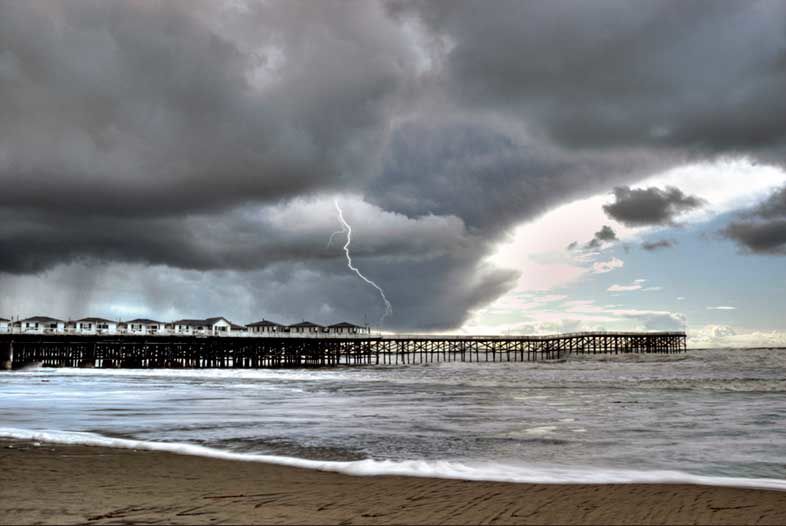
El Niño isn’t a storm but a result of ocean atmosphere fluctuation in the tropical Pacific. The rather unpredictable pattern rolls in every two to seven years, starts in late summer or early fall, and can last anywhere from five to seven months.
In the 19th century, Peruvian fishermen were among the first to notice the climate pattern. Since it occurred during the Christmas season, the Spanish speakers named it “Christ Child.”
One of the most accurate ways to gauge El Niño is by ocean temperature. This fall, the ocean was 5 degrees hotter than average, while the infamous El Niño of 1997–98 raised the temperature by 6.3 degrees, and the 1982–83 event by 4 degrees.
Though the 1997–98 El Niño was bigger, the 1982–83 event exacted more destruction—to the tune of $2 billion locally, primarily in tourism and agriculture. Storms hit during high tide, which resulted in severe coastal damage and flooding. By comparison, the 1997–98 El Niño caused $804 million in local losses.
February 1998 was the third wettest month in Lindbergh Field’s history, with eight inches of rainfall.
If meteorologists’ expectations are met, the biggest result will be more rain. San Diegans will see higher surf, while tropical fish will infiltrate our warmer waters. “In the 1997–98 El Niño, they got pretty interesting tropical fish all the way to the Gulf of Alaska. That’s how strong that El Niño was,” Pierce says.
According to Pierce, even a significant El Niño can’t make up for the drought-inflicted deficit. Winter snowpack affects the year’s water resources more than rainfall, and most of the state’s water comes from Northern California.
Plan for a wet winter. “I would check my gutters and think about flooding issues,” Pierce says. “If you have a leaky roof or things you’ve put off, this would be the time to fix them.”
The County of San Diego Department of Public Works is offering free sand and bags to residents in unincorporated areas (e.g., Alpine) to ease flooding and erosion problems.
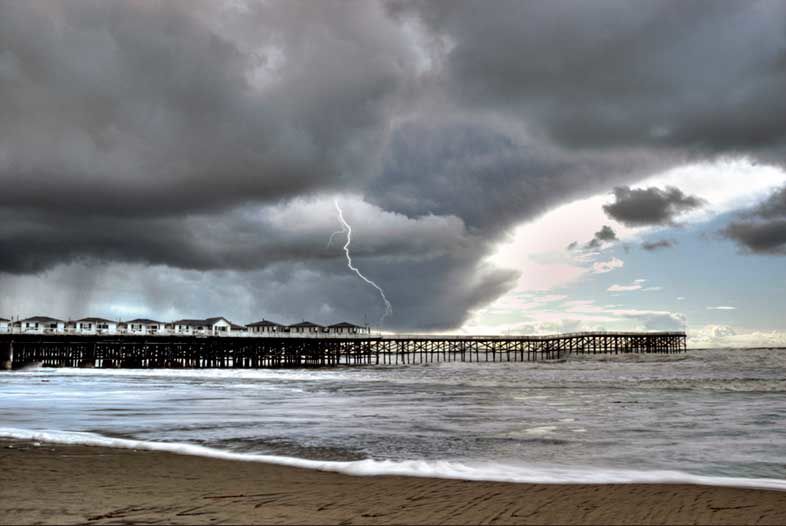
Inside the Icon: El Niño
Photo by Lee Sie Photography
