Featured articles
Featured articles
Featured articles
What's next
Featured articles
Featured articles
Featured articles
Ready to know more about San Diego?
SubscribeReady to know more about San Diego?
Beer, whiskey, jewelry, and more.
Tony Duquette Hutton Wilkinson Jewelry
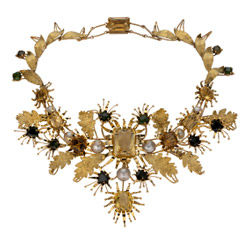
This “Floral Wreath” Necklace is part of the all-jewelry ex- hibit, More is More: Tony Duquette Hutton Wilkinson Jewelry, opening at the Gemological Institute of America HQ in Carlsbad. The Duchess of Windsor (Wallace Simpson!) is said to have commis- sioned Duquette to create a wreath based on this one, making it accept- able to wear gold— not platinum—after 5 p.m. October 10–March 2014
Susan G. Komen Race for the Cure San Diego
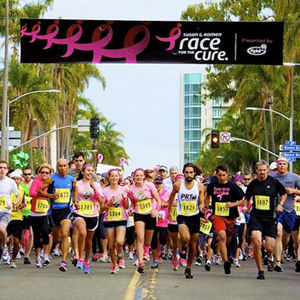
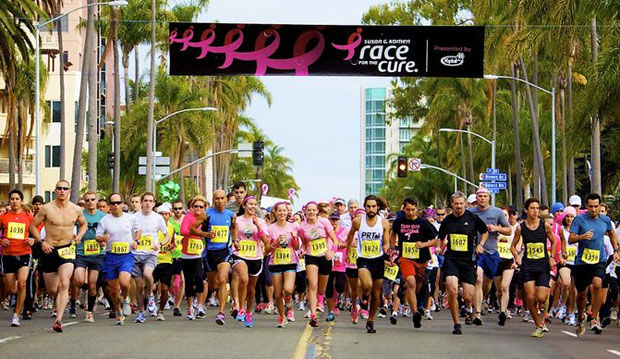
Breast Cancer Awareness Month is big business. But instead of buying a pink lipstick, we’d rather get out in our city. A series of events benefiting Susan G. Komen for the Cure San Diego will take place throughout the month. The kick-off (October 5) is Bras Across the Bay and involves pink cocktails and live music aboard Flagship Cruise’s California Spirit. Other events range from Survivor Crop, a 24-hour scrapbooking party in Vista, to Row for the Cure, an annual regatta on Mission Bay, and culminate with the 17th annual Race for the Cure, November 3 in Balboa Park. Money raised goes to mammograms, surgeries, meal deliveries, and more in San Diego County. Don’t forget to wear pink.
Solid gold kero
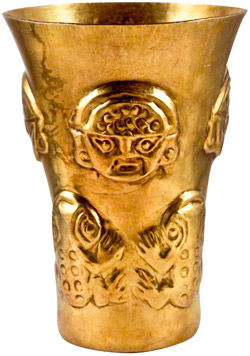
Actually, his descendant, the leader of all the Inca, drank corn beer from this solid gold kero. As you’ll learn at the San Diego Museum of Man’s fascinating BEERology, beer dates back more than 10,000 years. The liquid has been used as cur- rency, medicine, and suste- nance (Amazonian men drank four gallons a day). “All these different cultures—the thing they have in common is beer,” says curator Rex Garniewicz. Check for scheduled tastings. Through Summer 2014.
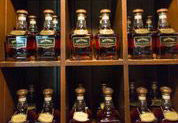
whiskey
Estancia La Jolla Hotel & Spa’s food and bev team flew to Tennessee to select their very own Jack Daniel’s Single Barrel Whiskey. Taste it at their Whiskey & Wine BBQ October 24 and see Estancia’s new Trinitas Cellars Wine Bar. $50 per person; $200 for two and take home a bottle (they’ll engrave it so you can gift it).
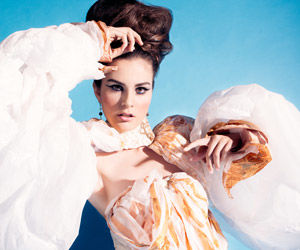
photo of a fashion model
Gallerists, boutique owners, and artists will take over Broadway Pier at Port Pavilion October 19. Exhibit Ambush Phase 2 is a walk-through interac- tive event and seated fashion show where guests can view art, “extreme set design,” and special effects make-up. Expect a DJ-loving crowd looking for inspiration, and say hello to fashion designer Jesus Estrada (a participant in Project Runway season 7) and Leslie Hughes from The Bachelor season 17, both in attendance. Best part of all? This ambush benefits Susan G. Komen for the Cure San Diego. 1000 North Harbor Drive, $40
PARTNER CONTENT
FALL SEASON FOOD ALERT! After 50 years in Santa Ysabel, Dudley’s Bakery has decided to expand, with a new store in Santee. And look for Dudley’s new fruit bar flavor: Apple, Walnut, Cinnamon. We’re told it “tastes like the top of an apple muffin.” Delish.
Brighten up your week with poke, lobster, softball, craft beer, and tacos at these fun food events
Nevermind what the sun thinks, spring is here. You can beat the May gray by upping your seafood, softball, and craft beer consumption. We’ve got just the right opportunities for that, taking place in the next week.
Where: Mariner’s Point park, Mission Bay
When: May 19-20, 7 a.m. to 6 p.m.
Beach, beer, and softball—three good things that aren’t often experienced at exactly the same time. Except during OMBAC’s Beerfest and Over-the-Line Tournament, a two-day softball tournament held on the sand at Mission Bay’s Mariner’s Point, featuring food trucks, beer, and spirits from the likes of BNS Brewing, Bay City Brewing, OB Brewery, Alesmith, Coronado Brewing, Thorn Brewing, Mason Aleworks, and Cutwater Spirits.
(This weekend tourney featuring 120 teams in various divisions is not to be confused with the World Championship Over-the-Line-Tournament held in July.)
Admission is $35 with advance online purchase on Eventbrite.
Where: Beerfish
When: Until May 19, from 11:30 a.m. until sold out
New day, new chef-created lobster menu. That’s the theme of Lobster Week at the no-frills North Park seafood destination Beerfish this week. Every day a new chef will prepare sustainable fresh Maine lobster in their style of choosing and pair with a different craft beer. Each day’s menu is available for $17 beginning at 11:30 a.m. until sold out.
The chef lineup is as follows:
Where: Waterfront Park
When: May 19, 11 a.m. to 10 p.m.
Nothing says San Diego quite like eating tacos with a view of the bay. Head to Waterfront Park this weekend for live music, Mexican wrestling, Chihuahua races, and—most importantly—tacos from thirty local eateries. Participating restaurants include Tamarindo, Salud, Lucha Libre, City Tacos, Lolita’s, and more. Come hungry, leave full of tacos.
Tickets are $30-35 and do not include food and drink.
Where: Bali Hai
When: May 22, 6 p.m. to 9 p.m.
Poke-lovers take note: For one price, you can try poke from 30 different chefs and restaurants including Island Life Foods, Bali Hai, Sweetfin Poke, Surf Side Deli, and The Lanai. The I Love Poke Festival offers that unlikely option as part of its celebration of Hawaiian food and culture. Bites, music, and dancing, all come with a $75 ticket; drinks priced separately.
4 Food and Beer Events to Get You out of the May Gray Funk
San Diego Taco Fest
How two of San Diego's most promising industries—beer and action sports— combined to form an instant success story
Saint Archer tasting room
Saint Archer Brewing launched last April, one of many craft beer upstarts in the Miramar/Mira Mesa area of San Diego. In less than eight months, it has collected more than 20,000 followers on Instagram. That’s slightly less than industry icon Stone Brewing (30K), but more than Sierra Nevada (15K) and Ballast Point (5K). Now the company has raised $3 million to double its output and expand its distribution into Los Angeles.
“We have standing orders for 50 states,” says CEO Josh Landan. “We just can’t make enough beer.”
How’d the folks at Saint Archer do it? First, they hired two of the top brewmasters in the country—Yiga Miyashiro (ex-Pizza Port) and Kim Lutz (ex-Maui Brewing). Then they made 14 of the raddest dudes alive (and one woman) owners of the company. Saint Archer’s ownership includes: pro skaters like Mikey Taylor and Paul Rodriguez, surfers Taylor Knox and Josh Kerr, industry photogs and filmmakers Jeff Johnson and Atiba Jefferson—the list goes on and on.
Surfing and skating are two of the most idealized professional sports on the planet, full of shirtless global explorers, career beach bums, trespassing punks with superhuman physical skills. People want a glimpse into their lives. They want to be where they are, wear what they wear, drink what they drink.
Saint Archer is the portal into those lives—during happy hour.
Taylor Knox, Josh Landan
Companies like Nike, Patagonia, Red Bull, and DC Shoes pay these icons millions of dollars a year to use their products. Pacifico beer recently hired surf filmmaker Taylor Steele for its ad campaign with the slogan: “Discovered in Baja, Imported by Surfers.”
But with Saint Archer, it’s different. Like the popular Girl Skateboards brand, the athletes actually own Saint Archer. They don’t even get free beer out of the deal (“Even I buy it in the store,” says Landan). Rather than being given free product and equity to be a face of the brand, many of Saint Archer’s star athletes put their own money into the startup.
“The most important thing to all of us is having good beer,” says Mikey Taylor, on a cell phone from somewhere in Malibu. “You can market a product, but you’re only going to get so far if your product sucks. We thought, ‘If we could have a good product and market our lifestyle along with it, we might do pretty well.’”
Saint Archer provides access to that lifestyle. And, as proxy, has become the official craft beer of the surf-skate world.
It wasn’t an inorganic process for Landan, who hatched the idea with Taylor at the Holiday Inn in downtown San Diego four years ago. There was no cold-calling. Landan is a respected filmmaker in the surf-skate world. Before Saint Archer, he ran a management company with his friend Pat Magnarella. Magnarella managed bands (Green Day and Goo Goo Dolls, to name a few) and Landan managed his pro surfer friends like Knox and Mick Fanning.
“I always wanted to do a company with my friends,” he says. “Coming from action sports, we helped give birth to all of these multimillion-dollar brands—from Quicksilver to energy drinks. Why had there never been a craft beer that’s come from us?”
There’s the big thing about beer: Unlike skate shoes or wetsuits, most of America has a use for it.
“The companies that influenced us were the ones who were rider-owned and -operated,” explains Landan. “People love brands that they connect to. Like Michael Jordan’s brand. You connect with Quicksilver athletes, but you know they pay them. But if I’m at Saint Archer and Taylor Knox pours me a beer and says, ‘Hey, thanks for drinking this. I own it’—well, just as a fan I’d say, ‘Holy shit, Taylor Knox owns a beer? I’ll never drink anything else.’”
This one-on-one interaction happens at Saint Archer’s Ambassador Events, where the athletes work the bar and interact with fans. They also interact on Instagram and social media. Saint Archer’s first photo on Instagram was of Taylor Knox in a Saint Archer trucker hat. It received 66 likes. A recent photo of skater Mike Mo Capaldi drinking a Saint Archer reeled in 1,506 “likes.” Taylor estimates that, across all social media, Saint Archer’s celebrity owners reach about five or six million people.
“We just doubled our capacity in six months,” says Landan. “Every milestone we made, we tripled it. There was a photo we put on Instagram of Eric Koston barbecuing and we got 700 new followers in two hours. Crazy.”
Greg Koch, CEO of Stone Brewing Co. (which distributes Saint Archer from Santa Barbara to the Mexican border), puts it pretty succinctly. He says, simply, that they make a quality beer. Then? “Amass international fame for your prowess in extreme sports.”
After realizing an entire year had passed without his brewing even a single drop of beer, Jeff Bagby had an epiphany: “This is killing me,” he said.
Jeff Bagby
How did you get started brewing, anyway? I started sampling… appreciating craft beer when I got to college. My friends and I stumbled upon the fact that there was better beer to be had instead of just drinking the stuff that would get us drunk. Back then, before the Internet, you actually had to use books and maps to find these breweries.
You’re a brewer, not a builder. What’s this side of starting a business been like? After my experience at Pizza Port Ocean Beach and talking with friends who have done this kind of thing, I knew there would be a lot of work. But I had no idea what it really entailed. But that’s sort of been an exciting part for me, learning along the way. I mean, we have a structural engineer and contractors—a lot of people are involved. I want to understand every step of the process.
You had so much success at Pizza Port, winning all those Great American Beer Festival medals. And then you left. What were you thinking, Jeff? It goes back to my days at Stone, when I had aspirations of starting my own bar or brewpub, but I knew that I wasn’t capable or experienced enough to do it. It got to a point where it was time, where I felt as if I had all the experience I needed and it was a now-or-never deal. Before, it was kind of a pipe dream, and now we’ve got the opportunity to get going. Luckily, my wife is as passionate about it as I am.
You’re a North County guy, born and raised in Encinitas. Yet, your new place is in Oceanside. How did you end up there? My original goal was to be in Encinitas. They hadn’t had a brewery there since, I think, 1990 or 1991, and it didn’t last long. But the landlord we wanted to go with ended up going in a different direction. We wanted to stay in North County so we ended up in Oceanside. It’s a big area, a lot of square footage. It’s turned into a really good situation.
Spill the goods, Bagby. What styles of beer do you plan on brewing? I know from getting emails and comments from people, that they associate me with certain types of beers they had at Pizza Port, and how they can’t wait to have them again. But I would like to think of myself as someone who makes everything. I like making beer. I like drinking beer. I want to pull from past experiences and the heritage of beer. We’ll have some lagers, some big IPAs. We’re going to be all over the place.
You’re hearing about the craft beer bubble—are there too many breweries? And we’ve seen a lot of growth locally. More isn’t always better, is it? Beer is becoming more popular with more people. What scares me is that some of the new breweries don’t have the experience that many of the others have. A lot of us have spent a lot of time building San Diego’s reputation. All eyes are on San Diego. So it kind of frustrates me when I go to one of these places and the quality of beer isn’t that good. Hopefully, they can turn things around and improve their style and quality. And I’m one of these new places opening up. I know my beer has to be good.
Your brother-in-law, Josh Byrnes, is the general manager of the Padres. Are you a baseball fan and, conversely, is Josh much of a beer drinker? I never played baseball as a kid and was never a huge fan. I never really paid a lot of attention until Josh came into our lives. Am I really into it? Not fully. But the same can probably be said for Josh and beer. He’s tried a few he likes. I know he’s drinking more beer than he used to.
The annual event honors middle market companies creating jobs, scaling up, and investing in the region
San Diego is known for its startup culture and innovation economy, but what happens when the company moves beyond its early-stage years? The San Diego Business Impact Awards aim to answer that question, spotlighting the middle market businesses helping drive the region’s economy.
Hosted by San Diego Regional Economic Development Corporation (EDC) and JPMorganChase, the second annual awards celebration takes place on Thursday, July 23, from 4:30 to 7:00 p.m. at Scripps Research Auditorium. More than 200 executives, entrepreneurs, and business leaders are expected to attend the networking and cocktail event honoring some of San Diego County’s fastest-growing companies.
Businesses headquartered in San Diego County that have operated for at least two years are encouraged to submit their nomination by Thursday, June 18 at 4 p.m. Companies across industries—from technology and life sciences to tourism and consumer products, as well as pre-revenue startups—are eligible for recognition.
For EDC President and CEO Mark Cafferty, the event is as much about building connections as celebrating success. “We’ve had a longtime partnership with JPMorganChase; their work aligns with our efforts to support underserved communities and drive talent development,” says Cafferty. “And the networking was invaluable last year. I’m still in touch with people I met at last year’s awards.”

EDC is an independently-funded nonprofit that works directly with San Diego companies to help them grow the local economy, make the region as a whole more competitive, and attract and retain top-tier talent with quality jobs. Through EDC, companies can get help starting or expanding their business with support for things like site selection, permit navigation, and regulatory guidance, plus connections to local resources and potential business collaborators.
The San Diego Business Impact Awards began as an idea with one of EDC’s longtime strategic partners, JPMorganChase. The two organizations share a commitment to San Diego and are dedicated to bolstering middle market businesses.
“We’re blessed with a robust innovation economy and startup community,” says Aaron Ryan, San Diego Region Manager for JPMorgan’s Commercial and Investment Bank and vice chair of the firm’s’ San Diego Market Leadership Team. “But one of the segments of the business community we felt was overlooked was emerging middle market companies—the businesses that are no longer small but not yet large.”
Ryan says supporting those companies is critical as they scale and decide where to invest, hire, and grow.
San Diego’s high cost of living remains one of the region’s biggest business challenges, making talent recruitment and retention increasingly competitive. But local leaders point to the region’s quality of life, climate, and collaborative business community as advantages that continue to attract employers and workers.

“In order to support thriving households, there has to be enough high-quality jobs for people to be able to afford to live here,” Cafferty says. “Once a company grows and excels past that middle market point in their growth cycle, they become much more likely to pay higher wages and compete globally.”
Both Cafferty and Ryan proudly tout the unique collaboration that exists among San Diego County businesses. Bringing together top universities producing high-quality talent, cutting-edge research institutions, a robust military and defense presence, leading ocean science and environmental organizations, and a binational, cross-border identity creates a distinct business ecosystem that defines and strengthens the San Diego region.
Last year’s San Diego Business Impact Awards celebrated nearly 60 honorees from 49 industries, representing a total of 8,232 jobs across eight sectors, including: software and technology, healthcare and life sciences, consumer goods, professional services, finance, construction and manufacturing, defense, and hospitality and tourism. On average, honoree companies doubled their revenues over the previous year, employed more than 145 San Diegans each, and offered an average annual compensation of $192,415.
Top honorees included defense contractor Innoflight, environmental consulting firm Bancroft Construction Services, life sciences startup Element Biosciences, defense technology contractor GALT Aerospace, organic grocery store chain Jimbo’s, and biopharmaceutical company LENZ Therapeutics. During the event, Innoflight Founder and CEO Jeff Janicik held a fireside chat offering his insights on investing in the community and embracing San Diego culture.
This year, organizers hope to continue highlighting the middle market players driving economic impact across the region. Nominations are now open through June 18 at 4 p.m. Get your tickets to the San Diego Business Impact Awards celebration to enjoy drinks by Snake Oil Cocktail Co., light bites, live music, and networking.
Discover eateries, outings, and shops within this inland North County community
Just south of Lake Hodges near 4S Ranch and Poway, Rancho Bernardo is a suburban community that blends residential neighborhoods with industrial pockets, elevated by a decidedly diverse food scene.
Over 60 years ago, this North County neighborhood was once part of a family ranch. Since that time, big tech companies have taken up residence here, including Amazon, Sony Electronics, Oura Ring, HP, Teradata, and ASML. Rancho Bernardo Inn serves as a community hub, with locals frequently meeting at the hotel’s restaurants, golf course, and spa.
Whether it’s work or a round of golf that brings you to Rancho Bernardo, we’ve taken care of the agenda planning with our guide to the area’s best restaurants, activities, and shops.

Sample ingredients plucked straight from Rancho Bernardo Inn’s onsite garden and served at their signature restaurant Avant. One of the neighborhood’s most upscale dining options, they serve a French-inspired menu with nods to California, including many seafood options. Don’t miss their more casual sister restaurant Veranda for al fresco dining.
17550 Bernardo Oaks Drive
Wood-fired pizzas and handmade pastas are standouts at The Kitchen, Bernardo Winery’s counter-service restaurant specializing in Sicilian flavors. Charcuterie boards and bruschetta make for great starters or snacks while wine tasting.
13330 Paseo Del Verano Norte
Fast-casual and family-owned eatery Bushfire Kitchen recently opened a location in Rancho Bernardo, serving sandwiches, bowls, salads, burgers, protein plates, and housemade empanadas. Bushfire prepares comfort food with healthy ingredients, and offers plenty of vegetarian and vegan options.
11962 Bernardo Plaza Drive, Suite 110
Some might call The Cork & Craft an overachiever. This gastropub has an in-house craft brewery and winery: Abnormal Beer and Wine. The more, the merrier. Their sushi menu is definitely worth exploring, but don’t miss other specialties like garlic noodles, chicken wings, and pork belly.
16990 Via Tazon

You don’t have to leave Rancho Bernardo to get a white tablecloth steakhouse experience. Carvers Steaks & Chops has prime rib (their best seller), filet, ribeye, porterhouse, New York strip, and other cuts, served alongside crab-stuffed mushrooms, wedge salad, French onion soup, potato skins, and other steakhouse specialties.
1940 Bernardo Plaza Drive
This no-frills Burmese restaurant is known for its traditional tea leaf salad that’s topped with sesame and sunflower seeds, garlic chips, peanuts, tomatoes, jalapeños, fried yellow beans, and fermented green tea leaf dressing. Tucked into a nondescript strip mall, Burma Place is a great takeout option when you want to eat garlic noodles, fried rice, chicken curry, and samosas from the comfort of your couch.
16719 Bernardo Center Drive, Suite A
Find authentic Vietnamese cuisine at Phở Ca Dao, including favorites like phở noodle soup, vermicelli noodles, broken rice dishes, and spring rolls. One of eight locations throughout San Diego, this family-owned chain uses robot servers for food delivery.
11808 Rancho Bernardo Road, Suite 100
It’s all about the sauce at fast-casual Mediterranean restaurant The Kebab Shop. Smothering your chicken shawarma, gyro, or falafels in garlic yogurt, cilantro jalapeno, fire chili, and dill yogurt sauce is practically a rite of passage. The hardest part is deciding whether to order a wrap, bowl, or salad.
11980 Bernardo Plaza Drive
Get a taste of South Asian flavors at Casa Lahori, a Pakistani restaurant noted for its grilled meat kabobs. Other best-selling dishes include beef nihari, chicken biryani, and shahi paneer— best enjoyed with naan bread.
11975 Bernardo Plaza Drive
Grill your own meat on the tabletop at Kangnam Korean BBQ, an interactive, all-you-can-eat experience that’s well-suited for large groups. Marinated beef bulgogi, grilled galbi short ribs, and spicy pork are served alongside traditional banchan dishes like kimchi, japchae glass noodles, and flavorful stews. Weekday lunch specials provide a nice discount on these filling meals.
11828 Rancho Bernardo Road, Suite 117–119

Dig in to your favorite curries and kebabs at Curry & More Indian Bistro. Most entrees are served with a choice of two side dishes, including basmati rice, potatoes with cumin, daal, naan, or mixed greens. Help offset the spice with one of their sweet mango or strawberry lassi drinks.
11808 Rancho Bernardo Road, Suite 123
Kai Oliver-Kurtin is a San Diego-based writer who covers travel, dining, events, and culture. Her writing has been published in USA Today, Condé Nast Traveler, Fodor's Travel, Marie Claire, and HuffPost, among others.
From San Diego’s coastline to Los Angeles stadium and fan zones across the region, here’s how to experience soccer’s biggest event
When three nations and 16 cities come together to host the FIFA World Cup 2026, the scale stops feeling like a tournament and starts feeling like geography. A continent becomes the stage as borders soften into corridors. And Southern California—shaped by migration, sport, entertainment, and constant movement—sits inside that landscape with all eyes on it.
San Diego and Los Angeles have always felt connected. Hop on the Pacific Surfliner, and the trip unfolds in one continuous stretch of coastline, passing beach towns, neighborhoods, and city centers.
Traveling from San Diego, everything still feels slightly suspended as the Pacific Surfliner follows the coast north with ocean on one side and a slow suburban blur on the other. San Diego stays in exhale. Los Angeles is already building toward something louder.
This summer, Los Angeles will host eight matches of the FIFA World Cup at Los Angeles Stadium, including the US Men’s National Team opener on June 11, while the region stretches into 39 days of programming across stadiums, parks, transit hubs, beaches, and neighborhoods. Instead of one massive fan hub, Los Angeles is embracing a citywide celebration, with fan zones spread across its entirety.
But this pattern has been rehearsed here for decades. In 1994, Southern California became one of the defining stages of the World Cup, when matches at the Rose Bowl placed global attention on the region and turned local stadiums into international landmarks, confirming its ability to hold the world at scale.
What distinguishes Southern California is not just infrastructure, but cultural permeability. Fashion, music, film, art, and sport constantly overlap here, creating an environment where identity is flexible and always in motion. From the Venice boardwalk, where skate culture shaped modern street style, to global soccer stars rubbing shoulders with Hollywood celebs, to authentic Spanish cuisine moving up and down the I-5 corridor, everything circulates.
The World Cup is not introducing anything new here, it’s showing up for the summer and showing out, revealing what this city has always known about itself. What follows is a look at the fan zones and how Los Angeles turns itself into a city-wide stage for the tournament, one neighborhood at a time.

As the heart of Los Angeles, Union Station is an official Fan Zone June 25-28 during the World Cup, but in practice it never really stops being one.
It is the city’s circulation point, its meeting ground, its pressure valve. Commuters, travelers, match-day crowds, and everyday Angelenos all move through the same space, and everything mixes, overlaps, and scales in real time. In a way, this is where the World Cup stops arriving in Los Angeles and starts moving through it.
The Pacific Surfliner from San Diego to Los Angeles makes that shift feel almost too easy. No stress or gridlock anxiety, just a straight line up the coastline with ocean on one side and everything slowly becoming more built on the other. It’s one of the rare ways into LA that doesn’t feel like arrival as friction. You can sit with a laptop, watch the Pacific drift past, grab coffee from the café car, and let the city come to you in pieces.
That’s the beauty of arriving at Union Station. Instead of feeling like you’re on the edge of the city, you’re immediately surrounded by it. And, inside, the station already reads like a World Cup nerve center: banners, movement, multilingual energy, the sense that something global is about to funnel through this exact point. The Heart of the City Fan Zone only sharpens that feeling, with simultaneous match screens, DJ sets, meet and greets, and immersive activations built around marquee games like USA vs. Türkiye.
From there, the city splits outward.
ROW DTLA feels like the first exhale after arrival. A converted industrial campus turned creative district where restaurants, retail, and open-air courtyards form a self-contained ecosystem. If you’re looking for the perfect first meal in LA, make it lunch at Pizzeria Bianco. The thin-crust pizza is reason enough to go, but the space leaves just as much of an impression.
What I liked most about ROW DTLA is how quickly it resets you after the train. One minute you are stepping off at Union Station, and the next you are in a space that feels like its own version of LA, a city inside a city with some of the most curated shopping I’ve ever seen.
Bodega hides itself behind a convenience-store front, a sneaker and streetwear space disguised as something ordinary, like LA refusing to make anything feel too obvious. The whole campus moves like that, part retail, part gallery, part neighborhood you are only temporarily inside.
Isabella Dallas is a freelance writer for San Diego Magazine and the Arts and Culture Editor at The Daily Aztec in her final year at San Diego State University. She previously worked as an editorial intern for SDM, but when she’s not writing, you can find her trying the best coffee spots in SD, devouring the latest rom-coms, and indulging in anything and everything pop culture.
Scripps study shows that some patients may be able to taper their dose and maintain results
While glucagon-like peptide-1 (GLP-1) receptor agents have been used to treat Type 2 diabetes for more than 20 years, their recent emergence as weight-loss wonder drugs marked a new frontier in medicine. But their effectiveness has left some patients wondering what to do once they’ve reached their goal. Stopping the medication could mean regaining some, if not all, of the weight. A Scripps Clinic internal medicine physician recently conducted a small study of whether GLP-1 patients who had reached their goal weight could maintain that weight by taking their regularly prescribed injection every other week instead of weekly. Spoiler alert: 30 of 34 patients did. Read more about the study here and what that may mean as pharmaceutical companies roll out oral GLP-1s.
For more nutrition, wellness, and healthy living tips, sign up for the San Diego Health newsletter here.