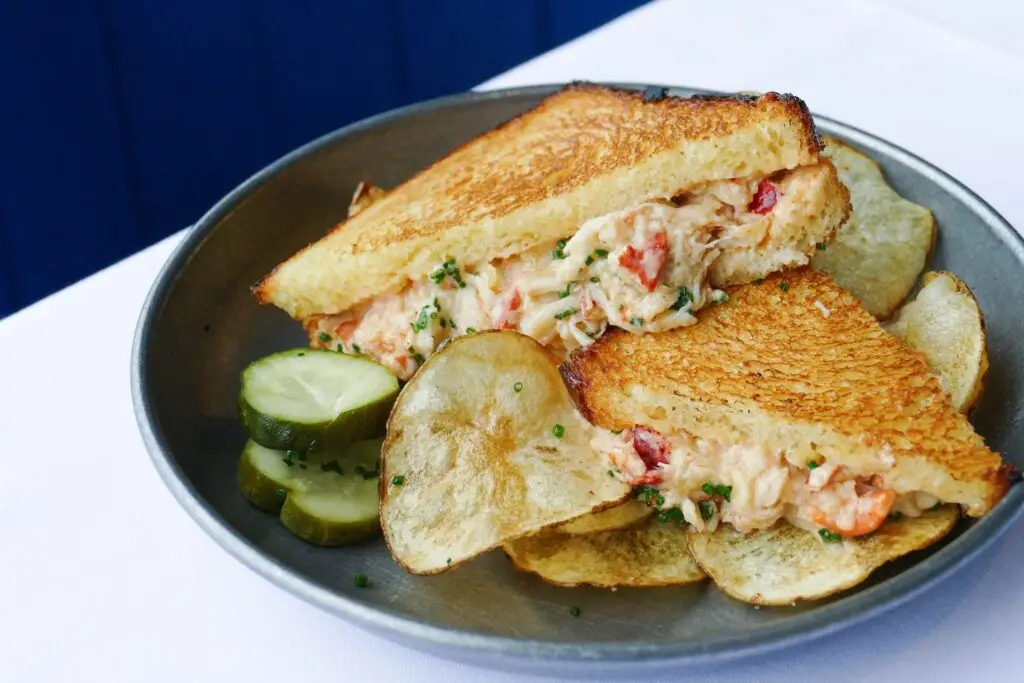
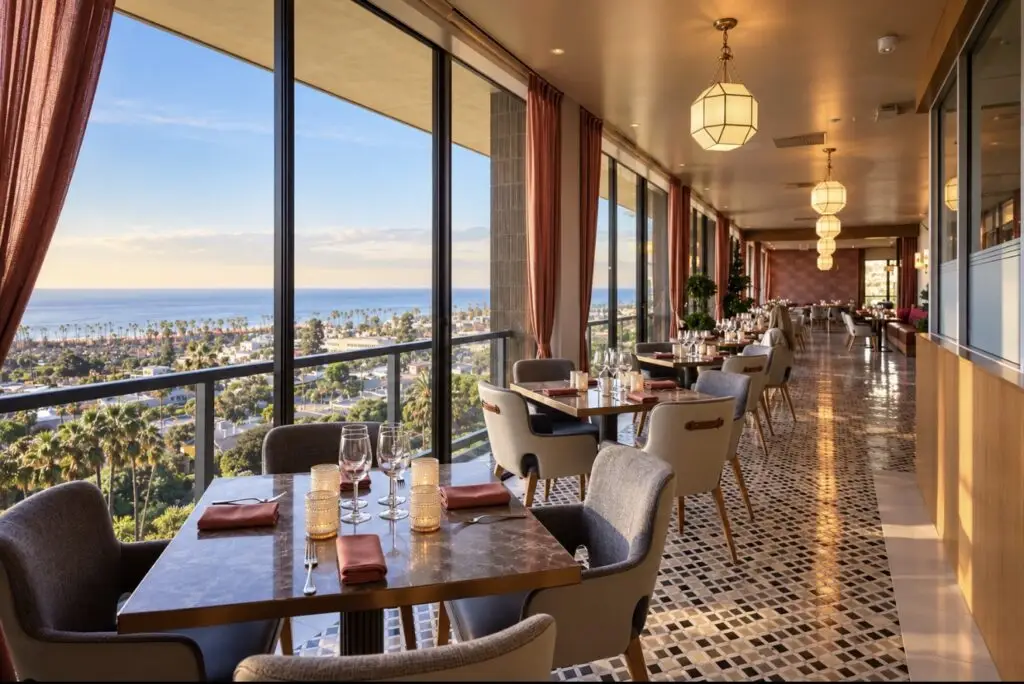
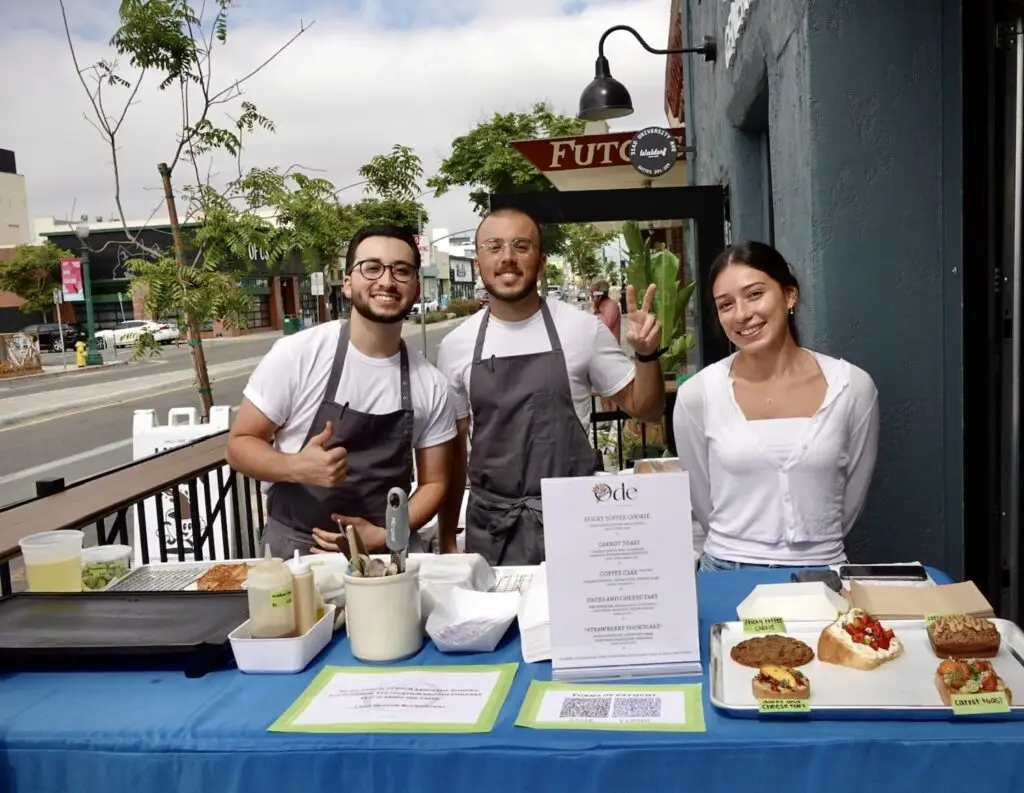
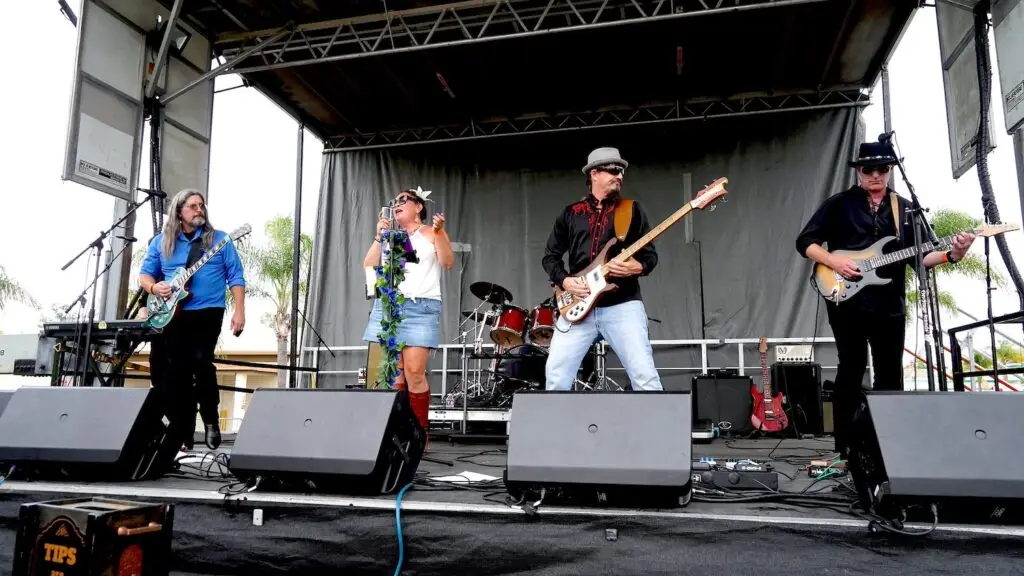
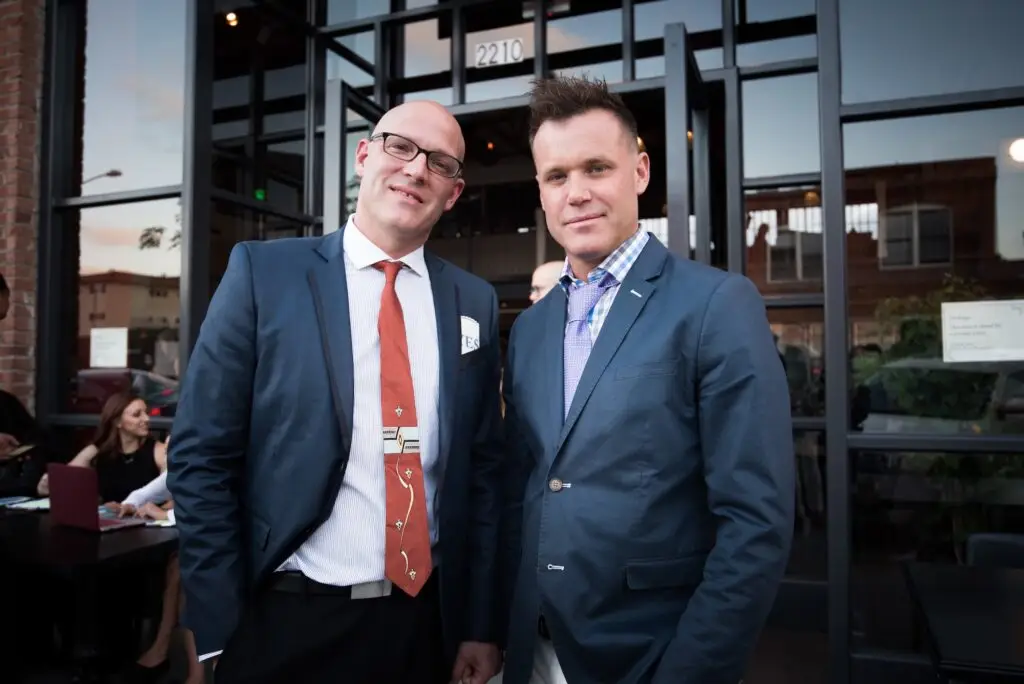
In this city, chef Brian Malarkey and restaurateur Chris Puffer are kind of like peanut butter & jelly, tacos and Tuesday, Padres and Petco—they just go together. This month, the duo celebrates 10 years of partnering on some of San Diego’s top restaurants including their first venture, Herb & Wood.
To celebrate this milestone, we stepped back and revisited their journey becoming some of this city’s most successful restaurateurs.
But first, let’s go back to the beginning. The duo met at Oceanaire in 2007 where they both worked. Malarkey was still riding the high from his stint on Top Chef Season 3 where he won runner-up. He was a great chef, Puffer recalls, if not a tad arrogant. Whatever he was doing, though, it worked. Sales doubled under his watch.
In 2009, Malarkey was approached by some patrons to start what would become Searsucker. He knew he wanted Puffer to be his partner. They had great chemistry and loved hospitality and food. “We both came to this with a bit of a chip on our shoulder,” says Malarkey. “We wanted to prove it to other people that we know what we’re doing.”
Courtesy of Puffer Malarkey Collective
Searsucker, Gabardine, and Herringbone (under the Fabric of Social Dining restaurant group) were born through the new partnership. But in 2012, they sold their concepts to Hakkasan and soon partnered on a new lease.
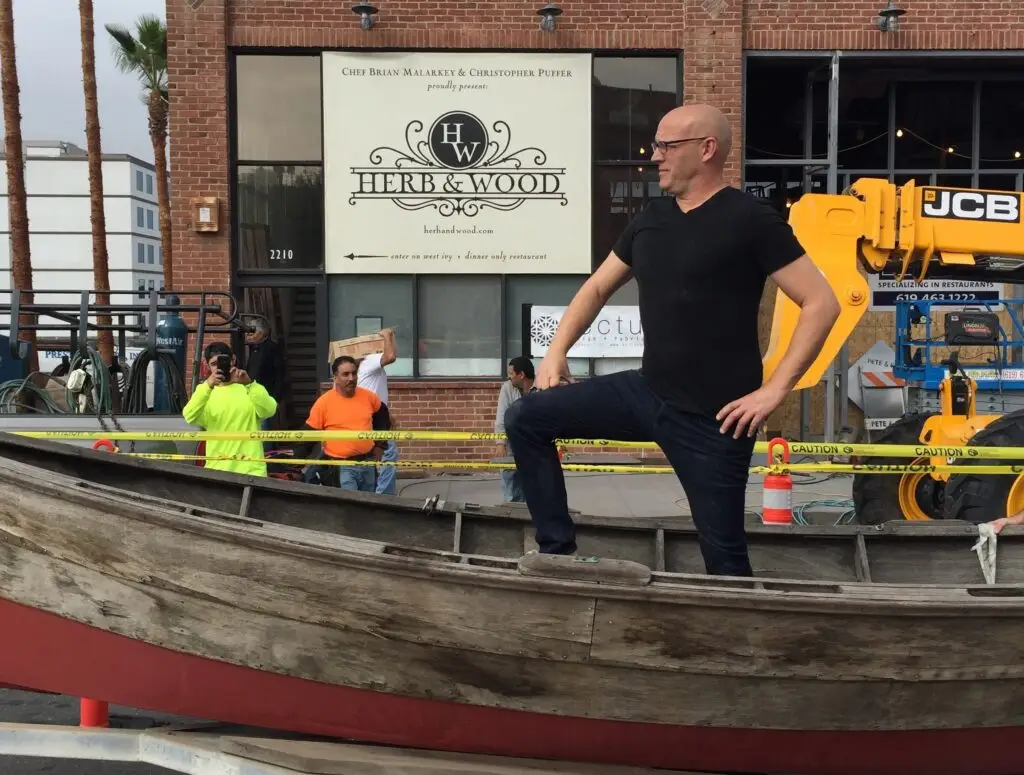
That building would eventually become Herb & Wood. “We were going to do it differently this time around,” says Malarkey as he reflects on Wood’s early days. “And we [wanted to] build it to last.”
The vision: Great food. Great music. Great service. It’d be a place where diners would let go, put their phones down, and be fully present to enjoy a meal together. When they walked into 2210 Kettner Blvd, they knew they had found their spot.
The only problem was that, at the time, that area of Little Italy was still severely underdeveloped. In a 8,500-square-foot space, they were going to have 230 seats to fill. “It may as well have been on Mars,” says Troy Johnson, San Diego Magazine publisher, content chief, and the city’s longtime food critic.
Courtesy of Puffer Malarkey Collective
And, of course, there were the naysayers. The prevailing feeling in the dining world was, “Let’s see what these f**king idiots do,” recalls Malarkey. The duo let all the noise be noise. In fact, the noise fueled them. “We weren’t going to cater to the haters,” Puffer says.
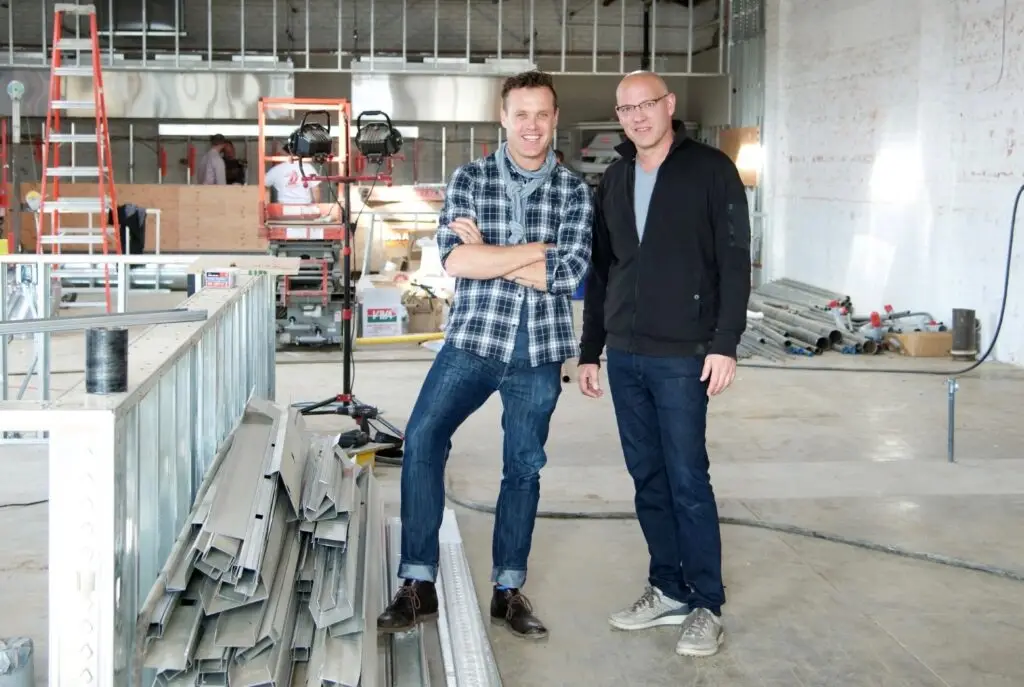
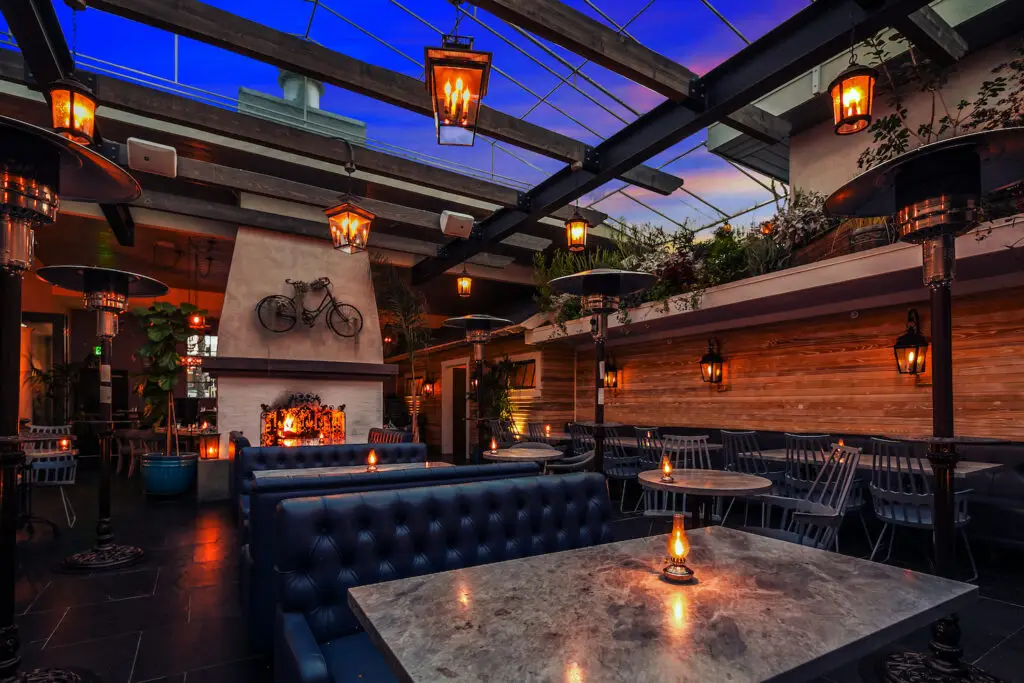
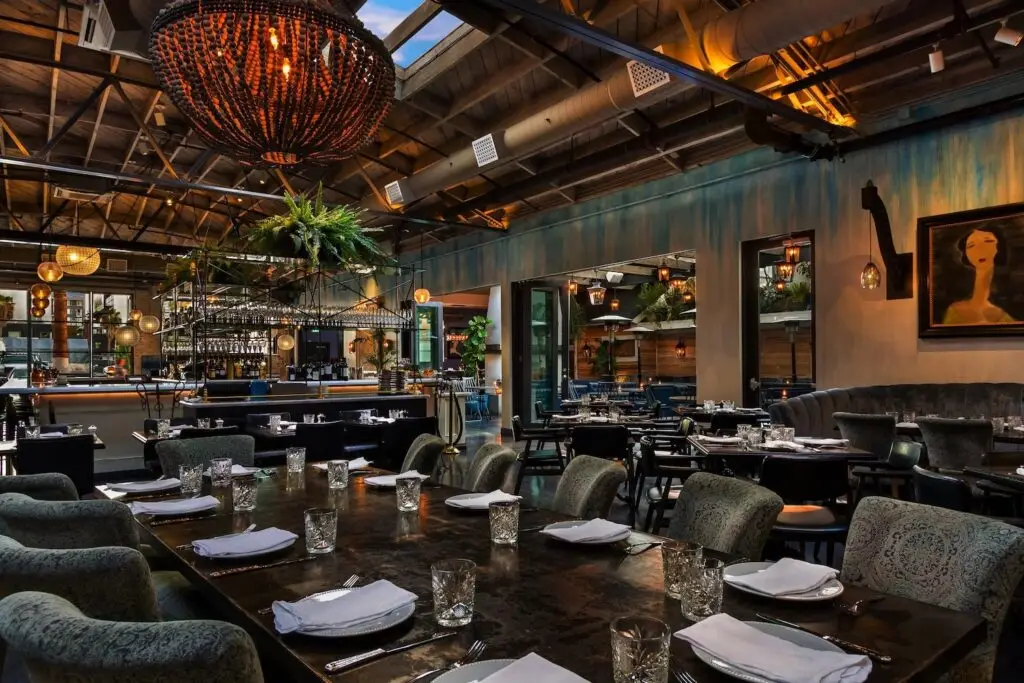
Their next hurdle would be to tackle the restaurant’s design. “There was nothing. It was literally a box,” says Puffer of the former space. Design teams were too expensive or didn’t quite get their vision—no, they didn’t want exposed beams or wooden tables made from reclaimed barns. “Then, Puffer was like, ‘f**k it, dude, I’m going to design this restaurant.’”
Having never really designed something like this before, he decided not to work in the programs that most professionals use to create their layouts. 3D mockup? Didn’t need it. CAD? That’s what a paper and pencil are for.
Courtesy of Herb & Wood
“It was all in my head,” he recalls. “I had this moment where I was like, ‘If I died right now, no one would know where any of this shit goes.’”
“Yeah, it made no sense,” Malarkey says.
And it still doesn’t if you hear him explain it. A mishmash of vignettes from the inner workings of his memory bank, evoking everything from Mississippi riverboats to Eiffel tower ironwork, Kensington home façades, an old theater he frequented, and a canoe, because why not? Yet somehow, it all worked.
“It’s a sense of nostalgia,” says Puffer. “People might say, ‘Oh, my gosh, this feels good’ and they don’t realize it reminds them of the time they were in Paris.’”
“We don’t play trends,” Malarkey says. “We play timeless.”
Courtesy of Herb & Wood
Over the course of many years and plenty of trial and error, the partnership has continued to thrive. And, the Puffer Malarkey Collective has found its sweet spot within their restaurants: The service had to be kind and unpretentious and the food had to come out quick, delicious, and consistent. “Consistency is key!” says Puffer.
They also learned to balance out one another. “He’s a go-go-go-go [person],” says Puffer, “I’m a let’s-take-a-deep-breath-and-sleep-on-it [type of person].”
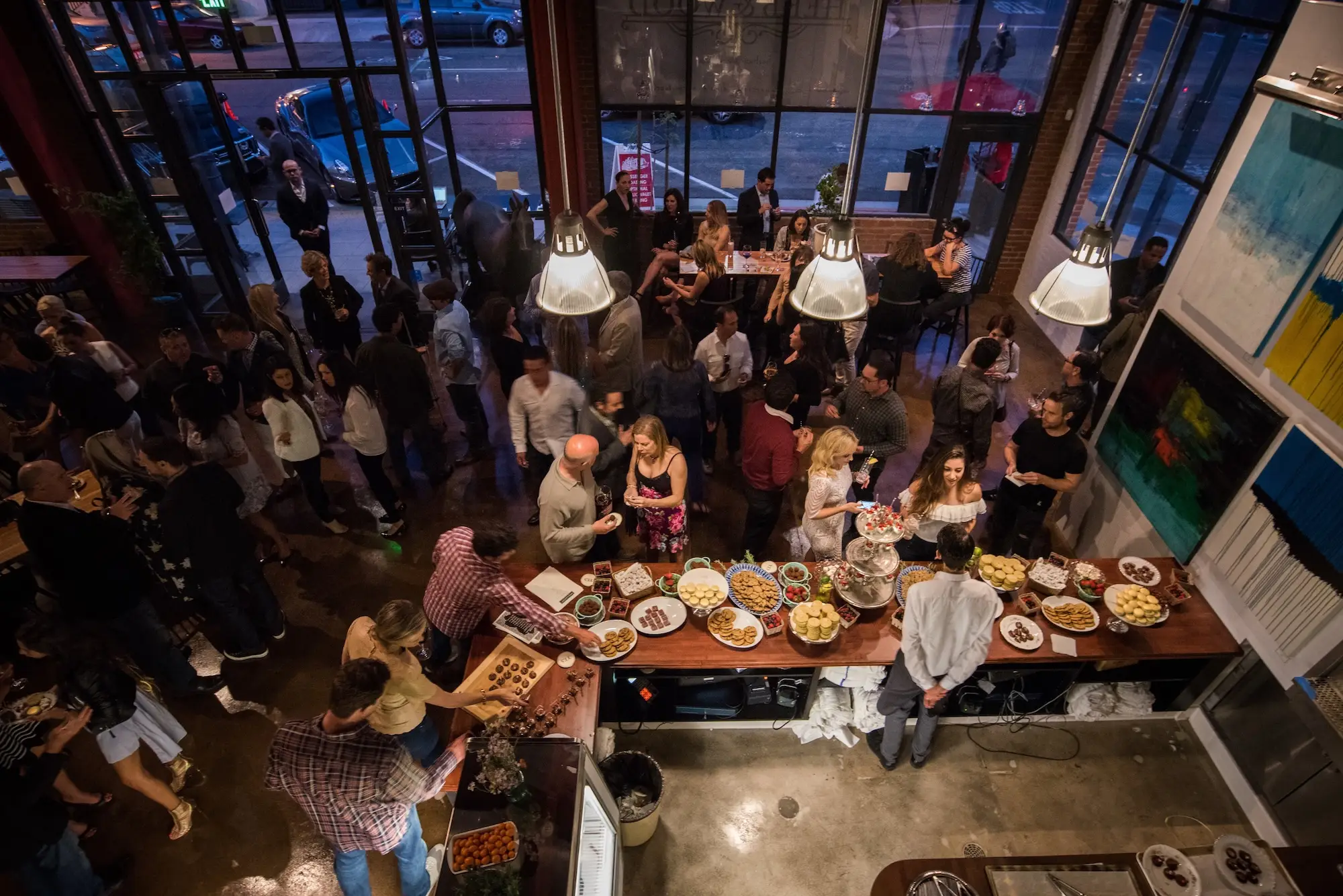
So, when they opened the doors to Herb & Wood in April of 2016, with those lessons in place, everything was just right. “We knew it had to fire on all cylinders,” says Puffer. “And it did.”
Courtesy of Puffer Malarkey Collective
There was no pretense and the dress code was exceedingly simple. “Money in your pocket,” says Malarkey. “That’s all you need.”
The phones rang, the seats filled, and the haters had to give it to them, those gnocchi hit. People began embracing every aspect of the place, even the edgier ones.
“We thought people were going to complain about all the paintings with boobs,” says Puffer of the many John Lanes on the wall. “But the amount of people who take pictures in front of the boobs is amazing.”
They even had a middle finger statue that Puffer had picked up from a yard sale. If a table was rude or antagonistic toward the staff, he’d walk over to them with the finger. “Congratulations,” he’d say, handing it over. “You’ve won asshole of the night.”
Courtesy of Puffer Malarkey Collective
The point is, they were ready to laugh (and not take shit from anyone). When someone wrote a review of Herb & Wood and called it Weed & Boners, they both had a laugh. It’s one of the keys to longevity.
Along with the fun and deliciousness, they’ve also served as a culinary talent incubator for San Diego. “It’s like a centrifuge,” says Johnson about Herb & Wood. “They train up all these young chefs and start spinning all this talent into different parts of the city.”
There’s Sebastian Becerra with Pepino, Samantha Bird of Relic Bakery, Aidan Owens at Herb & Sea, and Tara Monsod of Animae and Le Coq (San Diego’s first James Beard award finalist) to name a few. “They’ve expanded the footprint of the food revolution in San Diego,” says Johnson.
Their plans for the next 10 years?
“We’re just going to keep the magic going,” says Malarkey.
Most homeowners want two things before they commit to a remodel: a realistic sense of cost and a clear picture of what the finished space will look like. Milan Design + Build helps deliver both through its online remodeling estimator and personalized design consultations, supported by a showroom experience and 3D renderings.
“The online estimate gives homeowners a starting number in about a minute, and the showroom and 3D renderings let them see materials and layouts before anything is built,” says David Noriani, CEO of Milan Design + Build. “Keeping design, permits, and construction with one team helps us manage expectations and keep everyone working toward the same vision.”
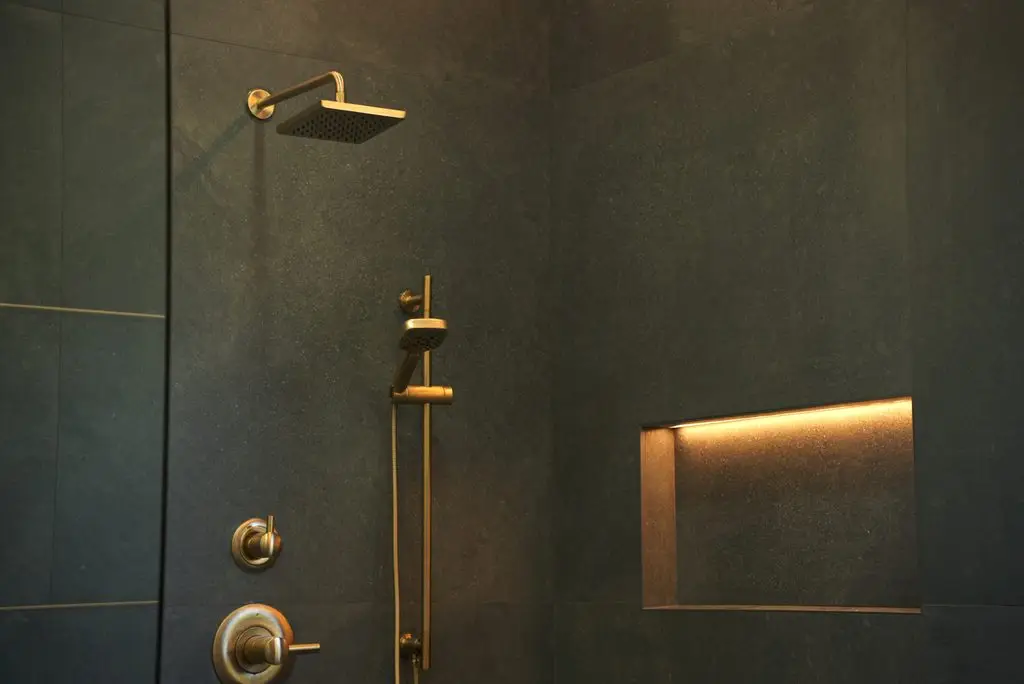
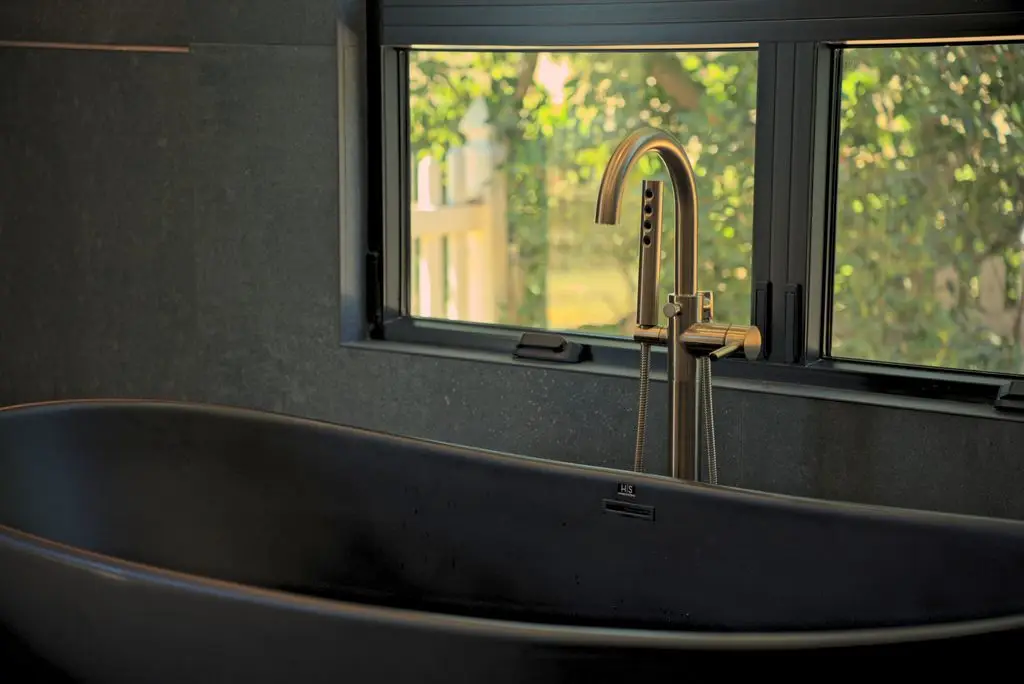
Courtesy of Milan Design
Modern design is a particular focus for Milan, with an emphasis on clean lines, natural light, functional layouts, and carefully selected materials. The team adapts each design to the homeowner’s lifestyle and the character of the property. Milan Design + Build combines thoughtful design with construction expertise, creating spaces that are as functional as they are beautiful.
The online estimator covers kitchen remodels, bathroom renovations, full-home remodels, and ADU construction. At Milan’s showroom on Carroll Road, visitors can review real materials, finishes, and design options, meet the design-build team, and discuss project scope, budget, and timing. Consultations can also be held virtually for homeowners who prefer to start remotely.
At Milan Design + Build, one integrated team works on the entire project. Design and construction aren’t divided between separate firms. The process begins with a consultation and feasibility review, followed by design, space planning, and 3D renderings developed from detailed measurements and digital scans. The team also coordinates architectural plans, structural engineering, city approvals, and material selection, with construction overseen by a dedicated project manager.
Homeowners can explore their remodeling options, get an initial estimate, or request a design consultation at MilanBuild.com.
In the last several years, there’s been a surge in FDA approvals for what’s known as oral oncolytics. Oral oncolytics are targeted cancer therapies that come in tablet, capsule or liquid form that patients can take at home, rather than in an infusion clinic. Scripps physicians have seen exponential growth using this approach, with patients citing convenience as a major quality-of-life enhancement in their cancer treatment. This approach also allows treatments to be customized based on specific genetic mutations and a patient’s unique disease biology. Find out more about oral oncolytics here.
For more nutrition, wellness, and healthy living tips, sign up for the San Diego Health newsletter here.
Meet San Diego’s leading healthcare professionals, delivering exceptional medical and dental care through innovation, expertise, and dedication to patients.
Unio Specialty Care is a multi-specialty practice specializing in urology, gastroenterology, and radiation oncology.
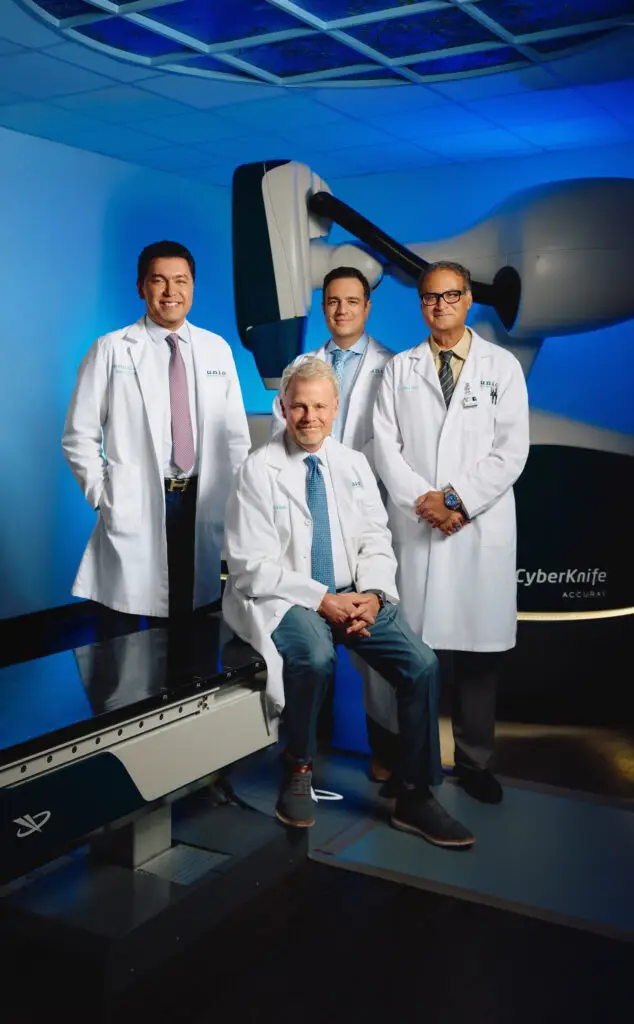
Unio’s Radiation Oncology team—Dr. Donald B. Fuller, Dr. Tahir Ijaz, Dr. Reza Shirazi, and Dr. Siavosh Vakilian—combines extensive clinical experience with a commitment to personalized cancer care. The RO team treats cancerous and non-cancerous conditions using precision therapies including SBRT, IGRT, and the CyberKnife® S7 System, the only system of its kind in Southern California. Their expertise spans prostate, breast, lung, gastrointestinal, pancreatic, and central nervous system cancers, as well as low-dose radiotherapy for osteoarthritis.
In 2026, Dr. Shirazi and Dr. Vakilian were recognized as San Diego Top Doctors, joining Dr. Fuller and Dr. Ijaz, who have previously received this distinction.
Faces of Healthcare 2026: San Diego Fertility Center
Meet San Diego’s leading healthcare professionals, delivering exceptional medical and dental care through innovation, expertise, and dedication to patients.
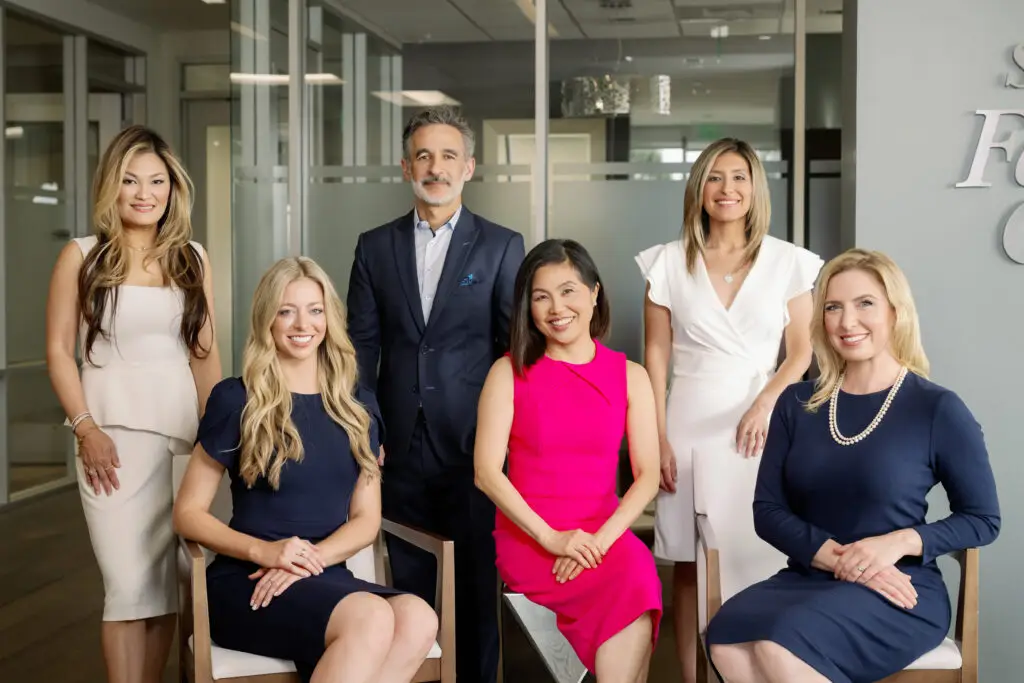
Susanna Park, MD; Sandy Chuan, MD; Brooke Friedman, MD; Said Daneshmand, MD; Valerie Flores, MD; Bryn Willson, MD
At San Diego Fertility Center, parenthood starts with personalized, cutting-edge care. Nationally recognized physicians offer individualized plans spanning IVF, PGT, egg donation, surrogacy, Gentle IVF, fertility preservation, and LGBTQ+ family building. Newsweek ranked them among America’s Best Fertility Clinics in 2026: top 6% of 450+ clinics nationwide, and best in San Diego.
“Remind yourself you are not alone! You don’t have to have all the answers before you walk through the door,” says Dr. Friedman. “Our job is to listen, explain your options, and guide you toward what makes sense for you. Because fertility care isn’t one-size-fits-all — and building your family should feel like your journey, supported every step of the way.”
Faces of Healthcare 2026: North County Cardiovascular Specialists
Meet San Diego’s leading healthcare professionals, delivering exceptional medical and dental care through innovation, expertise, and dedication to patients.
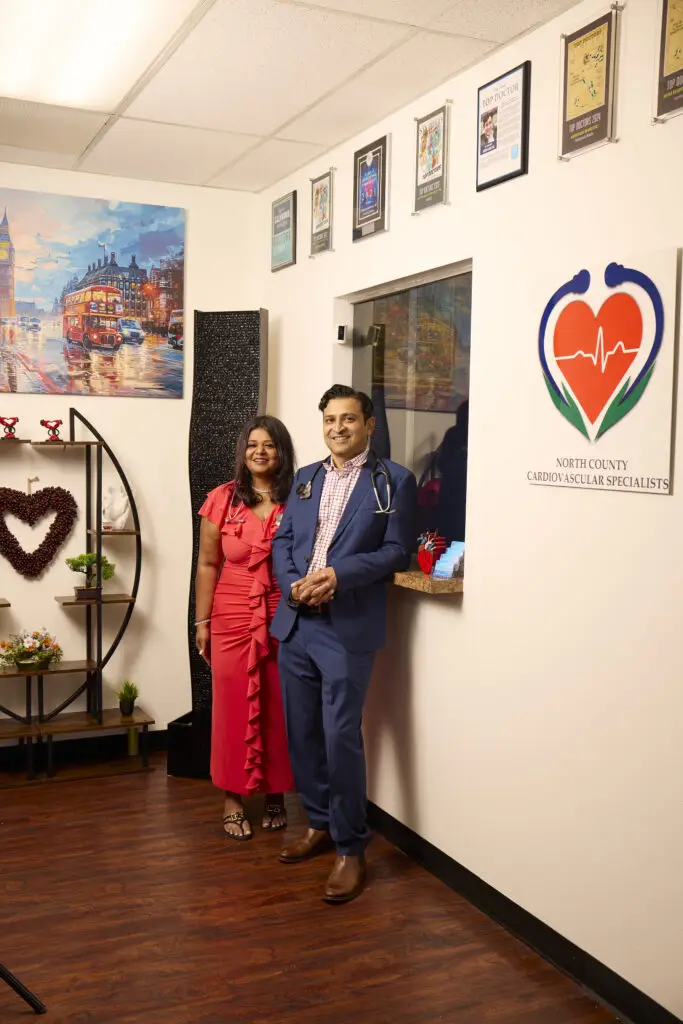
At NCCS, both doctors take a personal, traditional approach to cardiovascular care. Patients speak directly with their physicians and build lasting relationships with doctors who know them.
“We became doctors to care for patients, not to run a business,” says Dr. Kabra, who trained in England and the United States and leads the practice’s office-based cardiac care. Dr. Rajamanickam, an interventional cardiologist trained under renowned Dr. Samin Sharma, shares the same philosophy.
Guided by evidence-based medicine, they tailor care to each patient’s unique history, physiology, lifestyle and goals. Both are respected, well-reviewed physicians and four-time Top Doctors.
Visit
3142 Vista Way, Suite 206, Oceanside, CA 92056 760-224-7776
Meet San Diego’s leading healthcare professionals, delivering exceptional medical and dental care through innovation, expertise, and dedication to patients.
Community health is about more than just vaccines and checkups, At Neighborhood Healthcare, patients receive whole-person care, giving them access to the resources they need to live their best lives—whether that’s primary care, pediatrics, dental care, behavioral health, lab services, or pharmacy needs.
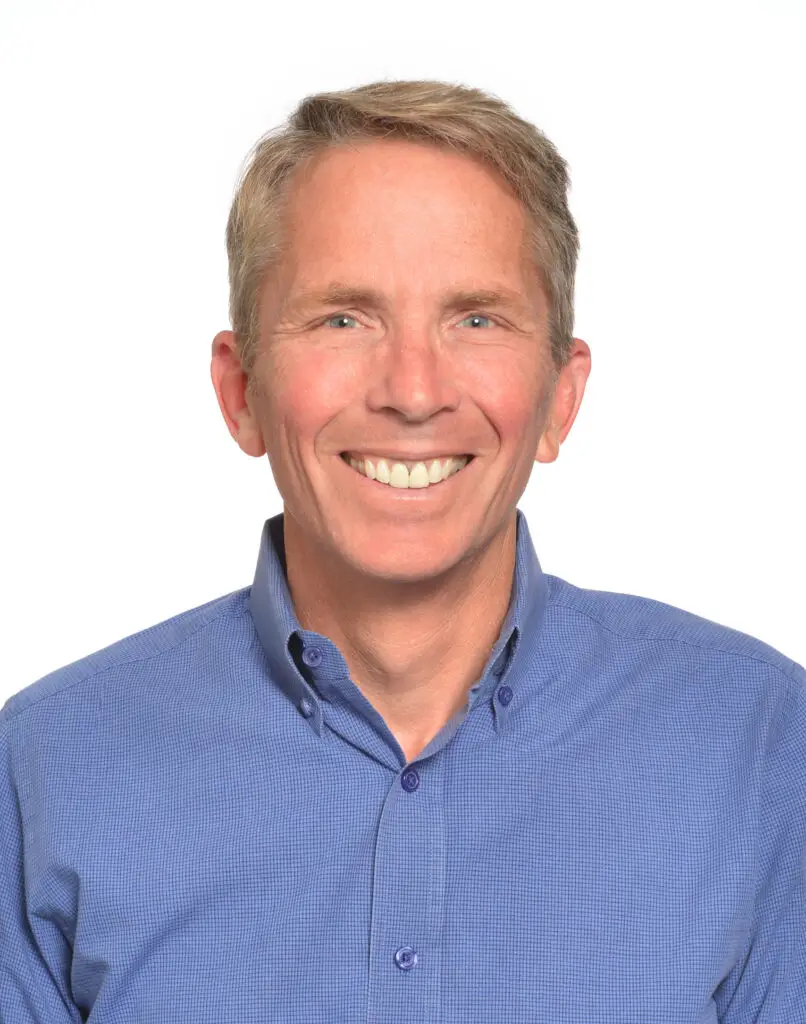
Neighborhood Healthcare is a private, non-profit community health organization in San Diego, Riverside, and San Bernardino Counties. Primary Care Physician James H. Schultz, MD goes above and beyond in serving people with high integrity, professionalism, and collaboration. Alongside the entire Neighborhood Healthcare staff, he works to improve the health and happiness of the community, regardless of situation or circumstance.