What Are the Key Features of Effective Alert Systems?
One in four seniors falls every year. That statistic sounds abstract until it happens to someone you love. Alert systems exist to solve this exact problem, but aren't all built the same.
One in four seniors falls every year. That statistic sounds abstract until it happens to someone you love. Most falls occur when people are home alone, and those moments can turn dangerous fast.
Alert systems exist to solve this exact problem. But not all devices work the same way. Some provide real protection while others just give false confidence. The difference comes down to how these systems are built and what they can do.
Professional Monitoring That Works Around the Clock
Having a device is one thing. Having someone answer when you need them is something else entirely. This distinction separates useful alert systems from expensive paperweights.
Response Speed and Information Access
Good monitoring centers pick up calls in under ten seconds. The best medical alert systems keep detailed files on every user. Medical history, current prescriptions, known allergies, family contacts. All of it sits ready for the operator to see.
Paramedics get this information before they walk through your door. They know what medications you take and which conditions to watch for. This head start can prevent dangerous drug interactions or missed symptoms.
What Quality Monitoring Provides
Professional services do more than just answer phones. The best ones offer specific advantages that you won’t find in basic systems:
Operators who speak multiple languages fluently
Special protocols for people with hearing loss or speech problems
Staff who stay on calls until responders arrive at your home
Coverage that never stops for holidays or overnight hours
Direct lines to local fire departments and ambulance services
Training makes the difference here. Experienced operators stay calm when callers panic. They know which questions to ask and how to keep people safe until help shows up.
Automatic Fall Detection Technology
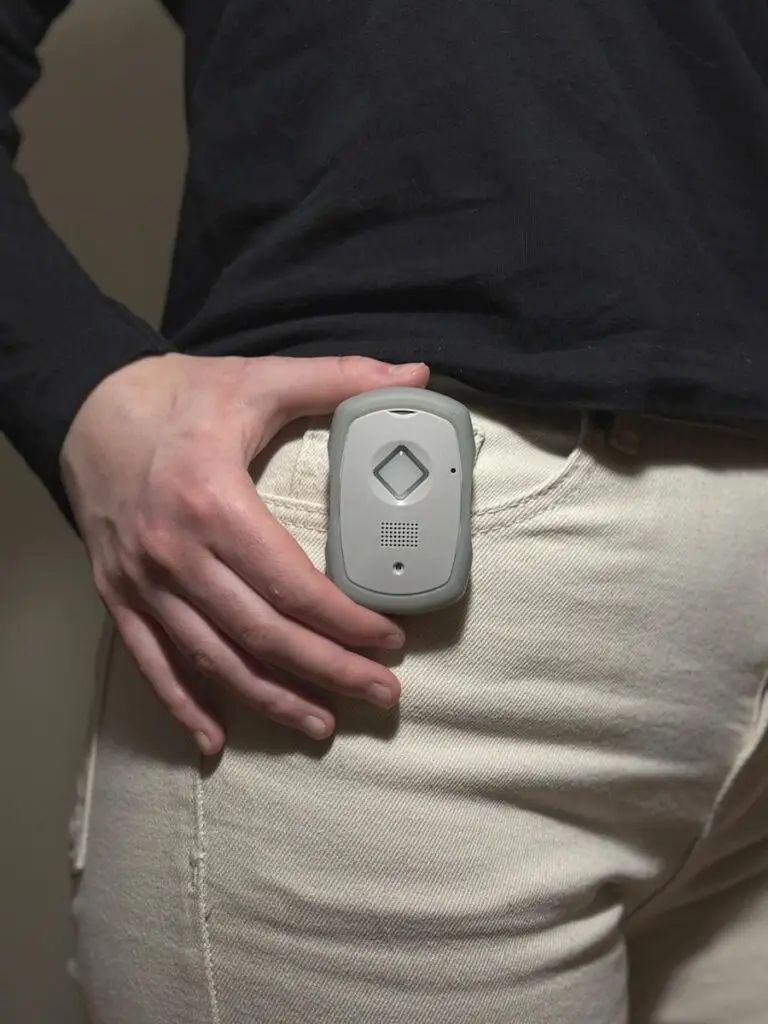
Sensors built into these devices track movement patterns throughout the day. Sudden drops combined with impact force trigger automatic alerts. The technology measures how fast your position changes and whether you’re moving after hitting the ground.
This becomes vital when someone hits their head or breaks a bone. According to the Centers for Disease Control and Prevention, falls kill more than 39,000 older adults every year in the United States. Many of these deaths could be prevented with faster response times.
False alarms do happen sometimes. You might drop the device or sit down hard in a chair. Modern systems let you cancel these alerts quickly. But if you don’t respond within 30 to 60 seconds, the call goes through anyway.
Newer models make fewer mistakes than older ones. Better sensors and smarter software help devices tell real falls from normal activities.
GPS Tracking for Mobile Protection
Home-based systems only work inside your house. That limitation becomes a problem for active seniors who spend time outdoors. Mobile devices with GPS solve this by tracking location anywhere in the country.
Location Features That Add Safety Layers
GPS technology pinpoints exact coordinates within a few meters. Emergency crews don’t waste time searching when they know precisely where to go. Some systems also include geofencing, which creates invisible boundaries around safe areas.
Families caring for someone with dementia find this feature particularly helpful. The system sends alerts if that person wanders past the designated zone. You get a notification on your phone showing exactly where they went.
Battery life varies a lot between brands and models. Heavy GPS use drains power faster than basic monitoring. Some devices last five days per charge while others barely make it 24 hours. Check how often you’ll need to plug it in before buying.
Simple Design and Reliable Construction
Technology doesn’t help anyone if it’s too complicated to use. The best alert devices work with one button press. No menus to navigate or settings to remember.
User-Friendly Controls
Large buttons make a big difference for people with arthritis or shaky hands. The button should be easy to find by touch alone. Some newer models respond to voice commands instead, which helps people who can’t press buttons easily.
Setup shouldn’t require technical skills either. Plug it in, press a test button, and you’re done. Companies that make this complicated usually have poor customer service too.
Waterproof Design and Battery Backup
Showers and baths create slippery conditions where falls happen frequently. The National Institute on Aging identifies bathrooms as high-risk areas for senior injuries. Devices need to survive getting soaked.
Real waterproof construction means different things to different manufacturers. Here’s what reliable systems include:
IPX7 ratings that allow full underwater submersion
Backup power that keeps base stations running during outages
Batteries that last 30 hours or more without electricity
Wearable pieces that go three to five days between charges
Casings tough enough to survive drops onto tile or concrete
Cheap devices claim water resistance but fail when fully submerged. Read the fine print on waterproof ratings before trusting your safety to any device.
Choosing the Right System for Your Needs
No single system works for everyone. Active people who travel need different features than someone who rarely leaves home. Health conditions, living situations, and daily routines all factor into which device makes sense.
Most companies offer trial periods of 30 days or longer. Use this time to test everything. Call the monitoring center a few times. Drop the device and see if fall detection works. Wear it in the shower. Take it outside and check GPS accuracy.
Real-world testing reveals problems that spec sheets hide. You’ll discover weak spots in your home’s cellular coverage or find that buttons are harder to press than they looked. Taking time to properly evaluate options prevents regrets later. The right system provides genuine protection and peace of mind for years to come.
Today’s seniors are more connected than ever, with a renewed focus on retirement as a time of discovery and enriching experiences. The ultimate reward for a retirement well-earned is the wisdom to appreciate it all, and what better place to enjoy that unique perspective than Vi at La Jolla Village, in the heart of San Diego.
All-access pass to good living.
As a Continuing Care Retirement Community (CCRC), Vi provides access to a connected and fulfilling community while making it easy to plan for future care, should the need ever arise. With a care plan in place, residents enjoy greater financial predictability and long-term value, freeing them to focus on making the most out of retirement.
Resort-style amenities at the epicenter of a cultural hub like San Diego offer a retirement experience unlike any other. Paired with exceptional dining, spacious accommodations and dedicated staff, the best of maintenance-free living is all around. And with the introduction of Vista 360 Well-Being, Vi’s panoramic approach to wellness, there are more ways than ever for residents to access it all.
The harmony of mind, body and community.
Courtesy of Vi at La Jolla Village
The key to longevity is striking the right balance in maintaining an active lifestyle with an active mind in a fulfilling community. With newly renovated community spaces and restaurants, Vista brings a variety of opportunities for residents to elevate their well-being through Vi-exclusive “Signature Experiences.”
Vista Enrich takes an evidence-based approach to brain vitality, keeping residents at the forefront of cognitive health through exergaming (exercising + gaming), nutritional plans and informative workshops. It is also home to The Brain Vitality Studio, an innovative facility dedicated to cognitive fitness that has garnered national recognition.
Vista Discover invites residents into stimulating educational experiences, from chef-led cooking demos and guided wine tastings to lectures at local universities and intimate lectures following cultural outings.
While Vista Enrich focuses on brain health and Vista Discover engages residents intellectually, Vista Explore cultivates a sense of adventure through curated travel and local excursions. But broadening one’s horizons doesn’t always require a plane ticket. One recent event brought a taste of the world right to the community: an onsite “jazz cruise” featuring live music and global cuisine served at a series of themed “ports” all within the community’s own ballroom.
“Location, location, location”
Courtesy of Vi at La Jolla Village
One of the biggest perks of life at Vi at La Jolla Village is its proximity to just about everything. With easy access to transportation and local attractions just steps away, residents can explore and engage with their community at their own pace.
“There are trolley and bus stops within a 5-minute walk that will get you to the beach, UCSD Campus, medical appointments, downtown La Jolla or San Diego, et cetera. We rarely use our car,” said resident Tom Yager.
With the best of San Diego just steps away, residents don’t just live in the city, they live within reach of everything that makes it special.
The best of all worlds.
Courtesy of Vi at La Jolla Village
At Vi at La Jolla Village, retirement isn’t a chapter to slow down; it’s an invitation to discover more. Tailored community experiences created by Vista, paired with the vibrant pulse of San Diego just outside the door, mean that residents don’t have to choose between security and adventure, connection and independence. They get all of it.
This is what an all-access pass to good living looks like: the comforts of an elevated lifestyle, a community built for growth and a city made for discovery – all in one place.
To learn more about Vi at La Jolla Village or for details on available floor plans, visit ViatLaJollaVillage.com/SDM.
Sharp Community Medical Group connects patients with high-quality, coordinated health care close to home while supporting the communities its physicians serve.
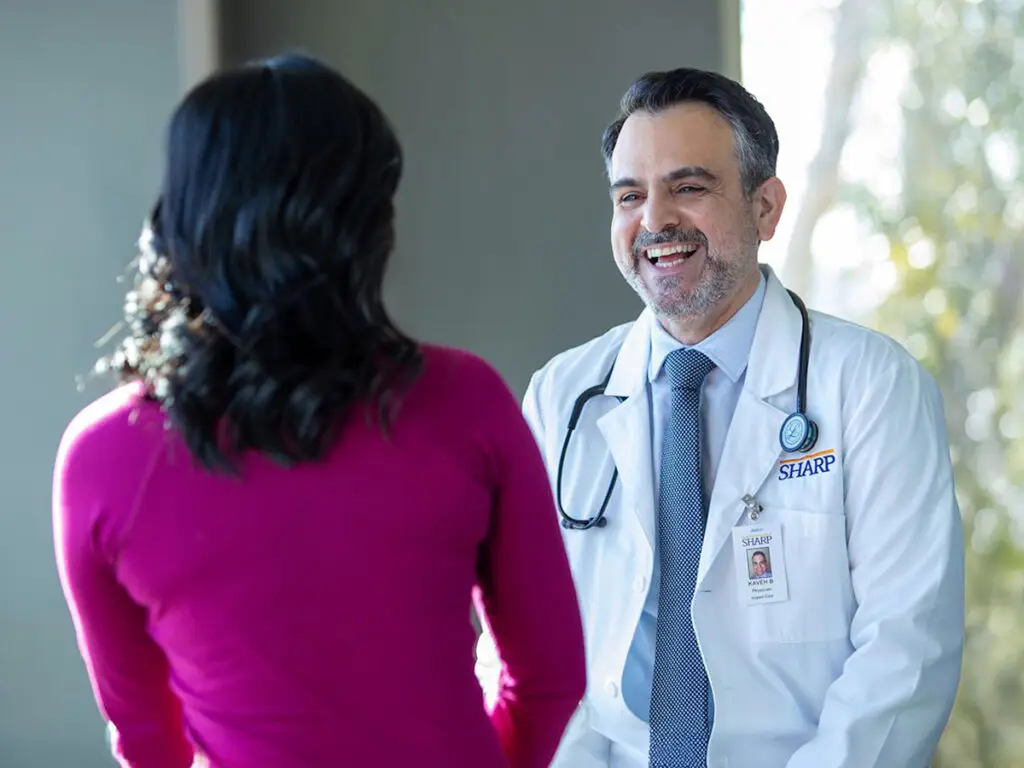
Courtesy of Sharp Community Medical Group | Dr. Kaveh Bahmanpour, a family medicine physician and patient
When it comes to health care, convenience matters. Whether you need a routine checkup, a specialist appointment, diagnostic imaging, or hospital care, receiving services close to home can make a meaningful difference for you and your family. That is the philosophy behind Sharp Community Medical Group (SCMG), one of Southern California’s largest physician networks, built around a simple idea: exceptional health care should be available in the communities where people live, work, and raise their families.
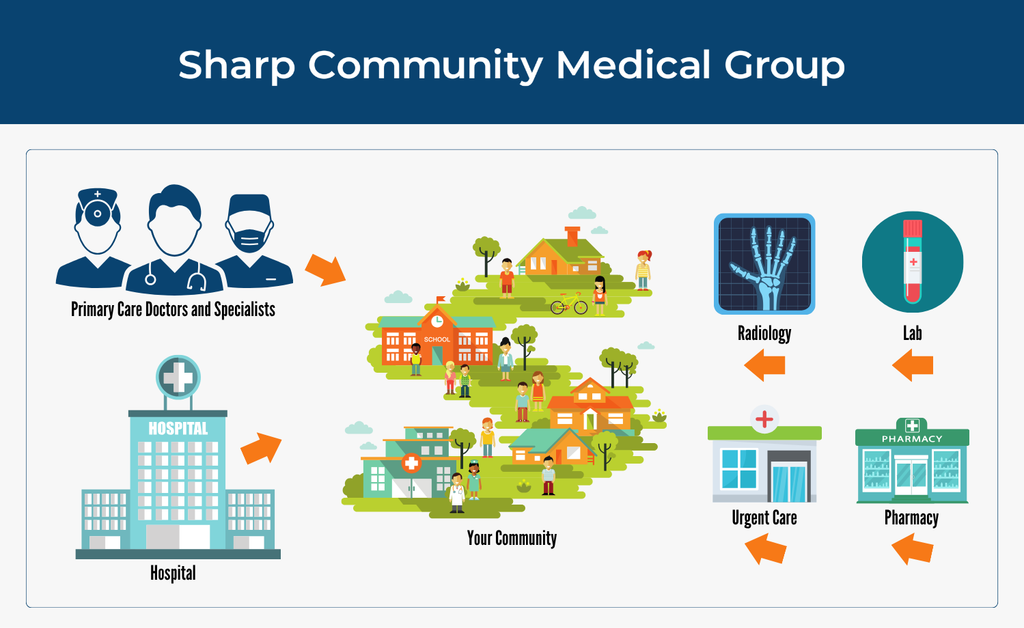
SCMG’s local care delivery model begins with choosing a primary care physician in your neighborhood. When specialty care is needed, your doctor can refer you to local specialists who are part of the SCMG network. Those specialists can admit patients to nearby Sharp HealthCare or Palomar UC San Diego Health hospitals, helping ensure care remains coordinated and close to home.
Courtesy of Sharp Community Medical Group | Sharp Community Medical Group’s local care delivery model
The benefits extend far beyond physician visits. SCMG patients have access to community-based laboratories, MRI and radiology centers, urgent care locations, pharmacies, and other ancillary services throughout the region. Instead of traveling across the county for care, patients can often receive the services they need in the communities they know and trust. As a result, care becomes more convenient, more connected, and easier to navigate.
For many SCMG physicians, the word “Community” in the organization’s name is more than branding. It reflects a commitment to giving back to the people and neighborhoods they serve.
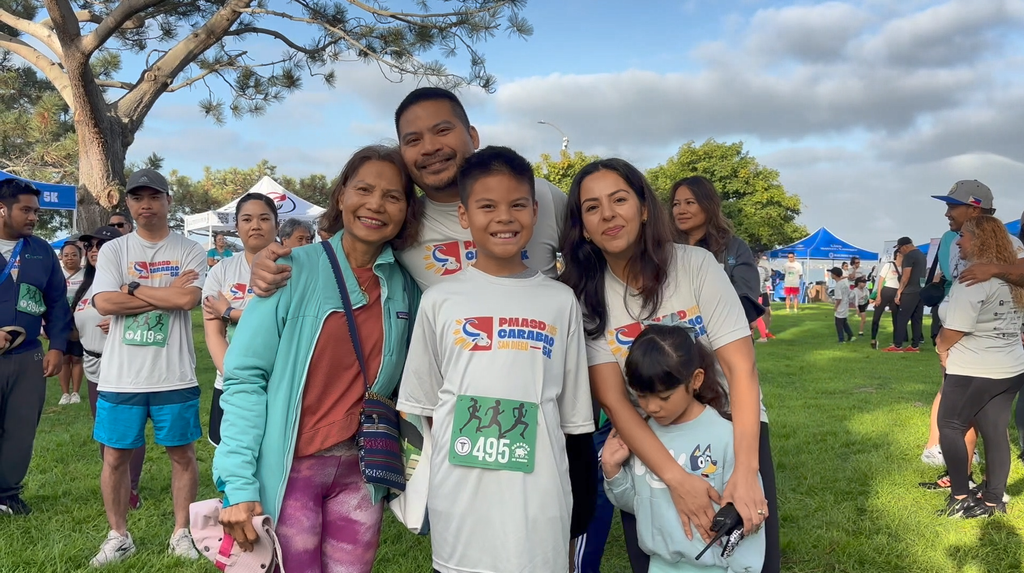
That commitment is evident in the work of Dr. Joseph Novencido, an SCMG-affiliated physician and President of the Filipino Medical Association of San Diego, who organized the inaugural 2025 Carabao 5K. The event was created to encourage healthy lifestyles and physical activity among Filipino Americans, a population that experiences cardiovascular disease at significantly higher rates than the general U.S. population.
“Community is extremely important to me,” said Dr. Novencido. “I grew up in a very diverse community, and working in this area, in the community I grew up in is so fulfilling. It is so nice to be in a position where I can make a difference in the lives of the people here.”
Courtesy of Sharp Community Medical Group | Dr. Joseph Novincido, a family medicine physician and his family
SCMG physician Dr. Leticia Polanco shares a similar passion for serving her community in Chula Vista.
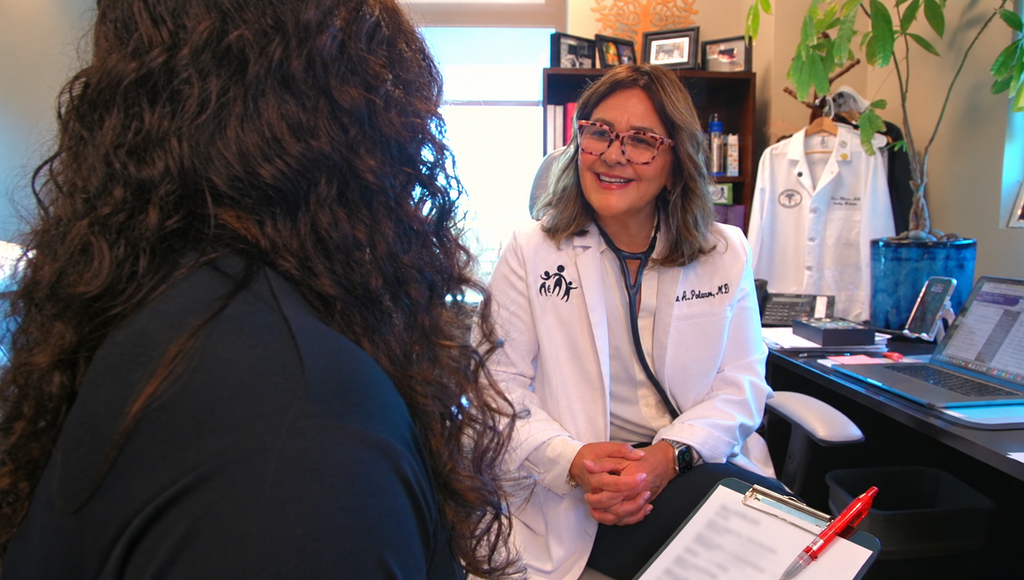
“The reason I decided to go into medicine is because I felt there was an overwhelming need for people like me to take care of the community that I live in,” she said. “In our practice, we work as a team, we collaborate with our staff, and we really want to give that warm feeling to people who come here for care.”
Courtesy of Sharp Community Medical Group | Dr. Leticia Polanco, a family medicine physician and a staff member
Stories like these highlight what distinguishes SCMG: a network of physicians who are deeply invested in the health and well-being of the communities they serve, while providing patients with access to a coordinated local system of care. From preventive care and specialty services to imaging, urgent care, and hospital treatment, SCMG helps patients receive the right care, in the right place, close to home.
About Sharp Community Medical Group
Sharp Community Medical Group (SCMG) is one of Southern California’s largest physician networks, with more than 1,200 affiliated primary care and specialty physicians practicing throughout San Diego County. SCMG physicians can admit patients to local Sharp HealthCare and Palomar UC San Diego Health hospitals, providing convenient access to coordinated care throughout the community. For more information, visit scmg.org.
It’s fall again. You’ve done the cider tasting. You’ve done the three-legged race at the rec center down the street. You’ve done the craft fairs and candle-making class but have you pedaled down a railroad track built in the 1880s in a two-person, auto-assisted Railbike with the wind blowing through your hair as you take in the sights—citrus groves dotted with bright yellow lemons, sun-drenched mountains—and stopped at a pumpkin patch (with a petting zoo!) along the way?
Enter Sunburst Railbikes in Santa Paula, the bucket-list experience your bucket didn’t even know it was missing. Until now. “It’s the perfect escape from the city, from the hustle and bustle,” said Nicholas Martinez, who, as a manager and frequent guide for the Railbikes, has taken more than 500 rides and wants to do at least 500 more. “It’s exhilarating.”
It goes like this: You meet at the quaint historic Santa Paula Depot and hop on a bike, one specially created to perch snugly on the tracks. Because of the electric assist, you get to be as lazy or overachieving as you’d like. Kids three years old and up can do it, too. The whole journey is 10 miles and takes two hours, during which you take in fresh air and listen peacefully to the hypnotic clickety-clack while snaking in and out of lush groves. In April and August, you’ll see the avocado harvest. During fall, it’s all about the lemons. “It’s just a thrill to be gliding along,” says Martinez, explaining the uniqueness of the experience. “It’s like nothing else.”
The activity is a fit for all ages, with children under three riding in a front-facing chest carrier. Adults love the feeling of freedom. Kids love railroad crossings. They often wave at the stopped car traffic as they cruise by. “It’s such a hoot!” says Martinez.
Courtesy of Sunburst Railbikes
Toward the end of the journey, there’s a stop at Prancer’s Farm, a local business which is pretty much the holy grail of October activities. You can buy local produce like avocados, strawberries and honey, but also zipline, pet animals, pick a pumpkin or fresh produce, and go on hayrides or horse rides, get lost in a corn maze, pose in a marigold field or a sunflower field, ride a barrel train or…or…or maybe all of the above.
You’ll also experience a bit of history along the way. The tracks, laid down in 1887, used to shuttle passengers between Los Angeles and San Francisco. You can envision it as you go—travelers embarking on big trips before air travel. Later, in the 1940s and ’50s, freight trains used the tracks to haul fresh citrus.
It’s still a working railroad today, but it’s also a bit of a celebrity. The very tracks used by the Railbikes have been in more than 500 television and movie productions, everything from a Dr. Pepper commercial to the feature film Seabiscuit. So yeah, riding those tracks is Hollywood adjacent, kind of like meeting a well-known prop like the sofa from Central Perk.
While driving up from San Diego and back in one day is possible, you can easily turn the occasion into a fun weekend getaway. The cute-as-heck town of Ojai is a short car ride away. Think idyllic meanderings through nature, picturesque historic downtown and top-notch food choices. Ventura, equally close, is a chock-full of craft breweries and beach walks. Book a night somewhere and indulge.
Fall has plenty of traditions. So yes, you could spend another autumn afternoon at another craft fair. You could make some soup or play pin the stem on the pumpkin, but you also might want to climb aboard a Sunburst Railbike, pedal down a 139-year-old railroad track, wave at confused motorists and make an entirely unique core memory for you and your people.
Come experience the Sunburst Railbikes for yourself during their year-round trips through the citrus groves – sunset, extended, and other themed rides available seasonally.
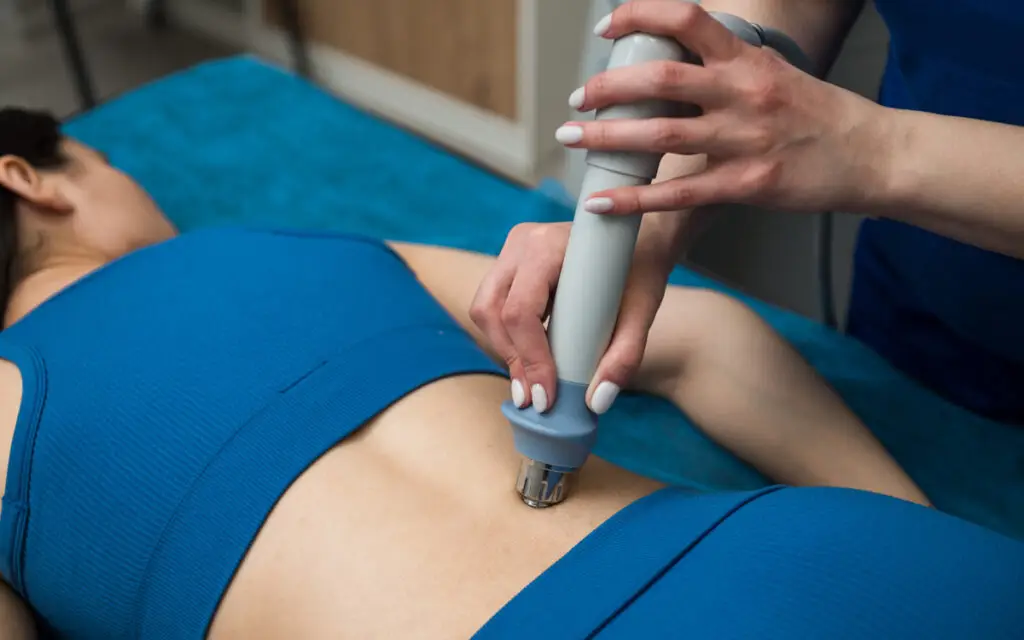
Though shock waves may sound like something more likely to cause pain than relieve it, physicians have been using the technology to treat musculoskeletal conditions for decades. Shockwave therapy is a non-invasive treatment used in sports medicine for a variety of tendon, muscle and ligament injuries. By delivering acoustic energy via targeted sound waves, it activates the body’s natural healing processes. Scripps officially launched its shockwave therapy program earlier this year, making it one of the first major healthcare organizations in the region to offer the innovative service. Click here to read more about shockwave therapy and the doctor who advocated to bring the treatment to Scripps.
For more nutrition, wellness, and healthy living tips, sign up for the San Diego Health newsletter here.
It’s estimated that one in four adults in the U.S. have high cholesterol. It’s a condition that’s preventable and treatable; however, it often has no symptoms, so many people are unaware they have it. That puts them at higher risk for heart attack or stroke. A recent update to national guidelines for preventive cholesterol screenings, the first since 2018, aims to change that by screening and intervening earlier, and calculating long-term risk differently. Click here to find out more.
For more nutrition, wellness and healthy living tips, sign up for the San Diego Health newsletter here.
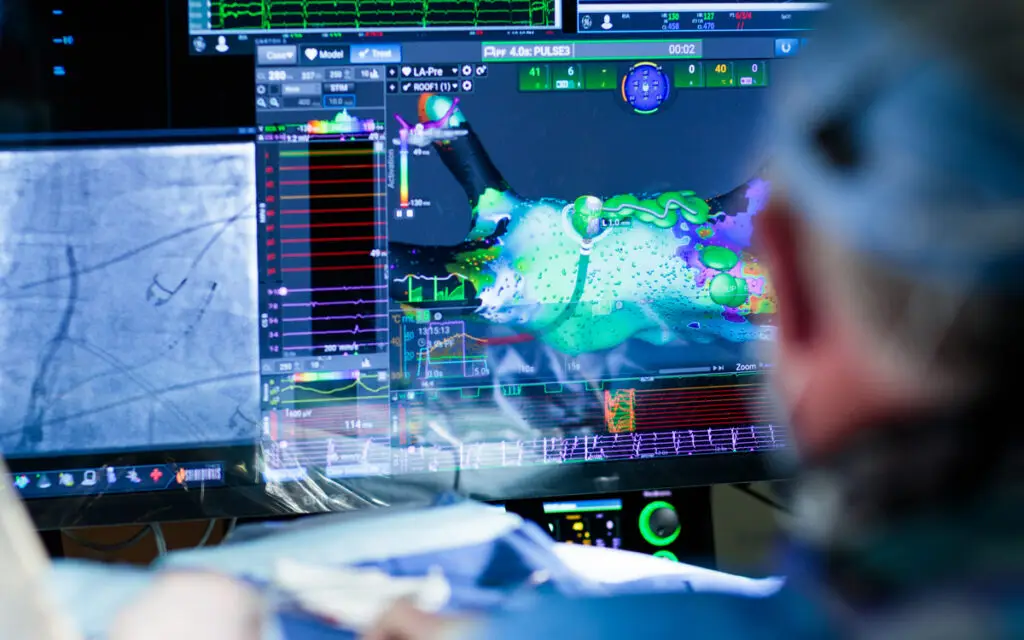
Atrial fibrillation (AFib) is the most common cardiac dysrhythmia, affecting more than 10 million people in the U.S. The condition, characterized by an irregular and often rapid heartbeat, raises the risk of stroke, heart failure and death. Advances in electrophysiology, a subspecialty of cardiology focused on the heart’s electrical system, are transforming how AFib and other dysrhythmias are diagnosed and treated. Scripps electrophysiologists use state-of-the-art therapies—some of which they helped develop. They were instrumental in the pre-FDA approval research for an effective new treatment, pulsed field ablation, and are on the forefront of other innovative treatments. Click here to learn more.
For more nutrition, wellness, and healthy living tips, sign up for the San Diego Health newsletter here.