Featured articles
Food & Drink
Food & Drink
Food & Drink
Featured articles
Everything SD
Everything SD
Everything SD
Featured articles
Things to Do
Things to Do

Everything SD
Featured articles
podcast-ep
podcast-ep

podcast-ep
Featured articles

Everything SD
Everything SD
Everything SD
Featured articles
Partner content
Everything SD
Everything SD
Ready to know more about San Diego?
SubscribeReady to know more about San Diego?
With hometowners making the Coachella Valley their own, some desert cities are building an identity beyond the area’s famous music festivals
A group of teenagers is taking selfies outside of Saguaro Coffee in downtown Indio, California. One adjusts her sunglasses on her nose and holds up her spiced pear matcha latte, and I can picture the shot: This smiling young woman in the foreground, largely unnecessary cardigan (it’s a textbook-perfect 76 degrees) laid just so over her shoulders; the green expanse of a community park in the background. Makers’ market booths dot the grass, with the angular new public library (opened in October 2025) beyond.
In other words, downtown Indio is a cool neighborhood for cool young people.
It wasn’t always so. Though I grew up minutes away, I seldom visited this place, except to buy my school uniforms at Yellow Mart—a cluttered sort of “general store” with firearms behind the counter and mechanic coveralls on offer in the back—and attend rehearsals at a warehouse-like community theater then surrounded by empty storefronts.
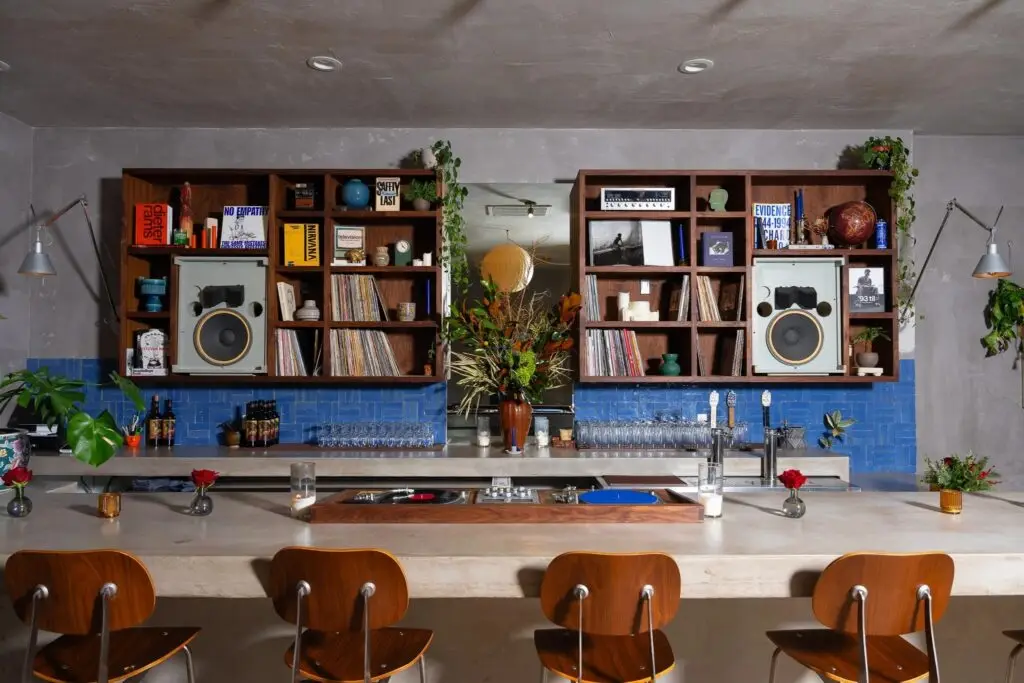
Yellow Mart and the theater have endured, and while unused buildings still dot the area, those teenagers can now make a loop between businesses that will look great on their Instagram stories: a few bustling cafés; Urban Donkey vintage store; Gabino’s, a Guy Fieri–approved spot for savory crepes. At night, locals flock to Rosemary HiFi, a listening lounge and wine bar owned by Adrian Romero, a Coachella Valley–raised kid whose first business, Hermano, was a florist’s shop turned if-you-know-you-know apparel brand. In glass windows, each storefront hangs posters promoting other local businesses and events. One beckons visitors to Field Day, Rosemary HiFi’s free, outdoor gathering of vendors, DJs, chefs, wine and beer makers, and activations.
“We’re continuing to grow at a higher pace than everybody else [in the valley],” says former Indio mayor Glenn Miller (late last year, he passed the head honcho role to Elaine Holmes, a requirement of the city’s rotating, one-year mayoral terms for all city council members). He and I are sitting in the recently opened downtown location of Everbloom Coffee, owned by Indio hometowners Efrain Mercado and Matthew Ortega. Their first outpost, off the nearby Highway 111, was sunny but cramped, with zero indoor tables and terrible parking. People came anyway, and now they have this 2,800-square-foot space busy with patrons working and chatting. The city of Indio helped make it happen.
“When land becomes available [in downtown], we purchase it,” Miller explains. The city council put a program in place to help entrepreneurs like Mercado and Ortega become tenants in city-held properties. “They have to come in with a full-fledged business plan and a proposition for tenant improvements. Then we say, ‘We’ll give you’—for example—‘a dollar per square foot to make those improvements.’ We’re keeping rents low, being partners with business owners, and then also investing back into the space, because we actually own it.”
The program’s capital comes out of Indio’s $141 million annual general fund. A one-cent city sales tax brings in another $18 to $20 million a year, funding one-time projects like Center Stage, an outdoor venue in the center of downtown. “That’s really our focal point,” Miller says. Honing in on entertainment makes perfect sense in Indio, considering it’s home to some of the most iconic music fests in the world, Coachella Festival among them.
But so far the stage—opened in April 2024—has taken some time to get off the ground, mostly hosting occasional community events and classic rock cover bands.
Miller has bigger dreams for the venue. “We’re going to use it for nonprofits to have events there,” he says. “We’re going to have acoustic guitar performances, yoga, other things.”
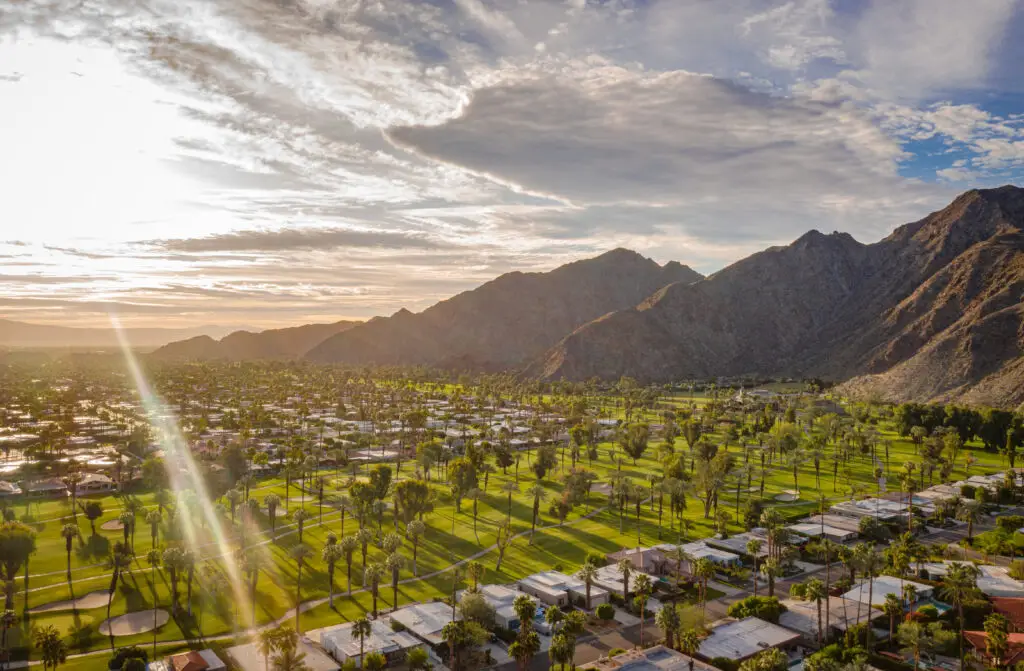
The city also hopes to bring in affordable housing, boutique hotels, and a train stop connecting Indio to the rest of the valley (like the town of Coachella to the east and the fairly orderly line of other desert cities—La Quinta, Indian Wells, Palm Desert, Rancho Mirage, Cathedral City, Palm Springs—stretching to the west) and beyond, accommodating the city’s growing number of tourists and transplants.
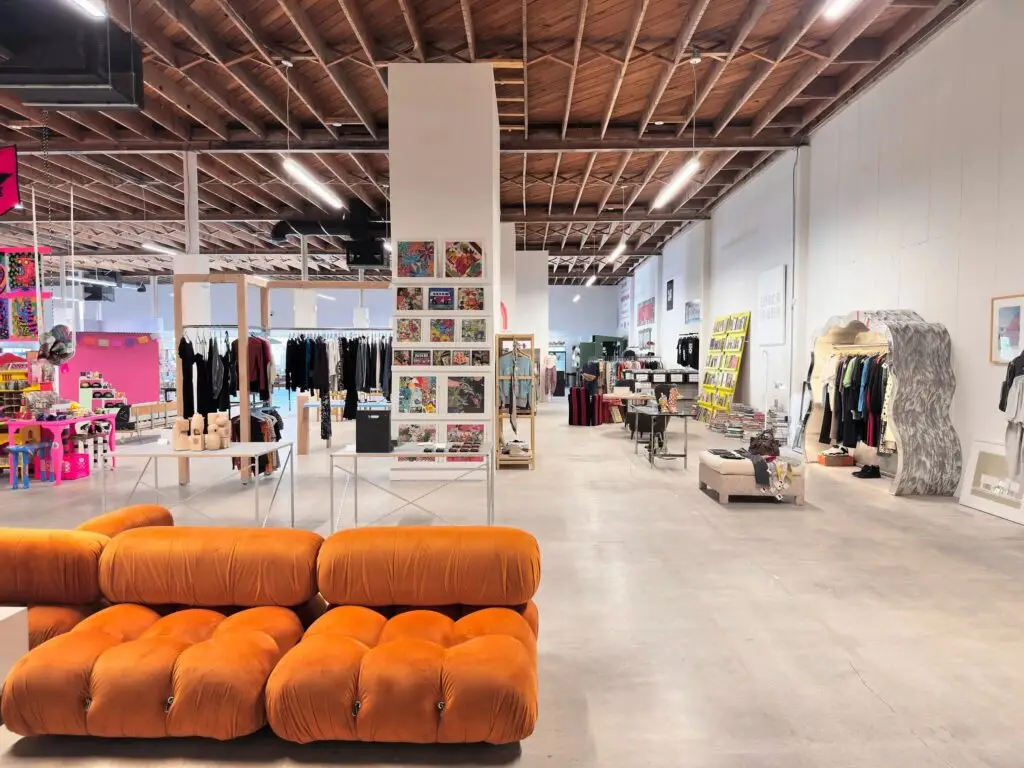
Among them is Nicole Massoth, who runs a downtown marketplace simply called The Place. At a staggering 15,000 square feet, The Place, opened last August, is a living catalog of local creative entrepreneurship. More than 100 small businesses have displays inside, many immersive enough to feel like their own tiny stores within the concrete-floored space. In a mini ’70s-style living room, you can sniff the candles of Mijo Co.—a husband-and-husband team who make scents inspired by the tangerines their mothers used to pack in their school lunches and the aroma of fresh-cut grass that emanated from family members who worked as gardeners.
Mere feet away, visitors can shop the shimmery face gems (the same ones worn by actors on HBO’s Euphoria) of GetStonned founder Megs Cahill or the undulating vases of Mojave Desert artist Stray Ceramics.
“I [wanted] to bring in artists and entrepreneurs that were committed to investing in the community,” Massoth says. “It feels really good to be intentional about keeping the wealth within the community versus gentrification—small businesses are taking over the eastern Coachella Valley, not big box stores. [Right now,] so many young people are like, ‘Wait, there’s something here.’ I think that we’ll be less of a limited area—[soon,] anything you can do in LA, you can do in the Coachella Valley.”
That sentiment runs counter to the valley’s reputation as a “playground of the stars,” who flocked to Palm Springs precisely because it wasn’t LA. In the 1950s, actors’ contracts often required them to be within two hours of their Hollywood studios, so the desert city offered a private, relaxing, rule-abiding escape. Generating $9.1 billion a year as of 2024, tourism is still the valley’s number-one industry—out-of-towners flock there for the festivals; sporting events like tennis’s BNP Paribas Open; and Modernism Week, a biannual celebration of the area’s abundant mid-mod structures by luminaries like Albert Frey and John Lautner, as well as more standard vacation pursuits like golfing, hiking, and celebrating bachelorette parties.
At the hushed wellness resorts in the valley’s western end, visitors soak off their stress in the natural mineral waters that gave the city of Desert Hot Springs its name. A proposed 200,000-square-foot indoor sports facility with 10 regulation-sized basketball courts may host amateur and youth tournaments and help bolster tourism during the trickier summer months, when temperatures rarely dip below 100 degrees. All together, that equals a whole lot of jobs in hospitality.
Yet other fields are on the rise, helping the area balance serenity with opportunity. “We’ve got this growing group of people with extensive experience in technology. [We have] healthcare, the creative economy, AI, clean energy, agriculture,” says Sean Smith, the director of economic development at Visit Greater Palm Springs. “We have a lot of the strengths that you would look for in a destination for economic development.”
Where it’s historically faltered is offering a real community for the young people who live there. The valley’s 65-and-older population is about 25 percent higher than the California average and, with no major university (there’s College of the Desert, a three-campus junior college system, and commuter offshoots of Cal State San Bernardino and UC Riverside), high school graduates tend to see a mass scattering of all their friends. Locally owned businesses like artist Angie Chua’s are helping provide a place to gather.
Chua moved to the desert and opened her stationery shop Bobo Palm Springs in 2021. She now operates two locations: her flagship Palm Springs store, sandwiched between fellow local, woman-owned businesses like jeweler Adrienne Wiley’s Covet and Stephanie Maynard’s Illumine Gallery at the multi-use space Flannery Exchange, and a vendor space in—you guessed it—The Place.
“This town thrives on small business, but it’s also a really, really hard place to operate a small business,” Chua adds. “We have to deal with seasonality, not just with the weather, but even with labor and finding people to work full-time. It’s such a competitive market with the hospitality industry.” Population growth in the valley is relatively slow (a 2023 report by the Desert Healthcare District and Foundation estimated a 2.1 percent increase by 2027—by contrast, some fast-growing cities in Texas are seeing new residents at a rate of up to 30 percent), and a fair share of the valley’s population flees for cooler climes during the dog days of summer, meaning even your most loyal regulars aren’t always stopping by regularly.
Chua has endured the ups and downs partly by hosting sketching and journaling meet-ups at the Palm Springs store on Friday evenings, including in the summer months. “We have anywhere between 15 and 25 people that come every Friday,” she says. “Palm Springs is historically known as kind of an older town, but it’s got such a vibrancy and hipness and an openness to creativity and inclusivity.”
The shops that line Palm Canyon Drive in downtown Palm Springs reflect the area’s diverse and shifting identities: There are the souvenir shops and slightly scruffy bars and date-shake vendors I remember from my youth; the vintage furniture stores and galleries central to the valley’s reputation as a hub for midcentury design lovers;and a new guard of stores that combine a savvy, social-media-informed coolness with hometown pride.
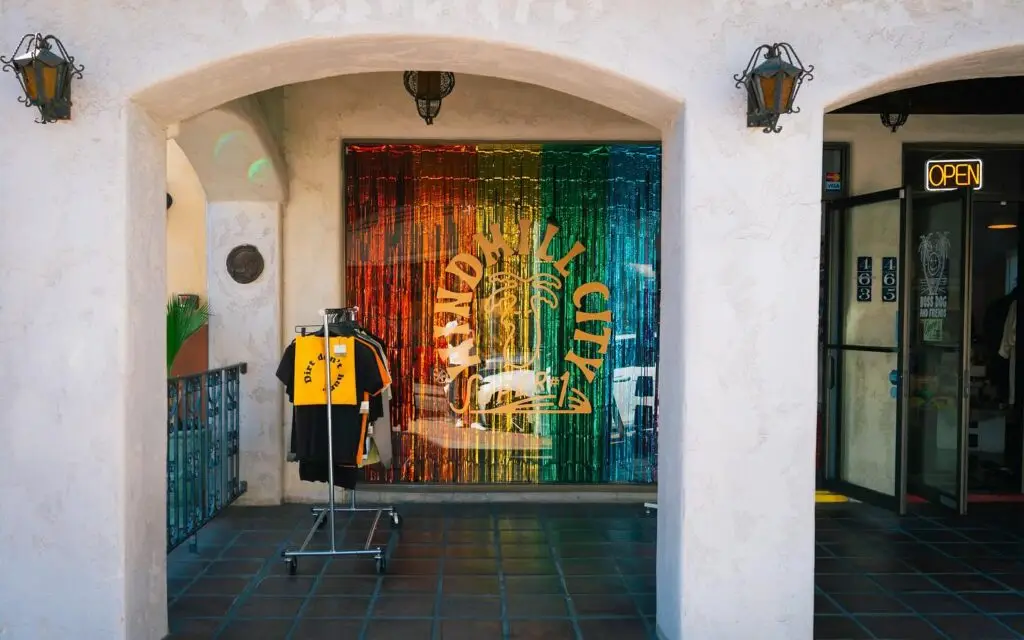
In the cheeky boutique Windmill City Super #1, some merch is universally giftable (“P.S. I love you”), while other products are a little more of an inside joke (“Desert Rat” or “Higher Than San Jacinto,” the mountain range that rises tranquilly behind the storefront, tourists riding the famous Palm Springs Aerial Tramway to its peak).
This is still a place to bathe in a hot spring, tour a Donald Wexler house, or go to a music festival, but it’s become a dynamic cultural destination in its own right. Gone are the days when I tell people I’m from Palm Springs and they shrug and say, “Oh, my grandparents have a timeshare there.” Now, impossibly, they’re sometimes jealous.
Maybe Gabriel Woo knew it was always going to turn out this way. The chef got his start washing dishes at a Rancho Mirage country club at age 15, and now he’s one of the most successful culinary minds in the valley. “I never thought of leaving,” he says. “I’ve traveled a lot, but I like it here.”
We’re sharing fruit and burrata and a California artichoke dip I could eat by the spoonful at his restaurant Livs, which opened in the Palm Springs Art Museum a year ago. Our table is surrounded by sculptures and an angular, ornamental pool. Woo also owns the Michelin-recommended Bar Cecil in Palm Springs, and he’ll launch the Italian spot Donna Forte in downtown Indio this year.
Two decades ago, he was in culinary school, looking to find a place to try out fine dining. “There was nothing here. [Palm Canyon Drive] was dead. There were some legacy restaurants, but they were doing, you know, Rat Pack stuff. So, I said, ‘You know what? When I become a chef, I’m gonna open restaurants and be the destination for people when they come to Palm Springs.’”
A handful of years later, he adds, the city started its metamorphosis. “I could see the younger people opening up places, talking, building things together—“Let’s do this; let’s do this.” I started feeling that,” he reflects. “And I could tell, ‘Oh, now it’s getting fun.’”
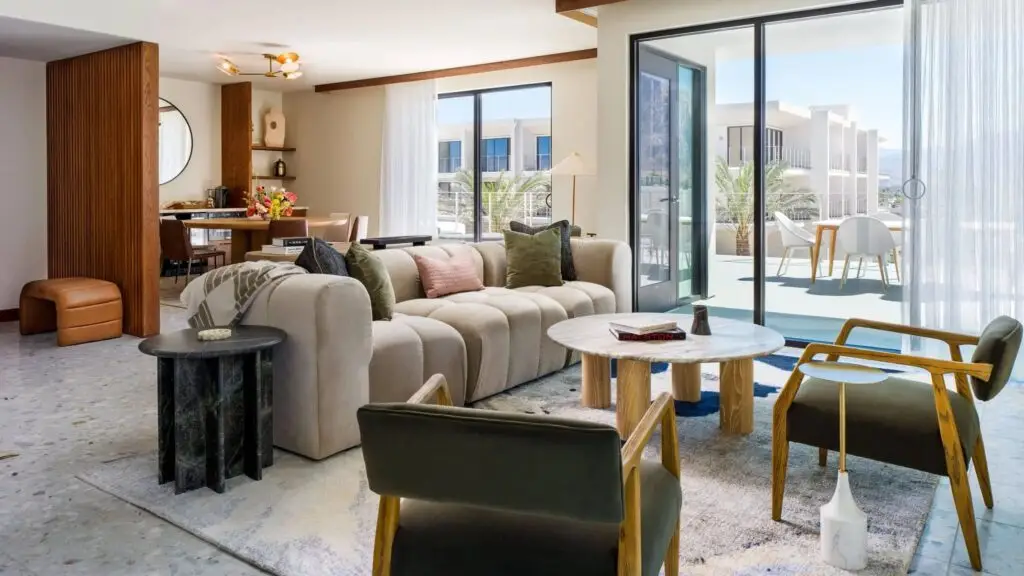
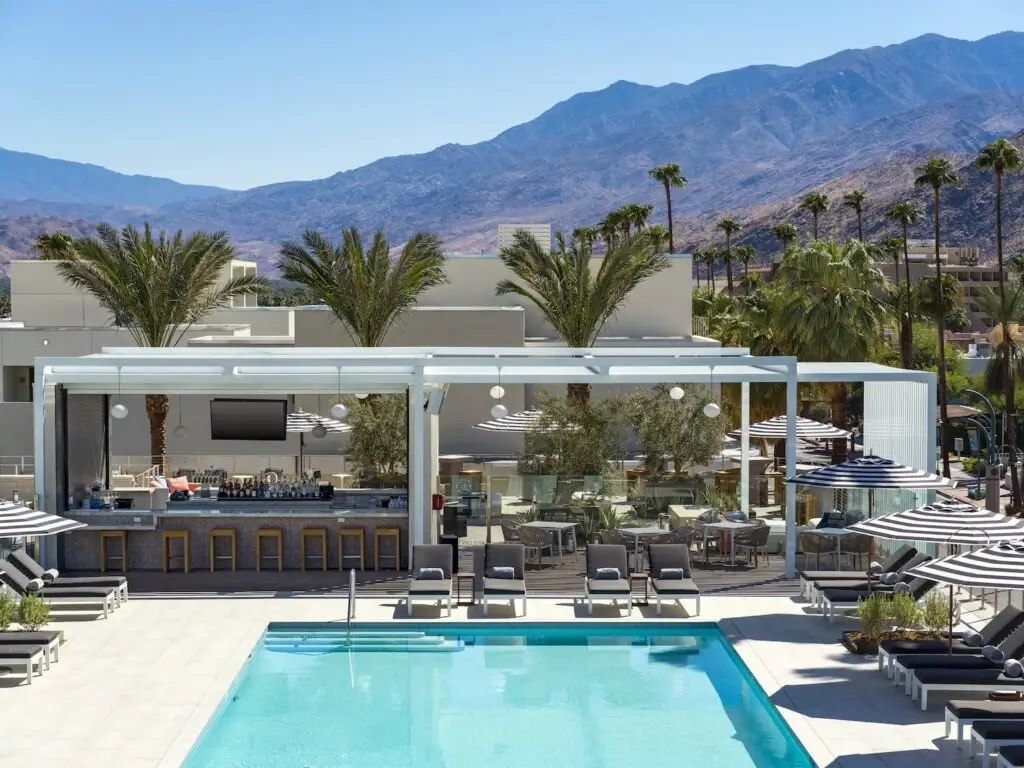
After nearly 20 years of development and construction, the Thompson opened in October 2024 between downtown Palm Springs and the city’s artsy Uptown Design District. A stay at the sprawling property puts you walking (or cycling, if you grab one of the hotel’s free bike rentals for guests) distance from Palm Springs’ shops and restaurants and a little over half an hour from downtown Indio on the other side of the valley.
It’s a bit of a maze here, but that just means surprise delights await around every corner: boundary-pushing pieces from world-class artists, many of whom also have work on display at the nearby Palm Springs Art Museum (no staid landscape prints here); cozy outdoor fire pits; a glass-walled pool deck that offers prime people-watching on the stretch of Palm Canyon Drive below.
The Thompson is a partnership between Hyatt and developers, philanthropists, and winemakers Craig and Kathryn Hall, so you’ll find a tasting room for the couple’s Napa Valley wines onsite, along with Bar Issi, a chic spot for pasta, pizza, and spritzes. The hotel’s other restaurant, Lola Grand Mezze, serves Mediterranean food all day in a high-ceiled space that looks like the giant living room of your rich, worldly aunt. Try the Santa Barbara spot prawns; the baklava old fashioned; and (believe it or not) the fenugreek chicken wings, drizzled with chili oil and sprinkled with hazelnut dukkha.

Amelia Rodriguez is a writer and journalist and winner of the San Diego Press Club's 2023 Rising Star Award and 2024 Best of Show Award, she’s also covered music, food, arts and culture, fashion, and design for Rolling Stone, Palm Springs Life, and other national and regional publications. After work, you can find her hunting down San Diego’s best pastries and maintaining her five-year Duolingo streak.
From concerts and festivals to theater, food, and outdoor fun, here are the San Diego events worth adding to your August calendar
August is San Diego at full volume. Summer crowds are still chasing sunshine, but the calendar belongs to locals who know this is when the city really shows off. One night you’re dancing under the stars, the next you’re watching thoroughbreds with a plate of oysters in hand, catching Broadway hits, wandering gallery exhibitions, or rallying on a downtown pickleball court. Whether you’re looking for live music, festivals, theater, food, or an excuse to spend as little time indoors as possible, these are the August events worth putting on your calendar.
JUMP TO: Concerts & Festivals | Theater & Art Exhibits | More Fun Things to Do

On the heels of Cross Pollination II’s release, house musician Lane 8 will co-headline FNGRS CRSSD x Cross Pollination, a day of back-to-back grooves at Waterfront Park.
Cross coasts at the Civic Theatre for a jukebox musical rooted in family, coming of age, and blossoming talent in Alicia Keys’ Hell’s Kitchen, inspired by the 16-Grammy Award-winning singer’s NYC upbringing.
Jeff Goldblum is a classic man. In his show at The Rady Shell, Goldblum will accentuate his old-school charm with his Mildred Snitzer Orchestra and the San Diego Symphony Orchestra.

Explore gallery walls lined with artwork juried by acclaimed artist Paul Mpagi Sepuya and chosen by the Athenaeum Music & Arts Library for its esteemed 34th Annual Juried Exhibition.
As you already know, we adore San Diego. That’s why we’re assembling the city’s crème de la crème—including over 90 curated vendors—in Liberty Station for our annual Best of San Diego Party, presented by Pechanga Resort & Casino.
Helado Negro and Reyna Tropical each specialize in bilingual music, songs overflowing with proud markers of Latinx identity. Hear the ear-tingling transmissions from their collaborative LP at Epstein Family Amphitheater.
Country music superstars, proud Georgians, and close pals Jason Aldean and Luke Bryan are doubling down on their summertime stadium tour with a boot-stomping concert at Petco Park.
The one-woman play Eleanor—told via the eloquent perspective of Eleanor Roosevelt—will make a limited return to the North Coast Repertory Theatre.
For six straight Thursdays, downtown’s Fifth Avenue will shut down and become the city’s first-ever street-style pickleball event. Bring a paddle and enjoy DJs, a wellness market, and zero-proof drinks at Gaslamp Urban Pickleball.
Del Mar Thoroughbred Club’s newest foodie event, the buttery Turf & Surf Festival, offers a luxurious combo of land and sea, built for watching trackside with a loaded plate in hand.
For the first time since 2019, the free Chula Vista HarborFest will hit the shores of Bayside Park with a classic car expo, lucha libre showdowns, and the chance to meet a mermaid.
Celebrate the seven decades (and counting) spent upholding Point Loma’s coastal landmark during Cabrillo Under the Stars, a 21-plus fundraiser with bites, Beatles covers, and, best of all, twinkling lights.
Ryan Hardison is a freelance arts and entertainment writer and recent graduate of San Diego State. When he's not staring at his laptop, he's likely eating an adobada burrito or getting sunburnt at the beach.
Pop bottles during Uncorked: Del Mar, find companionship at Cardiff Dog Days of Summer and embrace musical history through SummerFest
Immersive theater productions, open-air pickleball matches and affordable festivals are among San Diego’s marquee happenings as we turn to August. Fans of horror classics and fourth-wall breaking can explore their interests via the new theatrical comedy Die Already! and the one-woman show ha ha ha ha ha ha ha, respectively. Pickleball enthusiasts can sign up for Gaslamp Urban Pickleball, a weekly chance to play outdoors, shop for gear and take advantage of neighborhood dining deals. Plus, for the budget-conscious, admission is free for a handful of local festivals, including the three-day Ramona Country Fair, ArtWalk Liberty Station and Cardiff Dog Days of Summer.
JUMP TO: Food & Drink | Concerts & Festivals | Theater & Art Exhibits | More Fun Things to Do
Dine on a sustainable farm-to-table spread from Barron Creek Farm at Thursday’s Mid-Summer Harvest Feast. The evening will begin at 5:30 p.m. with tunes from local band Wild Caravan, charcuterie, herbal refreshments and an optional guided tour of the farm (with the chance to harvest your own herbs). Then, guests will be seated for a four-course dinner at 6:30 p.m., crafted by Chef Jesse Bermudez of Rancho Valencia. Tickets are $100-$150 per person on a sliding scale; proceeds from the event will support the nonprofit farm’s environmental initiatives.
1501 Kelly Street, Oceanside
Sample a worldly selection of wines, champagne, cocktails and more through the 7th annual Uncorked: Del Mar this Saturday from 2-5 p.m. at Del Mar Thoroughbred Club. Dress in derby attire and enjoy an afternoon with horse racing, live music, food trucks, and unlimited tastings, with over 100 unique libations at this 21-plus event. Ticket options include general admission ($84) and early admission ($100), which comes with entry at 1 p.m. and exclusive pours; proceeds from this event go towards the nonprofit Urban Surf 4 Kids.
2260 Jimmy Durante Boulevard, Del Mar
July 29
It’s common for musicians to go through cycles of exploration, but few are as adept at reinvention as Santigold. Even her oldest songs, like 2008’s “Shove It” feel revolutionary for their scale. She’s embraced a slew of influences—punk, dancehall, electronica, new wave—all on her way to becoming an alternative pop pioneer, a fashion icon and a beacon of originality. This Wednesday at 7:30 p.m., Santigold will perform at Humphreys Concerts by the Bay with special guest Troy Baker Sound. General admission (standing only) is $68 for this concert.
2241 Shelter Island Drive, Shelter Island
Enjoy a western weekend at the Ramona Country Fair, returning this Friday from 4-11 p.m. and Saturday and Sunday from 11 a.m. to 11 p.m. at Ramona Outdoor Community Center. The festivities include a cornhole tournament, an off-road car show, carnival-style entertainment and themed music lineups: Rhythm & Roots Night (Friday), Rock & Reggae Night (Saturday), Blues Brunch (Sunday morning) and Old Country Night (Sunday evening). Admission is free, while ride tickets (32 for $20) and wristbands ($30 online, $35 in-person) are available online.
421 Aqua Lane, Ramona
La Jolla Music Society will spend a full month celebrating classics at The Conrad during the 40th anniversary of SummerFest, beginning this Friday. This year’s festival, themed “Making History,” will open with The Incomplete History of the World in Ten Pieces (Friday at 7 p.m.), followed by Vienna 1900 (Saturday at 7 p.m.) and What If? (Sunday at 3 p.m.). In addition to the 21 concerts, there will be over 50 free events, including open rehearsals, lectures, coaching workshops and an informative preview (Wednesday at 6 p.m.). Those interested in Friday’s show can join the waitlist; tickets range from $40-$95 for Vienna 1900 and $65-$95 for What If?.
7600 Fay Avenue, La Jolla
Last September, St. Vincent collaborated with conductor Jules Buckley and a 60-piece orchestra on a one-off concert for the BBC Proms series. Its success birthed two further triumphs for the acclaimed alternative musician: a sublime live album (Live in London) and a nationwide orchestral tour, with its penultimate performance set for Friday (7:30 p.m.) at The Rady Shell. Joining St. Vincent will be the San Diego Symphony Orchestra and a special guest, Pakistani singer and composer Arooj Aftab. Tickets range from $68-$117 for this concert.
222 Marina Park Way, Embarcadero

Ryan Hardison is a freelance arts and entertainment writer and recent graduate of San Diego State. When he's not staring at his laptop, he's likely eating an adobada burrito or getting sunburnt at the beach.
We the Commas are mixing surf, soul, alternative rock, and sibling chemistry into one unmistakable sound
Siblings make better music. That’s the hot take, and there’s some logic and science behind it. The Bee Gees, Jackson 5, Billie Eilish and Finneas, AC/DC, Van Halen, The Allman Brothers—heck, even the Hanson brothers, why not? Beyond just a shared sense of taste and nonverbal communication developed over decades of living and evolving together, there’s a thing called “blood harmony.” The genetically similar throat cavities, vocal cords, speech patterns, and resonant bone structures all blend each unique voice into a more homophonic sound than what comes out of two non-related singers.
Those throat cavities are working wonders for emerging San Diego band We the Commas—three brothers (from oldest to youngest) Lenny, Jordon, and Cam Comma.
Raised in Vista and Carlsbad, the family opted out of cable TV (video games got a pass). Without binge-watching to fill bored hours, the trio turned to music. Guitar Hero led to GarageBand and finally to live instruments—guitars for Lenny and Cam, drum set for Jordon. In their sound, the influence of Stevie Wonder, Erykah Badu, The Who, and Dave Matthews Band is obvious, and so is surf culture, specifically that laid-back chill of North County surf culture.
“We’re like the Black Beach Boys,” Cam says. (Note: Three of the five founding members of the Beach Boys were siblings—the theory gets stronger.)
Their debut EP pretty clearly lays out how they see their sound—titled SARB, an acronym for Surf Alternative R&B. That resonates in the song “Sherry,” with its easy-listening, windows-down-on-the-101 vibe. It also works in the louder, surf-punkier “Pissed Off.” Despite some advances in reducing core stereotyping tendencies, people still tend to autofill Black musicians into rap and R&B. The Comma brothers immediately circumvent that by declaring themselves out the gates.
“SARB makes it so [listeners are] open to all of the things that we want to do,” Lenny says. “From there, you can put a label on whatever you think it sounds like.”

People—and musicians further up the stream—are taking note. In 2023, they co-wrote the song “I Keep Fallin’” with Eric Cannata, guitarist for multi-platinum SoCal band Young the Giant. In early 2024, they were tapped to open the national tour of Brooklyn’s jazz-pop heroes, Sammy Rae & The Friends. Comedian Gabriel “Fluffy” Iglesias invited them to warm up his show at Pechanga a couple months later.
“We really believe genuinely, with our whole hearts, minds and souls, that this is going to work the way that we think it’s going to,” Cam says, grinning ear to ear.
Currently, the Commas live together in Vista, and the dream, wholeheartedly, is more alive than ever. They’ve put out two dozen singles and a trio of EPs: SARB (2020), Old School Love (2021), and Aeroplane (2024); this year alone brought the release of three new singles, including “Let Me,” a silky-smooth entry in their growing collection of love songs.
“We fully realized the magic is in all of us together,” Lenny says. “We know that this doesn’t happen without each person, and we have respect for each other because we need each other.”
As they grow as brothers and as a band, the Commas try to always remember what unified them in the first place.
“Music has always been a glue,” Jordon says.
Ryan Hardison is a freelance arts and entertainment writer and recent graduate of San Diego State. When he's not staring at his laptop, he's likely eating an adobada burrito or getting sunburnt at the beach.
This month, the 2026 San Diego Business Impact Awards recognized local businesses making an impact in clean energy, biotech, hospitality, and beyond
Renewable energy companies building hundreds of power plants. Biotech startups using artificial intelligence to create personalized medicine for children with rare diseases. Hospitality companies quietly powering thousands of local events. Consumer brands growing from beach-town startups into national businesses. These are the kinds of companies driving San Diego’s economy today, and the businesses recognized at this year’s San Diego Business Impact Awards offer a snapshot of where the region is headed.
Hosted July 23 by San Diego Regional Economic Development Corporation (EDC) and JPMorganChase, the second annual awards event honored four local companies for innovation, growth, and economic impact. More than 100 nominations from San Diego’s middle-market businesses were reviewed by a 10-person judging committee, with winners selected across four categories: startup, early-stage innovator, rising star, and established heavyweight.
Two-time honoree Jimbo Someck, founder of Jimbo’s organic grocery stores, also joined the event for a fireside chat on buying local, supporting emerging brands, and giving back to the community.
“San Diego’s strength comes from its makers and builders—the resilient people who endure great risks and overcome obstacles to build and scale a company,” says Aaron Ryan, San Diego Region Manager and Middle Market Banking at JPMorganChase & Co. “These awards aren’t just recognition; they spotlight the talent, grit, and innovation shaping our region’s future. By celebrating those who create and build, we foster connections and fuel the growth that keeps San Diego thriving.”

Heavyweight honoree SOLV Energy has grown alongside the country’s rapid investment in renewable power. “It’s an exciting time for SOLV Energy as we are experiencing significant growth,” says CEO George Hershman. “The business has doubled over the last year and has almost double-digit growth since its inception.”
The Rancho Bernardo-based company designs, builds, operates, and maintains utility-scale solar and energy storage facilities. Since its founding in 2008, SOLV Energy has built more than 500 power plants.
Growth has translated directly into hiring. About 200 employees work from the company’s local headquarters, including roughly 20 interns. “Our intern program is a big part of the way that we grow our workforce,” Hershman says. “Last year, 43 percent of our interns became full-time employees. We believe San Diego is a great community to build and grow a high-tech infrastructure and technology company because of the incredible workforce—the ability to attract top talent and draw from world-class universities.”

Startup honoree La Jolla Labs is tackling one of medicine’s biggest challenges by developing personalized RNA therapeutics for patients with rare diseases—many of them children with neurological disorders like ALS. Using proprietary artificial intelligence and machine learning tools, the biotech company develops treatments tailored to each patient’s specific genetic mutation.
CEO Tamar Grossman says the recognition reflects how far the company has come despite limited resources. “We’re honored to be recognized for our ability to change and save patients’ lives and turn our lean startup into a clinical company with very minimal resources,” she says.
Grossman credits San Diego’s concentration of research institutions—including UC San Diego, the Salk Institute, and Scripps Research—with creating a pipeline of talent and collaboration. “San Diego is one of the world-leading centers for technology, genomics, and RNA therapeutics,” she says. “We have over 30 RNA therapeutics companies here, and we support each other and help with anything related to drug discovery.”
She says that collaborative spirit extends beyond formal partnerships. “You can walk around Torrey Pines, go into a café, and find colleagues from the industry and have an ad hoc conversation,” Grossman says. “That’s something very unique to San Diego.”

While Snake Oil Venue Company may not be a household name, chances are many San Diegans have attended one of its events. The early-stage innovator honoree has expanded from beverage catering and mixology consulting into venue management, operating Julep Venue in Mission Hills, Bramble Bay Venue in Imperial Beach, Vesper Venue, the Chapel at Liberty Station, and five outdoor venues throughout Liberty Station—more than 500,000 square feet of event space altogether.
“We do a lot of launch parties for corporations and new products,” says CEO Mike Esposito. “I really like working on the entrepreneur side of things, where new businesses are entering the San Diego market and looking to make a splash.”
Snake Oil has executed more than 16,000 events, employed more than 1,000 people, and partnered with more than 900 local vendors, including caterers, florists, photographers, entertainers, and other hospitality businesses. The company also works with many of San Diego’s nonprofits, museums, and cultural institutions. “We get to celebrate people’s most important moments,” Esposito says. “Whether that’s a wedding, celebration of life, or quinceañera, we’re fortunate to be involved in the community in so many different ways.”

Rising star honoree ALOHA Collection is proof that a simple idea can grow into a thriving company. Founded by two roommates who wanted a better way to carry wet swimsuits after a day at the beach, the lifestyle brand has grown into a business while maintaining strong year-over-year growth.
Now headquartered in Carlsbad, ALOHA Collection employs more than 100 people and operates its California flagship store in Encinitas, which is slated for a remodel. With roots in Hawaii, the company is known for its lightweight, splash-proof travel bags that have become a familiar sight on beaches in San Diego and beyond.
“‘Aloha’ is part of our name, but it’s also how we move through the world,” says CEO Lynna Barnard. “It’s how we show up for people, the way we travel, the way we give back.” Since day one, the company has maintained a 5 percent giveback to Hawaii conservation efforts, contributing millions of dollars over the years.
“I think what’s so inspiring about ALOHA Collection, and the founders in particular, is when you dream big, those dreams can come true when you work hard and trust in the universe,” Barnard says. “It’s inspiring to be a role model for other people wanting to start businesses from humble beginnings. Start small and watch it grow.”
Together, businesses like these form a cornerstone of San Diego’s economy—not only through the jobs and revenue they generate—but through the local workers they hire, vendors they support, and investments they make in the region. Their growth doesn’t happen in isolation; it ripples outward, strengthening the broader business community and the people who call San Diego home.

Explore restaurants, activities, and shops within this affluent North County community
The inland North County community of Rancho Santa Fe is often associated with wealth. It’s one of San Diego’s most expensive residential markets and is consistently ranked one of the highest-income zip codes in California and the U.S. Rancho Santa Fe is known for its large equestrian community including riding facilities and horse trails, as well as its country club lifestyle and associated golf courses.
At the center of this luxury master-planned community is a small, walkable downtown area referred to as the “village,” with The Inn at Rancho Santa Fe acting as both a landmark and social hub. Much of the community, including the historic Inn, was designed by acclaimed architect Lilian Rice, one of California’s earliest female architects. The Spanish Colonial-style architecture she brought to the village is still one of its defining characteristics today.
Whether you’re coming to Rancho Santa Fe for golf, horseback riding, or pampering at a resort spa, be sure to start with a short walk around the village to take in the neighborhood’s charm. Plan your next visit here with our neighborhood guide to the area’s best restaurants, things to do, and shopping.
Jump To: Restaurants | Things to Do | Shopping

Families congregate at The Pony Room for elevated California ranch-style cuisine. Lamb lollipops, carne asada tacos, burgers, and weekly dinner specials are offered here, alongside an extensive collection of wine and spirits (especially tequila) and sizeable kids menus. As the signature restaurant of Rancho Valencia Resort & Spa, this all-day eatery is a lively centerpiece of the local social scene.
5921 Valencia Circle
The piano bar at Mille Fleurs is the buzziest spot to be on Friday and Saturday nights in Rancho Santa Fe. French classics like escargot, lobster bisque, duck confit, and steak frites are the main dinner attractions at this local institution that has been around for more than 40 years. Spring for the four-course prix fixe menu before nabbing a coveted bar seat near the piano entertainer.
6009 Paseo Delicias
Nick & G’s is one of the most prominent restaurants in the village, with an outdoor patio that overlooks the main thoroughfare. Enjoy modern Italian food, steaks, and seafood dishes here, including homemade pasta, pizza, wagyu beef, and oysters. Be sure to check their live music schedule and events calendar for the latest happenings.
6106 Paseo Delicias
Named after renowned architect and planner Lilian Rice, Lilian’s is The Inn at Rancho Santa Fe’s flagship restaurant. Their upscale menus feature sustainable seafood, grass-fed meats, local produce, and even sushi rolls during dinner. Outdoor seating provides a bird’s-eye view of the village and an elegant backdrop for weekend brunch. Stop by Bing’s Bar (a nod to Bing Crosby) for craft cocktails, beer, wine, and light bites in a refined setting.
5951 Linea Del Cielo
Quaint cafe and bakery Thyme in the Ranch serves a small selection of breakfast and lunch items (don’t miss the tarragon chicken salad), but is perhaps best known for its pastries and baked goods. Cakes, pies, muffins, scones, and cookies fly off the shelves here, where locals come for special occasions, parties, and group catering orders.
16905 Avenida De Acacias
Located inside a historic building once home to Rancho Santa Fe’s original schoolhouse, Paseo RSF is one of the village’s newest dining options. The charming American bistro has pasta, salads, burgers, meat and seafood entrees, plus a thoughtfully selected California wine list and new sushi and omakase program. Kids and dogs are both welcome here.
6024 Paseo Delicias, Suite C
Grab a quick coffee to go from this walk-up window in the same shopping center as the post office. Cinnamon roll lattes, cold brew, spiced chai, smoothies, protein bowls, and more can be found at Rancho Roasters, where they brew beans from Dark Horse Coffee.
16950 Via De Santa Fe
Casual pizzeria and martini bar Goli is a popular spot for catching the latest sports games. Order one of their unique specialty pizzas like the Casbah with hummus and veggies, build your own pizza or burger, or go with one of their hearty wraps that’s made with an extra thin version of pizza dough.
18021 Calle Ambiente, Suite 403
Find generous portions of Mexican food at Cocina del Rancho, run by the same owners as Carlsbad’s Cicciotti’s Trattoria Italiana and Village Kabob. Get classic dishes like burritos, tacos, and enchiladas, plus their specialty items including pulpo, carne asada, and fajitas with lobster tail. Don’t skip the margaritas.
16089 San Dieguito Road
Kai Oliver-Kurtin is a San Diego-based writer who covers travel, dining, events, and culture. Her writing has been published in USA Today, Condé Nast Traveler, Fodor's Travel, Marie Claire, and HuffPost, among others.
Local musicians can audition for a chance to play before performances of Begin Again and at a free community showcase this summer
If you’ve ever wondered what it would feel like to perform on one of San Diego’s most iconic stages, here’s your shot. The Old Globe is looking for local singers, songwriters, and musicians to take the spotlight before performances of its upcoming musical Begin Again—and the gig comes with a chance to perform on the theater’s main stage and at a new community music event, Begin Again: San Diego Sessions.
Inspired by the opening scene of Begin Again, which makes its pre-Broadway premiere at The Old Globe this fall, the open mic–style performances celebrate local talent while giving audiences a taste of San Diego’s music scene before the curtain rises.
Solo artists and duets ages 18 and older can submit video entries here through Friday, July 10. Selected performers will be notified by July 14.
The public is also invited to Begin Again: San Diego Sessions, a free event on Monday, July 20, at 7 p.m. in the Globe’s Copley Plaza. Attendees can catch performances from top contest participants while enjoying discounted drinks from the theater’s pub.
“Begin Again is a story about hope and someone finding their light,” says Adena Varner, Director of Arts Engagement at The Old Globe. “The opening moment, which is what we’re excited about with this contest, is about an artist who’s unknown taking a chance at an open mic night—and then their life changes.”
“What I love about San Diego is it’s a space where hopes and dreams seem to actually be able to come true, and people get to find themselves, find their light and their voice, so I think the spirit of the show really resonates with who we are as San Diegans,” she says.
For director Lorin Latarro, the pre-show performances are a chance to weave San Diego into the production. While the musical has been developed in New York with New York–based musicians and actors, these performances create a direct connection between the show and the city’s local music community.
“One of the things Lorin is passionate about is wanting these performances to feel like San Diego, so we want them to be diverse,” Varner says. “We want these moments to look like us and all that that means… We have submissions from artists based in Tijuana, North County, and East County, so it’s geographically diverse, ethnically diverse, and we’re looking at age diversity as well.”
The Old Globe has hosted community engagement opportunities tied to past productions—including an art contest and walk-on performances—but nothing quite like this.
“We’ve also never had an open mic night on the plaza, so we’re excited, and we really want the music community to know that they’ve got a place at The Old Globe, too,” Varner says. “We’re getting in the practice of making sure our community feels connected to our shows and have an opportunity to contribute in a way that’s meaningful and impactful for them.”
Begin Again is based on the 2013 film starring Keira Knightley and Mark Ruffalo, with a book by Jenna Clark Embrey and Molly Beach Murphy and music and lyrics by Pat Monahan of Train. Performances run September 6 through October 11, with opening night on September 17.
At the time of publication, The Old Globe had received nearly 100 video submissions.
Kai Oliver-Kurtin is a San Diego-based writer who covers travel, dining, events, and culture. Her writing has been published in USA Today, Condé Nast Traveler, Fodor's Travel, Marie Claire, and HuffPost, among others.
Hypertension is the leading cause of cardiovascular disease and premature death in women
It’s estimated that 44% of women in the U.S. have high blood pressure, also known as hypertension, but many don’t know it. The disease often has no symptoms, and when symptoms do present, they can appear similar to many other conditions. High blood pressure increases the risk for heart disease and stroke, so it’s critical that it’s detected and treated early. And for women at risk of developing high blood pressure, prevention is key. Click here for the basics of high blood pressure and how Scripps physicians at Scripps use screenings not just as a diagnostic tool, but as part of routine preventive care.
For more nutrition, wellness, and healthy living tips, sign up for the San Diego Health newsletter here.