Featured articles
Food & Drink
Food & Drink
Food & Drink
Featured articles
Things to Do
Everything SD
Everything SD
Featured articles
Things to Do
Things to Do
Things to Do
Featured articles
podcast-ep
podcast-ep
podcast-ep
Featured articles
Everything SD
Everything SD
Everything SD
Featured articles
Food & Drink
Things to Do
Everything SD
Ready to know more about San Diego?
SubscribeReady to know more about San Diego?
The complete list of food and drink vendors, celebrity chefs, and daily perks exclusive to VIP ticket-holders
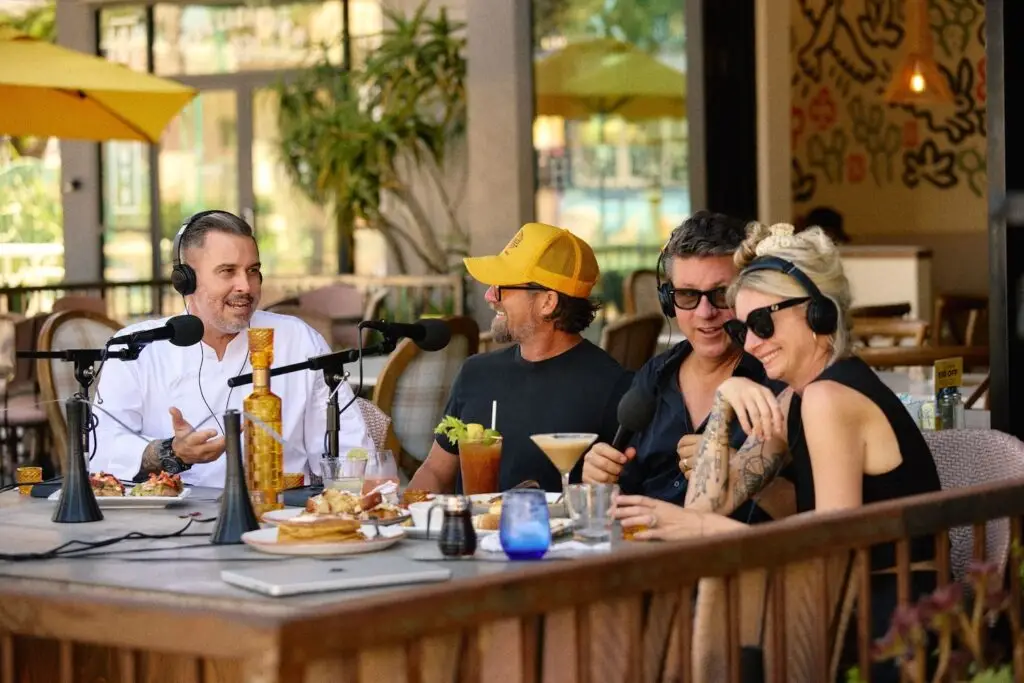
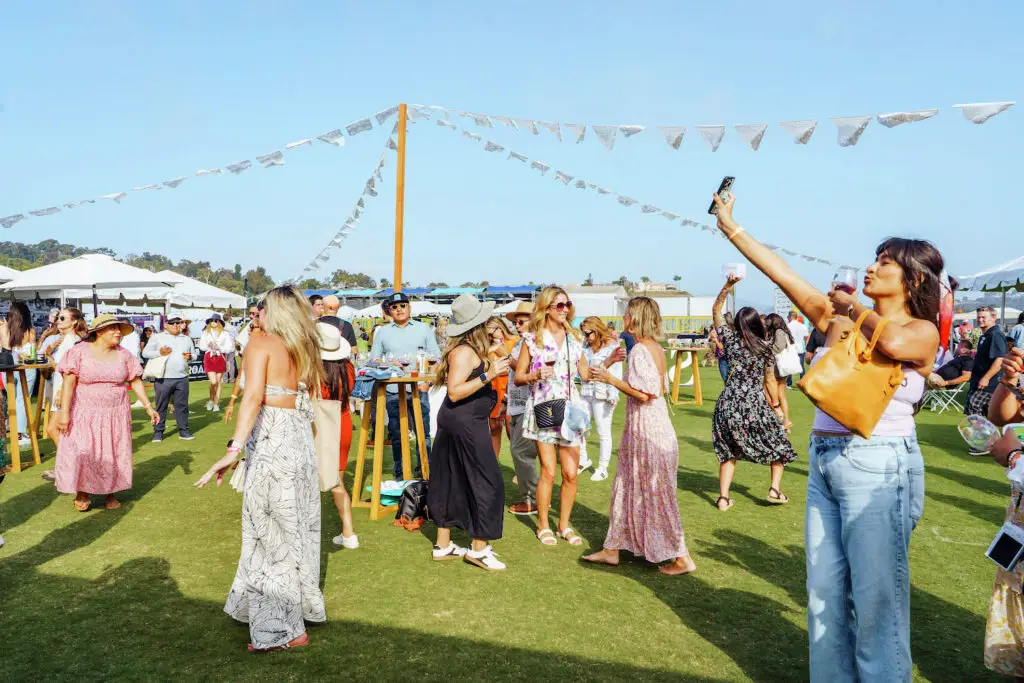
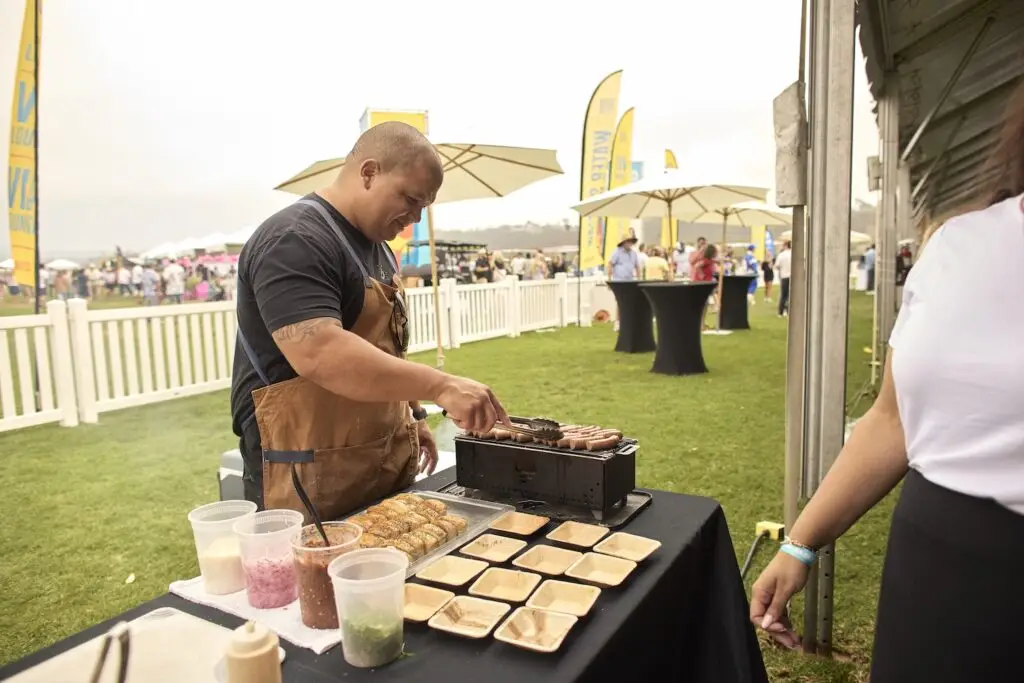
The Del Mar Wine and Food Festival returns for its third year from September 10–14—a weeklong celebration of food, drink, and wellness culminating in the Grand Tasting on Saturday and Sunday. Once again, the VIP tent is back with big names, Michelin-worthy bites, and exclusive pours from some of the state’s best wineries and beverage makers.
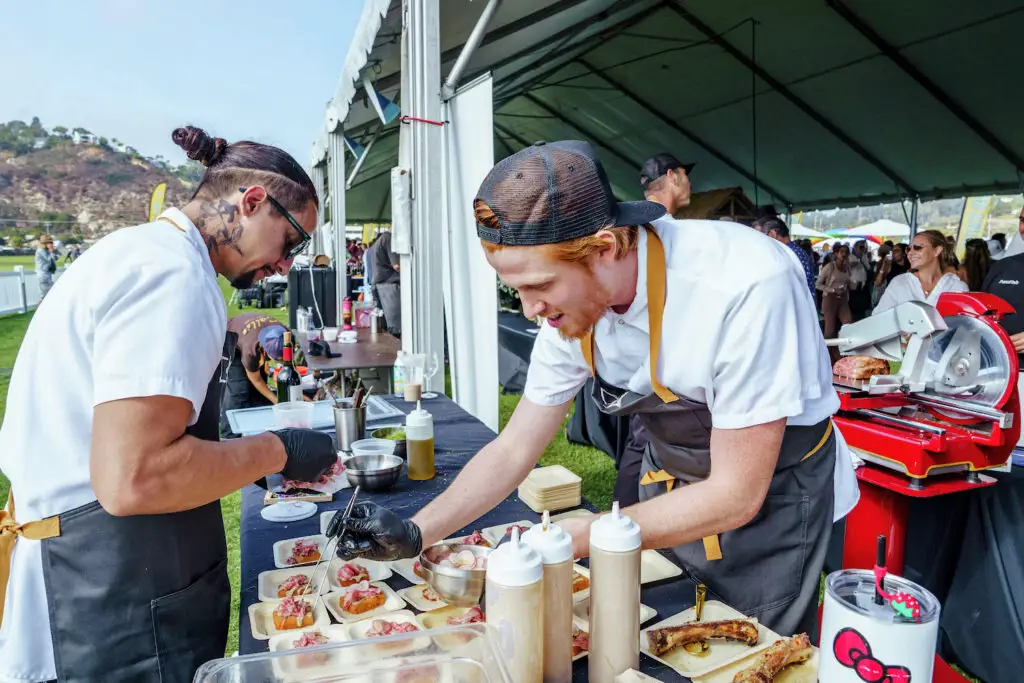
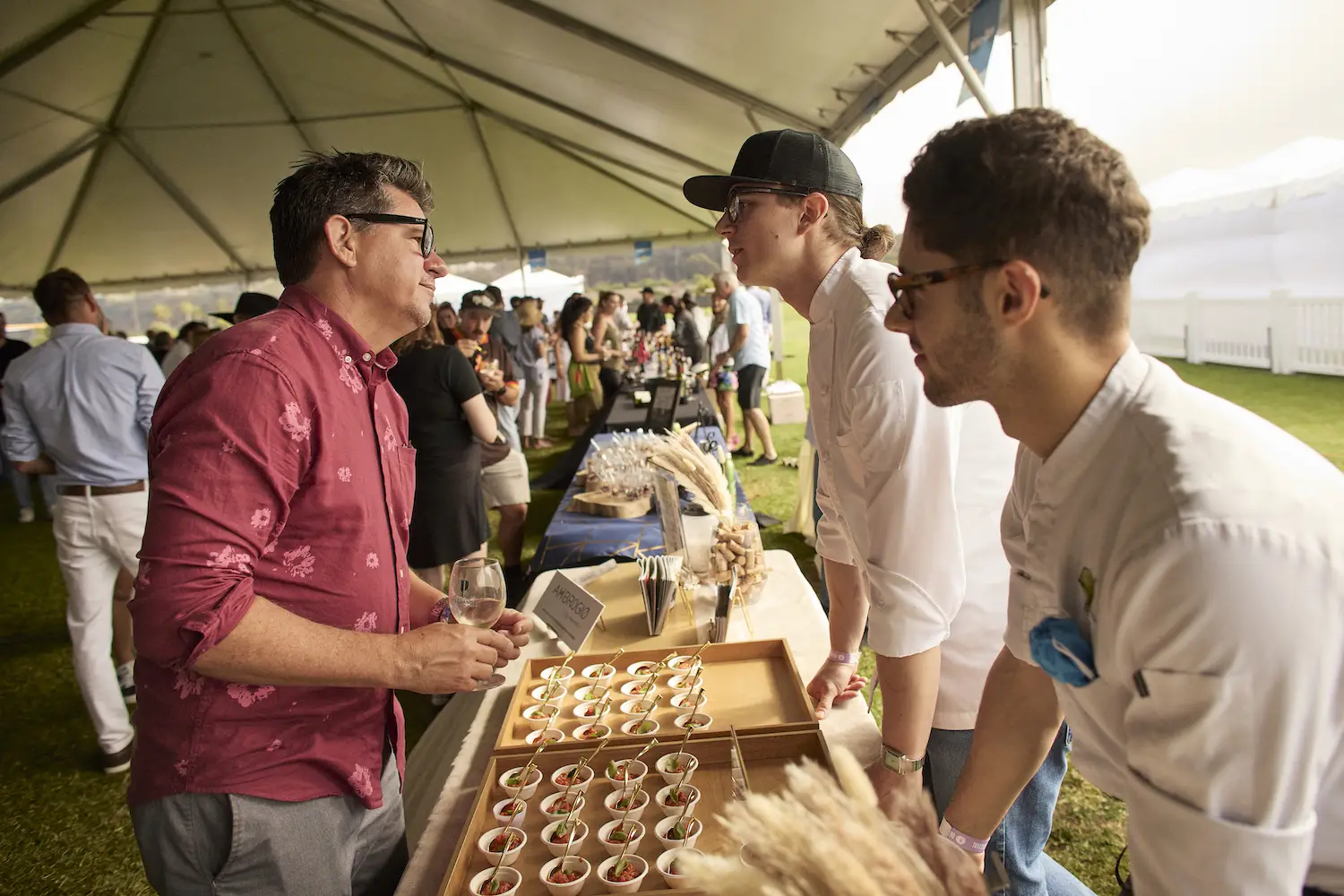
On September 13 and 14, the Grand Tasting will feature more than 120 restaurants and 150 international wine, spirits, and beverage producers gathered together at Surf Sports Park for an epic foodie gathering. Guests can sip and sample drinks and bites while mingling with Food Network stars, renowned chefs, and professional athletes, including the stars of San Diego Wave FC.
For the full experience, attendees can nab a VIP pass for exclusive perks and early access to all the fun. VIP tickets are $445 per day and include all the following goodies:

On both days, food critic and Food Network judge Troy Johnson will be hosting a private tasting for VIP ticket holders to kick things off. Come early to see what he’s cooking up.
The Tap Truck will be serving a selection of beers and cocktails on tap, while Goldeneye will be pouring sparkling wine to mark the start of the festival.
Back again, longtime San Diego radio personality Chris Cantore will be spinning vinyl records in the VIP tent on both days.

VIP ticket holders get access into the festival 30 minutes before the Early Entry ticket holders and 90 minutes before the GA ticket holders, plus will receive exclusive access to the First Bites & Sips reception area from 11:30 a.m. to 1:00 p.m.
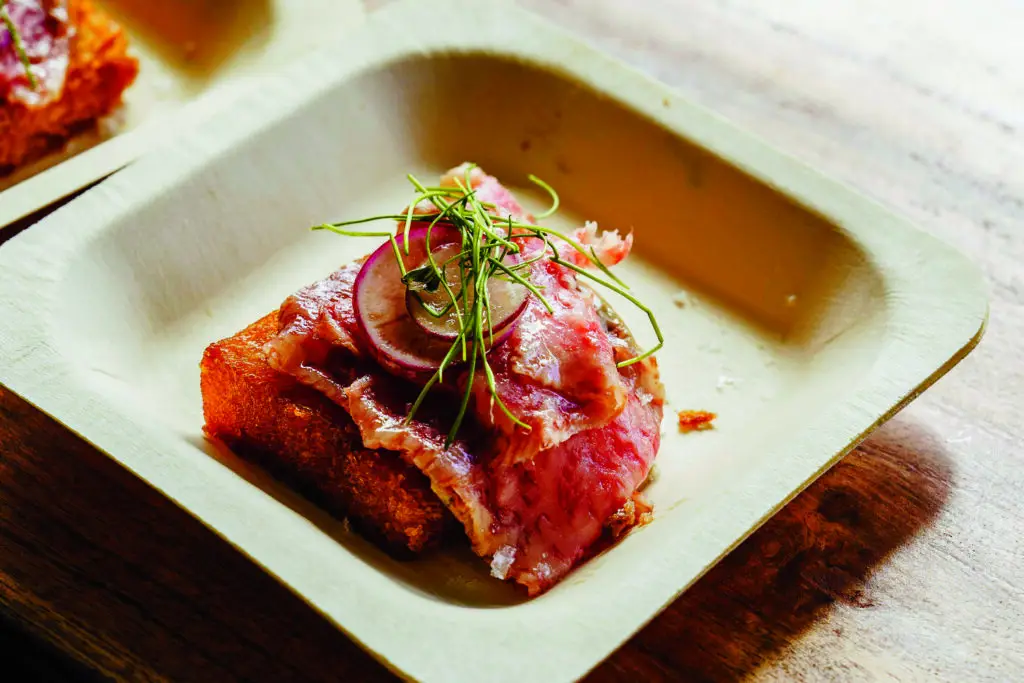
Expect curated bites like fresh rolled pasta from former World Pasta Champion Chef Accursio Lota of Cori Pasitifico on Saturday and a surprise from San Diego’s most popular masked chef pop-up Cow by Bear on Sunday. Both days will also feature fare from Outdoor Channel’s Fishmonger star Tommy Gomes as he teams up with Sushi on a Roll chef Jeff Roberto to serve up freshly sliced sashimi.
Joining them both days will be Warung RieRie, a backyard restaurant concept with a yearlong waitlist dishing up Indonesian flavors and San Diego catering company Shellfish Affair serving up oysters on the half shell.

After enjoying the First Bites and Sips area, VIP guests are granted all access to rest of the Grand Tasting, including a VIP tent offering exclusive food options from chef Drew Deckman from 31THIRTYONE by Deckman’s, chef Phillip Esteban from Wildlour, celebrity chef Lauren Lawless, Amalfi Llama, Books & Records, California English, Garibaldi, Haven Farm + Table, Little Frenchie, Stake Chophouse & Bar, and the Avenue Fish & Oyster Company on both days.
Saturday will also feature Chef Brad Wise and Trust Restaurant Group’s new concept A’L’ouest, Cowboy Star, Ember & Rye, Estancia La Jolla, Juniper and Ivy, Kimme Omakase, Kingfisher, and the Marine Room.
Sunday will feature chef Jason Knibb and Nine-Ten, chef Aron Schwartz from APS Hospitality Group, chef Tim Kolanko from Urban Kitchen Group, chef Karen Krasne from Extraordinary Desserts, Amaya at the Fairmont Grand Del Mar, Mister A’s, Ponto Lago, and the Lodge at Torrey Pines.
PARTNER CONTENT

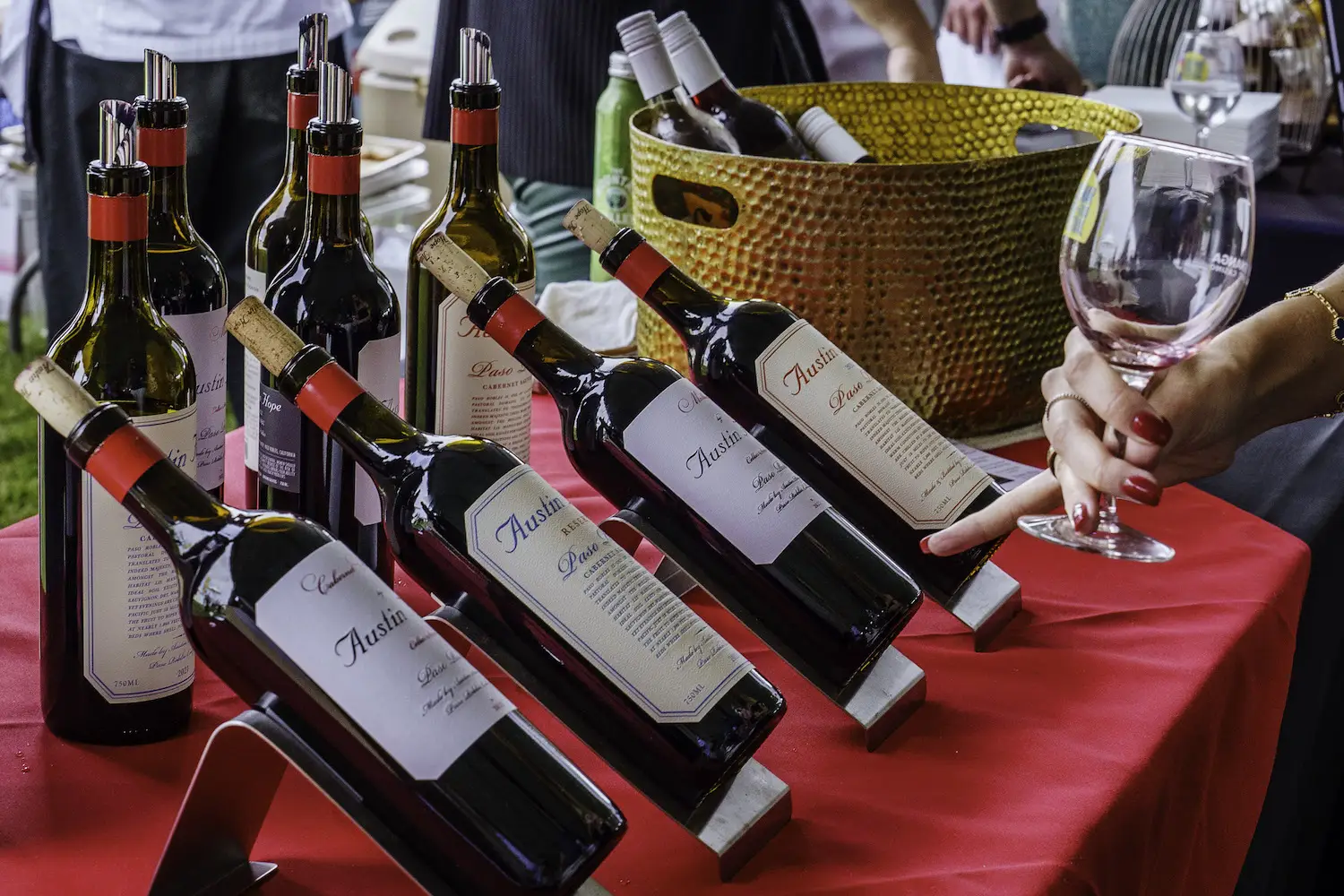
VIP guests will be treated to sips by Michael Voltaggio’s Marcado 28 Tequila, chef Javier Plascencia’s Animalón Artisanal Mezcal, luxury wines from legendary winemaker David Ramey from Ramey Wine Cellars, Aperture, Austin Hope, Boich Family Cellar, Bricoleur Vineyards, Browne Family Wines, Calera, Cuvaison, J. Lohr, Kobrand Wine, Kosta Browne, German Wine Collection, Magna Carta Cellars, Marine Layer Wines, The Setting Wines, Panier, Perchance Estates, Rombauer Vineyards & Winery, Santa Barbara Winery, Vinos Finos de California, pours from Despacio Mezcal, and Whiskey in the Wild.

Maya Santiago is a junior at NYU and a Carlsbad native. She finds balance through yoga and is always searching for new book recommendations.
After eight years and numerous awards, the cafe and roastery expands its operations in North County
San Diego’s coffee industry has yet to hit its ceiling. There are at least 850 coffee shops across the county (possibly over 1,000 at this point) and more specialty cafes and roasters seem to join the roster every other week.
Some newcomers, like Chance’s Coffee, focus on specialties like Vietnamese coffee; other stalwarts, like Bird Rock Coffee Roasters, have helped put the local coffee scene on the map with internationally acclaimed beans and baristas for 20 years. You can get a classic pour-over or an ultra, whipped cream–topped strawberry lavender basil blueberry matcha latte sprinkled with unicorn glitter—whatever your coffee style, San Diego’s got it… somewhere.
Steady State Roasting falls more in the former category, focusing on traceable, sustainable sourcing and no-nonsense roasting (no unicorn glitter here, sorry!). Founder and lead roaster Elliot Reinecke first started Steady State in a garage behind his house, roasting small batches until expanding slightly to a shared and not-quite-permitted space before landing in a lucky spot on State Street in Carlsbad.
Now, eight years later, Steady State is scaling up once more, opening its second cafe in San Marcos next to their roastery. The new location offers the same food and drink menu as the original Carlsbad location, and Reinecke says he plans to add an onsite bakery to bake items like English muffins and country loaves to supplement Prager Brothers’ more specialized pastries.
He doesn’t plan on opening more cafes, though. Rather, Reinecke plans to expand roasting operations and strategic sourcing. Currently, he sources beans from Colombia, Panama, across Africa, and as of this year, Costa Rica. “We’ve had Costa Rican coffee before, but we went to origin a few months ago and bought six different lots from there, all from really good high-end local farmers,” he explains.
The rising cost of sourcing does present some challenges, as does changes within coffee culture itself. Coffee has moved from a mass-market beverage to a highly personalized artisanal experience, but the current feeling is moving back towards focusing on quality over flashiness, says Reinecke.
If Reinecke’s prediction is right, coffee is headed on a similar trajectory to craft beer. Ten years ago, no one knew what Citra hops were. Now, even casual beer fans are versed in hop varieties, and that attention to detail is spilling over to coffee as well. How many of San Diego’s 1,000 coffee shops will remain once the unicorn glitter’s luster fades? My bet is on anyone remaining steadfast to sourcing, sustainability, and simplicity.
Steady State San Marcos is now open at 1320 Grand Avenue, Suite #9, San Marcos. Initial operating hours are Tuesday through Saturday, 7 a.m. to 2 p.m.
Listen Now: The Latest in San Diego’s Food and Drink Scene
Have breaking news, exciting scoops, or great stories about new San Diego restaurants or the city’s food scene? Send your pitches to [email protected].
PARTNER CONTENT
Beth Demmon is an award-winning writer and podcaster whose work regularly appears in national outlets and San Diego Magazine. Her first book, The Beer Lover's Guide to Cider, is now available. Find out more on bethdemmon.com.
From San Diego’s coastline to Los Angeles stadium and fan zones across the region, here’s how to experience soccer’s biggest event
When three nations and 16 cities come together to host the FIFA World Cup 2026, the scale stops feeling like a tournament and starts feeling like geography. A continent becomes the stage as borders soften into corridors. And Southern California—shaped by migration, sport, entertainment, and constant movement—sits inside that landscape with all eyes on it.
San Diego and Los Angeles have always felt connected. Hop on the Pacific Surfliner, and the trip unfolds in one continuous stretch of coastline, passing beach towns, neighborhoods, and city centers.
Traveling from San Diego, everything still feels slightly suspended as the Pacific Surfliner follows the coast north with ocean on one side and a slow suburban blur on the other. San Diego stays in exhale. Los Angeles is already building toward something louder.
This summer, Los Angeles will host eight matches of the FIFA World Cup at Los Angeles Stadium, including the US Men’s National Team opener on June 11, while the region stretches into 39 days of programming across stadiums, parks, transit hubs, beaches, and neighborhoods. Instead of one massive fan hub, Los Angeles is embracing a citywide celebration, with fan zones spread across its entirety.
But this pattern has been rehearsed here for decades. In 1994, Southern California became one of the defining stages of the World Cup, when matches at the Rose Bowl placed global attention on the region and turned local stadiums into international landmarks, confirming its ability to hold the world at scale.
What distinguishes Southern California is not just infrastructure, but cultural permeability. Fashion, music, film, art, and sport constantly overlap here, creating an environment where identity is flexible and always in motion. From the Venice boardwalk, where skate culture shaped modern street style, to global soccer stars rubbing shoulders with Hollywood celebs, to authentic Spanish cuisine moving up and down the I-5 corridor, everything circulates.
The World Cup is not introducing anything new here, it’s showing up for the summer and showing out, revealing what this city has always known about itself. What follows is a look at the fan zones and how Los Angeles turns itself into a city-wide stage for the tournament, one neighborhood at a time.

As the heart of Los Angeles, Union Station is an official Fan Zone June 25-28 during the World Cup, but in practice it never really stops being one.
It is the city’s circulation point, its meeting ground, its pressure valve. Commuters, travelers, match-day crowds, and everyday Angelenos all move through the same space, and everything mixes, overlaps, and scales in real time. In a way, this is where the World Cup stops arriving in Los Angeles and starts moving through it.
The Pacific Surfliner from San Diego to Los Angeles makes that shift feel almost too easy. No stress or gridlock anxiety, just a straight line up the coastline with ocean on one side and everything slowly becoming more built on the other. It’s one of the rare ways into LA that doesn’t feel like arrival as friction. You can sit with a laptop, watch the Pacific drift past, grab coffee from the café car, and let the city come to you in pieces.
That’s the beauty of arriving at Union Station. Instead of feeling like you’re on the edge of the city, you’re immediately surrounded by it. And, inside, the station already reads like a World Cup nerve center: banners, movement, multilingual energy, the sense that something global is about to funnel through this exact point. The Heart of the City Fan Zone only sharpens that feeling, with simultaneous match screens, DJ sets, meet and greets, and immersive activations built around marquee games like USA vs. Türkiye.
From there, the city splits outward.
ROW DTLA feels like the first exhale after arrival. A converted industrial campus turned creative district where restaurants, retail, and open-air courtyards form a self-contained ecosystem. If you’re looking for the perfect first meal in LA, make it lunch at Pizzeria Bianco. The thin-crust pizza is reason enough to go, but the space leaves just as much of an impression.
What I liked most about ROW DTLA is how quickly it resets you after the train. One minute you are stepping off at Union Station, and the next you are in a space that feels like its own version of LA, a city inside a city with some of the most curated shopping I’ve ever seen.
Bodega hides itself behind a convenience-store front, a sneaker and streetwear space disguised as something ordinary, like LA refusing to make anything feel too obvious. The whole campus moves like that, part retail, part gallery, part neighborhood you are only temporarily inside.
Isabella Dallas is a freelance writer for San Diego Magazine and the Arts and Culture Editor at The Daily Aztec in her final year at San Diego State University. She previously worked as an editorial intern for SDM, but when she’s not writing, you can find her trying the best coffee spots in SD, devouring the latest rom-coms, and indulging in anything and everything pop culture.
The sustainability-focused sushi concept offering traditional favorites as well as fusion specialties will open in North County this summer
Encinitas nigiri fanatics, I bring you good tidings. Oto Sushi is slated to open in late July. After nearly two decades of experience in operations for Tao Group Hospitality and Ace Hotel, Ash Cintas opened the first Oto in Laguna Beach in 2024. She focused on from-scratch dishes, fish sourced from Smart Catch and Seafood Watch–approved suppliers, and a wide swath of gluten-free options.
Year one worked, so she started eyeing her ideal second spot—North County San Diego. “I grew up spending time in San Diego visiting family, and my grandfather built a fishing business here, so the area has always felt familiar and meaningful to me,” says Cintas.
Cintas’ twin sister Alysha Rabb spearheaded the Japanese coastal design of the new Oto, which takes over the former Mrkt Space. The 3,200-square-foot eatery flows from the indoor dining room to large outdoor patio, as well as a private dining room—a total capacity of 95. Chef Connor Mathison has worked as a sushi chef for over 15 years at venues like Bamboo Sushi SW in Portland, Oregon. His menu includes classic sushi offerings like nigiri and sashimi, specialty rolls, bento boxes, tempera, karaage, Wagyu burgers, and robotayaki.
Robatayaki, sometimes called robata, is a method of slow-grilling meat, seafood, and various vegetables over premium Japanese binchotan charcoal. Basically, it’s the gold standard for grilling, thanks to its intense, clean heat that imparts a smoky, savory char on the outside and a rich, tender inside.
“One of the defining characteristics of Oto is that much of our sushi is served yakumi-style, meaning it arrives already seasoned with ingredients designed to complement the fish rather than relying on soy sauce,” Cintas explains.

There will also be a large number of vegan and vegetarian dishes, plus scratch cocktails with housemade syrup, fresh juice, sake, Japanese whiskey, wine, and beer selections curated by beverage partner Gavin Grum. Cintas says she hopes to continue expanding across Southern California, ideally opening six to eight locations in different coastal communities.
“The goal isn’t to build the biggest restaurant company,” she says. “Encinitas is the next step in proving that model can scale.”
Oto Sushi opens July 2026 at 782 N. Coast Hwy 101 in Encinitas. Initial opening hours are from 11:30 a.m. to 9 p.m. daily.

First more sushi, now more ice cream? Someone pinch me. Later this June, Silver Hoof Creamery will open in Old Town at 2548 Congress Street, Suite G, bringing artisanal soft serve, waffle tacos and waffle bowls, sundaes, and milkshakes to the Old Town Urban Market food hall. Everything is made with 100 percent California dairy milk (except for the dairy-free options, of course), and the small-batch menu of flavors ranges from dark chocolate soft serve to blueberry lavender milkshakes, matcha garden sundaes, and the signature Silver Hoof sundae made with vanilla swirl soft serve, caramel drizzle, topped with candied pecans and various candy gems and topped with whipped cream. Personally, I’m a sucker for strawberry, so I’m looking forward to giving the strawberry fields milkshake a slurp once the doors open.
Listen Now: The Latest in San Diego’s Food and Drink Scene
Have breaking news, exciting scoops, or great stories about new San Diego restaurants or the city’s food scene? Send your pitches to [email protected].
Beth Demmon is an award-winning writer and podcaster whose work regularly appears in national outlets and San Diego Magazine. Her first book, The Beer Lover's Guide to Cider, is now available. Find out more on bethdemmon.com.
Stake Chophouse & Bar brings contemporary classics and old-school service to the heart of Coronado
Stake Chophouse & Bar isn’t your average steakhouse. Blue Bridge Hospitality’s Coronado outpost is a modern interpretation of a big-city steakhouse nestled in the heart of the small coastal community. The team at Stake has reimagined the whole steakhouse experience. By prioritizing a seasonal farm-to-table sourcing philosophy, a personalized guest experience, and unique service touches, like a formal steak presentation and a bespoke knife selection process, Stake distinguishes itself in a sea of steakhouses.
Exceptional steaks, including Wagyu from Japan, Australia, and the U.S., and fresh seafood flown in daily form the core of Stake’s culinary identity. The menu features a five-course omakase-style steak experience highlighting house favorites, plus an array of cuts, and classic steakhouse staples—think a wedge salad, baked potato, or pasta carbonara—refined for a contemporary palate without losing their traditional appeal. Stake focuses on seasonal sourcing from the region’s best family farms and specialty purveyors, and incorporates intentionally unexpected touches to create something truly unique.
“I challenge our chefs and myself to take it a step further in sourcing,” says Chef Ronnie Schwandt. “It’s important to us to highlight different farms, unique one-off farms—whether it’s cattle, strawberries, a local fisherman or from anywhere in the United States, we’re always trying to find that niche.”
Beyond the menu, Stake emphasizes outstanding service, says Vinny Spatafore, Director of Hospitality Operations. Staff maintains detailed notes, allowing them to remember guests by name, recall previous orders such as a favorite martini (also memorable for the customer since it’s served in an extra tall, distinctly-shaped glass), and celebrate special occasions like birthdays and anniversaries.
“When you have those points of topic that you remember about a guest, they appreciate that,” he says. “Our servers are really good with that—we have a couple servers who have been here since the beginning and they’ll remember somebody from years ago, their name, their kids’ names, where they live. I’m really thankful to have a great front of house staff.”
Award-winning wines, rare whiskeys, special events, and a complementary black car service that provides transportation for guests throughout Coronado add to Stake’s appeal.
Schwandt stresses that Stake offers more than a meal; they aim to give patrons something unforgettable.
“It starts when you walk up the stairs and are greeted by the hostess—that sets the tone for the night. Then you’re greeted by a server, who may know you by name, and can guide you through the menu and curate as they get to know you,” says Schwandt. “Most people leave kind of blown away; they leave feeling like they just had an experience. That’s the goal, right? Whether you’re serving smash burgers or high-end steak, you want somebody to leave thinking, Wow, that was awesome.”
Một Bánh Mì melds Vietnamese and Mexican traditions in a new pop-up concept featuring its take on a local favorite
Is there any food more quintessentially San Diegan than the California burrito? That was a rhetorical question since the French fry-stuffed, flour tortilla-wrapped torpedo of carne asada bliss came into being in the 80s (either invented by Lolita’s or Santana’s, depending on who you ask). But now, Vietnamese-Mexican pop-up Một Bánh Mì may be giving the longtime champ a run for its money.
Một Bánh Mì’s original California banh mi takes cues from both cultures, using traditional Vietnamese baguettes from Paris Bakery filled with carne asada and garnished with cilantro-jalapeno crema, Vietnamese mayonnaise, pickled vegetables, cilantro, cucumber, jalapenos, and of course, French fries.
“It’s so San Diego—it’s so us,” says Desmond Bui, pop-up founder and owner with partner Marisol Santiago. “It really encapsulates the Vietnamese-American and Mexican-American journey and identity here.”
Both grew up in San Diego. Bui is Vietnamese. Santiago is Mexican-American. The sandwich makes utter personal sense.
Neither of them cooked professionally before launching Một Bánh Mì earlier this year, when they popped up for the first time at Convoy Rising for Lunar New Year. But after seeing the rise of the local Vietnamese coffee scene with shops like Saigon Coffee, Chance’s Coffee, and Em Coffee House, Bui knew there was an opportunity for a new generation to put a fresh spin on Vietnamese food in San Diego.
While there are plenty of places to grab a banh mi around town (K Sandwiches, Ba Le French Sandwich Shop, Lee’s Sandwiches, and so on), we’ve yet to hear of a California banh mi. Firsts are being firsted.
“Banh mi is regarded by top chefs as the best sandwich in the world,” says Bui. (Side note: I concur.) And after discovering overlap between Mexican and Vietnamese cuisines through common ingredients like cilantro, lime, jalapeno, white onion, and pickled vegetables, they began planning a menu.

Một Bánh Mì also serves Bánh Mì Đặc Biệt (Vietnamese cold cuts), Bánh Mì Thịt Nướng (grilled lemongrass pork banh mi), and Bánh Mì carnitas de hongos (mushroom pâté banh mi), along with some specials like Thịt Nướng tacos (grilled lemongrass pork) and hopefully soon, al pastor trompo banh mi (marinated pork shaved off a spit) and charcoal-grilled adobada.
Other banh mi shops Americanize names for English-speaking audiences—for example, listing “grilled chicken sandwich” instead of Bánh Mì Gà Nướng. Not Một Bánh Mì. If you’re not sure how to pronounce something, Bui says they’re happy to help. It’s an educational opportunity, he explains, as well as a chance for them to be “unapologetically Vietnamese and Mexican.”
Part of the immersive experience is playing Vietnamese tunes from the ‘60s and ‘70s.
“When you think of universal languages, what are ways when you travel or meet a different group of people that you can still find common ground and connect and feel like we’re a lot more alike than we are different?” Bui asks. “Food and music.”
The musical element is part of Một Bánh Mì’s greater vision. They’d like to evolve into a lifestyle brand and media company, with merch, jars of pickled vegetables, you name it. Eventually, they’d like to open a brick-and-mortar somewhere in Mid-City. In the meantime, they’ll continue to pop up at places like Mixed Grounds and Chance’s Coffee, or wherever they can. (Bui called Provecho Coffee their “dream collab,” hint hint.)
Listen Now: The Latest in San Diego’s Food and Drink Scene
Have breaking news, exciting scoops, or great stories about new San Diego restaurants or the city’s food scene? Send your pitches to [email protected].
Beth Demmon is an award-winning writer and podcaster whose work regularly appears in national outlets and San Diego Magazine. Her first book, The Beer Lover's Guide to Cider, is now available. Find out more on bethdemmon.com.
The team behind The Roxy launches Anigma, a hidden cocktail bar with small bites
If your dopamine rush comes from stepping into an experiential esoteric escape that also serves cocktails, then the newly-opened Anigma might just be up your alley. Brought to life by the owners of The Roxy Encinitas and Roxy on Broadway in Denver, Encinitas’ new hidden cocktail lounge spirals around the idea that nothing is quite as it seems. Stepping into the moody 47-seat space, which is tucked behind the retail store Archive, should feel like an out-of-this-world experience, says Paula Vrakas, one of the four partners behind Anigma.
Vrakas worked with architecture and design firm Tecture—which designed restaurants like Lucien, Haven at Fox Point Farms, and Kettner Exchange—to concoct an environment that begins when guests walk through the secret portal into a world of velvety folklore and myth. No two experiences will be identical, she promises.
“The concept itself is a changing concept, and so this sort of mysticism, the occult, or these dark arts, they’re ever-changing within themselves,” she explains. “So we can lean in…. at any given moment without completely changing the entire concept. That’s actually what we intend to do.”
If this sounds very abstract, that’s okay. Let’s center ourselves around the cocktails, which are very real and created in part by bar lead Sam Reinke.
Initially, there will be around 16 cocktails (and a few mocktails) in three sections. “Archive” features traditional drinks like Old Fashioneds and Manhattans, while “Myth & Memory” offers rotating cocktails inspired by Southern California folklore, like the monster of Proctor Valley Road or the legend of Charles “The Rainmaker” Hatfield.

But the menu starts with “Sigils,” four drinks that break down Anigma’s logo into its individual features: the Celtic Knot, the tria prima (the Latin philosophy of three foundational elements of alchemy being salt, sulfur, and mercury), the All-Seeing Eye of Providence, and the Alchemist’s Stone. The ingredients in each reference key aspects of each concept; for example, the Alchemist’s Stone (sometimes called the Philosopher’s Stone) is made with red powder to mimic the same flaming hue of the legendary item. The Eye of Providence includes carrot juice, an ingredient rich in beta-carotene that also happens to be excellent for eye health.
The fifth drink, called “Anigma” and based on the logo as a whole, will never be listed. “But if you ask, you can find out,” promises Vrakas.
Since the concept is meant to be cocktail-forward, only a few small bites will be available, like chocolate-covered strawberries and wasabi pea pub mix. “It’s fancy snacks,” laughs Vrakas. But considering how Encinitas’ dining options have upped their game as of late, she says focusing on providing a high-end cocktail experience will fill a void in the area not yet overwhelmed with similar choices. Once inside, it’s an intimate space, with seating for 47 guests over 800-square-feet lit by candles and cocooned with dark velvet curtains sewn by Vrakas’ mother.
For now, Anigma is reservation-only, but will likely introduce opportunities for walk-ins in the future. In the meantime, expect surreality and perhaps a bit of discombobulation, says Vrakas. “It’s just meant to [feel] like, ‘Wait, where was I? Where was that? And how do I get back?’”
Anigma opens May 28 at 517 S. Coast Hwy 101 in Encinitas. Hours are Wednesday, 5 p.m. to 9:30 p.m.; Thursday, 5 p.m. to 10 p.m.; Friday 5 p.m. to 10:30 pm; and Saturday 5 p.m. to 10 p.m.. Closed Sunday–Tuesday.

Call it the Michelin effect—after earning Michelin recognition in December, Cloak & Petal in Little Italy is ready to expand its Japanese-inspired offerings by launching a coffee shop-slash-cafe experience this August.
Called Black Mizu Café, the 1,000-square-foot space situated within Cloak & Petal will serve Torque Coffee and Compa Coffee beans and Asa Bakery pastries, as well as Japanese comfort food dishes like a tamago sandwich, bánh mì panini, edamame hummus toast, and various parfaits. Signature drinks include specialties like a honey yuzu sparkling matcha, cherry blossom latte, white miso caramel latte, and a cardamom cinnamon latte. Next spring, Black Mizu will also launch a Pacific Rim-inspired brunch menu by executive chef Robert Cassidy.
With space for 25 to 30 guests, the Japanese-meets-Scandinavian minimalist design will also be able to accommodate a private dining space for Cloak & Petal during non-café hours. Managing partner Cesar Vallin anticipates the initial hours of operation will be daily from 6:30 or 7 a.m. through around 2 p.m., with extended hours on Thursdays, Fridays, and Saturdays until approximately 9 p.m. It’s not a pop-up, per se, but it’s certainly a creative way to make the most of the restaurant’s off-hours floor space.
Listen Now: The Latest in San Diego’s Food and Drink Scene
Have breaking news, exciting scoops, or great stories about new San Diego restaurants or the city’s food scene? Send your pitches to [email protected].
Beth Demmon is an award-winning writer and podcaster whose work regularly appears in national outlets and San Diego Magazine. Her first book, The Beer Lover's Guide to Cider, is now available. Find out more on bethdemmon.com.
The 53rd Annual National Philanthropy Day Takes Place on November 21. Join us from 11:00 a.m. – 1:30 p.m. at the new Gaylord Pacific Resort & Convention Center!
Once yearly, AFP San Diego joins with others worldwide to celebrate National Philanthropy Day (NPD), a special day set aside to recognize the great contributions of donors and nonprofits that enrich of our community and the world. San Diego’s NPD is one of the largest and most successful in the U.S., attracting nearly 900 participants, including philanthropists, nonprofit leaders, CEOs, board members, development professionals, and business, community, and civic leaders.
Sponsorship proceeds from National Philanthropy Day are reinvested in education, training, scholarships, career development, and the advancement of fundraising professionals throughout San Diego. These resources and training provide fundraising professionals with the tools necessary to support our region’s diverse array of nonprofit organizations, which rely on charitable giving for close to half of their annual revenues.
The National Philanthropy Day Honorees are selected by the NPD Honorary Committee, a group of highly respected, diverse nonprofit and business leaders. Our 2025 Honorees include:
National Philanthropy Day San Diego provides an opportunity to reflect on the meaning of giving and to celebrate the selfless contributions of individuals and organizations across the region. We look forward to celebrating with you!
Sponsorship opportunities and individual tickets are available. Please visit www.afpsd.org for more information.