An ancient man walks across the back patio like he doesn’t want to break his own merchandise. His are bones made of heirloom calcium and galvanized steel by an older god who didn’t cut corners or outsource the work to Taskrabbit gods. There’s an unofficial mayoralness to his arrival. You can tell he’s come here through many iterations of America, many presidents and their varying levels of sanity and impulse control. By now, the sacrament of his body is at least 10 percent Tobey’s corned beef hash, his DNA a genetic Slinky of skillet bacon.
He appears to have been military, probably served in the Vietnam War or the Civil War. The young woman patiently helping him to his table (she’s at least 60) loudly tells the server—and all of us—that he is 102 years old. We nod and smile in respect. He successfully sits (hero knee bones do it again!) and looks happy as a man who outlived his enemies. My 4-year-old son throws something on the floor—a toy, a pancake, my will to go on—and playfully barks something managerial (“Dad! Pick it up!”—which he always says with a Brooklyn patois, I have no idea why or how). The man smiles and laughs at our little scene like it’s the best 37,254th day of his life.
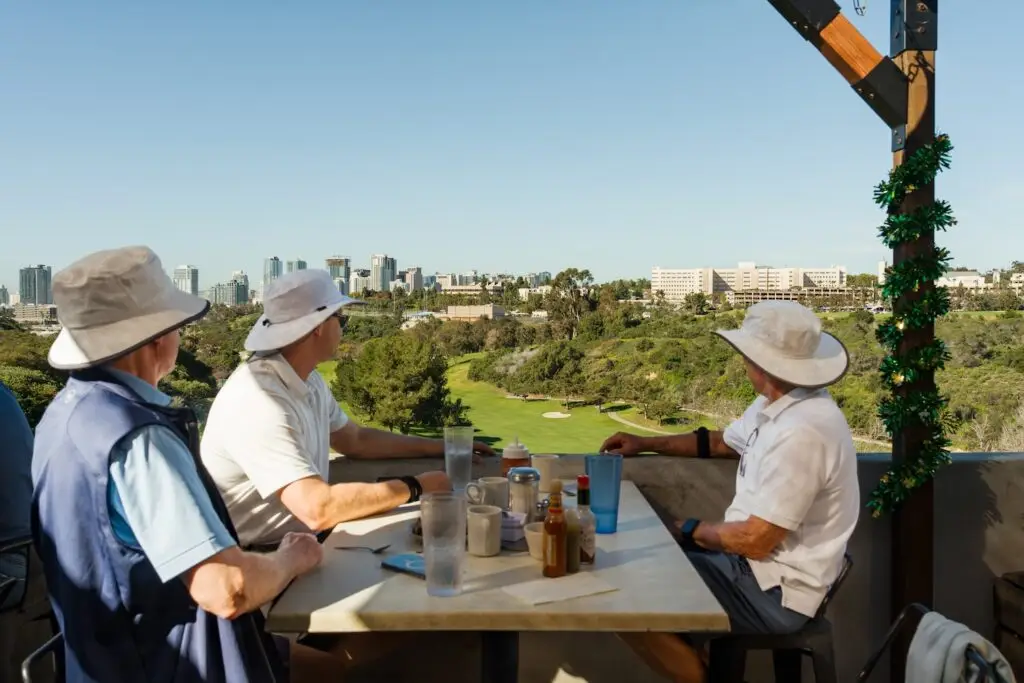
Perched on a mesa, Tobey’s 19th Hole is his kinda place. From here, the grass spills forever until it collides with distant trees and frames San Diego’s majestic, underfunded Downtown skyline. A jumbo jet slows on descent directly overhead, like a movie scene that’s trying too hard. This place—his place—with its unmatched view is one of the last affordable eateries in one of the least affordable cities in America.
Photo Credit: Kimberly Motos
To understand Tobey’s, you have to understand the historic everyperson charm of Balboa Golf Course. World War I ended in 1919. Flappers were dipping the chiffon of gender norms in kerosene. Jazz was carbonating the culture’s bloodstream. The war’s need for better machines funded the assembly lines of the auto industry, so horses’ time on roads came to a rapid end. With new car-based freedom came the untethering of Americans to their homes. Exploring the city and returning at a reasonable time was no longer a huge pain in the ass. Day trips were not only easier, but a new hobby. And so we got the rise and feasibility of large places to gather as a group (parks, museums, concert halls, auditoriums, golf courses). More than anything, though, after four years of war we had some pent-up play in us.
Professional sports weren’t really a thing in the US yet, but they were teeing up. The first dreams of “going pro” were being hatched. And golf, at least back then, was a sport for people of a more common musculature. A sport where drinking highballs and smoking Chesterfields and socializing about Amos ’n’ Andy and “commies” were part of the rule book. The PGA was formed in 1916, and the postwar economic boom funded golf courses all over the US. Between 1920 and 1930, the number of golfers in the country doubled to 500,000.
By the time Balboa opened in 1919, San Diego had three courses: San Diego Country Club (founded in 1897, near the modern-day site of the Old Globe), Coronado Country Club (1906), and Point Loma Golf Club (1914). Balboa, however, was the first city-owned, municipal course open to the public. Built for $1,845 (about $35,000 in today’s money), it wasn’t pretty to start—called “the rock pile,” the fairways were made of dirt, and greens were oiled sand. But it broke open the local floodgates on the sport. Slammin’ Sam Snead, renowned for the most technically perfect golf swing in history, would eventually set the course record here in 1943: a 60 (12 under par), which still stands.
He probably celebrated with a beer and a club sandwich at Tobey’s.
Photo Credit: Kimberly Motos
In 1934, the city granted its first food concession permit to Chester and Lois Tobey, who opened a hot dog stand here on top of the mesa, about 100 feet above the course’s two most crucial holes—the first and the 18th. Ninety-two years later, the place looks and feels like it’s been here that long.
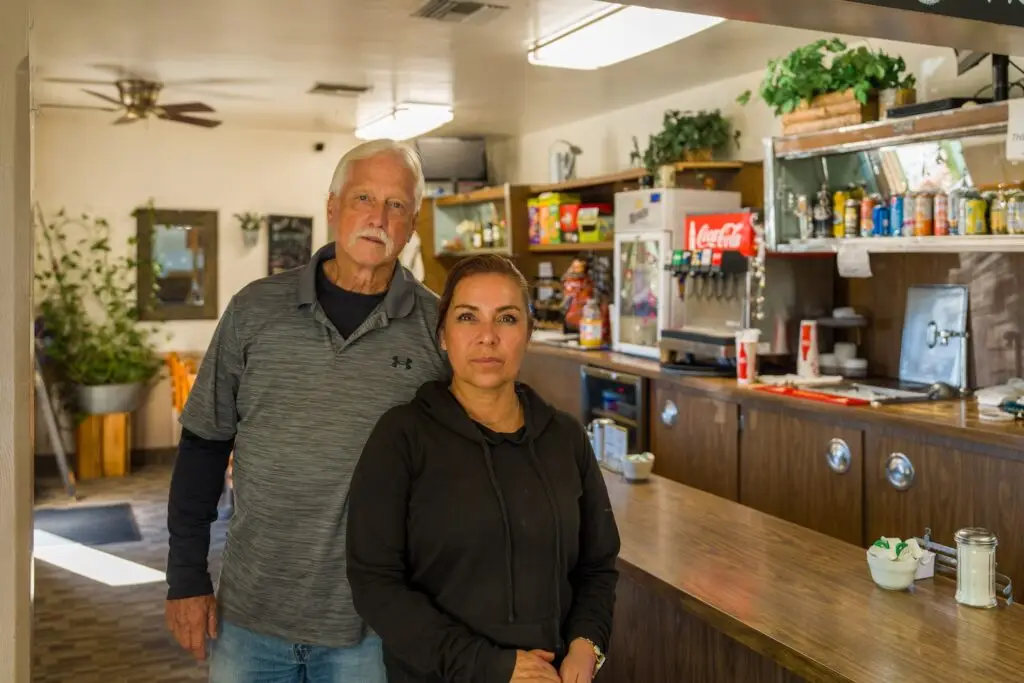
The adjacent clubhouse, lined with photos of club champions and icons, wooden curios filled with old trophies, has a historical ghost-townness to it. Through the double doors lies Tobey’s—now owned by the fourth generation family member, Chris Tobey, a great grandson. The day-to-day soul of the place is Dalia Parsley, who’s worked here for 30 years and runs the joint.
Tobey’s is not a diner, but it’s got big diner energy. Diners are open all hours of the day and night, whereas Tobey’s is only open for breakfast and lunch. It closes somewhere between 5 and 6 p.m. (the city requires they close when the golf course does)—which is a light crime against humanity. With that epic view—the sun setting over the skyline—I propose a city charter requiring Tobey’s stay open for an hour after sundown. And that we’re all mandated to gather here at designated intervals.
Photo Credit: Kimberly Motos
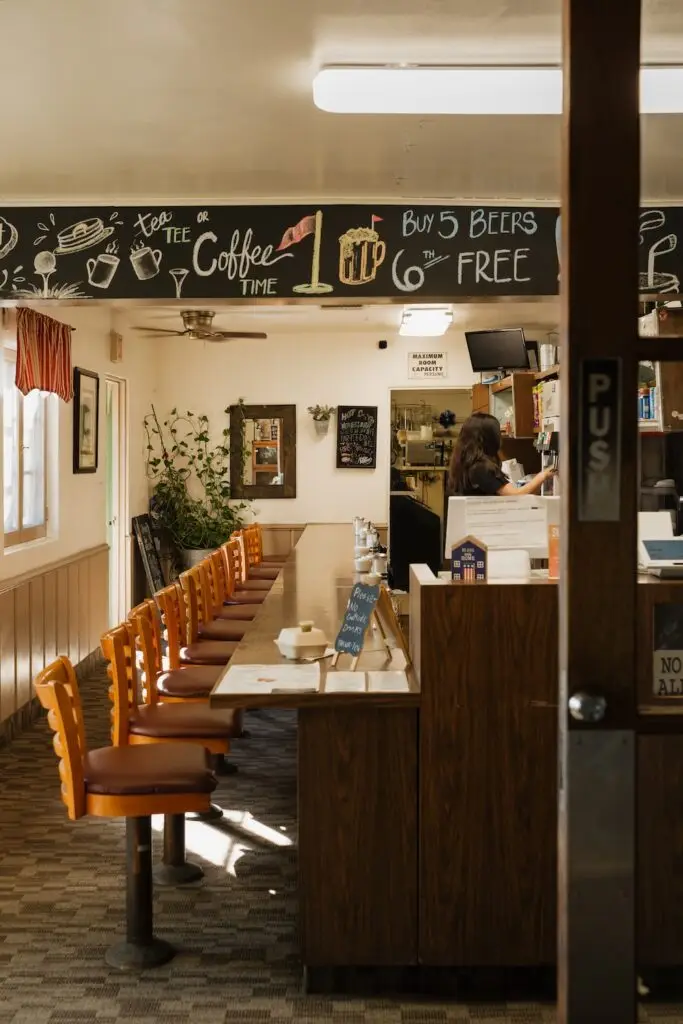
The tables here are formica. No artisan was burdened in the making of them. The décor wasn’t made by a designer who studied under the designer who designed that famous restaurant with the emu-feathered lamp and tables made of recycled Priuses. The chairs are the metal-boned, vinyl- cushioned stalwarts of every illicit card room and bingo hall. Any modernization efforts seem to stop at adding a couple TVs. Tendrils of a plant wind their way across the overhang between the bar counter and the dining room. A wall of framed photos depicts generations of Tobeys through the ages.
A round of golf at Balboa is only $39.50 for locals with a resident card ($29 for seniors), which makes it one of the most affordable and accessible courses in history. And so the crowd at Tobey’s tends to be a grand mix of people who have not yet upended the earth and shaken all its money free—college kids, entry-level workers, people from industries not properly appreciated (teachers, nonprofiters, off-duty cooks, military, childcare heroes), people who are smart with their money, and long-timers navigating the disbursement of their life savings while trying to have a little fun.
Photo Credit: Kimberly Motos
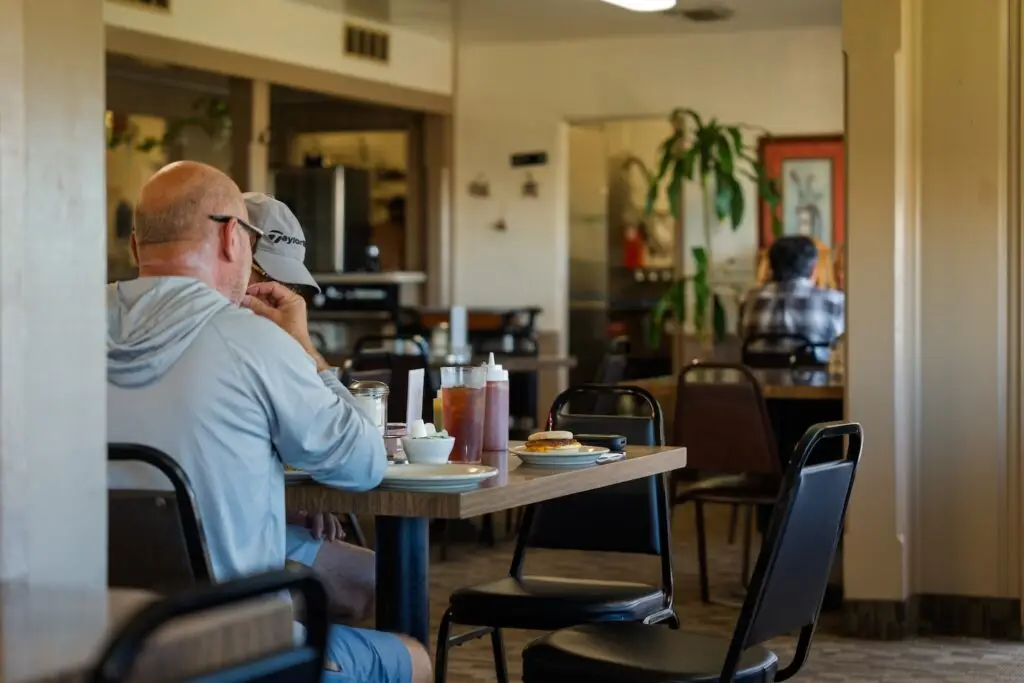
People like those at the table near us, who give off a hard days’ work vibe as they share a decent amount of light beer—served in police siren-blue Bud Light pitchers (Tobey’s does have some local craft beers like Stone and AleSmith). People like the elderly couple by the window sharing a Suntide mimosa, staring at the view, giving the impression that a good portion of their love was conjured in those seats. Tobey’s also has cocktails, like a bloody mary and a vodka cran.
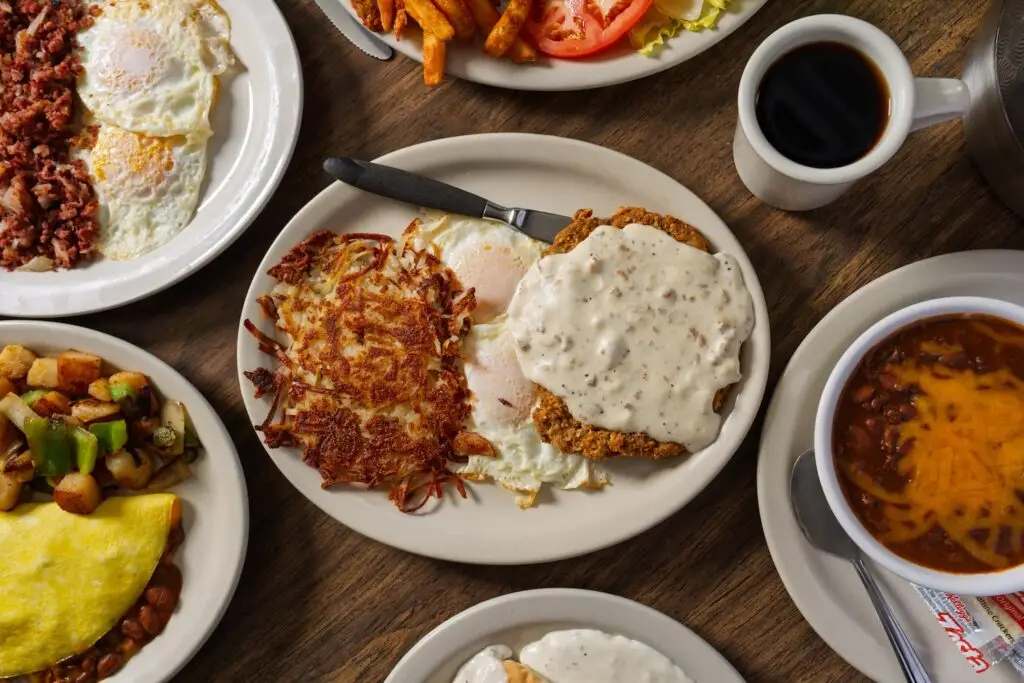
For breakfast, the corned beef hash and eggs is a good choice, the cured meat minced and crisped and tossed with the tater shreds—next to the ever-dependable two eggs over easy. White-bread toast arrives with that perfect light-brown sandpaper crisp. No one knows how to toast white bread like a diner (or diner relative). It’s not house baked rye or ciabatta or brioche evenly spread with a compound butter of thyme, citrus zest, and activated charcoal that’s been blessed by Nancy Silverton. It’s the thin supermarket toast that built America, with the delicious yellow stain where a pre-cut pad of butter clearly lived its utilitarian life before it melted and left a shadow, like a butter beauty mark.
Photo Credit: Kimberly Motos
Chicken-fried steak, and biscuits and gravy are breakfast staples. The chili has those large-format shredded cheddar pieces grated and hermetically sealed before arrival at the place of business. For lunch, the club sandwich is just about perfect. I’d argue that artisanal bread has no place in the club sandwich arts; the architecture requires thin-sliced white bread with ample squish for proper mouth-cramming. No one wants your rosemary sourdough in this.
Is there some wrongheaded instinct in us that looks at Tobey’s and thinks, “Oh, man, if only we could add some badass wallpaper and tassels and statement art, and turn that patio into a fern circus listening bar with fire features and negronis—something to do justice to that view?” Or, “If only they had central air conditioning or the desire to use it, or a fan or two?” Or, “Maybe just some mood lighting and a single negroni?”
There is. And that would ruin everything. The magic of Tobey’s is the family, the Dalia, the socioeconomic welcome mat of an honest club sandwich on humble white bread and the only reasonably priced drink within 600 miles. A place where an ancient man can feel at home and enjoy the view.
Troy Johnson is the magazine’s award-winning food writer and humorist, and a long-standing expert on Food Network. His work has been featured on NatGeo, Travel Channel, NPR, and in Food Matters, a textbook of the best American food writing.
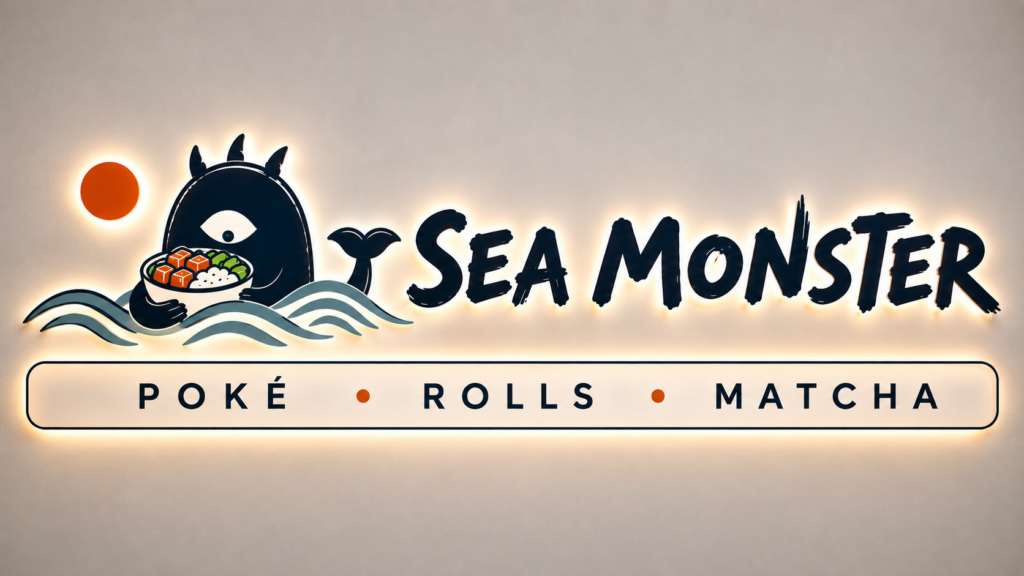
Not all monsters have to be scary. In fact, entrepreneur Pinyada “Ada” Primpray’s is delightful. Sea Monster, a small cafe that will serve poke bowls, fresh spring rolls, and matcha, will open in Mission Valley by the end of the year.
“The concept is a Hawaiian- and Japanese-style cafe,” Primpray explains. She calls it Sea Monster in homage to her friend’s popular restaurant Big Monster Sushi & Thai in Hawaii, but “the idea really started to take shape after I came back from a solo trip to Italy,” she says. The experience inspired her to start her own concept that mixed her culture, experience, and passion for food.
Sea Monster will be her first restaurant as an owner, but Primpray has worked in restaurants for 15 years in places like Kauai, Chicago, New York, and San Diego. She realized a similar health-conscious, seafood-forward, quick-service restaurant could work here, especially in that corner of Mission Valley where pizza and burgers reign. Plus, she points to the massive development plans for the area—between Riverwalk bringing thousands of new homes to the area and even more coming from San Diego State University, there are lots of new locals looming on the horizon.
She brought on Head Chef Wasu Gibb Palipote from Sushisamba in Los Angeles to develop the menu and signature sauces, like ink wasabi and a larb sauce. “Every couple of months, we plan to introduce a new signature sauce created exclusively for Sea Monster by [Chef Palipote],” she says. All the sauces will be homemade, including a basil creamy sauce and sesame vinegar.
Courtesy of Pinyada “Ada” Primpray
Sea Monster’s menu centers around fresh poke bowls—mostly locally-caught bluefin tuna and hamachi as well as salmon, served California-style rather than Hawaiian-style (the sauces are added to order rather than marinating on the fish, which can overpower its flavor). Toppings will range from the usual, like edamame and green onion, to upscale, like uni (sea urchin). She’ll also serve fresh salad rolls, a popular light snack in Vietnam and her native Thailand, with vegetables and seafood like salmon, shrimp, and imitation crab. Everything will be served to-go, although there will be very limited seating for people who want to dive in right away.
The matcha program will start small, with six iterations planned for opening and potentially more in the future. “I really want to have mango sticky rice,” she adds. Beyond adding items to the menu, Primpray says she hopes Sea Monster will be more than a restaurant. “I want it to grow into a lifestyle brand with its own little world,” she says, pointing to the restaurant’s mascot, Smoo. A monster with aspirations of growing bigger and bigger until it takes over? Yeah, sounds about right.
Sea Monsterwill open daily for lunch and dinner in late 2026 at 6110 Friars Road in Mission Valley.
Oktoberfest season is closing in fast, and one of the first dirndl-laced events of the year kicks off at AleSmith Brewing Company this weekend. AleSchmidt Oktoberfest runs every Saturday from September 12 through 26, and the family-friendly event is chock-a-block with German food vendors, live oom-pah bands, stein holding, and a whole lot more. The free event starts at 11 a.m. each Saturday, and from personal experience, I recommend posting up on the early side to snag a seat.
Japanese fine dining restaurant Shio soft opened in August, bringing elegant plates and sunset views to La Jolla. (The area was hardly hurting for either, but I think we could always use some more sushi in our lives.) Has anyone checked it out yet? Let me know what I should order by dropping me a line at [email protected].
Restaurateur brothers Danny and Dante Romero have been on a tear the past few years, consulting at places like Una Mas and taking over The Lion’s Share last summer. It’s understandable to see they recently decided to pause their recurring pop-up concept Two Ducks to recalibrate and figure out its future in a permanent location, but it’s still a bit bittersweet. If it’s “see you later” and not “goodbye,” I can live with that (for now).
Listen Now: The Latest in San Diego’s Food and Drink Scene
Have breaking news, exciting scoops, or great stories about new San Diego restaurants or the city’s food scene? Send your pitches to [email protected].
Beth Demmon is an award-winning writer and podcaster whose work regularly appears in national outlets and San Diego Magazine. Her first book, The Beer Lover's Guide to Cider, is now available. Find out more on bethdemmon.com.
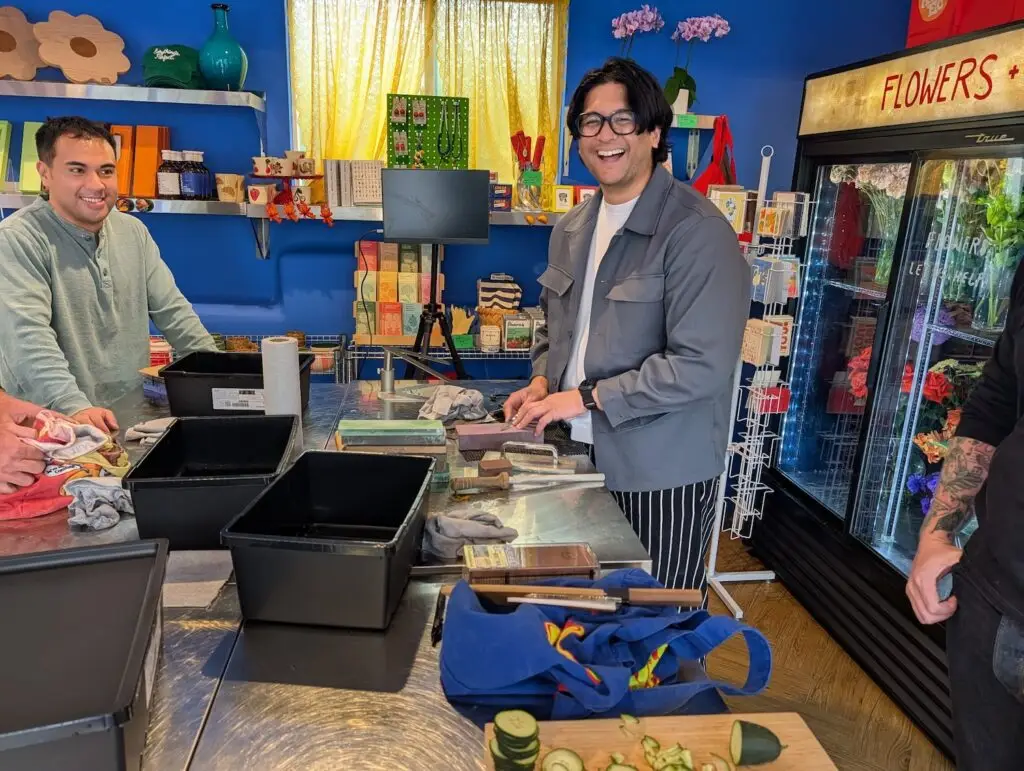
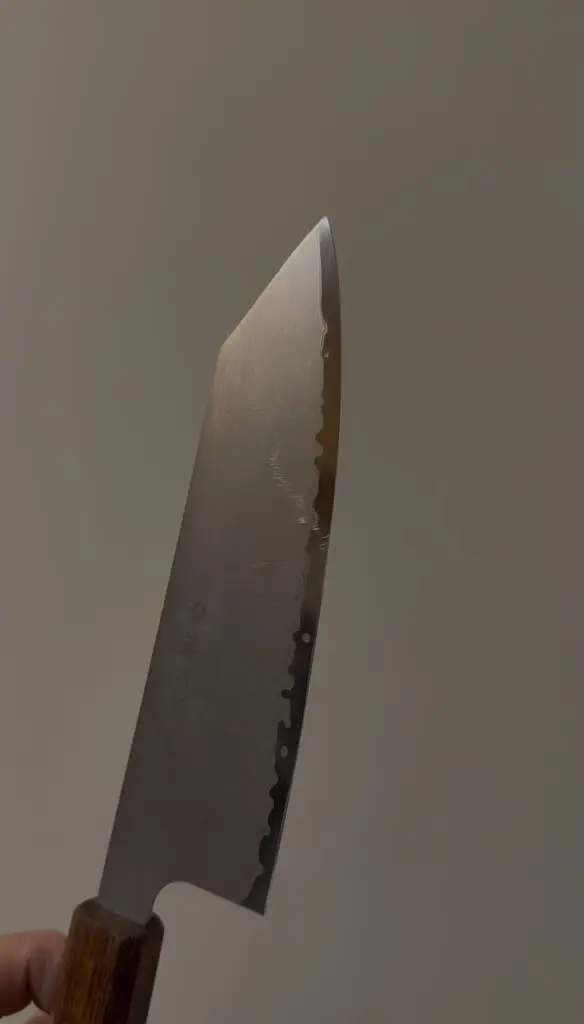
“A sharp knife is a safe knife,” says Joshua “Jhun” de Andres, owner of Kuya Sharpens. It only takes a light touch to guide a properly-sharpened knife, while dull knives require much more force to cut through an object, increasing the likelihood and severity of an injury. “If you slip, that’s a lot of force that is now going into your finger, your hand, and that’s where it becomes extremely dangerous.”
De Andres started sharpening knives as a meditative practice during a time of personal grief, a way to zone in on a task with a useful and satisfying outcome. “[It was a] reminder to myself that you can fix something that’s broken and give it purpose again.” Once he ran through his own collection of knives, he started asking friends and family if he could sharpen theirs. When he’d sharpened everyone’s knives he could think of, he started posting videos on TikTok, where his first professional chef customer found him: Chef Tanner Stanich, chef de cuisine at Michelin-recognized Bib Gourmand Mabel’s Gone Fishing.
Courtesy of Kuya Sharpens
“That’s when things really started to take off,” he laughs. He uses whetstones rather than motorized belt sanders to sharpen, which gives him the ability to make microadjustments during the process for a more customized and controlled result. Whetstones also preserve steel more efficiently than other mechanical processes, which are faster, but take off more of the knife’s edge in exchange, reducing the lifespan of the knife.
Learning how to master whetstones takes a lot of time and practice, and while de Andres specializes in sharpening Japanese knives, he’ll sharpen a knife from anywhere. “Every knife deserves to be sharp,” he says.
Japanese kitchen knives are designed for extremely specific purposes: there’s a knife to break down a fish (deba), cut through boneless raw fish for sushi and sashimi (yanagiba), slice vegetables (nakiri), carve meat (sujihiki), debone poultry (honesuki), and even knives only the executive chef can use (kiritsuke). Few other culinary cultures utilize such ultra-specialized tools, and Japanese steel is prized for its extreme hardness and ability to maintain a razor-thin edge for decades when properly cared for.
De Andres is still figuring out different ways to expand his business: hosting workshops at Home Ec on Adams Avenue, creating knife restoration tutorials, and launching private lessons, all while continuing to sharpen knives people bring to him or even send from across the country. And he knows that for both home cooks and professional chefs, sharpening a knife that may have cost hundreds of dollars on a whetstone can feel overwhelming. Will I ruin it? Will I break it?
“You’re most likely not going to break it,” he promises. “But you are going to make it yours, and you have to kind of be okay with that.” Knives age and change just like humans do. Sharpening is an essential part of maintenance, and shaving away the dull edges to restore a shine takes care. And de Andres cares a lot.
“It’s just been really life-giving to me,” he says. “I know it seems really silly that taking a knife and putting it on a whetstone can change your perspective on how you view the world, but for me, it came to me at a time when I needed it most.”
Photo Credit: Lauren di Matteo
San Diego Restaurant News & Food Events
Beth’s Bites
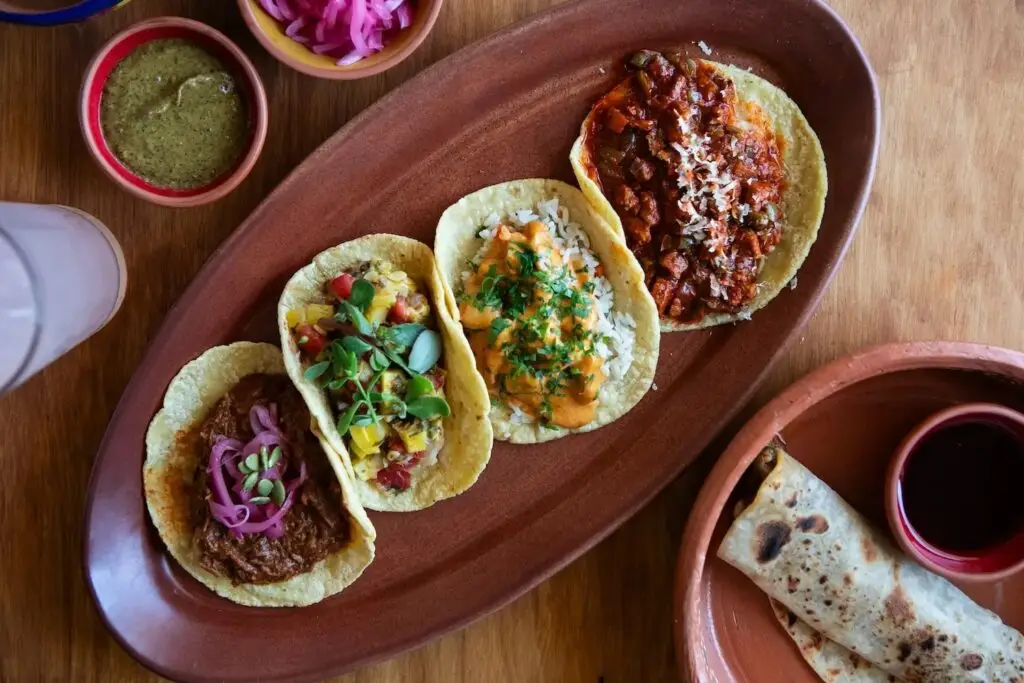
Mesa Agricola, a tiny taqueria in Escondido, made this year’s New York Times50 best restaurants in the US list. If you’ve had the privilege of eating the guisado delicacies from chef Juan González and Megan Strom, you’ll understand why. Congrats on the recognition—and happy first birthday!
Ranchito Milkyway, a farmstand in Bonita, also has plenty of events to pencil into your calendar, starting with an Indian cuisine-inspired farm-to-table dinner on September 19 with chef Kanta from Sattvik to an Italian cooking class on October 17 with chef Elisa from Balsamico Italian Kitchen. If you’re chock-full of things to do over the next few weeks, there’s always the option to snag one of their CSA boxes for an abundance of winter greens, vegetables, and herbs for home cooking.
Listen Now: The Latest in San Diego’s Food and Drink Scene
Have breaking news, exciting scoops, or great stories about new San Diego restaurants or the city’s food scene? Send your pitches to [email protected].
Beth Demmon is an award-winning writer and podcaster whose work regularly appears in national outlets and San Diego Magazine. Her first book, The Beer Lover's Guide to Cider, is now available. Find out more on bethdemmon.com.
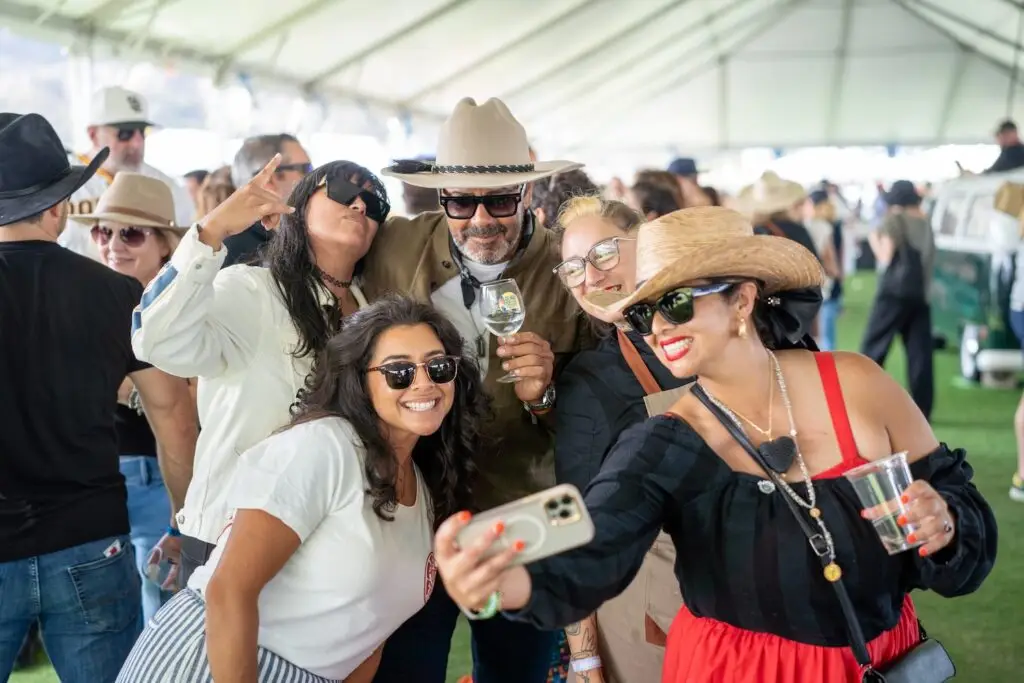
Tickets to the Del Mar Wine & Food Festival get you in the door. The real fun is figuring out who you’ll run into once you’re there. This year’s weeklong schedule of exclusive events, running September 30–October 4, includes dinners, tastings, and loosely-supervised chaos where celebrity chefs and local icons finally let their hair down.
The festival has a track record of the unexpected: Bryan Cranston and Aaron Paul once toasted their mezcal brand Dos Hombres with an intimate dinner at the Lodge at Torrey Pines (and then, evidently unsatisfied, kept drinking it on the cliffs above Blacks Beach with a rotating cast of San Diego and Food Network chefs. Alex Morgan showed up for a dinner under the lights honoring the country’s most badass women chefs). Drew Brees ran a celebrity pickleball tournament where the guy from It’s Always Sunny in Philadelphia got absolutely humbled by locals.
If you scored a ticket to last year’s Grand Tasting, you might’ve caught Guy Fieri doing exactly what Guy Fieri does: strolling the grass, signing t-shirts and foreheads, and hanging off the DJ surf van like it was built for him. Meanwhile, local chef Ethan Yang of Glass Box walked off with the Chef Competition surfboard.
So whether your plan for 2026 is to corner legendary San Diego chefs like Victor Jimenez of Cowboy Star and Jon Sloan of Juniper & Ivy in person, or just aim for a spontaneous golf cart ride with a Food Network star—here’s your cheat sheet for where to run into a celebrity chef, TV personality, award-winning winemaker, or pro athlete at this year’s Del Mar Wine & Food Festival.
Courtesy of Del Mar Wine & Food Festival
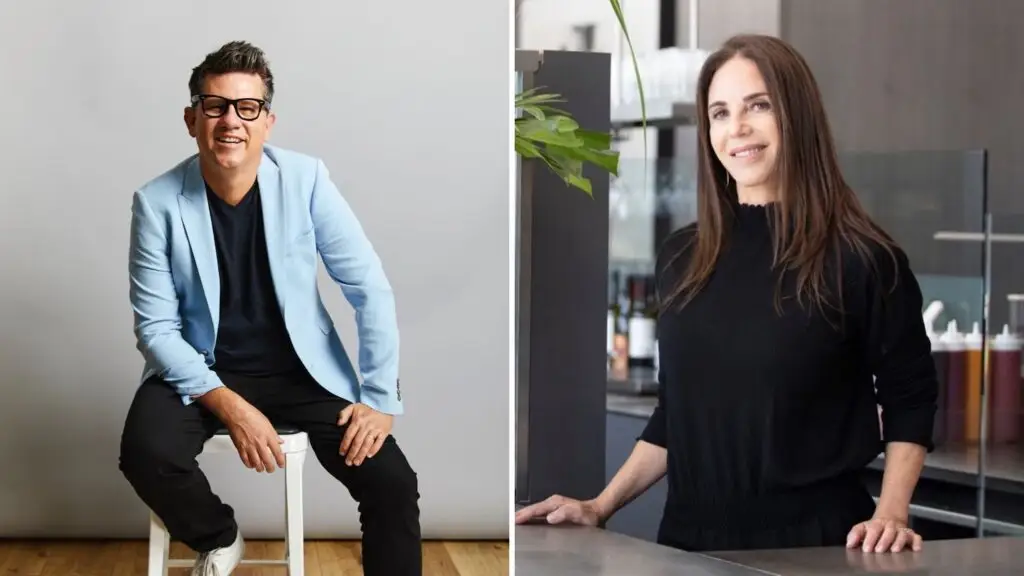
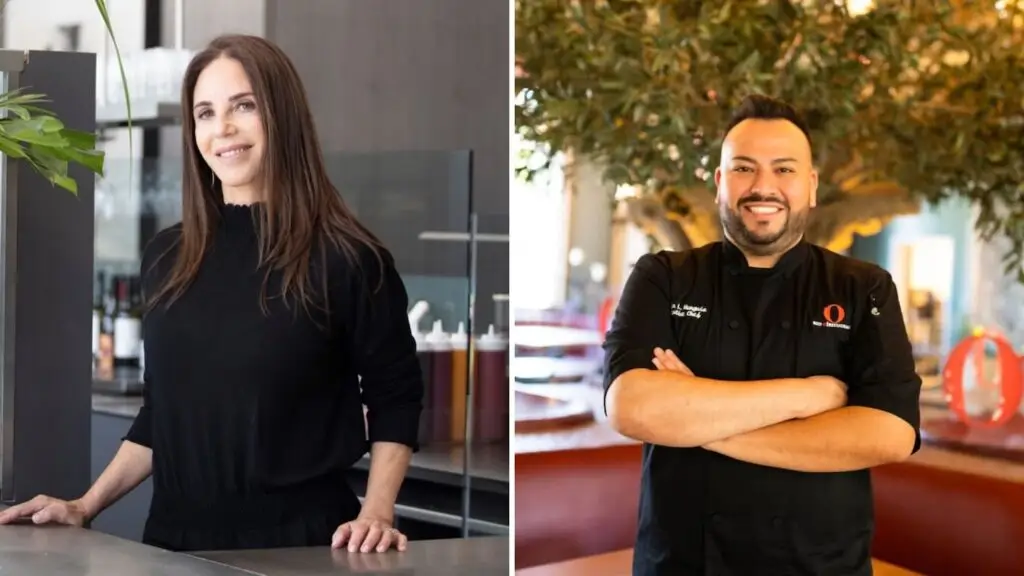
Troy Johnson, Karen Krasne
Signature San Diego Opening Night Party
September 30 | 6 – 9 p.m. | Monarch Ocean Pub
Consider this your soft landing into festival week—the walk-around tasting that eases you in before things get chaotic later on. Monarch Ocean Pub hands its patio over to the flavors that define San Diego eating: Baja seafood done right, coastal bites, Mexican flavors with some heat behind them, all the staples locals will fight you over.
The celebrity sightings here lean more “bump into” than “spot from across the room.” Troy Johnson—Food Network judge, San Diego Magazine chief content officer and co-owner, Emmy-winning host, a man who has eaten his way across the entire country professionally—is the type to materialize at whichever station has the longest line, because he already knows it’s worth the wait. Ask him what he’s had so far. He’ll have opinions.
Then there’s celebrity pastry chef Karen Krasne, owner and executive pastry chef of Extraordinary Desserts, James Beard House alum, and a woman Forbes once ranked among the top 10 pastry chefs in the country—which tracks, because you might find her holding court next to a tray of her roasted pecan shortbread dipped in white chocolate, explaining exactly why this is the flavor combination. You will listen to every word, too, because you’ll want to try that cookie.
This is an opening night party where the person next to you in line might just be the one who baked the thing you’re about to eat.
Courtesy of Del Mar Wine & Food Festival
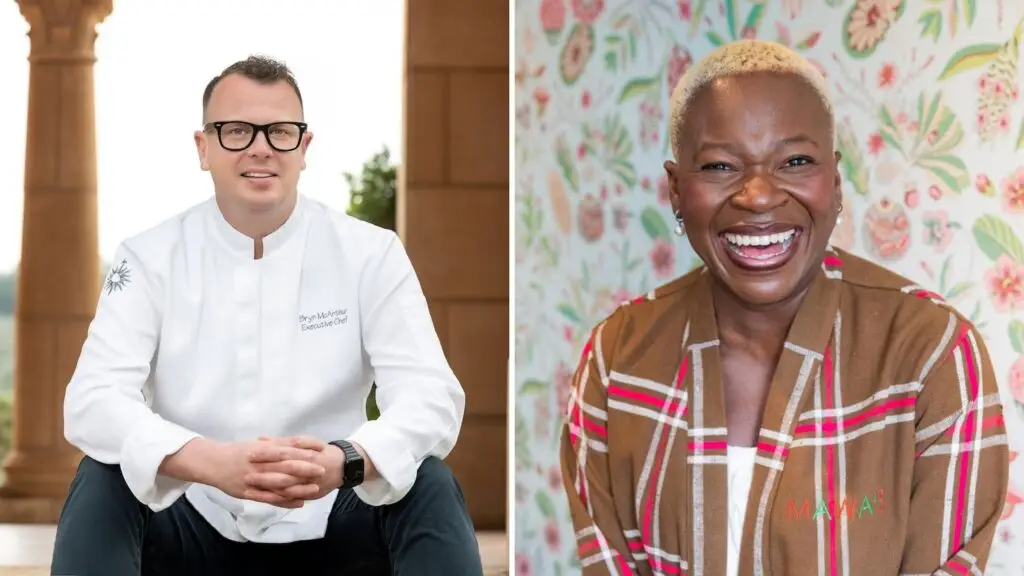
Bryn McArthur, Mawa McQueen
Chateau Montelena’s 50th Anniversary Celebration
October 1 | 6 – 9 p.m. | Fairmont Grand Del Mar
Fifty years ago, a Napa Chardonnay beat France at its own game and rewrote what the world thought it knew about wine. This dinner is that legacy, poured by the family who built it, course by course.
Under the arches at Fairmont Grand Del Mar, Ernie Hahn and the Hahn family, who partnered with the Barretts to revive Chateau Montelena into the Napa powerhouse it is today, host an evening built entirely around the winery’s most iconic pours. Every course gets its own pairing straight from the Montelena portfolio, so you’re not just hearing about the Judgment of Paris, you’re tasting the wine that started it.
Chef Mawa McQueen, a former James Beard Best of the West winner out of Aspen, brings globally inspired cuisine and serious technique to the table. Alongside her, Fairmont Grand Del Mar’s executive chef Bryn McArthur leans into farm-to-table sensibility shaped by a career of global kitchens. Together they’re building a menu meant to hold its own against wine that already changed history once.
This is the rare dinner where the wine isn’t just accompanying the meal, it’s the reason the meal exists. Fifty years after Paris, the rematch is happening right here in Del Mar.
Isabella Dallas is a freelance writer for San Diego Magazine and the Arts and Culture Editor at The Daily Aztec in her final year at San Diego State University. She previously worked as an editorial intern for SDM, but when she’s not writing, you can find her trying the best coffee spots in SD, devouring the latest rom-coms, and indulging in anything and everything pop culture.
Implementing a farm-to-table model hardly deserves acknowledgement these days. It’s not a stretch. It’s not innovative. “It’s the bare f**king minimum,” says Herb & Sea‘s executive chef Aidan Owens.
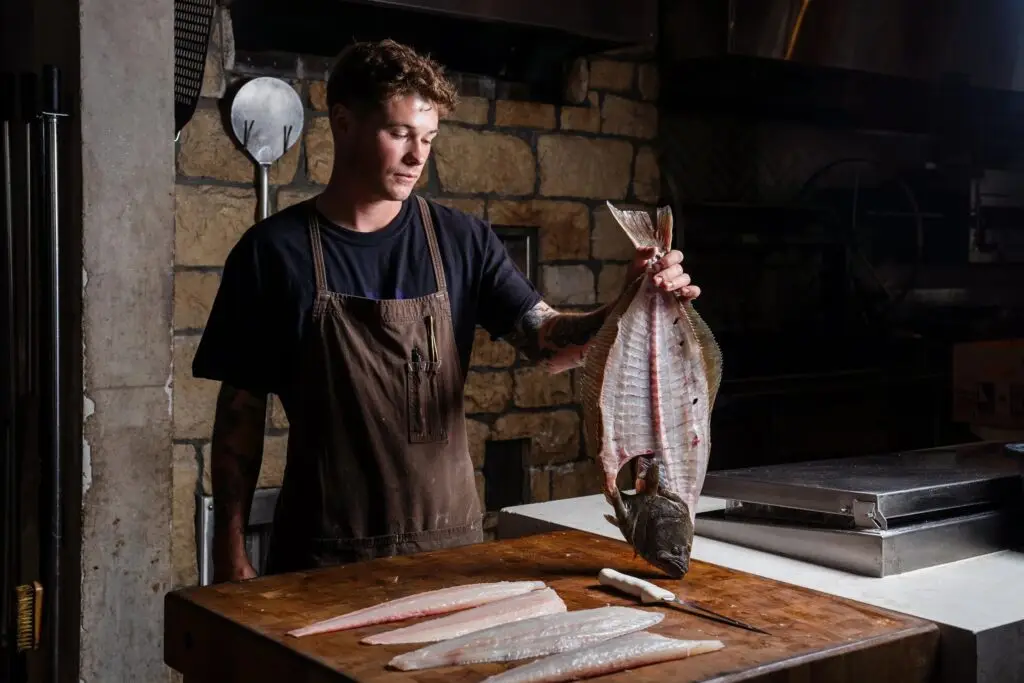
When I arrive at the Encinitas restaurant, I’m ready to talk sustainability, farm-to-table stuff, with Owens. “Did you see the chin on that?” he says of the extra big jiggly chin on the sheephead that just arrived with the day’s fresh catch. I did. It was Jay Leno adjacent.
I learn quickly that he somehow oozes both charm and stone-cold honesty. Maybe he could construct a new dish with chin goo, like he did when he had a bunch of tuna scraps and voila’d it into a smooth and crowd-pleasing ‘nduja. “I want to know what’s in there,” he says.
Courtesy of Herb & Sea
The instinct to look closer, to dig into what others might discard, says a lot about the chef’s approach. I guide him back to our topic, but he has something else on his mind. “We’re overcomplicating food—what happened to just cooking good food and having fun with it?”
Owens grew up on a farm in Byron Bay, Australia, where sustainability wasn’t a concept you chat about so much as a way of life. Think dirt roads, backyard chickens, pulling vegetables straight from the ground, and a mother who believed that if you couldn’t pronounce the ingredients on a package, you shouldn’t eat what was inside.
Food wasn’t precious or performative. Making it was what you did because you were hungry and that’s still what inspires Owens today. “I like to cook good food because I like to eat good food,” he says.
His approach to sustainability at Herb & Sea began so naturally that it felt just like instinct. “I was just like, ‘Let’s order food from the people who live and work here,’” he says.
Courtesy of Herb & Sea
And why wouldn’t he when lives in San Diego? Cities all over the world vie for our goods. Our tuna is sent overseas. Our spiny lobsters hit dinner plates in China and Japan. Not to mention California’s producing a third of the country’s vegetables and three-quarters of its fruits and nuts.
“Why would we outsource when it’s all here?” Owens asks.
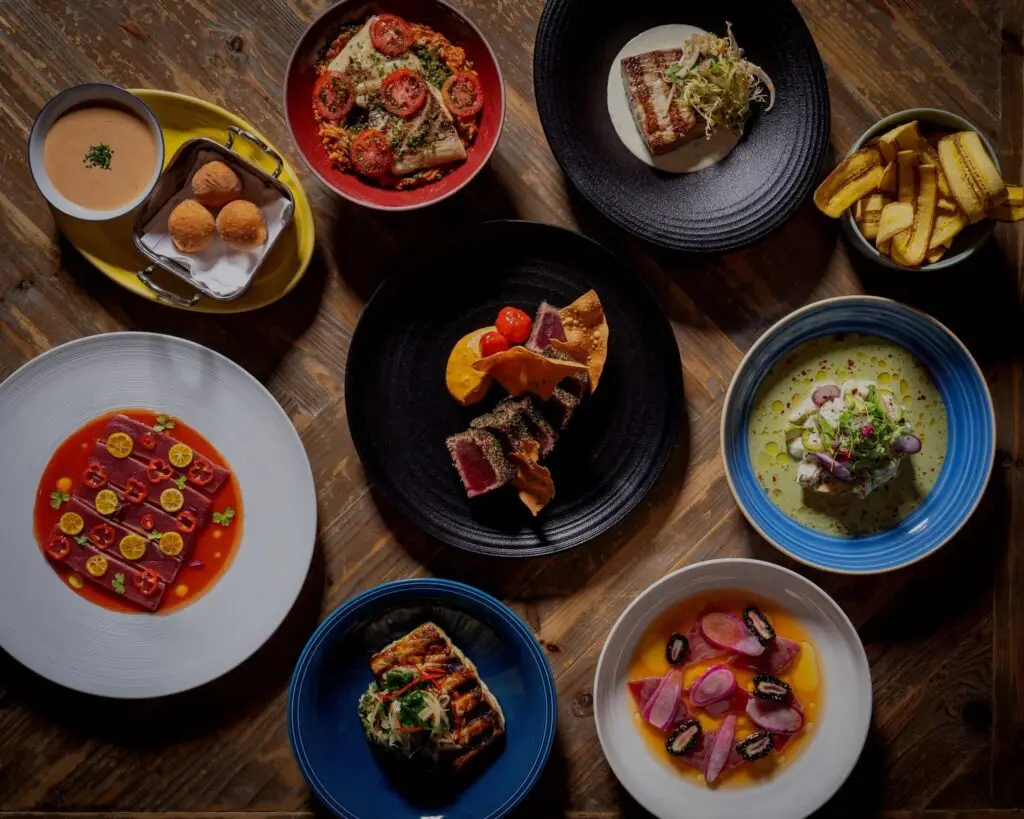
Sustainability, in this context, is about cooking what exists in abundance, nearby, right now. “I love the local fish here. It’s f**king delicious and San Diego citrus, I mean, it is so f**ing good,” he says.
Instead of importing ingredients, Owens also looks for nearby alternatives. “You can find really cool things in the local waters,” he says, pointing out that stingray cheeks taste similar to scallops.
Courtesy of Herb & Sea
Whatever he finds in that sheephead chin might just be the next substitute for marrow. But to make this work, it means getting diners amped up about the slightly unfamiliar.
Tasting menus, where diners are completely in his hands, become an opportunity to gently push boundaries. “I’ll serve mackerel, because people think they hate it,” Owens says, noting that the abundant local fish can have some fishiness. “But when it’s fresh, it’s arguably one of the best fish in the ocean.”
He also tweaks the language on the menu so people might feel more compelled to give dishes a try without preconceived notions. He might use “lengua” instead of “tongue.” “Whelk” instead of “snail.” When he puts “stingray throat” on the menu, he disarmingly calls it “skate.”
To reduce waste, scraps aren’t always discarded but rather turned into something new. Sometimes they’re smoked, cured or fermented. Apples going bad turn into apple ponzu. Lemons turn to marmalade, which stretches their usefulness far beyond peak season. “And it’s super tasty on our pizza,” he says.
What makes the food even richer, is the relationships he’s built with farmers. Though it didn’t always feel natural, Owens sought personal connection first. He recalls approaching a fisherman at the Tuna Harbor Dockside Market. “I was awkward,” he says. “I went up to him and said, ‘I like your fish.’”
Owen’s is now so close to his suppliers—like fishermen Ryan Sebo and Joe Daly—that he gets texted pictures of fresh catches right as they flop on the boat. The messages always ask if he wants first dibs. “I say yes to a lot of fish,” Owens says, noting that Herb & Sea can go through 2,000 pounds of seafood a week.
Courtesy of Herb & Sea
The next evolution of sustainability, in his view, will be chefs working directly with producers such as his alliance with Sebo, cutting out middlemen and purveyors where possible. “It will put more money in the pockets of the people doing the work,” he says.
It will mean that chefs can’t just know their local farmers and producers, but they’ll choose to work with the ones who have the best practices. Dining and sustainability will become much less about the final plate. “It will be more about the impact that plate has on the Earth,” he says.
Ultimately, he believes sustainability doesn’t need to be loud. It doesn’t need hashtags. It just needs to be honest.
“We aren’t saving lives. We’re feeding people good food,” he says.
And yet, in feeding people well—simply, thoughtfully, responsibly—something meaningful happens. Guests leave satisfied. Ingredients are respected. Local ecosystems are supported and food returns to what it has always been at its core: nourishment, pleasure, and a quiet reflection of the place it comes from.
After 15 years married, my husband and I tend to agree on most things. But there’s one argument we both refuse to bend on—I prefer okonomiyaki Osaka-style, and he’s a die-hard Hiroshima-style devotee. (To be fair, we both adore both styles, but at this point, it’s just fun to have a low-stakes disagreement.)
Okonomiyaki is one of Japan’s greatest comfort foods, a savory pancake that’s about the size of a DVD, if you aren’t too young to know what that is. It’s not terribly hard to make—it’s flour, eggs, dashi stock or water, and a whole heap of shredded cabbage, plus optional fillings like green onions, pork belly, or bonito flakes, all cooked fresh on a flat top griddle. Drizzle some kewpie mayo and okonomiyaki sauce on top, and you’re hot to go.
However, it’s not easy to make well, and as you now know, people have capital-O Opinions about Osaka-versus-Hiroshima. Hiroshima-style layers the ingredients one by one rather than mixing them together, adding a layer of soba or udon noodles and topping it all off with a fried egg. For Osaka-style, all the ingredients are mixed together and then cooked on the griddle, so every bite includes every ingredient in a hodgepodge of deliciousness. (One Osaka variation called modan-yaki does include soba noodles mixed in the batter, but they’re not traditionally used in that regional version.)
Despite a childhood spent in Osaka, Japan, Kumi Alexander specializes in making Hiroshima-style okonomiyaki. “Okonomiyaki has been part of my life for as long as I can remember,” she explains. “My parents ran their own business when I was growing up, so Saturdays were often busy, and okonomiyaki was one of my mother’s go-to lunches because it was simple and easy to make.”
Alexander came to San Diego seven years ago with a desire to bring a part of her culture with her—not just a product, but a feeling. “When I thought about what could do that, the answer was almost obvious: okonomiyaki,” she says.
She originally launched Surf’n Slaw as a mobile pop-up food stand in August 2025, offering what Alexander calls Japanese-meets-California okonomiyaki. “Our full Surf’n Slaw includes cabbage, noodles, umami dough, beef, shrimp, and vegetables,” she explains. The menu also has a “Green Wave Slaw,” an Osaka-style version that can be made vegan and gluten-free, as well as matcha drinks.
Currently, Surf’n Slaw pops up at farmers markets in North Park, Scripps Ranch, Hillcrest, La Jolla, and La Mesa, as well as other local markets and community events. Eventually, she may expand to a permanent location, but that’s a future goal. And while Alexander hopes that one day okonomiyaki will be as well-known to American audiences as ramen or sushi, for now, she’s just happy to share a bit of home with San Diego.
Izola Bakery announced big plans for a second location and bakery HQ (checks notes) over three years ago and it’s kind of been crickets since then. But there may be movement in the expansion plan—the East Village bakery recently put out a hiring call for “the people we need to help us build what’s next.” Here’s hoping things get cooking (or baking, as the case may be) soon.
As a California-born, East Coast-raised foodie, I can confidently say the East Coast has the deli game on lock. So whenever anyone announces they’re bringing an East Coast-style sandwich to the West Coast, I remain cautiously optimistic until proven otherwise. (Big Jim’s in Pacific Beach is a phenomenal example of a transplant done exceptionally well.) Los Angeles-based Ggiata Delicatessen recently announced plans to open a location in Encinitas, promising authentic Italian staples like meatball parmesan subs, cheesesteaks, and Italian cold cuts. Don’t let me down, guys!
Unfortunately, it’s not all openings and expansions. Nola on 5th in Hillcrest permanently ceased operations without warning or explanation. We can probably pick from one (or more) squares on Restaurant Closure Bingo for the reason (increased costs for ingredients, labor, equipment, etc.), but for the jambalaya enthusiast, it doesn’t really matter why. It’s simply adieu to a slice of The Big Easy in San Diego.
Listen Now: The Latest in San Diego’s Food and Drink Scene
Have breaking news, exciting scoops, or great stories about new San Diego restaurants or the city’s food scene? Send your pitches to [email protected].
Beth Demmon is an award-winning writer and podcaster whose work regularly appears in national outlets and San Diego Magazine. Her first book, The Beer Lover's Guide to Cider, is now available. Find out more on bethdemmon.com.
Tokyo unquestionably holds the title as one of the best, if not the best, food cities of the world. But despite the plethora of Michelin-starred kaiseki restaurants and hole-in-the-wall ramen joints, you’d be remiss in walking past glowing signs beckoning you to enter one of the 56,000-plus konbini across the country.
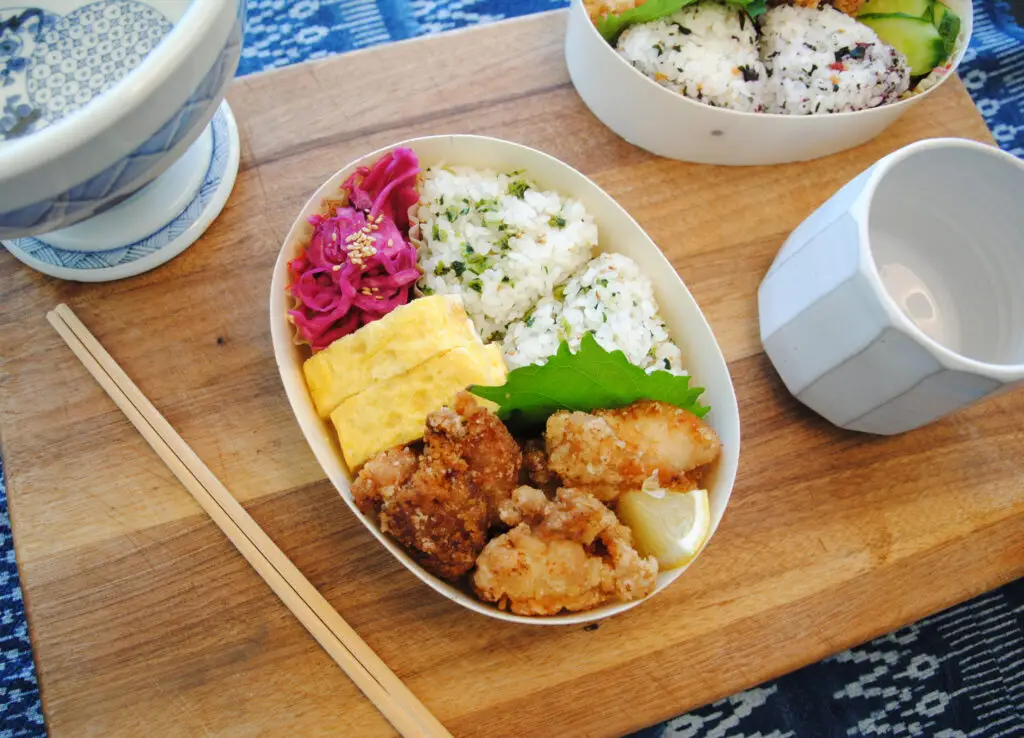
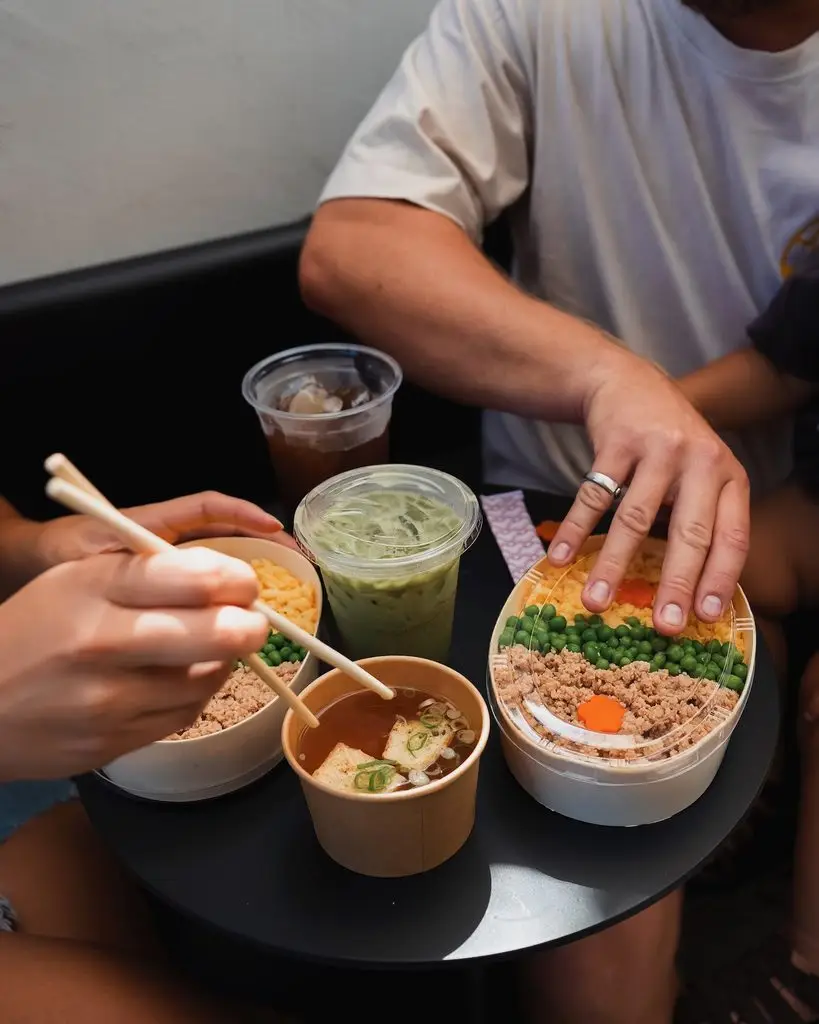
Konbini cafes like Lawson’s, FamilyMart, and 7-Eleven may look like run-of-the-mill convenience stores, but convenience store culture is a completely different animal there. Absent are the sad, floppy hot dogs sizzling sweatily on a rotating wheel of misery. Instead, konbini are stocked with a bevy of hot and cold drinks in every imaginable flavor, meals like tamago sandos (Japanese egg salad sandwiches) and prepacked bento boxes, snacks like onigiri (handheld triangles of rice and seaweed, often filled with fish or pickled plum), and even limited-edition merchandise (not unlike Wawa’s line of merch).
Soon, Hillcrest will get a taste of konbini culture. Hako Hako opens in front of Uptown Inn by Vantaggio, next to Ramen Ryoma, in early 2027.
Kenji Blouin-Ito, a half-Japanese, half-French San Diego native grew up eating Japanese food at home and during trips across the Pacific. “I remember looking forward to eating bentos on the train,” he says, grabbing quick items to munch on without sacrificing quality or succumbing to cost. When in France, he saw a rise of appreciation for casual Japanese cuisine, “long before it happened here.”
Courtesy of Hako Hako | Photo Credit: @josh_walker.26
So he decided to bring it here. After AB 626 passed in 2018 to allow different jurisdictions to permit Microenterprise Home Kitchen Operations (MEHKOs), Blouin-Ito joined Foodnome, the first legal marketplace for homemade food in the US, as a co-founder. Eventually, the national nonprofit The Cook Alliance took over the project, leaving him open to the next new idea but with the experience of running a food-based business.
“That experience changed how I think about food, not just what makes it good but what makes it work,” he explains. Bento boxes felt affordable in a time of inflation, convenient in a bustling world, and versatile to a variety of palates. When he got the chance to open a konbini himself, he went for it.
His family runs Uptown Inn, a mix of apartments and hotel rooms that’s seen increased food traffic over the past few years. “We had a small space in front of the building that wasn’t being used, and it just made sense,” he says. Hako means “box” in Japanese, a reference to both bentos and small space from where he’ll sling freshly made bentos, coffee, drinks, pastries, snacks, and a small retail selection.
Hako Hako will initially open for morning and afternoon hours, but you don’t have to wait until next year to get a taste of Japanese culture. Blouin-Ito’s concept is popping up at various coffee shops around San Diego, with a few coming up: Easy Does It on September 19 and Cafe Moto on October 17. Until then, practice the art of gaman: patience with grace.
Hako Hakoopens at 819 University Avenue in Hillcrest in early 2027.
Sushi Tadokoro held on to its Michelin star for three years—no mean feat for anyone. But now, the Old Town restaurant is changing things up, eliminating lunch and à la carte service at the end of September before transforming into an omakase-only experience in October. The dining room will close from October 1 through October 22 to make the change, but promises it will be “more intimate. More personal. More focused on each guest and every piece we serve.” Sounds worth the wait.
Bock brought new life to South Park when the German-inspired beer bar opened after a long construction process by owner Brian Jensen (Vino Carta, Bottlecraft). Now, Bock is getting its own shot in the arm with a new in-house kitchen from the people behind Majorette, Love Letters Pizza, and Scrimshaw Coffee. Kurz, or “quick” in German, is already open, serving European-inspired bites like the requisite currywurst, Bavarian pretzel, and schnitzel, along with some newcomers like a pierogi and famous “Majorette burger.” (I can confirm it’s a damn good burger.) Reminder: Bock and Kurz are 21+, so leave the kinders at home.
The popular Japanese dessert chain Warabimochi Kamakura already has 70-plus locations in Japan, Australia, China, Thailand, and the U.K. (to name a few), but is finally opening a location in Convoy District at 8322 Clairemont Blvd. After a successful pop-up test run at Asa Bakery, Warabimochi Kamakura will bring its signature warabimochi (a traditional simple, jelly-like dessert), plus tea like matcha and hojicha, as well as soft serve as soon as October, but possibly November. (Although warabimochi is sometimes considered a summer treat, I’m pretty sure I can make an exception for autumn.)
Listen Now: The Latest in San Diego’s Food and Drink Scene
Have breaking news, exciting scoops, or great stories about new San Diego restaurants or the city’s food scene? Send your pitches to [email protected].
Beth Demmon is an award-winning writer and podcaster whose work regularly appears in national outlets and San Diego Magazine. Her first book, The Beer Lover's Guide to Cider, is now available. Find out more on bethdemmon.com.
SeaWorld dazzles with a drone show, big-name entertainers, new animal adventures and more
By Partner Content
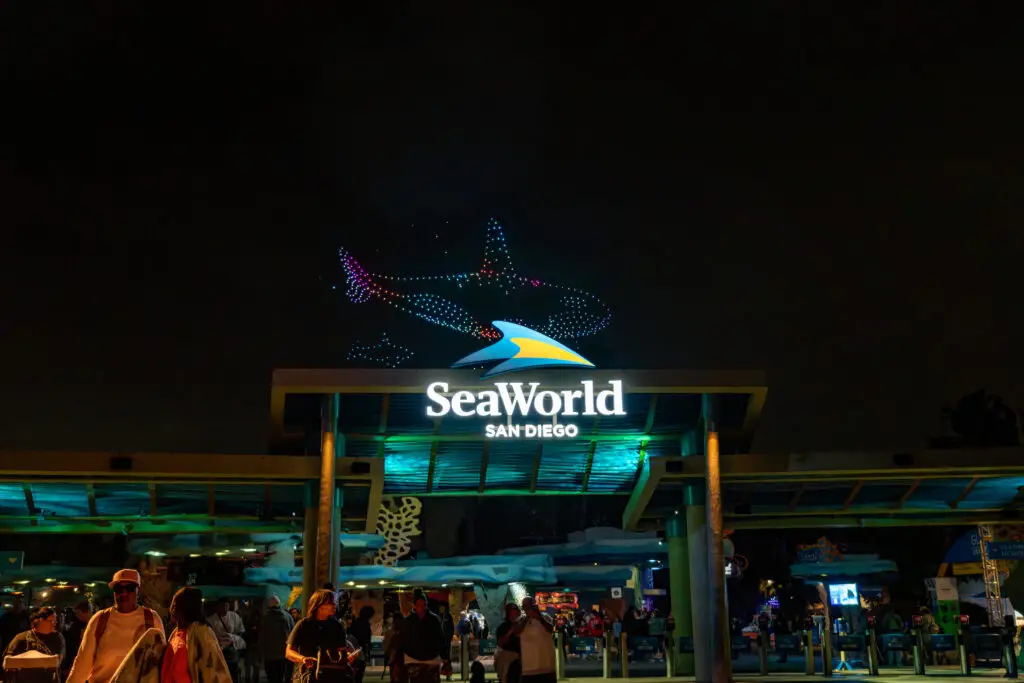
Nights are heating up at SeaWorld San Diego. The quintessential summertime staple on Mission Bay is transforming into a destination for unforgettable day-to-night adventures, bringing back some of its most popular Summer Nights programming and introducing exciting new experiences sure to delight both kids and adults alike.
The 2026 Summer Day to Night at SeaWorld San Diego is the park’s most ambitious season yet. SeaWorld has planned a highly anticipated entertainment lineup that features nine weeks of throwback concerts featuring R&B and hip‑hop favorites from the ‘90s and early 2000s, including Jordin Sparks, Too $hort and Warren G, Ashanti, and an array of boy band heartthrobs performing together as part of the Pop 2000 Tour.
New this season is perhaps the park’s most visible update: a nightly drone show, Ocean of Dreams, which illuminates the sky with hundreds of synchronized sparklers. Drones form sea otters, sharks, dolphins, and a majestic orca that tell a breathtaking 12-minute story of marine life and underwater ecosystems. The show culminates with a spectacular electric neon finale celebrating hope, wonder, and ocean stewardship.
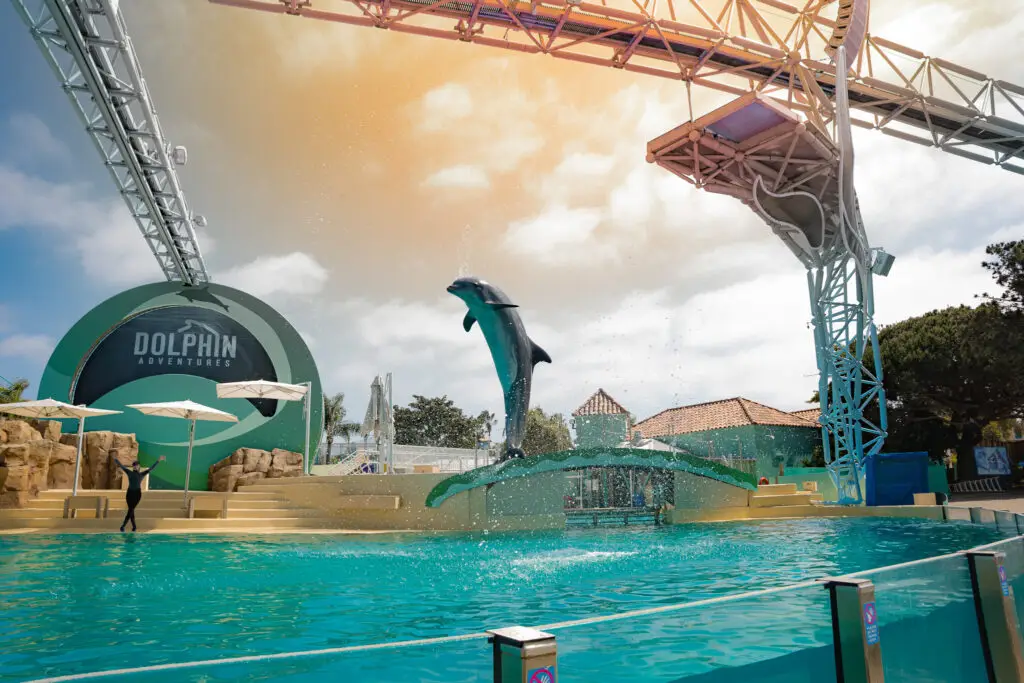
Nighttime visitors are also in store for animal adventures that fuse education with high-energy fun and the dreamy ambiance of nighttime. The park has launched two all-new animal presentations: Shamu’s Celebration:Light Up the Night and Dolphins: Touch the Sky. Shamu’s Celebration:Light Up the Night features vibrant lighting, music, and dynamic choreography that celebrates the power and beauty of killer whales. Dolphins: Touch the Sky showcases playful bottlenose dolphins and the special connection between humans and the natural world. And back by popular demand is fan-favorite Sea Lions Tonite. See the charming pinnipeds splash, play, and parody pop culture in this refreshed crowd-pleaser.
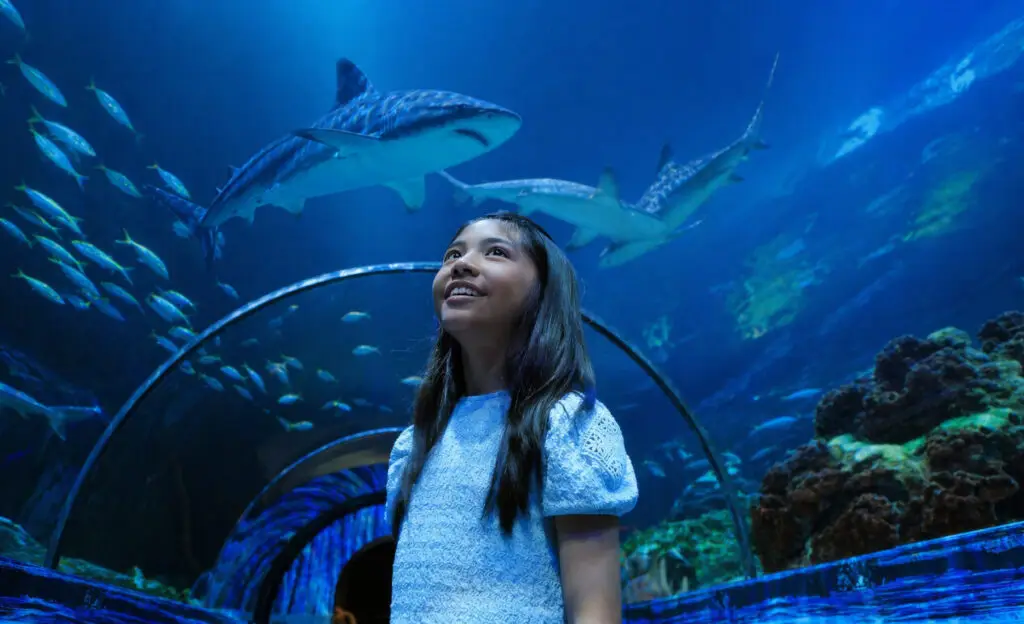
More must-sees: a newly reimagined Shark Encounter, one of the country’s more immersive exhibits highlighting 11 different species up close, SeaWorld’s beloved BMX Blast! stunt show, and high-seas escapade, Pirates Ahoy! The Battle for Mermaid Cove. And don’t miss the park’s all-new Deep Sea Disco, which encourages guests to dance the night away under the glow of the SkyTower, and vibrant closing time laser light display Laser Reef Summer Spectacular.
Amp up the nighttime vibe with local craft beers, curated cocktails, and nostalgic theme park treats with $1 beer all summer long. SeaWorld is the place for day to night summer fun. When the sun goes down, SeaWorld lights up, and inspires guests of all ages to embrace their inner whimsy and see why generations of San Diegans head to SeaWorld to make memories they’ll never forget.