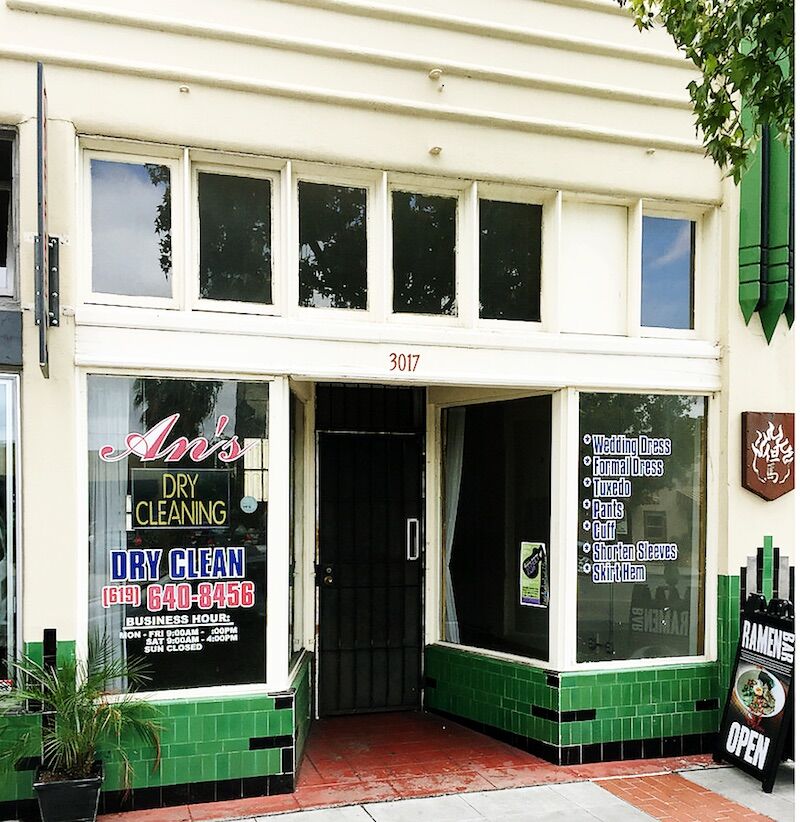
When Travis Bailey and Kris Warren first secured their space in North Park, their new gelato shop still didn’t have a name. The 1930s storefront had housed a dry cleaner for 12 years prior. As a joke, they suggested keeping the old name. But the more they thought about “An’s Dry Cleaning,” and the ways they could incorporate elements from the old business and the history of the art deco building into their new concept, the more that joke became a serious idea.
“Once we decided we were going to keep the name, it felt disingenuous to come in and start adding our own elements,” Bailey says. So with the help of their designer, Keenan Hartsten, the gelato guys embraced the history of their new home and kept as much intact from the original place as possible. It took some work, but the end result is the one we see today: a seamless blend of the past and present, all under one roof.
Dig This Deco
“On the exterior you can see the art deco style in the recessed entryway and the triangular design elements on the right,” Bailey says. They carried that influence inside the shop by adopting the same green and black into their color scheme, adding art-deco style wall lights, and revamping two hanging lights that were from the original An’s.
Inside you’ll find more nods to An’s. The gelato flavors are all named after fabrics, Hartsten modeled the tables after ironing boards, and some familiar clip art watches over the store. “We researched a lot of other dry cleaners for inspiration, and that graphic on the right interior wall is a popular motif in many of those businesses,” Warren says.
Font Finders
While the original An’s Dry Cleaning didn’t have an overhead sign (only a window decal), the guys wanted to preserve as much of the original logo as possible. “I think I spent three or four hours trying to find that specific font used for the A in An’s,” Warren says. Once they found the font—Commercial Script—they also used the same shades of red and blue in their new logo.
Windows of Opportunity
“Those seven transom windows above the entrance are original and were a source of inspiration for Keenan,” Bailey says. “It also inspired our seven-flavor menu.” The seven menu panels above the register match the size and shape of the transom windows, each showing one of the day’s rotating gelato flavors.
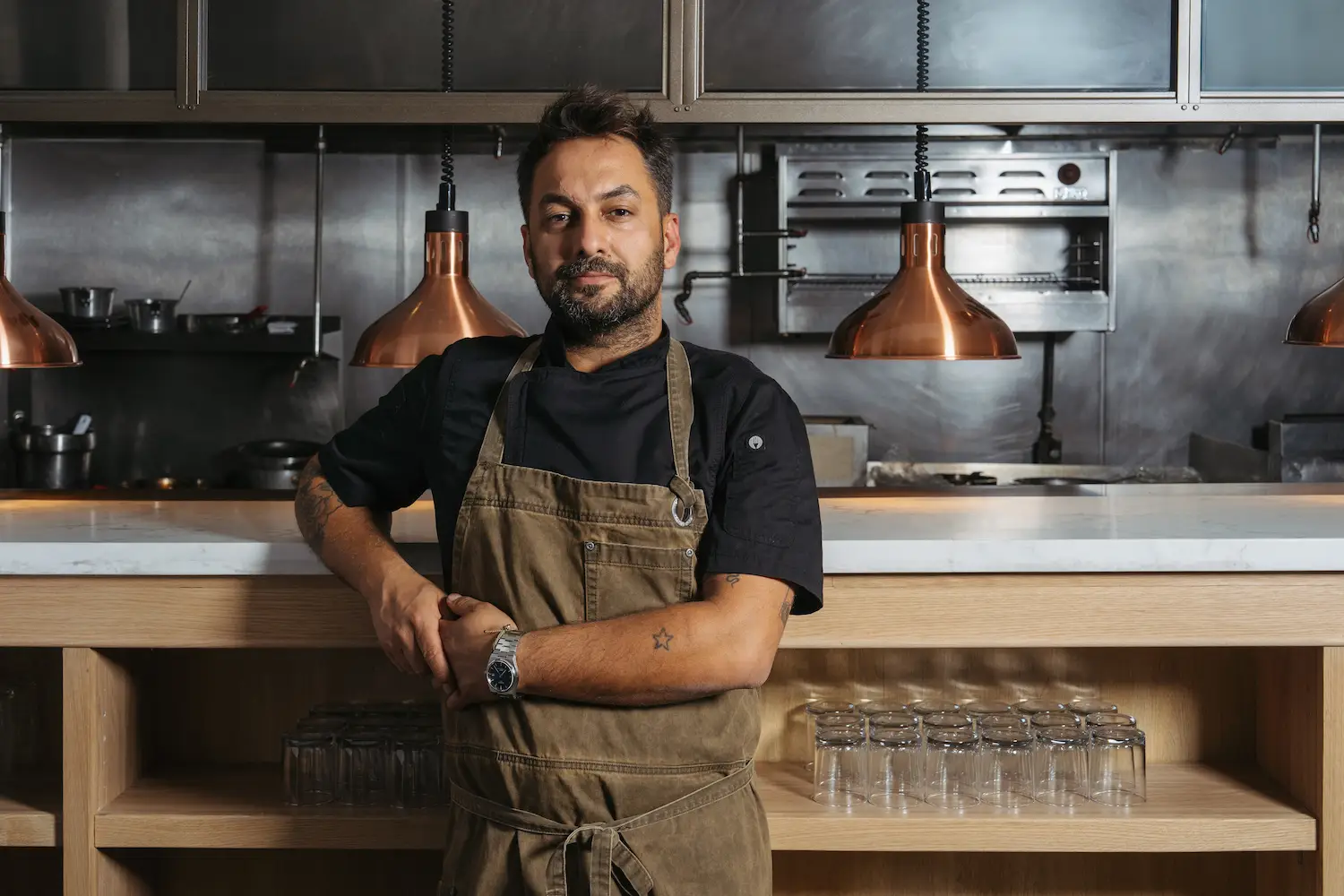
Even if you haven’t gotten your Real ID yet—which you should really do, like, yesterday—you can travel by proxy through food. To take a vacation to Turkey, head over to Normal Heights, where chef Seckin Sage Anlasbay is opening Bosforo, his modern meyhane-style Turkish restaurant in the former El Zarape location.
Photo Credit: Kimberly Motos Seckin Sage
Seckin first launched Bosforo a few years ago as a wood-fired pizza catering concept, showcasing flavors from his childhood home in southern Turkey near the Mediterranean, alongside influences from places like Spain and Italy. But for his first brick-and-mortar, he’s focusing far heavier on Turkish culture with dashes of Mediterranean, Mesopotamian, and Anatiolian.
“You’re going to feel like you’re having dinner in [an Istanbul] meyhane, [a traditional Turkish restaurant],” he promises, down to the kebabs and Turkish ice cream and décor.
Photo Credit: Kimberly Motos
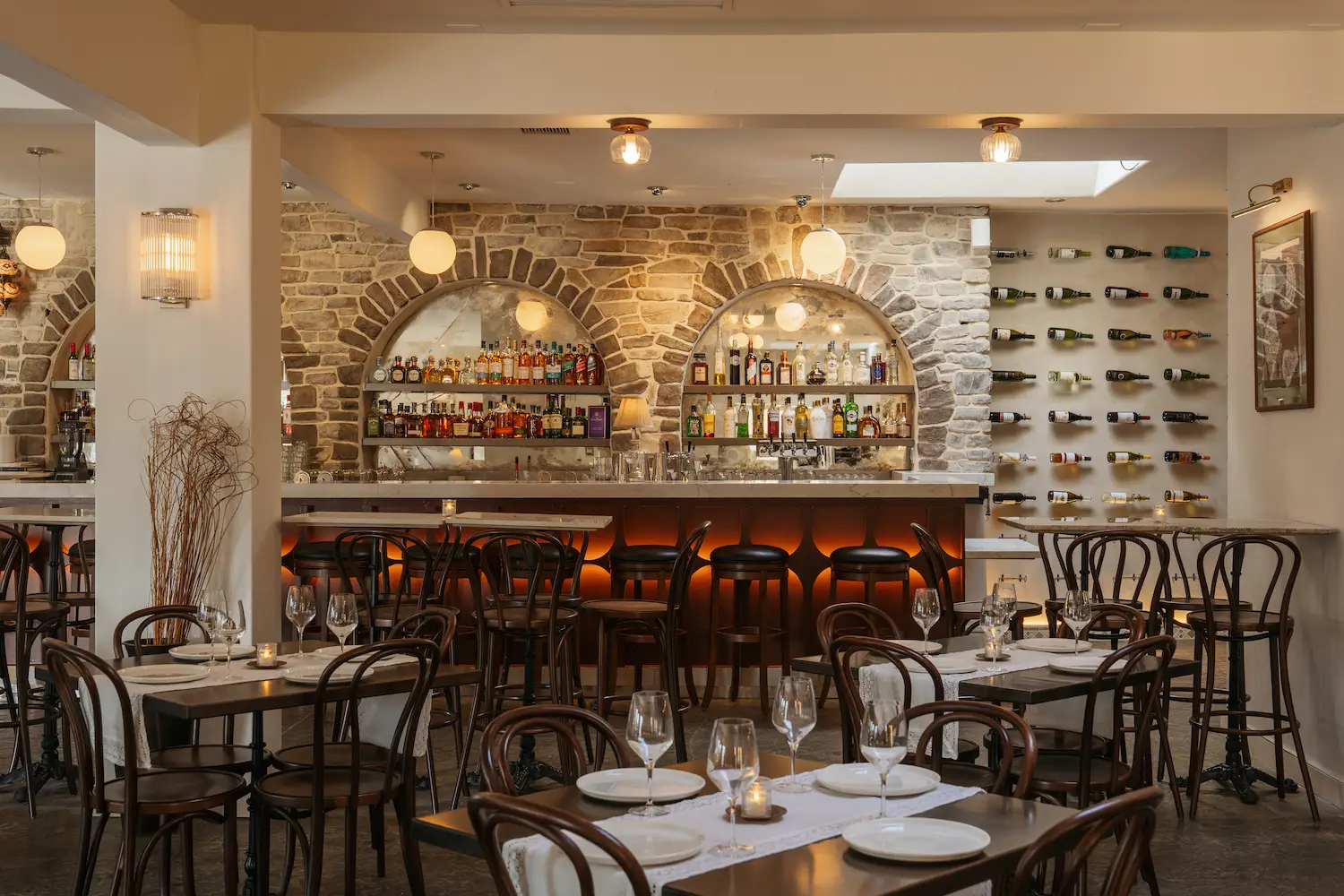
He kept El Zarape’s open dining room to ensure everyone can see everyone else and peer into the kitchen with the fire of the pizza oven. “The layout fosters openness and connection, echoing the communal spirit of traditional meyhanes while reimagining it for a contemporary audience,” he explains. The space seats 90 guests over 2,500 square feet, with lots of warm lighting and a homey feel across four different areas: the dining room, bar, kitchen, and pizza bar.
Photo Credit: Kimberly Motos
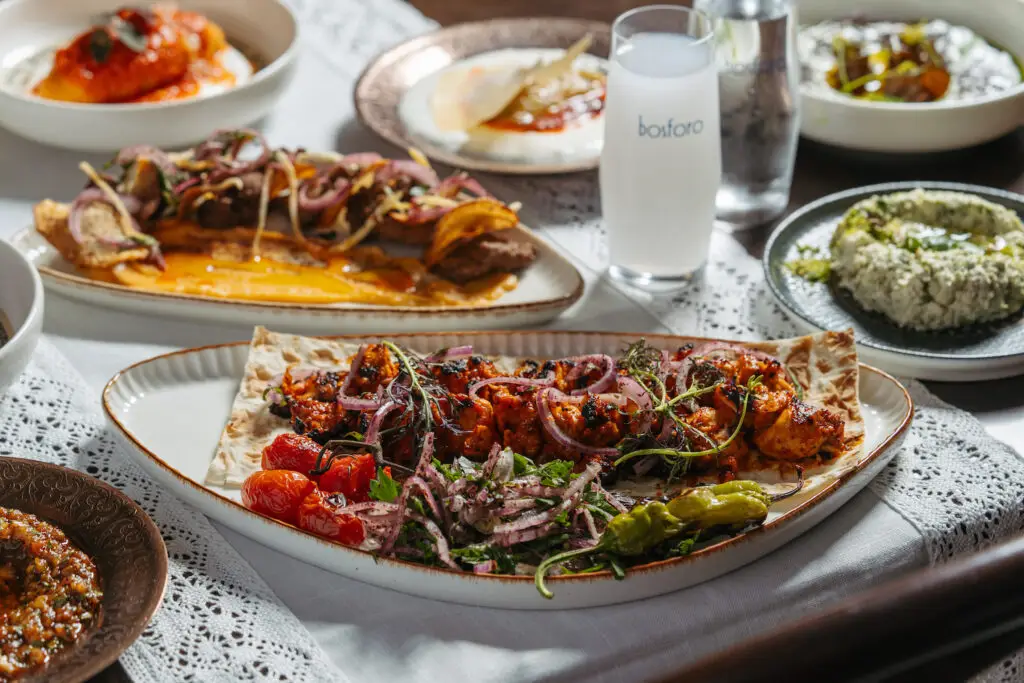
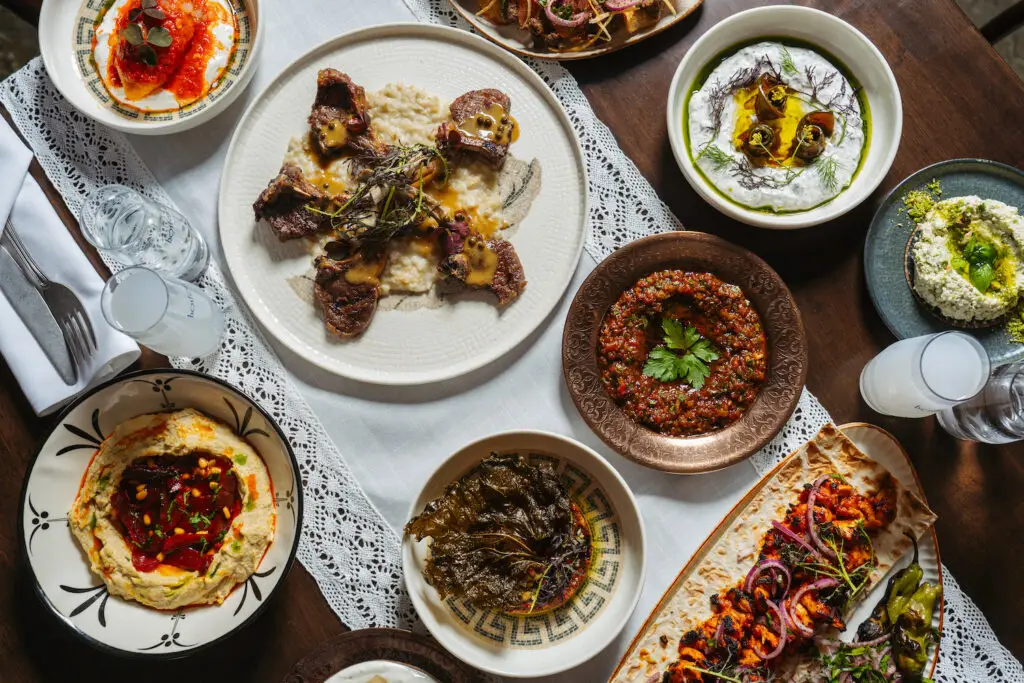
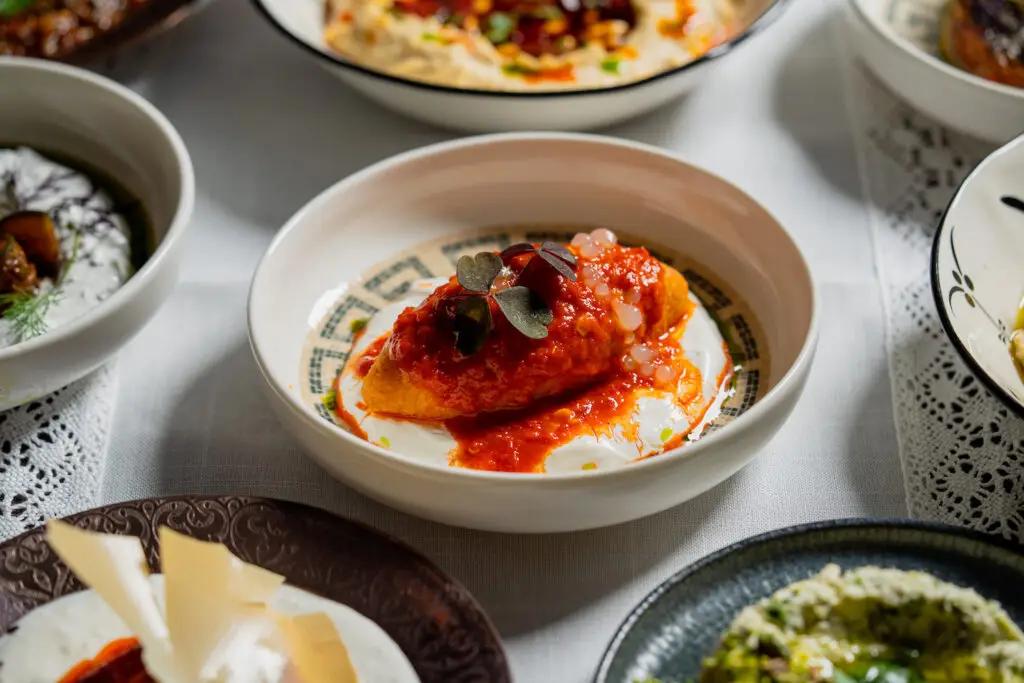
Bosforo’s menu centers around a family-style feast of hot and cold mezes (Turkish for “snacks” or “appetizers”) like olive piyaz (olive salad dressed in herbs and a vinaigrette), girit (cheese and pistachio spread), spicy ezme (vegetable-based chopped salad with tomatoes, peppers, and onions), and Albanian liver (a tender side of lamb or veal liver seasoned with hot peppers).
All of the kebabs are made with hand-ground meat cooked in the same wood-fired oven that cranks out pizzas like the “Anatolian” (Kayseri pastrami, Turkish sausages, aged Kaskaval cheese). Desserts are simple, including gelato and sutlac (Turkish rice pudding).
Photo Credit: Kimberly Motos
Seckin says a small menu is the point. Even if you’ve never tried Turkish food before, you can try everything. “And after, like, two hours, you’re going to find out what’s Turkish food,” he laughs. “So, I want to show San Diego Turkish hospitality [and] Turkish culture.”
Photo Credit: Kimberly Motos
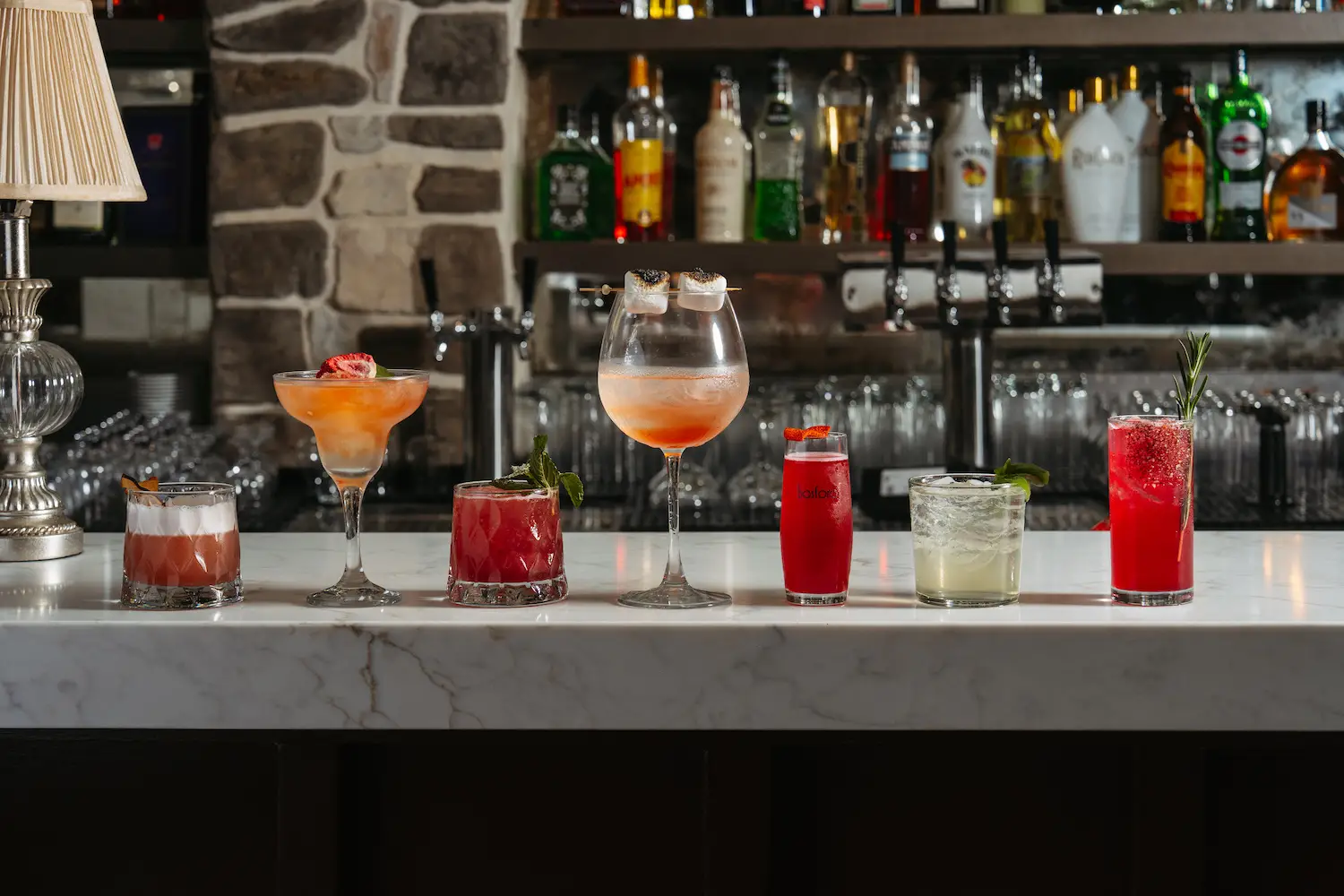
All the cocktails have a Turkish twist—think gin, lemon, and Aperol, but with rose water—and a variety of Turkish spirits like the country’s national drink, raki, an anise-forward spirit made with grapes and raisins. After dinner service, Seckin says he’s hatching plans for nightlife with DJs or live music until midnight or 1 a.m., plus weekend brunch.
Beth Demmon is an award-winning writer and podcaster whose work regularly appears in national outlets and San Diego Magazine. Her first book, The Beer Lover's Guide to Cider, is now available. Find out more on bethdemmon.com.
Juan Carlos Gomez opened El Agave Restaurant & Tequileria in Old Town almost 30 years ago. He’s dabbled in other eateries since then—a second El Agave in Del Mar and a Spanish restaurant in La Jolla—but never found the next big thing for him to throw himself behind.
Now he has.
“Nómade” unsurprisingly translates to nomad—a restless wanderer, picking up bits and pieces of community and culture wherever they roam. That idea inspired Gomez, who wanted to blend Spanish tapas with European-style wine bars, mid-century and Scandinavian design, and a splash of Japanese listening bar culture—add a dash of Italian, French, and Peruvian influence.
The all-day menu starts with breakfast dishes like avocado toast (it’s still San Diego, after all), tortilla española, and an Italian focaccia sandwich. Snacks and appetizers range from French croquettes to Spanish patatas bravas, while main courses range a bit more continental (like smashburgers and a fried chicken sandwich). The menu will always be in a state of flux, always nomading.
One thing will remain the same—there will always be plenty of wine—old world, new world, plus some natural orange wines and biodynamics. For cocktails, Nómade will lean flavor over strength, using things like infusions and other housemade ingredients to create a number of lower ABV options. Since the restaurant will be open at 10 a.m. daily, it’ll have coffee, matcha tea, and other AM options.
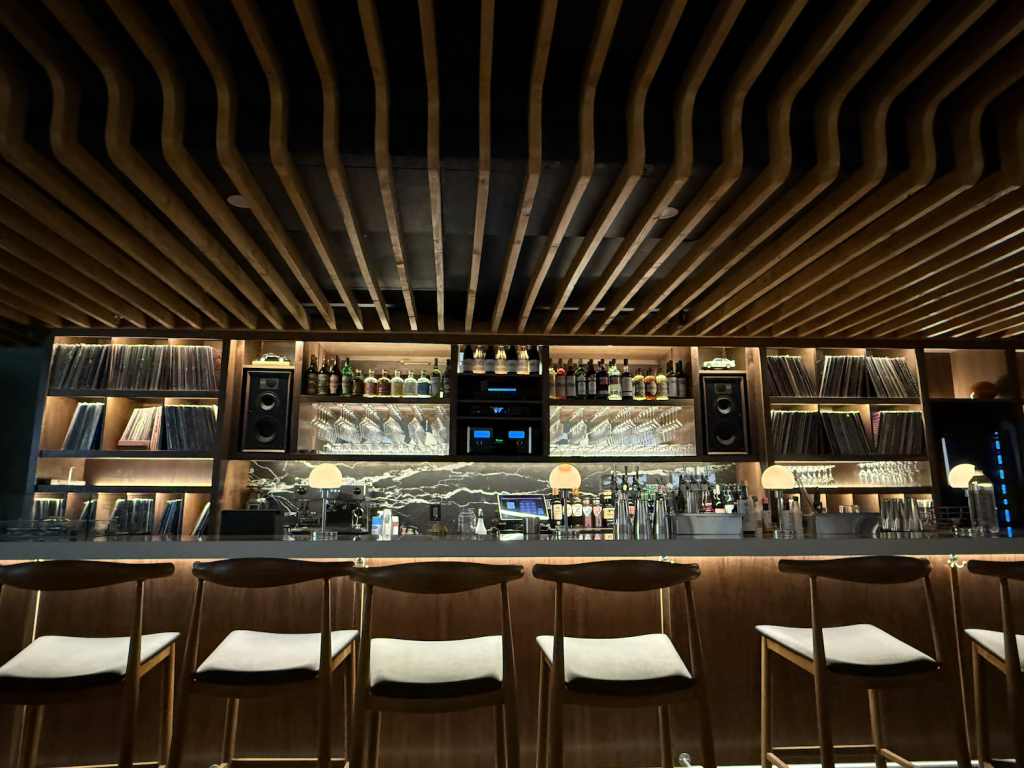
But after dark, Gomez wants to lean into the experiential nature of listening bars. Inspired by travels through Japan, he’s building a sound system for audiophiles. “It’s going to be more of a chill vibe—no nightclub, no loud music,” he promises. “It’s going to be ambience more than anything.”
Befitting the listening bar vibe, Nómade will be open ’til 11 p.m. on weekdays, and 1 a.m. on weekends. For now, the intimate seating (50 people) is inside, but he’s looking to expand to an outdoor area.
Nómade is slated to open by the end of March at 3027 Adams Avenue, just a few feet away from Hawthorn Coffee, An’s Dry Cleaning, and the intersection of Adams and 30th Street. Wanderers welcome.
Photo Credit: Kailee Winslow
San Diego Restaurant News & Food Events
A Night To Help End Hunger
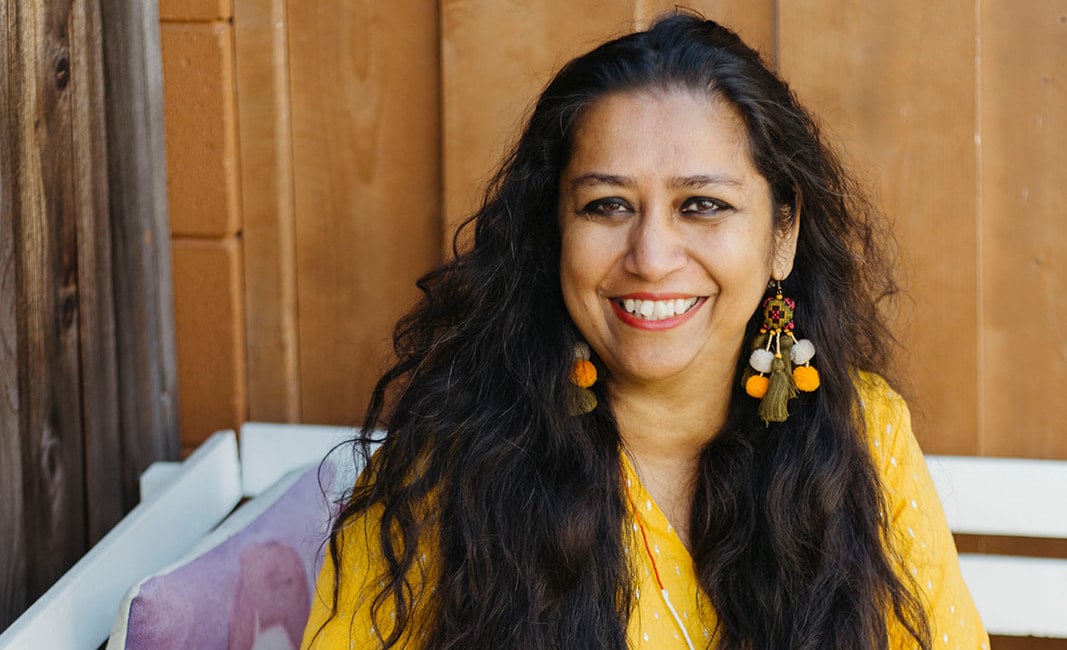
In the past, local author and writer Madhushree Ghosh has used words to make change. Now, she’s using food through her supper club series about food equity, access, and social justice. KhabaarCo Conversations with Changemakers series brings together the community for conversations about the deeper issues in the food world and how they relate to San Diego. Her next one is on Tuesday, March 11 with Kate Garrett from Feeding San Diego, who’ll talk about local foodways and how the average person can do to reduce food waste and improve equity in neighborhoods.
Courtesy of Trattoria Cori Pastificio
Beth’s Bites
Congrats to Accursio Lota of Cori Pastificio Trattoria for earning yet another accolade to his already long list of awards. Only 18 restaurants in the world received the acclaimed Three Forks (Tre Forchette) distinction from Italian magazine Gambero Rosso this year, and only five of them are in the US. Of course, we expect nothing less from the Best Pasta in San Diego winner. Next up: a Michelin nod?
Liberty Station is a bastion of brand-new restaurants like Wildflour, as well as longtime favorites like the Corvette Diner. But on March 6, another familiar name will open in the already traffic-congested destination—Chick-fil-A. It won’t have a drive-thru, so if you find parking a tad or incredibly harder soon, that’d be why.
This week marks one year of Green Cheek Beer Co. in Oceanside, and while I still miss Bagby Beer Co. terribly, it’s fantastic to know that the sprawling indoor/outdoor venue at 601 South Coast Highway got new tenants and fresh life. It’s where I know I’ll always have a Vienna Lager waiting for me.
Have breaking news, exciting scoops, or great stories about new San Diego restaurants or the city’s food scene? Send your pitches to [email protected].
Beth Demmon is an award-winning writer and podcaster whose work regularly appears in national outlets and San Diego Magazine. Her first book, The Beer Lover's Guide to Cider, is now available. Find out more on bethdemmon.com.
Art and design have always been a huge part of Consortium’s appeal. Local designer Paul Basile is on the case once again, as he was with Craft & Commerce. And SDM got a private first-peek at his new space. We could blather on about our impressions, but make your own.
Today’s seniors are more connected than ever, with a renewed focus on retirement as a time of discovery and enriching experiences. The ultimate reward for a retirement well-earned is the wisdom to appreciate it all, and what better place to enjoy that unique perspective than Vi at La Jolla Village, in the heart of San Diego.
All-access pass to good living.
As a Continuing Care Retirement Community (CCRC), Vi provides access to a connected and fulfilling community while making it easy to plan for future care, should the need ever arise. With a care plan in place, residents enjoy greater financial predictability and long-term value, freeing them to focus on making the most out of retirement.
Resort-style amenities at the epicenter of a cultural hub like San Diego offer a retirement experience unlike any other. Paired with exceptional dining, spacious accommodations and dedicated staff, the best of maintenance-free living is all around. And with the introduction of Vista 360 Well-Being, Vi’s panoramic approach to wellness, there are more ways than ever for residents to access it all.
The harmony of mind, body and community.
Courtesy of Vi at La Jolla Village
The key to longevity is striking the right balance in maintaining an active lifestyle with an active mind in a fulfilling community. With newly renovated community spaces and restaurants, Vista brings a variety of opportunities for residents to elevate their well-being through Vi-exclusive “Signature Experiences.”
Vista Enrich takes an evidence-based approach to brain vitality, keeping residents at the forefront of cognitive health through exergaming (exercising + gaming), nutritional plans and informative workshops. It is also home to The Brain Vitality Studio, an innovative facility dedicated to cognitive fitness that has garnered national recognition.
Vista Discover invites residents into stimulating educational experiences, from chef-led cooking demos and guided wine tastings to lectures at local universities and intimate lectures following cultural outings.
While Vista Enrich focuses on brain health and Vista Discover engages residents intellectually, Vista Explore cultivates a sense of adventure through curated travel and local excursions. But broadening one’s horizons doesn’t always require a plane ticket. One recent event brought a taste of the world right to the community: an onsite “jazz cruise” featuring live music and global cuisine served at a series of themed “ports” all within the community’s own ballroom.
“Location, location, location”
Courtesy of Vi at La Jolla Village
One of the biggest perks of life at Vi at La Jolla Village is its proximity to just about everything. With easy access to transportation and local attractions just steps away, residents can explore and engage with their community at their own pace.
“There are trolley and bus stops within a 5-minute walk that will get you to the beach, UCSD Campus, medical appointments, downtown La Jolla or San Diego, et cetera. We rarely use our car,” said resident Tom Yager.
With the best of San Diego just steps away, residents don’t just live in the city, they live within reach of everything that makes it special.
The best of all worlds.
Courtesy of Vi at La Jolla Village
At Vi at La Jolla Village, retirement isn’t a chapter to slow down; it’s an invitation to discover more. Tailored community experiences created by Vista, paired with the vibrant pulse of San Diego just outside the door, mean that residents don’t have to choose between security and adventure, connection and independence. They get all of it.
This is what an all-access pass to good living looks like: the comforts of an elevated lifestyle, a community built for growth and a city made for discovery – all in one place.
To learn more about Vi at La Jolla Village or for details on available floor plans, visit ViatLaJollaVillage.com/SDM.
Tickets to the Del Mar Wine & Food Festival get you in the door. The real fun is figuring out who you’ll run into once you’re there. This year’s weeklong schedule of exclusive events, running September 30–October 4, includes dinners, tastings, and loosely-supervised chaos where celebrity chefs and local icons finally let their hair down.
The festival has a track record of the unexpected: Bryan Cranston and Aaron Paul once toasted their mezcal brand Dos Hombres with an intimate dinner at the Lodge at Torrey Pines (and then, evidently unsatisfied, kept drinking it on the cliffs above Blacks Beach with a rotating cast of San Diego and Food Network chefs. Alex Morgan showed up for a dinner under the lights honoring the country’s most badass women chefs). Drew Brees ran a celebrity pickleball tournament where the guy from It’s Always Sunny in Philadelphia got absolutely humbled by locals.
If you scored a ticket to last year’s Grand Tasting, you might’ve caught Guy Fieri doing exactly what Guy Fieri does: strolling the grass, signing t-shirts and foreheads, and hanging off the DJ surf van like it was built for him. Meanwhile, local chef Ethan Yang of Glass Box walked off with the Chef Competition surfboard.
So whether your plan for 2026 is to corner legendary San Diego chefs like Victor Jimenez of Cowboy Star and Jon Sloan of Juniper & Ivy in person, or just aim for a spontaneous golf cart ride with a Food Network star—here’s your cheat sheet for where to run into a celebrity chef, TV personality, award-winning winemaker, or pro athlete at this year’s Del Mar Wine & Food Festival.
Courtesy of Del Mar Wine & Food Festival
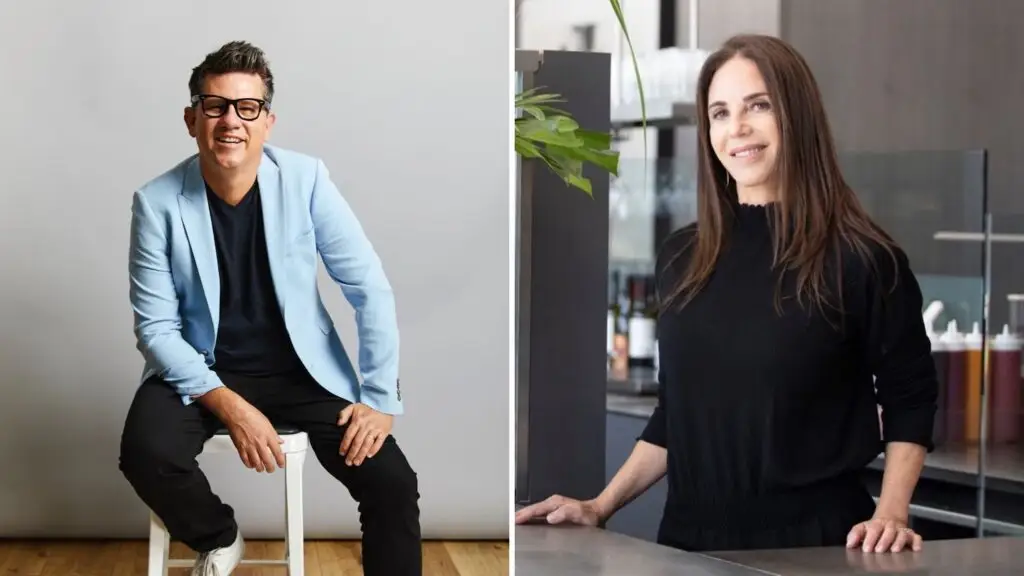
Troy Johnson, Karen Krasne
Signature San Diego Opening Night Party
September 30 | 6 – 9 p.m. | Monarch Ocean Pub
Consider this your soft landing into festival week—the walk-around tasting that eases you in before things get chaotic later on. Monarch Ocean Pub hands its patio over to the flavors that define San Diego eating: Baja seafood done right, coastal bites, Mexican flavors with some heat behind them, all the staples locals will fight you over.
The celebrity sightings here lean more “bump into” than “spot from across the room.” Troy Johnson—Food Network judge, San Diego Magazine chief content officer and co-owner, Emmy-winning host, a man who has eaten his way across the entire country professionally—is the type to materialize at whichever station has the longest line, because he already knows it’s worth the wait. Ask him what he’s had so far. He’ll have opinions.
Then there’s celebrity pastry chef Karen Krasne, owner and executive pastry chef of Extraordinary Desserts, James Beard House alum, and a woman Forbes once ranked among the top 10 pastry chefs in the country—which tracks, because you might find her holding court next to a tray of her roasted pecan shortbread dipped in white chocolate, explaining exactly why this is the flavor combination. You will listen to every word, too, because you’ll want to try that cookie.
This is an opening night party where the person next to you in line might just be the one who baked the thing you’re about to eat.
Courtesy of Del Mar Wine & Food Festival
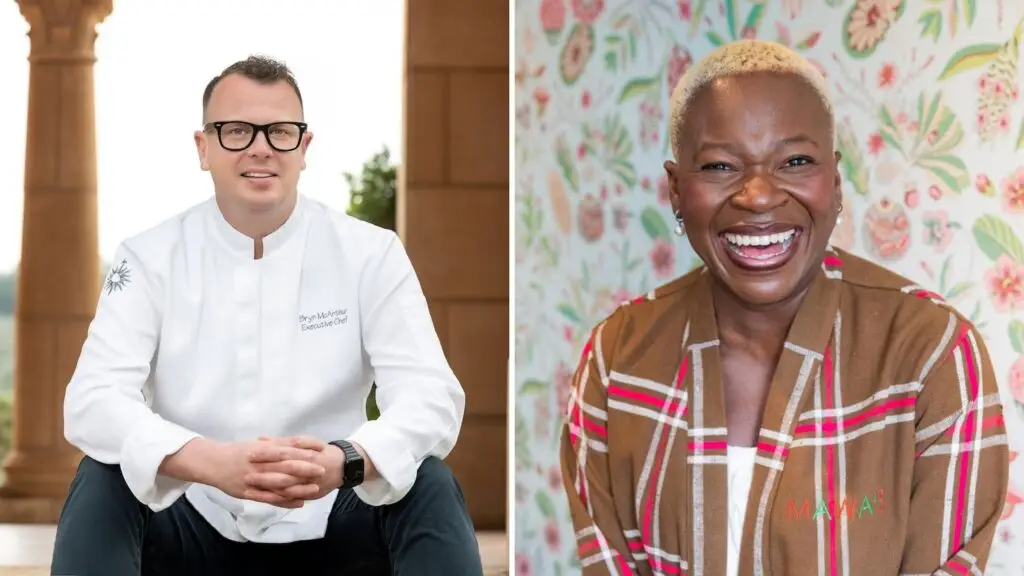
Bryn McArthur, Mawa McQueen
Chateau Montelena’s 50th Anniversary Celebration
October 1 | 6 – 9 p.m. | Fairmont Grand Del Mar
Fifty years ago, a Napa Chardonnay beat France at its own game and rewrote what the world thought it knew about wine. This dinner is that legacy, poured by the family who built it, course by course.
Under the arches at Fairmont Grand Del Mar, Ernie Hahn and the Hahn family, who partnered with the Barretts to revive Chateau Montelena into the Napa powerhouse it is today, host an evening built entirely around the winery’s most iconic pours. Every course gets its own pairing straight from the Montelena portfolio, so you’re not just hearing about the Judgment of Paris, you’re tasting the wine that started it.
Chef Mawa McQueen, a former James Beard Best of the West winner out of Aspen, brings globally inspired cuisine and serious technique to the table. Alongside her, Fairmont Grand Del Mar’s executive chef Bryn McArthur leans into farm-to-table sensibility shaped by a career of global kitchens. Together they’re building a menu meant to hold its own against wine that already changed history once.
This is the rare dinner where the wine isn’t just accompanying the meal, it’s the reason the meal exists. Fifty years after Paris, the rematch is happening right here in Del Mar.
Isabella Dallas is a freelance writer for San Diego Magazine and the Arts and Culture Editor at The Daily Aztec in her final year at San Diego State University. She previously worked as an editorial intern for SDM, but when she’s not writing, you can find her trying the best coffee spots in SD, devouring the latest rom-coms, and indulging in anything and everything pop culture.
After 15 years married, my husband and I tend to agree on most things. But there’s one argument we both refuse to bend on—I prefer okonomiyaki Osaka-style, and he’s a die-hard Hiroshima-style devotee. (To be fair, we both adore both styles, but at this point, it’s just fun to have a low-stakes disagreement.)
Okonomiyaki is one of Japan’s greatest comfort foods, a savory pancake that’s about the size of a DVD, if you aren’t too young to know what that is. It’s not terribly hard to make—it’s flour, eggs, dashi stock or water, and a whole heap of shredded cabbage, plus optional fillings like green onions, pork belly, or bonito flakes, all cooked fresh on a flat top griddle. Drizzle some kewpie mayo and okonomiyaki sauce on top, and you’re hot to go.
However, it’s not easy to make well, and as you now know, people have capital-O Opinions about Osaka-versus-Hiroshima. Hiroshima-style layers the ingredients one by one rather than mixing them together, adding a layer of soba or udon noodles and topping it all off with a fried egg. For Osaka-style, all the ingredients are mixed together and then cooked on the griddle, so every bite includes every ingredient in a hodgepodge of deliciousness. (One Osaka variation called modan-yaki does include soba noodles mixed in the batter, but they’re not traditionally used in that regional version.)
Despite a childhood spent in Osaka, Japan, Kumi Alexander specializes in making Hiroshima-style okonomiyaki. “Okonomiyaki has been part of my life for as long as I can remember,” she explains. “My parents ran their own business when I was growing up, so Saturdays were often busy, and okonomiyaki was one of my mother’s go-to lunches because it was simple and easy to make.”
Alexander came to San Diego seven years ago with a desire to bring a part of her culture with her—not just a product, but a feeling. “When I thought about what could do that, the answer was almost obvious: okonomiyaki,” she says.
She originally launched Surf’n Slaw as a mobile pop-up food stand in August 2025, offering what Alexander calls Japanese-meets-California okonomiyaki. “Our full Surf’n Slaw includes cabbage, noodles, umami dough, beef, shrimp, and vegetables,” she explains. The menu also has a “Green Wave Slaw,” an Osaka-style version that can be made vegan and gluten-free, as well as matcha drinks.
Currently, Surf’n Slaw pops up at farmers markets in North Park, Scripps Ranch, Hillcrest, La Jolla, and La Mesa, as well as other local markets and community events. Eventually, she may expand to a permanent location, but that’s a future goal. And while Alexander hopes that one day okonomiyaki will be as well-known to American audiences as ramen or sushi, for now, she’s just happy to share a bit of home with San Diego.
Izola Bakery announced big plans for a second location and bakery HQ (checks notes) over three years ago and it’s kind of been crickets since then. But there may be movement in the expansion plan—the East Village bakery recently put out a hiring call for “the people we need to help us build what’s next.” Here’s hoping things get cooking (or baking, as the case may be) soon.
As a California-born, East Coast-raised foodie, I can confidently say the East Coast has the deli game on lock. So whenever anyone announces they’re bringing an East Coast-style sandwich to the West Coast, I remain cautiously optimistic until proven otherwise. (Big Jim’s in Pacific Beach is a phenomenal example of a transplant done exceptionally well.) Los Angeles-based Ggiata Delicatessen recently announced plans to open a location in Encinitas, promising authentic Italian staples like meatball parmesan subs, cheesesteaks, and Italian cold cuts. Don’t let me down, guys!
Unfortunately, it’s not all openings and expansions. Nola on 5th in Hillcrest permanently ceased operations without warning or explanation. We can probably pick from one (or more) squares on Restaurant Closure Bingo for the reason (increased costs for ingredients, labor, equipment, etc.), but for the jambalaya enthusiast, it doesn’t really matter why. It’s simply adieu to a slice of The Big Easy in San Diego.
Listen Now: The Latest in San Diego’s Food and Drink Scene
Have breaking news, exciting scoops, or great stories about new San Diego restaurants or the city’s food scene? Send your pitches to [email protected].
Beth Demmon is an award-winning writer and podcaster whose work regularly appears in national outlets and San Diego Magazine. Her first book, The Beer Lover's Guide to Cider, is now available. Find out more on bethdemmon.com.
NewBridge School is San Diego’s only school dedicated to the education of students with dyslexia and related learning profiles. For 30 years we have successfully served students with dyslexia, dysgraphia, dyscalculia, receptive/expressive language disorders, ADHD, executive functioning and memory deficits. Students transition successfully into academically rigorous high schools and colleges across the country. Why NewBridge? Training, training, training (plus intensive individualization, and comprehensive program design). All teachers are trained and retrained biennially in Orton-Gillingham, the only approach proven to remediate dyslexia based on Science of Reading research, and complete a year-long training program. Every aspect of our program is designed around our students’ learning styles and needs. Every class is taught by a highly-trained expert, and our Speech/Language and Occupational Therapy teams embed throughout the day. Our multisensory, multi-tiered math program has been developed in conjunction with sister schools and experts across the country. Don’t wait—early intervention is magic!