Featured articles
Food News
Food News
Food & Drink
Featured articles
Things to Do
Things to Do
Everything SD
Featured articles
Things to Do
Things to Do
Everything SD
Featured articles
podcast-ep
podcast-ep
podcast-ep
Featured articles
Food & Drink
Everything SD
Everything SD
Featured articles

Food News
Things to Do
Things to Do
Ready to know more about San Diego?
SubscribeReady to know more about San Diego?
Even adventurers get the blues
PART 3
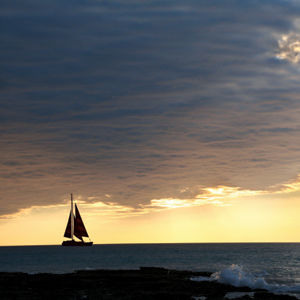
Sail boat offshore
When your 8-foot dinghy strikes a sandbar in the middle of the Bay of La Paz, it is not a life-or-death moment. To the casual observer, it would seem like our boat was simply floating in the water, since the sandbar is not visible from the shore, but smack dab in the middle of the bay is a gigantic dune of submerged sand, and our little boat had run aground on it.
It was early morning and the Coromuel winds were still blowing white-capped waves that sloshed the starboard side where I sat holding my four-month-old. Eric laughed and started pushing off of the sand with a spare oar. He had misjudged the usual passage we motored over each morning in our shallow-drafted dinghy. In a few moments he would shove us off. Heck, we could have probably stepped out onto the sand in the middle of the bay and walked our boat a few feet over, but none of this registered. Instead, my toes began to curl and my hands started clenching and unclenching involuntarily. I clamped my teeth together so tightly, I had an aching jaw the rest of the day. Sweat fevered my body, even though the wind was raising goosebumps on my toddler’s arms. I couldn’t breathe. The sky overhead was a giant vise pushing down against my body. I kept my lips in a tight line, instead of opening them into the O shape I wanted to create with an ear-curdling scream.
That panic attack should have been my first sign of impending trouble. When you set sail on a world adventure, there is a fair amount of gallivanting and gadding about that happens on a daily basis. We had decided to leave San Diego for Mexico and commence a world sailing trip, even though we had just recently discovered I was pregnant with baby number two. People have babies in Mexico every day, don’t they? It would be a lark, part of the adventure we had been planning for years.
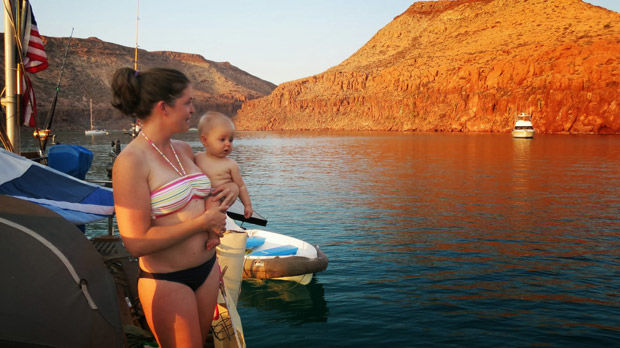
Charlotte holding her baby Lyra
Charlotte and her family waited out hurricane season with their boat in a safe harbor.
But even adventurers get the blues, and in my case it wasn’t just a case of the baby blues. When my second baby was six months old, we flew back to San Diego to visit family and renew our Mexican visas. The panic attack in the Bay of La Paz had happened two months earlier, and I was still struggling. Every day was a desperate attempt for normality. Wake up. Wash face. Pull hair back. Put on my “mom uniform” of clothes that fit my postpartum body and a bra and shirt that allowed me to comfortably nurse. Dress the toddler. Clothe the baby. Make food. Visit with friends. Nod and shake your head that you were fine—just tired, thanks.
But I wasn’t okay. And during that trip to San Diego, my family in the States gave me the news that a family member was ill. On top of that, I was dealing with the breakup of close members of my family. Those two items alone are included in the list of what experts say are the 10 most stressful life events. Add moving out of the country on our boat when I was pregnant, giving birth in a foreign country, postpartum health complications, and being away from friends and family, and I just started to crack.
When we got back to Mexico, the heat of a Baja California summer was unbearable. I felt trapped inside our boat, waiting for the heat to dissipate each day. By the end of August, it hadn’t cooled off at all, and my body and my mind were slowly roasting into a ball of oppressive misery. We sailed the boat to Puerto Escondido, Baja’s only true “hurricane hole,” and moored her there to wait out the rest of hurricane season. Realizing I was at a breaking point, we rented an air-conditioned apartment next to the marina and stayed there for seven weeks, waiting out the battery of storms that hit Baja, the Sea of Cortez, and the Pacific coast of Mexico. In quick succession we weathered Tropical Storm Ivo, but even with the air conditioning, the giant freezer, and the unending access to ice cream and the Internet, I kept sinking further into an abyss. A paralyzing unhappiness had settled over me that I couldn’t shake. My brain was like a fog. I started to daydream of running away. Of escape. Of disappearing. I couldn’t bring myself to smile. Nothing brought me joy.
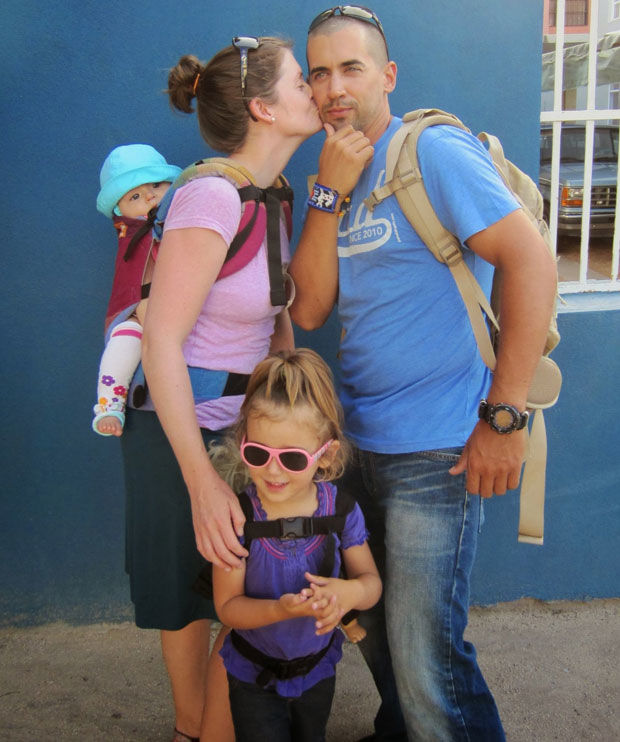
Kaufman family posing for a photo
Charlotte, Eric, Cora, and Lyra Kaufman
And then the rage came. Anger would course through me, sparked by the simplest things: the sound of my husband chewing almonds, my toddler touching my leg when my baby was nursing, a clean blanket dropping on the floor. I was enraged. I could visualize how I wanted to act out on my anger. I wanted to lift up the heavy wooden chairs in the dining room and smash them against the wall of the apartment, then take the large splinters of wood and pulverize them with my teeth. When we moved back from the apartment to the boat in preparation for returning to La Paz, I had fantasies of tearing the teak siding off the hull and gouging it into the cushions in the salon. I wanted to destroy everything. I had the deepest desire to jettison my foot through the doors of the hanging lockers, to rip them off their hinges and fling them into the sea. I had to restrain myself from ripping off every foot of the decorative teak that encircled our boat.
A few years ago I had been diagnosed with depression; I treated it with medication, therapy, and exercise. When I became pregnant the first time, I read about how a previous occurrence of depression makes you a more likely candidate for postpartum depression (PPD), and both my husband and I carefully watched for signs of PPD after both of our babies were born. The only problem was that we were looking for the same symptoms I exhibited the last time I was depressed, and this time they didn’t all match up. Did you know that rage is a sign of depression? Uncontrollable anger and irritability are too, as well as a deep, abiding sense of unhappiness. I didn’t know about these symptoms. The first time I was depressed, I was simply bleak. I lost all interest in anything that had previously brought me joy. I was sans emotions. But this time my emotions raged. I had deep red welts in my forearm, left there by my fingernails earlier that day when I had tried to channel my rage into physical pain instead of shouting or acting out toward my family. Finally the pieces all began to click into place.
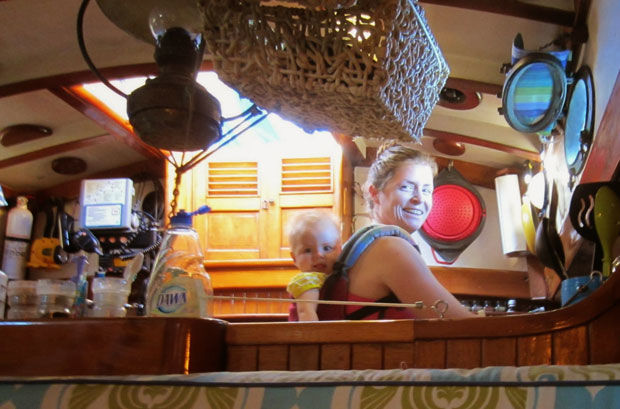
Charlotte Kaufman and her baby Lyra in the galley
Therapy, medication, and exercise helped Charlotte Kaufman (wth baby Lyra) deal with depression while on the family’s around-the-world sailing trip.
I talked to Eric and told him my suspicions. I called my doctor in San Diego, the one who had treated me during my last experience with depression, and I did research. I had thought that going on medication for depression would mean I’d need to wean my daughter, but thankfully, many antidepressants are not contraindicated for breastfeeding. I called my therapist in San Diego and began to have regular phone appointments with her, and, most importantly, we sailed to La Paz after hurricane season and I started exercising again. None of this has been easy. My therapy phone calls are done on a cell phone from Mexico to the United States. I walk around the marina trying to sit near empty sailboats so no one but my therapist, and the pelicans, can hear my thoughts. The first medication I started turned me into a zombie. For three days I observed myself as if I were outside my body, a detached observer treading through life, until I called my doctor and we tried another kind that set me on the right course.
And how do you go public about having postpartum depression? We had already dealt with so many negative comments about leaving for our adventure; so many armchair admirals naysayed our decision to leave San Diego when I was pregnant. They tsk-tsk’d when we encountered problems, when I had pregnancy complications. I was loath to let them revel in their Schadenfreude, but in the end honesty won out. Leaving on an adventure doesn’t make you a superhero. You are not immune to life, or to living. In fact, I was trying to live more by sailing away from everything, and live we have. We have met some of the most interesting people on this journey. I gave birth to our second daughter in a foreign country. I’ve watched my firstborn child learn a second language, and blossom from a shy two-year-old into a gregarious and confident three-year-old. Was it a mistake to leave when we did? Possibly. But I wouldn’t reverse our course if I could. And as I slowly start to recover I’m already planning our next adventure. Only four more months until we cross an ocean and arrive in the South Pacific.
Challenged Sailors Inc.'s specially designed boats allow people with disabilities to sail without limits
For this adventure, you only need to be able to do one thing. “If you can follow directions, you can get in a boat,” says Brewster Schenck, who has quadriplegia and has cruised with Challenged Sailors—a nonprofit that offers free adaptive sailing to people with disabilities—for the past five years.
On an overcast Friday afternoon, a group of 17 huddles on Harbor Island’s docks, home to eight specially designed Martin16 sailboats. The two-person vessels are weighted so they can’t tip over. Even if they filled with water, they wouldn’t sink. The sails are controlled by two ropes and the rudder by a joystick, so the boater can sail without ever having to leave their seat. These boats can even be fitted with technology that allows sailors who can’t use their limbs to control the boat with their breath. As a precaution, a volunteer sailor travels in the seat behind.

The adapted boats give participants freedom they don’t always experience on land. Volunteer Dale Burchby recalls a woman who went sailing with them after a catastrophic accident that rendered her suddenly needing a wheelchair. Looking out at the bay, she asked, “Where do we go?”
Her companion sailor said, “Anywhere you want.”
She burst into tears.
Wheelchairs, walkers, and scooters stay on the docks, explains Challenged Sailors President Peter Phillips, who, because of nerve damage caused by Guillain-Barré syndrome, needs leg braces and a walker to get around.
“When I’m walking, I’m experiencing pain. I can’t go fast,” he says. But out on the bay, “there are no limitations—it’s just the boat and the wind and the water.”

Back on the dock, Penny Anders, who became paraplegic after an accident two years ago, gets ready to be lowered by a hoist into her boat. She beams as she ducks beneath the boom and takes control of the helm. “You go so fast [when you’re sailing]—you’re just flying,” Anders says. The sport has been a source of joy for her in what has been a difficult transition, she adds.
“It saved me, too,” says Leah Gualtieri, her volunteer companion sailor, who took up sailing after a divorce. “Once you’re out there, you don’t want to not be out there.”
Mara Altman is the author of two nonfiction books, Thanks for Coming and Gross Anatomy: Dispatches from the Front (and Back), which was a semi-finalist for the Thurber Prize for American Humor. Altman also wrote eight best-selling Kindle Singles and has written for publications such as The New York Times and New York Magazine. Earlier in her career, she was a staff writer for The Village Voice and daily newspapers in India and Thailand. She lives in North Park with her husband and twins.
Getting outside and staying active is in our blood; and finding new ways to enjoy yearlong perfect weather is what we do best
South Mission Beach Courts
Patrick Davis for Life’s a Beach
The bike shop sits on a popular commute route and is staffed by affable mechanics who have worked the Tour de France. Hardcore bicycle people don’t have the friendliest rep, but MJ’s is different. They’ve got the skill set to equip racers, but they don’t treat commuters or parents buying bikes like tourists in their world.
One minute you’re casually playing a game of pickleball, the next thing you know, you’ve helped design Gearbox’s newest paddle. The brand is based in San Diego and PBTC is their local court, where they play with locals to gain insights on how to improve their rackets. This sounds like free lessons to us.
When a relative was giving away their boat, local architect Vilchis saw an opportunity to design a 10/10 Instagrammable experience. Now you can class up your day date by recreating The Notebook—a pristinely refurbished tiny boat with padded seats, plant garlands, snacks and drinks, and even parasols. Ryan Gosling not included.
Each weekend on the courts of South Mission Beach, the sand is taken over by 2v2 players—many of which are ESL speakers from various countries. They’ve made this plot of sand their sacred community, where the universal language is bump, set, and spike.
On any given Wednesday on Hamilton Ave., 100 to 200 runners gather to run the streets of North Park. It’s put on by Milestone Running, a shop created by locals Greg Lemon and Chad Crawford. Go a few times and you’re pretty much guaranteed at least ten new friends—might even get “Smirnoff Iced” during the post-run raffle. You win some, you lose some.
Even avid runners can lose motivation. This year, Waterfront introduced a new tradition: beer stops. The three- mile loop starts at Eppig Brewing in Point Loma, then heads to Fathom Bistro for a beer before completing the next 1.5 miles. Finish up with a post-run brew at Eppig, obviously.
Mission Bay Basketball Court
Madeline Yang
San Diego’s maritime history runs deep. America’s Cups have a permanent home here. Harbor Sailboats—seven-time winner of the “ASA School of the Year”—offers sailing courses taught by longtime sea dogs. You know, the type of no- nonsense skippers who know how the wind will change by the way the breeze hits their beard hair.
If you want sky-high firs, oak forests that shade your path, and mountain peaks that overlook actual foliage (read: no palm tree in sight), head to Palomar Mountain State Park. And, since the inaugural California State Parks Week took place this year, there’s no better time to dust off your hiking boots on one of the six hiking trails (five for running).
A mellow 5.7 climb on paper, The Tower at Mission Gorge will have you clipping the first few bolts like you’ve been dirtbagging in Yosemite all your life. You’ll have to dig deep into your courage reserves to tackle the crux, but you’ll be walking down that mountain with your head held high when the sun starts to set.
Hoops here have always had a magical effect—a full regulation court, smack dab on the beach. The ball smells like sunscreen. No fence; out of bounds is in the sand. And it just got an artful resurfacing in honor of local basketball legend, Bill Walton—who’s been a member of the South Mission Beach Sports Park & Rec for 25 years.
Yep, in City Heights. Specializing in boards from local shapers, owner Mark Polintan (who grew up on a pineapple farm in the Philippines) has created an infectious gathering place for surfers to support their peers. Like chasing tubes in exotic locations, you never know what or who you’ll find here, but you’re guaranteed to leave stoked.
Surfers are selfish. No matter how many waves we catch, we always want more. And while there’s no shot we’ll ever change, we can at least direct that impulse toward a good cause. At the annual 100 Wave Challenge, participants commit to riding 100 waves in one day to raise funds for the local nonprofit Boys to Men Mentoring.
Nicolle Monico is an award-winning writer and the director of creative projects, digital editor for San Diego Magazine with more than 16 years of experience in media including Outside Run, JustLuxe and The San Francisco Chronicle.
On the first leg of their journey, the Kaufman family never expected such a bumpy ride (with one bump being particularly surprising). A chronicle in three parts. Hold on tight!
The Kaufman’s sail boat
Stand watch for Parts 2 and 3 of this series in the coming months. Follow the Kaufmans’ journey on their blog at therebelheart.com and see a video clip of the family and map of their route around the world.
My daughter Cora is our official engine starter and dolphin spotter. She loves living on a boat and likes it even more when we go sailing. But on Day One of our journey, as we left Point Loma and turned toward open water, the ocean swells intensified, and so did the sour look on Cora’s chubby, two-year-old face. I had spent all morning fluttering around the inside of the cabin, stowing away last-minute provisions and happily snapping photos of our well-prepared vessel for our blog. I felt like a domestic boat goddess as I handed out small bowls filled with a simple breakfast of blueberries, cheese, and almonds to Cora and my husband, Eric. This is what it’s all about, I thought.
Shakedown cruises are a way to get ready for longer passages onboard. They let you try out truly pushing your boat and using it the way it was meant to, out in the open ocean, with sails unfurled, and under the full power and force of wind and waves. Our shakedown cruise would take us from San Diego Bay to Catalina and then on to Santa Cruz and, we hoped, the San Miguel Islands.
We had planned to motor up to Catalina rather than sail, because we were fighting a strong current and were all tired from the previous days’ prep work. We had given Cora a dose of children’s Bonine before we left, so I wasn’t worried about her getting seasick. But then things got rolly.
Kaufman family
The Kaufman family
The swells started and Eric put up the staysail to try to make things a bit more stable, but Cora wasn’t saying a word. Our chipper dolphin spotter was more like a moping jellyfish.
I knew what was coming. I tried to turn her away from me and toward the cockpit. “Get a bucket,” I said to Eric, who just scoffed, saying she wouldn’t get the concept.
But oh, she got it. And she threw up a lot. I tried to soothe her but had a hard time not puking myself, as she emptied her breakfast onto my leg and shoes. My first thought was, She just got vomit all over my only clean skirt! Eric jumped into action and got her wiped up. I said we were both going to go lie down in the v-berth, because I didn’t feel well either.
That was a bad, bad idea.
The v-berth is forward on a boat and an extremely bouncy place to be, especially when seasick. I had hoped that once Cora threw up she would feel better and be over her seasickness, but no such luck. She got sick multiple times before I finally got sick myself, into a plastic bin that had been holding our brightly colored courtesy flags. Cora looked up for a brief moment to watch me. You can tell a kid isn’t feeling well when she watches a grown-up hurl and doesn’t laugh. Kids typically think anything barf-related is hilarious. But Cora just buried her face back in my legs.
I sat there for what seemed like ages, trying desperately not to look down at the reconstituted blueberries. Trying
not to smell them. Finally I heard Eric on the steps and yelled for him. He yelled back that he was almost done
cleaning up, but I hollered louder, and when he came to see, I just handed him the bucket and said, “We gotta get out of here.”
And so it went… for hours and hours.
Cora and mom Charlotte Kaufman
Two-year-old Cora and mom Charlotte battle seasickness on a shakedown cruise from San Diego to Catalina in preparation for a trip around the world.
On our second date, Eric told me he wanted to sail around the world. He was tall, dark, and handsome with striking green eyes and an all-American smile that promised a world of adventure ahead of me should I dare to join him. Ten months after that date we bought our boat together, the Rebel Heart. Two years later we got married, and in another two years, our first daughter was born. We moved aboard the boat as a family of three, and announced to our friends and family how we’d been saving and preparing to sail around the world. They smiled indulgently and disbelievingly. At each stage of this journey, most people did not believe we were going to go.
Our trajectory for a circumnavigation would take us from Mexico to the South Pacific, and then on a circuitous route from New Zealand, through the Indian Ocean, the Suez Canal, the Mediterranean, and the canals of Europe, across the Atlantic Ocean, through the Panama Canal, and then back up the coast of Mexico to return to San Diego.
We only had one small problem. Six weeks after setting our departure date for this shakedown cruise, I found out I was pregnant with our second child. When I told Eric, the first words out of my mouth were, “I’m pregnant.” And, staring into his dumbfounded eyes, the next words were, “And we’re still going sailing.”
Fast-forward to August 16, 2012, our boat pulled away from the marina and motored out of America’s Cup Harbor for our shakedown cruise to Catalina. I had just entered my second trimester of pregnancy, and nausea was just the beginning.
On that first day, Cora and I tried lying out in the cockpit, but we both continued to be sick even in the fresh air. We have no sun cover when we are out sailing, and eventually I just got too hot to be outside. I hobbled down to the salon cushion and made camp there. Eric came by periodically to pick up my puke bucket and dump it out for me.
I tried unsuccessfully three times to take a Zofran to prevent the vomiting, and threw up three of the precious pills (I only had 10). Finally, on the fourth attempt, I was able to keep it down and that began the slow process of getting un-seasick. Once I was stable enough to be lying on my side in the cockpit again, we moved Cora to a cushion beside me. Eric, who had been blissfully seasick-free, was exhausted from caring for both of us, and he went down to get some sleep while I feebly stood watch. I set a timer that went off every 15 minutes, so I could stand up and look in a complete circle around our boat to make sure we weren’t going to hit any vessels.
Cora and dad Eric Kaufman
Cora acts as chief dolphin spotter while at sea. Dad Eric is skipper and is responsible for all things topside on the Rebel Heart.
It is impossible to really know how to provision your boat for a long trip until you have just gone ahead and done it. I highly recommend reading Lin Pardey’s book The Care and Feeding of Sailing Crew as a place to start. But no amount of practical advice or how-to books prepared me for 12 hours of morning sickness at sea with a hurling toddler.
Eric and I don’t have faith in Mother Nature; we respect her. Any sailor worth his salt knows you can’t trust the ocean, but you can study it and understand what you are getting into before you leave for a destination. We read weather reports, we research when to avoid areas because of storms and bad weather, and we never have a strict schedule.
And both Eric and I have a huge amount of trust in each other. We divide our roles on the boat into “pink” and “blue” jobs. My domain is the interior of the cabin. I take care of provisioning, cooking, and making sure the kids are safe and cared for under passage. Eric’s domain is topside, navigating, trimming the sails, and anchoring. I have absolute trust that Eric will get us there safely. Likewise, Eric trusts that the crew (me and the kids) are out of harm’s way and that every once in a while a cup of hot coffee and a homemade meal will be handed to him so he can keep the boat moving. It might sound old-fashioned, but it works for us.
Cora has chores on the boat, too. She helps set and clear the table, she brings us paper towels and canned goods that are stored in lockers at her level, and she helps clean when we are cleaning, working alongside us with a spray bottle and a rag. Keeping things ship-shape is very important on a boat. There is a place for everything, and Cora has quickly learned that she can’t move on from one game or activity until the other is put away. She knows how to stow her rack or clean up her berth. Down below, what she likes most is to help me cook, and especially bake. Topside, she likes to work alongside her daddy. She has a set of toy tools and happily bangs away on winches and lines whenever she gets the chance.
She is a tough little kid with a sweet spirit. We hope one day she will recognize the incredible opportunity of being raised on a boat and sailing around the world. How many two-year-olds can step from a bouncing dinghy onto an outboard ladder, climb up it, and get themselves over the gunwale of a sailboat unassisted? How many toddlers are aware of the lines on a boat and how dangerous they can be? Or how many kids get to wake up each morning to wildlife on their doorstep? Swimming with dolphins, or seeing the spouts of whales from their backyard? Not many.
food in the galley
Charlotte is responsible for all things below deck, including stocking the galley.
We got to Catalina approximately 20 hours after leaving San Diego. Eric yelled from the foredeck that we were securely moored in Two Harbors, and I melted into the cockpit cushions in total relief. The happy hum of summertime sounds seemed to instantly calm the sickness. A woman in a neon bikini breezed past us on a paddleboard, and I smiled at the little kid tucked in between her legs enjoying the bumpy ride to the beach. A Beach Boys song blared from a café near the end of the main pier. Cora popped her head up into the cockpit, grinned, and waved her swimsuit around like little cheerleader celebrating our victory over the sea. Our dolphin spotter was ready to look for fins. And I knew for the first time in a long time, we were going to be able to use our boat the way we had always wanted: to have adventures.
blueberries and almonds
The fateful breakfast of berries and almonds that resurfaced soon after the Kaufmans set sail.
It was one hell of a learning curve for both me and Eric. Neither one of us thought I would get as seasick as I did. And as much as we respect Mother Nature, we realized we didn’t have as much respect for Bonine, considering how sick Cora got as well. Pregnancy had changed the disposition of my sea legs, and it meant we had to completely re-evaluate our plans for the next leg of the six-week-long shakedown, and eventually the first leg of our world tour, with a stop in Mexico to have our baby. But for now, we were happily ensconced in Catalina, and the beach was calling our names.
Stand watch for Parts 2 and 3 of this series in the coming months. Follow the Kaufmans’ journey on their blog at therebelheart.com and see a video clip of the family and map of their route around the world.
Stake Chophouse & Bar brings contemporary classics and old-school service to the heart of Coronado
Stake Chophouse & Bar isn’t your average steakhouse. Blue Bridge Hospitality’s Coronado outpost is a modern interpretation of a big-city steakhouse nestled in the heart of the small coastal community. The team at Stake has reimagined the whole steakhouse experience. By prioritizing a seasonal farm-to-table sourcing philosophy, a personalized guest experience, and unique service touches, like a formal steak presentation and a bespoke knife selection process, Stake distinguishes itself in a sea of steakhouses.
Exceptional steaks, including Wagyu from Japan, Australia, and the U.S., and fresh seafood flown in daily form the core of Stake’s culinary identity. The menu features a five-course omakase-style steak experience highlighting house favorites, plus an array of cuts, and classic steakhouse staples—think a wedge salad, baked potato, or pasta carbonara—refined for a contemporary palate without losing their traditional appeal. Stake focuses on seasonal sourcing from the region’s best family farms and specialty purveyors, and incorporates intentionally unexpected touches to create something truly unique.
“I challenge our chefs and myself to take it a step further in sourcing,” says Chef Ronnie Schwandt. “It’s important to us to highlight different farms, unique one-off farms—whether it’s cattle, strawberries, a local fisherman or from anywhere in the United States, we’re always trying to find that niche.”
Beyond the menu, Stake emphasizes outstanding service, says Vinny Spatafore, Director of Hospitality Operations. Staff maintains detailed notes, allowing them to remember guests by name, recall previous orders such as a favorite martini (also memorable for the customer since it’s served in an extra tall, distinctly-shaped glass), and celebrate special occasions like birthdays and anniversaries.
“When you have those points of topic that you remember about a guest, they appreciate that,” he says. “Our servers are really good with that—we have a couple servers who have been here since the beginning and they’ll remember somebody from years ago, their name, their kids’ names, where they live. I’m really thankful to have a great front of house staff.”
Award-winning wines, rare whiskeys, special events, and a complementary black car service that provides transportation for guests throughout Coronado add to Stake’s appeal.
Schwandt stresses that Stake offers more than a meal; they aim to give patrons something unforgettable.
“It starts when you walk up the stairs and are greeted by the hostess—that sets the tone for the night. Then you’re greeted by a server, who may know you by name, and can guide you through the menu and curate as they get to know you,” says Schwandt. “Most people leave kind of blown away; they leave feeling like they just had an experience. That’s the goal, right? Whether you’re serving smash burgers or high-end steak, you want somebody to leave thinking, Wow, that was awesome.”
On the first leg of their journey, the Kaufman family never expected such a bumpy ride (with one bump being particularly surprising). A chronicle in three parts. Hold on tight!
The Kaufman’s sail boat
Stand watch for Parts 2 and 3 of this series in the coming months. Follow the Kaufmans’ journey on their blog at therebelheart.com and see a video clip of the family and map of their route around the world.
My daughter Cora is our official engine starter and dolphin spotter. She loves living on a boat and likes it even more when we go sailing. But on Day One of our journey, as we left Point Loma and turned toward open water, the ocean swells intensified, and so did the sour look on Cora’s chubby, two-year-old face. I had spent all morning fluttering around the inside of the cabin, stowing away last-minute provisions and happily snapping photos of our well-prepared vessel for our blog. I felt like a domestic boat goddess as I handed out small bowls filled with a simple breakfast of blueberries, cheese, and almonds to Cora and my husband, Eric. This is what it’s all about, I thought.
Shakedown cruises are a way to get ready for longer passages onboard. They let you try out truly pushing your boat and using it the way it was meant to, out in the open ocean, with sails unfurled, and under the full power and force of wind and waves. Our shakedown cruise would take us from San Diego Bay to Catalina and then on to Santa Cruz and, we hoped, the San Miguel Islands.
We had planned to motor up to Catalina rather than sail, because we were fighting a strong current and were all tired from the previous days’ prep work. We had given Cora a dose of children’s Bonine before we left, so I wasn’t worried about her getting seasick. But then things got rolly.
Kaufman family
The Kaufman family
The swells started and Eric put up the staysail to try to make things a bit more stable, but Cora wasn’t saying a word. Our chipper dolphin spotter was more like a moping jellyfish.
I knew what was coming. I tried to turn her away from me and toward the cockpit. “Get a bucket,” I said to Eric, who just scoffed, saying she wouldn’t get the concept.
But oh, she got it. And she threw up a lot. I tried to soothe her but had a hard time not puking myself, as she emptied her breakfast onto my leg and shoes. My first thought was, She just got vomit all over my only clean skirt! Eric jumped into action and got her wiped up. I said we were both going to go lie down in the v-berth, because I didn’t feel well either.
That was a bad, bad idea.
The v-berth is forward on a boat and an extremely bouncy place to be, especially when seasick. I had hoped that once Cora threw up she would feel better and be over her seasickness, but no such luck. She got sick multiple times before I finally got sick myself, into a plastic bin that had been holding our brightly colored courtesy flags. Cora looked up for a brief moment to watch me. You can tell a kid isn’t feeling well when she watches a grown-up hurl and doesn’t laugh. Kids typically think anything barf-related is hilarious. But Cora just buried her face back in my legs.
I sat there for what seemed like ages, trying desperately not to look down at the reconstituted blueberries. Trying
not to smell them. Finally I heard Eric on the steps and yelled for him. He yelled back that he was almost done
cleaning up, but I hollered louder, and when he came to see, I just handed him the bucket and said, “We gotta get out of here.”
And so it went… for hours and hours.
Cora and mom Charlotte Kaufman
Two-year-old Cora and mom Charlotte battle seasickness on a shakedown cruise from San Diego to Catalina in preparation for a trip around the world.
On our second date, Eric told me he wanted to sail around the world. He was tall, dark, and handsome with striking green eyes and an all-American smile that promised a world of adventure ahead of me should I dare to join him. Ten months after that date we bought our boat together, the Rebel Heart. Two years later we got married, and in another two years, our first daughter was born. We moved aboard the boat as a family of three, and announced to our friends and family how we’d been saving and preparing to sail around the world. They smiled indulgently and disbelievingly. At each stage of this journey, most people did not believe we were going to go.
Our trajectory for a circumnavigation would take us from Mexico to the South Pacific, and then on a circuitous route from New Zealand, through the Indian Ocean, the Suez Canal, the Mediterranean, and the canals of Europe, across the Atlantic Ocean, through the Panama Canal, and then back up the coast of Mexico to return to San Diego.
We only had one small problem. Six weeks after setting our departure date for this shakedown cruise, I found out I was pregnant with our second child. When I told Eric, the first words out of my mouth were, “I’m pregnant.” And, staring into his dumbfounded eyes, the next words were, “And we’re still going sailing.”
Fast-forward to August 16, 2012, our boat pulled away from the marina and motored out of America’s Cup Harbor for our shakedown cruise to Catalina. I had just entered my second trimester of pregnancy, and nausea was just the beginning.
On that first day, Cora and I tried lying out in the cockpit, but we both continued to be sick even in the fresh air. We have no sun cover when we are out sailing, and eventually I just got too hot to be outside. I hobbled down to the salon cushion and made camp there. Eric came by periodically to pick up my puke bucket and dump it out for me.
I tried unsuccessfully three times to take a Zofran to prevent the vomiting, and threw up three of the precious pills (I only had 10). Finally, on the fourth attempt, I was able to keep it down and that began the slow process of getting un-seasick. Once I was stable enough to be lying on my side in the cockpit again, we moved Cora to a cushion beside me. Eric, who had been blissfully seasick-free, was exhausted from caring for both of us, and he went down to get some sleep while I feebly stood watch. I set a timer that went off every 15 minutes, so I could stand up and look in a complete circle around our boat to make sure we weren’t going to hit any vessels.
Cora and dad Eric Kaufman
Cora acts as chief dolphin spotter while at sea. Dad Eric is skipper and is responsible for all things topside on the Rebel Heart.
It is impossible to really know how to provision your boat for a long trip until you have just gone ahead and done it. I highly recommend reading Lin Pardey’s book The Care and Feeding of Sailing Crew as a place to start. But no amount of practical advice or how-to books prepared me for 12 hours of morning sickness at sea with a hurling toddler.
Eric and I don’t have faith in Mother Nature; we respect her. Any sailor worth his salt knows you can’t trust the ocean, but you can study it and understand what you are getting into before you leave for a destination. We read weather reports, we research when to avoid areas because of storms and bad weather, and we never have a strict schedule.
And both Eric and I have a huge amount of trust in each other. We divide our roles on the boat into “pink” and “blue” jobs. My domain is the interior of the cabin. I take care of provisioning, cooking, and making sure the kids are safe and cared for under passage. Eric’s domain is topside, navigating, trimming the sails, and anchoring. I have absolute trust that Eric will get us there safely. Likewise, Eric trusts that the crew (me and the kids) are out of harm’s way and that every once in a while a cup of hot coffee and a homemade meal will be handed to him so he can keep the boat moving. It might sound old-fashioned, but it works for us.
Cora has chores on the boat, too. She helps set and clear the table, she brings us paper towels and canned goods that are stored in lockers at her level, and she helps clean when we are cleaning, working alongside us with a spray bottle and a rag. Keeping things ship-shape is very important on a boat. There is a place for everything, and Cora has quickly learned that she can’t move on from one game or activity until the other is put away. She knows how to stow her rack or clean up her berth. Down below, what she likes most is to help me cook, and especially bake. Topside, she likes to work alongside her daddy. She has a set of toy tools and happily bangs away on winches and lines whenever she gets the chance.
She is a tough little kid with a sweet spirit. We hope one day she will recognize the incredible opportunity of being raised on a boat and sailing around the world. How many two-year-olds can step from a bouncing dinghy onto an outboard ladder, climb up it, and get themselves over the gunwale of a sailboat unassisted? How many toddlers are aware of the lines on a boat and how dangerous they can be? Or how many kids get to wake up each morning to wildlife on their doorstep? Swimming with dolphins, or seeing the spouts of whales from their backyard? Not many.
food in the galley
Charlotte is responsible for all things below deck, including stocking the galley.
We got to Catalina approximately 20 hours after leaving San Diego. Eric yelled from the foredeck that we were securely moored in Two Harbors, and I melted into the cockpit cushions in total relief. The happy hum of summertime sounds seemed to instantly calm the sickness. A woman in a neon bikini breezed past us on a paddleboard, and I smiled at the little kid tucked in between her legs enjoying the bumpy ride to the beach. A Beach Boys song blared from a café near the end of the main pier. Cora popped her head up into the cockpit, grinned, and waved her swimsuit around like little cheerleader celebrating our victory over the sea. Our dolphin spotter was ready to look for fins. And I knew for the first time in a long time, we were going to be able to use our boat the way we had always wanted: to have adventures.
blueberries and almonds
The fateful breakfast of berries and almonds that resurfaced soon after the Kaufmans set sail.
It was one hell of a learning curve for both me and Eric. Neither one of us thought I would get as seasick as I did. And as much as we respect Mother Nature, we realized we didn’t have as much respect for Bonine, considering how sick Cora got as well. Pregnancy had changed the disposition of my sea legs, and it meant we had to completely re-evaluate our plans for the next leg of the six-week-long shakedown, and eventually the first leg of our world tour, with a stop in Mexico to have our baby. But for now, we were happily ensconced in Catalina, and the beach was calling our names.
Stand watch for Parts 2 and 3 of this series in the coming months. Follow the Kaufmans’ journey on their blog at therebelheart.com and see a video clip of the family and map of their route around the world.
We ask the city's best food photographers to choose their favorite pics and share their secrets to capturing a drool-worthy pic
Food is a notorious diva to photograph. The wrong lighting can make José Andrés’ paella look like a jaundiced grain bowl. You could be staring at the best sandwich of your life, but shoot it from above and—hey, congrats on that abandoned piece of lettuce bread. A cottage meme industry has been built around the hilariously bad photos on review sites that make Michelin-star food look like Michelin tires.
Especially in a visual modern media world, food culture depends on great photographers capturing the painstaking work in equally deserving ways. We asked four of San Diego’s top food photographers for their favorite shot from another year of documenting what we eat.

Getting this kind of shot takes a bit of yoga. Asana yourself into the corner, hold your breath, pray that a chef on the move doesn’t back into your light stand.
“You’re stepping into someone’s workspace during their busiest moments, so it’s a balance of being present to get the shot and being invisible to not slow anything down,” Kimberly Motos says.
The subject here is the Birdman sandwich from Chick & Hawk—hot fried chicken thigh, tangy slaw, kimchi comeback sauce, sweet and spicy pickles, potato brioche bun—getting a hearty dousing of its difference-maker seasoning. Motos captures the parts of the process that diners don’t usually see: the chaos behind something that looks so simple.

“I love this image because it feels like a moment you want to step into,” says Lucianna McIntosh. A warm, sunny day at The Fishery in PB with oysters, caviar, and martinis. Yes, please.
The little details—the glass sweating a little, the direct afternoon light creating stark shadows, the oyster glistening on the tray—are the main characters. Instead of trying to overly control the setup, McIntosh “followed the light and lines that draw you in more,” she says. “This was one of those moments where everything lined up on its own for a second. I love it when the shadows end up being just as important as the food itself.”

La Jolla native Eric Wolfinger—who won a James Beard Award for Tartine Bread, one of the most stunning bread books of all time—says he doesn’t have a signature style. His style is a conduit.
“I see my job is to translate the chef’s point of view into something you can feel,” he says.
For this shot, Fleurette chef Travis Swikard had one directive: cuisine du soleil (“cuisine of the sun”). With a spread of leeks vinaigrette, herb-roasted golden chicken, and beets, Wolfinger wanted to create a scene that felt straight out of the French Riviera, relaying the light, bright style of Swikard’s new spot.
Some bonus additions here: Extra lights—to add lots of warmth—and a clipping from an olive tree.

Timing and light are everything in food photography. In Lucien—La Jolla’s tasting-menu-only restaurant with moody ambiance—a single strobe flash creates the ideal spotlight.
Dee Sandoval says she uses the “natural, just-plated energy” of the dish to “create a portrait of moment and craft.” That’s why this Mostra Ghost Bear espresso ice cream—with San José dark chocolate mousse, soy-miso caramel, and koji shoyu chocolate sauce—looks like it might dissolve halfway to your mouth.
Emma Veidt is an editor at San Diego Magazine. She earned her bachelor's and master's degrees from the Missouri School of Journalism. She loves running, hiking, and rock climbing, but really, she mostly loves encounters with the street cats around North Park.
Scripps study shows that some patients may be able to taper their dose and maintain results
While glucagon-like peptide-1 (GLP-1) receptor agents have been used to treat Type 2 diabetes for more than 20 years, their recent emergence as weight-loss wonder drugs marked a new frontier in medicine. But their effectiveness has left some patients wondering what to do once they’ve reached their goal. Stopping the medication could mean regaining some, if not all, of the weight. A Scripps Clinic internal medicine physician recently conducted a small study of whether GLP-1 patients who had reached their goal weight could maintain that weight by taking their regularly prescribed injection every other week instead of weekly. Spoiler alert: 30 of 34 patients did. Read more about the study here and what that may mean as pharmaceutical companies roll out oral GLP-1s.
For more nutrition, wellness, and healthy living tips, sign up for the San Diego Health newsletter here.