Featured articles
Food & Drink
Food & Drink
Food & Drink
Featured articles
Everything SD

Everything SD
Things to Do
Featured articles
Things to Do
Things to Do

Guides
Featured articles
podcast-ep
podcast-ep

podcast-ep
Featured articles

Everything SD
Everything SD
Food & Drink
Featured articles
Everything SD
Everything SD
Food & Drink
Ready to know more about San Diego?
SubscribeReady to know more about San Diego?
Expert-approved shades for your home
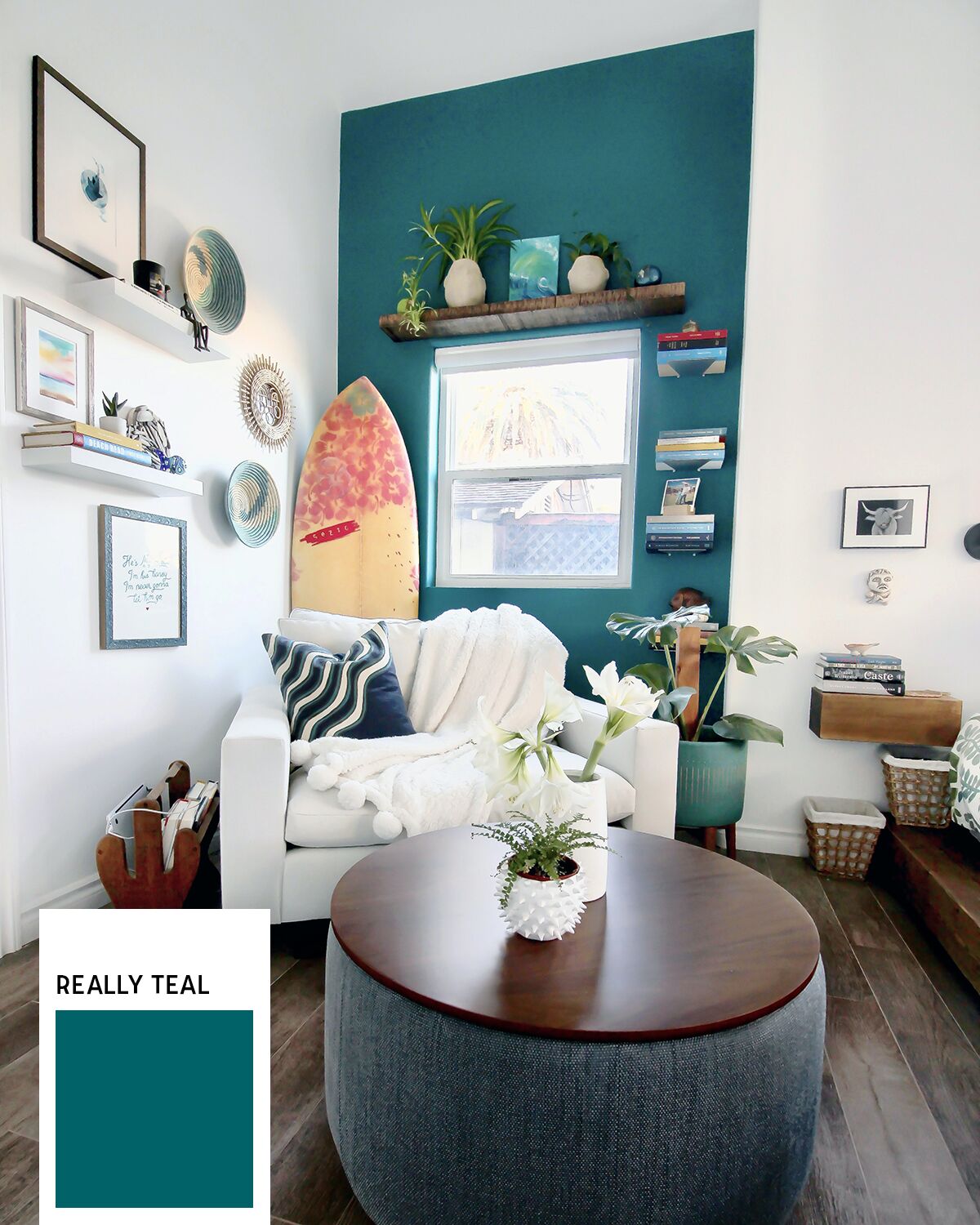
Photo courtesy of Blythe Interiors, @blytheinteriors
The fastest way to refresh a room is with a can (or two) of paint. But choosing a color can be overwhelming, since there are thousands of options. Even if you’ve zeroed in on a hue—and a brand—there may be a dozen or more nuanced tint in the same family, which can make it very difficult to make a confident decision.
Whether you’re looking for a timeless, calming neutral or a bolder statement shade, the following colors are faves among the pros.
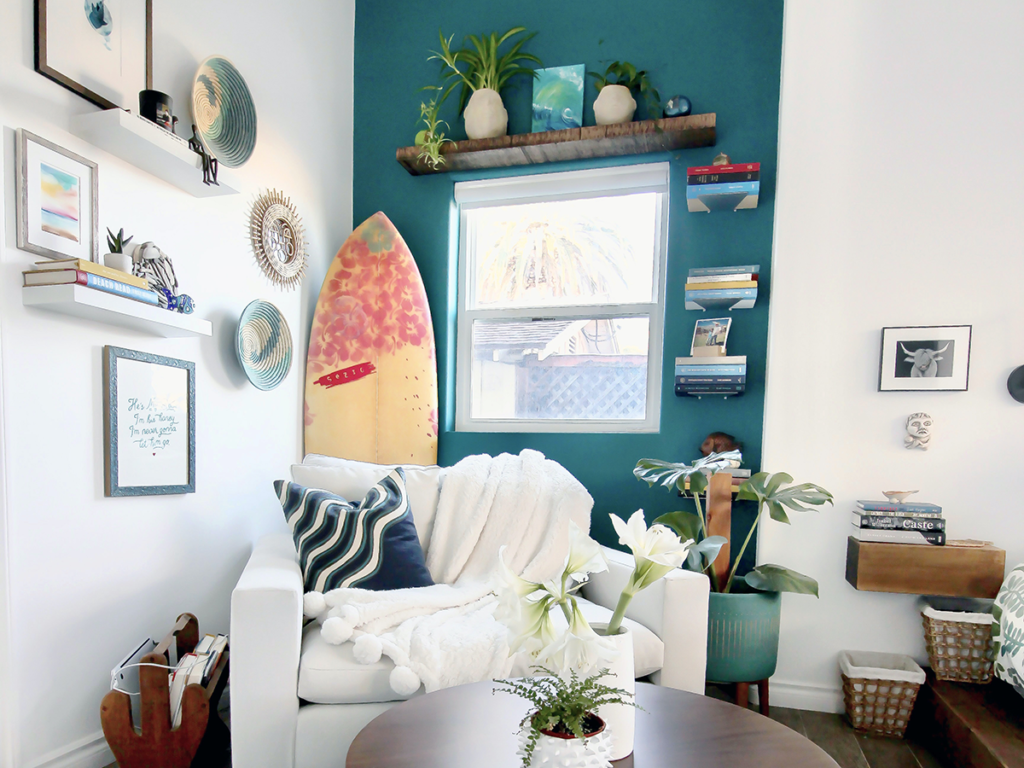
Bright, fresh, and cheerful is what Jennifer Verruto, the founder and designer-in-chief of Blythe Interiors, aims for when she’s trying to define a small space. “Originally, this inset corner didn’t seem to have a purpose,” Verruto says. “Giving it this vivid pop makes the new reading nook feel intentional.”
“I’m obsessed with this color because it’s timeless, bold, and adds richness and depth to a room,” Verruto says of the color she chose for her son’s nursery. Worried that a shade this dark will make a room feel too small? She adds, “As long as there’s a lot of natural light and large furnishings to break up the color, the room will feel cozy, not small.”
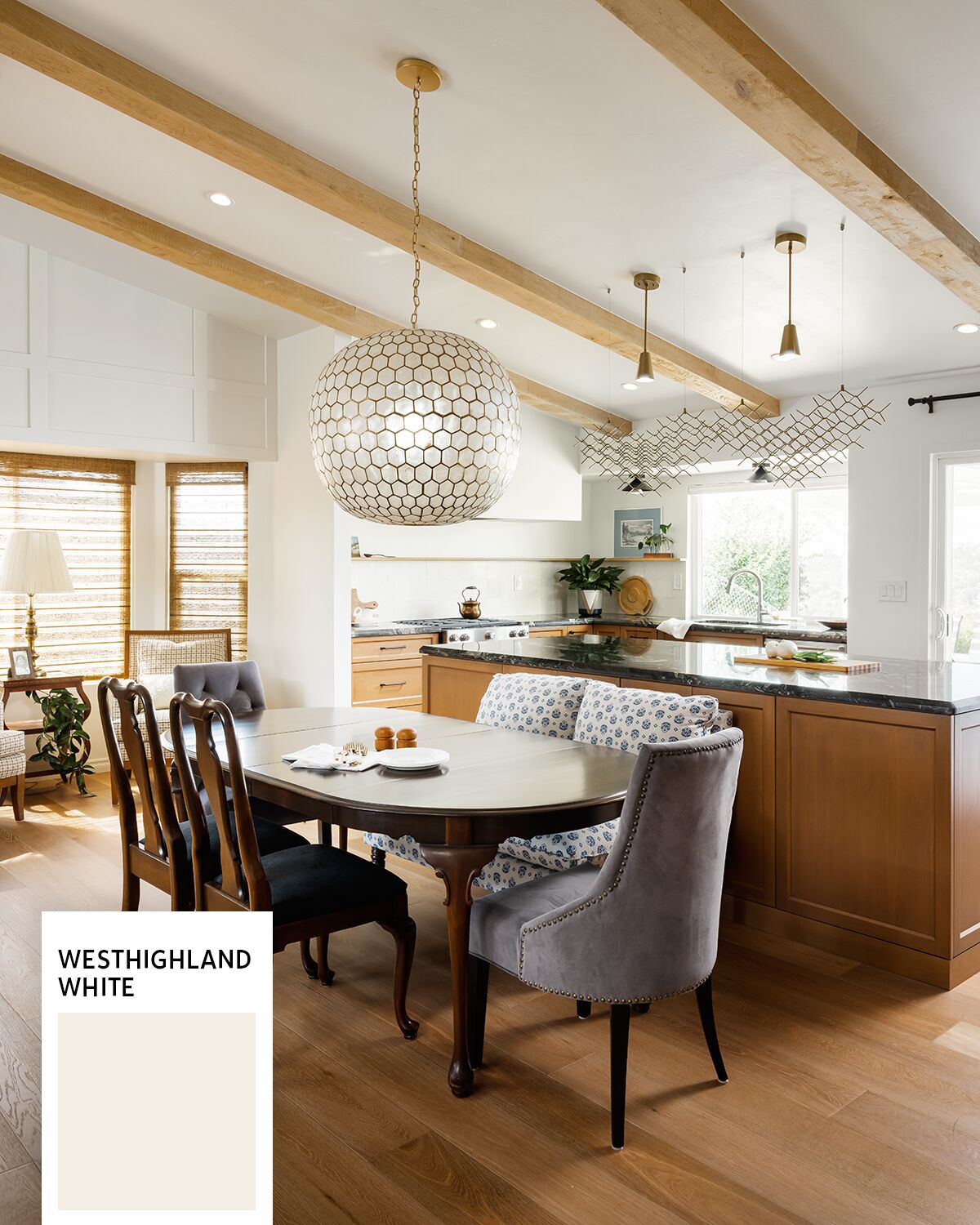
Photo courtesy of Taylor Abeel, @taylorallancreative
Danielle Perkins, principal designer and owner of Danielle Interior Design & Decor, says everyone wants white walls: “This warm white feels welcoming in a room that has lots of natural light. If you use it in a room with little light or no windows, it may show more yellow.” She used this paint throughout an open space—including on the ceilings—to let the woodwork steal the show.
For spaces with no windows, Perkins opts for this cooler shade in almost every instance. “It never lets me down,” she says. Here, she chose lighting that casts a warmer glow to ensure the space doesn’t look stark.
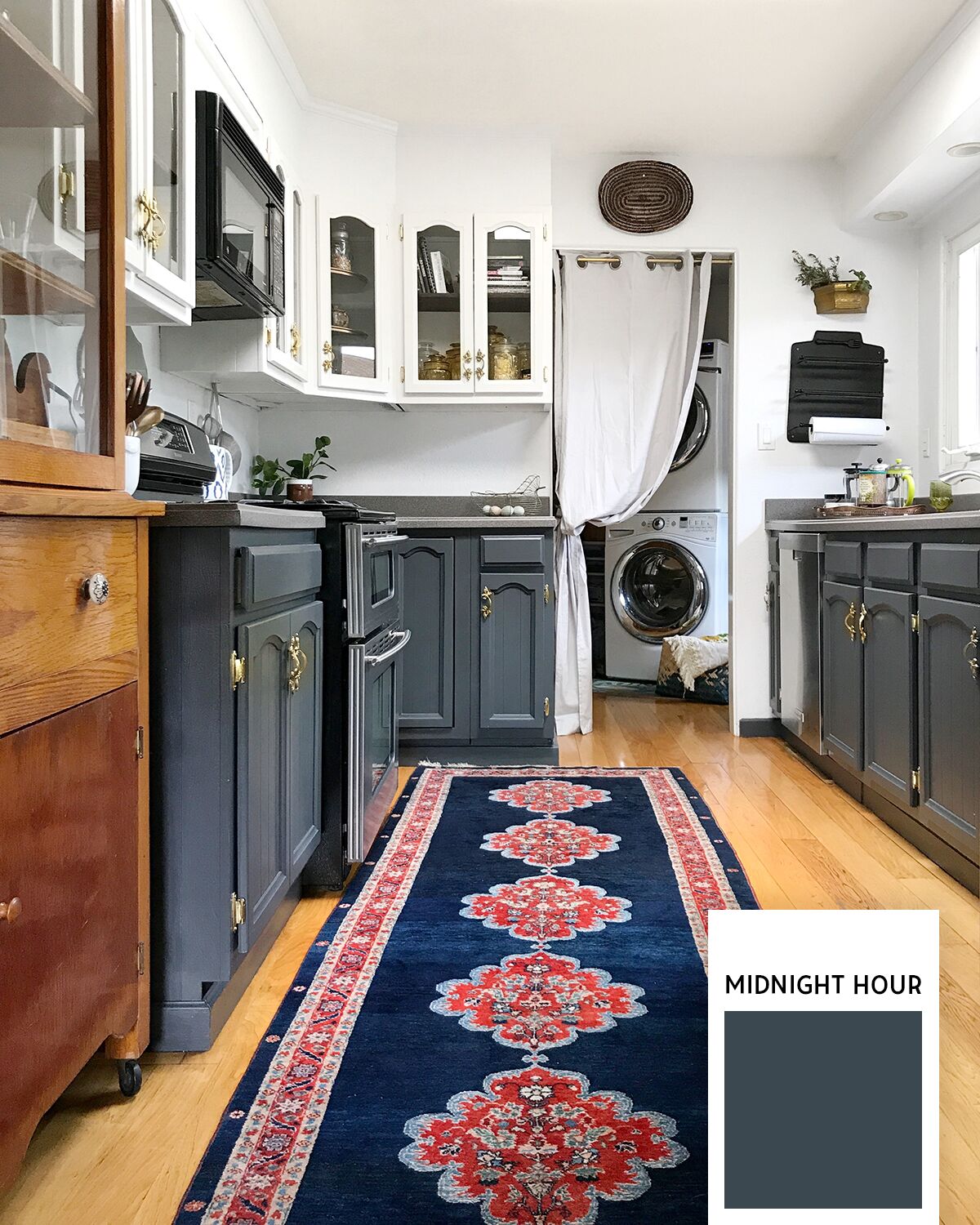
Photo courtesy of Rachel Moriarty
Charcoal works as a neutral, explains Treci Smith, the interior stylist behind Treci Smith Designs. Use it anywhere—inside or out. Smith painted her fence, her studio, and multiple spaces inside her home with this dark gray. “It’s sophisticated and moody,” she says. She likes to be dramatic and paint smaller spaces—like her kids’ bathroom—but she’s used it in rooms with loads of natural light, too. She updated her bright, all-white kitchen by painting the bottom cabinets this color.
Gray is still considered a classic neutral for interiors. “And this is the perfect gray—not too light or dark, not too cool or warm,” says Hope Clark, founder and principal designer of Olive + Oak Interiors. “It’s the right pigment to create a hint of contrast with white trim.”
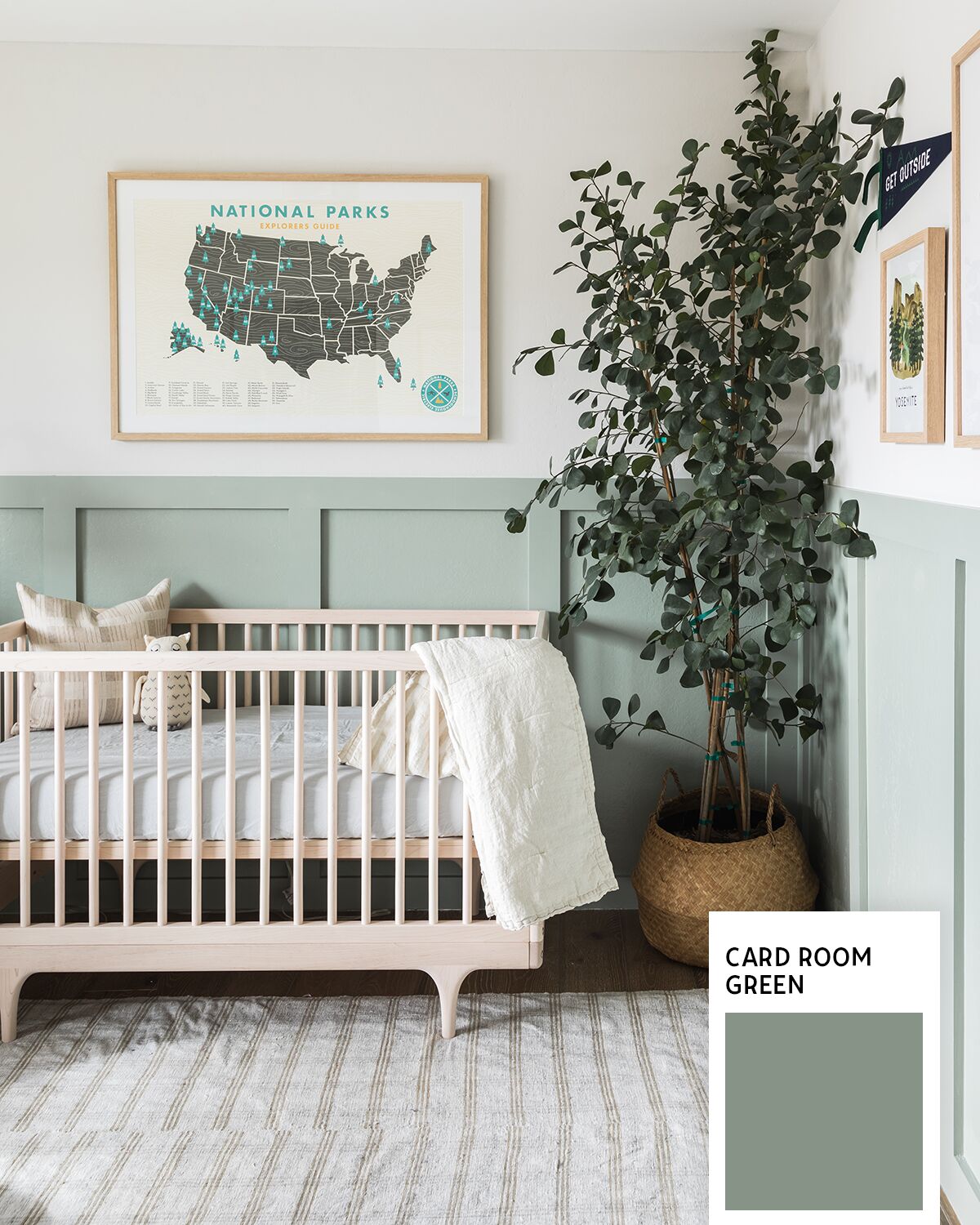
Photo courtesy of Vanessa Lentine Photography, @vlentine
Soothing colors that celebrate natural elements, like this soft green, are popular this year. “I love this subtle nod to mother earth,” says Clark, who used it on the woodwork in her son’s nursery but brightened the color 25 percent. “It creates such calm.”
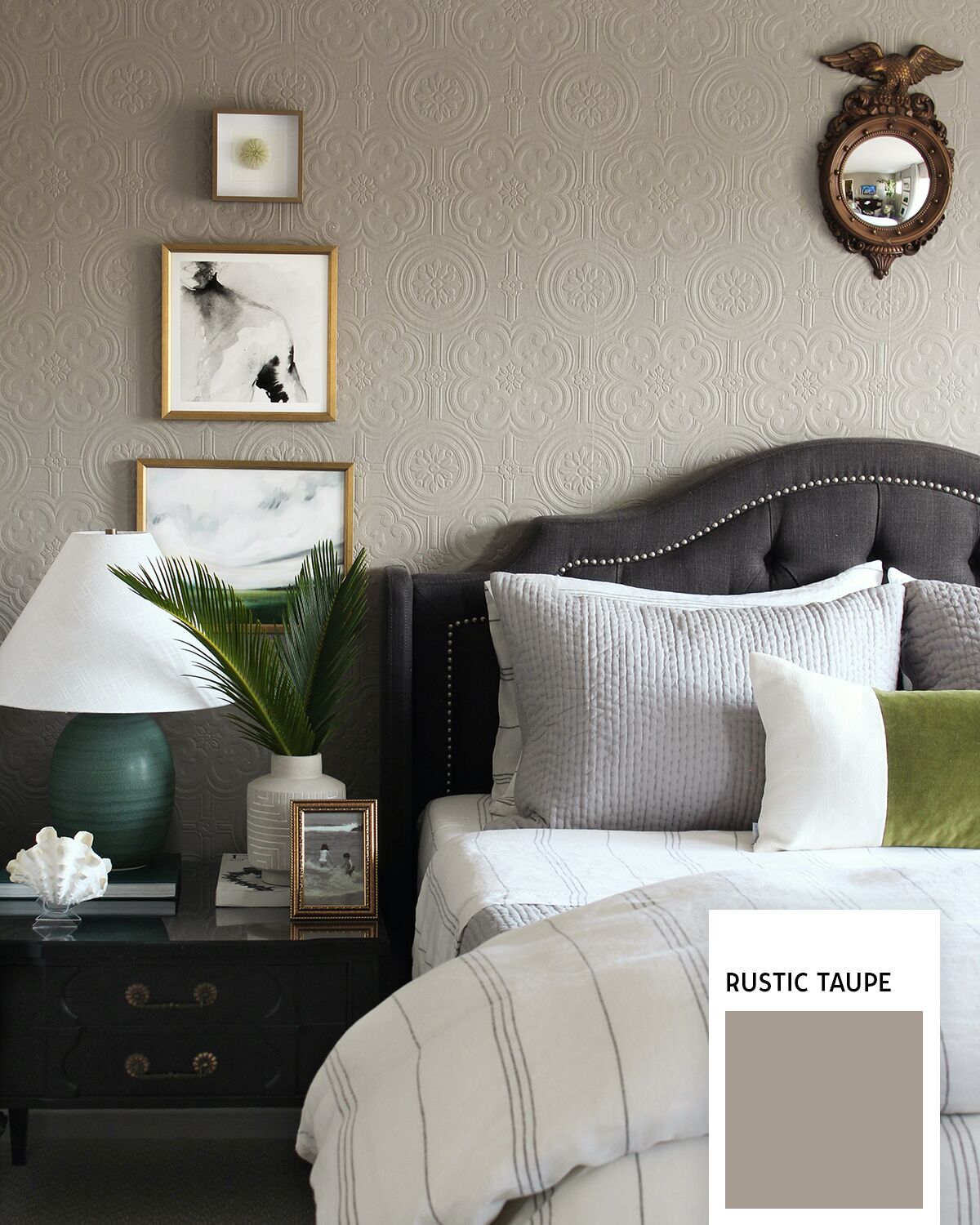
Photo courtesy of Oscar Bravo Home for the One Room Challenge
Oscar Bravo, of Oscar Bravo Home, likes a good gray—but prefers the warmth of this taupe that almost looks gray. “It works well in rooms that don’t get a lot of light,” he says. “The common misconception is to pick a bright color in dark rooms, but that can make the space appear dreary.” Instead, he likes this saturated hue that makes his guest room (he painted textured wallpaper) feel cozy and elegant.
PARTNER CONTENT
Wendy Manwarren Generes was the editorial director of San Diego Home & Garden Lifestyles magazine. She loves DIYing and hunting down vintage finds. Find her on Instagram at @wmanwarren.
Help us recognize the city's most talented local interior designers, architects, landscapers, craftspeople, builders, and home service experts
Welcome to the inaugural San Diego Magazine Home + Design Awards, where we celebrate the brilliance of local interior designers, architects, landscapers, craftspeople, builders, and home service experts within San Diego’s vibrant home design scene.
These awards are a celebration of the creative forces shaping the aesthetics of San Diego and its surroundings. Like brushstrokes on a canvas, we aim to bring attention to the talent and services that turn spaces into living masterpieces.
Your submission is your invitation to step into the limelight. The winners will be featured in the April Issue of San Diego Magazine and posted online. San Diego Magazine is read by more than 164,700 readers each month, and sandiegomagazine.com receives more than 403,000 monthly page views. Your nomination is an opportunity to captivate our affluent readers who turn to San Diego Magazine for insight into culture, food, arts, and the latest in home design.
You can nominate a business or tradesperson whose work and physical business is located within San Diego County. Please provide the name of the business and tradesperson with their contact information. In addition, please include your name and contact information with your entry.
For Transformation entries, provide a high-quality before and after photo to be eligible for the Reader’s Choice vote. We’ve set up an easy-to-use Canva template for your convenience here.
Rally Your Troops! After your masterpiece is nominated, it’s time to gather the votes! From January 8 to 15, unleash the power of your design community. Share, shout, and let your network know that your creation deserves the Reader’s Choice Award, and ask them to vote for your entry.
Nomination Period: December 4, 2023 – January 12, 2024 12 PM
Reader’s Choice Voting: January 12, 2024 3 PM – January 19, 2024
Winners will be announced in the April issue of San Diego Magazine and online at sdmag.com
Best Interior Transformations (Before and After)
Bathroom
Bedroom
Closet
Dining Room
Game Room
Garage
Home Gym
Kids Room
Kitchen
Living Room
Nursery
Office
Stairs/Staircase
ADU (Accessory Dwelling Unit)
Backyard Landscaping
Conversion to water-wise landscape
Exterior Home Renovation
Front yard landscaping
Garden
Patio + Porch
Sheds
Swimming Pools
Appliance Store
Architect
Carpet/Flooring
Cleaning Services
Closet Remodeling
Door + Window
Electrician
Escrow Company
Furniture Store
Gardener
General Contractors
Handyman / Repairman
Heating, Cooling, and Air
Home Remodeling
Home Security
Interior Designer
Landscaper
Lighting Stores
Nursery / Garden Center
Painters
Pest Control
Pile + Masonry
Plumber
Pool Services
Real Estate Agent
Real Estate Company
Roofing
Solar
Tree Services
Turf
Upholstery
Bohemian
Coastal
Contemporary
Eclectic
Green
Industrial
Maximalist
Midcentury
Minimalist
Modern
Multifamily Residence
Rustic
Beach Home
Multifamily Residence
Contemporary
Craftsman
Green
Mediterranean-Style
Midcentury
Modern
Mountain Home
Ranch Style
Spanish-Style
Suburban Home
Tudor-Style
Urban Home
Victorian
Inside the remodeled 1970s craftsman of local pastry chef and Extraordinary Desserts owner Karen Krasne
The similarities between baking a cake and remodeling a home might be slim in the minds of most. But to renowned pastry chef and owner of Extraordinary Desserts Karen Krasne, paying attention to detail when decorating anything—be it a gorgeous wedding cake or her 2,200-square-foot house in Mission Hills—is the recipe for a tasteful design.
Krasne began remodeling her 1970s craftsman into the dynamic, contemporary space it is today with the help of local architect Aaron Anderson nearly 15 years ago. “We started with this custom gate, actually,” Anderson says, pointing to a large, suspended steel-and-glass opening at the entrance of the Krasne residence.

Past the gate, guests step into the front courtyard that serves as an outdoor dining room. Beneath a custom steel canopy filtering sunlight into the space—an effect inspired by the oak trees of San Diego County—sits a grand stainless-steel communal table topped with zebra quartzite stone. Along the north wall, a smoky gray mirror magnifies the space.
The intimate courtyard brings the outdoors in, while the architecture and design of the house spill outwards.

“Both Karen and I grew up in San Diego, so the house is heavily influenced by that sort of outdoor living,” Anderson says. “But the interesting thing about Karen is her travels. What she does, as a chef, is heavily influenced by her international travel, so we also brought all that influence into the house. It’s anchored in San Diego, but it has all kinds of international flourishes.”
The south wall of the courtyard is a striking cement fiberboard privacy screen that’s been pierced with an intricate design. “The very first day I met Karen, she brought these Moroccan lanterns she bought on a trip to Marrakech into my office and she said she wanted the front part of the house to be about these,” Anderson remembers. “I had [the lanterns] on my desk, and we just thought about unrolling them and cutting out the design onto a piece of slim fiberboard. The piece is backlit so, at night, this side glows just like a lantern does.”

The old-world, international influences don’t stop in the courtyard. Inside the home, Krasne’s love of traveling is reflected in every room. A hand-carved wooden Moroccan cabinet has been repurposed into a bathroom door. Ornate candle holders from Bali adorn the master bathroom countertop. And in the living room—which expands into a second, bamboo-flanked courtyard through massive stacking glass doors—a feature wall was inspired by traditional azulejos tile Krasne once saw in Spain.

“We tried to take all these different influences—Morocco, Bali, and Paris, where Karen went to culinary school—and balance them with the edgier, modern stuff,” Anderson says. “It’s really hard to take a craftsman house and modernize it without it looking terrible, so I think one thing we all did well was elevating it without overtaking it.”

The kitchen, where Krasne spends most of her time while she’s at home, was renovated last. A large island topped with a Japanese-inspired lithograph on natural quartz sits in the middle of the sunlit room, nearly always covered in a food spread for Krasne’s family and friends. Floor-to-ceiling, built-in cabinetry is coated with a self-healing gray Fenix laminate, giving the space a calming atmosphere.

“Those,” Kranse says, gesturing to ornate, art-deco chandeliers hanging over the kitchen table, “are from an old opera house in Austria. I had them sprayed silver to match the sconces, which all came from the same opera house. I also wanted to bring in French Champagne buckets—I really wanted the space to be about us drinking wine and entertaining.”
The Champagne buckets line a shelf hung above built-in lounge seating. Next to the lounge is an in-wall desk with a stack of her favorite cookbooks on display. There, Krasne researches and experiments with new recipes.
“I have a huge office at my restaurant, but I can’t think straight there,” Krasne says. “You feel the frenetic energy, you hear the tamping of the espresso machine and the phones ringing.” It’s here, in this calming, creative space (and in her personal gym downstairs), that Krasne finds inspiration.
As we exit Krasne’s kitchen and step back out into the front courtyard, she jokes with Anderson that she recently came up with a landscaping idea for the front entrance while on a trip to Puerto Vallarta with her husband.
“I know, with Karen, there’s actually a good chance that it’ll happen,” Anderson laughs. “Karen knows more about construction and putting a house together than any other client I’ve ever worked with. We actually get to a detailed level of thought and design. That’s super rare.”
Inside the vibrant, family-friendly home of interior designer Lisa Franco
Lisa Franco didn’t plan to become an interior designer. She and her husband, Luis, met while working in biotech. But when the couple’s daughter, Samantha, was a year old, she was diagnosed with a genetic disorder called Angelman syndrome. Lisa left the industry to focus on Sam full-time. And when the Francos bought their first house in San Diego shortly thereafter, Lisa—armed with a more flexible schedule and a hunger to explore her innate love of design—decided to take the reins on the interiors.
The Francos had tapped Mark Morris of Oasis Architecture to refresh the home. He was skeptical; homeowners who go the DIY route usually end up regretting it. But Lisa’s knack for design was apparent. She pulled samples, chose colors, sourced finishes, and visited showrooms, and others in the industry treated her like a fellow pro. “I just started calling myself a designer, and other people believed me,” she laughs. “My career was in science. Science is problem-solving. Interior design is, too. It’s solving a problem, and making it look good.”

When Morris walked through the finished product, he said, “‘You need to come work for me,’” he recalls. Soon after, she did. Their first project together won Bathroom of the Year in San Diego Home/Garden Lifestyles magazine.
As Samantha, now 24, and the couple’s son Ethan, 21, got older, the Francos set out to find a forever home—one that could accommodate a future live-in caregiver for Sam. In 2017, a La Jolla Heights gem jumped out from a listing in the paper: an Old Hollywood–inspired, 1960’s home, once owned by an oil baroness. The Francos bought it, and Morris signed on to bring the build into modern day. The bones were good, and “the house had the perfect entry—grand, yet understated,” Morris says.

The inside, on the other hand, needed work. Full of small, closed-off areas, it had level changes at every turn, like step-downs into bedrooms. Morris and the Francos modified the floor plan with two goals in mind: to create a seamless flow for family time and entertaining and to make the layout safe for Sam to have as much independence as possible.
They leveled out the floors, opened up the once-enclosed staircase for visibility, and installed pocket-door gates to block rooms and stairs as needed. Though the layout changed, “Lisa loved that house and wanted to respect it,” Morris says, so they preserved some original elements: crown molding, light fixtures, closet doors, built-ins.
Today, once you cross the threshold, you step directly into the main living space, or the great room. Just past the L-shaped couch is a million-dollar view: La Jolla’s hodgepodge of terracotta rooftops, the coast, all the way to Mexico.
The home’s primary palette is one of soft gray and white walls with chocolate-brown wood floors. But the Franco house is anything but muted. Lisa’s style is bold, colorful, happiness-inducing. In the great room, velvet pillows add pops of pink, blue, and ochre to the couch.

The great room flows into the kitchen, separated only by a peninsula. When Lisa and Morris design a kitchen for a client, they ask about their everyday routine—and that’s exactly what informed Lisa’s own space. Daily essentials receive priority; open shelves hold flour, sugar, oil, and tea, while a full butler pantry around a corner offers hidden storage.
The most innovative feature is a pass-through cabinet between the kitchen and dining room. Dishes and glassware are accessible from either side, and the configuration lets the dining room borrow the kitchen’s natural light.
The Francos wanted an additional space to unwind with friends, so they tucked a bar into an alcove off the great room. “Sometimes we have a couple come over, and we just want to hang, but our dining room is big,” Lisa says. “So this is an intermediate. It’s cozy.”
The couple pulled the blue from the kitchen island and incorporated gold and stone accents. The wire accents on the bar island are both aesthetic and functional—no need to worry about scuffs from guests’ shoes. Closed cabinets hold their collection of wine and spirits.

On the other side of the great room is Lisa’s office, easily the most colorful space in the house. Her desk is framed by a bay window overlooking the courtyard, while a pendant light fixture, original to the home and refreshed with deep teal paint, anchors the room. “I love whimsy,” Lisa says. The owl-print wallpaper was a touch she couldn’t resist. Luis was skeptical until he saw it installed. “That’s why she’s the designer,” he laughs.
Right across the hall is Sam’s media room, furnished with durable pieces. It’s near the kitchen and dining room, so Sam has her own space but is still in the mix. A mother-in-law suite, which can eventually function as a caregiver’s room, is next-door.

The great room might be the heart of the home, but the lower level is where the fun happens.
A mural of Lisa’s late brother, Michael “Howie” Mandell, who she calls “the life of the party,” is front and center, smiling with arms outstretched. The local artist they commissioned tagged the names of Howie’s loved ones around him, and band posters harken back to Howie and Lisa’s shared love of music.
In the corner is sapo, a Peruvian game (also called “toad in the hole”) that Luis grew up playing. The objective: Throw a gold coin into the toad’s mouth or the nearby holes. The sapo table was a gift from Luis’s mom, who transported it in pieces via plane.
A far wall holds a candy bar, stocked with guests’ favorites, and a mini kitchen with a pink SMEG fridge and toaster. The oversized sliding window opens up onto the grill, the outdoor dining space, and the pool area.

It’s a stunning pool, considering it was once surrounded by green carpet. “It was like going into a football locker room,” Morris says. “The pool itself was spectacular, and we didn’t want to lose that character.” The Francos kept the exposed beams, opened the ceiling and walls, and wrapped the columns in dark brick. “During the day, it feels like you’re outside,” Morris says, “but at night, all lit up, it really feels like its own room.”
Morris and Lisa treated the outdoor space like an extension of the home, creating “rooms” for different functions: grilling, playing, resting, entertaining. A fire pit at the farthest point is an ideal spot to sit and reflect. Lisa designed a “rug” made from tiles that frames the outdoor dining area. They added a ping-pong table for Ethan and his friends. And in the polished, turfed yard, which mimics the shape of the pool, there’s always room for an impromptu game of soccer.

Looking up from the backyard, you can see the family’s gathering spots—great room, basement, kitchen—framed like vignettes through the windows. “Being a good architect is not about bringing your sense of style to the table,” Morris says. “It’s about being sensitive to the environment, the existing [house], and the client’s interests. And if you can cohesively pull that together into a beautiful design that feels like home, you’ve done your job.”
Stake Chophouse & Bar brings contemporary classics and old-school service to the heart of Coronado
Stake Chophouse & Bar isn’t your average steakhouse. Blue Bridge Hospitality’s Coronado outpost is a modern interpretation of a big-city steakhouse nestled in the heart of the small coastal community. The team at Stake has reimagined the whole steakhouse experience. By prioritizing a seasonal farm-to-table sourcing philosophy, a personalized guest experience, and unique service touches, like a formal steak presentation and a bespoke knife selection process, Stake distinguishes itself in a sea of steakhouses.
Exceptional steaks, including Wagyu from Japan, Australia, and the U.S., and fresh seafood flown in daily form the core of Stake’s culinary identity. The menu features a five-course omakase-style steak experience highlighting house favorites, plus an array of cuts, and classic steakhouse staples—think a wedge salad, baked potato, or pasta carbonara—refined for a contemporary palate without losing their traditional appeal. Stake focuses on seasonal sourcing from the region’s best family farms and specialty purveyors, and incorporates intentionally unexpected touches to create something truly unique.
“I challenge our chefs and myself to take it a step further in sourcing,” says Chef Ronnie Schwandt. “It’s important to us to highlight different farms, unique one-off farms—whether it’s cattle, strawberries, a local fisherman or from anywhere in the United States, we’re always trying to find that niche.”
Beyond the menu, Stake emphasizes outstanding service, says Vinny Spatafore, Director of Hospitality Operations. Staff maintains detailed notes, allowing them to remember guests by name, recall previous orders such as a favorite martini (also memorable for the customer since it’s served in an extra tall, distinctly-shaped glass), and celebrate special occasions like birthdays and anniversaries.
“When you have those points of topic that you remember about a guest, they appreciate that,” he says. “Our servers are really good with that—we have a couple servers who have been here since the beginning and they’ll remember somebody from years ago, their name, their kids’ names, where they live. I’m really thankful to have a great front of house staff.”
Award-winning wines, rare whiskeys, special events, and a complementary black car service that provides transportation for guests throughout Coronado add to Stake’s appeal.
Schwandt stresses that Stake offers more than a meal; they aim to give patrons something unforgettable.
“It starts when you walk up the stairs and are greeted by the hostess—that sets the tone for the night. Then you’re greeted by a server, who may know you by name, and can guide you through the menu and curate as they get to know you,” says Schwandt. “Most people leave kind of blown away; they leave feeling like they just had an experience. That’s the goal, right? Whether you’re serving smash burgers or high-end steak, you want somebody to leave thinking, Wow, that was awesome.”
This month's selection includes pool toys for grown-ups, natural deodorants, and decadent Italian furniture
If it seems like you’re the only one who didn’t spend their summer sunning on a yacht off the Amalfi Coast, now you can get a taste of Italy right here in SD. Rest your bod upon a made-in-Italy sofa or bed from Natuzzi Italia, a luxury design and furniture brand that recently opened a storefront at UTC in La Jolla. They carry a wide range of sleek furniture for every room in your house. Hey, it might not be sipping an Aperol spritz surrounded by breathtaking views of Capri, but their stunning sofas make being a couch potato something to aspire to.

When San Diego–based Sarah Moret was looking for natural beauty and body products that actually worked, she became frustrated by the lack of effective deodorants without aluminum and other potentially harmful ingredients. This (smelly) gap in the market sparked the entrepreneur to start her own line of natural body care. In 2018, she debuted aluminum-free deodorant (available in varieties like coconut nectar, white tea, orange neroli, and unscented for the purists out there). Since then, she’s taken her line to Shark Tank, where she struck a deal with Barbara Corcoran and Mark Cuban, and expanded to offer more products, including body spray and hair freshener. Curie products can now be found in stores like Anthropologie, Walmart, and Nordstrom.

Move over donuts, pizza slices, and alligators. Kids’ swim is over. It’s time for the adults to hop in—and we’re bringing our own toys. Float Factory offers two different styles: one a race car, the other a tank. The tank, a.k.a the Pool Punisher, invites party-goers to engage in high-stakes buoyant battles. The toy comes equipped with a water cannon capable of blasting targets up to 50 feet away. Talk about punishment.
One of the city's top plant designers turns a historic Golden Hill bungalow into a free-range plant sanctuary
leafing home, living room
Tomoko Matsubayashi
For in-demand botanical designer Britton Neubacher of Tend Living, greenery is a must. As an accent. As art. As a scientifically proven mood lifter and health improver. So when it came to finding her dream rental, plenty of places to “put a plant on it” naturally topped her short list of asks.
“The three things I really care about are my plants, my artwork, and my music,” says Neubacher whose designs have appeared everywhere, from avant-garde galleries to the elegant rotunda of the San Diego Museum of Art. “If you can have those things, you will have a happy home.”
She didn’t have to look far. Nestled in Historic Golden Hill, a six-block neighborhood pocket of historically designated properties, the charming 1914 Spanish bungalow was the first she toured. “It truly feels like San Diego,” says Neubacher, who shares the spacious digs with her cat Biggie Smalls and boyfriend Rick Froberg, an artist and singer/guitarist for the iconic local bands Drive Like Jehu and Hot Snakes.
Throughout the light-flooded bungalow, which features original floors, tile, and brass fixtures, verdant life graces every gleaming wood built-in, wide window ledge, and cozy nook. Including her extensive collection of exotic air plants, Neubacher cares for more than 100 houseplants. And that’s not counting the outdoor ones.
Neubacher and Rick Froberg, a singer/guitarist for one of San Diego’s most brutal and beautiful hard rock bands, Hot Snakes.
Tomoko Matsubayashi
“Much of my art reads like a well-worn punk fanzine; imperfect cut and paste collage that’s been overly xeroxed and handled,” she says. “It doesn’t get much more Wabi-Sabi than that.” Floor pillows by Mr. Blue Skye, art by Billy Sprague and Klassik.
Out front, her potted greenery complements a delicately fragranced English garden planted by “Mum,” the previous British resident, who filled the yard with roses, jasmine, daffodils, and citrus trees. Green-thumbed Mum also built an orchid house, which now serves as Neubacher’s specimen house and plant hospital. (Talk about a bonus room.)
Neubacher’s eclectic aesthetic feels custom-made for the airy interior, as well. “My house is a mix of Japanese, Moroccan, and Californian,” she says. “I think I style with sensual hands. I like organic but different and interesting. I like things that are edgy but beautiful.”
Her art collection showcases local talent, including ceramics by Josh Herman, sculptures by her longtime friend and collaborator Jason Lane of JXL Studio, and several large-scale collage-based works by former San Diegan Billy Sprague. “His pieces are like coming home aesthetically for me,” she says. “They’re warm and soft but punk.”
Vintage Eames shell chair prototype, never produced, surrounded by an eclectic mix of sun-loving cultivars. “My houseplants are free-range. I let them go where they want and learn a lot by watching their movement.”
Tomoko Matsubayashi
The Phi Vortex plant portal created by Neubacher mesmerizes with “the healing rhythm of nature fractals.”
Tomoko Matsubayashi
A neutral palette provides visual rest, while textural Wabi-Sabi art brings interest and warmth. “Much of my art reads like a well-worn punk fanzine; imperfect cut and paste collage that’s been overly xeroxed and handled,” she says. “It doesn’t get much more Wabi-Sabi than that.” Floor pillows by Mr. Blue Skye, art by Billy Sprague and Klassik.
Tomoko Matsubayashi
“I think one of the coolest tenets of healing space design is the Prospect/Refuge principle: try to have a vista (view) in front of you and protection (enclosure) at your back,” says Neubacher. “Plants can make a space feel expansive and cozy at the same time.” Textured Marakshi rugs and pillows sit in conversation with low- to-the-ground Japanese elements, including Neubacher’s Shou Sugi Ban-inspired charred tree sculpture. Table lantern by Isamu Noguchi.
Tomoko Matsubayashi
Elevated “thriller, spiller, and filler” plants draw the eye through the entire space. “Simplicity drives me but when it comes to plants, I’m an unapologetic maximalist,” says Neubacher. “These days I’m more interested in a home full of loved things and living things, than a museum of perfect and constrained things.” Vintage pottery by Gainey and USA. Pendant lamp by George Nelson. Space Age Gollypod sculpture is by JXL Studio for Tend. Organic clay forms are from her Morocco travels.
Tomoko Matsubayashi
leafing home, sun room
Tomoko Matsubayashi
leafing home, plant triangle
Tomoko Matsubayashi
Scripps study shows that some patients may be able to taper their dose and maintain results
While glucagon-like peptide-1 (GLP-1) receptor agents have been used to treat Type 2 diabetes for more than 20 years, their recent emergence as weight-loss wonder drugs marked a new frontier in medicine. But their effectiveness has left some patients wondering what to do once they’ve reached their goal. Stopping the medication could mean regaining some, if not all, of the weight. A Scripps Clinic internal medicine physician recently conducted a small study of whether GLP-1 patients who had reached their goal weight could maintain that weight by taking their regularly prescribed injection every other week instead of weekly. Spoiler alert: 30 of 34 patients did. Read more about the study here and what that may mean as pharmaceutical companies roll out oral GLP-1s.
For more nutrition, wellness, and healthy living tips, sign up for the San Diego Health newsletter here.