Featured articles
Featured articles
Featured articles
What's next
Featured articles
Featured articles
Featured articles
Ready to know more about San Diego?
SubscribeReady to know more about San Diego?
Whatever Gallery showcases an exclusive collection of one-of-a-kind midcentury pieces
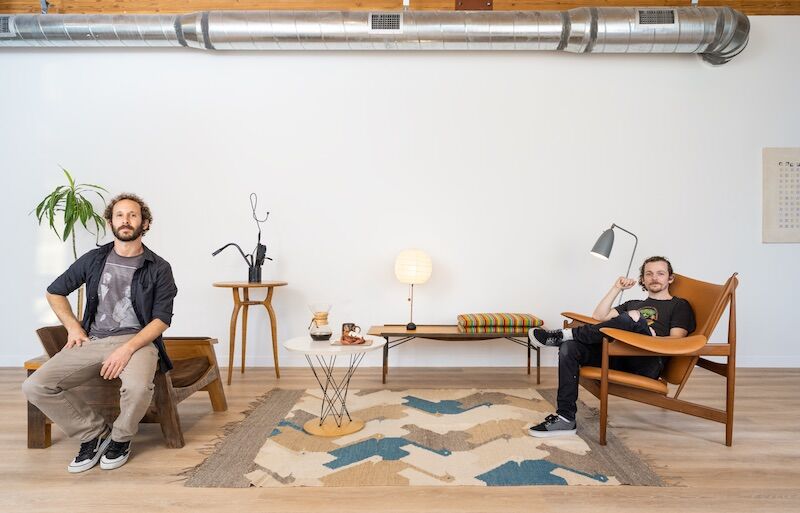
Walking into Whatever Gallery is much like walking into your most design-savvy friend’s apartment. It’s styled to a T, and there are no price tags on the furnishings.
That’s because, as the name indicates, it is a gallery—or showroom—of Noah Feldman and Graham Loper’s proudest midcentury finds. Look, learn, and, if you feel so obliged, suggest a price.
“It’s a gallery in that we only have a few pieces displayed,” explains Feldman. “People can come in and buy. But we’re wanting to use this as a space to not just sell things but also to teach people more about midcentury furniture.”
Co-owners Feldman and Loper are capable teachers. They’ve each built their career out of a love for midcentury pieces, and their joint venture started because of one simple truth: Furniture can be heavy and hard to move.
They met about four years ago when they showed up at the same time to make an offer on a Mastercraft brass-framed sofa for sale in Point Loma. As Feldman recalls: “It was a slightly awkward situation. We were both curly-haired, scraggly guys. We’re both twins. We had all these things in common. We recognized we could help each other out, so we teamed up on that sofa and the rest was history.”
They’ve been “flipping furniture” together ever since, finding undervalued midcentury furnishings across the US, buying them—sometimes refurbishing—then selling them to those who see greater value. That’s mainly interior designers and architects, but also avid midcentury collectors.
And even as the Feldman and Loper didn’t write the book on the midcentury furniture craze, the self-taught collectors do own plenty of those books—stacked all over the floor, Loper admits—and can authoritatively argue for style’s timelessness.
“This was the first furniture designed for modern living, and that’s why it stays around, because it’s made for the spaces we still live in,” Loper explains. “It’s also a bit of a rebellion from your parents’ or grandparents’ furniture. If you sit on a piece of furniture from 1890, it’s not comfortable. They wanted to torture you a little bit. The pieces from 1950 onward, there’s an emphasis on comfort that didn’t exist before then.”
Feldman adds that many midcentury pieces can also be considered collector’s editions, since they’re often tied to a certain name, like Charles and Ray Eames, Vladimir Kagan, or Isamu Noguchi. “People are collecting them as they would art,” Feldman says. “It’s functional sculpture.”
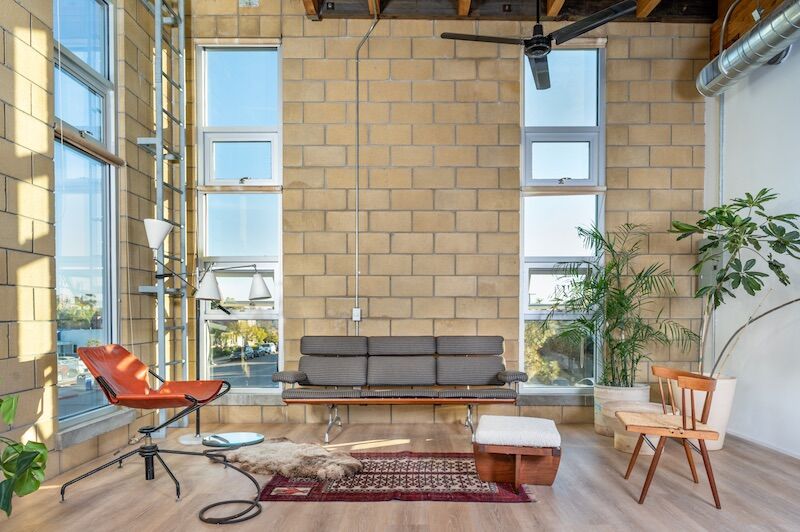
Whatever Gallery 2
Chad Kelco
Much of Whatever Gallery’s sales are conducted through their website and Instagram, and they have a space in Barrio Logan that houses their inventory. They consider the South Park showroom, which opened just before the new year, a means for them to directly play to the demo of San Diego’s own midcentury enthusiasts and midcentury-curious.
In light of the pandemic, shoppers or even browsers can visit by appointment only. Eventually, Feldman and Loper plan to have open hours. Make an appointment by email at [email protected], or do as the millennials do and simply DM them with sourcing requests.
“We can source anything,” Feldman says. “That’s what we do.”
2202 30th Street, South Park

Noah Feldman (left) and Graham Loper, owners of Whatever Gallery
PARTNER CONTENT
Chad Kelco
Where to eat, shop, and explore in this quaint and charming San Diego neighborhood
Abutting Balboa Park and situated between North Park and Golden Hill, South Park might be best described as a marriage of those neighborhoods’ greatest charms: North Park’s linger-worthy restaurants and shops with Golden Hill’s slower pace and envy-inducing homes. A pleasant place to gather with friends or wander solo, this idyllic neighborhood offers much to eat, see, and buy.

Once highlighted on Food Network’s Diners, Drive-Ins, and Dives, Shawarma Guys’ popular Middle Eastern food truck is a South Park staple, with plans to open a brick-and-mortar store in the area soon. Yelp also named Shawarma Guys the top place to eat in the country in 2020.
3012 Grape Street
Slinging lattes, teas, matcha, and café bites (sandwiches, toasts, pastries, and bowls) out of a vintage trailer, Communal Coffee invites those passersby to stop, sit, and sip on the shop’s sprawling patio before browsing the thoughtfully curated onsite boutique.
2221 Fern Street
An Italian-born trio founded Il Posto, an airy eatery serving pasta and pizza for happy hour and dinner. The robust vegan pizza menu makes this a friendly spot for plant-based diners. If you’re down with a little meat and dairy, try the lasagna.
2145 Fern Street
At the corner of Juniper and Fern sits Dark Horse Coffee Roasters. The popular San Diego coffee shop brews pick-me-up drinks (try the salted maple latte) and serves sweet treats from sister company Mutual Friend Ice Cream.
3004 Juniper Street
A one-stop shop for futuristic-sounding wellness products (quinton shots and “neuro gum,” anyone?) and healthy bites, Rad Habits Juice Co. is best-known for its smoothies, boosted with hard-to-find ingredients like cordyceps, bee pollen, and sea moss.
2967 Beech Street
In addition to Indian classics like butter chicken and veggie korma, Curryosity cooks up fun fusion dishes, including chicken tikka poutine and naan bruschetta. Diners can also order creative craft cocktails made with Indian spices.
3023 Juniper Street
Plant-based eats for hardcore peeps. Guests at Kindred will hear heavy metal while sipping thoughtful bevs and chowing down on seasonal, animal-free brunch, dinner, and late-night bites that make interesting use of standby vegan ingredients such as seitan and Gardein “meat.”
1503 30th Street
A fun neighborhood hang, Whistle Stop Bar is a great place to grab a drink with friends. Divey in the best way, the watering hole hosts live music, DJ-driven dance parties, and raucous Saturday night shindigs dubbed “Booty Bassment.”
2236 Fern Street
Seven Seas Roasting Co. specializes in direct-trade coffee, meaning that the team buys their beans directly from farmers (a more transparent process that gives more money to the source). They use ’em in tasty lattes like the choco-cherry-cinnamon Cherry Bomb.
1947 Fern Street
South Park restaurant Station Tavern dwells in a building that was a trolley stop from 1929 to 1948. The restaurant has incorporated that history into its design and theme. Stop by for burgers, sandwiches, and salads, plus a full bar.
2204 Fern Street
The food can sometimes be an afterthought at laid-back bars like Fernside, which slings boozy slushees and cocktails both inventive and classic. But you can’t go wrong with anything from the kitchen here, especially the fried chicken sandwich and citrus salad.
1946 Fern Street
Italian spot Buona Forchetta opened its first location in South Park in 2011, with numerous other San Diego outposts following. With a fun build-your-own pasta option and more than 30 different pizzas (including vegan and gluten-free pies), options abound here.
3001 Beech Street
A member of Buona Forchetta’s family of restaurants, Matteo is a nonprofit eatery and bakery that donates all profits to community and educational programs for local kids. Matteo serves breakfast classics, coffee, and pastries in the morning, then switches to Italian bites at night.
3015 Juniper Street
Another Buona Forchetta–owned business, Meraki is a new addition to the South Park neighborhood. The bar, restaurant, and event venue draws upon global influences, offering beef cheek empanadas alongside Wagyu burgers and Roman flatbreads.
1648 30th Street
The Rose Wine Bar is a local favorite for date nights or friend group catch-ups. The woman-owned spot lays down natural wines by the glass and the bottle, plus bar snacks, small bites, and more robust entrees like the “salad pie,” a pizza loaded with greens on top.
2219 30th Street
Jordyn Berg is a freelance writer whose favorite topics include food and travel. A Pacific Northwest native, she delights in exploring the best of San Diego, by searching for hidden gems, experiencing must-try restaurants, and soaking in the city’s amazing views.
What’s new, different, and still loved in this quietly cool community
Since our last guide to South Park, the neighborhood’s impressive roster of eats has expanded with newcomers, rebrands, and pandemic pivots. Order a wagyu beef shawarma pita or plate of lemon cream chop fries at Shawarma Guys to see why this food truck was ranked no. 1 on Yelp’s list of top places to eat in 2019. Buona Forchetta’s Matteo is a 100 percent nonprofit eatery where you can shop freshly baked goods, pastas, sauces, and more to raise money for educational programs for San Diego’s youth.
Matteo
Justin Halbert
Down the street, Grant’s Market recently relaunched as Grant’s Coffee Room to better reflect its standing as a favorite for a caffeine fix. (It still offers beer and wine!) And when it’s time for your next homebound happy hour, sip one of Kindred’s to-go cocktails, like the lemon-basil Palace of Certainty.
Stop in to Thread + Seed to see owner Melanie Michaud’s refreshing rebrand. In 2020, she transformed her clothing boutique Graffiti Beach into a second location of her Bankers Hill home goods shop. Here you’ll find clean beauty products, decor, and curated gift boxes fit for every occasion.
Thread + Seed
Justin Halbert
Vintage enthusiasts will want to set aside some time to sift through Bad Madge & Co.’s expansive collection of vintage, resale, and locally made fashion and home goods. In addition to its regular business hours, the shop also offers appointments for private shopping. At Vinyl Junkies, by Eric Howarth and the Casbah’s Tim Mays, crate diggers can add to their record collection in a fun and funky setup.
Vinyl Junkies
Justin Halbert
In a year already full of tough challenges, cherished local haunt Hamilton’s Tavern suffered a major blow when a devastating fire broke out in November. But when owner Scot Blair estimated the damages at around $1 million, dedicated patrons rose to the occasion. A GoFundMe was launched, raising money to go directly to Blair and his efforts to keep Hamilton’s, and its neighbor South Park Brewing, afloat. Show support for this longtime small-business owner here: gofundme.com/f/help-hamilton039s-tavern.
Switzer Canyon
Justin Halbert
Nearby Switzer Canyon hugs the east side of Balboa Park in an easy—albeit a little rocky—out-and-back trail. Plan your trip during the spring season and you’ll be treated to a bounty of bold wildflowers.
Kindred
Justin Halbert
Renowned pizza operator opens a nonprofit restaurant in South Park—for the kids
Matteo Cattaneo has eyes the color of Kalamata olives, and right now they’re brining in his tears. That sounds maudlin, I know. But it’s true. It’s not a full breakdown. He doesn’t bawl into the carrot cake (with a killer orange-zest icing). Too much work to do for that. But just sitting here with me for a few minutes at his new restaurant, Matteo, the idea of this place gets him a little misty.
Matteo is a nonprofit breakfast and lunch restaurant in South Park, the part of town where Cattaneo made his name with Buona Forchetta, one of the city’s top pizza restaurants. What is a nonprofit restaurant? It means any profits made at Matteo after operating costs (salaries, food, overhead, etc.) will not go to Cattaneo or investors. It will go to “early childhood development” for San Diego kids (ideally, those in low income areas who need it).
Restaurants already have micro-thin profit margins. So the joke when people first heard about it was, “Aren’t all restaurants nonprofit?”

“We’ve been very lucky,” Cattaneo says over a prosciutto-burrata breakfast pinsa (a pizza made with rice flour as well as wheat, for a lighter, more digestible crust) created by his chef Luca Zamboni. “The community has really supported us and our business. We’ve got enough. How much more do you need?”
How much is enough? In San Diego, where the median home price is $606,000, the answer is a lot. But Buona Forchetta has done exceedingly well. They’ll open their fourth location, Garage Buona Forchetta, in Coronado this month; a pizza stand in North Park called Gelati & Peccati; and Carbón, a barbecue joint in South Park.
So Cattaneo isn’t done making profits. He and his team—which at Matteo includes baker and general Joanne Sherif, who owned North Park’s Cardamon Cafe before closing last year—will sell more food, more drinks, make more jobs. But Matteo is one for the community. I don’t know the exact recipe for restaurant success, but I know part of success in any business is giving along with taking. Just look at TOMS shoes, Patagonia, Warby Parker, etc. You almost have to build it into the model now. Whether that’s just a PR move or not I’ll leave to the cynics.
“This spot was perfect,” he says of the large corner space on Juniper & 30th Streets, across from Station Tavern and Whistle Stop Bar. “But this space has always been a place for the community. I saw it was available and knew it didn’t belong to a business, it belonged to the community.”
The nonprofit process sure wasn’t easy, Cattaneo says. The biggest concern was having a say in where the money goes. Schools, god bless them, are run by a bureaucracy. If he funneled the money directly to that machine, some funds would end up going to a school that didn’t really need it (schools in Del Mar and Rancho Santa Fe are probably OK on funds, for instance). So Cattaneo set up a foundation where they can analyze which communities—beyond just South Park—and make their own decisions about who needs help.
“With the foundation, we can work directly with the schools and see where there’s the most need,” he says, noting they’re starting with Chavista Cesar Chavez Service Clubs, which put on a lot of after-school enrichment programs for kids. “They help in areas where a lot of moms and dads are working 12 hours a day. They can teach them how to eat well, how to study, give them more opportunities.”
Matteo will rotate its beneficiary a few times a year.
This isn’t a half-assed restaurant, either. Along with Sherif, who has a great name as a baker (try her almond croissant or coffee cake), Zamboni has a hell of a track record in pizza. For five years, he worked under Gabriele Bonci, known as the “king of pizza” in Rome. The menu is full of benedicts, toasts, frittatas, croissant sandwiches (the smoked salmon is excellent), bowls, pastries, and those breakfast pinsas. They’ll also start offering kids’ takeaway school lunches parents can pick up daily, with vegan and gluten-free options.
I know the “why” of the project. I just wonder about the hours. I want to know “how” he can pull it off.
“It just added four hours to my work day,” he smiles. “I didn’t sleep at night anyway and was up at 4AM looking for something to do.”
Matteo officially opens Saturday, March 7. 3015 Juniper St., South Park. 8AM-3PM.
Troy Johnson is the magazine’s award-winning food writer and humorist, and a long-standing expert on Food Network. His work has been featured on NatGeo, Travel Channel, NPR, and in Food Matters, a textbook of the best American food writing.
The annual event honors middle market companies creating jobs, scaling up, and investing in the region
San Diego is known for its startup culture and innovation economy, but what happens when the company moves beyond its early-stage years? The San Diego Business Impact Awards aim to answer that question, spotlighting the middle market businesses helping drive the region’s economy.
Hosted by San Diego Regional Economic Development Corporation (EDC) and JPMorganChase, the second annual awards celebration takes place on Thursday, July 23, from 4:30 to 7:00 p.m. at Scripps Research Auditorium. More than 200 executives, entrepreneurs, and business leaders are expected to attend the networking and cocktail event honoring some of San Diego County’s fastest-growing companies.
Businesses headquartered in San Diego County that have operated for at least two years are encouraged to submit their nomination by Thursday, June 18 at 4 p.m. Companies across industries—from technology and life sciences to tourism and consumer products, as well as pre-revenue startups—are eligible for recognition.
For EDC President and CEO Mark Cafferty, the event is as much about building connections as celebrating success. “We’ve had a longtime partnership with JPMorganChase; their work aligns with our efforts to support underserved communities and drive talent development,” says Cafferty. “And the networking was invaluable last year. I’m still in touch with people I met at last year’s awards.”

EDC is an independently-funded nonprofit that works directly with San Diego companies to help them grow the local economy, make the region as a whole more competitive, and attract and retain top-tier talent with quality jobs. Through EDC, companies can get help starting or expanding their business with support for things like site selection, permit navigation, and regulatory guidance, plus connections to local resources and potential business collaborators.
The San Diego Business Impact Awards began as an idea with one of EDC’s longtime strategic partners, JPMorganChase. The two organizations share a commitment to San Diego and are dedicated to bolstering middle market businesses.
“We’re blessed with a robust innovation economy and startup community,” says Aaron Ryan, San Diego Region Manager for JPMorgan’s Commercial and Investment Bank and vice chair of the firm’s’ San Diego Market Leadership Team. “But one of the segments of the business community we felt was overlooked was emerging middle market companies—the businesses that are no longer small but not yet large.”
Ryan says supporting those companies is critical as they scale and decide where to invest, hire, and grow.
San Diego’s high cost of living remains one of the region’s biggest business challenges, making talent recruitment and retention increasingly competitive. But local leaders point to the region’s quality of life, climate, and collaborative business community as advantages that continue to attract employers and workers.

“In order to support thriving households, there has to be enough high-quality jobs for people to be able to afford to live here,” Cafferty says. “Once a company grows and excels past that middle market point in their growth cycle, they become much more likely to pay higher wages and compete globally.”
Both Cafferty and Ryan proudly tout the unique collaboration that exists among San Diego County businesses. Bringing together top universities producing high-quality talent, cutting-edge research institutions, a robust military and defense presence, leading ocean science and environmental organizations, and a binational, cross-border identity creates a distinct business ecosystem that defines and strengthens the San Diego region.
Last year’s San Diego Business Impact Awards celebrated nearly 60 honorees from 49 industries, representing a total of 8,232 jobs across eight sectors, including: software and technology, healthcare and life sciences, consumer goods, professional services, finance, construction and manufacturing, defense, and hospitality and tourism. On average, honoree companies doubled their revenues over the previous year, employed more than 145 San Diegans each, and offered an average annual compensation of $192,415.
Top honorees included defense contractor Innoflight, environmental consulting firm Bancroft Construction Services, life sciences startup Element Biosciences, defense technology contractor GALT Aerospace, organic grocery store chain Jimbo’s, and biopharmaceutical company LENZ Therapeutics. During the event, Innoflight Founder and CEO Jeff Janicik held a fireside chat offering his insights on investing in the community and embracing San Diego culture.
This year, organizers hope to continue highlighting the middle market players driving economic impact across the region. Nominations are now open through June 18 at 4 p.m. Get your tickets to the San Diego Business Impact Awards celebration to enjoy drinks by Snake Oil Cocktail Co., light bites, live music, and networking.
The thriving South Park hangout is a vital crossroads of food cultures
If this is vegan brunch, I might bid a pretty unemotional farewell to bacon some day. If this is the vegan scene, it’s drastically more awesome than haters would like to believe. For years, I’ve considered veganism a very good thing and reflexively generalized vegans as smug, sanctimonious blowhards.
To be fair, the badgering went both ways. Vegans (some, not all) accused omnivores of being murderers driven only by our own gluttony, environmental nihilists ushering in doomsday with every callous bite. Omnivores (some, not all) in turn belittled vegans as sickly looking crusaders, just another wacky religious sect, the Scientologists of food. Eventually, I assumed we’d get to a less judgmental middle ground. Someone would give San Diego an exciting vegan restaurant and bar that was less a territorial pissing and more of a come-all plant party.
Kindred in South Park is that place. It’s a restaurant for any human, really, who likes cool things. I’ve been a fan for years. I hadn’t, however, ventured in with their late morning crowd and seen the full evolution. Now that the food is catching up with (or caught up with) the cocktails, Kindred is a force.
Their breakfast strudels are some intoxicating carbs. Our favorite is the savory shaved seitan with tapioca mozzarella and pickled peppers. It’s spicy, meaty, cheesy, bready. The cinnamon and brown sugar strudel with candied pecans and coconut syrup is flaky on the outside, pure molten, thick, and gooey cinnamon roll inside. The pancakes with bruléed bananas, bourbon butterscotch, and whipped coconut cream aren’t good for your waist size, but they are good for your soul. Their hash is also very good, with fried potatoes, black beans, smoked coconut (vegan bacon), soy curls, maitake mushrooms, charred kale, jicama salsa, and Creole aioli.
The vibe has always been modern art. It’s the massive shiny-black demon head that lords over the main dining area. What an elegant, imposing beast. It’s the ornate pink wallpaper that appears cute and grandmotherly until a closer inspection reveals illicit scenery. It’s the gothic windows and the two-top tables that look like desks pulled from pagan Sunday school, or sidecars for Wiccan motorcycles. It’s the sludgy heavy metal on the speakers offset by the flood of fresh, natural light pouring in.

Previously, plant-based restaurants had a reputation as antiseptic prayer rooms for self-serious wellness people. Kindred owner Kory Stetina decided not to do that, and enlisted art-restaurant makers Consortium Holdings (Morning Glory, Born & Raised) to build a noisier temple for more entertaining urges.
In doing so, he positioned Kindred to be the Casbah or CBGB of vegan food and drink.
Because the plant-based movement is not just here to stay—it’s remodeling a sizable wing of the restaurant industry. Overall, the stats are still small. Gallup reports that about 5 percent of Americans claim to be vegetarian, and 3 percent vegan. But a report by The Economist in late 2018 raised eyebrows when it reported a full quarter—25 percent—of Americans in the 25-34 age demo claim to be either vegetarian or vegan.
There’s a good chance some of those people secretly cheeseburger in the dark. But even if they’re pretending to be plant-based, that means the lifestyle is now an aspiration, a status badge for an entire age demo.
If your eyes are open, you know it’s at least partially real. Meatless Mondays have been growing in number for years. Serena Williams and Tom Brady are vegan. So are Ellen Degeneres, Bill Clinton, Joaquin Phoenix, Paul McCartney—just lots of famous people. Plant-based meat companies like Impossible and Beyond are booming. Some of the world’s top chefs have plant-based menus (at French Laundry, we preferred the plant-based menu) or even entire restaurants (like ABCV from Jean-Georges in New York).
In San Diego, Kindred is the weird and fuzzy center of the movement. It’s not a trap meant to get omnivores drunk on Prohibition cocktails and guilt them into declaring legumes the one true god. At least from an outsider’s perspective, there doesn’t seem to be any agenda aside from being an exciting restaurant. And it’s pulling this off.
Kindred’s vision of the future isn’t the only one, but it is one of them. And their brunch is excellent whether you’re omnivore, vegan, or merely ambivalent and hungry.

Kindred, 1503 30th St., South Park
Troy Johnson is the magazine’s award-winning food writer and humorist, and a long-standing expert on Food Network. His work has been featured on NatGeo, Travel Channel, NPR, and in Food Matters, a textbook of the best American food writing.
“Abby's” introduces viewers to an illegal bar in a South Park backyard—and the very San Diego characters who frequent it.
Abby’s, a new NBC sitcom set in a makeshift bar in South Park aired its first episode on March 29. Wouldn’t you know it, the show’s creator, Josh Malmuth, a veteran of comedy hit New Girl, is a son of San Diego, now living in L.A. The setting—an unlicensed bar in a suburban backyard—is more “Cheers” than “Baywatch.”
“I didn’t want it to feel surf- or beach-centric,” says the Carmel Valley native. “I wanted it to be a different side of San Diego maybe people hadn’t seen before,” We caught up with Malmuth to find out more.
Abby’s airs Thursdays at 9:30 p.m.
I just love it there. Writing for TV, it’s more practical to live in L.A., so maybe it’s a way to keep one foot in San Diego. There’s a really interesting mix of people down there. You’ve got the strong military influence, and also the younger generations who are doing really interesting things in food and beer. South Park is really multi-generational and diverse, I knew it would be a good setting for a show of people hanging out at the bar. I wanted to create this place where an audience could come and hang out and have a good time—San Diego has that feel built in.
Abby, the main character, was a marine. That’s how she ended up in San Diego to begin with. Her stalwart regular is a guy named Fred who worked doing commercial fishing and deep sea fishing charters with tourists. Another character is an engineer who works at Qualcomm. I wanted it to feel relatable to people who aren’t in San Diego also, so I tried to balance a specific sense of place with things everyone has in common.
A couple of people on the crew are from San Diego, and another one of the writers, Russ Finkelstein (Malmuth’s fellow graduate of Torrey Pines High School). Russ used to a do a lot fishing and spearfishing, so he was my go-to person for that stuff.
We shot it outside, with an outdoor audience, which has never been done before. Part of the experience was dealing with planes, and a few skunks walked through the set when we were shooting.
Four Questions With…Josh Malmuth, Creator of New NBC Sitcom Set in South Park
Josh Malmuth on the set of Abby’s | Photo courtesy of NBC
Scripps study shows that some patients may be able to taper their dose and maintain results
While glucagon-like peptide-1 (GLP-1) receptor agents have been used to treat Type 2 diabetes for more than 20 years, their recent emergence as weight-loss wonder drugs marked a new frontier in medicine. But their effectiveness has left some patients wondering what to do once they’ve reached their goal. Stopping the medication could mean regaining some, if not all, of the weight. A Scripps Clinic internal medicine physician recently conducted a small study of whether GLP-1 patients who had reached their goal weight could maintain that weight by taking their regularly prescribed injection every other week instead of weekly. Spoiler alert: 30 of 34 patients did. Read more about the study here and what that may mean as pharmaceutical companies roll out oral GLP-1s.
For more nutrition, wellness, and healthy living tips, sign up for the San Diego Health newsletter here.