Featured articles
Featured articles
Featured articles
What's next
Featured articles
Featured articles
Featured articles
Ready to know more about San Diego?
SubscribeReady to know more about San Diego?
Here's how our city kicks the City of Angels' sorry (surgically enhanced) butt
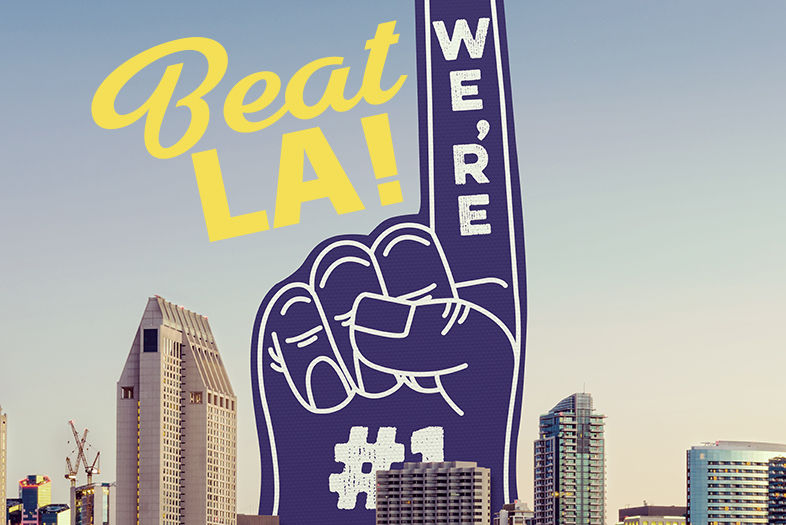
LA confidential: San Diego is the better burgh! Heading into baseball season, it’s time for a little bragging and boasting. All in good fun, of course. We’ve got a lot that the City of Angels hath not. Here are 22 reasons why we kick LA’s sorry (surgically enhanced) butt. And traffic is just the start.
Southern California is widely considered “earthquake country,” but if you really want to split hairs (or tectonic plates) it’s Los Angeles that’s at greater risk for the Big One. LA has more fault lines than anywhere else in the state, and is within 35 miles of the southern segment of the San Andreas Fault, which seismologists say is capable of a deadly magnitude 8 earthquake.
San Diego County’s Office of Emergency Services says our region has “sparse seismicity” compared to its Southern California neighbors. Sure, San Diego gets some small earthquakes and would likely feel the rumbles of a big LA quake, but experts don’t think it would be the epicenter. San Diego’s own Rose Canyon Fault is considered the only major active earthquake fault in the urban San Diego region, but it hasn’t given us a good shake in at least 200 years.
—Jennifer McEntee
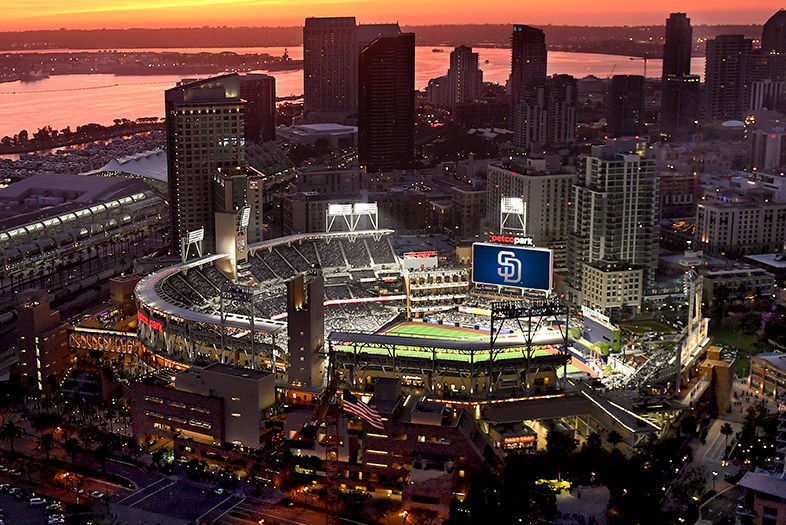
22 Reasons Why San Diego Is Better Than LA
Photo by Kit Leong / Shutterstock
Price of a Padres ticket behind home plate
Price of a Dodgers ticket behind home plate
Two hundred million dollars will buy you a couple things. An island in the Bahamas. A presidential inauguration. Add $27 million, and you could even have the 2016 LA Dodgers.
The San Diego Padres opened last year spending $99 million on their players. The Dodgers had the highest payroll in baseball at $227,329,905.
The Dodgers were like that youth soccer team from the good part of town who hires Pele to coach their six-year-olds, and resuscitates Sun Tzu to teach them the art of war. Of course that team is going to whup the kids whose parents have failed to drive cars fueled by gold and saffron.
So the Dodgers bought—excuse me, won—the division. At this point, is it about baseball anymore?
I have, at times, wished the Padres would spend bazillions of dollars and bring a World Series to San Diego. But now I take pride in the fact that when—it’s not an if, it’s a when—the Padres manage to take the title, it will be with a scrappy team of underpaid players who won by raw talent, sheer will, and magic.
Yes, the Padres are the Bad News Bears. And when it finally happens, the payoff will be that much sweeter. You can buy greatness, or you can make it. One of those is expected, and one of those is memorable.
—Troy Johnson

22 Reasons Why San Diego Is Better Than LA
I could have lived in LA. When I relocated from Virginia, my employer said I could go anywhere they had an office. LA was their top market, and I was working on a (really bad) screenplay. LA made sense.
But that’s not what I did. Los Angeles was overwhelming: traffic, pollution, aggression, masses of people. LA was less a place to love than to endure. San Diego seemed more manageable. I was visiting a friend in OB, and there was something about the way the light hit the water off the pier. It just felt like home.
That was 25 years ago, and that decision gets validated frequently, particularly in my work. I write about biotech—translating the science into English. I can’t imagine a better place to ply my craft.
Most people think of San Diego as a tourist mecca or a military town, but my lens is biology. I think about the stretch from UCSD to Sorrento Mesa: Salk, TSRI, Sanford Burnham Prebys, Illumina, and hundreds of small companies trying to move genius ideas to market—a target-rich environment.
There are actually more life sciences professionals in LA County than San Diego, but it’s kind of a misleading statistic. Many work for just one company, Amgen. San Diego’s biotech community is more distributed.
In fact, San Diego has something LA wants: a life sciences startup culture. The LA County Board of Supervisors recently earmarked $3 million for LA BioMed, a bioscience incubator. They’re sick of seeing their young entrepreneurs flee to San Diego and the Bay Area. Who can blame them?
That’s what makes San Diego such a vibrant life sciences community—so many clever people willing to risk everything on an idea. Edico Genome is developing hardware and software to accelerate genomic diagnoses. Organovo is 3-D printing liver and kidney tissue to advance drug discovery. Tocagen is developing a gene therapy to treat the most deadly brain tumors.
Some people lament that San Diego doesn’t have a big biotech to anchor the cluster, like an Amgen or a Genentech (now part of Roche), but I think that fits the city’s personality. We’re smaller, more agile, quicker to the prize. We have a community of serial entrepreneurs who develop a therapy, sell it to one of the big guys, and reinvest the proceeds into a brand-new idea.
I don’t have the nerve for that sort of risk, but I love talking to people who do. Living in San Diego, I never have to look hard to find them.
—Josh Baxt
â
Most of the cities on either side of the nearly-2,000-mile US-Mexico border aren’t even worth a pit stop. (We’re looking at you, Antelope Wells.) In our case, we have two dynamic cities straddling la frontera, which means double the fun.
Tijuana’s reputation as the street taco capital of the world is old news: between Telefónica Gastropark and Taco Alley, there’s a truck or stand for everyone. What’s newer is the city’s finer dining delights: stalwart Misión 19 still churns out inventive Mexican cuisine, Oryx Capital has a delicious suckling pig and Verde y Crema is a paradise for locavores. Drinkers will enjoy the multitude of craft beer tasting rooms, like at Insurgente and Border Psycho, as well as the craft cocktails at Nórtico, Oryx Capital’s speakeasy.
Galleries like La Caja Galeria are hosting some of Mexico’s most esteemed artists, like Tijuana native Jaime Ruiz Otis, who uses recycled materials from foreign factories, or maquiladoras, for his pieces. Design stores are popping up everywhere, too: Object stocks only Mexican makers, and Casa Duhagón, featuring designs from its principal, who is also an architect, is a decorator’s dream. Speaking of design, Tijuana’s first boutique hotel, One Bunk TJ, is set to open on Avenida Revolución. In it, there are a handful of smartly outfitted rooms and a pop-up store from Object.
There’s also Cross Border Xpress, which opened in late 2015. For just $16 each way, you can skip the border and Tijuana traffic, park in the United States, and access the Tijuana International Airport via footbridge, opening up a world of lower-cost flights. To date, 1.3 million passengers have done so. International travel doesn’t get any easier. Take that, LAX!
—Jackie Bryant

22 Reasons Why San Diego Is Better Than LA
Photo by Blake Midnight
While LA might make movies about the military, we are the military. San Diego is the birthplace of naval aviation, the home of the real Top Gun flight school, and the training center for all Navy SEALs. We breed real-life heroes, not actors who play them on TV.
—Kimberly Cunningham
Within two weeks of living in Los Angeles, I paid over $200 in parking tickets. I lived there for almost five years before coming to my senses and moving back to SD. It’s true: Nobody walks in LA. But if more people did, they could avoid some of these issues:
Holy guacamole!
San Diego County is the leading producer of avocados in the US, according to the San Diego County Farm Bureau. In fact, 40 percent of all avocados grown in California come from our region.
Fallbrook is hailed as the “Avocado Capital of the World,” and hosts a free avocado festival each April with an annual attendance of more than 100,000 people taking in avocado-themed art, a guacamole cook-off, food vendors with delights like avocado gelato, and even a “best-decorated avocado” contest.
—Jennifer McEntee
â
“There are more agents in LA, but they are, like the town itself, TV- and movie-focused, so I’d much prefer to be agenting books from San Diego, an ever-waking giant. On the edge of America, bordering Mexico and the Pacific, we can see beyond the confines of the New York publishing maze and focus on our authors, who are based in California and the world beyond. The bottom line is, once you make your mark, phone calls are returned, so why not live in America’s Finest City?”
—Legendary literary agent Sandra Dijkstra, on choosing to live and work in San Diego
22 Reasons Why San Diego Is Better Than LA
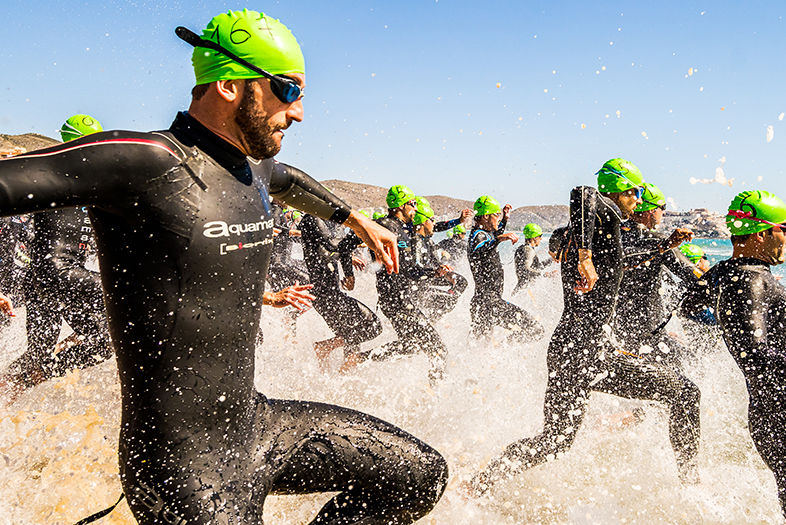
Sure, LA is on the short list to host the 2024 Olympics. But without us, there would be no tri in the Summer Games. The first-ever triathlon took place on Fiesta Island in 1974. San Diegans Jack Johnstone and Don Shanahan conceived, directed, and participated in the race they coined “triathlon,” a term Johnstone spelled out for the trophy maker since it didn’t yet exist in the dictionary. You’re welcome, world.
—Christine Pasalo
â
If you want to enjoy a pint of beer or a glass of wine right where they are made, LA County is a bit of a beverage desert: It’s distinctly lacking in local breweries, wineries, and vineyards.
San Diegans are especially lucky from a fermented beverage standpoint: We have an astounding variety of choices that are not only easily accessible, but also world-class in terms of quality.
On the beer front, San Diego currently boasts more than 130 breweries, spread out across the county. We have brewers as far north as Fallbrook and Oceanside, as far east as Alpine and Julian, and we have seven breweries just between Chula Vista, El Cajon, and Santee. Not to mention about a dozen brewpubs in North Park alone.
LA County has 26 breweries—one of which is Pabst—most of which are in the hard-to-reach downtown area. By comparison, we’ve got 26 breweries just within the stretch from Oceanside to San Marcos.
Of course, if you want to talk about the quality of beer produced, there’s little doubt that San Diego outshines not only Los Angeles, but most every other county in the nation.
Dozens of our breweries have won major medals at the biggest national and international beer competitions; last year San Diego won 32 medals at the World Beer Cup and Great American Beer Festival alone, and Karl Strauss was crowned 2016 Mid-Size Brewing Company and Mid-Size Brewer of the Year by the latter.
Don’t get us wrong, LA breweries are—by and large—excellent in terms of quality, but San Diego has gone beyond just quality; it has actually created its own unique style of beer. The now-famous “San Diego style” started with turbocharged IPAs that were super-hoppy, big, bold, and bitter. That approach soon spread to other styles of beer—including pale ales, pilsners, and Belgian styles—and is now emulated by breweries around the world, including in LA.
Prefer reds and whites? There are 115 wineries in San Diego County and they—much like our breweries—can be found in every corner of the region. Los Angeles County has 25–30 active wineries open to the public, but we have 35 in our central inland area alone (between Escondido and Ramona), including Domaine Artefact, Highland Hills, and Milagro. If nature flares up your allergies, we’ve got urban wineries, too, like Vinavanti or LJ Crafted.
Chalk it up to San Diego having more distinct wine-friendly microclimates than any other county in the US, resulting in more than 60 vinifera varietals—everything from France’s Bordeaux and Rhône to Italy’s Tuscan and Piedmont and Spain’s Rioja—not to mention the old classics from right here in California, like primitivo and petite sirah.
Wherever you may be in San Diego County—you can most often get to a brewery or winery in less than 20 minutes. And where does 20 minutes in LA get you? I think you already know the answer to that one.
—Bruce Glassman
San Diego knows Mexican food like only a community this close to the Tijuana border could.It makes sense. San Diego is the birthplace of the Roberto’s Taco Shop chain, a 24-hour fast-casual eatery that knows its way around a carne asada burrito. Founded in 1964, there are 14 Roberto’s in San Diego today, and hundreds of worthy ’bertos imitators, from Adalberto’s to Juanberto’s to Rigoberto’s. The closest Angelenos can get to an actual Roberto’s Taco Shop? Mission Viejo. In Orange County. Lo siento, amigos al norte.
—Jennifer McEntee
â
22 Reasons Why San Diego Is Better Than LA
Not only have Mexican food outposts flourished in San Diego since the 1920s, but we expanded the menu, introducing a drink and two dishes to the rest of the nation.
Frozen Margarita
Back in 1947, bartender Albert Hernandez Sr. (who passed away in 2006) invented the frozen margarita at La Plaza, a Mexican restaurant once located in Bird Rock.
Hernandez’s take was an adaptation of the margarita served at Rancho La Gloria, the Baja restaurant often considered the cocktail’s birthplace. Instead of serving the drink on the rocks, Hernandez combined Jose Cuervo Gold tequila, Cointreau, fresh lime juice, and ice in a blender. Made by the pitcher, the slushy margs were served in salt-rimmed glasses adorned with a lime wedge.
California Burrito
Yep, that wonderful forearm-size frankenfood in which french fries share top billing with carne asada, salsa fresca, cheese, and guacamole. It’s an affront to the cold-pressed juice lifestyle and we’re okay with that.
Granted, its origin story lacks detail. According to Gustavo Arellano, a leading historian of Mexican American food, it was first sold in the 1980s by the ’bertos chain, the San Diego family taco shop operation that began with Roberto’s and includes Alberto’s, Filiberto’s, and others. But no one can recall which ’berto invented it, nor the specific year it was first sold.
Still, two points are incontestable: french-fry-filled burritos didn’t exist in the US before they appeared in San Diego, and fries make everything better.
22 Reasons Why San Diego Is Better Than LA
Fish Taco
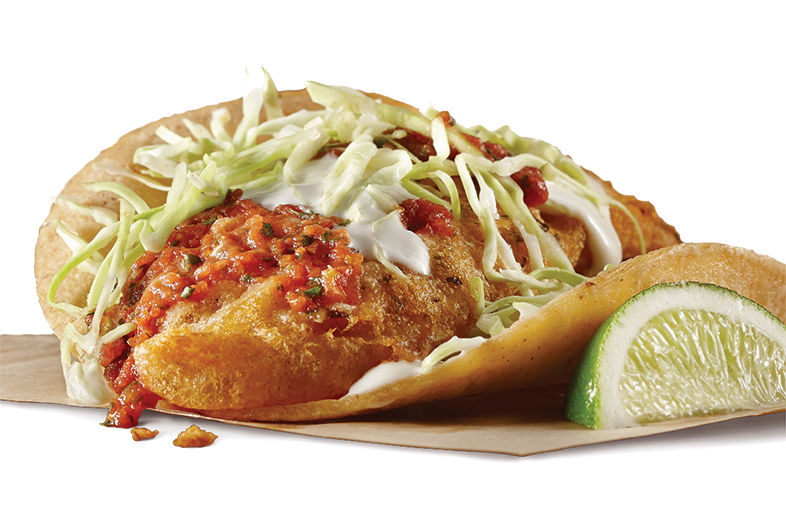
San Diego State alum Ralph Rubio introduced America to fish tacos in 1983. His flagship? A converted Orange Julius walk-up stand on Mission Bay Drive dubbed “Rubio’s Fish Tacos.”
The business idea was inspired by surf trips he’d taken to San Felipe during college, when he and fellow Aztecs fueled their pursuit of swells with the prized Baja street food.
Today, the first brick-and-mortar Rubio’s, which sits on the spot of the walk-up, is just one of 201 restaurants operating in California, Nevada, Arizona, Utah, Colorado, and Florida.
His surf days are behind him, for now. “I still have all of my boards,” Rubio says. “I need to sell a few more fish tacos before I can ‘retire’ and paddle out again.”
—Christine Pasalo
So the Chargers have left us. I won’t say good riddance, because I died inside. The Chargers were a bridge between me and my father. The Chargers were better than church.
But I will say this: poor Los Angeles.
The Chargers have gone to a city that has proven unable to keep a football team. The Raiders left. The Rams left (and returned). The Chargers left (they started there in 1960). Los Angeles loves cheekbones more than it loves football.
There’s a reason why football doesn’t work in Los Angeles. First of all, in order to navigate LA traffic, you’d have to leave on a Thursday to make the kickoff at a Sunday game. Second, traffic is awful. Third, traffic is bad.
No one will go. The “selfie value” just doesn’t pan out.
And now LA has two teams—the Rams and the Chargers. The Rams have the richest owner in football. The Chargers don’t. Who do you think is going to spend the money to brand the team and win over the hearts of Angelenos?
The Chargers are now the bridesmaid, not the bride, to a town that doesn’t care. They are the microscopic fish in a big pond.
Trust me, San Diego, when I say that we’re better off. We can take a few years spending that money on things that matter—education, infrastructure, fraudulent city contracts—and then invest in a team with an owner who has the clout and passion to actually compete.
San Diego Super Chargers, no more. In Los Angeles, they are the San Diego Superfluous Chargers.
—Troy Johnson
22 Reasons Why San Diego Is Better Than LA
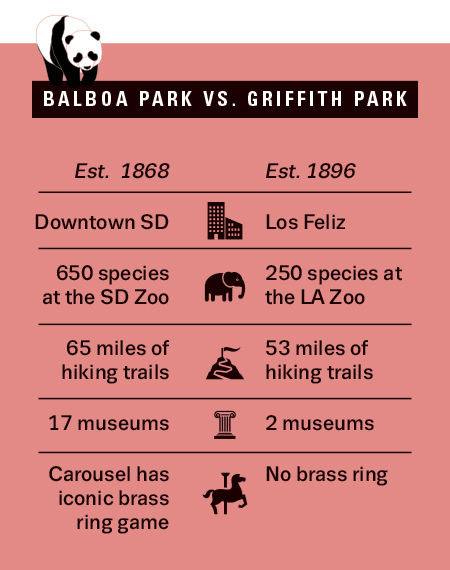
San Diego has the 12th-best park system among the largest 100 American cities according to The Trust for Public Land (TPL), the national nonprofit that advocates for the creation and improvement of parks. Los Angeles didn’t even place in the top 60.
Because parks make up so much of our city area (nearly 40,000 acres), they’re less people-dense than, say, those in LA. According to ParkScore, TPL’s rating system, 30 San Diegans are served per park acre, compared to 100 in LA. Less crowding means better access to playgrounds, recreation centers, and basketball courts.
Also, more of us live within one mile of a public park than someone living in LA, and when parks are plentiful and nearby, they improve a city’s quality of life: Studies have shown that people living in or near green areas experience a 12-percent lower mortality rate.
This year will see upgrades to existing playgrounds in park-deficient communities, such as Chollas Lake and Larsen Field, and the completion of new skate parks in Linda Vista and City Heights, thanks to the department’s pursuit of federal and state funding.
—Christine Pasalo
22 Reasons Why San Diego Is Better Than LA
Of San Diego County’s 4,526 square miles, one-third of our county is public land available for recreational use and all is accessible within a two-hour drive. Add to that the 2,000 species of plants, including the rare Torrey pines, and San Diego really is still wild. San Diego’s jagged topography lends itself to a rich and varied landscape—we have the largest biodiversity of any county in the US–and while sunny and 73 degrees might seem like a constant, our highest and lowest temperatures have been recorded at 122 F in Anza-Borrego Desert State Park’s rugged badlands and a chilly minus 4 F in the pine-shadowed canyons of Cuyamaca Rancho State Park.
More than 500 species of bird have been recorded by the San Diego Audubon Society, at least 23 of which are endemic to this region. Look for the light-footed clapper rail and Belding’s Savannah sparrow at the Tijuana Estuary, then visit the mountain town of Julian to see frenetic white-naped pygmy nuthatches creep up oaks and rare white-headed woodpeckers bore holes in a pine snag.
But birds aren’t the only animals here—San Diego is also home to 742 species of mammals, which includes the endangered peninsular bighorn sheep, found on the foothills surrounding Borrego Springs, or the jumpy Stephens’ kangaroo rat.
—Jade Belzberg
â
Since 2009, the county has taken in 23,094 refugees from 34 countries, according to data compiled from the U.S. Department of State. That’s more than any other region in California, making us a leader in the state’s effort to shelter people forced to flee their home countries due to violence and persecution.
—Christine Pasalo
â
Los Angeles has an amazing restaurant scene. I’m not going to tell you different. To say San Diego has more options than LA is to admit lunacy.
What I will tell you is: San Diego’s restaurant scene is better.
San Diego has more small farms than any county in America. And if I’ve learned anything as a food writer, it’s that small farm food tastes a hell of a lot better than big farm food. It’s the difference between Coors Light and craft beer. The fewer things you focus on, the better those things are. Period. A pretty basic law of life.
LA has great big farms. That’s nice. San Diego has great small farms. That’s better.
Food tastes best the very second it is pulled from its source. Every second after that, it slowly descends into mediocrity and eventual spoil (not to mention it starts to bleed nutrients).
To test this theory, taste a ripe tomato as soon as it’s plucked from the vine. Hosannah! It tastes like an actual tomato. Sweet, acidic, perfect. It tastes like the tomato your grandmother swore tomatoes tasted like, and why she complains every time you cook. Now taste that same tomato three hours later. Still good. But less good.
“Farm-to-table” is an abused word. A lot of BS. Hell, fast food gets their produce from a farm somewhere.
But San Diego is by far the country’s truest “farm-to-table” mecca. Our 6,600-or-so small farms deliver the world’s best produce to our chefs in the shortest amount of time.
Chino Farm? The one that helped make Alice Waters and Wolfgang Puck famous? It’s not in Beverly Hills. It’s here.
Admittedly, Santa Monica had the first great farmers’ market in Southern California. But those days are over. Now, San Diego’s farmers’ markets are the greatest thing in not only SoCal, but the globe.
Our chefs are cooking with this produce. Los Angeles is cooking with it, too—just a couple hours or days later.
San Diego also has an ocean as its border. Groundbreaking studies have revealed fresh seafood to be desirable. Due to soul-sucking traffic, seafood takes longer to get where it’s going in LA. Nothing kills the quality of your restaurant meal quite like rush hour on the 405.
San Diego also has a Mexico, which is growing some of the best produce, olive oil, and wine in the Americas. Sure, Los Angeles can get some of that action, but only after a few hours in a hot truck. Congratulations on second place, Los Angeles.
On top of it all, LA lives and dies by trends—and trends are meant to die. With four million residents, a new restaurant opens up every six seconds or so. And with every restaurant that opens in LA, a formerly trendy restaurant closes. You may be thinking there are too many restaurants opening in San Diego—and there are—but LA is 10 times worse.
Instead of hopping from one trendy restaurant to the next, San Diego diners repeatedly visit their favorites. That repeat business helps restaurateurs, and they use that money and experience to get better. A lot better. Longevity breeds excellence.
So San Diego has the freshest produce and seafood of any big city in the world. Our restaurants tend to last longer, which yields better food. Sorry, LA. We’ll send you the food we don’t use.
—Troy Johnson
We asked Angelenos who defected to San Diego what they miss (and don’t miss) about life in La La Land.
Don’t get us wrong. Tinseltown ain’t all bad. Here’s a few imports that SD could benefit from…
22 Reasons Why San Diego Is Better Than LA
PARTNER CONTENT
Illustrations by Edmon de Haro (who lives in Spain)

Discover eateries, outings, and shops within this inland North County community
Just south of Lake Hodges near 4S Ranch and Poway, Rancho Bernardo is a suburban community that blends residential neighborhoods with industrial pockets, elevated by a decidedly diverse food scene.
Over 60 years ago, this North County neighborhood was once part of a family ranch. Since that time, big tech companies have taken up residence here, including Amazon, Sony Electronics, Oura Ring, HP, Teradata, and ASML. Rancho Bernardo Inn serves as a community hub, with locals frequently meeting at the hotel’s restaurants, golf course, and spa.
Whether it’s work or a round of golf that brings you to Rancho Bernardo, we’ve taken care of the agenda planning with our guide to the area’s best restaurants, activities, and shops.

Sample ingredients plucked straight from Rancho Bernardo Inn’s onsite garden and served at their signature restaurant Avant. One of the neighborhood’s most upscale dining options, they serve a French-inspired menu with nods to California, including many seafood options. Don’t miss their more casual sister restaurant Veranda for al fresco dining.
17550 Bernardo Oaks Drive
Wood-fired pizzas and handmade pastas are standouts at The Kitchen, Bernardo Winery’s counter-service restaurant specializing in Sicilian flavors. Charcuterie boards and bruschetta make for great starters or snacks while wine tasting.
13330 Paseo Del Verano Norte
Fast-casual and family-owned eatery Bushfire Kitchen recently opened a location in Rancho Bernardo, serving sandwiches, bowls, salads, burgers, protein plates, and housemade empanadas. Bushfire prepares comfort food with healthy ingredients, and offers plenty of vegetarian and vegan options.
11962 Bernardo Plaza Drive, Suite 110
Some might call The Cork & Craft an overachiever. This gastropub has an in-house craft brewery and winery: Abnormal Beer and Wine. The more, the merrier. Their sushi menu is definitely worth exploring, but don’t miss other specialties like garlic noodles, chicken wings, and pork belly.
16990 Via Tazon

You don’t have to leave Rancho Bernardo to get a white tablecloth steakhouse experience. Carvers Steaks & Chops has prime rib (their best seller), filet, ribeye, porterhouse, New York strip, and other cuts, served alongside crab-stuffed mushrooms, wedge salad, French onion soup, potato skins, and other steakhouse specialties.
1940 Bernardo Plaza Drive
This no-frills Burmese restaurant is known for its traditional tea leaf salad that’s topped with sesame and sunflower seeds, garlic chips, peanuts, tomatoes, jalapeños, fried yellow beans, and fermented green tea leaf dressing. Tucked into a nondescript strip mall, Burma Place is a great takeout option when you want to eat garlic noodles, fried rice, chicken curry, and samosas from the comfort of your couch.
16719 Bernardo Center Drive, Suite A
Find authentic Vietnamese cuisine at Phở Ca Dao, including favorites like phở noodle soup, vermicelli noodles, broken rice dishes, and spring rolls. One of eight locations throughout San Diego, this family-owned chain uses robot servers for food delivery.
11808 Rancho Bernardo Road, Suite 100
It’s all about the sauce at fast-casual Mediterranean restaurant The Kebab Shop. Smothering your chicken shawarma, gyro, or falafels in garlic yogurt, cilantro jalapeno, fire chili, and dill yogurt sauce is practically a rite of passage. The hardest part is deciding whether to order a wrap, bowl, or salad.
11980 Bernardo Plaza Drive
Get a taste of South Asian flavors at Casa Lahori, a Pakistani restaurant noted for its grilled meat kabobs. Other best-selling dishes include beef nihari, chicken biryani, and shahi paneer— best enjoyed with naan bread.
11975 Bernardo Plaza Drive
Grill your own meat on the tabletop at Kangnam Korean BBQ, an interactive, all-you-can-eat experience that’s well-suited for large groups. Marinated beef bulgogi, grilled galbi short ribs, and spicy pork are served alongside traditional banchan dishes like kimchi, japchae glass noodles, and flavorful stews. Weekday lunch specials provide a nice discount on these filling meals.
11828 Rancho Bernardo Road, Suite 117–119

Dig in to your favorite curries and kebabs at Curry & More Indian Bistro. Most entrees are served with a choice of two side dishes, including basmati rice, potatoes with cumin, daal, naan, or mixed greens. Help offset the spice with one of their sweet mango or strawberry lassi drinks.
11808 Rancho Bernardo Road, Suite 123
Kai Oliver-Kurtin is a San Diego-based writer who covers travel, dining, events, and culture. Her writing has been published in USA Today, Condé Nast Traveler, Fodor's Travel, Marie Claire, and HuffPost, among others.
From San Diego’s coastline to Los Angeles stadium and fan zones across the region, here’s how to experience soccer’s biggest event
When three nations and 16 cities come together to host the FIFA World Cup 2026, the scale stops feeling like a tournament and starts feeling like geography. A continent becomes the stage as borders soften into corridors. And Southern California—shaped by migration, sport, entertainment, and constant movement—sits inside that landscape with all eyes on it.
San Diego and Los Angeles have always felt connected. Hop on the Pacific Surfliner, and the trip unfolds in one continuous stretch of coastline, passing beach towns, neighborhoods, and city centers.
Traveling from San Diego, everything still feels slightly suspended as the Pacific Surfliner follows the coast north with ocean on one side and a slow suburban blur on the other. San Diego stays in exhale. Los Angeles is already building toward something louder.
This summer, Los Angeles will host eight matches of the FIFA World Cup at Los Angeles Stadium, including the US Men’s National Team opener on June 11, while the region stretches into 39 days of programming across stadiums, parks, transit hubs, beaches, and neighborhoods. Instead of one massive fan hub, Los Angeles is embracing a citywide celebration, with fan zones spread across its entirety.
But this pattern has been rehearsed here for decades. In 1994, Southern California became one of the defining stages of the World Cup, when matches at the Rose Bowl placed global attention on the region and turned local stadiums into international landmarks, confirming its ability to hold the world at scale.
What distinguishes Southern California is not just infrastructure, but cultural permeability. Fashion, music, film, art, and sport constantly overlap here, creating an environment where identity is flexible and always in motion. From the Venice boardwalk, where skate culture shaped modern street style, to global soccer stars rubbing shoulders with Hollywood celebs, to authentic Spanish cuisine moving up and down the I-5 corridor, everything circulates.
The World Cup is not introducing anything new here, it’s showing up for the summer and showing out, revealing what this city has always known about itself. What follows is a look at the fan zones and how Los Angeles turns itself into a city-wide stage for the tournament, one neighborhood at a time.

As the heart of Los Angeles, Union Station is an official Fan Zone June 25-28 during the World Cup, but in practice it never really stops being one.
It is the city’s circulation point, its meeting ground, its pressure valve. Commuters, travelers, match-day crowds, and everyday Angelenos all move through the same space, and everything mixes, overlaps, and scales in real time. In a way, this is where the World Cup stops arriving in Los Angeles and starts moving through it.
The Pacific Surfliner from San Diego to Los Angeles makes that shift feel almost too easy. No stress or gridlock anxiety, just a straight line up the coastline with ocean on one side and everything slowly becoming more built on the other. It’s one of the rare ways into LA that doesn’t feel like arrival as friction. You can sit with a laptop, watch the Pacific drift past, grab coffee from the café car, and let the city come to you in pieces.
That’s the beauty of arriving at Union Station. Instead of feeling like you’re on the edge of the city, you’re immediately surrounded by it. And, inside, the station already reads like a World Cup nerve center: banners, movement, multilingual energy, the sense that something global is about to funnel through this exact point. The Heart of the City Fan Zone only sharpens that feeling, with simultaneous match screens, DJ sets, meet and greets, and immersive activations built around marquee games like USA vs. Türkiye.
From there, the city splits outward.
ROW DTLA feels like the first exhale after arrival. A converted industrial campus turned creative district where restaurants, retail, and open-air courtyards form a self-contained ecosystem. If you’re looking for the perfect first meal in LA, make it lunch at Pizzeria Bianco. The thin-crust pizza is reason enough to go, but the space leaves just as much of an impression.
What I liked most about ROW DTLA is how quickly it resets you after the train. One minute you are stepping off at Union Station, and the next you are in a space that feels like its own version of LA, a city inside a city with some of the most curated shopping I’ve ever seen.
Bodega hides itself behind a convenience-store front, a sneaker and streetwear space disguised as something ordinary, like LA refusing to make anything feel too obvious. The whole campus moves like that, part retail, part gallery, part neighborhood you are only temporarily inside.
Isabella Dallas is a freelance writer for San Diego Magazine and the Arts and Culture Editor at The Daily Aztec in her final year at San Diego State University. She previously worked as an editorial intern for SDM, but when she’s not writing, you can find her trying the best coffee spots in SD, devouring the latest rom-coms, and indulging in anything and everything pop culture.
We rounded up the city’s best events, activities, and restaurants to celebrate Dad on June 21
Father’s Day is often the overlooked summer holiday that doesn’t quite get the extravagant brunch treatment or overflowing bouquets that Mother’s Day does. Sure, there’s the annual pair of socks, Padres hat you’re convinced he doesn’t already own, beer subscriptions, phone case doubling as a wallet, plus the classic “Best Dad” keepsakes. But this year, let’s flip the narrative with events, activities, and specials made with Dad in mind.
Whether he wants a quiet dinner, a big screen full of San Diego sports and wings, or a weekend that somehow includes NASCAR, a jazz festival, and a Broadway reimagining, there is something for every dad. Here’s your guide to a memorable Father’s Day in San Diego.
Jump To: Activities | Bars & Drinks | Dining Specials

Nothing says “Happy Father’s Day” like the sound of engines ripping across Naval Base Coronado. NASCAR is turning this into a historic race weekend that feels less like a casual outing and more like a full-scale San Diego moment people will be talking about long after June is over. This is the first time a NASCAR Cup Series race has ever taken place on an active military base, which instantly puts it in “you had to be there” territory.
It’s fast, loud, and very on-brand for a Father’s Day where Dad suddenly becomes an expert on tire strategy, pit stops, and track positions. The bar might be set unreasonably high for every Father’s Day that follows, but that’s a next-year problem, right?
Price: Tickets available on Ticketmaster
Dates: June 19–21 | Weekend Schedule
Address: Naval Base Coronado
At Humphreys, Father’s Day gets a little more sophisticated. Roger Friend and an all-star lineup of jazz musicians bring decades of international experience to the bay, where dads can lean into their musical side with head nods and shoe taps. It’s smooth, layered, and exactly the amount of jazz you didn’t realize your playlists were missing.
Price: Tickets available on Ticketmaster
Time: 6 p.m. – 10 p.m.
Address: 241 Shelter Island Drive, San Diego
Belmont Park is rolling out a Father’s Day lineup that basically turns Mission Beach into a living garage scene, with a free car show featuring everything from polished 1960s Camaros to classic Bel Airs and lowriders. If he has a ride of his own, vintage car owners can join the lineup for $35 per vehicle. After the chrome tour, it’s straight into a Mission Beach classic: boardwalk strolls, fish tacos on the sand, and rides at Belmont Park.
Price: Free to attend | Register vehicle here
Time: 10 a.m. – 3 p.m.
Address: Belmont Park, 3146 Mission Boulevard, San Diego
I think it’s an unspoken rule that dads love Bob Dylan. Mine is already figuring out how he’s getting to San Diego for this. But this isn’t just a Father’s Day activity, it’s a cultural event that happens to land on Father’s Day weekend and immediately becomes the plan. Bob Dylan at The Rady Shell means you’ll be surrounded by city lights sparkling across the harbor, legacy music, and at least one moment where Dad leans over and whispers, “You know, this guy wrote everything.” And honestly? He’s not wrong.
Price: Tickets available on Ticketmaster
Time: 6:30 p.m.
Address: 222 Marina Park Way, San Diego
The San Diego County Fair returns with fried everything, questionable decisions, rides that definitely looked safer in the 2000s, and Dad’s very confident plan to “just walk around for an hour” that somehow turns into an entire day. It’s also the biggest, longest-running community event in San Diego County, running Wednesday, June 10 through Sunday, July 5, with a “Once Upon a Fair” theme. It basically becomes part of the Father’s Day season whether you planned it or not. So, consider this your annual reminder that “happily ever after” can, in fact, involve Cajun honey dogs, cinnamon rolls, a Ferris wheel you swore you wouldn’t go on, and Dad somehow knowing exactly which booth has the best Spam wonton tacos.
Price: Tickets available here: website
Date & Time: June 10 – July 5 (closed Mondays & Tuesdays) | 11 a.m.
Address: 2260 Jimmy Durante Blvd, Del Mar
Isabella Dallas is a freelance writer for San Diego Magazine and the Arts and Culture Editor at The Daily Aztec in her final year at San Diego State University. She previously worked as an editorial intern for SDM, but when she’s not writing, you can find her trying the best coffee spots in SD, devouring the latest rom-coms, and indulging in anything and everything pop culture.
The annual event honors middle market companies creating jobs, scaling up, and investing in the region
San Diego is known for its startup culture and innovation economy, but what happens when the company moves beyond its early-stage years? The San Diego Business Impact Awards aim to answer that question, spotlighting the middle market businesses helping drive the region’s economy.
Hosted by San Diego Regional Economic Development Corporation (EDC) and JPMorganChase, the second annual awards celebration takes place on Thursday, July 23, from 4:30 to 7:00 p.m. at Scripps Research Auditorium. More than 200 executives, entrepreneurs, and business leaders are expected to attend the networking and cocktail event honoring some of San Diego County’s fastest-growing companies.
Businesses headquartered in San Diego County that have operated for at least two years are encouraged to submit their nomination by Thursday, June 18 at 4 p.m. Companies across industries—from technology and life sciences to tourism and consumer products, as well as pre-revenue startups—are eligible for recognition.
For EDC President and CEO Mark Cafferty, the event is as much about building connections as celebrating success. “We’ve had a longtime partnership with JPMorganChase; their work aligns with our efforts to support underserved communities and drive talent development,” says Cafferty. “And the networking was invaluable last year. I’m still in touch with people I met at last year’s awards.”

EDC is an independently-funded nonprofit that works directly with San Diego companies to help them grow the local economy, make the region as a whole more competitive, and attract and retain top-tier talent with quality jobs. Through EDC, companies can get help starting or expanding their business with support for things like site selection, permit navigation, and regulatory guidance, plus connections to local resources and potential business collaborators.
The San Diego Business Impact Awards began as an idea with one of EDC’s longtime strategic partners, JPMorganChase. The two organizations share a commitment to San Diego and are dedicated to bolstering middle market businesses.
“We’re blessed with a robust innovation economy and startup community,” says Aaron Ryan, San Diego Region Manager for JPMorgan’s Commercial and Investment Bank and vice chair of the firm’s’ San Diego Market Leadership Team. “But one of the segments of the business community we felt was overlooked was emerging middle market companies—the businesses that are no longer small but not yet large.”
Ryan says supporting those companies is critical as they scale and decide where to invest, hire, and grow.
San Diego’s high cost of living remains one of the region’s biggest business challenges, making talent recruitment and retention increasingly competitive. But local leaders point to the region’s quality of life, climate, and collaborative business community as advantages that continue to attract employers and workers.

“In order to support thriving households, there has to be enough high-quality jobs for people to be able to afford to live here,” Cafferty says. “Once a company grows and excels past that middle market point in their growth cycle, they become much more likely to pay higher wages and compete globally.”
Both Cafferty and Ryan proudly tout the unique collaboration that exists among San Diego County businesses. Bringing together top universities producing high-quality talent, cutting-edge research institutions, a robust military and defense presence, leading ocean science and environmental organizations, and a binational, cross-border identity creates a distinct business ecosystem that defines and strengthens the San Diego region.
Last year’s San Diego Business Impact Awards celebrated nearly 60 honorees from 49 industries, representing a total of 8,232 jobs across eight sectors, including: software and technology, healthcare and life sciences, consumer goods, professional services, finance, construction and manufacturing, defense, and hospitality and tourism. On average, honoree companies doubled their revenues over the previous year, employed more than 145 San Diegans each, and offered an average annual compensation of $192,415.
Top honorees included defense contractor Innoflight, environmental consulting firm Bancroft Construction Services, life sciences startup Element Biosciences, defense technology contractor GALT Aerospace, organic grocery store chain Jimbo’s, and biopharmaceutical company LENZ Therapeutics. During the event, Innoflight Founder and CEO Jeff Janicik held a fireside chat offering his insights on investing in the community and embracing San Diego culture.
This year, organizers hope to continue highlighting the middle market players driving economic impact across the region. Nominations are now open through June 18 at 4 p.m. Get your tickets to the San Diego Business Impact Awards celebration to enjoy drinks by Snake Oil Cocktail Co., light bites, live music, and networking.
Food writer Beth Demmon names local bites we love—both at the high and low ends of our budgets
We love a mega-fancy tasting menu, but let’s be honest—we’re not all blessed with unlimited Wagyu funds. So we picked some of the breakout dishes of the last year (or couple of years) from the best chefs in the city, reverse-engineered their chief charms (salty, smoky, caramelized?) in the test lab of our mouths, and found some budget-friendly alternatives that hit some of the same notes with an everyday price tag.
Where do delicately plucked marigold blossoms adorn Deer Isle scallops, or ingredients like fermented raspberry precede roasted coffee oil, shiro miso caramel, or bronze fennel in a parade of hit-after-hit dishes? Lilo in Carlsbad, of course. San Diego’s newest Michelin star changes its menu with the seasons, but one stalwart dish has kept tongues wagging since opening day last April: the caviar ice cream. A boat-shaped sliver of orgeat ice cream, smoked celery root bushi, and freshly pressed almond oil are topped with a generous heap of caviar. It’s a dish so good and defining that chef Eric Bost will tire of talking about it for a very long time.
Price: $265 for the tasting menu (before tax, tip, and drinks)
There’s a reason Stella Jean’s s’mores ice cream is part of the local scoop shop’s “always available” menu. Made with fire-roasted marshmallows and coconut ash ice cream mixed with dark chocolate-covered graham crackers and mini marshmallows, its strangely ashen hue dabbled with flecks of tawny brown is a far cry from the wildly vibrant ube and pandesal toffee flavor seemingly made for Instagram reels. But it’s a sensation in your mouth—smoky, toasty, torched, creamy, marshmallowy, coconutty, ashy, and bitter from the dark chocolate. Pro tip: If you really want to DIY Lilo’s ultra-luxe treat, bring your own caviar.
Price: $6.25 for a single scoop
There’s no question what comes first at Lucien. It’s the egg. Chef and co-owner Elijah Arizmendi’s 12-course tasting menu begins with welcome bites under the calamansi tree before moving inside to start the Journey (the actual name of this section of the menu). The first step is one of the most astounding—a perfectly intact, upright, ochre-hued eggshell containing his take on Japanese chawanmushi (egg custard), topped with a dollop of caviar. The accompanying ingredients have ranged from sweet corn and huitlacoche to banana and buckwheat, but each one has precisely demonstrated Arizmendi’s commitment to French technique with California experimentation and global influence.
Price: $260 for the chef’s tasting menu (before tax, tip, and drinks)
The biggest difference (besides price) is that while Lucien’s dish changes with the season, Sushi Ota is comfortably predictable. A San Diego staple since 1990, the legendary Sushi Ota has been one of those if you know, you know joints that locals try to keep off the radar. (It hasn’t worked at all.) Known for ultra-fresh fish and ultra-traditional service, the small Pacific Beach restaurant also serves Japanese comfort foods like udon noodle soup alongside sashimi, nigiri, and rolls. But it’s the savory steamed egg custard, called chawanmushi, that really gives you the warm and fuzzies. Add a side of salmon roe (ikura) for a few bucks more, and this dupe is about as good as it gets.
Price: $12 for chawanmushi, $11 for ikura

Enough ink—and tears, I’m sure—has been spilled over Chick & Hawk’s long and arduous journey to opening its doors. But now that the Encinitas eatery is in full swing, chef Andrew Bachelier’s tightly curated menu of fried chicken sandwiches, fries, and bowls command lines of hungry locals and skate-culture loyalists. The Birdman, the signature hot chicken sandwich named for partner and skateboarding legend Tony Hawk, is piled with cabbage slaw and pickles and slathered with a tangy kimchi comeback sauce on a soft brioche bun. Although this Nashville meets California meets Mississippi meets Korea sando doesn’t command a triple-digit price tag, the fact that it’s nearly a $20 chicken sandwich (sans side) has been a topic of conversation. Bachelier—who worked at Addison before opening Jeune et Jolie, then launched SDM’s 2024 “Best New Restaurant,” Atelier Manna—and his team earned that price tag.
Price: $18
It’s hard to beat Koreans at the chicken game. Korean fried wings are defined by a double-fry technique—first at a low temperature to ensure the chicken is cooked through, then at a high temperature to ensure the famed extra-crispy, ear-splittingly crunchrageous magic. At Cross Street, they follow a similar fusion ethos as Chick & Hawk, using inspiration from the American South as well as Thailand, Korea, Vietnam, and more, with flavors like “Seoul Spicy” or “Honey Butter” for whatever you’re feeling that day. Pair it with a cold beer to go full chimaek (a popular Korean combination of pairing fried chicken and beer). Now that’s a combo—and price tag—that’s hard to beat.
Price: $8.75 for five wings

PB&J. Captain & Tennille. Brad Wise and steak. Steak frites ranks among the iconic global duos. And when the holy union of prime cuts and twice-fried carbs comes from Wise and the meat-loving masters at Trust Restaurant Group, it’s a pretty safe bet. À L’ouest—the group’s newest fancy, but not fussy, drippy plant dreamscape of a French steakhouse on the prime corner of 30th and University in North Park—gives guests a choice: 12-ounce New York strip, 8-ounce filet mignon, or 8-ounce Wagyu hanger, topped with sauce au poivre (the classic French pan sauce—peppercorns, shallots, heavy cream, brandy) and served with a heaping pile of 24-hour salt-brined fries and a watercress salad. One bite acts as a transport to a Parisian brasserie, so if you think about the cost in terms of time-space travel, it’s a pretty great deal.
Price: starts at $48
To satisfy the same urge for meat and potatoes, feel at least moderately European while doing so, and save a couple quid, a trip to The Shakespeare in Mission Hills ticks all the boxes. The classic British shepherd’s pie arrives in a piping hot oval au gratin dish, smothered with a thick layer of mashed potatoes. Beneath it lies a hefty portion of marinated ground beef and vegetables in the pub’s secret sauce, and while there are a few choices of sides, the correct order is peas and “proper” chips (a.k.a. chunky, thick-cut fries versus the typically thinner American “French” fries). It’s more tickety-boo than très bien, but it’s immensely satisfying in any language.
Price: $22.95
Beth Demmon is an award-winning writer and podcaster whose work regularly appears in national outlets and San Diego Magazine. Her first book, The Beer Lover's Guide to Cider, is now available. Find out more on bethdemmon.com.
From dedicated line cooks to seasoned bartenders, these are the people making magic happen in city's top restaurants
Chefs have done gobs of thankless, lumbar-breaking work over years to land the role. Restaurateurs put their entire livelihoods on the line, microdosed sleep, took ultimate responsibility for every minor stress. They earned the spotlight they get. But ask one of them, and they almost always defer to a line cook who’s showed up for years, been deep in the thing, and whose absence would bring the kitchen to its knees. Or the bartender with a warmth that draws people whether they’re thirsty or not. Or the noble and spreadsheetable soul in charge of purchasing everything needed for the nightly show.
They call it the “heart of the house.”
Spotlight or not, these are the people who make a food culture hum at its daily core.
For this year’s “Best Restaurants” issue, we asked a handful of the top chefs and one restaurant owner—Tara Monsod (Animae/Le Coq), Jason McLeod (Ironside Fish & Oyster), Ananda Bareño (The Marine Room), Owen Beatty (A.R. Valentien), and Ryan Thorsen (Mister A’s)—who that person is for them.
These are the hearts of houses.

Roger Feria Krile is not only the guy you want to be friends with at work, but also the guy you want to hire: respectful, nose-to-the-grindstone, versatile. And he’ll drop off a fresh batch of cinnamon rolls at your house for the holidays. Born in Tijuana, Krile moved to the US with his mom and sister when he was in elementary school. He saw the sacrifices his mother made to give her children a better life, and he pushed himself to live up to that brighter future.
He came to cooking during the pandemic, asking himself, “What do I really love to do?” His answer: “Bake cakes for friends and break bread with people,” he says. That led to a culinary school degree and a stint in a Michelin-starred NYC kitchen, where he grew to “love and understand” fine dining. Now back in San Diego, Krile’s showing up at Animae in a major way. He does prep work three mornings a week and comes later in the day twice a week for dinner service. Most line cooks do one or the other, but he requested both tours of duty.
“Gotta get my reps, keep my skills sharp,” Krile says, “and I don’t want to miss the rush.” Prep work in the mornings helps him learn how Executive Chef Tara Monsod uses each ingredient to the fullest. Krile’s not just a line cook. One-quarter Filipino (and learning about his culinary heritage from mentor Monsod), he’s building his own Mexican-Filipino pop-up concept. Look for Sarsa—Filipino for salsa—where every dish is a play on words fusing Mexican and Philippine Spanish or Tagalog. He’s already R&D’d a breakfast sandwich, the tortantalong: a torta filled with a signature Filipino eggplant omelette called a tortang talong. Friends in the industry say it’s unexpectedly delicious.
“He shows up every day with a clear goal of one day opening his own restaurant, and that drive pushes him to go above and beyond,” says Monsod. “He is constantly learning, asking questions, and absorbing as much as possible, all while leading by example on the line.”

Ruben Martinez knows every bottle of wine at Mister A’s—not necessarily by taste (though he was on the tasting committee for years), but by where they are in storage and whether they need replenishment. Owner Ryan Thorsen wants the wine list at 100 percent available every night, and Martinez’s job is to make that a reality. He’s been keeping inventory on Mister A’s wines since the 1970s, back when he worked for founder John Alessio. And it’s not just vino: Martinez also procures the ingredients, arriving at 5 a.m. to meet delivery trucks, stock shelves, and alert chefs if anything’s amiss.
Then he hits the dining room for a once- or twice-over to find any imperfections. If a light is out, if the plumbing acts up, if something major happens after he leaves in the afternoon, he’ll fix it all. He’s the best guy to ask, anyway; he knows every inch of Mister A’s. “Before ‘Google it,’ there was ‘Call Ruben,’” Thorsen says.
Martinez started out in hospitality at 17 with his father at Hotel Del. “I thought it would be easy working with my dad,” he says. “But early on, he caught me fooling around with the boys and told me, ‘We’re here to make money for the company. If you’re not willing to work, get out of here.’” That set him straight and set the foundation for Martinez’s lifelong dependability.
He moved to Mister A’s a couple years later, and after over five decades, he’s now the indispensable purchasing manager who worked with Alessio, Betrand Hug, and now Thorsen. Later this year, he’s planning on retiring—though he’s already offered to keep showing up a couple days a week and help out with Thorsen’s new project at Liberty Station.
Thorsen knows this man is a gem. “I don’t think we fully grasp what it will feel like without him,” he says. Last year, he threw Martinez a surprise birthday party in Mister A’s Blue Room, inviting Martinez’s family and a whole cast of coworkers going back to Alessio days. Martinez says he had to leave the room to hide his tears.

There’s an hour most people never see, when a restaurant’s technically awake but not yet accountable, and that’s where Patrick Mattoon lives. He’s been the foundation of Ironside’s prep team for the past five years, quietly guiding the day toward success. He and his team are the first in, and they turn on ovens, check deliveries, catch mistakes before they become problems, and fix everything without ceremony so the chefs and line cooks walk into a day that already works.
Mattoon organizes, but more importantly, he owns. There’s no job too small, no detail beneath notice. In a kitchen, bad prep’s the one thing you can’t fix later, no matter how talented of a chef is at the helm.
Five years in, Mattoon still approaches each day with the same care and intensity that he had on day one. He takes every task seriously and sees it through completely—the kind of consistent work that doesn’t draw attention but makes everything else possible. When the restaurant got a soft serve machine, a notorious maintenance nightmare, he taught himself how to clean and run it just to make sure it never broke, not for credit but because that’s just how he’s wired.
“He is a silent leader who has the respect of the entire team due to leading by example,” says Ironside chef Jason McLeod.

Through 23 years, three executive chefs, and a recent kitchen remodel, lead line cook Arturo Celestino is a constant at A.R. Valentien. He’s there at 6:30 a.m. five days a week—sometimes six—for the Lodge’s breakfast service. That means he’s up early prepping potatoes, slicing mushrooms, whisking pancake batter, and stirring sauces “always with a smile,” says Owen Beatty, the restaurant’s new chef de cuisine. “He’s a good leader.”
Celestino shows the younger guys how to make the eggs fluffy, so the omelettes are always perfect (don’t stop twirling the spatula!). He keeps his line in line when their spirits start to naturally droop during the morning shift home stretch when his crew just wants to get out of there. As the lead, he’s also the one chefs turn to when newbies need motivation.
His secret sauce: “mucho talking!” It keeps people happy, and it also helps the chefs retain talent in the kitchen.
Celestino learned to cook out of “necesidad,” he says. He cut his teeth on fine dining at Pacifica Del Mar at the Hyatt and moved to A.R. Valentien in 2003, just a few months after it opened in 2002.
“I’ve had good jefes,” Celestino says of the three executive chefs he’s known at A.R. Valentien: Jeff Jackson, Kelli Crosson, and now Michelin-starred Eric Sakai. Under Jackson—who’s known for pioneering farm-to-table dining in San Diego—Arturo learned to appreciate local ingredients.
“My favorite is basil,” he says, “added to tomato sauce with garlic, it’s mmm.” Fresh basil plays the supporting role in A.R. Valentien’s signature brunch plate, which is also Celestino’s top choice on the menu (to make and to eat), via the Bull’s Eyes: slow-roasted eggplant with sunny-side-up eggs, tomato sauce, and La Quercia prosciutto.
“I love my job,” Celestino says as he flashes that smile. “It’s not just a plate of food. It’s an experience.”

If you’ve been to The Marine Room, you’ve probably met bartender Tony Suarez. With his charming Cuban accent and dapper vest and tie, he makes it his business to regale guests coming and going—even while he’s pouring, mixing, shaking, polishing glasses, and taking orders.
“Over 90 percent of our guests are celebrating a special occasion,” he says. “So I keep up the celebration throughout their whole visit.” He’ll make you a sparkling toast and a customized cocktail, and on your way out, he’ll wish you a happy birthday (again) and invite you back for drinks on him.
“My goal is always to delight the guest,” he says. “I like to discover how you feel and lead you to what you would like to drink.” That spirit of experimentation has led to new signature cocktails, such as the Gerald—crafted for a neighbor who’s a regular—featuring housemade pomegranate puree and bourbon, or the I Drink of You with local Bebemos tequila, Gran Marnier, and Green Chartreuse. You won’t find this anywhere else.
“[Suarez] has mastered the art of the personalized guest experience,” says Marine Room’s Executive Chef Ananda Bareño. “He remembers the small details and favorite orders that make our regulars feel like family.”
Suarez’s tenure at the Marine Room started with a walk on the beach and a knock on the door. He was impressed by the beautiful location, and he asked if they were hiring. He immediately started as a server assistant—right before Valentine’s Day. The bartender took Suarez under his wing, and he took to the books to learn all about spirits.
He’s taken on the bartender role with wisdom and grace, offering a sympathetic ear, a pick-me-up, and a “human to human connection,” he says. Ten years into his career, the surroundings still inspire him as much as they did on day one.
“The Marine Room, the windows onto the ocean, [all] have a healing effect,” he says.
Leorah Gavidor won her first essay contest at age 5. She writes features, news, and non-fiction in San Diego.
Scripps study shows that some patients may be able to taper their dose and maintain results
While glucagon-like peptide-1 (GLP-1) receptor agents have been used to treat Type 2 diabetes for more than 20 years, their recent emergence as weight-loss wonder drugs marked a new frontier in medicine. But their effectiveness has left some patients wondering what to do once they’ve reached their goal. Stopping the medication could mean regaining some, if not all, of the weight. A Scripps Clinic internal medicine physician recently conducted a small study of whether GLP-1 patients who had reached their goal weight could maintain that weight by taking their regularly prescribed injection every other week instead of weekly. Spoiler alert: 30 of 34 patients did. Read more about the study here and what that may mean as pharmaceutical companies roll out oral GLP-1s.
For more nutrition, wellness, and healthy living tips, sign up for the San Diego Health newsletter here.