Featured articles
Featured articles
Featured articles
What's next
Featured articles
Featured articles
Featured articles
Ready to know more about San Diego?
SubscribeReady to know more about San Diego?
The best neighborhoods to live in, now
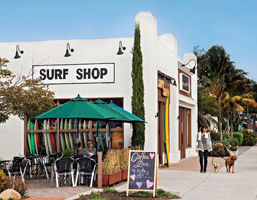
Some are calling it the year of the neighborhoods, when it’s never been trendier to push for better parks, cleaner streets, and more community programs. San Diego’s always been a city of villages, a place where you can choose how you want to live. Walkable main drag? Good schools? Beach adjacent? Read on for our breakdown of San Diego’s coolest ‘hoods.
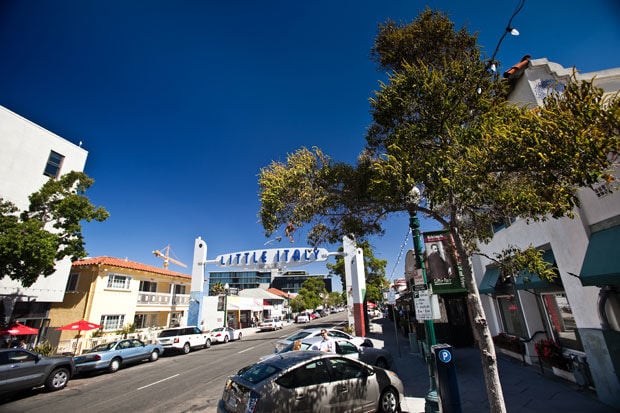
Little Italy
Stats
Own
$492,600
Rent
$2,364
Schools Rating
4
Walk Score
95
Bike Score
82
Carbon Footprint
26.8
Population
2,986
The gathering place: After years of planning, the public outreach process started late last year on one of the neighborhood’s biggest projects to date: a new piazza at West Date Street between India and Columbia streets. The defining feature would be a pedestrian promenade to serve as the central gathering space for the many big events Little Italy hosts throughout the year. A timeline for the project is not yet in place, but the Little Italy Association is working with the community and developers to solicit input from residents.
Bar trick: Though known more for its burgers and beers, The Waterfront Bar & Grill (2044 Kettner Boulevard), which turned 80 this year and claims to be the oldest tavern in San Diego, serves cookies at last call. Now you know!
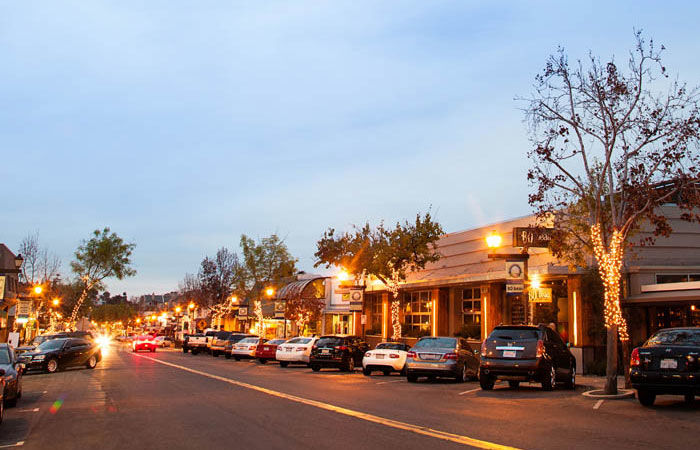
La Mesa
Stats
Own
$441,650
Rent
$2,137
Schools Rating
6.2
Walk Score
53
Bike Score
Car dependent
Carbon Footprint
38.1
Population
57,065
Walkable yet rustic: WalkSanDiego.org named this East County gem the most walkable city in San Diego County, thanks in large part to its upgraded intersections and pedestrian-friendly downtown village. Just up the hill in hip Mount Helix, sidewalks disappear altogether in favor of winding hillsides dotted with boulders, trickling creeks, and ranch-style homes that stretch out over acres (yes, acres) with views out to Coronado. Even with antique shops, unique boutiques, and the neighboring behemoth Grossmont Center, La Mesa still feels quiet, like a peaceful suburban haven enjoying just a splash of urban culture.
Big deal on the boulevard: Designer Philippe Beltran and restaurateur David Cohn recently opened industrial chic eatery BO-Beau Kitchen + Garden (8384 La Mesa Boulevard), which serves upscale comfort food in the same vein as its beloved sister spot in Ocean Beach.
Stats
Own
$329,900
Rent
$1,952
Schools Rating
5.4
Walk Score
42
Bike Score
49
Carbon Footprint
59.5
Population
6,011
The Binational burb: Pack your bags! The Cross Border Access Terminal, which has made national news as it enters final phases of construction, will make Otay Mesa one of the easiest places for cross-border commuters to live once it’s finished. The San Diego Association of Governments estimates that 2 million people a year will use it to access the Tijuana Airport. Otay Mesa is also revamping Brown Field Airport. The airport has been around for years and officials in the area are ready to see it renewed, and take on more travelers.
In the hot seat: If you don’t know his name yet, you probably will soon. Rob Hixson, chair of the Otay Mesa Community Planning Group, has been a voice for the area as it embarks on a high-profile community plan update. After a decade of meetings and negotiations, 2014 is poised to be the year the City Council will vote on some major changes to the area, including scores of new housing, parks, and schools.
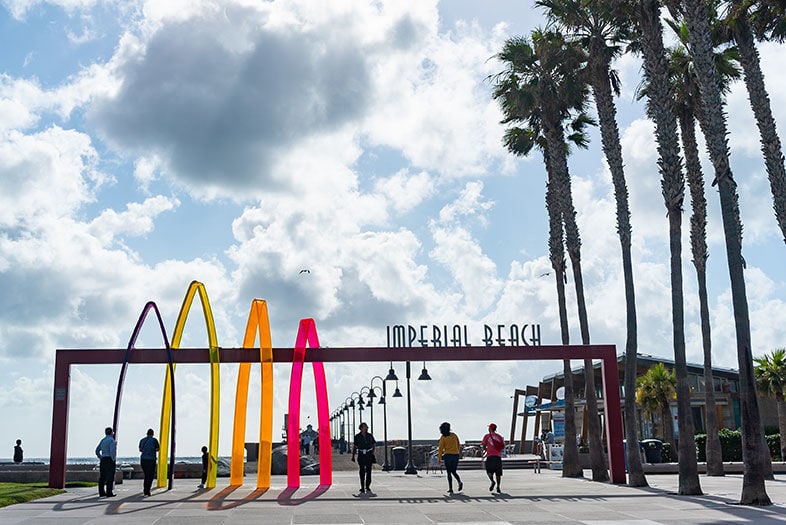
Imperial Beach
Stats
Own
$363,300
Rent
$1,890
Schools Rating
4.6
Walk Score
69
Bike Score
Car dependent
Carbon Footprint
54.5
Population
26,324
The untapped market: Several longstanding San Diego entrepreneurs are finally turning their heads toward the nation’s most southwesterly city, from Bob DePhilippis, owner of the Filippi’s Pizza Grotto empire; to the Cohn Restaurant Group, which opened SEA180° Coastal Tavern in Pier South, IB’s fancy new beach resort; to Ron and Rick Chapman of Coronado Brewing Company, who have plans to open a CBC location on Seacoast Drive later this year. “People are rediscovering a town that’s been forgotten for a long time,” says mayor Jim Janney. “There’s a renaissance going on in Imperial Beach.”
Go retro: Oasis Ice Cream Parlor (1832 Coronado Avenue) and Stardust Donut Shop (698 California 75) are the kind of blast-from-the-past gems that will maintain the heart and soul of this community.
Market fresh: IB Beautiful (IBB), a nonprofit that funds beautification projects around IB, is credited with launching and managing the bustling IB Farmers Market at Pier Plaza every Friday. Starting next month, watch for extended hours until sunset on Friday evenings through the end of summer.
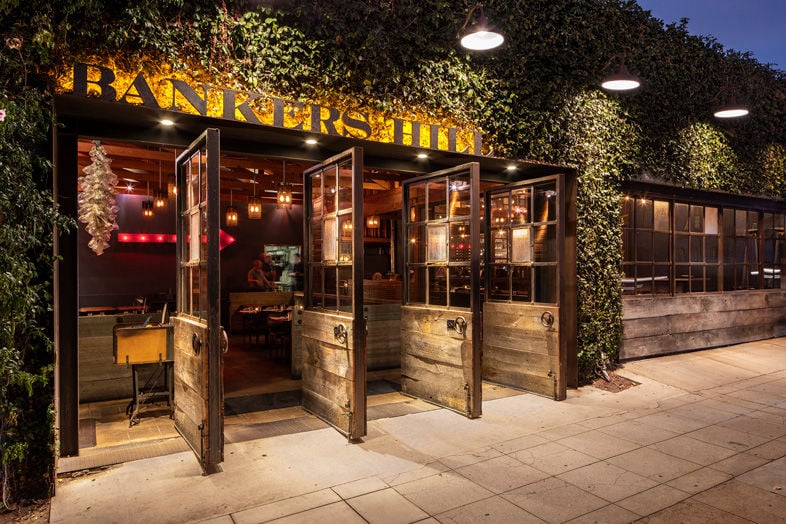
Bankers Hill
JOHN DURANT
Stats
Own
$553,050
Rent
$2,387
Schools Rating
7
Walk Score
89
Bike Score
77
Carbon Footprint
22.8
Population
8,492
The urban bike lab: Interested in testing out some next-generation bike- and ped-centric technologies? Move to Bankers Hill, where wheels are in motion to make the neighborhood more friendly for cyclists and pedestrians. The Uptown Regional Bike Corridor Project will augment Fourth and Fifth avenues south of Upas Street with new dedicated lanes and on-street bike facilities. The Bankers Hill Residents Group has also implemented the first in a community-proposed network of new “safe crossings” in the ’hood: a pedestrian-activated, solar-powered, flashing-light crosswalk at the intersection of Sixth and Spruce.
All that jazz: San Diego institution Croce’s Park West (2760 Fifth Avenue) recently relocated to the ’hood, and thankfully brought local jazz favorite Gilbert Castellanos, too. He plays Thursday nights, but we hear he’s also planning to book a slate of younger talent for other nights.
Hidden hot spot: Wet Stone Wine Bar (1927 Fourth Avenue) is tiny, tucked away, and just chic enough to qualify for date night or a nightcap after a show in Balboa Park.
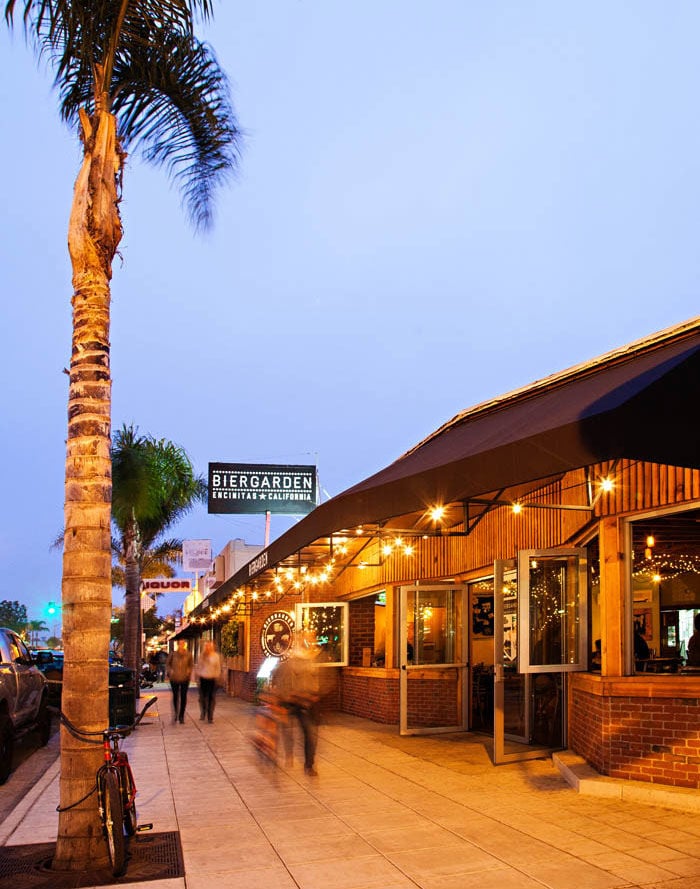
Encinitas
Stats
Own
$836,650
Rent
$2,911
Schools Rating
8
Walk Score
41
Bike Score
Car dependent
Carbon Footprint
47.2
Population
59,518
The kids-of-all-ages paradise: Encinitas is about to become home to a 44-acre park that some think will be the city’s crown jewel. The Encinitas Community Park Project will include a 13,000-square-foot skate park, a 2-acre dog park with a show circle area, a soccer field, and paved walking paths and seating areas. The $19 million plan is set to be finished some time this year. No wonder people are paying an-arm-and-a-leg levels to live close by.
Hot topic: Alcohol permits. There’s been a battle brewing for the past few years between younger residents flocking to the influx of new breweries, bars, and restaurants along Highway 101 and more established residents concerned with the increased noise, pollution, and crime.
Fun fact: The city of Encinitas technically has five distinct communities within it: New Encinitas, Old Encinitas, Cardiff-by-the-Sea, Olivenhain, and Leucadia.
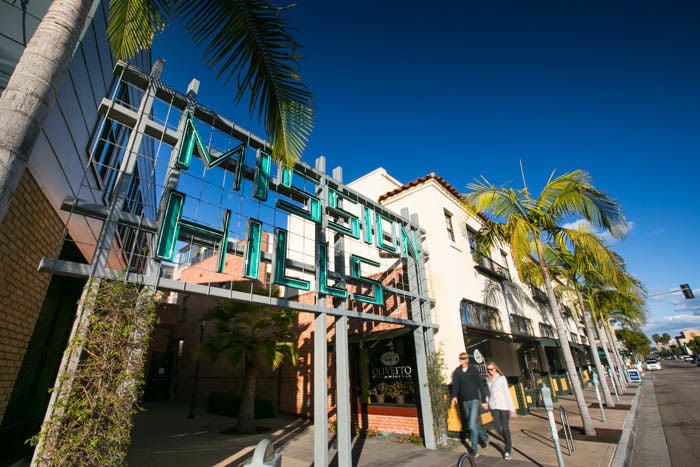
Mission Hills
Stats
Own
$613,500
Rent
$2,409
Schools Rating
9
Walk Score
65
Bike Score
52
Carbon Footprint
32.4
Population
3,576
The New food destination: It’s finally a foodie paradise again, after years of vacancies and turnover around the intersection of Goldfinch and Washington. There are mainstays like Starlite, Izakaya Masa, Lefty’s, and The Red Door, but the “Jewel of the Hills” has some new kids on the block. The upscale Brooklyn Girl Eatery recently introduced a Sunday supper series, oyster bar, and sidewalk café, and in addition to The Patio (opening this year), Harley Gray Kitchen & Bar will take over The Gathering’s space in 2015. No wonder the neighborhood finally got its own monument sign.
Hot block: While most of the new restaurants are opening up on Goldfinch, don’t forget about Saffron, El Indio, and Gelato Vero Caffe, all standing the test of time down on India Street for good reason. Did you know Gelato Vero serves weekend brunch?
So long, old friend: Dan Thomas started as a busboy in 1965 and worked his way up to become the beloved owner of now-shuttered The Gathering. He donated the money raised from the restaurant’s closing party to Parkinson’s research and support services.
Stats
Own
$499,600
Rent
$2,228
Schools Rating
5.8
Walk Score
44
Bike Score
39
Carbon Footprint
46.7
Population
11,114
The up-and-comer: Hailed as a pristine new development for the families of Allied troops coming home from war in the 1950s, Allied Gardens today is welcoming a new generation of young families outgrowing the urban ’hoods but still looking to live near the city’s center. A new residential housing project is set to break ground near the Grantville trolley station—proximity to public transit sets the ’hood apart—and plans to improve access to the nearby San Diego River have residents perked up and lobbying for both attention and dollars from City Hall.
“The generational blend will make us that much better,” says community council president Anthony Wagner.
New Brews: Nothing marks an up-and-coming neighborhood like a crop of new breweries. Benchmark Brewing Company (6190 Fairmount Avenue), which opened last year, and Groundswell Brewing Company (6304 Riverdale Street) fit the bill in Grantville, and we hear there are at least a couple more slated to open in the area in the next year. Now if only the neighborhood could get a decent bistro…
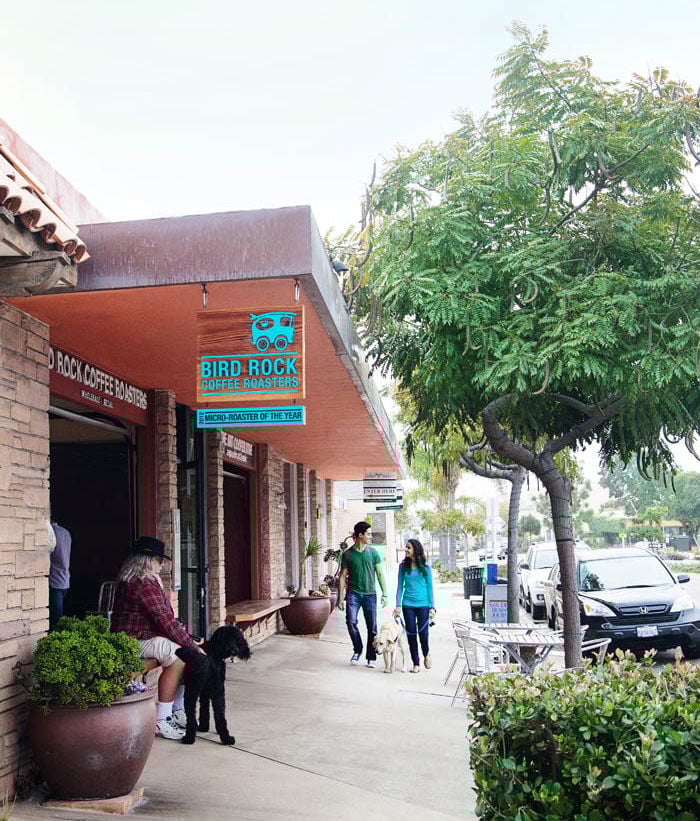
Bird Rock
Stats
Own
$1,232,800
Rent
$4,136
Schools Rating
10
Walk Score
44
Bike Score
47
Carbon Footprint
43.5
Population
30,117
The idyllic overlook: At the end of five streets in Bird Rock are coastal viewing areas, each equipped with cliff-edge guardrails to protect onlookers from getting swept away by the scenery. The one at the end of Midway Street has been in disrepair for the last few years. So the City Council is using $125,000 to restore it to working order this fall, according to Councilmember Sherri Lightner’s office. As if the pretty roundabouts, organic coffee roasters, and sidewalk cafes weren’t enough to envy.
Ditch the vitamix: Cruise over to Seaside Smoothie & Juice Bar instead and let someone do the juicing for you. It’s new and tucked away inside Bird Rock Surf Shop (5517 La Jolla Boulevard).
Just call Joe: Sure, La Jolla Community Planning Association member Joe LaCava didn’t flinch at Mitt Romney’s plan to add a car elevator to the Romney estate. But that’s not all there is to fuss about in La Jolla. LaCava led the effort to form Bird Rock’s Maintenance Assessment District (MAD), which governs the upkeep of those roundabouts in Bird Rock’s business district. He also helped unite La Jolla under one district for representation on the City Council.
Stats
Own
$874,400
Rent
$3,534
Schools Rating
10
Walk Score
35
Bike Score
32
Carbon Footprint
56.3
Population
47,527
The most popular: In 2013, CV was the No. 1 neighborhood for home searches on trulia.com. Its persistent popularity makes sense. With top-notch schools, proximity to the beach and the merge, and a newly refreshed dining scene, Carmel Valley, if a little square (or should we say stucco?), is turning out to be a real sweet spot. It’s even got its own local drama: a mixed-use development called One Paseo that could be a game-changer for the area. Oh, and the quintessential, perfect-suburb must-have that it has mysteriously lacked all these years—a Trader Joe’s? It’s projected to open this December at the soon-to-be-built Village at Pacific Highlands Ranch.
What’s in a name: Originally designated as “North City West,” the area got the name “Carmel Valley” in 1990 after a “Name This Town” campaign. Among residents’ submissions were “New Scottsdale” and “Rancho La Costa Mucho.”
Good schools: You can’t really overstate the academic reputation of this neighborhood, with the award-winning Torrey Pines High School, Cathedral Catholic, and Canyon Crest Academy.
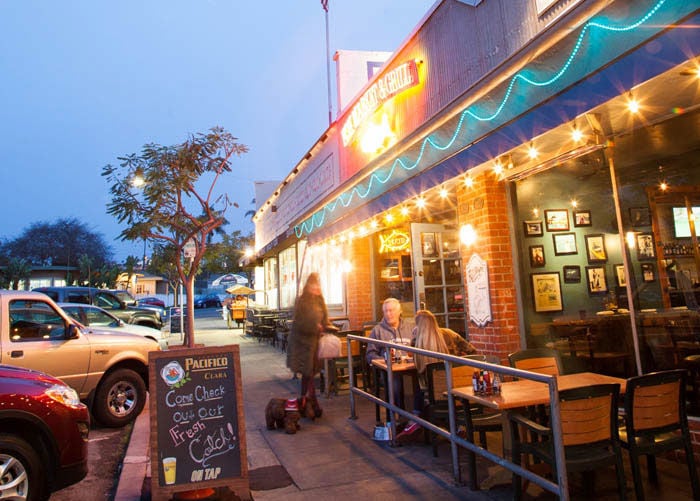
Bay Park
Stats
Own
$500,250
Rent
$2,193
Schools Rating
6.8
Walk Score
45
Bike Score
40
Carbon Footprint
35.3
Population
15,822
The new boulevard: The Morena Business Association has undertaken the project of reimagining Morena Boulevard, home to restaurants, home decor retail stores, and soon a new transit station for the trolley. One of the goals is to get more people out to the area to mosey around, instead of driving, parking, then leaving the area when they’re done eating or shopping. Outdoor movie nights and a blowout “Taste of Morena” are part of the project. Oh, and did we mention you can still pick up a peak oceanview home just up the hill for less than $600K, that’s within walking distance of Bay Park Elementary, which is rated a 9?
Old school, meet new school: The High Dive Bar & Grill (1801 Morena Boulevard) has billed itself as a place with “no pretense — just great home-style cookin’,” and the fact that so many people frequent it backs up that claim. Dan Diegos (2415 Morena Boulevard) is just around the corner geographically, but not so much in concept. The Europub has dressed-up versions of bar favorites, like orange plum teriyaki chicken wings.
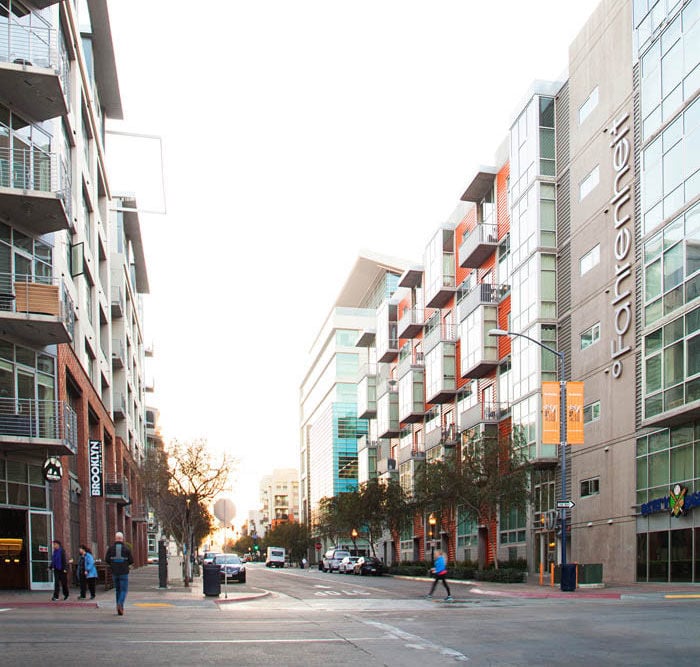
East Village
Stats
Own
$492,600
Rent
$2,364
Schools Rating
2
Walk Score
92
Bike Score
66
Carbon Footprint
35.5
Population
8,073
Where they Build it Bigger: Looking for new, new, new? Look to the East Village. The downtown ’hood recently welcomed dozens of new venues, including the soaring new Central Library and Southern food-themed ACME Kitchen and Bar. And there’s more to come in 2014: A new Stone tasting room near Petco Park; the splashy restaurant/bar Bottega Americano, backed by a long list of food industry heavyweights; and Green Flash’s 20,000-square-foot tasting room and restaurant. Old Harbor Distilling is making spirits in the ’hood and Moonshine Flats promises live country music and dancing on its new stage this spring. Heard about the art-, design-, and performance-oriented Maker’s Quarter? You will. Those who say downtown’s day is done obviously haven’t been hanging out east of Sixth Avenue. This ’hood is getting BIG.
Corner bar: Yearning for that small, dim watering hole where everybody knows your name? It can be hard to find in the land of new and newer. Try Monkey Paw Pub and Brewery (805 16th Street), filled with good beer, cheesesteaks, and zero scene.
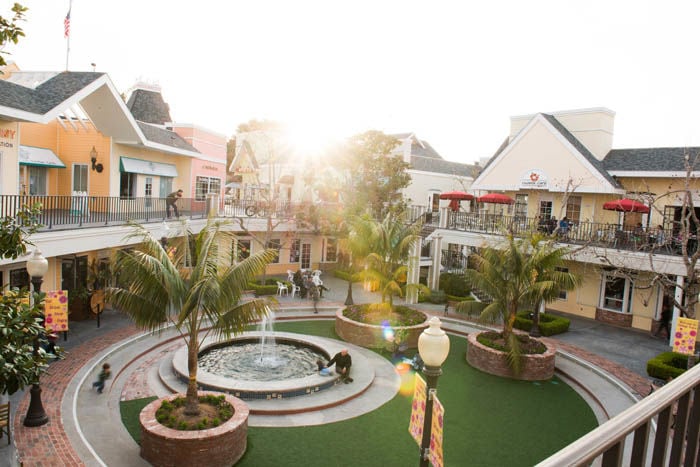
Carlsbad
Stats
Own
$657,125
Rent
$2,664
Schools Rating
8
Walk Score
27
Bike Score
Car dependent
Carbon Footprint
51.4
Population
105,328
The boomtown: Right now, the largest seawater desalination plant in the Western hemisphere is being built in the city and should be ready to deliver water to the region in two years. A proposal for a new “lifestyle center” at I-5 and the Agua Hedondia Lagoon is expected to be pitched to the city later this summer. The city is also building North County’s first coastal roundabout. And while Westfield Carlsbad works toward a long-anticipated, multimillion renovation of its mall, the downtown village area is already getting its own facelift. Sleepy suburb for surfers? Try bustling, booming, mini-metropolis. For surfers.
Hot spot: Bressi Ranch Pizza Port (2730 Gateway Road) is the SD-based restaurant’s newest location. The brewery/pizza joint is a family experience that offers a little something for everyone.
Still the one: After two decades in office, Bud Lewis retired as the official Carlsbad mayor in 2010, but many will always see him as its top official, regardless of title.
Stats
Own
$335,500
Rent
$1,897
Schools Rating
4.4
Walk Score
42
Bike Score
Car dependent
Carbon Footprint
42.5
Population
25,320
The next great village: The City of Lemon Grove is making progress on its Downtown Village Specific Plan, a document guiding the revitalization of areas around the trolley tracks between North Avenue and Lincoln Street. Citronica One, an affordable apartment complex opened last September, is the first of a residential, transit, and mixed-use development from San Marcos-based Hitzke Development Corporation. The city also opened the Main Street Promenade, a linear park and transit plaza touting energy-generating art installations, a play area, and mosaics reflecting the city’s history. The City Council is entertaining the idea of extending the promenade to Lemon Grove’s southern border.
Read all about it: The Lemon Grove Branch Library (3001 School Lane) relocated last year from sad strip mall digs to a brand-new building shared with the Lemon Grove Academy for the Sciences and Humanities. Kids’ yoga, anyone? It’s free every Monday.
Be well: As part of Lemon Grove HEAL (Healthy Eating/Active Living), a program funded by Kaiser Permanente to curb obesity, all vending machines on city property are stocked with healthy snacks and drinks only.
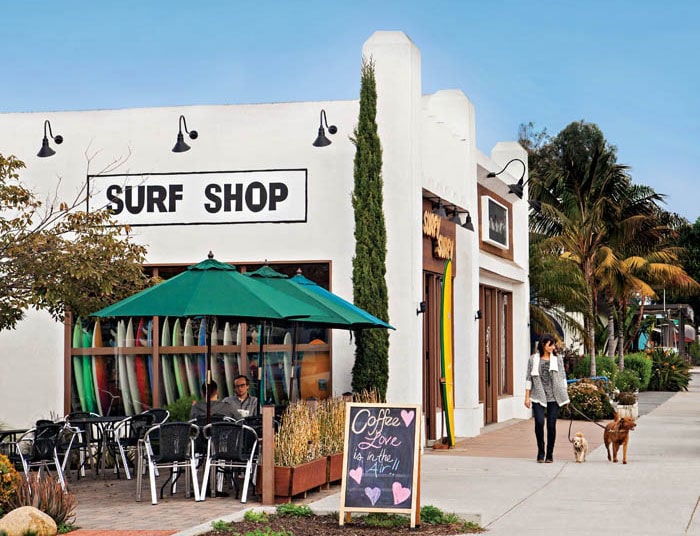
Leucadia
Stats
Own
$785,500
Rent
$2,865
Schools Rating
8.6
Walk Score
51
Bike Score
Car dependent
Carbon Footprint
47.2
Population
59,518 (Encinitas)
Perfecting the art of living: Leucadia calls itself the “Art and Soul of Encinitas,” and the home of the Surfing Madonna lives up to it. The Leucadia 101 Main Street Association’s Streetscape project, a revitalization plan for the North Coast Highway 101 Corridor, proposes the installation of art nodes and roundabouts with public art and seating. Meantime, the Association curates a full annual program of events like Arts Alive, Battle of the Bands, and LeucadiART Walk. Their upcoming Taste of Leucadia (April 3) touts live music as well as poetry in the park. The art-loving Association is also quite active with its Instagram feed (#LoveLeucadia). Local contributors include Aloha Sunday, Surfy Surfy, Santos Fine Art Galleries, and HapiFish.
Grapes over hops: Amid the influx of new breweries, Solterra Winery & Kitchen’s (934 North Coast Highway 101) new urban tasting room is a welcome addition for oenophiles, featuring labels from local vineyards and a bocce ball court out back.
Reforesting the 101: The Streetscape project calls for “restor[ing] Leucadia’s iconic tree canopy,” and 823 trees are waiting to be planted. For now, they’ll plant 35 trees west of 101 for an April 5 Arbor Day event.
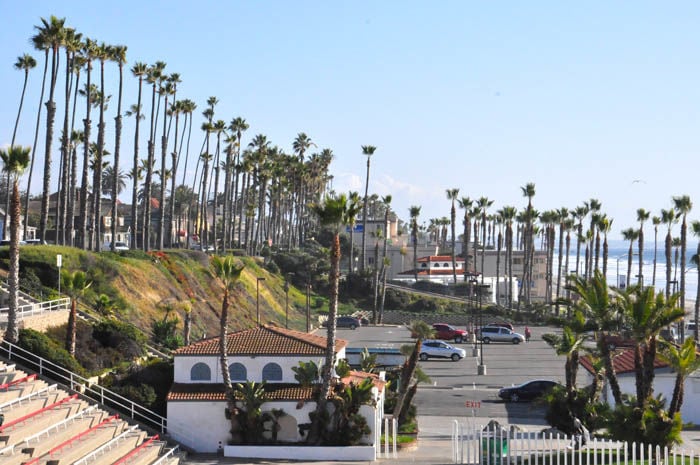
Oceanside
Stats
Own
$386,100
Rent
$2,008
Schools Rating
5.2
Walk Score
34
Bike Score
Car dependent
Carbon Footprint
41.4
Population
167,086
Where the natives are loyal: This northernmost beach town is a great place to grow up, and the proof is in a new generation that’s actively bringing business to the area. Take Jamey Stone and Charlie Anderson, best friends since second grade. They opened The Privateer Coal Fire Pizza in 2012, and childhood buddy Hector Reyna runs the kitchen. A few doors down, LIBRE Design Agency (founder Justin Heit also grew up in Oceanside) designs for local brands like RAEN Optics, also based in Oceanside. There’s also Bagby Beer Co., Linksoul, and Wrench & Rodent Seabasstropub, to name just a few more new hot spots.
Wheels on the bus: Bus riders in North Oceanside and Camp Pendleton got a boost last month when the $9 million San Luis Rey Transit Center opened at Vandegrift Boulevard and North River Road.
Stats
Own
$663,300
Rent
$2,797
Schools Rating
9.6
Walk Score
18
Bike Score
35
Carbon Footprint
52.2
Population
39,425
The land of learning: This August, the brand new K–8 school Design 39 Campus is scheduled to welcome its first classes. The new school could be one of the last Poway Unified opens, and will be able to accommodate about 1,500 students. The $81.5 million project will be located in Del Sur next to Del Norte High School. With all the neighborhood’s schools rating at least 8 out of 10, it’s no wonder parents are willing to pony up the pricey Mello Roos fees associated with living in the development. And the HOAs. Ah, the suburbs.
New hot spot: In 2012, Karl Strauss Brewing Company opened its first new brewery in 10 years near 4S Ranch (10448 Reserve Drive).
Well read: The 4S Ranch County Library (10433 Reserve Drive), opened in April 2007, is one of the most active in the county, lending out more than 30,000 items annually, mostly children’s books and multimedia materials.
Kensington
Stats
Own
$490,900
Rent
$1,945
Schools Rating
5.2
Walk Score
75
Bike Score
64
Carbon Footprint
33.6
Population
6,658
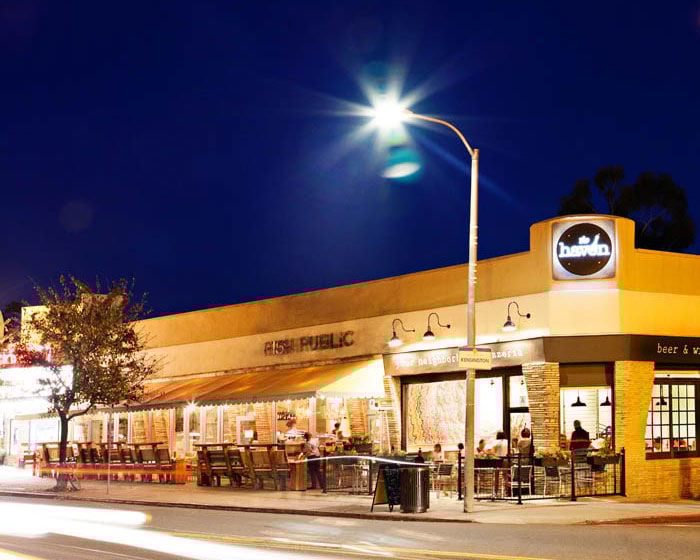
The perfect pocket: Neat Spanish and Craftsman homes are tucked back on canyon streets, with a cozy village center and retro sign slung overhead. It’s no wonder plenty of residents bristled when a guy associated with Sunroad proposed a new mixed-use development right in the village center. Three stories? Apartments? Sunroad developer? But after several protests, redesigns, and what must have been thousands of letters and meetings, it seems that the gas station is gone, and the building is going up. Compromise? Magic? Surrender? Whatever you want to call it, this year, one of the city’s most historic ’hoods is taking one more step into the future.
PARTNER CONTENT
Fish out of water: Tracy Borkum’s newly opened seafood spot, Fish Public (4055 Adams Avenue), might seem out of place in the urban neighborhood at the eastern end of Adams, in theory. In actuality? The bistro is bustling (and the old burger is still on the menu).
Discover eateries, outings, and shops within this inland North County community
Just south of Lake Hodges near 4S Ranch and Poway, Rancho Bernardo is a suburban community that blends residential neighborhoods with industrial pockets, elevated by a decidedly diverse food scene.
Over 60 years ago, this North County neighborhood was once part of a family ranch. Since that time, big tech companies have taken up residence here, including Amazon, Sony Electronics, Oura Ring, HP, Teradata, and ASML. Rancho Bernardo Inn serves as a community hub, with locals frequently meeting at the hotel’s restaurants, golf course, and spa.
Whether it’s work or a round of golf that brings you to Rancho Bernardo, we’ve taken care of the agenda planning with our guide to the area’s best restaurants, activities, and shops.

Sample ingredients plucked straight from Rancho Bernardo Inn’s onsite garden and served at their signature restaurant Avant. One of the neighborhood’s most upscale dining options, they serve a French-inspired menu with nods to California, including many seafood options. Don’t miss their more casual sister restaurant Veranda for al fresco dining.
17550 Bernardo Oaks Drive
Wood-fired pizzas and handmade pastas are standouts at The Kitchen, Bernardo Winery’s counter-service restaurant specializing in Sicilian flavors. Charcuterie boards and bruschetta make for great starters or snacks while wine tasting.
13330 Paseo Del Verano Norte
Fast-casual and family-owned eatery Bushfire Kitchen recently opened a location in Rancho Bernardo, serving sandwiches, bowls, salads, burgers, protein plates, and housemade empanadas. Bushfire prepares comfort food with healthy ingredients, and offers plenty of vegetarian and vegan options.
11962 Bernardo Plaza Drive, Suite 110
Some might call The Cork & Craft an overachiever. This gastropub has an in-house craft brewery and winery: Abnormal Beer and Wine. The more, the merrier. Their sushi menu is definitely worth exploring, but don’t miss other specialties like garlic noodles, chicken wings, and pork belly.
16990 Via Tazon

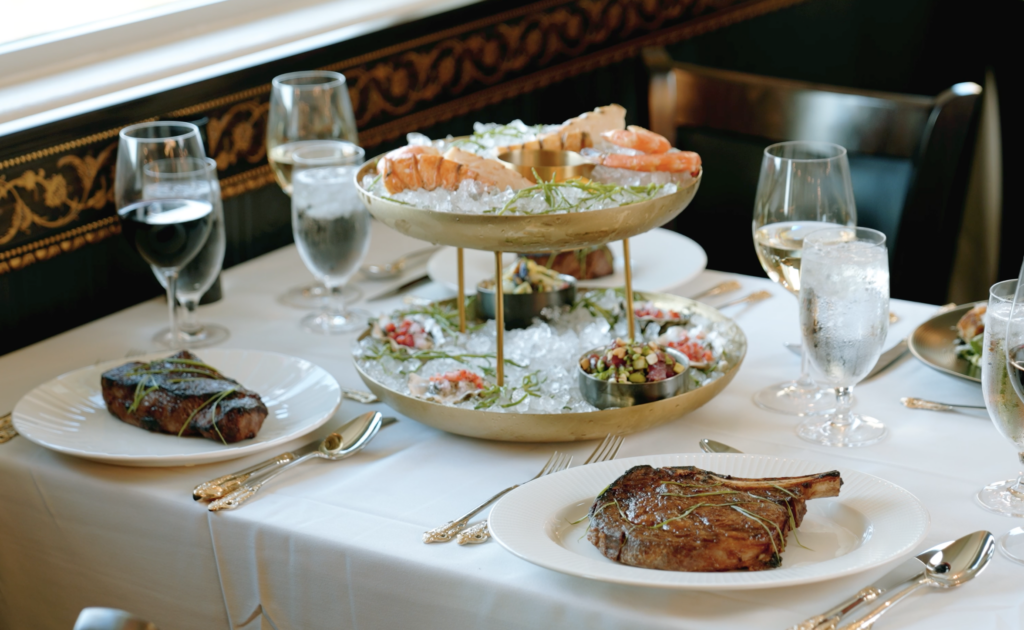
You don’t have to leave Rancho Bernardo to get a white tablecloth steakhouse experience. Carvers Steaks & Chops has prime rib (their best seller), filet, ribeye, porterhouse, New York strip, and other cuts, served alongside crab-stuffed mushrooms, wedge salad, French onion soup, potato skins, and other steakhouse specialties.
1940 Bernardo Plaza Drive
This no-frills Burmese restaurant is known for its traditional tea leaf salad that’s topped with sesame and sunflower seeds, garlic chips, peanuts, tomatoes, jalapeños, fried yellow beans, and fermented green tea leaf dressing. Tucked into a nondescript strip mall, Burma Place is a great takeout option when you want to eat garlic noodles, fried rice, chicken curry, and samosas from the comfort of your couch.
16719 Bernardo Center Drive, Suite A
Find authentic Vietnamese cuisine at Phở Ca Dao, including favorites like phở noodle soup, vermicelli noodles, broken rice dishes, and spring rolls. One of eight locations throughout San Diego, this family-owned chain uses robot servers for food delivery.
11808 Rancho Bernardo Road, Suite 100
It’s all about the sauce at fast-casual Mediterranean restaurant The Kebab Shop. Smothering your chicken shawarma, gyro, or falafels in garlic yogurt, cilantro jalapeno, fire chili, and dill yogurt sauce is practically a rite of passage. The hardest part is deciding whether to order a wrap, bowl, or salad.
11980 Bernardo Plaza Drive
Get a taste of South Asian flavors at Casa Lahori, a Pakistani restaurant noted for its grilled meat kabobs. Other best-selling dishes include beef nihari, chicken biryani, and shahi paneer— best enjoyed with naan bread.
11975 Bernardo Plaza Drive
Grill your own meat on the tabletop at Kangnam Korean BBQ, an interactive, all-you-can-eat experience that’s well-suited for large groups. Marinated beef bulgogi, grilled galbi short ribs, and spicy pork are served alongside traditional banchan dishes like kimchi, japchae glass noodles, and flavorful stews. Weekday lunch specials provide a nice discount on these filling meals.
11828 Rancho Bernardo Road, Suite 117–119

Dig in to your favorite curries and kebabs at Curry & More Indian Bistro. Most entrees are served with a choice of two side dishes, including basmati rice, potatoes with cumin, daal, naan, or mixed greens. Help offset the spice with one of their sweet mango or strawberry lassi drinks.
11808 Rancho Bernardo Road, Suite 123
Kai Oliver-Kurtin is a San Diego-based writer who covers travel, dining, events, and culture. Her writing has been published in USA Today, Condé Nast Traveler, Fodor's Travel, Marie Claire, and HuffPost, among others.
Food writer Beth Demmon names local bites we love—both at the high and low ends of our budgets
We love a mega-fancy tasting menu, but let’s be honest—we’re not all blessed with unlimited Wagyu funds. So we picked some of the breakout dishes of the last year (or couple of years) from the best chefs in the city, reverse-engineered their chief charms (salty, smoky, caramelized?) in the test lab of our mouths, and found some budget-friendly alternatives that hit some of the same notes with an everyday price tag.
Where do delicately plucked marigold blossoms adorn Deer Isle scallops, or ingredients like fermented raspberry precede roasted coffee oil, shiro miso caramel, or bronze fennel in a parade of hit-after-hit dishes? Lilo in Carlsbad, of course. San Diego’s newest Michelin star changes its menu with the seasons, but one stalwart dish has kept tongues wagging since opening day last April: the caviar ice cream. A boat-shaped sliver of orgeat ice cream, smoked celery root bushi, and freshly pressed almond oil are topped with a generous heap of caviar. It’s a dish so good and defining that chef Eric Bost will tire of talking about it for a very long time.
Price: $265 for the tasting menu (before tax, tip, and drinks)
There’s a reason Stella Jean’s s’mores ice cream is part of the local scoop shop’s “always available” menu. Made with fire-roasted marshmallows and coconut ash ice cream mixed with dark chocolate-covered graham crackers and mini marshmallows, its strangely ashen hue dabbled with flecks of tawny brown is a far cry from the wildly vibrant ube and pandesal toffee flavor seemingly made for Instagram reels. But it’s a sensation in your mouth—smoky, toasty, torched, creamy, marshmallowy, coconutty, ashy, and bitter from the dark chocolate. Pro tip: If you really want to DIY Lilo’s ultra-luxe treat, bring your own caviar.
Price: $6.25 for a single scoop
There’s no question what comes first at Lucien. It’s the egg. Chef and co-owner Elijah Arizmendi’s 12-course tasting menu begins with welcome bites under the calamansi tree before moving inside to start the Journey (the actual name of this section of the menu). The first step is one of the most astounding—a perfectly intact, upright, ochre-hued eggshell containing his take on Japanese chawanmushi (egg custard), topped with a dollop of caviar. The accompanying ingredients have ranged from sweet corn and huitlacoche to banana and buckwheat, but each one has precisely demonstrated Arizmendi’s commitment to French technique with California experimentation and global influence.
Price: $260 for the chef’s tasting menu (before tax, tip, and drinks)
The biggest difference (besides price) is that while Lucien’s dish changes with the season, Sushi Ota is comfortably predictable. A San Diego staple since 1990, the legendary Sushi Ota has been one of those if you know, you know joints that locals try to keep off the radar. (It hasn’t worked at all.) Known for ultra-fresh fish and ultra-traditional service, the small Pacific Beach restaurant also serves Japanese comfort foods like udon noodle soup alongside sashimi, nigiri, and rolls. But it’s the savory steamed egg custard, called chawanmushi, that really gives you the warm and fuzzies. Add a side of salmon roe (ikura) for a few bucks more, and this dupe is about as good as it gets.
Price: $12 for chawanmushi, $11 for ikura

Enough ink—and tears, I’m sure—has been spilled over Chick & Hawk’s long and arduous journey to opening its doors. But now that the Encinitas eatery is in full swing, chef Andrew Bachelier’s tightly curated menu of fried chicken sandwiches, fries, and bowls command lines of hungry locals and skate-culture loyalists. The Birdman, the signature hot chicken sandwich named for partner and skateboarding legend Tony Hawk, is piled with cabbage slaw and pickles and slathered with a tangy kimchi comeback sauce on a soft brioche bun. Although this Nashville meets California meets Mississippi meets Korea sando doesn’t command a triple-digit price tag, the fact that it’s nearly a $20 chicken sandwich (sans side) has been a topic of conversation. Bachelier—who worked at Addison before opening Jeune et Jolie, then launched SDM’s 2024 “Best New Restaurant,” Atelier Manna—and his team earned that price tag.
Price: $18
It’s hard to beat Koreans at the chicken game. Korean fried wings are defined by a double-fry technique—first at a low temperature to ensure the chicken is cooked through, then at a high temperature to ensure the famed extra-crispy, ear-splittingly crunchrageous magic. At Cross Street, they follow a similar fusion ethos as Chick & Hawk, using inspiration from the American South as well as Thailand, Korea, Vietnam, and more, with flavors like “Seoul Spicy” or “Honey Butter” for whatever you’re feeling that day. Pair it with a cold beer to go full chimaek (a popular Korean combination of pairing fried chicken and beer). Now that’s a combo—and price tag—that’s hard to beat.
Price: $8.75 for five wings

PB&J. Captain & Tennille. Brad Wise and steak. Steak frites ranks among the iconic global duos. And when the holy union of prime cuts and twice-fried carbs comes from Wise and the meat-loving masters at Trust Restaurant Group, it’s a pretty safe bet. À L’ouest—the group’s newest fancy, but not fussy, drippy plant dreamscape of a French steakhouse on the prime corner of 30th and University in North Park—gives guests a choice: 12-ounce New York strip, 8-ounce filet mignon, or 8-ounce Wagyu hanger, topped with sauce au poivre (the classic French pan sauce—peppercorns, shallots, heavy cream, brandy) and served with a heaping pile of 24-hour salt-brined fries and a watercress salad. One bite acts as a transport to a Parisian brasserie, so if you think about the cost in terms of time-space travel, it’s a pretty great deal.
Price: starts at $48
To satisfy the same urge for meat and potatoes, feel at least moderately European while doing so, and save a couple quid, a trip to The Shakespeare in Mission Hills ticks all the boxes. The classic British shepherd’s pie arrives in a piping hot oval au gratin dish, smothered with a thick layer of mashed potatoes. Beneath it lies a hefty portion of marinated ground beef and vegetables in the pub’s secret sauce, and while there are a few choices of sides, the correct order is peas and “proper” chips (a.k.a. chunky, thick-cut fries versus the typically thinner American “French” fries). It’s more tickety-boo than très bien, but it’s immensely satisfying in any language.
Price: $22.95
Beth Demmon is an award-winning writer and podcaster whose work regularly appears in national outlets and San Diego Magazine. Her first book, The Beer Lover's Guide to Cider, is now available. Find out more on bethdemmon.com.
SDM owner and food critic Troy Johnson identifies some standout stars in SD's food scene
I spent time in a hot dog stand on the edge of San Diego Bay, looking out a window that mattered. Mattered to a kid whose mom taught him to fish on this pier. They’d turn on a little transistor radio, find a signal through the static, stare at the water, and talk life and his dad. Dennis Borlek’s dad was out there, somewhere, commanding a naval submarine through god knows what. When his dad would dock in Point Loma weeks or months later, Borlek biked down the street along Shelter Island to see him and steal back stolen moments.
Later, Borlek helped midwife the craft beer scene, managing seminal spots like Small Bar and Liar’s Club. Wondering what to do with the rest of his life, he went back to that pier and saw a for-lease sign on the bait and tackle shop. He tore through the public library and spent the whole night learning how to write a business plan (he had no clue). A couple days later he found himself at the intimidating end of a massive conference table, pitching his dream to the very official Port of San Diego executives.
They gave it to the San Diego kid. Not sure if they ever imagined Fathom Bistro—the tiniest, mightiest craft beer and hot dog stand, filled with spear guns, ocean monster figures, and seafaring oddities—would still be there 13 years later, let alone be a local’s favorite. It’s the most San Diego place in the world. Borlek taught himself to make kimchi and puts it on his Explodo Dog. His friend Kevin, who played with him in a punk band, dresses as a pirate and works the door on weekends. Has done so for years.
And when Borlek stares out the window, he can see the sub base and the memories of his dad.

Later, a few beach towns over, I sat in an employee break area—a shaded back-alley alcove with grape vines that serves as an escape garden for the crew. The place used to be a taco shop. Owner Crystal White points to a window of a single bedroom behind the dough-mixing part of the kitchen. She lived there when she started, often finding herself on the roof at midnight, staring at a broken compressor, trying to will it into working.
A blue-collar kid who fell in love with bread, she moved to San Diego with a business plan and zero cash. Banks don’t loan money to bread dreamers. Fate, kismet, and door-knocking found her enough investors. In the weeks leading up to opening that dream—perfect croissants, kouign-amanns, sandwiches, pizzas, baguettes fermented with wild La Jolla yeasts—she was outside hammering and painting. Locals would pause to ask what she was putting into the spot. “A bakery!” she’d reply.
“Oh, we don’t need one of those,” they’d say. Eight years later, White has moved out of the bedroom, and Wayfarer Bread is one of the best bakeries in the land. I ask if she’ll ever open another location. “I grew up dirt poor,” she says. “This has surpassed even my wildest dreams. This is enough. Please make sure you mention Emma Koehler, K-O-E-H-L-E-R, my kitchen manager. She deserves the credit now.”
These are the people and the stories behind “Best Restaurants.” This issue is dedicated to them, the culture they’ve gritted into being. On the surface, the annual tradition—naming a list of “winners,” my favorite places and my honest answers to “who has the best taco/pizza/Thai…”—is a good-natured competition among friends. But the deeper point is that it’s a way to highlight hundreds of places that have risked it all to build a little magic across the city. Sure, some owners were born in the stars and used that dust to make more stars. But many or most restaurants started with a scrappy go-getter or two. And now those places are filled with dozens or hundreds of people who love the work, show up day in and day out, for years. People like Koehler and the ones we feature in our story, “Behind the Line”.
So please use this list as a beachhead. Try these places, email me ([email protected]) to say “thanks” or “you truly messed up.” Eat, drink, commune, say hello, get to know the stories of the people making your favorite food. Make your own list, and share it with us.
(Note: Fathom didn’t win anything, probably because there’s no category for “Best Hot Dog Craft Beer Stand on a Pier with a Pirate,” which is a shortcoming on our part. So I put him here because he should be a part of any conversation about best San Diego things.)
Troy Johnson is the magazine’s award-winning food writer and humorist, and a long-standing expert on Food Network. His work has been featured on NatGeo, Travel Channel, NPR, and in Food Matters, a textbook of the best American food writing.
The 29-year-old culinary director at Herb & Sea is making seafood sexy (and approachable) again
Implementing a farm-to-table model hardly deserves acknowledgement these days. It’s not a stretch. It’s not innovative. “It’s the bare f**king minimum,” says Herb & Sea‘s executive chef Aidan Owens.
When I arrive at the Encinitas restaurant, I’m ready to talk sustainability, farm-to-table stuff, with Owens. “Did you see the chin on that?” he says of the extra big jiggly chin on the sheephead that just arrived with the day’s fresh catch. I did. It was Jay Leno adjacent.
I learn quickly that he somehow oozes both charm and stone-cold honesty. Maybe he could construct a new dish with chin goo, like he did when he had a bunch of tuna scraps and voila’d it into a smooth and crowd-pleasing ‘nduja. “I want to know what’s in there,” he says.

The instinct to look closer, to dig into what others might discard, says a lot about the chef’s approach. I guide him back to our topic, but he has something else on his mind. “We’re overcomplicating food—what happened to just cooking good food and having fun with it?”
Owens grew up on a farm in Byron Bay, Australia, where sustainability wasn’t a concept you chat about so much as a way of life. Think dirt roads, backyard chickens, pulling vegetables straight from the ground, and a mother who believed that if you couldn’t pronounce the ingredients on a package, you shouldn’t eat what was inside.
Food wasn’t precious or performative. Making it was what you did because you were hungry and that’s still what inspires Owens today. “I like to cook good food because I like to eat good food,” he says.
His approach to sustainability at Herb & Sea began so naturally that it felt just like instinct. “I was just like, ‘Let’s order food from the people who live and work here,’” he says.

And why wouldn’t he when lives in San Diego? Cities all over the world vie for our goods. Our tuna is sent overseas. Our spiny lobsters hit dinner plates in China and Japan. Not to mention California’s producing a third of the country’s vegetables and three-quarters of its fruits and nuts.
“Why would we outsource when it’s all here?” Owens asks.
Sustainability, in this context, is about cooking what exists in abundance, nearby, right now. “I love the local fish here. It’s f**king delicious and San Diego citrus, I mean, it is so f**ing good,” he says.
Instead of importing ingredients, Owens also looks for nearby alternatives. “You can find really cool things in the local waters,” he says, pointing out that stingray cheeks taste similar to scallops.

Whatever he finds in that sheephead chin might just be the next substitute for marrow. But to make this work, it means getting diners amped up about the slightly unfamiliar.
Tasting menus, where diners are completely in his hands, become an opportunity to gently push boundaries. “I’ll serve mackerel, because people think they hate it,” Owens says, noting that the abundant local fish can have some fishiness. “But when it’s fresh, it’s arguably one of the best fish in the ocean.”
He also tweaks the language on the menu so people might feel more compelled to give dishes a try without preconceived notions. He might use “lengua” instead of “tongue.” “Whelk” instead of “snail.” When he puts “stingray throat” on the menu, he disarmingly calls it “skate.”
To reduce waste, scraps aren’t always discarded but rather turned into something new. Sometimes they’re smoked, cured or fermented. Apples going bad turn into apple ponzu. Lemons turn to marmalade, which stretches their usefulness far beyond peak season. “And it’s super tasty on our pizza,” he says.
What makes the food even richer, is the relationships he’s built with farmers. Though it didn’t always feel natural, Owens sought personal connection first. He recalls approaching a fisherman at the Tuna Harbor Dockside Market. “I was awkward,” he says. “I went up to him and said, ‘I like your fish.’”
Owen’s is now so close to his suppliers—like fishermen Ryan Sebo and Joe Daly—that he gets texted pictures of fresh catches right as they flop on the boat. The messages always ask if he wants first dibs. “I say yes to a lot of fish,” Owens says, noting that Herb & Sea can go through 2,000 pounds of seafood a week.

The next evolution of sustainability, in his view, will be chefs working directly with producers such as his alliance with Sebo, cutting out middlemen and purveyors where possible. “It will put more money in the pockets of the people doing the work,” he says.
It will mean that chefs can’t just know their local farmers and producers, but they’ll choose to work with the ones who have the best practices. Dining and sustainability will become much less about the final plate. “It will be more about the impact that plate has on the Earth,” he says.
Ultimately, he believes sustainability doesn’t need to be loud. It doesn’t need hashtags. It just needs to be honest.
“We aren’t saving lives. We’re feeding people good food,” he says.
And yet, in feeding people well—simply, thoughtfully, responsibly—something meaningful happens. Guests leave satisfied. Ingredients are respected. Local ecosystems are supported and food returns to what it has always been at its core: nourishment, pleasure, and a quiet reflection of the place it comes from.
No buzzwords required.
As Rancho Valencia's Chef Concierge and US Nominee for Les Clefs d'Or Young Leader Award, Simona Marciulaityte is equal parts doer and fixer
Your cup of coffee shows up exactly how you like it. The fully booked restaurant suddenly has a table. The last-minute, once-in-a-lifetime experience somehow comes together without a hitch. In the world of hospitality at top resorts, there’s an iceberg of scrupulous planning for each guest.
A concierge is in charge of that iceberg. There’s even an award for the best in the world: the Les Clefs d’Or Young Leader Award. It’s a months-long, multi-stage process with interviews, tests, and international competition, culminating at a global congress. Each member country only gets one nominee. Representing the US this year? Simona Marciulaityte from San Diego.
As Chef Concierge at Rancho Valencia Resort & Spa—a Relais & Châteaux retreat with Forbes Five-Star and AAA Five Diamond, a highly accoladed place with commiserate expectations—Marciulaityte is equal parts doer, fixer, and project manager for guests’ sometimes wild travel dreams.
“We see hospitality as theatre,” she explains. “There are a lot of moving parts, but when we arrive to the stage, it’s always with grace and a performance to create an incredible experience for the guests.”
That impossible-to-get reservation with custom cake and balloons at the table? She’s already texted three people. A guest calling on their way to the Zoo requesting a VIP-tour in 15 minutes? Booked in seven. The usual ‘Hey can you schedule me an appointment with Hermès to buy a $30K Birkin bag and plan my proposal in Italy’ request? Oddly specific, true story—and fully handled.

“Great concierge work truly begins long before a guest ever steps on property,” Marciulaityte says. “Who is traveling, notes from prior visits, special occasions, and dining history help me understand the nature of the stay. For new guests, I read between the lines: the questions they ask, the pace they seem to want, the kinds of experiences they gravitate toward.
“Curation draws on something that can’t be replicated by a search engine. It’s years of genuine relationship-building with partners across San Diego and beyond.”
Nearly a decade ago, Marciulaityte was juggling life as a personal stylist at Nordstrom and hostess/server at Brian Malarkey’s Herringbone and Searsucker. After working an event for the San Diego Concierge Association, she had a moment of clarity: “I remember thinking, oh my god—this is exactly what I want to do.”
Being a part of Les Clefs d’Or grants entry to a global network of concierges who operate like a very discreet, very efficient hotline (“In service through friendship,” as their motto goes). When local super-chef Tara Monsoud was nominated for a James Beard, Marciulaityte worked with the SD Concierge Association and Le Coq to send flowers and photos to Chicago where the chef was staying.
“It’s not only guests—we hope to touch everyone with our concierge magic.”
Lili Kim is a content coordinator and writer for San Diego Magazine, with experience highlighting local businesses and communities. When not writing or shooting film, she is likely brewing her seventh cup of tea of the day or strolling along Sunset Cliffs.
We asked 12 golf pros from across the county to choose the city's top holes to create the "Dream 18"
At the top of a golf swing, the world settles into a hush. Anyone within 50 yards kindly shuts up in reverence. Steady heartbeats tuck inside the sound of the wind. Time stands still.
Or—panic sets in, a thousand warnings from coaches and YouTube tutorials prattle through your brainpan. You wonder if a good walk prepares to be ruined.
On descent, the club rearranges air particles as it slices on a perfect or unwise line toward an earth so green, it seems like AI. The iron face meets the ball, and the satisfying or unsettling thwack echoes across the fairway like a nonviolent gunshot or a cry for help. Breath catches, curse words load in the prefrontal cortex. Eyes squint to follow the hard-to-see projectile zip majestically through the air or bounce lamely along the ground like a failed hurdler.
Sometimes it goes a couple hundred yards in the right direction, other times a couple yards into uncaring swamps. Golf’s beautiful and hard as hell.
Mindfulness and stillness reign over speed and might—which goes against most basal American instincts regarding sport. Its quiet, serene mocking of our human abilities is what brings so many of us to the life-long process of sharpening the skill. Because who hasn’t stared at the most beautiful parks and lawns in the world and said, “How can I turn this into a game and win it?”
Luckily, San Diego has an abundance of courses to improve and curate self-doubt. The county is home to over 70 courses that attract the top golfers in the country. Some of the biggest names in the sport—Callaway, TaylorMade, Cobra, Titleist, Odyssey, Honma—are based here. Perfect weather never hurts. But San Diego golf courses also promise a smorgasbord of terrains: rocky canyons, hot deserts, and lush greens overlooking the expanse of the Pacific Ocean.
If you could take the 1,300-ish holes around San Diego and pick the very best ones to create your ultimate course, which would they be? We asked some of the top golf pros in the county to do just that. The result? San Diego’s Dream 18. Think fantasy football but for golf.
Just like any great course, our Dream 18 includes four par 3s, 10 par 4s, and four par 5s—everything from tricky dog legs and psychological tee shots to just pretty, pretty views. Once we had our list, we either asked the head golf pro what makes a hole so special, or other pros spoke on its behalf. Go ahead, tell us what we missed.

“One of the most iconic par 3s on the West Coast. The cliffside setting above the Pacific and the constant ocean breeze make it both beautiful and demanding.”
—Anthony Valverde, Director of Golf, The Crosby Club at Rancho Santa Fe
“It’s a downhill par 3 over water with a great view from the tee down to the green. It’s surrounded by bunkers as well, so it almost feels like an island green even though it’s not. What’s really cool is once you drive to the next hole, if you look back on No. 14, it’s a great view as well. One of the signature holes [at Santaluz].”
—Josh Rider, Head Golf Pro, The Santaluz Club
Hole 15
“Hole 15 is widely considered one of the best and most memorable holes on the course. At about 250 yards, it’s a long downhill with multiple tiers and panoramic views into the valley. It looks intimidating at first, but there are lots of recovery contours and the green is fairly large.”
—Editor’s Choice
“Sitting high above the green with views of the Pacific Ocean, this dramatically downhill par 3 requires the perfect club selection.”
—Mike Mulford, Director of Golf, Omni La Costa

“While it’s beautiful with the backdrop of the Batiquitos Lagoon and the Pacific Ocean, this finishing hole demands both precision and nerve. The water guarding the right side and fairway bunkers ahead create a visually striking, strategic tee shot, while the expansive green rewards a confident, well-placed approach. If you can make a par on this hole, you’ve played it very well.”
—Renny Brown, Director of Golf, Aviara Golf Club
“The 18th hole at Del Mar CC is a demanding par 4 with an elevated tee box. Water guards the right side of the green, and a player must hit a precise shot into this green.”
—Renny Brown, Director of Golf, Aviara Golf Club
“It’s a difficult 428-yard par 4 playing into the predominant west wind. The hole is post-renovation and the vegetation was trimmed back, so now it exposes a penalty on the right. It’s uncomfy at the tee but a good challenge. Plus, it’s the No. 1 handicap for [all players].”
—Chris Lungo, Head Golf Pro, Rancho Santa Fe Golf Club
Lili Kim is a content coordinator and writer for San Diego Magazine, with experience highlighting local businesses and communities. When not writing or shooting film, she is likely brewing her seventh cup of tea of the day or strolling along Sunset Cliffs.
In a world overflowing with shortcuts, marketing fluff, and “good enough,” there are still companies that choose a different answer. And in San Diego, there are plenty of them.
In a world overflowing with shortcuts, marketing fluff, and “good enough,” there are still companies that choose a different answer.
Integrity guides how they show up every day. They make hard decisions, hold themselves accountable, and build trust the old-fashioned way, one action at a time. At the Better Business Bureau, we call these businesses Torch Heroes: leaders who demonstrate that ethical leadership strengthens businesses and drives long-term success.
And in San Diego, there are plenty of them.
Take House Collective Marketing Solutions, a Carlsbad-based digital agency that won the 2025 Torch Award for Ethics for its people-first approach to marketing. Instead of pushing flashy campaigns, the team often takes a step back to make sure clients’ foundations are strong before going big. Their philosophy? Truth over transaction builds partnerships that last.
Or look at Young Black & N’ Business, where integrity shows up through community action. When a local school lost art funding, founder Roosevelt Williams III and his team stepped in with workshops, mentorship, and hands-on support to help restore creative opportunity. That kind of engagement reflects ethical leadership rooted in real impact.
And in Vista, Lotus Sustainables carried its commitment to ethics all the way to the product line. After discovering defects in a shipment of eco-friendly products, the company issued full refunds and redesigned its offerings at its own expense, a choice that shaped its identity and reinforced to customers that ethics guide every decision.
In North County, Greenway Landscape Design & Build brings integrity into everyday service. When a client’s glass was damaged, likely not by their crew, owner Scott Lawn chose responsibility over blame and covered the repair personally. For Greenway, doing the right thing serves as a north star, guiding every interaction through transparent pricing, accountable partnerships, proactive communication, and follow-through long after the job is done.
Other honorees include At Your Home Familycare, whose leadership turned down a lucrative state contract during the pandemic to protect vulnerable clients and staff, and Bill Howe Family of Companies, where hiring practices, training, and service centers around shared values, every day, on every call.
What connects these diverse businesses, from marketing to nonprofit support to home services, isn’t size, industry, or revenue. It’s something deeper: a commitment to trust as a business strategy.
In San Diego’s competitive marketplace, that trust gives companies an edge. Clients invest in relationships. They refer friends. They stay loyal when others fade.
As one Torch Award winner puts it, integrity isn’t a section in the employee handbook. It’s the operating system of the company, the invisible code that determines every choice, every day.
And that’s exactly the point of the BBB Torch Awards for Ethics: to spotlight companies that dispel the myth that ethics and success are at odds. These businesses show that when leaders choose honesty, fairness, and accountability, especially when it’s hard, they build brands that matter.
At BBB, we see nominations come in from clients, employees, and business partners who have witnessed ethical leadership up close. These submissions aren’t polished promotions. They’re stories of moments when a company chose people over profit, clarity over confusion, and trust over convenience.
The nomination window for the 2026 Torch Awards for Ethics is open through March 31, 2026, and there are more Torch Heroes waiting to be recognized.
Who comes to mind in San Diego’s business community?
And yes, businesses can nominate themselves. We encourage it. If you’ve built your business on principles rather than buzzwords, we want to hear your story.
Because in a world full of noise, integrity still deserves the spotlight, and San Diego is full of stories worth telling. Nominate your hero now.