Featured articles
Food & Drink
Food & Drink
Food & Drink
Featured articles
Everything SD
Everything SD
Things to Do
Featured articles
Things to Do
Things to Do
Things to Do
Featured articles
podcast-ep
podcast-ep
podcast-ep
Featured articles
Features
Features
Food & Drink
Featured articles
Everything SD
Partner content
Everything SD
Ready to know more about San Diego?
SubscribeReady to know more about San Diego?
Darrell Issa is no longer running the Committee on Oversight and Government Reform. But is it too late for Issa, the richest member of Congress and a champion of open government, to learn to get out of his own way?
To anyone paying only casual attention to Congress, Representative Darrell Issa, Republican from Vista, has been a Congressional terrier to the Obama Administration’s postal courier, dogging the President from the moment Issa became chairman of the U.S. House Committee on Oversight and Government Reform in 2010. Issa has spent four years holding hearings on everything from an IRS training fiesta at Disneyland to an attack at the U.S. compound in Benghazi, Libya, in which four Americans died. But while his committee could have delivered the kind of partisan red meat the Republican base craved, he developed a reputation for brash behavior and dramatic remarks that overshadowed his own hearings, blunting the impact of the revelations he was delivering. His term as chairman ended in December, and, by some reports, Congressional leadership was happy to see him go.
But when he isn’t chastising the executive branch and making headlines, another Issa emerges, a forceful advocate for government transparency, capable of working with Democrats and negotiating with the administration to pass open government legislation and whistleblower protections. In May, President Barack Obama signed the Digital Accountability and Transparency Act, a law that will expose federal spending in an online database, allowing Americans to know, for the first time, exactly how the federal government spends its money. Amid one of the least legislatively active Congresses of the last 60 years, Issa has advanced bills that will improve protections for whistleblowers, expand the Freedom of Information Act, and increase access for inspectors general. For a man who characterizes himself as ideologically close to the libertarian Cato Institute, and who said, “Congress has passed enough laws,” Issa is an impressive legislator.
An entire wall of Issa’s Capitol Hill office is dedicated to framed certificates of patents he has received, a legacy of his past in the electronics business. He is the richest member of Congress, having made his fortune selling car alarms to major automakers. Outside of politics, he may be best known as the recorded voice of Viper car alarms that orders would-be car thieves to “Please step away from the car.”
He launched himself into politics in 1998 when he ran in the Republican primary for California Senator. That bid was torpedoed by allegations of a shadowy past including an arrest, an indictment, and insinuations that he burned down one of his businesses for the insurance money. In 1999 he helped fund the recall of Governor Gray Davis. In 2000, he easily won election to Congress representing parts of San Diego, Orange, and Riverside counties. He has served seven terms in Congress and has never won by less than a double-digit spread.
When he arrived, he expected to serve on committees related to his business, like Energy and Commerce. “It never occurred to me to get on Government Oversight,” Issa says.
In 2003, retired Rep. Tom Davis, R-Va., the chairman at the time, recruited Issa to the committee. That year, Republicans held both the House of Representatives and the White House. The wars in Iraq and Afghanistan were already under way, and President George W. Bush’s popularity was surging. Issa believes the committee did some good oversight, but he also conceded there were plenty of stones left unturned in deference to a same-party president.
“There’s legitimate criticism, because in the two years Henry Waxman [D-Calif.] was chairman during the Bush administration [2007–09], time and time again he came up with areas we hadn’t pushed on that had merit,” Issa says. “The ground was pretty fertile. You had six years in which it wasn’t as aggressive as it could have been, and I think we all have to learn from that.”
In 2009, Obama took office and Edolphus Towns, D-N.Y., now retired, took over chairmanship.
“He didn’t have an aggressive bone in his body,” Issa says. “And we didn’t do anything.”
He planned to change all that.
“The Oversight Committee exists to secure two fundamental principles,” Issa intones from the dais at the start of every hearing. “First, Americans have a right to know that the money Washington takes from them is well spent. And second, Americans deserve an efficient, effective government that works for them. Our duty on the Oversight and Government Reform Committee is to protect these rights.”
The Other Darrell Issa
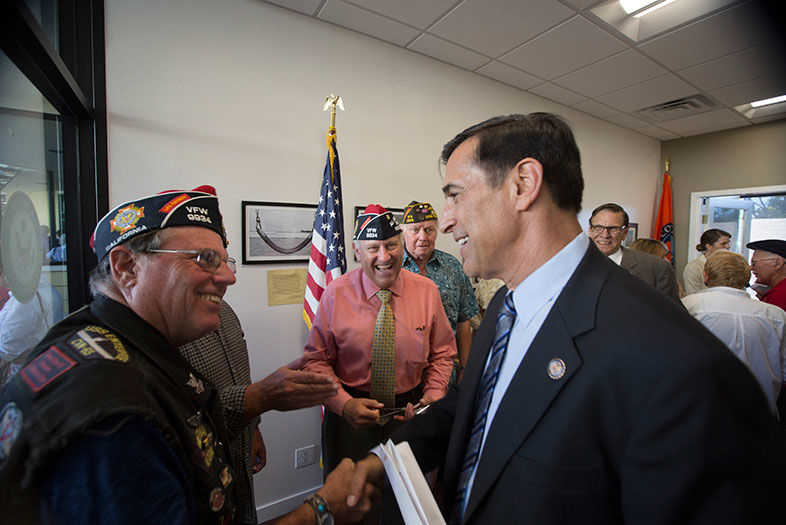
Rep. Issa opens a new Orange County office in Dana Point, September 3, 2013 | © All rights reserved by Congressman Darrell Issa
Issa began reciting this Law & Order-esque litany when he took over the chairmanship after the Republican wave election of 2010 as a way to give the committee direction. While other Congressional committees have oversight and budgetary authority over particular executive branch agencies, the Oversight Committee can issue subpoenas and launch investigations into nearly any subject, restricted only by the energy of its chairman and a willingness to fight turf battles with other committees. This broad mandate usually means that when different parties control the House and the presidency, the committee chairman is expected by his party leadership to score points on the administration.
In his time as chairman, Issa held 128 hearings (though he held more in the lame-duck session that started after Election Day). Of those, he dedicated 30 to government waste, while 14 were dedicated to the Affordable Care Act; 13 to the EPA; seven to the Fast & Furious scandal, in which the Justice Department allowed criminals to buy guns in the hopes of tracking them; 11 to the IRS; four to Benghazi; and three to Solyndra, a failed solar company backed by federal loan guarantees. Issa does not lack for aggressive bones.
Issa’s staff members point out the successes: Hearings on a sweetheart loan program for important personages led to an ethics investigation into loans received by four members of the House (three Republicans, one Democrat); the hearings on Fast & Furious led to a (largely partisan) House vote censuring Attorney General Eric Holder, the first censure against a sitting member of the cabinet. Revelations of partying by the IRS revealed no fraud, but motivated the IRS to cut spending on training by 80 percent, an inspector general report said. And hearings on whether the IRS office in Cincinnati targeted Tea Party groups for further scrutiny led to the resignation of Lois Lerner, an IRS official responsible for exempt organizations.
Yet for all the sound and fury, a common critique of Issa from the D.C. political class is that he hasn’t wounded the President in a significant way, or that he has taken the focus off the issues and turned it to himself.
“Issa tends to get in the way of issues that could really energize the base,” says Norman Ornstein, a resident scholar at the conservative American Enterprise Institute.
In February 2012, as Obama labored toward re-election amidst a struggling economy and weak poll numbers, Issa seized an opportunity to galvanize the Republican base with a hearing on whether Obamacare mandates related to birth control infringed on religious liberty. Of 11 witnesses called by the committee, nine were men, including the first panel heard. The move helped the Democrats paint Republicans as anti-woman.
“I’m sure he’d like to have that one back. That was bad optics,” says Davis, the former committee chairman.
In March, Issa became the center of attention when he abruptly adjourned a hearing on the IRS targeting scandal. Lois Lerner, the IRS official, opted to take the Fifth Amendment in the midst of questioning by Rep. Elijah Cummings of Maryland, the ranking Democrat on the committee. Issa abruptly rose and adjourned the hearing, ordering staff to turn off the audio. The visual impression of a tall white man silencing an older black man was not lost on the Congressional Black Caucus. It demanded that House Speaker John Boehner, R-Ohio, strip Issa of his chairmanship and require Issa to publicly apologize.
“Mr. Issa is a disgrace and should not be allowed to continue in a leadership role,” Rep. Marcia Fudge, D-Ohio, chair of the caucus, wrote in a letter to Boehner.
Issa did apologize to Cummings, and the House never took up the censure. Cummings would later offer his own retort in the form of a minority report accusing Issa of using the same tactics as those used by Sen. Joseph McCarthy.
When asked to describe his present relationship with Issa, Cummings, who had once had a productive legislative relationship with Issa, issued a statement more notable for what it didn’t say: “The Oversight Committee has tremendous potential to improve the everyday lives of Americans, and I sincerely hope that whoever holds the chairman’s gavel—Republican or Democrat—will work on a bipartisan basis to develop constructive reforms.”
The mistakes and distractions have led some observers to think Republican leadership was growing frustrated with Issa. Last spring and summer, stories from Politico, Roll Call, and Breitbart.com all reported friction between Issa and House leadership, though none contained direct quotes offering an outright criticism.
“I’ve spoken to leadership staff; they’re frustrated with him,” Ornstein says.
In May, Speaker Boehner announced there would be a special committee to investigate the deaths of Americans at Benghazi on September 11, 2012, adding fuel to the idea that Issa had lost the confidence of top Republican leaders. On November 21, the House Select Committee on Intelligence produced a report saying, in essence, there was no “there there.” It cleared CIA officers working in Libya of any wrongdoing and said their “actions saved lives.” A spokesman for the Select Committee on Benghazi said the committee would review the report.
A common critique of Issa is that he has taken the focus off the issues and turned it to himself.
Issa says he has a solid relationship with House leadership, calling Majority Leader Kevin McCarthy, R-Calif., a dear friend. He said the move on Benghazi was simply the resolution of a turf battle between himself and other committee chairmen who wanted control of the hearings. He cast the move as a victory for his view that Benghazi had been an administrative failure.
“The select committee ultimately is a huge win for a determination that there really is a there there,” Issa says.
In November, as Congress prepared to go back into session after five weeks spent running for office, Issa managed to get back in the headlines twice just days before he ran one of his last Oversight hearings as chairman of the committee.
At a November 6 book party for former reporter Sharyl Attkisson, Issa said his committee relied on driven journalists to get word of the committee’s investigations out to the larger public. Without them, his committee “is a desert island.”
“When an administration says ‘no,’ it’s no different than when Andrew Jackson marched Indians down the Trail of Tears, to their death,” Issa says, according to reports in Politico and Bloomberg Politics. “The fact is, the government will obey the administration’s orders, if there isn’t somebody to say ‘Hold it, stop!’”
The titters and outrage from that gaffe had hardly diminished before Issa again became the center of attention, thanks to a social media stunt gone awry. Issa, or whichever staffer runs his Twitter account, offered to retweet pictures of family members who served in the military in honor of Veterans Day, according to the Daily Dot. The bait proved too sweet for trolls to resist, and Issa’s account soon retweeted images of Heinrich Himmler, described as “my late grandfather,” and Lee Harvey Oswald, described as “Uncle Lee,” among other
villains of history.
Issa’s then-upcoming hearing on abuse of telework by officials at the U.S. Patent and Trademark Office had become an afterthought.
Hudson Hollister, now the executive director of the nonprofit Data Transparency Coalition, had just resigned his job at the Securities and Exchange Commission on the day in 2009 that he marched into Issa’s office, resume in hand, to ask for a new gig. At the SEC, he’d been laboring to persuade his superiors to standardize and digitize their data collection activities to improve transparency, but to little avail. He told Issa he thought the whole government should make its information available online. Issa hired him.
“We wanted to move the government from documents to data,” Hollister says.
While switched-off microphones and accusations of sexism and government fraud make for the kind of melodrama that attracts attention from the press and the public, they are also the kind of white noise that tends to fade over the long history of Presidential–Congressional relations. Issa’s most lasting legacy will likely be shepherding through Congress laws intended to improve government oversight.
Hollister knew Issa had a technical background that might make him receptive to a digitization pitch. Issa knew computers. He said he learned to program both COBOL and FORTRAN, and in an interview he tossed off a programming joke about “Do Loops.” He realized the potential of digitizing government spending data after witnessing the success of Recovery.gov, a website that tracked spending from the stimulus appropriated under the American Recovery and Reinvestment Act.
The Other Darrell Issa
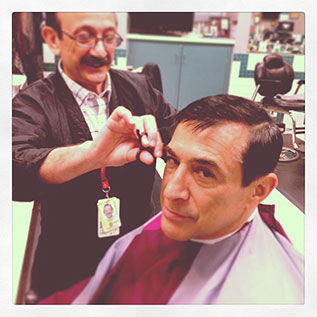
Haircut in the Senate Barber Shop on April 24, 2013 | © All rights reserved by Congressman Darrell Issa
After taking over the Oversight Committee, Issa had a platform from which to push the issue. In consultation with now-ousted Majority Leader Eric Cantor, R-Va. (“A dear friend, I miss him”), Issa proposed a bill that would standardize and digitize all government documents. But with Democrats in control of both the Senate and the presidency, he would need collaborators to get it done.
To help the bill in the Senate, he linked up with Virginia Democratic Senator Mark Warner, a fellow former businessman and the wealthiest man in the upper chamber, and he later pulled in Republican Rob Portman from Ohio. The heaviest opposition, though, came from the White House Office of Management and Budget, which until this bill, was one of the few organizations that actually possessed spending data.
“There was a lot of palace intrigue within the Administration in the years-long fight over the DATA Act—not ideological, not Republican versus Democrat—but deeply entrenched figures in the White House’s Office of Management and Budget and other places that had been there before the Obama Administration and will be there after they leave,” Issa says.
Moving the bill would require numerous modifications, including lowering its sights from all government documents to just its spending, but in May President Obama signed the DATA Act into law.
The DATA Act does not stand alone among Issa’s legislative achievements. Issa views whistleblowers, people deep in the operations of a business or federal bureaucracy who spot wrongdoing, as an essential element of transparency. He guided through Congress the Whistleblower Protection Enhancement Act of 2012, a bill that expanded protections for federal talebearers, particularly those in the national security or intelligence communities.
In 2013, Issa attached an amendment to a House operations appropriation bill that would require the chamber to publish bulk data on the legislative process in an easily accessible format, a long-held desire of open government groups. He later withdrew the amendment, but House leadership changed operations and began publishing the data.
“My view is that to eliminate the big problems in government in the way of waste and fraud and abuse of power is to give the most federal transparency to the entire world,” Issa says.
Hollister would later leave Issa’s employ to start his own nonprofit explicitly to provide outside pressure for the DATA Act’s passage and implementation. While many congressional staffers leave government for high-paying private sector jobs, Hollister and two others of Issa’s recent staff have founded nonprofits dedicated to government transparency.
Republicans limit their members to six years as senior representative on any given committee. Issa spent two years as the Ranking Member of the Oversight Committee, and then four years as its chairman. He expects to hold a senior role on the Judiciary committee, but it’s not clear what the future is for his Congressional career. When Cantor lost his primary election earlier this year, Issa was not part of the conversation for the newly freed-up leadership roles.
Now that his time running the committee has ended, Issa is less focused on what he did or did not accomplish than he is on finishing the work he started: Implementation of the DATA Act and getting the Senate to pass a reform to government information technology spending and improvements to the Freedom of Information Act, among others.
His passion for opening up government remains.
“Every generation has to have people who do the job that I’ve been honored to do,” he says. “The moment government can sweep things under the rug, the first thing they sweep under the rug is a waste of your money; eventually what they’re sweeping under the rug is an NSA project that’s controlling everything, including elections.”
He adds later: “Since our founding, unnecessary secrets have caused the American people to be cheated by their government, out of their liberty and out of their money. That is the transparency that is most important to me.”
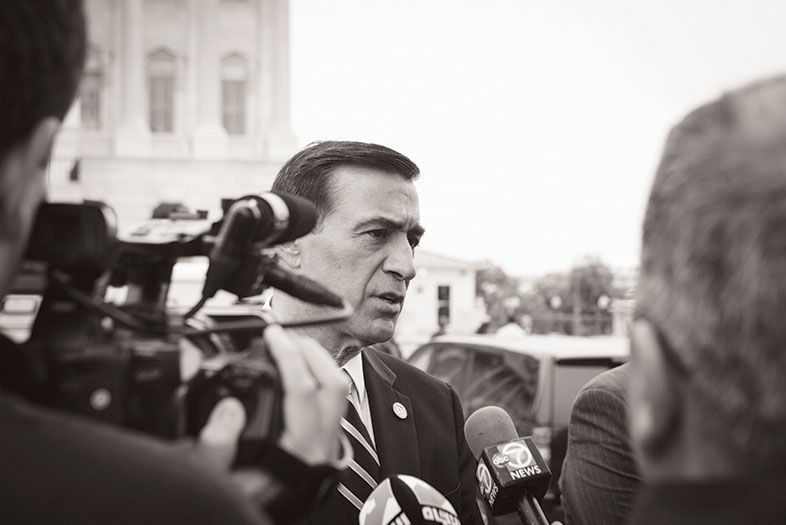
The Other Darrell Issa
Darrell Issa, October 9, 2013, Washington, D.C. | © All rights reserved by Congressman Darrell Issa

The Harbor Island resort debuts the Garden Terrace as the final piece of a $123 million renovation
If you’re anything like me, you’ve probably been planning your wedding your entire life. The impromptu daydreaming usually comes at the most inconvenient times: during a meeting or right as you’re falling asleep after watching too many episodes of TLC’s Four Weddings.
In those imagined scenes, there is always a sunset. Usually some kind of impossible garden that feels like Alice in Wonderland meets The Secret Garden. There are soft pinks and climbing greens, florals that look like they grew a little too perfectly on purpose, and somewhere in the distance, water that catches the light. It’s dramatic in the best way.
Perched on Harbor Island, Sheraton San Diego Resort feels like a tucked-away bayside escape. But the real centerpiece of its $123 million transformation is the new Garden Terrace, a private green oasis that feels like it was designed specifically for the dream wedding replaying in my head. This is what I had been imagining all those years. White tea roses, lavender, gardenia, jasmine, and magnolia trees line the space, creating a fragrance that feels like it’s part of the architecture.

Sheraton San Diego Resort has always had the advantage of its location, but what stands out now is how intentionally the indoor and outdoor spaces coexist. Panoramic harbor views stretch across the property, shifting from soft blue mornings to golden-hour glow and a nighttime skyline that feels almost cinematic. Of course, there are other ceremony and event spaces across the resort, too—including the Lanai Lawn, Harbor Vista Lawn, and Eventide Gardens—each offering its own variation of open-air beauty. But the Garden Terrace is the one that feels like it was made for vows.
I arrived on a Tuesday afternoon with a suitcase slightly overpacked, the result of not knowing what to fully expect from a resort doubling as a wedding venue. I tried to cover every possible version of the trip: a handful of summer dresses, a few breezy pants, marina-esque tank tops, sandals for everything, and accessories meant to sparkle in the sun (seven different earring and necklace options was probably unnecessary, though).
I did, however, underestimate the swimsuits, especially once I saw the paddleboards, endless water activities you’d want to try at least once, and pools and jacuzzis practically whispering your name. Business casual never made it out of the suitcase, replaced instead with easy cover-ups, pinks and greens, and airy button-ups that felt more in tune with the setting than structured jackets ever could.
The resort has been reimagined across rooms, dining areas, and outdoor spaces, with thoughtfully layered tile textures, lighting that shifts with the time of day, warm-toned palettes in the dining rooms, and fresh blues in the bedrooms that complement the views pouring in through the windows. The foyer feels expansive, framed by floor-to-ceiling windows and designed to bring a little bit of San Diego inside with you, rather than shut it out.

By late afternoon, I was sitting by the marina watching the water shift colors in real time, the kind of view that makes everything feel slower without trying. Dinner at Rumorosa brought the first real taste of the resort’s Cali-Baja identity, starting with a trio of margaritas—passion fruit, spicy watermelon, and creamy coconut—that made it impossible to pick a favorite and slightly dangerous to have them all in front of you at once.
The table opened with guacamole layered with spicy cotija, radish, pomegranate seeds, candied serranos, cilantro, limes, duritos, and warm tortilla chips, followed by Mexican street corn with sweet kernels, spiced aioli, cotija, and more candied serranos that hit just enough heat to keep you absolutely addicted.
For my main, I went with the roasted organic chicken breast with buttered jasmine rice, mole negro, and roasted cauliflower, which felt familiar in structure but elevated in small details like the cilantro and pickled onions. And then the Carajillo tres leches cake, a vanilla sponge layered with coffee and Licor 43 mousse, praline, and caramel sauce, arrived and disappeared faster than it probably should have.
What made it feel so curated wasn’t just the menu, but how intentional everything felt without ever feeling fussy: bright flavors balanced against rich ones, heat against sweetness, and plates that arrived right as the light over the marina started to soften. The next morning carried that same energy. Breakfast could unfold at your own pace, whether that meant taking a Zoom call in your room, heading downstairs for a sit-down meal with friends at Rumorosa, or grabbing something quick from Strada Italian Market. I opted for a vanilla latte from La Colombe at Strada before heading out for the morning.

I made it just in time for the resort’s complimentary morning yoga on the lawn, boats just visible beyond the stretch of green. The Sheraton offers it daily as part of the stay, a low-pressure option for anyone looking for an easy reset rather than a full workout, which I wasn’t expecting to take part in on this trip but ended up glad I did. The class itself was beginner-friendly, with slow flows and a few optional deeper stretches for anyone who wanted to push into more advanced poses.
Afterward, stand-up paddleboarding shifted everything into a different perspective. My small group launched from the resort’s private dock, boards wobbling slightly as we found our balance, then drifted out into the marina where the water opened up in every direction. We paddled past rows of docked boats, slipped alongside houseboats with their shaded decks and string lights, and followed the gentle curve of the harbor as it widened and narrowed again.
The afternoon transitioned into poolside lounging at Sunglow Cabana Bar, where cabanas, cold drinks, and a poolside lunch had me so relaxed I didn’t even realize my phone had died. Sunglow is open to the public, so if you’re looking for a quick day getaway, you can dock and settle in for SoCal-style shareables and frozen drinks.

Dinner at the Garden Terrace kind of shifted everything for me. In the daytime it just feels like a nice open space, but at night it becomes something else entirely: more intentional, more “put together” in a way I didn’t really clock at first. As the sun went down over the marina, everything turned warm and the garden lit up in this soft glow that was staged under fairy lights. It was as if you were meant to experience it in this very certain way.
It was easy to picture it then: the quiet before guests arrive, the moment someone steps forward, the pause right before “I do.” There’s often a specific kind of silence right before a ceremony begins. And, at the Garden Terrace, that feeling is built into the space itself. You are standing in a garden wrapped in white blooms and soft greenery, with the harbor stretched out just beyond it. The sun is low enough to turn everything gold. Someone is standing across from you, close enough that everything else fades into background noise.
At 3,600 square feet, the Garden Terrace can host up to 300 guests, with the wider property offering over 132,000 square feet of flexible event space. The transformation even earned a Northstar Stella Award Gold Medal for Best Renovation in the Far West Region in 2024.
That evolution, according to Sean Clancy, Vice President and General Manager of Sheraton San Diego Resort, has been years in the making. He describes the property as having been “completely transformed,” from the rooms to the restaurants and everything in between, with new spaces like the Garden Terrace designed to highlight the marina backdrop in a way that feels “naturally stunning” and “magical,” not just scenic.
By the time I checked out on Thursday, watching the sun rise over the marina, empty in the early light, I understood why someone would choose this exact spot to say something they mean forever.
Isabella Dallas is a freelance writer for San Diego Magazine and the Arts and Culture Editor at The Daily Aztec in her final year at San Diego State University. She previously worked as an editorial intern for SDM, but when she’s not writing, you can find her trying the best coffee spots in SD, devouring the latest rom-coms, and indulging in anything and everything pop culture.
San Diegans are finding connection in gardens, shared produce, neighborhood gatherings, and simply sitting outside
Front yards. They used to be the most controlled part of a home—or not. They could be tidy with manicured lawns, have raised vegetable beds with food for sharing, or act as an overflow of things that didn’t quite make it inside. Thank you, capitalism, and the American habit of endless consumption. In Lemon Grove, where I live, it’s not uncommon to see a mechanic running a business from his front yard or a family selling birria on Saturdays from theirs. The front-yard genre is broad.
But in communities across San Diego County, the most exposed part of a house—the strip between public and private life—is being turned into something eminently usable, visible, and hang-outable. At first glance, this may seem decorative, but in creating an intentional space, particularly one that’s visible to neighbors and passersby, it’s also the release of a pressure valve.
Let’s not gloss it over: American life has taken a hard right at high speed; two wheels have lifted off the pavement as we careen toward who-knows-what, and our nervous systems are making a sound best described as zoinks!
People are trying to (re)build connection in an increasingly isolated culture, (re)find beauty in the midst of endless anxiety, and (re)create a system friendly for critters. Many of us are remembering that, Oh yeah—we’re biological creatures.

Landscape designer Andrea Doonan, of Andrea Doonan Horticulture + Design, is a certified arborist with more than 20 years of experience collaborating with homeowners and renters. She rejects sterile, white picket fence designs and places a strong emphasis on edible gardens and usable outdoor spaces. When we speak, she mentions the unusually wide range of plant and animal life in the relatively small size of our region, making us a “biodiversity hotspot.” (San Diego is the most biodiverse county in the Lower 48.) Because of this, we have a unique system of endangered species that rely on plants to survive.
“More and more, people are introducing native landscapes to connect to nature and support birds, butterflies, and bees,” Doonan says. “I’m very passionate about getting people to unplug and ground.”
Whether it’s for a love of all creatures, our climate, or water conservation, Doonan describes a broader shift toward habitat-driven spaces that are both aesthetic and ecological. For her clients, this can mean replacing turf with native planting, adding seating areas, or even rethinking the front walk as an active, planted threshold rather than just a green lawn. “There’s this idea that people want to make a difference,” she says. “But they also want a place to entertain, recreate, and ground.”
At the center of this is a simple but increasingly urgent question: How can small design choices ripple outward into community life?

For Doonan’s client Lee Miller, that shift is fully expressed. After remodeling the interior of his Pacific Beach home, Miller focused on the backyard, thinking that would be the place for his soon-to-be-born daughter to eventually play. The front yard of his corner property was the last detail to be completed.
Miller said he wanted “a very full, very natural look versus having everything measured.” He knew what he liked when he saw it, but it was Doonan who translated his ideas and guided the creation of a wildlife-friendly space with full-grown orange, plum, and pluot trees. “We have lots of birds, lots of bees, lots of lizards,” Miller says. “There’s nothing better than walking outside and eating fruit off a tree.”
The front yard has become where Miller’s family spends time—often more than the backyard. He and his daughter, who’s now 5, explore the space together, checking what’s growing, learning about their little ecosystem, and chasing lizards. It’s where his daughter plays, where she’s built her own fairy garden, and where neighborhood parents and kids tend to gather at the end of the day.

For her own Normal Heights home, Doonan designed a front yard that includes a seed library, raised beds, native plants, and a sitting area where she and her husband spend time. “I’m meeting my neighbors because I put two chairs and some plants in the front yard,” she says. “I’m sharing produce with them.”
That exchange has become part of the landscape itself, and she points to small systems (like seed libraries) as ways of circulating plant material and knowledge directly between people. In real life. Person to person.
More and more, Doonan says, when we’re talking about solving the big problems, it’s important to remember that everything starts local. Even “guerilla gardening”—small acts of informal planting and care in overlooked sections of land, such as parking strips—makes a difference. Tossing some seeds and adding a bench to the sidewalk strip out front can create a “pocket park” or “a mini-mini park.” In that framing, the front yard stops being an ornamental backdrop and starts becoming an infrastructure for connection.
Landscape architect Bret Belyea frames this front-yard movement (my term, not his) as social repair. “It’s a handshake to your neighbors and passersby,” he says. “It says something about who you are.”
Of course, plant choices matter, but not only for ecological reasons. Native and climate-appropriate plantings become part of how neighborhoods re-establish contact with each other, even without formal planning. What he describes is an aesthetic, but it’s also relational in the way a yard can signal openness rather than withdrawal, invitation rather than separation, and connection rather than, “Get off my lawn, ya damn kids!”
Hanging out in the front yard rather than sequestering in the back is a signal to outsiders that they’re really not outsiders at all. Or, at least, they don’t have to remain so.

Not every front yard in this shift toward social spaces has a professional’s influence. Some are created through labor, trial and error, and nostalgia. For Grace Wanjiru, the memory of her childhood in Gitaru, Kenya, led her to beautifully DIY the hell out of the front part of her half-acre Encanto property. When she bought her home nearly two decades ago, it was essentially just a little house plunked down on a giant plot of dirt. She had a blank slate and plenty of memories from which to create something that would imbue the space with peace and hospitality.
The designer-led yards are often framed through an academic understanding of ecology, structure, and intentional planting strategies, and Wanjiru did much of the same thing through instinct. When she’d visit her mother, who lives just outside of Nairobi, she was reminded of the abundant beauty and vibrancy of a childhood spent running free, climbing trees, and being connected to nature. It was important to Wanjiru that her then-young daughters, both now in their early 20s, have that experience.

Wanjiru’s goal was to create the feeling of home, not as replication but as translation. “When you throw a seed in Kenya, something grows,” Wanjiru tells me. “Here, the dirt is horrible for plants. I still wanted green and color. I wanted nature—birds and insects. I grew up with nature, but here: No.”
With an understanding of what would and wouldn’t grow in San Diego, Wanjiru was able to achieve a sense of home with succulents and native plants she purchased at Walmart. She created a large courtyard with a fence built of wood and corrugated metal. Inside, she added a hammock and a bird bath, which Wanjiru settled on after gophers ate through seven different plants; a table with an open cookbook, a bottle of wine, three glasses; a weathered dresser—once in her daughter’s room—that now sits opposite the table and contains Wanjiru’s many seeds. And, of course, strung lights.
The space feels rustic, comforting, personal, emotional, and magical. It feels like love.
Wanjiru likes to host small groups of her friends and family, keeping it intimate but accessible. “This is the kind of house you just call: ‘What are you doing? Are you making your African tea? Can we just come over?’ Because this is what they do [in Kenya],” she tells me. “And so I always want to have that, because I think for foreigners living in America, that’s one of the things we struggle with. We don’t have that kind of community.”
Craving a communal feeling, Wanjiru built it herself. And her kids grew up climbing the jacaranda tree and playing in the garden.
“We still gather out there,” she says. “We read in the hammock, talk, connect.”

Perhaps the most important part of a front yard is a garden, whether it’s a space for entertaining and gathering, retreating and grounding, discovering and playing, resting and people-watching. The science backs up what gardeners have long known: Spending time around plants can be profoundly restorative. A 2024 review of dozens of studies found that gardening is consistently associated with better mental health, greater well-being, and improved quality of life, also linking interaction with plants and green spaces to better nervous system regulation.
For Doonan, this is part of why the conversation around gardens is bigger than aesthetics. “Gardens are for everyone,” she says. “I think it’s a right for all of us to have access to gardens.” “All of us” means homeowners and renters, people with sprawling yards and people with apartment balconies, people with large budgets and people growing herbs in containers from the discount rack at Home Depot.
In my conversation with Belyea, I tell him about a little house I passed in Oceanside this past spring. The owners set out free avocado clippings from their tree for anyone to take. “This is people’s way of putting an olive branch out,” he says. “And it just happens to be an avocado branch.” Maybe that’s what this front-yard shift is really about. Maybe it’s about trying to remember how to live alongside one another again. A hammock beneath string lights. Kids chasing lizards through native plants. Someone slowing to ask what’s growing. A neighbor stopping by and staying longer than they planned to. All of it, a pocket of softness in a culture that’s trying its damndest to make us harden.
Aaryn Belfer is a writer and editor specializing in nonfiction across art, architecture, and culture. Once upon a time, she wrote a provocative column for San Diego CityBeat (RIP). She was a runner up in the 2025 Matchbook Stories contest at the San Diego Central Library and is irrationally happy about it. Currently in her Soft Girl Era, Aaryn has expensive taste in (mostly flat) shoes and will choose a great art exhibit or live jazz concert over almost anything else. Except, possibly, Javier Bardem.
Enrique "Oz" Espinoza turned a high school tradition into a growing San Diego creative club built on collaboration
Back when Enrique Espinoza was a student at Southwest High and San Ysidro High, his mom couldn’t afford to buy him the school yearbook. So he made his own. Every spring, he brought a new marbled composition book to pass around, collecting signatures, photos, and messages from friends. By senior year, he was finally able to get his hands on the “real” yearbook, but at that point, he preferred the personal, collaborative project he’d started: a record of how people could come together to create something from nothing.
Espinoza—“Oz” to friends—got serious about photography a couple years later at Southwestern College, shooting for esport leagues and connecting with other artists all the while. Then in 2024, his childhood friend Charlie Knowles, cofounder of Bica Coffee Shop in Normal Heights, got in touch: He was looking to host meetups for creatives at the café, and he remembered how much people enjoyed contributing to Oz’s DIY yearbooks back in high school. Why not make more?
So Yearbook Creative Club launched on November 23, 2024, at Bica, with the goal to connect local artists, and ultimately make a book showcasing one another’s work. Since that first meeting, the club has become a social hub for creatives, also running art shows, galleries, a holiday toy drive, and a booth at the inaugural San Diego Bazaar winter marketplace. Yearbook also often collaborates with Camera Exposure, Southern California’s largest used camera store and photo studio, which has been a nexus for San Diego photographers in Normal Heights for nearly 40 years.
And though Oz provided the spark, he emphasizes that the club is, at its heart, a group endeavor: six photographers form the “Yearbook Committee”—including entrepreneur baker Samra Lovelady and Brian Eastman, chief experience designer of San Diego hospitality collective CH Projects—but everyone with an artistic eye is welcome. In Camera Exposure’s blog, Developing Stories, writer Austin Siragusa characterized Yearbook as “a community-first collective that deters gatekeeping and neutralizes imposter syndrome in favor of an open-door policy to foster trust and skill-sharing, regardless of follower count and portfolio length.”
The club published Yearbook Vol. 1—a limited-edition, entirely self-funded, 170-page glossy hardcover with the same spirit as Oz’s high school books—last April, celebrating with a launch party and gallery at the headquarters of Tribal Streetwear in San Diego’s East Village. About half of the 30 artists represented in the book are local; the rest are extended contacts from New York, Miami, and San Francisco. “Yearbook is San Diego-based,” Oz says. “San Diego is the home, but art is everywhere, and I want to be sure that San Diego is in that conversation of bringing artists together.”

The cover artist for Vol. 1, Gary Lockwood, gave a copy to Dante Rowley, manager of retail and visitor experience at the Museum of Contemporary Art San Diego (MCASD). Turns out, Rowley knew Oz from his days running the gallery and streetwear store Rosewood in the East Village, and he promptly reached out to see how MCASD and Yearbook could collaborate.
The museum began hosting a series of bimonthly photo walks around La Jolla in partnership with Yearbook.
Anyone interested in improving their camera skills is invited: Rowley says they always have a good mix of beginners and more experienced photographers, which leads to helpful conversations about how to get one’s aperture settings just right, or tips on how to compose the best shot.
The museum began hosting a series of bimonthly photo walks around La Jolla in partnership with Yearbook. Anyone interested in improving their camera skills is invited: Rowley says they always have a good mix of beginners and more experienced photographers, which leads to helpful conversations about how to get one’s aperture settings just right, or tips on how to compose the best shot. The walks are scheduled to end at the museum in time to segue into another event: March’s walk led into a live jazz band performance; May’s led into the museum’s entry-fee-free Second Sunday.
Yearbook Vol. 2 came out in late May 2026 with a release party of over 300 attendees and a partnership with 100 Thieves. This volume features a greater variety of media, including digital illustration, graffiti, and tattoo art. The club is also planning to publish an additional book in partnership with MCASD, composed exclusively of work taken during this year’s photo walks—anyone who participates is welcome to submit. Rowley says he hopes to celebrate that book’s launch with a community gallery, as part of an ongoing effort to show that art museums are not just reserved for the great, dead Old Masters. There’s space for you and me, too.

Yearbook meets several times a year at Bica, and Oz says there are always new faces and drop-ins from other local photography groups, such as Girls on Film and Beers and Cameras. Several lapsed amateurs have told him that simply showing up and feeling welcome has inspired them to pick up their camera again.
As more people seek a digital detox by turning back to screen- or AI-free art forms—Talker Research reported this January that 50 percent of adults are turning to a more analog life via paper books, vinyl records, and actual cameras (not the one in your phone)—Oz says that most people he knows still shoot on film, which has a relatively low barrier to entry. “A film camera is a lot friendlier on your wallet,” he says. “For, like, $150 you can get something comparable to a $900 digital camera.”
And though he admits he’s usually “a digital guy,” Oz notes that working with film is an antidote to digital fatigue and endless scrolling. “A lot of people like that process,” he says. “There’s a philosophy that comes with shooting on film that makes you want to slow down and appreciate the shot.”
The next Yearbook Creative Club photo walk is July 12 at 1 p.m. at MCASD in La Jolla, led by Enrique Espinoza and Brian Eastman.
Dan Letchworth is the copy chief of San Diego Magazine. His print column Dansplaining explores San Diego trivia, and his theater review blog Everyone’s a Critic was a finalist for best online column in the 2019 National City & Regional Magazine Awards.
A customized memory-filled explosion gift box is a creative way to show someone you care
Finding a gift that feels truly personal can be surprisingly difficult. In a sea of generic options — flowers, gift cards, candles, and the like — Xplosion Box offers something more lasting: a customized keepsake built around the photos, messages, and memories that matter most.
Founded by Southern California entrepreneur Jay Vijay, Xplosion Box LLC creates fully customized explosion gift boxes that arrive professionally designed, printed, assembled, and ready to gift. Each box opens layer by layer to reveal personal photos, heartfelt messages, pull-out albums, origami-style photo pockets, and hidden notes, turning a simple gift into an emotional reveal.

The brand was built for people who want to give something meaningful without spending hours printing photos, cutting paper, folding cardstock, or assembling a DIY project. Customers simply choose a box, upload their favorite photos, add personal messages, and the Xplosion Box team transforms those details into a polished keepsake that feels thoughtful, personal, and beautifully made.
Xplosion Box offers personalized gift boxes for birthdays, anniversaries, weddings, graduations, Mother’s Day, Father’s Day, Valentine’s Day, Christmas, proposals, bridesmaid gifts, long-distance relationships, and thoughtful “just because” moments.

Customers can choose from flexible customization options starting at $27. The Mini Surprise Box includes 10 photos, three message cards, and one hidden secret note, while the Mega Surprise Box offers a fuller keepsake experience with 40 photos, three message cards, and one hidden secret note.
What sets Xplosion Box apart is its high level of customization combined with convenience. Filled with personal photos, custom text, decorative details, and layered surprises, each box gives customers the freedom to create a gift that feels one-of-a-kind — without having to make it themselves.
At its core, Xplosion Box helps people turn favorite photos, stories, and words into something tangible: a keepsake that can be opened, revisited, and remembered long after the occasion has passed. asion has passed.
We found a handful of inspiring people who live in, and truly know, these 'hoods and asked them how they’d spend their time out and about
Growing up in Carlsbad, I never quite understood why people vacationed there. What, so you want to check out the field where I have soccer practice? Pay my orthodontist a visit? Carlsbad just felt like a town by the beach, no better or worse than any other in the country. It took going to college out of state for me to actually understand just how rare a place like Carlsbad is.
Thanksgiving break my freshman year, my first time coming home after three months in the Midwest, my shoulders dropped. I rolled down the windows and drove to lifeguard tower 37—the hangout magnet for Carlsbad’s youths (and, in the summer, tourists)—and the smells of the ocean woke me right up like smelling salts do. I finally got it.
Carlsbad isn’t just a stopover town on your way to something better. It is the destination. Travel + Leisure named Carlsbad one of the top 50 places around the world to travel in 2026. From the whole globe, the travel magazine picked my home. Sure, we’ve got the Flower Fields and Legoland—but now it’s the smaller ships and indier dreams that are giving it street-level character.
It’s not just Carlsbad, either. People have talked about the “North County bubble” for decades—a force field that prevents its residents from traveling south of the 56. It’s often used derogatorily, and it’s a fairly accurate burn.
For decades, living up in North County meant giving up on culture, or at least culture within close proximity. But now, the main expansion of San Diego culture is happening up north. Central San Diego restaurants have started taking notice and are expanding into the area—spurred no doubt by Oceanside’s food boom and the Jeune et Jolie–Campfire–Wildland–Lilo constellation in Carlsbad. City Heights burger joint Key & Cleaver opened a new spot in Oceanside; the owners of Parc Bistro-Brasserie in Bankers Hill opened Parc Lounge in Rancho Santa Fe. Possibly the strongest market indicator is that Sam Fox—one of the most successful restaurateurs west of the Rockies—has started focusing on North County for his concepts. In 2025, he opened both The Henry in Carlsbad and Culinary Dropout in Del Mar.
For the ultimate insider guide, we found a handful of inspiring people who live and create and truly know six North County neighborhoods—San Marcos, Escondido, Oceanside, Leucadia, Rancho Santa Fe, and Vista—and asked them how they’d spend a dream day out and about in their town.

San Marcos is in full renaissance mode. The biggest story is that the grand North City vision is starting to peek through the scaffolding. It’s essentially the North County Downtown that’s been written in the tea leaves and discussed whenever someone gets stuck in traffic at the 5/805 merge: a 200-acre, pedestrian-friendly, mixed-use face-changer that’s slated for 2,600 homes, 350,000 square feet of retail and restaurants, 250 hotel rooms, and about a million square feet of offices and labs. Its most recent manifestation is 222 North City—a 12-story residential tower with over 450 residences, rooftop garden, pool cabanas, art installations, and almost 20,000 square feet of ground-floor retail (Necessity Coffee, Buona Forchetta, Draft Republic, Milonga Empanadas, and a grocery store anchor on its way).
Which means Restaurant Row is no longer burdened with being the primary caregiver for the hungry or the socially inclined. Patricia Prado-Olmos has watched the city morph during her nearly three-decade tenure at CSUSM, having spent the past six years as the school’s chief community engagement officer. She also just announced her forthcoming retirement at the end of the 2026–2027 school year, so she’ll have even more time to haunt local haunts.
Those in the know call the university “Cal State StairMaster” from the Sisyphean amount of stairs on the hillside campus. So, any day at or around CSUSM should start with a homestyle carbo-load (biscuits and gravy) from Mama Kat’s.

“There’s something about this breakfast spot that immediately puts me in a good mood,” she says. Mama Kat’s is also known for its pie (strawberry-rhubarb), which is breakfast if you change your perspective.
After a few hours on campus—with a break to pet the university’s official therapy goldendoodle, Frank, who helps ease finals tremors or apprehension of on-campus stairs—Prado-Olmos will wander into North City, just steps away. She says the almond croissant and coffee at Christophe Rull Patisserie rival Parisian cafés: “It feels like the kind of place you’d stumble across in a much bigger city.”
Rull, a Michelin-trained pastry chef who’s done stints on Netflix (Bake Squad) and Food Network (Super Mega Cakes, Halloween Wars), opened his patisserie last fall. The hype hasn’t cooled off yet: Get there early because the crowds do.
Emma Veidt is an editor at San Diego Magazine. She earned her bachelor's and master's degrees from the Missouri School of Journalism. She loves running, hiking, and rock climbing, but really, she mostly loves encounters with the street cats around North Park.
New editor Emma Veidt gives an introduction and her ode to the once-sleepy, now slept-on North County
I am fairly sure they don’t let you graduate from Carlsbad High School without a W-2 from Legoland. Being a Legoland MC (Model Citizen, the employee’s moniker) is a rite of passage for all of us who grew up in North County. If you spent a day at the theme park in the 2010s, I probably pointed you toward the Granny Apple Fries or measured your height at a ride entrance.
And now we meet again. I can still point you to quality fries.
This is my first full issue as the new print editor for San Diego Magazine. But it’s not my first time here: I was an editorial intern for these pages back in 2018 (see photo). To be a part of a constant study of the city, its people, its culture, then finding the most compelling stories and bringing them to life—it was incredibly impactful and solidified my decision to pursue all of this (local, print magazine journalism) as a career. Since my internship, I’ve gotten my bachelor’s and master’s degrees from the Missouri School of Journalism and worked for nearly five years at Backpacker magazine. And I’m back at San Diego Magazine, baby. There’s a real magic to narrating the lives lived and dreams dreamt in the place that built me. I am excited to be a part of building the culture of where I’m from. And, born in Tri-City Medical Center and raised in Carlsbad, I can’t think of any other place than our North County issue for me to make my grand entrance as an editor.

To me, North County isn’t just where I’m from; it’s home. Throughout the years, I have run thousands of miles (I did the math) up and down the 101 between Oceanside and Cardiff. I’ve spent thousands of dollars (an estimation, too painful to do the actual math) on BRCs—beans, rice, and cheese burritos—from Lola’s, Juanita’s, and the late, great Pollos Maria.
The stretch of land between Camp Pendleton and the 56 is easy to love. We’re quieter and a little more zenned out than our lower-latitude neighbors, sure, but we’re neither sleepy nor boring.
Do you think Scrojo, the Belly Up’s punked-out poster artist featured on page 68, could last a day somewhere boring?
What I’ve always loved about North County is that the culture shifts every couple of miles as you reach a new town. For years, the media seemed to cast the realm above the merge as a two-toned monolith: sleepy surf towns to the west, suburbs and country living to the east. The nuance of each section seemed flattened or clumped. I think you’ll see the vastly different cultures of North County in this issue—but all distinctly San Diego. Which is to say a little mellower, fewer airs, come as you are.
It’s hard to imagine that the dusty trails and vibrant, muraled alleyways of Escondido are just miles from the barefoot surfers roaming Leucadia. Even though the SDM editorial staff is made up of two lifelong locals and other longtime residents, we don’t pretend to be the experts on every street. What a good city media company does is find the people who are experts, who have a unique hyper-local perspective—and give them the stage.
So we picked six North County neighborhoods—Oceanside, Vista, San Marcos, Leucadia, Rancho Santa Fe, and Escondido—and reached out to artists, community leaders, business owners, anyone making their neighborhood brighter, and we had them describe their perfect day out and favorite things that give their neighborhoods meaning and culture. These itinerary curators included San Marcos’ Patricia Prado-Olmos, Leucadia’s Jeff Schade, Oceanside’s Aaron Crossland, Escondido’s Suzanne Nicolaisen, Rancho Santa Fe’s Charo Garcia-Acevedo, and Vista’s Steve Glaudini. If there’s anyone who lives and breathes North County, it’s them. Check out their recommendations in our feature on page 56.
This month, we’re also going back in time almost 15 years to the Big Bay Boom. Yes, that meme-ified Fourth of July fireworks show where enough pyrotechnics for a 17-minute show went off at once over San Diego Bay. Content Chief Troy Johnson remembers the day and dug back through the story for a hilarious locals’ take on the big debate: Was it the worst fireworks show of all time, or the greatest? (Page 38.)
Before I leave you to our hard work, a sentimental note. When my parents moved from St. Louis to San Diego in the early ’90s, my mom subscribed to San Diego Magazine to learn about her new neighborhood. Now, over three decades later, I’m here—on this planet and in these pages. I thought about my parents a lot as we worked on this issue. Maybe there are a couple new San Diegans reading this magazine for the first time. Maybe that’s you.
Well then, to both of us, I say, “Welcome.” Let’s do this.
Emma Veidt is an editor at San Diego Magazine. She earned her bachelor's and master's degrees from the Missouri School of Journalism. She loves running, hiking, and rock climbing, but really, she mostly loves encounters with the street cats around North Park.
It’s a Self-Care Summer. Because your best self is our favorite self.
If you’re anything like us, it can be easy to get so caught up in taking care of everyone else, that your own needs get lost in the ether. But while this may be a cliché, that doesn’t make it any less true: You can’t give your best self to other people unless you’re taking care of yourself.
Sometimes, that looks like stopping in for your regular acupuncture or chiropractic appointment. Other days, it means giving your body the fresh, organic fuel it needs to truly feel and function at its best. And some other times still, it involves leaving your responsibilities behind for a weekend to pamper yourself at an incredible resort and spa.
Only you can decide what your truly need. We’re just here to help you find the best ways to get it.

Island living meets desert luxury at the Tommy Bahama Miramonte Resort & Spa in Indian Wells. When you step onto the 11-acre property, you’ll be surrounded by sweeping view of the Santa Rosa Mountains with olive trees and fragrant citrus groves decorating the grounds. In other words, everything about this relaxed but refined resort is primed to help you let go of the stress from home and enjoy easy sun-soaked days and gorgeous starry nights.
The rooms blend calming, woven textures with Tommy Bahama’s signature tropical prints and feature private lanais, making it easy unwind the moment you walk in the door. If you book one of the four Villa Suites, you’ll be treated to exclusive Tommy Bahama furniture and unique personal touches to further that feeling of instant ease.
At the award-winning Spa Rosa, the expert team will help reset and recharge your body and mind using methods and rituals inspired by the desert. The 12,000-square-foot retreat includes outdoor soaking pools, eucalyptus steam rooms, and outdoor cabanas, as well as massages, facials, and body masks—all aimed at creating a day dedicated to you. We’re particularly partial to the Day Long Escape, an indulgent all-day affair of CDBs soaks, renewing scrubs, life changing massages, and transformative facials.
Following your treatment, continue the experience with a meal on the patio at Grapefruit Basil. We love the Hamachi Crudo, a light, citrus-forward dish featuring premium yellowtail, house-made ponzu, creamy avocado, and fresh seasonal garnishes.
Whether you’re strolling the gardens, relaxing beside its saltwater pools, or indulging in a restorative treatment, you’ll be able to escape in style and relax in luxury at the Tommy Bahama Miramonte Resort & Spa.

There’s no shortage of ways to stay active in San Diego—but if you really want to enjoy everything the city has to offer, you’ve got to make sure you’re giving your body its tune-ups. Enter: Healcove Chiropractic. The board-certified chiropractors and wellness professionals at Healcove are experts at addressing that stage where you’re not injured, exactly, but you’re not at 100%, either. Maybe you’re feeling a bit tense or stressed out. Or it could be that you’re not quite moving the way you want to. Sometimes, it’s just that the accumulation of days, weeks, or even years of daily strain is starting to take a toll. No matter what stage you find yourself at, the Healcove Chiropractic team can provide integrated, preventative care centered on long-term, science-backed approaches that ensure you can always stay active and live the life you want to live pain-free.
This starts by providing truly individualized care. Every patient can expect a thorough 60-minute consultation session that includes a posture and movement screening. This allows the team to develop a completely personalized plan. That plan might include chiropractic care, acupuncture, or massage therapy, as well as functional fitness training, vibration and sound therapy, and Dynamic Neuromuscular Stabilization, a clinical rehabilitation method that retrains the body’s stabilization systems. Whatever the team recommends, you can be sure that it’s tailored to meeting your body’s needs today and the future.
There’s a reason that San Diego Magazine named Healcove the “Best Chiropractor in San Diego”—don’t wait until you’re struggling with an injury to find out why. Book an appointment today for holistic, integrated care that helps ground and heal your body before it reaches a crisis point.

West Coast wellness culture meets the community feel of Southern Appalachia at Juice Holler. Juice Holler’s menu consists of made-to-order smoothies and smoothie bowls, as well as grab-and-go cold-pressed juices, wellness shots, salads, and more. It operates from the blissfully simple premise that fueling up with food and drink that’s guilt-free and good your body should be simple, accessible, and, above all else, delicious. And if you haven’t yet made it out to the Encinitas café, which opened just this year, let us be the first to tell you: Juice Holler delivers on each and every of these fronts.
We love the Supercharger smoothie, a mood-lifting and body-fueling option made with banana, almond butter, blue spirulina, maca, grass-fed whey protein, raw cacao nibs, medjool dates, and coconut milk. We’re also partial to the Thrive Alive smoothie bowl, where avocado, mango, sea moss, spirulina, mint, coconut milk, and agave are mixed and topped with coconut, chia seeds, strawberry, mango, and chocolate drizzle. The wellness shots include the Detoxifier, a cleansing blend of kale, cucumber, lemon and spirulina, plus a shot specially designed to fight inflammation (named, fittingly, Anti-Inflammation). Probiotic overnight oats, lemon turmeric bars, and strawberry shortcake chia pudding are other standouts on the grab-and-go menu.
Much of the vibe feels beachy North County chic—think green tile with orange and pink accents, grounded with greenery and natural wood—but Juice Holler founder Kelly Sergott, a longtime Encinitas local, has also enfused the space with her Kentucky roots. In Appalachia, a holler is small valley between hills and mountains, where nature reigns, community is king, and nourishment comes right from the land. At Juice Holler, Sergott has created a holler for the busy modern times, using local ingredients to create a spot for people to come together and enjoy fresh, fast, feel-good fuel for their day.

We’ve all had that experience with a medical professional where we’ve felt rushed, ignored, or misunderstood—and ultimately, like we didn’t get the answers that we needed. But at Everwell, the holistic acupuncture practice located in Solana Beach, the care team wants to transform your understanding of what healthcare can look like.
Patients at Everwell experience care rooted in intentional listening and radical empathy—and trust us, those aren’t just corporate buzzwords. This place actually puts those ideas into practice. You will always be given the time you need to tell your story— initial in-take appointments are two hours long—and you can rest assured that your story will be believed. Every single question and concern will be addressed by a dedicated practitioner who wants to find the specific solutions that work best for you, and you’ll receive care that’s aimed at healing the body, mind, and spirit.
Everwell’s highly trained, doctorate-level practitioners blend evidence-based acupuncture with the practice of classical Chinese medicine. (If you’ve never tried acupuncture before or aren’t sure if the team will be a fit, we’d highly recommended Everwell’s complimentary 20-minute consultations.) Research shows that by stimulating specific points on the body, acupuncture activates a natural healing response in the body, helping to restore balance, regulate the nervous system, and improve overall wellbeing. This allows the practice to address an incredibly wide range of conditions from chronic pain and autoimmune disorders to digestive issues, from stress and burnout to headaches migraines, fertility and postpartum struggles, hormonal imbalances, sleep concerns and more.
At Everwell, you can expect to feel heard, trusted, respected, and cared for. This is a space that doesn’t want to be just another healthcare provider you visit; it wants to provide patients with dedicated partner who will be there for their entire health journey.