Featured articles
Food & Drink
Food & Drink

Food & Drink
Featured articles

Everything SD
Everything SD
Features
Featured articles
Things to Do
Everything SD
Everything SD
Featured articles
podcast-ep
podcast-ep

podcast-ep
Featured articles
Features
Features

Features
Featured articles
Food & Drink
Charitable SD
Everything SD
Ready to know more about San Diego?
SubscribeReady to know more about San Diego?
From world-famous hot pot to a tiny fish shop, food critic Troy Johnson names his top new eateries of the year
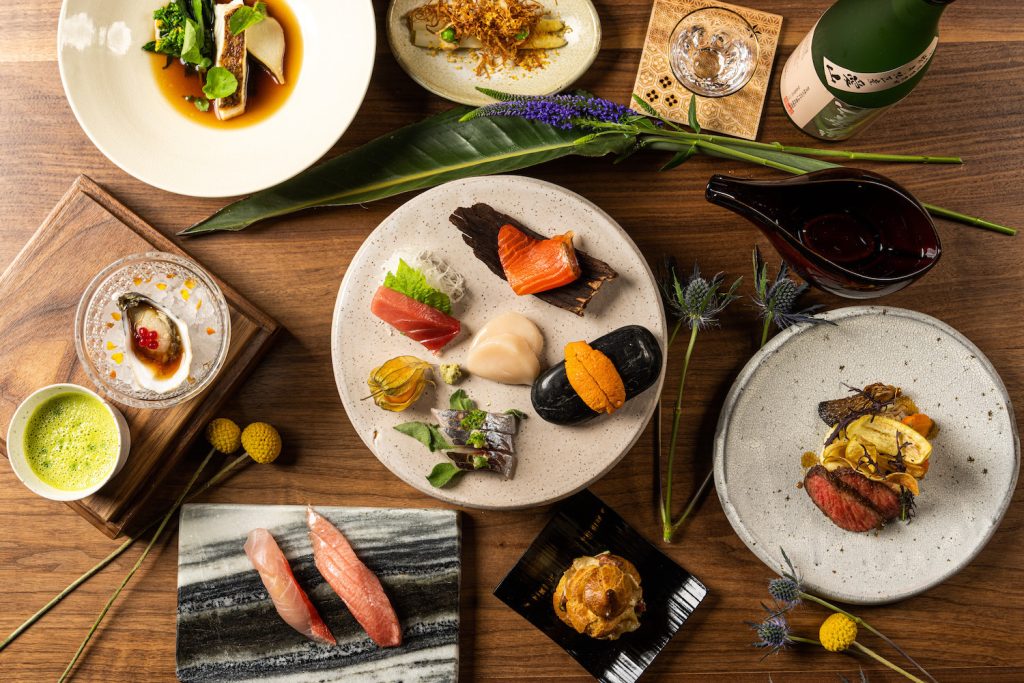
Logically, the restaurant scene should’ve been dead-silent this year. Food costs went berserk. Labor costs swelled. We all knew how to cook because we were marooned in our own homes for a few years. And yet San Diego’s food scene unveiled a few dozen more pretty fantastic restaurants in 2023. This is what I love about restaurants and the people behind them. It is not a get-rich-quick scheme. Sure, money is to be Danny Meier’d for the few and the lucky and the ulcered.
But financial analysts who are not sadistic would advise you to put your money into the stock market, into real estate, into off-brand Beanie Babies before putting it into the restaurant industry. That means all you’re left with are people who do it because they have to, or because the dream of creating a hospitable place that makes humans happy is just too compelling to ignore.
Here are the new arrivals that won me over in 2023 and became part of my own personal hit list of the best new restaurants in San Diego.
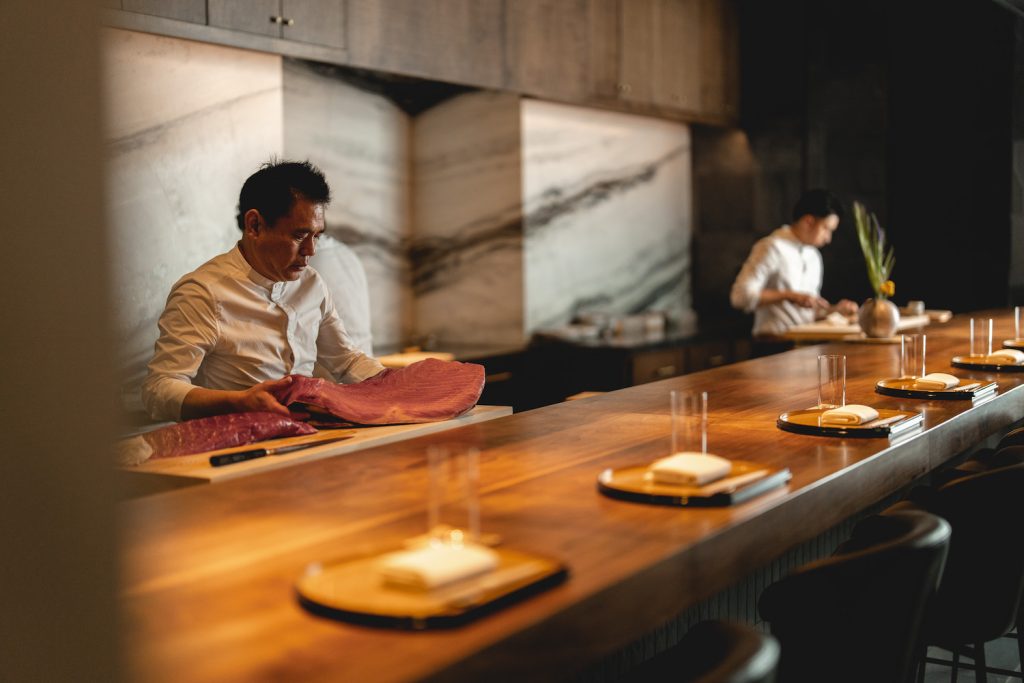
Omakase-only sushi spots took over the whole dang scene (omakase means you eat what chef deigns their best and most creative stuff that day, with no menu to choose from). Azuki in Bankers Hill has long been one of the city’s favorite sushi spots. It was never hype-trained. It just quietly, consistently snuck up on us all, probably because of owner Shihomi Borillo and chef Nao Ichimura’s obsession with the good-food movement.
Kinme is their tiny (900 square feet), 10-seat, omakase-only concept a block up the hill. It’s a mix of Edomae-style sushi and kaiseke, a seasonal, multi-course Japanese meal. The menu changes all the time, but it has included things like grilled corn with koji miso and tomatillo salt, A5 wagyu in ginger shoyu, and chawanmushi, plus Japanese whiskys, rare sake, and top-notch tea to finish.
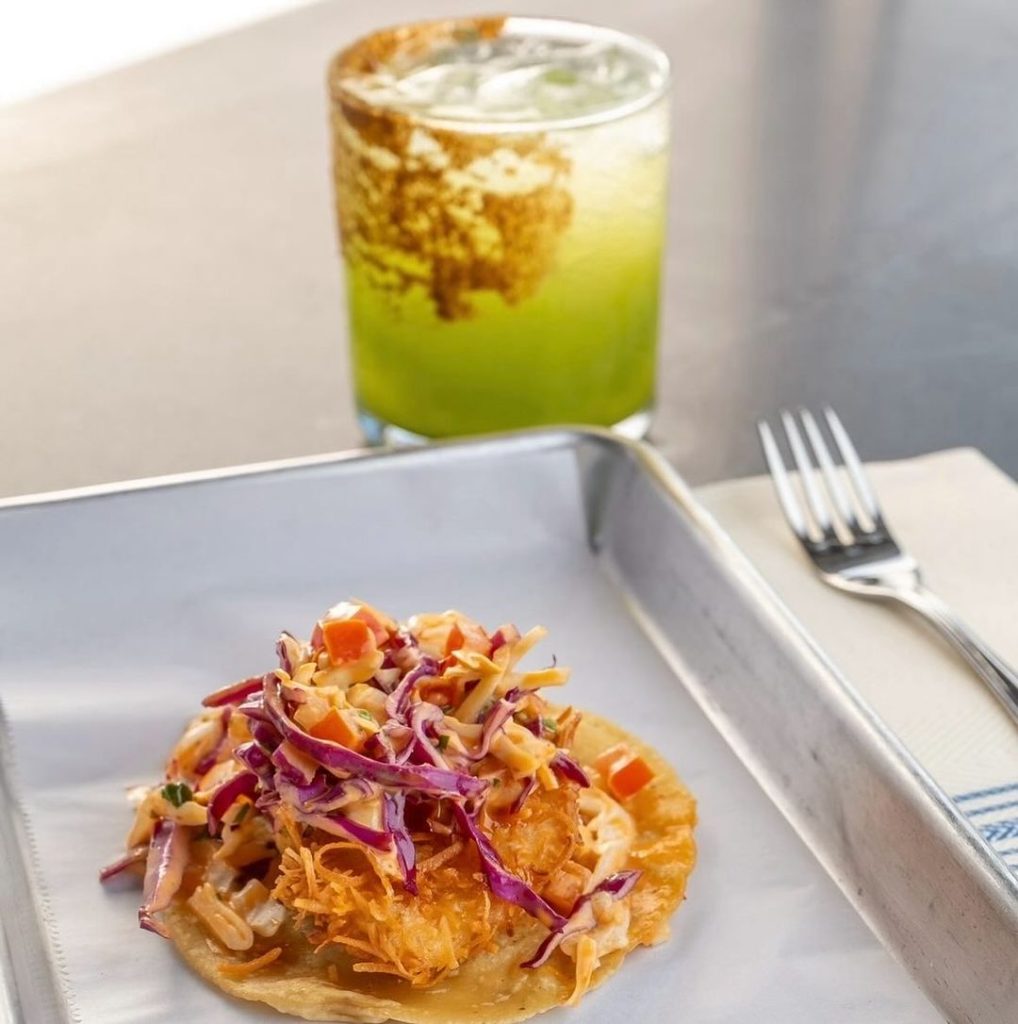
A hell of a fish-taco-and-sammy shop. San Diego born and raised, Pablo Becker helped open some of the bigger Mexican restaurants in the country with his cousin, famed Mexican chef Richard Sandoval. He needed a break, so he moved to Chicago for five years and became a line cook. He was offered management roles, refused. Head down, cooking. Five years.
Fish Guts is his return home, a small-but-mighty corner spot in Barrio Logan. It serves sandwiches during the day, tacos at night, using almost all sustainable fish from local boats. Get the blackened whitefish with the jalapeño-cabbage slaw, the mushroom taco, or the fantastic Negra Modelo beer–battered lunch sammy with Mexican tartar sauce.
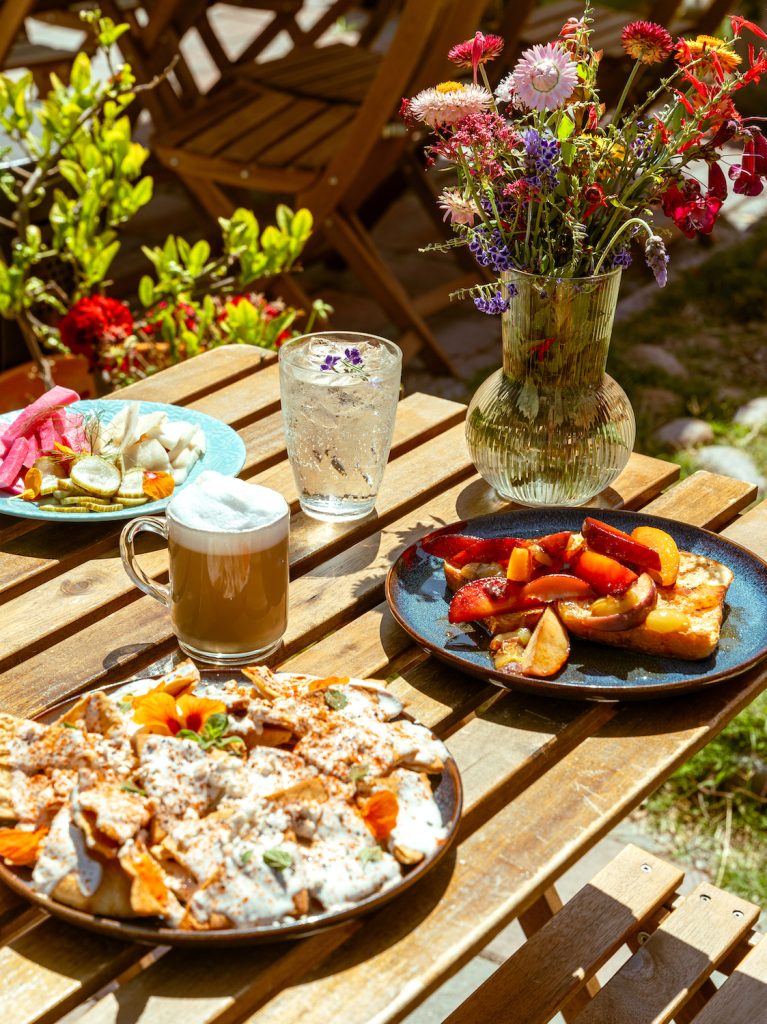
MAKE Projects is one of the city’s most inspiring food nonprofits, helping low-income refugees and immigrant women learn farming, cooking, and catering skills and earn a living as they acclimate to their new life in the US.
During the weekends, the women cook and sell specialties from their native countries—East African mandazi (they’re like beignets), halloumi with farm veggies, pancakes with Cambodian orange syrup, Afghan chicken tacos with Haitian pikliz—made with ingredients from their urban farm. Now they have a permanent home in North Park.
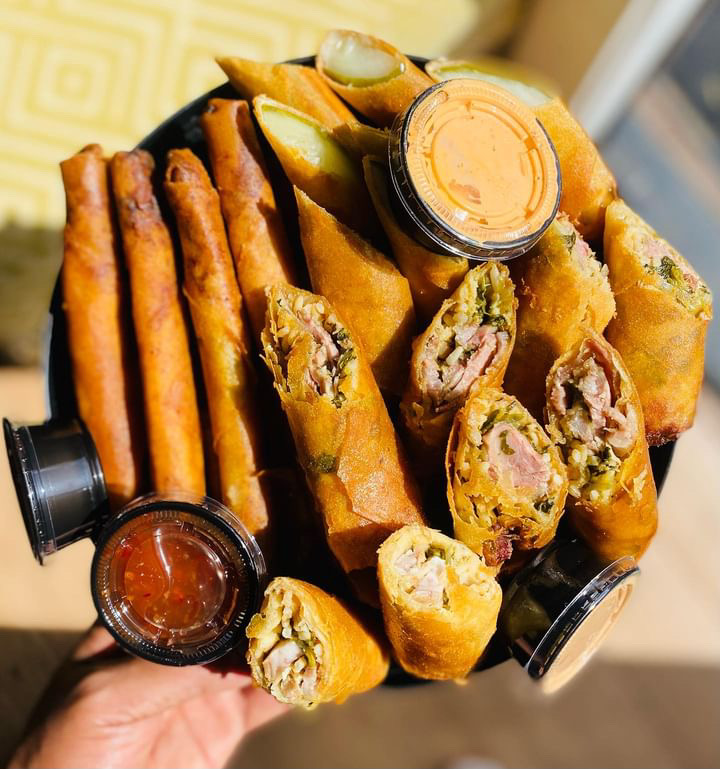
I could hang on this back porch all day, joy-shoveling lumpia with a couple beers. Chef Spencer Hunter’s grandma owned one of the first Filipino restaurants in San Diego decades ago and was famed for her hand-rolled lumpia (being lazy, but real close to accurate, let’s call it the egg roll of the Philippines).
Spencer went to college for sustainable hospitality and cooked in huts in South America, then came home to work through some top-notch kitchens (Searsucker, Waters Fine Foods + Catering). He and his mom, Benelia Santos-Hunter, started doing lumpia pop-ups at festivals, including Coachella. They went on Great Food Truck Race, nearly and probably should’ve won (a contestable second place), and found a permanent spot in Barrio Logan in an old house filled with pop-culture and Filipino cultural knicknacks.
It’s a total work in progress, design-wise. This is two family members ad-hoc’ing a dream, and I like that. Spencer will do seasonal riffs (ramen lumpia, Thanksgiving lumpia), but get “Lola’s Lumpia,” stuffed with a mix of beef and pork marinated in oyster sauce and various things. And don’t miss their ube-coffee ice cream with white chocolate shavings.
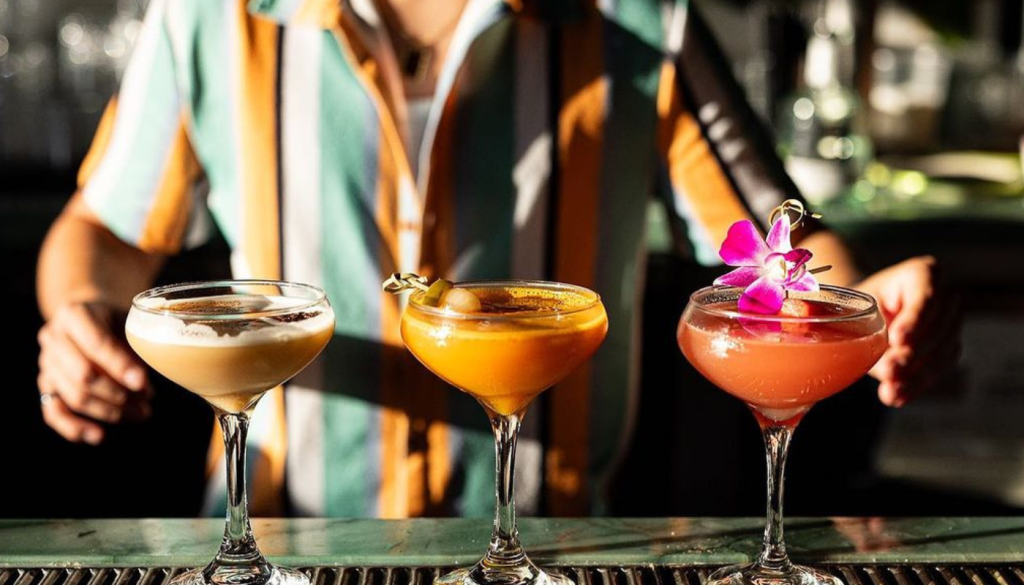
Pietro Busalacchi is a damn likable hospitality guy—a real host—and he can make a hell of a cocktail. That alone set a good base, one that El Sueño delivers on. The Point Loma High grad (a cousin of iconic San Diego Italian food family the Busalacchis) worked at TomTom in LA before coming home to open two concepts in Old Town. El Sueño is a partnership with Gustavo Rios—a Mexican concept based on food from Baja, the Huasteca region in the Gulf (where Rios’ mother is from), and Busalacchi’s travels through Mexico. It’s designed like a sweeping jungle in a two-story, indoor-outdoor space. Sit at the edge of the bar overlooking the patio and order the enchiladas suizas and a Bad Bunny (jalapeño-infused arette blanco, Mandre espadin, and carrot juice).
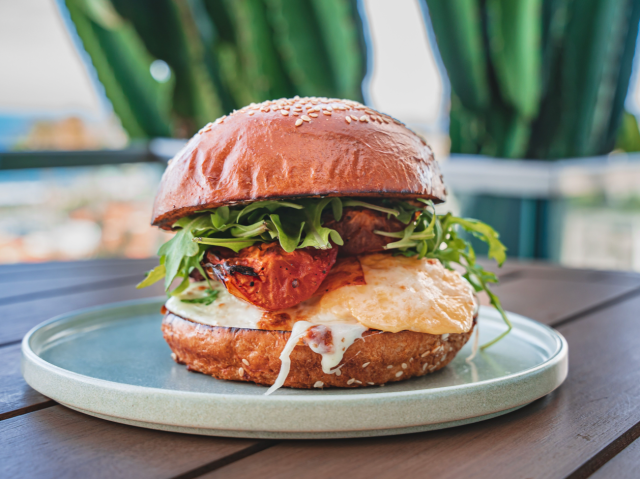
Considering how important it is for a museum to have good taste in art, art tasted terrible for decades. Restaurateur Tracy Borkum is fixing that. She got a degree in art history from UC Berkeley before she became one of San Diego’s top restaurateurs (starting with Cucina Urbana), so it makes sense that she’s becoming the city’s art-foodist. She and partner/chef Tim Kolanko are putting real-deal restaurants in culture temples. It’s a smart joining of forces, doubling the “attraction” of a cultural space and rehabbing the sector’s reputation for limp-sandwich cafés.
They opened Artifact at the Mingei Museum a couple years ago (Michelin gave it a Bib Gourmand nod), and this year they launched The Kitchen at MCASD as part of the La Jolla museum’s $100 million renovation, serving breakfast and lunch. Get the avocado bowl (with Aleppo pistachio dukkah, garlic creme fraîche, and carrot molasses) or the lamb burger with tzatziki and chili-mango chutney.
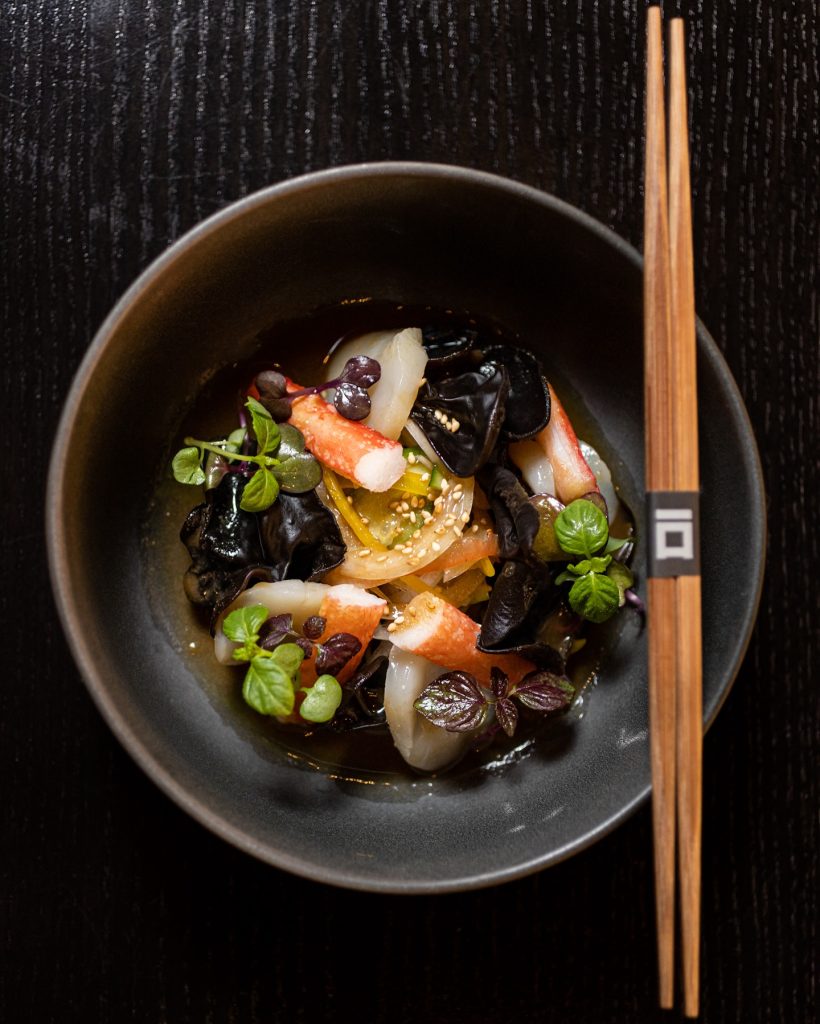
Chef John Hong first made his name by braving the nightclub-food scene at Bang Bang in downtown, a concept that dared to ask, “What if you could dance and drink and not have terrible food?” Then he became one of the first in San Diego to do omakase-only with Hidden Fish on Convoy. And now this, next door.
Hitokuchi returns Hong to his Japanese cooking roots. There’s a killer raw bar section (uni and caviar with soy-marinated salmon roe) and great toasts (toro tartare with wasabi crème fraîche) and entrées (creamy lobster basil, braised pork belly with mala sauce). It brought more national attention to the city when Esquire named it one of this year’s “Best New Restaurants in America.” Hong’s a talent.
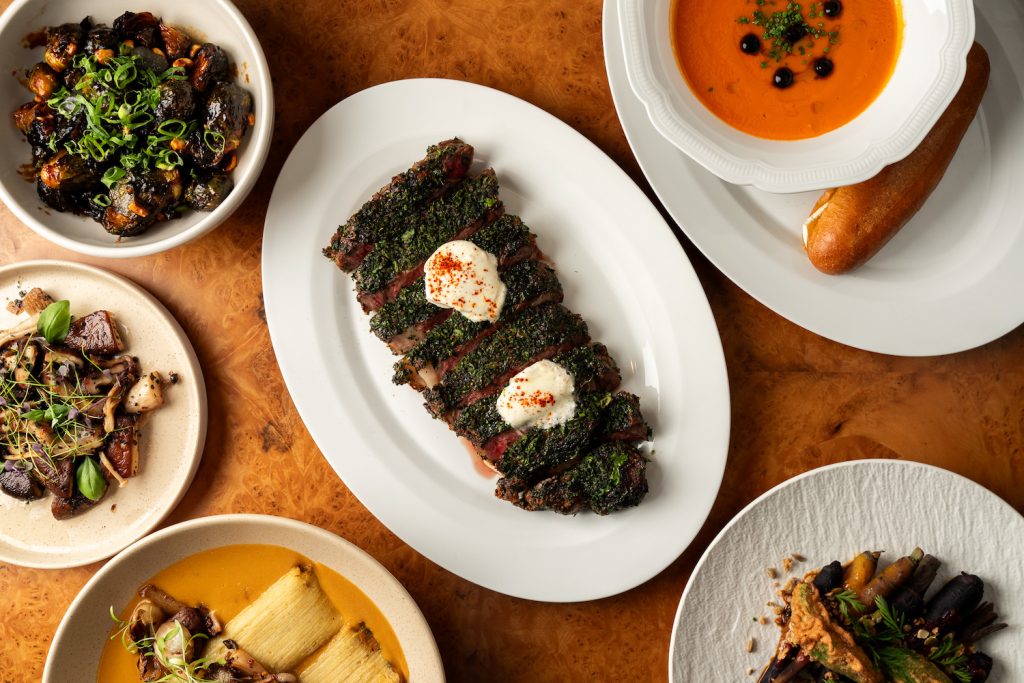
The Inn at Rancho Santa Fe is one of the county’s classic resorts, tucked into those horsey, eucalyptus-shrouded backroads in North County. The whole property got new owners and a $50 million renovation recently, and Clique Hospitality (Lionfish, Serea) was tapped to do the restaurant (Lilian’s Kitchen) and bar (Bing’s).
Lilian’s is a stunner. Heavy woods and olive-green walls and hunter-green leather stools are patterned into a texturalist’s dream. In the kitchen is Moira Hill, a local talent who worked her way up through some of the county’s best (George’s, Juniper & Ivy, Trust, Campfire). The restaurant serves meals for all three rounds of the day, dinner being the main show: grilled octopus, peking duck tostadas, chimichurri lamb chops, oysters, grilled lobster frites in béarnaise, veal Milanese and ribeyes… you name it.
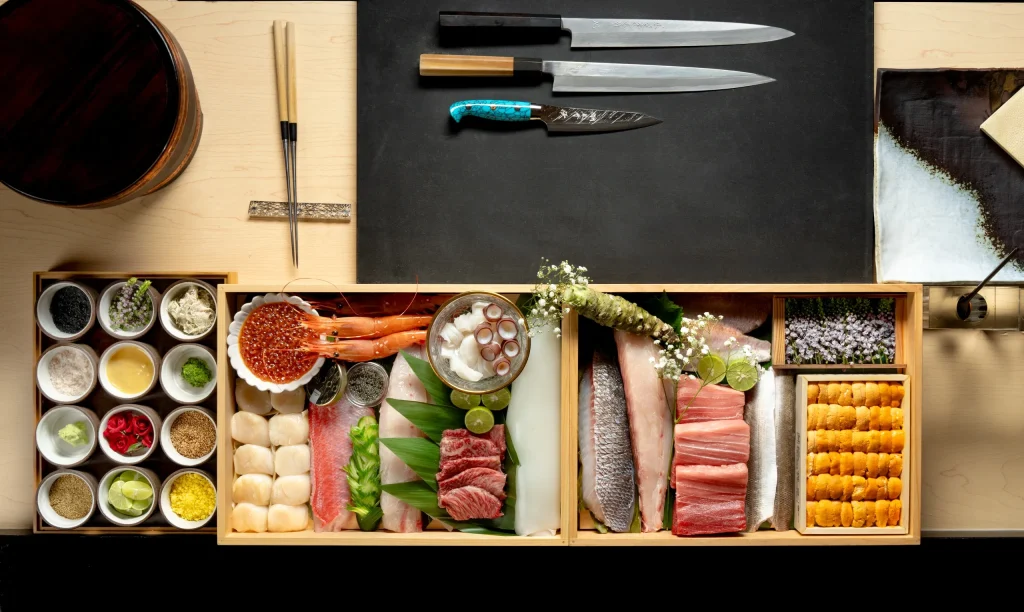
Ayaka Ito has been one of the main creative forces behind East Village for a while now. Originally from Nagoya, Japan, she’s a certified sake master and her original concept, BeShock Ramen, is one of the more underrated noodle bars in the city. This year she opened three distinct new concepts nearby: Asa Bakery (coffee, tea, Japanese sandos), Bar Kamon (a speakeasy), and Sushi Gaga, a 10-seat, omakase-only sushi room with nigiri, apps, and noodles that rotate according to the chef’s whim (but sometimes include oyster and lobster confit and ramen with sea bream chashu).
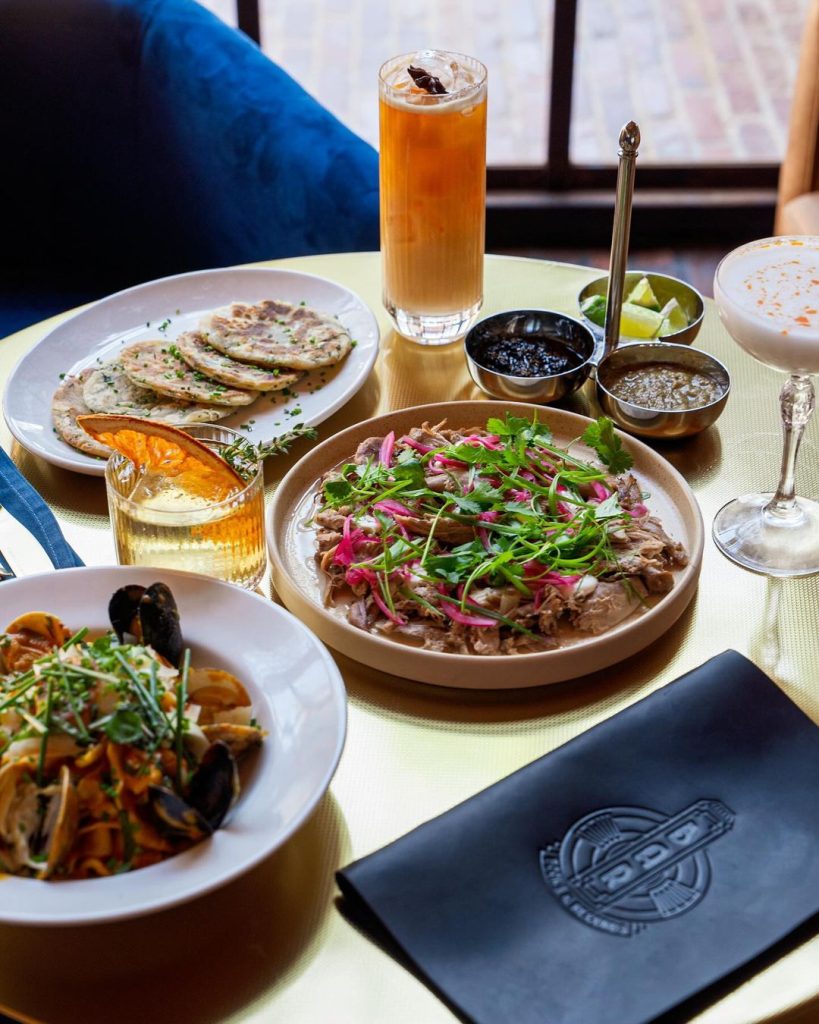
Since Anderson Clark and Brian Douglass opened Common Stock in Hillcrest in 2018, they’ve become some of the city’s better operators. Common Stock is retro comfort (Peruvian rotisserie chicken, pimento grilled cheese with roasted tomato soup, steak frites). Books & Records is their new dinner-and-drinks-and-jazz-and-culture concept that’s breathing life into an iconic space, the former Bankers Hill Bar + Restaurant (it was gutting when that closed during the pandemic).
The menu from culinary director Sam Deckman (son of Baja star Drew Deckman) is largely Baja-Asian: tuna crudo with kimchi-pineapple aioli and candied jalapeño; charred broccoli with labneh and yuzu ponzu; seabass al pastor; Coke-braised duck carnitas with shiso pancakes. Live jazz every Friday and Saturday night fills the city’s aching supper-club hole.
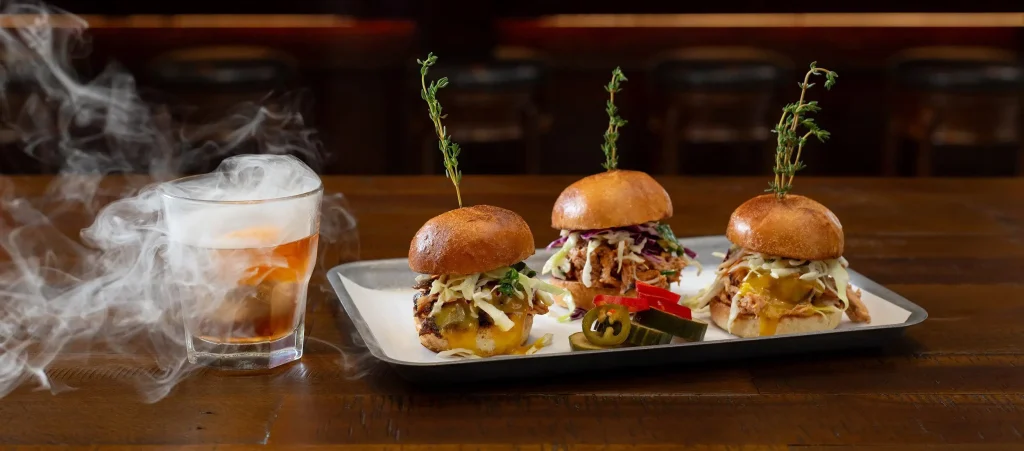
And now the greatest beach lawn smells like brisket. San Diego’s grand dame property is entering the final phase of its $550 million restoration and enhancement. It is exceedingly hard to mess with a classic. Pitchforks are at the ready. The gentry are emotionally vulnerable and allergic to change. One of the better things the Hotel Del did was retrofit the old laundry warehouse into a smokehouse with drop-dead gorgeous brick walls, ancient wooden beams, art and ironwork, and a bar with thirsty-sheriff vibes. Go in and get the smokehouse plate with options for brisket, pulled pork, ribs, jalapeño-cheddar sausage, smoked chicken leg, tater tots, the works. Load up a potato. Smoke the mac ‘n cheese. Go nuts.
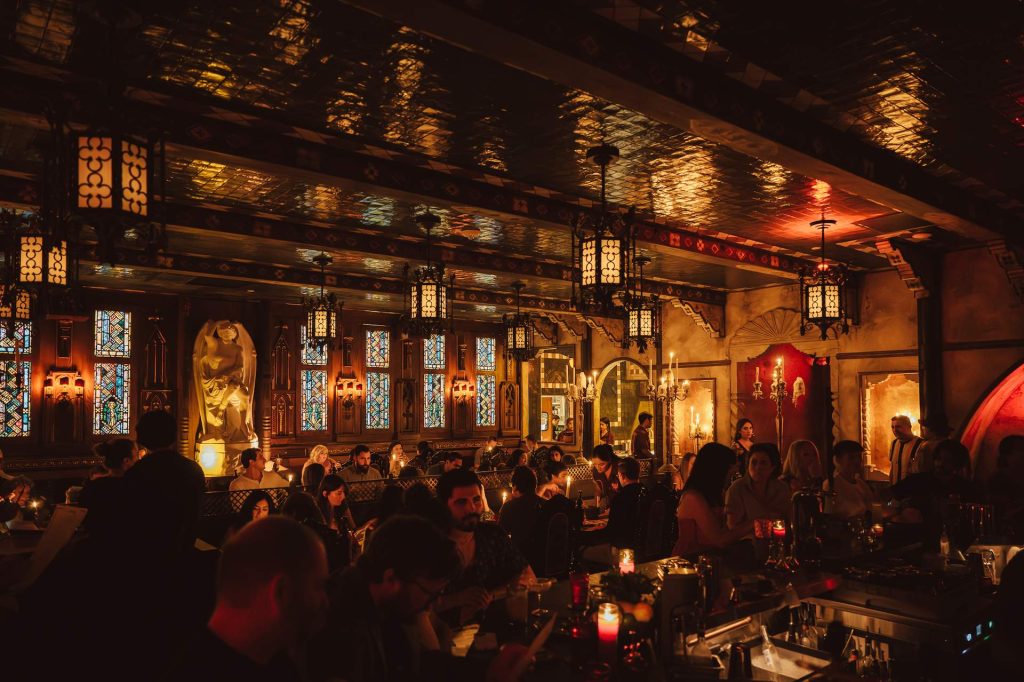
Personally, the only design that gets me emotional is minimalism or maximalism. Inbetweenism makes me think of taxes and the greatest failure, which is trying to mildly please everyone. You wind up standing in a yawn of a room, the building equivalent of dentist music and being dead inside. The Lafayette Hotel is a maximalist art project on a grand scale, a chaos zoo of patterns and textures and oddities. I love it as much as others will get vertigo from it.
The signature restaurant is Quixote, a pagan’s dining cathedral with gothic arches and stained glass and drippy light fixtures, lit for secrets. The chef is José Cepeda, a young talent originally from Puebla, Mexico, who did time at LA’s Mexican standout Mirame. Quixote’s menu is roughly based on his mother’s recipes from Oaxaca: guacamole with chicharrones and chapulines (marinated and seasoned grasshoppers); Oaxacan fondue with chorizo and truffle; memelitas (duck carnitas with cotija adobado and mole). One whole dining room looks like a prayer room or a tomb. No ambition was denied.
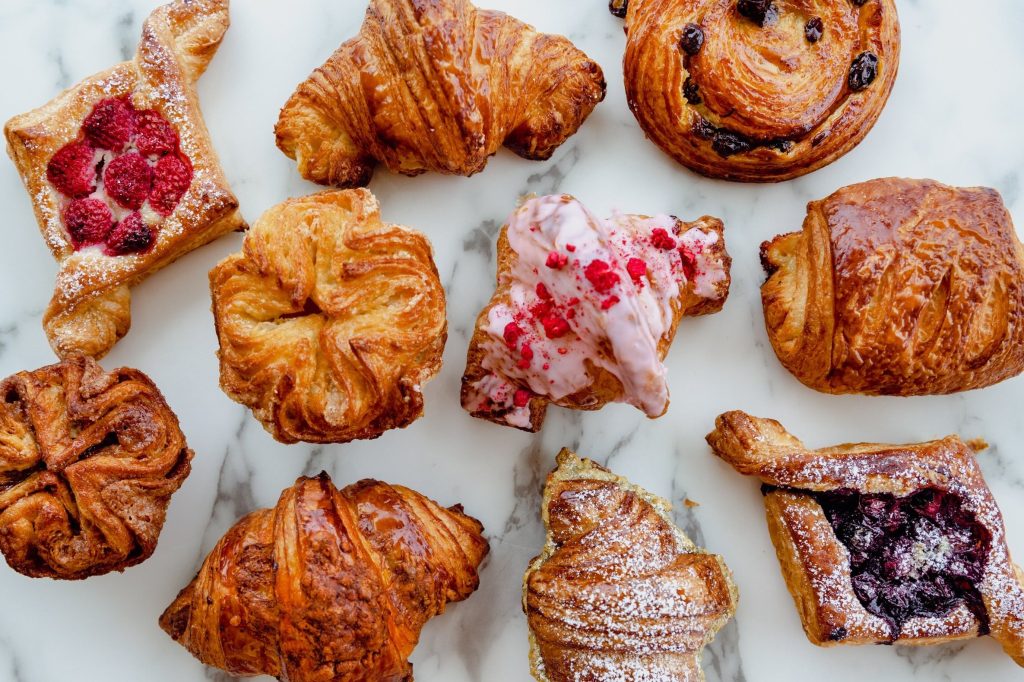
This is a cute pink box of a French bakery and coffee house that adapts to a small-menu restaurant after dark. It’s the sort of neighborhood spot with espresso machines in the front and fermenting dough and cassoulets in the back. It’s the work of Melanie Dunn, a longtime English teacher at Crawford High who spent a few years studying dough art at Le Cordon Bleu. In the morning, it’s all espresso creations and viennoiseries (yeast-leavened treats like kouignettes, croissants, and chaussons), weekend desserts (bouchons, financiers, macarons, tartes), and brunch bites (croques and quiches). At night, it offers a very focused French dinner service (coq au vin, beef Bourguignon, cassoulet).
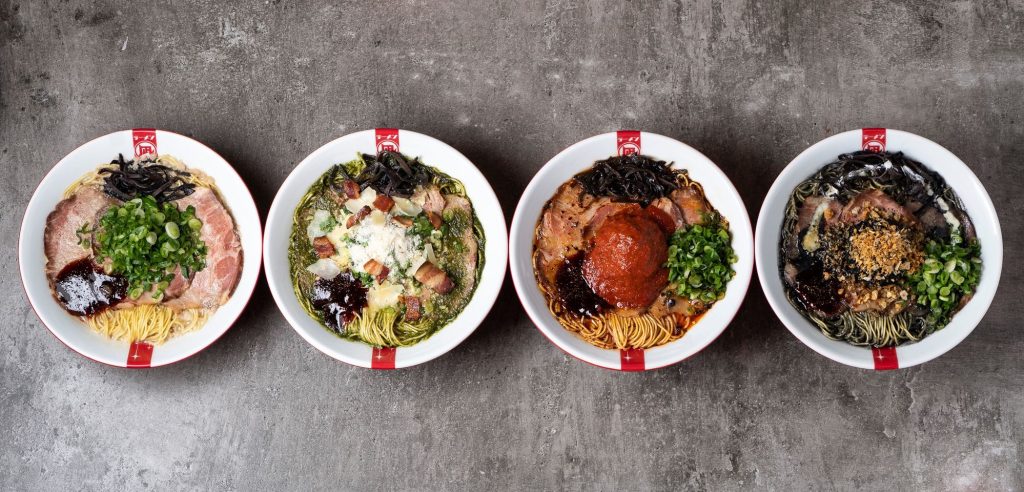
San Diego’s weather screams smoothies, but climate won’t deny us our cravings. Fact is, nothing deep-tissue massages your bones like soup. And this year, the city was riddled with ramen shops and phở shops and birria-in-consomme shops. Soup everywhere. The biggest arrival was Nagi, started two decades ago in Tokyo by chef Satoshi Ikuta as a pop-up that turned into an international phenomenon with dozens of locations across Asia. Now their benevolent encroachment has begun stateside, and UTC landed just the fifth US location.
It’s Hakata-style ramen, a southern Japan specialty anchored by the almighty pork cloud of tonkotsu. The Original King is the tonkotsu, the Red King is miso-minced pork, the Black King has black garlic and squid ink, and the Green King is basil and parm and olive oil in tonkotsu. Customization is Nagi’s USP: noodle thickness and al dente-ness and strength of broth are all adjustable to your whim.
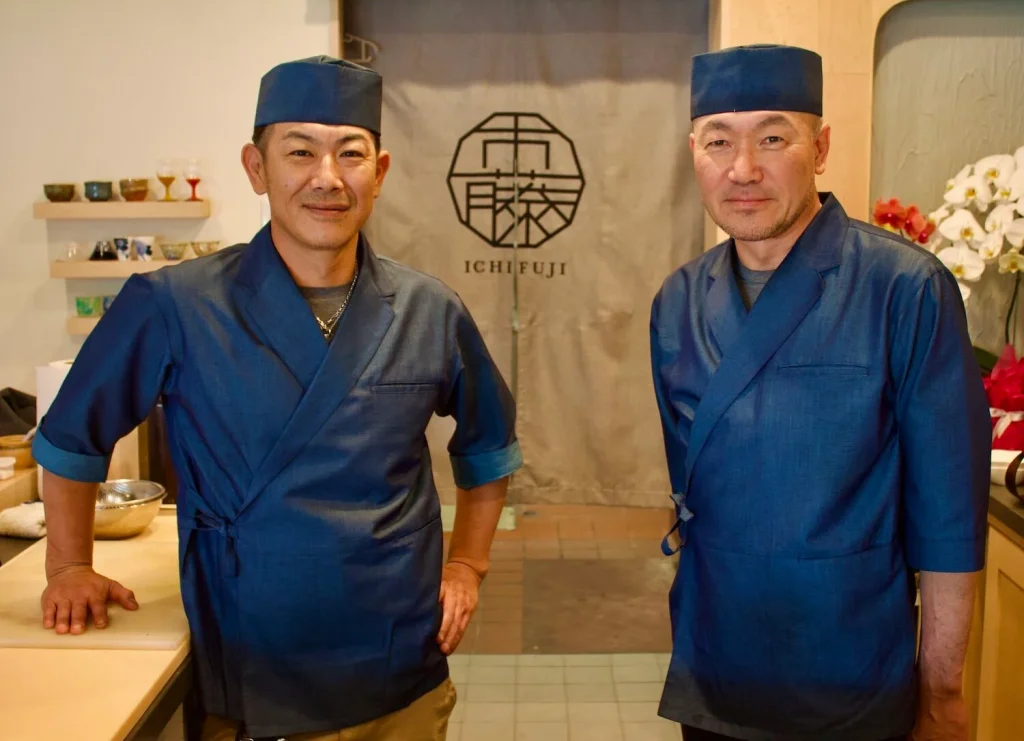
With all due respect to hallowed Rose Donuts, Linda Vista was largely college food until the last couple of years. But in 2023, it got two great new Asian options: White Rice from Phil Esteban (SDM’s 2020 Chef of the Year) and Ichifuji. Ichifuji is the new project from Masato Fujita (who comes from two-Michelin-starred San Diego sushi restaurants Soichi and Tadokoro) and Hiroshi Ichikawa (Taka Sushi). The options are eight-course omakase or nigiri—both of which include sakizuke (seasonal apps), soups (like a dark red miso), three-day miso-marinated black cod, and dessert. San Diego’s sushi world is near the top in the US now, plain and simple.
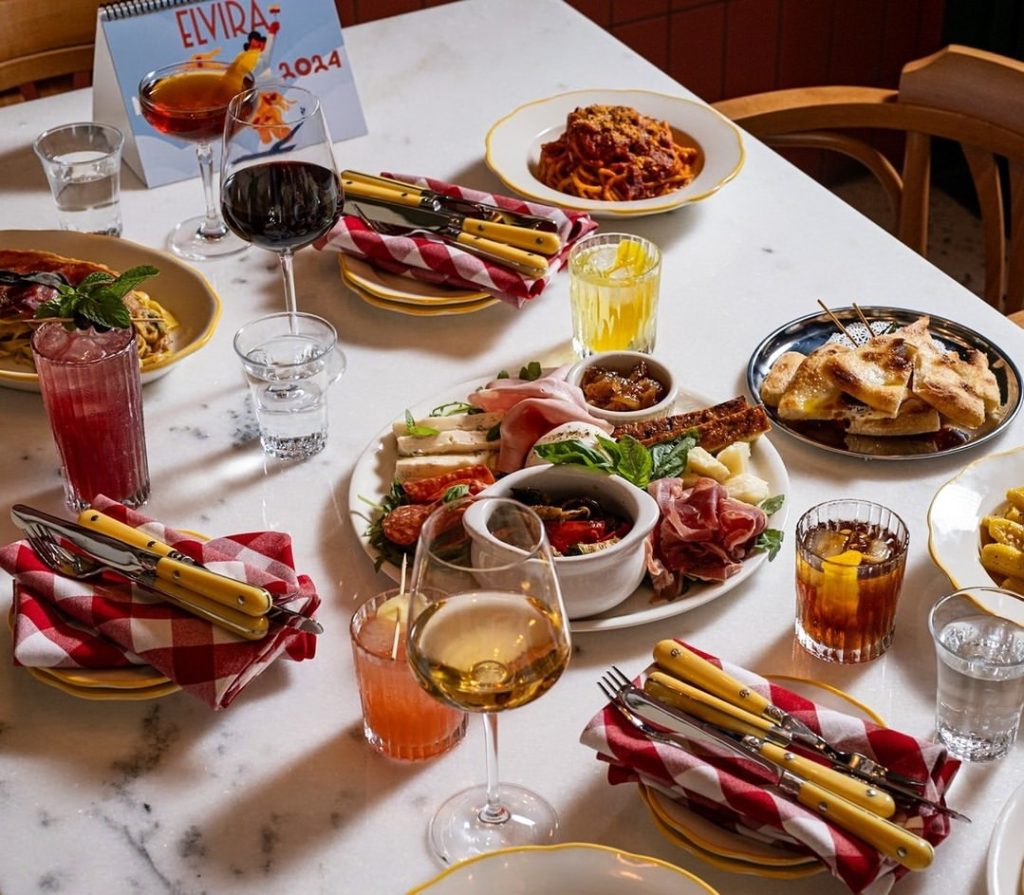
Point Loma Heights’ Cesarina—which began a couple years ago as a farmers market booth run by a married couple of Italian expats—serves one of the best plates of pappardelle in San Diego. The pasta is handmade, all day long (got my vote this year for Best Pasta in the city), with the rest of the menu centered around chef Cesarina Mezzoni’s recipes. The demand far outstripped the size of their original restaurant, so now plans are afoot to sprinkle sister concepts across San Diego. Elvira is first, finally activating the iconic (and similarly petite) restaurant spot near Robb Field that was once home to Thee Bungalow and Bo-Beau. This is their ode to Roman street food: pizza, pasta, mains like cod and ground lamb cutlets.
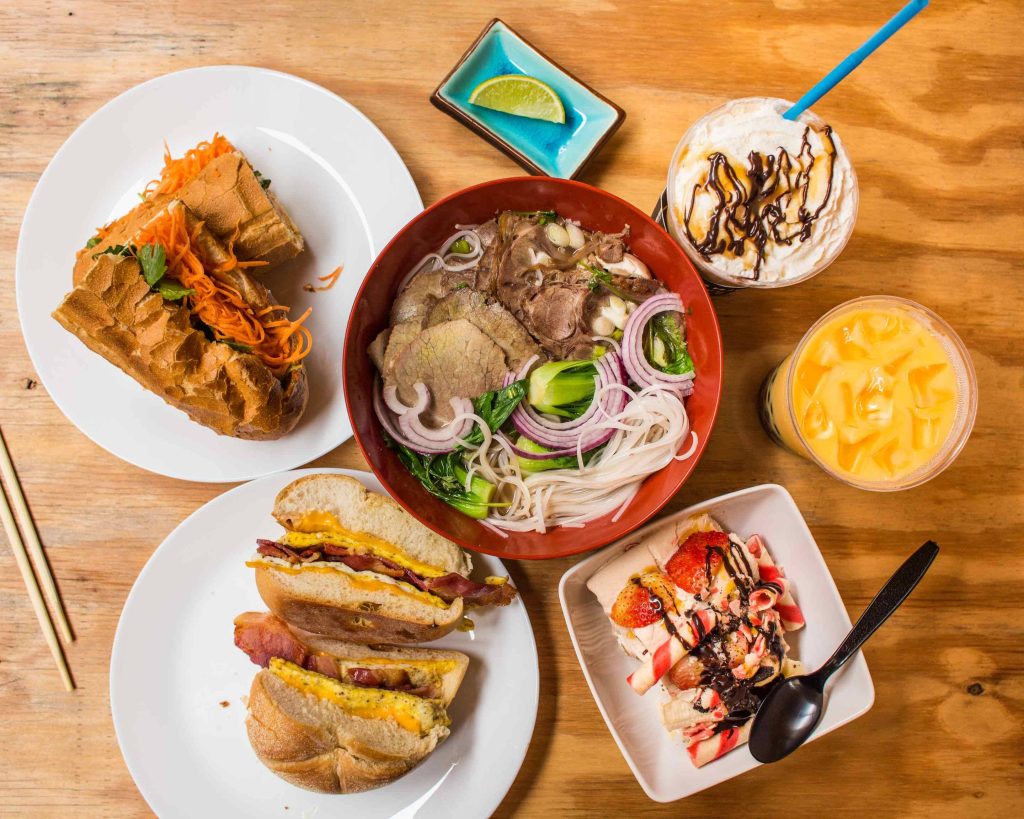
Historians have often credited cooking as the beginning of civilization and culture, the idea being that ancient humans huddled around a fire cooking food, and, while we waited, we formed rituals and language and customs and secrets. Chinese hot pot is the closest restaurant experience to that old huddling.
This year, San Diego got a branch of Sichuan’s super mega international star, Hidalao (over 1,500 locations now worldwide), and it doesn’t disappoint. It’s massive (fits 300 people), and you choose your own adventure with noodles (vermicelli, fried tofu skin, udon, instant noodle, and so on), soup bases (tomato, Sichuan spicy hot, mushroom, pork tripe), and proteins that are both widely familiar (chicken, pork sausage, Spam) and not so much (beef heart, duck intestine). You’ll occasionally see workers decked in white hand-pulling noodles in the dining room, tableside, as if they’re effortlessly and magically manipulating the strands of time itself.
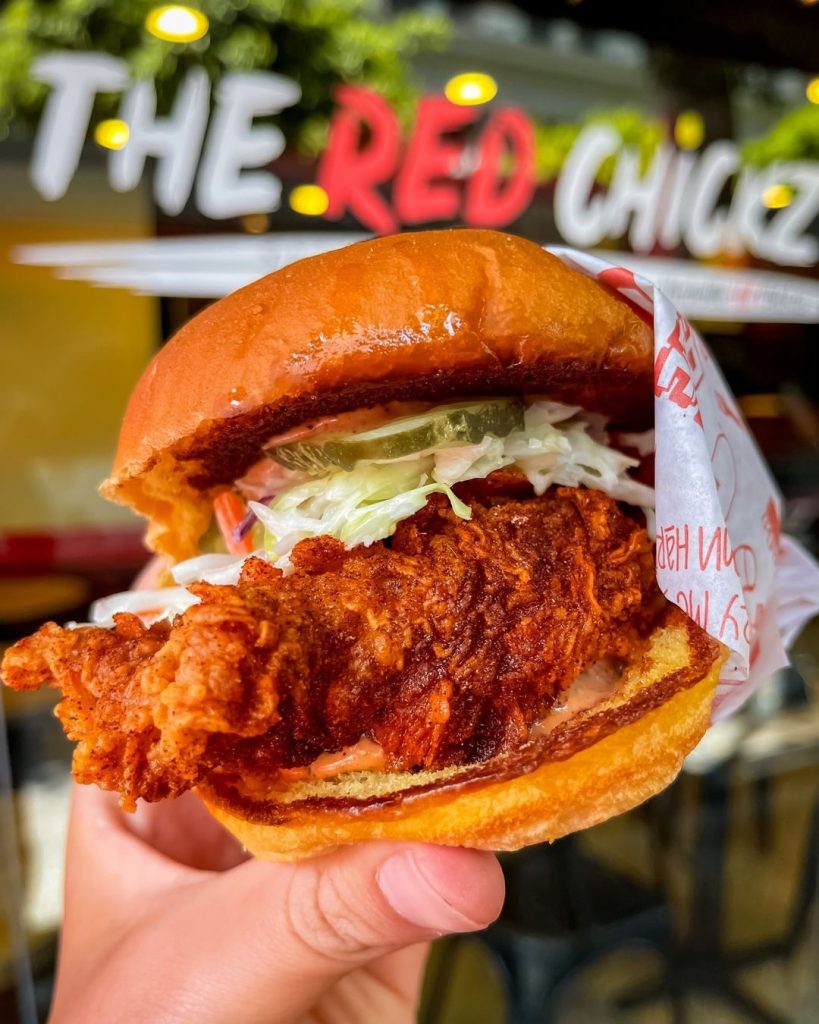
The fried chicken sandwich wars are still lingering, but a few clear victors have been named, and LA’s Red Chikz is one of them. TikTok fueled its rise, but it’s delivered on social hype with one of the crispiest, moistest Nashville-style options on the market. The first San Diego location landed at the Shoppes at Carlsbad this year. Even never-chain people are won over. The chicken is breaded and made to order, and Red Chikz uses halal chicken in tenders and wings (in terms of quality, halal is near apex). Each sandwich comes in seven different levels of pain (from “country” to “glow” to “inferno”), and the wedge fries may be even better than the sandwich.
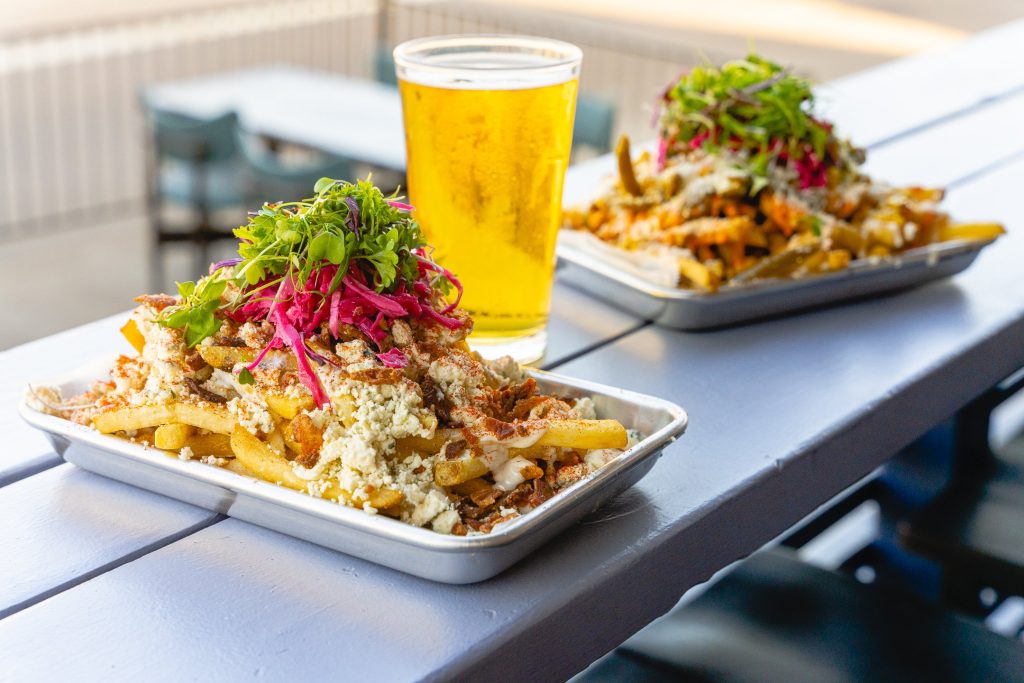
Rosemarie’s had a real successful run as a trailer, slinging “sliders” (an understatement, since each slider is massively packed with food) to the crowd at Harlan Brewing in Bay Park. This year, they got a permanent location in Mission Beach, and it’s a hell of a hangout. Owner Nick Balsamo went alley-diving in OB to find funk for the décor, and it looks like some very cool grandmother’s living room. Fitting, since it’s named after his Sicilian grandma. The sliders are mostly Wagyu on brioche buns, with hot chicken options and fried Korean BBQ eggplant options. And they serve beer. You have a new office.
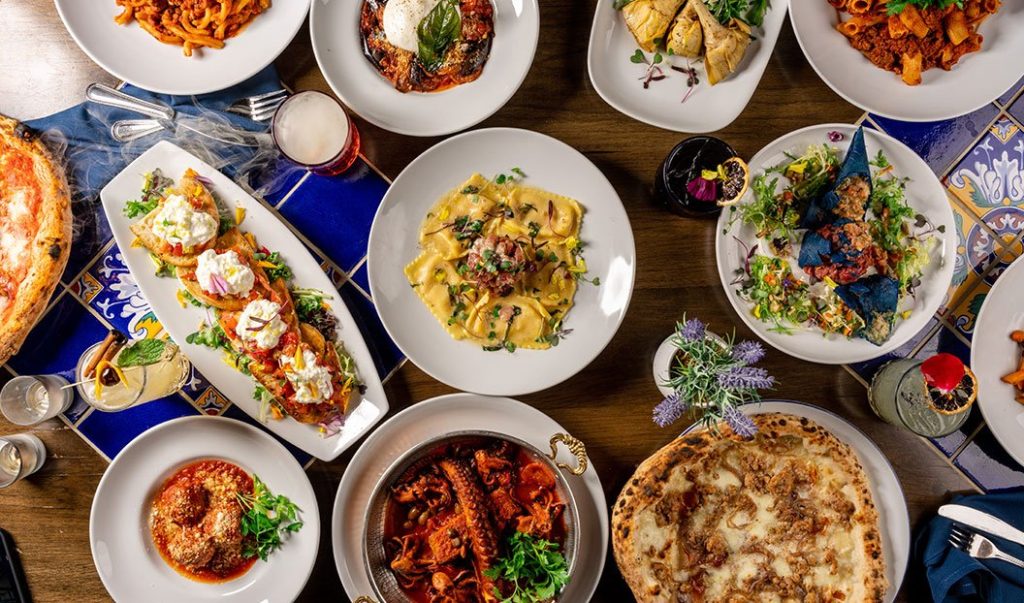
The spread of Amalfi is a very good and expected thing for North County. Four Italian friends (a few who helped grow the Buona Forchetta empire) started their own concept at Lake San Marcos (a wild little world of human-made waterside life) and were so successful that they’re up to four locations in our oft-ignored northern burbs of San Diego. It’s all based on chef Marcello Avitabile’s Amalfi Coast–inspired cooking. He’s a six-time World Pizza Champion, so any pie coming out blistered from that oven is fantastic. But it’s the smaller gems, like his simple pan-fried Roman artichokes over arugula, that win over the day. The bar in Carmel Valley has amaros and negronis and old-fashioneds.
Troy Johnson is the magazine’s award-winning food writer and humorist, and a long-standing expert on Food Network. His work has been featured on NatGeo, Travel Channel, NPR, and in Food Matters, a textbook of the best American food writing.
Dockside Night Market returns to Tuna Harbor Dockside Market on August 6 for one night only
Ask any local, human or shark—San Diego summer doesn’t really start until August. After June Gloom lifts and children file back into the halls of academia, our coastline comes to life with more space on the sand and a water temperature that finally rises above muscle-clenchingly frigid.
What better way to welcome Local’s Summer than by celebrating the bounty of the sea? At least, that’s what the gang at Puffer Malarkey Collective (PMC) figured when they launched Dockside Night Market four years ago.
Despite being born and raised in San Diego, Lillian Dang (the event’s co-producer and marketing director for PMC) says she didn’t know how abundant our local seafood scene was until she left and came back. “We are spoiled here,” she says, pointing not only to our plentiful produce from local farms, but also our sea-borne treasures.
When she and her co-producer Lucien Conner (PMC’s director of operations) brainstormed over what they felt the city’s food scene lacked, they realized: “What’s missing is an event that really celebrates the local seafood,” explains Dang.

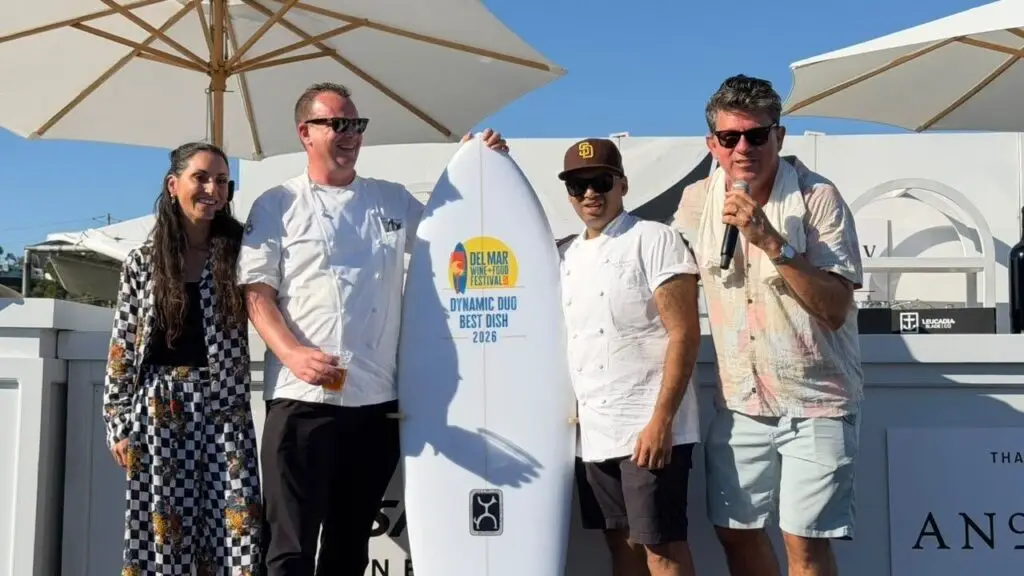
Dockside Night Market is meant to be a “San Diego summer party on the pier,” she says, bringing together local fishermen and local chefs to highlight the fruits of the local seas. Chefs from some of San Diego’s best restaurants clamor to be a part of the 15-chef-max roster, including Travis Swikard (Callie and Fleurette), David Sim (Kingfisher), Aidan Owens (Herb & Wood), Chianne Mallari (Herb & Sea), Tara Monsod (Animae), Jacob Ruck and Eric Bost (Jeune et Jolie), not to mention Mabel’s Gone Fishing, Bica, The Lion’s Share, Nine-Ten, Marisi… you get the idea.
Part of the intrigue is not knowing exactly what seafood will appear—in past years, there’s been uni, bluefin tuna, halibut, black cod, but it ultimately comes down to what’s fresh and what’s available. And with a chef lineup like that, it’s fun to imagine what sorts of surprises await. (If you’d like a small hint, there are calendars of seasonal availability in the area.)
The one-night-only annual event takes place at Tuna Harbor Dockside Market on Tuna Harbor Pier (598 Harbor Lane), the same spot as the weekly fish market every Saturday from 8 a.m. until 1 p.m. or sellout (it’s usually the latter). VIPs get in at 6 p.m. and general admission is 7 p.m., and 100 percent of all ticket profits go to support the San Diego Fishermen’s Working Group, a 501(c)(3) nonprofit created to support the best interests of the region’s commercial fishermen. There’s also four cash bars and a live DJ (but leave the kids and pets at home).
“I think this is an event that can only happen in San Diego,” says Dang. Our city’s culinary cache is on the rise, and our proximity to some of the best fishing waters in the world make it a pretty dynamic duo. “It’s curated, it’s intimate, it’s all the things,” she promises.
Dockside Night Market takes places on Thursday, August 6, from 6 p.m. to 10 p.m. at Tuna Harbor Dockside Market.

Listen Now: The Latest in San Diego’s Food and Drink Scene
Have breaking news, exciting scoops, or great stories about new San Diego restaurants or the city’s food scene? Send your pitches to [email protected].
Beth Demmon is an award-winning writer and podcaster whose work regularly appears in national outlets and San Diego Magazine. Her first book, The Beer Lover's Guide to Cider, is now available. Find out more on bethdemmon.com.
The fast-growing taqueria will open its third restaurant on Newport Avenue after a viral social media moment fueled its rapid expansion
When Rigo Munoz opened a weekends-only taco stand on Market Street in 2018, at first, he was just hoping to sell his tacos to however many customers he could. That low-key, word of mouth approach worked well for a couple years. Very well.
“Then, the line started,” he laughs. He began to double his sales week after week, until an influencer from Tijuana paid them an undercover visit in 2024. Munoz was hanging out in his backyard the next Monday when his phone started pinging and ringing off the hook. “So I go onto my social media and there, lo and beyond, the video already had 10,000, 12,000 views in like, less than an hour,” he says. The next day, there was a line of customers waiting for him before he opened at 5 p.m. The Chula Tacos revolution sparked there.
Now, he’s ready to open his third location on August 1 at 4994 Newport Avenue in Ocean Beach. It wasn’t an easy or straightforward path—the city shut down his original location citing too much noise and traffic. But Munoz was looking ahead, already in talks with a restaurateur to take over his space at 1719 Palm Avenue in the Nestor neighborhood of southeast San Diego. From the time he got shut down to getting the keys of his first brick-and-mortar was less than two days.
The second location in Chula Vista caught fire on Valentine’s Day and is slated to reopen later this fall (689 H Street). Munoz says he also plans to open a fourth location somewhere between the Ocean Beach and Morena Boulevard areas, but has aspirations for more.
“I’d like to become the In-N-Out of tacos,” he says. He’s actively looking for places that could support either a drive-thru or the typical fast-casual taqueria style, but no matter what, he’s going to keep his menu simple.
Each location has the same menu, except labio, which are ox lips, and beef intestines. They’re top-sellers at Palm Avenue, but might not translate as well to the OB crowd, he says. But guests can still get their fix of vampiro tacos, tacos de trompo, and from-scratch horchata and jamaica.
Chula Tacos is best known for its kekas (pronounced keh-kuhs), which are extra-large quesadillas stuffed with your choice of meat. “It’s a hefty thing,” Munoz promises. It’s such a trademark that he filed for a patent, which is still pending.
Building a taco empire has been a long time coming. Munoz first started making tacos at age 12, and has operated a number of cafes, delis, and other businesses on both sides of the border ever since. “We’re a family business,” he says. He’s been trying to hit that mother lode for years—and all it took was one video to light the fuse.
The newest location of Chula Tacos opens August 1 at 4994 Newport Avenue, Suite A in Ocean Beach. Hours of operation are 11 a.m. to midnight daily. (Opening date subject to change.)

Listen Now: The Latest in San Diego’s Food and Drink Scene
Have breaking news, exciting scoops, or great stories about new San Diego restaurants or the city’s food scene? Send your pitches to [email protected].
Beth Demmon is an award-winning writer and podcaster whose work regularly appears in national outlets and San Diego Magazine. Her first book, The Beer Lover's Guide to Cider, is now available. Find out more on bethdemmon.com.
SDM's staff shouts out our favorite food finds this month including bites Stake Chophouse & Bar, Valentina, and Steady State
There’s a place in heaven for a steakhouse that remakes chicken nuggets but uses Jidori instead of whatever glum bird is proffered in the children’s section. And then they top it with caviar. That, plus an editor with an obsession-level ranking of chai in Carlsbad, and a whole fish from one of San Diego’s OG top chefs who has mercifully returned to the kitchen. These are the very best things we’ve found from another month of eating professionally in San Diego. Go get some.
One of my favorite experiences at Stake in Coronado is that—if the patio is chilly enough to warrant heaters—they’ll surround you with towers of flame. Paired with the retaining wall of heat against the glass railing overlooking Orange Avenue, there is so much surrounding fire that it feels like dining in a much nicer version of the Elmo meme, in which the nasally puppet’s whole world has amusingly arsoned.
Three things you have to get here: first, the Wagyu popcorn (kernels popped in melted Wagyu beef fat, salted with paprika); second, the Snake River Farms Wagyu skirt steak (its Gold grade means incredibly high marble), one of the best steaks in the city; third, the Jidori chicken nuggets with herbed crème fraîche, pickle, and a perm of caviar. A childhood food, deliciously adulted. —Troy Johnson

It’s been 15 years since married folk Aaron and Roddy Browning opened Flying Pig Pub & Kitchen in a hidden south Oceanside hovel—using vinyl records as placemats, the decor an assortment of welded metal weirdities. One thing has always remained: Pork is their native tongue.
This sandwich pries open long-dormant pleasure receptors in most alive human bodies. Brandt Beef tri-tip is rubbed with its “Pig Spice” (hint: good paprika and celery seed do wonders), sleeps for 24 hours, then is seared and rested for an hour—sliced and seared again, placed on a mini baguette wet with fresh chimichurri and smoked tomato aioli, then topped with melted aged provolone, grilled peppers, onions, and gremolata (parsley, garlic, lemon zest). Order two, or be prepared to fight. —Troy Johnson

Pintxos are Basque-country bar snacks, finger foods for Real Sociedad games. The appropriate utensils are a couple of fingers and a toothpick. But Valentina’s in Leucadia are done with just enough culinary school ambition (not too much, fuss has no place in pintxos) from exec chef Enrique Ñol, who worked at the estimable Wrench & Rodent.
Its tomaquet (tomato bread) could be underestimated as a stacked pile of quality ingredients, but it’s undeniably great—toasted pan de cristal (light, airy, Catalan “glass bread”) dressed with tomato, garlic, salt, EVOO, and a layer of one of the world’s greatest meats: Cinco Jotas Iberian jamón. Eat it with a minor winefall of porrón, and ask for Todd—a certified sommelier and one of the most knowledgeable food minds in the local scene. —Troy Johnson

Get the whole fish. Doesn’t matter the catch, just trust that chef Jason McLeod’s got you. When CH Projects opened Ironside in Little Italy in 2014, the restaurant group took over the old Farkas furniture store and turned it into a replica of an ocean liner, tapping McLeod (a chef who’d earned two Michelin stars in Chicago) to oversee its menus.
It quickly became a San Diego staple for seafood. After leaving for a few years to help concept and launch some big-name restaurants in Vegas, McLeod is back again getting his hands dirty in the kitchen. And his fish? They come in fresh from local fishermen who he’s established relationships with over the years. So yeah, get the whole damn thing. —Nicolle Monico

I have a running spreadsheet of chai rankings in Carlsbad. The chai that stays on the highest shelf? Steady State’s gingery, nutmeggy Indian Summer with an almond milk base and fresh nutmeg shavings on top. Juiced ginger gives the drink deeper, warmer notes, but not so much spice that your throat closes on the first sip.
Too often, coffee shops advertise authentic chai, then uncork that carton of sugar-bomb concentrate from an artisanal wholesaler called Costco. This is the real deal; it’s mildly sweet, a little more spicy, and in my opinion, best served hot. If I could order a keg of it, I would. (Can I?) —Emma Veidt
The 29-year-old culinary director at Herb & Sea is making seafood sexy (and approachable) again
Implementing a farm-to-table model hardly deserves acknowledgement these days. It’s not a stretch. It’s not innovative. “It’s the bare f**king minimum,” says Herb & Sea‘s executive chef Aidan Owens.
When I arrive at the Encinitas restaurant, I’m ready to talk sustainability, farm-to-table stuff, with Owens. “Did you see the chin on that?” he says of the extra big jiggly chin on the sheephead that just arrived with the day’s fresh catch. I did. It was Jay Leno adjacent.
I learn quickly that he somehow oozes both charm and stone-cold honesty. Maybe he could construct a new dish with chin goo, like he did when he had a bunch of tuna scraps and voila’d it into a smooth and crowd-pleasing ‘nduja. “I want to know what’s in there,” he says.

The instinct to look closer, to dig into what others might discard, says a lot about the chef’s approach. I guide him back to our topic, but he has something else on his mind. “We’re overcomplicating food—what happened to just cooking good food and having fun with it?”
Owens grew up on a farm in Byron Bay, Australia, where sustainability wasn’t a concept you chat about so much as a way of life. Think dirt roads, backyard chickens, pulling vegetables straight from the ground, and a mother who believed that if you couldn’t pronounce the ingredients on a package, you shouldn’t eat what was inside.
Food wasn’t precious or performative. Making it was what you did because you were hungry and that’s still what inspires Owens today. “I like to cook good food because I like to eat good food,” he says.
His approach to sustainability at Herb & Sea began so naturally that it felt just like instinct. “I was just like, ‘Let’s order food from the people who live and work here,’” he says.

And why wouldn’t he when lives in San Diego? Cities all over the world vie for our goods. Our tuna is sent overseas. Our spiny lobsters hit dinner plates in China and Japan. Not to mention California’s producing a third of the country’s vegetables and three-quarters of its fruits and nuts.
“Why would we outsource when it’s all here?” Owens asks.
Sustainability, in this context, is about cooking what exists in abundance, nearby, right now. “I love the local fish here. It’s f**king delicious and San Diego citrus, I mean, it is so f**ing good,” he says.
Instead of importing ingredients, Owens also looks for nearby alternatives. “You can find really cool things in the local waters,” he says, pointing out that stingray cheeks taste similar to scallops.

Whatever he finds in that sheephead chin might just be the next substitute for marrow. But to make this work, it means getting diners amped up about the slightly unfamiliar.
Tasting menus, where diners are completely in his hands, become an opportunity to gently push boundaries. “I’ll serve mackerel, because people think they hate it,” Owens says, noting that the abundant local fish can have some fishiness. “But when it’s fresh, it’s arguably one of the best fish in the ocean.”
He also tweaks the language on the menu so people might feel more compelled to give dishes a try without preconceived notions. He might use “lengua” instead of “tongue.” “Whelk” instead of “snail.” When he puts “stingray throat” on the menu, he disarmingly calls it “skate.”
To reduce waste, scraps aren’t always discarded but rather turned into something new. Sometimes they’re smoked, cured or fermented. Apples going bad turn into apple ponzu. Lemons turn to marmalade, which stretches their usefulness far beyond peak season. “And it’s super tasty on our pizza,” he says.
What makes the food even richer, is the relationships he’s built with farmers. Though it didn’t always feel natural, Owens sought personal connection first. He recalls approaching a fisherman at the Tuna Harbor Dockside Market. “I was awkward,” he says. “I went up to him and said, ‘I like your fish.’”
Owen’s is now so close to his suppliers—like fishermen Ryan Sebo and Joe Daly—that he gets texted pictures of fresh catches right as they flop on the boat. The messages always ask if he wants first dibs. “I say yes to a lot of fish,” Owens says, noting that Herb & Sea can go through 2,000 pounds of seafood a week.

The next evolution of sustainability, in his view, will be chefs working directly with producers such as his alliance with Sebo, cutting out middlemen and purveyors where possible. “It will put more money in the pockets of the people doing the work,” he says.
It will mean that chefs can’t just know their local farmers and producers, but they’ll choose to work with the ones who have the best practices. Dining and sustainability will become much less about the final plate. “It will be more about the impact that plate has on the Earth,” he says.
Ultimately, he believes sustainability doesn’t need to be loud. It doesn’t need hashtags. It just needs to be honest.
“We aren’t saving lives. We’re feeding people good food,” he says.
And yet, in feeding people well—simply, thoughtfully, responsibly—something meaningful happens. Guests leave satisfied. Ingredients are respected. Local ecosystems are supported and food returns to what it has always been at its core: nourishment, pleasure, and a quiet reflection of the place it comes from.
No buzzwords required.
What's next for the 10-year-old award-winning destination? Owner Mike Tajran hopes to hand the reins to a local up-and-comer
After 10 years of rooftop dining and brewing award-winning beers, OB Brewery is for sale. A local fixture on Newport Avenue, OB Brewery owner Mike Tajran is ready to retire and hand over the reins. “It’s got so much potential,” he says, pointing to the accolades the brewpub has collected throughout the last decade (it’s more than a few).
At the 2017 Great American Beer Festival, OB’s Hidden Gem Dunkelweizen won silver in the German-Style Wheat Ale category, followed by a World Beer Cup silver medal as a South German-Style Dunkel Weizen in 2026. In 2018, GABF named OB Brewery Small Brewpub of the Year, brewer Jim Millea earned Small Brewpub Brewer of the Year, and the B. Right On pale ale nabbed a gold medal in the American-Style Pale Ale category. The Elevator Red IPA also took bronze that year at the San Diego International Beer Festival, and earlier this year, they won gold for Couple’s Therapy chili beer and silver for Rauch Me smoked beer at San Diego County Fair Craft Brew Competition.
It’s a solid foundation for the right buyer, he says—someone with brewing and business chops ready for a turnkey operation in a favorable location a block from the beach on Ocean Beach’s busiest street. (And while he’s letting go of the brewpub business, he’s also open to selling the building as part of the deal.)
Originally from Iraq, Tajran’s family ran restaurants in Baghdad, but “they were decimated by Saddam Hussein,” he explains. Once in the United States, he launched Giant New York Pizza at 5050 Newport Avenue in 1984, which eventually became Newport Pizza & Ale House. Newport Pizza felt long ahead of its time, proudly proclaiming they served “no crap on tap” years before the craft beer craze caught fire in San Diego.

When the building’s owners passed away and their son cut his lease short in 2020, Tajran says he was disappointed, but he had a nagging feeling that would happen eventually—which is why he already purchased 5041 Newport Avenue back in 2009 and opened Ocean Beach Brewery in 2016.
“For 42 years, I have been in this location in this area, the same block,” he says with pride. Ocean Beach has gone through some changes since 1984 (the OB farmers market launched in 1992, Starbucks came in 2001 and left in 2022, ADUs crept in, and the iconic OB Pier closed in 2023), but Tajran says the heart of the beachside town has remained the same.
So has most of his staff. Millea has been brewing since day one, and longtime manager Megan Schuster has worked for Tajran for 19 years, first at Newport, then at OB Brewery. Most of the employees are locals, and Tajran says he doesn’t plan on closing the business until he finds the right buyer to carry on the baton.
The property itself comes with some unique features for the area—three stories with a rooftop deck and ocean views from every level. And if you’re wondering if those uninterrupted views will remain that way, Tajran assures me they will. Part of his original building purchase included language that prohibits the three buildings between him and the ocean from building up. He also leases space next door, which would allow a new owner to expand brewing capacity with more tanks and fermenters.
“I just wanted to make sure this goes in good hands,” he says. He and his wife both hope to retire soon in order to spend time with their children. But he’ll make sure his other baby is taken care of first.
“I love Ocean Beach,” he says. “I can say nothing but thank you, OB.”
OB Brewery is still open at 5041 Newport Avenue. Hours are Sunday through Thursday, 11 a.m. to 9 p.m.; Friday, 11 a.m. to 10 p.m.; and Saturday, 10 a.m. to 10 p.m. Interested parties should contact Next Wave Commercial.
Listen Now: The Latest in San Diego’s Food and Drink Scene
Have breaking news, exciting scoops, or great stories about new San Diego restaurants or the city’s food scene? Send your pitches to [email protected].
Beth Demmon is an award-winning writer and podcaster whose work regularly appears in national outlets and San Diego Magazine. Her first book, The Beer Lover's Guide to Cider, is now available. Find out more on bethdemmon.com.
The acclaimed restaurant will shutter after two years, while the family's Little Italy tasting room relocates to the University Avenue space
San Diego has lost a number of ambitious concepts lately—Vulture and Dreamboat in University Heights, Wildflour Delicatessen in Liberty Station, Deckman’s in North Park, Matsu in Oceanside. All have different reasons for closing (some outgrew their space, some overshot their costs), but none of them suffered for quality. Ditto for the next casualty. On July 19, Cellar Hand in Hillcrest will close its doors.
Unlike the other closures, there’s actually a silver lining. The Perr family, who owns both Cellar Hand and Pali Wine Co., announced they will relocate Pali’s tasting room from Little Italy to take over the vacated Cellar Hand space.
Cellar Hand opened just over two years ago with a promise to source 100 percent of their produce locally. Ambitious, but admirable. Logan Kendall, the original executive chef, launched with a menu centered around lots of funky fermentation, tinned fish preserved in-house, a bevy of fun dips like labneh and whipped tahini, and a ridiculously fantastic pork chop from Thompson Heritage Farms. Wine Enthusiast named the 120-seat eatery one of the top 50 wine-focused restaurants in the country in 2025—not a shock, considering the mega wine chops behind the project.
Following Kendall’s tenure, chefs Ashley McBrady and then Sable-Tanya Wentwoord took over the reins, keeping things rolling with expanded brunch offerings, chef’s dinners, and all the usual accoutrements of a hyped spot. Before joining the Pali Wine/Cellar Hand team, Wentwoord worked and staged at multiple James Beard Award–recognized and Michelin-starred restaurants in Boulder, Colorado (Frasca Food and Wine); San Francisco, CA (Coi, Che Fico); Providence, Rhode Island (Persimmon); and Fredericksburg, Tex. (Southold Farm + Cellar). She will continue to head the food program at Pali Wine Co.
Bad luck or bad timing, the reasons behind closing Cellar Hand don’t really matter. But I, for one, will really miss that pork chop.

Still, Cellar Hand’s loss is Pali Wine Co.’s gain, or at least a small balm on the sting of closure. The tasting room in Little Italy opened 10 years ago, bringing its Central Coast wine and vibes to an area smack in the middle of a craft beer boom. When it came time to renew the lease, the Perrs say the landlord did the landlord-y thing and tried to nearly double the rent. (Tale as old as time—just ask Wildwood Flour.)
Rather than suffer a double-whammy, the Perr family instead decided to shift their focus (and finances) to the heart of their businesses: wine. And despite losing a very cool rooftop patio in one sizzling hot neighborhood, they are gaining a pretty prime spot in a different sizzling hot neighborhood with a not-too-shabby patio of its own accord. (One more silver lining: no more jet noise from the airport!)
By moving Pali Wine Co. to where Cellar Hand used to be, they could at least keep a toehold in San Diego, says Nick Perr, managing partner. His family has made wine in Santa Barbara county for over two decades, with 10 of those years in the San Diego market—an investment they refused to lose. “That’s why it’s impossible to separate our winery from our San Diego community,” he explains, adding that the new location will allow Pali Wine Co. to offer programming designed around the nearby Hillcrest farmers market.
Guests can expect the same wine selection, wine club perks, private tastings, and similar food offerings Pali Wine Co. offers in Little Italy to transfer to Hillcrest. And maybe, if we’re lucky, they’ll bring back the pork chop (please?)
“We are extremely proud of what we accomplished at Cellar Hand,” said Perr in a statement. “Running an independent restaurant with real values is hard, and we gave it everything we had.”
Cellar Hand will permanently close on July 19. Pali Wine Co. will cease operations at 2130 India Street on July 19 and will move to 1440 University Avenue.
Pali’s new location in Hillcrest will soft open on August 12 with a grand opening on August 22. Operating hours will be Wednesday through Friday, 2 p.m. to 10 p.m.; Saturday, noon to 10 p.m.; and Sunday, noon to 9 p.m. Happy hour will run Wednesday through Sunday (hours to be determined).
Beth Demmon is an award-winning writer and podcaster whose work regularly appears in national outlets and San Diego Magazine. Her first book, The Beer Lover's Guide to Cider, is now available. Find out more on bethdemmon.com.
SeaWorld dazzles with a drone show, big-name entertainers, new animal adventures and more
Nights are heating up at SeaWorld San Diego. The quintessential summertime staple on Mission Bay is transforming into a destination for unforgettable day-to-night adventures, bringing back some of its most popular Summer Nights programming and introducing exciting new experiences sure to delight both kids and adults alike.

The 2026 Summer Day to Night at SeaWorld San Diego is the park’s most ambitious season yet. SeaWorld has planned a highly anticipated entertainment lineup that features nine weeks of throwback concerts featuring R&B and hip‑hop favorites from the ‘90s and early 2000s, including Jordin Sparks, Too $hort and Warren G, Ashanti, and an array of boy band heartthrobs performing together as part of the Pop 2000 Tour.
New this season is perhaps the park’s most visible update: a nightly drone show, Ocean of Dreams, which illuminates the sky with hundreds of synchronized sparklers. Drones form sea otters, sharks, dolphins, and a majestic orca that tell a breathtaking 12-minute story of marine life and underwater ecosystems. The show culminates with a spectacular electric neon finale celebrating hope, wonder, and ocean stewardship.
Nighttime visitors are also in store for animal adventures that fuse education with high-energy fun and the dreamy ambiance of nighttime. The park has launched two all-new animal presentations: Shamu’s Celebration: Light Up the Night and Dolphins: Touch the Sky. Shamu’s Celebration: Light Up the Night features vibrant lighting, music, and dynamic choreography that celebrates the power and beauty of killer whales. Dolphins: Touch the Sky showcases playful bottlenose dolphins and the special connection between humans and the natural world. And back by popular demand is fan-favorite Sea Lions Tonite. See the charming pinnipeds splash, play, and parody pop culture in this refreshed crowd-pleaser.

More must-sees: a newly reimagined Shark Encounter, one of the country’s more immersive exhibits highlighting 11 different species up close, SeaWorld’s beloved BMX Blast! stunt show, and high-seas escapade, Pirates Ahoy! The Battle for Mermaid Cove. And don’t miss the park’s all-new Deep Sea Disco, which encourages guests to dance the night away under the glow of the SkyTower, and vibrant closing time laser light display Laser Reef Summer Spectacular.
Amp up the nighttime vibe with local craft beers, curated cocktails, and nostalgic theme park treats with $1 beer all summer long. SeaWorld is the place for day to night summer fun. When the sun goes down, SeaWorld lights up, and inspires guests of all ages to embrace their inner whimsy and see why generations of San Diegans head to SeaWorld to make memories they’ll never forget.